
AI-Based Process Monitoring for Flat Knitting
Gestricke & Gewirke Textilmaschinenbau Sensorik Tests
Zusammenfassung
At ITM and IDMT, as part of IGF Project 01IF22931N (Entwicklung eines KI-gestützten Inline-Qualitätssicherungssystems zur Optimierung hochflexibler Stricktechnologien (OptiStrick)), a modular, retrofittable, real-time, AI-based monitoring system for production on flat knitting machines was developed.
Ensuring consistently high product quality while reducing scrap is one of the key challenges in flat knitting. Due to the wide variety of products and the complex interactions between needles and yarn, there is currently no cost-effective, established inline monitoring system for quality assurance. As part of the IGF project OptiStrick, an AI-based inline quality assurance system was developed that combines acoustic, vibroacoustic, strain gauge, and optical sensors with machine learning methods. Based on a statistical design of experiments, multimodal datasets were collected from three measurement campaigns (laboratory and production environments) and analyzed using neural networks. Acoustic and vibroacoustic sensors consistently achieved high accuracies (> 90 %) in the classification of both process parameters and individual needle defects and demonstrated the highest robustness against changing measurement conditions. Strain gauge signals were well-suited for detecting impulse-like defects under controlled conditions but lost significant performance when the sensor mounting was altered. The developed demonstrator exhibited an average accuracy of approximately 80 % for parameter classification and demonstrated the fundamental in-line capability of the approach. The system is modular and retrofittable, economically attractive, and transferable to other textile processes
Bericht
Introduction
The flat knitting process is characterized by a high degree of design flexibility; however, it is prone to errors due to the complex interaction of many knitting elements. Defects in the needles, such as bent needle heads, broken needle tongues or heads, as well as increasing contamination from fiber dust lead to missed stitches, dropped stitches, and ultimately to scrap. Since defects can be reliably identified during a subsequent fabric inspection, but only after a delay, defective fabric is produced until the damage is discovered. Early, operator-independent detection directly at the knitting spot therefore offers significant economic potential.
Inline quality assurance systems have become established in industrial manufacturing as an effective means of reducing scrap and optimizing processes. In the textile industry, camera-based approaches (1) for automated defect detection are predominant, and their performance has been significantly improved in recent years through the use of deep learning methods (2–5). Convolutional neural networks (CNN) (6), in particular, have proven to be effective for detecting surface defects in textiles. Nevertheless, such optical systems involve high acquisition costs and require significant computing power, which hinders their widespread adoption, particularly in small and medium-sized enterprises (SME). Across all industries, the use of artificial intelligence is regarded as a key technology for the digitalization of value chains (7, 8), although the operational implementation of AI projects often fails in practice due to issues related to robustness, data availability, and integrability. In quality assurance, data-driven methods are increasingly tapping into non-optical sensor modalities. However, the potential of acoustic and vibroacoustic sensors (9–11) for monitoring textile processes has not yet been systematically investigated to a sufficient extent, even though these modalities in particular could represent a cost-effective and retrofittable alternative to image processing.
This is where the OptiStrick project comes in. The goal was to develop an AI-based inline quality assurance system that detects quality-related issues during the knitting process while meeting the requirements of small and medium-sized enterprises (SME) in terms of cost-effectiveness, retrofitability, and transferability (12). The focus was deliberately placed not on downstream product inspection but on the knitting spot itself, since this is where the vast majority of defects occur. In addition to pure defect detection, and in deviation from the original proposal and at the request of the participating industry partners, emphasis was placed on the detection of wear and failure conditions in the context of predictive maintenance.
Methods
The development of the OptiStrick system followed an iterative, hypothesis-driven approach based on the principles of engineering-based systems development and was carried out in close coordination with a project advisory committee (PA) composed of industry partners. The methodological process can be divided into five sequential phases: requirements analysis, experimental design, measurement system development, data collection, and algorithm development and system integration.
Requirements analysis and Experimental Design
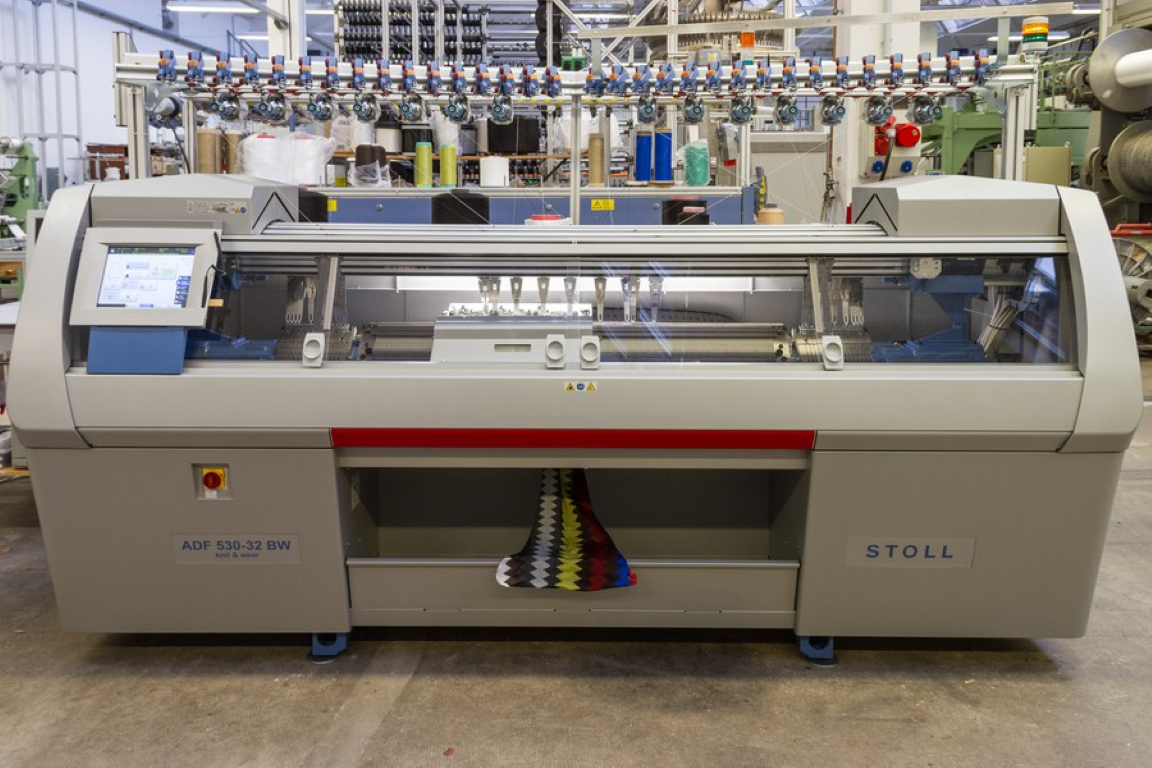
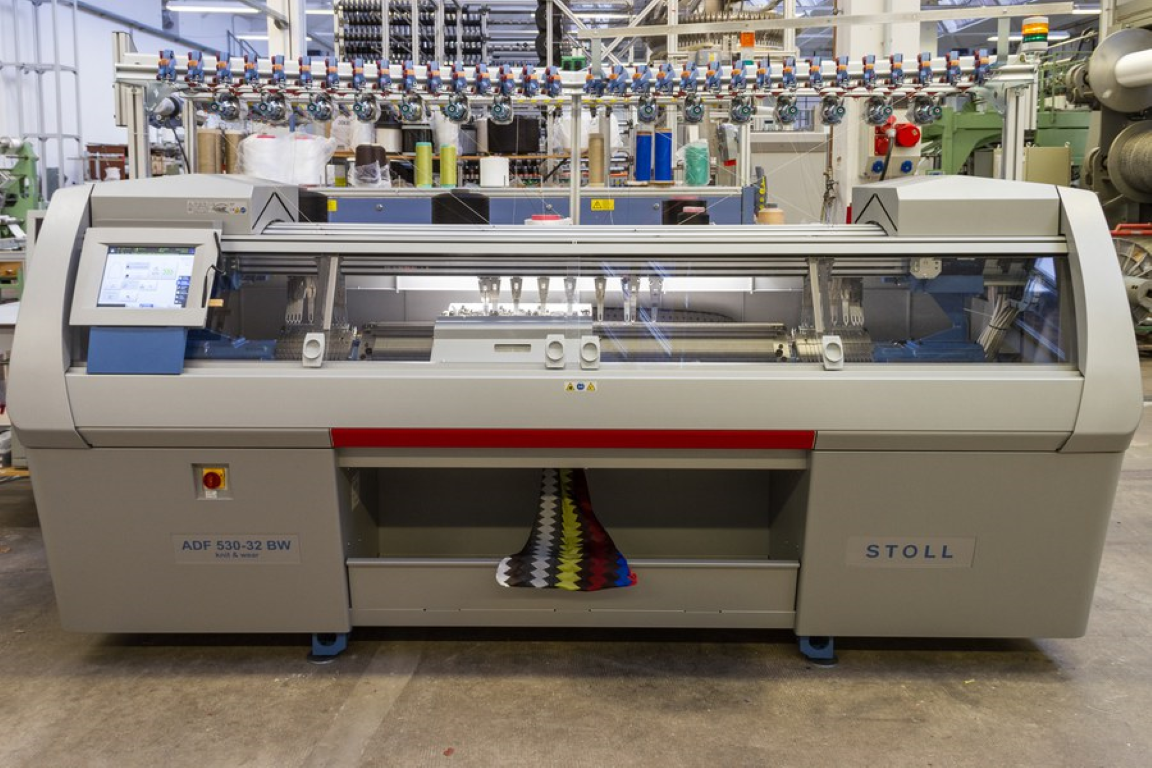
The starting point was a structured requirements analysis conducted through a survey of the technical staff at the participating companies. The goal was to identify practical defect patterns, quality characteristics, and process parameters. A Stoll ADF flat knitting machine (KARL MAYER Holding SE & Co. KG, Germany) with a needle gauge of E7 was selected as the subject of the study (Figure 1); polyester was primarily used as the test material due to its widespread industrial use and low tendency to pill. To keep the complexity manageable, the sample product was limited to a uniform, rectangular continuous knit with a consistent stitch pattern. The stitch depth (needle drop position) and knitting speed were identified as the key parameters that vary during the ongoing process.
Based on this, two complementary experimental designs were derived according to the rules of statistical experimental design: Experimental Design A (parameter study) varied the two process parameters across three levels each, while Experimental Design B (defect simulation) involved the targeted non-ejection of individual needles and pairs of needles at three defined positions within the needle bed (left, middle, and right section) to simulate needle errors. In addition, in cooperation with the industry partner Groz-Beckert KG, experimental designs were created to investigate real-world needle damage, such as bent needle heads, broken needle shanks, and broken needle heads. This experimental design approach ensured a reproducible, clearly structured, and statistically analyzable data set.
Development of Measurement Systems
At the same time, four sensor modalities were designed and experimentally tested. A key methodological principle was synchronous, multimodal data acquisition: All sensor signals were recorded in a time-synchronized manner via a central data acquisition system (Sirius®, DeweSOFT Deutschland GmbH) to enable consistent temporal alignment and subsequent sensor fusion. To support data annotation, a trigger system consisting of two short-range photoelectric sensors was implemented; this system clearly distinguished the interaction of the knitting carriage with the needles from the return stroke and, at the same time, allowed the direction of travel to be determined.
A key feature of the development process was the iterative refinement to focus on the components that made the most economic and technical sense. Approaches that were not conducive to achieving the goal were identified early on and discarded in consultation with the PA:
- Acoustic/Vibroacoustic Sensors
Several microphones (MMS212, Microtech Gefell GmbH, Germany; M30, Earthworks Inc., USA) and a directional microphone (SE8, sE Electronics International Inc., USA) were mounted on the flat-knitting machine, and the piezo/structure-borne sound sensors already installed in the machine were also examined.
- Strain gauge measurement technology
For strain gauge measurement technology, two positions (movable on the thread guide, stationary below the feeder) and two systems were evaluated: a dedicated 3-roller thread tension sensor (FZK) (M120/SA310, Tensometric Messtechnik GmbH, Germany) and a manufacturer-modified feeder (EFS 920, Memminger-IRO GmbH, Germany).
- Optical Metrology
A high-speed camera (DS-CAM 1100m, DEWESoft Deutschland GmbH), including high-performance LED lighting, was mounted on the knitting carriage. Based on the Nyquist-Shannon sampling theorem and a needle pass rate of 276 needles/s, a required frame rate of at least 552 fps was calculated.
Data Collection
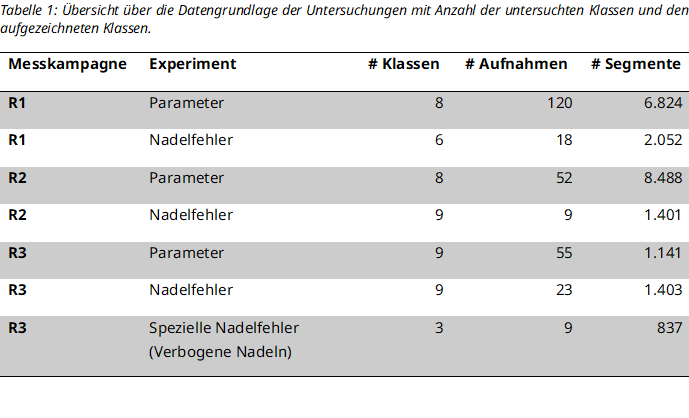
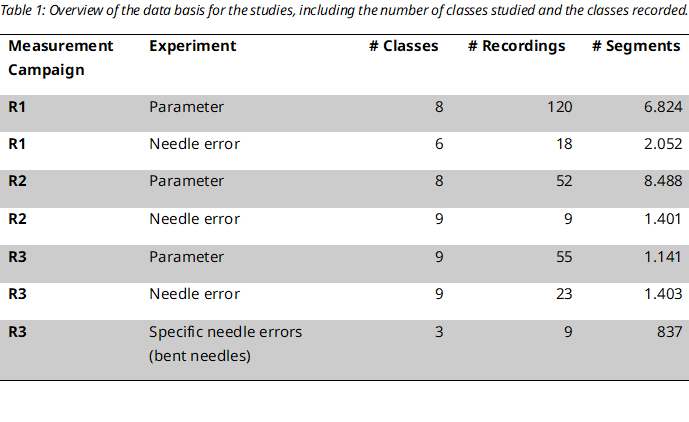
The data set was collected during three measurement campaigns: two under controlled laboratory conditions (R1, R2) and one in a production-like environment at our partner Groz-Beckert KG (R3), where actual damage events involving needles could also be recorded. More than 8 hours of recording material were collected across all measurement campaigns (Table 1), with each recording lasting 60 seconds. The continuous signals were divided into segments based on individual carriage movements, delimited by the photoelectric sensor signals, and labeled according to the process parameters.
Signal Processing, Modeling, and Validation
The acoustic and vibroacoustic signals were resampled to a uniform sampling rate of 32 kHz and then converted into Mel spectrograms (128 frequency bands, 64-ms frame, 32-ms step size). 2D CNNs were used for the spectrogram-based modalities, while the thread tensile force data was analyzed using time-series-based models. During the iterative algorithm development process, various methods (DNN, CNN, SVM, XGBoost) were trained and evaluated for various classification tasks based on sensitivity, specificity, and AUC.
A key methodological aspect was realistic validation. To prevent statistical dependence among segments of the same image from skewing the results, image-based cross-validation (GroupKFold) was primarily used, in which all segments of an image remain together within the same evaluation group. In addition, domain shift between measurement campaigns was specifically investigated by training models on one campaign and testing them on another. Based on this, various strategies for multimodal data fusion were investigated to increase robustness against changing acquisition conditions. Both, decision-based late fusion and feature-based fusion, were evaluated.
Results
Selection of the Measurement System
An analysis of the acoustic/vibroacoustic measurement system showed that the directional SE8 consistently delivered good signals even in the presence of strong background noise (ventilation, neighboring textile machines). In contrast, additional microphones installed inside the machine did not provide any further benefit. Since the integrated piezo shock sensors demonstrated high sensitivity to process-relevant events and additional microphones did not provide any significant additional information, the measurement system was reduced to a directional microphone and the existing shock sensors.
Among the strain gauge sensors tested, the dedicated system proved superior to the modified feeder. It provided higher signal resolution, allowing individual stitch drops and simulated needle errors to be immediately detected. Nevertheless, broader trends were also discernible in the feeder’s measurements, meaning that the data can be effectively supplemented when a CAN interface is available. Ultimately, the static position on the frame above the knitting area was evaluated as the most suitable location. A potential mounting on the yarn guide proved to be complex and not cost-effective.
The optical system was ultimately not integrated into the overall system. During testing, it proved inadequate due to shading caused by moving parts, insufficient illumination, and a maximum achievable frame rate of only 400 fps. The need to remove the needle brush imposed extreme limitations on product design and was therefore not practical. The high computational effort required for recording and analyzing the image data was also viewed negatively, particularly in terms of cost-effectiveness.
Classification of Process Parameters
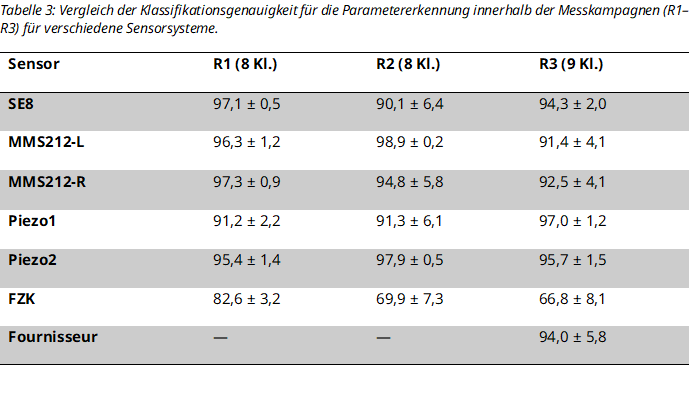
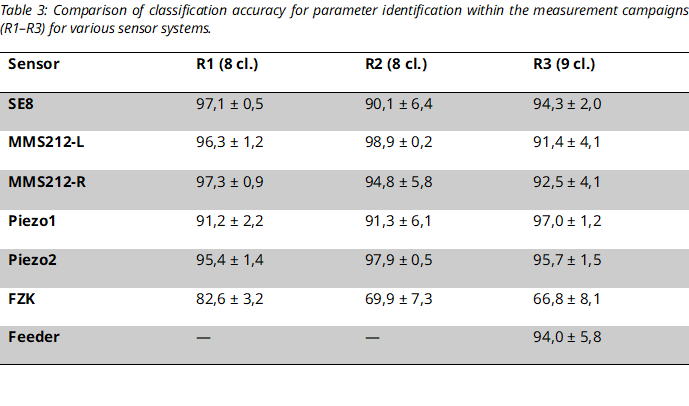
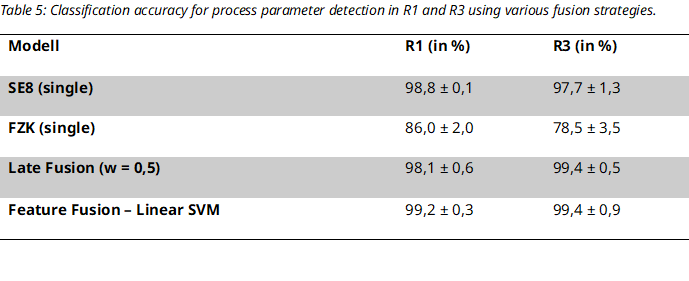
During a measurement campaign, the acoustic and vibroacoustic sensors, in particular, achieved very high classification performance (Table 3). The thread-pulling signal (FZK) provided relevant information but lagged significantly behind in terms of discrimination.
Analysis of the confusion matrices showed that misclassifications occurred predominantly within the same speed class and primarily involved subtle differences in the stitch depth. The process speed has a significantly stronger influence on the signal. It is particularly noteworthy that the model architecture could be applied to production-related data (R3) without structural adjustments and achieved a level of performance comparable to that of the laboratory.
Classification of Needle Defects
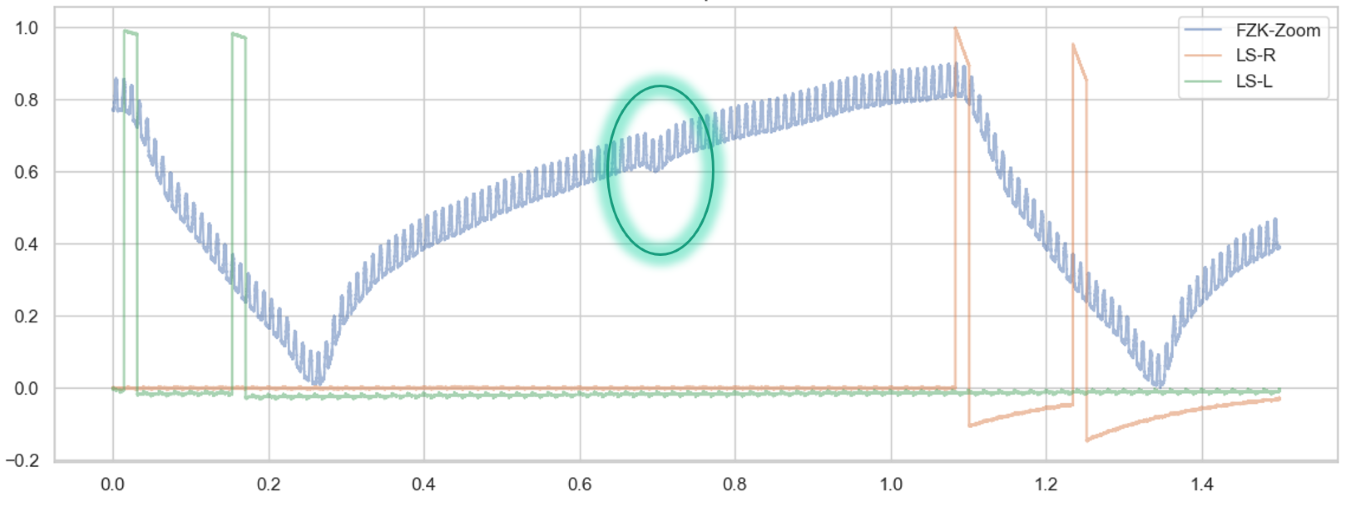
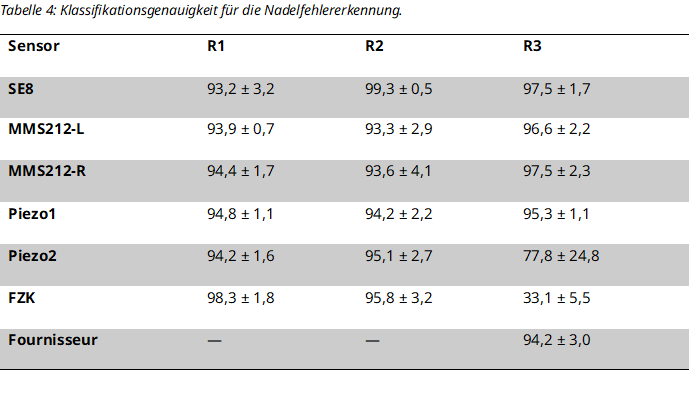
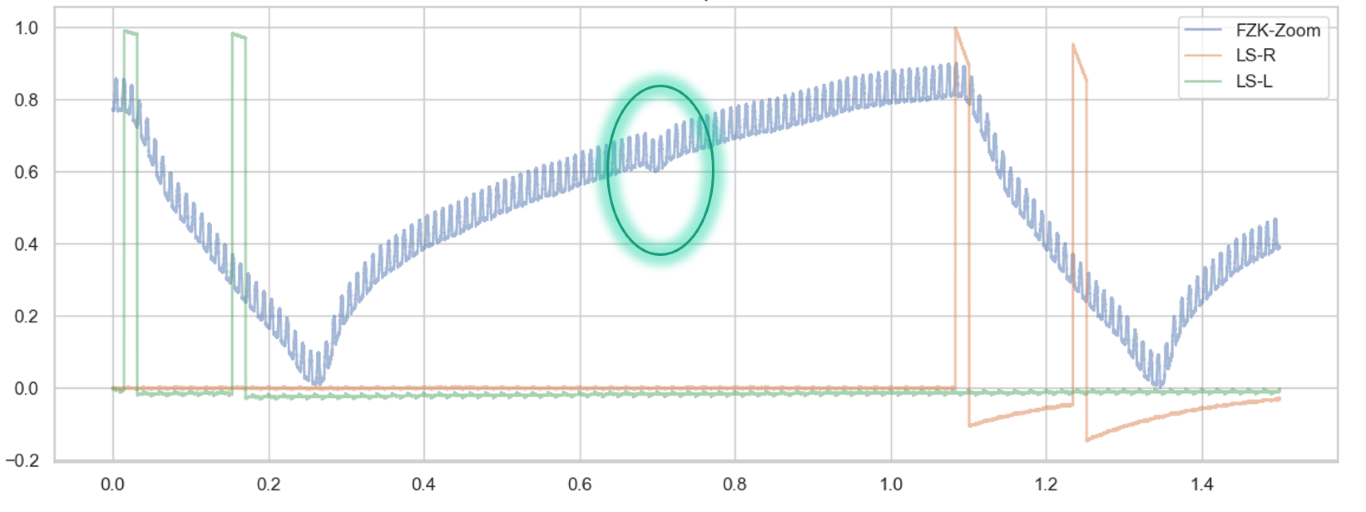
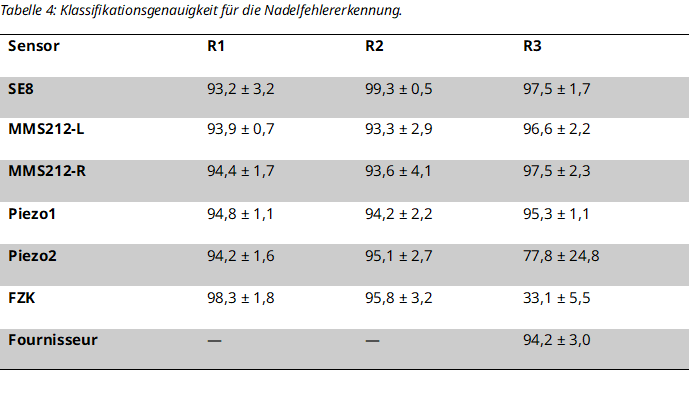
In a standardized 3-class test scenario, the acoustic and vibroacoustic sensors consistently achieved high levels of accuracy across all campaigns (Table 4). The strain gauge sensor also achieved very high values in the laboratory campaigns (Figure 2), but dropped to the random error level in the production-simulated campaign R3.
The drop in performance of the FZK sensor in R3 was attributed to the change in sensor mounting: While the sensor was positioned centrally above the machine in the laboratory, it was mounted on the side in the production environment, which attenuated the characteristic pulse-like signal waveforms.
Domain Shifting and Sensor Fusion
When applied across campaigns, classification performance declined significantly. The extracted features formed campaign-specific clusters. For parameter classification, however, the acoustic sensors remained above the random level, while the FZK sensor failed almost entirely. Needle defect detection revealed a more nuanced picture: Here, the strain gauge sensor sometimes achieved the best results during transfer, as it detects characteristic impulse-like defect patterns that remain stable even under changing conditions.
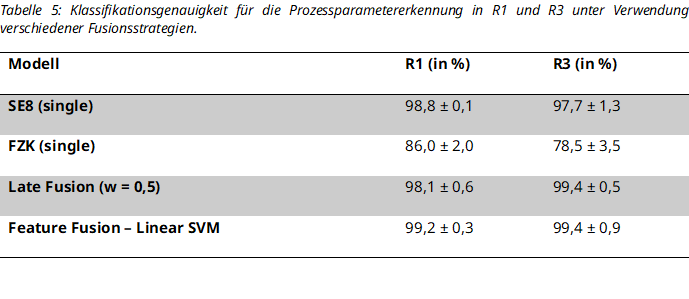
Sensor fusion proved particularly advantageous under non-stationary conditions. While the added benefit remained limited under stable laboratory conditions, the combination of complementary modalities in R3 noticeably improved robustness (late fusion and feature fusion achieved over 99 % here).
Bent needles, wear and tear, and demonstrator
When detecting bent needles (non-pulse-type fault pattern), the acoustic sensors and the feeder achieved accuracies of over 95 %, while the FZK sensor, at 52.9 %, was only slightly above the random error level. Gradual wear (such as that caused by contamination), on the other hand, could not be reliably detected: Even with the machine cleaning system virtually turned off, no measurable contamination occurred during the test period, a result also influenced by the polyester yarn’s low tendency to pill and the comparatively short duration of the measurement campaigns. The final failure states (breaks in individual knitted elements), on the other hand, were clearly detectable.
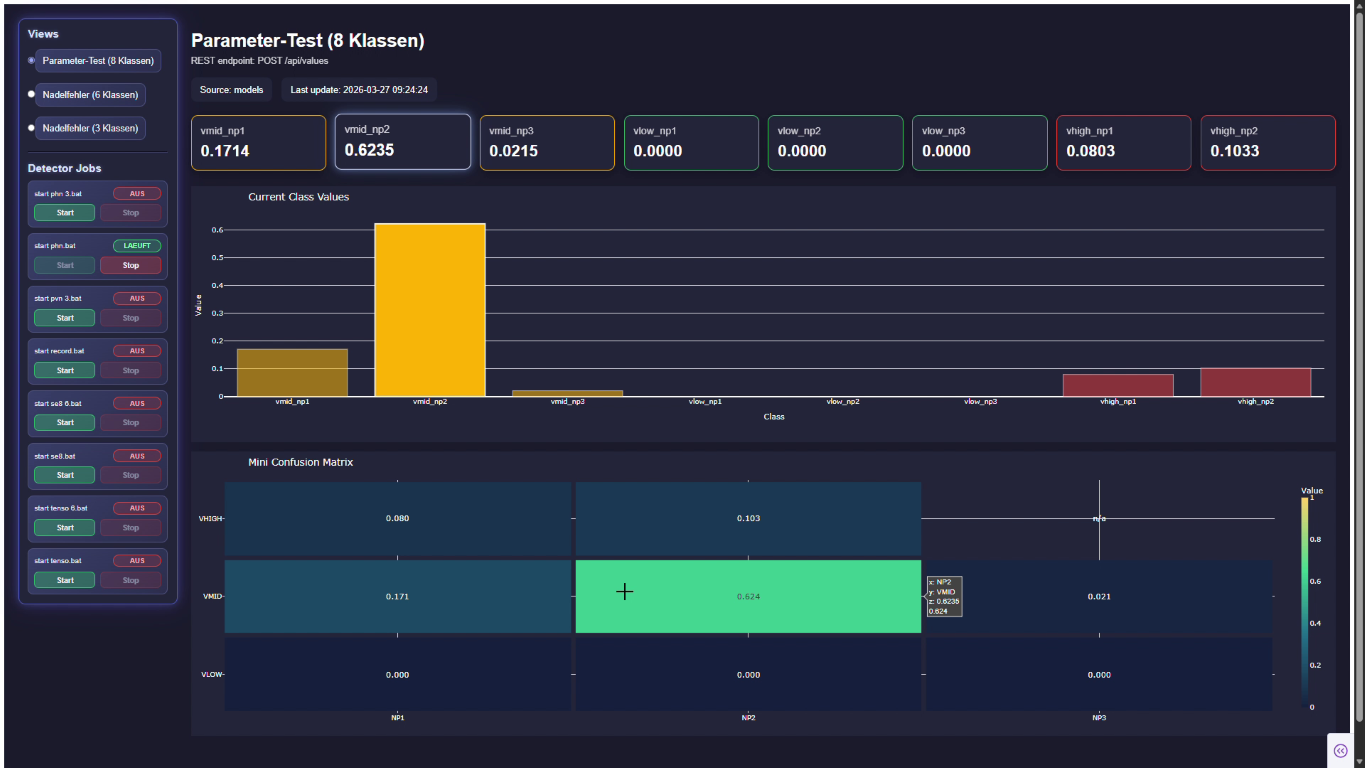
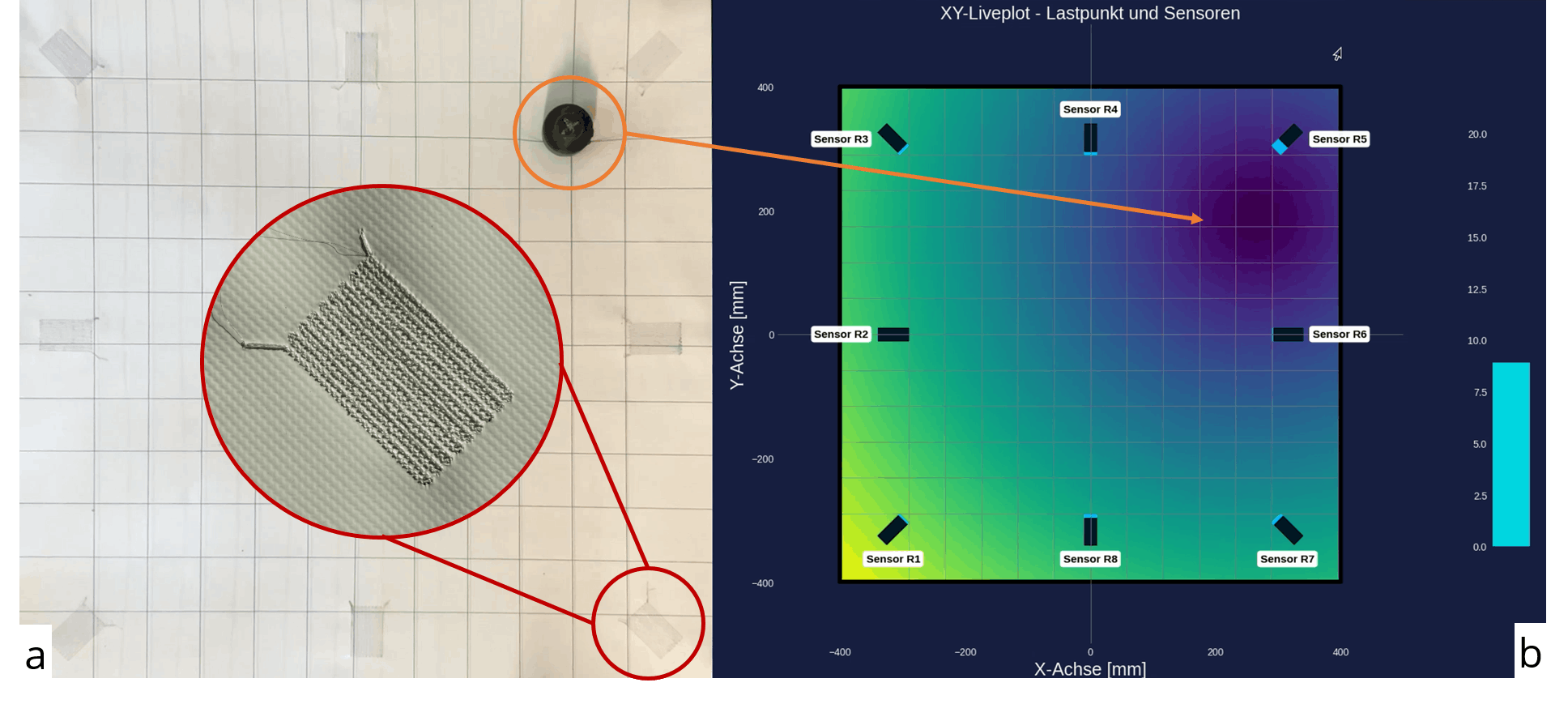
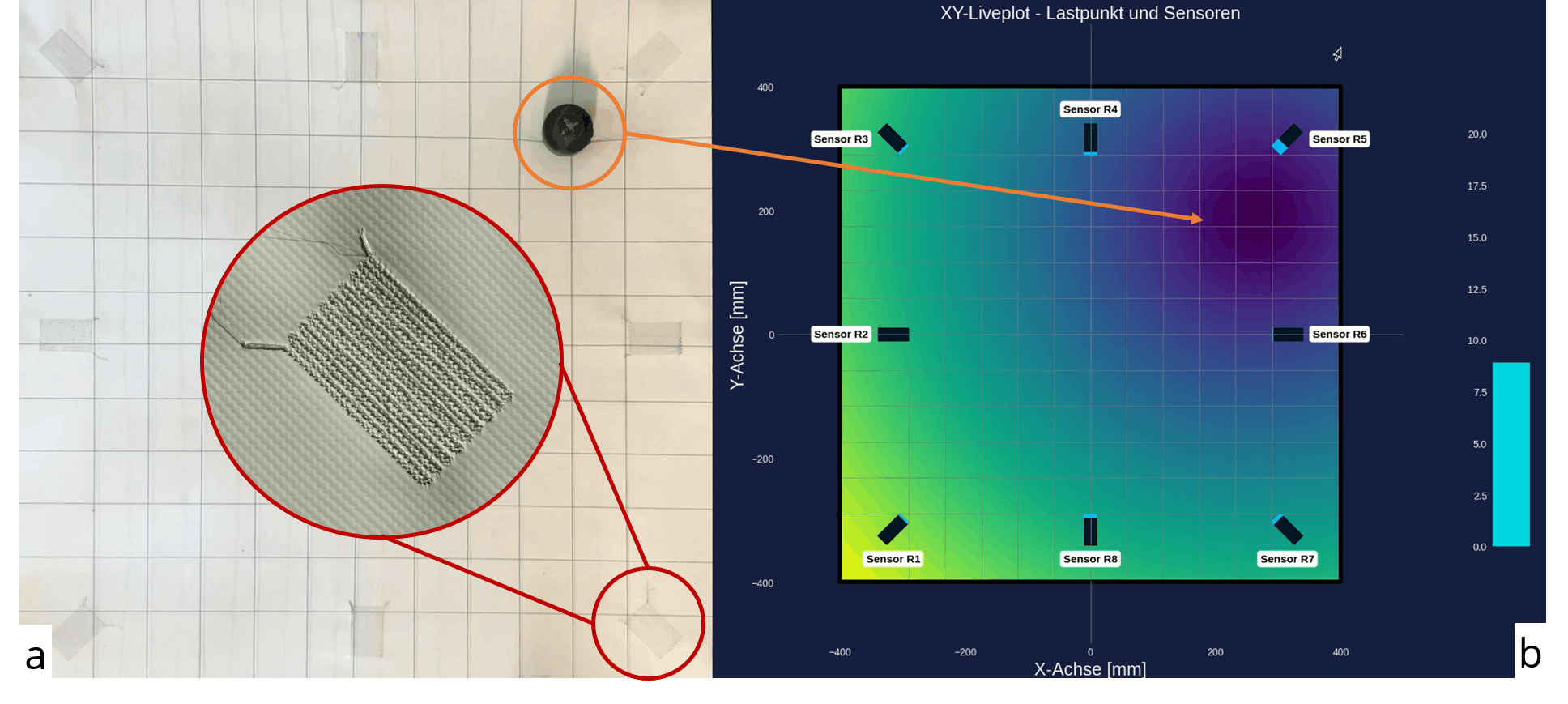
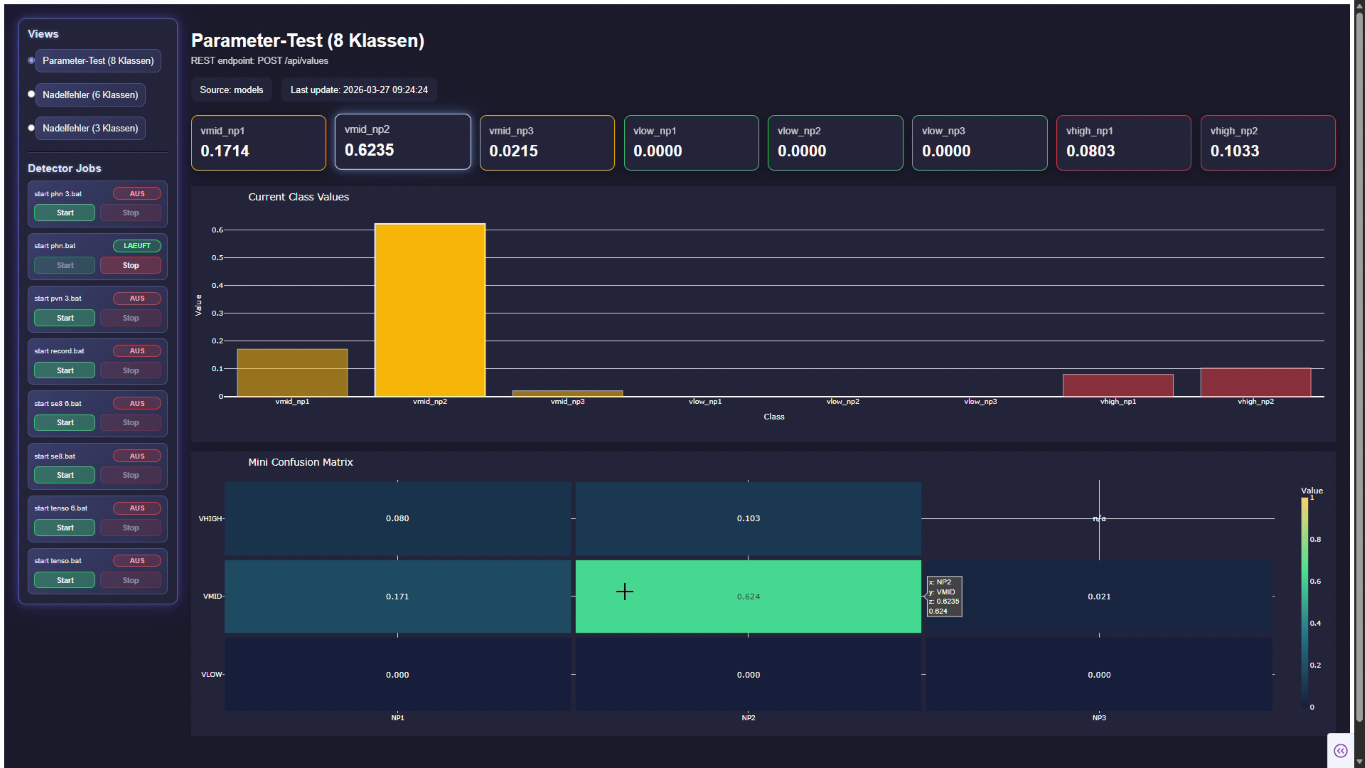
The integrated demonstrator combined data acquisition, feature extraction, and classification into a single end-to-end pipeline and was validated at the ITM under real-world conditions. After retraining for the specific operational environment, it achieved an average classification accuracy of approximately 80 %, thereby demonstrating its fundamental ability to operate inline. A graphical user interface (Figure 3) allowed users to select sensor models and visualize the results.
Discussion
The results demonstrate that acoustic and vibroacoustic sensors represent a robust and cost-effective alternative to camera-based systems. Across all measurement campaigns, including those conducted in a production-like environment, these modalities consistently delivered high accuracy in both parameter determination and needle defect classification. Particularly noteworthy is the transferability of the model architecture from the laboratory to real-world production conditions without any structural adjustments.
A more nuanced picture emerges for strain gauge sensors: Under controlled conditions, they are excellent for detecting impulsive single-needle defects, but their performance depends heavily on the specific sensor mounting and the associated force application. If the positioning changes or if the defects are not impulsive in nature (e.g., bent needles), its performance drops significantly. Consequently, sensor modalities must be selected based on the specific task: No single sensor technology is equally suitable for all applications.
The key remaining challenge is domain shift. The significant performance drops observed during cross-campaign transfer demonstrate that reliable generalization across different environments is only possible to a limited extent without domain adaptation, retraining, or additional representative training data. Sensor fusion can partially increase this robustness under varying conditions; however, its usefulness depends largely on an application-specific weighting of the modalities. Another significant limitation is the limited number of independent recording sessions, which restricts the statistical significance regarding robustness.
With regard to the detection of gradual wear, it became apparent that, unlike acute defects, this cannot be simulated in the short term but requires specific long-term tests with continuous data collection and defined reference conditions.
Key Takeaway: Acoustic sensors, combined with AI-powered data analysis, offer great potential for the digital transformation of quality assurance in the flat knitting process. The main hurdle to industrial implementation is not so much the basic detection performance as it is the system’s robustness against domain shifts.
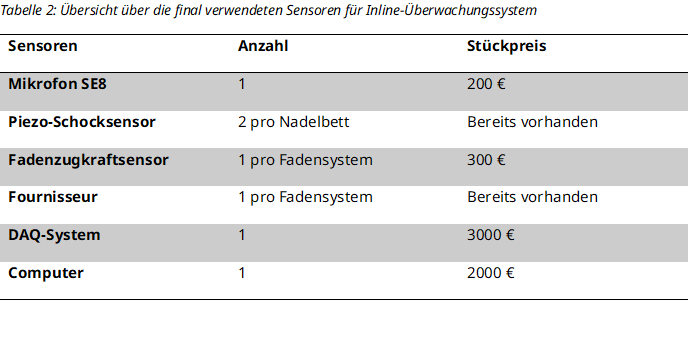
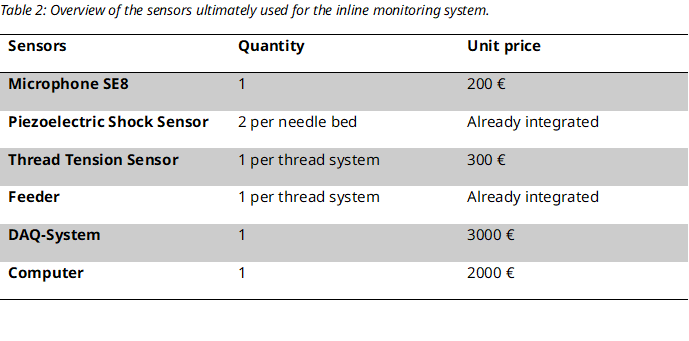
From an economic perspective, the assessment shows that a functional basic configuration of the OptiStrick system, as outlined in The final setup optimized the number of sensors and used sensor technologies for the best performance at the lowest possible cost. The required components are listed in Table 2.
Table 2: Overview of the sensors ultimately used for the inline monitoring system., using commercially available sensors and data acquisition technology, can already be implemented for approximately 6,160 € per flat knitting machine with two needle beds and three monitored yarns. Thus, the current prototype version is still above the originally targeted range of 1,500 €, but it constitutes a technically robust baseline configuration for further industrial development. Additionally, for a reliable industrial application, further development efforts on the order of one additional project year (personnel costs of approximately 90,000 €) must be factored in. Given a scrap rate of up to 10 % for complex technical knits, a return on investment is therefore not expected until the medium term. In the long run, however, costs can be significantly reduced, for example by using a microcomputer (approx. 350 €) after AI training is complete or by employing purely acoustic setups with low-cost structure-borne sound sensors (approx. 15 € each).
Conclusion and Outlook
The OptiStrick project has taken an important step toward the digitization and automation of quality assurance in the knitting industry by developing an AI-based inline quality assurance system for the flat knitting process. By combining existing sensors, such as Fournisseur and factory-installed shock sensors, with an additional directional microphone, it is possible to implement a powerful monitoring system with relatively little effort—one that detects needle defects and the resulting changes in the knit fabric early on and independently of the operator. The scientific validation of the multimodal integration of strain gauge, vibroacoustic, and acoustic sensors, the development of suitable AI models, and the reliable classification of process parameters and specific needle defects have been successfully demonstrated.
Three key areas of focus emerge for future work. First, the data set should be significantly expanded under various real-world operating conditions to statistically validate the generalizability of the results. Second, specific methods for improving robustness, such as domain adaptation, tailored preprocessing, and optimized fusion strategies, should be investigated to compensate for domain shifts. Third, the detection of slowly progressing wear mechanisms requires dedicated long-term tests with continuous data acquisition; for the instrumented measurement of needle stress, miniaturized strain gauges attached directly to the needle also appear to be a promising approach.
In the long term, this operating principle can be applied to other textile processes, such as weaving, embroidery, or sewing. As operating time increases and the database grows, AI models continuously improve, and foreseeable advances in AI software and hardware will make the implementation of such systems increasingly economically attractive, particularly as retrofittable, cost-effective solutions for existing production facilities in SME.
Acknowledgement
IGF project 01IF22931N of the research association Forschungskuratorium Textil e.V., Wallstr. 58/59, 10179 Berlin Berlin, was funded by the Federal Ministry for Economic Affairs and Energy through the German Aerospace Center (DLR) as part of the program to promote industrial collaborative research and development (IGF), pursuant to a resolution of the German Bundestag.
The authors would like to thank the institutions listed for providing the funding. The research report and additional information are available at the Institute for Textile Machinery and High-Performance Textile Materials Technology at TU Dresden, as well as at the Fraunhofer Institute for Digital Media Technology.
Literature
1. Kahraman, Y. und A. Durmuşoğlu. Deep learning-based fabric defect detection: A review [online]. Textile Research Journal, 2023, 93(5-6), 1485-1503. ISSN 0040-5175. Verfügbar unter: doi:10.1177/00405175221130773
2. Metin, A. und T.T. Bilgin. Automated machine learning for fabric quality prediction: a comparative analysis [online]. PeerJ. Computer science, 2024, 10, e2188. Verfügbar unter: doi:10.7717/peerj-cs.2188
3. Wuest, T., D. Weimer, C. Irgens und K.-D. Thoben. Machine learning in manufacturing: advantages, challenges, and applications [online]. Production & Manufacturing Research, 2016, 4(1), 23-45. Verfügbar unter: doi:10.1080/21693277.2016.1192517
4. Khusheef, A.S., M. Shahbazi und R. Hashemi. Deep Learning-Based Multi-Sensor Fusion for Process Monitoring: Application to Fused Deposition Modeling [online]. Arabian Journal for Science and Engineering, 2024, 49(8), 10501-10522. ISSN 2193-567X. Verfügbar unter: doi:10.1007/s13369-023-08340-4
5. Sun, A., S. Che, J. Fu und K. Wang. Multi-sensor information fusion technologies and applications: a review [online]. The International Journal of Advanced Manufacturing Technology, 2026, 144(1-2), 177-192. ISSN 0268-3768. Verfügbar unter: doi:10.1007/s00170-026-17965-2
6. Wei, B., K. Hao, X. Tang und Y. Ding. A new method using the convolutional neural network with compressive sensing for fabric defect classification based on small sample sizes [online]. Textile Research Journal, 2019, 89(17), 3539-3555. ISSN 0040-5175. Verfügbar unter: doi:10.1177/0040517518813656
7. Heyen, C. Applying AI for Future Business Models in the Textile and Fashion Value Chain [online]. International Journal for Research in Applied Science and Engineering Technology, 2025, 13(3), 378-386. Verfügbar unter: doi:10.22214/ijraset.2025.67255
8. Yildirim, P., D. Birant und T. Alpyildiz. Data mining and machine learning in textile industry [online]. WIREs Data Mining and Knowledge Discovery, 2018, 8(1). ISSN 1942-4787. Verfügbar unter: doi:10.1002/widm.1228
9. Kothuru, A., S.P. Nooka und R. Liu. Application of audible sound signals for tool wear monitoring using machine learning techniques in end milling [online]. The International Journal of Advanced Manufacturing Technology, 2018, 95(9-12), 3797-3808. ISSN 0268-3768. Verfügbar unter: doi:10.1007/s00170-017-1460-1
10. Fatoba, O.S. und T.-C. Jen. Acoustic-Based In-Situ Monitoring of Additive Manufacturing Fabrication: A Review. In: 2023 14th International Conference on Mechanical and Intelligent Manufacturing Technologies (ICMIMT): IEEE, 2023, S. 250-256. ISBN 979-8-3503-1309-3.
11. Ciaburro, G. und G. Iannace. Machine-Learning-Based Methods for Acoustic Emission Testing: A Review [online]. Applied Sciences, 2022, 12(20), 10476. Verfügbar unter: doi:10.3390/app122010476
12. Westenberger, J., K. Schuler und D. Schlegel. Failure of AI projects: understanding the critical factors [online]. Procedia Computer Science, 2022, 196, 69-76. ISSN 18770509. Verfügbar unter: doi:10.1016/j.procs.2021.11.074
Kontakt: hung.le_xuan@tu-dresden.de
https://tu-dresden.de/ing/maschinenwesen/itm
TUD Dresden University of Technology
Faculty of Mechanical Science and Engineering
Institute of Textile Machinery and High Performance Material Technology (ITM)
01062 Dresden
katharina.anding@idmt.fraunhofer.de
https://www.idmt.fraunhofer.de/
Fraunhofer IDMT
Ehrenbergstraße 31
98693 Ilmenau