From the Sector

Reset
Agrotextiles (c) Institut für Textiltechnik der RWTH Aachen University
15.04.2026

ITA @ Techtextil 2026: Smart textiles - sustainable, eco-friendly and AI-powered

Sports shoes made from algae, leggings made from mushrooms, filtering (diesel) oil from water, 4D textiles, recyclable, sustainable and featuring AI – this is what the ITA Group is presenting at three individual stands run by ITA Aachen, ITA Augsburg gGmbH and ITA Technologietransfer GmbH on the joint stand of Elmatex in hall 12.0 D05.

ITA Aachen embraces the concept of sustainability and, through its exhibits, presents solutions to specific contemporary challenges:

Sports shoes made from algae, leggings made from mushrooms, filtering (diesel) oil from water, 4D textiles, recyclable, sustainable and featuring AI – this is what the ITA Group is presenting at three individual stands run by ITA Aachen, ITA Augsburg gGmbH and ITA Technologietransfer GmbH on the joint stand of Elmatex in hall 12.0 D05.

ITA Aachen embraces the concept of sustainability and, through its exhibits, presents solutions to specific contemporary challenges:

  1. 4D-printed textiles
    4D textiles are textile structures capable of selectively altering their shape or function over time. The ‘fourth dimension’ refers to their response to external stimuli such as temperature, humidity, light or electrical impulses. These are typically based on active materials such as shape-memory polymers, shape-memory alloys or hygroscopic fibres, which are integrated into textile structures. Their role lies in the development of adaptive, functional systems: from climate-regulating clothing and textile-based actuators in soft robotics to self-deploying or medical applications. 4D textiles transform textiles from passive flat structures into responsive, intelligent systems.
  2. AlgaeTex sports shoe
    Algae have immense potential as a bio-based raw material to replace petroleum in synthetic textiles: they grow rapidly and can absorb carbon dioxide more efficiently than other bio-based raw materials derived from land plants. Furthermore, their cultivation requires less land – including land unsuitable for other crops – and avoids the use of pesticides. The use of algae as a renewable resource for the production of biopolymers and textiles circumvents the challenges of competing with low fuel prices by creating higher-value applications. In this way, the German textile industry can act as a catalyst for the shift away from fossil fuels towards a bioeconomy in which algae represent an important source of biomass.

    The AlgaeTex project demonstrates that the production of thermoplastic biopolymers from algae for textile applications is technically feasible. These novel biopolymers are melt-spun and processed into high-quality textiles that are of significance to the sporting goods industry, such as knitted shoe uppers or T-shirts. 
  3. Visionary Agrotextiles
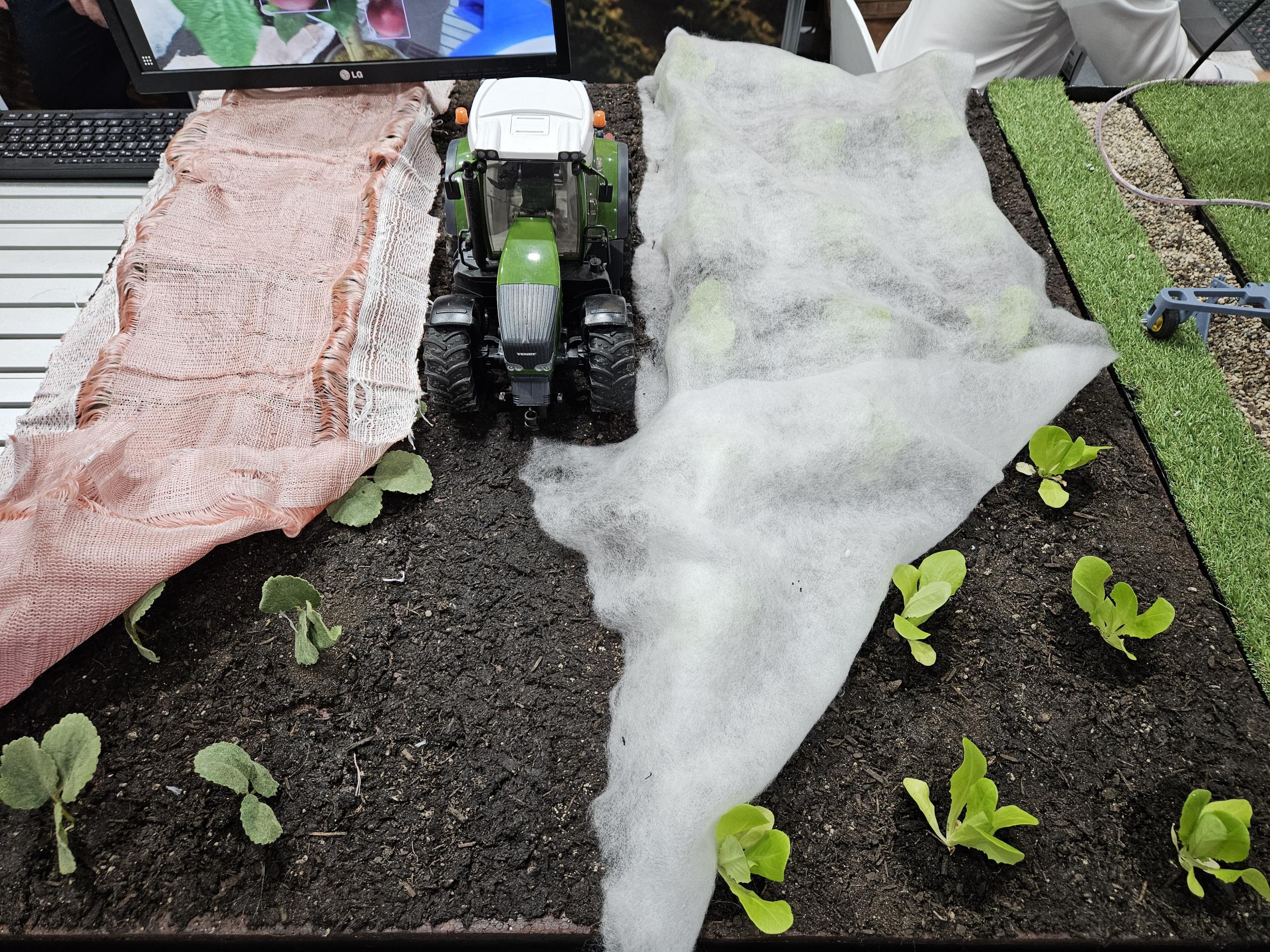
    Agrotextiles are of particular importance for specialised crops such as strawberries, lettuce and kohlrabi, as they have a significant influence on growing conditions. For instance, they can raise soil temperature, channel water to the plants and protect seedlings from external influences, particularly during early growth stages. Agrotextiles consist almost exclusively of petrochemically produced polymers that are not biodegradable. This demonstrator therefore showcases a carded fleece made from biodegradable polymers, which is used to bring forward the harvest in strawberry fields. In the same crop but serving a different purpose, a monofilament net is on display; its deep red colour and a coating of ultra-fine silicate particles serve to protect the plants from invasive insect species.
  4. Bionic Oil Adsorber
    On various biological surfaces, oil is adsorbed from the water’s surface and transported along floating leaves.
    ITA postdoctoral researcher Dr Leonie Beek has transferred this effect to a technical textile using her Bionic Oil Adsorber (BOA), which, at maturity level 4, can remove up to 4 litres of diesel per hour from the water.

    The BOA differs from technical solutions in that the oil-water separation takes place without external energy and without toxic substances. The work on the BOA has been recognised with the Bionics Award – only in German available - and the Paul Schlack Prize.
  5. BioPEtex – A PE-based, solution-dyed and sustainable T-shirt made from organic raw materials
    In the multi-billion-pound fibre market, fossil-based polyesters (PES) dominate the clothing sector, accounting for 52% of the market. Unfortunately, PET, the most commonly used PES, cannot be produced on an industrial scale as 100% bio-based material, unlike polyethylene (PE). Bio-based PE (bioPE), a drop-in polymer derived from fermented starches or sugars, has properties identical to those of fossil-based PE and is easily recyclable. It is also more cost-effective than other biopolymers used in fibres and can be processed at lower temperatures, which saves energy. Solution-dyed bioPE offers significant environmental benefits: it consumes 50% less energy and water than conventional dyeing processes and emits 60% less CO2.

    Life cycle assessments (LCA) predict that PE could significantly reduce the textile industry’s ecological footprint, with solution-dyed bio-PE further enhancing this reduction. Furthermore, PE textiles are IR-transparent and thus provide passive cooling for the body.

    Despite these advantages, PE is not yet used in the clothing industry. Preliminary research findings from the ITA suggest that PE can be processed into spun, dyed filaments and knitted fabrics with promising textures. The T-shirt on display is spun and dyed and features an elastic surface made from bio-based raw materials. A bio-based elastic finish enhances the T-shirt, which is made from a single source and is thermomechanically recyclable. Contact: Mathias.Ortega@ita.rwth-aachen.de
  6. FungalFibers – Leggings
    Against a backdrop of limited resources such as oil, water and arable land, as well as increasing environmental degradation and potential for conflict, there is significant social and commercial interest in providing competitive, socially and environmentally sustainable alternative raw materials for the textile industry. The aim of this project is to develop a completely new process chain for the production of bio-based, vegan textiles from chitosan fibres (filament and staple fibre yarns).

    Chitosan is chemically closely related to chitin, the second most abundant substance in nature after cellulose. It occurs naturally in a variety of sources: in insects, crab and shellfish shells, and as a structural component of the cell walls of all fungi. Chitin can therefore be obtained from by-products of crab meat production, insect protein or fungal biomass waste from industrial processes. Chitosan, in turn, can be easily produced from chitin through deacetylation. Contact: Leonie.Beek@ita.rwth-aachen.de.

    ITA Group will be presenting the latest developments in sustainable textile products and production processes at Techtextil 2026, taking place from 21 to 24 April 2026 in Frankfurt am Main. The exhibits from ITA Augsburg gGmbH and ITA Technologietransfer GmbH will be on display at the Elmatex joint stand in Hall 12.0, Booth D05.

ITA Group will showcase various approaches to mechanical and thermo-mechanical recycling, addressing potential applications in the textile, materials and automotive industries. ITA Augsburg gGmbH, which specialises in mechanical textile recycling, will present innovations in the fields of composites, mechanical textile recycling and artificial intelligence in production. These include sound and thermal insulation panels from the “IsoTex” project, a towel from the “EcoYarn” recycling project, and the “ColoSens” demonstrator, an AI-based solution for automated colour recognition of fibres in the recycling process.

ITA Technologietransfer GmbH demonstrates thermo-mechanical recycling using numerous examples within the Fabric2Fabric cycle. Using a 3D-printed car seat demonstrator as an example, the recyclable filament yarns are incorporated into a seat cover.

In addition, ITA Technologietransfer GmbH is showcasing its patented ‘Textile Anchor’ concept, an innovative anchoring system designed to protect and secure structures in geotechnical environments such as mountains, in the ground and underwater, as well as for use in building construction. The textile anchor offers an ultra-lightweight solution with high flexibility and optimal adaptability, and is manufactured from extremely durable or biodegradable and sustainable textiles.

At ITA Group’s ‘shared booth’, ITA Technologietransfer GmbH will be providing information on innovations from various industrial partners:

  • technofibres s.a. from Luxembourg offers solution-dyed PET and sustainable trPET filament yarns with a wide range of matting levels, filament cross-sections and packaging options for bespoke solutions, even in the smallest batch sizes, making it unique in Europe.
  • Idemitsu Kosan Co., Ltd. from Japan offers Xarec™, a syndiotactic polystyrene (SPS) fibre for use in fabrics and nonwovens. The advantages of this semi-crystalline high-performance material, which acquires its syndiotactic structure through the polymerisation of polystyrene and a metallocene catalyst, are demonstrated in nonwoven samples for the filtration sector in comparison with conventional materials.
  • The Swedish company Luma Wire Tech AB is an innovative specialist in fine wires, with expertise in advanced plating. Each wire, ranging from 4 to 300 microns and produced from tungsten, molybdenum, or other advanced materials, is tailored to meet each customer’s specific needs— available either uncoated or with high-performance coatings of gold, silver, palladium, or other.
Source:

Institut für Textiltechnik der RWTH Aachen University

(c) Association of the Nonwoven Fabrics Industry
15.04.2026

INDA 2026 Supply Report: Resilient Growth and Sustainability in North American Nonwovens Industry

INDA, the Association of the Nonwoven Fabrics Industry, today released its 13th annual North American Nonwovens Supply Report, offering a comprehensive look at the industry’s performance, challenges, and strategic evolution. The report reveals a complex landscape shaped by global trade uncertainty, including tariffs and geopolitical tensions, which are expected to influence industry growth and performance in the coming years. Production output slowed again in 2025, reflecting a cautious, “wait-and-see” environment across the sector.

Despite these headwinds, the industry demonstrates resilience. Key trends include moderated production levels paired with cautious optimism, as companies adapt to shifting market conditions. Sustainability and environmental stewardship remain central priorities, driving innovation and long-term strategic investments.

INDA, the Association of the Nonwoven Fabrics Industry, today released its 13th annual North American Nonwovens Supply Report, offering a comprehensive look at the industry’s performance, challenges, and strategic evolution. The report reveals a complex landscape shaped by global trade uncertainty, including tariffs and geopolitical tensions, which are expected to influence industry growth and performance in the coming years. Production output slowed again in 2025, reflecting a cautious, “wait-and-see” environment across the sector.

Despite these headwinds, the industry demonstrates resilience. Key trends include moderated production levels paired with cautious optimism, as companies adapt to shifting market conditions. Sustainability and environmental stewardship remain central priorities, driving innovation and long-term strategic investments.

Report Based on Extensive Producer Input
Developed through extensive research, including producer surveys and in-depth interviews with industry leaders, the 2026 report offers a comprehensive view of the nonwovens landscape, spanning composites, roll goods, and finished products. This report provides an in-depth analysis of capacity, production, operating rates, and regional trade across North America, including the United States, Canada, and Mexico.

“As part of INDA’s role as the industry’s trusted data source, this report delivers valuable insights for benchmarking, strategic planning, and decision-making,” said Tony Fragnito, INDA President and CEO. “This year’s findings highlight a resilient industry that continues to expand capacity through ongoing investments across all regions and sectors. We are also seeing a clear shift toward sustainable, durable products, alongside continued innovation to meet evolving demand across North America.”

The full report is provided at no cost to participating producers. INDA members receive the report’s Executive Summary on a complimentary basis as part of their membership. Data from the Supply Report also informs INDA’s biennial Global Nonwoven Markets Demand Report, most recently published in November 2024.

“INDA remains committed to enhancing the quality and depth of our industry data and insights,” said Mark Snider, Chief Market and Industry Analyst. “Strong participation from suppliers is essential to that mission. As global supply chain pressures intensify, this report examines the key dynamics shaping the market and influencing future direction.”

Source:

Association of the Nonwoven Fabrics Industry

VEGANCELIO Photo AIMPLAS
VEGANCELIO
10.04.2026

VEGANCELIO: Transforming organic waste into vegan leather and cosmetic microcapsules

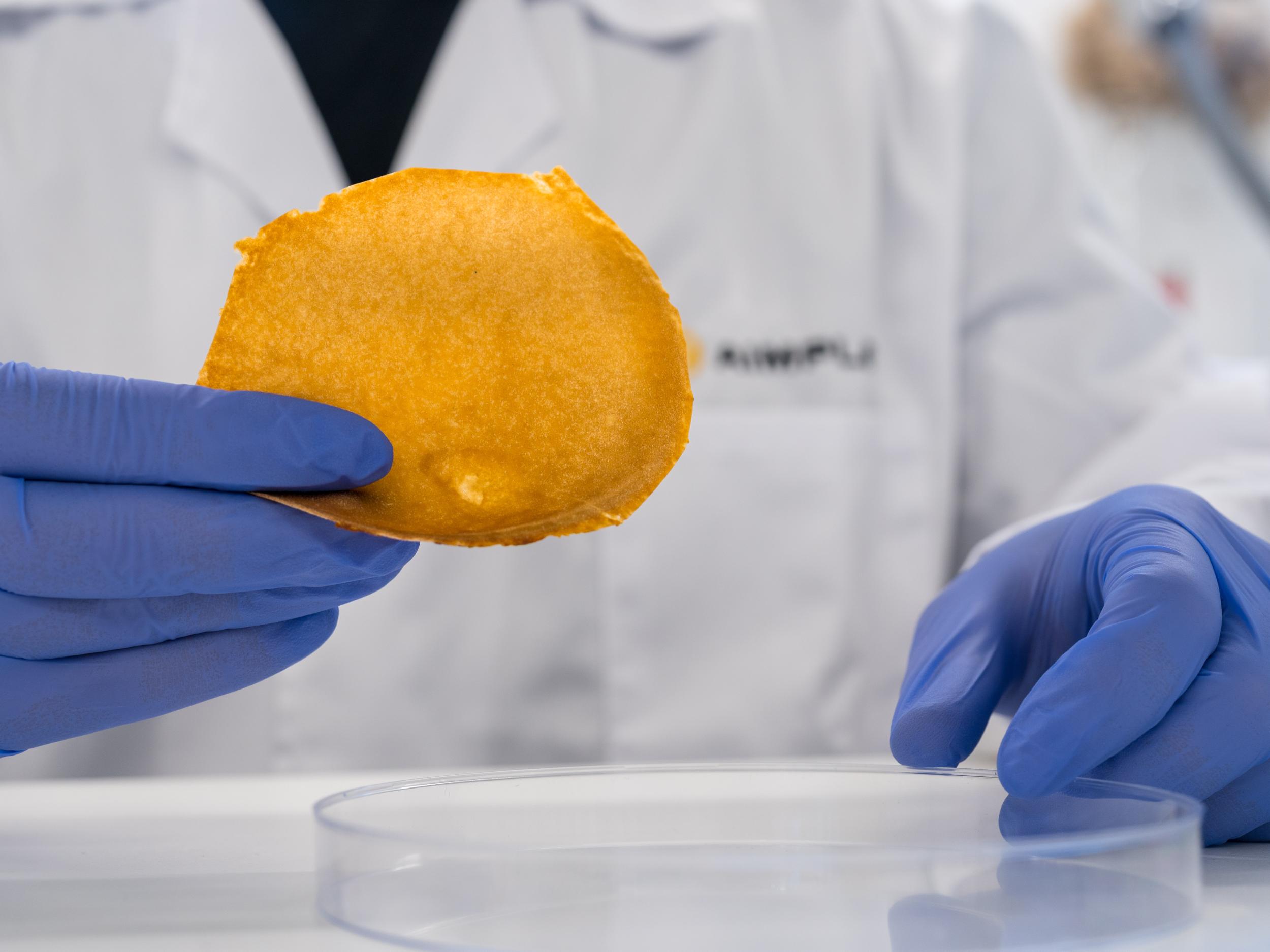
Organic waste accounts for around 50% of municipal waste in Spain. Current treatment methods, such as composting or biogas production, do not generate products with sufficient economic value to offset management costs. In response to this environmental and economic challenge, VEGANCELIO has emerged—a project led by AIMPLAS, the Plastics Technology Centre—which proposes a solution aligned with the circular economy and the bioeconomy.

The project, funded by the Valencian Institute of Competitiveness and Innovation (IVACE+i) with ERDF funds, aims to develop advanced technologies to recover value from organic waste by converting it into two key products: vegan leather made from fungal mycelium, intended for the textile sector, and chitosan microcapsules with cosmetic applications, capable of encapsulating active ingredients with antioxidant effects and controlled release.

Organic waste accounts for around 50% of municipal waste in Spain. Current treatment methods, such as composting or biogas production, do not generate products with sufficient economic value to offset management costs. In response to this environmental and economic challenge, VEGANCELIO has emerged—a project led by AIMPLAS, the Plastics Technology Centre—which proposes a solution aligned with the circular economy and the bioeconomy.

The project, funded by the Valencian Institute of Competitiveness and Innovation (IVACE+i) with ERDF funds, aims to develop advanced technologies to recover value from organic waste by converting it into two key products: vegan leather made from fungal mycelium, intended for the textile sector, and chitosan microcapsules with cosmetic applications, capable of encapsulating active ingredients with antioxidant effects and controlled release.

VEGANCELIO is structured around a comprehensive technological approach that includes the production of fungal mycelium from organic waste, the sustainable extraction of chitosan from fungal biomass using chemical and enzymatic methods, the manufacture of vegan leather by optimising plasticisers and processes such as extrusion, and the development of chitosan and hybrid microcapsules for dermocosmetic applications. Furthermore, the project envisages knowledge transfer to the plastics, textile and cosmetics sectors in the Valencian Community, with the potential to replicate the model in other industries and for other types of waste with a similar composition.

The project involves collaboration with Tejidos Royo S.L., which specialises in the manufacture of textile materials, and DERMOPARTNERS S.L., an expert in the formulation of dermocosmetic products. Both companies provide valuable industrial and market insights, actively participating in the definition of technical parameters, specialist advice and the validation of the materials developed. Their involvement ensures the practical and commercial viability of the processes, strengthening the potential for the real-world application of the project’s results.

“The products developed in VEGANCELIO respond to a real market demand, which allows the applied technologies to be made profitable. The project represents an opportunity for companies implementing these results to position themselves as leaders in sustainability and innovation,” explains Pablo Ferrero, lead researcher in Biotechnology at AIMPLAS.

VEGANCELIO’s comprehensive approach not only contributes to the reduction of organic waste and greenhouse gas emissions but also promotes the production of materials free from harmful substances, fostering sustainable, profitable and scalable processes. The project reduces reliance on imported raw materials and positions the Valencian Community as a leader in sustainable innovation.

VEGANCELIO joins other initiatives led by AIMPLAS that promote waste recovery and the development of sustainable materials, consolidating its role as a driver of innovation.

More information:
AIMPLAS Vegan vegan leather
Source:

AIMPLAS 

Danish partnership extends the lifespan of wool-nylon textiles Photo: Ben Kerckx, Pixabay
02.04.2026

Danish partnership extends the lifespan of wool-nylon textiles

Carpets and upholstery fabrics from ships and hotels have significant recycling potential that is not currently being fully utilised. A Danish partnership aims to change that.

Many offices, hotels, ships and other public spaces are fitted with carpets and upholstery fabrics made from wool-nylon blends. The combination of materials gives the products a very long lifespan, but complicates the recycling process when they are replaced. Manufacturers, researchers and knowledge partners have joined forces in the UnBlend partnership, which aims to make textiles easier to reuse and recycle.

Aiming to extend the lifespan of wool-nylon textiles
Tons of high-quality carpets and upholstery fabrics go up in smoke when offices, hotels, ships, libraries, theatres and other public spaces refurbish their interiors. In the EU alone, an estimated 1.6 million tonnes of carpets are disposed of every year, and the vast majority are incinerated or end up in landfill.

Carpets and upholstery fabrics from ships and hotels have significant recycling potential that is not currently being fully utilised. A Danish partnership aims to change that.

Many offices, hotels, ships and other public spaces are fitted with carpets and upholstery fabrics made from wool-nylon blends. The combination of materials gives the products a very long lifespan, but complicates the recycling process when they are replaced. Manufacturers, researchers and knowledge partners have joined forces in the UnBlend partnership, which aims to make textiles easier to reuse and recycle.

Aiming to extend the lifespan of wool-nylon textiles
Tons of high-quality carpets and upholstery fabrics go up in smoke when offices, hotels, ships, libraries, theatres and other public spaces refurbish their interiors. In the EU alone, an estimated 1.6 million tonnes of carpets are disposed of every year, and the vast majority are incinerated or end up in landfill.

The challenge with carpets and upholstery fabrics is that the textiles often consist of complex blended materials such as wool and nylon, which are currently difficult to recycle, even though the material quality is high. It’s a shame, says Business Manager Julie Brender Trads from Danish Technological Institute, who heads the UnBlend partnership:

– Wool-nylon blends are high-quality materials that are easily overlooked because they make up only a small part of the total textile stream. On the other hand, it is a large and uniform textile stream that can be collected when a hotel or ship changes its interior or undergoes renovation. A cruise ship can easily be covered with enough carpet to cover 5–10 football pitches. These large quantities are an advantage when the ambition is large-scale recycling.

From circular design to unique products
UnBlend takes a holistic approach to the challenge of wool-nylon blends. Rather than focusing solely on a single technical solution, the project partners are working in parallel on three tracks: better design, creative reuse and recycling technologies.

The design track explores how products can be constructed more intelligently, for example using fewer types of adhesive and more appropriate material combinations, facilitating later disassembly and recycling among other things. At the same time, the partners are experimenting with reusing and redesigning textile scraps into unique products. Finally, existing and new recycling technologies are being tested to find effective methods for separating wool and nylon, so that the two fibres can be recycled separately and returned to the cycle.

– If we succeed in separating wool and nylon effectively, we can ensure the continuous recycling of high-quality materials. By recycling materials in a closed loop, we can simultaneously reduce the environmental impact significantly compared to wool and nylon produced from new raw materials, says Jeppe Emil Mogensen, Design Director at the textile company Gabriel.

Interdisciplinary collaboration as a prerequisite
The UnBlend partnership was established by Danish Technological Institute, which has brought together textile manufacturers (Gabriel, Dansk Wilton, SheWorks), researchers and knowledge partners (DTU and Danish Technological Institute) and designers (Design School Kolding).

– For many years, we have been working in various ways on solutions within circularity and recycling, but there is a lack of commercial solutions for our type of material composition. That is why it is relevant for us to be part of UnBlend, which brings together many areas of expertise and enables new solutions, says Lone Ditmer, CEO at Dansk Wilton, a global manufacturer of carpets for the international hospitality industry.

About UnBlend
UnBlend is supported by just under DKK 11 million from TRACE and will run for two years. TRACE is a mission-driven research and innovation partnership working to create a circular economy for plastics and textiles by 2050.

Partners: Gabriel, SheWorks, Dansk Wilton, DTU, Design School Kolding and the Danish Technological Institute.

Wool-nylon blends are currently used in large quantities on cruise ships, in hotels, offices and public buildings, particularly in carpets and furniture upholstery. Yet tonnes of high-quality carpets and furniture textiles are sent for incineration or landfill when interiors are replaced.

Source:

Danish Technological Institute

(c) Archroma
01.04.2026

Archroma: Sustainable denim innovations at Kingpins Amsterdam

Archroma, a global leader in specialty chemicals, will present a portfolio of six sustainable denim innovations at Kingpins Amsterdam from April 15-16, 2026. Under the theme “Creating Possibilities in Denim”, the showcase reflects Archroma’s commitment to giving brands and mills solutions that are as commercially compelling as they are environmentally responsible.

“Denim leaders are strongly motivated to reduce environmental impact, but cannot afford to sacrifice market appeal or production efficiency,” Julio Perales, Technical & Product Segment Manager Denim, Archroma, said. “At Archroma, we continuously challenge conventions, with an R&D philosophy that accepts nothing less than eliminating hazardous chemicals and processes while simultaneously improving performance and reducing resource use. That’s how we have built such a broad portfolio of game-changing solutions.”

At Kingpins Amsterdam, visitors can explore:

CLEANER DYESTUFFS
Archroma denim dyes address the most persistent challenges in indigo and sulfur dyeing – from hazardous impurities to resource-intensive synthesis processes.

Archroma, a global leader in specialty chemicals, will present a portfolio of six sustainable denim innovations at Kingpins Amsterdam from April 15-16, 2026. Under the theme “Creating Possibilities in Denim”, the showcase reflects Archroma’s commitment to giving brands and mills solutions that are as commercially compelling as they are environmentally responsible.

“Denim leaders are strongly motivated to reduce environmental impact, but cannot afford to sacrifice market appeal or production efficiency,” Julio Perales, Technical & Product Segment Manager Denim, Archroma, said. “At Archroma, we continuously challenge conventions, with an R&D philosophy that accepts nothing less than eliminating hazardous chemicals and processes while simultaneously improving performance and reducing resource use. That’s how we have built such a broad portfolio of game-changing solutions.”

At Kingpins Amsterdam, visitors can explore:

CLEANER DYESTUFFS
Archroma denim dyes address the most persistent challenges in indigo and sulfur dyeing – from hazardous impurities to resource-intensive synthesis processes.

  • DENISOL® PURE INDIGO: The industry’s first synthetic aniline-free* indigo makes it possible to produce authentic indigo-dyed denim that complies with major eco-standards, reduces pollution risk and creates denim that can be more sustainably recycled.
  • DIRESUL® EVOLUTION BLACK: Archroma's cleanest sulfur black dyestuff ever – and the winner of the 2023 Just Style Excellence Award for Innovation in Dyes – delivers an overall lifecycle impact reduction of 57%** versus standard Sulfur Black 1, with no ammonia, no sodium salts waste, no liquid effluents and 73% less water in synthesis.
  • DIRESUL® RDT: With a comprehensive bluesign®-approved sulfur dye palette spanning blues, blacks, navies, khakis and fashion colors, DIRESUL® RDT supports topping, bottoming and self-shade applications across the full range of denim styles.

CIRCULAR COLORANTS
Archroma's biosynthetic dye ranges replace petroleum-based raw materials with upcycled waste streams, turning circular economy principles into commercially deployable color solutions.

  • EARTHCOLORS®: A patented range of biosynthetic dyes derived from non-edible agricultural and herbal waste (such as leaves and nutshells), EarthColors® helps reduce the negative impact on water footprint, natural resources and climate change.
  • FIBERCOLORS®: Synthesized with a minimum of 50% wool waste raw material, FiberColor® solves a problem for sheep farmers while advancing sustainability for brands.

UPSTREAM DYEING INNOVATION
Winner of the ITMF 2025 Sustainability & Innovation Award, DENIM HALO is a yarn pretreatment and dyeing process that enables superficial ring-dyeing at the denim mill. This allows downstream garment laundries to achieve popular high-contrast distressed effects by laser or washdown – avoiding the hazardous potassium permanganate sprays, hand scraping and harsh bleaching these looks have traditionally required.

“Impact assessments using Archroma’s One Way Impact Calculator show substantial environmental benefits for DENIM HALO versus standard processes,” Julio explained. “But even better, DENIM HALO doesn’t require mills to choose between sustainability and business performance. It’s designed to work within existing mill workflows, so there’s no need to modify standard dye recipes or set up. And it actually improves fabric performance by reducing yarn shrinkage and boosting garment tensile strength.”

Source:

Archroma 

30.03.2026

Fashion for Good launched the Mass Balance Demonstrator project

Fashion for Good launched the Mass Balance Demonstrator project, a collaborative industry initiative to implement and scale the mass balance attribution (MBA) chain-of-custody model for biomass-attributed PET in textile applications. The project represents a concrete step toward accelerating brand-driven decarbonisation across the apparel value chain.

While the portfolio of both preferred existing and next-generation materials offers opportunities for decarbonising the apparel industry, biosynthetics currently represent only a small fraction in material projections for 2030. The reality is that the dedicated commercial scale infrastructure required for biosynthetic materials is not yet fully developed, keeping production volumes prohibitively low and costs too high for widespread industry transition, despite their validated technical performance.

Fashion for Good launched the Mass Balance Demonstrator project, a collaborative industry initiative to implement and scale the mass balance attribution (MBA) chain-of-custody model for biomass-attributed PET in textile applications. The project represents a concrete step toward accelerating brand-driven decarbonisation across the apparel value chain.

While the portfolio of both preferred existing and next-generation materials offers opportunities for decarbonising the apparel industry, biosynthetics currently represent only a small fraction in material projections for 2030. The reality is that the dedicated commercial scale infrastructure required for biosynthetic materials is not yet fully developed, keeping production volumes prohibitively low and costs too high for widespread industry transition, despite their validated technical performance.

Borrowed from industries such as renewable energy and sustainable wood and paper, the mass balance attribution is a chain-of-custody model which allows renewable and fossil-based feedstocks to be physically mixed. It tracks how much renewable input entered the system and proportionally allocates that amount to the outputs, verified through audits and certification bodies. 

HOW DOES MASS BALANCE ATTRIBUTION (MBA) WORK
A chemical manufacturer introduces renewable feedstocks (such as agricultural residues or used cooking oil) into a production system that also processes fossil-based feedstocks. These feedstocks move through the same infrastructure and chemical processes, and by the time they become resin, they are chemically indistinguishable. The amount of renewable feedstock entering the system is carefully measured and recorded through a verified accounting system, creating a record of renewable input while accounting for process losses and conversion factors.

That accounted input is then allocated to specific products using mass balance principles. If 30% of the feedstock entering the system is renewable, a corresponding share of the output can carry a renewable attribution. In this project, this will be the biomass-attributed polyester (PET) but it could also be used for other fibres such as nylon. This does not necessarily mean each product physically contains renewable content; rather, the claim reflects the share of renewable input assigned to that product. Crucially, the system is strictly controlled: producers cannot allocate more renewable attribution than the amount of renewable feedstock entering the system, and once attributed, those certified attributes cannot be counted again elsewhere.

“We are at a point where the industry wants to move and adopt biosynthetics, but the production frameworks and commercial infrastructure haven’t caught up. The Mass Balance Demonstrator project is about closing that gap: building the impact and commercial evidence, the blueprint, and the feedback loops that will allow the MBA model to scale with integrity.” Katrin Ley, Managing Director at Fashion for Good. 

THE GOALS OF THE PROJECT
The Mass Balance Demonstrator project, an initiative led by Fashion for Good, brings together BESTSELLER, Beyond Yoga (Levi Strauss & Co.), ON, Paradise Textiles, Environmental Resources Management (ERM), Indorama Ventures, ISCC, UPM Biochemicals, and Textile Exchange. The consortium is designed not only to demonstrate what is possible today, but to generate insights that the wider industry can build on now and in the future.

“Polyester is our second biggest fiber by volume in BESTSELLER, which means we are continuously investigating improvements in this category. By taking part in this project we as a company are building experience within mass balance attribution and bio-attributed polyester. Hopefully, as we collaborate with other great partners, this can initiate pathways that can support scaling of renewable feedstocks (or inputs) going forward.” Anders Schorling Overgård, Material Research Lead at BESTSELLER

At its core, the project adopts and implements the mass balance attribution chain-of-custody model to enable the production of biomass-attributed PET for textile applications, demonstrating that existing manufacturing systems can integrate renewable feedstocks today. The project is structured around four interconnected objectives:

  • Producing biomass-attributed materials: the project will physically produce biomass-attributed resin and yarns, generating real-world output that matches performance parity.
  • Quantifying the climate impact: a comprehensive cradle-to-grave greenhouse gas (GHG) emissions model will be developed for the produced materials, delivering science-based insights into their decarbonisation potential and overall environmental footprint.
  • Developing a blueprint for industry scale-up: the project will deliver a practical roadmap for scaling biomass-attributed PET in the apparel sector, identifying key supply chain actors, assessing lifecycle accounting approaches for different chain-of-custody models, and evaluating the techno-economic feasibility of market deployment.
  • Informing climate frameworks and industry standards: insights from the project will be shared with climate initiatives and standard-setting bodies to help credible guidance on mass balance attribution.
SNUGGLE joins Sedex in commitment to social and environmental sustainability Photo Snuggle Ltd
27.03.2026

SNUGGLE joins Sedex in commitment to social and environmental sustainability

SNUGGLE LTD became a Sedex member in February 2024 and recently undertook their first independent SMETA audit, joining a world-leading organisation in their latest commitment to supply chain sustainability. Sedex is a global technology company that specialises in data, insights and professional services to empower supply chain sustainability.
 
SNUGGLE LTD is dedicated to being a responsible business, managing their operations and supply chain in a way that safeguards workers, communities and the environment. Serving the apparel, textile and fashion industry, the company helps brands move at the speed of trend while reducing waste, risk and unnecessary inventory. Its digital garment decoration and agile production model enables rapid customization, short runs and scalable fulfillment with premium quality at every stage.
 
Sedex’s technology and services help companies such as SNUGGLE LTD to source more sustainably. The platform and solutions provided empower businesses with the practical tools, data analysis and insights needed to drive more socially and environmentally responsible practices in their both own operations and with suppliers.
 

SNUGGLE LTD became a Sedex member in February 2024 and recently undertook their first independent SMETA audit, joining a world-leading organisation in their latest commitment to supply chain sustainability. Sedex is a global technology company that specialises in data, insights and professional services to empower supply chain sustainability.
 
SNUGGLE LTD is dedicated to being a responsible business, managing their operations and supply chain in a way that safeguards workers, communities and the environment. Serving the apparel, textile and fashion industry, the company helps brands move at the speed of trend while reducing waste, risk and unnecessary inventory. Its digital garment decoration and agile production model enables rapid customization, short runs and scalable fulfillment with premium quality at every stage.
 
Sedex’s technology and services help companies such as SNUGGLE LTD to source more sustainably. The platform and solutions provided empower businesses with the practical tools, data analysis and insights needed to drive more socially and environmentally responsible practices in their both own operations and with suppliers.
 
SNUGGLE LTD will use Sedex technology and data tools to map the supply chain in more detail, keep live risk assessment audits and better understand of continuous working conditions which drive positive impacts for employees and our customers.

More information:
Snuggle Ltd Sedex data tools
Source:

Snuggle Ltd

Kraig Biocraft Laboratories Photo: Kraig Biocraft Laboratories
24.03.2026

Kraig Biocraft Laboratories Increases R&D Capacity

Kraig Biocraft Laboratories, Inc., a leader in spider silk technology, announced a significant expansion of its research and development capacity designed to keep pace with rapid progress of its advanced materials initiative, Project Atlas.

The Company has expanded its laboratory capabilities, onboarding new scientific personnel and the deployment of new advanced equipment. These improvements have roughly tripled screening throughput, allowing the R&D team to keep up with the rapid development of new transgenics.

Kraig Labs implemented these upgrades in direct response to the rapid technical progress made under Project Atlas. Atlas is the Company’s next-generation recombinant spider silk program focused on creating advanced biomaterials with potential industrial and defense applications.

Kraig Biocraft Laboratories, Inc., a leader in spider silk technology, announced a significant expansion of its research and development capacity designed to keep pace with rapid progress of its advanced materials initiative, Project Atlas.

The Company has expanded its laboratory capabilities, onboarding new scientific personnel and the deployment of new advanced equipment. These improvements have roughly tripled screening throughput, allowing the R&D team to keep up with the rapid development of new transgenics.

Kraig Labs implemented these upgrades in direct response to the rapid technical progress made under Project Atlas. Atlas is the Company’s next-generation recombinant spider silk program focused on creating advanced biomaterials with potential industrial and defense applications.

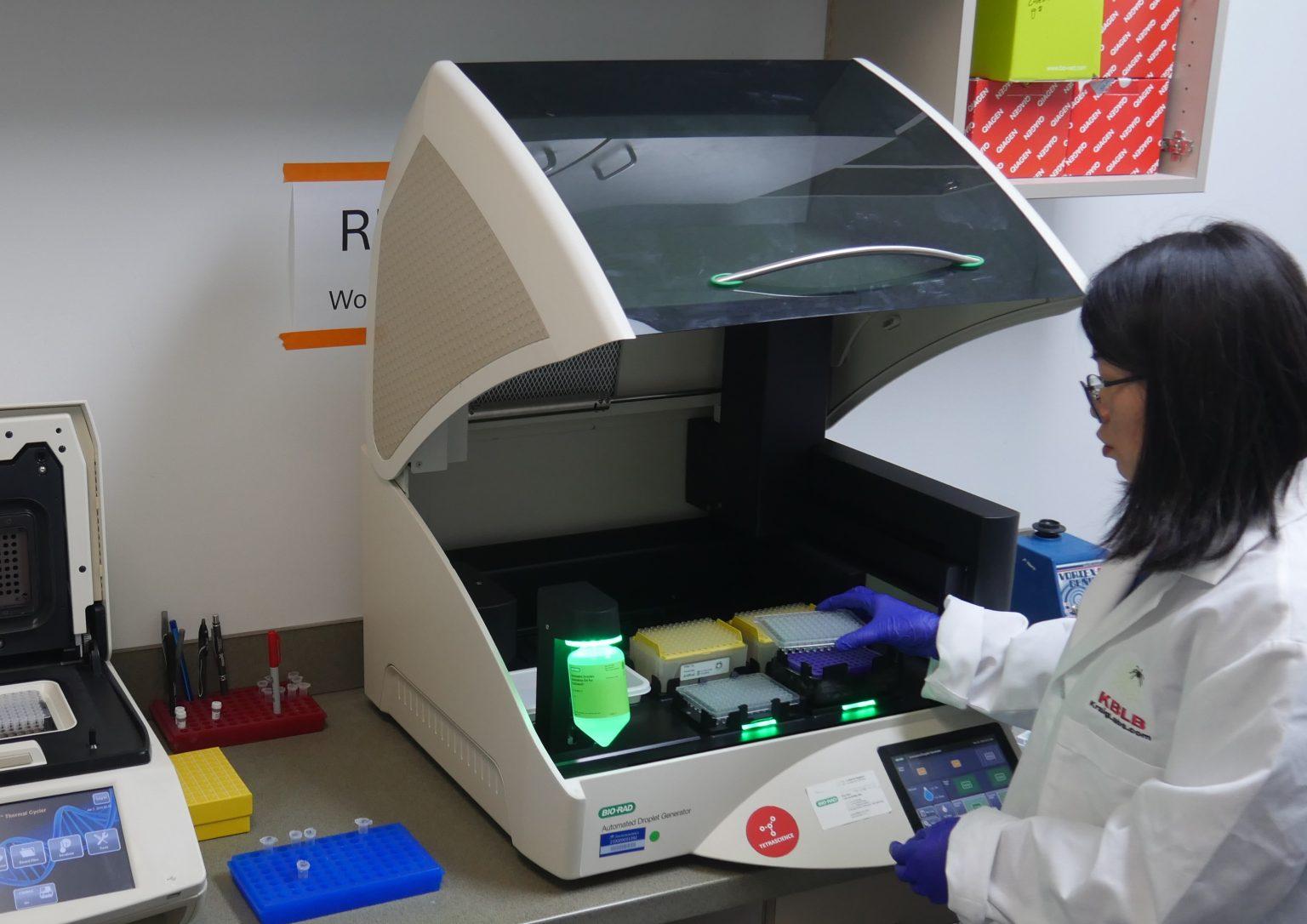
The recently commissioned equipment streamlines the screening of newly created transgenic lines and the analysis of their resulting spider silk expression levels. Project Atlas is now generating significant numbers of transgenics and potential candidates for new production materials. This expanded screening capacity was needed to keep pace with the rate of new transgenic creation, which is now at the highest levels in the Company’s history. By automating portions of the testing workflow, Kraig Labs can now rapidly process and evaluate significantly more samples, quickly identifying new, exciting transgenics.

In addition to the increased screening capacity, Kraig Labs also strengthened its analytical testing capabilities. These tools provide deeper insight into the expression levels and functional impact of each engineered transgenic line. This enhanced visibility allows the research team to identify the most promising genetic designs and prioritize them for advancement into the Company’s production pipeline.

“With the pace of discovery we are seeing in Project Atlas, it became clear that we needed to expand our screening and analysis capacity to keep up with the speed of innovation,” said Kim Thompson, Founder and CEO of Kraig Labs. “This investment in staff and technology further strengthens our position as a leader in advanced biomaterials. We believe we have a wide lead on our competitors, and it is the goal of this investment to expand that lead further.”

Dr. Zhang, the Company’s Chief Scientist, emphasized the impact these upgrades will have on the research pipeline.

“Project Atlas involves the creation and evaluation of numerous complex genetic constructs designed to work together to produce highly specialized silk proteins,” said Dr. Zhang. “The expansion of our testing infrastructure dramatically increases our testing capacity to match the increased pace of transgenic creation. We can now analyze many more transgenic lines in parallel and better quantify how each genetic insert is performing. This level of screening power is essential for isolating the highest-performing lines and rapidly advancing them into production.”

By significantly increasing screening capacity and analytical insight, Kraig Labs expects to shorten development timelines and improve its ability to identify breakthrough material candidates.

Source:

Kraig Biocraft Laboratories

24.03.2026

Reconomy joins ReHubs to accelerate textile recycling in Europe

Reconomy, the international circular economy specialist, announces that it has joined ReHubs, a leading alliance dedicated to accelerating the transition to a circular textile economy across Europe.

ReHubs brings together over 30 leading organisations from across the textile value chain – collectors, sorters, recyclers, brands, Producer Responsibility Organisations (PROs) and policy experts – to accelerate circularity. Through joint projects and the ReHubs Think Tank, it promotes investment, knowledge sharing and coordinated action across the sector. 

Reconomy, the international circular economy specialist, announces that it has joined ReHubs, a leading alliance dedicated to accelerating the transition to a circular textile economy across Europe.

ReHubs brings together over 30 leading organisations from across the textile value chain – collectors, sorters, recyclers, brands, Producer Responsibility Organisations (PROs) and policy experts – to accelerate circularity. Through joint projects and the ReHubs Think Tank, it promotes investment, knowledge sharing and coordinated action across the sector. 

As a global leader in operating Textile EPR schemes, Reconomy works with some of the world’s most recognisable brands and producers to manage their obligations. EPR is gaining traction across Europe, assigning producers financial responsibility for the end-of-life management of their products, including collection, reuse, recycling, and disposal. Reconomy offers a comprehensive, end-to-end solution for textile brands and producers to meet EPR compliance and access greater circularity options. Central to this is its extensive network of textile sorters and recycling partners capable of supporting both closed and open loop recycling solutions. Joining ReHubs will enable Reconomy to expand this already extensive network and share best practice and knowledge with other stakeholders. 

This announcement comes as Europe is facing a textile waste crisis with less than half of used garments collected for reuse or recycling, and only 1% of used clothes are recycled into new clothes.

Source:

Temple Bar Advisory for Reconomy 

Kick-off Textilfabrik 7.0 © Copyright: Zukunftsagentur/Tomas Rodriguez
Kick-off Textilfabrik 7.0
23.03.2026

Real-world lab for sustainable textile production: Textilfabrik 7.0 launched

With the official kick-off event of the Textilfabrik 7.0 (T7), a major transformation project for the German textile and apparel industry has been launched in the Monforts Quarter in Mönchengladbach. At the “Textile Roundtable,” an event format organized by the Zukunftsagentur Rheinisches Revier, representatives from industry, research, politics, and the regional economy came together to jointly lay the foundation for CO₂-neutral, circular, and economically viable textile production in Germany.

The textile and fashion industry worldwide faces major challenges: around ten percent of global CO₂ emissions are attributed to it. At the same time, companies in Germany are under considerable competitive pressure. Textilfabrik 7.0 addresses precisely this intersection by bringing together research institutions, industry, and regional stakeholders to accelerate the transfer of innovative technologies and production processes into industrial application.

With the official kick-off event of the Textilfabrik 7.0 (T7), a major transformation project for the German textile and apparel industry has been launched in the Monforts Quarter in Mönchengladbach. At the “Textile Roundtable,” an event format organized by the Zukunftsagentur Rheinisches Revier, representatives from industry, research, politics, and the regional economy came together to jointly lay the foundation for CO₂-neutral, circular, and economically viable textile production in Germany.

The textile and fashion industry worldwide faces major challenges: around ten percent of global CO₂ emissions are attributed to it. At the same time, companies in Germany are under considerable competitive pressure. Textilfabrik 7.0 addresses precisely this intersection by bringing together research institutions, industry, and regional stakeholders to accelerate the transfer of innovative technologies and production processes into industrial application.

Silke Krebs, State Secretary at the Ministry of Economic Affairs, Industry, Climate Protection and Energy of the State of North Rhine-Westphalia emphasizes that the T7 project actively drives the transformation of the Rhenish mining region into a modern industrial hub. It combines innovative, sustainable textile production with research, development, and the use of AI and robotics. At the same time, it strengthens the region’s competitiveness and creates new jobs across all qualification levels. T7 demonstrates that structural change offers concrete opportunities for a future-proof industry.

For Felix Heinrichs, Mayor of the City of Mönchengladbach, it is evident that when thinking of textiles, you cannot overlook Mönchengladbach. Textile production is deeply embedded in the industrial DNA of Mönchengladbach. But it also has the potential to play a key role in the future of the city as a business location. Textilfabrik 7.0 brings industry and academia together for innovation and research. In doing so, it lays the foundation for sustainable and economically viable textile production - and thus for future-proof jobs in Mönchengladbach. Today’s launch of the T7 project marks a major milestone in the city’s structural transformation.

The kick-off event was aimed in particular at companies along the entire textile value chain. In several keynote presentations, participants gained insights into current developments and potential applications of future production models. Brother Internationale Industriemaschinen GmbH and Hch. Kettelhack GmbH & Co. KG demonstrated how on-demand production can be integrated into microfactory concepts, enabling flexible, demand-driven manufacturing processes.

In addition, 3E Smart Solutions presented how intelligent production for smart textiles could look in the future. The industry cluster Cluster Industrial Biotechnology (CLIB) showcased approaches for using biotechnological processes, such as microorganisms, in textile production to improve resource efficiency and close material loops.

At the heart of Textilfabrik 7.0 are four core modules: On-Demand Manufacturing, MicroFactory Engineering, Digital Textiles, and Biosphere. These topics also formed the basis for four workshops in which participants discussed with module leaders what requirements industry has for future production solutions. The goal was to identify concrete needs and incorporate them directly into further project planning.

Through its real-world lab approach, T7 aims to test and optimize new technologies along the entire textile value chain. These include robotics, digital process chains, and biotechnological methods that can help establish a functioning circular economy in practice.

Professor Dr. Susanne Meyer, President of Niederrhein University of Applied Sciences states that the Textilfabrik 7.0 exemplifies what applied research must achieve today: bringing together science, industry, and society to develop concrete solutions to the major challenges of our time. Niederrhein University of Applied Sciences contributes their textile expertise specifically to this future-oriented project, from digital production processes and sustainable materials to circular value creation models. In doing so, there is a contribution not only to the transformation of the textile industry but also to the innovative capacity and future viability of the entire region.

At the same time, the project makes an important contribution to structural change in the Rhenish mining region. Under the guiding principle “From Coal to AI,” new perspectives for industrial value creation and skilled employment are emerging in the region. Textilfabrik 7.0 is one of 19 anchor projects in the Rhenish mining region and is considered by the state to be central to the successful, rapid, and visible implementation of structural transformation.

Textilfabrik 7.0 is a joint project of the Research Institute for Textile and Clothing (FTB) at Niederrhein University of Applied Sciences (HSNR), the Institute for Textile Technology (ITA) at RWTH Aachen University, the Association of the North-West German Textile and Clothing Industry, the Association of the Rhenish Textile and Clothing Industry, the Textile Academy NRW, and WFMG – Mönchengladbach Economic Development Corporation.

In einer zweiten Entwicklungsphase soll über die Textilfabrik 7.0 hinausgehend ein Industriepark der Zukunft entstehen. Hier entwickelt und produziert die Textil- und Bekleidungsindustrie unter Zero-Emission-Bedingungen und mit CO₂-neutralen Prozessen. Der Industriepark soll Raum bieten für innovative Produktionsstätten, Unternehmensniederlassungen der Textilbranche sowie nachhaltige Textil-Start-ups. So entsteht ein moderner Industriestandort, der Forschung, Entwicklung und industrielle Produktion miteinander verbindet.

In a second development phase, a future industrial park is planned to be created beyond Textilfabrik 7.0. Here, the textile and apparel industry will develop and produce under zero-emission conditions and with CO₂-neutral processes. The industrial park will provide space for innovative production facilities, company branches in the textile sector, and sustainable textile start-ups. This will create a modern industrial hub that combines research, development, and industrial production.

The project Textilfabrik 7.0 is funded by the Federal Ministry for Economic Affairs and Energy (BMWE) under the “STARK” funding guideline to strengthen transformation dynamics and promote new beginnings in coal regions and coal-fired power plant locations, by the State of North Rhine-Westphalia through the Ministry of Economic Affairs, Industry, Climate Protection and Energy (MWIKE) in accordance with the framework guideline for implementing the Investment Act for Coal Regions (InvKG) NRW, and by the Federal Ministry for Research, Technology and Space (BMFTR).

Source:

ITA – Institut für Textiltechnik of RWTH Aachen University

ReHubs x BCG Report Cover Cover ReHubs x BCG Report
ReHubs x BCG Report Cover
23.03.2026

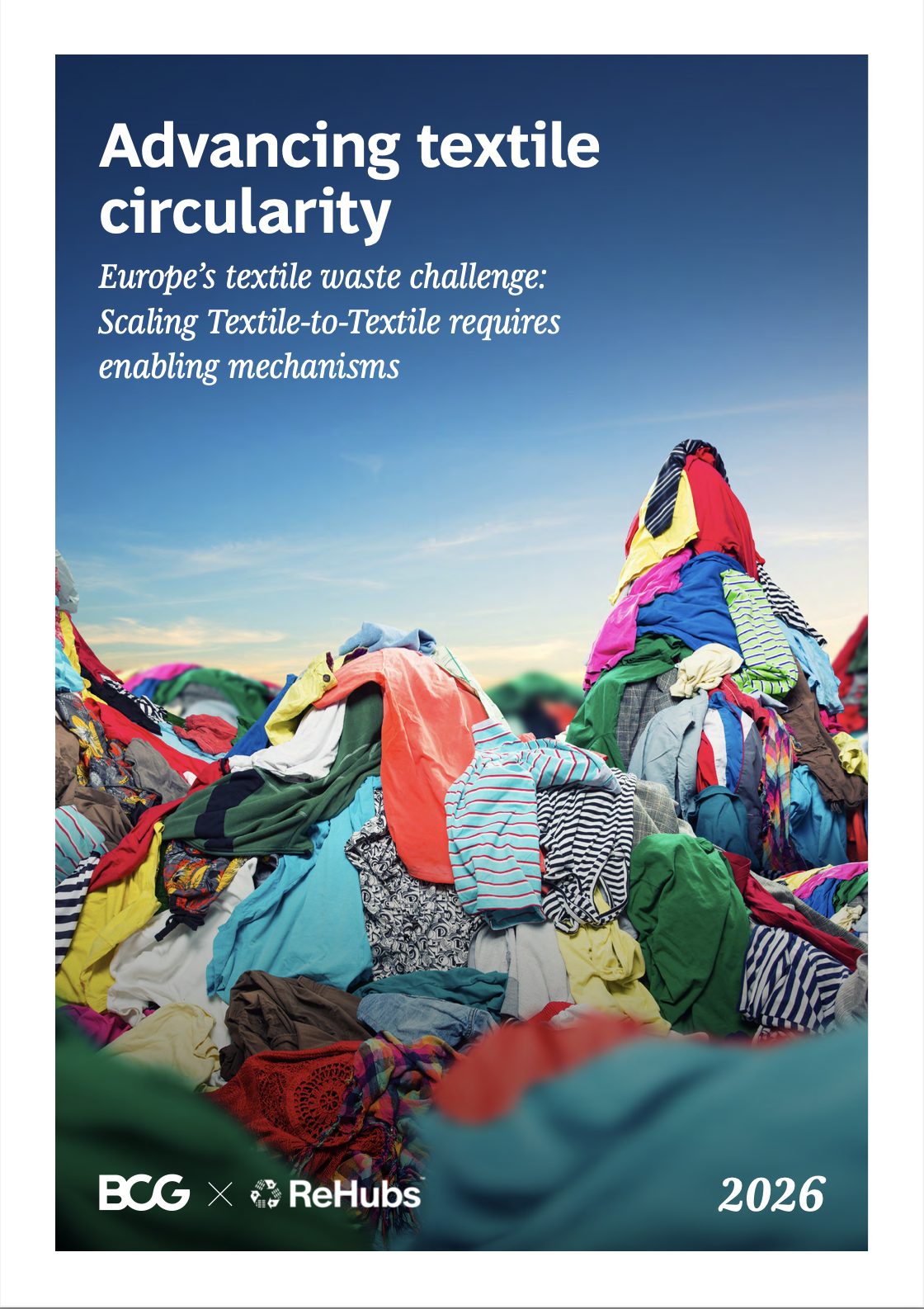
New BCG and ReHubs Report: Scale Textile-to-Textile Recyclinge

A new report from Boston Consulting Group (BCG) and ReHubs, titled “Advancing Textile Circularity – Europe’s textile waste challenge: Scaling Textile-to-Textile requires enabling mechanisms”, highlights the urgent need for systemic action to tackle Europe’s growing textile waste and scale a circular textile economy. 

The report establishes the first harmonized fact base on textile waste in Europe. It finds that Europe generates around 15.2 million tonnes of textile waste every year, including 13.3 million tonnes of post-consumer waste. However, only a small share of this waste is collected and sorted for recycling, leaving most textile waste outside recycling systems. 

As a result, textile-to-textile recycling currently represents less than 1% of post-consumer textile waste in Europe. At the same time, waste volumes continue to rise rapidly. Without decisive action, Europe’s textile waste could reach the equivalent of around 80 football stadiums filled with discarded textiles every year by 2035.

A new report from Boston Consulting Group (BCG) and ReHubs, titled “Advancing Textile Circularity – Europe’s textile waste challenge: Scaling Textile-to-Textile requires enabling mechanisms”, highlights the urgent need for systemic action to tackle Europe’s growing textile waste and scale a circular textile economy. 

The report establishes the first harmonized fact base on textile waste in Europe. It finds that Europe generates around 15.2 million tonnes of textile waste every year, including 13.3 million tonnes of post-consumer waste. However, only a small share of this waste is collected and sorted for recycling, leaving most textile waste outside recycling systems. 

As a result, textile-to-textile recycling currently represents less than 1% of post-consumer textile waste in Europe. At the same time, waste volumes continue to rise rapidly. Without decisive action, Europe’s textile waste could reach the equivalent of around 80 football stadiums filled with discarded textiles every year by 2035.

The report shows that scaling textile-to-textile recycling is technically possible but requires reaching a critical tipping point of c. 2.7 million tonnes of recycling annually by 2035 to unlock economies of scale and make the ecosystem viable.

Reaching this milestone will require €8-11 billion in capital investment and €5-6.5 billion in recurring annual operating costs, as well as coordinated supply- and demand-side measures across the value chain.

The analysis also underlines that textile-to-textile recycled fibers represent a new product category with structurally higher processing costs. Under current market conditions, they cannot compete directly with incumbent recycled materials or virgin fibers without targeted enabling mechanisms and coordinated policy support.

Scaling textile circularity will therefore require coordinated collaboration across the entire value chain, from improved collection and sorting infrastructure to demand signals from brands and clear policy frameworks that support investment and innovation.

Robert van de Kerkhof, CEO at ReHubs commented:
“Europe has the opportunity to build a truly circular textile ecosystem, but it will require systemic change across the entire value chain. Textile-to-textile recycling is technically possible today, but scaling it requires coordinated action from industry, policymakers, and investors. Through collaboration across the value chain, ReHubs is helping to drive the transformation needed to build a circular textile economy in Europe.”

Nicolas Manuelli, Managing Director & Partner at BCG commented:
“This report shows that scaling textile-to-textile recycling in Europe is achievable, but it requires the right economic conditions. Textile-to-textile recycled fibers are a new product category with higher processing costs, meaning they will not scale without enabling mechanisms. Supply-side and demand-side measures, combined with appropriate financing tools and supportive trade and industrial policies, will be essential to unlock investment and accelerate the transition to a circular textile system.”