

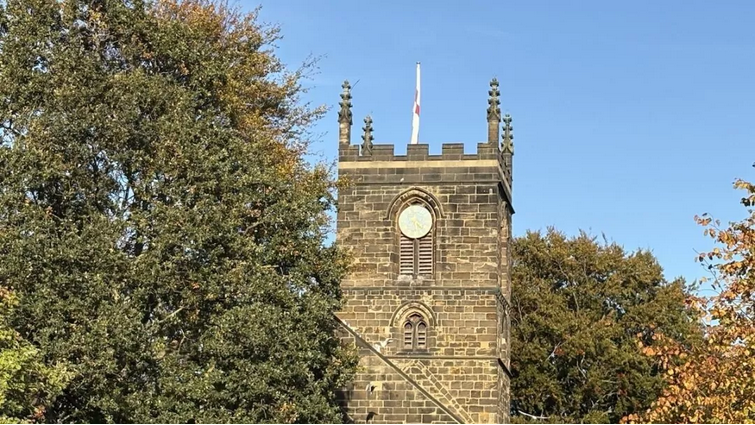


Nonwovens Redefining Historic Monument Roof Restoration
A quiet revolution in church restoration
Across Europe’s historic skylines, the silhouettes of medieval towers and Baroque spires have stood for centuries, but the fabric that keeps them watertight has rarely lasted more than a generation or two. Today, architects and conservationists face the delicate task of renewing these protective layers without altering the appearance or breathability of ancient structures. In this context, nonwoven fabrics have quietly become one of the most transformative materials in restoration behind the scenes of heritage roofs.
Traditional roofing on churches was never designed as a sealed envelope. Slate, tile and lead coverings were laid over open rafters or timber boards, relying on ventilation and sheer mass to manage moisture. When such buildings are re-roofed under contemporary conservation standards, contractors must reconcile modern performance expectations – airtightness, resistance to driving rain, and compliance with safety regulations – with the need to preserve original construction logic. This is where engineered nonwovens, with their combination of vapour permeability and water resistance, provide an elegant solution.
Invisible defence
A nonwoven underlay acts as a secondary shield beneath the outer covering, shedding any wind-driven rain that penetrates between slates while still allowing moisture from within to diffuse outwards. Its fibrous matrix creates a microscopic labyrinth of pores that block liquid water but remain open to water vapour, so that timber structures can continue to breathe much as they always have. The result is an invisible line of defence that does not interfere with the historic envelope’s ability to regulate humidity naturally.
In practical terms, the benefits are more than theoretical. Many heritage sites must remain open during works or lie exposed for long periods while leadwork and masonry are repaired. A strong, lightweight nonwoven can be laid in a day over newly stripped sections, immediately restoring weather protection and allowing carpenters and masons to proceed without interruption. On complex church roofs – often steeply pitched, ornamented with dormers and difficult to scaffold – this ability to secure a weathertight covering has proved invaluable. It reduces the need for daily tarpaulin handling, cuts labour costs and limits the risk of water ingress that might damage ancient ceilings or murals below.
Microporosity
The conservation world has traditionally been wary of modern membranes, and rightly so. Earlier generations of bituminous or plasticised underlays created sealed cavities that trapped condensation, leading to timber decay and corrosion. Nonwovens differ in that they rely on microporous structures rather than applied coatings for their performance. Because they are made from mechanically bonded fibres rather than laminated films, they remain vapour-open by design. In the language of building physics, they have “low vapour resistance yet high water holdout” – two qualities rarely achieved together in earlier materials.
Their structural behaviour also suits the irregular geometry of historic carpentry. Whereas stiff plastic sheets can tear over uneven boarding or sharp ridges, nonwovens drape naturally around contours and resist puncture. They are also quiet under wind load, which is an overlooked comfort factor when a centuries-old tower stands in a residential quarter, and they age more gracefully than brittle films. In a craft context, this flexibility matters as much as technical data – restorers appreciate a material that behaves predictably under hand tools, that can be cut cleanly and that adheres reliably with standard tapes or battens.
Economy of disturbance
From a sustainability perspective, nonwovens also align with the ethos of minimal intervention. They are light to transport, require little energy to manufacture and can often be installed without altering existing timberwork. Because they extend the lifespan of expensive outer coverings, they reduce the frequency of disruptive roof replacements and in long-term stewardship terms, that economy of disturbance is as important as any embodied carbon metric.
Projects across Europe illustrate how seamlessly nonwovens have entered the conservation vocabulary. In medieval churches where roof spaces are inaccessible, their use has allowed designers to maintain the unventilated build-ups of the original fabric while still meeting moisture-control criteria. In Baroque structures with intricate domes, their thin profile helps maintain sightlines at eaves and cornices without introducing visible ventilation slots. Even in smaller rural chapels, they provide an insurance layer beneath reused or weathered slates, reducing the risk of localised leaks that might otherwise threaten timber vaulting or plaster ceilings.
Another virtue, often underestimated, lies in their role during construction sequencing. Because nonwovens can serve as both temporary and permanent weather protection, they simplify project logistics. Once laid, they remain in place through the entire build, so there is no wasted material or duplicated effort. In many restorations, this flexibility has shortened programme durations and reduced the environmental impact associated with single-use coverings.
Detailing
Nonwovens also lend themselves to hybrid detailing. In some restorations, they are combined with traditional sarking boards and lime-based insulation systems, maintaining a breathable overall assembly. In others, they form part of modern warm-roof solutions under lead or copper sheeting, where their stability under heat and UV exposure becomes a key advantage. Their neutrality makes them compatible with almost any heritage-appropriate finish.
A challenge lies not in proving the performance of nonwovens but in ensuring they are specified sensitively. Every church roof tells a different story – some rely on massive oak frames that demand free airflow, others contain fragile painted timbers or medieval tiles that call for careful moisture control.
A responsible designer must therefore balance the convenience of modern materials with a deep understanding of how historic buildings breathe and move.
When chosen wisely, a nonwoven underlay can protect centuries of craftsmanship without ever announcing its presence.
INDEX