
From the Sector

Reset
110 results
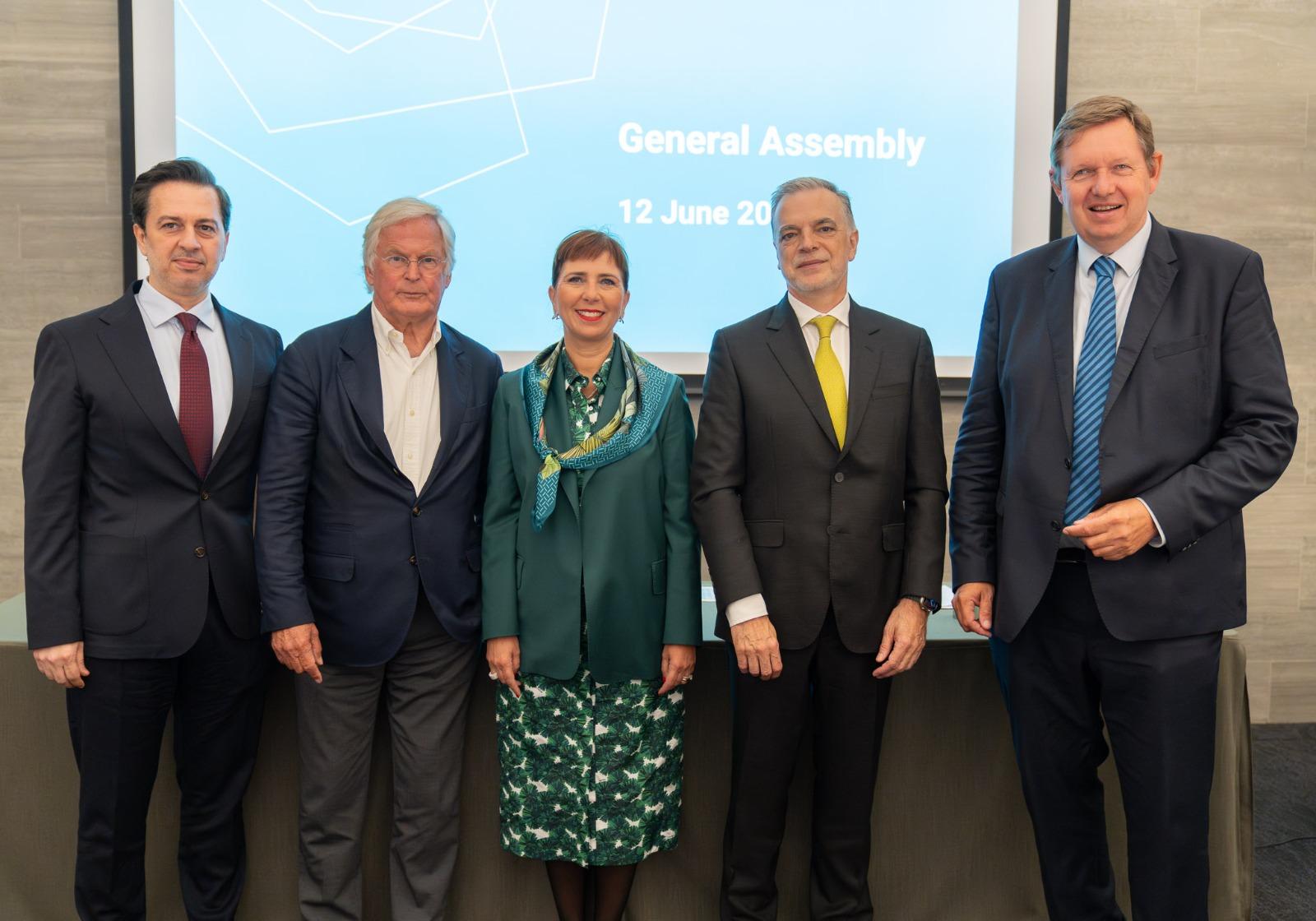
Presidency Team Photo (c) European Apparel and Textile Confederation EURATEX
Presidency Team
12.06.2026

Mario Jorge Machado re-elected President of EURATEX

The EURATEX General Assembly has re-elected Mario Jorge Machado as President of EURATEX, renewing its confidence in his leadership at a crucial moment for the European textile and clothing industry. The sector is facing rising costs, global competitive pressure and an increasingly challenging transition towards sustainability and digitalisation. 

With a degree in Production Polymer Engineering from the University of Minho, Mario Jorge Machado brings extensive industrial experience and a strong commitment to innovation, competitiveness and sustainable transformation. 

Upon his re-election, Mario Jorge Machado said:
“My priority for this new mandate is clear: to strengthen the competitiveness of our industry, ensure that the same rules apply to all products sold in Europe, and support our companies through the green and digital transition. Europe must decarbonise its industry, not deindustrialise it.” 

Three priorities for the new mandate

The EURATEX General Assembly has re-elected Mario Jorge Machado as President of EURATEX, renewing its confidence in his leadership at a crucial moment for the European textile and clothing industry. The sector is facing rising costs, global competitive pressure and an increasingly challenging transition towards sustainability and digitalisation. 

With a degree in Production Polymer Engineering from the University of Minho, Mario Jorge Machado brings extensive industrial experience and a strong commitment to innovation, competitiveness and sustainable transformation. 

Upon his re-election, Mario Jorge Machado said:
“My priority for this new mandate is clear: to strengthen the competitiveness of our industry, ensure that the same rules apply to all products sold in Europe, and support our companies through the green and digital transition. Europe must decarbonise its industry, not deindustrialise it.” 

Three priorities for the new mandate

1. Competitiveness as the foundation
Mario Jorge Machado has made clear that competitiveness must be the starting point for any successful industrial policy. In his recent Brussels address, he stressed that without competitiveness there can be no investment, no innovation, no sustainability and no strategic autonomy. He will therefore continue to push for a stronger business environment for textile companies, with support for investment in automation, digitalisation, artificial intelligence, skills and innovation, especially for SMEs. 

2. A genuine level playing field
A second key priority is to ensure that the same rules apply to everything sold in Europe, not only to what is made in Europe. Mario Jorge Machado has repeatedly called for stronger market surveillance, better border enforcement and more effective control of imports sold through digital platforms, so that European companies are not put at a disadvantage against products that bypass EU safety, environmental and consumer rules. EURATEX will continue to advocate for equal enforcement, fair competition and a market where compliance is rewarded. 

3. Supporting industry through the transition
Mario Jorge Machado also wants to ensure that the green and digital transition strengthens European industry rather than weakening it. He has underlined that sustainability must become a source of competitiveness, not a burden, and that companies need realistic rules, affordable energy, workable implementation and targeted support to adapt successfully. He has also stressed the importance of stimulating demand for sustainable European-made textiles, including through public procurement and transparency tools that are feasible for companies. 

Presidency Team
The General Assembly also confirmed the composition of the EURATEX Presidency Team, which will support the President in steering the organisation’s strategic direction:

  • Mr. Franz Peter Falke, T+M, Germany
  • Ms. Barbara Cimmino, Confindustria Moda, Italy
  • Mr. Ismail Kolunsag, IHKIB, Türkiye 
  • Mr. Grégory Marchand, UIT, France 
Source:

European Apparel and Textile Confederation EURATEX

10.06.2026

U.S. Textile Industry Calls for Crackdown on Customs Fraud

The National Council of Textile Organizations (NCTO), spanning the entire spectrum of U.S. textiles from fiber to finished sewn products, issued a statement today applauding a House Textile Caucus-led letter urging the Department of Homeland Security (DHS) to strengthen customs enforcement and combat widespread fraud that is harming American textile manufacturers.

“Unfortunately, for decades, the American textile industry has suffered greatly from customs fraud and abuse by foreign competitors and organized crime,” the bipartisan group of House lawmakers state in a letter to DHS Secretary Markwayne Mullin. “Our trade policies and tariff structures are only as effective as their enforcement. As you begin your role as Secretary, we urge you to review and ensure the U.S. Customs and Border Protection (CBP) is properly oriented and outfitted to fully enforce our customs laws.”

The National Council of Textile Organizations (NCTO), spanning the entire spectrum of U.S. textiles from fiber to finished sewn products, issued a statement today applauding a House Textile Caucus-led letter urging the Department of Homeland Security (DHS) to strengthen customs enforcement and combat widespread fraud that is harming American textile manufacturers.

“Unfortunately, for decades, the American textile industry has suffered greatly from customs fraud and abuse by foreign competitors and organized crime,” the bipartisan group of House lawmakers state in a letter to DHS Secretary Markwayne Mullin. “Our trade policies and tariff structures are only as effective as their enforcement. As you begin your role as Secretary, we urge you to review and ensure the U.S. Customs and Border Protection (CBP) is properly oriented and outfitted to fully enforce our customs laws.”

The letter, led by House Textile Caucus Co-Chairs Reps. David Rouzer (R-NC) and Adriano Espaillat (D-NY), was signed by 14 additional House lawmakers. They further call on DHS to “develop and institute a comprehensive textile enforcement program” that includes: revoking trade privileges, publicly listing and instituting stronger penalties for repeat offenders; increased audits, lab testing and verification of free trade agreement claims; and timely publication of enforcement statistics.

NCTO President and CEO Kim Glas, said: “I sincerely thank Congressman Espaillat and Congressman Rouzer for leading these efforts and strongly commend the bipartisan group of lawmakers for taking the lead in calling on Secretary Mullin and his agency to take urgent action to address a wide range of illegal trade practices that are severely impacting the U.S. textile and apparel industry.”

“This letter sends a powerful message that customs fraud, illegal transshipment, and tariff evasion are rampant and must be stopped. These illegal trade practices cost American jobs, undermine legitimate manufacturers, weaken our trade agreements, and deprive the U.S. Treasury of billions of dollars in revenue,” Glas said. “The industry looks forward to working with Congress, DHS, and CBP to strengthen enforcement efforts and ensure a level playing field for American textile manufacturers and workers.”

Source:

National Council of Textile Organizations

Photo (c) Neo.Fashion.
08.06.2026

Neo.Fashion. Berlin: Emerging Fashion Talent Chart a New Course

More than 620 talents, nine editions, one milestone: Neo.Fashion. celebrates its 10th edition this July and announces a new organizational structure — a clear statement of commitment to the long-term development of emerging talent in the German fashion industry. 

More than 620 talents, nine editions, one milestone: Neo.Fashion. celebrates its 10th edition this July and announces a new organizational structure — a clear statement of commitment to the long-term development of emerging talent in the German fashion industry. 

Germany’s most versatile platform for emerging fashion talent marks its 10th anniversary with a strategic repositioning and a new venue: For its 10th edition, Neo.Fashion. will take place during Berlin Fashion Week from July 2 to 4, 2026, in a former industrial hall at “Neues Ufer 13” in Berlin-Moabit. The program includes the Best Graduates Shows and Aspiring Designer Shows, alongside the presentation of the Neo.Fashion. Award and the Digital Fashion Award. To date, ten universities from Germany, Austria, Switzerland, and Ukraine have confirmed their participation. A strong emphasis on sustainability defines this year’s collections. With the establishment of the non-profit Neo.Fashion. e.V. in 2025, the initiative has further professionalized its organizational structure, creating a more robust foundation for the long-term promotion of emerging design talent. 
 
What started in 2017 as a vision has since become a defining fixture for young fashion designers across Germany: Neo.Fashion. is celebrating its 10th edition this year. Since the inaugural graduate show in the fall of 2017 at Motorwerk Weißensee in Berlin, more than 620 graduates from across the country have presented their final collections on the Neo.Fashion. stage. In 2019, the platform became an official part of Berlin Fashion Week, cementing its place in the international fashion calendar. With the Best Graduates Shows, the Aspiring Designer Shows, the Neo.Fashion. Award, and the Digital Fashion Award — launched for the first time last year — Neo.Fashion. has grown into a unique ecosystem that goes far beyond a pure presentation platform. 

The founding of the nonprofit Neo.Fashion. e.V. in 2025 marks a pivotal step toward sustained, structured talent development. A newly expanded organizational team now manages the full range of Neo.Fashion. activities — from university coordination and communications to technical production, industry partnerships, textile research, and startup outreach. Workshops, competitions, mentoring programs, and international collaborations will be part of the platform’s expanded offering going forward. 

Neo.Fashion. is also making a geographic move. From July 2 through 4, 2026 — as always, in sync with Berlin Fashion Week — the event relocates to “Neues Ufer 13” (“New Shore 13”) in the Berlin district of Moabit: a former industrial hall whose raw, urban aesthetic provides an authentic backdrop for young, uncharted fashion voices. “We see ‘Neues Ufer’ as a metaphor — for us as a format that has reinvented itself time and again over ten years, and for the talents who show their collections here with a new shore as their destination,” says Jens Zander, CEO of brand experience agency S49, founder of Neo.Fashion., and director of the new Neo.Fashion. e.V., where he oversees production and strategic development. 

More than ten professional runway shows are planned, featuring selected graduates from nearly all German fashion schools presenting their collections. Each show will spotlight six to eight emerging designers. In total, up to 80 participants will take the stage in July, presenting their work to a broad public audience—well beyond the industry itself. This open and inclusive approach sets Neo.Fashion apart from other formats. 
Ten universities have already confirmed their participation: Hochschule Pforzheim (Pforzheim), Hochschule Niederrhein (Krefeld, Mönchengladbach), AMD Akademie Mode & Design (Berlin, Hamburg, Düsseldorf, Wiesbaden, Munich), Hochschule Reutlingen (Reutlingen), Hochschule Hannover (Hannover), Hochschule Bielefeld (Bielefeld), Hochschule für Technik und Wirtschaft Berlin – HTW Berlin (Berlin), Hochschule Macromedia (Berlin), Burg Giebichenstein Kunsthochschule Halle (Halle/Saale), and HAW Hamburg – University of Applied Sciences (Hamburg). On the international side: the University of Art and Design Linz (Linz, Austria), the Academy of Art and Design Basel – HGK FHNW (Basel, Switzerland), Fashion Art Toronto (Toronto, Canada), and the Kyiv National University of Technologies and Design – KNUTD (Kyiv, Ukraine). 

One theme runs through nearly every collection shown at Neo.Fashion.: sustainability. What was a niche concern a decade ago is now a core driver of young designers’ creative work. From material sourcing and production processes to circular design principles, Neo.Fashion. graduates are rethinking fashion from the ground up — and setting new standards for a responsible future in the industry. Neo.Fashion. actively supports this shift, providing space for innovative, sustainable approaches. 

Nurturing Talent as an Investment in the Future 
Germany’s fashion economy — including retail, startups, and FashionTech — contributes approximately €70 billion to the country’s GDP and supports around one million jobs, according to research by Oxford Economics commissioned by the Fashion Council Germany (FCG) and the Federal Ministry for Economic Affairs and Climate Action (BMWK). The German textile and apparel industry generates around €32 billion in annual revenue and employs more than 120,000 people across approximately 1,400 companies. The German apparel market as a whole recorded revenues of around €67.7 billion in 2025. 

Maintaining and growing that position demands a consistent pipeline of new talent. Platforms like Neo.Fashion. play a central role in bridging the gap between education and professional entry — giving emerging designers the visibility and industry connections they need to launch their careers. 

Success Stories and International Partnerships 
The impact of Neo.Fashion. as a launchpad for young designers is evident in the careers that have followed: many alumni who showed their first collections on the Neo.Fashion. runway have since returned with their own labels — and are now fixtures in the Berlin Fashion Week calendar. 

Particularly noteworthy is the partnership with Ukrainian Fashion Week, established in 2022, which gives Ukrainian design talent an international platform despite the difficult situation in their home country. Strategic partners including the Fashion Council Germany (FCG) and the German Textile and Fashion Federation (Gesamtverband textil+mode) support Neo.Fashion. in broadening its reach and opening doors into the industry for emerging designers. 

Neo.Fashion. — The Ecosystem 
Best Graduates Show: The flagship show of Neo.Fashion. during Berlin Fashion Week, in which the best final collections from fashion design students across Germany are presented in professional runway shows. 

Neo.Fashion. Award: An award recognizing outstanding emerging talent distinguished by exceptional creativity, innovation, or sustainability in their collections — designers who are setting the agenda for the future of the industry. 

Aspiring Designer Shows: A platform for young designers who have already taken their first steps toward independence and are building their own labels — giving them the opportunity to present their current collections to a broad professional audience. 

Digital Fashion Award: Launched in 2025, this award signals a shift in how fashion engages with the digital world — treating it not just as a tool, but as a creative space in its own right. For Neo.Fashion., it marks a key step in the evolution of the format and opens a new chapter in supporting digital emerging talent. 

(c) Sympatex Technologies GmbH
13.05.2026

Italian investor Pidigi to continue Sympatex

  • Pidigi S.p.A. of Verona and a German subsidiary acquire key assets of Sympatex by way of an asset deal  
  • 21 jobs and all four apprenticeship positions will be retained at the Unterföhring site 
  • Transaction creates significant operational and economic synergies 

In the insolvency proceedings concerning the assets of the Munich-based textile company Sympatex Technologies GmbH, insolvency administrator Axel W. Bierbach of the law firm Müller-Heydenreich Bierbach & Kollegen (Munich) has found a viable solution for the continuation of business operations. The operating business is to be taken over by Pidigi S.p.A. of Verona by way of an asset deal effective June 1, 2026. Pidigi is an owner-managed, internationally active Italian supplier and innovation partner to the footwear, leather goods, and apparel industries, with a market presence spanning more than 70 years. Pidigi develops and markets high-quality materials and sustainable components for industrial applications.  

  • Pidigi S.p.A. of Verona and a German subsidiary acquire key assets of Sympatex by way of an asset deal  
  • 21 jobs and all four apprenticeship positions will be retained at the Unterföhring site 
  • Transaction creates significant operational and economic synergies 

In the insolvency proceedings concerning the assets of the Munich-based textile company Sympatex Technologies GmbH, insolvency administrator Axel W. Bierbach of the law firm Müller-Heydenreich Bierbach & Kollegen (Munich) has found a viable solution for the continuation of business operations. The operating business is to be taken over by Pidigi S.p.A. of Verona by way of an asset deal effective June 1, 2026. Pidigi is an owner-managed, internationally active Italian supplier and innovation partner to the footwear, leather goods, and apparel industries, with a market presence spanning more than 70 years. Pidigi develops and markets high-quality materials and sustainable components for industrial applications.  

As part of the asset deal, Pidigi and a German subsidiary are acquiring the core assets of Sympatex and intend to continue business operations under the Sympatex brand. At the Unterföhring site near Munich, 21 jobs and the apprenticeships of all four trainees will be retained. The international locations in France, China, and Hong Kong, as well as the Korean sales office, are also to be continued. As part of the structural realignment, 25 employees at the Unterföhring site will receive notices of termination for operational reasons in the course of May, effective at the end of August. 

To mitigate the economic consequences for the affected employees, a reconciliation of interests and a social plan have been agreed upon. Around 20 employees have already left the company on their own initiative during the preliminary insolvency proceedings. With the transfer of business operations to Pidigi, future operational responsibilities will also be reorganized. Kim Scholze, who took over Sympatex as sole managing director during an extremely challenging phase and guided the company through the insolvency proceedings, will leave the company upon completion of the transaction. 

Basis secured for the continuation of operations at the Unterföhring site 
Insolvency administrator Bierbach described it as particularly encouraging that Sympatex’s Unterföhring site will be retained, thereby laying a crucial foundation for the sustainable continuation of business operations in Germany. He expressly thanked Kim Scholze, the entire workforce, and the works council for their dedication over the past few months. “Under difficult circumstances, Sympatex’s employees and managing director have contributed with a high degree of professionalism, great commitment, and remarkable loyalty to maintaining stable business operations and laying the groundwork for this investor solution,” Bierbach stated. Business operations have been able to continue in full during the three and a half months since the insolvency filing at the end of January 2026.  

“The past few months have demanded an enormous amount from Sympatex’s employees. This makes me all the more filled with respect for how professionally, loyally, and dedicatedly the teams worldwide have supported business operations, customer relationships and key projects during this phase. The fact that an investor solution for the technology, brand, and core business areas has now been achieved is a significant shared success. My special thanks go to all employees, partners, and customers who have supported Sympatex during this time with trust, dedication, and resilience,” said Kim Scholze.  

From the perspective of insolvency administrator Bierbach, Pidigi’s entry has created a viable future for the company. “Given the challenging market environment, which is subject to significant competitive and cost pressures, and Sympatex’s unique corporate history, finding a suitable buyer for Sympatex was a very demanding task. I am all the more pleased that we were able to secure an ideal investor in Pidigi, a company that knows this highly specialized market well and has itself been successfully rooted in the footwear and apparel industry for many decades. Pidigi has a clear vision for and brings excellent operational capabilities as well as deep industry expertise to secure and sustainably develop Sympatex’s international market presence, technological know-how, and established customer relationships,” the insolvency administrator said.

Pidigi has been working with Sympatex for several decades and, as a long-standing distributor in the footwear segment in Italy, possesses comprehensive market knowledge as well as a strong international network in the footwear and apparel industry. In addition, there is a long-standing partnership in the field of tape production. The Italian family-owned business uses Sympatex laminates and membranes, which Pidigi incorporates into its footwear and apparel products. 
This creates significant operational and economic synergy potential throughout the value chain.  

Strong foundation for continued growth and new market opportunities 
For Dr. Giorgio De Gara, owner and managing director of Pidigi, the transaction marks a milestone in the family business’s continued development. “The acquisition of Sympatex is an important strategic step for us, building on a long-standing and trusting partnership. We have known the company, its technologies and the people behind them for many years and are delighted to now welcome Sympatex as part of the Pidigi family. Together, we aim to further develop Sympatex’s international business in a targeted manner – from performance laminates and tapes for footwear applications to technical solutions for the public sector, workwear and apparel markets. By combining Sympatex’s technological expertise with Pidigi’s global market presence and operational strength, we are creating a strong foundation for further growth and new market opportunities. It is important to us to preserve Sympatex’s valuable technological know-how and the Unterföhring site, and to offer employees long-term prospects”, Dr. De Gara said. 

The structured investor sale process was supported by an experienced team of advisers. On the M&A side, the insolvency administrator was advised by Dr. Wieselhuber & Partner (W&P). Led by Dr. Hubertus Bartelheimer, M&A specialists Ante Jelavic and Thomas Müller oversaw the entire transaction process. Legal advice to the insolvency administrator was provided by Taylor Wessing Germany, led by Dr. Hendrik Boss and Lisa K. Iwersen, LL.M. (Stellenbosch). 

More information:
Sympatex insolvency Pidigi
Source:

Müller-Heydenreich Bierbach & Kollegen  

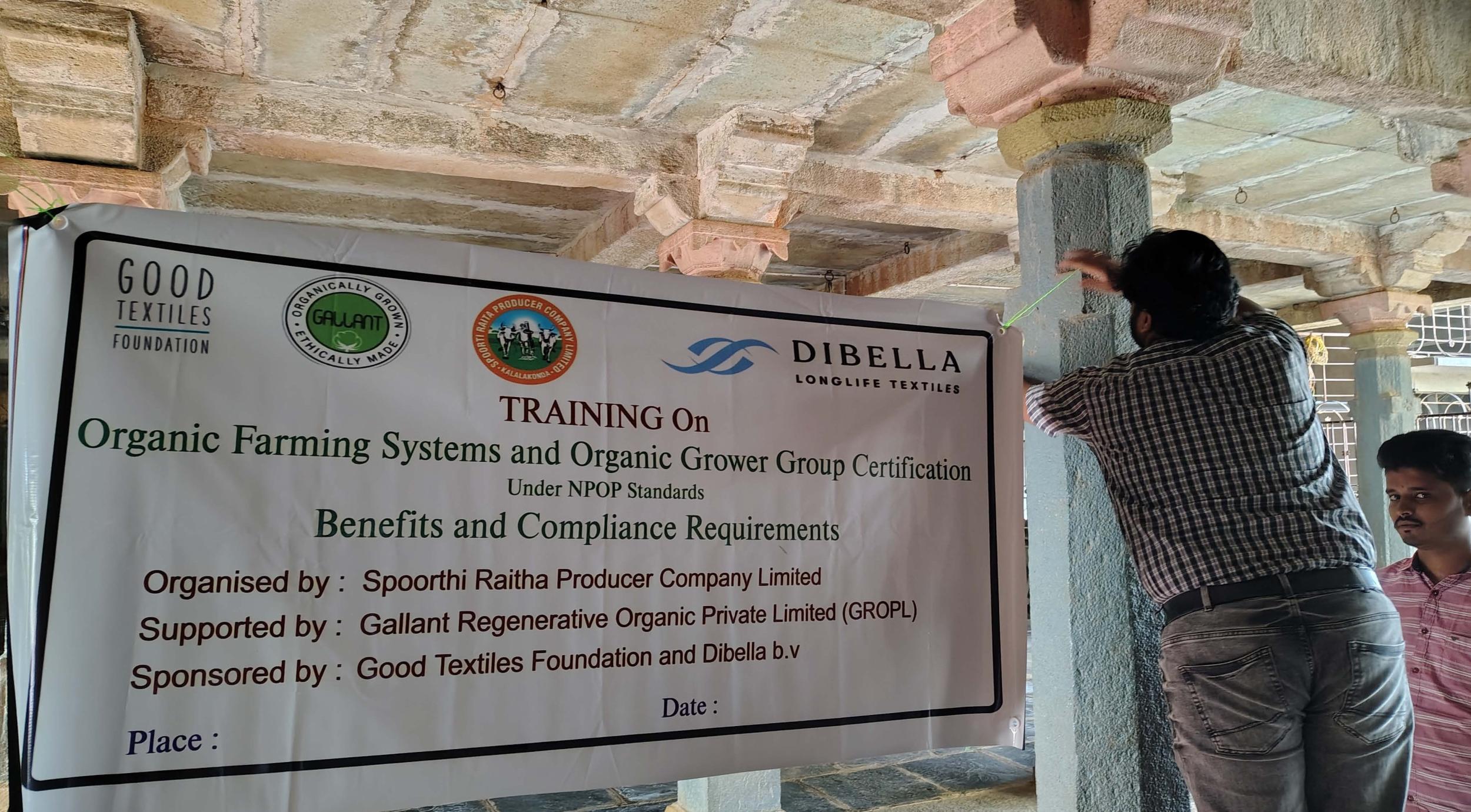
Start of the Training for Common Ground Farmers Photo GoodTextiles Foundation
Start of the Training for Common Ground Farmers
12.05.2026

GoodTextiles Foundation launches “Common Ground” Farmer Initiative in India

The GoodTextiles Foundation, in collaboration with Dibella India, Gallant Regenerative Organic Private Limited, and Spoorthi Raith Producer Company Limited, announces the launch of its new flagship project Common Ground. This initiative marks a significant step toward fostering sustainable, regenerative cotton cultivation among smallholder farmers in southern India. 

A Shared Vision Rooted in the Land 
Set in the rural landscapes of Karnataka’s Haveri district, Common Ground brings together farmers, local communities and agricultural experts with a unified goal: to restore harmony between people and nature through organic and regenerative farming practices. 

The foundation for this initiative was laid as early as 2024 through site visits, farmer dialogues and collaboration with the University of Agricultural Sciences Dharwad. In 2025, the project entered its implementation phase, including soil assessments, team training, community engagement and the registration of participating farmers. 

The GoodTextiles Foundation, in collaboration with Dibella India, Gallant Regenerative Organic Private Limited, and Spoorthi Raith Producer Company Limited, announces the launch of its new flagship project Common Ground. This initiative marks a significant step toward fostering sustainable, regenerative cotton cultivation among smallholder farmers in southern India. 

A Shared Vision Rooted in the Land 
Set in the rural landscapes of Karnataka’s Haveri district, Common Ground brings together farmers, local communities and agricultural experts with a unified goal: to restore harmony between people and nature through organic and regenerative farming practices. 

The foundation for this initiative was laid as early as 2024 through site visits, farmer dialogues and collaboration with the University of Agricultural Sciences Dharwad. In 2025, the project entered its implementation phase, including soil assessments, team training, community engagement and the registration of participating farmers. 

Seven carefully selected villages now form the core of the project. Chosen for their accessibility, strong community structures and development potential, they provide fertile ground for a scalable model that can be replicated across other regions. 

Empowering Farmers Through Knowledge and Structure 
At the heart of Common Ground lies a commitment to people. To date, 510 farmers have been identified, with 475 already in the final stages of enrolment into a newly established Organic Cotton Grower Group (OGG). 

The project combines technical expertise with hands-on support close, continuous support. A dedicated team—comprising an Internal Control System (ICS) Manager and trained field staff—is being steadily expanded to ensure effective on-the-ground implementation. Farmers participate in targeted training sessions that introduce them to organic cultivation practices and certification requirements, equipping them with the knowledge needed for long-term success. 

In parallel, external experts are developing location-specific “Packages of Practice” tailored to local conditions, alongside watershed-level strategies that promote sustainable resource management. To ensure transparency and traceability from the outset, all farms are digitally documented, including GPS-based mapping of agricultural plots.

Beyond Cotton: Building Resilient Futures 
Common Ground goes far beyond sustainable cotton production. It is an investment in the long-term resilience of farming communities. By improving soil health, conserving water resources and enhancing biodiversity, the initiative supports both environmental sustainability and economic opportunity. 

At the same time, it strengthens farmers’ independence and confidence in an agricultural system capable of sustaining livelihoods for generations to come. 

Together the partners are building a scalable model for regenerative value creation – from seed to finished textile. Step by step, a transparent and responsible supply chain is emerging. 

With every field converted, every training delivered and every partnership formed, Common Ground is cultivating more than cotton – it is nurturing a growing community committed to shaping a more sustainable future.

Source:

GoodTextiles Foundation

Endeavour process—excluding pre and post treatment Photo: Alchemie Technology
12.05.2026

Alchemie Technology: Up to 92% Water Saving in Textile Dyeing

Alchemie Technology, a leader of jet precision dyeing solutions, is pleased to share that Endeavour demonstrates up to 92% water saving in their dyeing process.

The demonstration was validated by Fashion for Good and conducted by BluWin, through Fashion for Good’s Advanced Process Matrix (APM) assessment, an initiative to find sustainable resources for “Future Forward Factories”, seeking low-carbon innovative solutions to help textile process transition from wet processing to dry processing.

Alchemie Technology announced the results of the APM assessment, confirming that Endeavour digital dyeing technology delivers significant reduction in resource consumption, compared to traditional jet dyeing and thermosol processes. 

Alchemie Technology, a leader of jet precision dyeing solutions, is pleased to share that Endeavour demonstrates up to 92% water saving in their dyeing process.

The demonstration was validated by Fashion for Good and conducted by BluWin, through Fashion for Good’s Advanced Process Matrix (APM) assessment, an initiative to find sustainable resources for “Future Forward Factories”, seeking low-carbon innovative solutions to help textile process transition from wet processing to dry processing.

Alchemie Technology announced the results of the APM assessment, confirming that Endeavour digital dyeing technology delivers significant reduction in resource consumption, compared to traditional jet dyeing and thermosol processes. 

The assessment, conducted in Taiwan in September 2025, demonstrates that the Endeavour process—excluding pre and post treatment, achieves up to 92% reduction in water usage compared to jet dyeing and up to 90% reduction compared to the Thermosol method. By eliminating steam usage entirely, the technology reduces total energy consumption by up to 86% against Thermosol and up to 70% against jet dyeing. While the process is fully electric, it results in an increase in electricity consumption ranging from 30% to 128%, the shift facilitates a significant net decrease in Greenhouse Gas emissions, by up to 86% compared to Thermosol and up to 70% compared to jet dyeing methods. 

The data of the assessment was captured in a commercial production environment, highlighting Endeavour as a production-ready solution that can deliver environmental and operational advantages. In addition to reducing resource use, the technology operates at line speeds of 35 metres per minute, with the potential for higher speeds depending on fabric specifications. The impact assessment confirmed that the dyed polyester fabrics achieved colour fastness grades of 4 and above in all cases, meeting all standard industry requirements.

“The assessment was orchestrated by our partner, Fashion for Good under their APM project to validate the performance and impact of Endeavour” said Dr. Alan Hudd, CEO and Founder of Alchemie Technology. “The results of the APM or most people understand as a form of LCA confirm that it is possible to significantly reduce water, energy, and emissions in our dyeing process, without compromising on quality or production efficiency. This is a critical step in enabling the industry to adopt more resource-efficient processes at scale.”

Endeavour is a digital dyeing platform configurable for polyester, cotton, and man-made cellulosic fibres. It uses Alchemie’s proprietary dye application system to precisely apply dye to fabric, ensuring that no excess dye is used. By eliminating the need for large volumes of heated water, the process delivers substantial reductions in resource consumption compared to traditional dyeing methods.

The assessment evaluated the Endeavour polyester process against conventional jet exhaust dyeing and thermosol process, incorporating data from a full production workflow. The results of this assessment reinforce Alchemie Technology’s position as a provider of production-ready solutions that combine measurable sustainability improvements with consistent, high-quality output and operational efficiency.

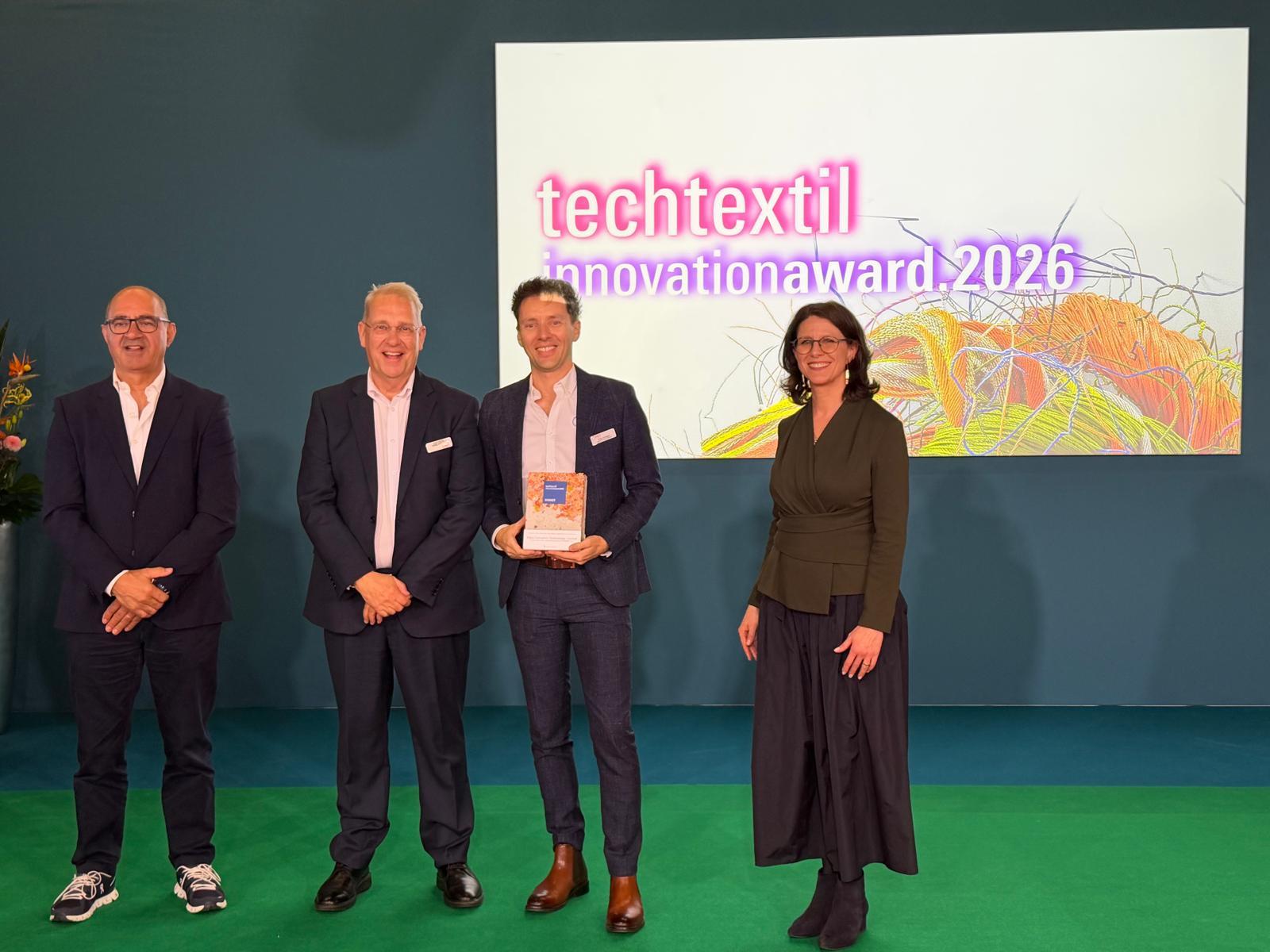
FET’s Managing Director Richard Slack and Senior Scientist Kristoffer Kortsen (centre) receive the Innovation Award Photo FET
FET’s Managing Director Richard Slack and Senior Scientist Kristoffer Kortsen (centre) receive the Innovation Award
08.05.2026

FET’s gel spinning system wins Techtextil Innovation Award

FET has received the Techtextil Innovation Award 2026 in the New Production Technology category. The Techtextil Innovation Award honours outstanding ideas in textile technology, sustainability, AI and the creation of technical textiles, selected by an international jury of experts. Ranging from new materials to new production technologies, this award recognises progressive ideas that are driving forces for numerous industries, such as automotive, medical and construction.

The new FET-500 Series now allows rapid, small-scale gel spinning of UHMWPE without the use of the toxic solvents typically associated with the process. This game-changing equipment will finally unlock R&D and new product development in UHMWPE yarns, which was previously blocked by the large-scale nature of UHMWPE yarn production, enabling significant savings in cost, footprint and environmental factors.

“We are proud that the Techtextil Innovation Award recognises our intensive work. It shows that we are at the forefront of technological developments supporting the textiles of tomorrow.” - Richard Slack, Managing Director.

FET has received the Techtextil Innovation Award 2026 in the New Production Technology category. The Techtextil Innovation Award honours outstanding ideas in textile technology, sustainability, AI and the creation of technical textiles, selected by an international jury of experts. Ranging from new materials to new production technologies, this award recognises progressive ideas that are driving forces for numerous industries, such as automotive, medical and construction.

The new FET-500 Series now allows rapid, small-scale gel spinning of UHMWPE without the use of the toxic solvents typically associated with the process. This game-changing equipment will finally unlock R&D and new product development in UHMWPE yarns, which was previously blocked by the large-scale nature of UHMWPE yarn production, enabling significant savings in cost, footprint and environmental factors.

“We are proud that the Techtextil Innovation Award recognises our intensive work. It shows that we are at the forefront of technological developments supporting the textiles of tomorrow.” - Richard Slack, Managing Director.

This reinforces FET’s success in processing over 130 different polymer types in multifilament, monofilament and nonwoven formats, collaborating with specialist companies worldwide to promote greater sustainability through innovative manufacturing processes.

Source:

FET

Global Fashion Summit: Copenhagen Edition Photo (c) Global Fashion Agenda
06.05.2026

New 2030 Circularity Blueprint Aims to Scale Recycling and Unlock Investment Opportunities

The EU textile system is at a critical crossroads. Today, less than 1% of discarded garrments are recycled into new garments, despite EU-wide obligations for separate collection.

In response, Global Fashion Agenda (GFA) is launching the 2030 Circularity Blueprint, in partnership with ReHubs. This ambitious initiative is designed to support the transformation of the EU textile ecosystem to advance textile-to-textile recycling and drive the transition to a circular economy. The Blueprint will be officially presented at the Global Fashion Summit: Copenhagen Edition on 6 May - one of the world’s leading forums for sustainability in fashion - bringing together industry leaders, policymakers, and innovators to accelerate collective action.

The EU textile system is at a critical crossroads. Today, less than 1% of discarded garrments are recycled into new garments, despite EU-wide obligations for separate collection.

In response, Global Fashion Agenda (GFA) is launching the 2030 Circularity Blueprint, in partnership with ReHubs. This ambitious initiative is designed to support the transformation of the EU textile ecosystem to advance textile-to-textile recycling and drive the transition to a circular economy. The Blueprint will be officially presented at the Global Fashion Summit: Copenhagen Edition on 6 May - one of the world’s leading forums for sustainability in fashion - bringing together industry leaders, policymakers, and innovators to accelerate collective action.

Building on the ambitions of GFA’s 2020 Circular Fashion System Commitment and grounded in robust industry and value chain engagement, the Blueprint identifies and addresses the systemic fragmentation that has long hindered progress. It introduces a coordinated roadmap to close collection gaps, align stakeholders, and unlock the estimated €8–11 billion Capital Expenditure required to build Europe’s textile-to-textile recycling infrastructure.

Accelerating System-Level Change
The 2030 Circularity Blueprint sets out a clear implementation pathway - presenting eight interconnected intervention areas that have been designed to address systemic barriers in a coordinated way:

Systemic Conditions:
1.    Shared Framework for Circular & Sustainable Materials 
2.    Textile Waste Intelligence Platform
3.    Demand Signal Initiative: Long-Term Offtake Commitments 

Value Chain Interventions
4.    Designing for the Loop: Circularity at Product Design Stage 
5.    Closing the Collection Gap: Effective Textile Collection Systems 
6.    Closing the Sorting Investment Gap: Demand Certainty for Sorters
7.    Pre-Sorting & Feedstock Preparation: Regional Hub Infrastructure 
8.    Recycling Infrastructure at Scale: A Coordinated CAPEX Roadmap

When implemented correctly, the eight interventions are designed to create a system that turns voluntary ambition into investment-grade infrastructure and scalable industrial capacity by 2030, with the ambition to reach a target of 2.7 million tonnes of textile-to-textile recycling capacity by 2035.

As part of the 2030 Circularity Blueprint, GFA and ReHubs will bring two collaborative programmes to life. The first, led by ReHubs, centres on the 'Textile Waste Intelligence Platform'. The second tackles the critical challenge of closing the collection and sorting gap.

A Collaborative Path Forward
The 2030 Circularity Blueprint is designed as a dynamic, collaborative ecosystem, bringing together stakeholders across the value chain to co-create solutions, share ownership, and track progress. It will require coordinated, cohesive effort from all stakeholders - across brands, sorters, recyclers, infrastructure operators, and policymakers - working in alignment rather than in parallel.  The intervention areas will be advanced in partnership with other organisations ready to lead and invest. 

Call to Action:
GFA and ReHubs are actively seeking funding, partnerships, and contributions to bring the full 2030 Circularity Blueprint to life. Organisations are invited to lead and support the remaining intervention areas critical to achieving Europe’s circular textile ambitions.

To further catalyse progress, GFA is issuing a Call to Action for a Targeted Policy Incentive Framework, with concrete suggestions on how to unlock the secondary raw materials market in the EU. While demand for recycled feedstock is rising, cost remains a key barrier: recycled inputs currently command a premium ranging from approximately 20% to as much as double the price of virgin materials. Addressing this will require stronger demand through public procurement, more harmonised and fit-for-purpose Extended Producer Responsibility (EPR) systems across countries, clearer requirements for the use of recycled materials, and increased investment in recycling infrastructure.

Recognising that scaling circular textiles requires aligning economic drivers with policy ambition, the proposal sets out targeted incentive measures across EU legislative and financial instruments. It urges the European Commission to integrate these across existing and forthcoming frameworks, while encouraging Member States to operationalise them at national level, ensuring that circular solutions can compete and scale in practice.

Federica Marchionni, CEO, GFA, says: "The vision for a textile circular economy is clear, and innovation is gaining ground. Yet progress is stalled by supply–demand deadlocks, compounded by a fragmented landscape where initiatives and stakeholders operate in silos, often unaware of their interdependence. Furthermore, without precise incentives to align efforts and investment, progress cannot move at the pace required.

Evan Wiener, Interim COO and Board Advisor to ReHubs, says: “Unlocking textile circularity at scale requires the full value chain to move together. ReHubs brings leading organisations from across the textile recycling value chain to the same table to align interests, orchestrate investment, and turn fragmented efforts into a functioning ecosystem. This collaborative initiative directly supports our strategy to industrialise textile-to-textile recycling and break the supply–demand deadlock at scale.”

The 2030 Circularity Blueprint aims to change that—identifying key bottlenecks and leveraging interconnections to unlock the potential of the circular value chain: turning ambition into tangible progress.

05.05.2026

Environmental Impact Measurement: Report - Denim moves towards sustainability

EIM (Environmental Impact Measurement), the global reference platform for measuring the environmental impact of garment finishing, presents the second edition of its annual report Denim Industry Progress & Insights 2025. The study analyses over 100,000 real denim finishing processes, providing an accurate and up-to-date view of the industry’s evolution towards more sustainable models.

The textile industry, as one of the sectors with the greatest environmental impact, plays a key role in the transition towards more sustainable production models. To move forward, measuring, understanding, and acting are essential. EIM acts as a compass for the industry, enabling the objective assessment of process impacts and supporting decision-making towards more eco-efficient production.

The report confirms that the denim industry continues to make progress in reducing its environmental impact. Currently, 66% of processes are already classified as low impact, reflecting a positive trend driven by process optimization and the adoption of more efficient technologies.

EIM (Environmental Impact Measurement), the global reference platform for measuring the environmental impact of garment finishing, presents the second edition of its annual report Denim Industry Progress & Insights 2025. The study analyses over 100,000 real denim finishing processes, providing an accurate and up-to-date view of the industry’s evolution towards more sustainable models.

The textile industry, as one of the sectors with the greatest environmental impact, plays a key role in the transition towards more sustainable production models. To move forward, measuring, understanding, and acting are essential. EIM acts as a compass for the industry, enabling the objective assessment of process impacts and supporting decision-making towards more eco-efficient production.

The report confirms that the denim industry continues to make progress in reducing its environmental impact. Currently, 66% of processes are already classified as low impact, reflecting a positive trend driven by process optimization and the adoption of more efficient technologies.

In terms of resource use, significant progress has been made in optimizing water and energy, although there is still room for improvement to reach more advanced standards. Water consumption remains stable at around 30 liters per garment, indicating a plateau after years of continuous improvement. Energy shows the strongest performance, with 85% of processes classified as low impact, driven by equipment modernization and automation.

However, the report highlights that chemical impact remains the industry’s main challenge, with 27% of processes still classified as high impact. Factors such as the use of generic chemicals, lack of transparency in formulations, and the persistence of legacy practices, such as pumice stones or potassium permanganate, continue to limit progress, despite the availability of more sustainable alternatives.

At the same time, worker health impact has improved significantly, with 68% of processes classified as low impact, driven by the increasing adoption of automated technologies replacing more harmful manual techniques.

“The industry has proven that it can improve when it measures its impact, but the next step requires accelerating the adoption of technologies and leaving behind practices that are no longer sustainable,” says Begoña García, creator of EIM and co-author of the report. “Today more than ever, we need reliable data to make informed decisions and move towards a real transformation of the industry.”

This second report further establishes EIM as a global reference standard to measure and track environmental impact in denim finishing. Its annual nature allows brands and manufacturers to benchmark performance, identify improvement areas, and move forward together towards more ambitious sustainability goals.

The full report is available for download and will be updated annually, reinforcing the industry’s commitment to transparency, continuous improvement and environmental impact reduction.

EIM, a global standard to measure and compare environmental impact
EIM, Environmental Impact Measurement, is a globally recognized tool for assessing the environmental performance of garment finishing processes.

It evaluates four key categories, water consumption, energy consumption, chemical impact and worker health impact. Each process is assessed and classified into three levels, low, medium or high impact, according to standardized benchmarks.

EIM includes specific benchmarks for denim finishing, garment washing and garment dyeing, ensuring that results are accurate, comparable and relevant for each type of process.

This methodology enables brands and manufacturers to measure their processes with precision, track improvements and communicate environmental performance in a transparent and verifiable way.

Source:

Environmental Impact Measurement

Source Fashion January 2026 Photo: (c) Source Fashion
Source Fashion January 2026
05.05.2026

Source Fashion: What Matters to Buyers in 2026?

As fashion brands and retailers navigate an increasingly complex landscape shaped by geopolitical disruption, ongoing supply chain challenges, evolving trade tensions and regulatory uncertainty, alongside shifting consumer demand, understanding what truly matters to buyers has never been more critical. For its July 2026 edition, Source Fashion is placing these challenges at the centre of its content agenda, using new industry insights and advisory board input to shape a programme designed to help buyers make more informed, commercially viable decisions in a market defined by constant change.

Insights from Source Fashion’s advisory board and from industry research point to a growing sense of complexity and fatigue across the industry. Buyers are being asked to navigate rising costs, increasing regulation and ongoing uncertainty, while making faster, higher-stakes sourcing decisions. Sustainability, once driven by advocacy, is now increasingly shaped by compliance and reporting requirements, leaving many teams questioning how to balance commercial reality with long-term responsibility.

As fashion brands and retailers navigate an increasingly complex landscape shaped by geopolitical disruption, ongoing supply chain challenges, evolving trade tensions and regulatory uncertainty, alongside shifting consumer demand, understanding what truly matters to buyers has never been more critical. For its July 2026 edition, Source Fashion is placing these challenges at the centre of its content agenda, using new industry insights and advisory board input to shape a programme designed to help buyers make more informed, commercially viable decisions in a market defined by constant change.

Insights from Source Fashion’s advisory board and from industry research point to a growing sense of complexity and fatigue across the industry. Buyers are being asked to navigate rising costs, increasing regulation and ongoing uncertainty, while making faster, higher-stakes sourcing decisions. Sustainability, once driven by advocacy, is now increasingly shaped by compliance and reporting requirements, leaving many teams questioning how to balance commercial reality with long-term responsibility.

Key themes shaping 2026
The research highlights six key shifts shaping buyer priorities in 2026:

  • Operating in permanent volatility - as geopolitical disruption, supply chain instability and unpredictable consumer demand force businesses to plan in a world that is constantly shifting. 
  • The commercial realities of sustainability – where doing the right thing does not always align with cost pressures, margins and supplier constraints. 
  • Making circularity commercially viable – with growing focus on resale, repair and lifecycle integration as part of a scalable business model. 
  • Rethinking the fashion value chain – as traditional sourcing strategies evolve and closer collaboration across the value chain becomes essential. 
  • Innovation with measurable impact – as brands look beyond hype to understand which technologies, including AI, can deliver real, scalable value. 
  • Regulation, data and compliance – as increasing reporting requirements and upcoming legislation reshape how businesses approach sustainability often shifting the focus from advocacy to obligation.

In response to these insights, Source Fashion’s July 2026 content programme has been designed to move beyond discussion and provide practical, commercially relevant guidance for buyers navigating an increasingly complex landscape. Through a series of new formats and returning features, the show will translate industry challenges into actionable insight, helping visitors better understand how to balance cost, risk and responsibility within their sourcing strategies. This approach is designed to support faster, more confident decision-making in a rapidly changing market.

Fashion Deconstructed will offer a hands-on, interactive space designed to help buyers better understand materials, processes and techniques, from upcycling and repair to innovative production methods. Alongside this, the Catwalk Stage will bring together industry leaders and practitioners to explore the future of fashion through panels, case studies and debates, while the return of the Debates Stage will create space for more open, peer-led discussion around the issues shaping the industry today. 

Speaker highlights include:

  • Marguerite, Global Insights Manager, Fashion, Euromonitor International  
  • Bill McRaith, Executive Advisor, Future-Proof Fashion  
  • Sonica Beckman, Founder and CEO, House of Kind  
  • Sarah Coleman, Head of Development, Design and Sustainability, Margarett Howell 
  • Nick Reed, Founder, Neem London 
  • Rosie Cripps, Head of Circularity, Vivo Barefoot
  • Joseph Mountain, Sustainability Manager, N Brown   

Suzanne Ellingham, Event Director of Source Fashion, said “What we’re hearing isn’t rocket science, what we know from listening is that the industry has become more complex, more pressured and, in many cases, overwhelming. There are no shortage of high expectations, new strategies, regulation or technology, but there is a real need for clarity on what actually works in practice, and what delivers real value at scale. As an industry we have to share insight now to help the boat go faster for everyone, in the right direction.

For us, this research is about listening to those challenges and shaping a content programme that responds directly to them. We want to move the conversation beyond theory and into practical, actionable insight that helps buyers navigate cost, risk and responsibility in a more confident and informed way. It’s about making sure the industry conversations we’re having translate into real business impact. Ultimately we want to talk about the things that matter.”


Source:

Source Fashion 

Annual change in key indicators (%) — 2023–2025 Source: EURATEX Economic Update 2026. Textile & Clothing sectors.
16.04.2026

Europe is losing its textile industry

Every week, textile factories close across Europe. Behind each closure: jobs lost, communities affected, strategic capabilities gone.

EURATEX has released its latest Economic Update on the performance of the European textile and apparel industry in 2025. For the third consecutive year, the sector recorded negative results across all key indicators — production, turnover and employment — confirming a continued erosion of competitiveness across Europe.

The causes are clear: structurally high energy costs, weak consumer demand, growing import pressure from Asia, unfair competition from online platforms, and an increasingly heavy regulatory burden on European producers.

Every week, textile factories close across Europe. Behind each closure: jobs lost, communities affected, strategic capabilities gone.

EURATEX has released its latest Economic Update on the performance of the European textile and apparel industry in 2025. For the third consecutive year, the sector recorded negative results across all key indicators — production, turnover and employment — confirming a continued erosion of competitiveness across Europe.

The causes are clear: structurally high energy costs, weak consumer demand, growing import pressure from Asia, unfair competition from online platforms, and an increasingly heavy regulatory burden on European producers.

The EU is preparing several policy responses — the Industrial Accelerator Act, reform of the Union Customs Code, the Energy Union. However, many companies cannot wait. Europe needs immediate action to reduce energy costs, simplify regulation, strengthen market surveillance and restore a genuine level playing field. 
Textiles is a strategic industrial ecosystem for Europe. Beyond fashion — clothing, footwear and home textiles that define European identity and craftsmanship — it supplies critical value chains: healthcare, defence, mobility, construction and agriculture, while supporting circularity through reuse and recycling. This is not a sector Europe can afford to lose. EURATEX calls on the European Commission and Member States to take concrete action before the end of 2026.

“If Europe is serious about maintaining its manufacturing base, it must act faster and more decisively. Every week, textile companies are closing. Production moves elsewhere, dependency increases, and the carbon footprint grows. That is the opposite of what Europe wants to achieve.” Mario Jorge Machado — President, EURATEX

Source:

European Apparel and Textile Confederation EURATEX

The hycuTEC hydrocharging unit reduces the pressure drop of a typical FFP2 filter medium to less than a quarter, thereby achieving filtration efficiency of over 99.99%. Photo Neumag Nonwoven
The hycuTEC hydrocharging unit reduces the pressure drop of a typical FFP2 filter medium to less than a quarter, thereby achieving filtration efficiency of over 99.99%.
02.04.2026

Neumag Nonwoven at FILTECH 2026: Focus on Nonwovens for Filter Media

Under its Neumag brand, Barmag will present its technologies for the production of nonwovens for filter media at this year’s FILTECH. The main focus is on solutions for producing high-performance filter media at competitive costs. Here, Neumag excels in both the meltblown sector and with its spunbond solutions. 

Meltblown technology for the highest quality requirements 
Neumag’s meltblown technology enables the efficient and straightforward production of high - performance nonwovens for filtration, insulation, and sorption applications. A wide variety of polymers can be processed—from classic polyolefins such as PP and PE, through PET, PLA, PBT, and PA, to specialty plastics like PPS or TPU. All of these and other raw materials can be processed safely and reliably using the Neumag meltblown process. 

Under its Neumag brand, Barmag will present its technologies for the production of nonwovens for filter media at this year’s FILTECH. The main focus is on solutions for producing high-performance filter media at competitive costs. Here, Neumag excels in both the meltblown sector and with its spunbond solutions. 

Meltblown technology for the highest quality requirements 
Neumag’s meltblown technology enables the efficient and straightforward production of high - performance nonwovens for filtration, insulation, and sorption applications. A wide variety of polymers can be processed—from classic polyolefins such as PP and PE, through PET, PLA, PBT, and PA, to specialty plastics like PPS or TPU. All of these and other raw materials can be processed safely and reliably using the Neumag meltblown process. 

The hycuTEC hydrocharging technology, which was honored with the Edana Filtrex Innovation Award, enables the production of particularly high-performance electret filter media. This allows the pressure drop of a typical FFP2 filter medium to be reduced to less than a quarter. “Filtration efficiencies of over 99.99% are easily achievable with standard media weighing around 35 g/m² and a maximum pressure drop of 35 Pa,” explains Andreas Frisch, Regional Sales Director Nonwoven. “Furthermore, the additional drying step is eliminated in most applications—another advantage of this innovative technology,” he adds. 

Spunbond solutions for high-performance filter concepts 
Spunbond nonwovens are becoming increasingly important in filtration—both as carrier materials and as standalone filter media. By tailoring nonwoven structures specifically to the task at hand, customer - specific requirements can be precisely met. It is also possible to combine multiple functions within a single layer. 

In particular, the company’s long-standing expertise in bicomponent spinning processes opens up new possibilities in the design of innovative nonwoven structures. The Neumag Bico spunbond process allows for the combination of different fiber cross-sections as well as the simultaneous production of different fibers from one or more polymers on a single line. The spectrum ranges from classic core-sheath and side-by-side filaments to split fibers and so-called mixed fibers.

25.03.2026

Italian Textile Machinery Innovation Takes Center Stage at Techtextil 2026

The Italian textile machinery industry is gearing up for a key event on the international trade fair calendar: Techtextil 2026, taking place from April 21–24 in Frankfurt, Germany. A prestigious representation of Italian companies will participate in the German exhibition—a global benchmark for technical and innovative textiles—to present cutting-edge technologies dedicated to an ever-expanding market.

Italy confirms its position among the world leaders in the textile machinery sector, thanks to a solid and highly specialized production system. The industry stands out for its strong international vocation, with a predominant share of production destined for foreign markets (86% of its sales) and a consolidated presence in over 130 countries. This places the country among the top global exporters of textile technology, renowned for its quality, innovation, and reliability.

The Italian textile machinery industry is gearing up for a key event on the international trade fair calendar: Techtextil 2026, taking place from April 21–24 in Frankfurt, Germany. A prestigious representation of Italian companies will participate in the German exhibition—a global benchmark for technical and innovative textiles—to present cutting-edge technologies dedicated to an ever-expanding market.

Italy confirms its position among the world leaders in the textile machinery sector, thanks to a solid and highly specialized production system. The industry stands out for its strong international vocation, with a predominant share of production destined for foreign markets (86% of its sales) and a consolidated presence in over 130 countries. This places the country among the top global exporters of textile technology, renowned for its quality, innovation, and reliability.

In the first eleven months of 2025, sales in Germany have already reached 81 million euros. Among the most requested technologies, accessories stand out (36%), followed by finishing machinery (33%)—the latter being essential for the production processes of the most innovative textile sectors.

The strength of Italian textile machinery lies in its dynamic structure, composed of small-to-medium-sized companies that are heavily oriented toward Research & Development. This flexibility allows Italian manufacturers to collaborate closely with end-users, transforming customer needs into highly personalized and versatile technological solutions.

“The growing demand for innovative textiles across various industrial fields is further consolidating our manufacturers’ position,” emphasizes Marco Salvadè, President of ACIMIT. “At Techtextil 2026, the Italian offering will once again demonstrate how the combination of high technology and customization capabilities is the key to meeting the challenges of the technical textiles sector.”

Italian expertise, rooted in historic districts such as Bergamo, Biella, Brescia, Como, Milan, Prato, and Vicenza, continues to guarantee standards of quality and reliability that make Made in Italy a point of reference for the entire global industry.

The ACIMIT associate companies present in the Italy Pavilion include: Aeris S.r.l., Aigle S.r.l., Beschi S.r.l., Bettarini & Serafini S.r.l., Bonino S.r.l., Castello S.r.l., Ferraro S.p.A., Gemata S.p.A., Gualchieri e Gualchieri S.r.l., Guarneri Technology S.r.l., Idealtech S.r.l., IMA S.p.A., Lonati S.p.A., Mariplast S.p.A., MCS Officina Meccanica S.p.A., Monti-Mac S.r.l., M.T.V. S.r.l., Noseda S.r.l., OMMI S.r.l., Ramatex Italia S.r.l., Ramina S.r.l., Salvadè S.r.l., Simet S.r.l., S.R.S. Spindle Research & Service S.r.l., Stalam S.p.A., Tecnomeccanica Biellese S.r.l., Tecnorama S.r.l., Texera S.r.l., Ugolini S.r.l., Unitech Industries S.r.l., Zanfrini S.r.l..

The strength of the Italian presence is further confirmed by ACIMIT associate members exhibiting at individual stands or through local retailers, including:  A.Piovan S.r.l., Autefa Solutions Italy, Bianco S.p.A., Cormatex S.r.l., Dell’orco & Villani S.r.l., Emme S.r.l., Fadis S.p.A., Itema S.p.A., Lawer S.p.A., LGL Electronics S.p.A., Mesdan S.p.A., Monti Antonio S.p.A., O.M.R. S.r.l., Ratti Luino S.r.l., Siltex S.r.l., Texilmesa S.r.l., Texnology S.r.l., Toscana Spazzole Industriali S.r.l., Willy Italiana S.r.l., Zappa Macchine S.r.l..

More information:
ACIMIT Techtextil Italy
Source:

ACIMIT 

Kick-off Textilfabrik 7.0 © Copyright: Zukunftsagentur/Tomas Rodriguez
Kick-off Textilfabrik 7.0
23.03.2026

Real-world lab for sustainable textile production: Textilfabrik 7.0 launched

With the official kick-off event of the Textilfabrik 7.0 (T7), a major transformation project for the German textile and apparel industry has been launched in the Monforts Quarter in Mönchengladbach. At the “Textile Roundtable,” an event format organized by the Zukunftsagentur Rheinisches Revier, representatives from industry, research, politics, and the regional economy came together to jointly lay the foundation for CO₂-neutral, circular, and economically viable textile production in Germany.

The textile and fashion industry worldwide faces major challenges: around ten percent of global CO₂ emissions are attributed to it. At the same time, companies in Germany are under considerable competitive pressure. Textilfabrik 7.0 addresses precisely this intersection by bringing together research institutions, industry, and regional stakeholders to accelerate the transfer of innovative technologies and production processes into industrial application.

With the official kick-off event of the Textilfabrik 7.0 (T7), a major transformation project for the German textile and apparel industry has been launched in the Monforts Quarter in Mönchengladbach. At the “Textile Roundtable,” an event format organized by the Zukunftsagentur Rheinisches Revier, representatives from industry, research, politics, and the regional economy came together to jointly lay the foundation for CO₂-neutral, circular, and economically viable textile production in Germany.

The textile and fashion industry worldwide faces major challenges: around ten percent of global CO₂ emissions are attributed to it. At the same time, companies in Germany are under considerable competitive pressure. Textilfabrik 7.0 addresses precisely this intersection by bringing together research institutions, industry, and regional stakeholders to accelerate the transfer of innovative technologies and production processes into industrial application.

Silke Krebs, State Secretary at the Ministry of Economic Affairs, Industry, Climate Protection and Energy of the State of North Rhine-Westphalia emphasizes that the T7 project actively drives the transformation of the Rhenish mining region into a modern industrial hub. It combines innovative, sustainable textile production with research, development, and the use of AI and robotics. At the same time, it strengthens the region’s competitiveness and creates new jobs across all qualification levels. T7 demonstrates that structural change offers concrete opportunities for a future-proof industry.

For Felix Heinrichs, Mayor of the City of Mönchengladbach, it is evident that when thinking of textiles, you cannot overlook Mönchengladbach. Textile production is deeply embedded in the industrial DNA of Mönchengladbach. But it also has the potential to play a key role in the future of the city as a business location. Textilfabrik 7.0 brings industry and academia together for innovation and research. In doing so, it lays the foundation for sustainable and economically viable textile production - and thus for future-proof jobs in Mönchengladbach. Today’s launch of the T7 project marks a major milestone in the city’s structural transformation.

The kick-off event was aimed in particular at companies along the entire textile value chain. In several keynote presentations, participants gained insights into current developments and potential applications of future production models. Brother Internationale Industriemaschinen GmbH and Hch. Kettelhack GmbH & Co. KG demonstrated how on-demand production can be integrated into microfactory concepts, enabling flexible, demand-driven manufacturing processes.

In addition, 3E Smart Solutions presented how intelligent production for smart textiles could look in the future. The industry cluster Cluster Industrial Biotechnology (CLIB) showcased approaches for using biotechnological processes, such as microorganisms, in textile production to improve resource efficiency and close material loops.

At the heart of Textilfabrik 7.0 are four core modules: On-Demand Manufacturing, MicroFactory Engineering, Digital Textiles, and Biosphere. These topics also formed the basis for four workshops in which participants discussed with module leaders what requirements industry has for future production solutions. The goal was to identify concrete needs and incorporate them directly into further project planning.

Through its real-world lab approach, T7 aims to test and optimize new technologies along the entire textile value chain. These include robotics, digital process chains, and biotechnological methods that can help establish a functioning circular economy in practice.

Professor Dr. Susanne Meyer, President of Niederrhein University of Applied Sciences states that the Textilfabrik 7.0 exemplifies what applied research must achieve today: bringing together science, industry, and society to develop concrete solutions to the major challenges of our time. Niederrhein University of Applied Sciences contributes their textile expertise specifically to this future-oriented project, from digital production processes and sustainable materials to circular value creation models. In doing so, there is a contribution not only to the transformation of the textile industry but also to the innovative capacity and future viability of the entire region.

At the same time, the project makes an important contribution to structural change in the Rhenish mining region. Under the guiding principle “From Coal to AI,” new perspectives for industrial value creation and skilled employment are emerging in the region. Textilfabrik 7.0 is one of 19 anchor projects in the Rhenish mining region and is considered by the state to be central to the successful, rapid, and visible implementation of structural transformation.

Textilfabrik 7.0 is a joint project of the Research Institute for Textile and Clothing (FTB) at Niederrhein University of Applied Sciences (HSNR), the Institute for Textile Technology (ITA) at RWTH Aachen University, the Association of the North-West German Textile and Clothing Industry, the Association of the Rhenish Textile and Clothing Industry, the Textile Academy NRW, and WFMG – Mönchengladbach Economic Development Corporation.

In einer zweiten Entwicklungsphase soll über die Textilfabrik 7.0 hinausgehend ein Industriepark der Zukunft entstehen. Hier entwickelt und produziert die Textil- und Bekleidungsindustrie unter Zero-Emission-Bedingungen und mit CO₂-neutralen Prozessen. Der Industriepark soll Raum bieten für innovative Produktionsstätten, Unternehmensniederlassungen der Textilbranche sowie nachhaltige Textil-Start-ups. So entsteht ein moderner Industriestandort, der Forschung, Entwicklung und industrielle Produktion miteinander verbindet.

In a second development phase, a future industrial park is planned to be created beyond Textilfabrik 7.0. Here, the textile and apparel industry will develop and produce under zero-emission conditions and with CO₂-neutral processes. The industrial park will provide space for innovative production facilities, company branches in the textile sector, and sustainable textile start-ups. This will create a modern industrial hub that combines research, development, and industrial production.

The project Textilfabrik 7.0 is funded by the Federal Ministry for Economic Affairs and Energy (BMWE) under the “STARK” funding guideline to strengthen transformation dynamics and promote new beginnings in coal regions and coal-fired power plant locations, by the State of North Rhine-Westphalia through the Ministry of Economic Affairs, Industry, Climate Protection and Energy (MWIKE) in accordance with the framework guideline for implementing the Investment Act for Coal Regions (InvKG) NRW, and by the Federal Ministry for Research, Technology and Space (BMFTR).

Source:

ITA – Institut für Textiltechnik of RWTH Aachen University

ReHubs x BCG Report Cover Cover ReHubs x BCG Report
ReHubs x BCG Report Cover
23.03.2026

New BCG and ReHubs Report: Scale Textile-to-Textile Recyclinge

A new report from Boston Consulting Group (BCG) and ReHubs, titled “Advancing Textile Circularity – Europe’s textile waste challenge: Scaling Textile-to-Textile requires enabling mechanisms”, highlights the urgent need for systemic action to tackle Europe’s growing textile waste and scale a circular textile economy. 

The report establishes the first harmonized fact base on textile waste in Europe. It finds that Europe generates around 15.2 million tonnes of textile waste every year, including 13.3 million tonnes of post-consumer waste. However, only a small share of this waste is collected and sorted for recycling, leaving most textile waste outside recycling systems. 

As a result, textile-to-textile recycling currently represents less than 1% of post-consumer textile waste in Europe. At the same time, waste volumes continue to rise rapidly. Without decisive action, Europe’s textile waste could reach the equivalent of around 80 football stadiums filled with discarded textiles every year by 2035.

A new report from Boston Consulting Group (BCG) and ReHubs, titled “Advancing Textile Circularity – Europe’s textile waste challenge: Scaling Textile-to-Textile requires enabling mechanisms”, highlights the urgent need for systemic action to tackle Europe’s growing textile waste and scale a circular textile economy. 

The report establishes the first harmonized fact base on textile waste in Europe. It finds that Europe generates around 15.2 million tonnes of textile waste every year, including 13.3 million tonnes of post-consumer waste. However, only a small share of this waste is collected and sorted for recycling, leaving most textile waste outside recycling systems. 

As a result, textile-to-textile recycling currently represents less than 1% of post-consumer textile waste in Europe. At the same time, waste volumes continue to rise rapidly. Without decisive action, Europe’s textile waste could reach the equivalent of around 80 football stadiums filled with discarded textiles every year by 2035.

The report shows that scaling textile-to-textile recycling is technically possible but requires reaching a critical tipping point of c. 2.7 million tonnes of recycling annually by 2035 to unlock economies of scale and make the ecosystem viable.

Reaching this milestone will require €8-11 billion in capital investment and €5-6.5 billion in recurring annual operating costs, as well as coordinated supply- and demand-side measures across the value chain.

The analysis also underlines that textile-to-textile recycled fibers represent a new product category with structurally higher processing costs. Under current market conditions, they cannot compete directly with incumbent recycled materials or virgin fibers without targeted enabling mechanisms and coordinated policy support.

Scaling textile circularity will therefore require coordinated collaboration across the entire value chain, from improved collection and sorting infrastructure to demand signals from brands and clear policy frameworks that support investment and innovation.

Robert van de Kerkhof, CEO at ReHubs commented:
“Europe has the opportunity to build a truly circular textile ecosystem, but it will require systemic change across the entire value chain. Textile-to-textile recycling is technically possible today, but scaling it requires coordinated action from industry, policymakers, and investors. Through collaboration across the value chain, ReHubs is helping to drive the transformation needed to build a circular textile economy in Europe.”

Nicolas Manuelli, Managing Director & Partner at BCG commented:
“This report shows that scaling textile-to-textile recycling in Europe is achievable, but it requires the right economic conditions. Textile-to-textile recycled fibers are a new product category with higher processing costs, meaning they will not scale without enabling mechanisms. Supply-side and demand-side measures, combined with appropriate financing tools and supportive trade and industrial policies, will be essential to unlock investment and accelerate the transition to a circular textile system.”

The framework allows for programmable deformation patterns, shown here with the MIT logo. Credits: Image courtesy of the researchers
The framework allows for programmable deformation patterns, shown here with the MIT logo.
18.03.2026

3D-printed metamaterials that stretch and fail by design

Metamaterials — materials whose properties are primarily dictated by their internal microstructure, and not their chemical makeup — have been redefining the engineering materials space for the last decade. To date, however, most metamaterials have been lightweight options designed for stiffness and strength.

New research from the MIT Department of Mechanical Engineering introduces a computational design framework to support the creation of a new class of soft, compliant, and deformable metamaterials. These metamaterials, termed 3D woven metamaterials, consist of building blocks that are composed of intertwined fibers that self-contact and entangle to endow the material with unique properties.

“Soft materials are required for emerging engineering challenges in areas such as soft robotics, biomedical devices, or even for wearable devices and functional textiles,” explains Carlos Portela, the Robert N. Noyce Career Development Professor and associate professor of mechanical engineering.

Metamaterials — materials whose properties are primarily dictated by their internal microstructure, and not their chemical makeup — have been redefining the engineering materials space for the last decade. To date, however, most metamaterials have been lightweight options designed for stiffness and strength.

New research from the MIT Department of Mechanical Engineering introduces a computational design framework to support the creation of a new class of soft, compliant, and deformable metamaterials. These metamaterials, termed 3D woven metamaterials, consist of building blocks that are composed of intertwined fibers that self-contact and entangle to endow the material with unique properties.

“Soft materials are required for emerging engineering challenges in areas such as soft robotics, biomedical devices, or even for wearable devices and functional textiles,” explains Carlos Portela, the Robert N. Noyce Career Development Professor and associate professor of mechanical engineering.

In an open-access paper published Jan. 26 in the journal Nature Communications, researchers from Portela’s lab provide a universal design framework that generates complex 3D woven metamaterials with a wide range of properties. The work also provides open-source code that allows users to create designs to fit specifications and generate a file for printing or simulating the material using a 3D printer.

“Normal knitting or weaving have been constrained by the hardware for hundreds of years — there’s only a few patterns that you can make clothes out of, for example — but that changes if hardware is no longer a limitation,” Portela says. “With this framework, you can come up with interesting patterns that completely change the way the textile is going to behave.”

Possible applications include wearable sensors that move with human skin, fabrics for aerospace or defense needs, flexible electronic devices, and a variety of other printable textiles.

The team developed general design rules — in the form of an algorithm — that first provide a graph representation of the metamaterial. The attributes of this graph eventually dictate how each fiber is placed and connected within the metamaterial. The fundamental building blocks are woven unit cells that can be functionally graded via control of various design parameters, such as the radius and pitch of the fibers that make up the woven struts.

“Because this framework allows these metamaterials to be tailored to be softer in one place and stiffer in another, or to change shape as they stretch, they can exhibit an exceptional range of behaviors that would be hard to design using conventional soft materials,” says Molly Carton, lead author of the study. Carton, a former postdoc in Portela’s lab, is now an assistant research professor in mechanical engineering at the University of Maryland.

Further, the simulation framework also allows users to predict the deformation response of these materials, capturing complex phenomena such as self-contact within fibers and entanglement, and design to predict and resist deformation or tearing patterns.

“The most exciting part was being able to tailor failure in these materials and design arbitrary combinations,” says Portela. “Based on the simulations, we were able to fabricate these spatially varying geometries and experiment on them at the microscale.”

This work is the first to provide a tool for users to design, print, and simulate an emerging class of metamaterials that are extensible and tough. It also demonstrates that through tuning of geometric parameters, users can control and predict how these materials will deform and fail, and presents several new design building blocks that substantially expand the property space of woven metamaterials.

“Until now, these complex 3D lattices have been designed manually, painstakingly, which limits the number of designs that anyone has tested,” says Carton. “We’ve been able to describe how these woven lattices work and use that to create a design tool for arbitrary woven lattices. With that design freedom, we’re able to design the way that a lattice changes shape as it stretches, how the fibers entangle and knot with each other, as well as how it tears when stretched to the limit.”

Carton says she believes the framework will be useful across many disciplines. “In releasing this framework as a software tool, our hope is that other researchers will explore what’s possible using woven lattices and find new ways to use this design flexibility,” she says. “I’m looking forward to seeing what doors our work can open.”

The paper, “Design framework for programmable three-dimensional woven metamaterials,” is available now in the journal Nature Communications. Its other MIT-affiliated authors are James Utama Surjadi, Bastien F. G. Aymon, and Ling Xu.

This work was performed, in part, through the use of MIT.nano’s fabrication and characterization facilities.

Source:

MIT, Anne Wilson | Department of Mechanical Engineering

17.03.2026

Deemed Importer obligations must not be delayed to 2028

16 industry associations published a joint statement on deemed importer obligations to urge the EU and its Member States to put in place such a Regulation without delay:

European traders and industry are deeply concerned about the rise of imports of small consignments. The introduction of the ‘deemed importer’ in 2028 comes too late. We call upon the EU and its Member States to introduce a legal obligation on foreign operators to appoint a legally responsible person or entity in the EU for e-commerce imports without any further delay. 

The extraordinary growth of e-commerce in recent years has led to an exponential number of small packages of low-valued goods entering the EU, each of which needs to be accompanied by an individual customs declaration since the entry into force of new VAT rules for e-commerce in 2021. In 2022, for example, almost 1 billion customs declarations for low-value goods were filed. The sheer volumes of e-commerce are testing customs' limits. 

16 industry associations published a joint statement on deemed importer obligations to urge the EU and its Member States to put in place such a Regulation without delay:

European traders and industry are deeply concerned about the rise of imports of small consignments. The introduction of the ‘deemed importer’ in 2028 comes too late. We call upon the EU and its Member States to introduce a legal obligation on foreign operators to appoint a legally responsible person or entity in the EU for e-commerce imports without any further delay. 

The extraordinary growth of e-commerce in recent years has led to an exponential number of small packages of low-valued goods entering the EU, each of which needs to be accompanied by an individual customs declaration since the entry into force of new VAT rules for e-commerce in 2021. In 2022, for example, almost 1 billion customs declarations for low-value goods were filed. The sheer volumes of e-commerce are testing customs' limits. 

Many of the products arriving here contravene the rules in force in the EU. Infringements like VAT fraud, breaching health and safety EU standards, violation of intellectual property rights and misleading claims fuel unfair competition within the Single Market, disadvantaging businesses that follow the EU’s high standards. Such unfair trade practices, linked to small consignments, are corroding entire industrial value chains, eroding our economic strength and resilience and put the consumer health at risk. Additionally, they threaten shops all over the EU, accelerating the depopulation of town centres. 

Against this background, we welcome that the EU, with the new Union Customs Code (UCC), plans to introduce the so-called “deemed importer”, i.e. holding platforms responsible for ensuring that customs duties and VAT are paid at purchase as well as for non-financial obligations. 

However, if the “deemed importer” is introduced only in 2028, this will come too late. In 2025 alone, 5.8 billion parcels were imported into the EU. In the coming years, the pressure on our industries of competing with non-compliant traders which bear no responsibility for non-compliance, will mount to an unbearable extent and threaten the livelihood of even more economic operators, with massive consequential job losses. 

The introduction of an obligation to appoint a legally responsible person or entity in the European Union who can be held accountable is long overdue. This can be established much earlier than 2028 by a simple EU Regulation at short notice, long before the ‘deemed importer’ and other elements of the UCC are introduced. Technically easily feasible, it is just a question of political will. 

We also acknowledge the forthcoming European Product Act, which aims to further strengthen the overall framework for product compliance and market surveillance. We stress that compliance with European Union Extended Producer Responsibility (EPR) obligations must be effectively enforced, including in relation to online sales and third-country sellers. Online marketplaces and any legally responsible EU representative should be subject to clear and binding enforcement mechanisms to ensure that products placed on the EU market comply with applicable EPR requirements (including packaging, WEEE, batteries and textiles), thereby preventing free-riding and safeguarding a level playing field. These initiatives will only deliver their full effect in the medium term. 
If properly defined and implemented, these new concepts have the potential to help address gaps in online product compliance. 

List of Signatories:
Applia – Home Appliance Europe
CEC – European Footwear Confederation
Cosmetics Europe - The personal care association
EBCA - European Branded Clothing Association
ECOS – European Coalition on Standards
EFIC - European Furniture Industries Confederation
EURATEX - European Apparel and Textile Confederation
EXPRA – Extended Producer Responsibility Alliance
Independent Retail Europe
LightingEurope – The voice of the Lighting Industry
Repair&Share
Svensk Handel – Swedish Commerce
TIE - Toy Industries of Europe
WEEE Forum
ZERO – Associação Sistema Terrestre Sustentável
EucoLight

Source:

European Apparel and Textile Confederation EURATEX

12.03.2026

VIATT 2026: Expanding role in ASEAN textile sourcing

At its third edition, the Vietnam International Trade Fair for Apparel, Textiles, and Textile Technologies (VIATT) reinforced its role as a key sourcing and business platform for ASEAN’s textile industry. The three-day fair welcomed over 17,000 visits from 54 countries and regions, and featured over 460 exhibitors from 21 countries and regions across 18,000 sqm. The 2026 edition was marked by the introduction of new international pavilions and zones, broadening the fair’s sourcing scope across new geographies and product categories. The fringe programme, headlined by the debut Trend Forum, further distinguished VIATT as the region’s most integrated textile trade platform – uniquely spanning the entire value chain.
 

At its third edition, the Vietnam International Trade Fair for Apparel, Textiles, and Textile Technologies (VIATT) reinforced its role as a key sourcing and business platform for ASEAN’s textile industry. The three-day fair welcomed over 17,000 visits from 54 countries and regions, and featured over 460 exhibitors from 21 countries and regions across 18,000 sqm. The 2026 edition was marked by the introduction of new international pavilions and zones, broadening the fair’s sourcing scope across new geographies and product categories. The fringe programme, headlined by the debut Trend Forum, further distinguished VIATT as the region’s most integrated textile trade platform – uniquely spanning the entire value chain.
 
A focal point within the returning European Zone – which also spotlighted leading exhibitors from Italy, Switzerland, Türkiye, and the UK – the German Pavilion offered buyers direct access to a comprehensive range of well-engineered products and solutions, with a strong emphasis on quality, compliance, and time-proven manufacturing excellence. Complementing this, the inaugural Türkiye Zone made its debut at the fair, further broadening the European sourcing landscape and introducing a new dimension of textile expertise to VIATT’s growing international offering.

Drawn by VIATT’s diverse and extensive offerings, 10 buyer delegations from eight countries and regions sourced at the fair, whilst VIP buyers from renowned brands including Adidas, An Phuoc, Gap, H&M, Ivy Moda, Lululemon, Muji, Nitori, Osprey, Perry Ellis, and many more, also met with exhibitors to further promote business exchange.
 
Beyond the show floor, VIATT 2026 offered an expanded fringe programme designed to share trends, insights, and strategies with global industry players, bringing international perspectives to educate and inspire the local and regional markets. Key events included the inaugural Trend Forum, the Vietnam Textile & Garment Industry Development Strategy Summit (VTGIS), and the Textile Industry Exchange, alongside a series of seminars, panel discussions, workshops, and three captivating fashion shows that blended local and international perspectives.
 
Speakers’ insights
“Southeast Asia is no longer just a manufacturing alternative – it is becoming a strategic innovation hub. By integrating fashion, home textiles, and technology into one conversation, the fringe programme reflects how the industry operates today, as innovation increasingly happens between categories. Through talks, forums, and curated spaces, the Trend Forum allows trend content to go beyond visual inspiration, helping exhibitors and visitors move from trend-following to trend understanding.”
Mr Kai Chow, Lead Curator, VIATT Trend Forum and Creative Director of MUSEATIVE

“The fashion show helps us a great deal because we are not yet known in this country, and what we are looking for is a distributor or licensee who would be interested in distributing our brand here. We see Vietnam as a market with huge potential, and it is obviously the best place to be. Having started our distribution in Korea last year, Vietnam would be our second country in Asia, and the development of our brand throughout the region is exactly what we are working towards.”
Mr Hervé Coulombel, President and CEO of Royal Mer, France

“Digital transformation is no longer optional. Especially for 3D design, AI-assisted development and virtual collaboration are now becoming a standard tool to reduce waste, shorten lead time, and improve global communication. We encourage companies to adopt those these workflows early, so they will get a competitive advantage in cost, speed, and sustainability, and we wanted to give our audience a clearer picture of how AI can integrate into their production. They were really interested as it can help them reduce costs and build up the necessary strategic tools for sustainable growth.”
Ms Kathy Pham, Associate, Business Development, CLO, Vietnam
 
The Vietnam International Trade Fair for Apparel, Textiles and Textile Technologies (VIATT) is organised by Messe Frankfurt (HK) Ltd and the Vietnam Trade Promotion Agency (VIETRADE). 

(c) Institut für Textiltechnik (ITA) der RWTH Aachen University
26.02.2026

ITA: Pellet press enables thermomechanical textile recycling

Since the end of 2025, the technical centre of the Institut für Textiltechnik (ITA) of RWTH Aachen University has been equipped with a pellet press from the manufacturer Amandus Kahl GmbH & Co. KG, Reinbek, Germany. This press can efficiently compact shredded synthetic textiles at a throughput of up to 25 kg/h and process them into pellets with a diameter of 4 mm.

The produced pellets are characterised by a homogeneous geometry, defined bulk density and suitable flowability. This enables reliable dosing and continuous feeding into an extruder. In this way, the process-related prerequisite for thermomechanical textile recycling on a pilot scale at the ITA is established.

Current research at the institute includes the thermomechanical recycling of cleaning textiles made from polylactide (PLA). The pellet press was procured as part of the RePLAy research project. The Federal Ministry of Research, Technology and Space is funding the project as part of the BIOTEXFUTURE innovation space. 

Since the end of 2025, the technical centre of the Institut für Textiltechnik (ITA) of RWTH Aachen University has been equipped with a pellet press from the manufacturer Amandus Kahl GmbH & Co. KG, Reinbek, Germany. This press can efficiently compact shredded synthetic textiles at a throughput of up to 25 kg/h and process them into pellets with a diameter of 4 mm.

The produced pellets are characterised by a homogeneous geometry, defined bulk density and suitable flowability. This enables reliable dosing and continuous feeding into an extruder. In this way, the process-related prerequisite for thermomechanical textile recycling on a pilot scale at the ITA is established.

Current research at the institute includes the thermomechanical recycling of cleaning textiles made from polylactide (PLA). The pellet press was procured as part of the RePLAy research project. The Federal Ministry of Research, Technology and Space is funding the project as part of the BIOTEXFUTURE innovation space. 

Graphic by EDANA
26.02.2026

EDANA warns of consequences of misclassification of PET spunbond imports

EDANA would like to remind its members and industry stakeholders of the legal requirement to comply with the EU rules on customs classification when importing non-wovens from third countries outside the EU. In this regard, it was recently discovered that there appears to be a high level of customs misclassification occurring in the nonwoven’s industry. This could have dangerous and costly consequences for importers. 

Following repeated requests by its members, EDANA worked closely with the European Union and the World Customs Organisation to introduce in 2024 specific customs codes CN code 5603 14 20 and 5603 9420 in order to better monitor imports of certain PET spunbond and staple fibre products. Based on market intelligence, EDANA knows that third country imports of the respective products were in the range of 15,000 to 30,000 MT in 2024 and 2025. However, actual import volumes recorded under the specifically created CN codes were significantly lower. 

EDANA would like to remind its members and industry stakeholders of the legal requirement to comply with the EU rules on customs classification when importing non-wovens from third countries outside the EU. In this regard, it was recently discovered that there appears to be a high level of customs misclassification occurring in the nonwoven’s industry. This could have dangerous and costly consequences for importers. 

Following repeated requests by its members, EDANA worked closely with the European Union and the World Customs Organisation to introduce in 2024 specific customs codes CN code 5603 14 20 and 5603 9420 in order to better monitor imports of certain PET spunbond and staple fibre products. Based on market intelligence, EDANA knows that third country imports of the respective products were in the range of 15,000 to 30,000 MT in 2024 and 2025. However, actual import volumes recorded under the specifically created CN codes were significantly lower. 

“There is a clear mismatch between import volumes observed in the market and what is reported under the correct customs codes. Often, importers continue to use outdated customs codes as a matter of habit not paying due attention to changes of the Combined Nomenclature”, says Jacques Prigneaux from EDANA. “However, this is problematic, especially where certain products are subject to investigations by the EU authorities.” 

EDANA has therefore actively commenced an outreach initiative to raise awareness among its members. They have also contacted the European Commission and the national customs authorities of the EU member states to ask the authorities to enhance import checks. 

Incorrect customs classification not only makes EDANA’s work more difficult to monitor import flows and protect the interests of its members. It can also have severe negative legal consequences for importers. Customs authorities penalize misclassifications with additional duties, administrative fines and even criminal penalties. “To avoid such unpleasant surprises, we recommend that all members and their supply chain regularly review and update their customs classification databases and also instruct their customs agents accordingly” adds Mr Prigneaux. 

Awareness and compliance are in particular important where imports are under enhanced customs control (such as in the framework of import registration during an anti-dumping investigation) or subject to special trade or regulatory regimes (such as duty-free or reduced duty imports from countries with which the EU has special trade arrangements). 

A list of preferential trade regimes can be found on the website of the European Commission (here) and the Access2Markets webpage contains product-specific information for imports of goods into the EU (here). Also, presently, certain PET spunbond from China is subject to an EU anti-dumping investigation and imports were made subject to registration in December 2025 (see here for further information). The exact definition of the product subject to the investigation is: ‘non-woven needle-punched sheets of polyester filaments, whether or not reinforced by glass fibres, weighing more than 70 g/m², of a thickness exceeding 0.5 mm but not exceeding 1.8 mm, impregnated with one or more binders, containing less than 30% of glass fibres by weight, not coated or covered’. All imports of these products must be classified under TARIC code 5603 1390 70, CN code 5603 14 20 or TARIC code 5603 1480 70.

Source:

EDANA