EDANA: Uniting the industry and EU policymakers to navigate the future of nonwovens
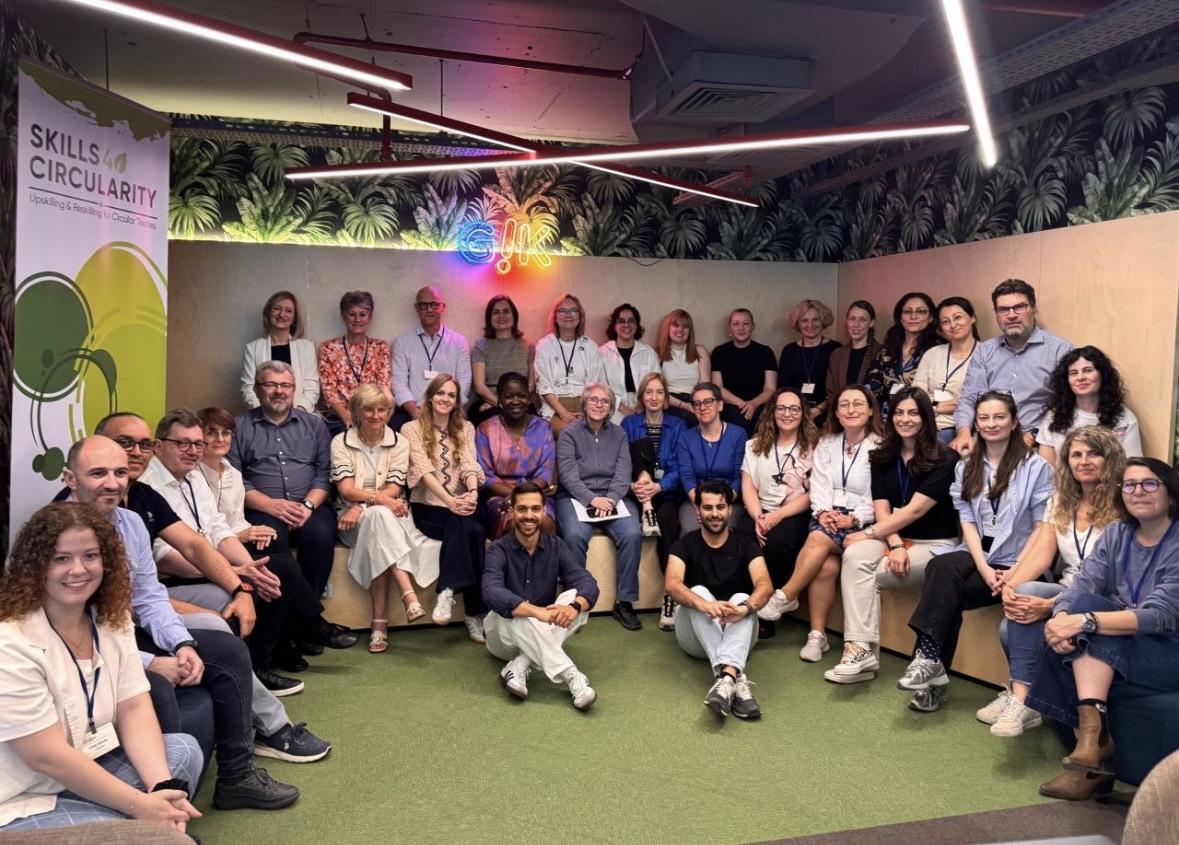
Against a backdrop of rapidly evolving environmental legislation, the EDANA Sustainability & Policy Forum 2025 concluded the past week in Brussels, marking a step forward in the dialogue between the nonwovens industry and European policymakers. Held from 9-10 December at the historic Residence Palace, the two-day event successfully brought together business leaders, sustainability experts, and EU officials to address the dual challenges of circularity and industrial competitiveness.
Designed to foster strategic alignment, the Forum moved beyond standard information-sharing to encourage deep, cross-sector debate. With the European regulatory landscape shifting—spanning chemicals, product design, waste, and climate due diligence—the event provided a timely platform for the industry to move from reactive responses to collective reflection.
The Forum’s primary objective was to facilitate high-level exchange free from day-to-day regulatory pressures.
“From EDANA’s side, the primary goal of the Sustainability & Policy Forum is to create a dedicated space where industry, policymakers, experts and stakeholders can step back from day-to-day regulatory pressure and engage in more strategic, forward-looking discussions,” said Murat Dogru, General Manager of EDANA. “The level of participation, the diversity of viewpoints and the quality of exchanges — particularly around regulation, circularity and the evolving policy landscape during our dedicated advocacy workshops — confirmed the relevance of the Forum as a platform for constructive debate and co-development”.
The Forum opened with a powerful keynote address by Sandrine Dixson-Declève, Co-Founder & Chair of the Systems Transformation Hub. Addressing the theme "Social & Environmental Tipping Points," she challenged attendees to unpack the reality of today's geopolitical situation and identified the "elephants in the room" regarding current sustainability strategies. Her presentation underscored the urgent need to "hack humanity and values back into our policy and economic activities" to navigate the systemic challenges of the 21st century.
Following the keynote, the conversation turned to the practicalities of business leadership under regulatory pressure. Ulrika Kolsrud, President & CEO of Essity, led a pivotal session on "Sustainability priorities in the age of simplification and competitiveness". Joined by Murat Dogru, Kolsrud explored how the European industry can maintain its ambitious sustainability goals while simplifying regulations to foster investment and innovation. The session highlighted that while sustainability expectations are rising globally, legislation must remain proportionate to ensure the continued competitiveness of essential European industries.
The programme featured intensive sessions tackling the industry's operational challenges, featuring a diverse roster of experts:
Moving beyond compliance was a key theme. Krishna Manda (Lenzing) and Anna-Stina Reuter (Sphera) discussed how sustainability reporting can drive business value and resilience. They were joined by Pia Hildén (Suominen), who encouraged companies to use the CSRD as a strategic tool rather than a mere obligation, and Ralf Weis (Freudenberg Performance Materials), who highlighted the importance of providing clear, relevant data to customers in the durable nonwovens market.
A panel featuring Lutz Walter (Textile ETP), Mireille Kong - Van Rekum (Indorama Ventures), and Christian-Yves Crépet (PETCORE Europe) debated the intersection of textiles and nonwovens. Their consensus was clear: circularity in Europe cannot be achieved in silos and requires shared infrastructure and aligned policy frameworks.
The afternoon sessions explored specific technical frontiers. Dominic Byrne (Plastics Europe) and Thorsten Bies (Schlegel und Partner) examined the future of chemical recycling policy and technology. Meanwhile, Tatiana Dias, PhD (DuPont), addressed the healthcare sector, advocating for the legal recognition of mass balance methodologies to unlock circularity in medical packaging
Day 1 concluded with an exclusive networking dinner at the prestigious Musée BELvue. Surrounded by Belgium’s rich history and elegant architecture, participants utilized the evening to unwind and connect, reinforcing the relationships that are vital for cross-industry collaboration.
The second day shifted focus directly to advocacy and policy implementation. Hugo Maria Schally, a former EU official, provided an insider’s perspective on the "EU Toolbox," explaining how product policies are drafted within DG ENV and how the industry can engage effectively without compromising safety or performance.
A highlight of the event was the interactive EU Advocacy Workshop. Attendees split into smaller groups to dissect EDANA’s current policy files, fostering an open exchange on issues ranging from the Waste Framework Directive to the Single-Use Plastics Directive.
One participant noted the value of this hands-on approach:
"The advocacy workshop was an eye-opener. Instead of just listening to updates, we were able to actively debate the implications of the legislation with peers. It clarified exactly where the industry needs to present a united front to be heard in Brussels."
In a move to bridge the gap between legislation and industry, the Forum concluded with a visit to the European Commission at the Conference Centre Albert Borschette. Participants engaged directly with Commission representatives, including Vincenzo Gente (DG Environment) on the Waste Framework Directive and Ewa Malz (DG Environment) on environmental policy simplification.
Reflecting on the visit, another attendee shared:
"Walking into the Commission and hearing directly from the people drafting the Green Deal policies was invaluable. It demystified the process and showed us that there is a genuine willingness to listen to technical realities if we present them with credible data."
The EDANA Sustainability & Policy Forum 2025 has set a clear trajectory for the coming year. As the industry faces the release of new legislative packages from the Commission, EDANA remains committed to helping members anticipate developments and align on credible, science-based approaches to climate and circularity.
EDANA