
From the Sector

Reset
16 results
Graphic: Association of the Nonwoven Fabrics Industry
14.07.2026

Nominations Open for the 2027 IDEA® Achievement Awards

INDA, the Association of the Nonwoven Fabrics Industry, in collaboration with Nonwovens Industry Magazine, is now accepting nominations for the 2027 IDEA® Achievement Awards. 

The IDEA Achievement Awards recognize outstanding innovations, technical advancements, and leadership across the nonwovens and engineered materials industry. Industry professionals are invited to submit their company’s most innovative products, materials, equipment, and sustainability advancements—or nominate innovations on behalf of their clients—for consideration. 

Presented every three years in conjunction with IDEA®, the IDEA Achievement Awards honor breakthrough developments introduced since IDEA®25. Winners will be announced during IDEA®27, taking place March 23-25, 2027, at the Kansas City Convention Center in Kansas City, Missouri. 

Award categories include: 

INDA, the Association of the Nonwoven Fabrics Industry, in collaboration with Nonwovens Industry Magazine, is now accepting nominations for the 2027 IDEA® Achievement Awards. 

The IDEA Achievement Awards recognize outstanding innovations, technical advancements, and leadership across the nonwovens and engineered materials industry. Industry professionals are invited to submit their company’s most innovative products, materials, equipment, and sustainability advancements—or nominate innovations on behalf of their clients—for consideration. 

Presented every three years in conjunction with IDEA®, the IDEA Achievement Awards honor breakthrough developments introduced since IDEA®25. Winners will be announced during IDEA®27, taking place March 23-25, 2027, at the Kansas City Convention Center in Kansas City, Missouri. 

Award categories include: 

  • Raw Materials – Best new raw materials introduction 
  • Nonwoven Product – Best new nonwoven fabric introduction 
  • Short-Life – Best new short-life product introduction 
  • Long-Life – Best new durable product introduction  
  • Equipment – Best new equipment introduction 
  • Sustainability Advancement – Recognizing sustainability and/or circularity advancements in raw materials, nonwoven fabrics, processes and equipment, and end-use products 

Entries must be submitted by November 8, 2026. Finalists in each category will be selected by INDA’s Technical Advisory Board, with the top three entries in each category advancing to the final round. Industry professionals will then vote for the winners through the Nonwovens Industry website. The recipient of the Entrepreneur Award will be selected exclusively by Nonwovens Industry Magazine. 

The 2025 IDEA Achievement Award winners were: 

  • Equipment: Dilo Systems GmbH – MicroPunch 
  • Raw Materials: Woolchemy NZ Ltd. – neweFibre 
  • Short-Life Product: Egal Pads, Inc. – Pads on a Roll 
  • Long-Life Product: Magnera – Sontara EcoRE Bag 
  • Sustainability Advancement: Kindcloth – KINDCLOTH™ PURA HEALTH Insect Repellent – Water Dissolvable Wipes 
  • Nonwoven Product: Innovatec Microfibre Technology GmbH & Co. KG – InnovaWipe® Water Soluble Nonwoven 
  • Entrepreneur: Dude Products 

IDEA27 will feature hundreds of exhibitors showcasing the latest innovations in nonwoven and fiber technologies. The RISE® Conference will be held in conjunction with IDEA27 and will feature scalable, demonstrated solutions designed to address complex technical challenges and pressing societal needs, from sustainability and circularity to healthcare, energy, and advanced manufacturing. IDEA27 attendees will also have the opportunity to participate in expert-led nonwoven short courses designed to expand industry knowledge and technical expertise. 

Source:

Association of the Nonwoven Fabrics Industry 

12.07.2026

NCTO Mourns the Passing of Sen. Lindsey Graham

The National Council of Textile Organizations (NCTO), spanning the entire spectrum of U.S. textiles from fiber to finished sewn products, issued a statement mourning the passing of Senator Lindsey Graham (R-SC) and expressing sincere condolences to his family, staff, and the people of South Carolina.

The National Council of Textile Organizations (NCTO), spanning the entire spectrum of U.S. textiles from fiber to finished sewn products, issued a statement mourning the passing of Senator Lindsey Graham (R-SC) and expressing sincere condolences to his family, staff, and the people of South Carolina.

“The U.S. textile industry is deeply saddened to learn of the passing of South Carolina Senator Lindsey Graham, a dear friend and tireless advocate for our industry and workforce. To say this is a profound loss is an understatement. He was a personal friend to so many in our industry – walked through our plants, engaged with our workers – and never forgot where he came from. He was dubbed by many in Congress as the ‘textile Senator’ and he wore that label so very proudly and he earned every bit of it.  Just last week, he pushed to try to advance two amendments to ensure that U.S. government uniforms are fully made in America. His advocacy on behalf of U.S. manufacturing and workers was a top priority, simply because it was a core belief of his. We want to extend our profound condolences to Senator Graham’s family and his incredible staff – who were his family – and to all those who knew and loved him. He will be greatly missed.”

Source:

National Council of Textile Organizations

FILTREX™ India 2026 in New Delhi: Registration now open Graphic Edana
08.07.2026

FILTREX™ India 2026 in New Delhi: Registration now open

EDANA, the voice of nonwovens, in partnership with the Business Coordination House (BCH), will welcome filtration professionals from across the world to FILTREX™ India 2026, taking place on 7–8 October 2026 at the Eros Hotel, New Delhi. 

Recognised as one of the leading meeting points for the filtration industry in the region, FILTREX™ India brings together decision-makers, technical experts, researchers and innovators from across the entire filtration value chain. The two-day conference and tabletop exhibition will provide a platform to explore technological advances, market developments and the evolving regulatory landscape shaping the future of filtration. 

Building on the success of previous editions, the 2026 conference will feature a comprehensive programme covering some of the industry's most pressing topics, including filtration standards and regulations in India, automotive filtration, industrial filtration, clean water and clean air. The event will also provide extensive networking opportunities, enabling participants to exchange knowledge, strengthen partnerships and discover new business opportunities. 

EDANA, the voice of nonwovens, in partnership with the Business Coordination House (BCH), will welcome filtration professionals from across the world to FILTREX™ India 2026, taking place on 7–8 October 2026 at the Eros Hotel, New Delhi. 

Recognised as one of the leading meeting points for the filtration industry in the region, FILTREX™ India brings together decision-makers, technical experts, researchers and innovators from across the entire filtration value chain. The two-day conference and tabletop exhibition will provide a platform to explore technological advances, market developments and the evolving regulatory landscape shaping the future of filtration. 

Building on the success of previous editions, the 2026 conference will feature a comprehensive programme covering some of the industry's most pressing topics, including filtration standards and regulations in India, automotive filtration, industrial filtration, clean water and clean air. The event will also provide extensive networking opportunities, enabling participants to exchange knowledge, strengthen partnerships and discover new business opportunities. 

The programme includes keynote presentations and technical sessions delivered by internationally recognised experts from leading organisations, including MANN+HUMMEL, Ahlstrom, Camfil, Hollingsworth & Vose, UY Trienviro and Schlegel und Partner. Topics will range from next-generation filtration materials and air quality solutions to wastewater recycling technologies and the implications of evolving European chemical compliance requirements for international markets. 

"Launched in Europe in 2004, FILTREX™ has grown into a recognised international platform for knowledge exchange within the filtration industry," said Murat Dogru, General Manager at EDANA. "The Indian market continues to play an increasingly important role in the global filtration landscape, making FILTREX™ India an ideal forum for bringing together international expertise and local innovation to address shared challenges."

As global demand for effective filtration solutions continues to grow—driven by challenges related to air quality, water treatment, industrial processes and sustainable technologies—FILTREX™ India 2026 will offer participants valuable insights into the innovations and collaborations shaping the industry's future.

Grphic by Edana
02.07.2026

Associations on Single-Use Plastic Directive

The undersigned associations, representing several European industrial sectors, call on EU institutions to maintain the current legal text of the Single-Use Plastic Directive (SUPD), adopted in 2019. While the signatories recognise the importance of ensuring that the SUPD delivers measurable and meaningful environmental outcomes, reopening the Directive now will create legal uncertainty, add disproportionate burden for economic operators that are already navigating partial and often divergent national transpositions, and increase the risk of regulatory overlaps or contradictions with existing and upcoming legislation. Moreover, there is currently insufficient evidence on the effectiveness of the current SUPD to justify a revision, as described below: 

The undersigned associations, representing several European industrial sectors, call on EU institutions to maintain the current legal text of the Single-Use Plastic Directive (SUPD), adopted in 2019. While the signatories recognise the importance of ensuring that the SUPD delivers measurable and meaningful environmental outcomes, reopening the Directive now will create legal uncertainty, add disproportionate burden for economic operators that are already navigating partial and often divergent national transpositions, and increase the risk of regulatory overlaps or contradictions with existing and upcoming legislation. Moreover, there is currently insufficient evidence on the effectiveness of the current SUPD to justify a revision, as described below: 

  • Insufficient evidence to inform a revision of the SUPD. 
    An impact assessment of the SUPD cannot be carried out at a moment when several of its provisions are not yet in place. While a first report on the state of implementation of the SUPD was published in April 2026, it remains partial, and reporting is not harmonised, preventing meaningful comparison of data across countries. Taking the example of consumption reduction targets, Member States and other EEA countries only reported data on SUP products placed on the market in 2022 and, even for this report, did so using different indicators. Crucially, since the target on consumption reduction is set for 2026, no data are yet available on whether that target has been achieved. In summary, the partial application of the SUPD and the limited data available suggest that a revision of the SUPD would be premature at this time. 
  • Preventing further fragmentation and gold-plating. 
    The transposition of the SUPD has produced significant regulatory fragmentation, uneven enforcement, and widespread instances of gold plating, creating persistent uncertainty for companies active across multiple Member States. The result is a patchwork of national rules that undermines the integrity of the Single Market, inflates compliance costs, and fails to deliver proportionate environmental benefits. These structural shortcomings must be fully recognised in the evaluation of the SUPD and effectively addressed prior to considering a reopening of the Directive. 
  • Ensuring legal certainty for economic operators. 
    A revision of the SUPD would create legal uncertainty for companies and Member States that are still implementing several of its provisions. While the SUPD entered into force in mid-2021, the date of application for most of its provisions is at a later stage. Furthermore, the EU Commission has only recently adopted some of the implementing decisions and guidelines on the current SUPD. Any change to the SUPD at a moment when companies are still adapting to new obligations, and Member States are still in the process of implementing some key provisions, would create legal uncertainty for economic operators who do not know whether targets or the scope of the SUPD may change. Legal uncertainty carries significant economic costs for economic operators, notably in terms of investment delays likely to persist throughout the entire SUPD revision process (2–3 years). 
  • Avoiding overlaps with other legislation. 
    Revising the SUPD while the Ecodesign and Packaging Regulations are still being implemented, and as negotiations on the Circular Economy Act (CEA) begin, increases the risk of regulatory overlaps and contradictions. These frameworks cover intersecting areas and a revision of the SUPD in parallel with the CEA would almost inevitably lead to duplicative or conflicting provisions. Even if the EU Commission ensured full coherence in its proposal, the co-legislators could still introduce provisions that diverge from or contradict the SUPD framework, further undermining legal certainty and the functioning of the Single Market. 

At a time when EU leaders have made regulatory simplifications and a fully integrated Single Market central to Europe’s competitiveness agenda, we urge EU policymakers to focus legislative efforts where they are most needed and avoid reopening a framework that has yet to deliver concrete results.

Source:

Edana 

The second in-person meeting of the Skills4Circularity project took place in Izmir at the end of April. During the meeting, key foundations for the development of future training modules were established. (c) IVGT
The second in-person meeting of the Skills4Circularity project took place in Izmir at the end of April. During the meeting, key foundations for the development of future training modules were established.
22.06.2026

IVGT joins EU project Skills4Circularity

New skills for the circular economy and digitalisation
Recycling, traceability, eco-design and digitalisation are among the key future challenges facing the European textile industry. The Erasmus+ project Skills4Circularity, involving 21 partners from twelve countries, is investigating the skills required to address these challenges. 

Skills4Circularity is an Erasmus+ project involving 21 partners from twelve countries. The aim is to prepare the European textile industry for the challenges of the circular economy, recycling, traceability and digitalisation through new training programmes. The IVGT is participating as the German industry partner. The project runs from November 2025 to October 2029 and is developing, among other things, training modules, MOOCs, masterclasses and a European Textile Skills Observatory. 

New skills for the circular economy and digitalisation
Recycling, traceability, eco-design and digitalisation are among the key future challenges facing the European textile industry. The Erasmus+ project Skills4Circularity, involving 21 partners from twelve countries, is investigating the skills required to address these challenges. 

Skills4Circularity is an Erasmus+ project involving 21 partners from twelve countries. The aim is to prepare the European textile industry for the challenges of the circular economy, recycling, traceability and digitalisation through new training programmes. The IVGT is participating as the German industry partner. The project runs from November 2025 to October 2029 and is developing, among other things, training modules, MOOCs, masterclasses and a European Textile Skills Observatory. 

The aim of the project is to identify skills gaps and, building on these, to develop tailor-made training programmes for the circular textile economy. The project is based on a Europe-wide company survey involving 183 participants from twelve countries, 22 expert interviews, and an AI-supported analysis of 313 job advertisements across eleven countries. The results clearly show that the industry’s greatest challenges lie less in a lack of technology and more in a lack of skills. Knowledge of regulatory requirements, the circular economy, life cycle assessments (LCA), data management and process integration is particularly in demand. Traceability, material sorting and sustainable production processes also rank among the industry’s most important areas of expertise.

Sustainability requires systemic thinking
The analysis also highlights that whilst sustainability, the circular economy and technological innovation are recognised as strategic goals regardless of company size, their implementation often takes place incrementally and in isolation. In many cases, measures are not yet viewed as part of a holistic transformation strategy.

There are clear differences between company sizes in this regard. Large companies have extensive technological and organisational resources but face significant regulatory and transformational pressure. Medium-sized companies often drive the functional and sustainable development of textiles but are frequently constrained by economic conditions and customer requirements. Small enterprises score highly on flexibility but have only limited technological capacity. Micro-enterprises often operate as innovative niche providers but are particularly dependent on partnerships and stable market conditions.

A key finding of the research was that the greatest obstacles to implementing circular economy concepts do not stem from a lack of awareness of the issues. Rather, skills gaps, insufficient integration of processes across the entire product life cycle, a lack of data standards, and often inadequate coordination along the value chain are the decisive factors. There is a particularly acute need for specialist knowledge to translate the increasing EU regulations and sustainability requirements into operational practice.

The study also shows that recycling, eco-design and sustainable production are not yet sufficiently integrated within many companies. Furthermore, recycling processes are often outsourced and only considered at the end of the product life cycle. Although eco-design is increasingly being incorporated into product development, it is rarely firmly integrated into standardised development processes. Sustainable production measures often focus on resource efficiency and process optimisation without being systematically linked to circular strategies. As a result, potential for life-cycle-oriented optimisation of materials, products and processes often remains untapped.

Three training modules for the textile transformation
Based on the analysis results, Skills4Circularity is now developing three practice-oriented training modules on the topics of recycling technologies, eco-design for the circular economy and sustainable production.

The ‘Recycling Technologies’ module provides knowledge on legal requirements, material sorting and the processing of textile waste. The aim is to support companies in better structuring recycling processes and improving collaboration along the recycling value chain.

The “Eco-design for the Circular Economy” module focuses on regulatory requirements, life-cycle assessment and traceability systems. Participants will be equipped to systematically integrate circular design principles into product development and to establish the conditions for a functioning circular economy as early as the initial development phases.

The third module is dedicated to sustainable production. The focus is on resource-efficient and low-waste production processes, as well as the organisational embedding of sustainability goals within the company. In particular, the aim is to link production processes more closely with circular strategies and recycling approaches.

With these training programmes, Skills4Circularity aims to support the European textile industry in integrating the circular economy, digitalisation and sustainability more closely into operational practice. Continuing professional development thus becomes a key success factor for the transformation of the sector. 

Source:

IVGT

17.06.2026

Textile PRO Forum: Call for greater harmonisation of textile EPR systems across Europe

The Textile PRO Forum has published a new analysis highlighting the need for greater harmonisation of textile Extended Producer Responsibility systems across Europe. New analysis shows strong differences in registration, reporting and invoicing requirements for textile producers.

The document, Toward harmonised Textile EPR Systems in Europe: analysis and recommendations, presents the results of work carried out by Workstream 1 of the Textile PRO Forum, led by Dr. Eng. Viola Corbellini, Strategic Development and Innovation Expert at Erion Textiles, and Eng. Luca Campadello, General Director at Erion Textiles. The workstream focused on reducing administrative burden for textile producers by identifying areas where procedures could be better aligned across countries.

The analysis is based on input from 12 Producer Responsibility Organisations covering 11 countries. It compares how emerging and existing textile EPR systems deal with producer registration, reporting of products placed on the market, invoicing, payments, producer identification and the role of digital tools.

The Textile PRO Forum has published a new analysis highlighting the need for greater harmonisation of textile Extended Producer Responsibility systems across Europe. New analysis shows strong differences in registration, reporting and invoicing requirements for textile producers.

The document, Toward harmonised Textile EPR Systems in Europe: analysis and recommendations, presents the results of work carried out by Workstream 1 of the Textile PRO Forum, led by Dr. Eng. Viola Corbellini, Strategic Development and Innovation Expert at Erion Textiles, and Eng. Luca Campadello, General Director at Erion Textiles. The workstream focused on reducing administrative burden for textile producers by identifying areas where procedures could be better aligned across countries.

The analysis is based on input from 12 Producer Responsibility Organisations covering 11 countries. It compares how emerging and existing textile EPR systems deal with producer registration, reporting of products placed on the market, invoicing, payments, producer identification and the role of digital tools.

The findings show that textile EPR systems are developing at different speeds and with different operational models across Europe. Registration may take place through online portals, direct contact with PROs, public authority systems or mixed models. Reporting frequencies also vary significantly, ranging from annual to monthly declarations. Requirements for Placed on the Market data, product categories, reporting units and invoicing practices are not yet aligned.

This fragmentation risks creating additional administrative complexity for companies operating in several European markets, especially SMEs, cross-border sellers and online operators. It may also reduce data comparability and make enforcement more difficult.

The analysis identifies several priority areas for harmonisation, including a minimum common EU-aligned dataset for registration, more consistent reporting calendars, clearer rules on producer identification, simplified reporting options for small producers, predictable invoicing and payment rules, and interoperable digital systems.

The Textile PRO Forum stresses that harmonisation does not mean eliminating all national specificities. Rather, it means defining a common core of rules, data and processes on which coherent national systems can be built.

The findings will be discussed at next week’s Textile PRO Forum plenary meeting, where participating PROs will take stock of the work carried out so far and consider next steps towards practical guidance and recommendations.

“Textile EPR is becoming a reality across Europe, but implementation must be workable for producers and effective for authorities. This analysis shows that harmonisation is not an abstract policy goal; it is a practical necessity to reduce administrative burden, improve data quality and support a well-functioning Single Market” says Anais De Bergeyck, Policy Officer at EURATEX.

Source:

European Apparel and Textile Confederation EURATEX

Edana: Pragmatic and harmonised labelling in the EU Photo: Edana
16.06.2026

Edana: Pragmatic and harmonised labelling in the EU

EDANA, alongside 14 European associations, urges the European Commission and Member States to adopt a pragmatic approach for the future harmonised packaging labels, in line with the EU’s agenda for the EU Single Market, simplification and competitiveness. The system should rely on text-free pictograms, available in achromatic or monochromatic versions matching the packaging palette, with the possibility of using digital labelling as a core element. 

The associations represent manufacturers of consumer goods across Europe. Their products are used by millions of Europeans to care for themselves, their families, and their homes. At the heart of this relationship lies trust, built over time through product safety, quality and performance, and maintained through clear and reliable communication with consumers. 

EDANA, alongside 14 European associations, urges the European Commission and Member States to adopt a pragmatic approach for the future harmonised packaging labels, in line with the EU’s agenda for the EU Single Market, simplification and competitiveness. The system should rely on text-free pictograms, available in achromatic or monochromatic versions matching the packaging palette, with the possibility of using digital labelling as a core element. 

The associations represent manufacturers of consumer goods across Europe. Their products are used by millions of Europeans to care for themselves, their families, and their homes. At the heart of this relationship lies trust, built over time through product safety, quality and performance, and maintained through clear and reliable communication with consumers. 

In fast-moving retail environments, product labelling plays a critical role as the primary interface between manufacturers and consumers. Clear and recognisable labels are essential visual cues that enable consumers to quickly identify products, understand their characteristics, and make informed choices. Preserving this clarity is fundamental, particularly as mandatory information on packs becomes increasingly complex, with the risk of consumer confusion and information overload.

More information:
Edana labelling European Commission
Source:

Edana

(c) EDANA
15.06.2026

EDANA: Continence Report to mark the start of the World Continence Week

June 15 marks the official commencement of the World Continence Week. To honour this global awareness initiative, EDANA has published a comprehensive report titled "The Central Role of Absorbent Hygiene Products in the Management of Adult Urinary Incontinence: Benefits, Costs and Environmental Impact." 

The World Continence Week (WCW) is an annual global initiative dedicated to raising public awareness about incontinence and bladder or bowel health issues. Traditionally held in June, this awareness week aims to shed light on a condition that affects millions of people worldwide but is frequently kept secret due to widespread social stigma, embarrassment, and taboo. 

June 15 marks the official commencement of the World Continence Week. To honour this global awareness initiative, EDANA has published a comprehensive report titled "The Central Role of Absorbent Hygiene Products in the Management of Adult Urinary Incontinence: Benefits, Costs and Environmental Impact." 

The World Continence Week (WCW) is an annual global initiative dedicated to raising public awareness about incontinence and bladder or bowel health issues. Traditionally held in June, this awareness week aims to shed light on a condition that affects millions of people worldwide but is frequently kept secret due to widespread social stigma, embarrassment, and taboo. 

Urinary incontinence (UI) is a widely prevalent condition affecting millions worldwide across all age groups, with an escalating incidence among older demographics. As global populations age and lifestyle-related risk factors such as obesity and reduced physical activity continue to scale up, the need for reliable, long-term care management frameworks has never been more pressing. This new landmark report provides an essential, multi-dimensional analysis of how Absorbent Hygiene Products (AHPs), and more specifically, continence products, act as a vital lifeline for individuals, macro-economies, and public healthcare systems alike. 

Urinary incontinence is a complex condition 
The report establishes that UI is a deeply nuanced clinical reality. It primarily manifests in three main forms—urge, stress, and mixed incontinence—each driven by distinct physiological mechanisms. Other variations, such as functional incontinence caused by cognitive or physical mobility impairments, further highlight that UI is not a single, uniform issue but an intricately layered medical challenge. 

Urinary incontinence has a major impact on society 
Driven by global aging trends, rising obesity rates, and the expansion of chronic diseases, the global footprint of UI is growing rapidly. Beyond the estimated 465 million adults currently affected worldwide, the macro-economic burden is staggering. Unmanaged UI accounts for billions in direct healthcare costs and tens of billions in indirect costs, creating massive financial strains due to reduced workplace employment, elevated absenteeism, and heavy institutionalization burdens. 

People with urinary incontinence manage their condition in a variety of ways 
A clear majority of individuals manage UI privately due to lingering social stigma, with up to 80% navigating symptoms without ever consulting a clinician. For those who do seek formal primary care, assistance is not always guaranteed. Clinical pathways dictate a stepwise management sequence—ranging from lifestyle adaptations to specialized surgeries—but for the millions who cannot be fully cured, daily containment remains the primary solution. 

Absorbent hygiene products have a significant part to play in managing urinary incontinence 
AHPs are heavily proven, effective tools that directly elevate health-related quality of life and preserve user dignity. These purpose-made products are regulated medical devices engineered to the highest performance standards specifically to handle urine loss. Clinical evidence demonstrates that the utilization of high-quality bodyworn AHPs drastically reduces caregiver laundering demands, supports professional workforce participation, and cuts the risk of secondary medical complications like pressure ulcers by up to 67%. 

Absorbent hygiene products are a worthwhile expenditure for the public payer 
By keeping individuals socially and economically active while preventing severe skin breakdowns or unnecessary hospitalizations, disposable AHPs deliver exceptional socio-economic returns. Public healthcare systems across nations like the UK, the Netherlands, and Australia actively endorse this value by integrating these essential containment products into official public reimbursement and payment schemes. 

Industry initiatives are reducing the environmental impact of absorbent hygiene products 
The report highlights ongoing sector-wide efforts to lower the ecological footprint of these vital solutions. Through continuous material science innovation and cradle-to-grave Life-Cycle Assessments (LCAs), products have become lighter and down-gauged via advanced superabsorbent polymers (SAP), optimizing resource efficiency while strictly maintaining skin safety. Concurrently, various exploratory initiatives are evaluating mechanical separation, chemical recycling, and anaerobic fermentation pilots to help advance scale-level circular economy solutions for the end-of-life stage.

Presidency Team Photo (c) European Apparel and Textile Confederation EURATEX
Presidency Team
12.06.2026

Mario Jorge Machado re-elected President of EURATEX

The EURATEX General Assembly has re-elected Mario Jorge Machado as President of EURATEX, renewing its confidence in his leadership at a crucial moment for the European textile and clothing industry. The sector is facing rising costs, global competitive pressure and an increasingly challenging transition towards sustainability and digitalisation. 

With a degree in Production Polymer Engineering from the University of Minho, Mario Jorge Machado brings extensive industrial experience and a strong commitment to innovation, competitiveness and sustainable transformation. 

Upon his re-election, Mario Jorge Machado said:
“My priority for this new mandate is clear: to strengthen the competitiveness of our industry, ensure that the same rules apply to all products sold in Europe, and support our companies through the green and digital transition. Europe must decarbonise its industry, not deindustrialise it.” 

Three priorities for the new mandate

The EURATEX General Assembly has re-elected Mario Jorge Machado as President of EURATEX, renewing its confidence in his leadership at a crucial moment for the European textile and clothing industry. The sector is facing rising costs, global competitive pressure and an increasingly challenging transition towards sustainability and digitalisation. 

With a degree in Production Polymer Engineering from the University of Minho, Mario Jorge Machado brings extensive industrial experience and a strong commitment to innovation, competitiveness and sustainable transformation. 

Upon his re-election, Mario Jorge Machado said:
“My priority for this new mandate is clear: to strengthen the competitiveness of our industry, ensure that the same rules apply to all products sold in Europe, and support our companies through the green and digital transition. Europe must decarbonise its industry, not deindustrialise it.” 

Three priorities for the new mandate

1. Competitiveness as the foundation
Mario Jorge Machado has made clear that competitiveness must be the starting point for any successful industrial policy. In his recent Brussels address, he stressed that without competitiveness there can be no investment, no innovation, no sustainability and no strategic autonomy. He will therefore continue to push for a stronger business environment for textile companies, with support for investment in automation, digitalisation, artificial intelligence, skills and innovation, especially for SMEs. 

2. A genuine level playing field
A second key priority is to ensure that the same rules apply to everything sold in Europe, not only to what is made in Europe. Mario Jorge Machado has repeatedly called for stronger market surveillance, better border enforcement and more effective control of imports sold through digital platforms, so that European companies are not put at a disadvantage against products that bypass EU safety, environmental and consumer rules. EURATEX will continue to advocate for equal enforcement, fair competition and a market where compliance is rewarded. 

3. Supporting industry through the transition
Mario Jorge Machado also wants to ensure that the green and digital transition strengthens European industry rather than weakening it. He has underlined that sustainability must become a source of competitiveness, not a burden, and that companies need realistic rules, affordable energy, workable implementation and targeted support to adapt successfully. He has also stressed the importance of stimulating demand for sustainable European-made textiles, including through public procurement and transparency tools that are feasible for companies. 

Presidency Team
The General Assembly also confirmed the composition of the EURATEX Presidency Team, which will support the President in steering the organisation’s strategic direction:

  • Mr. Franz Peter Falke, T+M, Germany
  • Ms. Barbara Cimmino, Confindustria Moda, Italy
  • Mr. Ismail Kolunsag, IHKIB, Türkiye 
  • Mr. Grégory Marchand, UIT, France 
Source:

European Apparel and Textile Confederation EURATEX

Hygienix™ 2026 (c) INDA
Hygienix™ 2026
08.06.2026

Registration and Exhibit Reservations Are Open for Hygienix™ 2026

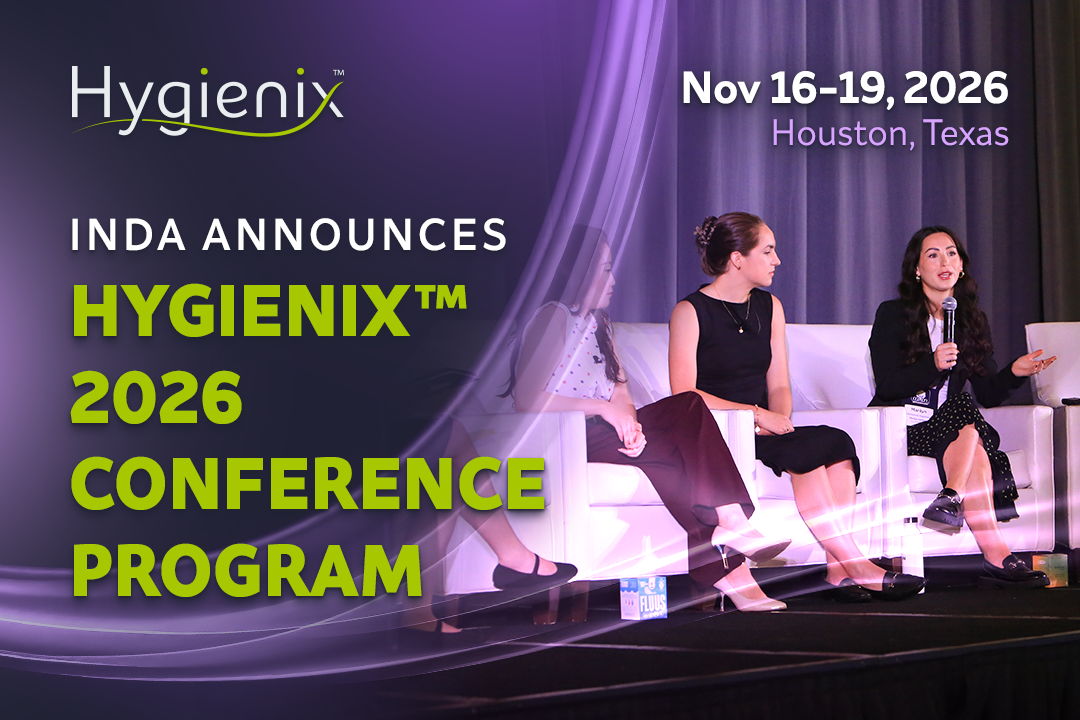
INDA, the Association of the Nonwoven Fabrics Industry, has announced that registration and exhibit reservations for Hygienix™ 2026 are now open. Hygienix will take place Nov. 16-19 at the Hyatt Regency Houston in Houston, Texas.

Hygienix will bring together industry leaders, innovators, and business professionals from across the absorbent hygiene products (AHP) industry for expert-led conference sessions, product showcases, networking opportunities, Lifetime Service Awards, and the presentation of the Hygienix Innovation Award™.

Hygienix Program Highlights
Attendees will gain valuable insights across key areas driving the future of hygiene:

INDA, the Association of the Nonwoven Fabrics Industry, has announced that registration and exhibit reservations for Hygienix™ 2026 are now open. Hygienix will take place Nov. 16-19 at the Hyatt Regency Houston in Houston, Texas.

Hygienix will bring together industry leaders, innovators, and business professionals from across the absorbent hygiene products (AHP) industry for expert-led conference sessions, product showcases, networking opportunities, Lifetime Service Awards, and the presentation of the Hygienix Innovation Award™.

Hygienix Program Highlights
Attendees will gain valuable insights across key areas driving the future of hygiene:

  • Industry collaboration or “coopertition”
  • Market intelligence and global economics
  • Regulatory and trade environment
  • Innovation in products, materials, and processes
  • Sustainability and end-of-life solutions
  • Consumer and end-user insights
  • Startups, entrepreneurs, and emerging technologies

Business Opportunities and Networking
The Exhibits will showcase the latest innovations in the absorbent hygiene industry, offering a platform for companies to demonstrate their products and services to potential partners and clients.

Hygienix 2026 will once again feature Lightning Talks—a series of fast-paced, five-minute presentations by nearly 20 companies scheduled for Nov. 17-18 in the afternoon.

Hygienix Innovation Award™
Recognizing breakthrough products, technologies, and solutions that are making a significant impact in the hygiene sector, the Hygienix Innovation Award will be awarded at the event.

Nominations will be accepted until Sept. 14th. Finalists will present their products on Nov. 17, and the winner will be announced on Nov. 19 to close the event. Last year’s winner was Confitex Technology for their Washable Nonwoven Sanitary Pads, the world’s first washable nonwoven sanitary pads designed for sustainability and scalability without the need for SAPs.

Lifetime Service Award Recipients
Carl Cucuzza and Pricie Hanna are receiving the Lifetime Service Awards. Both industry veterans are being recognized for their key contributions to the advancement of the nonwovens industry and INDA. Cucuzza and Hanna will accept their awards Tuesday, November 17th at 4:30 pm.

Source:

INDA Association of the Nonwoven Fabrics Industry

22.05.2026

Egypt: Workshop on Italian textile technologies concludes

The workshop dedicated to Italian technologies for the textile industry, held in Cairo on 5 and 6 May 2026 and focusing on the most advanced innovative solutions for the sector, has come to a close. The initiative saw the participation of 23 Italian companies from the textile machinery sector and well over 120 Egyptian operators, confirming the mutual interest in strengthening industrial collaboration between the two countries and Egypt’s strategic role for Italian textile machinery manufacturers.

Organised by ICE Agency and ACIMIT, with the support of the Italian Embassy in Cairo and UNIDO, the workshop provided an important opportunity to discuss the development prospects of the Egyptian textile sector and the contribution that Italian technology can make to the country’s industrial modernisation processes.

The workshop dedicated to Italian technologies for the textile industry, held in Cairo on 5 and 6 May 2026 and focusing on the most advanced innovative solutions for the sector, has come to a close. The initiative saw the participation of 23 Italian companies from the textile machinery sector and well over 120 Egyptian operators, confirming the mutual interest in strengthening industrial collaboration between the two countries and Egypt’s strategic role for Italian textile machinery manufacturers.

Organised by ICE Agency and ACIMIT, with the support of the Italian Embassy in Cairo and UNIDO, the workshop provided an important opportunity to discuss the development prospects of the Egyptian textile sector and the contribution that Italian technology can make to the country’s industrial modernisation processes.

The Italian textile machinery industry is internationally recognised as a leading benchmark for technology, innovation and quality. Italian companies in the sector stand out for their ability to offer advanced and sustainable solutions, valued by textile manufacturers worldwide for their reliability, efficiency and high technological content. During the event, the importance of technology transfer and specialist training was highlighted as key to supporting the competitive development of the Egyptian textile industry in the medium to long term.

According to data from ACIMIT, Italian exports of textile machinery to Egypt reached €72 million in 2025, confirming the country as the leading African market for the Italian textile machinery sector. The technologies most in demand among Egyptian operators relate in particular to finishing, weaving and spinning.

“Egypt is now one of the most dynamic and strategic markets for our sector,” said Marco Salvadè, President of ACIMIT. “The strong participation of Italian companies in the Cairo workshop demonstrates the desire to further strengthen industrial collaboration between the two countries. Italian technologies can make a tangible contribution to the competitiveness of the Egyptian textile industry, particularly in processes focused on quality, sustainability and production efficiency. The Cairo workshop is also part of a wider programme of initiatives aimed at promoting Italy’s presence at ITMA Hannover 2027, the world’s leading event dedicated to textile and clothing technologies, where Italian companies will once again showcase the best of textile machinery innovation.”

The initiative, promoted by ICE Agency and ACIMIT with the valuable support of the Italian Embassy in Cairo and UNIDO, featured the following Italian companies: Cubotex, Color Service, Corino Macchine, Danitech Engineering And Solutions, Dover Industries Italy, Erhardt Piu’ Leimer, Itema, L.A.I.P., Lawer, Marzoli Machines Textile, M.C.S. Officina Meccanica, Mesdan, Monti – Mac, Nexia, Noseda, Pinter Caipo Italia, Reggiani Macchine, Salvade’, Savio Macchine Tessili, Stalam, Tecnorama, Tonello, Waternext.

More information:
workshop Egypt ACIMIT Italy
Source:

ACIMIT 

INDEX™26 Awards Winners Announced Photo (c) Edana
INDEX™26 Awards Winners Announced
19.05.2026

INDEX™26 Awards Winners Announced


The nonwovens industry has officially crowned its new winners. Today at the opening of INDEX™ 2026, five companies were honoured with the INDEX™ Awards, the industry’s highest accolade for technical excellence and forward-thinking design. 

From high-speed machinery to breakthroughs in molecular chemistry, this year's winners were selected for their ability to merge top-tier performance with the urgent requirements of a circular economy. 


The nonwovens industry has officially crowned its new winners. Today at the opening of INDEX™ 2026, five companies were honoured with the INDEX™ Awards, the industry’s highest accolade for technical excellence and forward-thinking design. 

From high-speed machinery to breakthroughs in molecular chemistry, this year's winners were selected for their ability to merge top-tier performance with the urgent requirements of a circular economy. 

Category: Nonwoven roll goods 
Winner: Lenzing - LENZING™ Dualwipe 
LENZING™ Dualwipe is a high-performance cleaning wipe crafted from regenerated cellulose using LENZING™ Nonwovens Technology. Its innovative dual-surface design integrates abrasion and absorbency in a single material, enabling efficient cleaning without relying on fossil-based synthetic materials, binders, or chemical additives. One side features a mechanically active surface for scrubbing away dirt, grease, and residues, while the other offers a soft, highly absorbent surface for liquid uptake and surface finishing. Designed for industrial, professional, and household applications, LENZING™ Dualwipe is compatible with existing converting and processing infrastructure, facilitating rapid adoption. 

Category: Finished products made from, or incorporating nonwovens - Single-use application 
Corman - Organyc brand "Personalized Protection" Light Incontinence Pads 

Corman’s new light incontinence pads deliver personalized protection through three key innovations. The Smart-Cotton™ cover with a citric acid buffer maintains an ideal skin pH of 5.5, reducing irritation. The patented Cotton-Balanced Absorbent Core channels liquid to superabsorbent polymers that lock in moisture and expand toward the body for superior leak protection. Natural odor control uses an organic ingredient to bind ammonia and slow odor formation, eliminating odor instead of masking it. Clinically proven, the pads address the three main concerns of light incontinence: leaks, odor, and skin irritation.

Category: Finished products made from, or incorporating nonwovens - Durable application 
Winner: Confitex Technology - Reusable Nonwoven Bed Pads 

This new Confitex technology has enabled the world’s first machine-washable and tumble-dryable nonwoven bed pads, opening a significant new application for nonwoven materials. Using a proprietary fibre-stabilisation bonding technique, the innovation allows absorbent nonwoven structures to withstand more than 30 machine wash and tumble-dry cycles while maintaining performance. The fully nonwoven construction combines a fast-wicking top sheet with a highly absorbent core capable of holding over two litres of liquid. In addition, a bonded frame structure prevents leakage across the entire surface, including the edges, addressing a common weakness of stitched textile bed pads. 

Category: Raw materials or components (e.g.polymer,fibre, binder, film, tape) of special relevance to the nonwovens and related converted products industry 
Winner: Bostik - Kizen™ Miles 9.0 

Bostik - Kizen™ Miles 9.0 Bostik’s latest innovation, Kizen™ Miles 9.0, is the first adhesive designed for disposable hygiene article construction, that offers the unique feature of debonding on demand: when exposed to a specific chemical key, combined with controlled temperature and mechanical stress, the adhesive allows clean, rapid separation of plastic components in minutes. This process keeps the adhesive material on the substrate, preventing contamination for cleaner, more efficient hygiene article recycling. But during the lifetime of the hygiene article, this new material, based on up to 75% renewable materials, delivers exceptional bonding across a wide range of substrates—including PP, PE, and PLA—while maintaining stable performance over time and under wet conditions. 

Category: Innovation in machinery of special relevance to the nonwovens industry 
Winner: ZUIKO – Recloseable Baby Diaper Converting Machine 
ZUIKO - Converting machine for recloseable baby diapers 

ZUIKO has developed a converting line to produce adjustable pull on pant diapers that address the challenge of achieving a secure fit around a baby’s waist and legs while maintaining softness and stretchability. The design of such a diaper combines the adjustability of open diapers with the stretch characteristics of pant diapers. Unlike conventional pant diapers, which are processed symmetrically, ZUIKO’s recloseable diapers are asymmetric, requiring a precise, glue-less attachment process during folding. Central to the production is ZUIKO’s patented “Stretch Re-pitch Drum™,” which regulates elastic tension and product spacing, allowing panel folding in line with the machine’s flow. This system enables the production of over 700 diapers per minute without the need for multiple folding units.

Source:

Edana

Start of the Training for Common Ground Farmers Photo GoodTextiles Foundation
Start of the Training for Common Ground Farmers
12.05.2026

GoodTextiles Foundation launches “Common Ground” Farmer Initiative in India

The GoodTextiles Foundation, in collaboration with Dibella India, Gallant Regenerative Organic Private Limited, and Spoorthi Raith Producer Company Limited, announces the launch of its new flagship project Common Ground. This initiative marks a significant step toward fostering sustainable, regenerative cotton cultivation among smallholder farmers in southern India. 

A Shared Vision Rooted in the Land 
Set in the rural landscapes of Karnataka’s Haveri district, Common Ground brings together farmers, local communities and agricultural experts with a unified goal: to restore harmony between people and nature through organic and regenerative farming practices. 

The foundation for this initiative was laid as early as 2024 through site visits, farmer dialogues and collaboration with the University of Agricultural Sciences Dharwad. In 2025, the project entered its implementation phase, including soil assessments, team training, community engagement and the registration of participating farmers. 

The GoodTextiles Foundation, in collaboration with Dibella India, Gallant Regenerative Organic Private Limited, and Spoorthi Raith Producer Company Limited, announces the launch of its new flagship project Common Ground. This initiative marks a significant step toward fostering sustainable, regenerative cotton cultivation among smallholder farmers in southern India. 

A Shared Vision Rooted in the Land 
Set in the rural landscapes of Karnataka’s Haveri district, Common Ground brings together farmers, local communities and agricultural experts with a unified goal: to restore harmony between people and nature through organic and regenerative farming practices. 

The foundation for this initiative was laid as early as 2024 through site visits, farmer dialogues and collaboration with the University of Agricultural Sciences Dharwad. In 2025, the project entered its implementation phase, including soil assessments, team training, community engagement and the registration of participating farmers. 

Seven carefully selected villages now form the core of the project. Chosen for their accessibility, strong community structures and development potential, they provide fertile ground for a scalable model that can be replicated across other regions. 

Empowering Farmers Through Knowledge and Structure 
At the heart of Common Ground lies a commitment to people. To date, 510 farmers have been identified, with 475 already in the final stages of enrolment into a newly established Organic Cotton Grower Group (OGG). 

The project combines technical expertise with hands-on support close, continuous support. A dedicated team—comprising an Internal Control System (ICS) Manager and trained field staff—is being steadily expanded to ensure effective on-the-ground implementation. Farmers participate in targeted training sessions that introduce them to organic cultivation practices and certification requirements, equipping them with the knowledge needed for long-term success. 

In parallel, external experts are developing location-specific “Packages of Practice” tailored to local conditions, alongside watershed-level strategies that promote sustainable resource management. To ensure transparency and traceability from the outset, all farms are digitally documented, including GPS-based mapping of agricultural plots.

Beyond Cotton: Building Resilient Futures 
Common Ground goes far beyond sustainable cotton production. It is an investment in the long-term resilience of farming communities. By improving soil health, conserving water resources and enhancing biodiversity, the initiative supports both environmental sustainability and economic opportunity. 

At the same time, it strengthens farmers’ independence and confidence in an agricultural system capable of sustaining livelihoods for generations to come. 

Together the partners are building a scalable model for regenerative value creation – from seed to finished textile. Step by step, a transparent and responsible supply chain is emerging. 

With every field converted, every training delivered and every partnership formed, Common Ground is cultivating more than cotton – it is nurturing a growing community committed to shaping a more sustainable future.

Source:

GoodTextiles Foundation

08.05.2026

ACIMIT: Textile Machinery Orders Index, Q1 2026

In the first quarter of 2026, order intake for Italian textile machinery manufacturers recorded a decrease of 5% compared to the same period in 2025, reflecting a still challenging start to the year. The decline affected foreign markets (-7%), while the domestic market showed growth (+21%).

Compared with the previous quarter (October–December 2025), total order intake increased by 18%. The orders index for the January–March 2026 period stood at 37.3 points (base year 2021=100). In Italy, the index reached 35.3 points, while in foreign markets it stood at 37.6 points.

In the first quarter of 2026, the order backlog guaranteed a workload of approximately 4.5 months.

From a sector perspective, weaving and other manufacturing segments showed relatively more dynamic signals.

Forecasts for the second quarter of 2026 (compared with the previous quarter) indicate pessimism for the domestic market and stability for the foreign one.

In the first quarter of 2026, order intake for Italian textile machinery manufacturers recorded a decrease of 5% compared to the same period in 2025, reflecting a still challenging start to the year. The decline affected foreign markets (-7%), while the domestic market showed growth (+21%).

Compared with the previous quarter (October–December 2025), total order intake increased by 18%. The orders index for the January–March 2026 period stood at 37.3 points (base year 2021=100). In Italy, the index reached 35.3 points, while in foreign markets it stood at 37.6 points.

In the first quarter of 2026, the order backlog guaranteed a workload of approximately 4.5 months.

From a sector perspective, weaving and other manufacturing segments showed relatively more dynamic signals.

Forecasts for the second quarter of 2026 (compared with the previous quarter) indicate pessimism for the domestic market and stability for the foreign one.

Marco Salvadè, President of ACIMIT, commented:
“It is encouraging to see the first positive sign in the domestic market, but forecasts still reveal a degree of pessimism. The difficult international context and the slow actions of government institutional representatives do not allow companies to plan investments. As an Association, we are working in close synergy with the Italian Trade Agency (ICE) to strengthen promotional activities across several strategic markets. We also look with confidence to the upcoming ITMA 2027 in Hannover, which will represent an important opportunity to relaunch the sector, stimulate new investments, and strengthen the international presence of Italian manufacturers.”

ACIMIT (the Association of Italian Textile Machinery Manufacturers) was established in 1945 with the primary aim of promoting the Italian textile machinery industry by supporting its activities both in Italy and abroad. ACIMIT represents an industrial sector comprising around 300 companies (employing approximately 12,500 people) and producing machinery with a total value of approximately €1.9 billion, about 86% of which is exported. Creativity, sustainable technology, reliability, and quality are the key features that have made Italian textile machinery a world leader.

05.05.2026

NCTO: Officer elections for fiscal year 2026

The National Council of Textile Organizations (NCTO), representing the full spectrum of U.S. textiles from fiber through finished sewn products, held its officer elections for fiscal year 2026 at its annual meeting April 14-16.

NCTO has elected Amy Bircher Bruyn, CEO and Founder of MMI Textiles as Chair, and Jay Todd, CEO and Managing Partner of Service Thread, as Vice Chair.

In addition to the appointment of a new chair and vice chair, NCTO elected chairs for each of its five councils. NCTO is comprised of five councils to ensure a broad representation of the industry supply chain. Each council has an allotted number of members who are elected to the association’s Board of Directors, in addition to the Executive Committee.

The National Council of Textile Organizations (NCTO), representing the full spectrum of U.S. textiles from fiber through finished sewn products, held its officer elections for fiscal year 2026 at its annual meeting April 14-16.

NCTO has elected Amy Bircher Bruyn, CEO and Founder of MMI Textiles as Chair, and Jay Todd, CEO and Managing Partner of Service Thread, as Vice Chair.

In addition to the appointment of a new chair and vice chair, NCTO elected chairs for each of its five councils. NCTO is comprised of five councils to ensure a broad representation of the industry supply chain. Each council has an allotted number of members who are elected to the association’s Board of Directors, in addition to the Executive Committee.

“I am pleased to announce NCTO’s 2026 officers, council chairs, and board and executive committee members,” said NCTO President and CEO Kim Glas. “I thank Chair Amy Bircher Bruyn and Vice Chair Jay Todd for stepping into these critical roles. As we navigate a challenging environment, their leadership will be key as we advance policies to preserve preferential treatment under USMCA and CAFTA-DR, strengthen customs enforcement against import fraud, refine tariff policies with carve-outs for inputs and machinery not made in the U.S., expand the Berry Amendment and America-made procurement, and grow our Western Hemisphere co-production chain—while opposing measures that undermine a domestic supply chain supporting more than 450,000 jobs.”

Elected as NCTO Chair and Vice Chair for 2026:

  • Chair – Amy Bircher Bruyn, MMI Textiles
    Ms. Bircher Bruyn is CEO and Founder of MMI Textiles, a global industrial and custom textile supplier based in Brooklyn, Ohio.
  • Vice Chair – Jay Todd, CEO and Managing Director of Service Thread, an industrial yarn and sewing thread manufacturer based in Laurinburg, N.C.

Elected to the NCTO Board of Directors during the various Council meetings were the following:

  • Fiber Council – David Adkins of Lenzing Fibers; Geoffrey Hietpas of The LYCRA Company; and David Poston of Palmetto Synthetics
  • Yarn Council – Justin Ferdinand of Kentwool; Chris Alt of American & Efird; Marc Doyon of Gildan; Charles Heilig of Parkdale; Eddie Ingle of Unifi; and Tim Manson of Meridian Specialty Yarn Group
  • Fabric and Home Products Council –Allen Jacoby of Milliken & Company; Leib Oehmig of Glen Raven Inc.; Bill Rogers of Mount Vernon Mills; Brian Rosenstein of TSG Finishing; Dan Russian of Sage Automotive Interiors; and Walter Spiegel of Standard Textile
  • Finished Textiles and Apparel Products Council – Gabrielle Ferrara of Ferrara (Alternate: Marisa Fumei-South of Two-One-Two New York)
  • Industry Support Council – Todd Bassett of Fi-Tech; Greg Duncan of American Truetzschler; and Jim Reed of YKK Corp.

Elected by their respective Councils to serve on the Executive Committee were:
Justin Ferdinand of Kentwool; Tim Manson of Meridian Specialty Yarn Group; Bill Rogers of Mount Vernon Mills; Allen Jacoby of Milliken & Company; David Adkins of Lenzing Fibers; Gabrielle Ferrara of Ferrara; and Todd Basset of Fi-Tech.

NCTO Chair Amy Bircher Bruyn has appointed additional executives to serve on the Executive Committee: Chuck Hall, Barnet and NCTO immediate past chairman; Anderson Warlick, Parkdale Mills; Jay Self, Greenwood Mills; Marisa Fumei-South, Two One Two New York; and Jackie Ferrari, American Fashion Network.

Elected to chair the Councils:

•    Fiber Council: David Adkins of Lenzing Fibers
•    Yarn Council: Tim Manson of Meridian Specialty Yarn Group
•    Fabric and Home Products Council: Allen Jacoby of Milliken & Company
•    Finished Textiles and Apparel Products Council: Gabrielle Ferrara of Ferrara
•    Industry Support Council: Todd Bassett of Fi-Tech

In addition to the chair and vice chair, NCTO also elected the following officers for the upcoming fiscal year:

•    President & CEO – Kim Glas, NCTO
•    Treasurer – Robin Haynes, NCTO
•    Secretary – Katherine White, NCTO

Source:

National Council of Textile Organizations

04.05.2026

Market Study on Thermoplastic Composites

The European Alliance for Thermoplastic Composites (EATC) has published a comprehensive study on the market, applications and prospects for thermoplastic composites. 

Thermoplastic fibre-reinforced plastics – also known as thermoplastic composites – are becoming increasingly important across a wide range of industries. From the automotive industry and aerospace to construction and sports and leisure products, they offer a compelling combination of high strength, low weight and good recycling prospects. As such, they are regarded as a key material for sustainable and high-performance lightweight construction solutions. 

Against this backdrop, the European Alliance for Thermoplastic Composites (EATC) has commissioned and provided technical support for a new market study on the European market for thermoplastic composites. The aim of the study is to provide a systematic overview of the current situation, developments and future opportunities within this dynamic materials segment. 

The European Alliance for Thermoplastic Composites (EATC) has published a comprehensive study on the market, applications and prospects for thermoplastic composites. 

Thermoplastic fibre-reinforced plastics – also known as thermoplastic composites – are becoming increasingly important across a wide range of industries. From the automotive industry and aerospace to construction and sports and leisure products, they offer a compelling combination of high strength, low weight and good recycling prospects. As such, they are regarded as a key material for sustainable and high-performance lightweight construction solutions. 

Against this backdrop, the European Alliance for Thermoplastic Composites (EATC) has commissioned and provided technical support for a new market study on the European market for thermoplastic composites. The aim of the study is to provide a systematic overview of the current situation, developments and future opportunities within this dynamic materials segment. 

Focus on market structure, applications and growth drivers 
The study analyses the fundamental material properties of thermoplastic composites and highlights the advantages of using them over alternative materials. It also identifies differences between various material classes and outlines the historical development of their industrial applications. 

Particular emphasis is placed on analysing the current size of the European market and the application areas that dominate today. In addition, the study identifies future market potential based on relevant macroeconomic factors. 

In focus: LFT, GMT und CFRTP 
The focus is in particular on LFT (long fibre-reinforced thermoplastics), GMT (glass mat reinforced thermoplastics) and CFRTP (continuous fibre-reinforced thermoplastics). These material groups play a central role in modern structural components with high mechanical requirements. They combine the advantages of thermoplastic matrices – such as short cycle times, efficient processing and new manufacturing possibilities – with the performance of reinforcing fibres. 

A strategic material for European industry 
The findings of the study highlight the growing strategic importance of thermoplastic composites for Europe as an industrial hub. Particularly at a time when demands for resource efficiency, CO₂ reduction and the circular economy are on the rise, thermoplastic composites offer great potential for innovative product solutions. 

Now available
The study is now available in PDF format from AVK upon advance payment. EATC and AVK members can purchase the study for EUR 149,- (plus VAT); for non members, the study is available for EUR 349,- (plus VAT).