
From the Sector

from to
Reset
Asia Pacific Rayon  logo Asia Pacific Rayon
Asia Pacific Rayon Logo
24.01.2020

Asia Pacific Rayon Joins World Economic Forum’s Public Blockchain Platform

To Accelerate Public-Private Cooperation in Supply Chain Transparency

Asia Pacific Rayon (APR) has joined the first neutral and public traceability platform capable of visualising blockchain-based supply chain data from multiple companies and sources. It aims to help businesses across industries respond to consumer demands for ethical and environmentally friendly products.
The neutral and safe space for collaboration is provided by the World Economic Forum and created in collaboration with Everledger, Lenzing Group, TextileGenesis™, and the International Trade Centre. APR will contribute to Phase 2 of the initiative which seeks to incorporate more data sources.

“APR has started harnessing the potential of enterprise blockchain technology to enable customers to trace finished products back to the plantation forest origins on a smartphone app. To be able now to connect our data to other similar industry initiatives is a natural next step for APR, as is extending the benefits of our upstream traceability to the rest of the textile value chain.

Enhancing Follow Our Fibre with New Mill Sustainability Dashboard

To Accelerate Public-Private Cooperation in Supply Chain Transparency

Asia Pacific Rayon (APR) has joined the first neutral and public traceability platform capable of visualising blockchain-based supply chain data from multiple companies and sources. It aims to help businesses across industries respond to consumer demands for ethical and environmentally friendly products.
The neutral and safe space for collaboration is provided by the World Economic Forum and created in collaboration with Everledger, Lenzing Group, TextileGenesis™, and the International Trade Centre. APR will contribute to Phase 2 of the initiative which seeks to incorporate more data sources.

“APR has started harnessing the potential of enterprise blockchain technology to enable customers to trace finished products back to the plantation forest origins on a smartphone app. To be able now to connect our data to other similar industry initiatives is a natural next step for APR, as is extending the benefits of our upstream traceability to the rest of the textile value chain.

Enhancing Follow Our Fibre with New Mill Sustainability Dashboard

Launched in mid-2019, APR’s blockchain-based Follow Our Fibre allows customers and stakeholders to scan its viscose product with a user-friendly app to access data that traces the product’s journey from plant nursery to viscose manufacturing and on to seaports. In October 2019, APR announced a collaboration with TrusTrace to integrate Follow Our Fibre with the latter’s T-Trace module. This helps connect APR’s upstream data to downstream textile value chain actors such as yarn and fabric customers and fashion brands.

More recently, a sustainability dashboard tracking key mill environmental performance indicators has been added to Follow Our Fibre. The dashboard presents APR’s performance in its first year of operations where a baseline has been established for quarterly tracking, reporting and continuous improvement.
The performance indicators follow key industry standards being set by ZDHC for Man-Made Cellulosic Fibres (MMCF), as well as the European Union Best Available Technologies (EU BAT).


Source:

(c) Omnicom Public Relations Group

NaviColor Logo Huntsman Textile Effects
NaviColor Logo
24.01.2020

HUNTSMAN TEXTILE EFFECTS PARTNERS WITH XENON ARC TO FORM NAVICOLOR

Dedicated marketing channel to better serve the US market

Huntsman Textile Effects and Xenon arc today announced the formation of NaviColor, a dedicated marketing channel to service the unique needs of select customers in the United States textiles and apparel industry.  

NaviColor is a business specifically designed to meet the needs of select Huntsman Textile Effects customers and to further expand the growing customer base. NaviColor features a dedicated team of professionals in a highly advanced technological environment to support customers utilizing Huntsman’s Textile Effects innovative chemicals, dyes and digital inks in the United States.  

NaviColor is the latest deployment of Xenon arc’s innovative xa-Direct model that helps the world’s preeminent manufacturing companies reach, grow and more effectively service the needs of their customer bases. Leveraging its domain expertise of the marketplace, combined with extensive voice of the customer research and leading-edge technology platform, the xa-Direct model delivers enhanced customer intimacy, valuable insights and improved customer service levels.

Dedicated marketing channel to better serve the US market

Huntsman Textile Effects and Xenon arc today announced the formation of NaviColor, a dedicated marketing channel to service the unique needs of select customers in the United States textiles and apparel industry.  

NaviColor is a business specifically designed to meet the needs of select Huntsman Textile Effects customers and to further expand the growing customer base. NaviColor features a dedicated team of professionals in a highly advanced technological environment to support customers utilizing Huntsman’s Textile Effects innovative chemicals, dyes and digital inks in the United States.  

NaviColor is the latest deployment of Xenon arc’s innovative xa-Direct model that helps the world’s preeminent manufacturing companies reach, grow and more effectively service the needs of their customer bases. Leveraging its domain expertise of the marketplace, combined with extensive voice of the customer research and leading-edge technology platform, the xa-Direct model delivers enhanced customer intimacy, valuable insights and improved customer service levels.

“We are excited to partner with Huntsman Textile Effects,” commented Mica Zuniga, Vice President of Strategic Growth for Xenon arc.

NaviColor will exclusively represent Huntsman Textile Effects product portfolio including:

  •  Dyes
  •  Chemical Auxiliaries
  •  Digital Inks


Source:

(c) Huntsman Textile Effects

ISKO takes the fashion world by storm with ISKO Wild™ ISKO takes the fashion world by storm with ISKO Wild™
ISKO takes the fashion world by storm with ISKO Wild™
23.01.2020

ISKO takes the fashion world by storm with ISKO Wild™

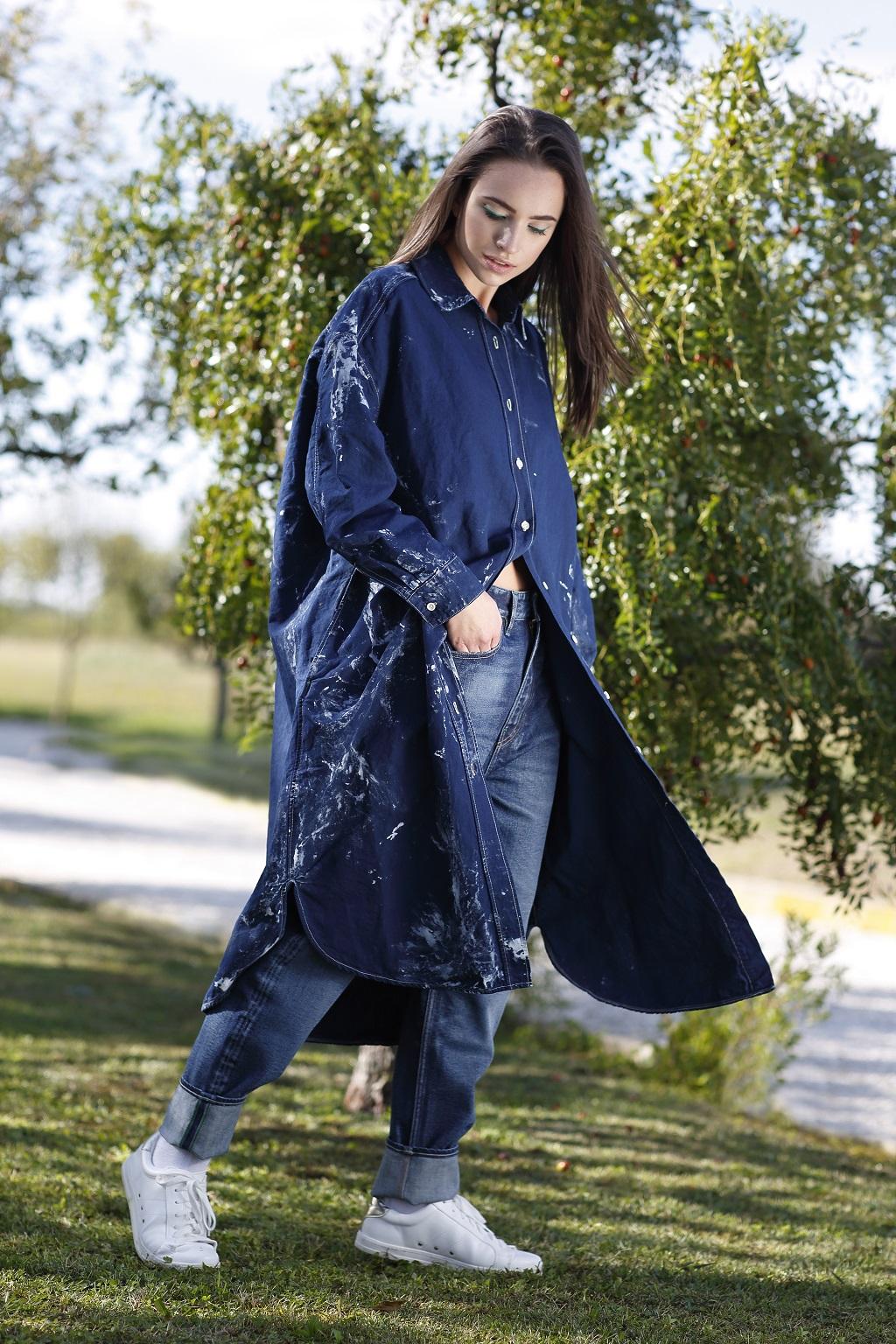
All the glamour of fur meets the technology of responsible ISKO™ denim, for a first-of-its-kind concept that provides fashionable and conscious alternatives to furs and other synthetic imitations.

Over the years, ISKO has set out on a journey of innovative firsts consistently providing what the market had been missing. ISKO Wild™, the latest achievement of this long-lasting enterprise and the first-in-the-world denim fur program, is set to impress the industry and revolutionize fashion.

Resulting from ISKO’s Responsible Innovation™ approach based on creativity, competence, and citizenship, ISKO Wild™ reflects the company’s commitment to making both the world and the industry better. This technology does not harm animals nor does it destroy their home. Unlike other imitation furs, it does not release micro plastics into the environment.
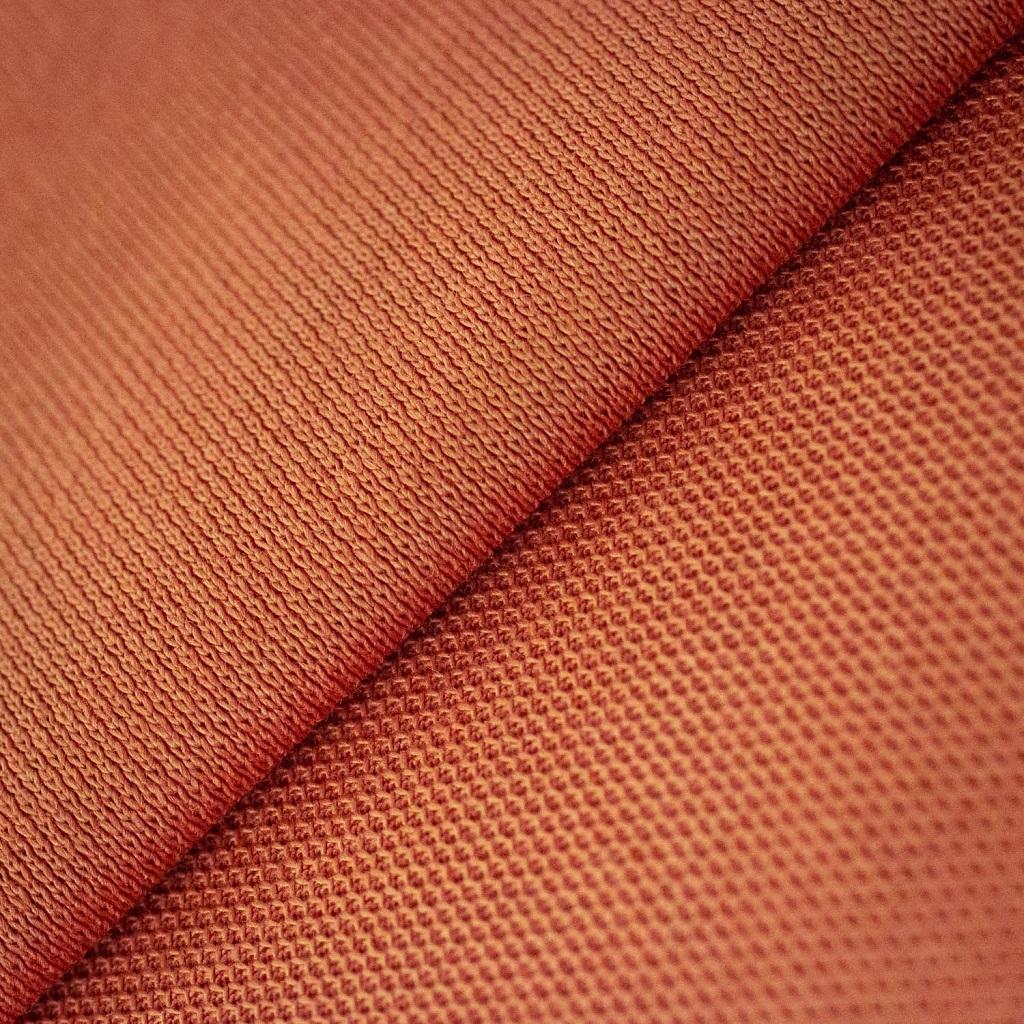
All the glamour of fur meets the technology of responsible ISKO™ denim, for a first-of-its-kind concept that provides fashionable and conscious alternatives to furs and other synthetic imitations.

Over the years, ISKO has set out on a journey of innovative firsts consistently providing what the market had been missing. ISKO Wild™, the latest achievement of this long-lasting enterprise and the first-in-the-world denim fur program, is set to impress the industry and revolutionize fashion.
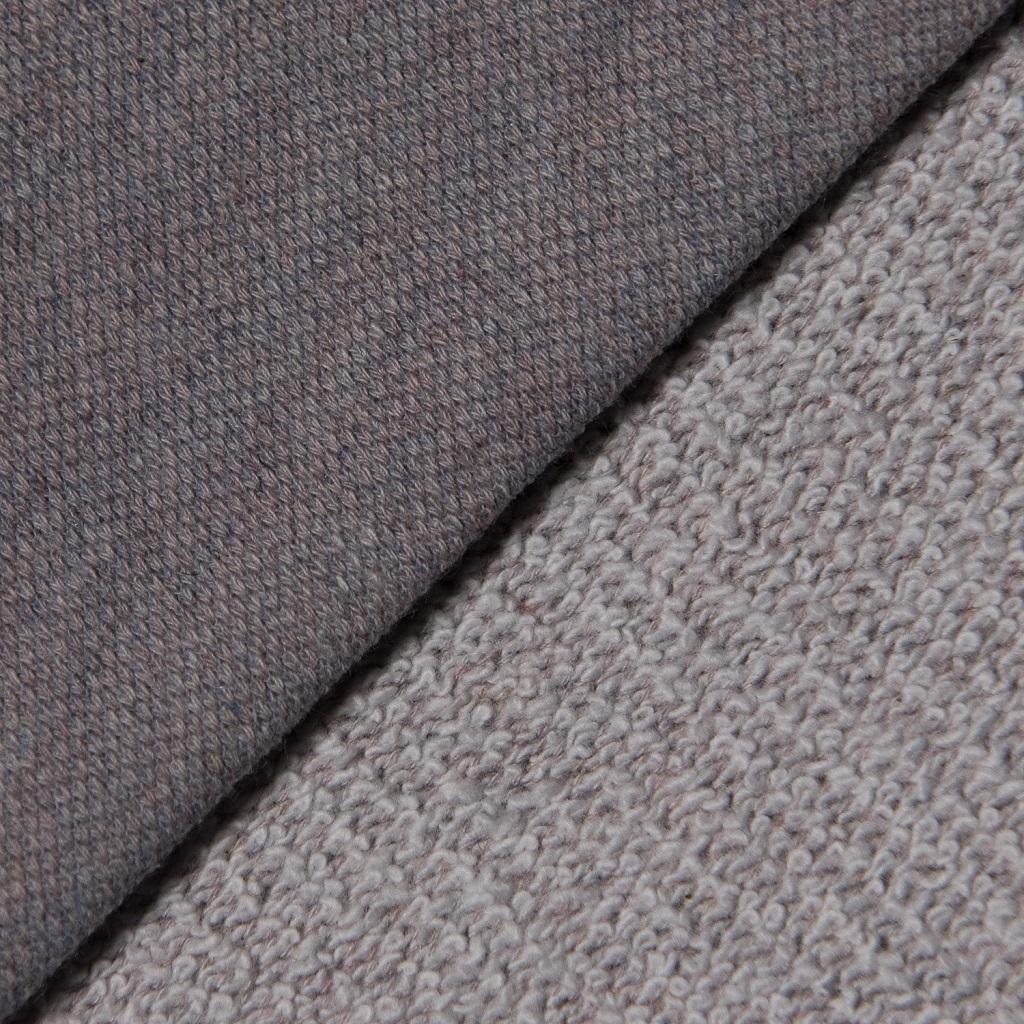
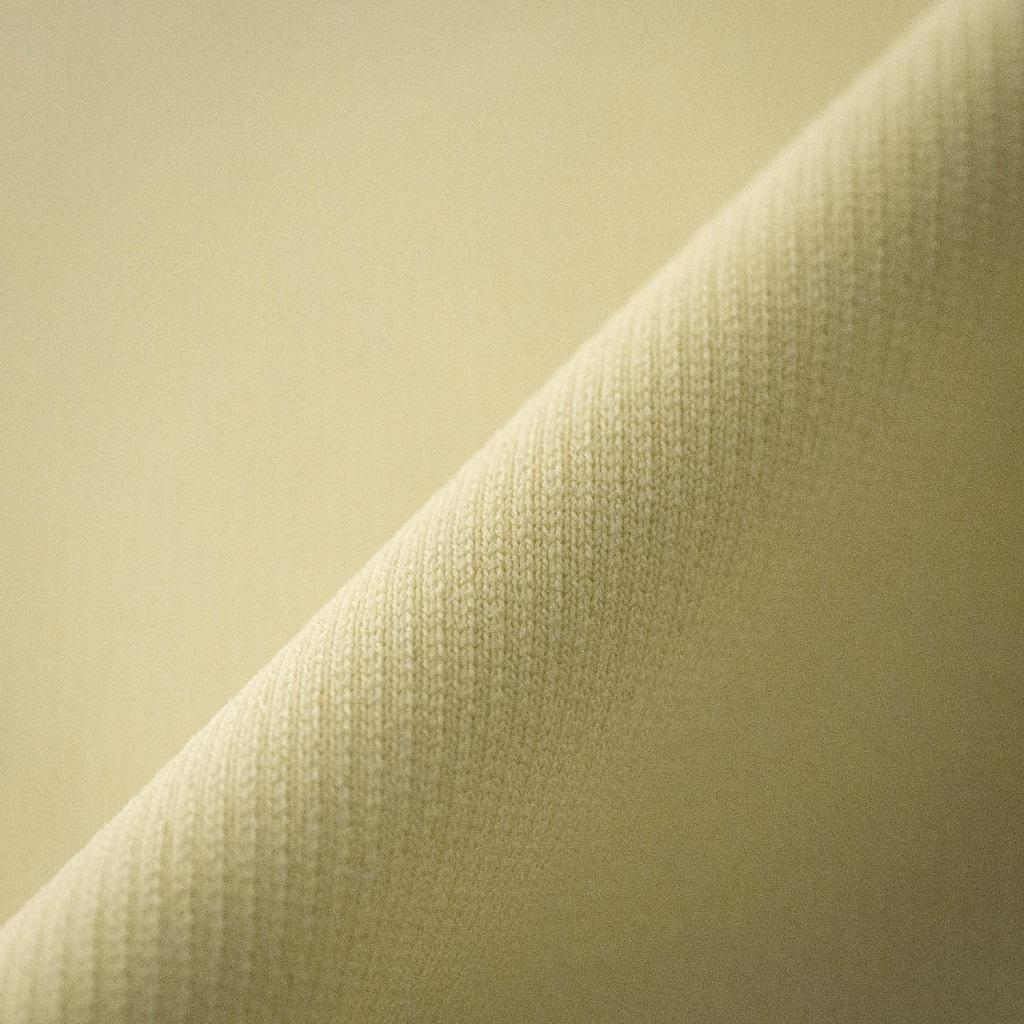
Resulting from ISKO’s Responsible Innovation™ approach based on creativity, competence, and citizenship, ISKO Wild™ reflects the company’s commitment to making both the world and the industry better. This technology does not harm animals nor does it destroy their home. Unlike other imitation furs, it does not release micro plastics into the environment.

With the claim to inspire and delight the fashion world, stakes are high but the concept is a real hit for it represents the perfect combination of glamorous fashion and conscious responsibility.
Despite attempts of imitations ISKO Wild™ is a one-of-a-kind concept in the industry. Available in both Indigo and RFD, featuring cotton and cotton wool blends, this product stands out from a quality, look and performance standpoint.
More information:
Isko
Source:

(c) menabo Evolutionary Branding

23.01.2020

SGL Carbon product finder supports selection of optimum graphite sealing material

  • New product finder "Flexible Graphite" finds optimum solutions for the respective customer requirements
  • Identification of the best SIGRAFLEX® graphite gasket material for a specific application

With the help of SGL Carbon’s new product finder "Flexible Graphite", users can quickly select exactly the sealing product that best suits their application requirements - from the range of SIGRAFLEX graphite gasket sheets available. The product finder is accessible free of charge on the company's website and guides the user to the optimum sealing material - online, easily and accurately.

The product finder "Flexible Graphite" can be found on the website at www.sigraflex.com/productfinder

  • New product finder "Flexible Graphite" finds optimum solutions for the respective customer requirements
  • Identification of the best SIGRAFLEX® graphite gasket material for a specific application

With the help of SGL Carbon’s new product finder "Flexible Graphite", users can quickly select exactly the sealing product that best suits their application requirements - from the range of SIGRAFLEX graphite gasket sheets available. The product finder is accessible free of charge on the company's website and guides the user to the optimum sealing material - online, easily and accurately.

The product finder "Flexible Graphite" can be found on the website at www.sigraflex.com/productfinder

More information:
SGL Carbon
Source:

SGL Carbon

23.01.2020

autoneum: revenue growth in a declining market

Thanks to numerous new ramp-ups and the favorable portfolio of vehicle models supplied, Autoneum grew organically by 2.5% in a declining market. Adjusted for currency effects, Group revenue in Swiss francs amounted to CHF 2 297.4 million, 0.7% higher compared to the previous year.

For the second consecutive year, fewer vehicles were manufactured worldwide in 2019 than in the prior year. In particular, the persistently weak global economy and ongoing trade disputes have had an impact on vehicle demand. With only about 89 million vehicles produced, the market shrank by almost –6% compared to 2018. Despite this negative trend, Autoneum achieved an organic revenue growth of 2.5% through numerous production ramp-ups and a favorable mix of vehicle models supplied. Revenue consolidated in Swiss francs rose by 0.7% from CHF 2 281.5 million to CHF 2 297.4 million.

Thanks to numerous new ramp-ups and the favorable portfolio of vehicle models supplied, Autoneum grew organically by 2.5% in a declining market. Adjusted for currency effects, Group revenue in Swiss francs amounted to CHF 2 297.4 million, 0.7% higher compared to the previous year.

For the second consecutive year, fewer vehicles were manufactured worldwide in 2019 than in the prior year. In particular, the persistently weak global economy and ongoing trade disputes have had an impact on vehicle demand. With only about 89 million vehicles produced, the market shrank by almost –6% compared to 2018. Despite this negative trend, Autoneum achieved an organic revenue growth of 2.5% through numerous production ramp-ups and a favorable mix of vehicle models supplied. Revenue consolidated in Swiss francs rose by 0.7% from CHF 2 281.5 million to CHF 2 297.4 million.

Revenue growth in North America, Asia and SAMEA region significantly above market The Business Groups North America, Asia and SAMEA (South America, Middle East and Africa) not only outperformed the negative market trend in each case, but also reported higher revenues compared to the previous year. In Europe only, the drop in automobile production caused a decline in revenue of the corresponding Business Group by –5.6% in local currencies. Business Group North America improved its revenue by 7.2% on a currency-adjusted basis, primarily driven by various production ramp-ups of German and Japanese vehicle manufacturers. Despite considerably fewer vehicles being produced in Asia, the Business Group increased its revenue in local currencies by 8.1% thanks to high-volume and new programs of European and Asian automobile manufacturers. Business Group SAMEA continued its growth course. Against the market slump in this region, revenue in local currencies and adjusted for inflation rose by 32.7%. This was mainly due to high-volume export programs in Turkey and South Africa as well as much higher production volumes compared to the previous year in the key SAMEA market of Brazil.

More information:
Autoneum
Source:

autoneum

The Oerlikon Nonwoven electro-charging unit (c) Oerlikon Nonwoven
The Oerlikon Nonwoven electro-charging unit
23.01.2020

Oerlikon Nonwoven showcases convincing meltblown and spunbond technology

The Oerlikon Nonwoven experts will be presenting efficient solutions and comprehensive technology know-how for challenging filtration tasks to an international trade audience at the FiltXPO 2020 in Chicago, USA (Stand # 420), taking place between February 26 and 28.
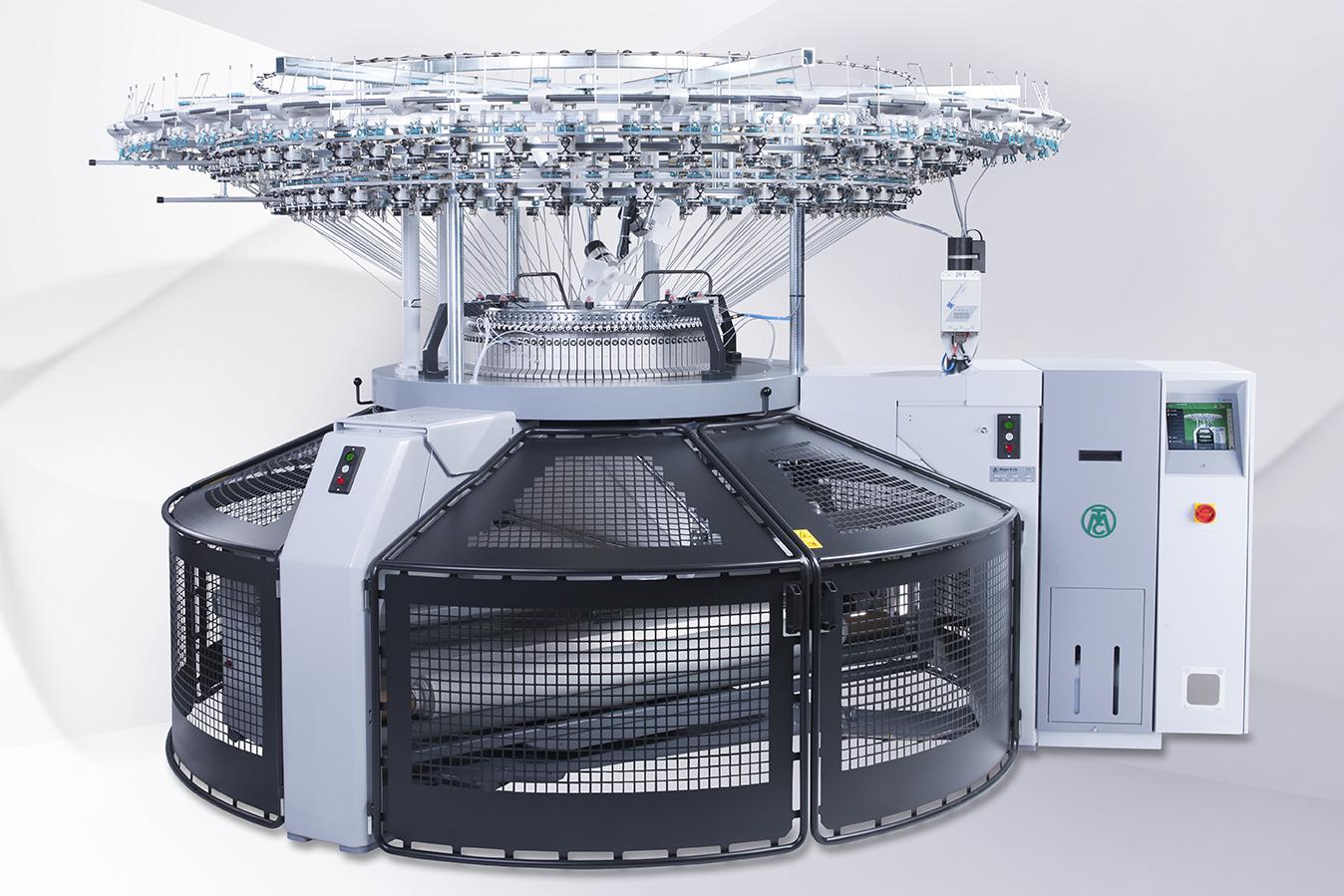
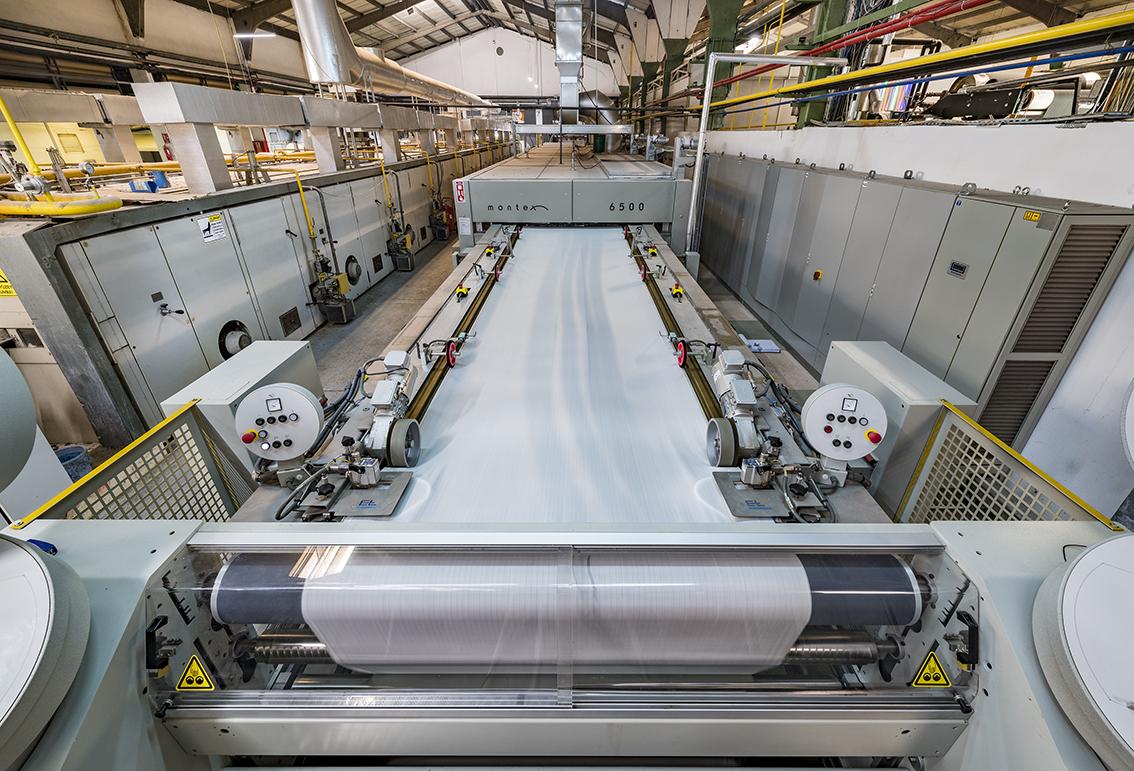
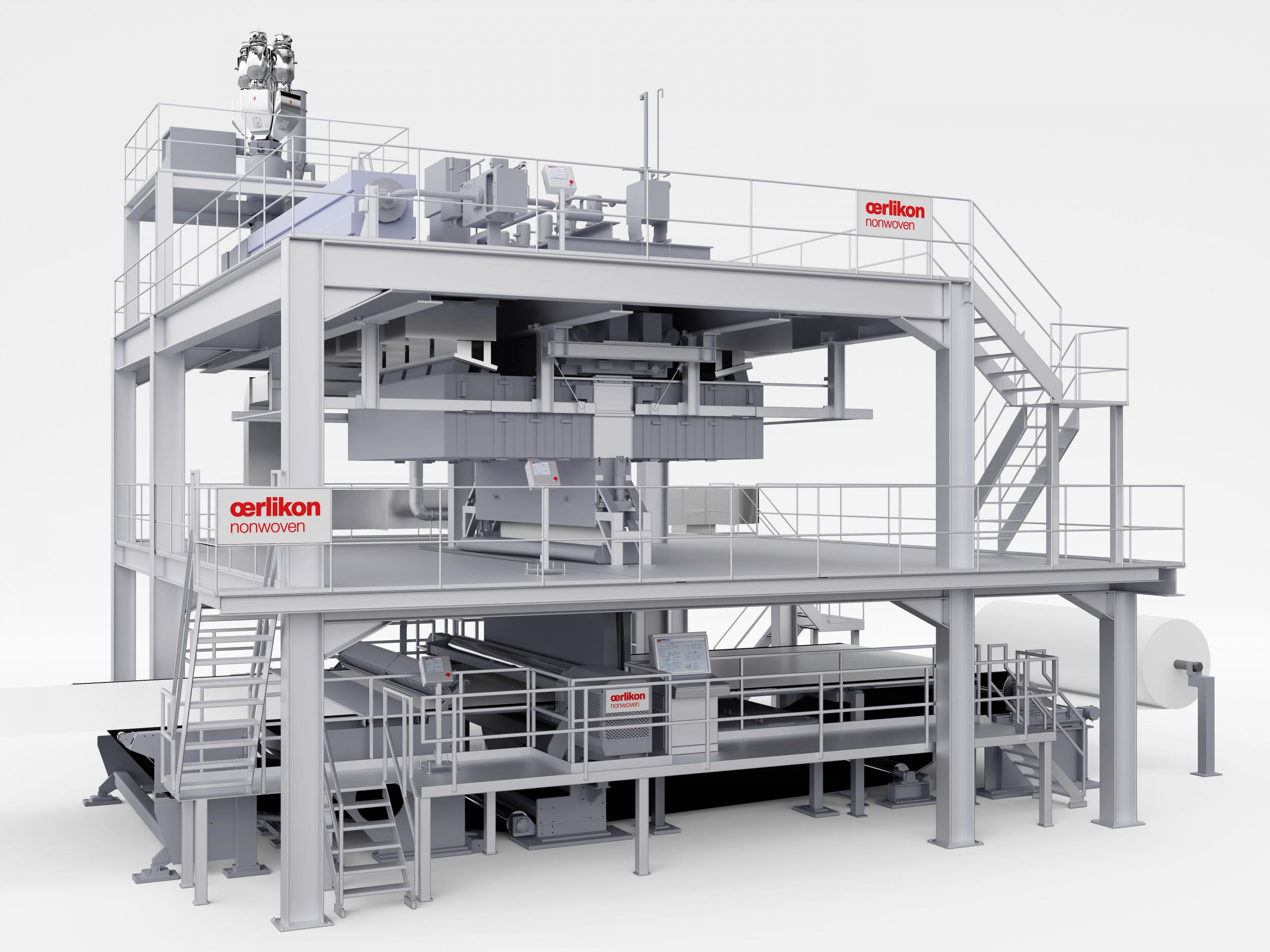
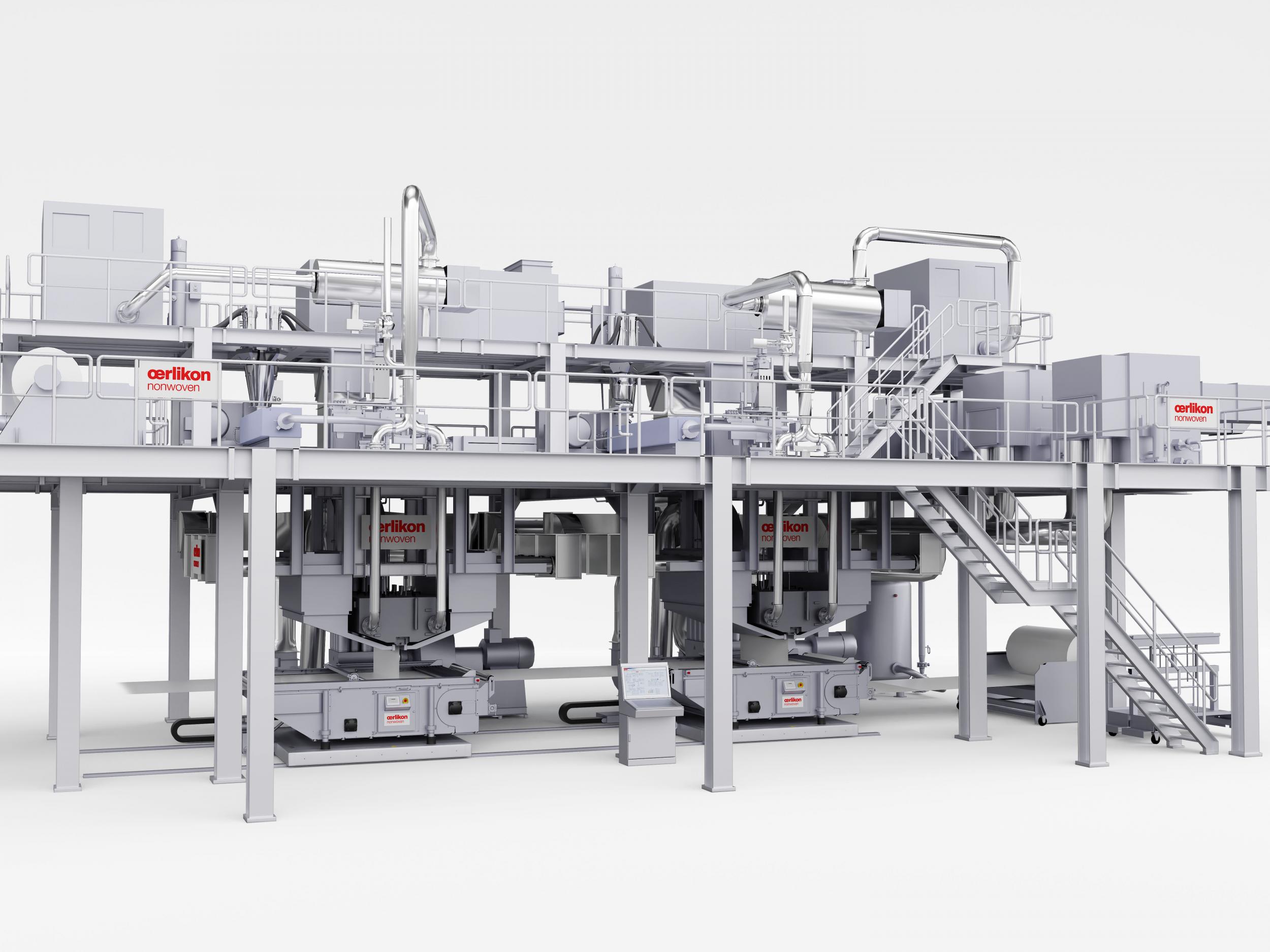
Meltblown technology is one of the most efficient methods for producing very fine and highly-separating filter media made from manmade fibers. New, unique and highly-sophisticated filter media are easy to manufacture thanks to Oerlikon Nonwoven’s optimized meltblown technology. This process is characterized by its constant melt pressure distribution and consistent dwell time across the entire width of the spinning beam, Furthermore, the novel guidance and distribution of the process air outside the coathanger distributor offered by the Oerlikon Nonwoven technology prevents so-called hotspots, which overall ensures particularly homogeneous nonwoven properties and basis weights even in the case of delicate raw materials.

The Oerlikon Nonwoven experts will be presenting efficient solutions and comprehensive technology know-how for challenging filtration tasks to an international trade audience at the FiltXPO 2020 in Chicago, USA (Stand # 420), taking place between February 26 and 28.

Meltblown technology is one of the most efficient methods for producing very fine and highly-separating filter media made from manmade fibers. New, unique and highly-sophisticated filter media are easy to manufacture thanks to Oerlikon Nonwoven’s optimized meltblown technology. This process is characterized by its constant melt pressure distribution and consistent dwell time across the entire width of the spinning beam, Furthermore, the novel guidance and distribution of the process air outside the coathanger distributor offered by the Oerlikon Nonwoven technology prevents so-called hotspots, which overall ensures particularly homogeneous nonwoven properties and basis weights even in the case of delicate raw materials.

The Oerlikon Nonwoven charging unit stands out against other concepts currently available on the market. Users can freely choose from a large number of variation possibilities and set the optimum charging method depending on the filter application, allowing the Oerlikon Nonwoven charging unit to also be used for the manufacture of EPA- and HEPA-class filter media.

The new forming section ensures improved nonwoven formation evenness across the entire width, even in the case of high spinning speeds, special polymers and polymer combinations. In addition to this, the newly-designed system also ensures that nonwovens only require minimal edge trimming at the end of the production process. The newly-developed mixedfiber technology enables the combining of various filament cross-sections and polymers, in order to set ideal filtering and pleating performances, for example.


More information:
Oerlikon Nonwoven Filtxpo
Source:

Oerlikon Nonwoven

22.01.2020

Sateri Scores ‘A-‘ in CDP Climate Change Report 2019

Sateri has scored ‘A-‘ in CDP (formerly Carbon Disclosure Project) for Climate Change in 2019, placing it at Leadership band and the top 27% of companies in its sector, for implementing current best practices. And making Sateri World’s First Viscose Producer to Reach Leadership Band

This is the first time Sateri has participated in this annual voluntary reporting. It is also the first time that a viscose producer has reached Leadership band. Sateri attained an ‘A’ for more than half of the 11 categories that it was assessed for, including value chain engagement, Scope 1,2,3 emissions, and governance. Its ‘A-‘ overall score is higher than the ‘C’ average globally, in Asia, and in the Textiles and Fabric Goods sector; no companies in the same sector scored ‘A’.

Sateri has scored ‘A-‘ in CDP (formerly Carbon Disclosure Project) for Climate Change in 2019, placing it at Leadership band and the top 27% of companies in its sector, for implementing current best practices. And making Sateri World’s First Viscose Producer to Reach Leadership Band

This is the first time Sateri has participated in this annual voluntary reporting. It is also the first time that a viscose producer has reached Leadership band. Sateri attained an ‘A’ for more than half of the 11 categories that it was assessed for, including value chain engagement, Scope 1,2,3 emissions, and governance. Its ‘A-‘ overall score is higher than the ‘C’ average globally, in Asia, and in the Textiles and Fabric Goods sector; no companies in the same sector scored ‘A’.

Allen Zhang, President of Sateri, said, “We are very pleased to achieve such a commendable score on our first attempt at CDP reporting. It is a validation of our efforts and actions to combat climate change and our contribution towards decarbonising the textile industry. The CDP platform not only helps us measure and benchmark our sustainability performance against more than 8,400 companies globally, but also serves as a management tool for continuous improvement.”

Sateri has made great strides in the last year on emission reduction work. In June 2019, Sateri and the China National Textile and Apparel Council (CNTAC) jointly launched the EcoCosy® Climate Leadership Programme. The programme invites Sateri’s value chain partners to participate in the Climate Stewardship 2030 Initiative to set a decarbonisation pathway for the fashion industry to reduce the industry’s GHG emissions by 30% by 2030. Results of the first phase of the programme were published in the EcoCosy® Climate Leadership Whitepaper 2020, which was shared at COP25 in Madrid last year.

More information:
Sateri CDP
Source:

Omnicom Public Relations Group

HeiQ (c) HeiQ
HeiQ
21.01.2020

HeiQ announces next generation of HeiQ Fresh and HeiQ XReflex

Swiss textile innovator HeiQ improves both its HeiQ Fresh and HeiQ XReflex product lines. The updated products offer improvement in multiple technical aspects for HeiQ Fresh and more product options with HeiQ XReflex.

HeiQ’s first product, HeiQ Fresh, was developed to solve the problem of stinky outdoor apparel. Since then there have been continuous updates to the odor control range with three sustainable products – HeiQ Pure TAG, HeiQ Pure SPQR and HeiQ Fresh FFL. HeiQ Pure TAG has been upgraded. It is a recycled silver-based odor control with a nonionic reformulation, highly compatible with most textile finishing. HeiQ Pure SPQR is a hybrid silver- and bio-based, dual-action odor control technology and meets USDA Biopreferred® requirements. HeiQ Fresh FFL is a fully bio-based odor control technology.

Swiss textile innovator HeiQ improves both its HeiQ Fresh and HeiQ XReflex product lines. The updated products offer improvement in multiple technical aspects for HeiQ Fresh and more product options with HeiQ XReflex.

HeiQ’s first product, HeiQ Fresh, was developed to solve the problem of stinky outdoor apparel. Since then there have been continuous updates to the odor control range with three sustainable products – HeiQ Pure TAG, HeiQ Pure SPQR and HeiQ Fresh FFL. HeiQ Pure TAG has been upgraded. It is a recycled silver-based odor control with a nonionic reformulation, highly compatible with most textile finishing. HeiQ Pure SPQR is a hybrid silver- and bio-based, dual-action odor control technology and meets USDA Biopreferred® requirements. HeiQ Fresh FFL is a fully bio-based odor control technology.

HeiQ is also launching additional fabrics and insulation packages for HeiQ XReflex, a solution that offers the same level of warmth with up to half the reduction of insulation, reducing bulk and saving materials for apparel, sleeping bags, gloves, blankets, etc. This patented radiant barrier technology is now offered with one or two layers of heat reflective surface, offering up to 50% less bulk at the same warmth, without effecting fabric breathability. HeiQ XReflex is also available as a scrim layer, providing an ultra-thin radiant barrier for design flexibility and logistics and cost optimization.

More information:
HeiQ
Source:

HeiQ

DOMO Chemicals appoints Yves Bonte as CEO (c) DOMO Chemicals
DOMO Chemicals appoints Yves Bonte as CEO
21.01.2020

DOMO Chemicals appoints Yves Bonte as CEO

DOMO Chemicals, a global leading player in engineering nylon materials towards sustainable solutions, today announced its transition plan for the function of Chief Executive Officer. The Board of Directors of DOMO has appointed Yves Bonte to succeed current CEO Alex Segers during February 2020. Mr. Segers has held the CEO position at DOMO since the Company started its chemical activities in 1994 and will continue to play an important role in the transformation of Solvay’s European Performance Polyamide and DOMO into one company. Closing of the acquisition of Solvay’s European performance Polyamide Business by DOMO is expected to take place on January 31st.

Alex Segers commented, “I feel privileged to have been given the opportunity to work with the DOMO team over the past twenty-six years, which has really been an incredible journey. We are now entering the next level for the company by integrating very soon the European Performance Polyamides Business from Solvay. In Yves we have found the ideal person to pass the baton to. We look forward to a seamless transition.”

DOMO Chemicals, a global leading player in engineering nylon materials towards sustainable solutions, today announced its transition plan for the function of Chief Executive Officer. The Board of Directors of DOMO has appointed Yves Bonte to succeed current CEO Alex Segers during February 2020. Mr. Segers has held the CEO position at DOMO since the Company started its chemical activities in 1994 and will continue to play an important role in the transformation of Solvay’s European Performance Polyamide and DOMO into one company. Closing of the acquisition of Solvay’s European performance Polyamide Business by DOMO is expected to take place on January 31st.

Alex Segers commented, “I feel privileged to have been given the opportunity to work with the DOMO team over the past twenty-six years, which has really been an incredible journey. We are now entering the next level for the company by integrating very soon the European Performance Polyamides Business from Solvay. In Yves we have found the ideal person to pass the baton to. We look forward to a seamless transition.”

Gregory De Clerck, Managing Director of Domo Investment Group and Member of the Board of DOMO Chemicals commented, “I would personally like to thank Alex for his leadership in the successful growth and transformation of DOMO from an upstream nylon 6 specialist into a full integrated engineering materials company developing innovative and sustainable solutions in the Polyamide Industry. We are excited to welcome Yves Bonte to DOMO as the new CEO and Chairman of DOMO Chemicals. We believe he is the ideal person to lead the next chapter of the Company’s growth and transformation process. Alex will continue to significantly contribute to the success of new DOMO.”

Yves Bonte joins DOMO from Yara, the leading fertilizer company and a provider of environmental solutions where he held the role of Executive Vice President Industrial recently named New Business since January 2010, and was responsible for a business generating appr. 20% of Yara’s total revenue of 12.9 billion USD. Prior to Yara, he held a variety of business leadership, commercial and operations roles at Lyondell Basel and Exxon Chemicals. Since 2018 Yves is as Board Member of DOMO.

“I have a true passion for innovation and sustainability, and I am thrilled to join DOMO as its next CEO,” Yves Bonte commented. “The Company has established itself as a leader in sustainable polyamide based on its strong technology-driven product portfolio with a solid foundation to further build upon. I believe DOMO is uniquely positioned to support its customers’ manufacturing processes in a cost effective and sustainable manner. The recently announced long-term strategy and planned investment will position DOMO to reach new levels of growth and success.”

More information:
DOMO Chemicals
Source:

Marketing Solutions NV

Monforts: Half a century of excellence (c) A. Monforts Textilmaschinen GmbH & Co. KG
Monforts: Half a century of excellence
20.01.2020

Monforts: Half a century of excellence

The origins of both Industry 4.0 and an awareness of the need for more sustainable manufacturing methods can arguably be traced back to the year 1971.

It was in 1971 that the first microprocessor was introduced by Intel, and also that the first and perhaps now most well-known environmental campaigner, Greenpeace, was founded.

As such, a direct line can be charted from that year to today’s automated textile manufacturing machinery concepts, as well as the drive to develop more increasingly resource-efficient processes.

All of the recent innovations which have been introduced to the market by A. Monforts Textilmaschinen GmbH & Co. KG, for example, are being powered by the possibilities of Industry 4.0 and developed in response to the market demand for more sustainable production.

The origins of both Industry 4.0 and an awareness of the need for more sustainable manufacturing methods can arguably be traced back to the year 1971.

It was in 1971 that the first microprocessor was introduced by Intel, and also that the first and perhaps now most well-known environmental campaigner, Greenpeace, was founded.

As such, a direct line can be charted from that year to today’s automated textile manufacturing machinery concepts, as well as the drive to develop more increasingly resource-efficient processes.

All of the recent innovations which have been introduced to the market by A. Monforts Textilmaschinen GmbH & Co. KG, for example, are being powered by the possibilities of Industry 4.0 and developed in response to the market demand for more sustainable production.

They include the new ‘digital twinning’ capability introduced in 2019 for all Monforts machines, with advanced sensor technologies which make it possible to access comprehensive technical machine data from any location using the company’s Smart Support and Smart Check apps. In addition, the digital twin system provides information on individual wear parts, such as, for example, converters or gears.

These latest developments have been very favourably received by Monforts customers, especially in Europe.

50th anniversary
The very first Heimtextil – the leading trade fair for the home textiles market – was also held in Frankfurt in January 1971 and Monforts customers Bierbaum Group and Konrad Hornschuch AG are amongst the German companies who were there from the very start and have attended every annual show since.

Bierbaum Group, based in Borken, is the company behind the well-known Irisette bedding brand and is celebrating its own 125th anniversary in 2020. It has also introduced products bearing the German government’s new Grüner Knopf textile seal of approval for sustainable production.

As a specialist in synthetic leathers for home surfaces, as well as vehicle interiors, Konrad Hornschuch AG, of Weissbach, has been a member of the €44 billion automotive giant Continental AG since 2016.

Representatives from both companies received memorial trophies at a special presentation held on January 7th during the 50th anniversary Heimtextil show.

The home textiles market remains very strong in Germany, with sales amounting to some €9.6 billion in 2019, according to analyst IFH Cologne.

Global growth
The first Heimtextil in 1971 was a significant success, attracting 679 exhibitors from 26 countries.

This year’s show, however, attracted a total of 2,952 exhibitors from 66 countries, reflecting not only the growth of the home textiles industry, but also the globalisation which has taken place over the last half century.

Monforts now has customers for its advanced finishing technologies around the world, with home textile customers from India and Pakistan being particularly well represented at Heimtextil 2020.

Among stand outs from Indian companies at this year’s show was the 2020 collection of Welspun India’s famous Christy England brand, inspired by botanical studies of the gardens of British stately homes. Welspun towels meanwhile benefit from the company’s HygroCotton hollow core yarn technology, produced by a proprietary spinning method which ensures they become softer, fluffier and more absorbent after every wash.

An equally ground-breaking new technology is being introduced by Trident Group, which is one of India’s largest vertically-integrated home textiles manufacturers and two years ago installed five complete Monforts finishing ranges for its new linen department.

Trident’s patented Air Rich yarns feature pores throughout their cross sections for high breathability and absorbency, as well as rapid drying.

Monforts home textile customers from Pakistan stressed the resource efficiency of their processes and products as a result of investments in advanced technology, and during the show the ‘Sustainable Pakistan’ initiative was announced.

Supported by GIZ, the German Society for International Cooperation, the initiative aims to reshape global perceptions of Pakistan’s manufacturers and their innovations. So far, twenty producers have been carefully chosen to be presented on this global platform and will help rebrand Pakistan’s textile industry at the Heimtextil exhibitions going forward.

Heimtextil’s organiser Messe Frankfurt also announced its own new alliance with the United Nations Office for Partnerships, in order to support the UN’s Sustainable Development Goals.

Constancy
Many things have changed since 1971 and home interiors are certainly no longer predominantly orange and brown – and perhaps unlikely to ever become so again.

It’s clear, however, that there has been a constancy in the push to consistently improve textile technologies, processes and products that may have originated in Europe, but have subsequently spread around the world.

And the significance of both microprocessors and sustainability in 2020 could only have been guessed at back in 1971.


Wood-Based Alternative: Feminine Hygiene Fibres from Kelheim
20.01.2020

Wood-Based Alternative: Feminine Hygiene Fibres from Kelheim

Kelheim’s premium tampon fibre Galaxy® has proven effective in sanitary pads: It can substitute up to 70% of the synthetics in ADL (Acquisition-Distribution-Layers) in feminine hygiene pads. The amount of feminine hygiene waste is enormous – and often the time it takes for these products to degrade is hundreds of years longer than the lifespan of the woman who used it, because the synthetic components are not bio-degradable. Changing consumer behavior drives the need for environmentally friendly yet safe alternatives.

The viscose hygiene fibres from Kelheim offer significant ecologic advantages: they are made from cellulose, which means they are based on renewable wood and they are fully biodegradable. These fibres are manufactured exclusively in Germany, in one of the most environmentally friendly plants worldwide.

Kelheim’s premium tampon fibre Galaxy® has proven effective in sanitary pads: It can substitute up to 70% of the synthetics in ADL (Acquisition-Distribution-Layers) in feminine hygiene pads. The amount of feminine hygiene waste is enormous – and often the time it takes for these products to degrade is hundreds of years longer than the lifespan of the woman who used it, because the synthetic components are not bio-degradable. Changing consumer behavior drives the need for environmentally friendly yet safe alternatives.

The viscose hygiene fibres from Kelheim offer significant ecologic advantages: they are made from cellulose, which means they are based on renewable wood and they are fully biodegradable. These fibres are manufactured exclusively in Germany, in one of the most environmentally friendly plants worldwide.

Galaxy® in sanitary pads offers not only a benefit for the environment. Due to its excellent wicking and absorption capacity it conducts liquids quickly and efficiently away from the body and leaves a pleasant feeling on the skin – in other words, it does exactly what the ADL layer is made for. In addition, Galaxy® helps to distribute the liquid evenly in the absorbent core enhancing so the overall performance of the pad.

“Plastic must disappear from these single-use products. The substitution of single synthetic components in sanitary pads is the first step”, says Dominik Mayer from the Bavarian fibre expert’s R&D team. “Down the road we want to offer a completely bio-based solution for sanitary pads and for various other hygiene applications.

More information:
Kelheim Fibres
Source:

Kelheim FIbers

Ultra-light landing gear made of carbon fiber composites for air taxis (c) SGL Carbon
Ultra-light landing gear made of carbon fiber composites for air taxis
20.01.2020

SGL Carbon: Ultra-light landing gear made of carbon fiber composites for air taxis

  • Series order for a total of 500 units
  • First SGL Carbon component project for manned autonomous aviation

SGL Carbon will begin serial production of landing gear made from braided carbon fiber material early this year. The landing skids will be installed in around 500 air taxis worldwide over the next two years.

The air taxis will be powered by several electric motors. To optimize the range of the taxis, every single gram counts. Measuring about two meters in length and 1.5 meters in width, the ultra-light landing skid will weigh less than three kilograms, making it about 15 percent lighter than a similar component made from aluminum. This increases the potential flight time capacity of the air taxi which is a key differentiator for the air taxi operator.

  • Series order for a total of 500 units
  • First SGL Carbon component project for manned autonomous aviation

SGL Carbon will begin serial production of landing gear made from braided carbon fiber material early this year. The landing skids will be installed in around 500 air taxis worldwide over the next two years.

The air taxis will be powered by several electric motors. To optimize the range of the taxis, every single gram counts. Measuring about two meters in length and 1.5 meters in width, the ultra-light landing skid will weigh less than three kilograms, making it about 15 percent lighter than a similar component made from aluminum. This increases the potential flight time capacity of the air taxi which is a key differentiator for the air taxi operator.

“With with our landing gear we help to shape this very new, promising application of manned, autonomous civil aviation. This involvement also demonstrates our wide range of services. From engineering, to prototype manufacture, to serial production with our own materials – all of our competences along the entire value chain made a contribution to the project ,” emphasizes Dr. Andreas Erber, Head of the Aerospace segment of the Composites – Fibers & Materials business unit at SGL Carbon.

The landing gear was developed in close collaboration between customer experts and specialists from SGL Carbon. The carbon fibers for the component are produced at the SGL Carbon plant in Muir of Ord, Scotland. The final part is being manufactured at the SGL Carbon site in Innkreis, Austria.


More information:
SGL Carbon
Source:

SGL Carbon

(c) Oerlikon
16.01.2020

Domotex 2020: Manmade Fibers shows BCF S8 with new CPC-T

Market leader Oerlikon Neumag has its finger firmly on the pulse of their customers with the new Color Pop Compacting unit (CPC-T) for the BCF S8 carpet yarn plant, which is now available for the Polyamide 6 process. The new solution, which was on show from 10-13 January 2020 at the Domotex 2020 in Hannover, attracted great interest from many trade visitors.

Following the trend for multicolored carpets, BCF S8 sets new standards in regards to color separation. The plant, launched as a tricolor solution at last year’s ITMA in Barcelona, makes anything possible – from mélange to strongly separated. It promises carpet yarn producers even more flexible color mixing variants for product differentiation. The core component in this process, the Color Pop Compacting unit (CPC-T), offers more than 200,000 different color shades from three colors. The innovation, which has been filed for patent, is available for polypropylene and polyester polymers as well as for the polyamide 6 process.

Market leader Oerlikon Neumag has its finger firmly on the pulse of their customers with the new Color Pop Compacting unit (CPC-T) for the BCF S8 carpet yarn plant, which is now available for the Polyamide 6 process. The new solution, which was on show from 10-13 January 2020 at the Domotex 2020 in Hannover, attracted great interest from many trade visitors.

Following the trend for multicolored carpets, BCF S8 sets new standards in regards to color separation. The plant, launched as a tricolor solution at last year’s ITMA in Barcelona, makes anything possible – from mélange to strongly separated. It promises carpet yarn producers even more flexible color mixing variants for product differentiation. The core component in this process, the Color Pop Compacting unit (CPC-T), offers more than 200,000 different color shades from three colors. The innovation, which has been filed for patent, is available for polypropylene and polyester polymers as well as for the polyamide 6 process.

Polyester, recycling polyester and fine titers are on trend
During numerous conversations with customers, Martin Rademacher, Head of Sales Oerlikon Neumag, observed a noticeable trend for polyester in the carpet industry even outside the USA. Sustainable solutions are equally sought after: “Our customers increasingly demand plants that can process recycled polyester,” explains Martin Rademacher.

The Manmade Fibers segment presented an additional solution by Oerlikon Barmag for polyester applications that need fine single filament titers from 0.5 dpf and high filament counts: Puffy, soft polyester filament yarns with BCF-similiar properties are produced on the basis of a POY and texturing process. Core components of the processes are the POY take-up unit WINGS HD as well as the new texturing machine eAFK Big-V.

16.01.2020

NCTO Welcomes Senate Passage of USMCA

The National Council of Textile Organizations (NCTO) lauded Senate passage today of the U.S.-Mexico-Canada Agreement (USMCA).

“We are pleased the Senate voted swiftly to approve USMCA--a trade deal that we expect to significantly bolster textile exports to Mexico and the Western Hemisphere,” said NCTO President and CEO Kim Glas.

Mexico and Canada are the two largest export markets for the U.S. textile and apparel industry, totaling nearly $11.5 billion for the year ending Nov. 30, 2019, according to government data.

“USMCA is a win for the textile industry,” Glas said. “The improvements it makes to the North American Free Trade Agreement (NAFTA) will only serve to generate more business for domestic producers and create more jobs and investment in the U.S.”
NCTO worked with the administration during negotiations on USMCA and secured several provisions in the trade deal including stronger rules of origin for certain textile inputs and increased U.S. customs enforcement.

The National Council of Textile Organizations (NCTO) lauded Senate passage today of the U.S.-Mexico-Canada Agreement (USMCA).

“We are pleased the Senate voted swiftly to approve USMCA--a trade deal that we expect to significantly bolster textile exports to Mexico and the Western Hemisphere,” said NCTO President and CEO Kim Glas.

Mexico and Canada are the two largest export markets for the U.S. textile and apparel industry, totaling nearly $11.5 billion for the year ending Nov. 30, 2019, according to government data.

“USMCA is a win for the textile industry,” Glas said. “The improvements it makes to the North American Free Trade Agreement (NAFTA) will only serve to generate more business for domestic producers and create more jobs and investment in the U.S.”
NCTO worked with the administration during negotiations on USMCA and secured several provisions in the trade deal including stronger rules of origin for certain textile inputs and increased U.S. customs enforcement.

U.S. textile executives are ramping up to take advantage of the modifications in USMCA and some plan to build new business or expand existing business in areas such as pocketing, sewing thread and narrow elastics.

“Our member companies, making some of the most advanced textiles in the world, have long supported USMCA and are eagerly awaiting implementation of the trade deal,” Glas added. “We urge quick implementation of USMCA and thank the administration and Congress for their hard work to get the deal across the finish line.”

The USMCA updates and modifies the NAFTA and makes significant improvements, including:

  • Creation of a separate chapter for textiles and apparel rules of origin with strong customs enforcement language.
  • Stronger rules of origin for sewing thread, pocketing, narrow elastics and certain coated fabrics.  Under the current NAFTA, these items can be sourced from outside the region – USMCA modernizes this loophole and ensures these secondary components are originating to the region.
  • Fixes the Kissell Amendment Buy American loophole, ensuring that a significant amount the Department of Homeland Security spends annually on clothing and textiles for the Transportation Security Administration is spent on domestically produced products.
More information:
NCTO
Source:

NCTO

(c) schoeller-textiles
15.01.2020

Telekom, AlphaTauri and Schoeller are launching the Heatable Capsule Collection

How many jackets do you need to get through all the shifts in temperature during fall and winter? The moment may have arrived where just one jacket will do. And how cool would it be if everyone could optimise the warmth of their jacket individually and adapt it to their personal feel-good factor? And all in a product without compromises, where sophisticated design and intelligent fabrics join forces with technological competence? For this ambitious aim, these three leading companies put their heads and their core competencies together.

How many jackets do you need to get through all the shifts in temperature during fall and winter? The moment may have arrived where just one jacket will do. And how cool would it be if everyone could optimise the warmth of their jacket individually and adapt it to their personal feel-good factor? And all in a product without compromises, where sophisticated design and intelligent fabrics join forces with technological competence? For this ambitious aim, these three leading companies put their heads and their core competencies together.

The Heatable Capsule Collection is on its way
Today, Telekom, AlphaTauri and Schoeller are launching a technological innovation together: the Heatable Capsule Collection. While Telekom is bringing its technological components to the table, AlphaTauri designed the collection and Schoeller developed the heating technologies and fabrics as well as the electronic components. The Heatable Capsule Collection kicks off with a jacket and a gilet in two different colourways. Wearers decide the level of warmth for themselves in the jacket or gilet. The clothing items are operated by app. Individual zones around the pocket and kidney areas can be heated.

The collection, for men and women, targets the lifestyle and technology-oriented consumer segment, the so-called “urban explorer”. The apparel is cross-seasonal, suitable for all cooler types of weather, and practical when travelling, hiking or for other sports. The partially heatable gilet can be worn alone or under a jacket.

The ideal feel-good temperature can be selected from two heating levels in the jacket and gilet. Thanks to Schoeller® E-Soft-Shell heating technology the heat function is completely integrated into the fabric and localised as close as possible to the wearer’s body. Beyond that, the inbuilt sensors can measure the microclimate temperature inside the jacket.

The jacket is already being further developed with additional features, where connectivity and AI will become increasingly relevant.

(c) Baldwin
15.01.2020

Baldwin: New PREPAC® Advanced technologies

Innovative cleaning cloth material and solvent formulas reduce environmental impact for offset printers
Baldwin Technology Company Inc. has announced innovations within its PREPAC® Advanced product line of original cleaning consumables. Designed for newspaper, commercial web and sheet-fed presses, the new technologies optimize production time by shortening the cleaning cycle and minimizing waste.

All Baldwin original PREPAC consumables offer pre-impregnated wet cloth rolls with high ink and lint absorption capacity, so printers can achieve cleaning results that are 100 percent accurate with every run. The next generation of PREPAC Advanced consumables features unique and regionalized solvent formulas, as well as a new sophisticated cloth material. Compared to other products on the market, Baldwin’s solutions decrease waste up to 50 percent and can cut cleaning cycles in half, enabling up to 100 extra production hours annually.

Innovative cleaning cloth material and solvent formulas reduce environmental impact for offset printers
Baldwin Technology Company Inc. has announced innovations within its PREPAC® Advanced product line of original cleaning consumables. Designed for newspaper, commercial web and sheet-fed presses, the new technologies optimize production time by shortening the cleaning cycle and minimizing waste.

All Baldwin original PREPAC consumables offer pre-impregnated wet cloth rolls with high ink and lint absorption capacity, so printers can achieve cleaning results that are 100 percent accurate with every run. The next generation of PREPAC Advanced consumables features unique and regionalized solvent formulas, as well as a new sophisticated cloth material. Compared to other products on the market, Baldwin’s solutions decrease waste up to 50 percent and can cut cleaning cycles in half, enabling up to 100 extra production hours annually.

“Since its introduction in 1995, PREPAC has remained the top choice for pre-impregnated wet cloth rolls. If it’s not Baldwin, it’s not PREPAC,” explained Tomas Anderbjer, President, Precision Applications, at Baldwin. “With the new PREPAC Advanced consumables, Baldwin once again innovates blanket and impression cylinder cleaning for the print industry, providing technologies that optimize productivity and decrease the impact on the environment.”

Source:

Barry-Wehmiller

15.01.2020

NCTO Statement on Signing of Phase One Deal on 301 Tariffs

The National Council of Textile Organizations (NCTO) released the following statement on the Phase One Deal on 301 tariffs signed today by the U.S. and China.

“While we are still studying the details of the deal signed today, we applaud the administration for finally pressing China for a more rational and equal trade relationship,” said NCTO President and CEO Kim Glas. “Our industry has been severely damaged by China’s predatory practices over the past 30 years and we are anxious to see a new era of sound trade principles and balanced trade.

At the same time, we question the last-in, first-out approach to the tariff reductions.  In our sector, this means that the penalty 301 tariffs on finished apparel and sewn products--the areas where tariffs have the most potential to effect reforms in China while bolstering the Western Hemisphere supply chain-- are cut in half while U.S. manufacturers continue to face full tariffs on certain inputs and equipment not available domestically.”


The National Council of Textile Organizations (NCTO) released the following statement on the Phase One Deal on 301 tariffs signed today by the U.S. and China.

“While we are still studying the details of the deal signed today, we applaud the administration for finally pressing China for a more rational and equal trade relationship,” said NCTO President and CEO Kim Glas. “Our industry has been severely damaged by China’s predatory practices over the past 30 years and we are anxious to see a new era of sound trade principles and balanced trade.

At the same time, we question the last-in, first-out approach to the tariff reductions.  In our sector, this means that the penalty 301 tariffs on finished apparel and sewn products--the areas where tariffs have the most potential to effect reforms in China while bolstering the Western Hemisphere supply chain-- are cut in half while U.S. manufacturers continue to face full tariffs on certain inputs and equipment not available domestically.”


More information:
NCTO
Source:

NCTO

(c) SGL Carbon
15.01.2020

SGL Carbon: New production hall at the Bonn site

  • Increasing demand for graphite-based automotive solutions
  • Strengthening SGL Carbon’s site in Bonn

Over the past three years, SGL Carbon has invested a total of around 25 million euros in the modernization and expansion of its production capacities for specialty graphite automotive components at the Bonn site. The expansion project was completed at the end of last year and was inaugurated today at the site in an official ceremony. Besides the installation of partly new production facilities and a modernized production set-up, construction of a new, 2,000 m2 large hall for the production of the parts was implemented in the course of the expansion.

  • Increasing demand for graphite-based automotive solutions
  • Strengthening SGL Carbon’s site in Bonn

Over the past three years, SGL Carbon has invested a total of around 25 million euros in the modernization and expansion of its production capacities for specialty graphite automotive components at the Bonn site. The expansion project was completed at the end of last year and was inaugurated today at the site in an official ceremony. Besides the installation of partly new production facilities and a modernized production set-up, construction of a new, 2,000 m2 large hall for the production of the parts was implemented in the course of the expansion.

The background of the expansion is the continuously increasing demand for advanced solutions and products made from graphite in the automotive sector. Due to its durability, high strength, low friction behavior, and high conductivity, the material is suitable for many different automotive applications. Examples include rotors and vanes in vacuum pumps for brake boosters, bearings for exhaust gas management, and sealing rings and bearings for seals in coolant pumps. These solutions include applications for vehicles with conventional combustion engines as well as for e-mobility, thereby making an important contribution to clean driving, higher energy efficiency, and lower emissions.

“Automotive components made from specialty graphite are increasingly becoming the standard in many different applications in the automotive industry. Due to their special properties, they are more and more frequently replacing the materials previously used in pumps and seals, such as plastic and metal. By investing in the modernization and expansion of production in Bonn, we are consolidating our leading position in this market and offering our customers real added value in the close partnership with each other. Through the expansion, we are also strengthening our site in Bonn,” explains Burkhard Straube, President of the business unit Graphite Materials & Systems.

More information:
SGL Carbon
Source:

SGL Carbon

Messe Frankfurt (HK): Intertextile Shanghai Home Textiles Messe Frankfurt (HK) Ltd: Intertextile Shanghai Home Textiles August
Messe Frankfurt (HK): Intertextile Shanghai Home Textiles
15.01.2020

Messe Frankfurt (HK) Ltd: Intertextile Shanghai Home Textiles August 2020

Intertextile Shanghai Home Textiles – Autumn Edition will return from 24 – 26 August 2020 at the National Exhibition and Convention Center (Shanghai), organised by Messe Frankfurt (HK) Ltd; the Sub-Council of Textile Industry, CCPIT; and the China Home Textile Association (CHTA). Stepping into its 26th edition, the trade fair will provide exhibitors the perfect opportunity to introduce new products and expand their distribution networks, as well as serving as a source of information and inspiration for professionals in every aspect of the industry.
 
Celebrating its 25th anniversary last August, the Autumn Edition of Intertextile attracted 1,147 exhibitors from 27 countries & regions, as well as 35,390 trade buyers from 117 countries & regions (2018: 104), reflecting the increasing internationalism of Messe Frankfurt’s textile fairs in China, and the growing opportunities for international suppliers to meet a wide range of buyers in Shanghai. The trade fair’s capacity to attract large and diverse crowds has reinforced its status as the leading business platform for the home textile industry in the Asia Pacific region.
 

Intertextile Shanghai Home Textiles – Autumn Edition will return from 24 – 26 August 2020 at the National Exhibition and Convention Center (Shanghai), organised by Messe Frankfurt (HK) Ltd; the Sub-Council of Textile Industry, CCPIT; and the China Home Textile Association (CHTA). Stepping into its 26th edition, the trade fair will provide exhibitors the perfect opportunity to introduce new products and expand their distribution networks, as well as serving as a source of information and inspiration for professionals in every aspect of the industry.
 
Celebrating its 25th anniversary last August, the Autumn Edition of Intertextile attracted 1,147 exhibitors from 27 countries & regions, as well as 35,390 trade buyers from 117 countries & regions (2018: 104), reflecting the increasing internationalism of Messe Frankfurt’s textile fairs in China, and the growing opportunities for international suppliers to meet a wide range of buyers in Shanghai. The trade fair’s capacity to attract large and diverse crowds has reinforced its status as the leading business platform for the home textile industry in the Asia Pacific region.
 
In the next edition, a large collection of quality Chinese companies, as well as premier overseas brands will once again present the entire spectrum of home and contract textile products including:

  • Textile editors
  • Whole Home Products
  • Windows & Upholstery
  • Bedding, Bath, Kitchen & Table
  • Carpets & Rugs
  • Sun-Protection
  • Wallcovering
  • Digital Print & Technics
  • Fibers, Yarns & Chemicals
  • Textile Designs

Opportunities abound in China’s home textiles market
 
“The upcoming Autumn Edition of Intertextile is set to offer suppliers and buyers the best platform to capture new business opportunities, especially as we continue to focus on bringing together more key players from the textiles, interiors, architecture and hospitality sectors in China and internationally,” Ms Wendy Wen, Senior General Manager of Messe Frankfurt (HK) Ltd said.
 
“Over the years, Intertextile has been evolving from a traditional trade fair to an immersive and interactive experience that inspires and engages attendees. Today, the fair is more than a business platform; it also delivers state-of-the-art home trends, valuable networking opportunities, as well as innovative and strategic solutions for brand development through a series of fringe programme events,” Ms Wen further explained.
 
As one of the selected exhibitors featured in the Talks & Tours series at the 2019 fair, Mr Thomas Luys, Sales Manager of LIBECO-LAGAE: “We had quite a diverse range of visitors, including an increase in e-commerce buyers, but also more traditional upholstery fabrics buyers. Our booth was also part of the Talks & Tours, so it was important to tell our story to a diverse range of visitors on this tour.”
 
 
To find out more about this fair, please visit: www.intertextilehome.com.
For more information about Messe Frankfurt textile fairs worldwide, please visit: http://texpertise-network.messefrankfurt.com.


Source:

(c) Messe Frankfurt (HK) Ltd

(c) Mimaki
14.01.2020

Mimaki to premiere latest innovations at Salon C!Print

Mimaki Europe announced that it will exhibit its broad portfolio of cutting-edge digital print technologies at Salon C!Print (4 – 6 February, Lyon, France). This will include the first showing in France of the company’s brand-new SWJ-320EA large format solvent printer, JFX200-2513 EX large flatbed UV inkjet printer and two models of the recently launched Plus series.

Visitors to the Mimaki booth (2L22) will experience the extensive business-enhancing applications possible with the company’s range of sign graphics, industrial products and textiles printers. Crucially, these printing platforms are designed to enable large format print service providers to achieve unparalleled flexibility and enhanced application opportunities for increased and diversified business growth. Mimaki will have eight printers in operation at the exhibition, with highlights including:

Mimaki Europe announced that it will exhibit its broad portfolio of cutting-edge digital print technologies at Salon C!Print (4 – 6 February, Lyon, France). This will include the first showing in France of the company’s brand-new SWJ-320EA large format solvent printer, JFX200-2513 EX large flatbed UV inkjet printer and two models of the recently launched Plus series.

Visitors to the Mimaki booth (2L22) will experience the extensive business-enhancing applications possible with the company’s range of sign graphics, industrial products and textiles printers. Crucially, these printing platforms are designed to enable large format print service providers to achieve unparalleled flexibility and enhanced application opportunities for increased and diversified business growth. Mimaki will have eight printers in operation at the exhibition, with highlights including:

  • Mimaki JFX200-2513 EX: A large flatbed UV inkjet printer.
  • Mimaki SWJ-320EA: A super-wide solvent printer.
  • JV300-160 Plus: A next-generation eco-solvent/sublimation printer.
  • CG-160FXll Plus: An advanced multi-cutting plotter.

“At Salon C!Print Mimaki will confirm its leading role as a strong, customer- and service-oriented technology provider to the visual communication industry,” says Danna Drion, Marketing Manager at Mimaki EMEA. “We have a fantastic range of ground breaking, advanced print solutions to showcase on our booth, together with an incredibly comprehensive range of applications in different markets. Our aim is to attract visitors to the foremost print show in France with printing technologies and application opportunities that are relevant to them and their businesses, and also stimulate new ideas,” concludes Drion.