

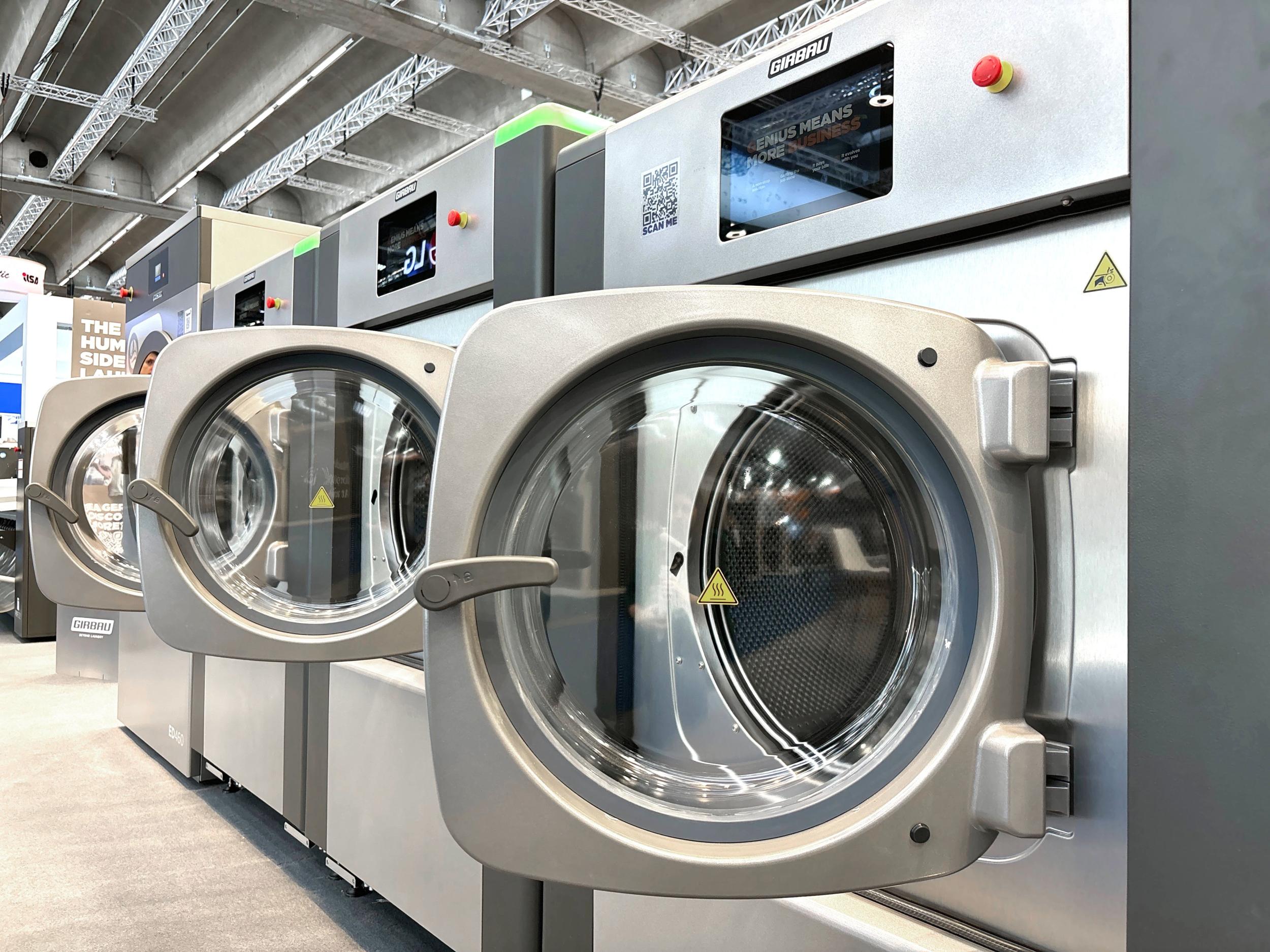


Girbau: Internal system for more sustainable and efficient solutions
The greatest environmental impact of an industrial washing machine is not generated during its manufacturing process, but throughout the years it remains in operation at the customer’s facilities. Based on this reality, Girbau has developed G-Seeds, an internal sustainability currency designed to integrate emissions reduction into decision-making across the organization and accelerate the decarbonization of its customers’ operations.
The initiative translates tonnes of CO₂ equivalent into a common unit of measurement, enabling the environmental impact of decisions related to product design, supplier selection, procurement, and the commercialization of more efficient solutions to be assessed consistently. Its aim is to ensure that sustainability is no longer an indicator reserved for specialized departments, but becomes an integral part of the company’s day-to-day operations.
“Talking about CO₂ emissions can be a complex topic and unfamiliar for many people within the organization. We decided to create a sustainability currency to make it more accessible, understandable and, above all, something our own” explains Joan Vilaseca, Sustainability Officer at Girbau.
The weight of emissions associated with the use of equipment explains the focus of the initiative. According to company data, emissions linked to the use of sold products (Scope 3.11) account for 96% of its total carbon footprint. In addition, an industrial washing machine can generate up to twenty times more emissions over its lifetime than those derived from its manufacturing process.
Results in emissions reduction
The company states that G-Seeds, combined with other initiatives, has contributed to a 33% reduction in Scope 3 emissions in 2025 compared to the 2023 baseline year. These emissions are mainly generated during the operation of the equipment at customers’ facilities, beyond the company’s direct control.
The initiative has also driven the development and adoption of solutions aimed at improving the efficiency of industrial laundries. These include Genius washing machines equipped with a water recovery tank, a system that reuses water from the final rinse for the next wash cycle and enables water consumption to be reduced by up to 35%, as well as Sortech, which promotes more sustainable laundry operations while protecting workers.
“G-Seeds allowed us to become more aware of our environmental impacts and to understand the connections between the different phases of the business. This has helped us make more strategic decisions, strengthen ecodesign practices, and bring these solutions to our customers” says Vilaseca.
External recognition
The project has gained external recognition from one of the most prominent international business schools. It was included as a case study in the 2nd Esade ISS Sustainability in the Workplace Barometer for its ability to integrate sustainability objectives into corporate decision-making.
In the same year, Girbau was awarded the EcoVadis Gold Medal, after having achieved a Bronze rating the previous year. According to the assessment, this recognition places the company among the top 4% of best-rated companies worldwide in terms of sustainability. The company also maintains its goal of achieving carbon neutrality by 2030 and reports having already reduced its Scope 1 and 2 emissions by 35% compared to 2021.
Girbau