From the Sector

Reset
Photo AIMPLAS
11.06.2026

IMPLICIT: New Pathways for Recycling Auxiliary Composite Manufacturing Waste

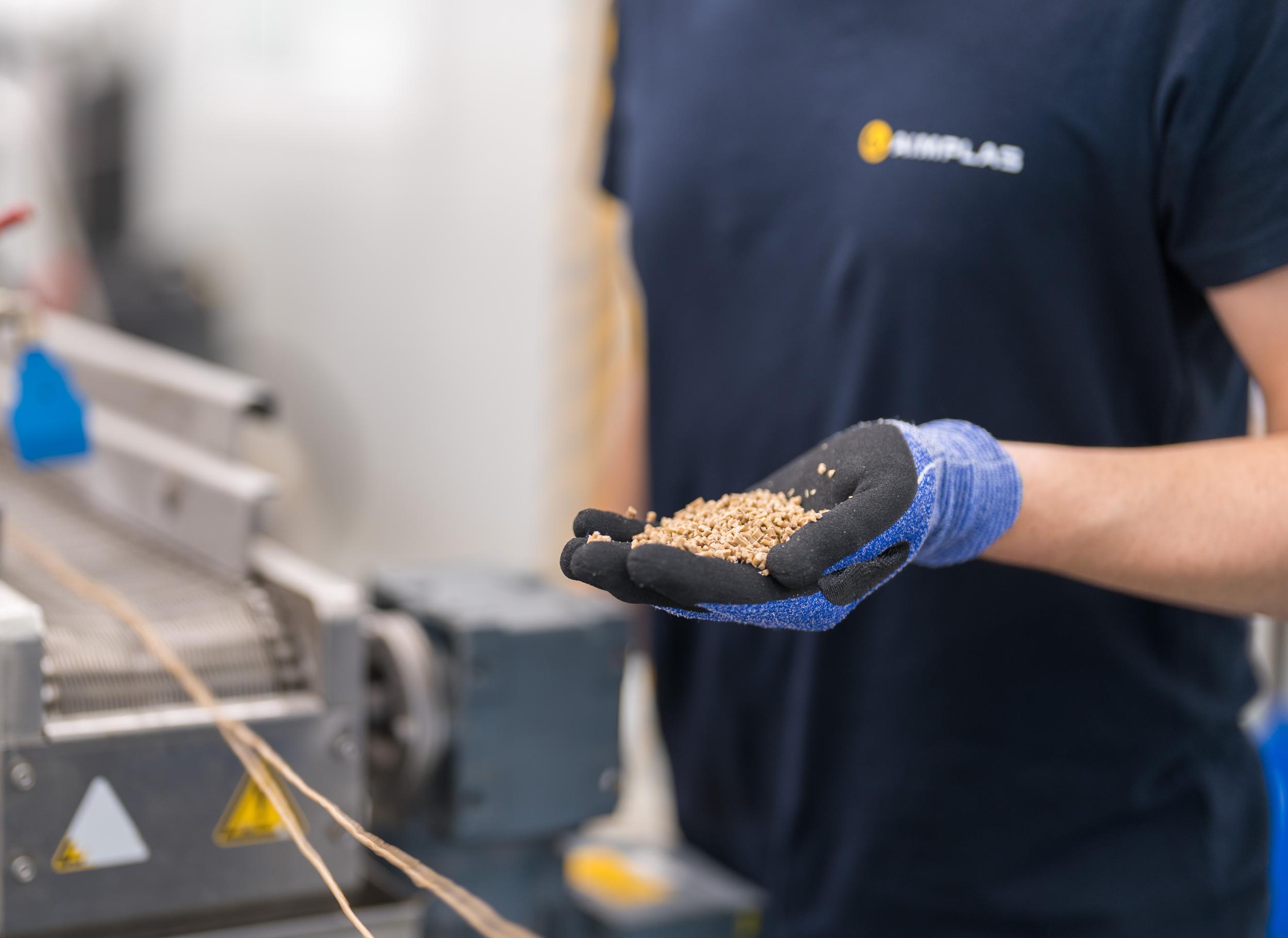
The project valorises single-use auxiliary waste such as vacuum bags, films and technical fabrics for applications in the automotive, technical textile and urban furniture sectors.

The companies Solteco, Birziplastik, Faperin and Industrias Alegre, together with the technology centres AIMPLAS, Eurecat, Tecnalia and Leartiker, are participating in this research initiative funded by CDTI and the European Regional Development Fund (ERDF).

The composite materials industry has experienced significant growth in sectors such as aerospace, railway, naval and renewable energy, thanks to its ability to provide lightweight, strong and durable solutions. However, these processes generate substantial amounts of plastic waste, especially single-use auxiliary materials such as vacuum bags, release films and absorbent fabrics. These materials are essential to ensure the quality of manufacturing processes, but after use they usually end up in landfill or are incinerated due to the difficulty of recycling them.

The project valorises single-use auxiliary waste such as vacuum bags, films and technical fabrics for applications in the automotive, technical textile and urban furniture sectors.

The companies Solteco, Birziplastik, Faperin and Industrias Alegre, together with the technology centres AIMPLAS, Eurecat, Tecnalia and Leartiker, are participating in this research initiative funded by CDTI and the European Regional Development Fund (ERDF).

The composite materials industry has experienced significant growth in sectors such as aerospace, railway, naval and renewable energy, thanks to its ability to provide lightweight, strong and durable solutions. However, these processes generate substantial amounts of plastic waste, especially single-use auxiliary materials such as vacuum bags, release films and absorbent fabrics. These materials are essential to ensure the quality of manufacturing processes, but after use they usually end up in landfill or are incinerated due to the difficulty of recycling them.

The IMPLICIT project addresses this challenge through the development of multimodal recycling strategies that combine mechanical, physical and chemical technologies to recover these materials with the highest possible purity and enable their industrial reuse. The aim is to generate new recycled raw materials that can be used in high value-added applications, such as automotive components, technical textiles and urban furniture elements.

Funded by the Spanish Ministry of Science, Innovation and Universities through the Centre for the Development of Industrial Technology and Innovation (CDTI), with the support of European Union European Regional Development Fund (ERDF) funding, IMPLICIT proposes a paradigm shift by transforming this waste into new resources, in line with European circular economy goals.

The initiative brings together a consortium of eight entities representing different links in the plastics value chain. Participating companies include Solteco (project leader), Birziplastik, Faperin and Industrias Alegre, together with the technology centres AIMPLAS (technical leader), Eurecat, Tecnalia and Leartiker. In addition, the project has been promoted thanks to AEMAC, the Spanish Composite Materials Association, and Airbus, which collaborates as a strategic partner by providing real waste generated from aerospace manufacturing processes.

Pau Manclús, Chemical Recycling Researcher at AIMPLAS, stated that “IMPLICIT represents a decisive step towards sustainability in the composites industry by addressing the recycling of auxiliary materials, which have historically been excluded from valorisation strategies. Thanks to collaboration between companies, technology centres and industry associations, the project demonstrates that it is possible to transform complex waste into useful resources, closing the life cycle of these materials and helping to reduce the environmental impact of key industrial sectors.”

This collaboration makes it possible to tackle the challenge from a comprehensive perspective, from waste collection and treatment to the validation of new products in real applications, thus addressing one of the industry’s main environmental challenges: the management of difficult-to-recycle waste.

Industrial Validation and New Market Opportunities
One of the project’s key pillars is the validation of recycled materials through real industrial demonstrators. In this regard, the recovered materials will be transformed into new products such as technical automotive parts, profiles for urban furniture and multifilaments for technical textiles.

Furthermore, the project envisages the creation of new business opportunities linked to advanced recycling and sustainable manufacturing, thereby helping to strengthen industrial competitiveness.

From a technical perspective, IMPLICIT develops a multimodal recycling approach for materials mainly manufactured with thermoplastic polymers such as PA, PET, PE and PP. This approach integrates mechanical recycling processes (shredding, separation and extrusion), physical recycling based on selective dissolution, and chemical recycling technologies such as solvolysis to remove thermoset resins and recover high-value monomers and oligomers.

The project also addresses key challenges such as waste heterogeneity and resin contamination through advanced decontamination, compounding and additive formulation processes aimed at improving the mechanical properties of recycled materials and ensuring their industrial viability.

Life Cycle Assessment (LCA) and Life Cycle Costing (LCC) analyses will make it possible to evaluate the environmental, economic and functional impact of the developed solutions, facilitating decision-making based on sustainability criteria.

IMPLICIT, reference number CPP2023-010867, is funded by the Spanish Ministry of Science, Innovation and Universities through the Centre for the Development of Industrial Technology and Innovation (CDTI), as well as by the European Regional Development Fund (ERDF), under the 2024 public-private collaboration projects programme.

Source Fashion January 2026 Photo (c) Source Fashion
Source Fashion January 2026
11.06.2026

Source Fashion Partners with Neuthread

Neuthread has been named as Source Fashion's Charity and Design Partner in a new 12-month collaboration designed to champion circular fashion, inclusion and industry innovation.

Created by autism and neurodiversity charity Daisy Chain, Neuthread has gained industry recognition for transforming textile waste into high-quality fashion collections and became the first charity-led fashion brand to present a scheduled runway show at London Fashion Week in 2024. Through the new partnership, Source Fashion and Neuthread will work together to raise awareness of circular fashion, promote innovative approaches to tackling textile waste and encourage greater collaboration between brands, manufacturers, retailers and sustainability leaders.

Neuthread has been named as Source Fashion's Charity and Design Partner in a new 12-month collaboration designed to champion circular fashion, inclusion and industry innovation.

Created by autism and neurodiversity charity Daisy Chain, Neuthread has gained industry recognition for transforming textile waste into high-quality fashion collections and became the first charity-led fashion brand to present a scheduled runway show at London Fashion Week in 2024. Through the new partnership, Source Fashion and Neuthread will work together to raise awareness of circular fashion, promote innovative approaches to tackling textile waste and encourage greater collaboration between brands, manufacturers, retailers and sustainability leaders.

Founded to challenge the perception that textile waste has reached the end of its life, Neuthread transforms donated, surplus and reclaimed textiles into contemporary fashion collections that combine environmental sustainability with social impact. The brand has rapidly gained recognition for its innovative approach to circular fashion, demonstrating how waste materials can be repurposed into desirable, commercially viable products while creating opportunities for autistic and neurodivergent people to develop skills and access employment pathways within the fashion and textiles sector.

Building on its London Fashion Week success, the organisation has since secured £1.5 million in investment from The National Lottery Community Fund to establish a pioneering circular fashion manufacturing facility in the North East of England, designed to reduce textile waste while creating training, volunteering and employment opportunities through its linked skills academy programme, Mend It Don't Rag It (MIDRI).

Over the next 12 months, the partnership will focus on building an eco-system of brands, manufacturers and retailers with innovative circular solutions, encouraging collaboration across the supply chain and creating new opportunities to repurpose surplus materials and textile waste.

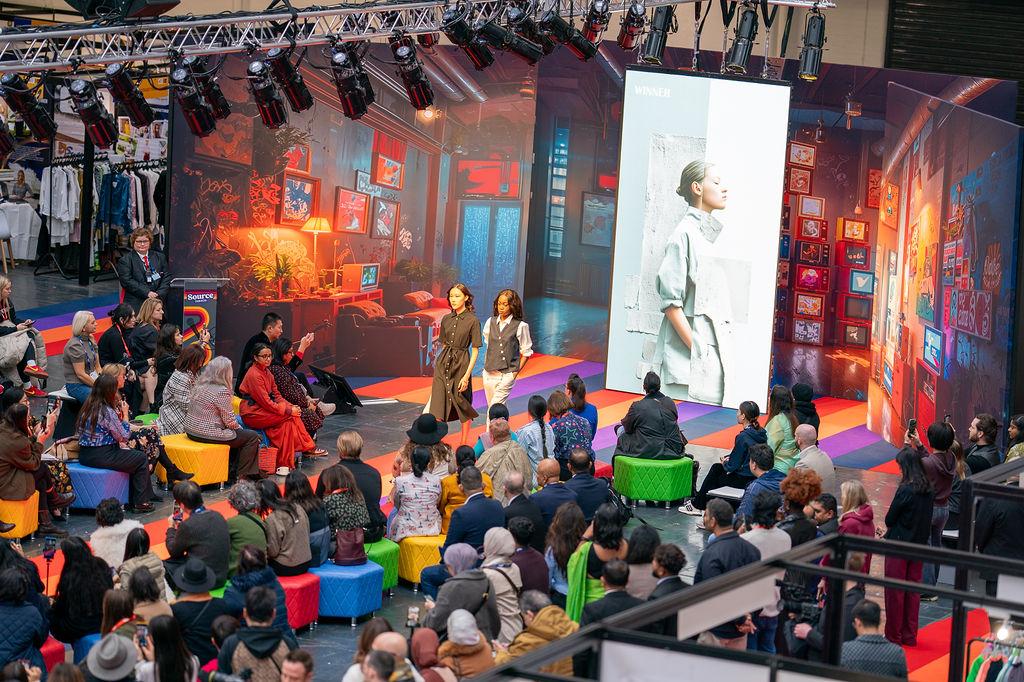
As Design Partner, Neuthread will headline the Source Catwalk throughout the July edition, presenting its collections three times a day alongside trend-led showcases from Source Fashion exhibitors and bringing circular fashion to the forefront of the show's content programme. The partnership will provide a platform to demonstrate how surplus, reclaimed and donated textiles can be transformed into commercially relevant fashion collections, while highlighting the opportunities that circular design presents for the wider industry.

The catwalk showcases will also support Neuthread's ambition to build new relationships with brands, manufacturers and retailers looking for innovative solutions for surplus fabrics, deadstock materials and textile waste streams. Through the partnership, Neuthread hopes to encourage greater collaboration across the industry and demonstrate practical alternatives to landfill and low-value textile recycling.

Johnathon Pickard, Director of Business Development & Income Generation, Neuthread commented: "We are incredibly proud to be partnering with Source Fashion as both Charity Partner and Design Partner for the July show. Source Fashion has established itself as one of the most influential platforms driving conversations around responsible sourcing, sustainability and the future of fashion. Those are conversations that sit at the very heart of what Neuthread is seeking to achieve.

Neuthread was created to challenge the perception that textile waste has reached the end of its life. Through innovative design, circular manufacturing and the talents of autistic and neurodivergent people, we are demonstrating how fashion can create environmental, social and economic impact simultaneously.

Following our journey from becoming the first charity to showcase a scheduled fashion brand collection at London Fashion Week through to securing £1.5 million to establish a pioneering circular fashion manufacturing facility, we are now entering an exciting period of growth. Working alongside Source Fashion provides an opportunity to share that vision with a wider industry audience and inspire new ways of thinking about sustainability, creativity and inclusion.

We are excited about what this partnership can achieve over the next 12 months and look forward to collaborating with the Source Fashion team to demonstrate that fashion can be a force for positive change.”

Suzanne Ellingham, Event Director of Source Fashion, added: “Neuthread is a natural fit for Source Fashion because they bring together creativity, circular innovation and practical action in a way that genuinely resonates with the challenges facing our industry today.

"As our Charity and Design Partner, they will play a central role in the July edition, headlining the Source Catwalk with showcases that demonstrate how surplus, reclaimed and donated textiles can be transformed into commercially relevant fashion collections. Their ambition to build new partnerships across the industry also aligns closely with our mission to connect businesses, encourage collaboration and drive meaningful change.

"From their pioneering manufacturing facility in the North East of England to the Source Fashion catwalk in London, Neuthread showcases the incredible innovation taking place across the UK fashion and textiles sector. We are proud to provide a platform that helps bring those stories to a wider audience and look forward to working together over the next 12 months."

Visitors to Source Fashion's July 2026 edition will be able to experience Neuthread's catwalk collections, engage directly with the team throughout the show and learn more about the organisation's pioneering approach to circular manufacturing, textile waste reduction and inclusive employment.

Source:

Source Fashion

10.06.2026

U.S. Textile Industry Calls for Crackdown on Customs Fraud

The National Council of Textile Organizations (NCTO), spanning the entire spectrum of U.S. textiles from fiber to finished sewn products, issued a statement today applauding a House Textile Caucus-led letter urging the Department of Homeland Security (DHS) to strengthen customs enforcement and combat widespread fraud that is harming American textile manufacturers.

“Unfortunately, for decades, the American textile industry has suffered greatly from customs fraud and abuse by foreign competitors and organized crime,” the bipartisan group of House lawmakers state in a letter to DHS Secretary Markwayne Mullin. “Our trade policies and tariff structures are only as effective as their enforcement. As you begin your role as Secretary, we urge you to review and ensure the U.S. Customs and Border Protection (CBP) is properly oriented and outfitted to fully enforce our customs laws.”

The National Council of Textile Organizations (NCTO), spanning the entire spectrum of U.S. textiles from fiber to finished sewn products, issued a statement today applauding a House Textile Caucus-led letter urging the Department of Homeland Security (DHS) to strengthen customs enforcement and combat widespread fraud that is harming American textile manufacturers.

“Unfortunately, for decades, the American textile industry has suffered greatly from customs fraud and abuse by foreign competitors and organized crime,” the bipartisan group of House lawmakers state in a letter to DHS Secretary Markwayne Mullin. “Our trade policies and tariff structures are only as effective as their enforcement. As you begin your role as Secretary, we urge you to review and ensure the U.S. Customs and Border Protection (CBP) is properly oriented and outfitted to fully enforce our customs laws.”

The letter, led by House Textile Caucus Co-Chairs Reps. David Rouzer (R-NC) and Adriano Espaillat (D-NY), was signed by 14 additional House lawmakers. They further call on DHS to “develop and institute a comprehensive textile enforcement program” that includes: revoking trade privileges, publicly listing and instituting stronger penalties for repeat offenders; increased audits, lab testing and verification of free trade agreement claims; and timely publication of enforcement statistics.

NCTO President and CEO Kim Glas, said: “I sincerely thank Congressman Espaillat and Congressman Rouzer for leading these efforts and strongly commend the bipartisan group of lawmakers for taking the lead in calling on Secretary Mullin and his agency to take urgent action to address a wide range of illegal trade practices that are severely impacting the U.S. textile and apparel industry.”

“This letter sends a powerful message that customs fraud, illegal transshipment, and tariff evasion are rampant and must be stopped. These illegal trade practices cost American jobs, undermine legitimate manufacturers, weaken our trade agreements, and deprive the U.S. Treasury of billions of dollars in revenue,” Glas said. “The industry looks forward to working with Congress, DHS, and CBP to strengthen enforcement efforts and ensure a level playing field for American textile manufacturers and workers.”

Source:

National Council of Textile Organizations

The eFK Doffmatic – the perfect combination of cost-effectiveness, productivity, and reduced reliance on operators. (c) Photo Barmag
The eFK Doffmatic – the perfect combination of cost-effectiveness, productivity, and reduced reliance on operators.
09.06.2026

Barmag & Hitech Automation: Partnership for an auto-doff system for texturing machines

Barmag (Suzhou) Technology Co., Ltd. and Hitech Automation Solutions PVT LTD. of Surat, India, have agreed to an exclusive partnership to jointly market Hitech’s Doffmatic automation solution for Barmag’s proven manual eFK texturing machines. In many texturing facilities, manual doffing processes remain heavily operator-dependent – resulting in issues such as increased scrap, inconsistent quality, and limited productivity.

Exclusive partnership for automation solutions for manual texturing machines
The goal of the joint solution for texturing customers is to create technological and economic value –with a solution positioned between manual and fully automated concepts, offering an attractive alternative for numerous operational and investment scenarios with a clear focus on rapid ROI and improved yarn quality.

Barmag (Suzhou) Technology Co., Ltd. and Hitech Automation Solutions PVT LTD. of Surat, India, have agreed to an exclusive partnership to jointly market Hitech’s Doffmatic automation solution for Barmag’s proven manual eFK texturing machines. In many texturing facilities, manual doffing processes remain heavily operator-dependent – resulting in issues such as increased scrap, inconsistent quality, and limited productivity.

Exclusive partnership for automation solutions for manual texturing machines
The goal of the joint solution for texturing customers is to create technological and economic value –with a solution positioned between manual and fully automated concepts, offering an attractive alternative for numerous operational and investment scenarios with a clear focus on rapid ROI and improved yarn quality.

For new machines and upgrades: Automation as a (retrofittable) solution
The agreement covers both the sale of new eFK texturing machines in combination with Doffmatic, under the name eFK Doffmatic, as well as upgrades to existing Barmag machines (retrofits), which will continue to be marketed under the familiar names eFK and Doffmatic. In this way, the two partners offer customers solutions for two key aspects: investment decisions for new equipment as well as the rapid, step-by-step modernization of older machines.

Technically, Doffmatic is designed as an add-on system that integrates into eFK texturing machines without requiring additional space. This enables the auto-doffing function while maintaining the well-known consistently high yarn quality. Customers benefit from a fast and low-risk modernization path with short payback periods – both for new installations and for retrofit projects. This makes it attractive for yarn producers who do not (yet) use automatic texturing machines but still want to achieve significantly greater efficiency, process stability, and product quality.

Efficiency and reproducible quality
Doffmatic aims to automate the doffing process while ensuring that bobbins have exactly the same length – a key prerequisite for consistent quality and seamless downstream processing. “Through this exclusive partnership, we combine local market insight, engineering expertise, and localized service –offering texturers an automation solution that addresses both efficiency and yarn quality,” summarizes Oliver Lemke, Sales Director at Barmag. And Brij Patel, Managing Director of Hitech, adds: “Doffmatic was developed to offer seamless automatic doffing functionality for new and retrofit projects. Together with Barmag, we are now expanding our machine portfolio – with a clear focus on our customers’ operational requirements.”

09.06.2026

ECHA identifies new research areas to strengthen chemicals safety

The European Chemicals Agency (ECHA) has identified new research areas where further regulatory scientific research is needed to enhance protection of human health and the environment and strengthen chemicals safety. 

In its updated Key Areas of Regulatory Challenge Report, ECHA calls for targeted research to address gaps in environmental risk assessment and support evidence-based decisions on chemical safety across the EU.

New areas for regulatory science research

The European Chemicals Agency (ECHA) has identified new research areas where further regulatory scientific research is needed to enhance protection of human health and the environment and strengthen chemicals safety. 

In its updated Key Areas of Regulatory Challenge Report, ECHA calls for targeted research to address gaps in environmental risk assessment and support evidence-based decisions on chemical safety across the EU.

New areas for regulatory science research

  • Environmental impacts of chemicals at ecosystem level, to strengthen the link between risk assessment, biodiversity protection and socio-economic decision-making;
  • Mobility of persistent substances, including the need for improved methods and models to identify contaminants that can spread widely in water systems; and
  • Resistance to biocides, requiring harmonised methods to assess risks and ensure continued effectiveness of treatments.

Strengthening ECHA’s regulatory science focus
Dr Sharon McGuinness, ECHA’s Executive Director, said:
"This report reflects ECHA’s strengthened focus on regulatory science, aligning with our vision of chemical safety through science, collaboration and knowledge. We encourage the research community to read the report and work to build the evidence base for future decision-making on chemicals safety.

"The establishment of our new Science Council will ensure our scientific efforts are consistent across the Agency and closely linked to our regulatory needs."
Key Areas of Regulatory Challenge 

The report is part of ECHA’s evolving research agenda and a practical reference for researchers and policymakers, highlighting where scientific advances can deliver the greatest regulatory value. It identifies priority areas where further scientific work is needed to support EU chemicals legislation. The list of research needs is not exhaustive.

The report was originally developed to support the work under the Partnership for the assessment of risk from chemicals (PARC), a Horizon Europe programme aiming to advance risk assessment and strengthen collaboration between scientists and regulators.

Source:

European Chemicals Agency

(c) Girbau
09.06.2026

Girbau: Internal system for more sustainable and efficient solutions

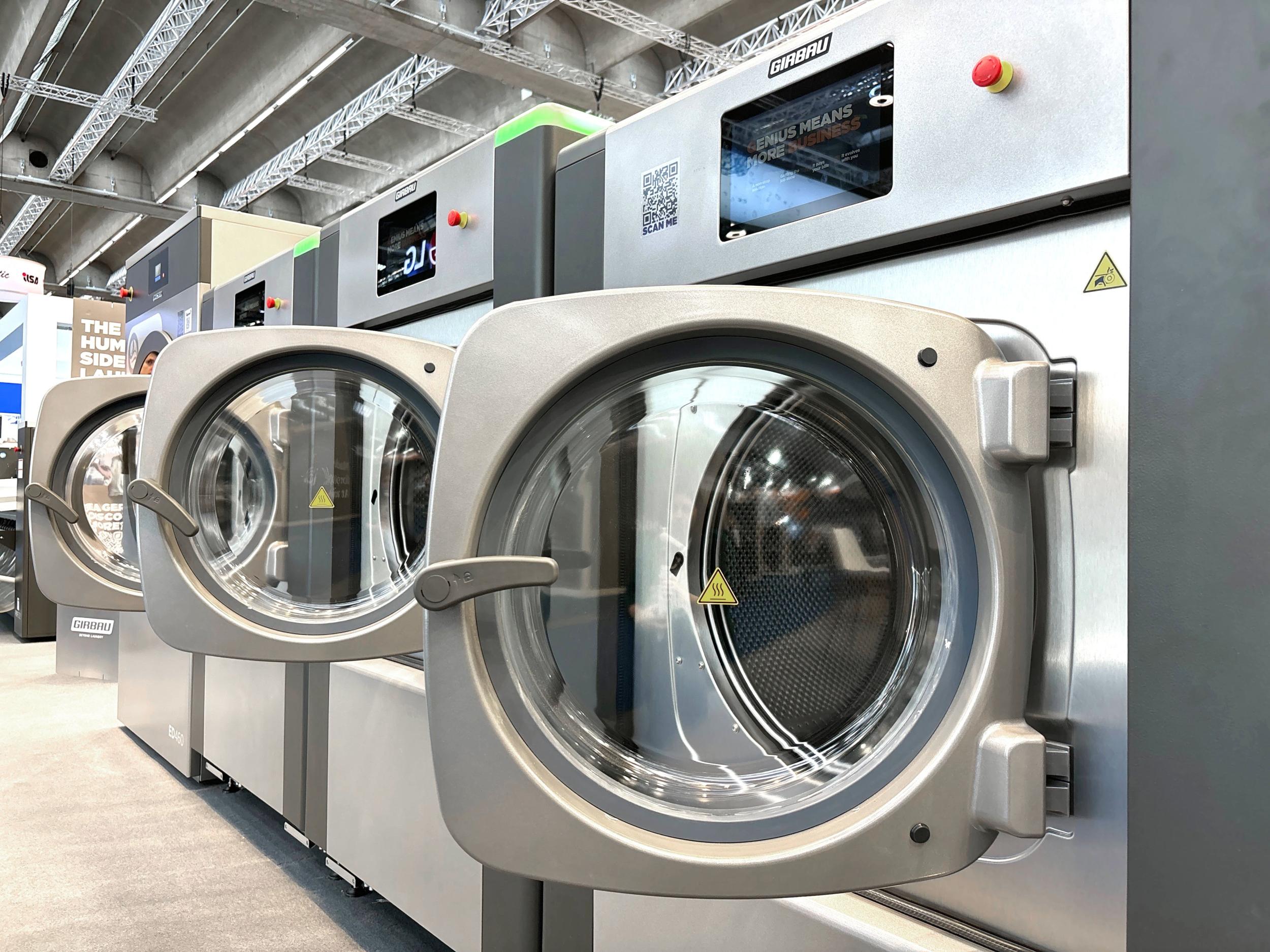
The greatest environmental impact of an industrial washing machine is not generated during its manufacturing process, but throughout the years it remains in operation at the customer’s facilities. Based on this reality, Girbau has developed G-Seeds, an internal sustainability currency designed to integrate emissions reduction into decision-making across the organization and accelerate the decarbonization of its customers’ operations. 

The initiative translates tonnes of CO₂ equivalent into a common unit of measurement, enabling the environmental impact of decisions related to product design, supplier selection, procurement, and the commercialization of more efficient solutions to be assessed consistently. Its aim is to ensure that sustainability is no longer an indicator reserved for specialized departments, but becomes an integral part of the company’s day-to-day operations.

The greatest environmental impact of an industrial washing machine is not generated during its manufacturing process, but throughout the years it remains in operation at the customer’s facilities. Based on this reality, Girbau has developed G-Seeds, an internal sustainability currency designed to integrate emissions reduction into decision-making across the organization and accelerate the decarbonization of its customers’ operations. 

The initiative translates tonnes of CO₂ equivalent into a common unit of measurement, enabling the environmental impact of decisions related to product design, supplier selection, procurement, and the commercialization of more efficient solutions to be assessed consistently. Its aim is to ensure that sustainability is no longer an indicator reserved for specialized departments, but becomes an integral part of the company’s day-to-day operations.

“Talking about CO₂ emissions can be a complex topic and unfamiliar for many people within the organization. We decided to create a sustainability currency to make it more accessible, understandable and, above all, something our own” explains Joan Vilaseca, Sustainability Officer at Girbau. 

The weight of emissions associated with the use of equipment explains the focus of the initiative. According to company data, emissions linked to the use of sold products (Scope 3.11) account for 96% of its total carbon footprint. In addition, an industrial washing machine can generate up to twenty times more emissions over its lifetime than those derived from its manufacturing process.

Results in emissions reduction
The company states that G-Seeds, combined with other initiatives, has contributed to a 33% reduction in Scope 3 emissions in 2025 compared to the 2023 baseline year. These emissions are mainly generated during the operation of the equipment at customers’ facilities, beyond the company’s direct control.

The initiative has also driven the development and adoption of solutions aimed at improving the efficiency of industrial laundries. These include Genius washing machines equipped with a water recovery tank, a system that reuses water from the final rinse for the next wash cycle and enables water consumption to be reduced by up to 35%, as well as Sortech, which promotes more sustainable laundry operations while protecting workers.

“G-Seeds allowed us to become more aware of our environmental impacts and to understand the connections between the different phases of the business. This has helped us make more strategic decisions, strengthen ecodesign practices, and bring these solutions to our customers” says Vilaseca.

External recognition
The project has gained external recognition from one of the most prominent international business schools. It was included as a case study in the 2nd Esade ISS Sustainability in the Workplace Barometer for its ability to integrate sustainability objectives into corporate decision-making.

In the same year, Girbau was awarded the EcoVadis Gold Medal, after having achieved a Bronze rating the previous year. According to the assessment, this recognition places the company among the top 4% of best-rated companies worldwide in terms of sustainability. The company also maintains its goal of achieving carbon neutrality by 2030 and reports having already reduced its Scope 1 and 2 emissions by 35% compared to 2021.

Signal 08 - CHLOROLIRIUM — Charlie Moon; Messe Frankfurt
09.06.2026

Autopsy: New trend book by Texworld Apparel Sourcing Paris

Autopsy, the new trend book by Texworld Apparel Sourcing Paris, deciphers the fractures of our time through 12 creative signals. Materials, colors, shapes, and narratives come together to create a forward-looking map for the Autumn-Winter 2027-2028 season. 
 
Presented during Texworld Apparel Sourcing Paris, from August 31 to September 2, 2026, at the Paris-Le Bourget Exhibition Center, Autopsy offers a reinterpretation of the contours of fashion in a world undergoing profound transformation, balancing radical introspection and sensitive renewal. 
 
Designed under the artistic direction of Louis Gérin and Grégory Lamaud by the Texworld Apparel Sourcing Paris Trends Table, this new edition marks a major evolution in the way trend forecasting is presented: replacing the four major narrative worlds that structured previous editions, Autopsy introduces this year a broader and more instinctive approach. Twelve emerging signals now shape a sensitive mapping of the cultural, social, aesthetic, and emotional tensions defining our era. 
 
A tool for decoding and creative insight. 

Autopsy, the new trend book by Texworld Apparel Sourcing Paris, deciphers the fractures of our time through 12 creative signals. Materials, colors, shapes, and narratives come together to create a forward-looking map for the Autumn-Winter 2027-2028 season. 
 
Presented during Texworld Apparel Sourcing Paris, from August 31 to September 2, 2026, at the Paris-Le Bourget Exhibition Center, Autopsy offers a reinterpretation of the contours of fashion in a world undergoing profound transformation, balancing radical introspection and sensitive renewal. 
 
Designed under the artistic direction of Louis Gérin and Grégory Lamaud by the Texworld Apparel Sourcing Paris Trends Table, this new edition marks a major evolution in the way trend forecasting is presented: replacing the four major narrative worlds that structured previous editions, Autopsy introduces this year a broader and more instinctive approach. Twelve emerging signals now shape a sensitive mapping of the cultural, social, aesthetic, and emotional tensions defining our era. 
 
A tool for decoding and creative insight. 
Conceived as a tool for decoding and creative monitoring, this trend book explores a society at a turning point: technological saturation, loss of meaning, exhaustion of dominant narratives, but also a return to nature, a need for humility, and a desire to reconnect with reality. Far beyond a purely stylistic reading, Autopsy questions the place of the body, nature, memory, and intelligence within a changing civilization. The twelve themes it presents, built around a selection of inspiring colors and materials, combine sociological reflection with creative proposals. 
 
Signal #1 – Normskin 
In a world where algorithms dictate behaviors, Normskin questions the standardization of bodies, tastes, and identities. Silhouettes become uniform, materials repetitive, and aesthetics cloned. This apparent perfection conceals the silent tension of a society that increasingly rejects singularity. Modular textures, calibrated layering, and geometric patterns, expressed through a rather neutral color palette, reflect this silent dictatorship of sameness and conformity. 
 
Signal #2 – Florabiote 
This theme celebrates the proliferation of living organisms as a response to the exhaustion of human systems. Nature, like a jungle, becomes invasive and abundant. Organic colors, artificial blooms, velvety materials, and spontaneous compositions create a hybrid landscape where textiles transform into an emotional biotope: cocoon coats, floral jacquards, mossy velvets, and botanical embroideries shape a generous and instinctive atmosphere driven by the idea that diversity is the true condition for survival. 
 
Signal #3 – Decarnation 
This proposal questions the distancing of the physical body in a hyperconnected world. Clothing becomes a shell, a relic, or the trace of an absent presence. Textures appear altered and weathered, colors faded and sometimes almost ghostly. Between symbolic flesh, worn surfaces, and disembodied volumes — bodies as showcases — this signal presents a suspended and fragile fashion, illustrating the programmed disappearance of physical embodiment. 
 
Signal #4 – Fusionary 
This theme sketches a world in recomposition, where forms, materials, and functions combine freely. Structures intersect, hybridize, and mutate according to an organic logic inspired by living systems. Textiles play with assembly, networks, and graphic tensions through a warm color palette. Creativity here is driven by the blending of disciplines, cultures, and craftsmanship. 
  
Signal #5 – Vitaminoid 
A reflection of an extinct civilization where individuals become caricatures of themselves. Colors are explosive and contrasting, volumes inflated with fluffy materials: colorful faux furs, oversized shapes, cartoon-like silhouettes. The forms express a society where spectacle is permanent. Between pop culture, digital avatars, and the cult of symbols — people become characters — this signal explores a simplified humanity where identity becomes performative and instantly consumable. 
 
Signal #6 – Evinescence 
This theme stages the remnants of a humanity fascinated by its own image. Pigmented transparencies, altered reflections, fragmented textures, and historical traces shape a visual expression of disappearance. Like leaves covering the ground, cultural signs remain, yet already seem fossilized. Garments appear worn down by time and memory. This signal reflects the fragile beauty of an environment aware of its own exhaustion. 
 
Signal #7 – Paleogreen 
This theme celebrates the return of vegetation over the ruins of human systems. A future where materials appear eroded, marked by time, and crossed by organic and mineral traces. Muted greens, accidental effects, and layered surfaces depict an ecosystem where nature silently reclaims space. An archaeological and contemplative aesthetic, quiet and introspective, between memory and disappearance. 
 
Signal #8 – Chlorolirium 
This direction places nature as the ultimate model. Forms sprout, stretch, and proliferate within a vegetal universe that has become a culture in itself. Chlorophyll-inspired colors, fluffy supports, plant-like silhouettes, and livingfabric effects create a sensory language inspired by biology. This signal celebrates an instinctive reconnection with nature and a poetic vision of a postanthropocentric future. 
 
Signal #9 – Aquamorphosis 
Inspired by aquatic, fluid, and adaptable volumes, this proposal highlights translucent, moving, and polymorphic materials, as though shaped by currents. Reflective effects, liquid surfaces, wet-look finishes, and organic constructions express a fashion capable of evolving with its environment. This signal develops an immersive and primal visual proposal, where clothing acts like a flexible and evolving second skin. 
 
Signal #10 – Wondermeil 
When beauty emerges after exhaustion: certainties collapse, colors burst, patterns vibrate, and sensations multiply. Compositions are naïve, joyful, and almost psychedelic. Between raw emotion and euphoria, this signal celebrates, through an explosion of color, the ability of sensations to re-enchant the way we see the world. 
 
Signal #11 - Urbicéa 
Cet axe convoque les traces laissées par les civilisations : architectures résiduelles, objets techniques, structures survivantes. Les matières minérales, les gris bétonnés, sourds, et les lignes brutalistes composent un paysage urbain devenu vestige. Entre rigidité industrielle et poésie des ruines, ce signal interroge la mémoire des objets et la permanence des constructions face à la disparition des idées. 
 
Signal #12 – Epiternel 
The story of Autopsy concludes with an aesthetic of sedimentation and rediscovered humility. Burnt wood, carbon residues, marbled textures, and animal traces express a world returned to essentials. This signal favors deep, enveloping, and silent structures — almost monastic — like the remnants of a truth finally laid bare. A peaceful and lucid vision of “the aftermath.” 
 
An immersive scenography at the heart of the trade show 
The Autopsy trend book will be unveiled and presented by Louis Gérin during the show at a conference held on the Agora stage. From August 31 to September 2, 2026, visitors will be able to discover in Hall 2 a selection of materials, color proposals, and silhouettes directly inspired by the twelve signals of the trend book, within an immersive journey designed as a forward-looking exploration of the Autumn-Winter 2027-2028 season.

Source:

Messe Frankfurt