From the Sector

Reset
FILTREX™ India 2026 in New Delhi: Registration now open Graphic Edana
08.07.2026

FILTREX™ India 2026 in New Delhi: Registration now open

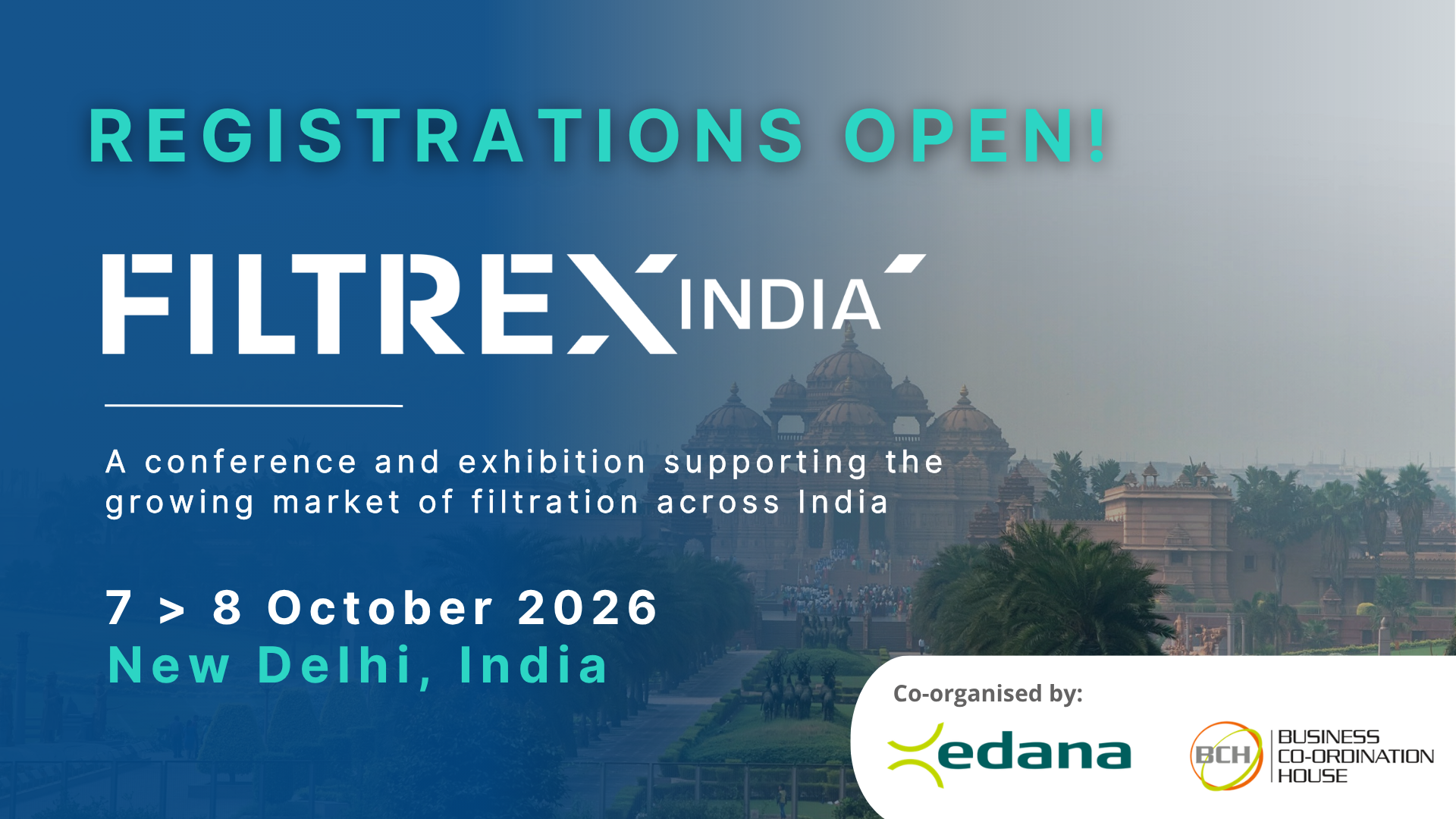
EDANA, the voice of nonwovens, in partnership with the Business Coordination House (BCH), will welcome filtration professionals from across the world to FILTREX™ India 2026, taking place on 7–8 October 2026 at the Eros Hotel, New Delhi. 

Recognised as one of the leading meeting points for the filtration industry in the region, FILTREX™ India brings together decision-makers, technical experts, researchers and innovators from across the entire filtration value chain. The two-day conference and tabletop exhibition will provide a platform to explore technological advances, market developments and the evolving regulatory landscape shaping the future of filtration. 

Building on the success of previous editions, the 2026 conference will feature a comprehensive programme covering some of the industry's most pressing topics, including filtration standards and regulations in India, automotive filtration, industrial filtration, clean water and clean air. The event will also provide extensive networking opportunities, enabling participants to exchange knowledge, strengthen partnerships and discover new business opportunities. 

EDANA, the voice of nonwovens, in partnership with the Business Coordination House (BCH), will welcome filtration professionals from across the world to FILTREX™ India 2026, taking place on 7–8 October 2026 at the Eros Hotel, New Delhi. 

Recognised as one of the leading meeting points for the filtration industry in the region, FILTREX™ India brings together decision-makers, technical experts, researchers and innovators from across the entire filtration value chain. The two-day conference and tabletop exhibition will provide a platform to explore technological advances, market developments and the evolving regulatory landscape shaping the future of filtration. 

Building on the success of previous editions, the 2026 conference will feature a comprehensive programme covering some of the industry's most pressing topics, including filtration standards and regulations in India, automotive filtration, industrial filtration, clean water and clean air. The event will also provide extensive networking opportunities, enabling participants to exchange knowledge, strengthen partnerships and discover new business opportunities. 

The programme includes keynote presentations and technical sessions delivered by internationally recognised experts from leading organisations, including MANN+HUMMEL, Ahlstrom, Camfil, Hollingsworth & Vose, UY Trienviro and Schlegel und Partner. Topics will range from next-generation filtration materials and air quality solutions to wastewater recycling technologies and the implications of evolving European chemical compliance requirements for international markets. 

"Launched in Europe in 2004, FILTREX™ has grown into a recognised international platform for knowledge exchange within the filtration industry," said Murat Dogru, General Manager at EDANA. "The Indian market continues to play an increasingly important role in the global filtration landscape, making FILTREX™ India an ideal forum for bringing together international expertise and local innovation to address shared challenges."

As global demand for effective filtration solutions continues to grow—driven by challenges related to air quality, water treatment, industrial processes and sustainable technologies—FILTREX™ India 2026 will offer participants valuable insights into the innovations and collaborations shaping the industry's future.

17.06.2026

ECHA: Collaborative Platform on Alternatives to Animal Testing

The European Chemicals Agency (ECHA) has hosted the first meeting of its Collaborative Platform on Alternatives to Animal Testing (CP-AAT).
The event brought together Member States, the European Commission, EU agencies, industry and public-private partnerships to define priorities and strengthen cooperation on the use of alternatives to animal testing.

The members of the platform discussed the wide range of ongoing alternative methods initiatives across Europe, as well as shared challenges in advancing and applying them. They emphasised the importance of structured and continuous information exchange to support progress and avoid duplication of efforts.

Four priority areas were identified for the platform’s initial two-year work programme:

The European Chemicals Agency (ECHA) has hosted the first meeting of its Collaborative Platform on Alternatives to Animal Testing (CP-AAT).
The event brought together Member States, the European Commission, EU agencies, industry and public-private partnerships to define priorities and strengthen cooperation on the use of alternatives to animal testing.

The members of the platform discussed the wide range of ongoing alternative methods initiatives across Europe, as well as shared challenges in advancing and applying them. They emphasised the importance of structured and continuous information exchange to support progress and avoid duplication of efforts.

Four priority areas were identified for the platform’s initial two-year work programme:

  • QSARs: promote regulatory use of in silico methods, starting with acute oral toxicity, by showing practical use and setting clear performance criteria for hazard assessment;
  • In vitro toxicokinetics: develop harmonised approaches for using in vitro toxicokinetic data and align scientific and regulatory expectations;
  • Omics: Support use of omics technologies (e.g. transcriptomics, metabolomics) in hazard identification and grouping through guidance and case studies; and
  • New approach methodologies (NAMs) for nano- and advanced materials: create regulatory approaches to assess nanomaterials’ specific properties and enable their inclusion in non-animal testing strategies.

These priorities reflect areas where further collaboration and alignment are needed to support regulatory uptake. Their scope will now be developed in more detail, with work expected to begin shortly. 

Background
The Collaborative Platform on Alternatives to Animal Testing is an informal and non-binding forum meeting twice a year focusing on scientific exchange, capacity building and development of a common understanding on the regulatory use of alternative methods. The platform is ECHA’s first contribution to the European Commission’s roadmap towards phasing out animal testing, which was published on 1 June 2026. 

Source:

European Chemicals Agency

(c) EDANA
15.06.2026

EDANA: Continence Report to mark the start of the World Continence Week

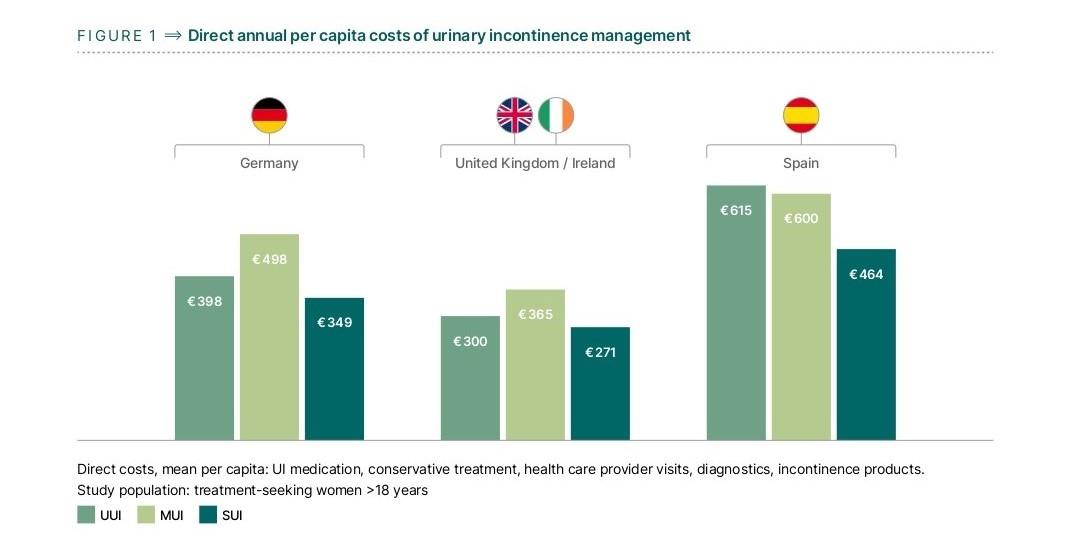
June 15 marks the official commencement of the World Continence Week. To honour this global awareness initiative, EDANA has published a comprehensive report titled "The Central Role of Absorbent Hygiene Products in the Management of Adult Urinary Incontinence: Benefits, Costs and Environmental Impact." 

The World Continence Week (WCW) is an annual global initiative dedicated to raising public awareness about incontinence and bladder or bowel health issues. Traditionally held in June, this awareness week aims to shed light on a condition that affects millions of people worldwide but is frequently kept secret due to widespread social stigma, embarrassment, and taboo. 

June 15 marks the official commencement of the World Continence Week. To honour this global awareness initiative, EDANA has published a comprehensive report titled "The Central Role of Absorbent Hygiene Products in the Management of Adult Urinary Incontinence: Benefits, Costs and Environmental Impact." 

The World Continence Week (WCW) is an annual global initiative dedicated to raising public awareness about incontinence and bladder or bowel health issues. Traditionally held in June, this awareness week aims to shed light on a condition that affects millions of people worldwide but is frequently kept secret due to widespread social stigma, embarrassment, and taboo. 

Urinary incontinence (UI) is a widely prevalent condition affecting millions worldwide across all age groups, with an escalating incidence among older demographics. As global populations age and lifestyle-related risk factors such as obesity and reduced physical activity continue to scale up, the need for reliable, long-term care management frameworks has never been more pressing. This new landmark report provides an essential, multi-dimensional analysis of how Absorbent Hygiene Products (AHPs), and more specifically, continence products, act as a vital lifeline for individuals, macro-economies, and public healthcare systems alike. 

Urinary incontinence is a complex condition 
The report establishes that UI is a deeply nuanced clinical reality. It primarily manifests in three main forms—urge, stress, and mixed incontinence—each driven by distinct physiological mechanisms. Other variations, such as functional incontinence caused by cognitive or physical mobility impairments, further highlight that UI is not a single, uniform issue but an intricately layered medical challenge. 

Urinary incontinence has a major impact on society 
Driven by global aging trends, rising obesity rates, and the expansion of chronic diseases, the global footprint of UI is growing rapidly. Beyond the estimated 465 million adults currently affected worldwide, the macro-economic burden is staggering. Unmanaged UI accounts for billions in direct healthcare costs and tens of billions in indirect costs, creating massive financial strains due to reduced workplace employment, elevated absenteeism, and heavy institutionalization burdens. 

People with urinary incontinence manage their condition in a variety of ways 
A clear majority of individuals manage UI privately due to lingering social stigma, with up to 80% navigating symptoms without ever consulting a clinician. For those who do seek formal primary care, assistance is not always guaranteed. Clinical pathways dictate a stepwise management sequence—ranging from lifestyle adaptations to specialized surgeries—but for the millions who cannot be fully cured, daily containment remains the primary solution. 

Absorbent hygiene products have a significant part to play in managing urinary incontinence 
AHPs are heavily proven, effective tools that directly elevate health-related quality of life and preserve user dignity. These purpose-made products are regulated medical devices engineered to the highest performance standards specifically to handle urine loss. Clinical evidence demonstrates that the utilization of high-quality bodyworn AHPs drastically reduces caregiver laundering demands, supports professional workforce participation, and cuts the risk of secondary medical complications like pressure ulcers by up to 67%. 

Absorbent hygiene products are a worthwhile expenditure for the public payer 
By keeping individuals socially and economically active while preventing severe skin breakdowns or unnecessary hospitalizations, disposable AHPs deliver exceptional socio-economic returns. Public healthcare systems across nations like the UK, the Netherlands, and Australia actively endorse this value by integrating these essential containment products into official public reimbursement and payment schemes. 

Industry initiatives are reducing the environmental impact of absorbent hygiene products 
The report highlights ongoing sector-wide efforts to lower the ecological footprint of these vital solutions. Through continuous material science innovation and cradle-to-grave Life-Cycle Assessments (LCAs), products have become lighter and down-gauged via advanced superabsorbent polymers (SAP), optimizing resource efficiency while strictly maintaining skin safety. Concurrently, various exploratory initiatives are evaluating mechanical separation, chemical recycling, and anaerobic fermentation pilots to help advance scale-level circular economy solutions for the end-of-life stage.

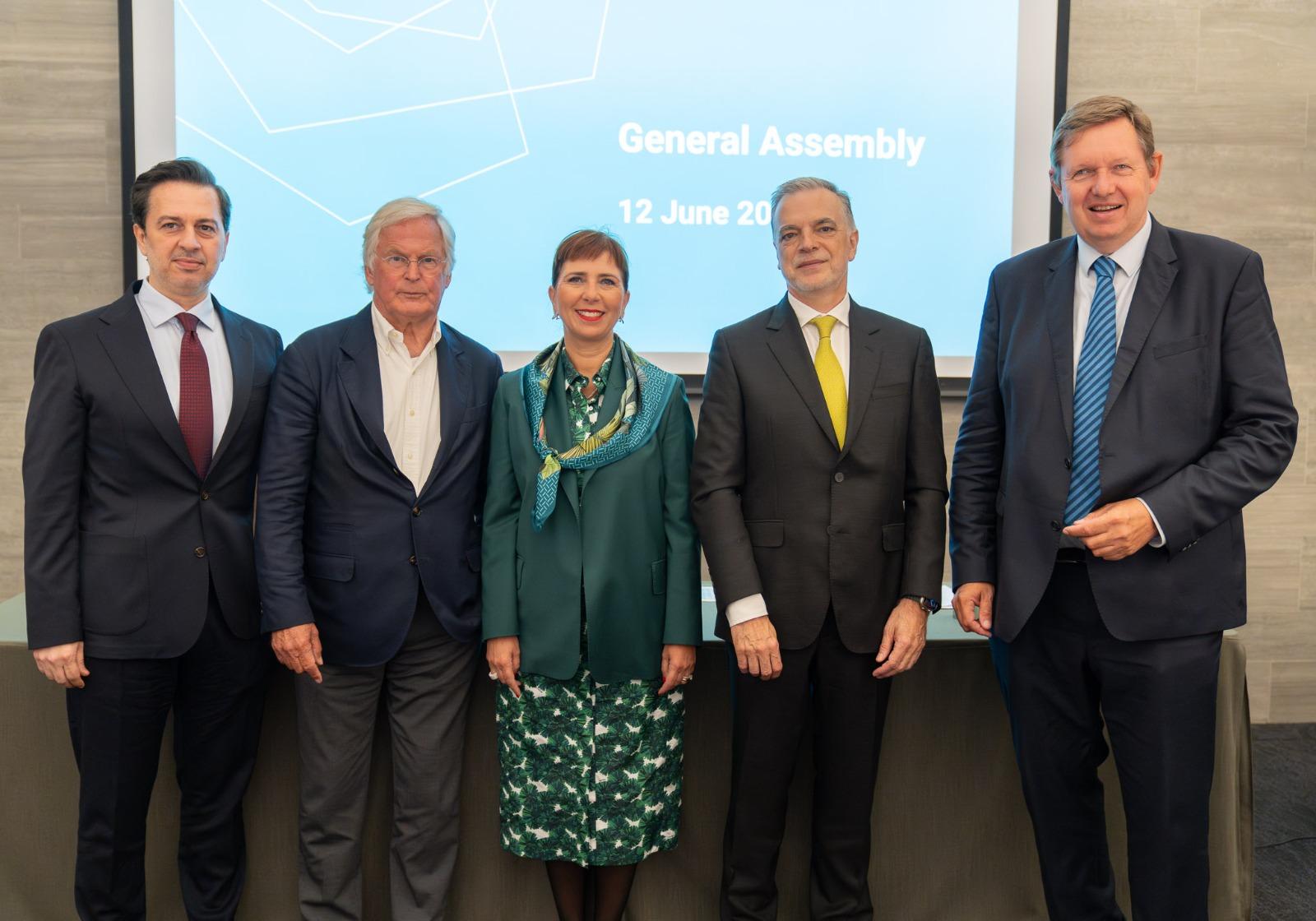
Presidency Team Photo (c) European Apparel and Textile Confederation EURATEX
Presidency Team
12.06.2026

Mario Jorge Machado re-elected President of EURATEX

The EURATEX General Assembly has re-elected Mario Jorge Machado as President of EURATEX, renewing its confidence in his leadership at a crucial moment for the European textile and clothing industry. The sector is facing rising costs, global competitive pressure and an increasingly challenging transition towards sustainability and digitalisation. 

With a degree in Production Polymer Engineering from the University of Minho, Mario Jorge Machado brings extensive industrial experience and a strong commitment to innovation, competitiveness and sustainable transformation. 

Upon his re-election, Mario Jorge Machado said:
“My priority for this new mandate is clear: to strengthen the competitiveness of our industry, ensure that the same rules apply to all products sold in Europe, and support our companies through the green and digital transition. Europe must decarbonise its industry, not deindustrialise it.” 

Three priorities for the new mandate

The EURATEX General Assembly has re-elected Mario Jorge Machado as President of EURATEX, renewing its confidence in his leadership at a crucial moment for the European textile and clothing industry. The sector is facing rising costs, global competitive pressure and an increasingly challenging transition towards sustainability and digitalisation. 

With a degree in Production Polymer Engineering from the University of Minho, Mario Jorge Machado brings extensive industrial experience and a strong commitment to innovation, competitiveness and sustainable transformation. 

Upon his re-election, Mario Jorge Machado said:
“My priority for this new mandate is clear: to strengthen the competitiveness of our industry, ensure that the same rules apply to all products sold in Europe, and support our companies through the green and digital transition. Europe must decarbonise its industry, not deindustrialise it.” 

Three priorities for the new mandate

1. Competitiveness as the foundation
Mario Jorge Machado has made clear that competitiveness must be the starting point for any successful industrial policy. In his recent Brussels address, he stressed that without competitiveness there can be no investment, no innovation, no sustainability and no strategic autonomy. He will therefore continue to push for a stronger business environment for textile companies, with support for investment in automation, digitalisation, artificial intelligence, skills and innovation, especially for SMEs. 

2. A genuine level playing field
A second key priority is to ensure that the same rules apply to everything sold in Europe, not only to what is made in Europe. Mario Jorge Machado has repeatedly called for stronger market surveillance, better border enforcement and more effective control of imports sold through digital platforms, so that European companies are not put at a disadvantage against products that bypass EU safety, environmental and consumer rules. EURATEX will continue to advocate for equal enforcement, fair competition and a market where compliance is rewarded. 

3. Supporting industry through the transition
Mario Jorge Machado also wants to ensure that the green and digital transition strengthens European industry rather than weakening it. He has underlined that sustainability must become a source of competitiveness, not a burden, and that companies need realistic rules, affordable energy, workable implementation and targeted support to adapt successfully. He has also stressed the importance of stimulating demand for sustainable European-made textiles, including through public procurement and transparency tools that are feasible for companies. 

Presidency Team
The General Assembly also confirmed the composition of the EURATEX Presidency Team, which will support the President in steering the organisation’s strategic direction:

  • Mr. Franz Peter Falke, T+M, Germany
  • Ms. Barbara Cimmino, Confindustria Moda, Italy
  • Mr. Ismail Kolunsag, IHKIB, Türkiye 
  • Mr. Grégory Marchand, UIT, France 
Source:

European Apparel and Textile Confederation EURATEX