
From the Sector

Reset
With UMT, Freudenberg Performance Materials becomes a full-service provider of advanced wound care. © Freudenberg Performance Materials
03.08.2026

Freudenberg Performance Materials acquires Foshan United Medical
Effective July 31, 2026, Freudenberg Performance Materials (Freudenberg), a leading global manufacturer of technical textiles, has acquired Foshan United Medical Ltd. (UMT). The sellers are UMT founder Dr Xiaodong Wang and a private Chinese founding partner. UMT is a leading full-service supplier of advanced wound care products. The company with headquarters and state-of-the-art production facilities in Foshan, China, has a workforce of some 200. The parties have agreed not to disclose the purchase price.

“Freudenberg Performance Materials and Foshan United Medical are a perfect strategic match. Going forward, the merger will enable us to offer a unique portfolio of technologies and products as an innovative full-service supplier in the market for advanced wound care”, Dr. Andreas Raps, CEO of Freudenberg Performance Materials, commented. Dr. Xiadong Wang, CEO and founder of UMT, underscored: “The innovative strength and high level of customer orientation characteristic of both our companies make for an ideal fit, they are the cornerstone for expanding our success.” 

Effective July 31, 2026, Freudenberg Performance Materials (Freudenberg), a leading global manufacturer of technical textiles, has acquired Foshan United Medical Ltd. (UMT). The sellers are UMT founder Dr Xiaodong Wang and a private Chinese founding partner. UMT is a leading full-service supplier of advanced wound care products. The company with headquarters and state-of-the-art production facilities in Foshan, China, has a workforce of some 200. The parties have agreed not to disclose the purchase price.

“Freudenberg Performance Materials and Foshan United Medical are a perfect strategic match. Going forward, the merger will enable us to offer a unique portfolio of technologies and products as an innovative full-service supplier in the market for advanced wound care”, Dr. Andreas Raps, CEO of Freudenberg Performance Materials, commented. Dr. Xiadong Wang, CEO and founder of UMT, underscored: “The innovative strength and high level of customer orientation characteristic of both our companies make for an ideal fit, they are the cornerstone for expanding our success.” 

Technologies and regulatory know-how
UMT has state-of-the-art technologies at its disposal. Core competencies range from fiber manufacturing or functionalization to nonwoven production and final packaging, sterilization and marketing authorization. 

UMT’s regulatory know-how, successful international first approvals for products as well as patents granted in China, Europe and the USA are another key element for expanding the healthcare business of Freudenberg Performance Materials. 

Individual solutions for customers
With the UMT takeover, Freudenberg Performance Materials can cover all important steps in the value chain in-house, and thus offer one of the broadest technology platforms in the market for advanced wound care. In future, the company will provide a wide range of solutions for different applications: dressings made of polyurethane foam, with silicone coatings or antimicrobial agents such as silver. Alginate-based absorbent fiber solutions, chitosan- and CMC-based wound dressings supplement the portfolio. The broad technological foundation unlocks comprehensive options for individual adaptation and enables tailormade solutions for customers all over the world.
Source:

Freudenberg Performance Materials 
03.08.2026

SGL Carbon & X-energy: Capacity expansion for Nuclear-Grade Graphite

SGL Carbon and X-energy announced a binding agreement to double SGL’s production capacity for medium-grain isotropic graphite (“NBG-18”), a specialized material central to X-energy’s Xe-100 high-temperature gas-cooled reactor. X-energy and SGL Carbon’s agreement would expand the supply chain for a critical long-lead material, supporting execution of X-energy’s commercial pipeline.

Under the agreement, X-energy will invest up to $8 million in milestone-based payments to support new facilities and equipment upgrades at SGL’s site in Chedde, France, enabling the facility to produce graphite billets for up to eight new Xe-100 reactors per year. SGL Carbon has concurrently agreed to expand U.S. capacity for machining of billets into graphite blocks, helping to ensure greater supply chain continuity for a safety-critical material. Full execution would double European manufacturing capacity for NBG-18 by 2030, with additional capacity investments under consideration across multiple regions to further debottleneck initial billet production.

SGL Carbon and X-energy announced a binding agreement to double SGL’s production capacity for medium-grain isotropic graphite (“NBG-18”), a specialized material central to X-energy’s Xe-100 high-temperature gas-cooled reactor. X-energy and SGL Carbon’s agreement would expand the supply chain for a critical long-lead material, supporting execution of X-energy’s commercial pipeline.

Under the agreement, X-energy will invest up to $8 million in milestone-based payments to support new facilities and equipment upgrades at SGL’s site in Chedde, France, enabling the facility to produce graphite billets for up to eight new Xe-100 reactors per year. SGL Carbon has concurrently agreed to expand U.S. capacity for machining of billets into graphite blocks, helping to ensure greater supply chain continuity for a safety-critical material. Full execution would double European manufacturing capacity for NBG-18 by 2030, with additional capacity investments under consideration across multiple regions to further debottleneck initial billet production.

The expansion builds on a 10-year Supplier Framework Agreement established in January 2026, which included an initial three-year award valued at over $100 million for X-energy’s first commercial projects. The first NBG-18 graphite blocks produced under this award at SGL’s site in Chedde have since been shipped to SGL sites in the United States, for machining into components. This follows a successful prototyping campaign which began earlier this year, consisting of non-nuclear testing and validation at X-energy’s Technology and Advancement Center in Frederick, Maryland (USA) in advance of final production.

“Commercializing new nuclear at scale rests first and foremost on our ability to significantly expand the new nuclear supply chain, a challenge that extends beyond any one company, supplier, or nation,” said J. Clay Sell, CEO of X-energy. “We look forward to driving this work forward with SGL, and to engaging with potential partners who share our bold vision for a robust, resilient, U.S. and allied nuclear supply chain.”

“By jointly expanding our production capacity for nuclear-grade graphite, we are reinforcing the importance of our partnership and ensuring reliable supply to X-energy. For SGL Carbon, this agreement is a strategically important step that strengthens our position in the highly specialized growth market for nuclear-grade graphite, underscores the importance of our graphite expertise for safety-critical applications, and opens up attractive opportunities for further growth,” said Andreas Klein, CEO of SGL Carbon.

NBG-18 is a nuclear-grade graphite central to the Xe-100 design, functioning as a neutron moderator, and a structural component of the pebble-bed core. The material was first developed for South Africa's Pebble Bed Modular Reactor program, and later the U.S. Department of Energy's (“DOE”) Next Generation Nuclear Plant project, two direct predecessors to X-energy’s Xe-100. Through these, X-energy’s and SGL Carbon’s own initiatives, NBG-18 has undergone extensive qualification work for commercial nuclear operation, gathering operational data that helps to validate the material’s performance over decades of high-temperature operation.

Initial NBG-18 production is intended to support X-energy’s first commercial deployment of the Xe-100 reactor, a proposed four-unit plant in partnership with Dow Chemical Company under the Advanced Reactor Demonstration Program of the United States Department of Energy (DOE), with additional capacity secured for follow-on projects to support manufacturing readiness for safety-critical, long-lead materials. SGL Carbon’s and X-energy’s partnership is part of a growing, diversified portfolio of experienced suppliers supporting Xe-100 deployment, as well as the continued development of a global industrial supply chain.

Source:

SGL Carbon SE

(c) CHT Gruppe
03.08.2026

CHT Group: Sustainability Becomes a Management Tool

In fiscal year 2025, the CHT Group further established sustainability as an integral part of its corporate management. The latest 2025 Sustainability Report shows how environmental, economic, and social goals are increasingly being made measurable and integrated into processes, decisions, and product development. 

A major success for the Group was the award of the German Sustainability Award 2026 in the product category to the innovative PIGMENTURA dyeing process. The technology combines resource conservation with tangible customer benefits and underscores the CHT Group’s innovative strength. 

Independent assessments also confirm the company’s sustainable development: With an EcoVadis rating of 81 points and Gold status, the CHT Group ranks among the top five percent of companies in its industry worldwide. In addition, it was awarded “Best Managed Company 2026” as part of a program organized by Deloitte Private, UBS, the Frankfurter Allgemeine Zeitung, and the Federation of German Industries (BDI). 

In fiscal year 2025, the CHT Group further established sustainability as an integral part of its corporate management. The latest 2025 Sustainability Report shows how environmental, economic, and social goals are increasingly being made measurable and integrated into processes, decisions, and product development. 

A major success for the Group was the award of the German Sustainability Award 2026 in the product category to the innovative PIGMENTURA dyeing process. The technology combines resource conservation with tangible customer benefits and underscores the CHT Group’s innovative strength. 

Independent assessments also confirm the company’s sustainable development: With an EcoVadis rating of 81 points and Gold status, the CHT Group ranks among the top five percent of companies in its industry worldwide. In addition, it was awarded “Best Managed Company 2026” as part of a program organized by Deloitte Private, UBS, the Frankfurter Allgemeine Zeitung, and the Federation of German Industries (BDI). 

A key focus was on further developing sustainability management. By aligning its reporting with the requirements of the European Sustainability Reporting Standards (ESRS), the CHT Group is enhancing the transparency and comparability of its sustainability performance. 

Similarly, in 2025, a global climate risk and water risk analysis was conducted for all CHT sites worldwide, and measures were identified to further reduce these risks. 

At the same time, concrete climate protection measures were implemented. These include the switch to renewable electricity at the sites in the United Kingdom, Brazil, and Shanghai, as well as the investment in the company’s own photovoltaic system in Torreón. These measures are complemented by projects such as the biomass-based heating system at the Dußlingen site. 

To ensure greater transparency along the value chain, the CHT Group has also introduced automated calculation of the Product Carbon Footprint. This enables product-specific emissions to be analyzed and reduced in a targeted manner. 

Progress has also been made in the social sphere: Already today, more than 95 % of CHT employees worldwide receive compensation above the respective living wage level. By 2030, this is expected to apply to all CHT employees. 

Source:

CHT Gruppe

Designed specifically for PA6 and PA6.6 applications: The new Barmag Type 6020 ceramic oiler. Photo: Barmag
Designed specifically for PA6 and PA6.6 applications: The new Barmag Type 6020 ceramic oiler.
30.07.2026

Barmag: Optimized yarn quality for low-titer applications

With the new type 6020 ceramic oiler, Barmag is introducing a powerful addition to its product portfolio for processing PA6 and PA6.6 yarns. The solution is specifically designed for low-titer applications in the range of 5 to 100 denier.

Technological advancement for stable processes
A key feature of the new model is the particularly filament-friendly yarn inlet area, where the yarn is saturated with oil before it comes into contact with the ceramic — a prerequisite for fluff-free processing. The three-waves geometry also ensures minimal yarn contact. The integrated ceramic shaft completes the design — unlike other solutions, where metal shafts are glued in place — and eliminates typical sources of error such as clogged oil lines or ceramic parts falling out. In combination with optimized thread guidance, the geometry of the 6020 ceramic oiler ensures uniform and efficient spinfinish application with minimal spray-off and very high application uniformity (low OCV).

With the new type 6020 ceramic oiler, Barmag is introducing a powerful addition to its product portfolio for processing PA6 and PA6.6 yarns. The solution is specifically designed for low-titer applications in the range of 5 to 100 denier.

Technological advancement for stable processes
A key feature of the new model is the particularly filament-friendly yarn inlet area, where the yarn is saturated with oil before it comes into contact with the ceramic — a prerequisite for fluff-free processing. The three-waves geometry also ensures minimal yarn contact. The integrated ceramic shaft completes the design — unlike other solutions, where metal shafts are glued in place — and eliminates typical sources of error such as clogged oil lines or ceramic parts falling out. In combination with optimized thread guidance, the geometry of the 6020 ceramic oiler ensures uniform and efficient spinfinish application with minimal spray-off and very high application uniformity (low OCV).

Significant quality and efficiency advantages
The new ceramic oiler was specifically developed for demanding production environments and offers significant practical advantages. It ensures consistently high yarn quality through stable process parameters such as high spinfinish application rate (OPU) and a good distribution uniformity (OCV), while also enabling filament-friendly processing without yarn breaks or loop formations. Thanks to the significantly reduced spray-off — especially in the sensitive low-titer range — material losses are minimized, oil contamination of the quench and winding areas are reduced to a minimum, and process reliability is increased. Furthermore, the solution stands out for its ease of use: A clearly visible and easily accessible thread guide facilitates threading, while precise adjustment options allow for quick and reliable setup during operation.

Successfully tested in practice
Initial applications at international customers demonstrate the performance of the new oiler. In tests with PA6 / PA6.6 POY yarns, completely spray-off-free processing and significantly more uniform yarn tension were achieved. Furthermore, an increase in the spinfinish application rate of approximately 23% was achieved compared to standard solutions. Its performance was also confirmed in applications with PET POY fulldull and very critical flatyarn: In a direct comparison of various suppliers, the 6020 nozzle was the only solution to deliver a stable performance without any loops or BF. With the 6020 spinfinish nozzle, Barmag offers a forward-looking solution for low-titer applications in filament production. The integrated ceramic shaft, combined with optimized yarn guidance and excellent process parameters, enables a sustainable improvement in yarn quality, process reliability, and production efficiency


More information:
ceramic oiler Barmag low-titer
Source:

Barmag 

Circular woven filter sleeves from vombaur Photo: (c) vombaur
Circular woven filter sleeves
30.07.2026

Premium vombaur filter sleeves: An efficiency booster for solid-liquid filtration

Developing a successful new solution usually requires more than one company. After all, innovative products typically incorporate specialised components manufactured by trusted suppliers. This is also true of a patented filtration system developed by a vombaur customer.

Developing a successful new solution usually requires more than one company. After all, innovative products typically incorporate specialised components manufactured by trusted suppliers. This is also true of a patented filtration system developed by a vombaur customer.

Robust filter sleeves for a highly efficient filtration system
The fully automated solid-liquid filtration system uses compressed air as its driving force. Thanks to the unique geometry of its filter candles, it achieves exceptionally efficient filter cake discharge.
To ensure the outstanding performance and virtually maintenance-free operation of the system, the manufacturer requires robust, durable filter sleeves. These sleeves must reliably withstand the enormous forces generated within the system, particularly the sudden loads occurring during backflushing. vombaur filter sleeves meet these demanding textile requirements. The circular woven filter sleeves are manufactured without seams or welded joints, making them exceptionally robust. This makes the Wuppertal-based textile specialist, part of the Textation Group, the ideal partner for this innovative filtration system.

Seamless sleeves for 100% filter area utilisation
Whether for precoat filtration or cake filtration, whether in the food or fibre industry: the yarns and mesh specifications of the filter sleeves are individually defined with precision for every project.
As a result, circular woven vombaur filter sleeves deliver precise, reliable and long-lasting filtration performance. Their seamless construction also ensures consistently uniform filtration characteristics across the entire sleeve. Material thickness and flow behaviour remain identical at every point, guaranteeing the specified filtration performance over the full filter surface. An additional efficiency advantage: while longitudinally welded or stitched filter sleeves can lose up to ten per cent of their effective filtration area, the high-tech filter sleeves from vombaur utilise 100% of the available filter surface. Their seamless design also simplifies installation, providing additional benefits during both system assembly and maintenance.

Partnership for maximum quality and process reliability
Combined with vombaur filter sleeves, the highly efficient filtration system delivers stable throughput throughout every stage of the filtration process – even at extremely fine filtration ratings of up to 1 μm and with solids contents of up to 10%. "The intelligent filter candle design combined with our circular woven filter sleeves is a genuine efficiency booster for solid-liquid filtration. Our success is also based on the fact that we see ourselves as development partners. We tailor our products precisely to the specific requirements of each individual production system while consistently focusing on quality, process efficiency and durability," says Maren Zurek, Sales Manager at vombaur.
"We are simply the perfect fit. Together, we enable manufacturers in the food industry, the fibre industry and many other sectors to operate their filtration systems virtually maintenance-free over many years. At this level, that is truly something new."

Source:

vombaur 

(c) Circ
28.07.2026

Circ Launches First Denim Collection with H&M

Circ announced that the first men's denim collection featuring TENCEL™ | Circ® with REFIBRA™ technology is now available at H&M, marking the commercial delivery of this unique pilot project first announced in October 2025. Featuring two styles available across the UK, Scandinavia, Central Europe, Eastern Europe, South Europe, Turkey, North America, Mexico, Canada, and the Middle East, the launch brings TENCEL™ | Circ® with REFIBRA™ technology into H&M's standard men's denim assortment for the first time.

The collection explores a fully integrated supply chain approach from textile waste to pulp to shelf, bringing together Circ’s textile-to-textile recycling technology, Lenzing’s fiber production expertise, AGI Denim’s manufacturing capabilities, and H&M’s global retail platform. Each garment contains TENCEL™ Limited Edition Lyocell fibers produced with 30% Circ® pulp recycled from textile waste.

Circ announced that the first men's denim collection featuring TENCEL™ | Circ® with REFIBRA™ technology is now available at H&M, marking the commercial delivery of this unique pilot project first announced in October 2025. Featuring two styles available across the UK, Scandinavia, Central Europe, Eastern Europe, South Europe, Turkey, North America, Mexico, Canada, and the Middle East, the launch brings TENCEL™ | Circ® with REFIBRA™ technology into H&M's standard men's denim assortment for the first time.

The collection explores a fully integrated supply chain approach from textile waste to pulp to shelf, bringing together Circ’s textile-to-textile recycling technology, Lenzing’s fiber production expertise, AGI Denim’s manufacturing capabilities, and H&M’s global retail platform. Each garment contains TENCEL™ Limited Edition Lyocell fibers produced with 30% Circ® pulp recycled from textile waste.

"This launch is proof that recycled textile fiber is ready for mass-market supply chains," said Peter Majeranowski, CEO of Circ. "Seeing TENCEL™ | Circ® with REFIBRA™ technology in H&M's standard men's denim assortment is a milestone the industry has been working toward. It validates that next-generation recycled materials can move through existing supply chains at the quality that global retail demands."

“This collaboration highlights that by bringing together players of all steps across the textile supply chain will result in circular garments available to consumers. We are proud to work with pioneers like Circ to showcase innovation on a pilot production level, making fibers available for commercial garments. We continue to keep our commitment to exploring collaborations with innovators, bringing new TENCEL™ fibers on the market via pilot-scale productions.” explains Caroline Ledl, Senior Director Product Operations at Lenzing Group.

The two-style collection, available in both light and dark wash denim, is the result of a collaboration between Circ and Lenzing to integrate advanced textile recycling into fiber production, demonstrating a path to scale up. Circ's recycling technology separates blended textile waste, including cotton-polyester garments that have historically been unable to be recycled, into two material streams: dissolving pulp and polyester monomers. The resulting Circ pulp is fed into Lenzing's lyocell production process alongside wood from certified or controlled sources, yielding a fiber that carries both the TENCEL™ brand and the REFIBRA™ technology designation, Lenzing's framework for incorporating pre- and post-consumer textile waste into new fiber.

Thiscollaborative project between a legacy sustainable fiber producer and a next-generation textile-to-textile recycler — with H&M as the retail partner bringing it to shelf — reflects a model that advocates have long argued is the most viable path to scaling circular textiles: incumbent infrastructure and emerging technology working in concert, rather than in parallel.

Source:

Circ

28.07.2026

Groz-Beckert at CINTE Techtextil 2026, Shanghai

From September 1 to 3, 2026, Groz-Beckert will present its latest innovations and solutions across the product areas of Nonwovens and Knitting at CINTE Techtextil China.

Nonwovens 
In the Nonwovens product area, Groz-Beckert will present its latest innovations. One of the highlights is the advanced Litespeed™ felting needle designed to significantly reduce insertion and removal times, thereby simplifying handling and increasing operational efficiency. Furthermore, the newly developed CB-Barb felting needle will be part of the showcase. 

For the Nonwovens Carding segment, Groz-Beckert will introduce its specialized Mounting Service. The portfolio is complemented by the innovative SiroLock™ plus wires from the Groz-Beckert InLine card clothing family. These products are designed to deliver high levels of precision, performance and reliability throughout the carding process. 

From September 1 to 3, 2026, Groz-Beckert will present its latest innovations and solutions across the product areas of Nonwovens and Knitting at CINTE Techtextil China.

Nonwovens 
In the Nonwovens product area, Groz-Beckert will present its latest innovations. One of the highlights is the advanced Litespeed™ felting needle designed to significantly reduce insertion and removal times, thereby simplifying handling and increasing operational efficiency. Furthermore, the newly developed CB-Barb felting needle will be part of the showcase. 

For the Nonwovens Carding segment, Groz-Beckert will introduce its specialized Mounting Service. The portfolio is complemented by the innovative SiroLock™ plus wires from the Groz-Beckert InLine card clothing family. These products are designed to deliver high levels of precision, performance and reliability throughout the carding process. 

Knitting 
In the Knitting product area, Groz-Beckert will present its expanded product portfolio for the warp knitting industry. The extended range of modules offers high levels of precision, stability and efficiency during the loop formation process. 

With its comprehensive product portfolio, Groz-Beckert provides customers with integrated and precisely coordinated solutions from a single source. This approach simplifies procurement and production processes, reduces coordination effort and ensures that all components are optimally matched for reliable machine performance.

Source:

Groz-Beckert

Networking Day 2026 © Institut für Textiltechnik (ITA) der RWTH Aachen University
28.07.2026

Networking Day 2026: Industry Stakeholders Unite Around Textile Recycling

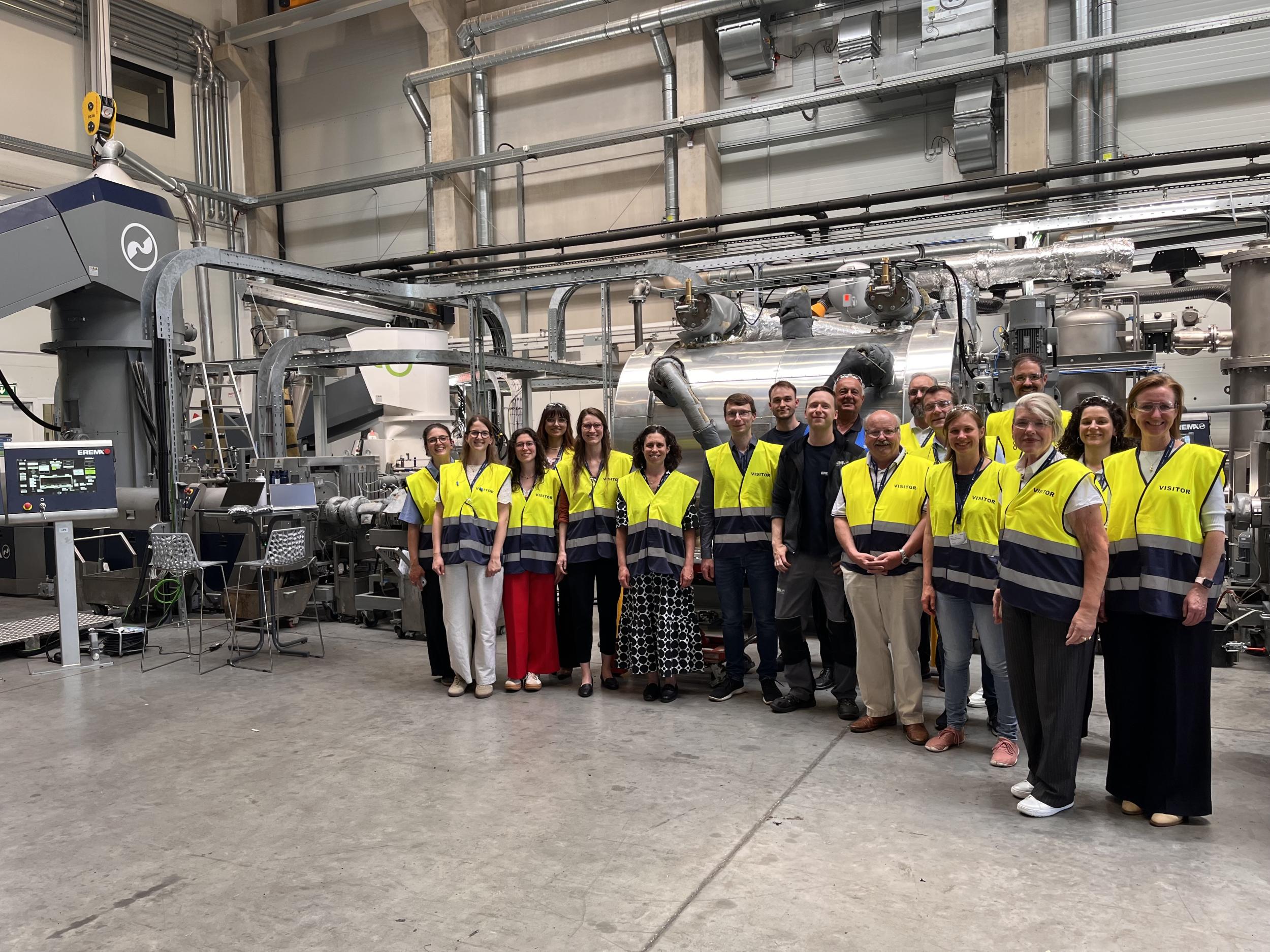
In 2026, the Industry Research Group (IRG) Polymer Recycling once again brought together some of the key stakeholders in textile recycling for its annual Networking Day. This year, the event took place at EREMA’s premises in Ansfelden, Austria. It brought together key players from across the textile recycling value chain for a day of structured exchange and in-depth discussions.

The conversations covered a broad range of topics relevant to the sector, including technological developments, current market dynamics, and the evolving political and regulatory landscape. Speakers from Zschimmer & Schwarz, Volkswagen Group Innovation, STRÄHLE+HESS, and the Technical University of Leoben provided substantive input across these areas. The interesting discussions were also possible thanks to our IRG partners: Bekaert, EREMA, Barmag, Stadler Anlagenbau, Technip Energies, Fibrant, BASF and Remondis.

The IRG extends its sincere thanks to EREMA for hosting the event and providing access to their technical centre, which added a valuable practical dimension to the day's programme.

In 2026, the Industry Research Group (IRG) Polymer Recycling once again brought together some of the key stakeholders in textile recycling for its annual Networking Day. This year, the event took place at EREMA’s premises in Ansfelden, Austria. It brought together key players from across the textile recycling value chain for a day of structured exchange and in-depth discussions.

The conversations covered a broad range of topics relevant to the sector, including technological developments, current market dynamics, and the evolving political and regulatory landscape. Speakers from Zschimmer & Schwarz, Volkswagen Group Innovation, STRÄHLE+HESS, and the Technical University of Leoben provided substantive input across these areas. The interesting discussions were also possible thanks to our IRG partners: Bekaert, EREMA, Barmag, Stadler Anlagenbau, Technip Energies, Fibrant, BASF and Remondis.

The IRG extends its sincere thanks to EREMA for hosting the event and providing access to their technical centre, which added a valuable practical dimension to the day's programme.

The next IRG Full-Term Meeting is scheduled for autumn 2026. The Networking Day will return in 2027.

The IRG Polymer Recycling is a continuously running cooperation project between companies interested in the research field of textile recycling and the ITA Group. The aim is to systematically address technological, economic and strategic issues regarding textile recycling and create a strong network to tackle the challenges. 

Source:

ITA – Institut für Textiltechnik of RWTH Aachen University

OCEANZYME Photo AIMPLAS
21.07.2026

OCEANZYME Investigates New Enzymatic Recycling Solutions for Marine Litter

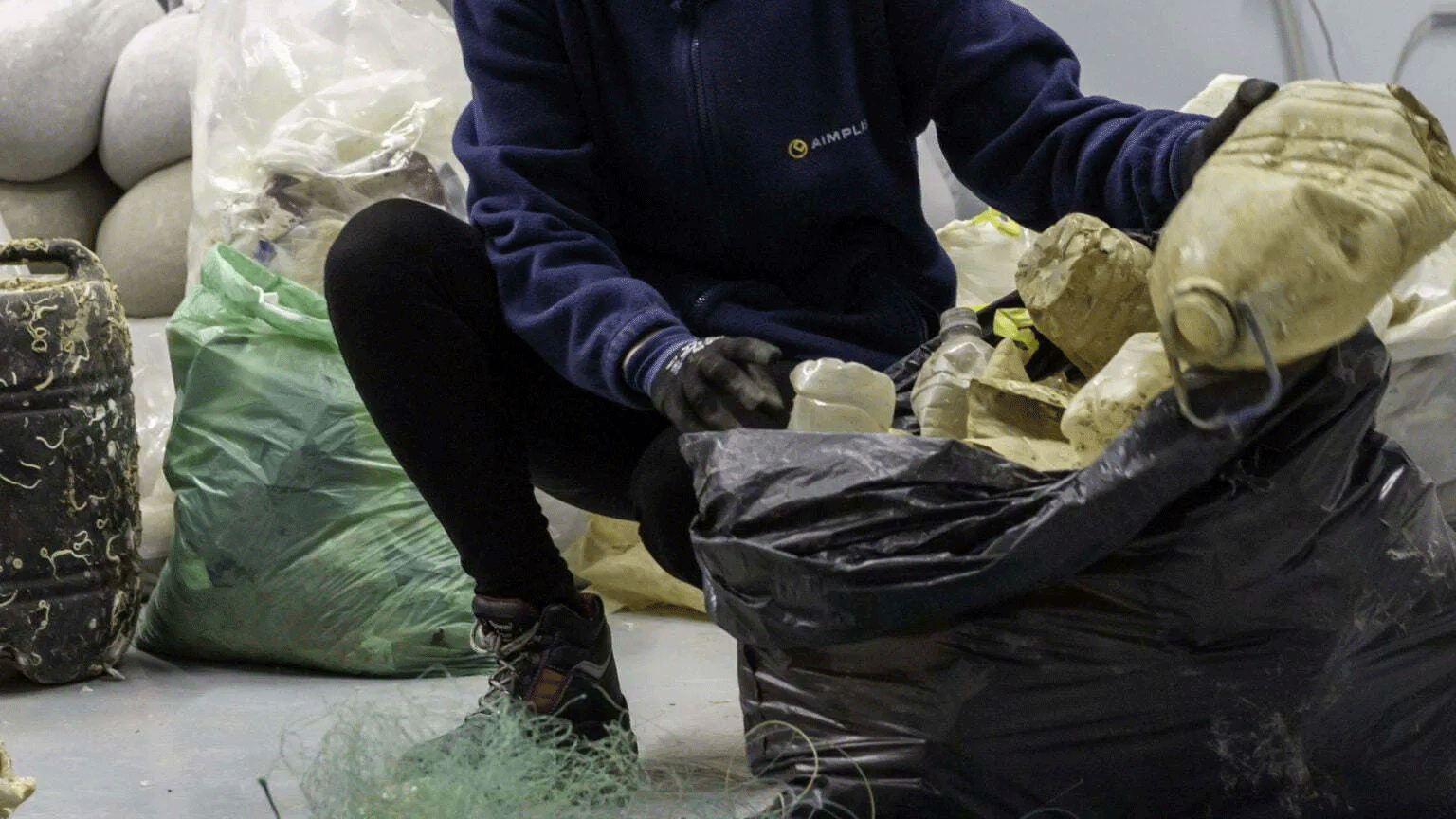
Marine waste found in deep-sea environments shows a high degree of degradation. This leads to the loss of its original physico-mechanical properties, making recycling through conventional mechanical processes difficult and limiting its reintroduction into the plastics value chain. To provide an effective alternative for recycling this waste, the OCEANZYME project is investigating new enzymatic recycling solutions for marine litter.

The initiative, which will run from 2026 to 2028, is being carried out by a consortium comprising the Plastics Technology Centre AIMPLAS, the Institute of Marine Sciences, and the Institute of Advanced Chemistry of Catalonia of the CSIC and is coordinated by the Vertidos Cero Association. The project started at the end of January 2026 and is being developed in collaboration with the Biodiversity Foundation of the Spanish Ministry for Ecological Transition and Demographic Challenge through the Pleamar Programme. It is also co-funded by the European Union through EMFAF (European Maritime, Fisheries and Aquaculture Fund).

Marine waste found in deep-sea environments shows a high degree of degradation. This leads to the loss of its original physico-mechanical properties, making recycling through conventional mechanical processes difficult and limiting its reintroduction into the plastics value chain. To provide an effective alternative for recycling this waste, the OCEANZYME project is investigating new enzymatic recycling solutions for marine litter.

The initiative, which will run from 2026 to 2028, is being carried out by a consortium comprising the Plastics Technology Centre AIMPLAS, the Institute of Marine Sciences, and the Institute of Advanced Chemistry of Catalonia of the CSIC and is coordinated by the Vertidos Cero Association. The project started at the end of January 2026 and is being developed in collaboration with the Biodiversity Foundation of the Spanish Ministry for Ecological Transition and Demographic Challenge through the Pleamar Programme. It is also co-funded by the European Union through EMFAF (European Maritime, Fisheries and Aquaculture Fund).

OCEANZYME adopts an integrated approach combining metagenomic analyses, enzymatic characterisation and molecular simulations, together with the isolation of bacteria with functional degradation capabilities. The aim is to valorise marine litter collected by fishers through enzymatic recycling and to explore the application of the resulting products in sectors such as fisheries and aquaculture.

To this end, passive fishing campaigns will be carried out in two of Spain’s five marine regions, the North Atlantic and the Levantine-Balearic regions — where average densities range from 40 to 300 items per km² — in order to remove marine litter. The plastic waste collected will be characterised to analyse its associated microbial communities through metagenomics. At the same time, pure culture isolations of bacteria with the potential to degrade different plastic compounds will be carried out. In addition, enzymes with degradation potential will be identified, modelled in 3D together with the plastic substrates, produced and tested to validate their possible use in enzymatic recycling applications.

The project brings together the expertise of all participating organisations in waste removal protocols, marine microorganism studies, molecular simulations and plastic recycling. OCEANZYME promotes the circular economy, the protection of the marine environment and technology transfer through a strong communication and dissemination strategy.

INNATEX58_Summer-Night©Anna-Lena.Guenther.jpg © Anna-Lena Guenther
21.07.2026

Green Fashion looks confident at the 58th INNATEX

The sustainable fashion sector is facing the challenging economic situation with realism and pragmatism – this is the note on which INNATEX closes its doors on 20 July 2026. The Green Fashion community is not letting itself be discouraged by the crisis warning issued by the German Retail Federation (HDE) a few days ago. 

"The reluctance to spend among consumers, as perceived by the retail sector, is naturally a concern," says Alexander Hitzel, project manager at INNATEX. "Nobody is expecting a major breakthrough at the moment, but the industry is taking a constructive approach and is ready to implement the necessary measures. It appreciates that the trade fair is a reliable partner. We, too, recognise new challenges and are addressing them." 

The sustainable fashion sector is facing the challenging economic situation with realism and pragmatism – this is the note on which INNATEX closes its doors on 20 July 2026. The Green Fashion community is not letting itself be discouraged by the crisis warning issued by the German Retail Federation (HDE) a few days ago. 

"The reluctance to spend among consumers, as perceived by the retail sector, is naturally a concern," says Alexander Hitzel, project manager at INNATEX. "Nobody is expecting a major breakthrough at the moment, but the industry is taking a constructive approach and is ready to implement the necessary measures. It appreciates that the trade fair is a reliable partner. We, too, recognise new challenges and are addressing them." 

Whilst the Kids section is currently showing a decline this summer, international brands' interest in INNATEX is growing. The trade fair will therefore focus more strongly on well-known and international newcomers and reorganise its offering into new clusters at the Messecenter Hofheim Rhein-Main in the future. The organiser, MUVEO GmbH, intend to further expand the Retail Summer Camp and link it more closely to strategic partnerships and campaigns. 

Green Fashion with a Future 
As part of the trade fair, the Association of German Fashion and Textile Designers (VDMD) presented its Design Award for Sustainable Collections to Vaude, Jan'n June, Wote and Sweersocean. The laudation was delivered by Dr Jürgen Janssen, Secretary-General of the German Council for Sustainable Development. He praised the award winners for remaining true to their vision. 

"We now need companies that stay on the course. The headwinds we are currently experiencing on many sustainability issues will turn around," predicts Dr Janssen. "After all, we are not just talking about costs, but also about benefits that are evident, for example, in higher quality and durability. And the fact that the use of sustainable raw materials, as well as transparency and fairness in the supply chain, receive less public attention than they did just a few years ago does not in any way mean that these issues are irrelevant, including from a business perspective. These values will regain importance. We are simply dealing with trends that are constantly changing. I am convinced that companies such as those exhibiting at INNATEX are fit for the future." 

Conscientious Companies Benefit from the EmpCo 
The "Textilwirtschaft Expert-Talk” session has now become a fixture on the INNATEX programme. In this edition, correspondent Kirsten Reinhold spoke to Ronja Hüttinger, sustainability consultant at BAM! Bock auf Morgen, about the impact of the Empowering Consumers for the Green Transition Directive (EmpCo) on the industry. Both agreed that EmpCo gives small and medium-sized fashion companies a strategic and financial edge over the large, conventional corporations. 

"EmpCo is about putting an end to brazen environmental lies," said Hüttinger. "Instead of sweeping generalisations, what counts now are concrete, verifiable facts. Companies that have poured their heart and soul into their products for years – those that work with natural fibres, produce fairly and recycle – have a clear advantage because they know their supply chain. This is precisely the advantage the big players don't have: they lack the evidence. Under no circumstances must the EmpCo lead to greenwashing. On the contrary, it should finally highlight the difference between genuine, conscientious work and greenwashing." 

"Industry players need to join forces" 
One of the most important ways for companies to move forward is through collaboration – that is the general consensus among fashion designers and experts. The possibilities range from partnerships between brands and retailers to charity projects and joint events. 

„When we created a T-shirt with our favourite falafel shop in Mülheim an der Ruhr, we didn't expect it to sell out so quickly," says Henry Canton of Mazine Streetwear. "People love it because it makes them feel part of a movement. Collaborations don't always have to follow the classic patterns. Alongside large campaigns, smaller, local partnerships can have just as strong an impact. What it takes above all is openness and creativity – and exchange with a community that inspires one another. That's exactly what makes INNATEX special to me." 

The INNATEX Showroom in Bern on 16 and 17 August 2026 rounds off this ordering season. The next INNATEX will take place from 16 to 18 January 2027.

niber-electrospinning-hero-wlogo (c) Nanofiber Technologies
21.07.2026

Niber Technologies: Ingredient Brand Strategy for Its PFAS-Free Electrospinning Platform

Niber Technologies, Southeast Asia’s first industrial-scale manufacturer of PFAS-free electrospun nanofiber membranes, announced a strategic collaboration with BRAIND®, the specialist consultancy for ingredient brand strategy. As part of the partnership, BRAIND Managing Director Tomas Vucurevic—widely recognized as one of the world’s leading experts in ingredient branding—has been appointed Chief Brand Advisor to Niber Technologies. The move signals Niber’s intent to expand its platform beyond materials into a structured ingredient brand, scaling its role as the industry moves toward next-generation performance and material efficiency. 

Niber Technologies, Southeast Asia’s first industrial-scale manufacturer of PFAS-free electrospun nanofiber membranes, announced a strategic collaboration with BRAIND®, the specialist consultancy for ingredient brand strategy. As part of the partnership, BRAIND Managing Director Tomas Vucurevic—widely recognized as one of the world’s leading experts in ingredient branding—has been appointed Chief Brand Advisor to Niber Technologies. The move signals Niber’s intent to expand its platform beyond materials into a structured ingredient brand, scaling its role as the industry moves toward next-generation performance and material efficiency. 

The collaboration marks an important milestone in Niber’s evolution from an advanced materials manufacturer to a company building a globally recognized ingredient brand for its proprietary electrospun membrane platform. As the performance apparel industry accelerates its transition away from PFAS-based materials, Niber aims to establish its technology that enables lightweight, breathable performance textiles not only as a material solution but as a trusted performance standard recognized across the value chain. The focus is now shifting toward how performance is defined, communicated, and adopted. 

“We’ve always believed that the value of our technology goes beyond the membrane itself and into how it performs in real products. Building an ingredient brand is a deliberate step for us — a direct signal of the seriousness and ambition, and of how we see Niber evolving as a company”, says Jaemin Park, Co-founder, Niber Technologies.

The partnership builds trust in the next generation of PFAS-free performance materials
The performance textiles industry is entering a period of fundamental change. Increasing regulatory pressure on PFAS is reshaping material choices, while brand and consumer expectations around comfort, breathability, and everyday usability continue to rise. While alternatives are emerging, the challenge is no longer only technical, it is also how these innovative technologies are communicated, understood and trusted in the market. 

Niber is addressing this challenge through a structured ingredient branding strategy that translates technical innovation into a clear and credible value proposition for every stakeholder across the supply chain.
Working with BRAIND, the company is developing an ingredient brand platform designed to deliver value on three levels:

  • For brand partners: a clearly way to specify and communicate advanced material performance 
  • For retailers: a more accessible story that supports product understanding at the point of sale 
  • For consumers: a recognizable signal that builds trust in PFAS-free breathable performance 
Source:

Nanofiber Technologies

Scoop July 2026 Photo: (c) Scoop
21.07.2026

Scoop Closes on a High as Curated Discovery Inspires Confident Buying

Scoop closed July 21 at Olympia National following three days of strong buyer engagement, thoughtful industry discussion and considered buying, as the SS'27 edition once again demonstrated the strength of its distinctive approach to fashion buying. Bringing together premium fashion, accessories and lifestyle collections from across the UK, Europe and beyond, the show welcomed leading department stores, independent retailers and international buyers, all taking time to write orders, discover new designers and reconnect with established collections.

Scoop closed July 21 at Olympia National following three days of strong buyer engagement, thoughtful industry discussion and considered buying, as the SS'27 edition once again demonstrated the strength of its distinctive approach to fashion buying. Bringing together premium fashion, accessories and lifestyle collections from across the UK, Europe and beyond, the show welcomed leading department stores, independent retailers and international buyers, all taking time to write orders, discover new designers and reconnect with established collections.

Buyer attendance reflected the calibre and international appeal of the show, with retailers including Fenwick Stores, Liberty London, Galeries Lafayette, Printemps, Le Bon Marche, The Dressing Room, The Polizzi Collection Shop, Iris, Pamela Schiffer, Sisters, Blu, Cream, El Corte Ingles Spain,  Cordelia James, V&A Museum, The National Gallery and Royal Opera House Covent Garden among those attending across the three-day event.
Buyers praised both the quality of the collections and the show's carefully edited format, highlighting the opportunity to discover new designers while spending meaningful time with existing suppliers.

Designers also reported a successful edition, welcoming returning retail partners alongside new buyers, while highlighting the commercial value of Scoop's focused edit and the calibre of retailers attending the show.

A standout feature of this season's programme was Behind The Curtain, Karen Radley's exclusive conversation with the womenswear buying team from Galeries Lafayette. Offering buyers and exhibitors a rare opportunity to hear directly from one of Europe's most influential department stores, Fanny Courtade, Womenswear Buying Manager, alongside Ready-to-Wear Buyers Alice Sordello and Julia Bonnebat, shared insight into the realities of modern buying, discussing everything from identifying emerging designers and balancing creativity with commercial performance to understanding evolving customer expectations. The session reinforced Scoop's commitment to pairing exceptional buying opportunities with valuable retail insight.

Scoop's landmark partnership with the Italian Trade Agency remained a defining feature of the SS'27 edition, celebrating the show's largest-ever collective of Italian designers through a programme of buyer events, networking opportunities and the dedicated Style Spotlight: Discover Italian Design.

Reflecting on the close of the show, Karen Radley, Founder and Managing Director of Scoop, said: "What has stood out most this season is the time buyers have spent with the collections. They've taken time to explore collections, ask questions, write orders and discover designers they may not otherwise have found. That thoughtful approach has always been at the heart of Scoop, and it's incredibly rewarding to see it reflected across the show floor."

As the doors close on the SS'27 edition, Scoop once again demonstrated the enduring value of thoughtful curation. By bringing together exceptional international collections, influential retailers and a programme of insightful industry content, the show continues to offer one of fashion's most distinctive buying experiences.

Source:

Scoop

Without the ability to spin recycled fibres into yarn, it is impossible to weave or knit new fabrics. Photo TMAS / AWOL
Without the ability to spin recycled fibres into yarn, it is impossible to weave or knit new fabrics.
20.07.2026

TMAS welcomes ReSpin as Swedish textile recycling accelerates

As the latest company to join TMAS – the Swedish Textile Machinery Association – ReSpin has this year established what is just the latest in a succession of Swedish innovations shaping the country into one of Europe’s most sophisticated ecosystems for circular textiles. 

In May this year, Holma Spinning Mill, located in Forsa just outside Hudiksvall, was granted SEK 77.3 million in funding through the Swedish Environmental Protection Agency to establish Sweden’s first industrial spinning line for recycled textile fibres. Holma Spinning Mill is part of Holma Förvaltning, which is co-owned by ReSpin. Sister company Holma Helsingland brings more than a century of experience in spinning, twisting, dyeing and yarn production.

RespinJenny
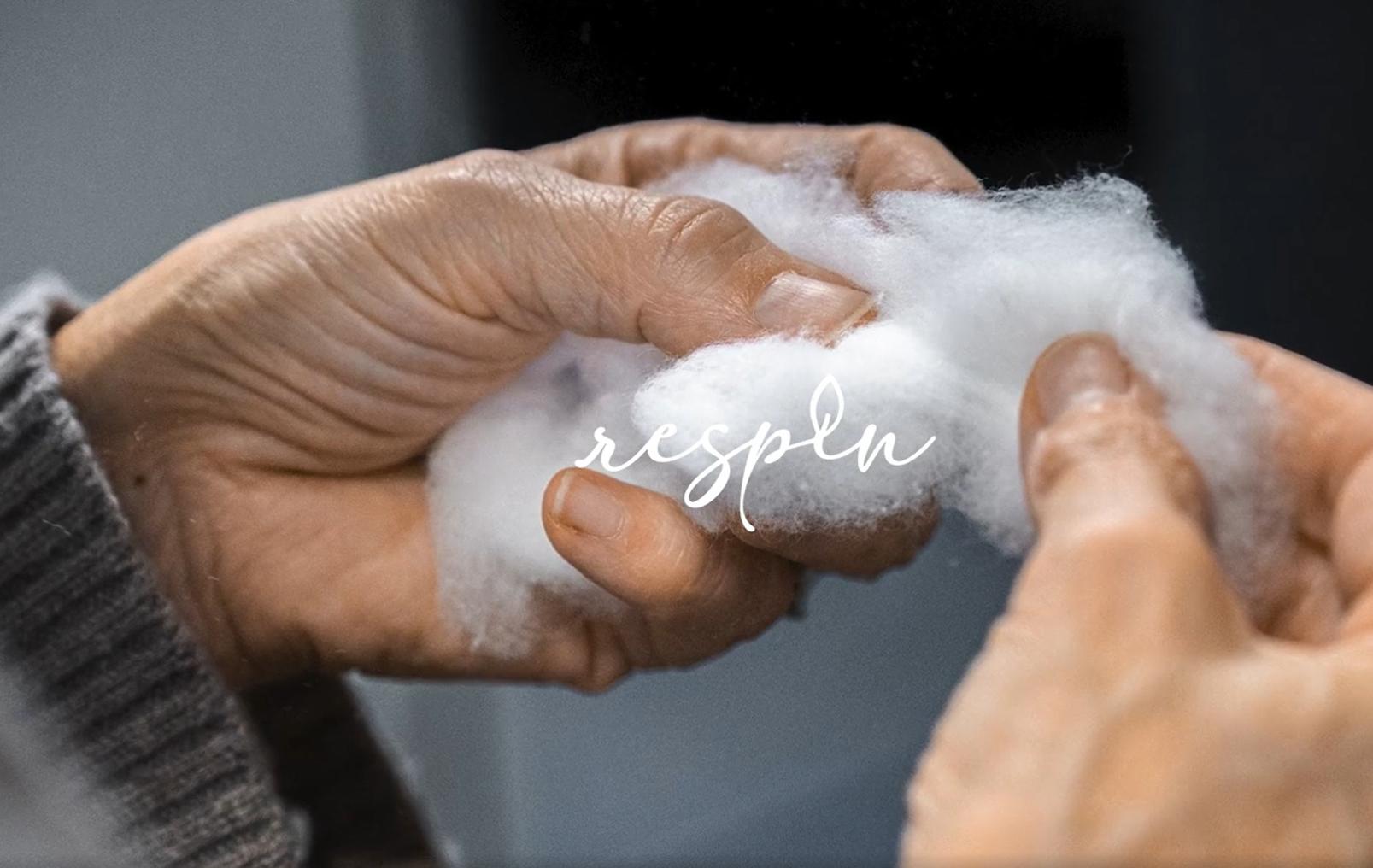
ReSpin, headquartered in Undersåker, in northern Sweden’s Jämtland, has developed and patented a new mechanical recycling technology called RespinJenny which transforms textile waste into new fibres suitable for yarn production. 

As the latest company to join TMAS – the Swedish Textile Machinery Association – ReSpin has this year established what is just the latest in a succession of Swedish innovations shaping the country into one of Europe’s most sophisticated ecosystems for circular textiles. 

In May this year, Holma Spinning Mill, located in Forsa just outside Hudiksvall, was granted SEK 77.3 million in funding through the Swedish Environmental Protection Agency to establish Sweden’s first industrial spinning line for recycled textile fibres. Holma Spinning Mill is part of Holma Förvaltning, which is co-owned by ReSpin. Sister company Holma Helsingland brings more than a century of experience in spinning, twisting, dyeing and yarn production.

RespinJenny
ReSpin, headquartered in Undersåker, in northern Sweden’s Jämtland, has developed and patented a new mechanical recycling technology called RespinJenny which transforms textile waste into new fibres suitable for yarn production. 

ReSpin was founded in 2020 by Åsa Strandberg, who has more than 30 years of experience in the textile industry and for the past 15 years has been on a mission to make textiles circular. After 17 years at H&M, she chose to leave the company when growing concerns about the environmental impact of the fashion industry grew too big to  be ignored. In 2010 she launched Saiboo, a company which has a focus on the B2B production of garments, selling them and then taking them back for reuse. 

With full control over materials and design, the difficult sorting problem was solved for Saiboo from the start, and driven by the desire to push the industry further, Åsa began collaborating with Mid Sweden University in Östersund on how to design for recycling.
Soon, however, a more fundamental problem became clear – there were no viable recycling methods available on the market. Chemical initiatives were emerging and mechanical recycling existed, but only at very low level.

“While many believed chemistry was the solution, I saw untapped potential in mechanical methods and a remark from a machine researcher that anything which can be done by hand can be done mechanically became the spark that confirmed this direction,” she explains. “I then initiated several research projects together with industry and academia, including the Universities of Borås, Linköping and Luleå, to further explore this idea.”

“RespinJenny uses no water or chemicals, has low energy consumption and is based on preserving as much fibre quality as possible from waste textiles,” adds TMAS Secretary General Therese Premler-Andersson. “It is designed to enable local, small scale and resource efficient recycling closer to where textile waste is generated. The the Swedish Environmental Protection Agency’s funding is an important step in scaling fibre-to-fibre recycling industrially and demonstrating that circular textile materials can be produced on a larger scale with low climate impact.

“Mechanical recycling alone is not enough to achieve textile-to-textile recycling – without the ability to spin recycled fibres into yarn, it is impossible to weave or knit new fabrics, which is why Holma Spinning Mill represents a key part of building a complete circular textile value chain.” 

Rather than focusing on a single breakthrough technology, Swedish companies, including TMAS members, have developed expertise across the entire value chain – from collection and automated sorting through to fibre-to-fibre recycling, testing, product development and policy research.

Underpinning this, has been strong collaboration between Swedish industry and academia.

“The University of Borås – and particularly its Swedish School of Textiles –has become one of Europe’s leading centres for circular textile research and Borås is also home to a number of other TMAS members, such as the ACG Group and Eton Systems, who are driving innovation through advanced automation and involved in many cooperative projects between industry and academia in Sweden,” Therese Premler-Andersson observes.

In conclusion, Åsa Strandberg stresses the great value in now being part of a network where knowledge, innovation and collaboration are central.

“TMAS brings together many of Sweden’s leading companies and experts, all playing an important role in shaping the future of textile production technology,” she says. “As ReSpin moves towards industrialisation, we see great value in joining TMAS, because the transition to circular textile systems requires cooperation across the entire value chain, and the association provides an important platform for that dialogue.”

More information:
Respin Oy TMAS
Source:

TMAS / AWOL

Functional tape from JUMBO-Textil Photo: (c) JUMBO-Textil
20.07.2026

Functional tape from JUMBO-Textil in use at ALEA

“You can’t see it or hear it – and that’s exactly why it’s ideal for this application,” says Stefan Wallner, Automotive Sales Manager at JUMBO-Textil. The Textation Group subsidiary specializing in technical narrow textiles is an expert in elastics and produces, among other things, components for automotive suppliers, such as rebound strap, release strap, and tensioning braids. Many of these products remain hidden from view. Built-in into the seat or behind a trim panel, they reliably fulfill their function: tensioning, holding, adjusting, fixing ... The textile components work behind the scenes – lightweight, quiet, and durable.

Invisible High-Performer
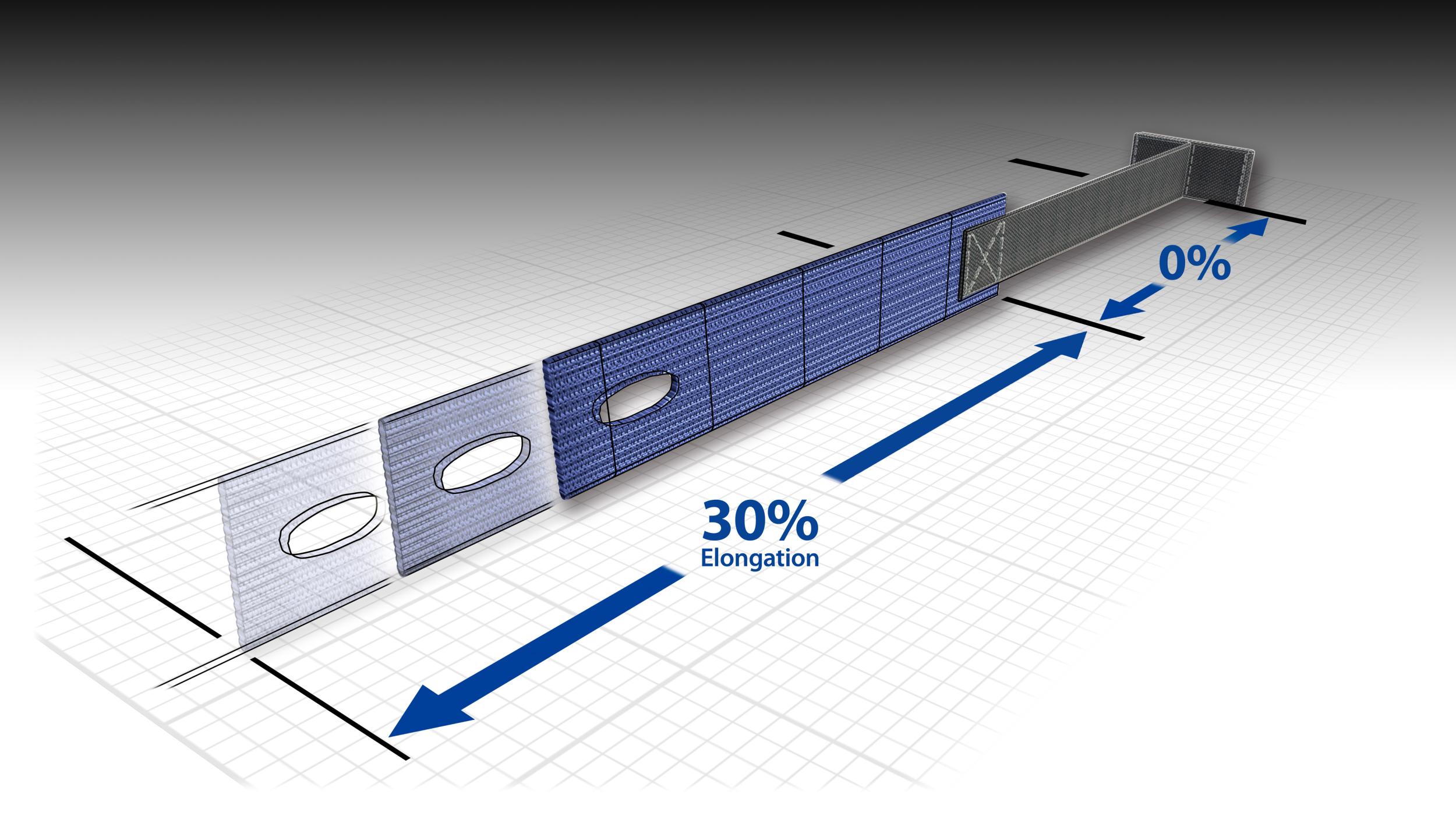
One of these “invisible high-performers” is a cleverly designed functional tape. The combination of an elastic and a non-elastic woven tape serves as a flap fastener for a card pocket in the seatback. The force-elongation behavior can be precisely controlled by specifying the dimensions and materials of the elastic tape. The non-elastic tape ensures stability at the rubbing points and silent operation.

“You can’t see it or hear it – and that’s exactly why it’s ideal for this application,” says Stefan Wallner, Automotive Sales Manager at JUMBO-Textil. The Textation Group subsidiary specializing in technical narrow textiles is an expert in elastics and produces, among other things, components for automotive suppliers, such as rebound strap, release strap, and tensioning braids. Many of these products remain hidden from view. Built-in into the seat or behind a trim panel, they reliably fulfill their function: tensioning, holding, adjusting, fixing ... The textile components work behind the scenes – lightweight, quiet, and durable.

Invisible High-Performer
One of these “invisible high-performers” is a cleverly designed functional tape. The combination of an elastic and a non-elastic woven tape serves as a flap fastener for a card pocket in the seatback. The force-elongation behavior can be precisely controlled by specifying the dimensions and materials of the elastic tape. The non-elastic tape ensures stability at the rubbing points and silent operation.

The flap is held in place by two such combination tapes, which are installed in a crisscross pattern in the seatback. The non-elastic tapes are threaded through a slit in the flap and folded and sewn on the other side so that they are securely anchored behind the slit. The elastic tapes are hooked into precisely defined holes in the seatback. The holes are cut out using laser cutting. Thanks to the sealed hole edges, they are stable and durable. This complex component goes unnoticed by vehicle passengers. Only for the brief moment when they open the flap, one to two centimeters of the non-elastic woven tape flash into view from the side.

Close cooperation, precise specifications
Auto Leder Atelier GmbH, or ALEA for short, uses this high-quality functional tape from JUMBO-Textil. The specialist in interior finishing – from lamination to leather upholstery – manufactures high-quality interior components in series production for car manufacturers and Tier 1 suppliers in the luxury and premium segments, including leather seats and trim for some of the world’s most renowned car brands." Strength-elongation behaviour, flame retardancy, surface properties … – no parameter must deviate from the final sample. The textiles must deliver the performance for which they are designed, right down to the very last fibre. “As a solutions provider, we supply narrow textiles that are precisely tailored to the respective requirements – from environmental conditions to the installation situation – and deliver exactly what the customers need in each case. For ALEA’s functional tape, we have developed a special variant with two different tape widths and produced samples with the exact project-specific properties,” explains Wallner. “A detailed understanding of the customer’s project is essential for this.”
    
Regular on-site discussions
ALEA also attaches great importance to the partnership. “As well as their impeccable appearance, feel and sound, our leather products offer maximum functionality. Every detail counts, whether visible or hidden,” emphasises Mario Haufe, COO of ALEA. “Our partner, JUMBO-Textil, supplies highly functional, ready-to-fit components for our products. That is why we work with the company based in North Rhine-Westphalia. And experience shows that this result also depends on good collaboration with the supplier. Only those who understand us, our expectations, our production conditions and the component’s installation requirements can supply us with components that fit perfectly into the product and our processes.”

JUMBO-Textil was on site at ALEA when the project began. The development team in Sprockhövel therefore knows exactly how the colleagues in Hofstetten work and what they need. All the specifications for the specialised functional tape were precisely defined jointly. JUMBO-Textil then developed several possible solutions, from which the ALEA team was able to choose the perfect option. “As a result, even the prototype for the first installation trial was quite close to the final solution,” explains Haufe. “This was once again an excellent example of collaboration that benefits everyone: us, the car manufacturer and, ultimately, all those travelling in the vehicle who stow their tablet – or whatever else they have with them – safely in the seatback flap.”

  • Combination of elastic and non-elastic materials
  • Available in various widths
  • Available in customer-specific colours
  • Holes created by laser cutting or interlaced during the braiding process
  • Ready to use: pre-assembled, e.g. with a sewn-on flat plastic profile
  • With sewable plastic
  • Elastic material: natural rubber
  • Flame-retardant finishing
Source:

JUMBO-Textil

Marco Lucietti - Board Member C&S Photo by C&S
Marco Lucietti - Board Member C&S
16.07.2026

C&S strengthens its governance to support its evolution

Marco Lucietti joins the Board of Directors as the company advances its integrated model built on design, responsibility and Italian manufacturing excellence.

C&S announces the appointment of Marco Lucietti to its Board of Directors. With extensive international experience across the textile and denim industries, Lucietti will work alongside CEO Federico Corneli, contributing to the company’s managerial development, organizational structure and long-term strategic direction.

His appointment marks another step in C&S's ongoing transformation, as the company expands its role from a garment maker with deep roots in denim to a design-driven manufacturing partner for premium, luxury and urban fashion brands. The ambition is to build an integrated business model in which the experience gained through the company’s own brands and the expertise of its manufacturing services continuously strengthen one another.

Marco Lucietti joins the Board of Directors as the company advances its integrated model built on design, responsibility and Italian manufacturing excellence.

C&S announces the appointment of Marco Lucietti to its Board of Directors. With extensive international experience across the textile and denim industries, Lucietti will work alongside CEO Federico Corneli, contributing to the company’s managerial development, organizational structure and long-term strategic direction.

His appointment marks another step in C&S's ongoing transformation, as the company expands its role from a garment maker with deep roots in denim to a design-driven manufacturing partner for premium, luxury and urban fashion brands. The ambition is to build an integrated business model in which the experience gained through the company’s own brands and the expertise of its manufacturing services continuously strengthen one another.

This evolution is reflected in the company’s new brand statement, “Made by design, made to matter,” which embodies an approach where product culture, technological innovation and responsible growth come together. The company's vision is to transform creative ideas into scalable industrial realities through a short, fully integrated supply chain rooted in the historic textile districts of Central Italy.

Bringing this vision to life is the dialogue between the company's two strategic areas: on one side, research into trends, materials and consumer behavior – also fueled by firsthand retail experience – and on the other, the continuous evolution of the supply chain towards more transparent, efficient and responsible processes.

“Our ambition is to build an ecosystem where manufacturing, research, product culture and responsibility work together to create lasting value,” says Corneli. “Marco's appointment is an important milestone because it strengthens the organizational foundations of this vision and supports its long-term development. We want the experience generated by our brands and the expertise of our manufacturing services to reinforce one another, transforming creative ideas into relevant, scalable products designed to stand the test of time.”

Marco Lucietti brings more than twenty years of international experience in the textile industry, spanning strategy, corporate governance, sustainability, communications and organizational development. He will also continue his role as Adjunct Professor of Governance and Sustainability for Fashion at Sapienza University of Rome, while serving as Senior Advisor on selected international projects.

C&S is a garment maker and global partner for contemporary fashion brands. Since 1981, the company has supported brands in the development and manufacturing of collections by combining product culture, technical expertise and Italian manufacturing know-how across the textile districts of Central Italy. Building on its heritage in denim, C&S has expanded its expertise into the luxury and urban segments, developing an integrated model that combines product development, a short supply chain and responsible innovation. Made by design, made to matter captures the company's ambition: transforming creative visions into garments that combine quality, originality and lasting value.

Source:

C&S

Dublin Photo by Sean Griffin, Pixabay
15.07.2026

Irish government publishes Delivery Plan for textiles EPR scheme

The Irish government has published its draft Delivery Plan for its national textiles Extended Producer Responsibility (EPR) scheme – subject to a stakeholder consultation.  

The draft plan outlines the actions required for the effective design and go-live of a national textiles Extended Producer Responsibility (EPR) scheme, including the establishment of an entirely new Producer Responsibility Organisation (PRO) in Ireland, required by April 2028.

Commenting, Aimee Campanella, Development Director – Textiles EPR at leading international circularity specialists Reconomy, said: “It is great to see the Irish Government making progress towards establishing a national textiles Extended Producer Responsibility (EPR) scheme.”

“The proposed April 2028 go-live date gives textile producers time to prepare, but businesses should be using this period to understand what the new scheme will mean for their operations and how they can put the right systems in place.

The Irish government has published its draft Delivery Plan for its national textiles Extended Producer Responsibility (EPR) scheme – subject to a stakeholder consultation.  

The draft plan outlines the actions required for the effective design and go-live of a national textiles Extended Producer Responsibility (EPR) scheme, including the establishment of an entirely new Producer Responsibility Organisation (PRO) in Ireland, required by April 2028.

Commenting, Aimee Campanella, Development Director – Textiles EPR at leading international circularity specialists Reconomy, said: “It is great to see the Irish Government making progress towards establishing a national textiles Extended Producer Responsibility (EPR) scheme.”

“The proposed April 2028 go-live date gives textile producers time to prepare, but businesses should be using this period to understand what the new scheme will mean for their operations and how they can put the right systems in place.

“Moving towards greater producer responsibility will require better visibility across supply chains, stronger data management and a clearer understanding of how textiles flow through the economy. For businesses, preparing early will not only support compliance but also unlock wider commercial benefits, helping them identify efficiencies, reduce costs and make more informed decisions around design, sourcing and end-of-life management.

“The establishment of a Producer Responsibility Organisation (PRO) will be central to delivering an effective scheme, but getting the framework right will be critical. It’s important that it strikes the right balance – creating the incentives needed to drive greater reuse, repair and recycling, while recognising the operational and cost implications for producers. 

“If designed effectively, Ireland’s textiles EPR scheme will provide the foundations for a more circular textiles economy, keeping materials in use for longer, reducing waste and creating new opportunities to recover valuable resources.”


Sustainability Report Photo: (c) Carrington Textiles
15.07.2026

Carrington Textiles publishes third Sustainability Report

At Carrington Textiles, we are pleased to announce the publication of the third Sustainability Report from the RTS Textiles Group, showcasing another year of progress towards more responsible manufacturing across our global operations.

The report reflects continued investment in technologies and initiatives that improve environmental performance while supporting long-term business resilience. From renewable energy and water stewardship to circular economy projects and product innovation, sustainability remains embedded in how we operate across the Group.

Among this year's highlights is the completion of a new wastewater treatment plant in Pakistan, significantly strengthening water treatment capacity at CTi ahead of becoming operational later this year. The site has also expanded its circular economy initiatives through the reuse of biomass and coal ash in brick manufacturing and projects that support local biodiversity.

At Carrington Textiles, we are pleased to announce the publication of the third Sustainability Report from the RTS Textiles Group, showcasing another year of progress towards more responsible manufacturing across our global operations.

The report reflects continued investment in technologies and initiatives that improve environmental performance while supporting long-term business resilience. From renewable energy and water stewardship to circular economy projects and product innovation, sustainability remains embedded in how we operate across the Group.

Among this year's highlights is the completion of a new wastewater treatment plant in Pakistan, significantly strengthening water treatment capacity at CTi ahead of becoming operational later this year. The site has also expanded its circular economy initiatives through the reuse of biomass and coal ash in brick manufacturing and projects that support local biodiversity.

At MGC in Portugal, investment in renewable energy and energy efficiency has continued, with solar generation capacity increasing to 8.3 MW and further projects underway to reduce natural gas consumption and carbon emissions. At Pincroft in the UK, continued progress has been made through Combined Heat and Power (CHP), the ongoing development of its Carbon Roadmap and wider decarbonisation initiatives.

The report also highlights how the RTS Textiles Group continues to expand the use of innovative fibres and technologies that combine comfort, protection and performance with a reduced environmental impact, supporting customers in achieving their own sustainability objectives.

John Vareldzis, CEO of RTS Textiles Group, said: "Building on the foundations established in previous years, this report highlights our progress and reaffirms our commitment to responsible manufacturing, innovation and transparency across our global operations."

STEELTOP® (c) Trützschler
STEELTOP®
15.07.2026

Trützschler: New benchmark in flat tops for spinning preparation

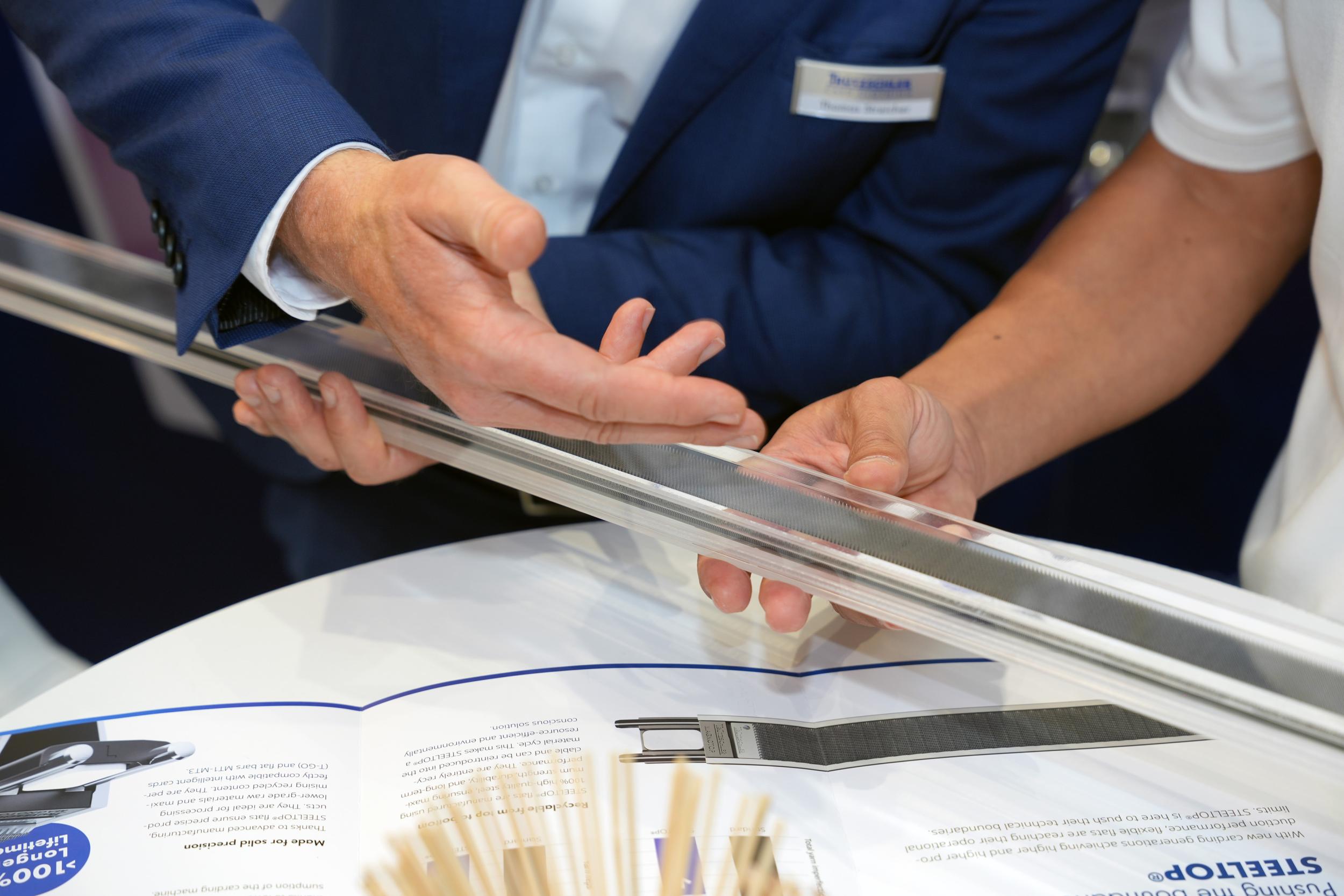
Modern carding generations achieve higher production performance, placing significantly greater stress on flat tops. Higher cylinder speeds and increased fiber density, combined with tighter carding gaps, create more demanding operating conditions. At the same time, poorer raw material quality and the increased use of recycled materials further intensify these challenges. With STEELTOP®, Trützschler introduces a new full steel flat top series developed for these demanding modern carding processes. 
 
A new benchmark in flat tops for spinning preparation 
STEELTOP® is manufactured entirely from high-quality steel and is designed to deliver consistent performance under demanding production conditions. It is ideal for processing lower-grade natural and man-made fibers and is perfectly compatible with intelligent cards, including Trützschler cards equipped with T-GO, due to its superior electrical conductivity. 
 
Built to last under extreme conditions 

Modern carding generations achieve higher production performance, placing significantly greater stress on flat tops. Higher cylinder speeds and increased fiber density, combined with tighter carding gaps, create more demanding operating conditions. At the same time, poorer raw material quality and the increased use of recycled materials further intensify these challenges. With STEELTOP®, Trützschler introduces a new full steel flat top series developed for these demanding modern carding processes. 
 
A new benchmark in flat tops for spinning preparation 
STEELTOP® is manufactured entirely from high-quality steel and is designed to deliver consistent performance under demanding production conditions. It is ideal for processing lower-grade natural and man-made fibers and is perfectly compatible with intelligent cards, including Trützschler cards equipped with T-GO, due to its superior electrical conductivity. 
 
Built to last under extreme conditions 
The new flat top achieves outstanding durability even under the most challenging carding conditions. Compared to conventional alternatives, the lifetime is more than doubled, ensuring long-term reliability. This extended lifetime reduces waste on carding machines, including fewer flat top strips and less fiber waste and leads to cost savings of more than 30% on flat top replacement. 
 
Driving yarn quality and production efficiency 
STEELTOP® contributes to elevated yarn quality and is particularly suitable for open-end (OE) and airjet (MVS) applications. It enables comparable or better sliver and yarn quality, with a reduction in total yarn imperfections (IPI) of up to 10%. In addition, it is exceptionally effective in the removal of neps, achieving reductions of up to 20%. 
Lower overall current consumption of the carding machine improves energy efficiency, while enhanced efficiency supports higher production rates. 
 
Sustainable from top to bottom 
Sustainability is a key feature of the new development. Made entirely of steel, the flat tops are fully recyclable and can be returned to the material cycle after use. At the same time, reduced waste and lower energy consumption contribute to a more sustainable carding process overall. 
 
Extending the limits of modern carding 
Combining durability, precision, recyclability, and efficiency, STEELTOP® sets a benchmark in performance and extends the limits of modern carding technology. 

Source:

Trützschler

ISKO FW 27-28 Photo: ISKO
ISKO FW 27-28
14.07.2026

ISKO: Conscious color, texture, and tactile evolution to Bluezone Munich

At Bluezone ISKO is debuting its FW 27–28 Collection, structured around a trio of core sensory pillars: color, texture, and touch. This season, the textile leader showcases a creative vision where emotional connection and advanced technical innovation come together. The entire range is anchored by a dedicated commitment to eco-conscious material creation, utilizing patented processing technologies and high-quality Next-Gen materials powered by RE&UP. 

ISKO FW27–28 collection: Supreme Colors and beyond 
Anchoring the new season is Supreme Colors, a concept that highlights ISKO’s deep mastery of color innovation through a broad and adaptable shade spectrum spanning various product lines. Enhanced by strong yarn character, fast fading properties, and laser-compatible finishing techniques, the range delivers a high-definition visual depth alongside authentic, vintage denim characteristics. 

At Bluezone ISKO is debuting its FW 27–28 Collection, structured around a trio of core sensory pillars: color, texture, and touch. This season, the textile leader showcases a creative vision where emotional connection and advanced technical innovation come together. The entire range is anchored by a dedicated commitment to eco-conscious material creation, utilizing patented processing technologies and high-quality Next-Gen materials powered by RE&UP. 

ISKO FW27–28 collection: Supreme Colors and beyond 
Anchoring the new season is Supreme Colors, a concept that highlights ISKO’s deep mastery of color innovation through a broad and adaptable shade spectrum spanning various product lines. Enhanced by strong yarn character, fast fading properties, and laser-compatible finishing techniques, the range delivers a high-definition visual depth alongside authentic, vintage denim characteristics. 

Building upon this color-focused story, Iconic Craft redefines fabric texture as a central design element. Bold surface treatments, multi-layered structures, and progressive finishes produce highly tactile textiles that fluidly shift from heritage authenticity to experimental, techno-inspired aesthetics. Completing the collection's sensory profile is ISKO™ Wondersoft, which prioritizes the physical hand-feel by introducing fluid, silky, and remarkably soft qualities that balance everyday durability with refined comfort. 

Capsule Collections: Four Creative Expressions 
This seasonal design philosophy comes to life across four distinct capsule collections, each exploring the overarching aesthetic theme through a unique point of view: 

  • City Glam 2.0: Explores the boundaries of denim through a polished, metropolitan lens. It introduces a balance of matte and glossy finishes to add subtle luminosity and elevated sophistication while respecting denim’s classic roots. 
  • D.Lite 2.0: Concentrates on lightweight fabric weights and fluid comfort. This capsule features flexible, exceptionally soft denim qualities designed for effortless movement and a relaxed aesthetic, meeting the modern demand for comfort-first apparel without losing a sleek edge. 
  • Chino’s Utility: Reimagines traditional chino archetypes with a contemporary, laid-back sensibility. Classic, seasonless navy and beige baselines are updated with progressive colorways, tactile surfaces, and technical weave constructions that blend functional wear with elegant style. 
  • Natural Meal: Presents an organic exploration focused on off-white and natural ecru palettes. Centered on raw authenticity, this capsule pairs clean tonal depth with distinct 
  • fabric textures, offering a softer, more organic take on denim culture that highlights material character and mindful engineering. 

“Our presence at Bluezone highlights a deep commitment to pushing the boundaries of what denim can be,” said Fatma Korkmaz, Product Development Manager at ISKO. “This season, we are shifting the conversation toward an immersive, sensory experience where color depth and intricate textures take center stage and blending it with the incredible circular capabilities of RE&UP, to show the industry that high-end design and environmental responsibility belong together.” 

ISKO™ Luxury by PG – H.A. HUMAN ART 
Running alongside the core range, ISKO™ Luxury by PG debuts H.A. HUMAN ART, a visionary project celebrating artisanal craftsmanship in the era of artificial intelligence. Created by Paolo Gnutti, this line returns the focus to analog, human creativity, emphasizing tactile experimentation and emotion-driven design. The concept explores eight distinct directions, spanning tailored denim structures and highly textured black surfaces to multi-colored weaves, faux-fur techniques, and innovative reverse-side prints, merging artisanal spirit with premium technical luxury

More information:
BLUEZONE Isko Munich Denim
Source:

ISKO

RE&UP now B Corp™ certified Photo RE&UP
14.07.2026

RE&UP now B Corp™ certified

The milestone solidifies the company’s commitment to transparent, textile-to-textile manufacturing across the global value chain. 

RE&UP, the circular-tech transforming global textile waste into high-volume Next-Gen materials, has officially become a Certified B Corporation™. 

The milestone establishes the industrial recycler among a select group of manufacturing infrastructure providers verified as meeting B Lab Standards for social and environmental performance, transparency, and accountability. 

"Today marks an important milestone for RE&UP as we become a Certified B Corporation™. This certification reflects our commitment to building an infrastructure where innovation, circularity, and operational responsibility operate in unison. It recognizes not only what we do, transforming textile waste into high-purity resources, but also how we do it: with transparency, accountability, and a long-term vision. This achievement is a testament to our team's collective effort, and we remain dedicated to driving systemic, meaningful change across the global value chain." Said Ebru Özküçük Güler, Chief Sustainability Officer, RE&UP 

The milestone solidifies the company’s commitment to transparent, textile-to-textile manufacturing across the global value chain. 

RE&UP, the circular-tech transforming global textile waste into high-volume Next-Gen materials, has officially become a Certified B Corporation™. 

The milestone establishes the industrial recycler among a select group of manufacturing infrastructure providers verified as meeting B Lab Standards for social and environmental performance, transparency, and accountability. 

"Today marks an important milestone for RE&UP as we become a Certified B Corporation™. This certification reflects our commitment to building an infrastructure where innovation, circularity, and operational responsibility operate in unison. It recognizes not only what we do, transforming textile waste into high-purity resources, but also how we do it: with transparency, accountability, and a long-term vision. This achievement is a testament to our team's collective effort, and we remain dedicated to driving systemic, meaningful change across the global value chain." Said Ebru Özküçük Güler, Chief Sustainability Officer, RE&UP 

This operational verification coincides with shifting commercial and regulatory requirements. Recent B Lab research indicates that 90.7% of global consumers assert that corporate directors should be held accountable for environmental and social impacts. Furthermore, 85% of consumers aware of the B Corp™ brand report that it directly influences their purchasing decisions, a trend led by consumers under 40. 

Utilizing its proprietary textile-to-textile (T2T) technology, RE&UP delivers high-quality Next-Gen Cotton fibers and Next-Gen Polyester chips engineered to integrate seamlessly into existing global value chains, bridging the gap between commercial volume and verified corporate governance.