From the Sector

Reset
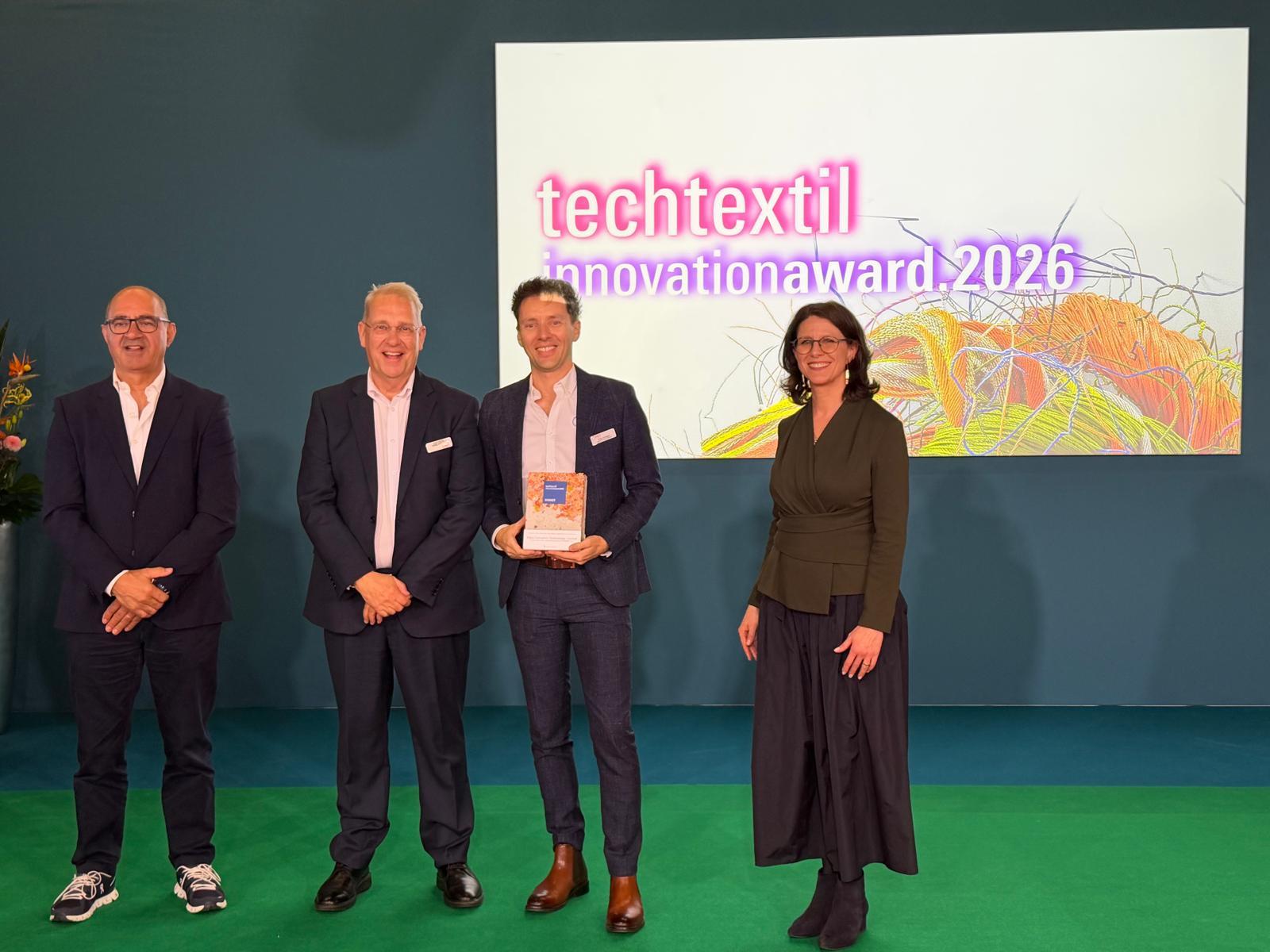
FET’s Managing Director Richard Slack and Senior Scientist Kristoffer Kortsen (centre) receive the Innovation Award Photo FET
FET’s Managing Director Richard Slack and Senior Scientist Kristoffer Kortsen (centre) receive the Innovation Award
08.05.2026

FET’s gel spinning system wins Techtextil Innovation Award

FET has received the Techtextil Innovation Award 2026 in the New Production Technology category. The Techtextil Innovation Award honours outstanding ideas in textile technology, sustainability, AI and the creation of technical textiles, selected by an international jury of experts. Ranging from new materials to new production technologies, this award recognises progressive ideas that are driving forces for numerous industries, such as automotive, medical and construction.

The new FET-500 Series now allows rapid, small-scale gel spinning of UHMWPE without the use of the toxic solvents typically associated with the process. This game-changing equipment will finally unlock R&D and new product development in UHMWPE yarns, which was previously blocked by the large-scale nature of UHMWPE yarn production, enabling significant savings in cost, footprint and environmental factors.

“We are proud that the Techtextil Innovation Award recognises our intensive work. It shows that we are at the forefront of technological developments supporting the textiles of tomorrow.” - Richard Slack, Managing Director.

FET has received the Techtextil Innovation Award 2026 in the New Production Technology category. The Techtextil Innovation Award honours outstanding ideas in textile technology, sustainability, AI and the creation of technical textiles, selected by an international jury of experts. Ranging from new materials to new production technologies, this award recognises progressive ideas that are driving forces for numerous industries, such as automotive, medical and construction.

The new FET-500 Series now allows rapid, small-scale gel spinning of UHMWPE without the use of the toxic solvents typically associated with the process. This game-changing equipment will finally unlock R&D and new product development in UHMWPE yarns, which was previously blocked by the large-scale nature of UHMWPE yarn production, enabling significant savings in cost, footprint and environmental factors.

“We are proud that the Techtextil Innovation Award recognises our intensive work. It shows that we are at the forefront of technological developments supporting the textiles of tomorrow.” - Richard Slack, Managing Director.

This reinforces FET’s success in processing over 130 different polymer types in multifilament, monofilament and nonwoven formats, collaborating with specialist companies worldwide to promote greater sustainability through innovative manufacturing processes.

Source:

FET

Exemplary Hemp Straw Processing Plant (c) Temafa Maschinenfabrik GmbH
Exemplary Hemp Straw Processing Plant
08.05.2026

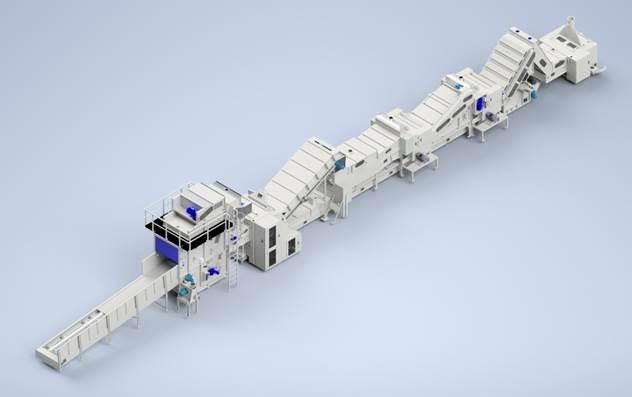
Temafa Maschinenfabrik GmbH supplies a complete decortication plant for processing hemp straw

Temafa Maschinenfabrik GmbH, a leading supplier of machinery and plants for fibre processing, has successfully secured an order to supply a complete plant for processing hemp straw to Hanffaser Geiseltal eG, based in Mücheln.

With this project, Hanffaser Geiseltal eG is implementing its first industrial plant for processing hemp straw into hemp fibres. The plant will be delivered, installed and commissioned in the course of the year.

The plant, designed and manufactured by Temafa, is specifically engineered for the efficient processing of hemp straw. The aim is to produce high-quality fibre products, which are primarily used in the building materials industry, for example in sustainable insulation materials and other ecological applications.

With this investment, Hanffaser Geiseltal eG is strengthening its position in the field of sustainable raw materials and sending a clear signal regarding the increasing industrialisation of hemp processing in Germany.

Temafa Maschinenfabrik GmbH, a leading supplier of machinery and plants for fibre processing, has successfully secured an order to supply a complete plant for processing hemp straw to Hanffaser Geiseltal eG, based in Mücheln.

With this project, Hanffaser Geiseltal eG is implementing its first industrial plant for processing hemp straw into hemp fibres. The plant will be delivered, installed and commissioned in the course of the year.

The plant, designed and manufactured by Temafa, is specifically engineered for the efficient processing of hemp straw. The aim is to produce high-quality fibre products, which are primarily used in the building materials industry, for example in sustainable insulation materials and other ecological applications.

With this investment, Hanffaser Geiseltal eG is strengthening its position in the field of sustainable raw materials and sending a clear signal regarding the increasing industrialisation of hemp processing in Germany.

“We are delighted to be supporting Hanffaser Geiseltal eG as it enters the field of industrial hemp fibre processing,” says Dr Jörg Morgner, Managing Director at Temafa Maschinenfabrik GmbH. “This project underscores the growing importance of natural fibres as sustainable raw materials and our expertise in developing bespoke plant solutions.”

Source:

Temafa Maschinenfabrik GmbH

08.05.2026

ACIMIT: Textile Machinery Orders Index, Q1 2026

In the first quarter of 2026, order intake for Italian textile machinery manufacturers recorded a decrease of 5% compared to the same period in 2025, reflecting a still challenging start to the year. The decline affected foreign markets (-7%), while the domestic market showed growth (+21%).

Compared with the previous quarter (October–December 2025), total order intake increased by 18%. The orders index for the January–March 2026 period stood at 37.3 points (base year 2021=100). In Italy, the index reached 35.3 points, while in foreign markets it stood at 37.6 points.

In the first quarter of 2026, the order backlog guaranteed a workload of approximately 4.5 months.

From a sector perspective, weaving and other manufacturing segments showed relatively more dynamic signals.

Forecasts for the second quarter of 2026 (compared with the previous quarter) indicate pessimism for the domestic market and stability for the foreign one.

In the first quarter of 2026, order intake for Italian textile machinery manufacturers recorded a decrease of 5% compared to the same period in 2025, reflecting a still challenging start to the year. The decline affected foreign markets (-7%), while the domestic market showed growth (+21%).

Compared with the previous quarter (October–December 2025), total order intake increased by 18%. The orders index for the January–March 2026 period stood at 37.3 points (base year 2021=100). In Italy, the index reached 35.3 points, while in foreign markets it stood at 37.6 points.

In the first quarter of 2026, the order backlog guaranteed a workload of approximately 4.5 months.

From a sector perspective, weaving and other manufacturing segments showed relatively more dynamic signals.

Forecasts for the second quarter of 2026 (compared with the previous quarter) indicate pessimism for the domestic market and stability for the foreign one.

Marco Salvadè, President of ACIMIT, commented:
“It is encouraging to see the first positive sign in the domestic market, but forecasts still reveal a degree of pessimism. The difficult international context and the slow actions of government institutional representatives do not allow companies to plan investments. As an Association, we are working in close synergy with the Italian Trade Agency (ICE) to strengthen promotional activities across several strategic markets. We also look with confidence to the upcoming ITMA 2027 in Hannover, which will represent an important opportunity to relaunch the sector, stimulate new investments, and strengthen the international presence of Italian manufacturers.”

ACIMIT (the Association of Italian Textile Machinery Manufacturers) was established in 1945 with the primary aim of promoting the Italian textile machinery industry by supporting its activities both in Italy and abroad. ACIMIT represents an industrial sector comprising around 300 companies (employing approximately 12,500 people) and producing machinery with a total value of approximately €1.9 billion, about 86% of which is exported. Creativity, sustainable technology, reliability, and quality are the key features that have made Italian textile machinery a world leader.

Award winner Tobias Dickmeiß with his certificate © Katharina Dubno
Award winner Tobias Dickmeiß with his certificate
08.05.2026

Elastic yarns to become more recyclable and environmentally friendly in future

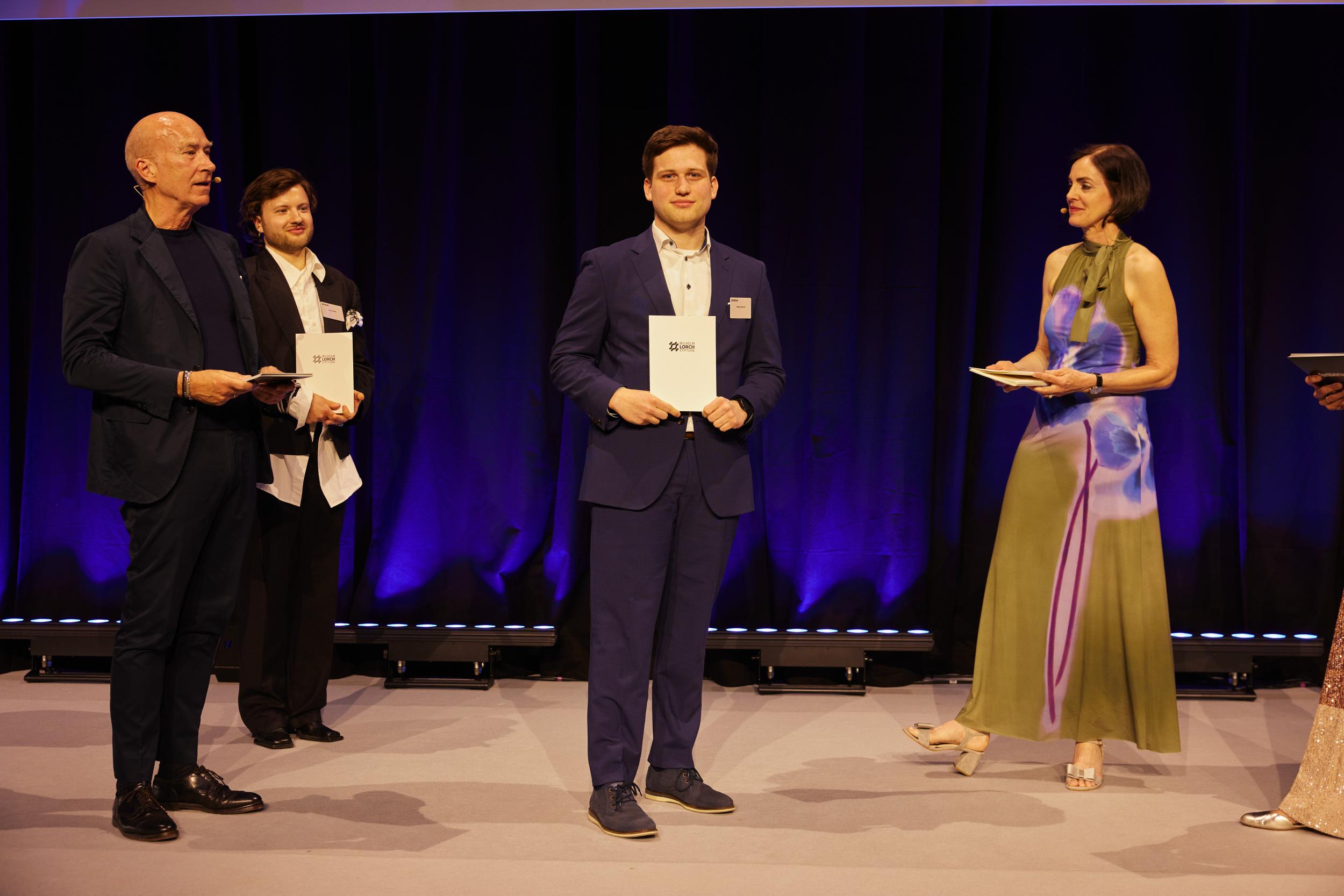
On 29 April 2026, ITA student Tobias Dickmeiß was awarded a sponsorship prize by the Wilhelm Lorch-Stiftung for his innovative approach, to replacing conventional elastane with elastic yarns made from thermoplastic copolyester elastomers (TPC). Thanks to their thermoplastic nature and compatibility with typical polyesters used in the textile industry, elastic TPC yarns offer improved recyclability. Furthermore, the use of the melt-spinning process in yarn production eliminates the need for solvents that are harmful to the environment and human health.

Elastic textiles have become an integral part of our everyday lives, as they ensure comfort, a good fit and freedom of movement. At the same time, the increasing use of traditional elastic yarns, known as elastanes, significantly complicates textile recycling. Even small amounts of elastane can impair thermomechanical recycling processes and prevent a closed recycling loop.

On 29 April 2026, ITA student Tobias Dickmeiß was awarded a sponsorship prize by the Wilhelm Lorch-Stiftung for his innovative approach, to replacing conventional elastane with elastic yarns made from thermoplastic copolyester elastomers (TPC). Thanks to their thermoplastic nature and compatibility with typical polyesters used in the textile industry, elastic TPC yarns offer improved recyclability. Furthermore, the use of the melt-spinning process in yarn production eliminates the need for solvents that are harmful to the environment and human health.

Elastic textiles have become an integral part of our everyday lives, as they ensure comfort, a good fit and freedom of movement. At the same time, the increasing use of traditional elastic yarns, known as elastanes, significantly complicates textile recycling. Even small amounts of elastane can impair thermomechanical recycling processes and prevent a closed recycling loop.

As part of his bachelor’s thesis, Tobias Dickmeiß carried out extensive empirical process studies on a pilot-scale melt-spinning line. By systematically analysing the influence of various process parameters on yarn properties, he succeeded in specifically improving the properties of the resulting TPC yarns. The findings of his bachelor’s thesis thus provide a promising basis for the further development of recyclable elastic yarns and textiles.

Tobias Dickmeiß was granted a sponsorship prize of EUR 5,000 for specific further training in recognition of his outstanding bachelor’s thesis, ‘Development of a melt spinning process for elastic yarns made from thermoplastic copolyester elastomers at pilot scale’.

During his bachelor’s thesis, hr was supervised by ITA PhD student Ricarda Wissel.

Source:
Institut für Textiltechnik der RWTH Aachen University
Global Fashion Summit: Copenhagen Edition Photo (c) Global Fashion Agenda
06.05.2026

New 2030 Circularity Blueprint Aims to Scale Recycling and Unlock Investment Opportunities

The EU textile system is at a critical crossroads. Today, less than 1% of discarded garrments are recycled into new garments, despite EU-wide obligations for separate collection.

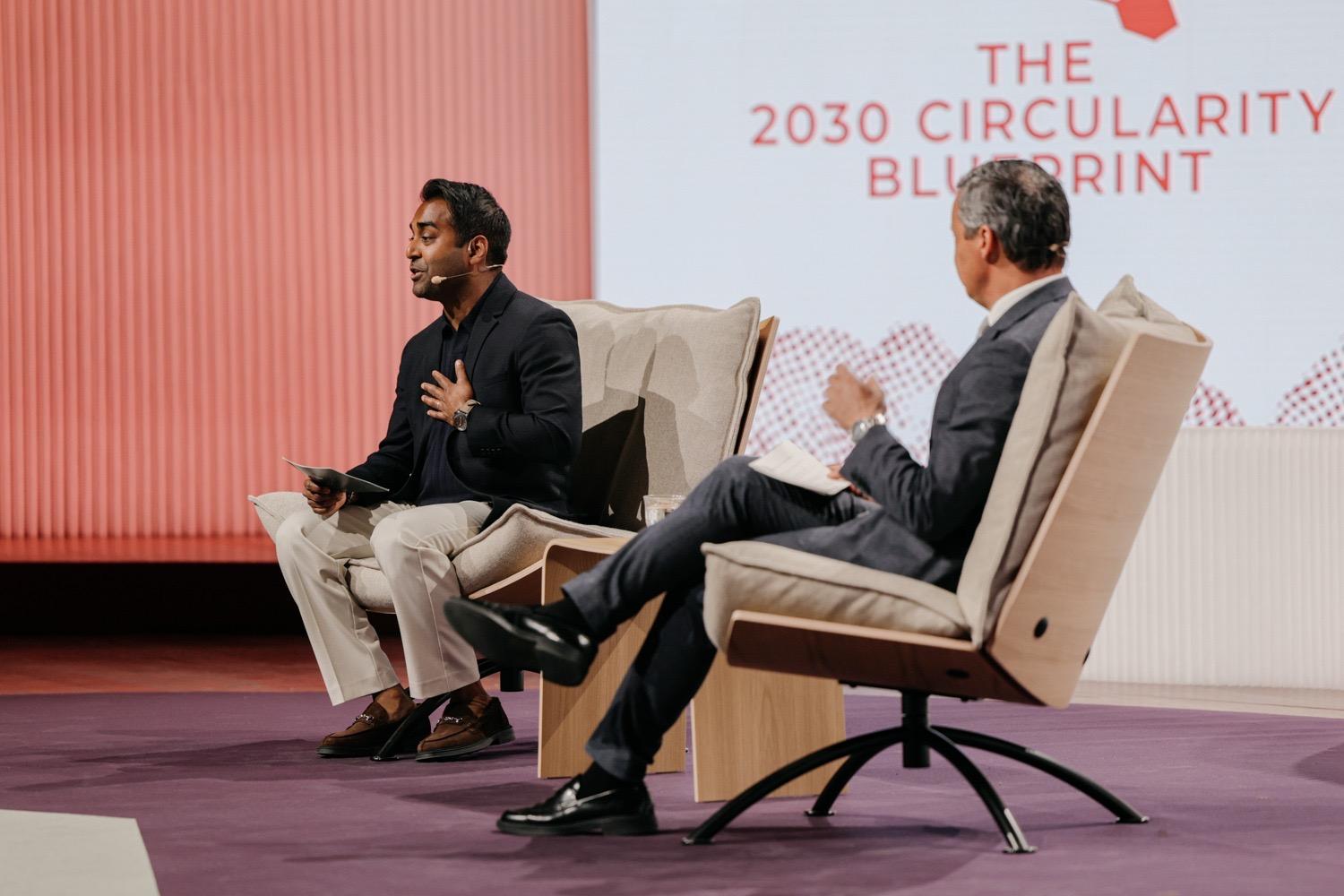
In response, Global Fashion Agenda (GFA) is launching the 2030 Circularity Blueprint, in partnership with ReHubs. This ambitious initiative is designed to support the transformation of the EU textile ecosystem to advance textile-to-textile recycling and drive the transition to a circular economy. The Blueprint will be officially presented at the Global Fashion Summit: Copenhagen Edition on 6 May - one of the world’s leading forums for sustainability in fashion - bringing together industry leaders, policymakers, and innovators to accelerate collective action.

The EU textile system is at a critical crossroads. Today, less than 1% of discarded garrments are recycled into new garments, despite EU-wide obligations for separate collection.

In response, Global Fashion Agenda (GFA) is launching the 2030 Circularity Blueprint, in partnership with ReHubs. This ambitious initiative is designed to support the transformation of the EU textile ecosystem to advance textile-to-textile recycling and drive the transition to a circular economy. The Blueprint will be officially presented at the Global Fashion Summit: Copenhagen Edition on 6 May - one of the world’s leading forums for sustainability in fashion - bringing together industry leaders, policymakers, and innovators to accelerate collective action.

Building on the ambitions of GFA’s 2020 Circular Fashion System Commitment and grounded in robust industry and value chain engagement, the Blueprint identifies and addresses the systemic fragmentation that has long hindered progress. It introduces a coordinated roadmap to close collection gaps, align stakeholders, and unlock the estimated €8–11 billion Capital Expenditure required to build Europe’s textile-to-textile recycling infrastructure.

Accelerating System-Level Change
The 2030 Circularity Blueprint sets out a clear implementation pathway - presenting eight interconnected intervention areas that have been designed to address systemic barriers in a coordinated way:

Systemic Conditions:
1.    Shared Framework for Circular & Sustainable Materials 
2.    Textile Waste Intelligence Platform
3.    Demand Signal Initiative: Long-Term Offtake Commitments 

Value Chain Interventions
4.    Designing for the Loop: Circularity at Product Design Stage 
5.    Closing the Collection Gap: Effective Textile Collection Systems 
6.    Closing the Sorting Investment Gap: Demand Certainty for Sorters
7.    Pre-Sorting & Feedstock Preparation: Regional Hub Infrastructure 
8.    Recycling Infrastructure at Scale: A Coordinated CAPEX Roadmap

When implemented correctly, the eight interventions are designed to create a system that turns voluntary ambition into investment-grade infrastructure and scalable industrial capacity by 2030, with the ambition to reach a target of 2.7 million tonnes of textile-to-textile recycling capacity by 2035.

As part of the 2030 Circularity Blueprint, GFA and ReHubs will bring two collaborative programmes to life. The first, led by ReHubs, centres on the 'Textile Waste Intelligence Platform'. The second tackles the critical challenge of closing the collection and sorting gap.

A Collaborative Path Forward
The 2030 Circularity Blueprint is designed as a dynamic, collaborative ecosystem, bringing together stakeholders across the value chain to co-create solutions, share ownership, and track progress. It will require coordinated, cohesive effort from all stakeholders - across brands, sorters, recyclers, infrastructure operators, and policymakers - working in alignment rather than in parallel.  The intervention areas will be advanced in partnership with other organisations ready to lead and invest. 

Call to Action:
GFA and ReHubs are actively seeking funding, partnerships, and contributions to bring the full 2030 Circularity Blueprint to life. Organisations are invited to lead and support the remaining intervention areas critical to achieving Europe’s circular textile ambitions.

To further catalyse progress, GFA is issuing a Call to Action for a Targeted Policy Incentive Framework, with concrete suggestions on how to unlock the secondary raw materials market in the EU. While demand for recycled feedstock is rising, cost remains a key barrier: recycled inputs currently command a premium ranging from approximately 20% to as much as double the price of virgin materials. Addressing this will require stronger demand through public procurement, more harmonised and fit-for-purpose Extended Producer Responsibility (EPR) systems across countries, clearer requirements for the use of recycled materials, and increased investment in recycling infrastructure.

Recognising that scaling circular textiles requires aligning economic drivers with policy ambition, the proposal sets out targeted incentive measures across EU legislative and financial instruments. It urges the European Commission to integrate these across existing and forthcoming frameworks, while encouraging Member States to operationalise them at national level, ensuring that circular solutions can compete and scale in practice.

Federica Marchionni, CEO, GFA, says: "The vision for a textile circular economy is clear, and innovation is gaining ground. Yet progress is stalled by supply–demand deadlocks, compounded by a fragmented landscape where initiatives and stakeholders operate in silos, often unaware of their interdependence. Furthermore, without precise incentives to align efforts and investment, progress cannot move at the pace required.

Evan Wiener, Interim COO and Board Advisor to ReHubs, says: “Unlocking textile circularity at scale requires the full value chain to move together. ReHubs brings leading organisations from across the textile recycling value chain to the same table to align interests, orchestrate investment, and turn fragmented efforts into a functioning ecosystem. This collaborative initiative directly supports our strategy to industrialise textile-to-textile recycling and break the supply–demand deadlock at scale.”

The 2030 Circularity Blueprint aims to change that—identifying key bottlenecks and leveraging interconnections to unlock the potential of the circular value chain: turning ambition into tangible progress.

05.05.2026

Environmental Impact Measurement: Report - Denim moves towards sustainability

EIM (Environmental Impact Measurement), the global reference platform for measuring the environmental impact of garment finishing, presents the second edition of its annual report Denim Industry Progress & Insights 2025. The study analyses over 100,000 real denim finishing processes, providing an accurate and up-to-date view of the industry’s evolution towards more sustainable models.

The textile industry, as one of the sectors with the greatest environmental impact, plays a key role in the transition towards more sustainable production models. To move forward, measuring, understanding, and acting are essential. EIM acts as a compass for the industry, enabling the objective assessment of process impacts and supporting decision-making towards more eco-efficient production.

The report confirms that the denim industry continues to make progress in reducing its environmental impact. Currently, 66% of processes are already classified as low impact, reflecting a positive trend driven by process optimization and the adoption of more efficient technologies.

EIM (Environmental Impact Measurement), the global reference platform for measuring the environmental impact of garment finishing, presents the second edition of its annual report Denim Industry Progress & Insights 2025. The study analyses over 100,000 real denim finishing processes, providing an accurate and up-to-date view of the industry’s evolution towards more sustainable models.

The textile industry, as one of the sectors with the greatest environmental impact, plays a key role in the transition towards more sustainable production models. To move forward, measuring, understanding, and acting are essential. EIM acts as a compass for the industry, enabling the objective assessment of process impacts and supporting decision-making towards more eco-efficient production.

The report confirms that the denim industry continues to make progress in reducing its environmental impact. Currently, 66% of processes are already classified as low impact, reflecting a positive trend driven by process optimization and the adoption of more efficient technologies.

In terms of resource use, significant progress has been made in optimizing water and energy, although there is still room for improvement to reach more advanced standards. Water consumption remains stable at around 30 liters per garment, indicating a plateau after years of continuous improvement. Energy shows the strongest performance, with 85% of processes classified as low impact, driven by equipment modernization and automation.

However, the report highlights that chemical impact remains the industry’s main challenge, with 27% of processes still classified as high impact. Factors such as the use of generic chemicals, lack of transparency in formulations, and the persistence of legacy practices, such as pumice stones or potassium permanganate, continue to limit progress, despite the availability of more sustainable alternatives.

At the same time, worker health impact has improved significantly, with 68% of processes classified as low impact, driven by the increasing adoption of automated technologies replacing more harmful manual techniques.

“The industry has proven that it can improve when it measures its impact, but the next step requires accelerating the adoption of technologies and leaving behind practices that are no longer sustainable,” says Begoña García, creator of EIM and co-author of the report. “Today more than ever, we need reliable data to make informed decisions and move towards a real transformation of the industry.”

This second report further establishes EIM as a global reference standard to measure and track environmental impact in denim finishing. Its annual nature allows brands and manufacturers to benchmark performance, identify improvement areas, and move forward together towards more ambitious sustainability goals.

The full report is available for download and will be updated annually, reinforcing the industry’s commitment to transparency, continuous improvement and environmental impact reduction.

EIM, a global standard to measure and compare environmental impact
EIM, Environmental Impact Measurement, is a globally recognized tool for assessing the environmental performance of garment finishing processes.

It evaluates four key categories, water consumption, energy consumption, chemical impact and worker health impact. Each process is assessed and classified into three levels, low, medium or high impact, according to standardized benchmarks.

EIM includes specific benchmarks for denim finishing, garment washing and garment dyeing, ensuring that results are accurate, comparable and relevant for each type of process.

This methodology enables brands and manufacturers to measure their processes with precision, track improvements and communicate environmental performance in a transparent and verifiable way.

Source:

Environmental Impact Measurement

05.05.2026

Kornit Digital Launches Konnections 365: Bringing together Brands, Retailers, Creatives, Print Producers

Local events, webinars, on-demand content, and podcasts unite creatives, brands, retailers, supply-chain experts, and print producers – leading seismic shift in apparel and textile production.
 
Kornit Digital, a global pioneer in sustainable, on-demand digital fashion and textile production today announced the launch of Konnections 365 - a year-round movement designed for the people moving the apparel, print, and retail industries forward. The strategy is built on the success of Konnections 2026 held in Hollywood, Florida, featuring more than 500 customers, partners, and collaborators who together are driving the future of apparel and textiles.
 
Bringing together brands, retailers, creatives, print producers, and supply-chain experts, Konnections 365 delivers thought leadership, local and global experiences, committees, webinars, podcasts, and on-demand resources. The intent is to help the industry navigate a watershed moment driven by digital print, AI, sustainability, new inventory models, and emerging technologies.
 

Local events, webinars, on-demand content, and podcasts unite creatives, brands, retailers, supply-chain experts, and print producers – leading seismic shift in apparel and textile production.
 
Kornit Digital, a global pioneer in sustainable, on-demand digital fashion and textile production today announced the launch of Konnections 365 - a year-round movement designed for the people moving the apparel, print, and retail industries forward. The strategy is built on the success of Konnections 2026 held in Hollywood, Florida, featuring more than 500 customers, partners, and collaborators who together are driving the future of apparel and textiles.
 
Bringing together brands, retailers, creatives, print producers, and supply-chain experts, Konnections 365 delivers thought leadership, local and global experiences, committees, webinars, podcasts, and on-demand resources. The intent is to help the industry navigate a watershed moment driven by digital print, AI, sustainability, new inventory models, and emerging technologies.
 
“During our live Konnections event, the room moved and now the industry is ready to follow. We brought together an ecosystem around one clear truth: the winners will be the companies that connect demand, production, technology, and speed – faster than the market can change,” said Ilan Elad, President at Kornit Digital Americas. “Kornit 365 is an extension of this movement, and we can’t wait to see how the industry responds.”
 
Konnections 365 is built on three pillars:
Movement — Year-round community driving industry priorities;
Learn — Practical education through content and thought leadership;
Connect & Act — Events and pilot programs that turn ideas into measurable results.
 
Participants benefit from rapid learning, local-to-global engagement, and the ability to move from ideas to pilots that reduce waste, shorten lead times, and improve margins.
 
Education is free for all participants. However, community events, business networking, and pilot programs are by invitation only for the Kornit Digital Production Community and ecosystem.

Source:

Kornit Digital Ltd.

05.05.2026

Texworld Apparel Sourcing Paris: At the heart of the global textile offering

From August 31 to September 2, 2026, Texworld Apparel Sourcing Paris will once again bring together all international players in textiles and apparel at the Paris-Le Bourget Exhibition Center.

A strategic platform for buyers
As a global sourcing hub for fashion professionals, the event will offer direct access to nearly 1,200 international textile and apparel companies across two main areas: Texworld, dedicated to fabrics and raw materials, and Apparel Sourcing, focused on finished products and accessories. These two shows stand out for their broad offering, centered on mid-range and premium segments, meeting the growing expectations of buyers seeking quality and added value. They will be complemented by the key Avantex sector, dedicated to innovative solutions for high-performance and responsible fashion. 

From August 31 to September 2, 2026, Texworld Apparel Sourcing Paris will once again bring together all international players in textiles and apparel at the Paris-Le Bourget Exhibition Center.

A strategic platform for buyers
As a global sourcing hub for fashion professionals, the event will offer direct access to nearly 1,200 international textile and apparel companies across two main areas: Texworld, dedicated to fabrics and raw materials, and Apparel Sourcing, focused on finished products and accessories. These two shows stand out for their broad offering, centered on mid-range and premium segments, meeting the growing expectations of buyers seeking quality and added value. They will be complemented by the key Avantex sector, dedicated to innovative solutions for high-performance and responsible fashion. 

This 59th edition continues to build on a strategy of qualitative consolidation. In line with previous editions, the overall structure of the show remains unchanged to ensure a smooth and intuitive visitor experience: Halls 3 and 4 will bring together the full offering, organized by expertise and end use. Synergies between exhibitors from both shows will be strengthened to optimize visitor flow, with a focus on womenswear, casualwear and sportswear. Hall 2 will host Avantex exhibitors, the Trend Forums, and the conference and service areas, forming a spacious zone designed to encourage interaction.

An enriched international offer for Texworld
Texworld Apparel Sourcing Paris reinforces its position as a barometer of the global textile industry. Alongside major historic producing countries (China, Türkiye, India, Korea, etc.), the 2026 edition stands out for the upgrading of the expertise presented and the growing interest in new sourcing regions.

On the Texworld side, the exceptional participation of La Lainière de Picardie marks a first and highlights the value of European know-how in export markets. Specializing in high-end wool linings, this French company embodies industrial excellence, textile innovation, and a commitment to natural and sustainable materials. In a spirit of international openness, an ECO-HUB dedicated to China’s Zhejiang province will bring together around thirty exhibitors committed to 100% sustainable production. Located in Hall 4, this key area underscores the evolution of supply chains toward more responsible and traceable models, aligned with market expectations.

Apparel Sourcing: confirmed momentum and new perspectives
Following a record edition in September 2025, Apparel Sourcing continues its trajectory of qualitative growth. The interest shown by new countries, particularly Mongolia, Pakistan and Taiwan, reflects the industrial capabilities of these production regions while responding to European buyers’ demand for a broader sourcing offer.

In a continued effort to improve clarity and visibility, new pavilions dedicated to leather and jewelry will better showcase these specific finished-product sectors. Similarly, a new Outdoor area, positioned at the intersection of Texworld and Apparel Sourcing, will bring together around fifty exhibitors and offer a cross-category selection combining technical fabric manufacturers (active wear fabrics) and sportswear garment makers, meeting the needs of a rapidly evolving market.
Finally, the new Apparel Sourcing Initiatives area, an extension of the existing Texworld concept, will highlight high-value-added industrial know-how, production flexibility, and premium services offered by a selection of finished-product exhibitors.

Avantex: innovation and commitment for the fashion of tomorrow
Once again this year, the Avantex sector will confirm its role as an innovation laboratory, showcasing technological solutions and sustainable initiatives for the fashion industry. Conferences, workshops and professional meetings will enrich discussions around these key issues in a context of profound transformation within the textile sector. True to its DNA, Messe Frankfurt reaffirms its commitment to supporting and promoting industry players working toward a more responsible, transparent and competitive global model. The creation of the Texworld ECO-HUB is part of this vision.

Source:

Texworld Apparel Sourcing Paris

05.05.2026

NCTO: Officer elections for fiscal year 2026

The National Council of Textile Organizations (NCTO), representing the full spectrum of U.S. textiles from fiber through finished sewn products, held its officer elections for fiscal year 2026 at its annual meeting April 14-16.

NCTO has elected Amy Bircher Bruyn, CEO and Founder of MMI Textiles as Chair, and Jay Todd, CEO and Managing Partner of Service Thread, as Vice Chair.

In addition to the appointment of a new chair and vice chair, NCTO elected chairs for each of its five councils. NCTO is comprised of five councils to ensure a broad representation of the industry supply chain. Each council has an allotted number of members who are elected to the association’s Board of Directors, in addition to the Executive Committee.

The National Council of Textile Organizations (NCTO), representing the full spectrum of U.S. textiles from fiber through finished sewn products, held its officer elections for fiscal year 2026 at its annual meeting April 14-16.

NCTO has elected Amy Bircher Bruyn, CEO and Founder of MMI Textiles as Chair, and Jay Todd, CEO and Managing Partner of Service Thread, as Vice Chair.

In addition to the appointment of a new chair and vice chair, NCTO elected chairs for each of its five councils. NCTO is comprised of five councils to ensure a broad representation of the industry supply chain. Each council has an allotted number of members who are elected to the association’s Board of Directors, in addition to the Executive Committee.

“I am pleased to announce NCTO’s 2026 officers, council chairs, and board and executive committee members,” said NCTO President and CEO Kim Glas. “I thank Chair Amy Bircher Bruyn and Vice Chair Jay Todd for stepping into these critical roles. As we navigate a challenging environment, their leadership will be key as we advance policies to preserve preferential treatment under USMCA and CAFTA-DR, strengthen customs enforcement against import fraud, refine tariff policies with carve-outs for inputs and machinery not made in the U.S., expand the Berry Amendment and America-made procurement, and grow our Western Hemisphere co-production chain—while opposing measures that undermine a domestic supply chain supporting more than 450,000 jobs.”

Elected as NCTO Chair and Vice Chair for 2026:

  • Chair – Amy Bircher Bruyn, MMI Textiles
    Ms. Bircher Bruyn is CEO and Founder of MMI Textiles, a global industrial and custom textile supplier based in Brooklyn, Ohio.
  • Vice Chair – Jay Todd, CEO and Managing Director of Service Thread, an industrial yarn and sewing thread manufacturer based in Laurinburg, N.C.

Elected to the NCTO Board of Directors during the various Council meetings were the following:

  • Fiber Council – David Adkins of Lenzing Fibers; Geoffrey Hietpas of The LYCRA Company; and David Poston of Palmetto Synthetics
  • Yarn Council – Justin Ferdinand of Kentwool; Chris Alt of American & Efird; Marc Doyon of Gildan; Charles Heilig of Parkdale; Eddie Ingle of Unifi; and Tim Manson of Meridian Specialty Yarn Group
  • Fabric and Home Products Council –Allen Jacoby of Milliken & Company; Leib Oehmig of Glen Raven Inc.; Bill Rogers of Mount Vernon Mills; Brian Rosenstein of TSG Finishing; Dan Russian of Sage Automotive Interiors; and Walter Spiegel of Standard Textile
  • Finished Textiles and Apparel Products Council – Gabrielle Ferrara of Ferrara (Alternate: Marisa Fumei-South of Two-One-Two New York)
  • Industry Support Council – Todd Bassett of Fi-Tech; Greg Duncan of American Truetzschler; and Jim Reed of YKK Corp.

Elected by their respective Councils to serve on the Executive Committee were:
Justin Ferdinand of Kentwool; Tim Manson of Meridian Specialty Yarn Group; Bill Rogers of Mount Vernon Mills; Allen Jacoby of Milliken & Company; David Adkins of Lenzing Fibers; Gabrielle Ferrara of Ferrara; and Todd Basset of Fi-Tech.

NCTO Chair Amy Bircher Bruyn has appointed additional executives to serve on the Executive Committee: Chuck Hall, Barnet and NCTO immediate past chairman; Anderson Warlick, Parkdale Mills; Jay Self, Greenwood Mills; Marisa Fumei-South, Two One Two New York; and Jackie Ferrari, American Fashion Network.

Elected to chair the Councils:

•    Fiber Council: David Adkins of Lenzing Fibers
•    Yarn Council: Tim Manson of Meridian Specialty Yarn Group
•    Fabric and Home Products Council: Allen Jacoby of Milliken & Company
•    Finished Textiles and Apparel Products Council: Gabrielle Ferrara of Ferrara
•    Industry Support Council: Todd Bassett of Fi-Tech

In addition to the chair and vice chair, NCTO also elected the following officers for the upcoming fiscal year:

•    President & CEO – Kim Glas, NCTO
•    Treasurer – Robin Haynes, NCTO
•    Secretary – Katherine White, NCTO

Source:

National Council of Textile Organizations

Source Fashion January 2026 Photo: (c) Source Fashion
Source Fashion January 2026
05.05.2026

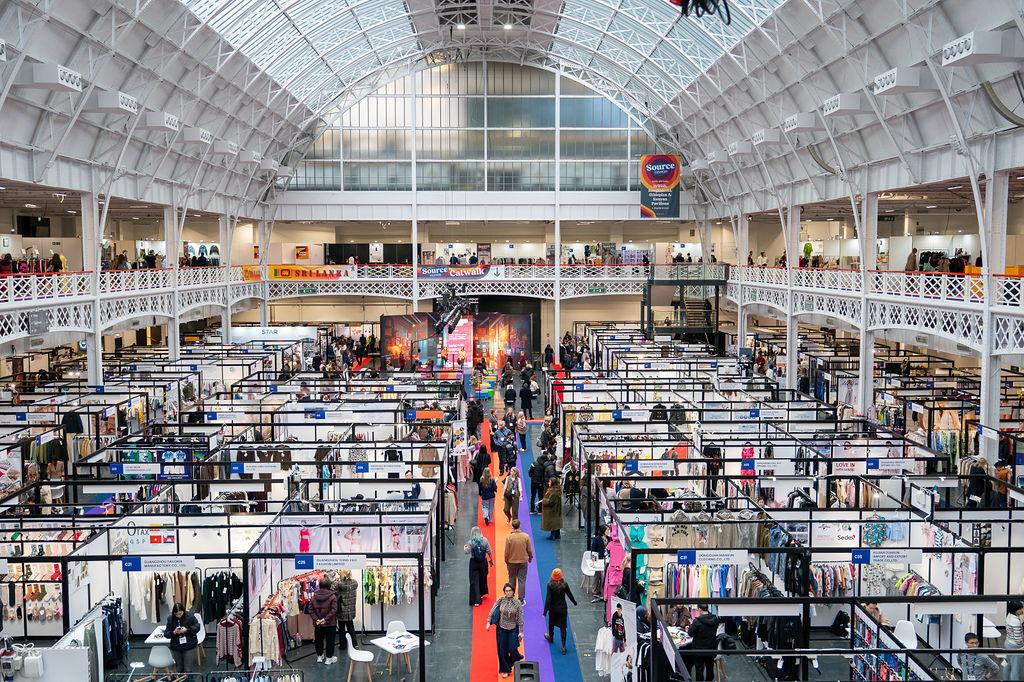
Source Fashion: What Matters to Buyers in 2026?

As fashion brands and retailers navigate an increasingly complex landscape shaped by geopolitical disruption, ongoing supply chain challenges, evolving trade tensions and regulatory uncertainty, alongside shifting consumer demand, understanding what truly matters to buyers has never been more critical. For its July 2026 edition, Source Fashion is placing these challenges at the centre of its content agenda, using new industry insights and advisory board input to shape a programme designed to help buyers make more informed, commercially viable decisions in a market defined by constant change.

Insights from Source Fashion’s advisory board and from industry research point to a growing sense of complexity and fatigue across the industry. Buyers are being asked to navigate rising costs, increasing regulation and ongoing uncertainty, while making faster, higher-stakes sourcing decisions. Sustainability, once driven by advocacy, is now increasingly shaped by compliance and reporting requirements, leaving many teams questioning how to balance commercial reality with long-term responsibility.

As fashion brands and retailers navigate an increasingly complex landscape shaped by geopolitical disruption, ongoing supply chain challenges, evolving trade tensions and regulatory uncertainty, alongside shifting consumer demand, understanding what truly matters to buyers has never been more critical. For its July 2026 edition, Source Fashion is placing these challenges at the centre of its content agenda, using new industry insights and advisory board input to shape a programme designed to help buyers make more informed, commercially viable decisions in a market defined by constant change.

Insights from Source Fashion’s advisory board and from industry research point to a growing sense of complexity and fatigue across the industry. Buyers are being asked to navigate rising costs, increasing regulation and ongoing uncertainty, while making faster, higher-stakes sourcing decisions. Sustainability, once driven by advocacy, is now increasingly shaped by compliance and reporting requirements, leaving many teams questioning how to balance commercial reality with long-term responsibility.

Key themes shaping 2026
The research highlights six key shifts shaping buyer priorities in 2026:

  • Operating in permanent volatility - as geopolitical disruption, supply chain instability and unpredictable consumer demand force businesses to plan in a world that is constantly shifting. 
  • The commercial realities of sustainability – where doing the right thing does not always align with cost pressures, margins and supplier constraints. 
  • Making circularity commercially viable – with growing focus on resale, repair and lifecycle integration as part of a scalable business model. 
  • Rethinking the fashion value chain – as traditional sourcing strategies evolve and closer collaboration across the value chain becomes essential. 
  • Innovation with measurable impact – as brands look beyond hype to understand which technologies, including AI, can deliver real, scalable value. 
  • Regulation, data and compliance – as increasing reporting requirements and upcoming legislation reshape how businesses approach sustainability often shifting the focus from advocacy to obligation.

In response to these insights, Source Fashion’s July 2026 content programme has been designed to move beyond discussion and provide practical, commercially relevant guidance for buyers navigating an increasingly complex landscape. Through a series of new formats and returning features, the show will translate industry challenges into actionable insight, helping visitors better understand how to balance cost, risk and responsibility within their sourcing strategies. This approach is designed to support faster, more confident decision-making in a rapidly changing market.

Fashion Deconstructed will offer a hands-on, interactive space designed to help buyers better understand materials, processes and techniques, from upcycling and repair to innovative production methods. Alongside this, the Catwalk Stage will bring together industry leaders and practitioners to explore the future of fashion through panels, case studies and debates, while the return of the Debates Stage will create space for more open, peer-led discussion around the issues shaping the industry today. 

Speaker highlights include:

  • Marguerite, Global Insights Manager, Fashion, Euromonitor International  
  • Bill McRaith, Executive Advisor, Future-Proof Fashion  
  • Sonica Beckman, Founder and CEO, House of Kind  
  • Sarah Coleman, Head of Development, Design and Sustainability, Margarett Howell 
  • Nick Reed, Founder, Neem London 
  • Rosie Cripps, Head of Circularity, Vivo Barefoot
  • Joseph Mountain, Sustainability Manager, N Brown   

Suzanne Ellingham, Event Director of Source Fashion, said “What we’re hearing isn’t rocket science, what we know from listening is that the industry has become more complex, more pressured and, in many cases, overwhelming. There are no shortage of high expectations, new strategies, regulation or technology, but there is a real need for clarity on what actually works in practice, and what delivers real value at scale. As an industry we have to share insight now to help the boat go faster for everyone, in the right direction.

For us, this research is about listening to those challenges and shaping a content programme that responds directly to them. We want to move the conversation beyond theory and into practical, actionable insight that helps buyers navigate cost, risk and responsibility in a more confident and informed way. It’s about making sure the industry conversations we’re having translate into real business impact. Ultimately we want to talk about the things that matter.”


Source:

Source Fashion 

04.05.2026

Market Study on Thermoplastic Composites

The European Alliance for Thermoplastic Composites (EATC) has published a comprehensive study on the market, applications and prospects for thermoplastic composites. 

Thermoplastic fibre-reinforced plastics – also known as thermoplastic composites – are becoming increasingly important across a wide range of industries. From the automotive industry and aerospace to construction and sports and leisure products, they offer a compelling combination of high strength, low weight and good recycling prospects. As such, they are regarded as a key material for sustainable and high-performance lightweight construction solutions. 

Against this backdrop, the European Alliance for Thermoplastic Composites (EATC) has commissioned and provided technical support for a new market study on the European market for thermoplastic composites. The aim of the study is to provide a systematic overview of the current situation, developments and future opportunities within this dynamic materials segment. 

The European Alliance for Thermoplastic Composites (EATC) has published a comprehensive study on the market, applications and prospects for thermoplastic composites. 

Thermoplastic fibre-reinforced plastics – also known as thermoplastic composites – are becoming increasingly important across a wide range of industries. From the automotive industry and aerospace to construction and sports and leisure products, they offer a compelling combination of high strength, low weight and good recycling prospects. As such, they are regarded as a key material for sustainable and high-performance lightweight construction solutions. 

Against this backdrop, the European Alliance for Thermoplastic Composites (EATC) has commissioned and provided technical support for a new market study on the European market for thermoplastic composites. The aim of the study is to provide a systematic overview of the current situation, developments and future opportunities within this dynamic materials segment. 

Focus on market structure, applications and growth drivers 
The study analyses the fundamental material properties of thermoplastic composites and highlights the advantages of using them over alternative materials. It also identifies differences between various material classes and outlines the historical development of their industrial applications. 

Particular emphasis is placed on analysing the current size of the European market and the application areas that dominate today. In addition, the study identifies future market potential based on relevant macroeconomic factors. 

In focus: LFT, GMT und CFRTP 
The focus is in particular on LFT (long fibre-reinforced thermoplastics), GMT (glass mat reinforced thermoplastics) and CFRTP (continuous fibre-reinforced thermoplastics). These material groups play a central role in modern structural components with high mechanical requirements. They combine the advantages of thermoplastic matrices – such as short cycle times, efficient processing and new manufacturing possibilities – with the performance of reinforcing fibres. 

A strategic material for European industry 
The findings of the study highlight the growing strategic importance of thermoplastic composites for Europe as an industrial hub. Particularly at a time when demands for resource efficiency, CO₂ reduction and the circular economy are on the rise, thermoplastic composites offer great potential for innovative product solutions. 

Now available
The study is now available in PDF format from AVK upon advance payment. EATC and AVK members can purchase the study for EUR 149,- (plus VAT); for non members, the study is available for EUR 349,- (plus VAT).

Kraig Biocraft Laboratories Source: Kraig Biocraft Laboratories
04.05.2026

Kraig Launches April/May Production Cycle Following Record Spider Silk Output

Kraig Biocraft Laboratories, Inc., a world leader in spider silk technology, announced that it has officially launched its next production cycle following the Company's recent record-setting production run.
 
Earlier this month, the Company announced the successful production of nearly 1.8 metric tons of recombinant spider silk cocoons. 1.8 metric tons was the largest production run in the Company's history. Today, Kraig Labs confirmed that its follow-on production cycle is underway. Consistent with the Company's aggressive commercialization strategy, this cycle is expected to show a substantial increase over the previous cycle.
 
This next production expansion represents another major step in the Company's carefully structured plan to rapidly scale output toward its long-term objective of producing more than 10 metric tons of recombinant spider silk cocoons in a single month.
 

Kraig Biocraft Laboratories, Inc., a world leader in spider silk technology, announced that it has officially launched its next production cycle following the Company's recent record-setting production run.
 
Earlier this month, the Company announced the successful production of nearly 1.8 metric tons of recombinant spider silk cocoons. 1.8 metric tons was the largest production run in the Company's history. Today, Kraig Labs confirmed that its follow-on production cycle is underway. Consistent with the Company's aggressive commercialization strategy, this cycle is expected to show a substantial increase over the previous cycle.
 
This next production expansion represents another major step in the Company's carefully structured plan to rapidly scale output toward its long-term objective of producing more than 10 metric tons of recombinant spider silk cocoons in a single month.
 
"Our team continues to execute exactly as planned," said Kim Thompson, Founder and CEO of Kraig Labs. "Each production cycle is delivering larger output, improved operational efficiency, and, with our quality control backstops working as designed, greater confidence in our ability to scale. We are systematically building toward our goal of exceeding 10 metric tons of production in a single month. Our team is hitting every mark as we scale output at a rapid pace."
 
During senior management's recent trip to the Company's production operations in Southeast Asia, leadership worked directly with the production team to review current production infrastructure, staffing levels, and operational readiness to support this next phase of expansion.
 
That review included evaluating existing facilities, workforce requirements, and identifying additional opportunities to expand the Company's operational footprint to support increasing production demands. The Company has already identified opportunities for additional facility expansion and expects to provide further updates as new facilities are brought online.
 
"Our recent operational review confirmed that our production team is prepared for this next level of scale," added Thompson. "We continue to invest in the infrastructure, personnel, and production capacity required to meet the growing demand we anticipate for recombinant spider silk."
 
The Company believes that expanding production capacity in parallel with downstream silk processing capabilities remains critical as it moves toward full commercialization of its recombinant spider silk technologies for technical textiles, luxury wear, performance apparel, and other high-performance material markets.


The Company leadership in biomaterials was recently spotlighted on the cover of the March 2026 issue of National Geographic, highlighting the growing importance and predominance of our work in scaling spider silk production.

Source:

Kraig Biocraft Laboratories, Inc.

Maximilian Peter to take charge of the Polymers division on May 1, 2026 Source: WACKER
Maximilian Peter
01.05.2026

Wacker: Polymers division under new leadership

  • Maximilian Peter to take charge of the Polymers division on May 1, 2026 
  • Effective the same date, the previous head of the division, Peter Summo, to take charge of Sales & Distribution 

On May 1, 2026, Maximilian Peter will take over as head of WACKER’s Polymers division. Holding a doctorate in chemical engineering, he has been with WACKER since 2012. After working in process development, he took charge of Corporate Development and was most recently responsible for Human Resources. 

Maximilian Peter succeeds Peter Summo, who headed the Polymers division for ten years. Effective May 1, 2026, Summo will take charge of Sales & Distribution. A graduate in business administration, he began his career at specialty chemicals manufacturer Akzo Nobel before joining WACKER in 1995. Since then, he has held various management positions within the company. 

  • Maximilian Peter to take charge of the Polymers division on May 1, 2026 
  • Effective the same date, the previous head of the division, Peter Summo, to take charge of Sales & Distribution 

On May 1, 2026, Maximilian Peter will take over as head of WACKER’s Polymers division. Holding a doctorate in chemical engineering, he has been with WACKER since 2012. After working in process development, he took charge of Corporate Development and was most recently responsible for Human Resources. 

Maximilian Peter succeeds Peter Summo, who headed the Polymers division for ten years. Effective May 1, 2026, Summo will take charge of Sales & Distribution. A graduate in business administration, he began his career at specialty chemicals manufacturer Akzo Nobel before joining WACKER in 1995. Since then, he has held various management positions within the company. 

“With Maximilian Peter and Peter Summo, we are filling two key positions at WACKER with experienced colleagues who have already played a decisive role in using their expertise to shape the company,” said Christian Hartel, WACKER’s CEO, in connection with the changeover. “As head of the Polymers division, Maximilian Peter will continue to drive forward its regional expansion. Peter Summo will continue to forge ahead with WACKER’s market and customer focus and promote sales excellence throughout the company. I wish them both every success in their new roles and look forward to our continued collaboration going forward,” he added. 

Source:

Wacker Chemie AG

Haglöfs is the first brand to adopt it, currently rolling out in Europe with a small capsule collection. Polartec is positioning Standard Issue Black as a platform-level solution available across its brand partners. Photo: Polartec/Haglöfs
Haglöfs is the first brand to adopt it, currently rolling out in Europe with a small capsule collection. Polartec is positioning Standard Issue Black as a platform-level solution available across its brand partners.
01.05.2026

Polartec®: Approach to Simplifying Color Within Outdoor Apparel

Polartec®, a Milliken & Company brand and the creator of synthetic fleece, introduces Standard Issue, a unified pre-dyed option now available in black on the company’s best-selling Fleece fabric platform. The technology will be progressively rolled out across the entire Polartec® portfolio and expanded in its color availability based on market demand. Developed to address an industry-wide problem, Standard Issue offers brands a simplified approach to producing one of the most widely used colors in outdoor apparel. 

Every year, top brands independently order thousands of rolls of fleece fabric in nearly identical shades of black. Yet because each variation requires its own dye batch, minimum order quantity and production setup, custom dyeing adds unnecessary time and complexity without necessarily delivering meaningful differentiation.

Polartec®, a Milliken & Company brand and the creator of synthetic fleece, introduces Standard Issue, a unified pre-dyed option now available in black on the company’s best-selling Fleece fabric platform. The technology will be progressively rolled out across the entire Polartec® portfolio and expanded in its color availability based on market demand. Developed to address an industry-wide problem, Standard Issue offers brands a simplified approach to producing one of the most widely used colors in outdoor apparel. 

Every year, top brands independently order thousands of rolls of fleece fabric in nearly identical shades of black. Yet because each variation requires its own dye batch, minimum order quantity and production setup, custom dyeing adds unnecessary time and complexity without necessarily delivering meaningful differentiation.

With Standard Issue, Polartec® is helping streamline production and reduce resource impact. And because the pre-dyed fabrics can be seamlessly integrated into product development, the initiative also helps simplify sourcing decisions and accelerate timelines without compromising the durability, performance, and reliability outdoor brands expect from Polartec® fabrics. More importantly, the new standard is designed to complement, not replace, the multiple customization options Polartec® already offers its partners.  

“Sometimes the biggest opportunities for progress come from questioning the most familiar parts of our industry,” said Ramesh Kesh, Senior Vice President at Milliken & Company and Business Leader for Polartec. “Standard Issue invites the industry to consider a shared alternative to producing countless variations of a visually identical color like Black. It’s a solution whose practical benefits for our partners include simplified development in addition to smarter and more efficient production practices across the global supply chain.”

“This initiative highlights Polartec’s long-standing tradition of solving real-world challenges through material innovation,” added Karen Beattie, Director of Product Management at Polartec. “By providing brands with a consistent, ready-to-use color option, we are helping design teams move from concept to production more efficiently without sacrificing the technical performance their products rely on.”

India is one of the world’s largest textile producers and continues to invest heavily in modernising its mills. Photo: BTMA / Adrian Wilson
India is one of the world’s largest textile producers and continues to invest heavily in modernising its mills.
01.05.2026

BTMA backs global growth while investing in future UK leaders

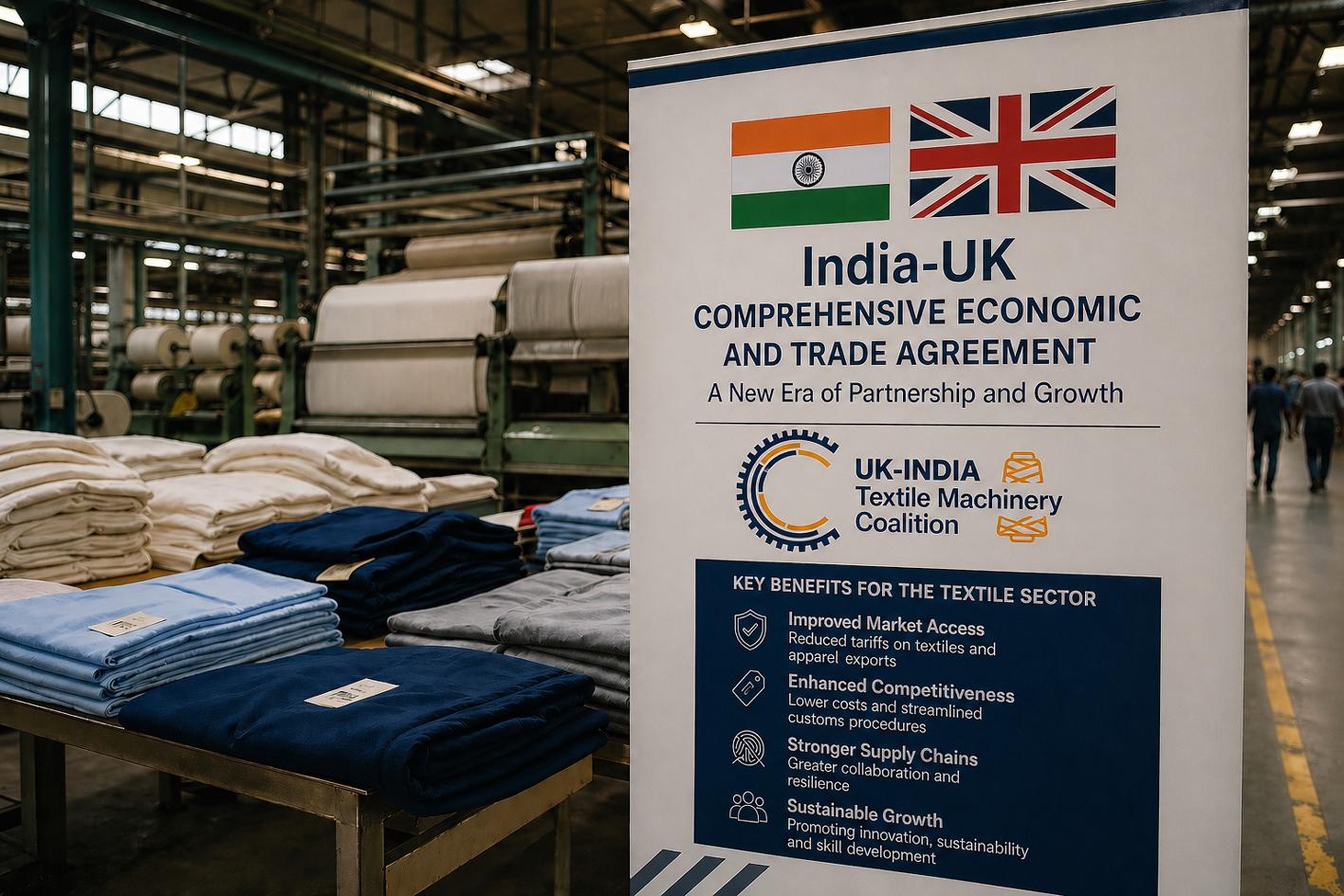
As one of a number of new initiatives launched this year, the British Textile Machinery Association (BTMA) is launching the UK-India Textile Machinery Coalition.

The UK-India Free Trade Agreement, signed in July 2025, has implications that extend across sourcing, competitiveness and long-term trade dynamics, believes BTMA CEO Jason Kent.

“At its core, this deal removes or reduces tariffs on the vast majority of clothing and home textiles, with duties of around 8-12% on Indian exports to the UK effectively eliminated,” he explains. “This gives Indian manufacturers significantly improved price competitiveness in one of the world’s most valuable consumer markets.”

For the BTMA’s manufacturers of textile machinery it also has strategically important benefits, he adds. 

“India is one of the world’s largest textile producers and continues to invest heavily in modernising its mills – from spinning and weaving through to finishing. Improved trade terms, including reduced tariffs and clearer market access conditions, make it easier for UK machinery suppliers to compete in this expanding market.”

As one of a number of new initiatives launched this year, the British Textile Machinery Association (BTMA) is launching the UK-India Textile Machinery Coalition.

The UK-India Free Trade Agreement, signed in July 2025, has implications that extend across sourcing, competitiveness and long-term trade dynamics, believes BTMA CEO Jason Kent.

“At its core, this deal removes or reduces tariffs on the vast majority of clothing and home textiles, with duties of around 8-12% on Indian exports to the UK effectively eliminated,” he explains. “This gives Indian manufacturers significantly improved price competitiveness in one of the world’s most valuable consumer markets.”

For the BTMA’s manufacturers of textile machinery it also has strategically important benefits, he adds. 

“India is one of the world’s largest textile producers and continues to invest heavily in modernising its mills – from spinning and weaving through to finishing. Improved trade terms, including reduced tariffs and clearer market access conditions, make it easier for UK machinery suppliers to compete in this expanding market.”

The official launch of the UK-India Textile Machinery Coalition will take place on May 8th at the India ITME Centre in Mumbai, and businesses and media interested in attending should contact the BTMA’s Janette Hunter via info@ btma.org.uk.

Home opportunities
Back in the UK, the BTMA has launched the Future Leaders Committee (FLC) aimed at high-potential, mid-career professionals within its member companies.

The FLC programme is being structured to develop leadership, governance and strategic capability through formal training and enable its members to gain exposure to industry-wide challenges and opportunities, while acting as an advisory committee providing fresh perspectives and future-focused insight to the organisation.

In further support to companies, the BTMA Industry Placement Bursary Scheme is designed to support member companies in taking on student placement graduates and apprentices, while strengthening the future skills pipeline of the textile machinery and services sector. 

The new Curious about Textiles short course has meanwhile been developed to support new BTMA member company entrants as well as a refresher to others in this vibrant sector of the industry.
 
“We need to ensure we are doing enough to support the future of the industry, not just commercially, but in terms of people, skills and leadership,” Jason Kent concludes. “The course is now fully developed and has been curated directly from the expertise of our members. We’ll be running a two-day pilot in early June at the BTMA offices in Manchester and then rolling it out more broadly to our membership in the autumn. It’s heavily subsidised by BTMA, so participation for our member organisations is very affordable. Please contact us directly for further information and let’s work together to support the exciting future for UK-made textile technologies.”

28.04.2026

Source Fashion Expands Advisory Board

Source Fashion has announced a refreshed Advisory Board, bringing together leading voices from across fashion, retail, sustainability and media to help shape the next phase of Source Fashion’s growth and industry impact. As the industry navigates increasing complexity across supply chains, regulation and responsible sourcing, the strengthened board reflects Source Fashion’s commitment to driving meaningful industry collaboration and delivering practical, commercially relevant solutions for buyers and manufacturers.

Advisory Board Expanded with New Members
The new Advisory Board appointments strengthen expertise across circularity, responsible sourcing and industry insight. New members include Kirsty McGregor, journalist and former Vogue Business editor; Rosie Cripps, Head of Circularity at Vivobarefoot; Miranda Beckett, Fashion Project Manager at the Ellen MacArthur Foundation; and James Sleater, CEO of Buffalo Systems.

Source Fashion has announced a refreshed Advisory Board, bringing together leading voices from across fashion, retail, sustainability and media to help shape the next phase of Source Fashion’s growth and industry impact. As the industry navigates increasing complexity across supply chains, regulation and responsible sourcing, the strengthened board reflects Source Fashion’s commitment to driving meaningful industry collaboration and delivering practical, commercially relevant solutions for buyers and manufacturers.

Advisory Board Expanded with New Members
The new Advisory Board appointments strengthen expertise across circularity, responsible sourcing and industry insight. New members include Kirsty McGregor, journalist and former Vogue Business editor; Rosie Cripps, Head of Circularity at Vivobarefoot; Miranda Beckett, Fashion Project Manager at the Ellen MacArthur Foundation; and James Sleater, CEO of Buffalo Systems.

Together, they bring a wealth of experience spanning global fashion media, circular business models and systems-level change across the industry. Kirsty McGregor is widely recognised for her systems-level understanding of fashion’s supply chain challenges, with particular expertise in materials innovation, circularity and onshoring.

Rosie Cripps brings expertise in translating circular business models into commercially viable solutions, supporting Source Fashion’s focus on delivering responsible sourcing grounded in real-world application. Miranda Beckett contributes a systems-level perspective on circularity through her work at the Ellen MacArthur Foundation, helping to connect industry ambition with practical frameworks for change across the fashion supply chain. James Sleater, CEO of Buffalo Systems, brings deep experience in UK manufacturing and technical apparel production, offering valuable insight into building resilient, high-quality supply chains at a time of growing demand for British-made products.

Rosie Cripps commented, “I’m delighted to be joining the Source Fashion Advisory Board. Source Fashion plays a vital role in bringing the industry together around responsible sourcing grounded in commercial reality. I’m really looking forward to collaborating with the Source team and fellow board advisors to help contribute meaningful, practical progress across the industry.”

Miranda Beckett added, “I’m delighted to be joining Source Fashion’s Advisory Board at such a pivotal moment for the industry. Source Fashion plays a vital role in connecting brands, suppliers and innovators around the shared challenge of building responsible supply chains. I look forward to contributing to conversations that help turn a vision of a circular economy for fashion into a practical reality for sourcing professionals across the sector.”

Existing board members provide continued industry leadership
The new appointments join an established group of Advisory Board members drawn from across retail, sourcing, sustainability and policy. Existing members include Oliver Bruckner, Product Director at JOSEPH; Hayley Shore, Design Director at PepsiCo; Simon Platts, former Sourcing Director at ASOS; Lauretta Roberts, CEO of TheIndustry.fashion; Nicola Kirby, Commercial Director at Bhartiya Group; Mark Sumner, Policy Lead at WRAP; Nick Reed, Founder of Neem London; and Helena Mansell-Stopher, CEO of Products of Change.

Together, the board brings a broad cross-section of industry expertise, ensuring Source Fashion remains closely aligned with the evolving needs of brands, retailers and manufacturers, while continuing to provide a platform for informed discussion, collaboration and practical progress across the fashion supply chain.

The Advisory Board will play a key role in shaping the direction of Source Fashion, from content and programming to wider industry engagement. 

Suzanne Ellingham, Event Director of Source Fashion, said, “As Source Fashion continues to grow, it’s essential that we are guided by the right mix of industry voices. Our Advisory Board brings together leaders who are not only shaping the future of fashion but are deeply engaged in the practical challenges facing sourcing, manufacturing and supply chains today. In order for our programme and event to remain industry leading, these voices are vital as businesses reflect on the tsunami of challenges ahead, from commercial challenges, new regulatory frameworks and unprecedented levels of volatility that is now just business as usual. Their insight ensures that everything we deliver, from the show floor to our content programme, remains relevant, commercially focused and aligned with where the industry is heading.”

She added, “The addition of new members strengthens our ability to reflect the evolving priorities of the industry, particularly around circularity, responsible sourcing and innovation. By bringing these perspectives together, we’re able to create a platform that not only responds to change but actively helps drive it.”

More information:
advisory board Source Fashion
Source:

Source Fashion

28.04.2026

Autoneum Holding AG: Total of CHF 3.20 per Share

The shareholders of Autoneum Holding Ltd approved all motions proposed by the Board of Directors at the Annual General Meeting. For the 2025 financial year, a total distribution of CHF 3.20 per share was approved. 

A total of 205 shareholders attended the Annual General Meeting of Autoneum Holding Ltd in Winterthur. Overall, 62.09 percent of the share capital was represented either by shareholders present or by the independent proxy. 

In his address, Chairman of the Board of Directors Hans Peter Schwald also referred to Autoneum’s 15 year anniversary: “Over this period, Autoneum has successfully established itself as a global market and technology leader, expanded its presence in Asia, continuously developed its portfolio, strengthened vertical integration and at the same time built a strong, distinct corporate culture.” 

The shareholders of Autoneum Holding Ltd approved all motions proposed by the Board of Directors at the Annual General Meeting. For the 2025 financial year, a total distribution of CHF 3.20 per share was approved. 

A total of 205 shareholders attended the Annual General Meeting of Autoneum Holding Ltd in Winterthur. Overall, 62.09 percent of the share capital was represented either by shareholders present or by the independent proxy. 

In his address, Chairman of the Board of Directors Hans Peter Schwald also referred to Autoneum’s 15 year anniversary: “Over this period, Autoneum has successfully established itself as a global market and technology leader, expanded its presence in Asia, continuously developed its portfolio, strengthened vertical integration and at the same time built a strong, distinct corporate culture.” 

CEO Eelco Spoelder outlined the key developments of the 2025 financial year and stated: 
“While the automotive industry has recently made many negative headlines, Autoneum has developed positively. Thanks to our clear strategy, broad customer base, dedicated employees, and the high powertrain independence of our products and technologies, we are confident about the future.” 

The shareholders approved the 2025 Annual Report, including the consolidated and standalone financial statements. They also approved the Board of Directors’ proposal to distribute a total of CHF 3.20 per registered share for the 2025 financial year, reflecting the positive consolidated result. As of May 5, 2026, a dividend of CHF 1.60 per share will be paid, less 35 percent Swiss withholding tax, as well as a withholding tax exempt repayment from capital contribution reserves of CHF 1.60 per share. 

Hans Peter Schwald will remain Chairman of the Board of Directors. The shareholders re elected Liane Hirner, Norbert Indlekofer, Martin Klöti, Michael Pieper and Oliver Streuli as members of the Board of Directors for a further term of office. Yanni von Roy Jiang, a member of the Board of Directors and of the Strategy and Sustainability Committee since 2025, did not stand for re election. Hans Peter Schwald commented: “On behalf of the Board of Directors, I would like to sincerely thank Yanni von Roy Jiang for her commitment and valuable contributions. With her international experience and strategic foresight, she has significantly enriched the work of our Board. We wish her all the very best for the future.” 

The shareholders re elected Hans Peter Schwald, Norbert Indlekofer and Oliver Streuli to the Compensation Committee. KPMG AG, Zurich, will continue as statutory auditors for another year, and Ulrich B. Mayer was again confirmed as the independent proxy for a further term. 

The shareholders granted discharge to all members of the Board of Directors and the Executive Committee with more than 99.35 percent of the votes cast. The advisory votes on the 2025 Compensation Report and the Corporate Responsibility Report received approval ratings of 86.62 percent and 95.53 percent respectively. The proposals on the maximum compensation of the Board of Directors and the Executive Committee for the 2027 financial year were also approved by a large majority.


INDA Opens Nominations for the 2026 FiltXPO™ Innovation Awards (c) INDA
INDA Opens Nominations for the 2026 FiltXPO™ Innovation Awards
27.04.2026

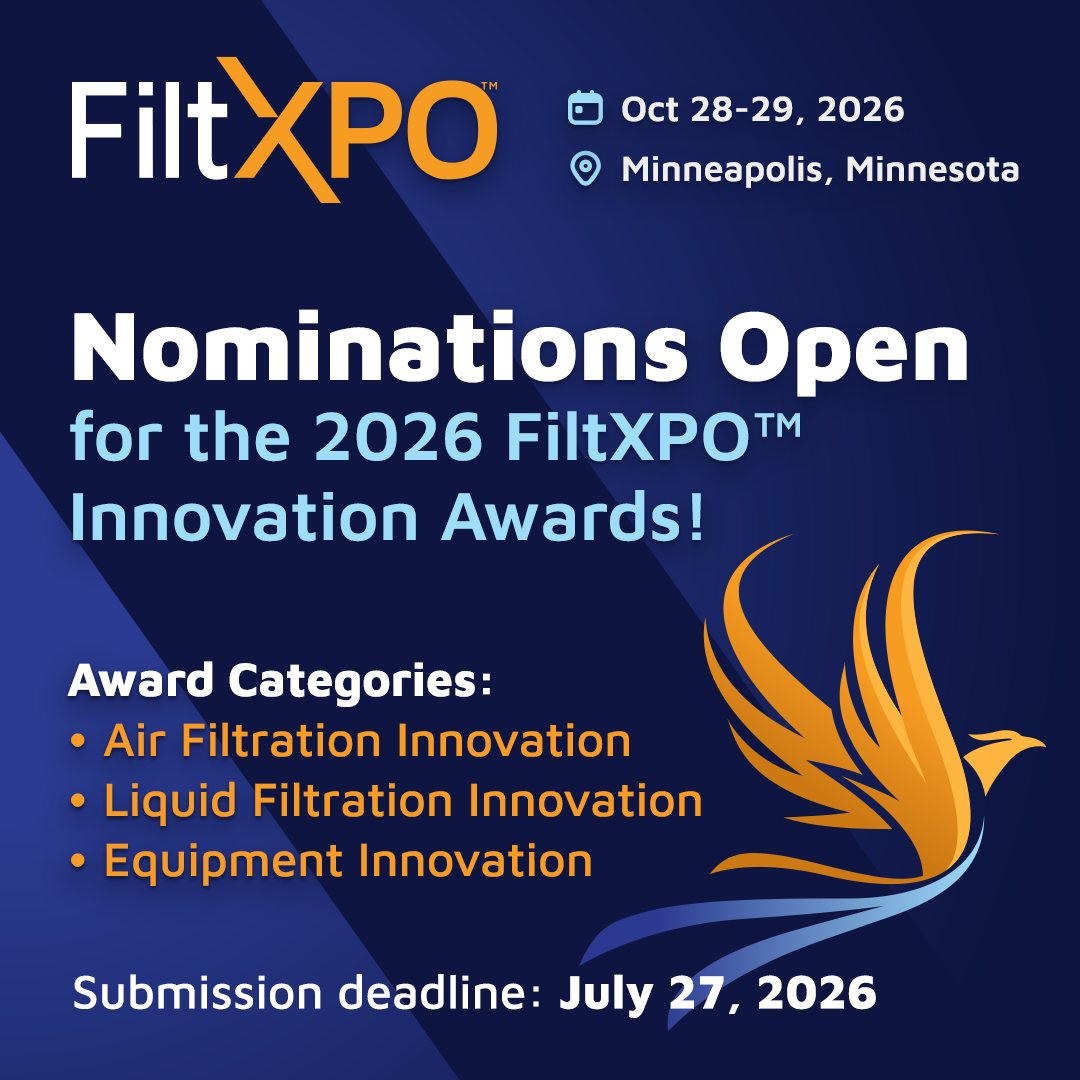
INDA Opens Nominations for the 2026 FiltXPO™ Innovation Awards

INDA, the Association of the Nonwoven Fabrics Industry, in collaboration with International Filtration News, has officially opened nominations for the 2026 FiltXPO™ Innovation Awards. Filtration professionals are invited to submit their most innovative products—or those of their customers—for industry-wide recognition.

The FiltXPO Innovation Awards celebrate excellence in filtration by honoring products and technologies introduced since FiltXPO 2023. Submissions are now being accepted across three categories.

Award Categories:

  • Air Filtration Innovation
  • Liquid Filtration Innovation
  • Equipment Innovation

All nominations must be submitted by July 27, 2026. Finalists will be selected by INDA’s Technical Advisory Board, with the top three entries in each category advancing to the final round. Winners will be determined through industry voting hosted on the International Filtration News website.

INDA, the Association of the Nonwoven Fabrics Industry, in collaboration with International Filtration News, has officially opened nominations for the 2026 FiltXPO™ Innovation Awards. Filtration professionals are invited to submit their most innovative products—or those of their customers—for industry-wide recognition.

The FiltXPO Innovation Awards celebrate excellence in filtration by honoring products and technologies introduced since FiltXPO 2023. Submissions are now being accepted across three categories.

Award Categories:

  • Air Filtration Innovation
  • Liquid Filtration Innovation
  • Equipment Innovation

All nominations must be submitted by July 27, 2026. Finalists will be selected by INDA’s Technical Advisory Board, with the top three entries in each category advancing to the final round. Winners will be determined through industry voting hosted on the International Filtration News website.

Award recipients will be announced live at FiltXPO 2026, taking place October 28–29, 2026, at the Minneapolis Convention Center in Minneapolis, Minnesota.
For full award criteria and eligibility requirements, visit: https://www.inda.org/awards/filtexpo-innovation-award.html

To submit a nomination, visit: https://www.filtnews.com/filtxpo-awards/

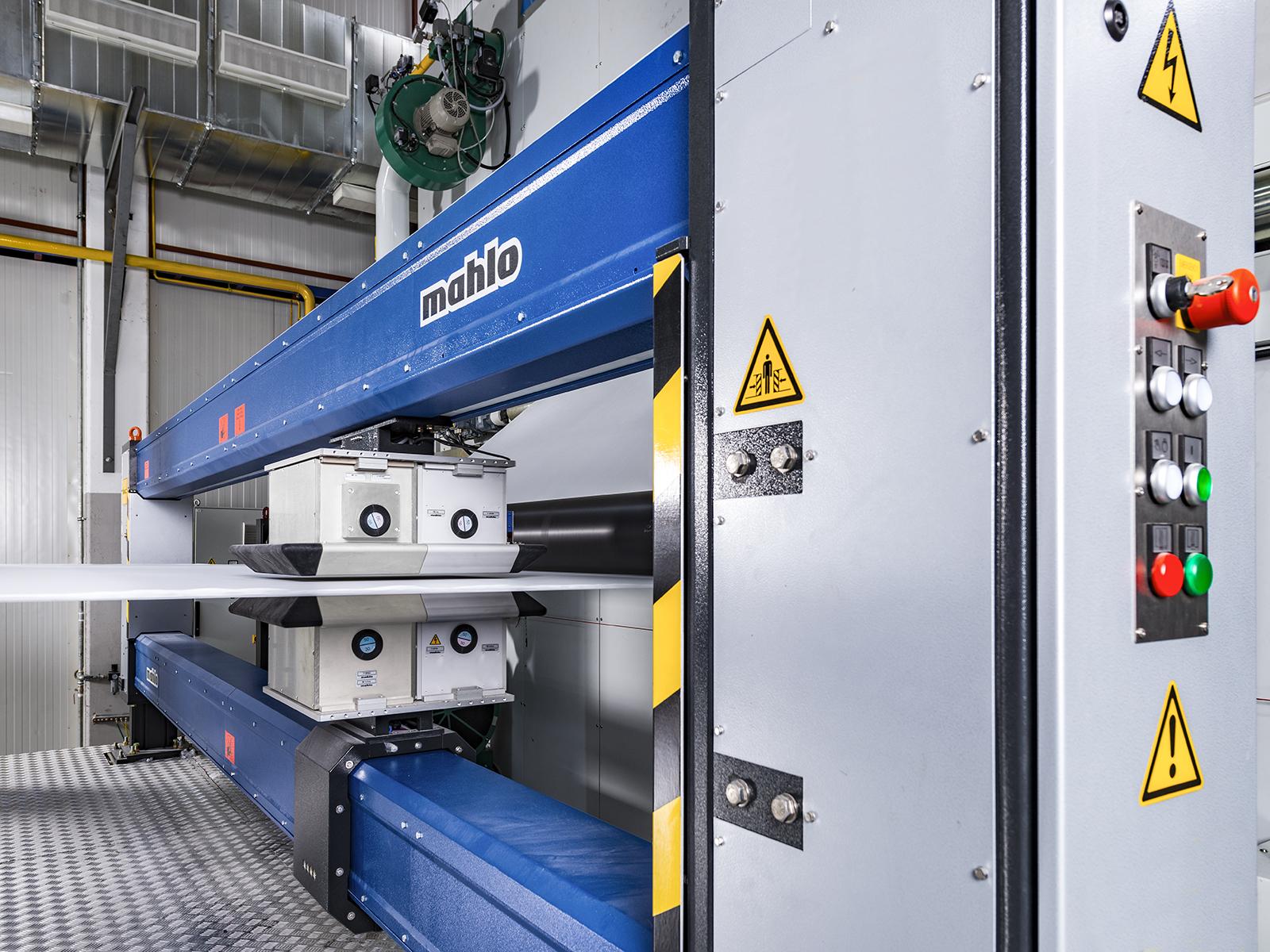
Web Gauging with Qualiscan QMS (c) Mahlo GmbH & Co. KG
Web Gauging with Qualiscan QMS
27.04.2026

Mahlo: Smart Quality Control for Technical Textiles

In the end, what matters is the result: a filter that performs reliably, a membrane that remains stable in storm conditions, a composite material with precisely defined properties. But the path to achieving this is demanding. In the production of technical textiles, numerous parameters interact – and even the smallest deviations can have major consequences. 

This very challenge shaped this year’s Techtextil. Many of the exhibiting companies face the daily task of producing complex materials while maintaining consistently high quality standards. It requires a finely tuned interplay of fibers, coatings, temperature, moisture, and tension. Whether it is protective textiles, technical filters, or carbon applications: precision is not an option, but a prerequisite. And monitoring these parameters is the key to success. 

In the end, what matters is the result: a filter that performs reliably, a membrane that remains stable in storm conditions, a composite material with precisely defined properties. But the path to achieving this is demanding. In the production of technical textiles, numerous parameters interact – and even the smallest deviations can have major consequences. 

This very challenge shaped this year’s Techtextil. Many of the exhibiting companies face the daily task of producing complex materials while maintaining consistently high quality standards. It requires a finely tuned interplay of fibers, coatings, temperature, moisture, and tension. Whether it is protective textiles, technical filters, or carbon applications: precision is not an option, but a prerequisite. And monitoring these parameters is the key to success. 

Perfect Alignment for Woven Fabrics  
Companies such as Frenzelit, Freudenberg, Friedola, Getzner, Juta, Sattler, Swisstulle, and Toray demonstrated at the trade fair just how diverse the applications of classic woven fabrics can be. At the same time, it became clear that even the slightest distortion errors can lead to functional failure and therefore waste. Mahlo’s Orthopac systems ensure that fabrics remain perfectly aligned throughout these processes – continuously, reliably, and often unnoticed in the background. 

Consistent Quality in Nonwovens 
Nonwovens are no less complex. Manufacturers such as Alkegen (Gutsche), Dyneema, Filz Fulda, Freudenberg, Johns Manville, Lenzing, Norafin, Polyvlies, Pont Aurell, Tenowo, and TWE represent materials with a wide range of properties used in hygiene products, vehicles, filters, and medical applications. 

What matters most here is one thing above all: basis weight. Even minor deviations can determine whether a product meets the required specifications or not. With Qualiscan QMS, this crucial parameter is monitored continuously – and adjusted immediately when necessary. This ensures consistent quality, even at high production speeds. 

Coatings Under Full Control 
Another key topic at Techtextil was coatings. Multi-layer materials, complex constructions, and precisely defined properties are what characterize modern technical textiles. But the more complex a material becomes, the more sensitive it is to fluctuations in the process. 

This is where Mahlo sensors provide decisive insights: they detect early on when coatings become too thick or too thin, enabling immediate corrective action. Errors do not only become visible at the end – they are prevented from being produced in the first place. 

Moisture and Temperature: Invisible but Essential 
The same applies to moisture. It is invisible, but crucial for many processes. Whether in nonwovens, felts, or drying processes, precise control saves energy, stabilizes operations, and ensures product quality. IR and microwave sensors provide the necessary real-time data.
For sensitive materials such as prepregs or thermally stabilized fabrics, temperature control becomes essential. Systems such as Optipac and Ecopac ensure that materials are processed exactly within the required temperature ranges. 

Source:

Mahlo GmbH & Co. KG

© Joanna Benedetti Pirri
27.04.2026

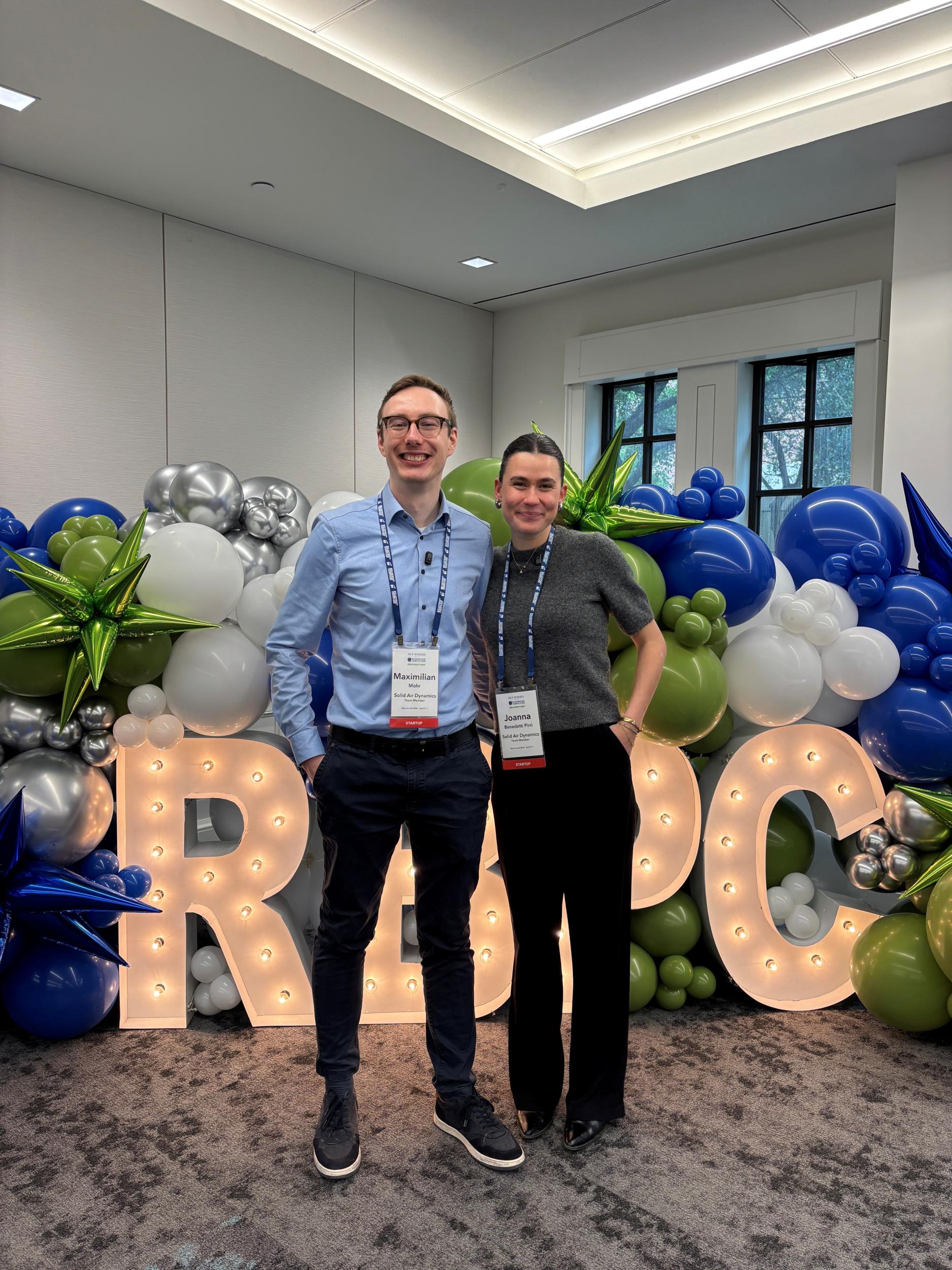
ITA spin-off Solid Air (SA) Dynamics reaches the semi-finals of the Rice Business Plan Competition

The ITA spin-off SA Dynamics has been nominated for the semi-finals of this year’s Rice Business Plan Competition (RBPC), one of the world’s most prestigious start-up competitions, held at Rice University in Houston, Texas.

Out of 550 applications from around the world, only 42 teams were accepted to take part in the competition. SA Dynamics impressed the judges with its technology and business model, reaching the semi-finals as one of the top 15 teams.

The RBPC also offered SA Dynamics the opportunity to engage closely with leading international coaches and investors. The insights gained and networks established will strengthen the company’s future development in the long term.

“Making it into the top 15 out of 550 applications and 42 teams at the RBPC is a testament to everything we work towards every day. We are incredibly proud of our team and grateful for every conversation, every challenge and every new connection we made in Houston.”— SA Dynamics Team

The ITA spin-off SA Dynamics has been nominated for the semi-finals of this year’s Rice Business Plan Competition (RBPC), one of the world’s most prestigious start-up competitions, held at Rice University in Houston, Texas.

Out of 550 applications from around the world, only 42 teams were accepted to take part in the competition. SA Dynamics impressed the judges with its technology and business model, reaching the semi-finals as one of the top 15 teams.

The RBPC also offered SA Dynamics the opportunity to engage closely with leading international coaches and investors. The insights gained and networks established will strengthen the company’s future development in the long term.

“Making it into the top 15 out of 550 applications and 42 teams at the RBPC is a testament to everything we work towards every day. We are incredibly proud of our team and grateful for every conversation, every challenge and every new connection we made in Houston.”— SA Dynamics Team

“We warmly congratulate SA Dynamics on its outstanding achievement,” emphasises Professor Dr Thomas Gries, Director of ITA. “This excellent result impressively underscores the high quality of our research and teaching at the ITA. We look forward to continuing to support SA Dynamics on its journey.”

Solid Air Dynamics develops bio-based and recyclable high-performance fibres for aerogel-based thermal insulation, thereby driving the transition towards more powerful and sustainable materials, and was the winner of the KUER business plan competition.NRW 2023, won the Techtextil Innovation Award 2024 and runner-up in the RWTH Innovation Award in 2026.

Source:

ITA – Institut für Textiltechnik of RWTH Aachen University