
From the Sector

Reset
17.03.2026

INDA Honors Four Industry Leaders with 2026 Lifetime Service and Technical Achievement Awards

INDA, the Association of the Nonwoven Fabrics Industry, has announced the four distinguished recipients of the 2026 INDA Lifetime Service Award and Lifetime Technical Achievement Award. Tom Daugherty, Pricie Hanna, Carey Hobbs, and CK Wong are being recognized for their exceptional leadership, innovation, and enduring contributions to advancing the nonwovens industry and strengthening the global community it serves.

The INDA Lifetime Awards honor professionals with distinguished records of service and technical accomplishment whose work has significantly influenced the development and advancement of nonwoven technologies, businesses, and the broader industry.

Award Recipients

INDA, the Association of the Nonwoven Fabrics Industry, has announced the four distinguished recipients of the 2026 INDA Lifetime Service Award and Lifetime Technical Achievement Award. Tom Daugherty, Pricie Hanna, Carey Hobbs, and CK Wong are being recognized for their exceptional leadership, innovation, and enduring contributions to advancing the nonwovens industry and strengthening the global community it serves.

The INDA Lifetime Awards honor professionals with distinguished records of service and technical accomplishment whose work has significantly influenced the development and advancement of nonwoven technologies, businesses, and the broader industry.

Award Recipients

  • Tom Daugherty and Carey Hobbs will receive their awards at the World of Wipes® (WOW) International Conference, June 30th beginning at 4:30 pm
  • Pricie Hanna will receive her award at the Hygienix™ Conference, November 17th at 4:30 pm
  • Sabrina Wong, President, U.S. Pacific Procurement Company Ltd., will accept the posthumous award on behalf of her husband, CK Wong, at a future INDA event

Tom Daugherty: INDA Lifetime Technical Achievement Award
“It has been a great privilege to spend nearly 45 years collaborating with so many talented individuals in this industry to improve the lives of consumers worldwide. I am truly humbled to receive the INDA Lifetime Technical Achievement Award. My deepest thanks to my colleagues at P&G, partners across the supply sector, The Nonwovens Institute at NC State, the INDA community, and my wife and family for their amazing partnership. Here’s to the next generation of innovation!”

Tom Daugherty’s career spans decades of service to the nonwovens industry, both in industry R&D leadership roles at Procter & Gamble where he first retired in 2016, and also in a unique industry-academic partnership role at The Nonwovens Institute at NC State, where he retired in 2025.

Throughout, he was dedicated to the idea of driving business growth through innovation, and doing this by working to improve consumer’s lives with delightful benefits and winning with consumers vs. the best competition. Other powerful innovation themes included focus on platform technologies that could be leveraged for multi-generational initiatives to meet consumer needs, and to allocate balanced effort across the different innovation types to build, transform, and create markets.

He advanced through R&D positions spanning upstream technology development, business unit product development, and initiative launch. And through his collaboration as a part of multidisciplinary teams representing, in varied capacities, global brands such as Pampers, Luvs, Always, Naturella, Bounty, Swiffer, Mr. Clean, and others, he contributed to product and process technologies that have been used hundreds of billions of times by consumers around the world. 

Nonwoven specific innovations include developing benefits and functions related to comfort, resilience, softness, wettability, fluid handling, apertures, mechanical fastening, carrier for skin care ingredients, barrier for leakage prevention, surface cleaning, personal care skin cleaning, and stretch. And at The Nonwovens Institute, it was an honor to contribute to the delivery of filtration products needed for health care during the COVID pandemic.

Recognizing the importance of contributing to building the business, and to building organizational and industry capability, Tom was also very active in industry service roles. He served on the INDA Board of Directors from 2007 to 2009 and later as a member of the INDA Executive Committee from 2010 to 2016. In addition, he played a significant role at The Nonwovens Institute (NWI), serving on its Executive Committee from 2003 to 2016, including as Chair from 2006 to 2008, and as Chair of the NWI Scientific Advisory Board from 2010 to 2016. And in his second career at The Nonwovens Institute, Daugherty brought enthusiasm and strategic leadership to the organization, helping support its continued growth and success.

Tom commented upon the highlights of his long and multi-faceted career, “The absolute best part of my career was having the opportunity and privilege to collaborate with so many talented people in the nonwovens industry. Collaboration is the most powerful, and fun, way to create and deliver business results.”

Pricie Hanna: INDA Lifetime Service Award
“I have benefited from the services of INDA’s talented staff for the 40 years that I have been in the nonwovens industry.  I am truly humbled and honored to receive the INDA Lifetime Service Award. It has been a blessing to collaborate with this close-knit community of dedicated professionals as the industry has innovated and grown all around the world.”

Pricie Hanna is Managing Partner of Price Hanna Consultants, a firm founded in 2011 with Partner, David Price, which specializes in nonwoven products and technologies. Pricie’s expertise in hygiene absorbent products ranges from tracking market trends to estimating the demand and technical requirements for raw materials – such as resins, fiber, fluff pulp, nonwovens, film, superabsorbents, adhesives and elastics – used to make these products. She is a frequent conference speaker and has authored numerous papers and publications on the global markets for hygiene absorbent products and other nonwovens businesses.

For twenty-three years before that, Pricie was Vice President of John R. Starr, Inc., and led the firm’s consulting practice in hygiene absorbent products and nonwoven wipes. Pricie managed numerous client engagements involving market and technology feasibility, supply/demand outlook, strategy development, new product opportunity evaluation, competitor assessments, value chain analyses, and financial valuations.

Prior to joining John R. Starr, Inc., Pricie was Vice President – Finance, Planning and Administration for the Scott Nonwovens Division of Scott Paper Company. During sixteen years with Scott Paper, Pricie held various corporate positions including Vice President – Corporate Planning; Vice President – Corporate Financial Services and Assistant Treasurer. Before joining Scott Paper, Pricie was a corporate lending officer at Citibank in New York City. She received an A.B. degree from the University of Pennsylvania and completed the Executive Education Program in Corporate Financial Management at the Harvard Graduate School of Business. She and her husband Colin live in West Chester, Pennsylvania. They have two adult children and two avid soccer-playing grandsons.

Carey Hobbs: INDA Lifetime Technical Achievement Award
“I was shocked to learn that I’m receiving this Lifetime Achievement Award. I have devoted my professional career to making cars quieter, making jackets warmer, defending our country, and helping families enjoy quilting. This honor humbles me and lets me know that my career has positively impacted people’s lives.”

Carey Hobbs joined Hobbs Bonded Fibers (formerly known as Clark Brothers Felt Company) in 1963 and grew the company into a leader in the nonwoven industry, with applications across government, military, medical, automotive, industrial, and crafts until he sold in 2015.

He loved providing jobs that his employees could depend on, and his team members became integral leaders in their community.

The company was only the seventh bonded polyester plant in the world. Carey was renowned for creating the Heirloom and Tuscany Collections, which became two of the most in-demand quilt batting labels in the industry.

While he produced his own brands that ranked #2 in the industry, he also manufactured the #1 and #3 brands for other companies. As a result, he produced 90% of the quilt batting sold in America.

“I saw quilting as the ideal arena because it is so personal. Quilt patterns and techniques have been passed down from generation to generation. We still have quilts made by our own parents and grandparents.”

Carey adds, “I figured that if I couldn’t sell all the quilt batting in the nation, at least I could manufacture most of it. If I were going to lose a sale to someone, I could lose it to myself under a different label. I was fortunate to lead a team of innovators who elevated an entire industry.”

Carey was the second-largest producer of fiber fill for ski jackets and leaned into the automotive sector, supplying components for 12 of the 15 top-selling vehicles in the United States. A constant innovator, he owns or has owned all or parts of at least four patents, some of which remain classified as projects involving the joint Armed Forces.

The Small Business Administration (SBA) named Carey the “Small Businessperson of the Year” for the Dallas District. He was also appointed by the George H.W. Bush administration to serve on the U.S. Department of Commerce Industry Sector Advisory Committee for Trade Policy Matters for Textiles and Apparel.

He celebrated his 90th birthday in December and published his memoir, Piloting Life, which includes 60 years of stories and advancements in the nonwoven industry, along with his passion for family and flying. A portion of the proceeds benefits the Tunnel to Towers Foundation.

Carey served our nation in the U.S. Marine Corps as a jet fighter pilot and a test pilot. In our industry, he served two terms on INDA’s board of directors. Today, he focuses on his grandchildren and great-grandchildren and serves on the boards of various charitable organizations. He and his late wife, Brenda, helped start the Texas Tech University Center for Collegiate Recovery Communities, which became the model adopted by more than 200 universities.

CK Wong: INDA Lifetime Service Award
“It is with profound gratitude that I accept this Lifetime Service Award in honor of my late husband, C.K. Wong. His dedication to nonwovens industry was not just a career, but a calling. He gave his time, his wisdom, and his heart to advancing the work and uplifting those around him. This recognition is a testament to the values he lived by—integrity, perseverance, and service. Though he is no longer with us, his legacy continues to guide and inspire, and I am deeply moved that his contributions are remembered in this way.” – Sabrina Wong, President, U.S. Pacific Procurement Company Limited

C.K. Wong, Chairman and CEO of U.S. Pacific Nonwovens Industry Limited, built a distinguished career at the forefront of the global nonwovens sector. Born and raised in Hong Kong, he became a U.S. citizen in his twenties after earning a Bachelor of Science in Mechanical Engineering in New York City.

Recognizing the potential of the emerging nonwovens industry in the early 1970s, CK began his career in the export and import of nonwoven products. In 1988, he returned to Hong Kong as a marketing consultant, and the following year established his corporate headquarters there to oversee manufacturing operations in China. His company specialized in converting nonwoven roll goods into disposable products for industrial and medical protection, addressing the critical challenge of cross-contamination. Over time, the business expanded into household, sports, and other value-added applications. Among his notable achievements was the invention of a patented patient mobility product, which generated significant global business through collaboration and partnerships.

Under CK’s leadership, U.S. Pacific Nonwovens Industry Limited experienced substantial growth. Beginning in 2000, he emphasized the importance of environmental sustainability, investing heavily in a spunbonding production line dedicated exclusively to PLA (polylactic acid), a biodegradable material.

Beyond his business accomplishments, CK was a respected industry leader and advocate for the advancement of nonwovens worldwide. He served as Vice Chairman, Vice Chairman-Finance, and later as an Executive Committee Appointee of INDA, the Association of the Nonwoven Fabrics Industry, where he was credited with helping to open the doors to China for the association. In China, he held prominent leadership roles, including Honorable Chairman of the Guangdong Nonwovens Association (GDNA) and Chairman of the Spunbonded Division of the China Nonwovens & Industrial Textiles Association (CNITA).

Through his vision, leadership, and commitment to innovation, CK Wong made lasting contributions to the growth and globalization of the nonwovens industry. His legacy continues today, inspiring entrepreneurship, sustainability, and international collaboration.

More information:
INDA lifetime award Award
Source:

INDA

Bryan Fry, Woolmark CEO (c) Antoine Doyen
Bryan Fry, Woolmark CEO
17.03.2026

Woolmark Appoints New CEO as Wool Demand Continues

Australian Wool Innovation (AWI), the organisation behind the global Woolmark brand, has announced Bryan Fry as its next Chief Executive Officer, effective immediately. 

AWI Chairman George Millington says the decision by the Board follows an extensive recruitment process: “Bryan brings global leadership experience, most recently serving as Chairman and Global Chief Executive Officer of Pernod Ricard Winemakers, where he led large-scale international operations across multiple markets and premium brands. 

His career is distinguished by a rare combination of hands-on agricultural experience as an agronomist alongside deep expertise in international marketing, brand development and commercial strategy. This unique blend of skills positions him strongly to lead the research, development and marketing organisation for Australian woolgrowers, including AWI’s global Woolmark program. 

Bryan’s background in agriculture, coupled with his proven global leadership and brand expertise, makes him exceptionally well suited to lead the organisation. 

Australian Wool Innovation (AWI), the organisation behind the global Woolmark brand, has announced Bryan Fry as its next Chief Executive Officer, effective immediately. 

AWI Chairman George Millington says the decision by the Board follows an extensive recruitment process: “Bryan brings global leadership experience, most recently serving as Chairman and Global Chief Executive Officer of Pernod Ricard Winemakers, where he led large-scale international operations across multiple markets and premium brands. 

His career is distinguished by a rare combination of hands-on agricultural experience as an agronomist alongside deep expertise in international marketing, brand development and commercial strategy. This unique blend of skills positions him strongly to lead the research, development and marketing organisation for Australian woolgrowers, including AWI’s global Woolmark program. 

Bryan’s background in agriculture, coupled with his proven global leadership and brand expertise, makes him exceptionally well suited to lead the organisation. 

I would also like to thank John Roberts for his outstanding leadership as CEO since October 2021. During his tenure, John has delivered strategic focus and strong performance for the organisation and industry alike. John will work closely with Bryan to ensure a thorough and seamless handover, supporting continuity and ongoing momentum.” 

Bryan Fry said he was looking forward to commencing the role and working closely with stakeholders across the industry: “I am excited to join AWI and to help deliver better outcomes both on and off farm. Australian wool is by far the best natural fibre in the world and I am looking forward to playing my part in securing an even brighter future for woolgrowers and the wider industry.”

Source:

Australian Wool Innovation AWI

17.03.2026

Deemed Importer obligations must not be delayed to 2028

16 industry associations published a joint statement on deemed importer obligations to urge the EU and its Member States to put in place such a Regulation without delay:

European traders and industry are deeply concerned about the rise of imports of small consignments. The introduction of the ‘deemed importer’ in 2028 comes too late. We call upon the EU and its Member States to introduce a legal obligation on foreign operators to appoint a legally responsible person or entity in the EU for e-commerce imports without any further delay. 

The extraordinary growth of e-commerce in recent years has led to an exponential number of small packages of low-valued goods entering the EU, each of which needs to be accompanied by an individual customs declaration since the entry into force of new VAT rules for e-commerce in 2021. In 2022, for example, almost 1 billion customs declarations for low-value goods were filed. The sheer volumes of e-commerce are testing customs' limits. 

16 industry associations published a joint statement on deemed importer obligations to urge the EU and its Member States to put in place such a Regulation without delay:

European traders and industry are deeply concerned about the rise of imports of small consignments. The introduction of the ‘deemed importer’ in 2028 comes too late. We call upon the EU and its Member States to introduce a legal obligation on foreign operators to appoint a legally responsible person or entity in the EU for e-commerce imports without any further delay. 

The extraordinary growth of e-commerce in recent years has led to an exponential number of small packages of low-valued goods entering the EU, each of which needs to be accompanied by an individual customs declaration since the entry into force of new VAT rules for e-commerce in 2021. In 2022, for example, almost 1 billion customs declarations for low-value goods were filed. The sheer volumes of e-commerce are testing customs' limits. 

Many of the products arriving here contravene the rules in force in the EU. Infringements like VAT fraud, breaching health and safety EU standards, violation of intellectual property rights and misleading claims fuel unfair competition within the Single Market, disadvantaging businesses that follow the EU’s high standards. Such unfair trade practices, linked to small consignments, are corroding entire industrial value chains, eroding our economic strength and resilience and put the consumer health at risk. Additionally, they threaten shops all over the EU, accelerating the depopulation of town centres. 

Against this background, we welcome that the EU, with the new Union Customs Code (UCC), plans to introduce the so-called “deemed importer”, i.e. holding platforms responsible for ensuring that customs duties and VAT are paid at purchase as well as for non-financial obligations. 

However, if the “deemed importer” is introduced only in 2028, this will come too late. In 2025 alone, 5.8 billion parcels were imported into the EU. In the coming years, the pressure on our industries of competing with non-compliant traders which bear no responsibility for non-compliance, will mount to an unbearable extent and threaten the livelihood of even more economic operators, with massive consequential job losses. 

The introduction of an obligation to appoint a legally responsible person or entity in the European Union who can be held accountable is long overdue. This can be established much earlier than 2028 by a simple EU Regulation at short notice, long before the ‘deemed importer’ and other elements of the UCC are introduced. Technically easily feasible, it is just a question of political will. 

We also acknowledge the forthcoming European Product Act, which aims to further strengthen the overall framework for product compliance and market surveillance. We stress that compliance with European Union Extended Producer Responsibility (EPR) obligations must be effectively enforced, including in relation to online sales and third-country sellers. Online marketplaces and any legally responsible EU representative should be subject to clear and binding enforcement mechanisms to ensure that products placed on the EU market comply with applicable EPR requirements (including packaging, WEEE, batteries and textiles), thereby preventing free-riding and safeguarding a level playing field. These initiatives will only deliver their full effect in the medium term. 
If properly defined and implemented, these new concepts have the potential to help address gaps in online product compliance. 

List of Signatories:
Applia – Home Appliance Europe
CEC – European Footwear Confederation
Cosmetics Europe - The personal care association
EBCA - European Branded Clothing Association
ECOS – European Coalition on Standards
EFIC - European Furniture Industries Confederation
EURATEX - European Apparel and Textile Confederation
EXPRA – Extended Producer Responsibility Alliance
Independent Retail Europe
LightingEurope – The voice of the Lighting Industry
Repair&Share
Svensk Handel – Swedish Commerce
TIE - Toy Industries of Europe
WEEE Forum
ZERO – Associação Sistema Terrestre Sustentável
EucoLight

Source:

European Apparel and Textile Confederation EURATEX

13.03.2026

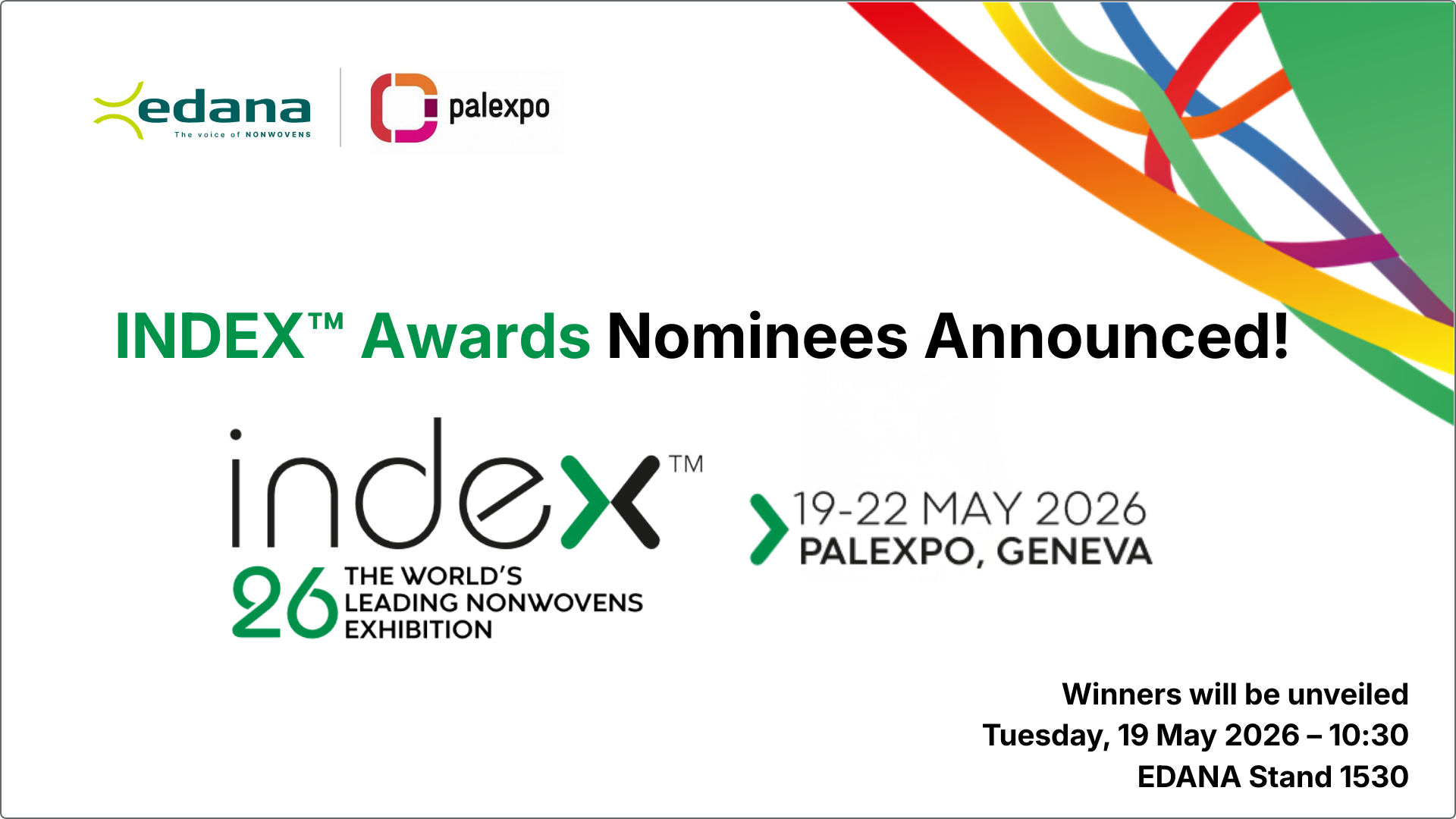
EDANA unveils nominees for INDEX™26 Awards

EDANA unveiled the nominees for the INDEX™26 Awards, the nonwoven industry’s highest accolade for technical and sustainable excellence. Out of a record-breaking field of entries, the finalists represent the cutting edge of material science—from bio-based hygiene fibers and PFAS-free protective textiles to revolutionary water-filtration machinery. Each nominee has been selected by a jury of industry experts for their ability to solve critical global challenges, including the transition to a circular economy and the pursuit of enhanced consumer performance. 

EDANA unveiled the nominees for the INDEX™26 Awards, the nonwoven industry’s highest accolade for technical and sustainable excellence. Out of a record-breaking field of entries, the finalists represent the cutting edge of material science—from bio-based hygiene fibers and PFAS-free protective textiles to revolutionary water-filtration machinery. Each nominee has been selected by a jury of industry experts for their ability to solve critical global challenges, including the transition to a circular economy and the pursuit of enhanced consumer performance. 

1. Nonwoven Roll Goods

Lenzing – LENZING™ Dualwipe 
LENZING™ Dualwipe is a high-performance cleaning wipe crafted from regenerated cellulose using LENZING™ Nonwovens Technology. Its innovative dual-surface design integrates abrasion and absorbency in a single material, enabling efficient cleaning without relying on fossil-based synthetic materials, binders, or chemical additives. One side features a mechanically active surface for scrubbing away dirt, grease, and residues, while the other offers a soft, highly absorbent surface for liquid uptake and surface finishing. Designed for industrial, professional, and household applications, LENZING™ Dualwipe is compatible with existing converting and processing infrastructure, facilitating rapid adoption. 
 
The jury praised LENZING™ Dualwipe for addressing the pressing industry challenge of combining performance with sustainability. By leveraging a novel web architecture of cellulose filaments, it eliminates plastics and microplastics while delivering high-efficiency cleaning. The innovation demonstrates how fiber-level design can create tangible environmental impact without compromising functionality, offering a scalable, market-ready solution that aligns with both regulatory and consumer demands. 
 
Magnera Corporation - Next-Gen Fluid Barrier Technology 
Magnera’s proprietary fluid barrier technology represents a major advancement in protective medical textiles. Designed for demanding surgical and clinical environments, it delivers durable liquid repellency against water, oil, and other fluids without intentionally added PFAS, chemicals traditionally used for this function. Evidence of PFAS persistence in the environment and possible associated health risks has prompted global regulatory action and growing demand for alternatives. Through advanced material engineering, the technology maintains the high-performance healthcare professionals require while aligning with evolving global regulatory expectations. By eliminating legacy chemistries and ensuring consistent barrier performance, it provides a safer and more environmentally responsible alternative to conventional PFAS-based materials.  
  
The jury recognized Magnera for addressing a long-standing challenge in medical textiles: achieving reliable fluid resistance without harmful chemicals. Combining regulatory readiness, operational reliability, and sustainability, the innovation offers healthcare providers and manufacturers a credible, scalable solution for the future.  While healthcare remains a primary application, the underlying platform has potential relevance in other markets that require durable, PFASalternative liquid barrier solutions. 
 
Woolchemy  - neweFlex™ ADL 
Woolchemy has developed neweFlex™ ADL, a plastic-free acquisition distribution layer containing neweFibre™ — Woolchemy's hygiene-grade wool fibre that meets strict regulatory standards for non-sterile hygiene products while preserving wool's natural functionality. Engineered as a plastic-free alternative to petroleum-based ADLs, neweFlex™ ADL is a blend between wool and plant-based fibres to deliver natural benefits including breathability, thermal regulation, and odour control — while being naturally compatible with skin. Wool is a keratin-based fibre — the same structural protein found naturally in human skin, making it an inherently gentle, renewable choice for disposable hygiene products such as diapers and sanitary pads. 
 
The jury recognised neweFlex™ ADL for overcoming long-standing technical and regulatory barriers that previously prevented wool from being used in disposable hygiene products. By enabling wool fibres to run on standard carded spunlace nonwoven equipment, Woolchemy has created a plug-and-play solution for manufacturers seeking alternatives to fossil-based nonwovens. Demonstrated performance in hygiene layers, including fast liquid acquisition and low rewet, confirms that this renewable material can match synthetic materials while advancing the industry’s transition toward more sustainable, plastic-free hygiene products.

2. Finished products made from, or incorporating nonwovens - Single-use application

Corman - Organyc brand "Personalized Protection" Light Incontinence Pads  
Corman’s new light incontinence pads deliver personalized protection through three key innovations. The Smart-Cotton™ cover with a citric acid buffer maintains an ideal skin pH of 5.5, reducing irritation. The patented Cotton-Balanced Absorbent Core channels liquid to superabsorbent polymers that lock in moisture and expand toward the body for superior leak protection. Natural odor control uses an organic ingredient to bind ammonia and slow odor formation, eliminating odor instead of masking it. Clinically proven, the pads address the three main concerns of light incontinence: leaks, odor, and skin irritation. 
 
The jury recognized the product for its consumer-focused innovation, combining skin-friendly materials, adaptive absorption, and effective odor control in one solution. The patented absorbent core was highlighted as a market-first technical advancement. Supported by clinical evidence, the product enhances comfort, confidence, and dignity for users. Its impact is amplified by the brand’s sustainability initiatives, including reducing ocean plastics and improving livelihoods through the Plastics for Change partnership, demonstrating both social and environmental responsibility. 
 
Teknomelt Teknik Mensucat – Fibrasiv® 
Fibrasiv® Abrasive Spunlace is an application-driven nonwoven innovation developed to meet the growing demand for effective yet safe cleaning materials across multiple end-use sectors. The material functions by combining a soft, absorbent spunlace base with an integrated abrasive structure that enables controlled mechanical cleaning. This allows the removal of stubborn dirt, residues, and contaminants while minimizing the risk of surface damage. 
 
The jury appreciated Fibrasiv® for redefining the functional boundaries of spunlace nonwovens. By embedding controlled abrasive performance directly into a soft, flexible fabric, the innovation transforms a traditionally gentle wiping material into a multifunctional cleaning solution. This approach improves cleaning efficiency, reduces reliance on harsh chemical cleaners, and simplifies cleaning processes by replacing multiple tools with a single material. Its combination of performance, usability, and sustainability makes Fibrasiv® a valuable advancement for both professional and consumer cleaning applications. 

3. Finished products made from, or incorporating nonwovens - Durable application

Confitex Technology - Reusable Nonwoven Bed Pads 
This new Confitex technology has enabled the world’s first machine-washable and tumble-dryable nonwoven bed pads, opening a significant new application for nonwoven materials. Using a proprietary fibre-stabilisation bonding technique, the innovation allows absorbent nonwoven structures to withstand more than 30 machine wash and tumble-dry cycles while maintaining performance. The fully nonwoven construction combines a fast-wicking top sheet with a highly absorbent core capable of holding over two litres of liquid. In addition, a bonded frame structure prevents leakage across the entire surface, including the edges, addressing a common weakness of stitched textile bed pads. 
 
The jury particularly valued how this innovation unlocks a new market segment for the nonwoven industry. By making absorbent nonwovens fully laundry-compatible, the technology enables nonwoven suppliers to enter the rapidly growing reusable bed pad market, historically dominated by textile products. At the same time, the product delivers improved absorbency, leak protection, and ease of care for users, while supporting sustainability goals through reusability and the use of predominantly natural-based fibres. 
 
DuPont Personal Protection - DuPont™ Tychem® 6000 SFR 
DuPont™ Tychem® 6000 SFR garments represent a breakthrough in personal protective equipment, delivering unprecedented dual protection against chemical exposure and flash fire hazards. Designed to be worn over primary flame-resistant (FR) clothing, these garments use a lightweight, multi-layer fabric laminate to provide at least 30 minutes of barrier protection against more than 250 chemicals, including toxic industrial chemicals, and flammable organic solvents. By combining advanced chemical resistance with secondary flame protection, Tychem® 6000 SFR enables workers in oil & gas, chemical manufacturing, and emergency response to operate safely in high-risk environments without compromising comfort or mobility. 
  
The award jury highlighted the innovation for its ability to address a long-standing safety challenge: protecting workers simultaneously from chemical and thermal hazards. Tychem® 6000 SFR protective coverall delivers the broadest chemical coverage in the lightest-weight secondary flame-resistant garment, while its engineered design self-extinguishes in flash fire scenarios. The jury praised the garment’s combination of multi-hazard protection, durability, and comfort, recognizing its significant contribution to improving occupational health and safety standards. 
 
Pelsan Tekstil - Metabreathe™ 
Metabreathe™ is an advanced nonwoven-based thermal insulation composite designed to address a key challenge in cold chain logistics: combining high solar reflectance with breathability and recyclability. Unlike conventional covers that rely on glued aluminum foils or PET films, Metabreathe™ utilizes a proprietary process where reflective particles are precision-printed onto a high-performance breathable film, which is then integrated with a specially engineered nonwoven structural foundation. This unique composite approach preserves the fabric’s interstitial spaces and the film's microporosity, allowing air and moisture vapor to pass through while reflecting over 90% of solar radiation. Scientifically proven to keep cargo 1215°C cooler during extreme ramp exposure, Metabreathe™ is currently trusted by global logistics leaders. 
 
The award jury highlighted Metabreathe™ for its practical and environmental impact This innovation represents a notable step forward for cold chain materials, reducing raw material consumption by 70% and demonstrating how nonwoven material science can reconcile performance, efficiency, and circular economy principles.

4. Raw materials or components of special relevance to the nonwovens and related converted products industry  

Bostik  - Kizen™ Miles 9.0 
Bostik’s latest innovation, Kizen™ Miles 9.0, is the first adhesive designed for disposable hygiene article construction, that offers the unique feature of debonding on demand: when exposed to a specific chemical key, combined with controlled temperature and mechanical stress, the adhesive allows clean, rapid separation of plastic components in minutes. This process keeps the adhesive material on the substrate, preventing contamination for cleaner, more efficient hygiene article recycling. But during the lifetime of the hygiene article, this new material, based on up to 75% renewable materials, delivers exceptional bonding across a wide range of substrates—including PP, PE, and PLA—while maintaining stable performance over time and under wet conditions. 
 
The jury praised Kizen™ Miles 9.0 for its combination of sustainability and functionality. By reducing carbon footprint by up to 90% per kilogram of adhesive (compared to fully fossil based adhesives, according to internal Bostik calculation) and enabling separation of complex hygiene article components, it addresses a critical bottleneck in diaper recycling. Its ability to maintain performance during use yet allow controlled disassembly after use was recognized as a breakthrough in circular economy solutions for absorbent hygiene products. 
 
Fiberpartner – PolyPlant® 
PolyPlant® is a PLA-based fiber engineered to overcome the traditional mechanical, thermal, and processing limitations of conventional polylactic acid. Its proprietary formulation enhances crystallization behavior, molecular stability, and fiber morphology while maintaining full biogenic carbon content. Without relying on synthetic additives, PolyPlant® delivers high-performance PLA fibers that are compatible with existing industrial equipment, enabling manufacturers to adopt renewable materials without sacrificing efficiency or product quality. 
 
The award jury praised PolyPlant® for its scientific ingenuity and practical impact.  By addressing PLA’s limitations, PolyPlant® provides a credible alternative to fossilbased fibers. Its intrinsic performance improvements, achieved without additives, ensure consistent product quality and reliable processing in real-world production lines. The jury highlighted its potential to accelerate the transition toward sustainable materials while maintaining industrial efficiency, marking PolyPlant® as a transformative innovation for the fiber and nonwoven sectors. 
 
The Lycra Company - LYCRA® ADAPTIV fiber 
Building upon its proven performance in apparel, LYCRA® ADAPTIV fiber now elevates hygiene garments with hybrid elasticity that adjusts to the body at rest and in motion. This results in products that stay in place, have a second skin fit and are easier to put on and take off. LYCRA® ADAPTIV fiber represents a material-led innovation that has the potential to enable consistent, inclusive user experience across expanded size ranges— addressing an industry-wide challenge. 
 
The jury praised LYCRA® ADAPTIV fiber for addressing a key industry challenge: delivering a consistent wearing experience across expanded size ranges without adding SKUs. By dynamically adjusting to diverse body shapes, the fiber ensures comfort, support, and fit for users at all points of the size spectrum. This innovation helps manufacturers pursue scalable solutions that feel personalized across body types—while preserving SKU discipline and operational efficiency.

5. Innovation in machinery of special relevance to the nonwovens industry 

Kansan – KM Hydroentanglement Filtration System 
This innovation is a mechanical filtration system developed as an alternative to conventional chemical filtration units used in wetlaid and spunlace production lines.  
 
Instead of complex filtration systems, flotation units, and chemical additives, the system utilizes dedicated mechanical filtration equipment to enable the recovery and reuse of water and fibers directly within the production process.  
 
By eliminating the need for chemicals, the system provides a more sustainable, efficient, and process-integrated solution for water and fiber management in nonwoven production. 
 
The jury recognized that through its multi-stage mechanical filtration concept, the system delivers substantial environmental and operational benefits: approximately 200 kWh of energy savings per hour, 20 cubic meters of water savings per hour, and up to 2 tons of fiber recovery per day. Its ability to significantly reduce chemical consumption, lower operational costs, and improve sustainability without compromising production efficiency impressed the jury as a truly forward-thinking solution. 
 
Teknoweb Converting - OCEAN – Converting technology for high-performance, lowimpact underpads 
OCEAN is IMA Teknoweb’s advanced converting system for absorbent underpads, combining new manufacturing technology with a revised product design to improve performance while using fewer materials. The system features a drumless core formation process that builds the absorbent core directly on a carrier web, ensuring even distribution of fluff and SAP and enabling ultra-thin, lightweight underpads. It also supports multilayer structures, including optimized 5-layer designs and a patent-pending 4-layer configuration with integrated leakage barriers. This approach allows production of thinner, lighter, and more efficient underpads without affecting quality or output. 
 
The award jury highlighted OCEAN for addressing industry challenges around material efficiency, product reliability, and sustainability. Its linear core formation and multilayer designs can reduce raw material use by up to 30% and lower energy consumption. By combining stable output with reduced environmental impact, OCEAN provides manufacturers with an approach that balances innovation, performance, and resource efficiency, responding to the market demand for highquality, discreet absorbent products. 
 
ZUIKO - Converting machine for recloseable baby diapers 
ZUIKO has developed a converting line to produce adjustable pull on pant diapers that address the challenge of achieving a secure fit around a baby’s waist and legs while maintaining softness and stretchability. The design of such a diaper combines the adjustability of open diapers with the stretch characteristics of pant diapers. Unlike conventional pant diapers, which are processed symmetrically, ZUIKO’s recloseable diapers are asymmetric, requiring a precise, glue-less attachment process during folding. Central to the production is ZUIKO’s patented “Stretch Repitch Drum™,” which regulates elastic tension and product spacing, allowing panel folding in line with the machine’s flow. This system enables the production of over 700 diapers per minute without the need for multiple folding units. 
  
The jury recognized the technical ingenuity of ZUIKO’s approach, particularly how the machine merges two product attributes efficiently. They highlighted the asymmetric folding and tension-control mechanisms as practical solutions to a long-standing industry challenge. The innovation offers a new product format for consumers and provides manufacturers a method to produce it at scale without added complexity. 
 
The winners in each category will be announced during a special ceremony at the INDEX™26 exhibition, the world’s leading nonwovens event, which will take place on the first day of INDEX™26, Tuesday, 19 May at 10:30 CET, on the EDANA stand. These awards serve not only to honor the ingenious engineering of the finalists but also to provide a roadmap for the future of the entire nonwovens supply chain. 

Source:

EDANA 

11.03.2026

Successful World Pultrusion Conference 2026

The 18th World Pultrusion Conference (WPC) took place in Valencia, Spain, from 5 to 6 March 2026. Pultrusion, also known as the pultrusion process, is a highly efficient method for manufacturing fibre-reinforced plastic profiles for various applications in the construction, infrastructure and transport sectors.

Around 120 participants from all over the world attended the conference. A total of 27 speakers gave 26 presentations on the latest developments, technologies and applications relating to pultruded fibre composites. The international audience consisted of experts from industry, research and application.

The 18th World Pultrusion Conference (WPC) took place in Valencia, Spain, from 5 to 6 March 2026. Pultrusion, also known as the pultrusion process, is a highly efficient method for manufacturing fibre-reinforced plastic profiles for various applications in the construction, infrastructure and transport sectors.

Around 120 participants from all over the world attended the conference. A total of 27 speakers gave 26 presentations on the latest developments, technologies and applications relating to pultruded fibre composites. The international audience consisted of experts from industry, research and application.

The lecture program covered a wide range of topics, including current market developments, innovative applications and new material and process developments. There was a particular focus on sustainability aspects, the further development of pultrusion processes – especially in the field of thermoplastic systems – and new applications for the technology, for example in construction, infrastructure and high-tech applications. The conference thus provided an important platform for professional exchange on trends and future prospects in the pultrusion industry.
 
As the largest event in Europe on the subject of pultrusion, the English-language conference takes place every two years in a European country of significance to the pultrusion industry and is organised by the European Pultrusion Technology Association (EPTA) in cooperation with the American Composites Manufacturers Association (ACMA).

The 19th edition of the WPC will take place in Istanbul (Turkey) in 2028.

Source:

AVK - Industrievereinigung Verstärkte Kunststoffe e. V. 

Graphic by EDANA
26.02.2026

EDANA warns of consequences of misclassification of PET spunbond imports

EDANA would like to remind its members and industry stakeholders of the legal requirement to comply with the EU rules on customs classification when importing non-wovens from third countries outside the EU. In this regard, it was recently discovered that there appears to be a high level of customs misclassification occurring in the nonwoven’s industry. This could have dangerous and costly consequences for importers. 

Following repeated requests by its members, EDANA worked closely with the European Union and the World Customs Organisation to introduce in 2024 specific customs codes CN code 5603 14 20 and 5603 9420 in order to better monitor imports of certain PET spunbond and staple fibre products. Based on market intelligence, EDANA knows that third country imports of the respective products were in the range of 15,000 to 30,000 MT in 2024 and 2025. However, actual import volumes recorded under the specifically created CN codes were significantly lower. 

EDANA would like to remind its members and industry stakeholders of the legal requirement to comply with the EU rules on customs classification when importing non-wovens from third countries outside the EU. In this regard, it was recently discovered that there appears to be a high level of customs misclassification occurring in the nonwoven’s industry. This could have dangerous and costly consequences for importers. 

Following repeated requests by its members, EDANA worked closely with the European Union and the World Customs Organisation to introduce in 2024 specific customs codes CN code 5603 14 20 and 5603 9420 in order to better monitor imports of certain PET spunbond and staple fibre products. Based on market intelligence, EDANA knows that third country imports of the respective products were in the range of 15,000 to 30,000 MT in 2024 and 2025. However, actual import volumes recorded under the specifically created CN codes were significantly lower. 

“There is a clear mismatch between import volumes observed in the market and what is reported under the correct customs codes. Often, importers continue to use outdated customs codes as a matter of habit not paying due attention to changes of the Combined Nomenclature”, says Jacques Prigneaux from EDANA. “However, this is problematic, especially where certain products are subject to investigations by the EU authorities.” 

EDANA has therefore actively commenced an outreach initiative to raise awareness among its members. They have also contacted the European Commission and the national customs authorities of the EU member states to ask the authorities to enhance import checks. 

Incorrect customs classification not only makes EDANA’s work more difficult to monitor import flows and protect the interests of its members. It can also have severe negative legal consequences for importers. Customs authorities penalize misclassifications with additional duties, administrative fines and even criminal penalties. “To avoid such unpleasant surprises, we recommend that all members and their supply chain regularly review and update their customs classification databases and also instruct their customs agents accordingly” adds Mr Prigneaux. 

Awareness and compliance are in particular important where imports are under enhanced customs control (such as in the framework of import registration during an anti-dumping investigation) or subject to special trade or regulatory regimes (such as duty-free or reduced duty imports from countries with which the EU has special trade arrangements). 

A list of preferential trade regimes can be found on the website of the European Commission (here) and the Access2Markets webpage contains product-specific information for imports of goods into the EU (here). Also, presently, certain PET spunbond from China is subject to an EU anti-dumping investigation and imports were made subject to registration in December 2025 (see here for further information). The exact definition of the product subject to the investigation is: ‘non-woven needle-punched sheets of polyester filaments, whether or not reinforced by glass fibres, weighing more than 70 g/m², of a thickness exceeding 0.5 mm but not exceeding 1.8 mm, impregnated with one or more binders, containing less than 30% of glass fibres by weight, not coated or covered’. All imports of these products must be classified under TARIC code 5603 1390 70, CN code 5603 14 20 or TARIC code 5603 1480 70.

Source:

EDANA

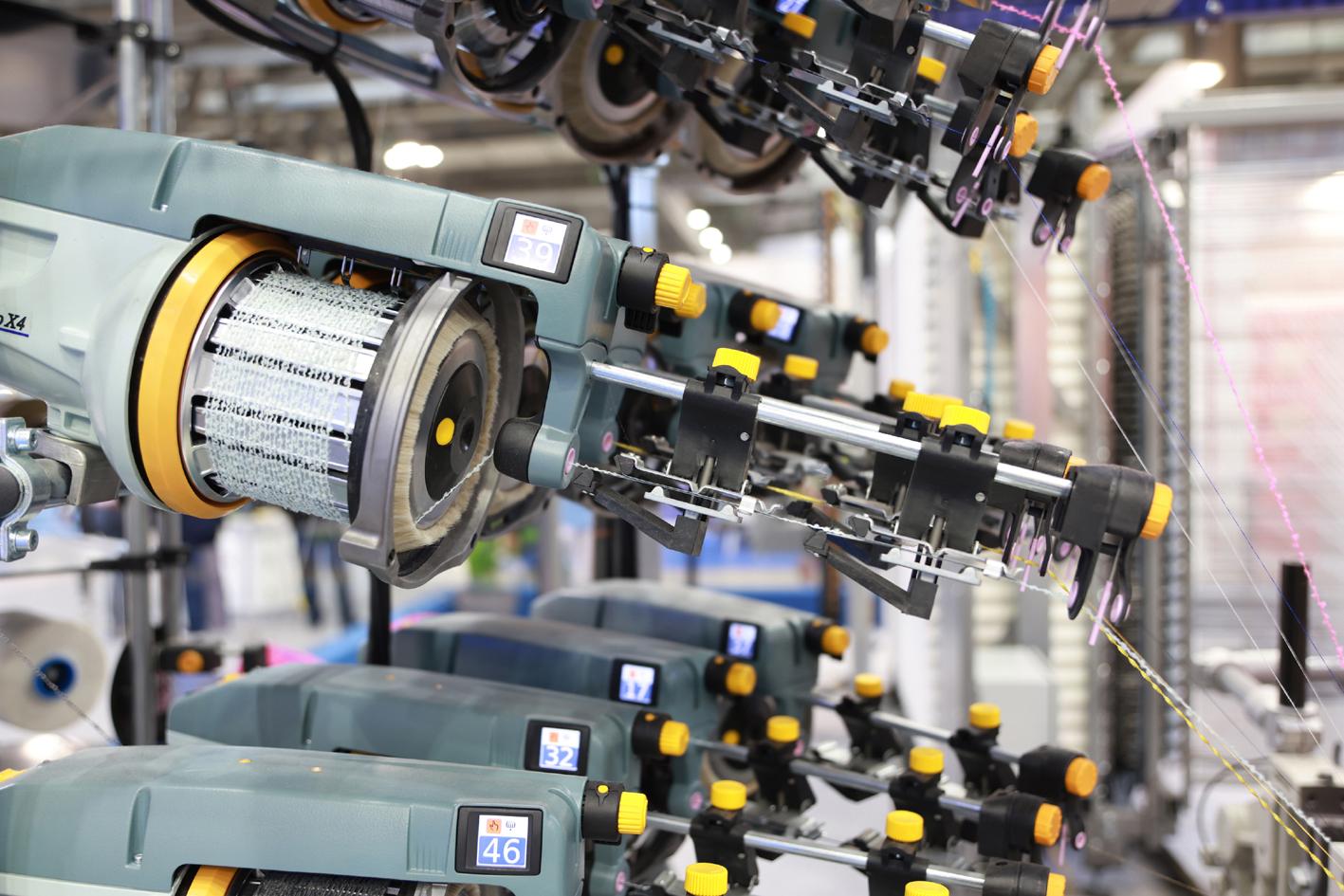
Vandewiele data-ready weft feeders in action. Photo (c) Vandewiele
Vandewiele data-ready weft feeders in action.
23.02.2026

Swedish efficiency at Techtextil & Texprocess

Process control, intelligent automation and long-term industrial reliability remain the shared priorities that continue to define members of TMAS, the Swedish textile machinery association.

“Across different stages of textile and material production, TMAS members are united by a common belief that productivity begins with stability,” says TMAS General Secretary Therese Premler-Andersson. “Rather than focusing on isolated machine functions, the emphasis is on controlling the critical variables that directly influence quality, efficiency and uptime.”

Examples of this approach will be demonstrated at Messe Frankfurt’s forthcoming Techtextil and Texprocess exhibitions taking place concurrently in Frankfurt from April 21-24.

Process control, intelligent automation and long-term industrial reliability remain the shared priorities that continue to define members of TMAS, the Swedish textile machinery association.

“Across different stages of textile and material production, TMAS members are united by a common belief that productivity begins with stability,” says TMAS General Secretary Therese Premler-Andersson. “Rather than focusing on isolated machine functions, the emphasis is on controlling the critical variables that directly influence quality, efficiency and uptime.”

Examples of this approach will be demonstrated at Messe Frankfurt’s forthcoming Techtextil and Texprocess exhibitions taking place concurrently in Frankfurt from April 21-24.

Operational value
In weaving and related processes for example, Vandewiele Sweden AB has long-standing expertise in weft feeding and tension control. At Techtextil 2026 in Hall 12 stand C21, company experts will be on hand to explain how, through ensuring repeatable, predictable yarn delivery at ever higher loom speeds, it is enabling weaving mills to operate closer to their technical limits while maintaining fabric quality. 

The company’s continued development of data-ready weft feeders reflects a broader approach to digitalisation, embedding intelligence where it delivers clear operational value rather than adding complexity to already demanding production environments.

Quality assurance
Eltex of Sweden addresses the same challenge from a complementary angle. Its electronic yarn sensors and tension monitoring systems focus on early detection, identifying yarn breaks, end-outs or abnormal tension before they lead to waste, downtime or quality claims. From weaving and warping through to tufting, braiding, quilting and sewing, Eltex technology provides the assurance that modern automated processes depend on. As production speeds increase and manual supervision is reduced, the ability to monitor yarn behaviour in real time becomes a key enabler of stable, high-quality output.

At Techtextil 2026, Eltex will highlight its latest EyETM Multiact system for heat setting machines, guaranteeing yarn consistency throughout the entire process via individual yarn tension monitoring and control according to a predefined reference tension. 

Each channel operates independently and the system also includes a machine stop function in the event of yarn breakage or if yarn tension operates outside preset limits.

Also showcased, will be the ACT-R system for rapier weaving machines which is highly effective in achieving constant weft yarn tension for yarns based on recycled fibres at one end of the scale, and for expensive technical yarns such as Kevlar at the other.

Consistency
Further downstream, BW Converting, extends this focus on control and assurance into dyeing and finishing. 

Following the runaway success of the company’s Baldwin TexCoat G4 finishing system in the past few years, the Baldwin TexChroma digital spray dyeing system is currently being launched.

“Since its introduction, global textile finishers have embraced TexCoat and are now reaping the benefits,” says vice-president of global business development Rick Stanford. “They have been able to increase profitability, cut energy use and reduce their carbon footprint, in addition to exercising precision control with our patented precision spray technology. In the past two years we have been very active in Asia, and many of these customers have been asking for a similar technology for the dyeing process.” 

From production data to date, TexChroma can achieve savings in energy, dyes and chemicals of more than 30% compared to conventional continuous pad batch dyeing using steam, and up to 50% compared to exhaust reactive dyeing. 

It also benefits from an advanced technology enabling reactive dyestuffs and alkali fixation chemicals to be mixed just seconds before spray application, in order to completely eliminate any ‘tailing and listing’– uneven dye application or colour variations.

Eton aUPS
Meanwhile, at Texprocess, Eton Systems will outline how Industry 4.0 and AI are further boosting the capabilities of its aUPS (AI powered unit production system) technologies.

Eton Systems productivity and management system have a positive impact on the productivity of thousands of production lines for a range of industries. Designed to increase value-added time in production by eliminating manual transportation and minimising handling, the individually addressable product carriers are now fully managed and controlled by the company’s advanced software.

The UPS works perfectly for mass production but provides companies with an extra competitive edge through its ability to quickly respond to special custom- made orders - even without disrupting an ongoing larger production batch. The aUPS is developed for circular garment identification, but the ambition is also to cover quality control in future linear production.

The individually addressable product carriers of these fully automated and digitised handling solutions for finished garments, home textiles and furniture are fully managed and controlled by the latest ETONingenious™ software.

This web based real-time data collection and information system continuously accumulates, processes, and makes all production information instantly available to supervisors, quality control personnel, and management.

Precision slitting
Also at Texprocess Svegea will demonstrate its EC 200-C colarette cutter as well as an FA 350 fully automatic roll slitting machine.
 
Svegea’s colarette technology is used by knit garment manufacturers around the world for the production of tubular components such as cuff and neck tapes and other seam reinforcements.  

“In Europe, while the garment manufacturing sector is relatively limited in size, interest in these machines has increased in recent years, mainly driven by logistics, cost and lead-time considerations as production moves closer to the market,” says Svegea Managing Director Håkan Steene. “The ongoing shortage of skilled operators has also increased the demand for such automated solutions.”
 
Svegea’s fully automatic FA 350 roll slitting machine meanwhile addresses a wider range of needs for roll conversion within the technical textiles sector, combining high capacity with very low power consumption and providing extremely accurate cutting precision. Capable of cutting both knitted and woven fabrics – including those produced from a wide range of technical fibres – it can accommodate different shaft sizes and is fully electronically controlled with servo motors. The touchscreen interface has recently been redesigned and expanded with new functions, including automatic control of the knife surface speed during the cutting cycle, maintaining consistent cutting conditions as the roll diameter decreases for improved cutting quality and material handling.
 
Bespoke bias cutting systems are another speciality of the company, for specifically contoured technical textile-based components.

Essential foundation
A second theme linking all TMAS members in Frankfurt is a shared response to the economic realities facing textile manufacturers worldwide. 

“Rather than promoting automation as an abstract objective, Swedish machinery suppliers focus on tangible productivity gains that help manufacturers in high-cost regions remain competitive,” says Premler-Andersson. “Reduced waste, higher uptime and repeatable quality are the essential foundations for sustainable manufacturing. 

Source:

Textile Machinery Association of Sweden

Federal procurement of American-made mission critical clothing, textiles and gear Deniece Platt, Pixabay (AI generated)
18.02.2026

Federal procurement of American-made mission critical clothing, textiles and gear

The National Council of Textile Organizations (NCTO), representing the full spectrum of U.S. textiles from fiber, yarn and fabrics to finished sewn products, applauded the launch of the House Berry Amendment Caucus. 

Statement from National Council of Textile Organizations (NCTO) President and CEO Kim Glas

“On behalf of the U.S textile industry, NCTO sincerely thanks Rep. Pat Harrigan (R-NC) and Rep. Don Davis (D-NC) for their leadership in co-chairing the new bipartisan House Berry Amendment Caucus, aimed at strengthening national security and the U.S. defense industrial supply chain through the federal procurement of American-made mission critical clothing, textiles and gear. 

“NCTO strongly supports this new caucus to promote and expand the Berry Amendment, a law requiring the Department of War (DOW) to buy textile and clothing products made with virtually 100% U.S. content and labor to support our U.S. warm industrial base. 

The National Council of Textile Organizations (NCTO), representing the full spectrum of U.S. textiles from fiber, yarn and fabrics to finished sewn products, applauded the launch of the House Berry Amendment Caucus. 

Statement from National Council of Textile Organizations (NCTO) President and CEO Kim Glas

“On behalf of the U.S textile industry, NCTO sincerely thanks Rep. Pat Harrigan (R-NC) and Rep. Don Davis (D-NC) for their leadership in co-chairing the new bipartisan House Berry Amendment Caucus, aimed at strengthening national security and the U.S. defense industrial supply chain through the federal procurement of American-made mission critical clothing, textiles and gear. 

“NCTO strongly supports this new caucus to promote and expand the Berry Amendment, a law requiring the Department of War (DOW) to buy textile and clothing products made with virtually 100% U.S. content and labor to support our U.S. warm industrial base. 

“The U.S. textile industry provides $1.8 billion of high-tech and functional components for vital uniforms and equipment for our armed forces each year. The Department of War estimates that over 8,000 different textile items are purchased for use by the U.S. military—and over 30,000 line items when individual sizes are considered.

“It is vital to America’s national security that the U.S. military maintain the ability to source high-quality, innovative textile materials, apparel, and personal equipment from a vibrant U.S. textile industrial base and key to this goal is defending and strengthening the Berry Amendment.

“We look forward to working with the new caucus’ leadership and our industry partners to focus congressional efforts on preserving the Berry Amendment and expanding opportunities for U.S. textile manufacturers, safeguarding domestic supply chains, and ensuring our troops continue to receive innovative, high-quality American-made products.”