
From the Sector

Reset
07.09.2026

EURATEX calls for €10 EU handling fee on low-value e-commerce imports

The European Apparel and Textile Confederation (EURATEX) is calling for an EU handling fee of around €10 on low-value e-commerce consignments entering the European market. The association argues that the fee should contribute to the costs of customs controls, market surveillance and product-safety enforcement associated with the rapidly growing volume of direct-to-consumer imports.

Low-value e-commerce imports into the European Union have increased sharply in recent years. According to the European Commission, around 5.9 billion low-value e-commerce items entered the EU in 2025, up 26% from 2024. The growth of direct shipments from non-EU online retailers and marketplaces has increased the workload for customs and market-surveillance authorities and intensified the debate about compliance with European product, safety and customs requirements.

The European Apparel and Textile Confederation (EURATEX) is calling for an EU handling fee of around €10 on low-value e-commerce consignments entering the European market. The association argues that the fee should contribute to the costs of customs controls, market surveillance and product-safety enforcement associated with the rapidly growing volume of direct-to-consumer imports.

Low-value e-commerce imports into the European Union have increased sharply in recent years. According to the European Commission, around 5.9 billion low-value e-commerce items entered the EU in 2025, up 26% from 2024. The growth of direct shipments from non-EU online retailers and marketplaces has increased the workload for customs and market-surveillance authorities and intensified the debate about compliance with European product, safety and customs requirements.

Since 1 July 2026, the EU has applied a temporary customs duty of €3 to low-value consignments of up to €150. The measure replaced the previous customs-duty exemption for such imports and is intended as a transitional arrangement until the new EU Customs Data Hub becomes operational. It is separate from the EU-wide handling fee for small e-commerce consignments provided for under the broader reform of the EU customs framework.

Following the latest agreement on the customs reform, the handling fee is to be introduced by 1 November 2026. Its level will be determined by the European Commission before the member states begin applying it.

Against this background, EURATEX used Première Vision in Paris to argue that the handling fee should be set at a level that more closely reflects the actual enforcement costs associated with the large number of individual consignments entering the Single Market.

The association proposes a benchmark of around €10 per parcel. According to EURATEX, the amount should ultimately be based on a detailed assessment of the costs incurred by customs authorities, market-surveillance bodies and other public authorities involved in checking imported goods.

Processing large numbers of small consignments requires customs declarations to be assessed, risks to be analysed and compliance requirements to be checked. Market-surveillance authorities are also responsible for identifying unsafe or non-compliant products and enforcing EU product-safety rules.

EURATEX therefore argues that the handling fee should primarily be viewed as an enforcement instrument rather than simply as a trade or taxation measure. Revenues generated by the fee should, in the association's view, be linked to additional resources for customs controls, market surveillance, product-safety enforcement and risk-analysis systems.

The proposed €10 level is a EURATEX position and has not been adopted by the European Union. The European Commission is responsible for determining the actual amount of the forthcoming EU handling fee.

The customs reform also changes the responsibilities of companies involved in distance selling to EU consumers. Online platforms and sellers covered by the new rules are to be treated as importers for customs purposes and will therefore assume greater responsibility for customs formalities and duty payments rather than leaving these obligations with individual consumers.

EURATEX considers stronger platform responsibility an important element in addressing non-compliant imports but also points to the risk of alternative logistics structures being used to circumvent controls. More intensive checks on individual direct-to-consumer parcels should not, according to the association, result in goods simply being channelled through bulk imports, EU warehouses or fulfilment centres instead.

Effective enforcement would therefore need to cover different logistics models and provide customs and market-surveillance authorities with sufficiently detailed information on both business-to-consumer and business-to-business flows.

The European textile and clothing industry comprises nearly 200,000 companies in the EU-27 and employs around 1.2 million people. The sector generates annual turnover of approximately €166 billion. Most companies are small and medium-sized enterprises.

For EURATEX, the debate about low-value imports is consequently also a question of competitive conditions. The association is calling for companies selling products to European consumers, irrespective of their country of establishment or distribution model, to be identifiable and subject to comparable customs, product-safety and market-surveillance requirements.


Source:

European Apparel and Textile Confederation EURATEX

PITAKA's Brand Event in Berlin: 'Signals in the Wind' Photo (c) PITAKA
PITAKA's Brand Event in Berlin: 'Signals in the Wind'
07.09.2026

PITAKA turns aramid fibre into a deliberately irregular woven surface

PITAKA has introduced a new weaving technique for aramid fibre at a brand event in Berlin. The company is best known for thin smartphone cases and accessories made with aramid. Its new “Trace Form” technique is intended to avoid a completely uniform programmed surface: selected fibres are allowed to drift from their prescribed path so that texture emerges from controlled irregularity.

The first application is the “Wind Over Wheat Trace Form Edition”, with a surface intended to evoke wind moving across a wheat field and offered in three finishes. PITAKA presents the method as an interaction between industrial precision, material response and human judgement. For textile and material developers, the notable point is that a high-performance fibre normally valued for strength and low weight is being used as the visible aesthetic element of the product itself.

PITAKA has introduced a new weaving technique for aramid fibre at a brand event in Berlin. The company is best known for thin smartphone cases and accessories made with aramid. Its new “Trace Form” technique is intended to avoid a completely uniform programmed surface: selected fibres are allowed to drift from their prescribed path so that texture emerges from controlled irregularity.

The first application is the “Wind Over Wheat Trace Form Edition”, with a surface intended to evoke wind moving across a wheat field and offered in three finishes. PITAKA presents the method as an interaction between industrial precision, material response and human judgement. For textile and material developers, the notable point is that a high-performance fibre normally valued for strength and low weight is being used as the visible aesthetic element of the product itself.

The release leaves important technical questions unanswered. It provides no fibre fineness, weave parameters, mechanical data or quantified performance difference versus earlier aramid constructions. It would therefore be misleading to describe the launch as a new performance class. What can be stated is that PITAKA is translating a deliberately variable woven structure into a commercial aramid product and broadening the interface between technical fibres, composite structures and lifestyle design.

The limited Trace Form edition is scheduled to launch on 17 September. For textile-industry coverage, the relevant angle is not the consumer-electronics accessory itself but the material strategy: technical fibres can acquire additional value through construction, surface appearance and tactile expression beyond their conventional performance role.

More information:
PITAKA aramid
Source:

PITAKA  

Graphic (c) Discover e-Solutions (DeSL)
07.09.2026

DeSL generates Digital Product Passports directly

DeSL has launched a Digital Product Passport solution built directly on product, material, supplier, quality and certification data managed in Product Lifecycle Management. The approach addresses a central challenge in emerging DPP requirements: companies need to combine information from multiple functions while retaining evidence of where data came from, how it was approved and whether supporting documentation remains valid.

Rather than creating a separate static passport record, DeSL generates the DPP from the current approved information held in PLM. Published information therefore remains connected to its underlying product and supplier records, version history and approvals. This can become particularly important when material composition, suppliers, certifications or quality information change during the product lifecycle.

DeSL has launched a Digital Product Passport solution built directly on product, material, supplier, quality and certification data managed in Product Lifecycle Management. The approach addresses a central challenge in emerging DPP requirements: companies need to combine information from multiple functions while retaining evidence of where data came from, how it was approved and whether supporting documentation remains valid.

Rather than creating a separate static passport record, DeSL generates the DPP from the current approved information held in PLM. Published information therefore remains connected to its underlying product and supplier records, version history and approvals. This can become particularly important when material composition, suppliers, certifications or quality information change during the product lifecycle.

The platform can combine product specifications, materials, supplier information, declarations, inspections and certifications. DeSL’s AI document intelligence is intended to analyse supporting documents, identify required information and expiry dates, and compare documentation with information maintained in PLM. Passports can be generated at the appropriate product level and delivered via QR codes, portals, retail systems and open APIs. Different audiences can receive different information while still drawing from the same governed product record.

For fashion and textile companies, the important shift is conceptual: DPP compliance becomes a master-data and governance challenge rather than simply a publishing task. The software announcement does not prove automatic compliance with every future regulatory requirement. It does, however, demonstrate a credible architecture in which product passports are generated from the same data used for product development, quality, supplier management and compliance.

Source:

Discover e-Solutions (DeSL)

01.09.2026

bluesign links textile-mill water management to input-stream chemistry

bluesign argues that water management in textile wet processing starts with the chemicals and raw materials entering the process. Its core point is that water in dyeing and finishing is not simply a resource but a carrier for chemistry. What enters the process therefore affects water demand, wastewater load, air emissions, workplace exposure and potential residues in the finished textile.

The input-stream-management approach intervenes before wastewater treatment. By selecting appropriate chemical products and controlling the process, substances of concern should ideally be prevented from entering the system in the first place. For mills, the point is operationally important because investment in water and effluent treatment alone does not address the source of many impacts. The article provides useful context as chemical restrictions, water scarcity and supply-chain transparency requirements become more demanding.

bluesign argues that water management in textile wet processing starts with the chemicals and raw materials entering the process. Its core point is that water in dyeing and finishing is not simply a resource but a carrier for chemistry. What enters the process therefore affects water demand, wastewater load, air emissions, workplace exposure and potential residues in the finished textile.

The input-stream-management approach intervenes before wastewater treatment. By selecting appropriate chemical products and controlling the process, substances of concern should ideally be prevented from entering the system in the first place. For mills, the point is operationally important because investment in water and effluent treatment alone does not address the source of many impacts. The article provides useful context as chemical restrictions, water scarcity and supply-chain transparency requirements become more demanding.

The LYCRA Company Reimagines the Trade Show Experience at Intertextile Photo via Lycra
31.08.2026

LYCRA: New fibre technologies for performance, stretch and renewable content

The LYCRA Company is presenting several fibre technologies in commercial apparel applications at Intertextile Shanghai. COOLMAX CloakFX for woven fabrics is designed to mask the appearance of sweat, improve wet and dry opacity and provide moisture management; the company says the fibre is made from 100% recycled PET and certified to the Global Recycled Standard. LYCRA FiT400 is being shown for knits and wovens, combining non-spandex mechanical stretch with cooling functionality. RENEWABLE LYCRA fibre contains 70% renewable content derived in part from field corn grown in the US Midwest. The technologies are presented in a 356-square-metre co-creation district with Asian textile partners, illustrating how ingredient-brand technologies are translated into workwear, denim, performance and everyday apparel.

The LYCRA Company is presenting several fibre technologies in commercial apparel applications at Intertextile Shanghai. COOLMAX CloakFX for woven fabrics is designed to mask the appearance of sweat, improve wet and dry opacity and provide moisture management; the company says the fibre is made from 100% recycled PET and certified to the Global Recycled Standard. LYCRA FiT400 is being shown for knits and wovens, combining non-spandex mechanical stretch with cooling functionality. RENEWABLE LYCRA fibre contains 70% renewable content derived in part from field corn grown in the US Midwest. The technologies are presented in a 356-square-metre co-creation district with Asian textile partners, illustrating how ingredient-brand technologies are translated into workwear, denim, performance and everyday apparel.

31.08.2026

Circ and Shenghong move textile-recycled polyester into commercial filament yarn production


US textile-to-textile recycler Circ has entered into a partnership with Shenghong Chemical Fiber New Material for the commercial production of polyester filament yarn using Circ’s recycled material. Shenghong will purchase Circ PET chip and manufacture recycled-content filament yarn at commercial scale. For Circ, the agreement expands access to one of China’s major fibre producers and creates an additional route to market for polyester recovered from textile waste. For brands and mills, the key point is that textile-to-textile feedstock is moving closer to established high-volume yarn manufacturing structures. The partnership also underlines that scaling chemical recycling depends not only on polymer recovery but on robust downstream relationships with fibre and yarn producers.


US textile-to-textile recycler Circ has entered into a partnership with Shenghong Chemical Fiber New Material for the commercial production of polyester filament yarn using Circ’s recycled material. Shenghong will purchase Circ PET chip and manufacture recycled-content filament yarn at commercial scale. For Circ, the agreement expands access to one of China’s major fibre producers and creates an additional route to market for polyester recovered from textile waste. For brands and mills, the key point is that textile-to-textile feedstock is moving closer to established high-volume yarn manufacturing structures. The partnership also underlines that scaling chemical recycling depends not only on polymer recovery but on robust downstream relationships with fibre and yarn producers.

Cinte Techtextil China Photo: Messe Frankfurt
28.08.2026

Cinte Techtextil China 2026 to open next week

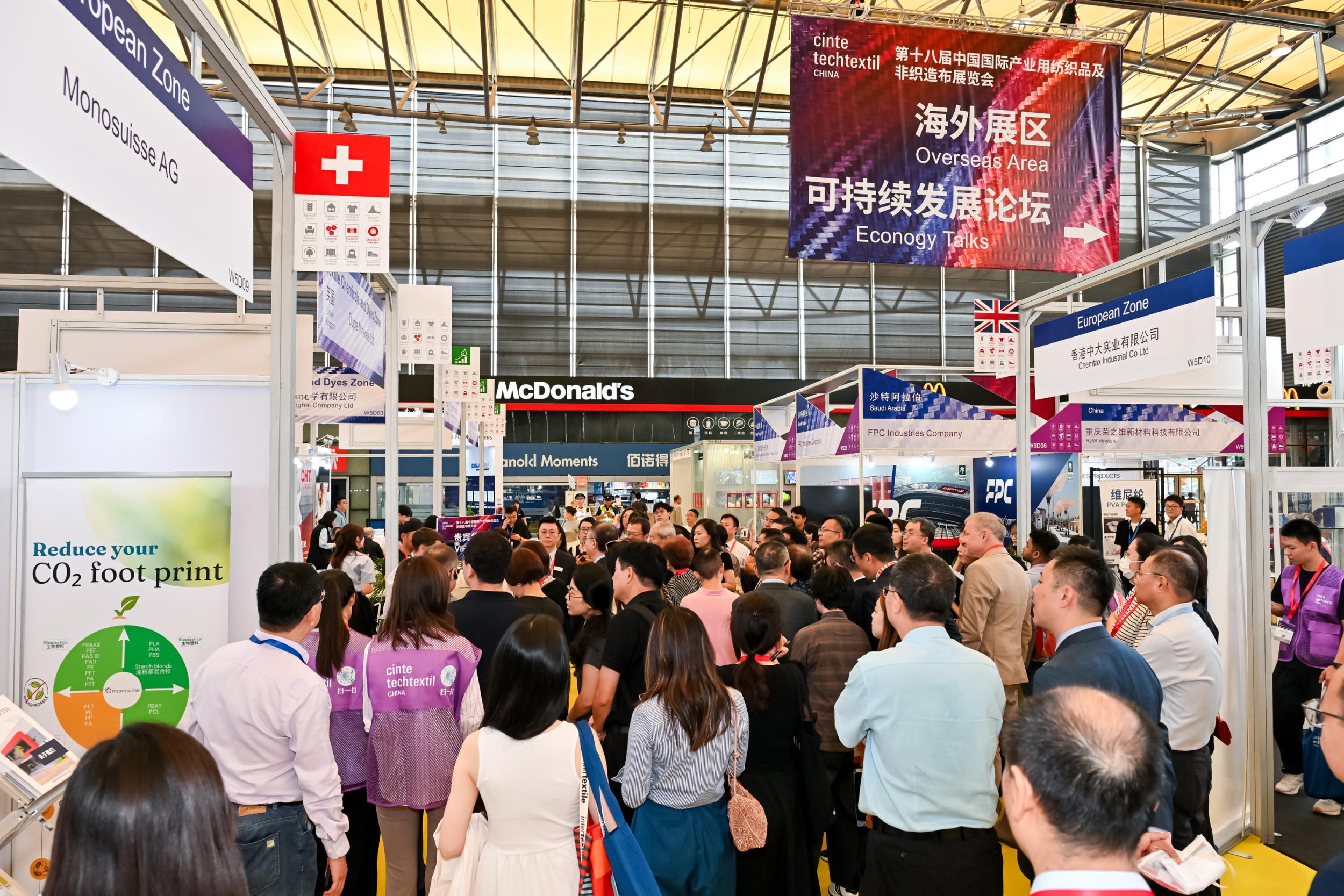
As Asia’s premier platform catering to the evolving needs in technical textiles and nonwovens, Cinte Techtextil China will open next week at the Shanghai New International Expo Centre, gathering over 300 exhibitors from 15 countries and regions. Across Halls W3 to W5, this edition will create chances for fast-growing sectors and emerging trends – such as Mobiltech, Medtech & Protech, Indutech and more. The curated zones, pavilions, and fringe programme are designed to better connect exhibitors with targeted buyers from across China, Asia-Pacific, and further afield. Meanwhile, the Association Village will gather international industry associations to foster even more global collaboration.

As a hub for global innovation, the fair will feature a strong contingent of international industry leaders in Hall W5’s Overseas Zone, including Andritz (China) Ltd, Groz-Beckert (Germany), A.Celli SPA (Italy), and Dilo (Germany), while others such as Picanol NV (Belgium) will showcase in Hall W4.

As Asia’s premier platform catering to the evolving needs in technical textiles and nonwovens, Cinte Techtextil China will open next week at the Shanghai New International Expo Centre, gathering over 300 exhibitors from 15 countries and regions. Across Halls W3 to W5, this edition will create chances for fast-growing sectors and emerging trends – such as Mobiltech, Medtech & Protech, Indutech and more. The curated zones, pavilions, and fringe programme are designed to better connect exhibitors with targeted buyers from across China, Asia-Pacific, and further afield. Meanwhile, the Association Village will gather international industry associations to foster even more global collaboration.

As a hub for global innovation, the fair will feature a strong contingent of international industry leaders in Hall W5’s Overseas Zone, including Andritz (China) Ltd, Groz-Beckert (Germany), A.Celli SPA (Italy), and Dilo (Germany), while others such as Picanol NV (Belgium) will showcase in Hall W4.

The sought-after European and German Zones will also be in Hall W5, featuring high-performance solutions from such markets. Key suppliers in the European Zone will include Monosuisse Group (Switzerland) and Comerio Ercole S.p.A (Italy), while the German Zone will include IBENA Textilwerke GmbH and Mahlo GmbH + Co KG. Nearby, the Textile Chemicals and Dyes Zone will return to offer advanced solutions for diverse technical applications.

A key highlight of Hall W5 is the Association Village, designed to showcase expertise, foster international trade networks and collaboration, as well as present the latest trends that shape the industry’s future. Key organisations anchoring this feature include the Asia International Hemp Federation (AIHF) (Thailand), UK Fashion and Textile Association (UKFT), Government of Tamil Nadu India, and Nonwoven Federation of India (NWFI).

Targeted solutions displayed across high-demand application areas
With the technical textiles and nonwovens markets evolving, exhibitors are presenting advances engineered for critical application areas across the show floor:

  • Mobiltech: highlighted suppliers include JR Ltd (Korea) and Eastex Industrial Science & Technology (China). Also on the domestic side, Tiandingfeng Holdings Co Ltd will showcase high-strength PET filament needle-punched nonwovens. The Mobiltech Zone, set to feature other key exhibitors, will also be in Hall W4.
  • Medtech: featuring first-time exhibitor NIPPON Paper Industries Co Ltd (Japan) with its Cu-TOP product – a functional material derived from wood pulp combined with copper technology. The Reifenhauser Group from Germany will also be in Hall W5, with Reifenhauser Reicofil presenting full nonwoven production lines, and Reifenhauser Enka Tecnica the service components that aid their longevity. Joining the lineup, Yixiang Health Technology Co Ltd and Zhejiang Kingsafe Hygiene Materials Technology Co Ltd will both showcase medical and hygiene nonwovens.
  • Protech: key Protech exhibitors include a new exhibitor Tepar Tekstil San Ve Tic A S (Turkiye), and Dawnsens New Materials (Xiamen) Co Ltd (China), both showcasing advanced safety materials.
  • Indutech: IMAE Industries Ltd (Japan) will make its debut at the fair. The company specialises in thermal insulation fibre products and supplies fine ceramics for heavy industry, automotive, iron and steel, chemical, power generation and more.

Other first-time international brands will include Care Holdings Pte Ltd (Singapore) and Texbond Nonwovens (India); while China’s innovation will be spotlighted with domestic pavilions in Hall W3 featuring medical and hygiene textiles and in Hall W4 featuring filtration and separation textiles. Exhibitors are set to be greeted by a wide range of industry visitors.

Before the fair, overseas visitor pre-registrations have risen notably compared to the same period last year. These include 139 VIP buyers from 27 countries and regions, such as Hyundai Motor Company and Sejong Healthcare (Korea), Meditec Japan Co Ltd (Japan), ALSICO (Belgium), Focus Industries Limited (Hong Kong), Freudenberg Performance Materials Service GmbH and MöllerWerke GmbH (Germany), seeking high-demand solutions across Mobiltech, Medtech and Protech, Indutech, and more. In addition, seven international buyer delegations, from industry hubs across Asia-Pacific and beyond, will add to the fair’s global business appeal.

Fringe events explore innovation, emerging markets, and automotive trends in Halls W4 and W5 

  • Panel Discussion (Day 1 morning) (W5 E20): the discussion topic, Industrial Hemp Fibre – Building the Future of Sustainable Materials, will take Thailand as a successful example to explore the use of advanced hemp fibre materials through cross-sector innovation and international investment. Complemented by the AIHF display area (W5 B20), featuring the evolution of raw hemp stalks into modern bioplastics, composites, mobility components, lifestyle products and other engineered applications.
  • 2026 Nonwovens Industry High-Quality Development Conference (Day 1 afternoon) (W4 D38): under the theme ‘Redefine the growth paradigm’, Ms Guimei Li, President of China Nonwovens & Industrial Textiles Association, will show China’s nonwovens development during the 15th Five-Year Plan. Guest speaker Mr Anshumali Jain, Vice President of the Nonwoven Federation of India, will discuss the situation and opportunities of India’s industrial ecosystem, while Mr Tony Fragnito, President of the Association of the Nonwoven Fabrics Industry, will explore the state of the US market.
  • Automotive textile panel (Day 2 afternoon) (W5 E20): titled “Defining the Future Cabin: Multi-functional Evolution of Nonwoven Materials in Automotive”, the panel will include automotive end users, Tier-1 automotive interior suppliers, and upstream nonwoven technology providers. The Mobiltech Display Area (W4 F25) will complement the panel, with exhibits from Groz-Beckert, AIHF, Care Holdings Pte Ltd, Swisstulle (Qingdao) Co Ltd, and more.

Other key events include a presentation on sustainability by UKFT and the Sustainability Tour by Mr Karl Borgschulze, Managing Director of Consulting Service Intl Ltd (both on Day 2 morning) (W5 E20); other guided tours led by industry experts (covering medical, protective, automotive, and tents & coverings); Technology Innovation and Product Development for Future Technical Textiles; Deeyeo Flushable Wipes Scientific Consensus Release and Industry High-Quality Development Dialogue; and a display zone dedicated to Industrial Textiles in the 15th Five-Year Plan.

The fair’s product categories cover 12 application areas, which comprehensively span a full range of potential uses in modern technical textiles and nonwovens. These categories also cover the entire industry, from upstream technology and raw materials providers to finished fabrics, chemicals and other solutions. This scope of product groups and application areas ensures that the fair is an effective business platform for the entire industry.

Dyneema SK80 fiber Photo (c) Avient Corporation
Dyneema SK80 fiber
28.08.2026

Dyneema SK80 targets significantly longer service life for mooring lines

Avient is introducing Dyneema SK80, a new HMPE fibre grade for mooring lines and offshore applications. According to the company, the fibre was engineered at polymer level to deliver at least twice the durability and fatigue resistance of Dyneema SK78 in demanding mooring applications.

The technological emphasis is therefore less on headline tensile strength than on service life under cyclic loading. In mooring systems, repeated load cycles, abrasion, bending stress and environmental exposure are major failure drivers. Improved fatigue resistance can therefore have a direct effect on maintenance intervals, operational safety and lifecycle costs.

The new fibre will be presented at SMM in Hamburg in early September. For Textination, the development is relevant because high-performance fibres are increasingly being positioned not only through weight and strength advantages, but through durability, reliability and the total cost of technical textile systems.

Avient is introducing Dyneema SK80, a new HMPE fibre grade for mooring lines and offshore applications. According to the company, the fibre was engineered at polymer level to deliver at least twice the durability and fatigue resistance of Dyneema SK78 in demanding mooring applications.

The technological emphasis is therefore less on headline tensile strength than on service life under cyclic loading. In mooring systems, repeated load cycles, abrasion, bending stress and environmental exposure are major failure drivers. Improved fatigue resistance can therefore have a direct effect on maintenance intervals, operational safety and lifecycle costs.

The new fibre will be presented at SMM in Hamburg in early September. For Textination, the development is relevant because high-performance fibres are increasingly being positioned not only through weight and strength advantages, but through durability, reliability and the total cost of technical textile systems.

Focus on rising raw material costs: At ASE, Barmag presents material-efficient pump technology for adhesive and sealant applications. Photo (c) Barmag
Focus on rising raw material costs: At ASE, Barmag presents material-efficient pump technology for adhesive and sealant applications.
20.08.2026

Barmag presents metering pump solutions at ASE China

Precision for Adhesives and Sealants
The demands placed on modern adhesive and sealant applications are constantly increasing. Manufacturers expect reproducible dosing results, minimal material loss, and reliable processing in increasingly demanding processes. This is precisely where Barmag’s product portfolio comes into play.

Material efficiency as a competitive advantage
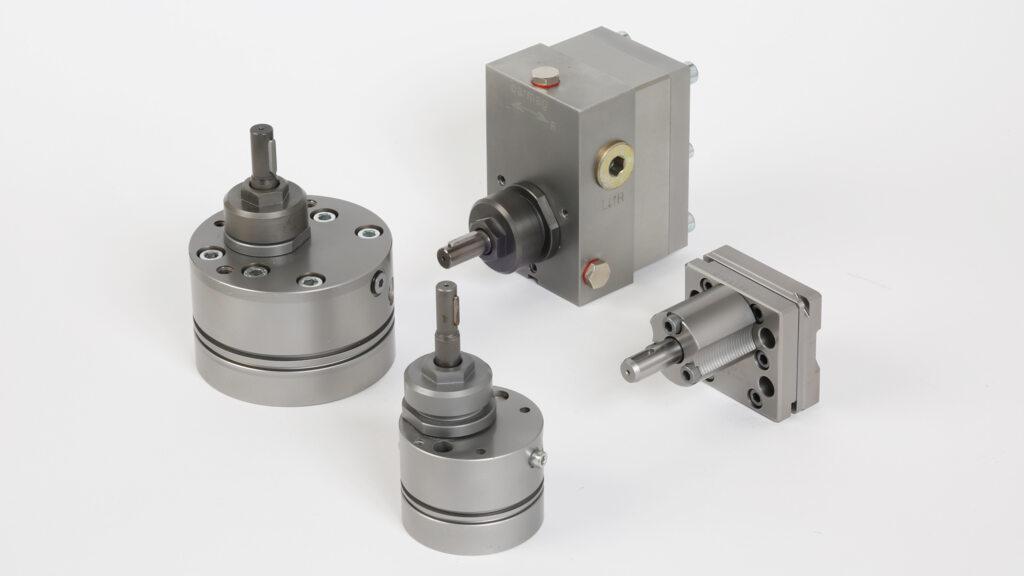
At ASE China, Barmag is focusing in particular on its solutions for hot-melt adhesives, PUR systems, silicones, resins, and two-component adhesives and sealants. The pumps in the GA/GX series, in particular, enable uniform, low-pulsation delivery of these media, thereby contributing to consistently high product quality and reduced material consumption. “Rising raw material costs and increasing quality requirements make precise metering more important today than ever before. With our pumps, we help users make their processes more efficient, sustainable, and cost-effective,” explains Andreas Heitzer, Key Account Manager of the Pumps Division.

Precision for Adhesives and Sealants
The demands placed on modern adhesive and sealant applications are constantly increasing. Manufacturers expect reproducible dosing results, minimal material loss, and reliable processing in increasingly demanding processes. This is precisely where Barmag’s product portfolio comes into play.

Material efficiency as a competitive advantage
At ASE China, Barmag is focusing in particular on its solutions for hot-melt adhesives, PUR systems, silicones, resins, and two-component adhesives and sealants. The pumps in the GA/GX series, in particular, enable uniform, low-pulsation delivery of these media, thereby contributing to consistently high product quality and reduced material consumption. “Rising raw material costs and increasing quality requirements make precise metering more important today than ever before. With our pumps, we help users make their processes more efficient, sustainable, and cost-effective,” explains Andreas Heitzer, Key Account Manager of the Pumps Division.

In addition, with the GA series, Barmag offers metering pump solutions for shear-sensitive media where product properties must be preserved during pumping. This is particularly important for certain reactive adhesives, silicones, or filled sealants. Gentle pumping minimizes product changes and ensures uniform material application. This increases process reliability and ensures consistently high quality of the end product.

Partner for demanding metering applications
With decades of experience in metering technology, Barmag is one of the leading suppliers of high-precision gear metering pumps for industrial applications. These solutions are used worldwide in adhesive, sealant, coating, laminating, and hot-melt systems, as well as in plastics processing. At ASE China, Barmag invites trade visitors to discuss the latest developments in metering and conveying technology and to learn about customized solutions for future adhesive and sealant applications.

More information:
ASE China Barmag pumps
Source:

Barmag

Opening of the new showroom and production hub in Kinnahult (c) AWOL Media
Opening of the new showroom and production hub in Kinnahult
18.08.2026

Imogo: New showroom and production hub

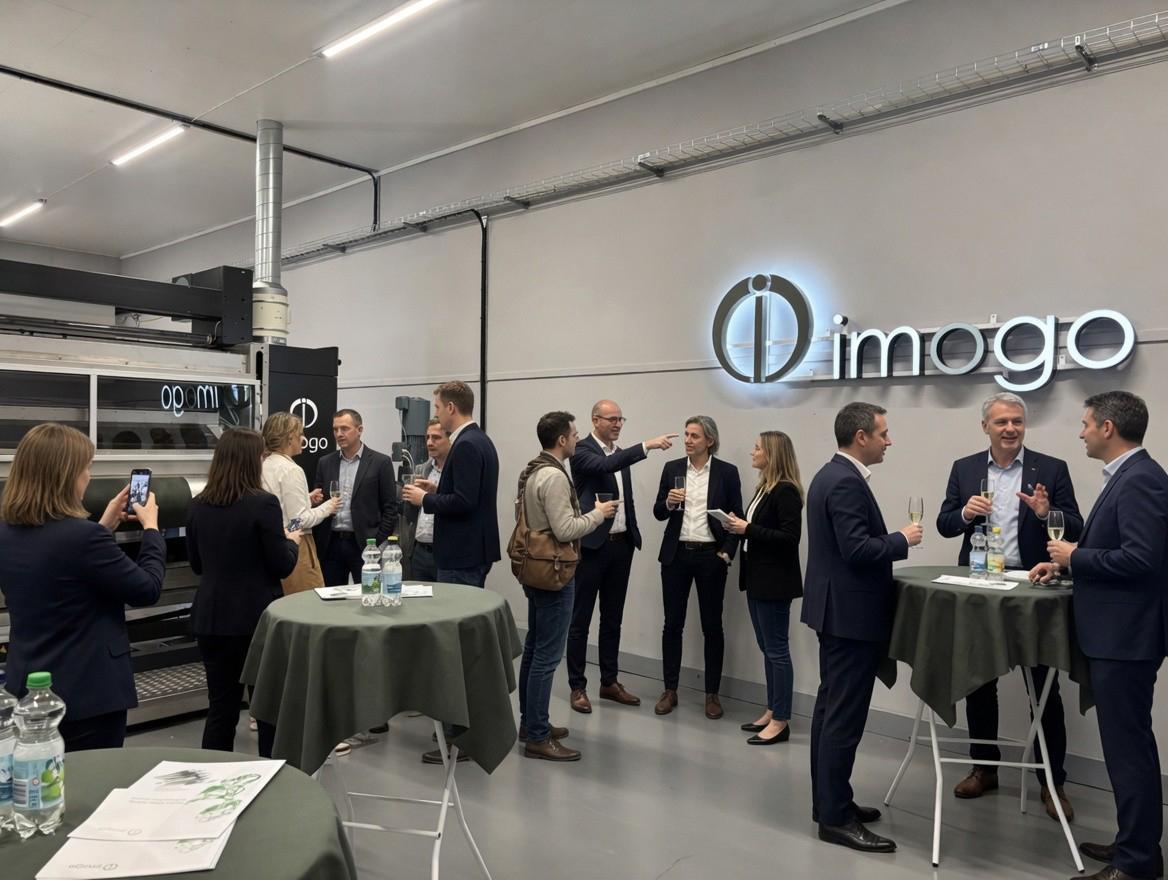
Located at the 7H Dyehouse in Kinnahult, Sweden, it represents a significant milestone in the company’s evolution, offering a fully operational environment where brands and manufacturers can experience the future of textile dyeing.

Imogo’s digital spray technology drastically reduces the use of water, energy and chemicals compared with traditional processes, while also lowering production costs.

“For early partners who have followed our journey, this opening marks the moment vision meets reality,” says CEO Joacim Wellander CEO. “While previous discussions have focused on the potential of spray dyeing, we are now fully equipped with the machinery, technical expertise, and operational experience to move projects from the lab to full-scale commercial production.”

The showroom features the latest generation of Imogo technology including both the Dye-max and Mini-max spray dyeing systems capable of handling both laboratory trials and full-scale production for fabrics up to 2.4 metres wide.

Located at the 7H Dyehouse in Kinnahult, Sweden, it represents a significant milestone in the company’s evolution, offering a fully operational environment where brands and manufacturers can experience the future of textile dyeing.

Imogo’s digital spray technology drastically reduces the use of water, energy and chemicals compared with traditional processes, while also lowering production costs.

“For early partners who have followed our journey, this opening marks the moment vision meets reality,” says CEO Joacim Wellander CEO. “While previous discussions have focused on the potential of spray dyeing, we are now fully equipped with the machinery, technical expertise, and operational experience to move projects from the lab to full-scale commercial production.”

The showroom features the latest generation of Imogo technology including both the Dye-max and Mini-max spray dyeing systems capable of handling both laboratory trials and full-scale production for fabrics up to 2.4 metres wide.

High volume production
Imogo is specialising in the coloration of natural fibres for both knitted and woven constructions, with chemistry optimised for the high-performance application of reactive dyes. The Dye-max line enables commercial high volume production, with a capacity of 1.5 metric tons per day.

“We are thrilled to welcome our early contacts and new partners to Kinnahult,” says Wellander at Imogo. “We’ve spent the last few years refining our process and our hardware and today, we aren’t just showing a concept but delivering a proven, high-capacity solution that helps the textile industry meet its urgent sustainability goals without compromising on quality or scale.”

“Imogo’s new showroom marks the third major new expansion from TMAS member in the past 12 months,” says TMAS Secretary General Therese Premler-Andersson. “It follows ACG’s expansion at its headquarters in Skene for advanced automation services, and the etsblishment of ReSpin’s new Holma Spinning Mill in Forsa. All three of these new facilties will play cricial role sin shaping the future of textile production technology through digital technologies with a sustainable future at their core.”

The imogo showroom is now open for bookings and the company is inviting industry stakeholders to witness the Dye-max technology in action, conduct trial runs on their own fabrics, and discuss how to integrate its efficiencies into their existing supply chains.”

Source:

AWOL Media

World of Wipes® International Conference 2027 Graphic by INDA
18.08.2026

World of Wipes®: Call for Abstracts for the 2027 International Conference

Wipes industry professionals are invited to share their expertise, June 7-10 in Indianapolis: INDA, the Association of the Nonwoven Fabrics Industry, is now accepting abstracts for the 2027 World of Wipes® (WOW) International Conference, taking place June 7-10, 2027, in Indianapolis, IN.

Professionals from across the wipes supply chain are invited to submit abstracts highlighting new products, technologies, materials, market developments, research, and other insights shaping the future of the wipes industry. Abstracts are due January 22, 2027.

Prospective presenters should submit a concise abstract of one to two paragraphs describing their proposed presentation and its relevance to wipes, wipe manufacturing, or the broader wipes marketplace. Abstracts may be submitted online through the WOW website at https://www.worldofwipes.org/call-for-papers.

Topics of interest include, but are not limited to:

Wipes industry professionals are invited to share their expertise, June 7-10 in Indianapolis: INDA, the Association of the Nonwoven Fabrics Industry, is now accepting abstracts for the 2027 World of Wipes® (WOW) International Conference, taking place June 7-10, 2027, in Indianapolis, IN.

Professionals from across the wipes supply chain are invited to submit abstracts highlighting new products, technologies, materials, market developments, research, and other insights shaping the future of the wipes industry. Abstracts are due January 22, 2027.

Prospective presenters should submit a concise abstract of one to two paragraphs describing their proposed presentation and its relevance to wipes, wipe manufacturing, or the broader wipes marketplace. Abstracts may be submitted online through the WOW website at https://www.worldofwipes.org/call-for-papers.

Topics of interest include, but are not limited to:

  • Dry and Wet Wipes
  • End-Use Markets
  • Market Statistics and Data
  • Raw Materials and Fibers
  • Sustainability
  • Fabric Formation
  • Ingredients, Formulations, and Lotions
  • Flexible and Rigid Packaging
  • Machinery and Equipment
  • Flushability
  • Single-Use Plastics
  • Labeling and Regulations
  • Circular Economy

Presenting at WOW 2027 provides an opportunity to share expertise and innovation with an engaged audience of wipes professionals while building connections across the entire supply chain, from raw material and technology suppliers to converters, brands, and retailers. Presenters will contribute to the conversations, ideas, and developments shaping the future of the global wipes industry.

11.08.2026

Fashion Trends 2026: Between minimalism and maximalism

From premium basics to fringes and sequins, right through to the return of capri pants and 90s-style denim: all the trends and price trends in the United States & Europe, according to data from Retviews by Lectra.

  • Premium basics take center stage in Spring/Summer 2026 
  • The 90s effect: capri pants (+62%) and flip-flops (+73%) lead the return to minimalism  However, maximalism persists: sequins (+40%) and fringe (+34%) are becoming increasingly widespread  
  • Rising prices and premiumization strategies, with a new balance between value and aspiration 

As the summer season unfolds, the fashion industry is confirming a structural transformation that is already underway: the definitive shift towards ‘premiumization’. But what will be the key garments, the dominant trends, and how are prices evolving? 

From premium basics to fringes and sequins, right through to the return of capri pants and 90s-style denim: all the trends and price trends in the United States & Europe, according to data from Retviews by Lectra.

  • Premium basics take center stage in Spring/Summer 2026 
  • The 90s effect: capri pants (+62%) and flip-flops (+73%) lead the return to minimalism  However, maximalism persists: sequins (+40%) and fringe (+34%) are becoming increasingly widespread  
  • Rising prices and premiumization strategies, with a new balance between value and aspiration 

As the summer season unfolds, the fashion industry is confirming a structural transformation that is already underway: the definitive shift towards ‘premiumization’. But what will be the key garments, the dominant trends, and how are prices evolving? 

Lectra – a leading provider of industrial technology solutions for the fashion market, has analyzed data from Retviews, its AI-powered solution specializing in competitive intelligence and automated benchmarking, to identify the latest fashion trends and how brands are adapting their strategies and pricing to navigate an increasingly complex landscape. 

“In a market characterized by more discerning consumers and growing competitive pressure, the real shift is the move from volume to value,” said Ketty Pillet, Lectra’s VP of Marketing, Americas. “Today, the fashion industry finds itself competing with spending on other experiences, from travel to dining, and this requires brands to strengthen their cultural and perceived value. At the same time, persistent cost pressures and differences between markets, such as between the United States and Europe, require increasingly targeted pricing and sourcing strategies. Thanks to Retviews’ insights, it is possible to interpret these dynamics and make more informed, growth-oriented decisions.” 
 
From T-shirts to sequins: the clash between minimalism and maximalism returns in the Spring/Summer (SS) 2026 collection 
While demand for essential, timeless pieces is on the rise, there is also a strong desire for self-expression. 

Retviews data shows that premium basics dominate the product ranges: T-shirts have seen a 41% increase (22% in the United States), whilst denim has risen by 47%. Shirts (up 13%) and outerwear (up 17%) remain must-haves, in line with a growing focus on versatility and durability. 

At the same time, however, maximalism is also making a comeback, bringing a touch of glamour to everyday wear. For this Spring/Summer season, sequins are up by 40% and fringe by 34%, a sign of an aesthetic that responds to the need for escapism and individuality, further fueled by the boom in resale and vintage fashion. 

1990s minimalism is dominating the season, driven by a renewed interest in streamlined, sophisticated dressing. The trend has been further fueled by the resurgence of style icon Carolyn Bessette-Kennedy, following the release of the Love Story series. According to Retviews data, certain iconic items are enjoying a real resurgence, with capri pants (+62%), flip-flops (+73%) and stripes (+8%). 

Denim remains a must-have (+21% in product ranges), but its silhouettes are evolving: low-rise styles (+22%) and bootcut styles (+15%) are on the rise, whilst flares (+94%) and cargo jeans (+108%) are experiencing a real boom. In contrast, the popularity of baggy jeans is on the decline (-5%). 

Furthermore, there is also a strong functional element. The utility style, ranging from technical jackets to cargo pants (+8%) – is gaining ground in collections, reflecting a growing fusion of fashion, comfort and lifestyle. This trend can be attributed to the rise of the wellness culture and sports communities, which are increasingly influencing the language of everyday clothing. 

Color: between expressiveness and wearability 
For the SS 2026 collections, there is a strong trend, particularly in the mid-range segment, towards color palettes that are both expressive and versatile. According to Retviews data, orange stands out as one of the season’s fastest-growing shades (+150% year-on-year), driven by its influence on the catwalks of brands such as Chanel, Valentino, Dior, Prada and Loewe. Cherry red is also consolidating its presence (+50%), establishing itself as a livelier evolution of the burgundy seen in the previous season. 

At the same time, more versatile shades are emerging and continue to drive commercial performance. Blue has seen a 23% increase, boosted both by moments of high cultural visibility and by the prominence of denim and high-quality basics. Brown (+75%) remains one of the dominant colors, whilst the blue-brown combination has established itself as one of the season’s signature pairings, reflecting a broader trend towards understated, sophisticated and easy-to-wear palettes. 

Pricing trends: the new balance between premiumization and perceived value 
The Spring/Summer season confirms a trend that is now well established: the mass and mid-market segments are increasingly behaving like the luxury sector. Retviews data highlights double-digit price rises for players such as Zara and Gap, reflecting a gradual shift towards premiumization in the product range. This trend is reinforced by the intensification of collaborations with high-profile designers, from John Galliano for Zara to Zac Posen for Gap, right through to Stella McCartney’s return with H&M, which boost the creative credibility of mass-market brands and justify further price rises. This is a ‘high-low’ model, in which an aspirational approach coexists with affordability, giving rise to long-term premiumization strategies. 

2026 marks the triumph of conscious spending: people are buying less, but better, prioritizing quality, durability and versatility. This is reflected in the growth of premium basics, the rise in average prices (outerwear +9% in the EU, +17% in the US; shirts +4% in the EU, +9% in the US) and in the renewed momentum of denim, with ranges expanding significantly in the EU (+50% year-on-year) and prices rising (+7% in the EU, +1% in the US), a sign of the premiumization of essential garments. In this context, ‘value’ takes center stage: according to recent PWC data, 74% of consumers are willing to pay more for sustainable and traceable products. 

Overall, a definitive shift is becoming apparent: mass-market and mid-market collections are now structurally more expensive than they were two years ago, not as a result of temporary fluctuations, but due to a strategic repositioning. In this context, a brand’s success will depend on its ability to interpret the concept of value in a credible way, translating it into desirable, durable products that meet the expectations of an increasingly discerning consumer. 

Mr.Aloke Lohia Photo: (c) Indorama Ventures Public Company Limited
11.08.2026

Indorama Ventures: Strong first-half 2026 earnings

Indorama Ventures Public Company Limited (IVL), a global sustainable chemical producer, reported significantly stronger first-half 2026 earnings, reflecting favorable market conditions together with continued progress in strengthening the Company’s operating fundamentals. 

For the first half of 2026, the Company reported revenue of THB 245.3 billion, up 4% year-on-year, and EBITDA of THB 29.7 billion, up 61%. Second-quarter EBITDA was particularly strong, with all four business segments delivering year-on-year improvement. Operating cash flow after maintenance capital expenditure increased 78% to THB 25.9 billion. Strong cash generation supported further deleveraging, with Net Debt-to-Equity improving to 1.56x, reaching the Company's Capital Markets Day target for 2026 ahead of schedule. 

Indorama Ventures Public Company Limited (IVL), a global sustainable chemical producer, reported significantly stronger first-half 2026 earnings, reflecting favorable market conditions together with continued progress in strengthening the Company’s operating fundamentals. 

For the first half of 2026, the Company reported revenue of THB 245.3 billion, up 4% year-on-year, and EBITDA of THB 29.7 billion, up 61%. Second-quarter EBITDA was particularly strong, with all four business segments delivering year-on-year improvement. Operating cash flow after maintenance capital expenditure increased 78% to THB 25.9 billion. Strong cash generation supported further deleveraging, with Net Debt-to-Equity improving to 1.56x, reaching the Company's Capital Markets Day target for 2026 ahead of schedule. 

Management’s continued execution of IVL 2.0 self-help actions, including Sales & Operations Execution (S&OE), inventory discipline and working capital management, also supported stronger cash conversion, with inventory turnover improving to 5.0x in the second quarter from 4.7x at the end of 2025. Operating rates were prudently managed to align production with inventory targets and protect margin quality in a period of volatile pricing. 

Looking ahead, Indorama Ventures expects some of the exceptionally strong second-quarter market tailwinds to normalize. The Company’s priorities for the remainder of 2026 are to deliver sustainable earnings under normalized spreads, convert those earnings into free cash flow, reduce absolute net debt, and improve returns on capital. 

Mr. Aloke Lohia, Group CEO of Indorama Ventures, said, “Our first-half performance reflects both supportive market conditions and the progress we are making through the self-help actions we have taken to strengthen Indorama Ventures. Markets will normalize, so the more important test is whether we can convert the advantages of the platform we have built over three decades - our scale, integration, global footprint, local-for-local operating model and customer positions, into more consistent earnings, stronger cash generation and higher returns through the cycle. 
We are beginning to see that translation in our performance. Greater discipline in how we manage our operations, inventory and working capital is improving cash generation, while our portfolio actions are strengthening the quality of the business and improving returns on capital. Together, these actions are building a more agile and financially resilient Indorama Ventures. 
We remain confident in our 2026 expectations and 2028 ambitions. Our focus is to continue executing on what we can control, strengthen our balance sheet and improve returns, while retaining the flexibility to capture growth opportunities as markets evolve.” 

The earnings improvement was led by Combined PET, supported by favorable market conditions and the benefits of Indorama Ventures’ integrated global platform and local-for-local operating model. Indovida continued its growth momentum, supported by its market-leading packaging position, customer intimacy and organic growth initiatives. Indovinya delivered strong performance across both High Value Applications and Essentials, supported by commercial excellence initiatives. Fibers improved sequentially in the second quarter supported by stable Hygiene demand and transformation efforts, despite continued weakness in Lifestyle and Mobility end markets.

Source:

Indorama Ventures Public Company Limited