From the Sector

Reset
on Award "Best CO₂ Utilisation 2025" and Taiwan's Outstanding Resource Circulation Enterprise - Gold Award from the Ministry of Environment. In the realm of mono-material solutions, FENC's next-generation all-polyester synthetic leather provides a 100% closed-loop polyester solution, earning the iF DESIGN AWARD 2026.  Furthermore, to address the challenges of recycling composite materials in the global footwear industry, FENC combined FENC® TOPGREEN® rTPEE technology with a "One-Step Separation and Decolori Far Eastern New Century Corporation
on Award "Best CO₂ Utilisation 2025" and Taiwan's Outstanding Resource Circulation Enterprise - Gold Award from the Ministry of Environment. In the realm of mono-material solutions, FENC's next-generation all-polyester synthetic leather provides a 100% closed-loop polyester solution, earning the iF DESIGN AWARD 2026. Furthermore, to address the challenges of recycling composite materials in the global footwear industry, FENC combined FENC® TOPGREEN® rTPEE technology with a "One-Step Separation and Decolorization" process through collaboration among FENC, the Taiwan Textile Research Institute (TTRI), and other partners. This collaboration resulted in the development of a mono-material polyester footwear solution that won the globally renowned R&D 100 Awards in 2026. Meanwhile, FENC® Telix aramid fiber, engineered for high mechanical strength, puncture resistance, and abrasion durability, expands FENC's material portfolio into demanding industrial and defense applications. From the world's biggest sporting st
16.10.2026

FENC links World Cup fabrics to polyester circularity

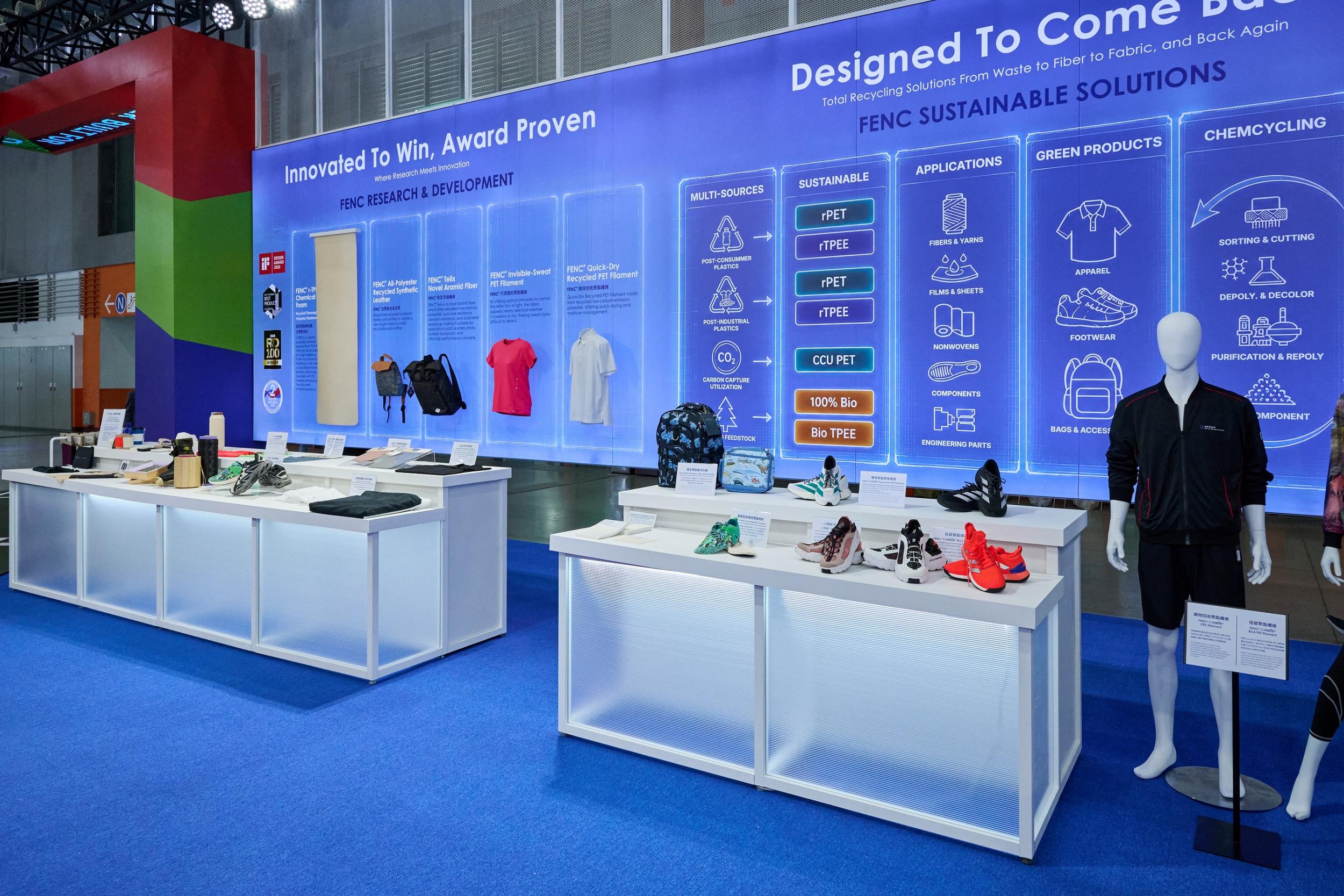
Far Eastern New Century (FENC) has presented a broad range of fibre and textile developments at TITAS in Taipei, spanning sportswear, mono-material design, recycling and industrial protective materials. The Taiwanese manufacturer used the October 6–8 event to demonstrate how its vertically integrated polyester business is being applied to both high-performance products and circular material systems.

Among the new sportswear materials is FENC TopCool Petal, a profiled fibre with a petal-shaped cross-section. The company says the geometry supports moisture transport and fast drying while providing a soft handle and increased opacity when fabrics become wet with perspiration. FENC reports that the material has been selected by a major global sportswear brand for 2026 World Cup apparel. The company also supplies textiles used in professional tennis clothing.

Far Eastern New Century (FENC) has presented a broad range of fibre and textile developments at TITAS in Taipei, spanning sportswear, mono-material design, recycling and industrial protective materials. The Taiwanese manufacturer used the October 6–8 event to demonstrate how its vertically integrated polyester business is being applied to both high-performance products and circular material systems.

Among the new sportswear materials is FENC TopCool Petal, a profiled fibre with a petal-shaped cross-section. The company says the geometry supports moisture transport and fast drying while providing a soft handle and increased opacity when fabrics become wet with perspiration. FENC reports that the material has been selected by a major global sportswear brand for 2026 World Cup apparel. The company also supplies textiles used in professional tennis clothing.

On circularity, FENC is extending its recycled-polyester activities beyond post-consumer PET bottles toward textile-to-textile recycling. Its strategy focuses on a polyester-based material ecosystem intended to simplify recovery and reuse. A new all-polyester synthetic leather was recognised with an iF Design Award in 2026. The company also highlighted its AirTek low-carbon polyurethane technology, although the release does not provide comparable lifecycle figures for each product.

Working with the Taiwan Textile Research Institute and other partners, FENC has developed a mono-material polyester footwear concept combining TOPGREEN rTPEE with a one-step separation and decolourisation process. This project received a 2026 R&D 100 Award. For technical markets, the company introduced Telix aramid fibre, designed for strength, puncture resistance and abrasion durability.

The technologies address different industrial challenges. Profiled yarns seek to improve wearer comfort through fibre geometry; mono-material constructions target more practical end-of-life processing; aramid materials serve demanding protection and industrial applications. For buyers, the next step is to assess the material-specific performance and verified environmental claims under actual manufacturing and use conditions.

Source:

Far Eastern New Century Corporation

(c) Polartec (Milliken & Company)
15.10.2026

Polartec re-engineers Alpha active insulation

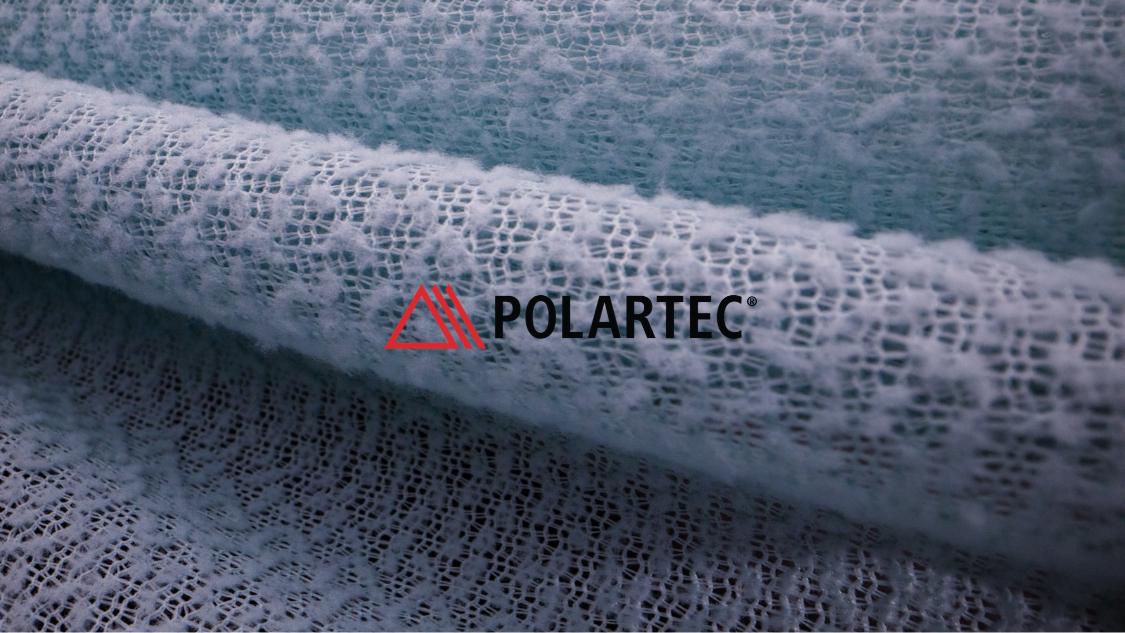
Polartec has introduced a new generation of its Alpha active-insulation textile with a patent-pending construction designed to increase durability and widen its range of apparel applications. The development targets resistance to snagging and fibre shedding while preserving the open structure responsible for airflow, compressibility and moisture management.

Alpha was originally developed for highly active military users who repeatedly move between intense exertion and lower activity in cold conditions. Unlike insulation designed primarily to retain static warmth, its open architecture allows excess heat and moisture to escape during movement. The technology later spread into outdoor, endurance and lifestyle apparel.

The latest construction is intended to support a broader range of weights, textures and garment designs. Polartec says that the material can increasingly be used as a visible or standalone layer rather than only inside a multilayer garment. That places greater demands on structural integrity, appearance and tactile quality.

Polartec has introduced a new generation of its Alpha active-insulation textile with a patent-pending construction designed to increase durability and widen its range of apparel applications. The development targets resistance to snagging and fibre shedding while preserving the open structure responsible for airflow, compressibility and moisture management.

Alpha was originally developed for highly active military users who repeatedly move between intense exertion and lower activity in cold conditions. Unlike insulation designed primarily to retain static warmth, its open architecture allows excess heat and moisture to escape during movement. The technology later spread into outdoor, endurance and lifestyle apparel.

The latest construction is intended to support a broader range of weights, textures and garment designs. Polartec says that the material can increasingly be used as a visible or standalone layer rather than only inside a multilayer garment. That places greater demands on structural integrity, appearance and tactile quality.

According to the company, more than four years of prototyping and testing with performance brands informed the update. More than eleven brands are preparing products using the new Alpha platform. Patagonia is expected to introduce an exclusive style in November, with additional applications planned by Ornot, Purple Mountain Observatory, Senchi Designs, Farpointe and Goldwin.

The announcement does not provide independently comparable laboratory figures for abrasion resistance, snagging or shedding. For garment developers, the central question will be whether the redesigned structure delivers its claimed durability improvement across different weights and constructions without compromising breathability.

Artificial turf for golf (c) Photo STC Extrusion GmbH
14.10.2026

New Specialist in Artificial Turf and Technical Monofilaments

With the foundation of STC Extrusion GmbH, headquartered in Chemnitz, Germany, a technical competence and know-how hub for the production of artificial turf and technical monofilaments has been established within the Starlinger Group.

The newly founded machine manufacturing company is part of Austria-based Starlinger Group and has taken over selected assets from the insolvent STC Spinnzwirn GmbH. STC Extrusion GmbH is a legally independent entity and does not act as the legal successor to STC Spinnzwirn GmbH. The company plans to focus on the core areas monofilament production for artificial turf and technical monofilaments made from a wide variety of polymers.

 “With the founding of STC Extrusion GmbH, we are opening a new chapter in STC’s history—with the experience, passion, and dedication to our customers that have always distinguished STC,” said Managing Director Nico Dürrschmidt. “We are convinced that with this solution, we have laid a solid foundation that will enable us to continue delivering value for our customers and partners worldwide in the future.”

With the foundation of STC Extrusion GmbH, headquartered in Chemnitz, Germany, a technical competence and know-how hub for the production of artificial turf and technical monofilaments has been established within the Starlinger Group.

The newly founded machine manufacturing company is part of Austria-based Starlinger Group and has taken over selected assets from the insolvent STC Spinnzwirn GmbH. STC Extrusion GmbH is a legally independent entity and does not act as the legal successor to STC Spinnzwirn GmbH. The company plans to focus on the core areas monofilament production for artificial turf and technical monofilaments made from a wide variety of polymers.

 “With the founding of STC Extrusion GmbH, we are opening a new chapter in STC’s history—with the experience, passion, and dedication to our customers that have always distinguished STC,” said Managing Director Nico Dürrschmidt. “We are convinced that with this solution, we have laid a solid foundation that will enable us to continue delivering value for our customers and partners worldwide in the future.”

In addition to production technology for artificial turf applications and technical monofilaments, STC Extrusion GmbH offers a Customer Experience Center for customer tests, raw material evaluation, research, and product and technology development. Furthermore, the company will take over and continue to provide service and spare parts for installed STC Spinnzwirn extrusion systems. This ensures that existing customers receive the technical support they need.
To leverage the established know-how in the field of winders, synergies with Georg Sahm GmbH & Co. KG—a winding technology specialist that is also part of the Starlinger Group—will be deepened to advance innovative winding technology and offer automation solutions and handling systems for bobbins. The expertise of Starlinger’s recycling division will also be incorporated into the development and implementation of environmentally friendly solutions with higher recycled content.

“With this strategical reorganization we aim to make STC Extrusion GmbH the knowledge and competence hub for artificial turf and technical monofilaments within the Starlinger network and establish it as a technology leader and brand for these specialized areas,” explains Angelika Huemer, CEO and Managing Partner of Starlinger & Co Ges.m.b.H., which holds the shares in the newly founded company. “We intend to make even better use of the synergies that arise among the companies in the Starlinger Group and to further develop and expand their individual areas of expertise.”

Source:

STC Extrusion GmbH

Photo Pallas Textiles
12.10.2026

Pallas brings high-performance, lower-impact textiles into healthcare interiors

Pallas Textiles will present its Giverny collection and broader healthcare portfolio at the Healthcare Design Conference + Expo in New Orleans. The collection translates nature-inspired colour and pattern into upholstery, panel and privacy-curtain applications intended for patient, waiting and care environments.

The company highlights performance and material choices alongside design. The Toile pattern is specified for very high abrasion exposure, while Nymphea incorporates SEAQUAL YARN and post-consumer recycled polyester and is designed for bleach cleanability. Pallas also points to material platforms including biodegradable vinyl and bio-attributed or biobased options across its portfolio.

The relevance for contract interiors lies in the combined specification challenge: healthcare fabrics have to support visual and tactile comfort while meeting demanding durability, cleaning and disclosure requirements. Pallas will show the collection from 17 to 20 October.

Pallas Textiles will present its Giverny collection and broader healthcare portfolio at the Healthcare Design Conference + Expo in New Orleans. The collection translates nature-inspired colour and pattern into upholstery, panel and privacy-curtain applications intended for patient, waiting and care environments.

The company highlights performance and material choices alongside design. The Toile pattern is specified for very high abrasion exposure, while Nymphea incorporates SEAQUAL YARN and post-consumer recycled polyester and is designed for bleach cleanability. Pallas also points to material platforms including biodegradable vinyl and bio-attributed or biobased options across its portfolio.

The relevance for contract interiors lies in the combined specification challenge: healthcare fabrics have to support visual and tactile comfort while meeting demanding durability, cleaning and disclosure requirements. Pallas will show the collection from 17 to 20 October.

09.10.2026

GRAPHERGIA turns graphene-coated polyester into self-charging textile architectures

Two GRAPHERGIA research teams received poster awards at Graphene Week 2026 for work on energy harvesting, sensing and storage. One project uses graphene-based triboelectric nanogenerators in aerospace composite structures to convert mechanical movement into electrical signals for real-time monitoring.

The second development is directly textile-based. Researchers at FORTH/ICE-HT use a laser-assisted process to convert graphene-oxide-coated polyester textiles into conductive architectures.
Continuous conductive tracks serve as current collectors or electrodes for triboelectric nanogenerators, while laser-patterned interdigitated structures form micro-flexible supercapacitor electrodes.

The objective is to couple energy generation and storage in one self-charging textile platform that can support IoT integration. The work therefore moves beyond attaching electronics to fabric: the textile itself becomes part of the electrical architecture.
The project is funded under Horizon Europe and brings together partners including Adamant Composites and FORTH/ICE-HT.


Two GRAPHERGIA research teams received poster awards at Graphene Week 2026 for work on energy harvesting, sensing and storage. One project uses graphene-based triboelectric nanogenerators in aerospace composite structures to convert mechanical movement into electrical signals for real-time monitoring.

The second development is directly textile-based. Researchers at FORTH/ICE-HT use a laser-assisted process to convert graphene-oxide-coated polyester textiles into conductive architectures.
Continuous conductive tracks serve as current collectors or electrodes for triboelectric nanogenerators, while laser-patterned interdigitated structures form micro-flexible supercapacitor electrodes.

The objective is to couple energy generation and storage in one self-charging textile platform that can support IoT integration. The work therefore moves beyond attaching electronics to fabric: the textile itself becomes part of the electrical architecture.
The project is funded under Horizon Europe and brings together partners including Adamant Composites and FORTH/ICE-HT.


Source:

GRAPHERGIA Horizon Europe project / Adamant Composites / FORTH-ICE/HT

UNIFI, Inc.
09.10.2026

UNIFI combines spun-yarn hand with filament performance and adds fluorine-free water resistance

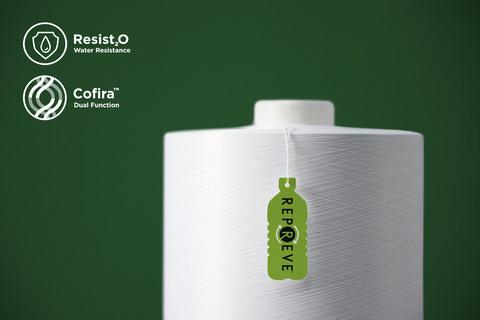
UNIFI has introduced Cofira™, a yarn platform designed to combine the visual and tactile character of spun yarns with filament-yarn functionality. The construction can incorporate other UNIFI technologies and is offered in virgin and REPREVE polyester, including REPREVE Takeback. 

Recycled options can be traced through FiberPrint and are linked to U-TRUST, GRS and SCS certification claims. The company is also expanding its water-resistant portfolio with Resist2O™ Pro. Rather than relying on a conventional topical durable-water-repellent finish, the technology is engineered for different forms of fabric construction and is described as fluorine-free and PFOA-free below 5 ppb.

UNIFI positions the two developments for apparel, furnishings, gear, accessories and industrial applications. Both will be presented in October at Performance Days in Munich and Functional Fabric Fair in Portland, giving the technologies immediate exposure to performance-material developers.


UNIFI has introduced Cofira™, a yarn platform designed to combine the visual and tactile character of spun yarns with filament-yarn functionality. The construction can incorporate other UNIFI technologies and is offered in virgin and REPREVE polyester, including REPREVE Takeback. 

Recycled options can be traced through FiberPrint and are linked to U-TRUST, GRS and SCS certification claims. The company is also expanding its water-resistant portfolio with Resist2O™ Pro. Rather than relying on a conventional topical durable-water-repellent finish, the technology is engineered for different forms of fabric construction and is described as fluorine-free and PFOA-free below 5 ppb.

UNIFI positions the two developments for apparel, furnishings, gear, accessories and industrial applications. Both will be presented in October at Performance Days in Munich and Functional Fabric Fair in Portland, giving the technologies immediate exposure to performance-material developers.


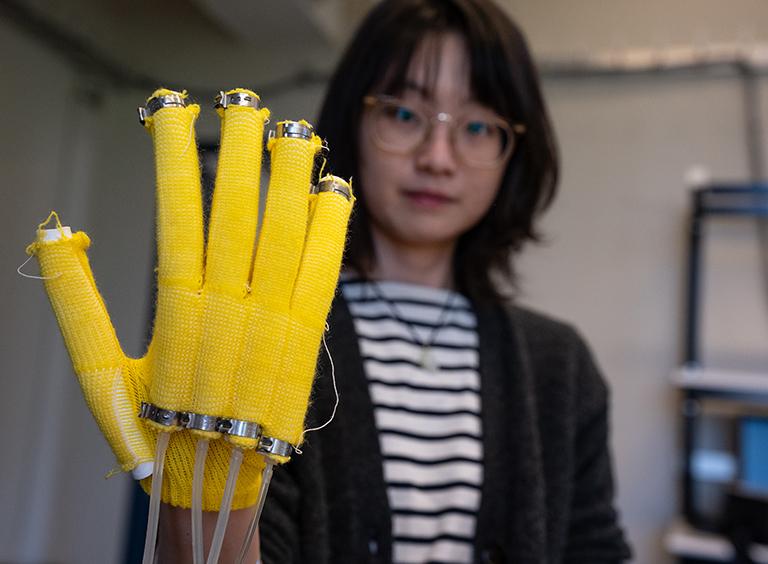
Luo demonstrates a digitally machine-knitted assistive glove, designed to support hand movement. Photo University Of Washington
Luo demonstrates a digitally machine-knitted assistive glove, designed to support hand movement.
22.09.2026

Smart textiles learn the sense of touch

The University of Washington's Wearable Intelligence Lab is advancing textile structures as tactile sensing systems for healthcare, robotics and human-computer interaction. A new university profile of Yiyue Luo shows how digital fabrication, conductive yarns, sensing and AI are being combined.

One example is MultiSensKnit, a sensor-packed knitted sleeve designed for rehabilitation assessment. Other projects range from smart gloves for tactile capture and robot learning to machine-knitted magnetoactive textiles that provide sensing and haptic feedback.

The textile form factor is functional rather than decorative: knits can cover large body areas, conform to movement and capture physical information in situations where cameras or conventional rigid electronics are limited. Luo uses digital knitting machines to integrate conductive yarns and functional structures reproducibly into fabrics.

The work also illustrates a broader transition in smart textiles from isolated demonstrators towards integrated systems in which material, textile construction, electronics and data processing are developed together.

The University of Washington's Wearable Intelligence Lab is advancing textile structures as tactile sensing systems for healthcare, robotics and human-computer interaction. A new university profile of Yiyue Luo shows how digital fabrication, conductive yarns, sensing and AI are being combined.

One example is MultiSensKnit, a sensor-packed knitted sleeve designed for rehabilitation assessment. Other projects range from smart gloves for tactile capture and robot learning to machine-knitted magnetoactive textiles that provide sensing and haptic feedback.

The textile form factor is functional rather than decorative: knits can cover large body areas, conform to movement and capture physical information in situations where cameras or conventional rigid electronics are limited. Luo uses digital knitting machines to integrate conductive yarns and functional structures reproducibly into fabrics.

The work also illustrates a broader transition in smart textiles from isolated demonstrators towards integrated systems in which material, textile construction, electronics and data processing are developed together.

Source:

University of Washington, Department of Electrical & Computer Engineering

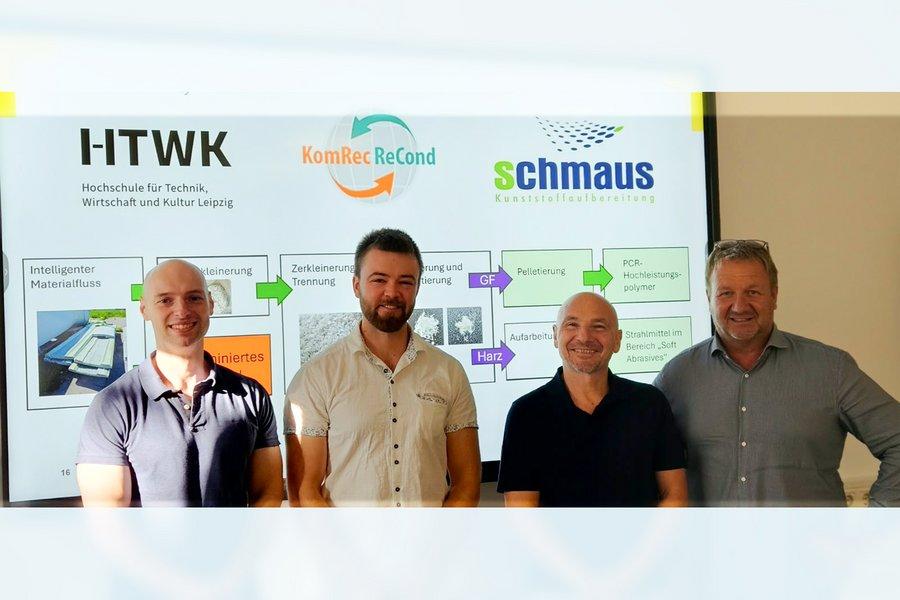
Blade2Poly Kick-Off Meeting on September 17, 2026, at the Composite Circularity Lab in Leipzig (from left to right): Andrej Fehler (HTWK), Dr. Philipp Johst (HTWK), Olaf Thannheiser (KomRec-ReCond), Christian Schmaus (Schmaus Kunststoffaufbereitung), Prof. Robert Böhm (HTWK – participating online, not pictured) © HTWK Leipzig © HTWK Leipzig
Blade2Poly Kick-Off Meeting on September 17, 2026, at the Composite Circularity Lab in Leipzig (from left to right): Andrej Fehler (HTWK), Dr. Philipp Johst (HTWK), Olaf Thannheiser (KomRec-ReCond), Christian Schmaus (Schmaus Kunststoffaufbereitung), Prof. Robert Böhm (HTWK – participating online, not pictured) © HTWK Leipzig
22.09.2026

Blade2Poly targets rotor blades for injection moulding

HTWK Leipzig has launched Blade2Poly with KomRec-ReCond and Schmaus Kunststoffaufbereitung to develop an energy-efficient recycling chain for end-of-life wind-turbine blades. The goal is to recover glass-fibre-reinforced plastics as higher-value secondary raw materials for new injection-moulding applications.

The route starts with material characterisation and categorisation, followed by mechanical processing, intelligent material-flow control and combination of recovered glass fibres with recycled polymers to create post-consumer recycled compounds.

Rotor blades are a demanding circularity case because large, durable composite structures must ultimately be converted into heterogeneous waste streams. Blade2Poly therefore addresses not only size reduction but the quality of recovered material and its compatibility with a new industrial process.

The collaborative R&D project runs from June 2026 to January 2029 under Germany's ZIM programme.

HTWK Leipzig has launched Blade2Poly with KomRec-ReCond and Schmaus Kunststoffaufbereitung to develop an energy-efficient recycling chain for end-of-life wind-turbine blades. The goal is to recover glass-fibre-reinforced plastics as higher-value secondary raw materials for new injection-moulding applications.

The route starts with material characterisation and categorisation, followed by mechanical processing, intelligent material-flow control and combination of recovered glass fibres with recycled polymers to create post-consumer recycled compounds.

Rotor blades are a demanding circularity case because large, durable composite structures must ultimately be converted into heterogeneous waste streams. Blade2Poly therefore addresses not only size reduction but the quality of recovered material and its compatibility with a new industrial process.

The collaborative R&D project runs from June 2026 to January 2029 under Germany's ZIM programme.

Microscopic “rebar” adds strength to a new kind of carbon fiber material that features functionalized single-walled carbon nanotubes. WashU engineers developed the manufacturing process to make use of the waste material lignin and to further strengthen carbon fiber for use in the automotive and energy industries. Photo: Yuan-Labor
Microscopic “rebar” adds strength to a new kind of carbon fiber material that features functionalized single-walled carbon nanotubes. WashU engineers developed the manufacturing process to make use of the waste material lignin and to further strengthen carbon fiber for use in the automotive and energy industries.
22.09.2026

Lignin cuts PAN content in carbon fibre

Researchers at Washington University in St. Louis have developed a route in which lignin replaces a substantial share of the polyacrylonitrile (PAN) normally used in carbon fibre. Lignin is generated in large volumes as a by-product of pulp and biorefinery operations. The university reports that PAN use can be cut by half, with corresponding potential reductions in production cost and emissions.

The central technical challenge is mechanical performance. The team functionalises single-walled carbon nanotubes and incorporates them into the lignin-PAN matrix. The nanotubes act as nanoscale reinforcement and promote stronger crystalline alignment during spinning and thermal treatment.

The precursor solution is wet-spun, tension-assisted heat-treated and carbonised. The researchers report that the resulting renewable carbon fibre can reach quality requirements relevant to automotive manufacturing. Aerospace, energy infrastructure, sporting goods and wind energy are cited as additional markets.

Researchers at Washington University in St. Louis have developed a route in which lignin replaces a substantial share of the polyacrylonitrile (PAN) normally used in carbon fibre. Lignin is generated in large volumes as a by-product of pulp and biorefinery operations. The university reports that PAN use can be cut by half, with corresponding potential reductions in production cost and emissions.

The central technical challenge is mechanical performance. The team functionalises single-walled carbon nanotubes and incorporates them into the lignin-PAN matrix. The nanotubes act as nanoscale reinforcement and promote stronger crystalline alignment during spinning and thermal treatment.

The precursor solution is wet-spun, tension-assisted heat-treated and carbonised. The researchers report that the resulting renewable carbon fibre can reach quality requirements relevant to automotive manufacturing. Aerospace, energy infrastructure, sporting goods and wind energy are cited as additional markets.

Source:

Washington University in St. Louis