From the Sector

Reset
09.10.2026

GRAPHERGIA turns graphene-coated polyester into self-charging textile architectures

Two GRAPHERGIA research teams received poster awards at Graphene Week 2026 for work on energy harvesting, sensing and storage. One project uses graphene-based triboelectric nanogenerators in aerospace composite structures to convert mechanical movement into electrical signals for real-time monitoring.

The second development is directly textile-based. Researchers at FORTH/ICE-HT use a laser-assisted process to convert graphene-oxide-coated polyester textiles into conductive architectures.
Continuous conductive tracks serve as current collectors or electrodes for triboelectric nanogenerators, while laser-patterned interdigitated structures form micro-flexible supercapacitor electrodes.

The objective is to couple energy generation and storage in one self-charging textile platform that can support IoT integration. The work therefore moves beyond attaching electronics to fabric: the textile itself becomes part of the electrical architecture.
The project is funded under Horizon Europe and brings together partners including Adamant Composites and FORTH/ICE-HT.


Two GRAPHERGIA research teams received poster awards at Graphene Week 2026 for work on energy harvesting, sensing and storage. One project uses graphene-based triboelectric nanogenerators in aerospace composite structures to convert mechanical movement into electrical signals for real-time monitoring.

The second development is directly textile-based. Researchers at FORTH/ICE-HT use a laser-assisted process to convert graphene-oxide-coated polyester textiles into conductive architectures.
Continuous conductive tracks serve as current collectors or electrodes for triboelectric nanogenerators, while laser-patterned interdigitated structures form micro-flexible supercapacitor electrodes.

The objective is to couple energy generation and storage in one self-charging textile platform that can support IoT integration. The work therefore moves beyond attaching electronics to fabric: the textile itself becomes part of the electrical architecture.
The project is funded under Horizon Europe and brings together partners including Adamant Composites and FORTH/ICE-HT.


Source:

GRAPHERGIA Horizon Europe project / Adamant Composites / FORTH-ICE/HT
UNIFI, Inc.
09.10.2026

UNIFI combines spun-yarn hand with filament performance and adds fluorine-free water resistance

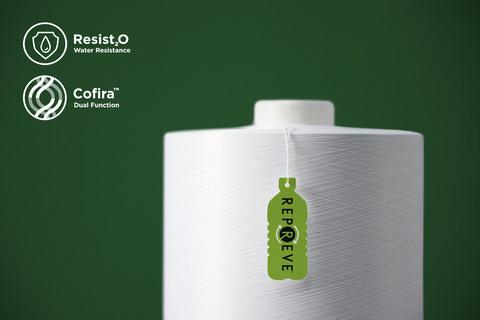
UNIFI has introduced Cofira™, a yarn platform designed to combine the visual and tactile character of spun yarns with filament-yarn functionality. The construction can incorporate other UNIFI technologies and is offered in virgin and REPREVE polyester, including REPREVE Takeback. 

Recycled options can be traced through FiberPrint and are linked to U-TRUST, GRS and SCS certification claims. The company is also expanding its water-resistant portfolio with Resist2O™ Pro. Rather than relying on a conventional topical durable-water-repellent finish, the technology is engineered for different forms of fabric construction and is described as fluorine-free and PFOA-free below 5 ppb.

UNIFI positions the two developments for apparel, furnishings, gear, accessories and industrial applications. Both will be presented in October at Performance Days in Munich and Functional Fabric Fair in Portland, giving the technologies immediate exposure to performance-material developers.


UNIFI has introduced Cofira™, a yarn platform designed to combine the visual and tactile character of spun yarns with filament-yarn functionality. The construction can incorporate other UNIFI technologies and is offered in virgin and REPREVE polyester, including REPREVE Takeback. 

Recycled options can be traced through FiberPrint and are linked to U-TRUST, GRS and SCS certification claims. The company is also expanding its water-resistant portfolio with Resist2O™ Pro. Rather than relying on a conventional topical durable-water-repellent finish, the technology is engineered for different forms of fabric construction and is described as fluorine-free and PFOA-free below 5 ppb.

UNIFI positions the two developments for apparel, furnishings, gear, accessories and industrial applications. Both will be presented in October at Performance Days in Munich and Functional Fabric Fair in Portland, giving the technologies immediate exposure to performance-material developers.


© Recover Textile Systems, S.L.
09.10.2026

Recover™One blends recycled cotton and polyester without downstream overdyeing

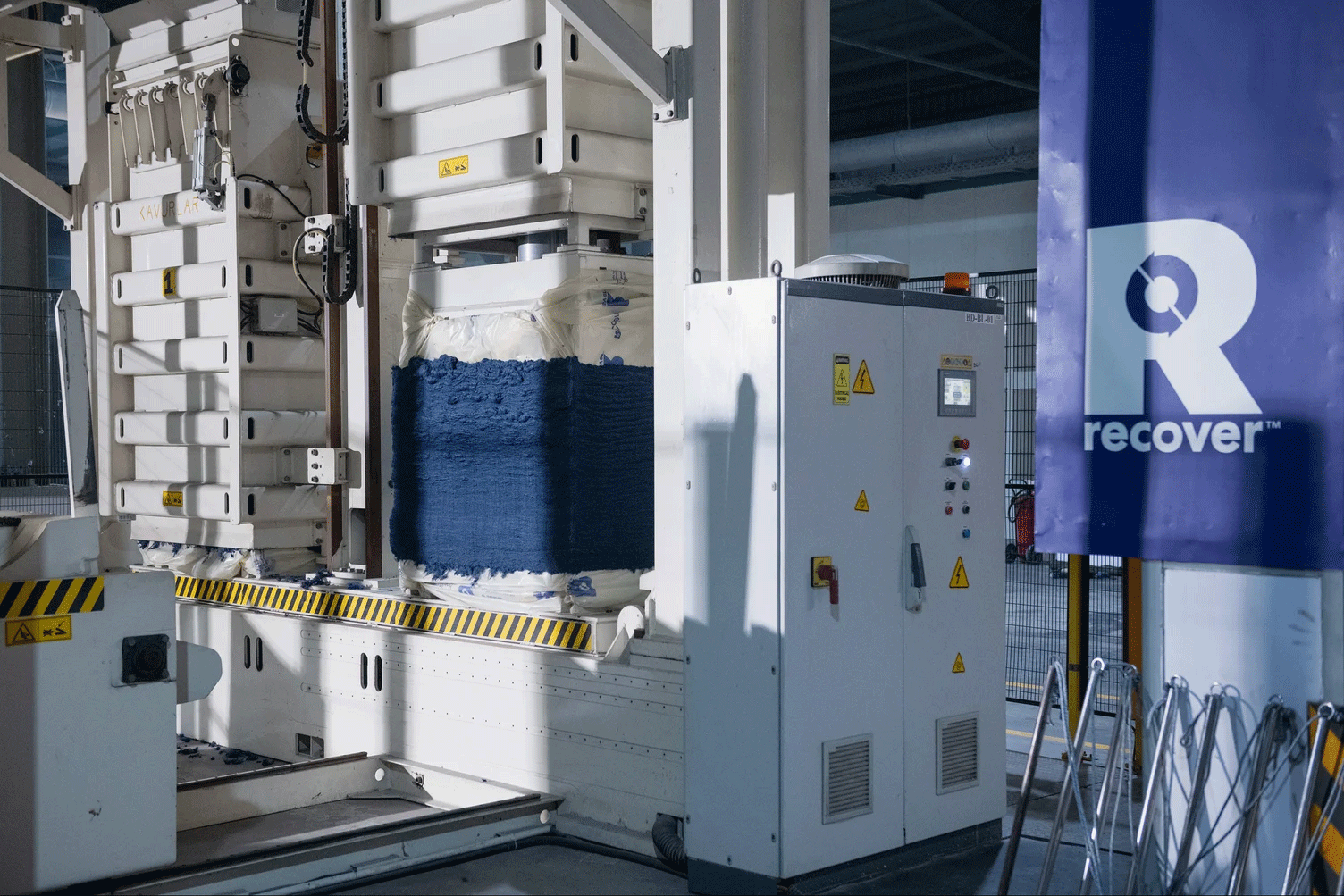
Recover has launched Recover™One, a range of ready-to-spin blends made entirely from recycled cotton and recycled polyester. Cotton-to-polyester ratios can be adjusted for different applications, and the material can be supplied as fiber blends or as fabric through Recover’s supply-chain partners.

The technical point is color management. Recover combines the original colors of textile-waste feedstocks with color-matched, dope-dyed recycled polyester through an intimate blending process.
The company says this creates consistent solid, heather and mélange options without a downstream overdyeing stage, reducing processing time and avoiding an additional wet-finishing step.

Applications cited include single jersey, French terry and fleece. Recover also refers to previously verified life-cycle assessments for its recycled cotton, but the new development is the system-level combination of recycled inputs, predefined color and spinning-ready consistency rather than recycled cotton alone.

Recover has launched Recover™One, a range of ready-to-spin blends made entirely from recycled cotton and recycled polyester. Cotton-to-polyester ratios can be adjusted for different applications, and the material can be supplied as fiber blends or as fabric through Recover’s supply-chain partners.

The technical point is color management. Recover combines the original colors of textile-waste feedstocks with color-matched, dope-dyed recycled polyester through an intimate blending process.
The company says this creates consistent solid, heather and mélange options without a downstream overdyeing stage, reducing processing time and avoiding an additional wet-finishing step.

Applications cited include single jersey, French terry and fleece. Recover also refers to previously verified life-cycle assessments for its recycled cotton, but the new development is the system-level combination of recycled inputs, predefined color and spinning-ready consistency rather than recycled cotton alone.

Source:

 Recover Textile Systems, S.L.

09.10.2026

Circ and Huafon plan 200-tonne-per-day first phase for textile recycling in China

Circ and Huafon are partnering on a multi-phase textile-to-textile recycling site within Huafon’s industrial footprint in China. 
The plant will use Circ’s process for polycotton waste and recover both major material streams: recycled PTA and MEG for polyester production and recycled cellulosic pulp for new textiles.

Phase one is designed to process approximately 200 metric tonnes of textile waste per day, with additional capacity planned. Huafon will invest in the project and contribute engineering, procurement, logistics and commercial capabilities, while Circ brings its recycling technology and a network of brands, manufacturing partners and downstream customers.

Textination has previously covered Circ partnerships in China, including recycled polyester filament production with Shenghong. This project represents a distinct new development.
It concerns construction of recycling capacity itself rather than downstream yarn conversion. Circ is simultaneously developing its first industrial-scale facility in France.

Circ and Huafon are partnering on a multi-phase textile-to-textile recycling site within Huafon’s industrial footprint in China. 
The plant will use Circ’s process for polycotton waste and recover both major material streams: recycled PTA and MEG for polyester production and recycled cellulosic pulp for new textiles.

Phase one is designed to process approximately 200 metric tonnes of textile waste per day, with additional capacity planned. Huafon will invest in the project and contribute engineering, procurement, logistics and commercial capabilities, while Circ brings its recycling technology and a network of brands, manufacturing partners and downstream customers.

Textination has previously covered Circ partnerships in China, including recycled polyester filament production with Shenghong. This project represents a distinct new development.
It concerns construction of recycling capacity itself rather than downstream yarn conversion. Circ is simultaneously developing its first industrial-scale facility in France.

09.10.2026

Textile Exchange puts numbers on textile-to-textile recycling capacity for the first time

Editorial relevance: Very high – establishes a global baseline for available spinnable textile-to-textile recycled fiber and quantifies the gap between waste availability and usable output.

Textile Exchange has published a first global methodology for estimating textile-to-textile recycled fiber availability for apparel and home textiles. Developed with Fashion for Good, Reverse Resources and TEXroad, the framework combines available waste volumes with collection, sorting, processing and technology constraints to estimate how much material can actually become spinnable fiber.

The analysis projects recyclable textile feedstocks to increase from roughly 10 million tonnes in 2025 to around 15 million tonnes by 2030. Yet the quantity of recycled spinnable fiber is estimated at only 1–1.5 million tonnes in 2025, rising to approximately 3–5 million tonnes by 2030.

Editorial relevance: Very high – establishes a global baseline for available spinnable textile-to-textile recycled fiber and quantifies the gap between waste availability and usable output.

Textile Exchange has published a first global methodology for estimating textile-to-textile recycled fiber availability for apparel and home textiles. Developed with Fashion for Good, Reverse Resources and TEXroad, the framework combines available waste volumes with collection, sorting, processing and technology constraints to estimate how much material can actually become spinnable fiber.

The analysis projects recyclable textile feedstocks to increase from roughly 10 million tonnes in 2025 to around 15 million tonnes by 2030. Yet the quantity of recycled spinnable fiber is estimated at only 1–1.5 million tonnes in 2025, rising to approximately 3–5 million tonnes by 2030.

The scope covers post-industrial and post-consumer textiles and both mechanical and chemical recycling of cotton, polyester, nylon, manmade cellulosics, wool and and blends.
Textile Exchange stresses that the figures are directional: data quality remains uneven, and future editions are intended to incorporate more primary data from recyclers and suppliers.


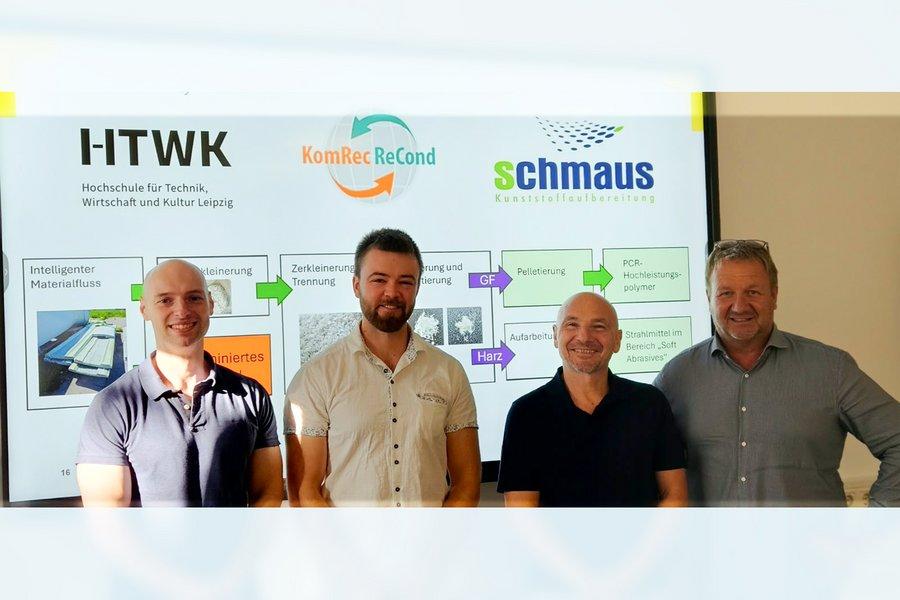
Blade2Poly Kick-Off Meeting on September 17, 2026, at the Composite Circularity Lab in Leipzig (from left to right): Andrej Fehler (HTWK), Dr. Philipp Johst (HTWK), Olaf Thannheiser (KomRec-ReCond), Christian Schmaus (Schmaus Kunststoffaufbereitung), Prof. Robert Böhm (HTWK – participating online, not pictured) © HTWK Leipzig © HTWK Leipzig
Blade2Poly Kick-Off Meeting on September 17, 2026, at the Composite Circularity Lab in Leipzig (from left to right): Andrej Fehler (HTWK), Dr. Philipp Johst (HTWK), Olaf Thannheiser (KomRec-ReCond), Christian Schmaus (Schmaus Kunststoffaufbereitung), Prof. Robert Böhm (HTWK – participating online, not pictured) © HTWK Leipzig
22.09.2026

Blade2Poly targets rotor blades for injection moulding

HTWK Leipzig has launched Blade2Poly with KomRec-ReCond and Schmaus Kunststoffaufbereitung to develop an energy-efficient recycling chain for end-of-life wind-turbine blades. The goal is to recover glass-fibre-reinforced plastics as higher-value secondary raw materials for new injection-moulding applications.

The route starts with material characterisation and categorisation, followed by mechanical processing, intelligent material-flow control and combination of recovered glass fibres with recycled polymers to create post-consumer recycled compounds.

Rotor blades are a demanding circularity case because large, durable composite structures must ultimately be converted into heterogeneous waste streams. Blade2Poly therefore addresses not only size reduction but the quality of recovered material and its compatibility with a new industrial process.

The collaborative R&D project runs from June 2026 to January 2029 under Germany's ZIM programme.

HTWK Leipzig has launched Blade2Poly with KomRec-ReCond and Schmaus Kunststoffaufbereitung to develop an energy-efficient recycling chain for end-of-life wind-turbine blades. The goal is to recover glass-fibre-reinforced plastics as higher-value secondary raw materials for new injection-moulding applications.

The route starts with material characterisation and categorisation, followed by mechanical processing, intelligent material-flow control and combination of recovered glass fibres with recycled polymers to create post-consumer recycled compounds.

Rotor blades are a demanding circularity case because large, durable composite structures must ultimately be converted into heterogeneous waste streams. Blade2Poly therefore addresses not only size reduction but the quality of recovered material and its compatibility with a new industrial process.

The collaborative R&D project runs from June 2026 to January 2029 under Germany's ZIM programme.

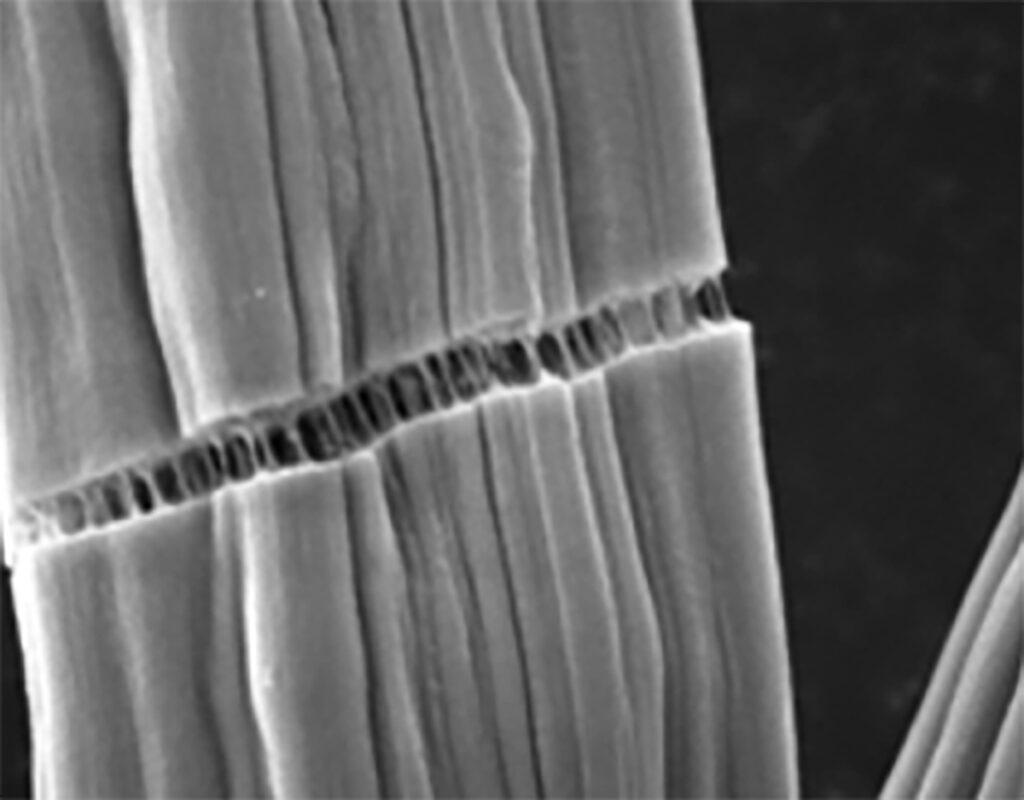
Microscopic “rebar” adds strength to a new kind of carbon fiber material that features functionalized single-walled carbon nanotubes. WashU engineers developed the manufacturing process to make use of the waste material lignin and to further strengthen carbon fiber for use in the automotive and energy industries. Photo: Yuan-Labor
Microscopic “rebar” adds strength to a new kind of carbon fiber material that features functionalized single-walled carbon nanotubes. WashU engineers developed the manufacturing process to make use of the waste material lignin and to further strengthen carbon fiber for use in the automotive and energy industries.
22.09.2026

Lignin cuts PAN content in carbon fibre

Researchers at Washington University in St. Louis have developed a route in which lignin replaces a substantial share of the polyacrylonitrile (PAN) normally used in carbon fibre. Lignin is generated in large volumes as a by-product of pulp and biorefinery operations. The university reports that PAN use can be cut by half, with corresponding potential reductions in production cost and emissions.

The central technical challenge is mechanical performance. The team functionalises single-walled carbon nanotubes and incorporates them into the lignin-PAN matrix. The nanotubes act as nanoscale reinforcement and promote stronger crystalline alignment during spinning and thermal treatment.

The precursor solution is wet-spun, tension-assisted heat-treated and carbonised. The researchers report that the resulting renewable carbon fibre can reach quality requirements relevant to automotive manufacturing. Aerospace, energy infrastructure, sporting goods and wind energy are cited as additional markets.

Researchers at Washington University in St. Louis have developed a route in which lignin replaces a substantial share of the polyacrylonitrile (PAN) normally used in carbon fibre. Lignin is generated in large volumes as a by-product of pulp and biorefinery operations. The university reports that PAN use can be cut by half, with corresponding potential reductions in production cost and emissions.

The central technical challenge is mechanical performance. The team functionalises single-walled carbon nanotubes and incorporates them into the lignin-PAN matrix. The nanotubes act as nanoscale reinforcement and promote stronger crystalline alignment during spinning and thermal treatment.

The precursor solution is wet-spun, tension-assisted heat-treated and carbonised. The researchers report that the resulting renewable carbon fibre can reach quality requirements relevant to automotive manufacturing. Aerospace, energy infrastructure, sporting goods and wind energy are cited as additional markets.

Source:

Washington University in St. Louis

(c) Archroma / Lameirinho
16.09.2026

Dye, fix and soften in one step

Archroma and Portuguese home-textile manufacturer Lameirinho have moved the InOneGO continuous dyeing process into commercial production. Lameirinho's first bed-linen collection made with the technology is now available worldwide.

InOneGO combines coloration, fixation and softening in a single pad-dry application. It was developed for woven cellulosic textiles including denim, fashion fabrics and home textiles, and works with Archroma sulfur-dye systems including DIRESUL RDT, EarthColors and FiberColors.

Archroma's ONE WAY Impact Calculator indicates reductions of up to 81% in process time, 97% in water consumption, 65% in energy use and 75% in CO2 emissions when a defined InOneGO/DIRESUL RDT scenario is compared with conventional cold pad-batch reactive dyeing plus pigment top-dye finishing. These are supplier calculations for a specified benchmark, not universal mill values.

The process runs on stenter and Thermosol lines. That makes the industrial proposition particularly relevant: mills may be able to remove several wet and dry processing stages without replacing the core line architecture.


Archroma and Portuguese home-textile manufacturer Lameirinho have moved the InOneGO continuous dyeing process into commercial production. Lameirinho's first bed-linen collection made with the technology is now available worldwide.

InOneGO combines coloration, fixation and softening in a single pad-dry application. It was developed for woven cellulosic textiles including denim, fashion fabrics and home textiles, and works with Archroma sulfur-dye systems including DIRESUL RDT, EarthColors and FiberColors.

Archroma's ONE WAY Impact Calculator indicates reductions of up to 81% in process time, 97% in water consumption, 65% in energy use and 75% in CO2 emissions when a defined InOneGO/DIRESUL RDT scenario is compared with conventional cold pad-batch reactive dyeing plus pigment top-dye finishing. These are supplier calculations for a specified benchmark, not universal mill values.

The process runs on stenter and Thermosol lines. That makes the industrial proposition particularly relevant: mills may be able to remove several wet and dry processing stages without replacing the core line architecture.


Source:

Archroma / Lameirinho

Photo Richard Harnisch, IÖW
11.09.2026

Lusatia builds a regional fibre economy

A new German research project is exploring how Lusatia can build a regional natural-fibre economy as the former lignite region undergoes structural transformation. Over three years, IÖW and Zittau/Görlitz University of Applied Sciences will examine value chains based on flax, industrial hemp, fibre nettle, miscanthus and residues such as straw and municipal leaves.

The focus is explicitly on industrial applications rather than conventional apparel textiles. Potential outlets include natural-fibre-reinforced plastics, specialty papers, lightweight panels, composites, automotive components and new packaging materials. A regionally resolved material-flow model will map feedstock availability, processing routes, land-use conflicts and possible bottlenecks.

The project treats raw-material availability and industrialisation as one system. Workshops with farmers, processors, manufacturers, municipalities and economic-development actors are intended to produce practical transformation pathways for a circular bioeconomy.


A new German research project is exploring how Lusatia can build a regional natural-fibre economy as the former lignite region undergoes structural transformation. Over three years, IÖW and Zittau/Görlitz University of Applied Sciences will examine value chains based on flax, industrial hemp, fibre nettle, miscanthus and residues such as straw and municipal leaves.

The focus is explicitly on industrial applications rather than conventional apparel textiles. Potential outlets include natural-fibre-reinforced plastics, specialty papers, lightweight panels, composites, automotive components and new packaging materials. A regionally resolved material-flow model will map feedstock availability, processing routes, land-use conflicts and possible bottlenecks.

The project treats raw-material availability and industrialisation as one system. Workshops with farmers, processors, manufacturers, municipalities and economic-development actors are intended to produce practical transformation pathways for a circular bioeconomy.


Source:

Institut für ökologische Wirtschaftsforschung (IÖW) / Hochschule Zittau/Görlitz

Photo EMPA
11.09.2026

Airborne microfibres enter soil and water

Researchers from Empa, Eawag and Agroscope have produced the first systematic estimate of how much microplastic is deposited from the atmosphere across Switzerland. For areas below 2,000 metres, the study estimates annual deposition of about 219 tonnes, including roughly 78 tonnes on agricultural land and around ten tonnes directly into water bodies.

The official release identifies loose fibres from functional clothing among the sources that can enter the environment, alongside PET bottles and other plastic products. Sampling was conducted for a full year at five locations, with particles between 20 and 215 micrometres analysed using imaging infrared microspectroscopy. PET, polyethylene and polypropylene were the most frequently detected polymers.

For textiles, the findings matter because they add atmospheric transport to the better-known discussion around fibre release through washing. The work provides a new evidence base for assessing material emissions and mitigation priorities, while the researchers stress that long-term environmental and health effects remain under investigation.


Researchers from Empa, Eawag and Agroscope have produced the first systematic estimate of how much microplastic is deposited from the atmosphere across Switzerland. For areas below 2,000 metres, the study estimates annual deposition of about 219 tonnes, including roughly 78 tonnes on agricultural land and around ten tonnes directly into water bodies.

The official release identifies loose fibres from functional clothing among the sources that can enter the environment, alongside PET bottles and other plastic products. Sampling was conducted for a full year at five locations, with particles between 20 and 215 micrometres analysed using imaging infrared microspectroscopy. PET, polyethylene and polypropylene were the most frequently detected polymers.

For textiles, the findings matter because they add atmospheric transport to the better-known discussion around fibre release through washing. The work provides a new evidence base for assessing material emissions and mitigation priorities, while the researchers stress that long-term environmental and health effects remain under investigation.


Source:

Empa / Eawag / Agroscope; publiziert über die Schweizer Bundesbehörden

11.09.2026

Recycled polyester heads to New York

Indorama Ventures is supplying fabrics woven with deja™ recycled polyester yarn to Thai label KH Editions. Two looks and accessories from the ten-look Spring/Summer 2027 collection will be shown in New York on 15 September during New York Fashion Week.

The collaboration builds on Indorama Ventures’ RECO programme, launched in 2011 and expanded into RECO Collective in 2023. The initiative combines recycled materials and industry support with emerging designers, aiming to demonstrate that circular inputs can meet the quality and aesthetic requirements of internationally presented fashion.

For the wider value chain, the project is a useful example of material innovation being connected to design, brand building and market access rather than remaining a stand-alone recycling story. Commercial scaling will ultimately depend on consistent quality, available volumes and the ability of recycled yarns to work within established fabric and garment production.

Indorama Ventures is supplying fabrics woven with deja™ recycled polyester yarn to Thai label KH Editions. Two looks and accessories from the ten-look Spring/Summer 2027 collection will be shown in New York on 15 September during New York Fashion Week.

The collaboration builds on Indorama Ventures’ RECO programme, launched in 2011 and expanded into RECO Collective in 2023. The initiative combines recycled materials and industry support with emerging designers, aiming to demonstrate that circular inputs can meet the quality and aesthetic requirements of internationally presented fashion.

For the wider value chain, the project is a useful example of material innovation being connected to design, brand building and market access rather than remaining a stand-alone recycling story. Commercial scaling will ultimately depend on consistent quality, available volumes and the ability of recycled yarns to work within established fabric and garment production.

Source:

Indorama Ventures Public Company Limited


Photo: BASF
11.09.2026

BASF targets circular footwear

BASF will use SIMAC 2026 in Milan to present polyurethane and thermoplastic-polyurethane concepts spanning the footwear life cycle. The portfolio includes Elastopan SpringPURe for thermoformed midsoles together with Elastollan and Infinergy solutions.

Working with Gusbi, BASF has developed an automated heat-press process for lightweight midsoles designed to combine low density, design freedom and durable comfort with almost waste-free processing. With DESMA, the company is also showing a closed-loop concept that combines PU and TPU and links mechanical and chemical recycling. Three concept shoes illustrate separation and recycling routes.

The company is also introducing Infinergy Revolution, an energy-efficient heat-press processing route for expanded TPU. The approach is intended to enable lighter components, new surface designs and improved recyclability. 

BASF will use SIMAC 2026 in Milan to present polyurethane and thermoplastic-polyurethane concepts spanning the footwear life cycle. The portfolio includes Elastopan SpringPURe for thermoformed midsoles together with Elastollan and Infinergy solutions.

Working with Gusbi, BASF has developed an automated heat-press process for lightweight midsoles designed to combine low density, design freedom and durable comfort with almost waste-free processing. With DESMA, the company is also showing a closed-loop concept that combines PU and TPU and links mechanical and chemical recycling. Three concept shoes illustrate separation and recycling routes.

The company is also introducing Infinergy Revolution, an energy-efficient heat-press processing route for expanded TPU. The approach is intended to enable lighter components, new surface designs and improved recyclability. 

KeyVisual bluesign technologies ag
11.09.2026

bluepass prepares for EmpCo

bluesign has set out how its bluepass certification scheme is intended to meet the EU Empowering Consumers for the Green Transition Directive, which becomes enforceable on 27 September 2026. The rules tighten the conditions for environmental and social claims and for certification schemes behind consumer-facing sustainability labels.

According to bluesign, bluepass separates standard setting, assessment and product certification. Consumer-facing products are certified by an independent conformity-assessment body accredited to ISO/IEC 17065. The system also includes publicly available requirements, annual surveillance with product testing, equal access conditions and structured stakeholder consultation.

For existing System Partners, bluesign says current certifications remain valid. Existing bluesign PRODUCT and APPROVED labels do not need to be withdrawn immediately; the move to bluepass can take place with the next label-production cycle. The key compliance point remains that legal responsibility for a claim rests with the company placing the product on the EU market.

bluesign has set out how its bluepass certification scheme is intended to meet the EU Empowering Consumers for the Green Transition Directive, which becomes enforceable on 27 September 2026. The rules tighten the conditions for environmental and social claims and for certification schemes behind consumer-facing sustainability labels.

According to bluesign, bluepass separates standard setting, assessment and product certification. Consumer-facing products are certified by an independent conformity-assessment body accredited to ISO/IEC 17065. The system also includes publicly available requirements, annual surveillance with product testing, equal access conditions and structured stakeholder consultation.

For existing System Partners, bluesign says current certifications remain valid. Existing bluesign PRODUCT and APPROVED labels do not need to be withdrawn immediately; the move to bluepass can take place with the next label-production cycle. The key compliance point remains that legal responsibility for a claim rests with the company placing the product on the EU market.

Source:

bluesign technologies ag

11.09.2026

Wool turns sunlight into clean water

Cornell University researchers have demonstrated that polydopamine-dyed wool can serve as a low-cost, renewable material for solar-driven water purification. The approach uses interfacial solar vapor generation, concentrating solar heat at the water surface while a textile structure transports water and converts it into vapor.

The strongest configuration used ultrablack wool positioned vertically and illuminated from both sides. It produced 2.43 kilograms of water per square metre of fabric per hour, while polydopamine-only wool achieved 2.21 kilograms. Both rates were nearly twice those reported for conventional horizontal two-dimensional evaporation systems. The material also operated continuously for ten hours without salt accumulation.

Performance depends on fibre choice, dye chemistry, surface structure and textile geometry acting together. Salt levels in the collected water were below the World Health Organization drinking-water threshold. Future work will test rainwater and wastewater and improve water-collection designs.


Cornell University researchers have demonstrated that polydopamine-dyed wool can serve as a low-cost, renewable material for solar-driven water purification. The approach uses interfacial solar vapor generation, concentrating solar heat at the water surface while a textile structure transports water and converts it into vapor.

The strongest configuration used ultrablack wool positioned vertically and illuminated from both sides. It produced 2.43 kilograms of water per square metre of fabric per hour, while polydopamine-only wool achieved 2.21 kilograms. Both rates were nearly twice those reported for conventional horizontal two-dimensional evaporation systems. The material also operated continuously for ten hours without salt accumulation.

Performance depends on fibre choice, dye chemistry, surface structure and textile geometry acting together. Salt levels in the collected water were below the World Health Organization drinking-water threshold. Future work will test rainwater and wastewater and improve water-collection designs.


Source:

Cornell University / Cornell Chronicle