
From the Sector

from to
Reset
27.09.2023

Fashion CEO Agenda 2023: Fashion's tangible pathway to becoming net positive

On the occasion of Global Fashion Summit: Boston Edition 2023, Global Fashion Agenda (GFA) has released the 2023 edition of the Fashion CEO Agenda  — a concise report to support the establishment and implementation of leadership strategies to achieve a net positive fashion sector that puts back more into society, the environment, and the global economy than it takes out. In a first for the Fashion CEO Agenda, this edition has been developed to include subsequent action areas for brands, retailers, and producers.  

With less than seven years to deliver on the UN’s Sustainable Development Goals, fashion industry leaders, together with the broader sector, must take urgent steps to make sustainability an integral part of their business strategies. Developed for executives of fashion brands, retailers, and producers, the Fashion CEO Agenda is a succinct resource to support executives in accelerating tangible action across five socio-environmental sustainability priorities:  

On the occasion of Global Fashion Summit: Boston Edition 2023, Global Fashion Agenda (GFA) has released the 2023 edition of the Fashion CEO Agenda  — a concise report to support the establishment and implementation of leadership strategies to achieve a net positive fashion sector that puts back more into society, the environment, and the global economy than it takes out. In a first for the Fashion CEO Agenda, this edition has been developed to include subsequent action areas for brands, retailers, and producers.  

With less than seven years to deliver on the UN’s Sustainable Development Goals, fashion industry leaders, together with the broader sector, must take urgent steps to make sustainability an integral part of their business strategies. Developed for executives of fashion brands, retailers, and producers, the Fashion CEO Agenda is a succinct resource to support executives in accelerating tangible action across five socio-environmental sustainability priorities:  

  • Respectful and Secure Work Environment
  • Better Wage Systems
  • Resource Stewardship
  • Smart Material Choices
  • Circular Systems

The 2023 edition includes action areas that have been established through several years of stakeholder engagement and reinforced through the  global Fashion Industry Target Consultation, led by GFA in partnership with the United Nations Environment Programme (UNEP). The organisations consulted several hundred industry stakeholders through numerous regional workshops and surveys translated into several languages to help inform a holistic framework that captures global perspectives on social and environmental sustainability.  

Action areas outlined in the report include promoting worker access to effective grievance mechanisms, promoting fair compensation and living wages, establishing water stewardship, and addressing overproduction.

Moreover, the report reiterates the need to adopt existing industry-aligned targets, including UNFCCC’s time-bound targets on decarbonisation and the uptake of preferred and low climate impact materials. The material actions outlined are based on consensus across industry stakeholders and topical experts. Extensive stakeholder engagement demonstrated that substantial action is still urgently needed from all actors in the value chain, while such action must be informed by local contexts.

To complement the Fashion CEO Agenda, GFA has created a 2030 Fashion Sector Vision, which presents where the overall sector should be in relation to each of the five sustainability priority areas within only seven years - a critical milestone on the road to net positive by 2050. The objective is to unite the broader sector, consisting of industry actors such as brands, retailers, and producers and other key stakeholders including consumers, citizens, NGOs, innovators, policymakers, and investors. To realise this Vision, it is imperative that the sector moves from ambition to action – the theme underpinning Global Fashion Summit: Boston Edition 2023. GFA now calls on fashion leaders to align their corporate strategies to the priorities and actions laid out in the Fashion CEO Agenda and for the wider sector to support in fostering a conducive environment for scaling this transformation.


Source:

Global Fashion Agenda

ANDRITZ: Extra-wide carding machine for Italian nonwovens producer (c) ANDRITZ
From left to right: Mr. Gianni Boscolo, CEO of Albis, and Mr. Fabien Ravier, Managing Director of ANDRITZ Asselin-Thibeau
27.09.2023

ANDRITZ: Extra-wide carding machine for Italian nonwovens producer

International technology group ANDRITZ has successfully started up the new carding machine and opening/blending line it delivered to Albis in Roasio, Vercelli, Italy.

With its large working width of 5.10 meters, the machine allows for the production of nonwoven fabrics tailored to specific customer requirements while maintaining excellent properties and consistent quality. One example is Albis Curacell ®, a multilayer composite nonwoven fabric in a weight range between 35 and 70 gsm that is produced with a fully water-free patented process and is able to absorb liquid flows of over seven times its own weight. The production line also includes an advanced upstream opening and blending system from ANDRITZ.

Albis, a privately owned group founded in Italy in 1995 by Gianni Boscolo, has been a major player in the nonwoven market for over three decades. Through continuous research and development, the company offers innovative, high-quality nonwoven solutions across various sectors, including hygiene, medical, personal care, textiles, filtration, and agriculture.

International technology group ANDRITZ has successfully started up the new carding machine and opening/blending line it delivered to Albis in Roasio, Vercelli, Italy.

With its large working width of 5.10 meters, the machine allows for the production of nonwoven fabrics tailored to specific customer requirements while maintaining excellent properties and consistent quality. One example is Albis Curacell ®, a multilayer composite nonwoven fabric in a weight range between 35 and 70 gsm that is produced with a fully water-free patented process and is able to absorb liquid flows of over seven times its own weight. The production line also includes an advanced upstream opening and blending system from ANDRITZ.

Albis, a privately owned group founded in Italy in 1995 by Gianni Boscolo, has been a major player in the nonwoven market for over three decades. Through continuous research and development, the company offers innovative, high-quality nonwoven solutions across various sectors, including hygiene, medical, personal care, textiles, filtration, and agriculture.

Source:

ANDRITZ AG

27.09.2023

CELLIANT meets updated requirements for Class 1 Medical Devices

The European Union (EU) has upgraded the requirements for the Class 1 Medical Device designation and Hologenix®, creators of CELLIANT®, has met the stricter requirements for this important market. This means that compliant manufacturers can continue to use the CE mark on their EU products containing CELLIANT.

Brand partners simply need to comply with the requirements that Hologenix provides, and do not have to pursue regulations on their own. Regulatory status validates the science and technology behind CELLIANT, a natural blend of bioceramic minerals that absorb body heat and reflect it back as therapeutic infrared energy.

The list of products that are now registered in the EU as Class 1 Medical Devices has grown considerably since 2014 when Hologenix first sought registration and now includes bed blankets, bed sheets, duvets, duvet covers, mattresses, mattress covers, pillows, heat-reflective upper and lower torso garments, therapeutic diabetic socks, compression socks/stockings, support bandages, wraps and limb mobilization/support skin adhesive tape.  

The European Union (EU) has upgraded the requirements for the Class 1 Medical Device designation and Hologenix®, creators of CELLIANT®, has met the stricter requirements for this important market. This means that compliant manufacturers can continue to use the CE mark on their EU products containing CELLIANT.

Brand partners simply need to comply with the requirements that Hologenix provides, and do not have to pursue regulations on their own. Regulatory status validates the science and technology behind CELLIANT, a natural blend of bioceramic minerals that absorb body heat and reflect it back as therapeutic infrared energy.

The list of products that are now registered in the EU as Class 1 Medical Devices has grown considerably since 2014 when Hologenix first sought registration and now includes bed blankets, bed sheets, duvets, duvet covers, mattresses, mattress covers, pillows, heat-reflective upper and lower torso garments, therapeutic diabetic socks, compression socks/stockings, support bandages, wraps and limb mobilization/support skin adhesive tape.  

The transition to the Medical Device Regulations in the EU for CELLIANT Class 1 medical devices includes more stringent requirements to demonstrate medical device safety for users, a refined quality management system and detailed technical documents.

More information:
Hologenix Celliant medical textiles
Source:

Hologenix, LLC

26.09.2023

ECHA: More than 5 600 comments on PFAS restriction proposal

More than 4 400 organisations, companies and individuals submitted comments and information on the proposal to restrict per- and polyfluoroalkyl substances (PFAS) in the European Economic Area.

At the end of the consultation on 25 September, ECHA had received more than 5 600 comments from more than 4 400 organisations, companies and individuals.

The comments will be checked by ECHA's scientific committees for Risk Assessment (RAC) and Socio-Economic Analysis (SEAC), and those providing relevant evidence-based information will be considered in the opinion making process.

The five countries who prepared the initial proposal will also review the consultation input and may update their initial proposal based on it.

Many comments submitted during the consultation are already published on ECHA’s website. Information indicated as confidential by the consultee is not made public. Comments received very close to the deadline are currently being processed and will be published shortly.

More than 4 400 organisations, companies and individuals submitted comments and information on the proposal to restrict per- and polyfluoroalkyl substances (PFAS) in the European Economic Area.

At the end of the consultation on 25 September, ECHA had received more than 5 600 comments from more than 4 400 organisations, companies and individuals.

The comments will be checked by ECHA's scientific committees for Risk Assessment (RAC) and Socio-Economic Analysis (SEAC), and those providing relevant evidence-based information will be considered in the opinion making process.

The five countries who prepared the initial proposal will also review the consultation input and may update their initial proposal based on it.

Many comments submitted during the consultation are already published on ECHA’s website. Information indicated as confidential by the consultee is not made public. Comments received very close to the deadline are currently being processed and will be published shortly.

Next steps
RAC and SEAC are evaluating the proposed restriction and considering the relevant information received through the consultation. The committees develop their independent, scientific opinions over a series of meetings, where draft opinions are discussed. Attention is given to all aspects and impacted sectors.

ECHA will deliver the final opinions to the European Commission in the shortest possible timeframe, while ensuring proper scrutiny by the scientific committees. Once the committees adopt their opinions, they will be communicated to the public.

The Commission, together with the EU Member States, will decide on the restriction.

Background
The restriction proposal was prepared by authorities in Denmark, Germany, the Netherlands, Norway and Sweden. It was submitted to ECHA on 13 January 2023. It aims to reduce PFAS emissions into the environment and make products and processes safer for people. The six-month consultation ran from 22 March to 25 September 2023.

Further information
•    Consultation comments
•    Restriction on the manufacture, placing on the market and use of PFAS
•    Topical page on PFAS
•    REACH restriction process

More information:
ECHA PFAS
Source:

ECHA

25.09.2023

Indorama Ventures recycles 100 billion PET bottles

Indorama Ventures Public Company Limited, a global sustainable chemical company, announced that it has recycled 100 billion post-consumer PET bottles since February 2011. This has diverted 2.1 million tons of waste from the environment and saved 2.9 million tons of carbon footprint from the product lifecycles. Demonstrating its commitment to support the establishment of a circular economy for PET, in the last ten years Indorama Ventures has spent more than $1 billion towards waste collection of used PET bottles.

Indorama Ventures Public Company Limited, a global sustainable chemical company, announced that it has recycled 100 billion post-consumer PET bottles since February 2011. This has diverted 2.1 million tons of waste from the environment and saved 2.9 million tons of carbon footprint from the product lifecycles. Demonstrating its commitment to support the establishment of a circular economy for PET, in the last ten years Indorama Ventures has spent more than $1 billion towards waste collection of used PET bottles.

The company has also committed a further $1.5 billion to expand its recycling business. To support increased recycling rates globally, Indorama Ventures has expanded its recycling facilities, infrastructure, and public education programs. The unique PET plastic used in soft drinks and water bottles is fully recyclable and is collected in practice and at scale. As a result, PET is the most recycled plastic in the world, and the company’s recycling achievements support that. Building on its position as the world’s largest producer of recycled resin used in plastic beverage bottles, Indorama Ventures is also seeking advanced technologies to deliver more recycling infrastructure globally and reduce lifecycle carbon emissions.

The company now has 20 recycling sites in Asia, the Americas, and Europe. Recent developments include doubling the capacity of a recycling site in Brazil; and the opening of PETValue, the largest bottle-to-bottle recycling facility in the Philippines, in partnership with Coca-Cola. Both part of a $300 million ‘Blue Loan’ Indorama Ventures received in 2020 from the International Finance Corporation (IFC), part of the World Bank, and Asian Development Bank. The loan has the objective of increasing recycling capacity and diverting plastic waste from landfills and oceans in Thailand, Indonesia, Philippines, India, and Brazil - countries seeking support in managing environmental waste. Indorama Ventures has also partnered with the Yunus Foundation, a leading non-profit organization promoting sustainable development with a global network, with the goal of educating one million consumers globally about recycling by 2030 with 200,000 reached so far.

Source:

Indorama

25.09.2023

Coloreel: Million-dollar deal with major Asian manufacturer

Coloreel has signed a two million dollar deal with a prominent Asian manufacturer. This agreement is a milestone for Coloreel and its innovative product.

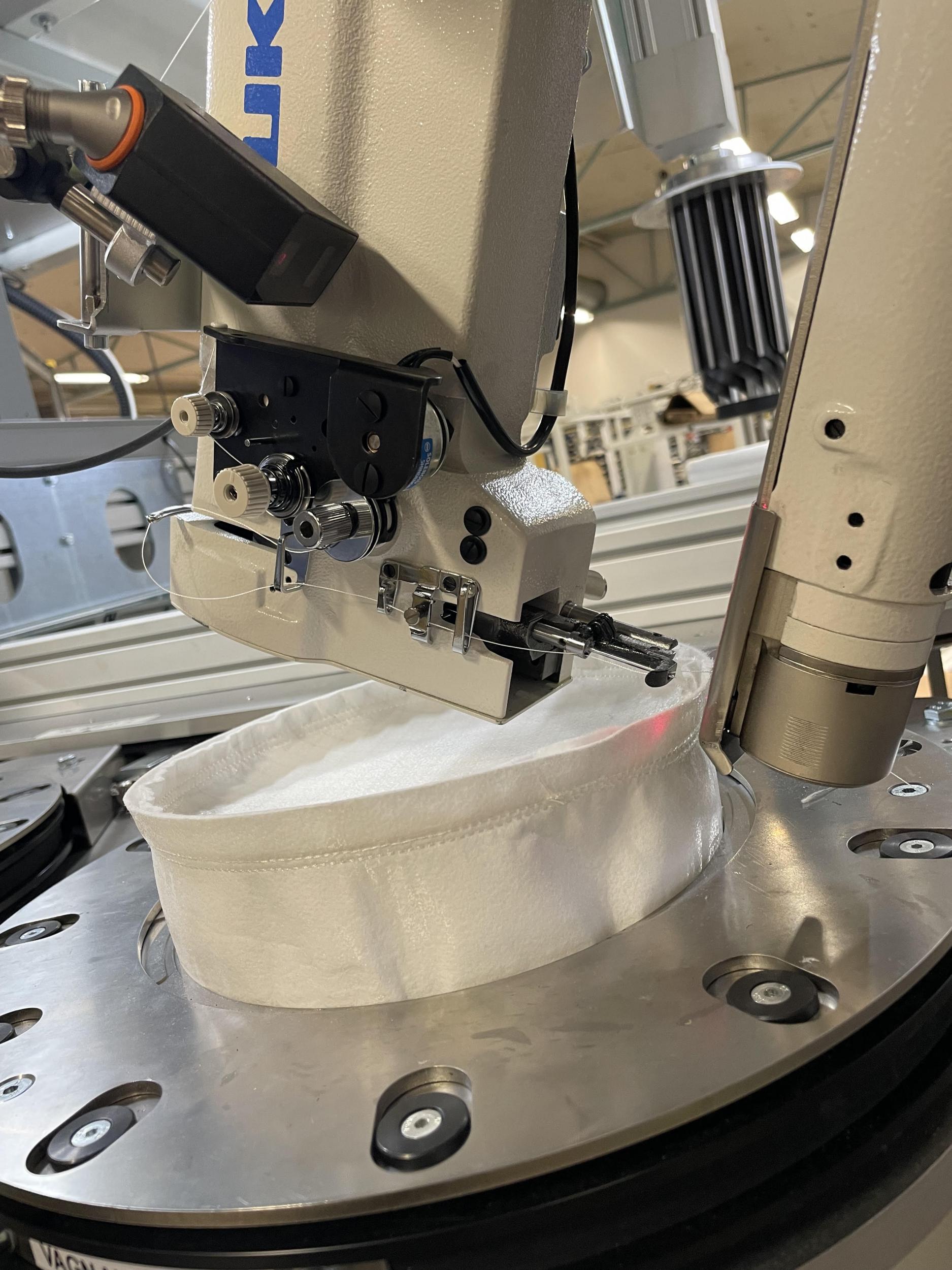
The new partnership underscores Coloreel's capacity to meet the growing demand for innovative and sustainable solutions among manufacturers and brands worldwide. While the initial delivery of the on-demand digital thread-dying units is set for October this year, the majority of the volume will be shipped during 2024.

The Swedish company has rapidly gained recognition for its pioneering innovation in embroidery. The technology enables manufacturers to instantly dye a white thread into an unlimited spectrum of colors, all in real-time. At the same time, the technology makes production more efficient by using digital processes and automation, while saving up to 97% of water compared to traditional thread dyeing.

Coloreel has signed a two million dollar deal with a prominent Asian manufacturer. This agreement is a milestone for Coloreel and its innovative product.

The new partnership underscores Coloreel's capacity to meet the growing demand for innovative and sustainable solutions among manufacturers and brands worldwide. While the initial delivery of the on-demand digital thread-dying units is set for October this year, the majority of the volume will be shipped during 2024.

The Swedish company has rapidly gained recognition for its pioneering innovation in embroidery. The technology enables manufacturers to instantly dye a white thread into an unlimited spectrum of colors, all in real-time. At the same time, the technology makes production more efficient by using digital processes and automation, while saving up to 97% of water compared to traditional thread dyeing.

More information:
Coloreel
Source:

Coloreel

25.09.2023

Italian Textile Machinery Companies at upcoming Titas Taipei 2023

A delegation of Italian textile machinery companies will attend the 2023 edition of TITAS TAIPEI, which will be held in Taipei, Taiwan, from October 17 to 19, 2023. Taiwan is judged as a very promising market for the Italian textile machinery industry, especially in the innovative sectors of technical textiles and nonwovens.

In 2022, Italian exports to the Asian country exceeded the value of 17 million euros, and in the period January-June 2023, the value has already reached 7 million euros. The attention for the Taiwanese market has led ACIMIT, the Association of Italian Textile Machinery Manufacturers, and Italian Trade Agency to set up a pavilion at the upcoming edition of TITAS TAIPEI.

Six Italian textile machinery manufacturers, all ACIMIT member companies, will exhibit in the pavilion: Ferraro, Danitech, Lgl, Ms Italy, Reggiani, Unitech.

At the upcoming TITAS TAIPEI, therefore, visitors will be introduced to Italian technology, once again a key player in the textile production process.

A delegation of Italian textile machinery companies will attend the 2023 edition of TITAS TAIPEI, which will be held in Taipei, Taiwan, from October 17 to 19, 2023. Taiwan is judged as a very promising market for the Italian textile machinery industry, especially in the innovative sectors of technical textiles and nonwovens.

In 2022, Italian exports to the Asian country exceeded the value of 17 million euros, and in the period January-June 2023, the value has already reached 7 million euros. The attention for the Taiwanese market has led ACIMIT, the Association of Italian Textile Machinery Manufacturers, and Italian Trade Agency to set up a pavilion at the upcoming edition of TITAS TAIPEI.

Six Italian textile machinery manufacturers, all ACIMIT member companies, will exhibit in the pavilion: Ferraro, Danitech, Lgl, Ms Italy, Reggiani, Unitech.

At the upcoming TITAS TAIPEI, therefore, visitors will be introduced to Italian technology, once again a key player in the textile production process.

More information:
ACIMIT TITAS
Source:

Association of Italian Textile Machinery Manufacturers

25.09.2023

ARC Research Hub to support sustainable manufacturing of fibre materials

In August 2023, Australian Research Council (ARC) Chief Research Officer Professor Christina Twomey officially launched the ARC Research Hub for Functional and Sustainable Fibres.

Through collaboration with 16 domestic and international Partner Organisations, the team at the ARC Research Hub will be conducting research across three core themes – Sustainability, Circular Economies, and Extraordinary Functionality.

Led by Deakin University, the ARC Research Hub aims to harness Australia’s research capacity in fibre, textiles, and composite materials to develop materials with enhanced functionality, meeting Australian consumer and industrial demand for advanced fibre capabilities including recycling and re-purposing textile waste.
 
Professor Twomey said that the ARC Research Hub is fundamental to increasing collaboration between Australia’s most innovative researchers and vital industries.

In August 2023, Australian Research Council (ARC) Chief Research Officer Professor Christina Twomey officially launched the ARC Research Hub for Functional and Sustainable Fibres.

Through collaboration with 16 domestic and international Partner Organisations, the team at the ARC Research Hub will be conducting research across three core themes – Sustainability, Circular Economies, and Extraordinary Functionality.

Led by Deakin University, the ARC Research Hub aims to harness Australia’s research capacity in fibre, textiles, and composite materials to develop materials with enhanced functionality, meeting Australian consumer and industrial demand for advanced fibre capabilities including recycling and re-purposing textile waste.
 
Professor Twomey said that the ARC Research Hub is fundamental to increasing collaboration between Australia’s most innovative researchers and vital industries.

“The ARC has a proud history of supporting outstanding research that benefits the Australian community, and the ARC Research Hub for Functional and Sustainable Fibres is a great example of this,” Professor Twomey said.
 
“In collaboration with industry partners, the research team are building on the work undertaken by the ARC Research Hub for a World-class Future Fibre Industry which ended in 2021 – this continued success is no easy feat.

“This new ARC Research Hub will strengthen productivity and competitiveness of the advanced manufacturing sector and will place Australia at the forefront of a global shift towards functional and sustainable materials.”
 
The ARC is investing $5 million over 5 years under the ARC Industrial Transformation Research Program.

It is expected that the ARC Research Hub will address the immediate need to reduce industry’s reliance on petroleum-derived materials and to reduce the environmental impact of supply chains.

Source:

Australian Research Council

Oerlikon Luxury at LINEAPELLE Photo: Oerlikon
22.09.2023

Oerlikon Luxury at LINEAPELLE

The new business unit Oerlikon Luxury showcased at LINEAPELLE a new selection of accessories for the fashion industry.

Oerlikon Riri and Oerlikon Fineparts are the brands under this newly-created BU –part of the Oerlikon Group’s Surface Solutions Division since the acquisition of Riri Group in March. Oerlikon Riri offers zippers and buttons that will continue to be branded Riri and Cobrax respectively and will continue to deliver the guaranteed quality and reliability recognized by the whole industry. Oerlikon Fineparts offers a comprehensive portfolio of metal components and fashion jewels, including the products from the previously known brands Coeurdor, Amom, DMC and CMH.

Leveraging Oerlikon’s technology expertise in advanced and environmentally-friendly coatings, the latest FW 24/25 collection from the Group’s luxury product brand Oerlikon Riri include pieces coated using PVD1 (Physical Vapour Deposition), as well as further specialisation in several materials, including stainless steel.

The new business unit Oerlikon Luxury showcased at LINEAPELLE a new selection of accessories for the fashion industry.

Oerlikon Riri and Oerlikon Fineparts are the brands under this newly-created BU –part of the Oerlikon Group’s Surface Solutions Division since the acquisition of Riri Group in March. Oerlikon Riri offers zippers and buttons that will continue to be branded Riri and Cobrax respectively and will continue to deliver the guaranteed quality and reliability recognized by the whole industry. Oerlikon Fineparts offers a comprehensive portfolio of metal components and fashion jewels, including the products from the previously known brands Coeurdor, Amom, DMC and CMH.

Leveraging Oerlikon’s technology expertise in advanced and environmentally-friendly coatings, the latest FW 24/25 collection from the Group’s luxury product brand Oerlikon Riri include pieces coated using PVD1 (Physical Vapour Deposition), as well as further specialisation in several materials, including stainless steel.

Source:

Oerlikon / Menabò Group srl

22.09.2023

Lenzing with new outlook for 2023

The continued weak development of the markets relevant to Lenzing, coupled with very cautious market expectations in 2023, requires a reassessment of Lenzing AG’s macroeconomic environment.

Taking into account the current lack of market recovery, the previous earnings forecast is not expected to be achieved. The Lenzing Group is therefore adjusting its forecast for earnings development and is assuming EBITDA in a range of EUR 270 mn to EUR 330 mn for the 2023 financial year.

CEO Stephan Sielaff: “The recovery expected for the second half of the year in the markets relevant to us has not yet occurred. This makes the early measures we took all the more correct. We launched an ambitious cost reduction program back in November 2022, which delivered the expected results ahead of schedule. Building on this, we are implementing a holistic and consistent value creation program with a focus on measures to strengthen profitability and cash flow generation and to exploit the growth potential in the fiber markets through targeted sales activities.”

The continued weak development of the markets relevant to Lenzing, coupled with very cautious market expectations in 2023, requires a reassessment of Lenzing AG’s macroeconomic environment.

Taking into account the current lack of market recovery, the previous earnings forecast is not expected to be achieved. The Lenzing Group is therefore adjusting its forecast for earnings development and is assuming EBITDA in a range of EUR 270 mn to EUR 330 mn for the 2023 financial year.

CEO Stephan Sielaff: “The recovery expected for the second half of the year in the markets relevant to us has not yet occurred. This makes the early measures we took all the more correct. We launched an ambitious cost reduction program back in November 2022, which delivered the expected results ahead of schedule. Building on this, we are implementing a holistic and consistent value creation program with a focus on measures to strengthen profitability and cash flow generation and to exploit the growth potential in the fiber markets through targeted sales activities.”

The Lenzing Group will announce further details about the value creation program when it publishes its quarterly results on November 3, 2023.

Source:

Lenzing Group

Global Fashion Agenda presents new digital film series (c) Fashion Redressed
22.09.2023

Global Fashion Agenda presents new digital film series

Global Fashion Agenda (GFA) presented a new online film series: Fashion Redressed. Produced by BBC StoryWorks Commercial Productions, the captivating series intends to inspire the industry to take action to transform the way we produce and consume fashion.

Global Fashion Agenda (GFA) presented a new online film series: Fashion Redressed. Produced by BBC StoryWorks Commercial Productions, the captivating series intends to inspire the industry to take action to transform the way we produce and consume fashion.

Every day we express ourselves through our clothes. Encompassing cultures, personalities, traditions and beliefs, fashion is core to how we present ourselves to the outside world. But our consumption of fashion and clothing is pushing our planet and societies to its limits. Fashion trendsetters and pioneers are working to meet this challenge head-on with game-changing ideas. At the heart of this is the question: how can we keep expressing all we do through fashion, but without hurting the planet?
 
Focused on finding the answers, Fashion Redressed, comprises multiple films that showcase organisations from across the fashion and textile industries. Launched on a BBC.com microsite, the series spotlights the innovations across the world that are influencing the new seasons of fashion, featuring a collection of stories that depict tailor-made solutions to fit us and our planet.
 
The 11 self-contained branded films showcase a range of participants including: eBay, Elk, The Ellen MacArthur Foundation, Vestiaire Collective, Spinnova, Lenzing, Faherty, FarFetch, Waste2Wear, Colorifix and Forest Stewardship Council. Each film focuses on a bespoke solution that can benefit us and the planet. From the scientist taking inspiration from silk-spinning spiders in Helsinki and the duo taking a deep dive into the genetic makeup of colour in Cambridge, to the pre-loved clothes being brought to life on a global platform from Paris and the importance of cultural appreciation in Arizona, fashion gathers the most creative and innovative minds. This series expresses the dynamism and creativity of the fashion world, spotlighting the people weaving change into the fibres of fashion and those who are working to find the stylish side of a more sustainable sector.
 
The series was unveiled ahead of GFA’s landmark event – Global Fashion Summit: Boston Edition – on 27 September. The forum will bring together fashion stakeholders for agenda-setting discussions and productive meetings on critical environmental and social issues.

Bac Mono Photo Hypetex
22.09.2023

Hypetex: Coloured carbon fibre replacing paint coating

•    First production supercar created with Hypetex coloured carbon fibre
•    Paint-replacement technology reduces weight to enhance performance

British car manufacturer Briggs Automotive Company (BAC) has created a unique Hypetex coloured carbon fibre version of its Mono R, reducing the weight by removing the need for paint.  

The original BAC Mono R was created to be lighter and more powerful than the standard model, with 343bhp and 555kg total weight, equating to a power-to-weight ratio of 618bhp-per-tonne. By removing the need for paint coatings in this version, the net weight of the exterior is reduced compared to a painted shell, resulting in a further improved overall performance.

The car’s body was created using Hypetex’s titanium carbon fibre twill, and finished with a crystalized lacquer, offering a unique aesthetic finish. The ultra-lightweight supercar can accelerate from zero to 60mph in less than 2.5 seconds.  

•    First production supercar created with Hypetex coloured carbon fibre
•    Paint-replacement technology reduces weight to enhance performance

British car manufacturer Briggs Automotive Company (BAC) has created a unique Hypetex coloured carbon fibre version of its Mono R, reducing the weight by removing the need for paint.  

The original BAC Mono R was created to be lighter and more powerful than the standard model, with 343bhp and 555kg total weight, equating to a power-to-weight ratio of 618bhp-per-tonne. By removing the need for paint coatings in this version, the net weight of the exterior is reduced compared to a painted shell, resulting in a further improved overall performance.

The car’s body was created using Hypetex’s titanium carbon fibre twill, and finished with a crystalized lacquer, offering a unique aesthetic finish. The ultra-lightweight supercar can accelerate from zero to 60mph in less than 2.5 seconds.  

Hypetex’s paint-replacement technology retains the visible weave, allowing for a bold design and a choice of colours without technical compromises, perfectly aligning with BAC’s initiatives to maximise performance whilst creating bespoke supercars. Paint generally adds 138 grams per metre squared, whereas Hypetex adds just 17 grams for the same area, offering an 8x weight saving.
This bespoke version of BAC’s single-seater Mono R was subject to BAC’s renowned BAC Bespoke programme, which ensures that no two Monos are the same. The client, a US-based collector, worked with BAC’s design team to design the car to their personal taste.   

Born out of Formula 1 technology, Hypetex offers manufacturers sustainable aesthetic materials with technical and efficiency benefits. This collaboration is an all-British success story, with the Hypetex carbon fibre body built by Formaplex, a leading UK-based manufacturing company who manufacture lightweight engineered solutions for top tier customers in Automotive, Aerospace and Defence markets. BAC’s supply chain is 95% UK-based.  

Hypetex continues to expand its growing portfolio of the use of coloured carbon fibre to add personalisation to the automotive field, with its material recently featured on the 2024 Ford Mustang Dark Horse.  


More information:
HYPETEX® carbon fibers
Source:

Hypetex

22.09.2023

Lenzing receives EU Ecolabel for fiber production in Indonesia

The Lenzing Group has received certification from the internationally recognized EU Ecolabel for its fibers at the Indonesian site. This means that Lenzing fibers produced in Purwakarta (PT. South Pacific Viscose) meet high environmental standards. The product portfolio thus expands and qualifies for the production of LENZING™ ECOVERO™ brand fibers for textiles and VEOCEL™ brand fibers for nonwoven applications.

The substantial investment of EUR 100 mn to modernize the Indonesian site has enabled Lenzing to significantly reduce its specific emissions. In addition, the site recently began sourcing energy from renewable sources and is driving the conversion to biomass in line with Lenzing's goals of reducing group-wide carbon emissions per ton of product sold by 50 percent by 2030 and achieving carbon-neutral production by 2050.

The Lenzing Group has received certification from the internationally recognized EU Ecolabel for its fibers at the Indonesian site. This means that Lenzing fibers produced in Purwakarta (PT. South Pacific Viscose) meet high environmental standards. The product portfolio thus expands and qualifies for the production of LENZING™ ECOVERO™ brand fibers for textiles and VEOCEL™ brand fibers for nonwoven applications.

The substantial investment of EUR 100 mn to modernize the Indonesian site has enabled Lenzing to significantly reduce its specific emissions. In addition, the site recently began sourcing energy from renewable sources and is driving the conversion to biomass in line with Lenzing's goals of reducing group-wide carbon emissions per ton of product sold by 50 percent by 2030 and achieving carbon-neutral production by 2050.

Anthropogenic climate change is one of the most pressing problems of our time, to which both the global textile and nonwovens industries make a major contribution. LENZING™ ECOVERO™ viscose fibers (for textiles) and VEOCEL™ Viscose (for nonwovens) have been proven to cause significantly less greenhouse gas emissions and water pollution than conventional viscose. At the Indonesian site, Lenzing also plans to produce the innovative LENZING™ ECOVERO™ Black fibers in the future, which also require less energy and water in textile chain thanks to the spun-dyeing process and thus also have a lower carbon footprint in their life cycle as a textile product.

Source:

Lenzing Group

22.09.2023

INDA Partners & Waterloo Filtration Institute: Partnering for the FiltXPO™ 2023 Technical Program

INDA, the Association of the Nonwoven Fabrics Industry, is partnering with the Waterloo Filtration Institute to deliver the FiltXPO™ technical program on October 10-11, 2023 in Chicago, Illinois. The Waterloo Filtration Institute was instrumental in recommending program topics and world-class presenters.

Engineers, scientists, and industry professionals will gain the latest insights into the filtration and separation topics affecting the industry today and into the future. The program features presentations include: filter media technologies, advancements and opportunities in filtration machinery and equipment, innovations in clean air for homes and urban areas, standards and testing, industry trends and new developments, and filtration challenges and opportunities.

The keynote for this year’s event is “IAQ Is the New Black” presented by Suzanne Shelton, President & CEO, Shelton Group. Shelton will share the latest data around consumer views on health, safety, people, and the planet. Participants will gain an understanding of the filtration opportunities and the challenges manufacturers face in communicating the value of their products.

INDA, the Association of the Nonwoven Fabrics Industry, is partnering with the Waterloo Filtration Institute to deliver the FiltXPO™ technical program on October 10-11, 2023 in Chicago, Illinois. The Waterloo Filtration Institute was instrumental in recommending program topics and world-class presenters.

Engineers, scientists, and industry professionals will gain the latest insights into the filtration and separation topics affecting the industry today and into the future. The program features presentations include: filter media technologies, advancements and opportunities in filtration machinery and equipment, innovations in clean air for homes and urban areas, standards and testing, industry trends and new developments, and filtration challenges and opportunities.

The keynote for this year’s event is “IAQ Is the New Black” presented by Suzanne Shelton, President & CEO, Shelton Group. Shelton will share the latest data around consumer views on health, safety, people, and the planet. Participants will gain an understanding of the filtration opportunities and the challenges manufacturers face in communicating the value of their products.

A preview of the subject matter experts includes:

  • AAF Flanders – “Air Filter Standards Activity and What It Means for Innovation”
  • Ahlstrom – “Expanding Wetlaid Filtration Media Performance Through Innovation”
  • Air Techniques International – “Application of Automated Filter Tester in Quality Control Testing: Importance of Consistent Aerosol Particle Size Distribution”
  • American Truetzschler, Inc. – “How Really Good Filter Media Is Made”
  • CEREX Advanced Fabrics – “The Antimicrobial Nylon Advantage”
  • Elsner Engineering Works, Inc. – “When Does Automation Make Sense”
  • Hollingsworth & Vose – “Accelerating Membrane Adoption with ROI”
  • INDA – “Beyond Porter’s Five Forces – When Regulation Reshapes Markets”
  • MANN+HUMMEL GmbH – “Filtration for Cleaner Urban Mobility – Introducing Horizon Europe Innovation Action Aersolfd”
  • NatureWorks – “Optimizing Biopolymers to Improve Filter Performance – A Spectrum of Approaches and Opportunities”
  • Palas GmbH – “Influence of Temperature and Humidity to Filter Efficiency and Dust Holding Capacity”
  • Ptak Consulting – “Residential Filtration – Performance Against Infectious Aerosols”
  • The University of Georgia – “Recent Advances in Melt Blown Nonwovens and Filter Media Research”

New this year to FiltXPO are Lightning Talks. Lightning Talks are an opportunity to connect with new trends, products, innovations, and ideas with speakers rotating every eight minutes. Presenting companies include Ahlstrom, Elsner Engineering Works, Inc., Gottlieb Binder GmbH, TSI, and the Waterloo Filtration Institute.

The FiltXPO exhibition takes place October 10-12 and will run concurrently with the technical program.

More information:
INDA Filtxpo Conference
Source:

INDA, the Association of the Nonwoven Fabrics Industry

AGU’s HeiQ Smart Temp cycling kits at three Grand Tours Photo: AGU
Jumbo-Visma team winning at Vuelta a España with AGU’s HeiQ Smart Temp cycling kits
22.09.2023

AGU’s HeiQ Smart Temp cycling kits at three Grand Tours

Team Jumbo-Visma’s triumphant victories in Europe’s three Grand Tours of cycling, including the recent Vuelta a España, were supported by AGU’s cycling kits that are powered by the HeiQ Smart Temp thermoregulation technology.

HeiQ celebrates its collaboration with AGU, a high-performance sports gear manufacturer. Together, the companies integrated HeiQ Smart Temp technology into the jerseys of Jumbo-Visma, the triumphant team whose outstanding cyclists Jonas Vingegaard, Primoz Roglic, and Sepp Kuss won Europe’s three Grand Tours; the Tour de France, Giro d’Italia, and Vuelta a España.

HeiQ Smart Temp, an innovative thermoregulation solution, dynamically responds to body heat and moisture, providing cyclists with a cooling effect when they need it most. This technology enhances comfort and performance, making it ideal for next-to-skin apparel, sportswear, and activewear.

AGU's product developers harnessed the power of HeiQ Smart Temp to create jerseys with cooling properties. The Jumbo-Visma team's lightest-weight jersey, weighing 25% less than their regular aero shirt, keeps athletes up to 2.5°C cooler than other performance fabrics.

Team Jumbo-Visma’s triumphant victories in Europe’s three Grand Tours of cycling, including the recent Vuelta a España, were supported by AGU’s cycling kits that are powered by the HeiQ Smart Temp thermoregulation technology.

HeiQ celebrates its collaboration with AGU, a high-performance sports gear manufacturer. Together, the companies integrated HeiQ Smart Temp technology into the jerseys of Jumbo-Visma, the triumphant team whose outstanding cyclists Jonas Vingegaard, Primoz Roglic, and Sepp Kuss won Europe’s three Grand Tours; the Tour de France, Giro d’Italia, and Vuelta a España.

HeiQ Smart Temp, an innovative thermoregulation solution, dynamically responds to body heat and moisture, providing cyclists with a cooling effect when they need it most. This technology enhances comfort and performance, making it ideal for next-to-skin apparel, sportswear, and activewear.

AGU's product developers harnessed the power of HeiQ Smart Temp to create jerseys with cooling properties. The Jumbo-Visma team's lightest-weight jersey, weighing 25% less than their regular aero shirt, keeps athletes up to 2.5°C cooler than other performance fabrics.

Source:

HeiQ Materials AG

22.09.2023

Lectra: New President of the Asia-Pacific region

Lectra, a leader in technology solutions for the fashion, automotive and furniture industries, announces the appointment of Frédéric Morel as President of the Asia-Pacific region and as a member of the Group's Executive Committee, where he replaces Edward Wang, who previously held the same position. This nomination comes as Lectra prepares to present its latest software and connected equipment offers at the CISMA (China International Sewing Machinery and Accessories) trade show in Shanghai, China, to enable Asian industry players to accelerate their transition to Industry 4.0.

Lectra's presence in the Asia-Pacific region began in 1985 with the opening of its first office in Japan. Today, Lectra employs 16% of its workforce in the region, which accounted for 25% of the Group's revenues in 2022. Thanks to its dynamism, economic fabric and position in world trade, China is a key market in this region, generating 9% of Lectra’s revenues in 2022.

Lectra, a leader in technology solutions for the fashion, automotive and furniture industries, announces the appointment of Frédéric Morel as President of the Asia-Pacific region and as a member of the Group's Executive Committee, where he replaces Edward Wang, who previously held the same position. This nomination comes as Lectra prepares to present its latest software and connected equipment offers at the CISMA (China International Sewing Machinery and Accessories) trade show in Shanghai, China, to enable Asian industry players to accelerate their transition to Industry 4.0.

Lectra's presence in the Asia-Pacific region began in 1985 with the opening of its first office in Japan. Today, Lectra employs 16% of its workforce in the region, which accounted for 25% of the Group's revenues in 2022. Thanks to its dynamism, economic fabric and position in world trade, China is a key market in this region, generating 9% of Lectra’s revenues in 2022.

Prior to joining Lectra, Frédéric Morel held the position of South East Asia & Pacific Executive Vice President at Vallourec. He had previously been appointed Sales Director and then Sales Vice President for Vallourec in the Middle East, after holding various sales and general management positions for the company in the Asia region. A graduate of the Institut d'Etudes Politiques d'Aix-en-Provence and the EMLYON business school, Frédéric Morel began his career in 2000 with Saint-Gobain.

More information:
Lectra, PLM Asia
Source:

LECTRA

Flachs-Koeper-Band (c) vombaur
Flachs-Koeper-Band
20.09.2023

Technical textiles made of natural fibres: Sustainable textiles for lightweight design

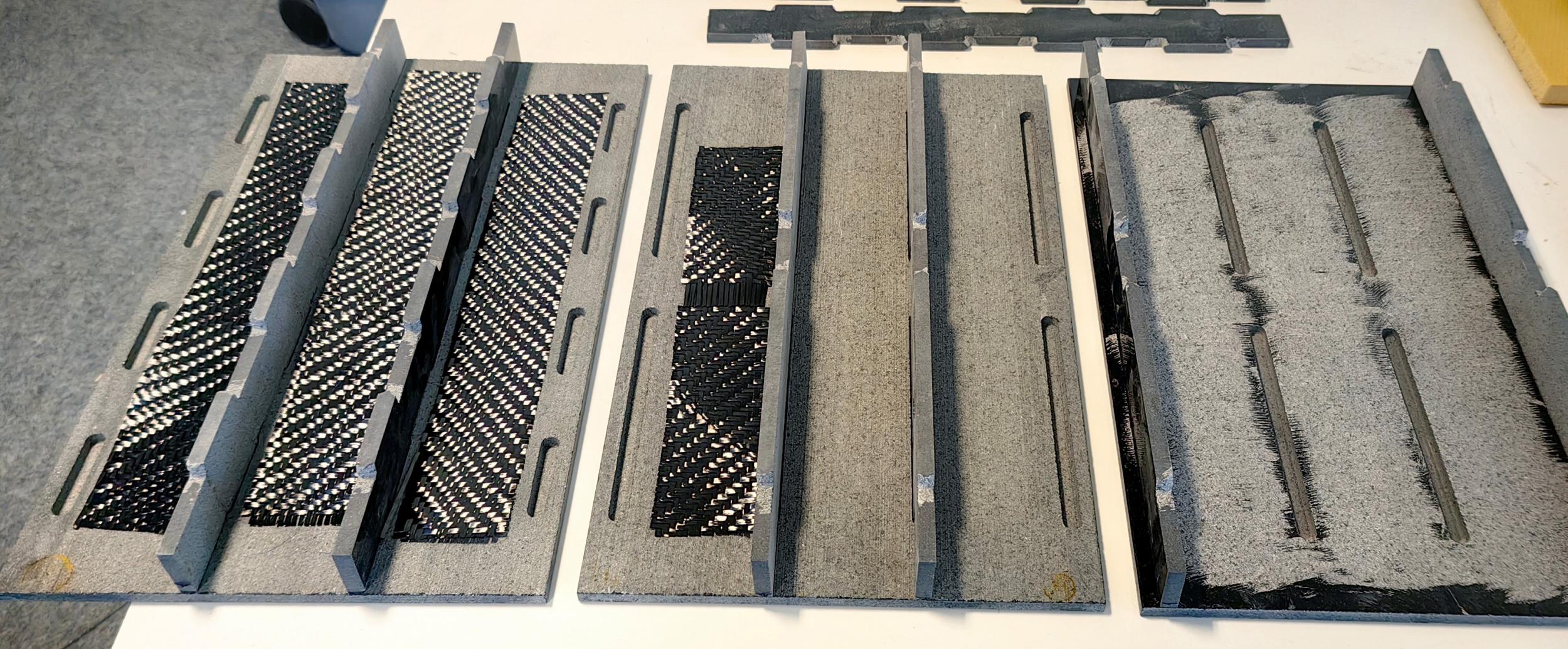
The combination of high strength and rigidity with sustainability and a neutral carbon footprint makes flax the ideal raw material for natural fibre-reinforced plastics. vombaur offers composite textiles made of this natural fibre for the automotive, wind power, construction or sports industries and many other sectors.

Flax fibres are rigid and tear-proof. They have natural bactericidal properties, are virtually antistatic, stain resistant and easy to spin. Humans have taken advantage of these properties to manufacture robust, stain-resistant and lint-free textiles. Between the late 19th and late 20th centuries, cotton largely replaced natural fibres. Because flax can be grown in Europe and consumes less energy and water than cotton production, the material's importance is currently growing again, for both clothing and composites. Regional textile value added chains in Europe – flax makes them possible.

The combination of high strength and rigidity with sustainability and a neutral carbon footprint makes flax the ideal raw material for natural fibre-reinforced plastics. vombaur offers composite textiles made of this natural fibre for the automotive, wind power, construction or sports industries and many other sectors.

Flax fibres are rigid and tear-proof. They have natural bactericidal properties, are virtually antistatic, stain resistant and easy to spin. Humans have taken advantage of these properties to manufacture robust, stain-resistant and lint-free textiles. Between the late 19th and late 20th centuries, cotton largely replaced natural fibres. Because flax can be grown in Europe and consumes less energy and water than cotton production, the material's importance is currently growing again, for both clothing and composites. Regional textile value added chains in Europe – flax makes them possible.

Ideal mechanical properties
vombaur makes the mechanical properties of flax usable for lightweight design. Because flax fibres are particularly rigid and tear-resistant, they ensure great stability in natural fibre-reinforced plastics (NFRPs). And thanks to their low density of 1.50 g/cm3, the fibres weigh virtually nothing. On top of this, fibre-reinforced plastics are less prone to splintering than glass fibre-reinforced plastics.

Excellent carbon footprint
The cultivation of flax binds CO2 and the production of natural fibre-reinforced plastics (NFRPs) generates approximately one third less CO2 emissions compared with conventional fibre-reinforced plastics. Energy consumption is substantially lower. This saves resources. The use of flax fibre tapes by vombaur in lightweight design applications also improves the product's carbon footprint and contributes to a secure, regional supply chain.

Recycling without impacting on quality
Flax offers another sustainability benefit: more recycling cycles than glass- or carbon fibre-reinforced plastics – without impacting on quality. Thermoplastic fibre-matrix prepregs are melted and reused in the recycling process. The natural fibres can be used in other products such as natural fibre-reinforced injection moulded parts.

Sustainable product developments for many industries
"Orthoses for high-performance sports, high-tech skis, wind turbines, components for the automotive industry or aerospace, but also modern window profiles – the application scope for our lightweight design flax tapes is amazingly diverse", as Carl Mrusek, Chief Sales Officer at vombaur explains. "After all, wherever flax tapes are used, three key properties come together: light weight, strength and sustainability".

More information:
CO2
Source:

vombaur

20.09.2023

Stahl: Second consecutive Platinum EcoVadis rating

Stahl, a leading provider of coating technologies for flexible substrates, has been awarded a Platinum rating by the sustainability rating agency EcoVadis for the second consecutive year. For the 2023 EcoVadis assessment, Stahl’s rating increased by three points compared to its 2022 score, reflecting the company’s improved performance in the area of labour and human rights.

Stahl, a leading provider of coating technologies for flexible substrates, has been awarded a Platinum rating by the sustainability rating agency EcoVadis for the second consecutive year. For the 2023 EcoVadis assessment, Stahl’s rating increased by three points compared to its 2022 score, reflecting the company’s improved performance in the area of labour and human rights.

Progress in the Labour & Human Rights category
The 2023 EcoVadis assessment revealed the progress Stahl is making in the Labour & Human Rights category, where Stahl scored 90 out of a possible 100 points. This reflects the company's recent work to improve its health and safety management systems. In particular, the majority of Stahl’s global manufacturing sites are now ISO 45001 certified and more than 94% are ISO 14001 certified. Stahl has also taken steps to improve its approach to employee career development and well-being. These include the creation of an individual career plan for all employees and the introduction of a new company-wide employee satisfaction survey.
 
Stahl moves forward with 2030 ESG ambitions
Stahl has set a 2030 target to maintain its EcoVadis Platinum rating by working closely with its value chain partners to help them reduce their impact. In 2022, 83% of Stahl’s total spend on raw materials was sourced from EcoVadis-rated suppliers.

EcoVadis is a globally recognised, evidence-based rating platform that assesses the performance of more than 90,000 organisations against key sustainability criteria across four categories: Environment, Labour & Human Rights, Ethics and Sustainable Procurement. For the 2023 EcoVadis assessment, Stahl received an overall score of 80 out of 100, up from 77 in 2022. This score indicates an advanced level of sustainability maturity and ensures that Stahl retains its Platinum rating. This is awarded to the top 1% of companies assessed by EcoVadis. Stahl achieved its first Platinum rating in 2022, having undergone its first EcoVadis assessment in 2015.

More information:
EcoVadis Stahl
Source:

Stahl

20.09.2023

TMAS Members at ITMA Asia + CITME 2023

Members of TMAS – the Swedish Textile Machinery Association – will be taking part in the forthcoming ITMA Asia + CITME exhibition, taking place from November 19-23 2023 at the National Exhibition and Convention Centre in Shanghai, China.

Weaving
In the area of weaving, 93% of the 114,000 new looms delivered in 2022 went to Asia, according to the latest figures from the International Textile Manufacturers Federation (ITMF), with China the top destination, followed by India.
As a result, TMAS members like Vandewiele Sweden AB and Eltex have a huge market to address that has been established over many decades.

Vandewiele Sweden AB benefits from all of the synergies and accumulated know-how of the market-leading Vandewiele Group, supplying weft yarn feeding and tension control units for weaving looms to the majority of weaving machine manufacturers. It also retrofits its latest technologies to working mills to enable instant benefits in terms of productivity and control.

Members of TMAS – the Swedish Textile Machinery Association – will be taking part in the forthcoming ITMA Asia + CITME exhibition, taking place from November 19-23 2023 at the National Exhibition and Convention Centre in Shanghai, China.

Weaving
In the area of weaving, 93% of the 114,000 new looms delivered in 2022 went to Asia, according to the latest figures from the International Textile Manufacturers Federation (ITMF), with China the top destination, followed by India.
As a result, TMAS members like Vandewiele Sweden AB and Eltex have a huge market to address that has been established over many decades.

Vandewiele Sweden AB benefits from all of the synergies and accumulated know-how of the market-leading Vandewiele Group, supplying weft yarn feeding and tension control units for weaving looms to the majority of weaving machine manufacturers. It also retrofits its latest technologies to working mills to enable instant benefits in terms of productivity and control.

Yarn and sewing thread monitoring
With nearly 70 years of expertise in yarn sensor technology, Eltex of Sweden AB has been at the forefront of new product development. Its EYE and EyETM systems are capable of accurately and efficiently monitoring the movement and tension of more than 1,000 yarns simultaneously. These systems are suitable for various applications and fibre types, including warping, winding, multiaxial weaving and new material applications.

Eltex sewing tension monitors, such as the ETM422, have been well-received by customers. This device can monitor the tension of sewing threads in real time, effectively improving the quality and safety of sewn products. Particularly in China's rapidly growing automotive manufacturing sector, the ETM422 has seen widespread use to meet the industry’s escalating demands for product safety and quality.

Dyeing and finishing
“Digitalisation, automation and AI have become the key enablers for sustainable gains across the entire textile industry and so much has been achieved in the past few years, especially in terms of automation,” says TMAS secretary general Therese Premler-Andersson. “One area in which TMAS members are really making a difference right now, is in replacing water and energy-intensive technologies for the dyeing and finishing processes with new digital technologies.”

The TexCoat G4 non-contact spray technology for textile finishing and remoistening, for example, will be showcased in Shanghai by Baldwin. It not only reduces water, chemicals and energy consumption, but also provides the flexibility to adapt to a customer’s requirements in terms of single and double-sided finishing applications. The TexCoat G4 can reduce water consumption by as much as 50% compared to traditional padding application processes.

adidas TERREX and National Geographic: Aurora Borealis-Inspired Collection (c) adidas AG
20.09.2023

adidas TERREX and National Geographic: Aurora Borealis-Inspired Collection

Following the successful inaugural launch last Spring, adidas TERREX and National Geographic join forces once again with a collection designed to capture the awe-inspiring beauty of the Aurora Borealis.

The core images of the Northern Lights, as captured by National Geographic photographers, are interpreted in different ways on different products, taken through different hues and applied in different places per garment. These include:

Following the successful inaugural launch last Spring, adidas TERREX and National Geographic join forces once again with a collection designed to capture the awe-inspiring beauty of the Aurora Borealis.

The core images of the Northern Lights, as captured by National Geographic photographers, are interpreted in different ways on different products, taken through different hues and applied in different places per garment. These include:

  • The TERREX Swift R3 GORE-TEX National Geographic hiking boot – Blending the lightweight design and cushioning of a trail running shoe with the stability and durability of a hiking boot
  • The all-gender TERREX National Geographic RAIN.RDY 3-IN-1 Jacket – Combining 2.5L waterproof RAIN.RDY shell and polar fleece inner jackets for elevated protection and versatility with a strong visual design inspired by the northern lights.
  • The TERREX National Geographic Softshell Jacket – A functional and stylish option for any adventure outdoor-seekers may have on their agenda. Reinforced shoulders, chest and forearms provide abrasion resistance.
  • The TERREX National Geographic High Pile Fleece Jacket – The add-on for chilly days in the great outdoors. The Fleece Jacket features reflective elements that ensure visibility and safety in the low lights.
More information:
adidas Outdoor outdoor apparel
Source:

adidas AG