From the Sector

from to
Reset
(c) Trützschler Nonwovens
20.06.2022

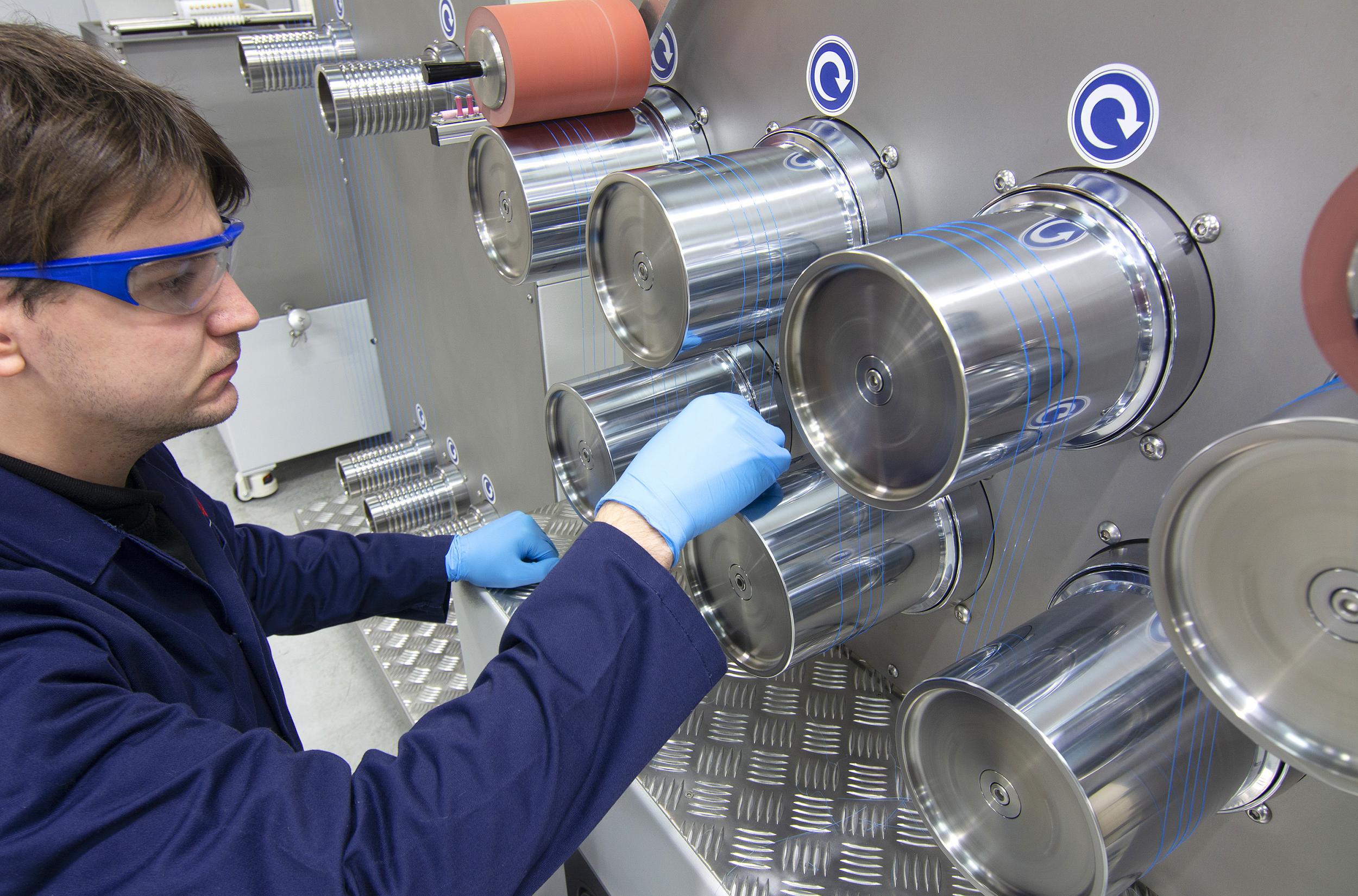
Trützschler Nonwovens presents solutions for needle-punched nonwovens

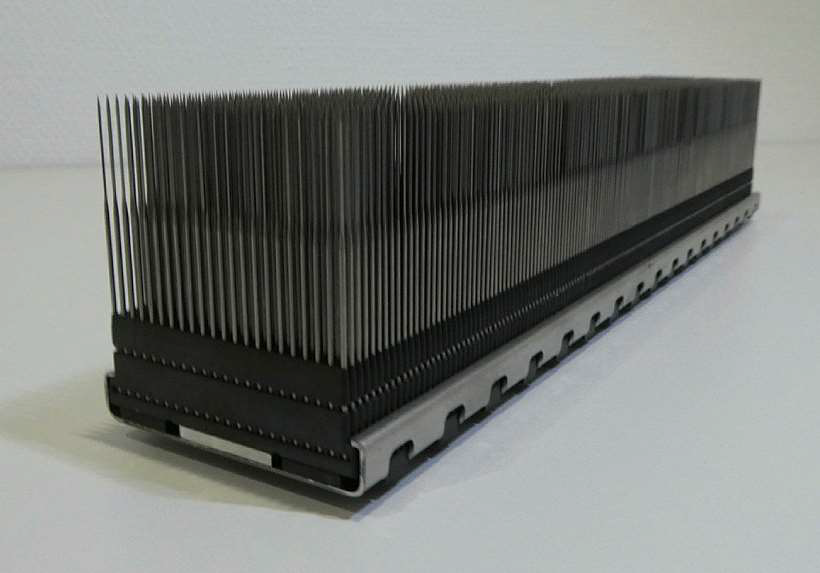
Trützschler Nonwovens & Man-Made Fibers GmbH started a cooperation with the Italian textile machinery manufacturer Texnology S.r.l. in the field of needle-punching technology. With immediate effect, the companies will offer complete production lines for needle-punched nonwovens under the name of T-SUPREMA.

Web bonding with steel needles represent the largest production process in the drylaid nonwovens segment. The areas of application are predominantly of a technical nature, with the largest applications being durable geotextiles, automotive textiles and filter media. The high adaptability of the needling and finishing processes as well as the broad material base result in a large number of different end products. Needle-punching is suitable for a wide range of man-made and natural fibers including mineral and high-performance fibers.  

Trützschler Nonwovens contributes its many years of experience in fiber preparation and web forming to the cooperation. Texnology is mainly responsible for the needle-punching process. Joint projects can thus build on a broad application expertise.

Trützschler Nonwovens & Man-Made Fibers GmbH started a cooperation with the Italian textile machinery manufacturer Texnology S.r.l. in the field of needle-punching technology. With immediate effect, the companies will offer complete production lines for needle-punched nonwovens under the name of T-SUPREMA.

Web bonding with steel needles represent the largest production process in the drylaid nonwovens segment. The areas of application are predominantly of a technical nature, with the largest applications being durable geotextiles, automotive textiles and filter media. The high adaptability of the needling and finishing processes as well as the broad material base result in a large number of different end products. Needle-punching is suitable for a wide range of man-made and natural fibers including mineral and high-performance fibers.  

Trützschler Nonwovens contributes its many years of experience in fiber preparation and web forming to the cooperation. Texnology is mainly responsible for the needle-punching process. Joint projects can thus build on a broad application expertise.

A first joint project has already been successfully completed, implemented and put into operation.

Source:

Trützschler Nonwovens

Photo: Archroma
20.06.2022

Archroma introduces new technology for the repellence of water-based stains

Archroma launches Smartrepel® Hydro SR liq, a new PFC-free* technology for the repellence of water-based stains.

The innovation has been developed in line with the principles of “The Archroma Way to a Sustainable World: Safe, efficient, enhanced, it’s our nature”.

Smartrepel® Hydro SR liq is the latest addition to a range of micro-encapsulated, highly biodegradable, non-PFC based technology offering durable water repellency to all cotton and synthetic fibers, and their blends.

The new Smartrepel® Hydro SR liq has been specifically developed for soil repellent finishes aiming to offer protection against water-based stains such as coffee, red wine and ketchup, in applications such as home textiles, table clothes upholstery, car seats and interior textiles.

The new grade offers the signature Smartrepel® high performance standard: a symbiosis of water protection, soil repellence, breathability and durability – with the soft hand-feel that is sought after by consumers.

Archroma launches Smartrepel® Hydro SR liq, a new PFC-free* technology for the repellence of water-based stains.

The innovation has been developed in line with the principles of “The Archroma Way to a Sustainable World: Safe, efficient, enhanced, it’s our nature”.

Smartrepel® Hydro SR liq is the latest addition to a range of micro-encapsulated, highly biodegradable, non-PFC based technology offering durable water repellency to all cotton and synthetic fibers, and their blends.

The new Smartrepel® Hydro SR liq has been specifically developed for soil repellent finishes aiming to offer protection against water-based stains such as coffee, red wine and ketchup, in applications such as home textiles, table clothes upholstery, car seats and interior textiles.

The new grade offers the signature Smartrepel® high performance standard: a symbiosis of water protection, soil repellence, breathability and durability – with the soft hand-feel that is sought after by consumers.

The Smartrepel® product range supports the increasing adoption of eco-advanced materials and production processes by textile producers and brand owners adhering to standards such as ZDHC, bluesign and Oeko-tex.

Source:

Archroma / EMG

20.06.2022

Reifenhäuser with solutions for films and nonwovens at K 2022

The Reifenhäuser Group will be represented with four booths at the world's leading trade fair for plastics processing, K 2022, from October 19 to 26. Under this year's Reifenhäuser motto "The Time is Now", the extrusion specialists will show producers of films and nonwovens solutions for the three major topics of the industry: sustainability, digitalization and productivity.

The main booth showcases the Reifenhäuser Blown Film, Cast Sheet Coating and Reicofil business units. With the help of machine exhibits, visual presentations and concrete solutions for end products, visitors will learn, among other things, how they can manufacture fully recyclable products economically, process recyclates safely, increase their output and network the entire production without becoming dependent on systems, specialists or manufacturers. To ensure smooth production even after purchase, Reifenhäuser Service shows how customers can get the best out of their Reifenhäuser products and increase their productivity with rework solutions, modifications, training programs and digital services.

The Reifenhäuser Group will be represented with four booths at the world's leading trade fair for plastics processing, K 2022, from October 19 to 26. Under this year's Reifenhäuser motto "The Time is Now", the extrusion specialists will show producers of films and nonwovens solutions for the three major topics of the industry: sustainability, digitalization and productivity.

The main booth showcases the Reifenhäuser Blown Film, Cast Sheet Coating and Reicofil business units. With the help of machine exhibits, visual presentations and concrete solutions for end products, visitors will learn, among other things, how they can manufacture fully recyclable products economically, process recyclates safely, increase their output and network the entire production without becoming dependent on systems, specialists or manufacturers. To ensure smooth production even after purchase, Reifenhäuser Service shows how customers can get the best out of their Reifenhäuser products and increase their productivity with rework solutions, modifications, training programs and digital services.

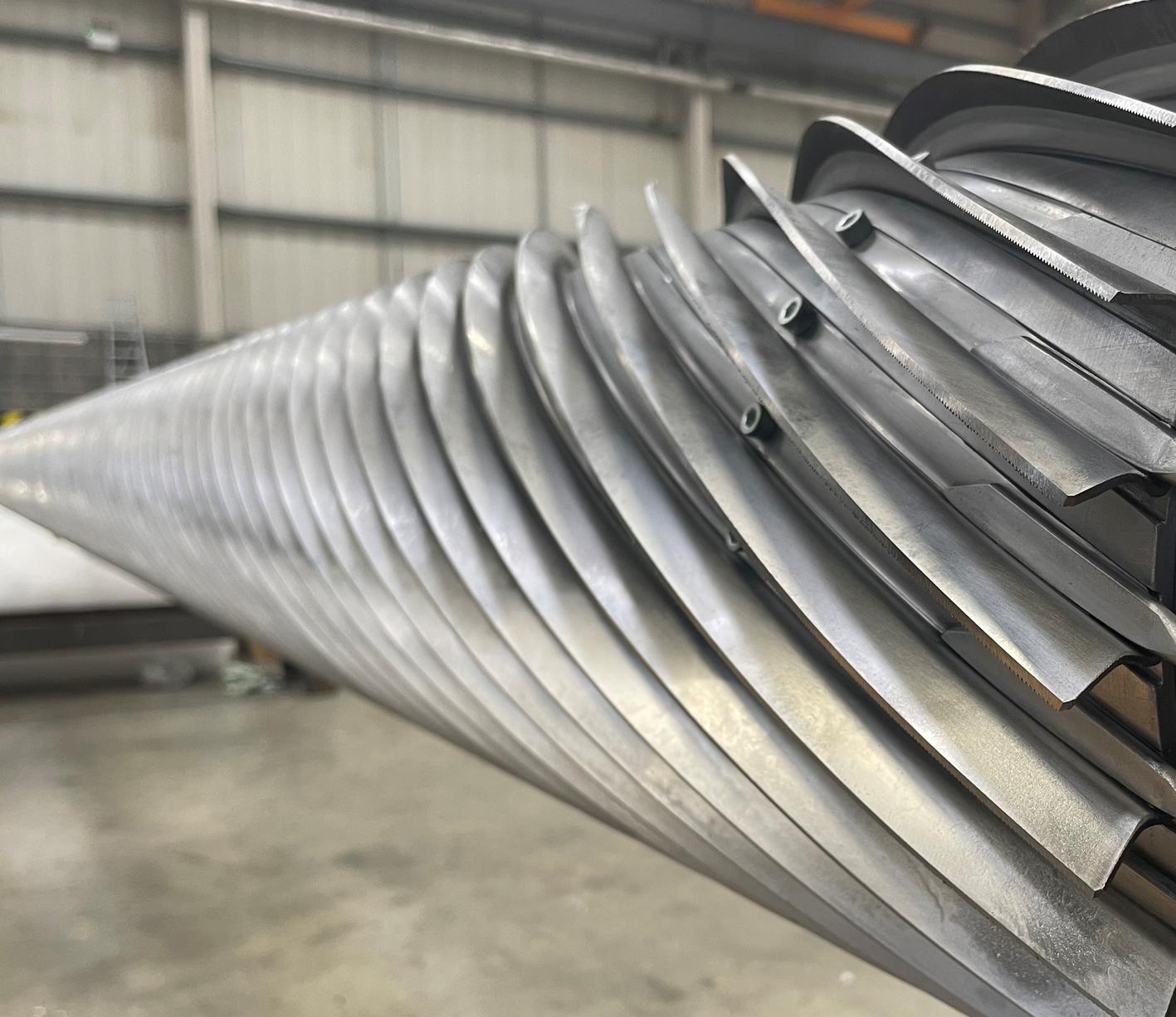
The component specialists of the Reifenhäuser Extrusion Systems business unit will additionally present their portfolio at two other exhibition booths. Here, everything revolves around screws, barrels and extruders - and why, especially for processing recycled material, high-performance wear protection is essential for reliability and high economic efficiency. Reifenhäuser Extrusion Systems will also showcase its innovations for flat dies and coextrusion blocks and their coordinated interaction for maximum productivity.

In addition to its own booths, Reifenhäuser will also be present as a partner of the R-Cycle initiative as part of a joint pavilion on the open-air site in the so-called Circular Economy Forum. R-Cycle is a cooperation project of various technology companies and organizations along the entire life cycle of plastic packaging.

Aanother highlight for visitors to the Reifenhäuser trade fair booths is the opportunity to additionally participate in the in-house exhibition on October 20, 21 and 24 at the Reifenhäuser Technology Center.

Source:

Reifenhäuser GmbH & Co. KG Maschinenfabrik

Photo: Stora Enso
20.06.2022

Infinited Fiber Company: Commercial-scale factory to produce regenerated textile fiber

  • Finnish fashion and textile technology company Infinited Fiber Company plans to build its first commercial-scale Infinna™ fiber factory at Stora Enso’s Veitsiluoto industrial site in the city of Kemi in Finland’s northernmost region of Lapland. Infinited Fiber Company plans to convert a building currently housing a discontinued paper production line.
  • The size of Infinited Fiber Company’s planned investment is around EUR 400 million.
  • The planned factory is expected to create around 270 jobs at the Veitsiluoto industrial site.
  • The factory is expected to operate at full capacity in 2025.

Fashion and textile technology company Infinited Fiber Company plans to build a commercial-scale factory to produce regenerated textile fiber for the world’s leading apparel companies at the site of renewable materials company Stora Enso’s closed Veitsiluoto paper mill in Kemi, a Finnish city on the northern shore of the Baltic Sea. The size of the investment is estimated at EUR 400 million, and it is expected to create around 270 jobs in the area.

  • Finnish fashion and textile technology company Infinited Fiber Company plans to build its first commercial-scale Infinna™ fiber factory at Stora Enso’s Veitsiluoto industrial site in the city of Kemi in Finland’s northernmost region of Lapland. Infinited Fiber Company plans to convert a building currently housing a discontinued paper production line.
  • The size of Infinited Fiber Company’s planned investment is around EUR 400 million.
  • The planned factory is expected to create around 270 jobs at the Veitsiluoto industrial site.
  • The factory is expected to operate at full capacity in 2025.

Fashion and textile technology company Infinited Fiber Company plans to build a commercial-scale factory to produce regenerated textile fiber for the world’s leading apparel companies at the site of renewable materials company Stora Enso’s closed Veitsiluoto paper mill in Kemi, a Finnish city on the northern shore of the Baltic Sea. The size of the investment is estimated at EUR 400 million, and it is expected to create around 270 jobs in the area. The annual fiber production capacity of the planned factory is expected to be 30,000 metric tons, which is equivalent to the fiber needed for about 100 million T-shirts.  

Infinited Fiber Company’s technology enables cotton-rich textile waste to be transformed into a versatile, high-quality regenerated textile fiber called Infinna™, which looks and feels like cotton. Major international fashion and apparel companies – including Zara’s parent company Inditex, PVH Europe, which is known for the Tommy Hilfiger brand, Patagonia, PANGAIA, H&M Group and BESTSELLER – have already committed to Infinna™ purchases through multi-year agreements as they look for materials that enable the industry to shift towards circularity. Infinited Fiber Company expects to export most of the output of its planned factory. This makes Kemi an ideal location as the city’s port serves as an efficient link to the rest of the world.

Infinited Fiber Company will convert a building housing a discontinued paper production line into an Infinna™ fiber factory. Both the factory engineering and project implementation as well as the related financing negotiations were commenced at the beginning of the year and are progressing well. Infinited Fiber Company has also agreed on the provision of energy and water related services with utility infrastructure company Nevel.

Once up and running, the factory is expected to provide direct employment for around 220 people, and for a further 50 through on-site support functions such as services, maintenance, and logistics. The additional indirect employment impact is estimated to be around 800 jobs. The construction and installation phase is expected to create jobs equaling around 120 person-years. The factory is anticipated to operate at full capacity in 2025.

Source:

Infinited Fiber Company

19.06.2022

DyStar Celebrates 125 Years of Indigo Excellence

The story started with a huge market demand for the industrial synthesis of Indigo during the late nineteen century. The first Industrial Synthesis of Indigo, Indigo Pure BASF, was successfully manufactured and introduced into the market by BASF in July 1897. It was a significant achievement for the German Chemical Industry.

Over the years, the product has made revolutionary changes to the supply chain. New technologies enabled the transformation of Synthetic Indigo Powder application to pre-reduced DyStar® Indigo Vat 40% Solution. Being the pioneer in the market, the pre-reduced solution set an important industry milestone when it was first launched in 1998.

DyStar’s innovation remains a core catalyst in our chemistry research and development journey. When the DyStar® Indigo Vat 40% Solution was introduced, the core intelligence lies behind the benefits from Sustainability to Health and Safety. The technology transforms Indigo into its soluble Leuco form, making the Indigo dyeing process more sustainable, efficient, and stable in production. In addition, workers in Denim Mills can be assured of product safety as well.

The story started with a huge market demand for the industrial synthesis of Indigo during the late nineteen century. The first Industrial Synthesis of Indigo, Indigo Pure BASF, was successfully manufactured and introduced into the market by BASF in July 1897. It was a significant achievement for the German Chemical Industry.

Over the years, the product has made revolutionary changes to the supply chain. New technologies enabled the transformation of Synthetic Indigo Powder application to pre-reduced DyStar® Indigo Vat 40% Solution. Being the pioneer in the market, the pre-reduced solution set an important industry milestone when it was first launched in 1998.

DyStar’s innovation remains a core catalyst in our chemistry research and development journey. When the DyStar® Indigo Vat 40% Solution was introduced, the core intelligence lies behind the benefits from Sustainability to Health and Safety. The technology transforms Indigo into its soluble Leuco form, making the Indigo dyeing process more sustainable, efficient, and stable in production. In addition, workers in Denim Mills can be assured of product safety as well.

Similarly, in recent modules under Cadira® Denim, DyStar introduced the first salt-free Indigo dyeing process in history. The applied technology completely eliminates hydrosulphite in the application of Indigo.

More information:
DyStar Indigo indigo dyeing process
Source:

Dystar

19.06.2022

Stahl introduces Integra® - a toolbox of flame-retardant and performance coating technologies

Stahl announced the launch of its Integra® portfolio, a versatile toolbox that provides tailor-made, customer-orientated solutions under the umbrella of flame-retardant technology, protective surfaces, and protective coatings. The integrated, polymer-driven approach behind Integra® offers customers greater flexibility in terms of product development, helping them to achieve regulatory and environmental compliance while ensuring superior product quality and fabric integrity.

Stahl announced the launch of its Integra® portfolio, a versatile toolbox that provides tailor-made, customer-orientated solutions under the umbrella of flame-retardant technology, protective surfaces, and protective coatings. The integrated, polymer-driven approach behind Integra® offers customers greater flexibility in terms of product development, helping them to achieve regulatory and environmental compliance while ensuring superior product quality and fabric integrity.

The market for flame retardants and performance coatings is increasingly complex and subject to extensive – and often conflicting – demands and requirements. This includes increasingly stringent chemical industry legislation that limits flexibility regarding chemical and additive usage as well as growing expectations from stakeholders regarding environmental, social, and governance (ESG) factors.
 
With Integra®, Stahl offers a polymer-driven solution that builds upon the flame-retardant technology offered through Stahl’s Eagleban™ brand, which is enhanced by Stahl’s expertise in polymer-based technologies for protective coatings and surfaces. By using the proven polymer technology as its “backbone” while harnessing the other technologies in its toolbox, including specialty crosslinkers and other additives, Integra® can help customers solve complex challenges in a flexible, integrated way that goes beyond traditional additive-driven approaches.

More information:
Stahl Coatings flame retardant
Source:

Stahl Holdings B.V.

Graphic DNFI
19.06.2022

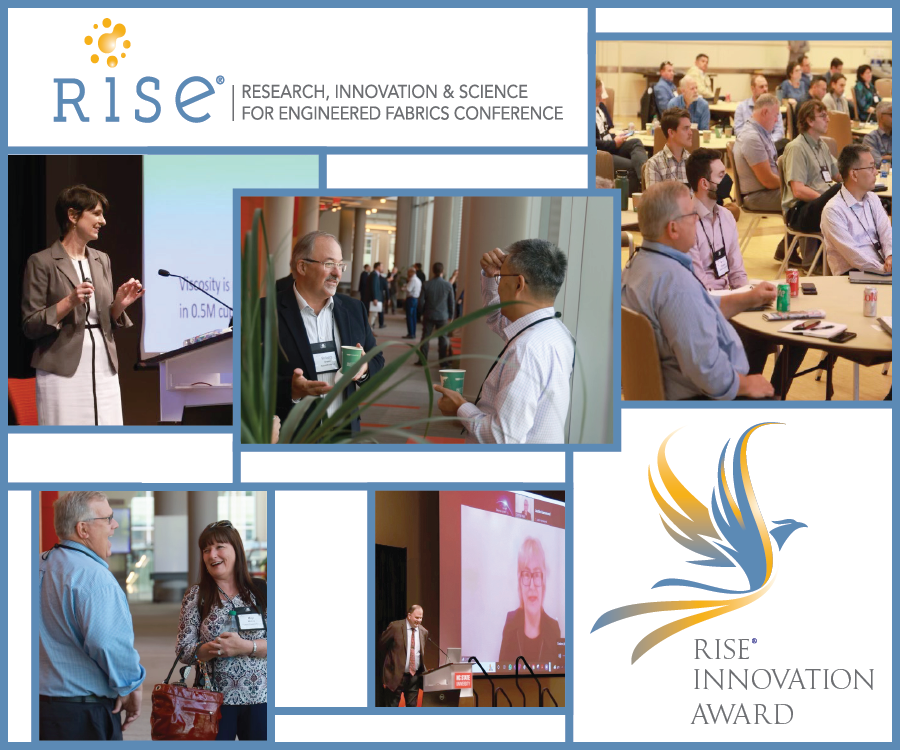
DNFI Innovation in Natural Fibres Award Ceremony During Heimtextil

Natural fibers are among the most important raw materials in the textile and fashion industry worldwide. For centuries, they have fed millions of people through their cultivation or breeding, and it is impossible to imagine daily life without them. Especially at the moment, natural fibers are gaining special importance due to the intense discussions about sustainable living. Even though natural fibers have accompanied mankind for a long time, they are changeable, technical, and adaptable to the challenges of the textile industry.

The Discover Natural Fibres Initiative (DNFI) is celebrating natural fibres in a program to be conducted during Heimtextil in Frankfurt on 23 June. Anyone with an interest in the role of natural fibres in the world economy, economic indicators of textile activity, innovations in natural fibre research, and updates on proposed EU legislation affecting textiles is welcome to attend.

The program will include various presentations by the previous and current award winners, presentations, and discussions:

Overview of world natural fibre production, employment, and value,

Natural fibers are among the most important raw materials in the textile and fashion industry worldwide. For centuries, they have fed millions of people through their cultivation or breeding, and it is impossible to imagine daily life without them. Especially at the moment, natural fibers are gaining special importance due to the intense discussions about sustainable living. Even though natural fibers have accompanied mankind for a long time, they are changeable, technical, and adaptable to the challenges of the textile industry.

The Discover Natural Fibres Initiative (DNFI) is celebrating natural fibres in a program to be conducted during Heimtextil in Frankfurt on 23 June. Anyone with an interest in the role of natural fibres in the world economy, economic indicators of textile activity, innovations in natural fibre research, and updates on proposed EU legislation affecting textiles is welcome to attend.

The program will include various presentations by the previous and current award winners, presentations, and discussions:

Overview of world natural fibre production, employment, and value,

  • Economic indicators and impacts of coronavirus on textile industries,
  • Updates on innovative uses of natural fibres:
  • Use of wool in automobile insulation applications for enhanced sustainability,
  • Using cellulose from cotton to produce a biodegradable plastic substitute,
  • Manufacturing waterproof fabric from a blend of cotton and jute as sustainable
  • Substitute for polypropylene tarps
  • Proposed EU textile legislation and potential impacts on natural fibres
More information:
DNFI DNFI award Heimtextil
Source:

DNFI

17.06.2022

"Lifting Tariffs Would Cement China’s Dominance of Global Manufacturing"

Textile Groups Urge U.S. to Maintain Penalty Tariffs on Finished Products

The Biden administration should maintain Section 301 penalty tariffs on finished textiles and apparel or risk reversing once-in-a-lifetime nearshoring trends and undermining critical investments and jobs in the U.S. and Western Hemisphere, three key American textile manufacturing groups said today.

In a formal submission to the U.S. Trade Representative’s (USTR) office, which is conducting a four-year statutory review of the tariffs, the associations expressed strong support for the continuation of penalty tariffs on imports from China and warned of the consequences associated with removing the tariffs.

“A key aspect of [the Biden administration’s trade] policy is the need to maintain Section 301 tariffs, absent substantive improvements in China’s pervasive, predatory trade practices,” the groups said. Lifting the tariffs “would also do nothing to achieve the administration’s goal of easing inflationary pressures, as apparel prices out of China continue to hit rock bottom even with the Section 301 tariffs,” they noted.

Textile Groups Urge U.S. to Maintain Penalty Tariffs on Finished Products

The Biden administration should maintain Section 301 penalty tariffs on finished textiles and apparel or risk reversing once-in-a-lifetime nearshoring trends and undermining critical investments and jobs in the U.S. and Western Hemisphere, three key American textile manufacturing groups said today.

In a formal submission to the U.S. Trade Representative’s (USTR) office, which is conducting a four-year statutory review of the tariffs, the associations expressed strong support for the continuation of penalty tariffs on imports from China and warned of the consequences associated with removing the tariffs.

“A key aspect of [the Biden administration’s trade] policy is the need to maintain Section 301 tariffs, absent substantive improvements in China’s pervasive, predatory trade practices,” the groups said. Lifting the tariffs “would also do nothing to achieve the administration’s goal of easing inflationary pressures, as apparel prices out of China continue to hit rock bottom even with the Section 301 tariffs,” they noted.

The submission was filed by the National Council of Textile Organizations (NCTO) and the Narrow Fabrics Institute (NFI) and Industrial Fabrics Institute (USIFI) – both divisions of the Advanced Textiles Association (ATA).  The associations represent the entirety of the U.S. textile production chain.

“For decades, China’s illegal actions have undermined virtually every domestic manufacturing sector and contributed to the direct loss of millions of U.S. jobs. These devastating state-sponsored practices include intellectual property theft as well as pervasive state-ownership of manufacturing, industrial subsidies, and abhorrent labor and human rights abuses in the Xinjiang region,” they noted. “Cancelling these tariffs would create further unhealthy dependence on Chinese supply chains and embolden future systematic trade abuses as bad actors know that the U.S. will not hold them accountable.”

The tariffs were imposed on China beginning in 2018 in response to China’s continuing IP and related trade violations. China has since failed to comply with an agreement it reached with the United States in 2020.

More information:
NCTO Tariffs China
Source:

NCTO

17.06.2022

Beaulieu Technical Textiles: going green with sustainable geotextiles

  • BTT’s woven geotextiles can reduce CO2-emissions in infrastructure projects by a factor of 10 compared to more conventional methods
  • Product specific Environmental Product Declarations for woven geotextiles transparently communicate their sustainability
  • EPDs an essential tool to communicate sustainability performance
  • Helps carbon-conscious customers in their purchasing and decision making

Beaulieu Technical Textiles (BTT) has unveiled the next step in its mission to deliver sustainable solutions to customers - product specific Environmental Product Declarations (EPD), an essential tool for communicating sustainability performance - to fully support green certified construction projects by providing accurate information in readily available formats.

The carbon footprint of BTT’s woven geotextiles is amongst the lowest in the industry, making them one of the most sustainable solutions for civil engineering projects. An EPD shows a manufacturer's commitment to measure and reduce the environmental impact of its products and report these impacts in a very transparent way.

  • BTT’s woven geotextiles can reduce CO2-emissions in infrastructure projects by a factor of 10 compared to more conventional methods
  • Product specific Environmental Product Declarations for woven geotextiles transparently communicate their sustainability
  • EPDs an essential tool to communicate sustainability performance
  • Helps carbon-conscious customers in their purchasing and decision making

Beaulieu Technical Textiles (BTT) has unveiled the next step in its mission to deliver sustainable solutions to customers - product specific Environmental Product Declarations (EPD), an essential tool for communicating sustainability performance - to fully support green certified construction projects by providing accurate information in readily available formats.

The carbon footprint of BTT’s woven geotextiles is amongst the lowest in the industry, making them one of the most sustainable solutions for civil engineering projects. An EPD shows a manufacturer's commitment to measure and reduce the environmental impact of its products and report these impacts in a very transparent way.

Construction products, like geotextiles, follow the very comprehensive European standard, EN 15804+A2. The third-party verification and approval by the international EPD® System officially demonstrates the low environmental impact of BTT’s geotextile products.


More information:
geotextiles Beaulieu
Source:

Beaulieu

Alberto Paccanelli Photo: Euratex
Alberto Paccanelli
17.06.2022

Alberto Paccanelli re-elected as President of EURATEX

Italian textile entrepreneur, Alberto Paccanelli, has been re-elected as President of EURATEX during its General Assembly on 17 June; he will thus extend his mandate with 2 more years, until June 2024. Paccanelli is CEO of the Martinelli Ginetto Group, active in the high-end home textiles. He is also a Board member of Sistema Moda Italia and Confindustria Bergamo.

Italian textile entrepreneur, Alberto Paccanelli, has been re-elected as President of EURATEX during its General Assembly on 17 June; he will thus extend his mandate with 2 more years, until June 2024. Paccanelli is CEO of the Martinelli Ginetto Group, active in the high-end home textiles. He is also a Board member of Sistema Moda Italia and Confindustria Bergamo.

On the occasion of his re-election, Paccanelli presented his vision on the future of the European textiles industry: “With the adoption of the EU Textile Strategy on 30 March, the European Commission  has launched a very ambitious journey that will change the nature of our industry: more focus on sustainability and durability, more transparency within the supply chain, more communication with the consumer, but also a better level playing field for our European companies, and more investment in innovation, digitalisation and skills development. That is a very ambitious agenda, which needs to result in a more resilient European textile industry. The coming 2 years will be critical to translate that vision into specific legislation and concrete programmes. This requires a strong EURATEX, to actively contribute to that process. I am honoured to continue leading the organisation and fulfil this challenging task.”

EURATEX GA also elected 4 other members of the Presidency Team: Bodo Bölzle (Amann, Germany), Jean François Gribomont (Utexbel, Belgium), Grégory Marchant (UTT, France) and Ismail Kolunsag (Cross Tekstil, Turkey). During the Assembly, EURATEX also welcomed new memberships from Ukrlegprom (Ukraine) and Astrico (Romania), and a partnership with Inditex (Spain).

Source:

Eurtaex

(c) Billi London
17.06.2022

Billi London: Accelerated degradation in Landfill

Billi London is shaping the future of fashion with eco legwear. Founded by Sophie Billi-Hardwick and Marie Bouhier in November 2020, the pair’s goal was to create durable and comfortable hosiery that was no longer seen as disposable or for single-use.
 
Each piece is made with innovative enhanced degradable yarns Amni Soul Eco® nylon and ROICA ™ V550 elastane. Amni Soul Eco® is degrading in a time of 5 years*, 20x faster than the normal 40–100-year timeframe. The materials break down into biomass and biogas, create renewable energy and do not leave behind microplastics in landfill. The soft yet chic fabrics have revolutionised the legwear industry as well as pioneering a change across the fashion sector which rarely goes beyond just using recyclable materials.

This year, Billi London was selected as one of only five brands to present as an Organic Exhibitor at the Salon International de la Lingerie (SIL) from 18-20 June at Porte de Versailles in Paris.

*In landfill conditions. Reference system: ASTM D5511 - Std test 

Billi London is shaping the future of fashion with eco legwear. Founded by Sophie Billi-Hardwick and Marie Bouhier in November 2020, the pair’s goal was to create durable and comfortable hosiery that was no longer seen as disposable or for single-use.
 
Each piece is made with innovative enhanced degradable yarns Amni Soul Eco® nylon and ROICA ™ V550 elastane. Amni Soul Eco® is degrading in a time of 5 years*, 20x faster than the normal 40–100-year timeframe. The materials break down into biomass and biogas, create renewable energy and do not leave behind microplastics in landfill. The soft yet chic fabrics have revolutionised the legwear industry as well as pioneering a change across the fashion sector which rarely goes beyond just using recyclable materials.

This year, Billi London was selected as one of only five brands to present as an Organic Exhibitor at the Salon International de la Lingerie (SIL) from 18-20 June at Porte de Versailles in Paris.

*In landfill conditions. Reference system: ASTM D5511 - Std test 

Source:

Billi London / C.L.A.S.S.

Texaid
15.06.2022

TEXAID supports the Swiss textile recycling ecosystem with professional collecting and sorting of textiles

TEXAID as a professional collector and sorter with roots in Switzerland contributes to this ecosystem to enable the textile-to-textile recycling.  The creation of Swiss Textile Recycling Ecosystem marks a key milestone in the upscaling of Worn Again Technologies’ recycling process technology with technology scale-up partner Sulzer Chemtech in Winterthur. It also supports its ambition to create a circular economy where non-reusable, hard-to-recycle textiles can be reintroduced into supply chains to become new fibers.

To cause a paradigm shift in the fashion industry and realize true circularity requires all members of the value chain to be on the same page and working towards the same goals. The Swiss Textile Recycling Ecosystem is a network comprising fabric and textile manufacturers, waste collectors and sorters, as well as retailers, brand owners and technology providers – all coordinated by Swiss Textiles. All these parties will cooperate to make their shared vision of a more sustainable fashion industry a reality, where used textiles can be recycled into new textiles.

TEXAID as a professional collector and sorter with roots in Switzerland contributes to this ecosystem to enable the textile-to-textile recycling.  The creation of Swiss Textile Recycling Ecosystem marks a key milestone in the upscaling of Worn Again Technologies’ recycling process technology with technology scale-up partner Sulzer Chemtech in Winterthur. It also supports its ambition to create a circular economy where non-reusable, hard-to-recycle textiles can be reintroduced into supply chains to become new fibers.

To cause a paradigm shift in the fashion industry and realize true circularity requires all members of the value chain to be on the same page and working towards the same goals. The Swiss Textile Recycling Ecosystem is a network comprising fabric and textile manufacturers, waste collectors and sorters, as well as retailers, brand owners and technology providers – all coordinated by Swiss Textiles. All these parties will cooperate to make their shared vision of a more sustainable fashion industry a reality, where used textiles can be recycled into new textiles.

TEXAID as a stakeholder in the Swiss Textile Recycling Ecosystem and as leading textile recycling company with over 40 years of experience will support the initiative through collecting, sorting, pre-processing and providing pre- and post-consumer feedstock to the Demonstration Plant. At its headquarters in Schattdorf (CH), TEXAID will investigate possibilities to automate the sorting and pre-processing of textile feedstock for recycling. Currently, TEXAID processes more than 80,000 tons of end-of-use textiles and footwear every year all over Europe and the US.

More information:
Texaid Sulzer textile recycling
Source:

Texaid

Photo: Devan Chemicals NV
15.06.2022

Devan expands cooling technology range

At Heimtextil Frankfurt 2022, Devan, will launch novel technologies to the Home Textiles market. The first innovation is a range of bio-based and biodegradable microcapsules. With increased sustainability and circularity requirements in Europe and beyond, Devan is pushing the limits further of its encapsulation methods, also in terms of wash durability. The capsules are biodegradable and hence no harm for risk of microplastics. The new R-Vital NTL range includes evergreen Aloe Vera, waste-material based avocado seed oil with very high hydration abilities! and Vitamine E.

Devan, as part of the Pulcra Chemicals Group, co-launches the new Pulcra TEC-SU, a new biobased C0 DWR. This hydrophobic agent has a bio-content above 60% and contains no APEO or formaldehyde. It keeps performing very good after multiple washings.

At Heimtextil Frankfurt 2022, Devan, will launch novel technologies to the Home Textiles market. The first innovation is a range of bio-based and biodegradable microcapsules. With increased sustainability and circularity requirements in Europe and beyond, Devan is pushing the limits further of its encapsulation methods, also in terms of wash durability. The capsules are biodegradable and hence no harm for risk of microplastics. The new R-Vital NTL range includes evergreen Aloe Vera, waste-material based avocado seed oil with very high hydration abilities! and Vitamine E.

Devan, as part of the Pulcra Chemicals Group, co-launches the new Pulcra TEC-SU, a new biobased C0 DWR. This hydrophobic agent has a bio-content above 60% and contains no APEO or formaldehyde. It keeps performing very good after multiple washings.

The Devan bio-based thermoregulation range, like Tones of Cool Bio which is already several years on the market, is having a positive effect on carbon footprint. Devan is now expanding its cooling range with a specific foam-solution. In the Home Textile industry new (bio)foam types are introduced the last 1,5 years to comply with the EU GreenDeal and circularity / recycling requirements. A good enough reason for Devan to develop a foam-specific cooling system. After all, research shows that our bedroom interiors get warmer every year, partly due to better insulation but also due to global warming. On top of that Devan thermoregulation solutions can save Energy and Water during application: low curing solutions are available next to cooling products to that can be applied, using less water.


Source:

Devan Chemicals NV

15.06.2022

Lenzing partners with TfS to build global sustainable supply chains

  • Lenzing continues to focus on partnering for systemic change

  • Clear commitment to improving the environmental footprint of textile and nonwoven industries

  • Global initiative TfS promotes sustainable design of global supply chains

The Lenzing Group, a world-leading provider of wood-based specialty fibers for the global textile and nonwoven industries, has joined the chemical industry’s sustainable supply chain initiative, Together for Sustainability (TfS). Together with Lenzing, numerous internationally active chemical companies have joined the initiative. Their common goal is to make the global supply chains of the chemical industry sustainable.

  • Lenzing continues to focus on partnering for systemic change

  • Clear commitment to improving the environmental footprint of textile and nonwoven industries

  • Global initiative TfS promotes sustainable design of global supply chains

The Lenzing Group, a world-leading provider of wood-based specialty fibers for the global textile and nonwoven industries, has joined the chemical industry’s sustainable supply chain initiative, Together for Sustainability (TfS). Together with Lenzing, numerous internationally active chemical companies have joined the initiative. Their common goal is to make the global supply chains of the chemical industry sustainable.

“Joining the TfS initiative is another clear commitment to improving the environmental footprint of the global textile and nonwoven industries and proves that sustainability is taken very seriously at Lenzing – so much so that sustainability is at the heart of our business strategy. So much so, it sits at the core of the Group’s business strategy. The industry needs innovation in order to transition from linear to circular ways of working, and Lenzing will continue to partner across the supply chain to bring this vision to life,” says Robert van de Kerkhof, Chief Commercial Officer Fiber at Lenzing.

Partnering for systemic change
Complex global sustainability challenges require a collaborative approach to developing systemic solutions, involving many stakeholder groups. In order to make the global textile and nonwovens industries more sustainable and bring about systemic change, Lenzing has therefore also been building on partnerships within its sustainability strategy “Naturally Positive” for many years.

“I am very proud to welcome Lenzing to the TfS family, bringing the TfS membership to 37 companies. Together and with our strategic partners we continue to expand our reach and increase our impact on the sustainability performance in chemical supply chains. Given the regulatory landscape, climate challenges and market conditions, the need for sustainable businesses only intensifies. TfS is the crucial enabler to make supply chains and businesses at large more sustainable and contribute to developing a better world”, says TfS President Bertrand Conquéret.

The global TfS initiative follows the principles of the UN Global Compact and Responsible Care.


Source:

Lenzing AG

15.06.2022

Autoneum updates its outlook for 2022 as a result of the Ukraine war

Due to the impact of the war in Ukraine on the automotive industry and vehicle production as well as of rising inflation, Autoneum is adjusting its corporate outlook for the 2022 financial year. The market recovery will be delayed by current developments.

Since the outbreak of war in Ukraine, new bottlenecks in global supply and logistics chains have been impacting vehicle manufacturer production volumes and thus slowing the revenue and earnings development of the automotive supply industry, especially in Europe. Current developments are accompanied by accelerated inflation and significant price increases on the commodities markets, which have been further exacerbated by the war. These are felt at Autoneum through rising material, energy and transport costs. With regard to the rising costs, automotive manufacturers and suppliers are now required to ensure a fair burden sharing as partners.

Due to the impact of the war in Ukraine on the automotive industry and vehicle production as well as of rising inflation, Autoneum is adjusting its corporate outlook for the 2022 financial year. The market recovery will be delayed by current developments.

Since the outbreak of war in Ukraine, new bottlenecks in global supply and logistics chains have been impacting vehicle manufacturer production volumes and thus slowing the revenue and earnings development of the automotive supply industry, especially in Europe. Current developments are accompanied by accelerated inflation and significant price increases on the commodities markets, which have been further exacerbated by the war. These are felt at Autoneum through rising material, energy and transport costs. With regard to the rising costs, automotive manufacturers and suppliers are now required to ensure a fair burden sharing as partners.

In addition, renewed coronavirus-related lockdowns in China are delaying growth in Asia. According to the revised market forecasts1), global automobile production is expected to reach 80.4 million units in 2022, which represents an increase of 4.1% compared to 2021. Growth will thus be significantly lower than was still expected in mid-February.

Autoneum will do its utmost to minimize the impact on the Group. Despite the present challenges, the strategy will continue to be consistently implemented with a focus on innovative and sustainable technologies for growing markets of the future.

Based on current developments and knowledge, Autoneum has updated the forecasts that it presented at the Media Conference, which had not yet included the impacts of the war as outlined above. Autoneum continues to expect revenue to develop in line with the market. For the first half of the year, the Company expects an EBIT margin at break-even level. On the basis of the ongoing collaborative discussions with customers to participate in the sharing of the sharply increased energy and material costs, Autoneum anticipates an improvement in the EBIT margin to 2.0 to 3.0% (previously: 4.0 to 5.0%) for the full year 2022. Free cash flow for 2022 is expected to be in the mid to high double-digit million range.

Autoneum is very well positioned for the transformation of the automotive industry towards e-mobility and sustainability. Our product portfolio is suitable for all drive types, whether internal combustion, hybrid or pure electric vehicles. The medium-term forecasts that Autoneum published in November 2021 remain unchanged positive. The timing of the market recovery will be delayed by current events and will also depend on further geopolitical developments.

Source:

Autoneum Management AG

Baldwin’s non-contact spray technology Texcoat G4. (Photo: Baldwin)
15.06.2022

Archroma and Baldwin to collaborate for optimized performance and resource saving in textile finishing

Archroma, a global leader in specialty chemicals towards sustainable solutions, and Baldwin, a leading global manufacturer and supplier of precision spray systems and technology for sustainable textile manufacturing, announce a new collaboration to optimize performance and resource saving in the finishing department.

The two companies aim to support textile manufacturers in their development projects, targeting to improve their product safety, performance and functionality, while at the same time maximizing the productivity and resource utilization of the finishing application process.

Archroma and Baldwin are collaborating in multiple projects that combine Archroma’s most sustainable product innovations with Baldwin’s Texcoat G4.

TexCoat G4 is a non-contact spray technology for textile finishing and remoistening, designed to allow a controlled and optimal coverage of the exact amount of finish chemistry for reaching specific characteristics of the fabric. The system can be used to reduce water consumption by as much as 50% compared to traditional padding application processes.

Archroma, a global leader in specialty chemicals towards sustainable solutions, and Baldwin, a leading global manufacturer and supplier of precision spray systems and technology for sustainable textile manufacturing, announce a new collaboration to optimize performance and resource saving in the finishing department.

The two companies aim to support textile manufacturers in their development projects, targeting to improve their product safety, performance and functionality, while at the same time maximizing the productivity and resource utilization of the finishing application process.

Archroma and Baldwin are collaborating in multiple projects that combine Archroma’s most sustainable product innovations with Baldwin’s Texcoat G4.

TexCoat G4 is a non-contact spray technology for textile finishing and remoistening, designed to allow a controlled and optimal coverage of the exact amount of finish chemistry for reaching specific characteristics of the fabric. The system can be used to reduce water consumption by as much as 50% compared to traditional padding application processes.

Archroma and Baldwin are currently testing Archroma’s finishing products and systems, such as the soon-to-be-launched PFC-free* Smartrepel® Hydro SR for water-based soil repellence, as well as metal and inorganic particle-free antimicrobial technologies like Sanitized T 20-19 and TH 15-14, which will be launched at the upcoming Techtextil 2022.

The first test results will be available for discussions with both partners at Techtextil at their respective booths.

(c) ​Yanfeng
15.06.2022

Yanfeng honors its suppliers in Europe

Yanfeng, a global automotive supplier, recognized the performance of its European suppliers with its annual Supplier Awards. During a ceremony at the company’s European Headquarters in Neuss, a total of 13 suppliers yesterday received the awards in two categories.

With one Distinguished Supplier award and twelve Supplier Excellence awards in five sub-categories, YF evaluated its suppliers according to several criteria. The company’s vision of technology and innovation, as well as sustainability, were particularly important. Moreover, quality, cost, service and customer satisfaction were also assessed.

The award recipients from Europe were:

Distinguished Supplier Award:
- BASF Polyurethanes GmbH, Germany

Supplier Excellence Award – Quality:
- Industrias Alegre S.A., Spain

Supplier Excellence Award – Customer Satisfaction:
- DSSI International, LLC, Slovakia
- SIGIT d.o.o., Serbia

Supplier Excellence Award – Sustainability:
- HOFFMANN + VOSS GmbH, Germany

Supplier Excellence Award – Technology and Innovation:
- SemsoTec GmbH, Germany
- Lightworks GmbH, Germany

Yanfeng, a global automotive supplier, recognized the performance of its European suppliers with its annual Supplier Awards. During a ceremony at the company’s European Headquarters in Neuss, a total of 13 suppliers yesterday received the awards in two categories.

With one Distinguished Supplier award and twelve Supplier Excellence awards in five sub-categories, YF evaluated its suppliers according to several criteria. The company’s vision of technology and innovation, as well as sustainability, were particularly important. Moreover, quality, cost, service and customer satisfaction were also assessed.

The award recipients from Europe were:

Distinguished Supplier Award:
- BASF Polyurethanes GmbH, Germany

Supplier Excellence Award – Quality:
- Industrias Alegre S.A., Spain

Supplier Excellence Award – Customer Satisfaction:
- DSSI International, LLC, Slovakia
- SIGIT d.o.o., Serbia

Supplier Excellence Award – Sustainability:
- HOFFMANN + VOSS GmbH, Germany

Supplier Excellence Award – Technology and Innovation:
- SemsoTec GmbH, Germany
- Lightworks GmbH, Germany

Supplier Excellence Award – Service:
- CTP, Czech Republic
- Milsped d.o.o., Serbia
- Prewave GmbH, Austria
- Schneider Electric SE, France
- SPARETECH GmbH, Germany
- Weber GmbH & Co. KG, Germany

Source:

Yanfeng

(c) Messe Frankfurt (HK) Ltd.
14.06.2022

Intertextile Shanghai Home Textiles unveils three trend themes for 2023

This year, Intertextile Shanghai Home Textiles again joins forces with NellyRodi™, the renowned French agency for international forecasting, to present the design theme for 2023 – ‘ALIVE’ – together with three trends: HUMAN CAPITAL, ROUSING COMMITMENT and UNREAL REALITIES.

Nature is a keyword in HUMAN CAPITAL
This direction reflects how people want to reconnect with the environment by choosing a local approach, short supply chains, raw and natural materials, and traditional techniques. For instance, 100% plant-based materials, as well as metalised fringed jacquards and gold yarns are used to illustrate this concept.

Inspired by everyday basics and daily essentials, the trend uses a soft, luminous white palette mingled with muted and amber shades of vegetal dyes. Designs also incorporate figurative hand-drawings, archaic bestiary, stylised wildflowers and geometric patterns.

This year, Intertextile Shanghai Home Textiles again joins forces with NellyRodi™, the renowned French agency for international forecasting, to present the design theme for 2023 – ‘ALIVE’ – together with three trends: HUMAN CAPITAL, ROUSING COMMITMENT and UNREAL REALITIES.

Nature is a keyword in HUMAN CAPITAL
This direction reflects how people want to reconnect with the environment by choosing a local approach, short supply chains, raw and natural materials, and traditional techniques. For instance, 100% plant-based materials, as well as metalised fringed jacquards and gold yarns are used to illustrate this concept.

Inspired by everyday basics and daily essentials, the trend uses a soft, luminous white palette mingled with muted and amber shades of vegetal dyes. Designs also incorporate figurative hand-drawings, archaic bestiary, stylised wildflowers and geometric patterns.

ROUSING COMMITMENT celebrates creative self-expression
The trend combines a lively play of mix-matching patterns and colours. This embraces the integration of neutral shades through touches of metallic silver and fluorescent colours to represent the urban life.

Foamback and other fabrics influenced by sports materials, as well as extravagant jacquards, silicon embossing and bouclé fabrics draw out feel-good factor of the theme. Prints using modern twists on traditional patterns, lettering plays, exuberant florals and bold geometrics, also deliver the desire to live freely by sharing joy and happiness with others.

The fantasy of UNREAL REALITIES
In order to push the limits of imagination, science and technology, consumers tap into digital realms to connect with other realities, augmented worlds and futurist utopias that draw out the potential of today’s technology. Metalised rainbow colours highlight the magic and wonder under this virtual reality theme, while surrealistic photoprint shapes, misty landscapes, blurry effects and fantastical nature adds a futuristic touch.

The theme adopts iridescent gleam of semi-transparent voiles, muslins, recycled synthetics and added pearly or glazed aspects. Soft, light meshes, honeycombed or blistered surfaces and cloudy seersuckers elevate the textures in the fabrics.

The trends are decided by a committee led by the NellyRodi™ Agency (France) and formed by top forecasters including Mr Vincent Grégoire (France), the agency’s Consumer Trends and Insights Director; Mr Shen Lei (China), Founder and Chief of Interior Architects Design; and Ms Tracy Jen (Taiwan, China), the Host of ‘Eremito’; as well as Ms Sakina M’sa, the beloved French fashion designer and entrepreneur.

In order to integrate exhibitor and industry resources more effectively, the organisers of Intertextile Shanghai Home Textiles have announced that the Spring and Autumn editions will be merged this year. The two fairs will now be held concurrently from 15 – 17 August 2022 at the National Exhibition and Convention Center.

Source:

Messe Frankfurt (HK) Ltd.

14.06.2022

AkzoNobel updates Q2 outlook based on impact of China lockdowns

AkzoNobel has updated its Q2 outlook based on the impact of the evolving business environment, including the effect of China lockdowns and the slower start to the EMEA DIY season.

Overall demand signs for paints and coatings remain robust, with North America still constrained in raw material availability and logistics, but sequentially improving. In Europe in particular, macro-economic uncertainty related to consumer confidence has increased.

Consumer demand in the Deco DIY channels in Europe – which represent 40% of total Deco EMEA revenue – got off to a slow start in Q2, subsequently impacted by inventory reductions in the DIY channel. In June, Deco DIY channel demand improved back to 2019 levels. Despite share gains and our Deco Professional business performing as anticipated, the total Q2 operating income for our Decorative Paints segment is expected to be down by approximately €50 million versus expectations entering the second quarter.

AkzoNobel has updated its Q2 outlook based on the impact of the evolving business environment, including the effect of China lockdowns and the slower start to the EMEA DIY season.

Overall demand signs for paints and coatings remain robust, with North America still constrained in raw material availability and logistics, but sequentially improving. In Europe in particular, macro-economic uncertainty related to consumer confidence has increased.

Consumer demand in the Deco DIY channels in Europe – which represent 40% of total Deco EMEA revenue – got off to a slow start in Q2, subsequently impacted by inventory reductions in the DIY channel. In June, Deco DIY channel demand improved back to 2019 levels. Despite share gains and our Deco Professional business performing as anticipated, the total Q2 operating income for our Decorative Paints segment is expected to be down by approximately €50 million versus expectations entering the second quarter.

COVID-19 lockdowns in China during Q2 impact both paints and coatings. This impact was mainly on our coatings business, while paints was able to almost offset by progressing with its geographical expansion initiatives. The re-opening in June is showing a positive rebound, but not enough to catch up on all the missed revenue in the quarter, resulting in a negative operating income impact of approximately €40 million for the quarter, versus expectations entering Q2.

AkzoNobel continues to focus on achieving its €2 billion adjusted EBITDA target for 2023, despite the volatile market environment having a material impact on the company’s Q2 2022 financials.

More information:
AkzoNobel Coatings Covid-19
Source:

AkzoNobel

(c) Bemberg™ by Asahi Kasei / C.L.A.S.S.
14.06.2022

Bemberg™ at Pitti Uomo 102 in partnership with MagnoLab

Bemberg™ is teaming up with MagnoLab, a network of Biella-based companies apt to carry out projects related to sustainability and circular economy, to create and display T-shirts that combine environmental responsibility and aesthetic research at the 102nd edition of Pitti Uomo.

Bemberg™ is used in shirts, cocktail dresses, dust coats, coordinates, outerwear and more by international brands operating in the fashion and luxury industries. To demonstrate its journey and evolution in contemporary style, Bemberg™ has collaborated with MagnoLab to develop a project that resulted in contemporary cut I-shirts presented both in sheer and blends with other certified fibers, including GOTS cottons and RWS wools, capable of enhancing both the hand of the final garment and the performance of the yarn.

Bemberg™ is teaming up with MagnoLab, a network of Biella-based companies apt to carry out projects related to sustainability and circular economy, to create and display T-shirts that combine environmental responsibility and aesthetic research at the 102nd edition of Pitti Uomo.

Bemberg™ is used in shirts, cocktail dresses, dust coats, coordinates, outerwear and more by international brands operating in the fashion and luxury industries. To demonstrate its journey and evolution in contemporary style, Bemberg™ has collaborated with MagnoLab to develop a project that resulted in contemporary cut I-shirts presented both in sheer and blends with other certified fibers, including GOTS cottons and RWS wools, capable of enhancing both the hand of the final garment and the performance of the yarn.

The project conceived for Pitti Uomo 102 stems from the spirit of Bemberg™ and fits perfectly into the philosophy of MagnoLab, whose mission is to carry out projects related to environmental responsibility through a joint and participatory approach of partners, and to create value by developing innovative products and processes with rapid testing cycles, according to a lean management model.

Source:

Bemberg™ by Asahi Kasei / C.L.A.S.S.