
From the Sector

from to
Reset
13.09.2022

New technology purifies wastewater from textile dyeing by using graphene

The substance graphene can become increasingly important as a component in textile catalysts when purifying water from textile dyeing as has been shown in a recently completed doctoral project at the University of Borås.

In his project, Milad Asadi, a new doctor in Textile Technology, has modified conventional yarn by encapsulating iron particles in graphene and developed a multifunctional smart e-textile. The focus was on developing a method for purifying wastewater from textile dyeing. The smart e-textile acts as a catalyst that causes the substance hydrogen peroxide to be formed, which is needed in order to break down pollutants in wastewater.

The project has generated a complete textile reactor for the treatment of wastewater through the so-called electro-Fenton technology, which is mainly used industrially to purify wastewater. The novelty of the technology is to use the properties of both graphene and iron, which is the main catalyst.

The substance graphene can become increasingly important as a component in textile catalysts when purifying water from textile dyeing as has been shown in a recently completed doctoral project at the University of Borås.

In his project, Milad Asadi, a new doctor in Textile Technology, has modified conventional yarn by encapsulating iron particles in graphene and developed a multifunctional smart e-textile. The focus was on developing a method for purifying wastewater from textile dyeing. The smart e-textile acts as a catalyst that causes the substance hydrogen peroxide to be formed, which is needed in order to break down pollutants in wastewater.

The project has generated a complete textile reactor for the treatment of wastewater through the so-called electro-Fenton technology, which is mainly used industrially to purify wastewater. The novelty of the technology is to use the properties of both graphene and iron, which is the main catalyst.

“Previous research has mainly been about the treatment of wastewater by using chemicals to break down the textile dyes. My project is the first where graphene, which is electrically conductive, is used to encapsulate iron. The e-textile can also be used several times, unlike when chemicals are used and which are then rinsed off. The challenge in the project was to scale up the technology so that the treated yarn can be fed into automatic knitting machines”, explained Milad Asadi.

The e-textile catalyst can be reused and hydrogen peroxide is formed internally inside the reactor, which reduces the use of biological catalysts, making the technology more sustainable compared to chemical methods.

Source:

University of Borås - The Swedish School of Textiles

13.09.2022

Ionofibres a new track for smart and functional textiles

Electronically conductive fibres are already in use in smart textiles, but in a recently published research article, ionically conductive fibres have proven to be of increasing interest. The so-called ionofibres achieve higher flexibility and durability and match the type of conduction our body uses. In the future, they may be used for such items as textile batteries, textile displays, and textile muscles.

The research project is being carried out by doctoral student Claude Huniade at the University of Borås and is a track within a larger project, Weafing, the goal of which is to develop novel, unprecedented garments for haptic stimulation comprising flexible and wearable textile actuators and sensors.

In Claude Huniade’s project, the goal is to produce conductive yarns without conductive metals.
"My research is about producing electrically conductive textile fibres, and ultimately yarns, by coating non-metals sustainably on commercial yarns. The biggest challenge is in the balance between keeping the textile properties and adding the conductive feature," said Claude Huniade.

Electronically conductive fibres are already in use in smart textiles, but in a recently published research article, ionically conductive fibres have proven to be of increasing interest. The so-called ionofibres achieve higher flexibility and durability and match the type of conduction our body uses. In the future, they may be used for such items as textile batteries, textile displays, and textile muscles.

The research project is being carried out by doctoral student Claude Huniade at the University of Borås and is a track within a larger project, Weafing, the goal of which is to develop novel, unprecedented garments for haptic stimulation comprising flexible and wearable textile actuators and sensors.

In Claude Huniade’s project, the goal is to produce conductive yarns without conductive metals.
"My research is about producing electrically conductive textile fibres, and ultimately yarns, by coating non-metals sustainably on commercial yarns. The biggest challenge is in the balance between keeping the textile properties and adding the conductive feature," said Claude Huniade.

Currenty, the uniqueness of his research leans towards the strategies employed when coating. These strategies expand to the processes and the materials used.

Uses ionic liquid
One of the tracks he investigates is about a new kind of material as textile coating, ionic liquids in combination with commercial textile fibres. Just like salt water, they conduct electricity but without water. Ionic liquid is a more stable electrolyte than salt water as nothing evaporates.

"The processable aspect is an important requirement since textile manufacturing can be harsh on textile fibres, especially when upscaling their use. The fibres can also be manufactured into woven or knitted without damaging them mechanically while retaining their conductivity. Surprisingly, they were even smoother to process into fabrics than the commercial yarns they are made from," explained Claude Huniade.

Ionofibres could be used as sensors since ionic liquids are sensitive to their environment. For example, humidity change can be sensed by the ionofibers, but also any stretch or pressure they are subjected to.

"Ionofibres could truly shine when they are combined with other materials or devices that require electrolytes. Ionofibres enable certain phenomena currently limited to happen in liquids to be feasible in air in a lightweight fashion. The applications are multiple and unique, for example for textile batteries, textile displays or textile muscles," said Claude Huniade.

Needs further research
Yet more research is needed to combine the ionofibres with other functional fibres and to produce the unique textile devices.

How do they stand out compared to common electronically conductive fibres?
"In comparison to electronically conductive fibres, ionofibers are different in how they conduct electricity. They are less conductive, but they bring other properties that electronically conductive fibers often lack. Ionofibres achieve higher flexibility and durability and match the type of conduction that our body uses. They actually match better than electronically conductive fibres with how electricity is present in nature," he concluded.

Source:

University of Borås - The Swedish School of Textiles

13.09.2022

OEKO-TEX® Annual Report 2021/2022: Positive business development

  • Values from the past 30 years more relevant than ever and are reflected in recent growth

During its 30th anniversary, the international OEKO-TEX® Association is still seeing positive business development despite numerous global challenges. In total, OEKO-TEX® issued more than 36,000 certificates and labels in the past financial year – an increase of 14% compared to the previous year. The STeP by OEKO-TEX® facility certification recorded the strongest growth, almost doubling compared to 2020/2021. The number of labels and certificates issued increased from 31,696 to 36,084 between July 1st, 2021, and June 30th, 2022.

  • Values from the past 30 years more relevant than ever and are reflected in recent growth

During its 30th anniversary, the international OEKO-TEX® Association is still seeing positive business development despite numerous global challenges. In total, OEKO-TEX® issued more than 36,000 certificates and labels in the past financial year – an increase of 14% compared to the previous year. The STeP by OEKO-TEX® facility certification recorded the strongest growth, almost doubling compared to 2020/2021. The number of labels and certificates issued increased from 31,696 to 36,084 between July 1st, 2021, and June 30th, 2022.

"Since OEKO-TEX® was founded in 1992, our business practices have been aligned with our core values," says OEKO-TEX® Secretary General Georg Dieners. “Sustainability, trust and safety build upon each other and are the basis of transparent and sustainable action. We underpin responsible action with our independent scientific methods and are valued in the industry as an effective, solution-oriented partner.” In the past financial year, this was reflected in the new Impact Calculator, with which STeP by OEKO-TEX®-certified companies calculate their CO2 emissions and measure their water consumption to ultimately reduce both. For OEKO-TEX®, a sustainable future is inextricably linked to a transparent status quo. "By setting the highest standards and communicating them openly, we encourage companies and consumers to do the same," says Dieners.

To maintain trust and credibility, OEKO-TEX® includes external perspectives. The International Advisory Board reviews proposals of the OEKO-TEX® Working Groups and provides important impetus for continuous optimization of the standards. Additionally, a Public Stakeholder Consultation was conducted in March 2022 to gain comprehensive insights from all interest groups. These are now being integrated into the further development of the standards and services. The investments of the past financial year reflect how important quality assurance and product control are for the OEKO-TEX® Association: Almost 40% of the total expenditure flowed into these two items.

In the meantime, the basic business continues to progress successfully. The number of STANDARD 100 by OEKO-TEX® certificates issued in the 2021/2022 financial year exceeded 25,000 for the first time. More than 15,000 chemicals, colorants and auxiliaries were certified with ECO PASSPORT by OEKO-TEX®.

In autumn 2022, OEKO-TEX® will launch a certification to help companies comply with upcoming due diligence laws. With RESPONSIBLE BUSINESS by OEKO-TEX®, OEKO-TEX® is responding to the increasing global expectations of compliance with due diligence requirements in companies. The new standard is based on the EU proposal for due diligence, the German Due Diligence Act, which will come into force from 2023, and numerous other international legislative proposals.

Source:

Oeko-Tex GmbH

Matt O’Sickey Photo: INDA
Matt O’Sickey
12.09.2022

Matt O’Sickey INDA’s New Director of Education & Technical Affairs

  • Experienced nonwovens professional with extensive hygiene, food, medical, and packaging background will strengthen INDA’s key member service areas

INDA, the Association of the Nonwoven Fabrics Industry, announced the appointment of Matt O’Sickey, Ph.D., as its new Director of Education & Technical Affairs. An accomplished market development, technology and product management executive, O’Sickey has more than 20 years of experience with Tredegar Film Products in the absorbent hygiene, food, and medical sectors.

Most recently, he held Director positions at RKW-North America in the areas of research and development, product design, application engineering, site operations, quality, and technology with a focus on breathable, and lamination films for controlled atmosphere packaging.

At INDA, O’Sickey will direct and expand workforce development programs for all industry members, manage the international harmonized standards activities, and play a leadership role in INDA’s product stewardship working groups and conference content development committees.  

  • Experienced nonwovens professional with extensive hygiene, food, medical, and packaging background will strengthen INDA’s key member service areas

INDA, the Association of the Nonwoven Fabrics Industry, announced the appointment of Matt O’Sickey, Ph.D., as its new Director of Education & Technical Affairs. An accomplished market development, technology and product management executive, O’Sickey has more than 20 years of experience with Tredegar Film Products in the absorbent hygiene, food, and medical sectors.

Most recently, he held Director positions at RKW-North America in the areas of research and development, product design, application engineering, site operations, quality, and technology with a focus on breathable, and lamination films for controlled atmosphere packaging.

At INDA, O’Sickey will direct and expand workforce development programs for all industry members, manage the international harmonized standards activities, and play a leadership role in INDA’s product stewardship working groups and conference content development committees.  

O’Sickey has a Ph.D. in Chemical Engineering and a Master’s degree in Engineering Administration, both from Virginia Tech as well as a Bachelor of Science in Chemical Engineering from Purdue University. He holds three U.S. patents. He will operate out of INDA’s offices in Cary, NC.

O’Sickey succeeds Chris Plotz who left INDA to pursue other interests. 

More information:
INDA nonwovens Matt O’Sickey
Source:

INDA

09.09.2022

Lenzing invests in renewable energy expansion

  • Partnership with green power producer Enery and Energie Steiermark realizes construction of a photovoltaic plant with 5.5 MWpeak capacity
  • Strategic investments in renewables boost energy independence and reduce carbon footprint

The Lenzing Group has signed an electricity supply contract with green power producer Enery and Energie Steiermark to finance a photovoltaic plant in the Deutschlandsberg region (Styria). The electricity generated will supply the fiber and pulp plant at the Lenzing site after commissioning from the fourth quarter of 2023. The electricity supply contract is limited to 20 years.

The plant’s output will amount to 5.5 MWpeak. This corresponds to the average annual electricity demand of more than 1,700 households. Several photovoltaic systems are already being installed at the Lenzing site, including the largest ground-mounted plant in the province of Upper Austria, whose commissioning is imminent.

  • Partnership with green power producer Enery and Energie Steiermark realizes construction of a photovoltaic plant with 5.5 MWpeak capacity
  • Strategic investments in renewables boost energy independence and reduce carbon footprint

The Lenzing Group has signed an electricity supply contract with green power producer Enery and Energie Steiermark to finance a photovoltaic plant in the Deutschlandsberg region (Styria). The electricity generated will supply the fiber and pulp plant at the Lenzing site after commissioning from the fourth quarter of 2023. The electricity supply contract is limited to 20 years.

The plant’s output will amount to 5.5 MWpeak. This corresponds to the average annual electricity demand of more than 1,700 households. Several photovoltaic systems are already being installed at the Lenzing site, including the largest ground-mounted plant in the province of Upper Austria, whose commissioning is imminent.

In 2019, Lenzing became the first fiber manufacturer to set a target to reduce its carbon emissions by 50 percent by 2030 and to be climate neutral by 2050. This carbon reduction target has been confirmed by the Science Based Targets Initiative. Lenzing is also currently investing in reducing carbon emissions at other sites worldwide. Only recently, the Lenzing Group announced that its Indonesian site will also be relying on green energy in the future.

Source:

Lenzing AG

Freudenberg Performance Materials
08.09.2022

Freudenberg Performance Materials awarded EcoVadis Silver Medal

Freudenberg Performance Materials (Freudenberg) has been awarded its first EcoVadis Silver Medal for its two UK facilities in Ebbw Vale and Littleborough. The company manufactures solutions for advanced wound care and ostomy products at these two locations. With the award, EcoVadis recognizes the company’s performance in the categories of environment, ethics, labor and human rights, and sustainable procurement. The award means that Freudenberg Performance Materials LP with its two facilities in Ebbw Vale and Littleborough ranks among the best 25% of companies rated by EcoVadis.

Freudenberg Performance Materials (Freudenberg) has been awarded its first EcoVadis Silver Medal for its two UK facilities in Ebbw Vale and Littleborough. The company manufactures solutions for advanced wound care and ostomy products at these two locations. With the award, EcoVadis recognizes the company’s performance in the categories of environment, ethics, labor and human rights, and sustainable procurement. The award means that Freudenberg Performance Materials LP with its two facilities in Ebbw Vale and Littleborough ranks among the best 25% of companies rated by EcoVadis.

Source:

Freudenberg Performance Materials

08.09.2022

Kelheim Fibres at the Global Fiber Congress 2022 in Dornbirn

Shorter product life cycles and rapid technological progress are changing the product landscape at an ever-faster pace. The ability to anticipate future changes and to proactively shape the change is therefore an increasingly decisive competitive factor for modern companies. Trends are considered to be important indicators of impending

Kelheim Fibres, a leading manufacturer of viscose speciality fibres, stands out in the industry not least for its innovative strength, as evidenced by numerous awards such as the Techtextil Innovation Award 2022 in the “New Concept” category. At this year’s Global Fiber Congress Dornbirn, Innovation Manager Ilka Kaczmarek will give an insight into the innovation management of the Bavarian fibre experts in her presentation “Trend Management meets Open Innovation: Best Practice Examples from Kelheim”. Ilka Kaczmarek will show how successful product solutions were developed in a short time by focusing on customer needs and working closely with partners along the value chain.

Shorter product life cycles and rapid technological progress are changing the product landscape at an ever-faster pace. The ability to anticipate future changes and to proactively shape the change is therefore an increasingly decisive competitive factor for modern companies. Trends are considered to be important indicators of impending

Kelheim Fibres, a leading manufacturer of viscose speciality fibres, stands out in the industry not least for its innovative strength, as evidenced by numerous awards such as the Techtextil Innovation Award 2022 in the “New Concept” category. At this year’s Global Fiber Congress Dornbirn, Innovation Manager Ilka Kaczmarek will give an insight into the innovation management of the Bavarian fibre experts in her presentation “Trend Management meets Open Innovation: Best Practice Examples from Kelheim”. Ilka Kaczmarek will show how successful product solutions were developed in a short time by focusing on customer needs and working closely with partners along the value chain.

Natalie Wunder, Project Manager at Kelheim Fibres, will explain one of these examples in detail in her presentation “Development of Menstruation Pants using Speciality Viscose Fibres”. Based on the current trend and the desire of end customers for reusable products, Kelheim Fibres was able to develop a washable and thus reusable, yet bio-based solution for feminine hygiene products.

Source:

Kelheim Fibres

Photo: Reifenhäuser GmbH & Co. KG Maschinenfabrik
08.09.2022

Ulrich Reifenhäuser receives the Georg Menges Award

Ulrich Reifenhäuser, CSO of the Reifenhäuser Group, was awarded the prestigious Georg Menges Prize 2022 at the 31st International Colloquium on Plastics Technology in Aachen from September 7-8, 2022. The prize recognizes individuals or groups who have rendered outstanding services to the transfer of research results into industrial practice. The sponsors of the award are the Plastics and Rubber section of Germany's Mechanical Engineering Industry Association (VDMA), together with PlasticsEurope Deutschland and the Association of Sponsors of the Institute for Plastics Processing (IKV) in Industry and Craft at RWTH University. The award is traditionally presented every two years during the colloquium organized by the IKV. Ulrich Reifenhäuser is the first businessman to receive the Georg Menges Award.

Ulrich Reifenhäuser, CSO of the Reifenhäuser Group, was awarded the prestigious Georg Menges Prize 2022 at the 31st International Colloquium on Plastics Technology in Aachen from September 7-8, 2022. The prize recognizes individuals or groups who have rendered outstanding services to the transfer of research results into industrial practice. The sponsors of the award are the Plastics and Rubber section of Germany's Mechanical Engineering Industry Association (VDMA), together with PlasticsEurope Deutschland and the Association of Sponsors of the Institute for Plastics Processing (IKV) in Industry and Craft at RWTH University. The award is traditionally presented every two years during the colloquium organized by the IKV. Ulrich Reifenhäuser is the first businessman to receive the Georg Menges Award.

The award was presented by Professor Dr.-Ing. Christian Hopmann, Director of the IKV and Dr.-Ing. Herbert Müller, Chairman of the Board of the IKV Sponsors' Association. In his laudatory speech, Professor Hopmann highlighted Ulrich Reifenhäuser's great and successful commitment to the industry and his tireless search for optimal solutions that are sustainable in the best sense of the word, and praised him as a personality of integrity and integration. "The Georg Menges Prize is awarded for the consistent implementation of research and innovation in industry. The previously described achievements of our prizewinner would certainly have been enough to receive the award but, for the sponsors of the Prize, what was especially important and the key argument for their decision was Ulrich Reifenhäuser’s honorary dedication to the K tradefair," explained Professor Hopmann.

Ulrich Reifenhäuser has been a member of the Reifenhäuser Group management since 1992 and is responsible for international line sales. Together with his brother Bernd Reifenhäuser, he manages the company in the third generation. Ulrich Reifenhäuser has been a board member of the VDMA Plastics and Rubber Machinery Association for more than 25 years and has been its chairman since 2010. In 2020, he was inducted into the Plastics Hall of Fame, as was the award's namesake, and in 2022 he will be co-chairing the world's leading plastics trade fair in Düsseldorf for the seventh time in a row as "President of K show."

Source:

Reifenhäuser GmbH & Co. KG Maschinenfabrik

(c) Borealis
08.09.2022

Borealis and Trexel develop fully recyclable lightweight bottle

  • Monomaterial solution contains renewably-sourced polypropylene from the Bornewables™ portfolio of circular polyolefins
  • Trexel employs its proprietary MuCell® technology to deliver a range of lightweighting benefits
  • EverMinds™ in action: reuse and design for recycling are focus of value chain collaboration

Borealis and Trexel, an expert in foaming injection and blow moulded parts, announce that they have co-developed a new plastic bottle based on a grade from the Bornewables™ portfolio of polyolefins made using renewable feedstocks derived 100% from waste and residue streams. The lightweight bottle – which will be showcased at the Borealis stand at the K 2022 (from 19 to 26 October 2022 in Düsseldorf) – is reusable and fully recyclable. It boasts a significantly lower overall CO2 footprint because it is composed of renewably-sourced feedstock and produced in the foaming process.

  • Monomaterial solution contains renewably-sourced polypropylene from the Bornewables™ portfolio of circular polyolefins
  • Trexel employs its proprietary MuCell® technology to deliver a range of lightweighting benefits
  • EverMinds™ in action: reuse and design for recycling are focus of value chain collaboration

Borealis and Trexel, an expert in foaming injection and blow moulded parts, announce that they have co-developed a new plastic bottle based on a grade from the Bornewables™ portfolio of polyolefins made using renewable feedstocks derived 100% from waste and residue streams. The lightweight bottle – which will be showcased at the Borealis stand at the K 2022 (from 19 to 26 October 2022 in Düsseldorf) – is reusable and fully recyclable. It boasts a significantly lower overall CO2 footprint because it is composed of renewably-sourced feedstock and produced in the foaming process.

The Bornewables™ portfolio of circular polyolefins helps reduce the carbon footprint while offering material performance equal to virgin polymers. Using Bornewables grades allows for design freedom and colour flexibility, and helps retain a premium look and feel. The grades – which are commercially available in Europe – help conserve natural resources because they are derived solely from waste and residue streams, for example from used cooking oil. Reusing waste already in circulation instead of fossil fuel-based feedstocks enhances the sustainability of applications made using the Bornewables grades.

The reusable new bottle developed by Borealis and Trexel retains its value over many life cycles thanks to the use of Trexel’s proprietary technology in tandem with Bornewables grades; as a material solution, the new bottle minimises the use of valuable raw materials. Moreover, converters consume less energy in the production process when using the MuCell® technology. The bottle thus helps close the loop on plastics circularity by way of design for recycling, the use of renewable feedstocks, and excellent material performance across multiple life cycles.

Source:

Borealis

(c) Chetna Organic / GoodTextiles Foundation
08.09.2022

GoodTextiles Foundation supports Indian village with cows

The GoodTextiles Foundation, initiated by Dibella, has implemented a new support project in India: Each family of a small village community of organic farmers received a cow from the donations received. The herd of fifty animals helps with farming, gives milk, produces sufficient natural fertilizer and should soon provide higher crop yields and a better income.

In 2016, Dibella established the GoodTextiles Foundation with the aim of making textile value chains more sustainable. It raises funds and implements its own support projects to benefit people at all stages of the textile economy. The most recent project, "One cow for every family," has now taken the first, important intermediate step: Fifty cows arrived in the small village of Aliguda Village (Utnoor Division, Adilabad, Telangana, India) at the beginning of June 2022.

The GoodTextiles Foundation, initiated by Dibella, has implemented a new support project in India: Each family of a small village community of organic farmers received a cow from the donations received. The herd of fifty animals helps with farming, gives milk, produces sufficient natural fertilizer and should soon provide higher crop yields and a better income.

In 2016, Dibella established the GoodTextiles Foundation with the aim of making textile value chains more sustainable. It raises funds and implements its own support projects to benefit people at all stages of the textile economy. The most recent project, "One cow for every family," has now taken the first, important intermediate step: Fifty cows arrived in the small village of Aliguda Village (Utnoor Division, Adilabad, Telangana, India) at the beginning of June 2022.

"Some of our organic cotton is grown on the farms of the village community managed by the smallholder organization Chetna Organic. During the filming of the German documentary "plan b", the farmers told us that they need more natural fertilizer to cultivate their fields ecologically and economically. The biggest wish of each family is therefore a cow. However, they cannot afford this because of the high price of the equivalent of 300 euros. That's how the idea for our next sponsorship project was born," reports Ralf Hellmann, managing director of Dibella and member of the foundation's board of directors.

In addition to the most important reason for purchase - the production of fertilizer - the cows also serve as livestock. They are harnessed in front of the plow and make the strenuous work of tilling the soil easier for the farmers. As draft animals they serve to transport heavier loads, and as milk suppliers they contribute to a family's food supply. Surplus milk that is not needed in the household also provides families with an important additional income through sale.

More information:
GoodTextiles Dibella donations cotton
Source:

GoodTextiles Foundation

(c) adidas AG
08.09.2022

adidas introduces FW22 Made with Nature Capsule Collection

adidas has unveiled the latest in its Made with Nature Capsule Collection with a new Ultraboost 22 Made with Nature and Made with Nature apparel joining the range as the brand continues its mission to call time on conventional materials and design out finite resources.

Designed in balance with the planet, the women’s Ultraboost 22 Made with Nature takes the forward-thinking elements of the Ultraboost 22 and amplifies them with natural materials. The shoe is made in part with natural materials – 40% of the knitted upper is made with lyocell, a material created with cellulosic fibers made from sustainably grown wood.

Launching alongside the Ultraboost 22 Made with Nature is a new Made with Nature apparel range, including a performance running wear look for men and women. The apparel range is made with at least 50% organic cotton.

adidas has unveiled the latest in its Made with Nature Capsule Collection with a new Ultraboost 22 Made with Nature and Made with Nature apparel joining the range as the brand continues its mission to call time on conventional materials and design out finite resources.

Designed in balance with the planet, the women’s Ultraboost 22 Made with Nature takes the forward-thinking elements of the Ultraboost 22 and amplifies them with natural materials. The shoe is made in part with natural materials – 40% of the knitted upper is made with lyocell, a material created with cellulosic fibers made from sustainably grown wood.

Launching alongside the Ultraboost 22 Made with Nature is a new Made with Nature apparel range, including a performance running wear look for men and women. The apparel range is made with at least 50% organic cotton.

Christopher Wheat, Global Category Director Running Footwear said: “At adidas, we understand that change is not only possible, it’s an urgent necessity. With Made with Nature, we are on a journey to a world beyond plastic. We’re calling time on conventional materials and methods of make. Once depleted, there’s no coming back for fossil resources. But when we design in synergy with natural processes, when we make with nature, we can use materials that regrow or regenerate – and change the way products are made."

(c) Mimaki
Talha Güldeste, Founder of Makroser Tekstil, in front of the Mimaki TS300P-1800.
08.09.2022

Makroser Tekstil uses Mimaki TS300P-1800 for carpet production

Turkish company, Makroser Tekstil specialises in manufacturing digitally printed carpets and over the years has become one of the leading suppliers in the sector. Utilising Mimaki’s high-performance TS300P-1800 sublimation transfer printer since 2020, the company has optimised their production potential to meet increasing customer expectations in this growing digital textile carpet market.

Alongside carpets, the company also offers other solutions to the carpet industry by producing backing and other materials

Turkish company, Makroser Tekstil specialises in manufacturing digitally printed carpets and over the years has become one of the leading suppliers in the sector. Utilising Mimaki’s high-performance TS300P-1800 sublimation transfer printer since 2020, the company has optimised their production potential to meet increasing customer expectations in this growing digital textile carpet market.

Alongside carpets, the company also offers other solutions to the carpet industry by producing backing and other materials

Acting as both a seller and a supplier, Makroser Tekstil has an approximate monthly output of 150,000 square meters of final product and sells about 70-80,000 square meters of intermediate goods per month. “Our market has four main pillars, including chain market groups, export, e-commerce and our own retail network. We have gained serious momentum in the sales of our final products in recent years, and we attach great importance to our sales and marketing processes, in addition to production, so to increase our profitability. We are currently exporting 35-40% of our production, and our branding and e-commerce activities show that we are making significant improvements”, says Makroser Tekstil’s co-founder, Talha Güldest.

Makroser Tekstil decided to invest in a Mimaki TS300P-1800 sublimation transfer printer back in August 2020, with the aim to strengthen their position in the digitally printed carpet market. “The investment in the TS300P-1800 has enabled us to have the capacity to respond quickly to e-commerce orders,” Güldeste commented. “Product quality is the main criterion in the supplies we provide to both online and retail outlets. We made this investment because we saw that we would increase our quality and customer satisfaction in the carpets we print. The Mimaki printer met our expectations, providing the results we wanted from the very first print after installation.” Considering the increased demand, Güldeste aims to further boost their printing capacity with investment in several more Mimaki printers.

Source:

Mimaki Europe B.V.

08.09.2022

Monforts at ITMA ASIA + CITME

Monforts will highlight its technologies for special technical textile applications at this year’s ITMA ASIA + CITME which takes place at the National Exhibition and Convention Center in Shanghai, China, from November 20-24.

One of Monforts' developments is the Montex 8500 XXL stenter system for the production of technical fabrics in widths of up to 6.8 metres. Among the products made on this system are treated nonwovens for the geotextiles and filter media markets, tarpaulins, advertising banners, black-out curtains, membranes and many more.

On Montex©Coat coating lines, meanwhile, the possibilities range from the single-sided application of finishing agents for outdoor clothing and adding functionality to home textiles, to the creation of materials for sophisticated lightweight construction and automotive and aerospace components.

Monforts will highlight its technologies for special technical textile applications at this year’s ITMA ASIA + CITME which takes place at the National Exhibition and Convention Center in Shanghai, China, from November 20-24.

One of Monforts' developments is the Montex 8500 XXL stenter system for the production of technical fabrics in widths of up to 6.8 metres. Among the products made on this system are treated nonwovens for the geotextiles and filter media markets, tarpaulins, advertising banners, black-out curtains, membranes and many more.

On Montex©Coat coating lines, meanwhile, the possibilities range from the single-sided application of finishing agents for outdoor clothing and adding functionality to home textiles, to the creation of materials for sophisticated lightweight construction and automotive and aerospace components.

“Many more applications are possible, such as the overdyeing of denim, the creation of double-face coated materials, fabrics awnings, tents and medical drapes and the pre-treatment of substrates for digital printing”, explains Gunnar Meyer, Monforts area sales manager for China. “A range of different doctor blades and their combinations can be supplied to meet individual requirements, including air knife, roller knife, foam, screen and magnetic roller coating. The latter option is recommended for lines with working widths of over 2.4 metres.”

In addition, Monforts can provide the necessary explosion-proof ranges for solvent-based coatings and high temperature processes up to 320°C, such as the PTFE coating of nonwoven filter material. These lines are equipped with special burners, stenter chains, and insulation.

Source:

 A. Monforts Textilmaschinen GmbH & Co. KG / AWOL Media

(c) BTMA by AWOL Media
08.09.2022

Shelton Vision presents new fabric inspection technique

A new fabric inspection technique for accurately detecting the most subtle of defects on patterned fabrics during high speed production has been developed by BTMA member Shelton Vision, of Leicester, UK.

The patent-pending system has been integrated into the company’s WebSpector platform and validated through factory trials on a purpose-built full scale in-house demonstration system with sophisticated fabric transport capabilities. As a result, a first system has already been ordered by a manufacturer of both plain and patterned fabrics, including camouflage, in Colombia. This follows the successful conclusion of a 21-month Innovate UK project in which techniques for the resolution of complex pattern deformations were developed by machine vision and computer scientists in the company, backed up by the machine vision and robotics department at Loughborough University.

A new fabric inspection technique for accurately detecting the most subtle of defects on patterned fabrics during high speed production has been developed by BTMA member Shelton Vision, of Leicester, UK.

The patent-pending system has been integrated into the company’s WebSpector platform and validated through factory trials on a purpose-built full scale in-house demonstration system with sophisticated fabric transport capabilities. As a result, a first system has already been ordered by a manufacturer of both plain and patterned fabrics, including camouflage, in Colombia. This follows the successful conclusion of a 21-month Innovate UK project in which techniques for the resolution of complex pattern deformations were developed by machine vision and computer scientists in the company, backed up by the machine vision and robotics department at Loughborough University.

Restrictions
Traditional methods for defect detection rely on human inspection which is ineffective, with detection rates under 65%, while the Shelton WebSpector machine vision system offers a sophisticated platform for automated defect detection of over 97%, but until now has been restricted to plain textiles.

While pattern matching and neural network approaches have previously been tried for patterned textiles, they have failed to provide a practical solution due to the extreme complexity associated with pattern matching on deformable substrates like textiles, as well as the time required to train a neural network for each pattern type.

Challenges
The challenge is that fabrics are not rigid and can be creased or stretched and are also subject to local distortion,” says Shelton Vision Managing Director and CEO Mark Shelton. “As a result, inspection without the technique we have developed, would lead to thousands of false positives. Our sophisticated pattern inspection software techniques ensure a clean image, allowing the detection of faults on fabrics running at speeds of up to a hundred metres a minute.”

The full system consists of:

  • A camera and lighting system for optimum image capture at high speed and associated image processing hardware.
  • Self-training software utilising statistical analysis to automate the system configuration for new textile products.
  • An advanced suite of defect detection algorithms for the detection of all textile defect types.
  • An AI-driven defect classification system which learns and automates defect naming in real time, as well as a real time defect grading capability based on client decision rules.
  • A system for recording and retrieving complete roll map images for subsequent review and quality control.

The generation of textile roll maps with complete defect data allows for an optimised textile cut plan, improved downstream processing and quality assurance.

Source:

BTMA by AWOL Media

Foto: IFCO
07.09.2022

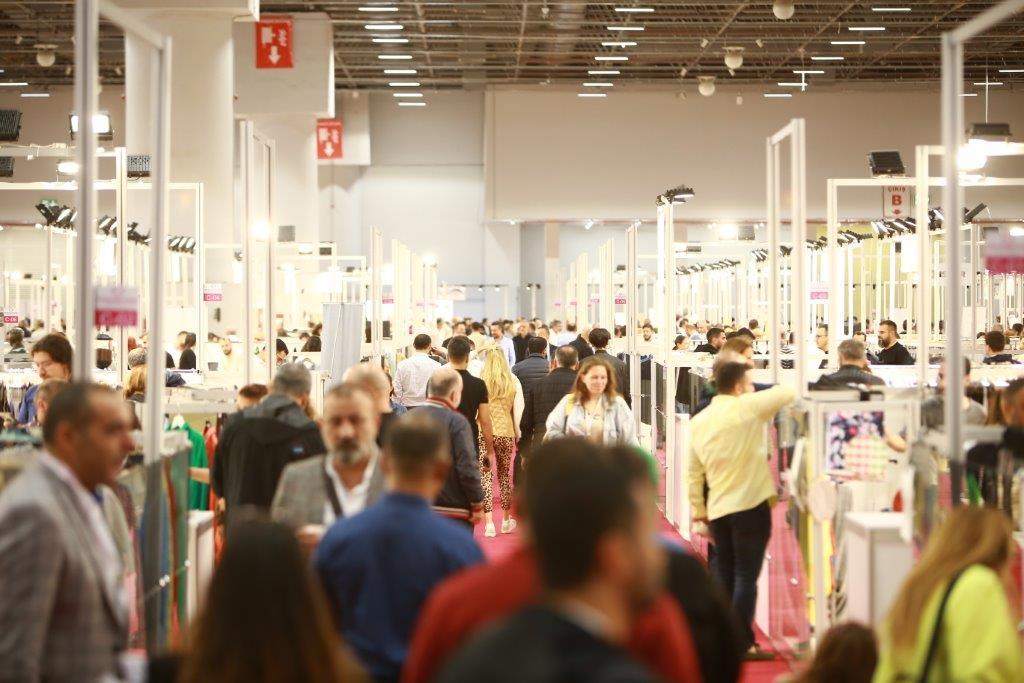
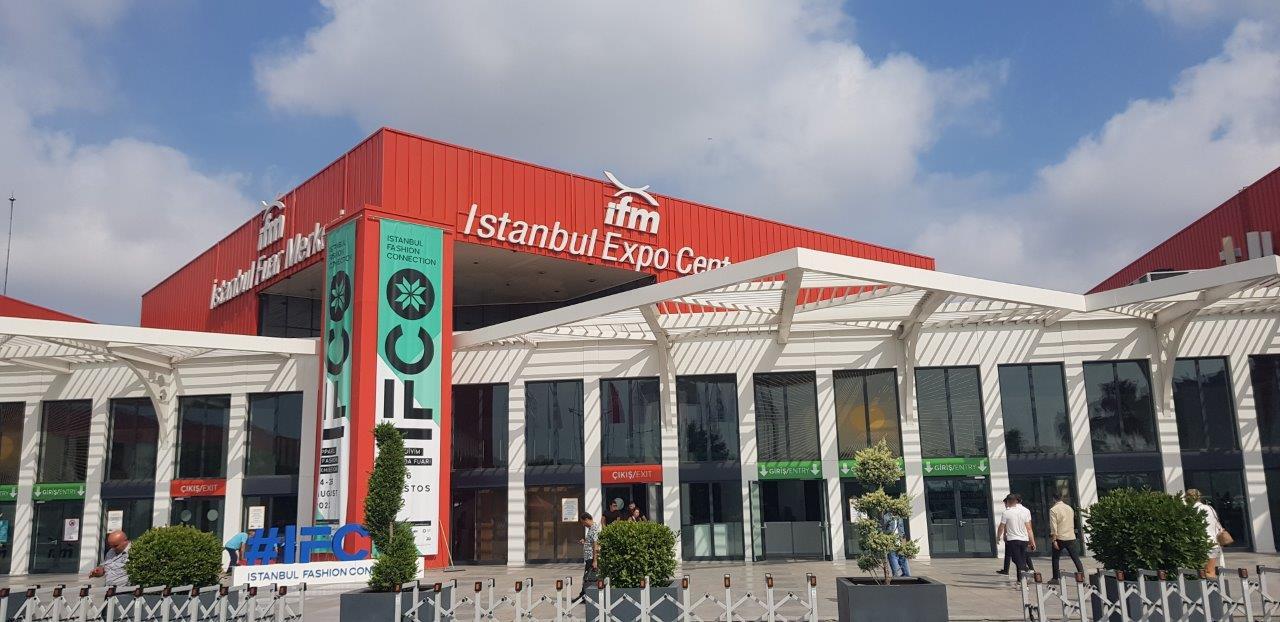
ISTANBUL FASHION CONNECTION, August 2022 - Final Report

15,493 visitors from 107 countries attended the second Istanbul Fashion Connection. Over 300 companies showed their collections on more than 15,000 square meters of exhibition space and provided information about their creative collections and their production capacities in the areas of womenswear, menswear, kidswear, denim, shoes, leather and fur, lingerie and sportswear.

There was busy business activity, the ideal near shore capacities combined with the range of fashion collections experienced great demand. Istanbul Fashion Connection was a meeting point with the opportunity for a face-to-face meeting on a common platform. All trade channels were represented at the fair, from large shopping malls and department store groups to wholesalers, international retail chains, multi-brand boutiques and online platforms.

15,493 visitors from 107 countries attended the second Istanbul Fashion Connection. Over 300 companies showed their collections on more than 15,000 square meters of exhibition space and provided information about their creative collections and their production capacities in the areas of womenswear, menswear, kidswear, denim, shoes, leather and fur, lingerie and sportswear.

There was busy business activity, the ideal near shore capacities combined with the range of fashion collections experienced great demand. Istanbul Fashion Connection was a meeting point with the opportunity for a face-to-face meeting on a common platform. All trade channels were represented at the fair, from large shopping malls and department store groups to wholesalers, international retail chains, multi-brand boutiques and online platforms.

The global turkish exports in the first half of this year amounted to US$ 12.4 billion, which corresponds to an annual growth of 11.6%. In the EU alone, the total for this period is US$7.7 billion, a growth of 14.7%. Mustafa Gültepe, President of the Turkish Exporters Assembly and IHKIB, announced that ready-to-wear exports are to be increased to $40 billion in the medium term.

The organizers are expecting over 600 companies to attend next IFCO. The exhibitors for the sourcing area will take part in a separate hall. Leading companies have already registered with the association for this. Lingerie and bridal/evening wear will also be shown in their own hall, which seasonally only presents itself once a year in Turkey.
The participation of international fashion companies is encouraged, for which IFCO provides the springboard into the Eastern European market.

Source:

JANDALI

(c) PURE LOOP
07.09.2022

PURE LOOP: High-strength synthetic nonwoven made with a recycled content of 10 percent

Geosynthetics have become an indispensable part of the construction industry. PP nonwovens, for example - mechanically bonded continuous fibres made from specially UV-stabilised polypropylenes - are often used in blanket form as barriers, screens and filters, and their strength extends the service life of construction projects. Whether for road construction, or as barrier on glaciers or against weeds - there are myriad applications.

TenCate Geosynthetics uses the PURE LOOP ISEC evo technology to recycle this type of PP nonwoven. The European company, with locations in Austria, France and the Netherlands, is specialised in the development and production of geotextiles for modern civil engineering applications. The edge trimmings and production rejects generated during manufacturing used to be recycled at the Linz site, but not fed back into the company's own production process.

Geosynthetics have become an indispensable part of the construction industry. PP nonwovens, for example - mechanically bonded continuous fibres made from specially UV-stabilised polypropylenes - are often used in blanket form as barriers, screens and filters, and their strength extends the service life of construction projects. Whether for road construction, or as barrier on glaciers or against weeds - there are myriad applications.

TenCate Geosynthetics uses the PURE LOOP ISEC evo technology to recycle this type of PP nonwoven. The European company, with locations in Austria, France and the Netherlands, is specialised in the development and production of geotextiles for modern civil engineering applications. The edge trimmings and production rejects generated during manufacturing used to be recycled at the Linz site, but not fed back into the company's own production process.

"The demands on us were high," recalls Patrick Wiesinger, project manager at PURE LOOP. "The PP nonwoven is highly tear resistant, which means its a very challenging recycling process. Our ISEC evo machine conserves the quality of the production waste really well during recycling, so we were able to achieve the specified increase in quality for the recyclates."

Another advantage of PURE LOOP technology is the wide range of shapes in which the production scrap can be delivered for processing. "Our ifeed technology with double feed ram system and singleshaft shredder offers the ideal conditions for direct processing of these large rolls - and without the need for prior preparation of the input material by employees before the material is fed into the recycling process", emphasizes Patrick Wiesinger. With the ISEC evo recycling machine TenCate can now manufacture its high-strength PP nonwoven product with a recyclate content of up to 10 percent.

Source:

PURE LOOP, EREMA Group GmbH

07.09.2022

GFA launches new international edition of Global Fashion Summit in Singapore

Global Fashion Agenda (GFA) has launched a new international edition of Global Fashion Summit. Traditionally held in Copenhagen, the new edition in Singapore will further focus on the perspectives of manufacturers and supply chain partners to deeper understand how the industry can collaborate to reduce social and environmental impact in the entire value chain. Global Fashion Summit: Singapore Edition will take place on 3 November 2022 at Hilton Singapore Orchard.

Global Fashion Agenda (GFA) has launched a new international edition of Global Fashion Summit. Traditionally held in Copenhagen, the new edition in Singapore will further focus on the perspectives of manufacturers and supply chain partners to deeper understand how the industry can collaborate to reduce social and environmental impact in the entire value chain. Global Fashion Summit: Singapore Edition will take place on 3 November 2022 at Hilton Singapore Orchard.

The theme of Global Fashion Summit: Singapore Edition continues GFA’s focus on ‘Alliances For a New Era’. Under this theme, the Summit will call on the industry to accelerate change - encouraging more alliances between manufacturers, suppliers, investors, brands, NGOs, policymakers and more. It will also examine cross-industry alliances, in a bid to accelerate the transition to a net positive reality.
 
By bringing the forum to Asia, the new edition will include even more manufacturer and supply chain partner voices in the programme to discuss sustainability challenges, differences, and opportunities to collaborate with brand executives on equal terms. Plenary sessions will consider topics such as:

  • Renewable energy transformation – what does concrete transformation look like from tier 1-3 perspectives and what measures are needed to implement it?
  • Better wage systems – how can the industry establish fair compensation, underpinned by fair purchasing practices that will help end poverty for millions of garment workers?
  • Performance measurement – how can the industry accurately measure sustainability performance and tackle data credibility challenges?

Half of the programme will be dedicated to educational and action-oriented business case studies with options for direct interaction and live reactions. These will include tangible learnings and concrete recommendations to mobilise guests to take immediate action following the event.
 
The event will foster further collaboration across stakeholder groups through productive roundtable sessions that create an exchange of views among key decision makers in both the public and private sectors. These meetings will be designed and set up to drive commitments and new alliances for concrete action.

Source:

Global Fashion Agenda

Gregoire Poux-Guillaume Photo: AkzoNobel
Gregoire Poux-Guillaume
06.09.2022

AkzoNobel: Gregoire Poux-Guillaume new member of the Board of Management

At the Extraordinary General Meeting (EGM)- September. 6 2022, the shareholders of Akzo Nobel N.V. (AkzoNobel) appointed new CEO Gregoire Poux-Guillaume as a member of the Board of Management, effective November 1, 2022.
 
Mr. Poux-Guillaume will succeed Thierry Vanlancker, who has been CEO and member of the Board of Management since 2017, and whose term of office is coming to an end. Mr. Poux-Guillaume will join AkzoNobel on October 1, to ensure a smooth transition as per November 1.
 
Nils Smedegaard Andersen, Chair of AkzoNobel’s Supervisory Board, commented: “I would like to welcome Gregoire Poux-Guillaume, who is an experienced business leader with an impressive track record of delivering results, growth and building strong teams. His experience will play a key role in helping the company to further improve its operational excellence and performance. I’d also like to thank Thierry for his time at AkzoNobel, during which AkzoNobel was transformed to become a focused and competitive paints and coatings company, with significant returns to shareholders.”
 

At the Extraordinary General Meeting (EGM)- September. 6 2022, the shareholders of Akzo Nobel N.V. (AkzoNobel) appointed new CEO Gregoire Poux-Guillaume as a member of the Board of Management, effective November 1, 2022.
 
Mr. Poux-Guillaume will succeed Thierry Vanlancker, who has been CEO and member of the Board of Management since 2017, and whose term of office is coming to an end. Mr. Poux-Guillaume will join AkzoNobel on October 1, to ensure a smooth transition as per November 1.
 
Nils Smedegaard Andersen, Chair of AkzoNobel’s Supervisory Board, commented: “I would like to welcome Gregoire Poux-Guillaume, who is an experienced business leader with an impressive track record of delivering results, growth and building strong teams. His experience will play a key role in helping the company to further improve its operational excellence and performance. I’d also like to thank Thierry for his time at AkzoNobel, during which AkzoNobel was transformed to become a focused and competitive paints and coatings company, with significant returns to shareholders.”
 
Mr. Poux-Guillaume’s previous roles include CEO of Sulzer, CEO of GE Grid Solutions (previously Alstom Grid) and Senior Managing Director of CVC Capital Partners.

More information:
Poux-Guillaume AkzoNobel
Source:

AkzoNobel

(c) deepak@deepakdavda.com
06.09.2022

Techtextil India to take place in September 2023

Messe Frankfurt India has announced that the ninth edition of Techtextil India will be held from 12 – 14 September 2023, for the first time at JIO World Convention Centre (JWCC), Mumbai. On the side-lines of the three-day fair, the organisers are planning a series of live sessions to spark debates on important industry topics and high-growth application areas.
 
As the leading business event for the Indian technical textile industry, Techtextil India, aims to connect international and domestic players with buyers from 12+ segments under diverse application areas and create a one-stop sourcing platform to highlight latest product innovations in technical textiles.
 

Messe Frankfurt India has announced that the ninth edition of Techtextil India will be held from 12 – 14 September 2023, for the first time at JIO World Convention Centre (JWCC), Mumbai. On the side-lines of the three-day fair, the organisers are planning a series of live sessions to spark debates on important industry topics and high-growth application areas.
 
As the leading business event for the Indian technical textile industry, Techtextil India, aims to connect international and domestic players with buyers from 12+ segments under diverse application areas and create a one-stop sourcing platform to highlight latest product innovations in technical textiles.
 
Marking a spectacular comeback after the lockdown, the eighth edition of Techtextil India in  2021 stood out to be a ground-breaking business platform for the technical textile sector with live demonstrations from over 150 companies’ brands and an exclusive German pavilion. The high-profile event, over the course of three days attracted 4,087 trade visitors from 25 states and 194 cities. Mr Pramod Khosla, Director, Khosla Profil Pvt Ltd, shared: “Despite the unprecedented situation created by pandemic, Techtextil India 2021 saw a tremendous response from visitors. This goes to show the immense interest and trust that industries and people have in the technical textiles sector as well as in Techtextil India.”
 
For the upcoming ninth edition, leading Indian players such as Alok Masterbatches, Khosla Profil, Park Nonwoven, Sarex Chemicals, Suntech Geo, Weavetech have already confirmed their participation and will be showcasing innovations in high-growth application areas of Geotech, Packtech, Agrotech & Indutech with a focus on products such as specialty fibres, filtration fabrics, functional textiles & advance technology.
 
While Mobiltech, Indutech, Meditech, Packtech and Sportech constitute a major share value in the global market for technical textiles, the segments likely to grow at the fastest rates (at rates faster than a CAGR of 10%) in the Indian market are Oekotech, Protech, Mobiltech, Geotech, Indutech, Agrotech, Buildtech and Packtech. The government’s target to accelerate technical textile sector growth from 8% to 15-20% range in the next five years and transform the nation into a major player in innovations, technology development, applications in key areas (agriculture, roads and railways, water resources, hygiene and healthcare, personal protection) is giving strong impetus to industry players.

With an aim to place India as one of the leaders in the global technical textile market and enhance its adoption and penetration domestically, the Indian government has earmarked INR 1000 crore (USD 130.7 million) dedicated only for R&D of the Technical Textiles sector, while the Union Budget 2022-23 further allocates INR 100 crore (USD 13.07 million) for the National Technical Textiles Mission. The centre is making strong efforts to encourage the use and adoption of technical textiles and has mandated the use of 92 items by government organisations covering agriculture, horticulture, highways, railways, water resources, and medical applications. The organisers are in talks with international technology players targeting these application areas to present their innovations at the three-day fair.

Source:

Messe Frankfurt (HK) Limited

06.09.2022

Suominen: New energy surcharge on all products in Europe

Suominen’s energy costs have increased significantly during the recent months and continue to rise during the coming autumn and winter months.

As announced by the company, Suominen can no longer absorb the full extent of these unprecedented increases and hence will implement a new energy surcharge on all its products in Europe.

“Suominen has been preparing for energy shortages and mitigating possible energy interruptions in order to secure business continuity. Naturally this comes with additional cost, but we have decided to remain committed to serve our customers during this difficult period,“ says Markku Koivisto, SVP Europe, Suominen.

Details of the surcharge will be communicated to customers via Suominen sales organization. 

Suominen’s energy costs have increased significantly during the recent months and continue to rise during the coming autumn and winter months.

As announced by the company, Suominen can no longer absorb the full extent of these unprecedented increases and hence will implement a new energy surcharge on all its products in Europe.

“Suominen has been preparing for energy shortages and mitigating possible energy interruptions in order to secure business continuity. Naturally this comes with additional cost, but we have decided to remain committed to serve our customers during this difficult period,“ says Markku Koivisto, SVP Europe, Suominen.

Details of the surcharge will be communicated to customers via Suominen sales organization. 

More information:
Suominen nonwovens wipes
Source:

SUOMINEN CORPORATION