


Home

Highlights

News Sustainability

News

Companies and Markets

Smart textiles: flexible supercapacitors could power sensors directly in sportswear

An international research team involving De Montfort University Leicester is examining how flexible supercapacitors could be integrated into sports clothing. The concept goes beyond adding another sensor to a garment. Instead, the textile would become part of the energy architecture: it could store electricity and supply distributed sensors embedded across the garment. Combined with technologies that harvest energy from body movement or heat, running tops, cycling kit or gym wear could eventually generate and store part of the power needed for continuous monitoring.

The researchers identify knitted structures and conductive yarns as particularly promising because they can combine electrical functionality with stretch, flexibility and breathability. Carbon-based electrode materials such as graphene and carbon nanotubes are also considered because of their energy-storage potential and mechanical flexibility. Compared with conventional batteries, supercapacitors can charge and discharge very rapidly, while potentially being made light and flexible enough for body-worn applications.

Better Cotton and Avalo use AI to accelerate climate-resilient cotton breeding

The Better Cotton Initiative (BCI) has partnered with agricultural technology company Avalo to accelerate the breeding of more climate-resilient cotton. Avalo uses an AI-enabled platform to identify genetic traits relevant to locally adapted plants that require less water and fertiliser. According to BCI, the approach can shorten the time needed to develop new varieties, an increasingly important factor as heat, water scarcity and shifting rainfall patterns affect cotton-growing regions. Avalo has already worked with BCI to enrol a significant number of new producers for the 2026 season and has tested a digital platform for collecting and reporting programme data. The partnership therefore connects plant breeding, digital data management and the requirements of an international cotton standard.

Cinte Techtextil China 2026 to open next week

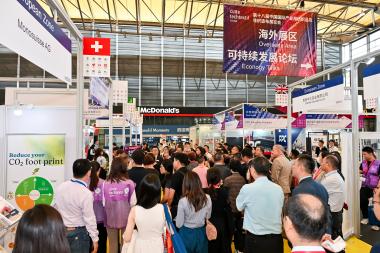
As Asia’s premier platform catering to the evolving needs in technical textiles and nonwovens, Cinte Techtextil China will open next week at the Shanghai New International Expo Centre, gathering over 300 exhibitors from 15 countries and regions. Across Halls W3 to W5, this edition will create chances for fast-growing sectors and emerging trends – such as Mobiltech, Medtech & Protech, Indutech and more. The curated zones, pavilions, and fringe programme are designed to better connect exhibitors with targeted buyers from across China, Asia-Pacific, and further afield. Meanwhile, the Association Village will gather international industry associations to foster even more global collaboration.

As a hub for global innovation, the fair will feature a strong contingent of international industry leaders in Hall W5’s Overseas Zone, including Andritz (China) Ltd, Groz-Beckert (Germany), A.Celli SPA (Italy), and Dilo (Germany), while others such as Picanol NV (Belgium) will showcase in Hall W4.

NC State joins $160 million initiative for biobased fibre materials

NC State University is a core partner in the BRIDGES Engine initiative backed by the US National Science Foundation, with up to $160 million available over ten years. A central focus is the development of miscanthus and switchgrass as feedstocks for biobased products.

The plant fibres are intended for applications including automotive, construction and packaging. NC State will contribute techno-economic assessment, sustainability analysis and processing expertise to convert agricultural feedstocks into fibre materials suitable for industrial use.

For technical textiles, the initiative is particularly relevant because it goes beyond laboratory-scale material development and aims to build supply chains, processing capacity and regional markets in parallel.

Valmet and Metsä scale 3D fibre forming to commercial production

Metsä Group has selected Valmet to supply what the companies describe as the world’s first commercial-scale production line for Valmet’s 3D Fiber technology. The line will be installed in Äänekoski and is scheduled to start up in 2028, with a nominal capacity of more than 100 million three-dimensional fibre products per year.

The process converts cellulose fibres directly into lightweight yet rigid end products. Valmet combines fibre processing, forming, automation and final packing in an integrated production chain. The technology has been co-developed with Metsä Spring since 2020 and was initially validated in a demonstration plant.

Although packaging is the primary target market, the development is relevant to the textile and fibre sector because it demonstrates how fibre-based structures and forming technologies are moving into three-dimensional industrial applications.

Dyneema SK80 targets significantly longer service life for mooring lines

Avient is introducing Dyneema SK80, a new HMPE fibre grade for mooring lines and offshore applications. According to the company, the fibre was engineered at polymer level to deliver at least twice the durability and fatigue resistance of Dyneema SK78 in demanding mooring applications.

The technological emphasis is therefore less on headline tensile strength than on service life under cyclic loading. In mooring systems, repeated load cycles, abrasion, bending stress and environmental exposure are major failure drivers. Improved fatigue resistance can therefore have a direct effect on maintenance intervals, operational safety and lifecycle costs.

The new fibre will be presented at SMM in Hamburg in early September. For Textination, the development is relevant because high-performance fibres are increasingly being positioned not only through weight and strength advantages, but through durability, reliability and the total cost of technical textile systems.

Barmag presents metering pump solutions at ASE China

Precision for Adhesives and Sealants
The demands placed on modern adhesive and sealant applications are constantly increasing. Manufacturers expect reproducible dosing results, minimal material loss, and reliable processing in increasingly demanding processes. This is precisely where Barmag’s product portfolio comes into play.

Material efficiency as a competitive advantage
At ASE China, Barmag is focusing in particular on its solutions for hot-melt adhesives, PUR systems, silicones, resins, and two-component adhesives and sealants. The pumps in the GA/GX series, in particular, enable uniform, low-pulsation delivery of these media, thereby contributing to consistently high product quality and reduced material consumption. “Rising raw material costs and increasing quality requirements make precise metering more important today than ever before. With our pumps, we help users make their processes more efficient, sustainable, and cost-effective,” explains Andreas Heitzer, Key Account Manager of the Pumps Division.

EDANA’s OUTLOOK™ returns to Cascais to shape a changing industry

The market does not wait, and it does not grant easy answers. Across the absorbent hygiene, personal care, and wipes sectors, business is undergoing a period of intense, necessary adjustment. New European rules on packaging, single-use items, product safety, and end-of-life are forcing companies to drop old assumptions about materials and performance. At the same time, producers must keep their goods safe, reliable, and affordable for the babies and aging adults, who rely on them every day. 

From 22 to 24 September 2026, EDANA’s OUTLOOK™ returns to the Hotel Miragem in Cascais, Portugal, for its twenty-fifth edition of the conference. 

OUTLOOK™ began in Monaco in 2001. It focused then on baby diapers and menstrual protection. Over a quarter of a century, the work expanded. It grew to cover adult incontinence, wipes, complex international product safety, and strict environmental compliance. In 2007, the conference met in Cascais. Returning to the Portuguese coast this September marks a milestone, but the focus remains squarely on the work ahead. 

The three-day programme takes on the hardest questions in the supply chain directly: 

Imogo: New showroom and production hub

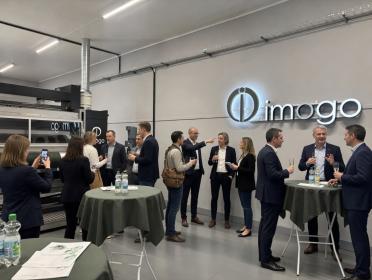
Located at the 7H Dyehouse in Kinnahult, Sweden, it represents a significant milestone in the company’s evolution, offering a fully operational environment where brands and manufacturers can experience the future of textile dyeing.

Imogo’s digital spray technology drastically reduces the use of water, energy and chemicals compared with traditional processes, while also lowering production costs.

“For early partners who have followed our journey, this opening marks the moment vision meets reality,” says CEO Joacim Wellander CEO. “While previous discussions have focused on the potential of spray dyeing, we are now fully equipped with the machinery, technical expertise, and operational experience to move projects from the lab to full-scale commercial production.”

The showroom features the latest generation of Imogo technology including both the Dye-max and Mini-max spray dyeing systems capable of handling both laboratory trials and full-scale production for fabrics up to 2.4 metres wide.

Naia™ from Eastman: First appearance at Apparel Sourcing Show Guatemala

At Booth 50, Eastman will present U.S.-produced Naia™ staple fibers and filament yarns for casualwear and activewear, supporting closer collaboration across the regional value chain.

As brands and retailers explore more diversified and responsive sourcing networks, the Naia™ from Eastman brand is strengthening its engagement with the textile and apparel value chain across the western hemisphere. From August 18 to 20, the company will participate for the first time in Apparel Sourcing Show Guatemala, a regional meeting point for apparel sourcing, manufacturing and nearshoring.

Produced in the United States, Naia™ offers regional manufacturers, brands and sourcing teams a cellulosic fiber option within the western hemisphere, creating opportunities for direct dialogue and new collaborations across the regional textile and apparel supply chain.

Business

Study - Asia

Technical University Darmstadt conducts study

"India and China as procurement markets". A comparative study for the German textile industry

Textination members can request the results of the study under the keyword China-India by mail: news@textination.de.

Study - Austria

Bank Austria presents study on textile and clothing industry

In May 2017 the bank presented its industry report on the Austrian textile and clothing industry.

You can find the download link for the study in our newsline from 18 July 2017.

Good
to Know

TexCampus

TexCampus – the
knowledge database for
research publications

R & D is a decisive competitive factor.
Find out as early as possible what the research landscape is working on.

Find information quickly and specifically in our online database.

Benefit from the time advantage: final reports, scientific-technical documentations and editorial contributions on research projects available 24/7.

Stay informed about innovations in your sector.


Feel free to contact us by email, if you are interested in becoming a part of TexCampus.

Downcheck

Welcome to DownCheck

Bundled knowledge around the topic "feathers & down".

Regardless of whether you need tips on purchase or care of bedding or have questions about materials and origin or brands and licenses, you can find here answers to your questions.

And should you ever have further inquiries, we look forward to your mail to daunencheck@textination.de.

Tenders

Get your weekly update of European tenders

You are welcome to subscribe to our tender service:

  •     Textiles
  •     Clothing
  •     Textile service

Apply to our mailing service and order your test mail free of charge.

Schedule