From the Sector

Reset
26.11.2026

Fashion for Good and Carbonfact address environmental data gaps in the footwear industry

Fashion for Good launched Project Footprints Unpacked on 26 November 2026 in partnership with Carbonfact, New Balance, On and two further footwear brands. The initiative aims to improve the availability and quality of environmental data across the footwear value chain, providing a more reliable basis for life cycle assessments (LCAs), environmental reporting and decarbonisation strategies.

Although existing LCA databases provide a starting point for assessing the environmental footprint of footwear, data relating to specific materials, manufacturing processes and production facilities remain limited. In many cases, assessments rely on generic industry averages rather than actual manufacturing data.

This lack of process-specific information makes it difficult for manufacturers and brands to identify environmental hotspots, evaluate alternative materials and production methods, and substantiate environmental claims with verifiable evidence.

Building a shared industry data foundation
Project Footprints Unpacked will systematically collect primary data from suppliers, develop footwear-specific LCA datasets in accordance with ISO 14040 and ISO 14044, and make the resulting datasets available through established industry platforms. The objective is to create a shared, pre-competitive data foundation accessible beyond the participating brands.

The project intends to cover multiple stages of the footwear life cycle, including:

  • Materials such as foams, rubber and synthetic leather;
  • Component manufacturing processes, including injection and compression moulding, foaming and vulcanisation;
  • Footwear assembly processes;
  • End-of-use scenarios, including repair, disassembly, recycling, downcycling and landfill disposal.

Participating suppliers will provide primary data on energy and water consumption, material inputs and waste generation. Data will be collected from at least three suppliers per process to reduce reliance on individual production scenarios and improve the representativeness of the resulting datasets.

From environmental reporting to production decisions
More detailed manufacturing data could enable footwear brands to identify where environmental impacts arise within their supply chains and assess the potential of targeted investments in materials, manufacturing technologies and process improvements.

The resulting datasets could also contribute to the development of future environmental assessment methodologies and regulatory frameworks, at a time when requirements for substantiating environmental claims are becoming increasingly important.

Digital printing on acrylic opens up new creative possibilities for high-end interior decoration, reproducing the intricate veining and visual depth of natural marble. (c) Mimaki
Digital printing on acrylic opens up new creative possibilities for high-end interior decoration, reproducing the intricate veining and visual depth of natural marble.
26.11.2026

Recycled acrylic and digital printing for high-end design applications

The combination of recycled cast acrylic and digital printing is opening up new possibilities in interior decoration, retail design and high-end visual communication. Bompan, Mimaki’s exclusive importer for Italy, and Madreperla S.p.A., an Italian manufacturer of cast acrylic sheets, are exploring applications ranging from decorative panels and luxury displays to personalised products and industrial design.

In these markets, material selection and print quality are closely interrelated. Alongside precise colour reproduction and surface aesthetics, ink adhesion and resistance to external influences are important criteria. Applications in cosmetics, perfumery, hospitality and marine interiors, for example, may be exposed to frequent handling, cleaning agents, humidity or alcohol.

Recycled PMMA as a design material
Madreperla specialises in the production of cast polymethyl methacrylate (PMMA) sheets for visual communication, retail displays, lighting and interior design.

Under its Green Cast® brand, the company offers cast acrylic sheets made from 100% recycled raw material. According to Madreperla, these retain the optical, aesthetic and technical properties of cast PMMA manufactured from virgin raw material.

Through chemical recycling, pre- and post-consumer PMMA can be converted back into raw material for the manufacture of new acrylic sheets. Variations in colour, surface finish and transparency, combined with different processing techniques, allow the material to be adapted to a wide range of design and functional requirements.

Combining material expertise with digital printing
The collaboration brings together Madreperla’s expertise in cast acrylic and colour customisation, Bompan’s application development and technical support, and Mimaki’s digital printing technology.

The focus is on the interaction between substrate properties, ink performance, printing parameters and finishing processes. Particularly in high-end applications, these factors determine not only the visual appearance but also the functionality and durability of the finished product.

Potential applications include decorative wall panels, retail displays, signage, branded objects and customised design components. Digital printing also enables the reproduction of complex surface patterns, such as the characteristic veining and visual depth of natural marble.

Among the technologies available for these applications is Mimaki’s UJ330H-160 hybrid UV LED printer, designed to accommodate both rigid and flexible substrates.

26.11.2026

Carbios ends partnership with Wankai – progress in financing Longlaville plant

French enzymatic recycling specialist Carbios announced on 26 November 2026 the termination of its partnership with Chinese PET producer Wankai, including the exclusivity agreement for Asia. At the same time, the company reported further progress in securing financing for its planned industrial-scale PET biorecycling plant in Longlaville, France.

Reorientation of activities in Asia
During 2026, the partnership with Wankai enabled Carbios to validate the performance of its enzymatic recycling technology using locally sourced Chinese feedstocks and to secure initial offtake agreements for biorecycled PET.

Against the backdrop of a volatile economic environment, Wankai has decided to refocus on its core business of virgin PET production. The two companies have therefore agreed to discontinue their collaboration.

According to Carbios, no technology transfer took place during the partnership. Its intellectual property rights, technological know-how and trade secrets remain protected.

Carbios is intensifying discussions with recycling companies in Asia with the aim of securing licensing agreements. Alongside the packaging sector, the company identifies growing market interest in enzymatic recycling for textile-to-textile applications.

Longlaville: Financing progresses, but key conditions remain outstanding
The financing process for the planned industrial-scale plant in Longlaville has reached several milestones. The credit committees of the participating banks have approved financing for the project's entire senior debt requirements.

Bpifrance Assurance Export has confirmed its commitment to provide a senior debt guarantee at the anticipated level, while the Danish Export and Investment Fund (EIFO) is preparing to initiate its final guarantee approval process.

However, the overall financing package has yet to be completed. Discussions with equity investors are continuing, as are negotiations with companies in the packaging and textile industries to reach the required pre-sales threshold of 70%, a key condition for restarting the project.

Carbios intends to present an update on its strategic priorities during a webcast in the first quarter of 2027.

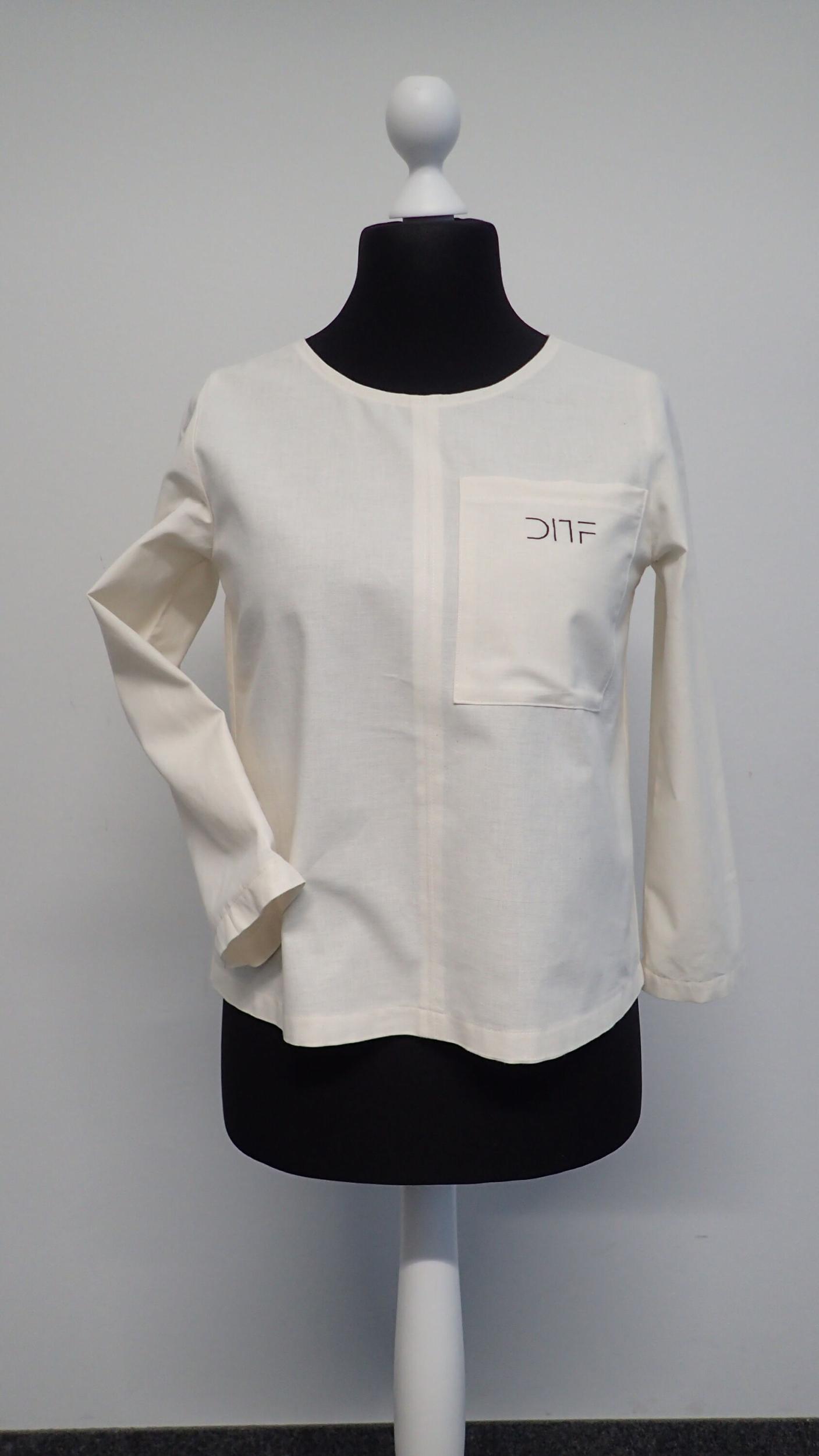
Demonstration blouse made of recycled cotton, recycled yarn count Nm 50, weight 140 g/m² (Module A). Photo Deutsche Institute für Textil- und Faserforschung Denkendorf
Demonstration blouse made of recycled cotton, recycled yarn count Nm 50, weight 140 g/m² (Module A).
25.11.2026

DITF Research Center Cyclotexum promotes the Circular Economy in the Textile Industry

As part of the CYCLOTEXUM research project, the German Institutes of Textile and Fiber Research Denkendorf (DITF) established the CYCLOTEXUM recycling center. There, in collaboration with industry partners, the center develops application-oriented solutions for mechanical and solvent-based recycling processes. The technologies developed make a significant contribution along the textile value chain toward the efficient use of textile resources in the future and the transition of production in the German textile sector to a circular economy. The project was funded by the Ministry for the Environment, Climate and Energy Sector of the State of Baden-Württemberg.

As part of the CYCLOTEXUM research project, the German Institutes of Textile and Fiber Research Denkendorf (DITF) established the CYCLOTEXUM recycling center. There, in collaboration with industry partners, the center develops application-oriented solutions for mechanical and solvent-based recycling processes. The technologies developed make a significant contribution along the textile value chain toward the efficient use of textile resources in the future and the transition of production in the German textile sector to a circular economy. The project was funded by the Ministry for the Environment, Climate and Energy Sector of the State of Baden-Württemberg.

Over the course of seven and a half months, two modules were worked on in parallel as part of the CYCLOTEXUM research project: In Module A (mechanical recycling), fiber data for mechanically torn secondary raw materials were determined, and a processing strategy was developed that enables the estimation of industrial processes based on small laboratory-scale quantities. Using the process chain set up at the DITF, production waste was exemplarily processed into a woven blouse made from 100 percent recycled fibers. The spinning mill models for material flow and cost accounting developed in the project enable a technical, economic, and ecological evaluation of the recycled yarns and textile fabrics.

The studies show that high-quality yarns can be produced from high-quality recycled fibers that have been tested for their properties. The production costs are not higher than when using primary raw materials. The major advantage is that the use of recycled fibers reduces CO₂ emissions.

In contrast, low-quality recycled fibers result in yarns of inadequate quality, high waste rates, frequent process disruptions, and increased staffing requirements in production, making them less efficient. This leads to high costs and a negative carbon footprint.

This work forms the basis for advising the industry on the technical, economic, and environmental evaluation of recycled yarns.

Module B investigated the solvent-based recycling of flame-retardant poly(ethylene terephthalate) (PET). The solvents sulfolane and γ-valerolactone (GVL) proved suitable for primary materials, production waste, and end-consumer waste alike: the flame retardant could be completely separated from the base polymer.

In addition, filtration systems were developed on a laboratory and pilot scale, and it was demonstrated that the systems are also effective for post-consumer waste on the scale of a 5-liter reactor using GVL.

The laboratory and pilot-scale facilities developed in Module B expand the scope of filtration-based recycling processes, for example, for PET-cotton blends or for the separation of elastane. This provides capacity for further research and industrial projects.

The methods, models, and technical facilities developed in the CYCLOTEXUM project are transferable to many applications in the apparel, home textiles, nonwovens, and technical textiles industries. The solvent-based recycling and filtration capacities can also be used for blended textiles, such as PET-cotton blends, as well as for the separation of elastane or other polymers. It is possible to apply these methods to polymer-based waste streams from other sectors, such as the automotive, construction, medical, and plastics industries. The newly established CYCLOTEXUM recycling center at the DITF serves as an interface between research and industry, thereby ensuring the transfer of results.

The CYCLOTEXUM project was funded by state funds approved by the Baden-Württemberg State Parliament.

Source:

Deutsche Institute für Textil- und Faserforschung Denkendorf 

25.11.2026

Inspectors find non-compliance in products sold online

ECHA’s Enforcement Forum found that many products sold online did not comply with EU chemicals legislation. The most common issues were missing hazard information in online offers and the presence of restricted hazardous substances above the permitted limits in products.

Inspectors in 27 European Economic Area (EEA) countries checked 5,281 products sold online in the EEA as part of the REACH-EN-FORCE-13 enforcement project. The checks covered substances, mixtures and articles sold through online platforms and web shops. Inspectors checked whether the products complied with EU chemicals legislation, such as Classification, Labelling and Packaging (CLP) Regulation rules on the provision of hazard information online and on labels and restrictions for hazardous substances under EU's chemical regulation REACH and Persistent Organic Pollutants (POPs) Regulation.

The project found that 61 % of the products or online offers checked did not comply with at least one of the requirements inspected. The checks were risk-based and targeted products where non-compliance was likely, so the results do not necessarily reflect the overall level of compliance of all products sold online in the EEA.

CLP hazard information often missing
Inspectors found that from the 2 206 substances and mixtures checked for the obligation to provide hazard information in online advertisements, 62 % did not include the required hazard information.

Restricted hazardous substances in products
Inspectors checked 3 126 products with hazardous substances subject to REACH restrictions for compliance and found that 56 % were non-compliant, with mixtures containing the restricted substance accounting for most cases.

The highest non-compliance rate concerned restricted substances that are carcinogenic, mutagenic or toxic to reproduction in products intended for the general public, mainly because of the presence of lead and borates. High rates of non-compliance were also found for restrictions covering hazardous substances in lamp oils, perfluoroalkyl carboxylic acids (PFAS) and phthalates, among others. As in previous projects, jewellery was also found to contain cadmium, nickel and lead above their permitted limits.

Inspections under the POPs Regulation found that 14 % of checked products were non-compliant. This was mainly due to restricted substances, including short-chain chlorinated paraffins and perfluorooctanoic acid (PFOA), being present above the permitted limits.

Non-compliance was more commonly found in products sold via online platforms, than in products sold via web shops. Inspectors also found that non-compliance was more common among traders based outside the EEA who sold through online platforms, and in products manufactured outside the EEA, particularly for articles.

Enforcement measures and recommendations
National enforcement authorities took enforcement measures where non-compliance was detected to ensure products or offers complied.

The Forum makes recommendations for online traders, online platforms and other actors to help improve the compliance of products sold online. It recommends that online platforms strengthen measures to reduce the availability of non-compliant products, for example by withdrawing offers and preventing them from reappearing. The project’s findings also indicate which product categories have a higher risk of non-compliance.
 

Source:

ECHA is the EU’s chemicals agency responsible for implementing EU chemical regulations. We protect health and the environment through our work for chemical safety.