From the Sector

Reset
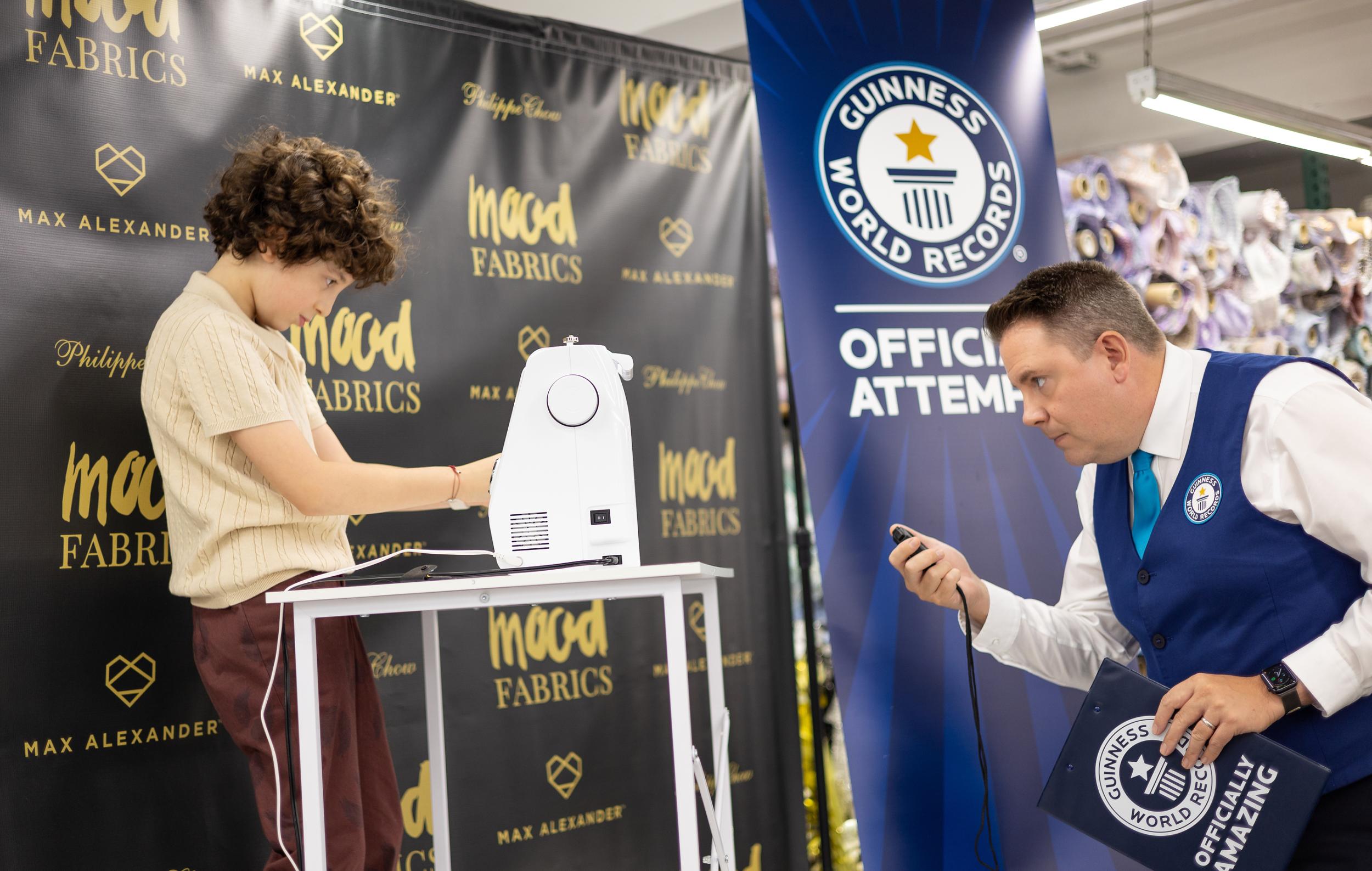
Under the close watch of a Guinness World Records adjudicator, 10-year-old designer Max Alexander competes during his launch event at Mood Fabrics NYC on September 14, 2026. Photo via Mood Fabrics
Under the close watch of a Guinness World Records adjudicator, 10-year-old designer Max Alexander competes during his launch event at Mood Fabrics NYC on September 14, 2026.
18.09.2026

Mood Fabrics launches 15-piece fabric line with Max Alexander

Mood Fabrics has launched a 15-fabric collection with ten-year-old designer Max Alexander. The Mood × Max Alexander line debuted in New York on 14 September and is being sold online and through Mood's U.S. retail locations.

The company lists BCI cotton, EcoVero viscose, European flax linen and recycled-polyester faux fur among the materials. The range combines prints and textured fashion fabrics with several fibre choices already associated with established sourcing or recycling programmes.

Alexander selected and annotated the fabrics. The collaboration therefore starts at material choice, leaving the collection open to further garment design and making rather than presenting a fixed apparel capsule.

Mood Fabrics has launched a 15-fabric collection with ten-year-old designer Max Alexander. The Mood × Max Alexander line debuted in New York on 14 September and is being sold online and through Mood's U.S. retail locations.

The company lists BCI cotton, EcoVero viscose, European flax linen and recycled-polyester faux fur among the materials. The range combines prints and textured fashion fabrics with several fibre choices already associated with established sourcing or recycling programmes.

Alexander selected and annotated the fabrics. The collaboration therefore starts at material choice, leaving the collection open to further garment design and making rather than presenting a fixed apparel capsule.

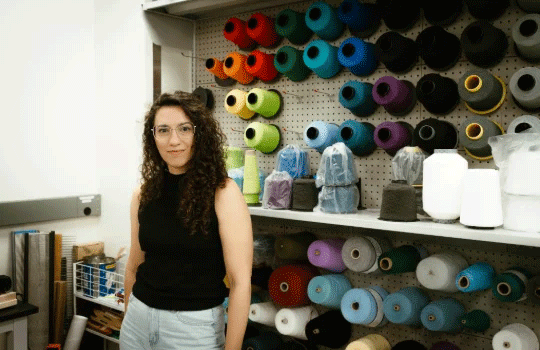
Vanessa Sanchez in ihrem Labor Foto (c) Rice University
18.09.2026

When the knit becomes the robot

Rice University mechanical engineer Vanessa Sanchez is developing knitted structures in which sensing, movement and mechanical behaviour are programmed into the textile rather than attached as separate components. Her project, “Programmable 3D-Knitted Soft Robotic Textiles for Human-Centered Mobility,” has received a Toyota Programmable System Innovation Fellowship.

Rice points to applications including vehicle seats that reshape around occupants, garments that assist walking and soft safety systems capable of responding to impending impacts.

The work uses knitting as a manufacturing architecture. By varying yarns, stitch geometry and local structural behaviour, the textile can be designed to produce functions that conventional soft-robotic systems may achieve with separate sensors, actuators or rigid elements.

Three-dimensional knitting is particularly important because form can be created during manufacture rather than assembled from multiple flat components. That approach could reduce seams and interfaces while retaining the softness and conformity expected from textiles.

Rice University mechanical engineer Vanessa Sanchez is developing knitted structures in which sensing, movement and mechanical behaviour are programmed into the textile rather than attached as separate components. Her project, “Programmable 3D-Knitted Soft Robotic Textiles for Human-Centered Mobility,” has received a Toyota Programmable System Innovation Fellowship.

Rice points to applications including vehicle seats that reshape around occupants, garments that assist walking and soft safety systems capable of responding to impending impacts.

The work uses knitting as a manufacturing architecture. By varying yarns, stitch geometry and local structural behaviour, the textile can be designed to produce functions that conventional soft-robotic systems may achieve with separate sensors, actuators or rigid elements.

Three-dimensional knitting is particularly important because form can be created during manufacture rather than assembled from multiple flat components. That approach could reduce seams and interfaces while retaining the softness and conformity expected from textiles.

Sanchez will use the fellowship to develop the programmable structures further and explore mobility-oriented applications.

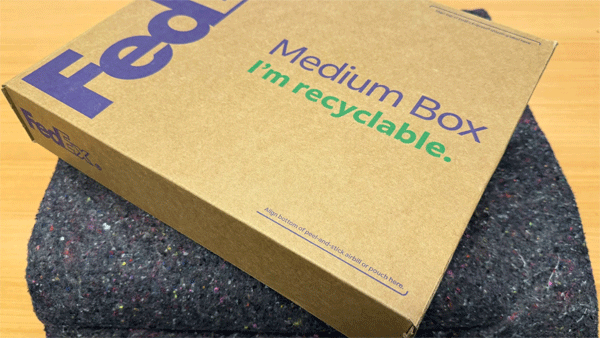
Photo FedEx
16.09.2026

Old uniforms become 6,250 blankets

FedEx has allocated 4,230 kilograms of retired uniforms to the 11th edition of its Brazilian uniform-recycling programme. The material has been converted into about 5,000 blankets for people and 1,250 smaller blankets for animals cared for by NGOs.

Since 2015, the programme has redirected 93,000 uniform items, equivalent to around 30 tonnes of textile material, into more than 37,000 blankets.

The long operating history is the notable part of the project. Corporate-wear take-back only becomes a credible circular model when collection, sorting and processing remain organised over multiple replacement cycles. Here, a controlled internal textile stream is converted into a defined second product rather than sent into an unspecified disposal route.

FedEx has allocated 4,230 kilograms of retired uniforms to the 11th edition of its Brazilian uniform-recycling programme. The material has been converted into about 5,000 blankets for people and 1,250 smaller blankets for animals cared for by NGOs.

Since 2015, the programme has redirected 93,000 uniform items, equivalent to around 30 tonnes of textile material, into more than 37,000 blankets.

The long operating history is the notable part of the project. Corporate-wear take-back only becomes a credible circular model when collection, sorting and processing remain organised over multiple replacement cycles. Here, a controlled internal textile stream is converted into a defined second product rather than sent into an unspecified disposal route.

Source:

Federal Express Corporation

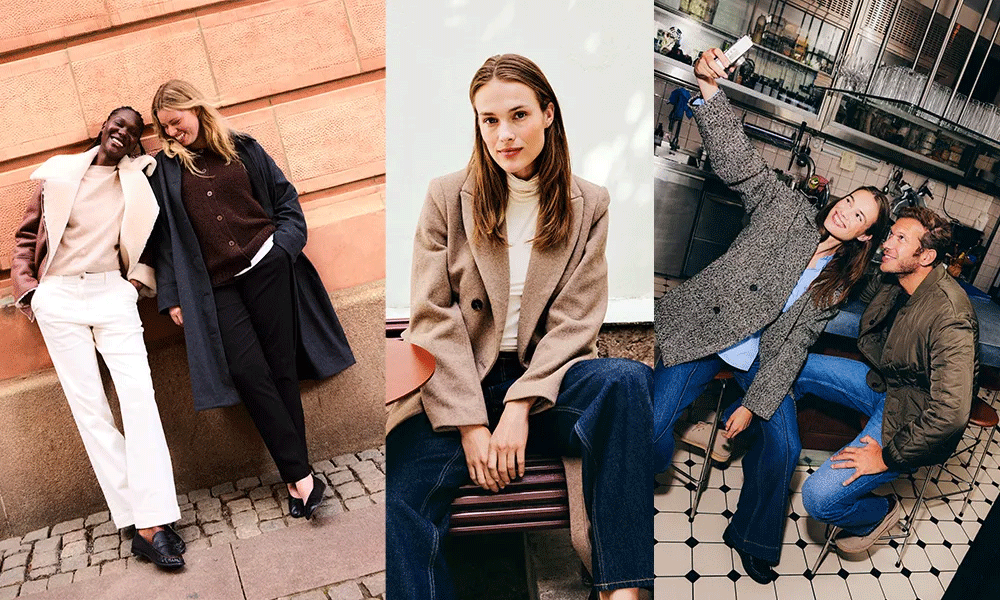
Photo (c) Kappahl Group
15.09.2026

Kappahl backs a longer-lasting wardrobe

Kappahl is launching its Autumn 2026 campaign across all markets on 16 September. Built around the existing “We Are Family” platform, the campaign presents a wardrobe of pieces intended to be easy to combine and relevant beyond short trend cycles.

The assortment spans womenswear, XLNT and menswear, with knitwear, denim, tailoring, lace and outerwear. The coat has a specific heritage role, linking the current collection to the company’s origins in Gothenburg in 1953, when founder Per-Olof Ahl opened a store focused on coats.

Kappahl is launching its Autumn 2026 campaign across all markets on 16 September. Built around the existing “We Are Family” platform, the campaign presents a wardrobe of pieces intended to be easy to combine and relevant beyond short trend cycles.

The assortment spans womenswear, XLNT and menswear, with knitwear, denim, tailoring, lace and outerwear. The coat has a specific heritage role, linking the current collection to the company’s origins in Gothenburg in 1953, when founder Per-Olof Ahl opened a store focused on coats.

Source:

Kappahl Group

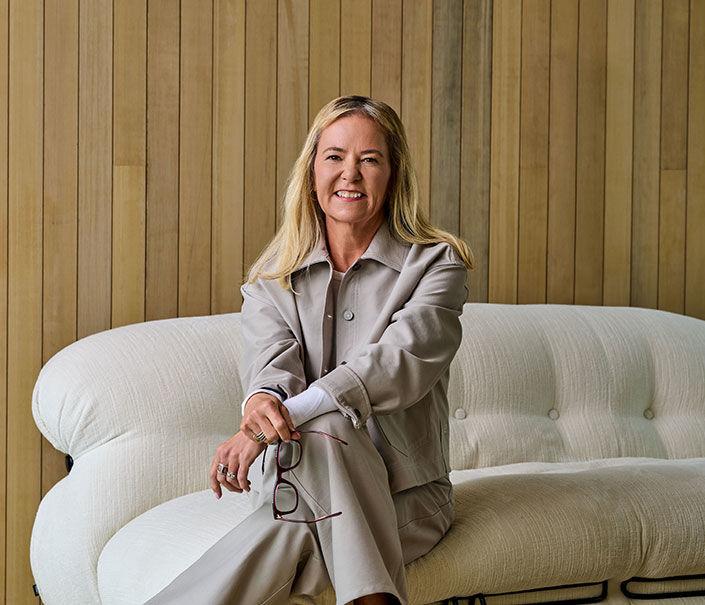
Heidi O’Neill (c) lululemon athletica inc.
14.09.2026

Heidi O’Neill starts lululemon reset

Heidi O’Neill has taken over as chief executive of lululemon. In her first employee message, published in the company newsroom, she places product, brand clarity and operational execution at the centre of the next phase.

O’Neill says her initial weeks will focus on listening to teams, partners, guests and communities before translating ideas into changes. She identifies a need to re-establish the brand’s core and to create more innovative and distinctive product that gives consumers a stronger reason to choose lululemon. She also points to improving operations and how the company connects with its communities.

The appointment matters beyond corporate governance. O’Neill spent more than 25 years at Nike, including leadership across product, design, merchandising, brand and global marketplace operations. At lululemon, that experience meets a business whose differentiation depends heavily on fabric development, fit, functional apparel and a tightly integrated direct-retail model.

Heidi O’Neill has taken over as chief executive of lululemon. In her first employee message, published in the company newsroom, she places product, brand clarity and operational execution at the centre of the next phase.

O’Neill says her initial weeks will focus on listening to teams, partners, guests and communities before translating ideas into changes. She identifies a need to re-establish the brand’s core and to create more innovative and distinctive product that gives consumers a stronger reason to choose lululemon. She also points to improving operations and how the company connects with its communities.

The appointment matters beyond corporate governance. O’Neill spent more than 25 years at Nike, including leadership across product, design, merchandising, brand and global marketplace operations. At lululemon, that experience meets a business whose differentiation depends heavily on fabric development, fit, functional apparel and a tightly integrated direct-retail model.

Source:

lululemon athletica inc.

KeyVisual s.Oliver
11.09.2026

s.Oliver brings the 90s back

Editorial relevance: Medium – a current brand-positioning and retail story supported by a product capsule.
s.Oliver has launched a new hero campaign, “Casual Since Forever,” featuring Heidi Klum meeting a younger version of herself from the 1990s. The concept uses the time shift to reinforce the brand’s positioning around enduring casual style.

The campaign is accompanied by a limited-edition vintage capsule that reinterprets 1990s references through casual basics and vintage-inspired designs. The pieces are being sold online and in selected s.Oliver stores, turning the campaign narrative into an immediate product and retail activation.

Established fashion brands increasingly use archive aesthetics and cultural nostalgia not only for communication but as a direct product-development and traffic-driving mechanism.

Editorial relevance: Medium – a current brand-positioning and retail story supported by a product capsule.
s.Oliver has launched a new hero campaign, “Casual Since Forever,” featuring Heidi Klum meeting a younger version of herself from the 1990s. The concept uses the time shift to reinforce the brand’s positioning around enduring casual style.

The campaign is accompanied by a limited-edition vintage capsule that reinterprets 1990s references through casual basics and vintage-inspired designs. The pieces are being sold online and in selected s.Oliver stores, turning the campaign narrative into an immediate product and retail activation.

Established fashion brands increasingly use archive aesthetics and cultural nostalgia not only for communication but as a direct product-development and traffic-driving mechanism.

ELIE SAAB joins H&M Photo H&M
11.09.2026

ELIE SAAB joins H&M

H&M has named ELIE SAAB as its next designer collaborator. The collection will bring the Beirut-founded couture house’s codes into a mass-market collaboration covering womenswear, menswear, accessories and footwear.

The range is set to include embellished gowns, shimmering separates and tailored pieces, with details such as lace, gradient sequins and monograms. The project extends H&M’s long-running collaboration model, in which luxury and designer brands are translated into limited retail collections with broad consumer reach.

The collection launches in selected stores and online on 22 October 2026. For the fashion and retail market, the partnership is a further example of how high-fashion brand equity, scarcity and cross-price-segment collaboration are used to create traffic and global media visibility.


H&M has named ELIE SAAB as its next designer collaborator. The collection will bring the Beirut-founded couture house’s codes into a mass-market collaboration covering womenswear, menswear, accessories and footwear.

The range is set to include embellished gowns, shimmering separates and tailored pieces, with details such as lace, gradient sequins and monograms. The project extends H&M’s long-running collaboration model, in which luxury and designer brands are translated into limited retail collections with broad consumer reach.

The collection launches in selected stores and online on 22 October 2026. For the fashion and retail market, the partnership is a further example of how high-fashion brand equity, scarcity and cross-price-segment collaboration are used to create traffic and global media visibility.


11.09.2026

Recycled polyester heads to New York

Indorama Ventures is supplying fabrics woven with deja™ recycled polyester yarn to Thai label KH Editions. Two looks and accessories from the ten-look Spring/Summer 2027 collection will be shown in New York on 15 September during New York Fashion Week.

The collaboration builds on Indorama Ventures’ RECO programme, launched in 2011 and expanded into RECO Collective in 2023. The initiative combines recycled materials and industry support with emerging designers, aiming to demonstrate that circular inputs can meet the quality and aesthetic requirements of internationally presented fashion.

For the wider value chain, the project is a useful example of material innovation being connected to design, brand building and market access rather than remaining a stand-alone recycling story. Commercial scaling will ultimately depend on consistent quality, available volumes and the ability of recycled yarns to work within established fabric and garment production.

Indorama Ventures is supplying fabrics woven with deja™ recycled polyester yarn to Thai label KH Editions. Two looks and accessories from the ten-look Spring/Summer 2027 collection will be shown in New York on 15 September during New York Fashion Week.

The collaboration builds on Indorama Ventures’ RECO programme, launched in 2011 and expanded into RECO Collective in 2023. The initiative combines recycled materials and industry support with emerging designers, aiming to demonstrate that circular inputs can meet the quality and aesthetic requirements of internationally presented fashion.

For the wider value chain, the project is a useful example of material innovation being connected to design, brand building and market access rather than remaining a stand-alone recycling story. Commercial scaling will ultimately depend on consistent quality, available volumes and the ability of recycled yarns to work within established fabric and garment production.

Source:

Indorama Ventures Public Company Limited


Photo: BASF
11.09.2026

BASF targets circular footwear

BASF will use SIMAC 2026 in Milan to present polyurethane and thermoplastic-polyurethane concepts spanning the footwear life cycle. The portfolio includes Elastopan SpringPURe for thermoformed midsoles together with Elastollan and Infinergy solutions.

Working with Gusbi, BASF has developed an automated heat-press process for lightweight midsoles designed to combine low density, design freedom and durable comfort with almost waste-free processing. With DESMA, the company is also showing a closed-loop concept that combines PU and TPU and links mechanical and chemical recycling. Three concept shoes illustrate separation and recycling routes.

The company is also introducing Infinergy Revolution, an energy-efficient heat-press processing route for expanded TPU. The approach is intended to enable lighter components, new surface designs and improved recyclability. 

BASF will use SIMAC 2026 in Milan to present polyurethane and thermoplastic-polyurethane concepts spanning the footwear life cycle. The portfolio includes Elastopan SpringPURe for thermoformed midsoles together with Elastollan and Infinergy solutions.

Working with Gusbi, BASF has developed an automated heat-press process for lightweight midsoles designed to combine low density, design freedom and durable comfort with almost waste-free processing. With DESMA, the company is also showing a closed-loop concept that combines PU and TPU and links mechanical and chemical recycling. Three concept shoes illustrate separation and recycling routes.

The company is also introducing Infinergy Revolution, an energy-efficient heat-press processing route for expanded TPU. The approach is intended to enable lighter components, new surface designs and improved recyclability. 

Credit: Design Zentrum Hamburg
10.09.2026

Hamburg Textile Week puts future fabrics on show

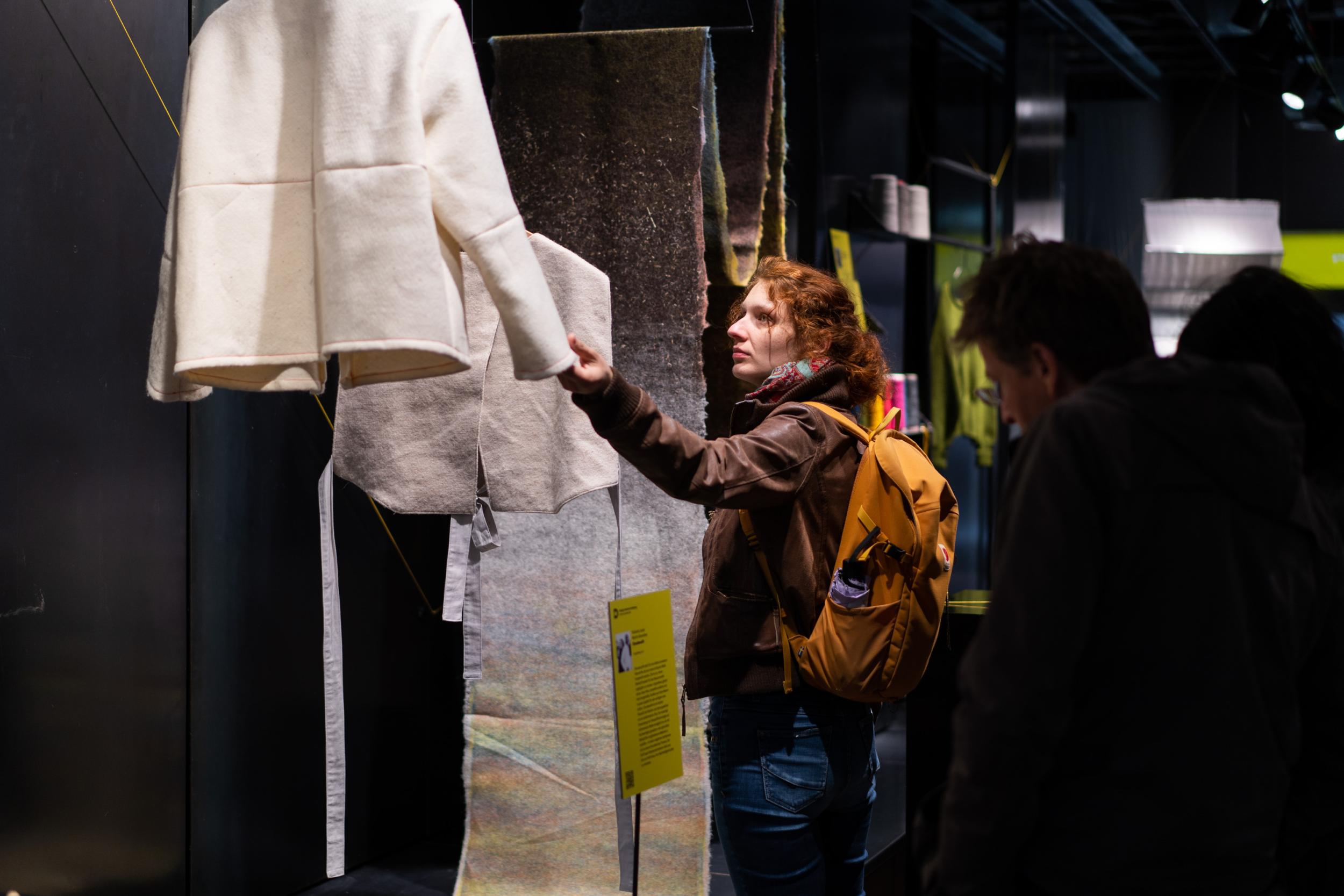
Hamburg Textile Week will present 14 projects from Germany, the Netherlands and Sweden from 1 to 11 October 2026 under the theme “Stoffe mit Zukunft” – Fabrics with a Future. The program focuses on new materials, processes and technologies, including textile energy systems, bio-based materials and interactive fabrics.

Projects range from SkySails kites that generate electricity from high-altitude wind and revoltech’s hemp-residue-based LOVR material to “Talking Textiles,” which translates touch into sound in real time. A Stühmer|Scholz exoskeleton uses textile components as the interface between body and technology. Other exhibits include a curtain woven with thin-film solar cells and work on bio-based dyeing.

Design Zentrum Hamburg is joined by the FABRIC – Future Fashion Lab for talks and workshops, with HAW Hamburg, AMD Akademie Mode & Design, Made auf Veddel and Greenpeace also participating. The format brings research, design, production and circular-design questions into one city-wide textile program.

Hamburg Textile Week will present 14 projects from Germany, the Netherlands and Sweden from 1 to 11 October 2026 under the theme “Stoffe mit Zukunft” – Fabrics with a Future. The program focuses on new materials, processes and technologies, including textile energy systems, bio-based materials and interactive fabrics.

Projects range from SkySails kites that generate electricity from high-altitude wind and revoltech’s hemp-residue-based LOVR material to “Talking Textiles,” which translates touch into sound in real time. A Stühmer|Scholz exoskeleton uses textile components as the interface between body and technology. Other exhibits include a curtain woven with thin-film solar cells and work on bio-based dyeing.

Design Zentrum Hamburg is joined by the FABRIC – Future Fashion Lab for talks and workshops, with HAW Hamburg, AMD Akademie Mode & Design, Made auf Veddel and Greenpeace also participating. The format brings research, design, production and circular-design questions into one city-wide textile program.

Source:

Design Zentrum Hamburg / Hamburg Kreativ Gesellschaft