From the Sector

Reset
Flame retardant pef granulate (c) DITF
Flame retardant pef granulate
27.01.2026

Bio-based fibers with good flame retardancy

Fibers made from bio-based plastics reduce dependence on fossil raw materials and promote the circular economy. The covalent bonding of flame-retardant additives can open the way for these fibers to enter the mass market.

The recent fire disaster in Switzerland has revealed how crucial the use of flame-retardant materials is in construction materials, insulation, and many other everyday objects. Textiles with flame-retardant properties fulfill a particularly important function here, as they are used in considerable quantities - not only in building materials, but also in safety and protective clothing, in vehicle interiors, and in home furnishings such as carpets and upholstered furniture.

Fibers made from bio-based plastics reduce dependence on fossil raw materials and promote the circular economy. The covalent bonding of flame-retardant additives can open the way for these fibers to enter the mass market.

The recent fire disaster in Switzerland has revealed how crucial the use of flame-retardant materials is in construction materials, insulation, and many other everyday objects. Textiles with flame-retardant properties fulfill a particularly important function here, as they are used in considerable quantities - not only in building materials, but also in safety and protective clothing, in vehicle interiors, and in home furnishings such as carpets and upholstered furniture.

Flame-retardant compounds have been used for synthetic fibers for decades. Inorganic, brominated, or organophosphorus compounds, which are particularly used in polyester fibers, have proven to be highly effective. Phosphorus compounds are slightly less harmful to the environment when released and are therefore often the first choice. Their effectiveness is based on the fact that they form a protective carbonization layer and intercept radicals, which reduces the flammability of the material. The release of toxic gases and further heat development is limited.

For several years now, there has been a shift in the use of synthetic fibers toward bio-based fibers. Although their market share is still small compared to established synthetic fibers such as polyethylene terephthalate or polypropylene, they are growing steadily. Bio-based fibers are gaining in importance because they reduce the demand for fossil raw materials. At the same time, their use supports the circular economy and reduces greenhouse gas emissions.

Persistent and effective flame retardancy in bio-based fibers that is also inexpensive and environmentally friendly could give bio-based textiles a boost in innovation and contribute to significant market expansion. This is where the DITF's “Polymers and Fiber Composites” research team comes in with the development of a flame-retardant, bio-based plastic called polyethylene furanoate (PEF). PEF is similar in many properties to the widely used polyethylene terephthalate (PET), but unlike PET, it is made from bio-based monomers. While PEF is already technologically advanced and on its way to the mass market, it currently lacks flame retardancy, which would enable its widespread use in the textile sector.

At the DITF, PEF is not only synthesized in in-house reactors. Extensive test series have also been conducted to evaluate the suitability of various phosphorus-based flame retardants in different concentrations. Two things are important to the researchers here: First, the flame retardant should be covalently bound to the polymer molecules to prevent bleeding. This is crucial for long-term fire protection of fibers because of their small diameter and high specific surface area. Second, the concentration of flame retardant should be as low as possible while still providing the best possible effect. Despite their good fire protection properties, all common additives share that they are potentially harmful to health and, when released into the environment, are difficult to degrade because they are chemically stable. In Denkendorf, they have not only succeeded in meeting these requirements. They have also been able to increase the molecular weight of the synthesized polymers by solid state polymerization to spin fibers with higher strength.

Further thermal and rheological investigations of the polymers with different flame-retardant concentrations identified the most suitable variant for the spinning process. In addition to the PEF variant containing five grams of phosphorus per kilogram of polymer in the form of copolymerized organophosphorus compounds, a flame retardant-free PEF reference was spun. The fibers obtained in the spinning laboratory were processed into textile fabrics, which were subjected to fire tests. The flame-retardant knitted fabrics showed significantly reduced flammability. The DITF will continue to study in flame-retardant, bio-based PEF fibers.

‘Revoice’ device gives stroke patients their voice back Credit: Occipinti Group
23.01.2026

‘Revoice’ device gives stroke patients their voice back

Researchers have developed a wearable, comfortable and washable device called Revoice that could help people regain the ability to communicate naturally and fluently following a stroke, without the need for invasive brain implants.

The device, whose development was led by researchers at the University of Cambridge, uses a combination of ultra-sensitive sensors and artificial intelligence to decode speech signals and emotional cues to allow people with post-stroke speech impairment to communicate naturally.

The Revoice device, worn as a soft and flexible choker, captures the wearer’s heart rate and tiny vibrations from throat muscles, and uses those signals to reconstruct intended words and sentences in real time.

The signals from the device are processed by two AI agents: one reconstructs words from fragments of silently mouthed speech, while the other interprets emotional state and contextual information, such as the time of day or weather conditions, to expand short phrases into complete, expressive sentences.

Researchers have developed a wearable, comfortable and washable device called Revoice that could help people regain the ability to communicate naturally and fluently following a stroke, without the need for invasive brain implants.

The device, whose development was led by researchers at the University of Cambridge, uses a combination of ultra-sensitive sensors and artificial intelligence to decode speech signals and emotional cues to allow people with post-stroke speech impairment to communicate naturally.

The Revoice device, worn as a soft and flexible choker, captures the wearer’s heart rate and tiny vibrations from throat muscles, and uses those signals to reconstruct intended words and sentences in real time.

The signals from the device are processed by two AI agents: one reconstructs words from fragments of silently mouthed speech, while the other interprets emotional state and contextual information, such as the time of day or weather conditions, to expand short phrases into complete, expressive sentences.

In a small trial with five patients with dysarthria, a common type of post-stroke speech impairment, the device achieved a word error rate of 4.2% and a sentence error rate of just 2.9%. Unlike existing assistive speech technologies, which often require slow letter-by-letter input, eye tracking or brain implants, the Revoice device provides seamless real-time communication, turning just a few mouthed words into full, fluent sentences.

Their results, reported in the journal Nature Communications, could not only have implications for stroke rehabilitation, but could also help support people with conditions such as Parkinson’s and motor neuron disease. The researchers are currently planning a clinical study in Cambridge for native English-speaking dysarthria patients to assess the viability of the system, which they are hoping to launch this year.

About half of people develop dysarthria, or dysarthria in combination with aphasia, following a stroke. Dysarthria is a physical condition that causes weakness in the muscles of the face, mouth and vocal cords. It affects people in different ways, but often causes an inability to speak clearly, slurred or slow speech, or speaking in short, disjointed bursts rather than full sentences.

“When people have dysarthria following a stroke, it can be extremely frustrating for them, because they know exactly what they want to say, but physically struggle to say it, because the signals between their brain and their throat have been scrambled by the stroke,” said Professor Luigi Occhipinti from Cambridge’s Department of Engineering, who led the research. “That frustration can be profound, not just for the patients, but for their caregivers and families as well.”

Most stroke patients with dysarthria work with a speech therapist to regain their ability to communicate, primarily through repetitive word drills, where patients repeat words or phrases back to the speech therapist. Typical recovery time varies from a few months to a year or more.

“Patients can generally perform the repetitive drills after some practice, but they often struggle with open-ended questions and everyday conversation,” said Occhipinti. “And as many patients do recover most or all of their speech eventually, there is not a need for invasive brain implants, but there is a strong need for speech solutions that are more intuitive and portable.”

Occhipinti and his colleagues developed the Revoice device as such a solution. The sensors in the device capture subtle vibrations from the throat to detect speech signals and decodes emotional states from pulse signals – a simplified but effective proxy. The device also uses an embedded lightweight large language model (LLM) to predict full sentences, so only uses minimal power.

Working with colleagues in China, the researchers carried out a small trial with five stroke patients with dysarthria, as well as ten healthy controls. In the study, participants wore the device and mouthed short phrases. By nodding twice, they could choose to expand those phrases into sentences using the embedded LLM.

In one example, “We go hospital” became “Even though it’s getting a bit late, I’m still feeling uncomfortable. Can we go to the hospital now?” The sensors in the Revoice device inferred that the wearer was feeling frustrated due to their elevated heart rate, and that it was getting late at night. The LLM was able to use this data to expand three mouthed words into a full sentence.

Participants in the study reported a 55% increase in satisfaction, showing that the device could be a promising development to help stroke patients regain their ability to communicate. Although extensive clinical trials will be required before the device can be made widely available, the researchers hope that future versions of the device will include multilingual capabilities, a broader range of emotional states and fully self-contained operation for everyday use.

“This is about giving people their independence back,” said Occhipinti. “Communication is fundamental to dignity and recovery.”

The research was supported in part by the British Council, Haleon, and the Engineering and Physical Sciences Research Council (EPSRC), part of UK Research and Innovation (UKRI).

Source:

Reference:
Chenyu Tang, Shuo Gao, Cong Li et al. ‘Wearable intelligent throat enables natural speech in stroke patients with dysarthria.’ Nature Communications (2026). DOI: 10.1038/s41467-025-68228-9
University of Cambridge

23.01.2026

Autoneum: Solid Revenue, strong EBIT Margin above 5 Percent in Fiscal Year 2025

Despite a challenging market environment, Autoneum reached key strategic milestones in fiscal year 2025. With two acquisitions in China, the Group significantly strengthened its position in the strategic growth market of Asia. Revenue consolidated in Swiss francs totaled CHF 2’290.6 million (2024: CHF 2’338.7 million). In local currencies, revenue increased to CHF 2’393.3 million.

This performance underscores Autoneum’s resilience in a globally demanding market and demonstrates its solid foundation for the future. Despite muted economic conditions and moderate demand for new vehicles in many regions, Autoneum maintained its position and generated important growth impulses. The global automotive market grew by 3.7% in 2025*, driven primarily by China — highlighting the strategic importance of Asia for Autoneum.

Despite a challenging market environment, Autoneum reached key strategic milestones in fiscal year 2025. With two acquisitions in China, the Group significantly strengthened its position in the strategic growth market of Asia. Revenue consolidated in Swiss francs totaled CHF 2’290.6 million (2024: CHF 2’338.7 million). In local currencies, revenue increased to CHF 2’393.3 million.

This performance underscores Autoneum’s resilience in a globally demanding market and demonstrates its solid foundation for the future. Despite muted economic conditions and moderate demand for new vehicles in many regions, Autoneum maintained its position and generated important growth impulses. The global automotive market grew by 3.7% in 2025*, driven primarily by China — highlighting the strategic importance of Asia for Autoneum.

In local currencies, Autoneum achieved revenue growth of 2.3%. This was primarily due to two acquisitions in China which contributed to an inorganic revenue increase of 6.4%. Organically, revenue declined by 4.1%. Due to the continued appreciation of the Swiss franc and resulting negative currency translation effects, consolidated revenue in Swiss francs amounted to 2‘290.6 million, down 2.1% from the prior year CHF 2’338.7 million. 

Regional Performance
In Business Group Asia, revenue grew strongly to CHF 326.4 million (previous year: CHF 198.3 million), corresponding to an increase of 73.9% in local currencies. The main driver was the successful acquisition of Jiangsu Huanyu Group and Chengdu Yiqi-Sihuan Group. The integration of both companies is progressing according to plan. This strengthens Autoneum’s ability to expand its access to leading Chinese OEMs and to sustainably build its market presence in Asia.

In a slightly declining market (–1.3%), Business Group Europe generated revenue of CHF 1’057.1 million (previous year: CHF 1’152.4 million). In local currencies, revenue decreased by 7.6%. Business Group North America recorded revenue of CHF 805.8 million (previous year: CHF 884.6 million). In local currencies, revenue fell by 3.0%, while the market declined by 1.0%*. Business Group SAMEA (South America, Middle East and Africa) benefited from a slightly growing market (+2.1%) and achieved revenue growth of 17.7% in local currencies, primarily driven by inflation-related price increases. In Swiss francs, revenue declined to CHF 117.8 million (previous year: CHF 121.4 million) due to the significant devaluation of various local currencies.

Full-Year Guidance Achieved; Free Cash Flow Exceeds Expectations
In fiscal year 2025, Autoneum delivered revenue of nearly CHF 2.3 billion, an EBIT margin well above 5%, and a strong free cash flow exceeding CHF 100 million. The Group’s solid financial foundation and successful execution of its strategic “Level Up” initiatives provide the basis for sustainable growth and value creation going forward.

Source:

Autoneum Management AG

15.01.2026

Autoneum certified Top Employer Switzerland 2026

Autoneum, global technology leader in acoustic and thermal management for vehicles, has once again been recognized as a Top Employer Switzerland 2026, marking its third consecutive certification following 2024 and 2025. This achievement underscores the Group’s commitment to a people centric company culture and continuous improvement in employee experience. 

In its 2026 certification, Autoneum achieved a significant improvement in its overall score compared to last year and advanced into the top quantile among all certified Top Employers. This mile-stone reflects the company’s strong performance in key HR domains and its ambition to set bench-marks in people practices. 

Autoneum, global technology leader in acoustic and thermal management for vehicles, has once again been recognized as a Top Employer Switzerland 2026, marking its third consecutive certification following 2024 and 2025. This achievement underscores the Group’s commitment to a people centric company culture and continuous improvement in employee experience. 

In its 2026 certification, Autoneum achieved a significant improvement in its overall score compared to last year and advanced into the top quantile among all certified Top Employers. This mile-stone reflects the company’s strong performance in key HR domains and its ambition to set bench-marks in people practices. 

Autoneum’s Level Up strategy places employees at the center of the company’s success, with global guidelines and initiatives designed to foster a high quality working and development environment. “Being named a Top Employer for the third year in a row is an important milestone for Autoneum,” highlights Yunjie Qu, Autoneum’s Head Group HR. “Guided by our strategy of fostering a people-centric culture, we continue to create an engaging workplace that delivers an outstanding employee experience and drives high performance.” 

The Top Employers certification assesses excellence in HR Best Practices across six domains and 20 topics, including People Strategy, Work Environment, Talent Acquisition, Learning, Diversity & Inclusion, and Wellbeing.

Source:

Autoneum Management AG

SGL Carbon signs long-term supply agreement with X-energy SGL Carbon
SGL Carbon signs long-term supply agreement with X-energy
15.01.2026

SGL Carbon signs long-term supply agreement with X-energy

X-energy Reactor Company, LLC (“X-energy”) and SGL Carbon LLC (“SGL”) have signed a 10-year framework agreement to provide graphite for the deployment of X-energy’s Xe-100 small modular reactor (“SMR”). 

Graphite Production for Long Mott Generating Station (Dow, Texas)
SGL has been awarded an initial three-year contract valued at around 100 mUSD to supply medium grain-graphite supply for X-energy’s first commercial project, a proposed four-unit
Xe-100 plant in partnership with Dow, Inc. in Seadrift, Texas. Graphite production on graphite reactor components has started, and SGL will supply components within three years for a total value of around 100 mUSD.

X-energy Reactor Company, LLC (“X-energy”) and SGL Carbon LLC (“SGL”) have signed a 10-year framework agreement to provide graphite for the deployment of X-energy’s Xe-100 small modular reactor (“SMR”). 

Graphite Production for Long Mott Generating Station (Dow, Texas)
SGL has been awarded an initial three-year contract valued at around 100 mUSD to supply medium grain-graphite supply for X-energy’s first commercial project, a proposed four-unit
Xe-100 plant in partnership with Dow, Inc. in Seadrift, Texas. Graphite production on graphite reactor components has started, and SGL will supply components within three years for a total value of around 100 mUSD.

Capacity Reservation for Cascade Advanced Energy Facility (Energy Northwest, Washington State)
X-energy and SGL have also signed an agreement to reserve capacity and develop production readiness for the Cascade Advanced Energy Facility with Energy Northwest in Washington state. Cascade is a planned 12-unit Xe-100 plant, and the first of several proposed Amazon and X-energy projects targeting at least five gigawatts of new nuclear energy by 2039.Graphite production is expected to begin in the second half of 2026.

SGL has a long history in supplying graphite into nuclear applications. The product and service portfolio covers graphite components for the reactor core but also material for nuclear fuel production. X-energy and SGL Carbon are long-standing partners, with collaboration dating back to 2015 to advance the development and qualification of graphite for commercial use in the Xe-100. To explore further opportunities for collaboration on future X-energy projects, Andreas Klein, CEO of SGL Carbon, met with J. Clay Sell the CEO of X-energy this week at their Maryland headquarters.

Andreas Klein, CEO of SGL Carbon, explains: "X-energy is a pioneer in the development and manufacture of small, modular, high-performance nuclear reactors for energy generation.
X-energy has done groundbreaking work in recent years and is now entering the implementation phase with its first projects with Dow and other well-known customers. We are proud to be part of this success story and to contribute to a long-term and successful partnership. This is a first milestone in the development of new applications for our products."

“Scaling new nuclear requires partners who know how to execute and have done so time and again in the world’s most demanding industries,” said J. Clay Sell, CEO of X-energy. “SGL brings decades of innovation in aerospace, automotive, energy, and semiconductor applications, and we are thrilled to bring that depth of experience into the new nuclear sector.”

About X-energy Reactor Company, LLC 
X-energy Reactor Company, LLC, is a leading developer of advanced small modular nuclear reactors and fuel technology for clean energy generation that is redefining the nuclear energy industry through its development of safer and more efficient advanced small modular nuclear reactors and proprietary fuel to deliver reliable, zero-carbon and affordable energy to people around the world. X-energy’s simplified, modular, and intrinsically safe SMR design expands applications and markets for deployment of nuclear technology and drives enhanced safety, lower cost and faster construction timelines when compared with other SMRs and conventional nuclear. 

Source:

SGL Carbon SE

Archroma and HeiQ will provide brands and textile manufacturers access to an expanded portfolio of high-performance, sustainable effects, underpinned by global reach, application expertise, and proven market innovation. Archroma/HeiQ
14.01.2026

Archroma & HeiQ: Antimicrobial and odor-control solutions for the textile industry

Archroma, a global leader in specialty chemicals towards sustainable solutions, and HeiQ, a Swiss deeptech materials innovator active in functional textiles and sustainable fibers, have entered into a co-marketing agreement that combines their complementary strengths to deliver advanced, planet-conscious anti-odor and antimicrobial technologies to brands, retailers, and textile mills worldwide.

Together, Archroma and HeiQ will provide brands and textile manufacturers access to an expanded portfolio of high-performance, sustainable effects, underpinned by global reach, application expertise, and proven market innovation.

“This partnership marks an exciting chapter for Archroma and HeiQ, and a huge step forward for the textile industry,” said Dhirendra Gautam, VP Commercial, Archroma. “By uniting our global reach and application know-how with HeiQ’s powerful innovation engine, we are bringing high-performance, sustainable technologies to more customers and accelerating the industry’s transition towards a more planet-conscious textile value chain.”

Archroma, a global leader in specialty chemicals towards sustainable solutions, and HeiQ, a Swiss deeptech materials innovator active in functional textiles and sustainable fibers, have entered into a co-marketing agreement that combines their complementary strengths to deliver advanced, planet-conscious anti-odor and antimicrobial technologies to brands, retailers, and textile mills worldwide.

Together, Archroma and HeiQ will provide brands and textile manufacturers access to an expanded portfolio of high-performance, sustainable effects, underpinned by global reach, application expertise, and proven market innovation.

“This partnership marks an exciting chapter for Archroma and HeiQ, and a huge step forward for the textile industry,” said Dhirendra Gautam, VP Commercial, Archroma. “By uniting our global reach and application know-how with HeiQ’s powerful innovation engine, we are bringing high-performance, sustainable technologies to more customers and accelerating the industry’s transition towards a more planet-conscious textile value chain.”

“HeiQ has always been driven by a mission to pioneer deeptech material innovation for people and planet,” said Carlo Centonze, CEO of HeiQ. “Together with Archroma’s extensive network and expertise, we are scaling our technologies globally, ensuring that brands and mills can access functional, sustainable solutions that enhance product performance while lowering environmental impact.”

The collaboration enables HeiQ’s advanced technologies to be delivered through Archroma’s well-established global customer network, making it easier for textile manufacturers to integrate functional, compliant, and sustainable performance effects into their products. The alliance is also about scaling innovation. Together, we will empower brands and manufacturers to meet consumer demands for hygiene, freshness, and sustainability.

Source:

Archroma

12.01.2026

AVK-Innovation Award 2026 open for submissions

The German Federation of Reinforced Plastics (AVK) is calling for entries for the prestigious AVK Innovation Award 2026. The association is looking for outstanding innovations in the field of fiber-reinforced plastics (FRP) / composites in the following categories:

  • Innovative products/components or applications 
  • Innovative procedures/processes 
  • Research and science 

The aim of the AVK Innovation Award is to promote forward-looking products, components, and applications made from FRP, as well as innovative manufacturing methods and processes. Another focus is on recognizing excellent scientific work from universities, colleges, and research institutes.

Sustainability plays a central role in all categories. Awards are given not only to the innovations themselves, but also to the companies and institutions behind them. In this way, the AVK aims to highlight the performance, innovative strength, and future viability of the entire composites industry.

The submissions are evaluated by a high-caliber jury of proven experts from the composites industry.

The German Federation of Reinforced Plastics (AVK) is calling for entries for the prestigious AVK Innovation Award 2026. The association is looking for outstanding innovations in the field of fiber-reinforced plastics (FRP) / composites in the following categories:

  • Innovative products/components or applications 
  • Innovative procedures/processes 
  • Research and science 

The aim of the AVK Innovation Award is to promote forward-looking products, components, and applications made from FRP, as well as innovative manufacturing methods and processes. Another focus is on recognizing excellent scientific work from universities, colleges, and research institutes.

Sustainability plays a central role in all categories. Awards are given not only to the innovations themselves, but also to the companies and institutions behind them. In this way, the AVK aims to highlight the performance, innovative strength, and future viability of the entire composites industry.

The submissions are evaluated by a high-caliber jury of proven experts from the composites industry.

The deadline for submitting application documents is March 27, 2026. Further details and evaluation criteria can be found online.

The award ceremony will take place on October 20, 2026, as part of the JEC Forum DACH in Cologne (October 20-21, 2026).

Source:

AVK - Industrievereinigung Verstärkte Kunststoffe e. V.

Photo Messe Frankfurt Trade Fairs India
12.01.2026

Government of Tamil Nadu to launch Techtextil India Summit in Coimbatore

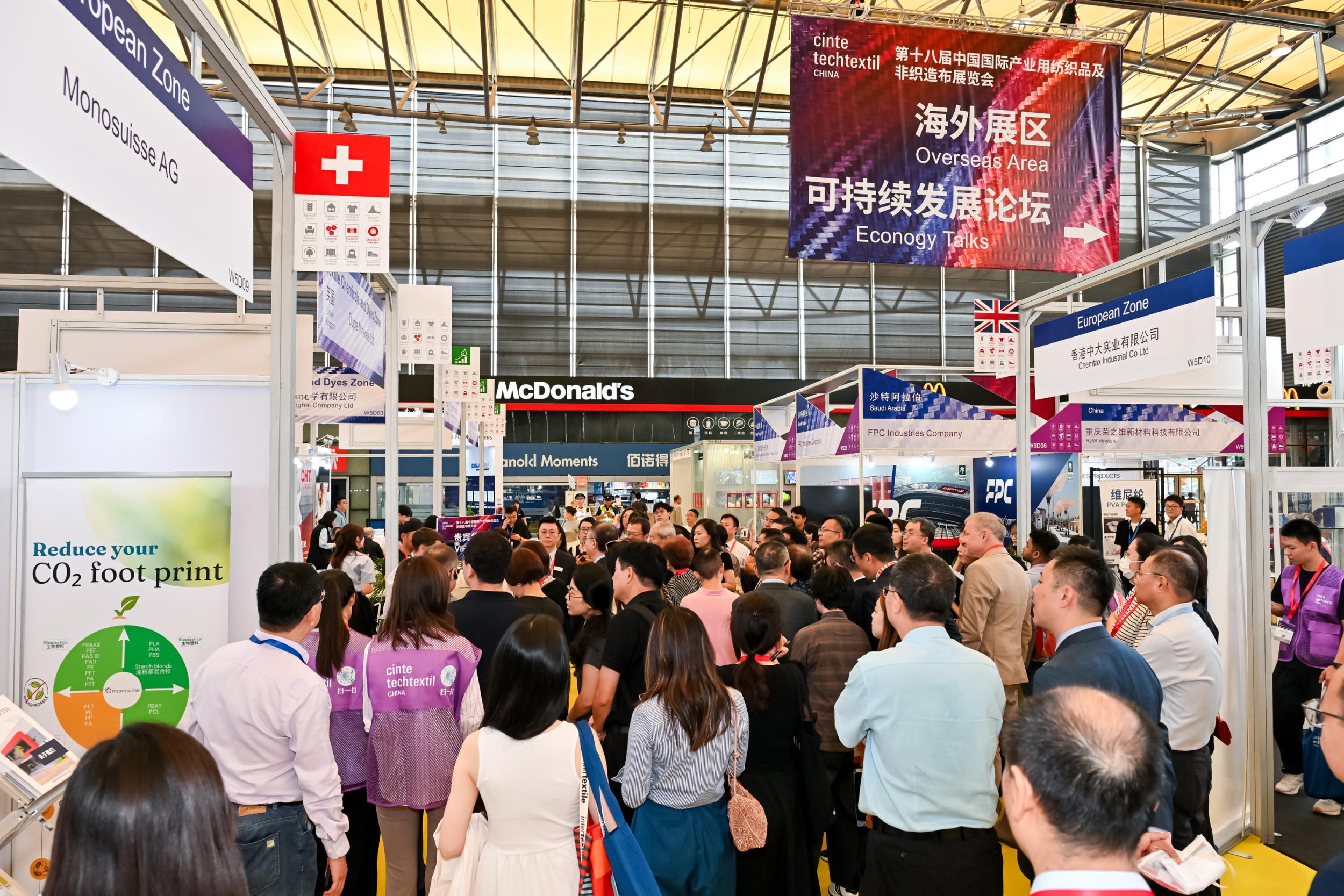
In a major step towards strengthening Tamil Nadu’s leadership in the global technical textiles value chain, Messe Frankfurt Trade Fairs India Pvt Ltd signed a Memorandum of Understanding with the Department of Textiles and Guidance Tamil Nadu, Government of Tamil Nadu on 25th November 2025 in Coimbatore to launch Techtextil India Summit scheduled from 26 – 27 November 2026 at CODISSIA, Coimbatore, Tamil Nadu. 

The MoU formalises the launch of the Tamil Nadu edition of Techtextil India Summit, which will be held in Coimbatore every alternate year beginning 2026. The shared objective is to create a knowledge hub for exchanging expert and technical knowledge in the segment, given its vast growth potential. 

In a major step towards strengthening Tamil Nadu’s leadership in the global technical textiles value chain, Messe Frankfurt Trade Fairs India Pvt Ltd signed a Memorandum of Understanding with the Department of Textiles and Guidance Tamil Nadu, Government of Tamil Nadu on 25th November 2025 in Coimbatore to launch Techtextil India Summit scheduled from 26 – 27 November 2026 at CODISSIA, Coimbatore, Tamil Nadu. 

The MoU formalises the launch of the Tamil Nadu edition of Techtextil India Summit, which will be held in Coimbatore every alternate year beginning 2026. The shared objective is to create a knowledge hub for exchanging expert and technical knowledge in the segment, given its vast growth potential. 

Under this long-term partnership, Messe Frankfurt Trade Fairs India will anchor the next phase of growth for India’s technical textiles sector by conceptualising, curating and delivering five editions of Techtextil India Summit in Tamil Nadu over the coming decades. As the country’s foremost B2B exhibition on technical textiles, nonwovens and composites – and part of the globally acclaimed Techtextil brand – the collaboration brings one of the world’s most influential platforms closer to India’s largest textile and apparel hub. 

The MoU was signed on 25th November 2025 with the Department of Textiles and Guidance Tamil Nadu, Government of Tamil Nadu in the august presence of Thiru. M K Stalin, Honourable Chief Minister of Tamil Nadu and The TN Rising Investment Summit.

Expressing her thoughts at the ceremony, Smt R Lalitha, IAS, Director of Textiles, Department of Textiles, Government of Tamil Nadu stated: “Tamil Nadu has a well-established textile base, and this collaboration with Messe Frankfurt India will further enable the State to assume a leading position in the technical textiles sector and broaden industry linkages. With appropriate support and knowledge exchange, entrepreneurs and manufacturers can engage with advanced technical textile innovations, adopt global best practices, and reinforce Tamil Nadu’s standing as a hub for high-value, cutting-edge functional textile solutions

Reflecting on the occasion, Mr Winston Pereira, Executive Director, Messe Frankfurt Trade Fairs India Pvt Ltd remarked: “We are truly honoured that the Department of Textiles, Government of Tamil Nadu, has granted us the opportunity to contribute to the State’s technical textiles growth journey. It is equally encouraging to witness the State’s proactive efforts in building a strong foundation for technical textiles through supportive schemes and infrastructure development. We are confident that, with the right knowledge and global linkages, this dynamic State can evolve from its established strengths in spinning and knitwear into high-value technical textiles, thereby creating a robust pipeline for future investments. Introducing our globally recognised brand, Techtextil, in Coimbatore will position Tamil Nadu as a focal point for global industry dialogue. We are immensely proud of this milestone and look forward to working closely with the Department of Textiles, Government of Tamil Nadu, and Guidance Tamil Nadu to further drive industry participation.”

With the state’s policy-level support, the initiative is expected to strengthen industry-academia linkages, attract international stakeholders, unlock new opportunities for Micro, Small and Medium Enterprises (MSMEs) and advance Tamil Nadu’s leadership in the high-growth technical textiles segment. The first two editions of the show will be hosted in a high-level confex format in Coimbatore, Tamil Nadu, setting the foundation for a full-scale trade fair from the third edition. 

The Coimbatore edition of Techtextil India Summit will not only provide a global platform for innovation and collaboration but also receive strong policy-level support from the Government of Tamil Nadu. The initiative aims to engage key textile stakeholders across the State including MSMEs, research institutions, universities and sectoral agencies such as SIDCO, TIDCO, TANSIDCO, SITRA, PSG Tech, and Anna University.

Techtextil India and Techtextil India Summit are a part of Messe Frankfurt’s Texpertise Network which covers the entire textile value chain, right from research, development, yarns, fabrics, clothing, fashion, contract manufacturing, home and household textiles to technical textiles, processing and cleaning technologies, while simultaneously connecting over 500,000 industry participants worldwide through trade fairs, networks and news formats. 

Source:

Messe Frankfurt Trade Fairs India

Matthias Schwetzel Foto Institut fuer Oekologie, Technik und Innovation GmbH
Matthias Schwetzel
11.01.2026

Matthias Schwetzel new Managing Director at OETI

As of December 2025, Mr Matthias Schwetzel, MBA, has taken over management of OETI - Institute for Ecology, Technology and Innovation GmbH – from retired Robert Löcker, MBA. He brings more than 15 years of international leadership experience in the environmental and testing services sector, including at Eurofins, and has in-depth expertise in strategic management and change management in global markets.

As of December 2025, Mr Matthias Schwetzel, MBA, has taken over management of OETI - Institute for Ecology, Technology and Innovation GmbH – from retired Robert Löcker, MBA. He brings more than 15 years of international leadership experience in the environmental and testing services sector, including at Eurofins, and has in-depth expertise in strategic management and change management in global markets.

More information:
OETI Matthias Schwetzel
Source:

Institut fuer Oekologie, Technik und Innovation GmbH

Cygnet Texkimp’s ART rapid tape-deposition system is employed in the production of components for supercar such as the McLaren W1. Photo BTMA by AWOL Media
Cygnet Texkimp’s ART rapid tape-deposition system is employed in the production of components for supercar such as the McLaren W1.
06.01.2026

BTMA: Innovation in technical textiles, digitalisation and testing

Members of the British Textile Machinery Association (BTMA) can look back on 2025 as a year marked by notable technological advances and continued progress in global trade, despite an uncertain and volatile market.

“Our members have been very active over the past 12 months and this has resulted in new technologies for the production of technical fibres and fabrics, the introduction of AI and machine learning into process control systems and significant advances in materials testing,” says BTMA CEO Jason Kent. “There’s real excitement about what can be achieved in 2026 as we look ahead to upcoming exhibitions such as JEC Composites in Paris in March and Techtextil in Frankfurt in April.”

Composites momentum
Cygnet Texkimp, for example, has been nominated for a 2026 JEC Innovation Award for its collaboration with McLaren Automotive on the ART rapid tape-deposition system. Capable of depositing dry fibre tapes at up to 2.5 metres per second with exceptional precision, ART reduces scrap, shortens cycle times and delivers structural improvements already being realised across McLaren’s composite-intensive vehicle platforms.

Members of the British Textile Machinery Association (BTMA) can look back on 2025 as a year marked by notable technological advances and continued progress in global trade, despite an uncertain and volatile market.

“Our members have been very active over the past 12 months and this has resulted in new technologies for the production of technical fibres and fabrics, the introduction of AI and machine learning into process control systems and significant advances in materials testing,” says BTMA CEO Jason Kent. “There’s real excitement about what can be achieved in 2026 as we look ahead to upcoming exhibitions such as JEC Composites in Paris in March and Techtextil in Frankfurt in April.”

Composites momentum
Cygnet Texkimp, for example, has been nominated for a 2026 JEC Innovation Award for its collaboration with McLaren Automotive on the ART rapid tape-deposition system. Capable of depositing dry fibre tapes at up to 2.5 metres per second with exceptional precision, ART reduces scrap, shortens cycle times and delivers structural improvements already being realised across McLaren’s composite-intensive vehicle platforms.

Cygnet is the world’s largest independent manufacturer of prepreg production machinery, alongside a broad portfolio of handling and converting systems for the composites industry. 

In addition, the company is licensed to design and build the DEECOM® composite recycling system developed by fellow BTMA member Longworth Sustainable Recycling Technologies. DEECOM® is a zero-emission, low-carbon pressolysis solution that uses pressure and steam to reclaim fibres and resin polymers from production waste and end-of-life composites.

Other BTMA members supporting the composites sector include Emerson & Renwick, which applies deep expertise in print, forming, vacuum and coating technologies to carbon fibre processing, while Airbond is a pioneer in pneumatic yarn splicing for high-value carbon and aramid fibres. Slack & Parr meanwhile supplies high-accuracy gear metering pumps across the manmade fibre market, where they process a wide range of polymers and fibres with uniformity and consistency.

Gel spinning
Further resource savings in high-end fibre processing have been realised by Fibre Extrusion Technology through the introduction of a new process for manufacturing ultra-high molecular weight polyethylene (UHMWPE). The company’s patented solvent extraction system exploits supercritical carbon dioxide. 

“Current UHMWPE systems are huge in scale and extremely complex,” says FET R&D Manager Jonny Hunter. “That makes the supply chain inflexible and limits new product development. These disadvantages have been addressed in our new FET-500 series lab and small-scale gel spinning system.”

Quality assurance
Alongside materials innovation, BTMA members are also reshaping quality assurance via digitalisation and data-driven manufacturing. Shelton Vision has significantly advanced automated fabric inspection with the latest generation of its WebSpector system. Using patent-pending image processing techniques, WebSpector now enables reliable real-time defect detection on complex patterned fabrics, including those subject to distortion, shear or stretch during processing.

Building on its leadership in plain fabric inspection, the Shelton system now adapts to intricate designs such as camouflage and delivers clean, stable images that allow full fault detection at high running speeds. While automotive interiors and one-piece woven airbags remain key applications, WebSpector systems are increasingly being supplied to producers of performance wear, fashion, denim, outdoor upholstery, mattress ticking, window dressings and even carbon fibre composites.

Continuous colour
A comparable shift from intermittent checks to continuous monitoring is taking place in colour management through the work of C-Tex. Traditionally reliant on periodic swatches, mills can now apply laboratory-level colour measurement directly in production. 

“What we are doing is taking a lab capability and putting it into production,” says Managing Director Rob Ricketts. Working with Shelton, C-Tex has combined inline defect detection with continuous colour variation analysis, enabling both parameters to be assessed simultaneously.

Importantly, this data is now shared across supply chains. When fabrics reach garment, automotive or furniture manufacturers, downstream users know exactly what they are receiving and whether it meets their requirements. 

“This visibility is a big breakthrough,” says Ricketts. “It’s well established in automotive, but now it’s coming to textiles too.”

Intuitive testing
Advanced testing remains another cornerstone of BTMA innovation. James Heal has long supplied advanced textile testing systems and its latest Performance Testing collection focuses on speed, simplicity and intuitive operation for parameters such as airflow and water resiliency. Water repellency testing has similarly been improved with the TruRain system which dramatically reduces wastewater and energy consumption.

During 2025, the company also introduced the new Martindale Motion.
The new nine-station instrument with individual lifting heads now offers the flexibility to run each station independently for carrying out different textile tests simultaneously. Once set up, the Martindale Motion can be left running with the sample holders automatically lifting at the required evaluation points, freeing up the operator’s time to do other work without the need to return until the abrasion or pilling test is fully completed, including overnight.

Colour accuracy is addressed by the VeriVide DigiEye system which provides non-contact colour measurement and digital imaging, enabling objective data capture and rapid sharing across organisations. Recent developments include 100% LED illumination, integrated dust filtration, software-controlled lighting geometry and automated image capture, improving both precision and efficiency.

Tactility challenge
The tactile sensation experienced when touching and manipulating fabric is meanwhile a critical aspect of textile evaluation, but to date has been very subjective. One of the biggest challenges faced by designers and manufacturers is in describing and sharing information about fabric aesthetics before manufacturing, or without the costly and time-consuming process of transporting physical samples.

These limitations are being overcome with the new Sentire fabric handle tester from Roaches International.

“No two people will describe how a fabric feels in the same way and the lack of a common language to describe fabric tactility poses communication challenges across the complex global fashion and textile supply chain,” says Roaches International MD Sean O’Neill. “The Sentire has been developed to allow our customers to objectively measure qualities such as softness, smoothness, drape and stiffness and market response during 2025 has been extremely positive.”

Convergence
Bringing these developments together, Jason Kent sees a clear strategic direction emerging. 

“Across the BTMA we’re seeing a convergence of advanced machinery, intelligent software and rigorous testing,” he says. “Our members are responding to today’s challenges around efficiency, sustainability and quality, while laying the foundations for a more transparent, data-driven and resilient textile manufacturing sector. Despite market uncertainty, there is genuine confidence about what lies ahead for British textile machinery and its global customers.”

05.01.2026

ECHA: Additional tasks to strengthen chemical safety in Europe

The European Chemicals Agency (ECHA) takes on new responsibilities under the EU's One Substance, One Assessment (OSOA) Package. 

Working closely with other EU agencies and authorities, ECHA will lead efforts to build a common data platform on chemicals, streamline assessments, and strengthen collaboration to better protect human health and the environment.

The Agency is committed to driving this initiative forward and will deliver its new responsibilities with transparency and efficiency.

Dr Sharon McGuinness, ECHA’s Executive Director said:
"The OSOA package represents a significant step towards a more efficient chemical safety system in Europe. By joining forces with our partner agencies and authorities, we will create a system that anticipates risks, and brings together existing knowledge, and supports innovation.  

Our shared goal is clear: a safer, more sustainable Europe through collaboration and science-based action.’’  

The European Chemicals Agency (ECHA) takes on new responsibilities under the EU's One Substance, One Assessment (OSOA) Package. 

Working closely with other EU agencies and authorities, ECHA will lead efforts to build a common data platform on chemicals, streamline assessments, and strengthen collaboration to better protect human health and the environment.

The Agency is committed to driving this initiative forward and will deliver its new responsibilities with transparency and efficiency.

Dr Sharon McGuinness, ECHA’s Executive Director said:
"The OSOA package represents a significant step towards a more efficient chemical safety system in Europe. By joining forces with our partner agencies and authorities, we will create a system that anticipates risks, and brings together existing knowledge, and supports innovation.  

Our shared goal is clear: a safer, more sustainable Europe through collaboration and science-based action.’’  

Under this legislation, ECHA is entrusted with significant new tasks, reinforcing its role in delivering coherent, predictable, and transparent chemical assessments. These changes will enhance efficiency and improve consistency across EU chemical legislation.

Building a common data platform on chemicals 
The OSOA package also introduces the Regulation on common data platform and monitoring and outlook framework for chemicals. 

ECHA will manage this platform in close collaboration with other EU bodies – including the European Environment Agency (EEA), European Food Safety Authority (EFSA), European Medicines Agency (EMA), and the European Agency for Safety and Health at Work (EU-OSHA) under the governance scheme and implementation plan adopted by the European Commission. 

The platform will integrate information from multiple sources and provide services such as: 

  • Information Platform for Chemical Monitoring;
  • Repository of reference values;
  • Study notifications database; and
  • Databases on standard formats and controlled vocabularies, regulatory processes, legal obligations, chemicals in articles or products, alternatives to substances of concern, and environmental sustainability-related data.

This will create a one-stop-shop for chemicals data, improving transparency and accessibility for regulators, industry, and the public.

New tasks for ECHA
Beyond the data platform, ECHA will:

  • Develop a monitoring and outlook framework;
  • Support early warning and risk identification;
  • Generate new data when needed; and
  • Promote the use of scientific research to strengthen chemical safety.

ECHA will also take on scientific and regulatory responsibilities previously managed by other bodies, including:

  • Preparing restriction proposals under the RoHS Directive (hazardous substances in electrical and electronic equipment), and processing exemption requests;
  • Setting and reviewing limit values for persistent organic pollutants in waste under the POPs Regulation; and
  • Updating guidelines on how to perform the benefit-risk assessment of the presence of certain hazardous substances in medical devices under the Medical Devices Regulation.
Nonwovens Redefining Historic Monument Roof Restoration Image: INDEX
04.01.2026

Nonwovens Redefining Historic Monument Roof Restoration

A quiet revolution in church restoration
Across Europe’s historic skylines, the silhouettes of medieval towers and Baroque spires have stood for centuries, but the fabric that keeps them watertight has rarely lasted more than a generation or two. Today, architects and conservationists face the delicate task of renewing these protective layers without altering the appearance or breathability of ancient structures. In this context, nonwoven fabrics have quietly become one of the most transformative materials in restoration behind the scenes of heritage roofs.

A quiet revolution in church restoration
Across Europe’s historic skylines, the silhouettes of medieval towers and Baroque spires have stood for centuries, but the fabric that keeps them watertight has rarely lasted more than a generation or two. Today, architects and conservationists face the delicate task of renewing these protective layers without altering the appearance or breathability of ancient structures. In this context, nonwoven fabrics have quietly become one of the most transformative materials in restoration behind the scenes of heritage roofs.

Traditional roofing on churches was never designed as a sealed envelope. Slate, tile and lead coverings were laid over open rafters or timber boards, relying on ventilation and sheer mass to manage moisture. When such buildings are re-roofed under contemporary conservation standards, contractors must reconcile modern performance expectations – airtightness, resistance to driving rain, and compliance with safety regulations – with the need to preserve original construction logic. This is where engineered nonwovens, with their combination of vapour permeability and water resistance, provide an elegant solution.

Invisible defence
A nonwoven underlay acts as a secondary shield beneath the outer covering, shedding any wind-driven rain that penetrates between slates while still allowing moisture from within to diffuse outwards. Its fibrous matrix creates a microscopic labyrinth of pores that block liquid water but remain open to water vapour, so that timber structures can continue to breathe much as they always have. The result is an invisible line of defence that does not interfere with the historic envelope’s ability to regulate humidity naturally.

In practical terms, the benefits are more than theoretical. Many heritage sites must remain open during works or lie exposed for long periods while leadwork and masonry are repaired. A strong, lightweight nonwoven can be laid in a day over newly stripped sections, immediately restoring weather protection and allowing carpenters and masons to proceed without interruption. On complex church roofs – often steeply pitched, ornamented with dormers and difficult to scaffold – this ability to secure a weathertight covering has proved invaluable. It reduces the need for daily tarpaulin handling, cuts labour costs and limits the risk of water ingress that might damage ancient ceilings or murals below.

Microporosity
The conservation world has traditionally been wary of modern membranes, and rightly so. Earlier generations of bituminous or plasticised underlays created sealed cavities that trapped condensation, leading to timber decay and corrosion. Nonwovens differ in that they rely on microporous structures rather than applied coatings for their performance. Because they are made from mechanically bonded fibres rather than laminated films, they remain vapour-open by design. In the language of building physics, they have “low vapour resistance yet high water holdout” – two qualities rarely achieved together in earlier materials.

Their structural behaviour also suits the irregular geometry of historic carpentry. Whereas stiff plastic sheets can tear over uneven boarding or sharp ridges, nonwovens drape naturally around contours and resist puncture. They are also quiet under wind load, which is an overlooked comfort factor when a centuries-old tower stands in a residential quarter, and they age more gracefully than brittle films. In a craft context, this flexibility matters as much as technical data – restorers appreciate a material that behaves predictably under hand tools, that can be cut cleanly and that adheres reliably with standard tapes or battens.

Economy of disturbance
From a sustainability perspective, nonwovens also align with the ethos of minimal intervention. They are light to transport, require little energy to manufacture and can often be installed without altering existing timberwork. Because they extend the lifespan of expensive outer coverings, they reduce the frequency of disruptive roof replacements and in long-term stewardship terms, that economy of disturbance is as important as any embodied carbon metric.

Projects across Europe illustrate how seamlessly nonwovens have entered the conservation vocabulary. In medieval churches where roof spaces are inaccessible, their use has allowed designers to maintain the unventilated build-ups of the original fabric while still meeting moisture-control criteria. In Baroque structures with intricate domes, their thin profile helps maintain sightlines at eaves and cornices without introducing visible ventilation slots. Even in smaller rural chapels, they provide an insurance layer beneath reused or weathered slates, reducing the risk of localised leaks that might otherwise threaten timber vaulting or plaster ceilings.

Another virtue, often underestimated, lies in their role during construction sequencing. Because nonwovens can serve as both temporary and permanent weather protection, they simplify project logistics. Once laid, they remain in place through the entire build, so there is no wasted material or duplicated effort. In many restorations, this flexibility has shortened programme durations and reduced the environmental impact associated with single-use coverings.

Detailing
Nonwovens also lend themselves to hybrid detailing. In some restorations, they are combined with traditional sarking boards and lime-based insulation systems, maintaining a breathable overall assembly. In others, they form part of modern warm-roof solutions under lead or copper sheeting, where their stability under heat and UV exposure becomes a key advantage. Their neutrality makes them compatible with almost any heritage-appropriate finish.

A challenge lies not in proving the performance of nonwovens but in ensuring they are specified sensitively. Every church roof tells a different story – some rely on massive oak frames that demand free airflow, others contain fragile painted timbers or medieval tiles that call for careful moisture control. 

A responsible designer must therefore balance the convenience of modern materials with a deep understanding of how historic buildings breathe and move. 

When chosen wisely, a nonwoven underlay can protect centuries of craftsmanship without ever announcing its presence.

More information:
INDEX Restoration Buildtech roof
Source:

INDEX