
From the Sector

Reset
FiltXPO™ Innovation Award Graphic (c) Association of the Nonwoven Fabrics Industry INDA
23.09.2026

Finalists for the FiltXPO™ 2026 Innovation Awards published

INDA, the Association of the Nonwoven Fabrics Industry, in partnership with International Filtration News, has announced the finalists for the FiltXPO™ 2026 Innovation Awards. The awards recognize innovative new products introduced to the filtration industry since the last FiltXPO event in 2025.

The FiltXPO Innovation Awards celebrate advancements in filtration technology for air and gas and water and liquid applications. Entries are evaluated on creativity, novelty of approach, uniqueness and technical sophistication.

The winners will be announced during FiltXPO 2026, the premier global event for the filtration industry, Oct. 28-29 at the Minneapolis Convention Center in Minneapolis.

The FiltXPO 2026 Innovation Award finalists are: 

FiltXPO Innovation in Air/Gas Filtration Award 

  • Hifyber: CombiNano
  • Leanfil Oy: Leanfil®
  • Solberg Manufacturing, Inc.: Fully Automated Liquid Management System

 FiltXPO Innovation in Water/Liquid Filtration Award 

INDA, the Association of the Nonwoven Fabrics Industry, in partnership with International Filtration News, has announced the finalists for the FiltXPO™ 2026 Innovation Awards. The awards recognize innovative new products introduced to the filtration industry since the last FiltXPO event in 2025.

The FiltXPO Innovation Awards celebrate advancements in filtration technology for air and gas and water and liquid applications. Entries are evaluated on creativity, novelty of approach, uniqueness and technical sophistication.

The winners will be announced during FiltXPO 2026, the premier global event for the filtration industry, Oct. 28-29 at the Minneapolis Convention Center in Minneapolis.

The FiltXPO 2026 Innovation Award finalists are: 

FiltXPO Innovation in Air/Gas Filtration Award 

  • Hifyber: CombiNano
  • Leanfil Oy: Leanfil®
  • Solberg Manufacturing, Inc.: Fully Automated Liquid Management System

 FiltXPO Innovation in Water/Liquid Filtration Award 

  • Acuriant Technologies Inc.: CUF Flow - More Water, Same Footprint
  • Ahlstrom: Ahlstrom OptiPad™
  • Gessner, a Mativ Brand: GESSNER PFAS Filter Media

Voting for the winner in each category is open on the International Filtration News website. Winners will be announced Oct. 28 at FiltXPO 2026.

Source:

Association of the Nonwoven Fabrics Industry INDA

Microscopic “rebar” adds strength to a new kind of carbon fiber material that features functionalized single-walled carbon nanotubes. WashU engineers developed the manufacturing process to make use of the waste material lignin and to further strengthen carbon fiber for use in the automotive and energy industries. Photo: Yuan-Labor
Microscopic “rebar” adds strength to a new kind of carbon fiber material that features functionalized single-walled carbon nanotubes. WashU engineers developed the manufacturing process to make use of the waste material lignin and to further strengthen carbon fiber for use in the automotive and energy industries.
22.09.2026

Lignin cuts PAN content in carbon fibre

Researchers at Washington University in St. Louis have developed a route in which lignin replaces a substantial share of the polyacrylonitrile (PAN) normally used in carbon fibre. Lignin is generated in large volumes as a by-product of pulp and biorefinery operations. The university reports that PAN use can be cut by half, with corresponding potential reductions in production cost and emissions.

The central technical challenge is mechanical performance. The team functionalises single-walled carbon nanotubes and incorporates them into the lignin-PAN matrix. The nanotubes act as nanoscale reinforcement and promote stronger crystalline alignment during spinning and thermal treatment.

The precursor solution is wet-spun, tension-assisted heat-treated and carbonised. The researchers report that the resulting renewable carbon fibre can reach quality requirements relevant to automotive manufacturing. Aerospace, energy infrastructure, sporting goods and wind energy are cited as additional markets.

Researchers at Washington University in St. Louis have developed a route in which lignin replaces a substantial share of the polyacrylonitrile (PAN) normally used in carbon fibre. Lignin is generated in large volumes as a by-product of pulp and biorefinery operations. The university reports that PAN use can be cut by half, with corresponding potential reductions in production cost and emissions.

The central technical challenge is mechanical performance. The team functionalises single-walled carbon nanotubes and incorporates them into the lignin-PAN matrix. The nanotubes act as nanoscale reinforcement and promote stronger crystalline alignment during spinning and thermal treatment.

The precursor solution is wet-spun, tension-assisted heat-treated and carbonised. The researchers report that the resulting renewable carbon fibre can reach quality requirements relevant to automotive manufacturing. Aerospace, energy infrastructure, sporting goods and wind energy are cited as additional markets.

Source:

Washington University in St. Louis

Ravel - shredded polyester/elastane material ready for processing (c) Ravel
18.09.2026

Ravel raises $8.2m to scale blended-textile recycling

Ravel has closed an oversubscribed $8.2 million seed round led by One Small Planet, with participation from AP Ventures, Overlay Capital, Lichen Ventures and existing investors. The funding is intended to move the Seattle-based recycling company from pilot operation towards commercial readiness.

Its Purification Recycling process is aimed at one of apparel recycling's persistent problems: stretch blends. Elastane is widely used in activewear, denim, underwear and other garments, yet even relatively small percentages can interfere with established recycling routes.

Rather than treating the whole textile as a single feedstock, Ravel is developing a separation and purification route for polyester/elastane blends. The company says recovered material can be converted into recycled plastic pellets for renewed use as a raw material.

The next phase will test more than chemistry. Commercial viability depends on throughput, feedstock variability, separation efficiency, energy and chemical inputs, and the quality of the recovered fractions. Ravel plans to validate the process at production scale with textile partners.

Ravel has closed an oversubscribed $8.2 million seed round led by One Small Planet, with participation from AP Ventures, Overlay Capital, Lichen Ventures and existing investors. The funding is intended to move the Seattle-based recycling company from pilot operation towards commercial readiness.

Its Purification Recycling process is aimed at one of apparel recycling's persistent problems: stretch blends. Elastane is widely used in activewear, denim, underwear and other garments, yet even relatively small percentages can interfere with established recycling routes.

Rather than treating the whole textile as a single feedstock, Ravel is developing a separation and purification route for polyester/elastane blends. The company says recovered material can be converted into recycled plastic pellets for renewed use as a raw material.

The next phase will test more than chemistry. Commercial viability depends on throughput, feedstock variability, separation efficiency, energy and chemical inputs, and the quality of the recovered fractions. Ravel plans to validate the process at production scale with textile partners.

The financing adds capacity at a point where recyclers are increasingly trying to tackle blends that mechanical systems cannot readily return to fibre.

Ben Muller (c) INDA Association of the Nonwoven Fabrics Industry
15.09.2026

INDA Hires Ben Muller as Executive Director

INDA, the Association of the Nonwoven Fabrics Industry, announced today that Ben Muller has joined the association as executive director. Mr. Muller brings more than 20 years of progressive leadership experience spanning nonprofit organizations, corporations and trade associations.

Most recently, Mr. Muller served on the senior executive team of the High Point Market Authority, where he led marketing, public relations and educational programming for one of the world’s largest trade shows. Previously, he held senior brand and marketing leadership positions with Hanesbrands and Kayser-Roth, gaining extensive experience in textile and apparel supply chains. He began his career serving mission-driven organizations, including the American Cancer Society and the National Multiple Sclerosis Society.

Tony Fragnito, INDA’s current president and CEO, will transition to an executive consultant role in January 2027 to support the leadership transition and focus on projects and initiatives designed to expand the reach and participation of the Global Nonwovens Alliance (GNA). His planned retirement will occur in December 2027.

INDA, the Association of the Nonwoven Fabrics Industry, announced today that Ben Muller has joined the association as executive director. Mr. Muller brings more than 20 years of progressive leadership experience spanning nonprofit organizations, corporations and trade associations.

Most recently, Mr. Muller served on the senior executive team of the High Point Market Authority, where he led marketing, public relations and educational programming for one of the world’s largest trade shows. Previously, he held senior brand and marketing leadership positions with Hanesbrands and Kayser-Roth, gaining extensive experience in textile and apparel supply chains. He began his career serving mission-driven organizations, including the American Cancer Society and the National Multiple Sclerosis Society.

Tony Fragnito, INDA’s current president and CEO, will transition to an executive consultant role in January 2027 to support the leadership transition and focus on projects and initiatives designed to expand the reach and participation of the Global Nonwovens Alliance (GNA). His planned retirement will occur in December 2027.

The creation of the executive director position follows the formation of the GNA by INDA and EDANA and represents the next step in the evolution of INDA’s staff leadership to support the alliance. Mr. Muller’s broad leadership experience, strategic marketing expertise and deep understanding of member and industry engagement will be valuable as he leads INDA’s strategic initiatives, oversees operations and represents the interests of the nonwovens industry across the Americas.

“I am honored to join INDA at such a pivotal moment for the industry,” said Mr. Muller. “The formation of the Global Nonwovens Alliance creates an exciting opportunity to strengthen collaboration and expand the value we provide to members. I look forward to listening to our members, learning from their expertise and ensuring INDA continues to be a strong advocate and resource for the industry throughout the Americas.”

“Tony has provided outstanding leadership to INDA during a transformational period for both the association and the global nonwovens industry,” said Mark A. Thornton, chair of the INDA Board of Directors and vice president, Baby Care, Fem Care and Family Care Quality Assurance, The Procter & Gamble Company. “The Board is deeply appreciative of his leadership, commitment to our members and role in helping establish the Global Nonwovens Alliance. As we look ahead, we are confident Ben brings the strategic thinking, industry experience and collaborative leadership needed to build on that strong foundation and guide INDA into its next chapter.”

“Ben’s appointment represents an important step in bringing the vision of the Global Nonwovens Alliance to life,” said Murat Dogru, CEO, GNA. “The strength of the Alliance will depend on combining a truly global perspective with strong regional leadership that understands the priorities of its members. I am very pleased to welcome him and look forward to working closely together as we build the next chapter of the Alliance.”

“Leading INDA has been one of the most rewarding experiences of my career, and I am grateful for the opportunity to work with such a dedicated staff, Board, and membership,” said Fragnito. “It has been a meaningful way to cap off my career, and I look forward to working closely with Ben to ensure a seamless transition of INDA’s business operations and member relationships. I am excited to support him as he helps lead INDA and a partner with Murat as he leads the Global Nonwovens Alliance.”

Source:

INDA Association of the Nonwoven Fabrics Industry

Tacnera: Freudenberg’s innovative technology for silicone-coated secondary foam dressings. © Freudenberg Performance Materials
Tacnera: Freudenberg’s innovative technology for silicone-coated secondary foam dressings.
14.09.2026

Wound care becomes more textile-integrated

Freudenberg Performance Materials and Foshan United Medical Technologies (UMT) will make their first joint appearance at the WUWHS congress in Kuala Lumpur since Freudenberg acquired the Chinese wound-care specialist at the end of July. The combined platform stretches from fibre and nonwoven technologies to finished advanced wound-care solutions.

UMT’s primary dressings include alginate, carboxymethylcellulose (CMC) and chitosan technologies. Alginate variants include silver-containing options for antimicrobial protection, while CMC is used for moisture management and gel formation. Chitosan brings haemostatic and bacteriostatic properties. UMT is also presenting a non-invasive wound-closure system.

Freudenberg Performance Materials and Foshan United Medical Technologies (UMT) will make their first joint appearance at the WUWHS congress in Kuala Lumpur since Freudenberg acquired the Chinese wound-care specialist at the end of July. The combined platform stretches from fibre and nonwoven technologies to finished advanced wound-care solutions.

UMT’s primary dressings include alginate, carboxymethylcellulose (CMC) and chitosan technologies. Alginate variants include silver-containing options for antimicrobial protection, while CMC is used for moisture management and gel formation. Chitosan brings haemostatic and bacteriostatic properties. UMT is also presenting a non-invasive wound-closure system.

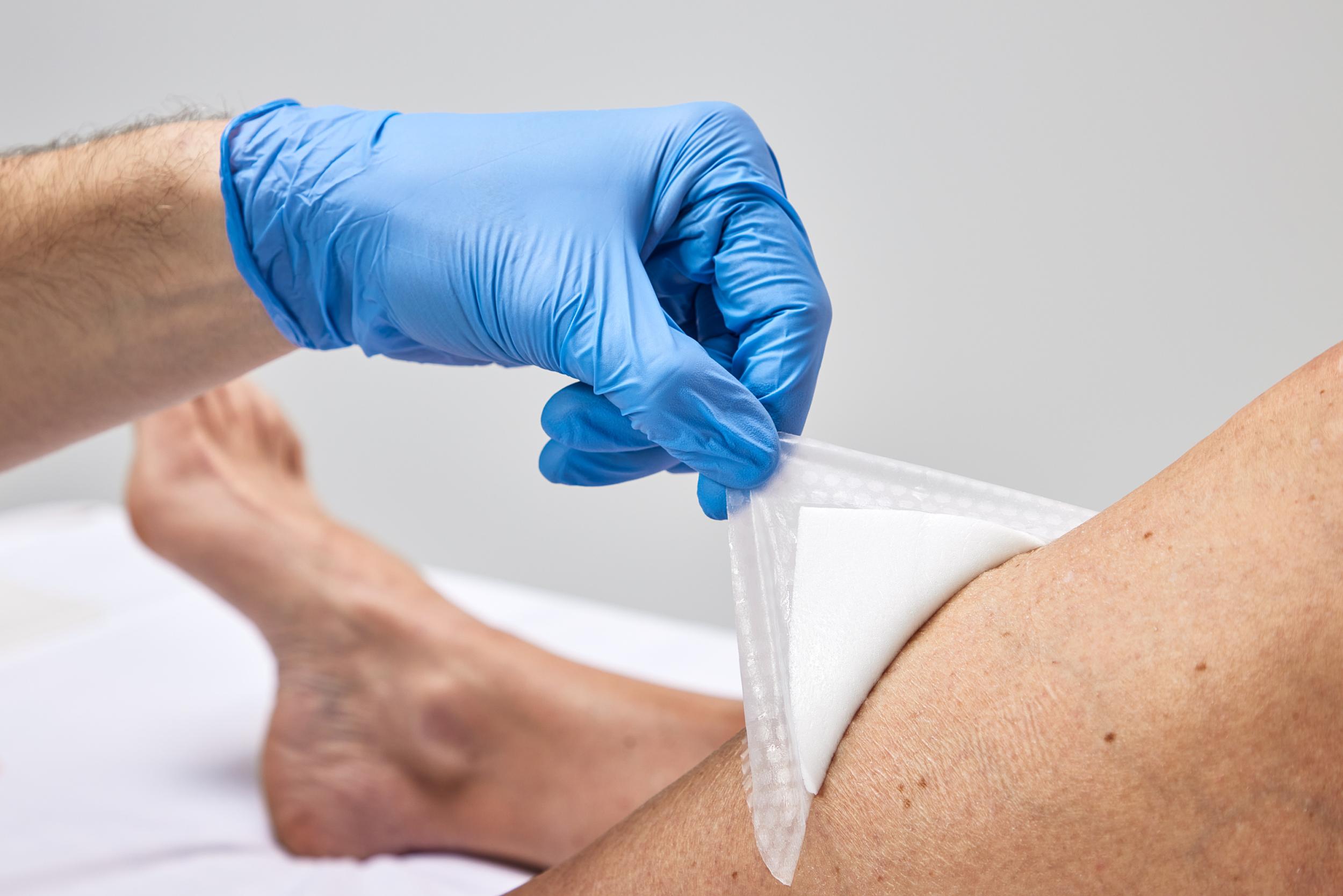
Freudenberg complements these primary-care products with Tacnera®, its patented silicone-coated foam-dressing technology. A dual-silicone construction combines secure edge adhesion with a gentler wound-contact layer, while a wave-pattern coating is designed to improve flexibility and exudate management. The wider industrial story is vertical integration: UMT’s capabilities run from fibre production and functionalisation through nonwovens, packaging, sterilisation and regulatory approval.

Source:

Freudenberg Performance Materials Holding GmbH

Photo Richard Harnisch, IÖW
11.09.2026

Lusatia builds a regional fibre economy

A new German research project is exploring how Lusatia can build a regional natural-fibre economy as the former lignite region undergoes structural transformation. Over three years, IÖW and Zittau/Görlitz University of Applied Sciences will examine value chains based on flax, industrial hemp, fibre nettle, miscanthus and residues such as straw and municipal leaves.

The focus is explicitly on industrial applications rather than conventional apparel textiles. Potential outlets include natural-fibre-reinforced plastics, specialty papers, lightweight panels, composites, automotive components and new packaging materials. A regionally resolved material-flow model will map feedstock availability, processing routes, land-use conflicts and possible bottlenecks.

The project treats raw-material availability and industrialisation as one system. Workshops with farmers, processors, manufacturers, municipalities and economic-development actors are intended to produce practical transformation pathways for a circular bioeconomy.


A new German research project is exploring how Lusatia can build a regional natural-fibre economy as the former lignite region undergoes structural transformation. Over three years, IÖW and Zittau/Görlitz University of Applied Sciences will examine value chains based on flax, industrial hemp, fibre nettle, miscanthus and residues such as straw and municipal leaves.

The focus is explicitly on industrial applications rather than conventional apparel textiles. Potential outlets include natural-fibre-reinforced plastics, specialty papers, lightweight panels, composites, automotive components and new packaging materials. A regionally resolved material-flow model will map feedstock availability, processing routes, land-use conflicts and possible bottlenecks.

The project treats raw-material availability and industrialisation as one system. Workshops with farmers, processors, manufacturers, municipalities and economic-development actors are intended to produce practical transformation pathways for a circular bioeconomy.


Source:

Institut für ökologische Wirtschaftsforschung (IÖW) / Hochschule Zittau/Görlitz

11.09.2026

Recycled polyester heads to New York

Indorama Ventures is supplying fabrics woven with deja™ recycled polyester yarn to Thai label KH Editions. Two looks and accessories from the ten-look Spring/Summer 2027 collection will be shown in New York on 15 September during New York Fashion Week.

The collaboration builds on Indorama Ventures’ RECO programme, launched in 2011 and expanded into RECO Collective in 2023. The initiative combines recycled materials and industry support with emerging designers, aiming to demonstrate that circular inputs can meet the quality and aesthetic requirements of internationally presented fashion.

For the wider value chain, the project is a useful example of material innovation being connected to design, brand building and market access rather than remaining a stand-alone recycling story. Commercial scaling will ultimately depend on consistent quality, available volumes and the ability of recycled yarns to work within established fabric and garment production.

Indorama Ventures is supplying fabrics woven with deja™ recycled polyester yarn to Thai label KH Editions. Two looks and accessories from the ten-look Spring/Summer 2027 collection will be shown in New York on 15 September during New York Fashion Week.

The collaboration builds on Indorama Ventures’ RECO programme, launched in 2011 and expanded into RECO Collective in 2023. The initiative combines recycled materials and industry support with emerging designers, aiming to demonstrate that circular inputs can meet the quality and aesthetic requirements of internationally presented fashion.

For the wider value chain, the project is a useful example of material innovation being connected to design, brand building and market access rather than remaining a stand-alone recycling story. Commercial scaling will ultimately depend on consistent quality, available volumes and the ability of recycled yarns to work within established fabric and garment production.

Source:

Indorama Ventures Public Company Limited


11.09.2026

Wool turns sunlight into clean water

Cornell University researchers have demonstrated that polydopamine-dyed wool can serve as a low-cost, renewable material for solar-driven water purification. The approach uses interfacial solar vapor generation, concentrating solar heat at the water surface while a textile structure transports water and converts it into vapor.

The strongest configuration used ultrablack wool positioned vertically and illuminated from both sides. It produced 2.43 kilograms of water per square metre of fabric per hour, while polydopamine-only wool achieved 2.21 kilograms. Both rates were nearly twice those reported for conventional horizontal two-dimensional evaporation systems. The material also operated continuously for ten hours without salt accumulation.

Performance depends on fibre choice, dye chemistry, surface structure and textile geometry acting together. Salt levels in the collected water were below the World Health Organization drinking-water threshold. Future work will test rainwater and wastewater and improve water-collection designs.


Cornell University researchers have demonstrated that polydopamine-dyed wool can serve as a low-cost, renewable material for solar-driven water purification. The approach uses interfacial solar vapor generation, concentrating solar heat at the water surface while a textile structure transports water and converts it into vapor.

The strongest configuration used ultrablack wool positioned vertically and illuminated from both sides. It produced 2.43 kilograms of water per square metre of fabric per hour, while polydopamine-only wool achieved 2.21 kilograms. Both rates were nearly twice those reported for conventional horizontal two-dimensional evaporation systems. The material also operated continuously for ten hours without salt accumulation.

Performance depends on fibre choice, dye chemistry, surface structure and textile geometry acting together. Salt levels in the collected water were below the World Health Organization drinking-water threshold. Future work will test rainwater and wastewater and improve water-collection designs.


Source:

Cornell University / Cornell Chronicle

A matrix for recycled-fiber quality Graphic: (c) Uster Technologies AG
10.09.2026

A matrix for recycled-fiber quality

Uster Technologies has introduced a structured matrix for assessing mechanically recycled fibers. The approach is intended to help spinners deal with the wider variability of recycled feedstocks and relate measured fiber properties more directly to processing decisions and intended end uses.

Mechanically recycled cotton typically shows greater variation than virgin material because fiber length is reduced and input streams differ in origin and processing history. A consistent assessment framework can therefore support bale management, blending decisions and the adjustment of spinning parameters. Uster positions the Recycled Fiber Matrix as a practical bridge between increasing recycled-content targets and reliable quality control.

This matters for circularity at industrial scale. More recycling capacity alone does not guarantee usable yarn feedstock; recycled fibers also need to enter established production systems with predictable performance. Testing and data interpretation are becoming part of the infrastructure required to move textile-to-textile recycling from availability to repeatable production.

Uster Technologies has introduced a structured matrix for assessing mechanically recycled fibers. The approach is intended to help spinners deal with the wider variability of recycled feedstocks and relate measured fiber properties more directly to processing decisions and intended end uses.

Mechanically recycled cotton typically shows greater variation than virgin material because fiber length is reduced and input streams differ in origin and processing history. A consistent assessment framework can therefore support bale management, blending decisions and the adjustment of spinning parameters. Uster positions the Recycled Fiber Matrix as a practical bridge between increasing recycled-content targets and reliable quality control.

This matters for circularity at industrial scale. More recycling capacity alone does not guarantee usable yarn feedstock; recycled fibers also need to enter established production systems with predictable performance. Testing and data interpretation are becoming part of the infrastructure required to move textile-to-textile recycling from availability to repeatable production.

PITAKA's Brand Event in Berlin: 'Signals in the Wind' Photo (c) PITAKA
PITAKA's Brand Event in Berlin: 'Signals in the Wind'
07.09.2026

PITAKA turns aramid fibre into a deliberately irregular woven surface

PITAKA has introduced a new weaving technique for aramid fibre at a brand event in Berlin. The company is best known for thin smartphone cases and accessories made with aramid. Its new “Trace Form” technique is intended to avoid a completely uniform programmed surface: selected fibres are allowed to drift from their prescribed path so that texture emerges from controlled irregularity.

The first application is the “Wind Over Wheat Trace Form Edition”, with a surface intended to evoke wind moving across a wheat field and offered in three finishes. PITAKA presents the method as an interaction between industrial precision, material response and human judgement. For textile and material developers, the notable point is that a high-performance fibre normally valued for strength and low weight is being used as the visible aesthetic element of the product itself.

PITAKA has introduced a new weaving technique for aramid fibre at a brand event in Berlin. The company is best known for thin smartphone cases and accessories made with aramid. Its new “Trace Form” technique is intended to avoid a completely uniform programmed surface: selected fibres are allowed to drift from their prescribed path so that texture emerges from controlled irregularity.

The first application is the “Wind Over Wheat Trace Form Edition”, with a surface intended to evoke wind moving across a wheat field and offered in three finishes. PITAKA presents the method as an interaction between industrial precision, material response and human judgement. For textile and material developers, the notable point is that a high-performance fibre normally valued for strength and low weight is being used as the visible aesthetic element of the product itself.

The release leaves important technical questions unanswered. It provides no fibre fineness, weave parameters, mechanical data or quantified performance difference versus earlier aramid constructions. It would therefore be misleading to describe the launch as a new performance class. What can be stated is that PITAKA is translating a deliberately variable woven structure into a commercial aramid product and broadening the interface between technical fibres, composite structures and lifestyle design.

The limited Trace Form edition is scheduled to launch on 17 September. For textile-industry coverage, the relevant angle is not the consumer-electronics accessory itself but the material strategy: technical fibres can acquire additional value through construction, surface appearance and tactile expression beyond their conventional performance role.

More information:
PITAKA aramid
Source:

PITAKA  

The LYCRA Company Reimagines the Trade Show Experience at Intertextile Photo via Lycra
31.08.2026

LYCRA: New fibre technologies for performance, stretch and renewable content

The LYCRA Company is presenting several fibre technologies in commercial apparel applications at Intertextile Shanghai. COOLMAX CloakFX for woven fabrics is designed to mask the appearance of sweat, improve wet and dry opacity and provide moisture management; the company says the fibre is made from 100% recycled PET and certified to the Global Recycled Standard. LYCRA FiT400 is being shown for knits and wovens, combining non-spandex mechanical stretch with cooling functionality. RENEWABLE LYCRA fibre contains 70% renewable content derived in part from field corn grown in the US Midwest. The technologies are presented in a 356-square-metre co-creation district with Asian textile partners, illustrating how ingredient-brand technologies are translated into workwear, denim, performance and everyday apparel.

The LYCRA Company is presenting several fibre technologies in commercial apparel applications at Intertextile Shanghai. COOLMAX CloakFX for woven fabrics is designed to mask the appearance of sweat, improve wet and dry opacity and provide moisture management; the company says the fibre is made from 100% recycled PET and certified to the Global Recycled Standard. LYCRA FiT400 is being shown for knits and wovens, combining non-spandex mechanical stretch with cooling functionality. RENEWABLE LYCRA fibre contains 70% renewable content derived in part from field corn grown in the US Midwest. The technologies are presented in a 356-square-metre co-creation district with Asian textile partners, illustrating how ingredient-brand technologies are translated into workwear, denim, performance and everyday apparel.

31.08.2026

Circ and Shenghong move textile-recycled polyester into commercial filament yarn production


US textile-to-textile recycler Circ has entered into a partnership with Shenghong Chemical Fiber New Material for the commercial production of polyester filament yarn using Circ’s recycled material. Shenghong will purchase Circ PET chip and manufacture recycled-content filament yarn at commercial scale. For Circ, the agreement expands access to one of China’s major fibre producers and creates an additional route to market for polyester recovered from textile waste. For brands and mills, the key point is that textile-to-textile feedstock is moving closer to established high-volume yarn manufacturing structures. The partnership also underlines that scaling chemical recycling depends not only on polymer recovery but on robust downstream relationships with fibre and yarn producers.


US textile-to-textile recycler Circ has entered into a partnership with Shenghong Chemical Fiber New Material for the commercial production of polyester filament yarn using Circ’s recycled material. Shenghong will purchase Circ PET chip and manufacture recycled-content filament yarn at commercial scale. For Circ, the agreement expands access to one of China’s major fibre producers and creates an additional route to market for polyester recovered from textile waste. For brands and mills, the key point is that textile-to-textile feedstock is moving closer to established high-volume yarn manufacturing structures. The partnership also underlines that scaling chemical recycling depends not only on polymer recovery but on robust downstream relationships with fibre and yarn producers.

31.08.2026

Better Cotton and Avalo use AI to accelerate climate-resilient cotton breeding

The Better Cotton Initiative (BCI) has partnered with agricultural technology company Avalo to accelerate the breeding of more climate-resilient cotton. Avalo uses an AI-enabled platform to identify genetic traits relevant to locally adapted plants that require less water and fertiliser. According to BCI, the approach can shorten the time needed to develop new varieties, an increasingly important factor as heat, water scarcity and shifting rainfall patterns affect cotton-growing regions. Avalo has already worked with BCI to enrol a significant number of new producers for the 2026 season and has tested a digital platform for collecting and reporting programme data. The partnership therefore connects plant breeding, digital data management and the requirements of an international cotton standard.

The Better Cotton Initiative (BCI) has partnered with agricultural technology company Avalo to accelerate the breeding of more climate-resilient cotton. Avalo uses an AI-enabled platform to identify genetic traits relevant to locally adapted plants that require less water and fertiliser. According to BCI, the approach can shorten the time needed to develop new varieties, an increasingly important factor as heat, water scarcity and shifting rainfall patterns affect cotton-growing regions. Avalo has already worked with BCI to enrol a significant number of new producers for the 2026 season and has tested a digital platform for collecting and reporting programme data. The partnership therefore connects plant breeding, digital data management and the requirements of an international cotton standard.

Source:

Better Cotton Initiative