From the Sector

Reset
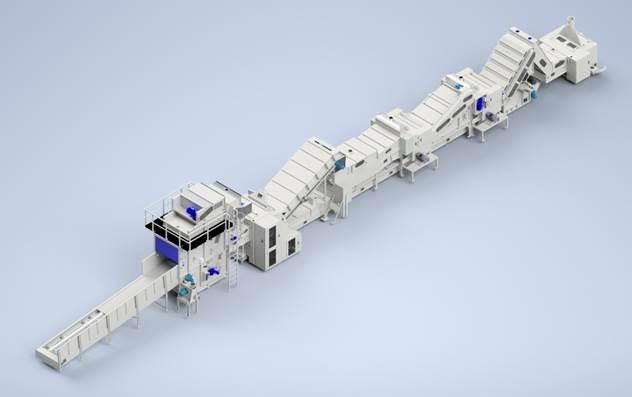
Exemplary Hemp Straw Processing Plant (c) Temafa Maschinenfabrik GmbH
Exemplary Hemp Straw Processing Plant
08.05.2026

Temafa Maschinenfabrik GmbH supplies a complete decortication plant for processing hemp straw

Temafa Maschinenfabrik GmbH, a leading supplier of machinery and plants for fibre processing, has successfully secured an order to supply a complete plant for processing hemp straw to Hanffaser Geiseltal eG, based in Mücheln.

With this project, Hanffaser Geiseltal eG is implementing its first industrial plant for processing hemp straw into hemp fibres. The plant will be delivered, installed and commissioned in the course of the year.

The plant, designed and manufactured by Temafa, is specifically engineered for the efficient processing of hemp straw. The aim is to produce high-quality fibre products, which are primarily used in the building materials industry, for example in sustainable insulation materials and other ecological applications.

With this investment, Hanffaser Geiseltal eG is strengthening its position in the field of sustainable raw materials and sending a clear signal regarding the increasing industrialisation of hemp processing in Germany.

Temafa Maschinenfabrik GmbH, a leading supplier of machinery and plants for fibre processing, has successfully secured an order to supply a complete plant for processing hemp straw to Hanffaser Geiseltal eG, based in Mücheln.

With this project, Hanffaser Geiseltal eG is implementing its first industrial plant for processing hemp straw into hemp fibres. The plant will be delivered, installed and commissioned in the course of the year.

The plant, designed and manufactured by Temafa, is specifically engineered for the efficient processing of hemp straw. The aim is to produce high-quality fibre products, which are primarily used in the building materials industry, for example in sustainable insulation materials and other ecological applications.

With this investment, Hanffaser Geiseltal eG is strengthening its position in the field of sustainable raw materials and sending a clear signal regarding the increasing industrialisation of hemp processing in Germany.

“We are delighted to be supporting Hanffaser Geiseltal eG as it enters the field of industrial hemp fibre processing,” says Dr Jörg Morgner, Managing Director at Temafa Maschinenfabrik GmbH. “This project underscores the growing importance of natural fibres as sustainable raw materials and our expertise in developing bespoke plant solutions.”

Source:

Temafa Maschinenfabrik GmbH

08.05.2026

ACIMIT: Textile Machinery Orders Index, Q1 2026

In the first quarter of 2026, order intake for Italian textile machinery manufacturers recorded a decrease of 5% compared to the same period in 2025, reflecting a still challenging start to the year. The decline affected foreign markets (-7%), while the domestic market showed growth (+21%).

Compared with the previous quarter (October–December 2025), total order intake increased by 18%. The orders index for the January–March 2026 period stood at 37.3 points (base year 2021=100). In Italy, the index reached 35.3 points, while in foreign markets it stood at 37.6 points.

In the first quarter of 2026, the order backlog guaranteed a workload of approximately 4.5 months.

From a sector perspective, weaving and other manufacturing segments showed relatively more dynamic signals.

Forecasts for the second quarter of 2026 (compared with the previous quarter) indicate pessimism for the domestic market and stability for the foreign one.

In the first quarter of 2026, order intake for Italian textile machinery manufacturers recorded a decrease of 5% compared to the same period in 2025, reflecting a still challenging start to the year. The decline affected foreign markets (-7%), while the domestic market showed growth (+21%).

Compared with the previous quarter (October–December 2025), total order intake increased by 18%. The orders index for the January–March 2026 period stood at 37.3 points (base year 2021=100). In Italy, the index reached 35.3 points, while in foreign markets it stood at 37.6 points.

In the first quarter of 2026, the order backlog guaranteed a workload of approximately 4.5 months.

From a sector perspective, weaving and other manufacturing segments showed relatively more dynamic signals.

Forecasts for the second quarter of 2026 (compared with the previous quarter) indicate pessimism for the domestic market and stability for the foreign one.

Marco Salvadè, President of ACIMIT, commented:
“It is encouraging to see the first positive sign in the domestic market, but forecasts still reveal a degree of pessimism. The difficult international context and the slow actions of government institutional representatives do not allow companies to plan investments. As an Association, we are working in close synergy with the Italian Trade Agency (ICE) to strengthen promotional activities across several strategic markets. We also look with confidence to the upcoming ITMA 2027 in Hannover, which will represent an important opportunity to relaunch the sector, stimulate new investments, and strengthen the international presence of Italian manufacturers.”

ACIMIT (the Association of Italian Textile Machinery Manufacturers) was established in 1945 with the primary aim of promoting the Italian textile machinery industry by supporting its activities both in Italy and abroad. ACIMIT represents an industrial sector comprising around 300 companies (employing approximately 12,500 people) and producing machinery with a total value of approximately €1.9 billion, about 86% of which is exported. Creativity, sustainable technology, reliability, and quality are the key features that have made Italian textile machinery a world leader.

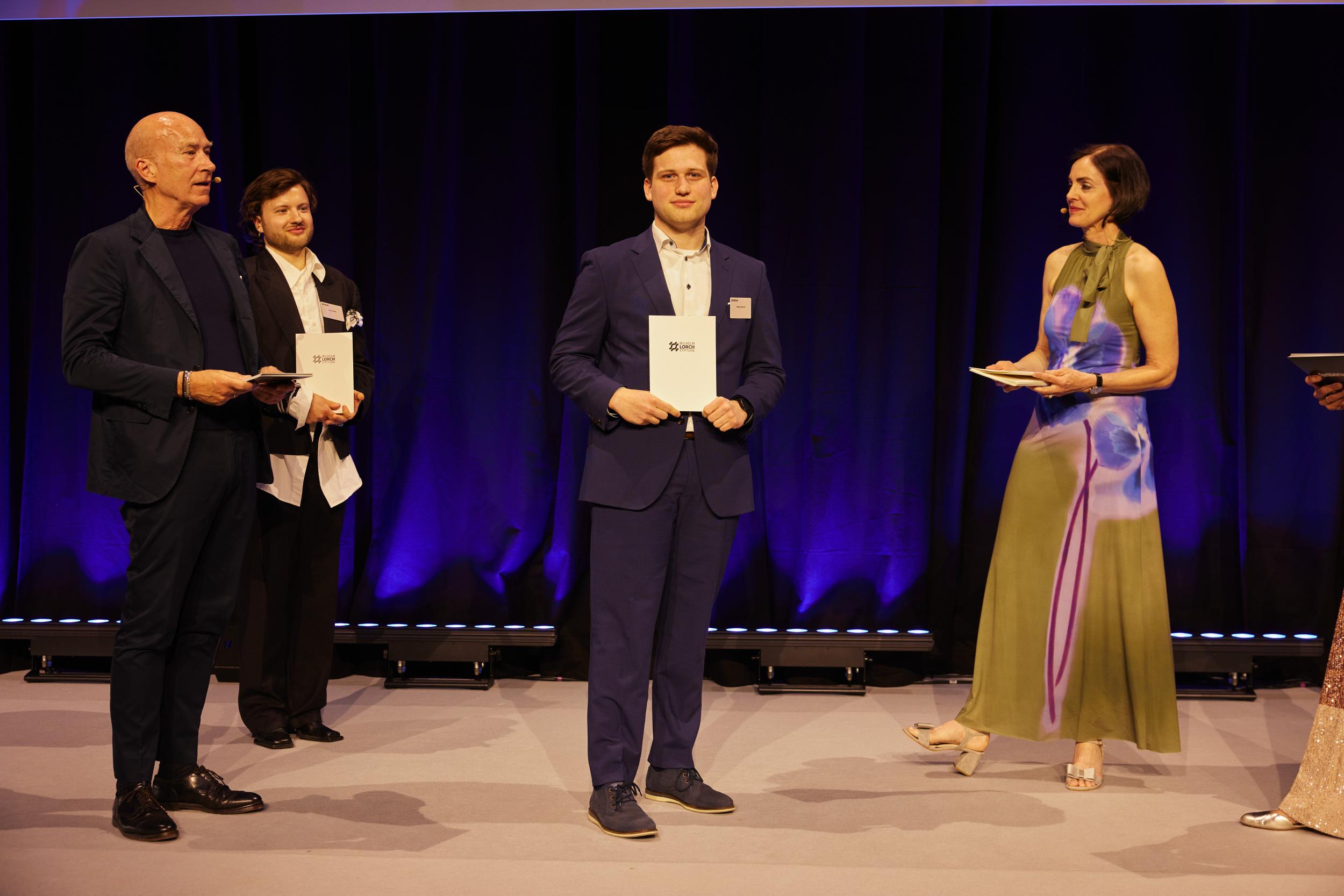
Award winner Tobias Dickmeiß with his certificate © Katharina Dubno
Award winner Tobias Dickmeiß with his certificate
08.05.2026

Elastic yarns to become more recyclable and environmentally friendly in future

On 29 April 2026, ITA student Tobias Dickmeiß was awarded a sponsorship prize by the Wilhelm Lorch-Stiftung for his innovative approach, to replacing conventional elastane with elastic yarns made from thermoplastic copolyester elastomers (TPC). Thanks to their thermoplastic nature and compatibility with typical polyesters used in the textile industry, elastic TPC yarns offer improved recyclability. Furthermore, the use of the melt-spinning process in yarn production eliminates the need for solvents that are harmful to the environment and human health.

Elastic textiles have become an integral part of our everyday lives, as they ensure comfort, a good fit and freedom of movement. At the same time, the increasing use of traditional elastic yarns, known as elastanes, significantly complicates textile recycling. Even small amounts of elastane can impair thermomechanical recycling processes and prevent a closed recycling loop.

On 29 April 2026, ITA student Tobias Dickmeiß was awarded a sponsorship prize by the Wilhelm Lorch-Stiftung for his innovative approach, to replacing conventional elastane with elastic yarns made from thermoplastic copolyester elastomers (TPC). Thanks to their thermoplastic nature and compatibility with typical polyesters used in the textile industry, elastic TPC yarns offer improved recyclability. Furthermore, the use of the melt-spinning process in yarn production eliminates the need for solvents that are harmful to the environment and human health.

Elastic textiles have become an integral part of our everyday lives, as they ensure comfort, a good fit and freedom of movement. At the same time, the increasing use of traditional elastic yarns, known as elastanes, significantly complicates textile recycling. Even small amounts of elastane can impair thermomechanical recycling processes and prevent a closed recycling loop.

As part of his bachelor’s thesis, Tobias Dickmeiß carried out extensive empirical process studies on a pilot-scale melt-spinning line. By systematically analysing the influence of various process parameters on yarn properties, he succeeded in specifically improving the properties of the resulting TPC yarns. The findings of his bachelor’s thesis thus provide a promising basis for the further development of recyclable elastic yarns and textiles.

Tobias Dickmeiß was granted a sponsorship prize of EUR 5,000 for specific further training in recognition of his outstanding bachelor’s thesis, ‘Development of a melt spinning process for elastic yarns made from thermoplastic copolyester elastomers at pilot scale’.

During his bachelor’s thesis, hr was supervised by ITA PhD student Ricarda Wissel.

Source:
Institut für Textiltechnik der RWTH Aachen University