From the Sector

Reset
24.05.2026

Scoop: Landmark Collaboration with the Italian Trade Association (ICE)

Scoop announced a new collaboration with the Italian Trade Agency (ICE), bringing an exclusive collective of 32 contemporary Italian designers to the upcoming July edition of the show.

Carefully curated exclusively for Scoop, the showcase will present a distinctive edit of Made in Italy fashion, accessories and lifestyle collections spanning ready-to-wear, knitwear, jewellery, handbags, footwear, umbrellas and homeware. None of the participating designers have previously exhibited at Scoop or within the UK market, making the showcase a truly exclusive opportunity for buyers to discover a new wave of contemporary Italian talent. 

The collaboration marks a significant moment for Scoop and further reinforces its position as the UK’s leading premium womenswear and lifestyle trade show, recognised internationally for its highly curated designer mix and influential buyer audience.

Scoop announced a new collaboration with the Italian Trade Agency (ICE), bringing an exclusive collective of 32 contemporary Italian designers to the upcoming July edition of the show.

Carefully curated exclusively for Scoop, the showcase will present a distinctive edit of Made in Italy fashion, accessories and lifestyle collections spanning ready-to-wear, knitwear, jewellery, handbags, footwear, umbrellas and homeware. None of the participating designers have previously exhibited at Scoop or within the UK market, making the showcase a truly exclusive opportunity for buyers to discover a new wave of contemporary Italian talent. 

The collaboration marks a significant moment for Scoop and further reinforces its position as the UK’s leading premium womenswear and lifestyle trade show, recognised internationally for its highly curated designer mix and influential buyer audience.

Selected for their strong design identities, craftsmanship and heritage, the participating designers represent the breadth and diversity of contemporary Italian creativity. The curated edit includes names such as contemporary womenswear label Feel O, luxury accessories collection Hibourama, womenswear designer Nina e Luca, jewellery label Ornella Bijoux, heritage leather goods house Ripani, iconic umbrella maker Pasotti Ombrelli and artisanal accessories designer Polina Firenze, alongside a wider collective of emerging and established Made in Italy collections. Many are family-owned businesses with generations of artisanal expertise, while several continue to manufacture their collections in-house within their own Italian factories, preserving the authenticity and quality synonymous with Made in Italy production.

Karen Radley, Founder and Creative Director of Scoop, comments: “We are absolutely delighted to welcome this exceptional collective of Italian designers to Scoop for the July edition. This collaboration will introduce a completely new dimension to the show, bringing together brands with a distinct point of view, exceptional craftsmanship and a strong sense of heritage.

“What makes this showcase particularly exciting is the authenticity behind the collections. Many of the designers are family-owned businesses with generations of manufacturing expertise and a deep commitment to Made in Italy production. Buyers visiting Scoop this season will discover collections that feel fresh, directional and entirely new to both Scoop and the UK market.”

The collaboration also reflects ICE’s continued commitment to supporting Italian excellence internationally and strengthening relationships with key global fashion markets. Giovanni Saachi  Direttore Ufficio ICE Agenzia Londra adds: “ICE is proud to partner with Scoop to present this carefully curated selection of contemporary Italian designers to the UK market. We are delighted to support both emerging and established companies as they introduce their collections to Scoop’s highly influential audience of buyers and industry professionals. The UK remains an important market for Italian fashion and lifestyle companies, and Scoop provides an ideal platform to foster new commercial opportunities and long-term international growth.”

The partnership with ICE reflects growing confidence in the UK market and recognises Scoop as the ideal platform through which to introduce a new wave of Italian design talent to British and international buyers.

Alongside the designer showcase, Scoop and ICE will host a private invitation-only event on the Tuesday morning of the show, celebrating Italian creativity, craftsmanship and contemporary design. The July edition will also feature a dedicated immersive installation created in collaboration with renowned Italian knitwear label Avant Toi, incorporating curated interiors, textiles and furnishings sourced from Milan to create a distinctive Italian design environment within the show.

Scoop takes place at Olympia National Kensington, London, from 19-21 July 2026. Scoop International is a celebration of exceptional design in the heart of London.

Scoop is recognised by designers, fashion buyers and industry experts as one of the UK’s leading fashion and lifestyle trade shows. Scoop's unique buying environment - carefully curated to reflect retail trends - sets it apart in the industry.

Launched in February 2011 by industry veteran Karen Radley, Scoop has since developed from exclusively womenswear-only to encompassing luxury homewares, beauty, and lifestyle collections.

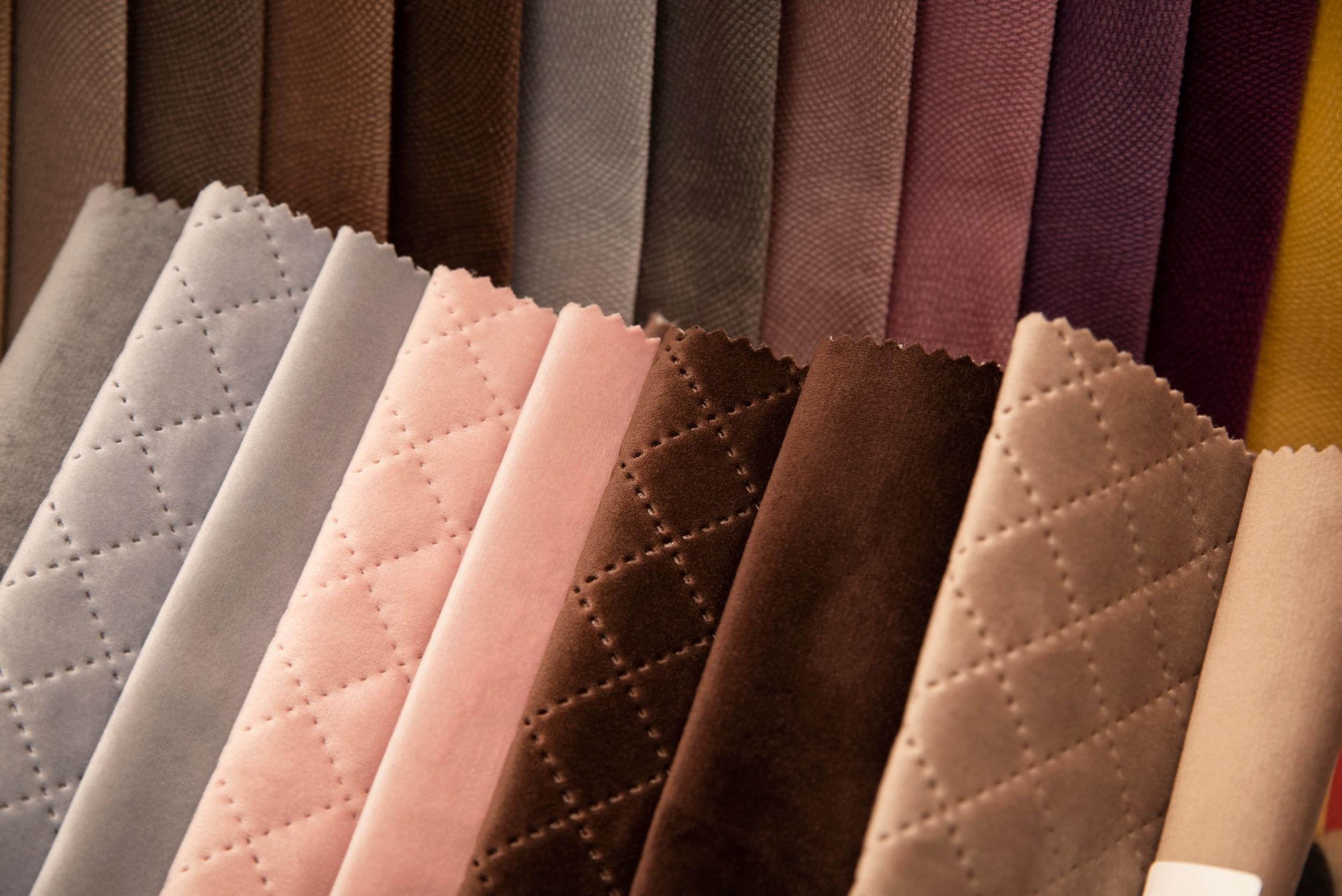
Upholstered furniture textiles Photo: Temple Bar Advisory for Reconomy
Upholstered furniture textiles
14.05.2026

Circular solutions for B2B textiles failing to keep pace with rising waste volumes

  • B2B textiles are textile-based products used in commercial or industrial settings, rather than by consumers  
  • While B2B textiles are considered better positioned for circularity than the B2C textile sector, solutions remain early-stage and have not yet scaled in line with the volume of waste generated 
  • New research examines key barriers to circularity across five priority sub-sectors and the opportunities to unlock greater circularity  

Circular solutions for B2B textiles have yet to scale in line with the volume of waste generated, according to new research by Reconomy, the international circular economy specialist. 

  • B2B textiles are textile-based products used in commercial or industrial settings, rather than by consumers  
  • While B2B textiles are considered better positioned for circularity than the B2C textile sector, solutions remain early-stage and have not yet scaled in line with the volume of waste generated 
  • New research examines key barriers to circularity across five priority sub-sectors and the opportunities to unlock greater circularity  

Circular solutions for B2B textiles have yet to scale in line with the volume of waste generated, according to new research by Reconomy, the international circular economy specialist. 

B2B textiles include textile-based products used for commercial or industrial purposes such as soft furnishings, automotive interiors, agricultural textiles and construction materials rather than clothing worn by consumers. While these sectors are widely considered to be better positioned for circularity than the B2C sector due to established logistics and the fact that B2B textiles are typically more homogenous in material composition, solutions remain underdeveloped and have not yet scaled, leaving large volumes of material flowing into downcycling or disposal.   

The research examines waste flows and market dynamics across five priority B2B textile categories, including: soft furnishings; upholstery and furniture textiles; automotive textiles; agricultural textiles; and geotextiles and construction textiles. 

Across all five, the findings point to a common challenge, namely that while circularity is technically possible, it is impeded in practice by weak sorting, limited aggregation, poor data visibility and underdeveloped end-markets – meaning materials that could be reused or recycled are instead lost from the system. 

Within UK B2B soft furnishings, for example, the research found that products are dominated by bed, bath and table linen used by the hospitality and healthcare sectors which generate large waste flows. Despite the strong underlying recycling potential of these materials, reuse is structurally constrained by hygiene requirements and low unit value, resulting in most volumes sent to energy-from-waste facilities or landfill.  

The research identifies that the primary opportunity for the industry lies upstream, in improving sorting and aggregation at industrial laundries, which act as the key control point for circular and end-of-life material routing. 

The report comes amid rising waste volumes, with more than 6,000 tonnes of hospitality textiles lost each year in the UK and four million linen items lost annually by the NHS, including bed sheets, pillowcases and surgical gowns. 
 
Commenting, Aimee Campanella, Development Director for Textiles EPR at Reconomy, said: “While much discussion around textiles circularity has centred on apparel, non-apparel textiles represent a significant adjacent area that has been largely overlooked. Given our expertise in textiles for clothing and footwear, we commissioned this new research to provide the industry with greater clarity on the structural barriers holding circularity back, and what needs to change to accelerate circular models that reduce waste, cut carbon emissions and lower costs for businesses.”

Source:

Temple Bar Advisory for Reconomy

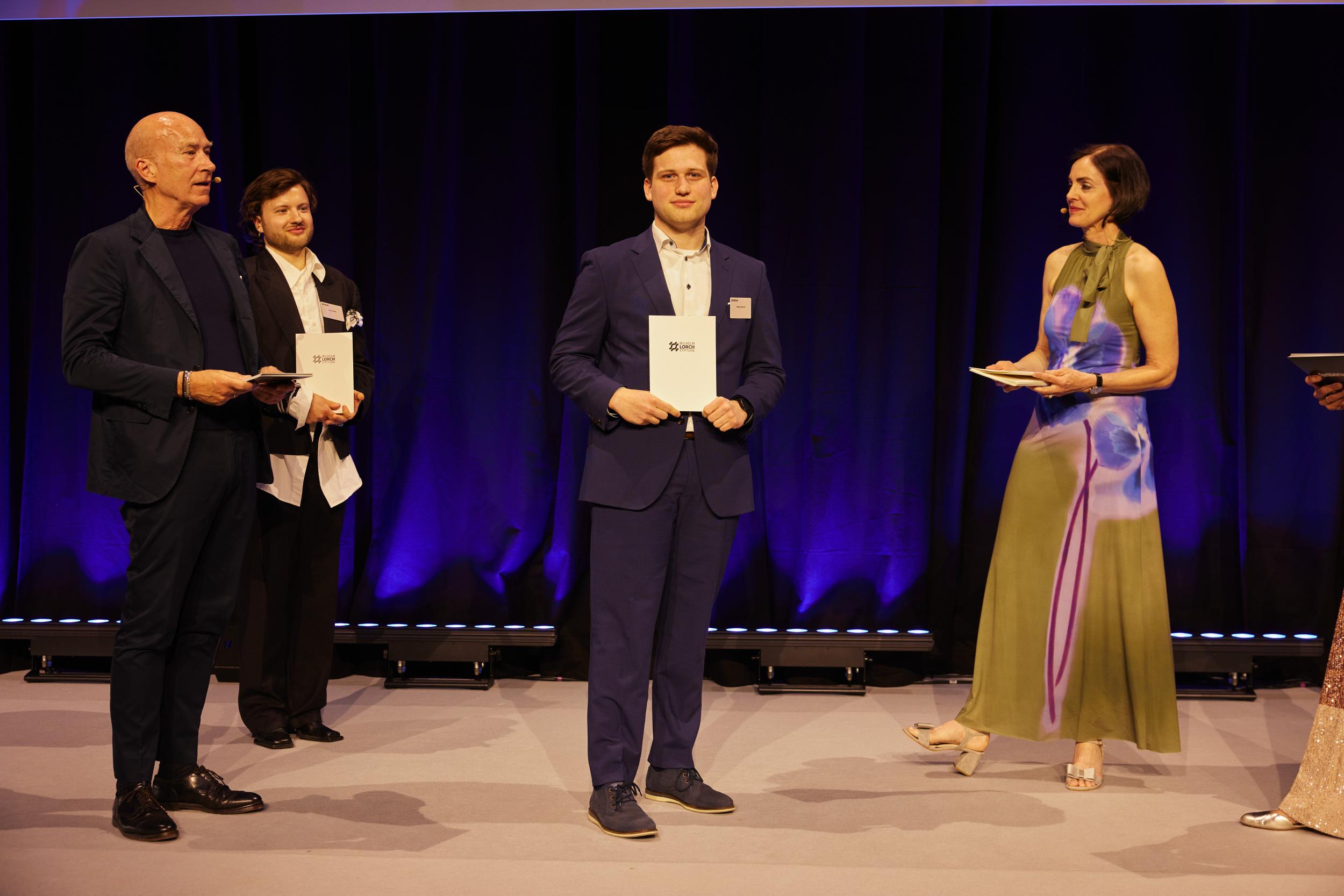
Award winner Tobias Dickmeiß with his certificate © Katharina Dubno
Award winner Tobias Dickmeiß with his certificate
08.05.2026

Elastic yarns to become more recyclable and environmentally friendly in future

On 29 April 2026, ITA student Tobias Dickmeiß was awarded a sponsorship prize by the Wilhelm Lorch-Stiftung for his innovative approach, to replacing conventional elastane with elastic yarns made from thermoplastic copolyester elastomers (TPC). Thanks to their thermoplastic nature and compatibility with typical polyesters used in the textile industry, elastic TPC yarns offer improved recyclability. Furthermore, the use of the melt-spinning process in yarn production eliminates the need for solvents that are harmful to the environment and human health.

Elastic textiles have become an integral part of our everyday lives, as they ensure comfort, a good fit and freedom of movement. At the same time, the increasing use of traditional elastic yarns, known as elastanes, significantly complicates textile recycling. Even small amounts of elastane can impair thermomechanical recycling processes and prevent a closed recycling loop.

On 29 April 2026, ITA student Tobias Dickmeiß was awarded a sponsorship prize by the Wilhelm Lorch-Stiftung for his innovative approach, to replacing conventional elastane with elastic yarns made from thermoplastic copolyester elastomers (TPC). Thanks to their thermoplastic nature and compatibility with typical polyesters used in the textile industry, elastic TPC yarns offer improved recyclability. Furthermore, the use of the melt-spinning process in yarn production eliminates the need for solvents that are harmful to the environment and human health.

Elastic textiles have become an integral part of our everyday lives, as they ensure comfort, a good fit and freedom of movement. At the same time, the increasing use of traditional elastic yarns, known as elastanes, significantly complicates textile recycling. Even small amounts of elastane can impair thermomechanical recycling processes and prevent a closed recycling loop.

As part of his bachelor’s thesis, Tobias Dickmeiß carried out extensive empirical process studies on a pilot-scale melt-spinning line. By systematically analysing the influence of various process parameters on yarn properties, he succeeded in specifically improving the properties of the resulting TPC yarns. The findings of his bachelor’s thesis thus provide a promising basis for the further development of recyclable elastic yarns and textiles.

Tobias Dickmeiß was granted a sponsorship prize of EUR 5,000 for specific further training in recognition of his outstanding bachelor’s thesis, ‘Development of a melt spinning process for elastic yarns made from thermoplastic copolyester elastomers at pilot scale’.

During his bachelor’s thesis, hr was supervised by ITA PhD student Ricarda Wissel.

Source:
Institut für Textiltechnik der RWTH Aachen University