From the Sector

Reset
23 results
TS330 1800 Photo Mimaki Europe
TS330 1800
13.01.2026

Vibrant and Seamless Dye Sublimation Printing: Mimaki Upgrades TS330 Series

Mimaki Europe, a leading manufacturer of industrial inkjet printers and cutting plotters, announces enhancements to its dye sublimation TS330 Series, including the introduction of the TS330-1800. The entire TS330 Series is now compatible with Mimaki’s Sb411 inks in Orange, Violet, Fluorescent Pink and Fluorescent Yellow, enhancing colour flexibility and control, and offering improved vibrancy and colour accuracy. Complementing these upgrades, the new TS330-1800 is equipped with a larger print width to cater for a broader array of textile applications within fashion, sportswear, textile signage, and home décor.

The extended colour range – now totalling at 11 different inks – provides improved vibrancy and colour saturation, ideal for high-impact branding on sportswear, fabric signage and promotional merchandise. Opening up extensive ink configurations, applications can be produced with improved colour accuracy, fulfilling production needs for sectors where high colour fidelity is required.

Mimaki Europe, a leading manufacturer of industrial inkjet printers and cutting plotters, announces enhancements to its dye sublimation TS330 Series, including the introduction of the TS330-1800. The entire TS330 Series is now compatible with Mimaki’s Sb411 inks in Orange, Violet, Fluorescent Pink and Fluorescent Yellow, enhancing colour flexibility and control, and offering improved vibrancy and colour accuracy. Complementing these upgrades, the new TS330-1800 is equipped with a larger print width to cater for a broader array of textile applications within fashion, sportswear, textile signage, and home décor.

The extended colour range – now totalling at 11 different inks – provides improved vibrancy and colour saturation, ideal for high-impact branding on sportswear, fabric signage and promotional merchandise. Opening up extensive ink configurations, applications can be produced with improved colour accuracy, fulfilling production needs for sectors where high colour fidelity is required.

With a maximum printing area of 1940mm, the new TS330-1800 enables users to increase their output and diversify with larger applications, such as curtains and tapestries, while bypassing time spent sewing and pattern matching. With this extended width, more panels can be placed side-by-side, reducing rows, adjustment and waste.

Arjen Evertse, Director Sales at Mimaki Europe, remarks, “Achieving eye-catching prints is becoming increasingly important when printing textiles, particularly when it comes to branded material like signage or sportswear. To cater to this market need, vibrant inks like fluorescents, give users the ability to produce more saturated, as well as more accurate, colours in their applications.

“The TS330 Series delivers reliable, high image quality, colour density and high print speeds, and so we wanted to offer print shops a larger machine to further amplify their business growth. Thanks to its larger print width, the new TS330-1800 can now accommodate larger home décor applications, a market where digitally printed textiles are in high demand, and higher output with improved layout efficiency for other applications, in addition to all the existing benefits of a TS330 printer.”

Utilising Mimaki’s OEKO-TEX® ECO-PASSPORT certified Sb411 inks, the prints achieved by the TS330 Series are both vivid and environmentally responsible. This certification allows print providers to fulfil sustainability requirements demanded by global textile brands and eco-conscious consumers. The TS330-1800 will be delivered with the standard TxLink5 Lite RIP software for improved workflow management.

The TS330-1800 will be available across EMEA in Spring 2026.

Source:

Mimaki Europe

13.01.2026

Kornit Konnections 2026: Call for Speakers and Partners

Kornit Konnections is officially accepting speaker proposals and partner interest for what is set to be one of the most influential digital apparel industry gathering. 
 
Konnections 2026 is an immersive, invitation-driven community event bringing together brands, retailers, manufacturers, printers, technology leaders, analysts, and investors to shape the next chapter of the apparel economy. Building on the momentum of Evolve – the largest virtual apparel conference to date – Konnections 2026 will set new benchmarks for in-person engagement, insight, and industry alignment.
 
A Vibrant Community – Shaping What’s Next

Kornit Konnections is officially accepting speaker proposals and partner interest for what is set to be one of the most influential digital apparel industry gathering. 
 
Konnections 2026 is an immersive, invitation-driven community event bringing together brands, retailers, manufacturers, printers, technology leaders, analysts, and investors to shape the next chapter of the apparel economy. Building on the momentum of Evolve – the largest virtual apparel conference to date – Konnections 2026 will set new benchmarks for in-person engagement, insight, and industry alignment.
 
A Vibrant Community – Shaping What’s Next
According to industry reports, the apparel industry is at a critical inflection point. Legacy, forecast-led models are no longer able to keep pace with the volatility, culture shifts, regulatory pressures, and inventory risk. Konnections 2026 is where the industry comes together to align on what replaces them. Not a trade show. Not a vendor pitch – Konnections is a working community rapidly defining the future of apparel. Konnections 2026 serves as the immersion and launch platform for the new Apparel Economy – a forward-looking body of thought leadership, operational insight, and strategic frameworks designed to support long-term industry growth.

Call Speakers
Konnections is currently seeking respected industry voices and practitioners with deep expertise across the apparel ecosystem, including:

  • Apparel and Retail Leadership
  • Supply Chain and Manufacturing Strategy
  • Regulatory, Public Policy and Sustainability
  • Inventory, Demand Planning, and Margin Protection
  • AI, Robotics, Automation and Advanced Manufacturing
  • Print-on-Demand and Promotional Products
  • Business Strategy, Consulting, and Industry Research

Speakers should bring real-world insight, emerging perspectives, and a willingness to engage in meaningful dialogue with peers who are actively shaping the industry. 
 
Call for Partners
Konnections 2026 will feature an exceptional Solutions Showcase, developed in collaboration with more than 30 best-in-class partners delivering new products, innovations, and immersive experiences never seen in the apparel industry. While the Showcase is more than 50% full and participation is highly selective, Konnections is currently seeking submissions. Only partners capable of delivering state-of-the-art solutions, forward-thinking applications, and meaningful customer experiences will be chosen.

Source:

Kornit Digital Ltd.

12.01.2026

Textile Machinery: The Upcoming Colombiatex 2026 Speaks Italian

Numerous Italian textile machinery companies will be attending the upcoming Colombiatex, the premier trade fair for the Colombian textile supply chain, held in Medellin from January 27 to 29, 2026. This year’s edition further confirms the strong bond between local textile manufacturers and Italian technology providers.

Despite a contraction in demand from the Colombian textile sector during 2024, the South American country remains one of the region’s key markets for textile machinery manufacturers. The most recent data indicates a sharp trend reversal: in the first half of 2025, Italian sales in Colombia reached 6 million euros, marking a +48% growth compared to the same period of the previous year. Should this growth rate remain steady, the value of Italian exports could approach the record levels seen in 2022 (18 million euros).

Numerous Italian textile machinery companies will be attending the upcoming Colombiatex, the premier trade fair for the Colombian textile supply chain, held in Medellin from January 27 to 29, 2026. This year’s edition further confirms the strong bond between local textile manufacturers and Italian technology providers.

Despite a contraction in demand from the Colombian textile sector during 2024, the South American country remains one of the region’s key markets for textile machinery manufacturers. The most recent data indicates a sharp trend reversal: in the first half of 2025, Italian sales in Colombia reached 6 million euros, marking a +48% growth compared to the same period of the previous year. Should this growth rate remain steady, the value of Italian exports could approach the record levels seen in 2022 (18 million euros).

“The Colombian textile and clothing industry has experienced significant growth in recent years, supported by a technological upgrading in which Italian machinery has often played a leading role,” comments Marco Salvadè, President of ACIMIT. “For many of our companies, Colombiatex remains an essential event on the international trade fair calendar to strengthen the partnership with Colombian textile firms.”

Following many past editions, ICE – Italian Trade Agency, in collaboration with ACIMIT (the Association of Italian Textile Machinery Manufacturers), will once again organize a national Italian Pavilion in the Pabellon Amarillo for 2026. A total of 22 Italian companies will be present within the pavilion: Ugolini Srl, Lonati Spa, Plm Impianti Srl, 3G Dosing Automation Srl, Santoni Spa, Laip Srl, Salvadè Srl, Cubotex Srl, BTSR International Spa, Reggiani Macchine Spa, Monti-Mac Srl, Ratti Luino Srl, Tonello Srl, Itema Spa, Noseda Srl, Kairos Engineering Srl, MCS Officina Meccanica Spa, LGL Electronics Spa, Waternext Spa, Lafer Spa, Fadis Spa, FICIT Srl. The strength of Italian participation is reaffirmed by all the ACIMIT member companies that will exhibit in individual stands or through their local agents, including: Brazzoli Srl, Color Service Srl, Martex Srl, Monti Antonio Spa, Morgan Tecnica Spa.

More information:
Colombiatex ACIMIT Italy
Source:

Association of Italian Textile Machinery Manufacturer

Stefan Moll Photo: Mahlo GmbH & Co. KG
Stefan Moll
08.01.2026

Stefan Moll new CEO at Mahlo GmbH + Co. KG

Starting January 1, 2026, Stefan Moll will take over the management of Mahlo GmbH + Co. KG, a global leading provider of measurement and control technology for web-shaped materials. The current CEO, Rainer Mestermann, will leave the company after 14 years as part of a planned succession arrangement.

“Stefan Moll is an excellent choice as the new CEO for our traditional company,” says Mahlo owner Ralph Greenwood-Mahlo. “We look forward to his expertise, fresh ideas, and perspectives.”

Starting January 1, 2026, Stefan Moll will take over the management of Mahlo GmbH + Co. KG, a global leading provider of measurement and control technology for web-shaped materials. The current CEO, Rainer Mestermann, will leave the company after 14 years as part of a planned succession arrangement.

“Stefan Moll is an excellent choice as the new CEO for our traditional company,” says Mahlo owner Ralph Greenwood-Mahlo. “We look forward to his expertise, fresh ideas, and perspectives.”

Moll brings extensive experience in managing global machinery and plant engineering companies. In addition to international corporations, the new CEO is also familiar with the structures and characteristics of larger medium-sized family businesses. “Family businesses think long-term, act sustainably, and place great value on close, trusting cooperation,” explains the new CEO regarding his decision to join Mahlo. Most recently, he served as Technical Managing Director at the Kiefel Group, a system supplier for leading plastic, thermoforming, and welding technologies based in Freilassing, where he was responsible for technical innovations, the digital strategy, and one of the globally operating divisions.

Focus on Innovation and Strategic Development
The graduate engineer describes himself as an innovation enthusiast and driver—qualities that are particularly valuable during the current transformation phase. “We are currently in a decisive phase of strategic alignment,” says Moll. He defines his goals as “making Mahlo a profitable and future-proof company and inspiring employees, customers, and owners with the right strategy.” Stefan Moll succeeds Rainer Mestermann, who led the machinery manufacturer for nearly 15 years.

Source:

Mahlo GmbH & Co. KG

The eFK EvoSmart’s new EvoHeater technology with patented heater design guarantees the highest yarn quality with up to 45% energy savings, which has a direct impact on operating costs. Photo: Oerlikon Barmag
The eFK EvoSmart’s new EvoHeater technology with patented heater design guarantees the highest yarn quality with up to 45% energy savings, which has a direct impact on operating costs.
08.01.2026

Barmag's new texturing machine impresses yarn manufacturers

Since its premiere at ITMA Asia + CITME 2025, the eFK EvoSmart texturing machine has achieved impressive market success. The innovative technology is winning over yarn manufacturers worldwide who are committed to energy-efficient and economical production processes. A total of 84 machines has already been sold – including in China, Turkey, and Indonesia.
 
eFK EvoSmart: New standards in efficiency and productivity
"Energy efficiency and top quality are key factors for successful yarn production," explains Dr. Wolfgang Ernst, Head of Sales at Barmag. "With the eFK EvoSmart, we are setting new standards in this area: intelligent technologies and significantly reduced maintenance requirements enable our customers to achieve future-proof production that takes quality and cost-effectiveness to a new level," he continues.

Since its premiere at ITMA Asia + CITME 2025, the eFK EvoSmart texturing machine has achieved impressive market success. The innovative technology is winning over yarn manufacturers worldwide who are committed to energy-efficient and economical production processes. A total of 84 machines has already been sold – including in China, Turkey, and Indonesia.
 
eFK EvoSmart: New standards in efficiency and productivity
"Energy efficiency and top quality are key factors for successful yarn production," explains Dr. Wolfgang Ernst, Head of Sales at Barmag. "With the eFK EvoSmart, we are setting new standards in this area: intelligent technologies and significantly reduced maintenance requirements enable our customers to achieve future-proof production that takes quality and cost-effectiveness to a new level," he continues.

The market response to the eFK EvoSmart clearly shows great interest of yarn producers in energy-optimized and maintenance-friendly solutions. The combination of the innovative EvoHeater heating technology and the single-inverter-controlled Smart Godets is impressive: it enables a significant reduction in energy consumption – with potential savings of 25% per kilogram of yarn.

With its EvoHeater design, which simplifies the previously time-consuming task of heater cleaning and, despite the heater being closed, makes handling much easier for operating personnel and doubles maintenance intervals, the eFK EvoSmart sets new standards. The result: up to 50% less maintenance, higher plant availability, and increased productivity in weaving, knitting, or finishing.

"With the eFK EvoSmart, we offer our customers a solution that sustainably reduces their operating costs while meeting future efficiency requirements with consistently high yarn quality," summarizes Wolfgang Ernst.

Source:

Oerlikon Textile GmbH & Co. KG

Cygnet Texkimp’s ART rapid tape-deposition system is employed in the production of components for supercar such as the McLaren W1. Photo BTMA by AWOL Media
Cygnet Texkimp’s ART rapid tape-deposition system is employed in the production of components for supercar such as the McLaren W1.
06.01.2026

BTMA: Innovation in technical textiles, digitalisation and testing

Members of the British Textile Machinery Association (BTMA) can look back on 2025 as a year marked by notable technological advances and continued progress in global trade, despite an uncertain and volatile market.

“Our members have been very active over the past 12 months and this has resulted in new technologies for the production of technical fibres and fabrics, the introduction of AI and machine learning into process control systems and significant advances in materials testing,” says BTMA CEO Jason Kent. “There’s real excitement about what can be achieved in 2026 as we look ahead to upcoming exhibitions such as JEC Composites in Paris in March and Techtextil in Frankfurt in April.”

Composites momentum
Cygnet Texkimp, for example, has been nominated for a 2026 JEC Innovation Award for its collaboration with McLaren Automotive on the ART rapid tape-deposition system. Capable of depositing dry fibre tapes at up to 2.5 metres per second with exceptional precision, ART reduces scrap, shortens cycle times and delivers structural improvements already being realised across McLaren’s composite-intensive vehicle platforms.

Members of the British Textile Machinery Association (BTMA) can look back on 2025 as a year marked by notable technological advances and continued progress in global trade, despite an uncertain and volatile market.

“Our members have been very active over the past 12 months and this has resulted in new technologies for the production of technical fibres and fabrics, the introduction of AI and machine learning into process control systems and significant advances in materials testing,” says BTMA CEO Jason Kent. “There’s real excitement about what can be achieved in 2026 as we look ahead to upcoming exhibitions such as JEC Composites in Paris in March and Techtextil in Frankfurt in April.”

Composites momentum
Cygnet Texkimp, for example, has been nominated for a 2026 JEC Innovation Award for its collaboration with McLaren Automotive on the ART rapid tape-deposition system. Capable of depositing dry fibre tapes at up to 2.5 metres per second with exceptional precision, ART reduces scrap, shortens cycle times and delivers structural improvements already being realised across McLaren’s composite-intensive vehicle platforms.

Cygnet is the world’s largest independent manufacturer of prepreg production machinery, alongside a broad portfolio of handling and converting systems for the composites industry. 

In addition, the company is licensed to design and build the DEECOM® composite recycling system developed by fellow BTMA member Longworth Sustainable Recycling Technologies. DEECOM® is a zero-emission, low-carbon pressolysis solution that uses pressure and steam to reclaim fibres and resin polymers from production waste and end-of-life composites.

Other BTMA members supporting the composites sector include Emerson & Renwick, which applies deep expertise in print, forming, vacuum and coating technologies to carbon fibre processing, while Airbond is a pioneer in pneumatic yarn splicing for high-value carbon and aramid fibres. Slack & Parr meanwhile supplies high-accuracy gear metering pumps across the manmade fibre market, where they process a wide range of polymers and fibres with uniformity and consistency.

Gel spinning
Further resource savings in high-end fibre processing have been realised by Fibre Extrusion Technology through the introduction of a new process for manufacturing ultra-high molecular weight polyethylene (UHMWPE). The company’s patented solvent extraction system exploits supercritical carbon dioxide. 

“Current UHMWPE systems are huge in scale and extremely complex,” says FET R&D Manager Jonny Hunter. “That makes the supply chain inflexible and limits new product development. These disadvantages have been addressed in our new FET-500 series lab and small-scale gel spinning system.”

Quality assurance
Alongside materials innovation, BTMA members are also reshaping quality assurance via digitalisation and data-driven manufacturing. Shelton Vision has significantly advanced automated fabric inspection with the latest generation of its WebSpector system. Using patent-pending image processing techniques, WebSpector now enables reliable real-time defect detection on complex patterned fabrics, including those subject to distortion, shear or stretch during processing.

Building on its leadership in plain fabric inspection, the Shelton system now adapts to intricate designs such as camouflage and delivers clean, stable images that allow full fault detection at high running speeds. While automotive interiors and one-piece woven airbags remain key applications, WebSpector systems are increasingly being supplied to producers of performance wear, fashion, denim, outdoor upholstery, mattress ticking, window dressings and even carbon fibre composites.

Continuous colour
A comparable shift from intermittent checks to continuous monitoring is taking place in colour management through the work of C-Tex. Traditionally reliant on periodic swatches, mills can now apply laboratory-level colour measurement directly in production. 

“What we are doing is taking a lab capability and putting it into production,” says Managing Director Rob Ricketts. Working with Shelton, C-Tex has combined inline defect detection with continuous colour variation analysis, enabling both parameters to be assessed simultaneously.

Importantly, this data is now shared across supply chains. When fabrics reach garment, automotive or furniture manufacturers, downstream users know exactly what they are receiving and whether it meets their requirements. 

“This visibility is a big breakthrough,” says Ricketts. “It’s well established in automotive, but now it’s coming to textiles too.”

Intuitive testing
Advanced testing remains another cornerstone of BTMA innovation. James Heal has long supplied advanced textile testing systems and its latest Performance Testing collection focuses on speed, simplicity and intuitive operation for parameters such as airflow and water resiliency. Water repellency testing has similarly been improved with the TruRain system which dramatically reduces wastewater and energy consumption.

During 2025, the company also introduced the new Martindale Motion.
The new nine-station instrument with individual lifting heads now offers the flexibility to run each station independently for carrying out different textile tests simultaneously. Once set up, the Martindale Motion can be left running with the sample holders automatically lifting at the required evaluation points, freeing up the operator’s time to do other work without the need to return until the abrasion or pilling test is fully completed, including overnight.

Colour accuracy is addressed by the VeriVide DigiEye system which provides non-contact colour measurement and digital imaging, enabling objective data capture and rapid sharing across organisations. Recent developments include 100% LED illumination, integrated dust filtration, software-controlled lighting geometry and automated image capture, improving both precision and efficiency.

Tactility challenge
The tactile sensation experienced when touching and manipulating fabric is meanwhile a critical aspect of textile evaluation, but to date has been very subjective. One of the biggest challenges faced by designers and manufacturers is in describing and sharing information about fabric aesthetics before manufacturing, or without the costly and time-consuming process of transporting physical samples.

These limitations are being overcome with the new Sentire fabric handle tester from Roaches International.

“No two people will describe how a fabric feels in the same way and the lack of a common language to describe fabric tactility poses communication challenges across the complex global fashion and textile supply chain,” says Roaches International MD Sean O’Neill. “The Sentire has been developed to allow our customers to objectively measure qualities such as softness, smoothness, drape and stiffness and market response during 2025 has been extremely positive.”

Convergence
Bringing these developments together, Jason Kent sees a clear strategic direction emerging. 

“Across the BTMA we’re seeing a convergence of advanced machinery, intelligent software and rigorous testing,” he says. “Our members are responding to today’s challenges around efficiency, sustainability and quality, while laying the foundations for a more transparent, data-driven and resilient textile manufacturing sector. Despite market uncertainty, there is genuine confidence about what lies ahead for British textile machinery and its global customers.”

TRAPIS Textile Printing Photo Mimaki Europe
TRAPIS Textile Printing
17.12.2025

Mimaki: TRAPIS Textile Printing at Heimtextil 2026

Mimaki Europe, a leading provider of industrial inkjet printers and cutting plotters will return to Heimtextil with a renewed focus on material versatility and simplified textile production. At the tradeshow, the company will present TRAPIS, its innovative pigment transfer printing system that enables manufacturers to print on a wide range of fabrics using a single ink set – ranging from natural fibres to blended and synthetic fabrics. Designed for easy, compact and cost-efficient operation, TRAPIS removes traditional barriers to digital textile printing, while also offering the added benefit of drastically reduced water use compared to conventional processes.

Mimaki Europe, a leading provider of industrial inkjet printers and cutting plotters will return to Heimtextil with a renewed focus on material versatility and simplified textile production. At the tradeshow, the company will present TRAPIS, its innovative pigment transfer printing system that enables manufacturers to print on a wide range of fabrics using a single ink set – ranging from natural fibres to blended and synthetic fabrics. Designed for easy, compact and cost-efficient operation, TRAPIS removes traditional barriers to digital textile printing, while also offering the added benefit of drastically reduced water use compared to conventional processes.

“Opening up opportunities, without the constraints of material restrictions and overly complex workflows, will give manufacturers that much needed operational freedom,” says Arjen Evertse, Director Sales at Mimaki Europe. “With TRAPIS, users can print on a wide variety of fabrics using a single ink set, something that traditional processes simply cannot offer. And because TRAPIS requires no pre-treatment, no washing and minimal infrastructure, it becomes an accessible solution for companies of any size. The fact that it also uses significantly less water is a valuable bonus, but its greatest impact lies in how easily it enables short-run, customised and localised printing on virtually any textile.”

Heimtextil visitors will experience first-hand TRAPIS’ ground-breaking yet simple two-step pigment transfer printing process on Mimaki’s booth – comprising of a Mimaki TS330-1600 with built-in heater, TP410 inks and a high-pressure calender. TRAPIS is uniquely positioned with its ability to print on a wide variety of fabrics, including cotton, viscose, polyester, blends and synthetics, unlike sublimation printing, which is limited to polyester-based textiles. Additionally, its compact footprint makes it ideal for small studios and businesses looking to introduce on-demand or short-run textile services, while reducing maintenance requirements and overall running costs.

The streamlined TRAPIS workflow also offers a sustainable solution to users, reducing water consumption by up to 90% (saving approximately 14.5 litres per square metre). The TRAPIS pigment inks are ZDHC MRSL Level 3 compliant and bluesign® APPROVED, ensuring both environmental and user safety.

ITA Institute Director Professor Dr Thomas Gries, Janne Warnecke, and Peter D. Dornier (from left to right) (c) DITF
ITA Institute Director Professor Dr Thomas Gries, Janne Warnecke, and Peter D. Dornier (from left to right)
05.12.2025

Walter Reiners Foundation: Promotion and Sustainability Prizes awarded

ITA Master's student Janne Warnecke investigated tension differences over the fabric width in the weaving process and thereby contributed to quality assurance; ITA Bachelor's student Jasmin Roos found a basis for the development of recyclable yarns and textiles. For these developments, they were awarded the Walter Reiners Foundation's Promotion and Sustainability Prizes on 27 November. Peter D. Dornier, Chairman of the Walter Reiners Foundation, presented the awards at the Aachen-Dresden-Denkendorf International Textile Conference (ADD-ITC) in Aachen, Germany.

Thermoplastic elastomers as a recyclable alternative to elastane
The increasing importance of a circular economy for conserving resources and minimising negative environmental impacts requires innovative recycling concepts for textiles. The increasing use of elastane poses a particular challenge in textile recycling. Even small amounts of elastane cause difficulties in established recycling technologies such as thermomechanical recycling, for example by clogging filter media or decomposing into potentially toxic degradation products.

ITA Master's student Janne Warnecke investigated tension differences over the fabric width in the weaving process and thereby contributed to quality assurance; ITA Bachelor's student Jasmin Roos found a basis for the development of recyclable yarns and textiles. For these developments, they were awarded the Walter Reiners Foundation's Promotion and Sustainability Prizes on 27 November. Peter D. Dornier, Chairman of the Walter Reiners Foundation, presented the awards at the Aachen-Dresden-Denkendorf International Textile Conference (ADD-ITC) in Aachen, Germany.

Thermoplastic elastomers as a recyclable alternative to elastane
The increasing importance of a circular economy for conserving resources and minimising negative environmental impacts requires innovative recycling concepts for textiles. The increasing use of elastane poses a particular challenge in textile recycling. Even small amounts of elastane cause difficulties in established recycling technologies such as thermomechanical recycling, for example by clogging filter media or decomposing into potentially toxic degradation products.

Jasmin Roos won the Sustainability Award for her bachelor's thesis on the topic: ‘Potential of thermoplastic elastomers for thermomechanical textile recycling as an alternative to elastane: Experimental evaluation of PET/TPC blends’ with prize money of €3,000.

In her thesis, Jasmin Roos, supervised by ITA scientist Ricarda Wissel, took an in-depth look at the development of sustainable solutions for recycling elastic textiles. The innovative approach aims to replace conventional, non-recyclable elastane with melt-spun yarns made from thermoplastic copolyester elastomers (TPC). This can not only improve recyclability, but also contribute to reducing environmental impact, as harmful solvents can be dispensed with in yarn production.

The main objective of her work was to evaluate the suitability of blends of TPC and polyethylene terephthalate (PET) for joint thermomechanical recycling. Blend and melt spinning tests were carried out on a laboratory and pilot scale at the ITA facilities. Jasmin Roos succeeded in producing blends of different proportions of PET and TPC, based on typical elastane proportions in textiles, and successfully processing them into yarns on a melt spinning line – a crucial aspect for closed-loop recycling. The results of her bachelor's thesis thus form a promising basis for the development of recyclable elastic yarns and textiles.

Archroma & Fibre52®: Distribution partnership Graphic Archroma
05.12.2025

Archroma & Fibre52®: Distribution partnership

Archroma becomes the exclusive global distributor of Fibre52®’s patented chemistry—advancing a new standard in sustainable processing. Combined with Archroma’s AVITERA® SE dyes, the partnership delivers the industry’s most resource-efficient bleach-and-dye systems.
 
Archroma, a leading global specialty chemicals company committed to sustainable innovation, and Innovo Fiber LLC, owner of the patented Fibre52® system, announced an exclusive global distribution partnership to expand the reach of Fibre52®’s proven low-temperature, bleaching technology with innovative dyeing application to textile mills and brands worldwide.

When combined with Archroma’s AVITERA® SE reactive dye range, the collaboration brings forward a comprehensive system that reduces resource use across pretreatment and dyeing, setting a new benchmark for sustainable cotton and cotton/polyester production. Together, the technologies enable mills to reduce water use and CO₂ emissions by up to 50%, helping brands accelerate their progress toward carbon-reduction and sustainability targets.

Archroma becomes the exclusive global distributor of Fibre52®’s patented chemistry—advancing a new standard in sustainable processing. Combined with Archroma’s AVITERA® SE dyes, the partnership delivers the industry’s most resource-efficient bleach-and-dye systems.
 
Archroma, a leading global specialty chemicals company committed to sustainable innovation, and Innovo Fiber LLC, owner of the patented Fibre52® system, announced an exclusive global distribution partnership to expand the reach of Fibre52®’s proven low-temperature, bleaching technology with innovative dyeing application to textile mills and brands worldwide.

When combined with Archroma’s AVITERA® SE reactive dye range, the collaboration brings forward a comprehensive system that reduces resource use across pretreatment and dyeing, setting a new benchmark for sustainable cotton and cotton/polyester production. Together, the technologies enable mills to reduce water use and CO₂ emissions by up to 50%, helping brands accelerate their progress toward carbon-reduction and sustainability targets.

Under the agreement, Archroma will integrate Fibre52® into its global sales and technical network, expanding access to the ZDHC MRSL v3.1 and OEKO-TEX®-approved system for mills adopting high-performance, sustainable processing.

Revolutionizing Cotton and Cellulose Processing
Fibre52®’s breakthrough technology replaces harsh, high-temperature caustic bleaching with a gentle, low-temperature system that preserves the cotton fiber’s natural wax layer. The result is stronger, softer, more durable fabrics that reduce process weight loss by 2–4%, lower energy and water use, and deliver cost-neutral conversion—while minimizing the need for added softeners through the cotton’s naturally enhanced hand feel.

Already adopted by partner mills across multiple regions, the process delivers consistent results across all shades—including whites—and performs exceptionally on cotton/polyester blends, reducing time and water requirements. Combined with Archroma’s AVITERA® SE dyes, it enhances dye uptake, color depth, and overall resource efficiency—a next-generation solution for sustainable textile processing.

Engineered for versatility across modern bleaching and dyeing platforms, Fibre52® offers mills a single, low-impact system adaptable to a wide range of fabric constructions and process methods. Designed for cotton and effective with cotton/polyester, manmade cellulosics, and cotton-rich blends, the system also supports greater use of recycled cotton, advancing circular textile production.

By combining Archroma’s global reach and technical expertise with Fibre52®’s patented innovation, the partnership will accelerate the industry’s shift to a comprehensive bleach-and-dye system, unlocking new efficiencies and environmental benefits at scale. Together, Archroma and Fibre52® are setting a new benchmark for sustainable, high-performance cotton and blended fabric processing.

Executive Perspectives
“Our goal has always been to make sustainable cotton processing the global standard,” said Laura Thornquist, President of Innovo Fiber LLC, owner of Fibre52®. “Through our partnership with Archroma, we can now deliver that vision at scale—combining Fibre52®’s neutral-pH, caustic-free technology with Archroma’s AVITERA® SE dyes to create a complete, low-impact bleach-and-dye system. This is how the industry moves forward: practical innovation that improves performance, protects fibers, and dramatically reduces environmental impact.”

“This partnership is a strategic milestone that brings together Innovo Fiber’s groundbreaking technology and Archroma’s sustainability innovation. Together we are empowering the textile industry to achieve new levels of efficiency and environmental sustainability. This is a game-changer for the industry and we are excited to lead the charge,” said Dhirendra Gautam, VP Commercial, Archroma. “With Fibre52®, we now deliver a unique, industry-first solution, for cotton and its blends, as part of Archroma’s SUPER SYSTEMS+ portfolio.”

® Trademarks of Archroma registered in many countries.
Fibre52® is a registered trademark of Fibre52 (Innovo Fiber LLC).

Rieter mit neuer Konzernstruktur Grafik Rieter AG
Rieter mit neuer Konzernstruktur
24.11.2025

Rieter with New Group Structure: Annual savings CHF 30 million

The planned acquisition of the “Barmag” Division of OC Oerlikon will create the leading system provider worldwide for natural and man-made fibers. Rieter is confident it will receive all regulatory approvals to complete the acquisition in the fourth quarter of 2025. The Rieter Group is therefore adjusting its Group structure as of January 1, 2026, to take this acquisition into account and to be able to provide an even more agile response to market challenges. 

The Machines & Systems and After Sales Divisions will be merged. Alexander Özbahadir will take over the new “Short-Staple Fiber” Division, which will be responsible for the short-staple fiber business, effective January 1, 2026. This will create synergies in sales and service activities and increase customer centricity through a geographical focus. 

The planned acquisition of the “Barmag” Division of OC Oerlikon will create the leading system provider worldwide for natural and man-made fibers. Rieter is confident it will receive all regulatory approvals to complete the acquisition in the fourth quarter of 2025. The Rieter Group is therefore adjusting its Group structure as of January 1, 2026, to take this acquisition into account and to be able to provide an even more agile response to market challenges. 

The Machines & Systems and After Sales Divisions will be merged. Alexander Özbahadir will take over the new “Short-Staple Fiber” Division, which will be responsible for the short-staple fiber business, effective January 1, 2026. This will create synergies in sales and service activities and increase customer centricity through a geographical focus. 

Roger Albrecht will now be responsible for the “Components and Technology” Division. His mandate will be to develop pioneering technology solutions, drive innovation and achieve growth in the key components business. With this organizational change, Rieter will further expand its technology leadership and intensify its development activities between Rieter and the component companies Accotex, Bräcker, Graf, Novibra, Suessen, SSM and Temco. 

Serge Entleitner has decided to step down from the Group Executive Committee, effective December 31, 2025, and will support the company on various projects until his retirement in 2027. 

Upon successful closing of the Barmag acquisition, the “Man-Made Fiber” Division will be integrated into the Rieter Group. Georg Stausberg will continue to lead the division and report to Thomas Oetterli, CEO of Rieter. He will also take a seat on the Group Executive Committee. 

As of January 1, 2026, the Rieter Group Executive Board will comprise the following members: 

  • Thomas Oetterli, Chief Executive Officer 
  • Oliver Streuli, Chief Financial Officer 
  • Emmanuelle Gmür, Chief Human Resources Officer 
  • Alexander Özbahadir, Head of the “Short-Staple Fiber” Division 
  • Georg Stausberg (after closing), Head of the “Man-Made Fiber” Division 
  • Roger Albrecht, Head of the “Components and Technology” Division 

Rieter is responding to the persistently weak market situation with further cost-cutting measures by adjusting production capacities, simplifying supply chains, and streamlining overhead functions. The estimated one-off costs of around CHF 30 to 35 million will result in annual savings of just under CHF 30 million.

Source:

Rieter AG

Eton’s role in automating the reuse market Photo AWOL Media
17.11.2025

Eton’s role in automating the reuse market

Eton Systems – a member of TMAS, the Swedish Textile Machinery Association – is taking part in the current Microfactories System Innovation project which is working on the development of a fully automated workflow for second hand garments.

Eton is contributing its well-proven transport system for material handling to the project, which also involves specialists at the Swedish School of Textiles in Borås, the Automation Region innovation cluster at Mälardalen University and the national collaboration platform iHubs Sweden.

High volumes
According to ThredUp’s 2025 Resale Report, the value of the global second-hand apparel market is already worth an annual $256 billion this year and growing at 10% annually to reach a value of $367 billion by 2029.

Additionally, the online resale segment alone is forecast to double over the next five years to around $40, billion reflecting higher growth of 17%.

Eton Systems – a member of TMAS, the Swedish Textile Machinery Association – is taking part in the current Microfactories System Innovation project which is working on the development of a fully automated workflow for second hand garments.

Eton is contributing its well-proven transport system for material handling to the project, which also involves specialists at the Swedish School of Textiles in Borås, the Automation Region innovation cluster at Mälardalen University and the national collaboration platform iHubs Sweden.

High volumes
According to ThredUp’s 2025 Resale Report, the value of the global second-hand apparel market is already worth an annual $256 billion this year and growing at 10% annually to reach a value of $367 billion by 2029.

Additionally, the online resale segment alone is forecast to double over the next five years to around $40, billion reflecting higher growth of 17%.

“The volumes are now so large that handling must be automated for it to work,” says Jan Molin, CEO of Eton Systems. “The new EU regulations requiring separate collection of textiles are having an impact, but we are also seeing an increasingly positive attitude towards reuse and greater awareness of the textile industry’s environmental impact.”

AI categorisation
As part of the project, a test facility is being established at Science Park Borås involving garments being placed on custom product carriers within an Eton Systems conveyor system and transported through a series of stations. 

The garments are inspected using a vision system, after which AI is employed to categorise them based on parameters such as manufacturer, model and size. Any damage is analysed and the system also provides recommendations for possible repairs.

“The collected information is fed into a calculation model that, based on market data, makes suggestions for a sales price,” Molin explains. “Finally, the garment is photographed for marketing and then transported to a warehouse awaiting sale.”

Historic automation 
Eton’s material handling system was developed as early as the 1960s for the company’s own shirt production in Gånghester outside Borås. At the time, material handling was estimated to account for up to 80% of the manufacturing time. 

The company’s Unit Production System (UPS) was developed as an automated ceiling-mounted conveyor system that moved the shirts one by one through the various work steps, the company was able to move from mass production to one-off production.

“It provided many benefits, including shorter lead times, greatly reduced material handling time and better ergonomics for operators,” says Molin. “Quality defect costs were also reduced because defects could be detected on individual products instead of at the batch level.”

The UPS concept was very successful and in 1967 was spun off into the stand-alone automation company Eton Systems, which now runs its operations in a modern production facility in Nordskogen in Borås. Its customers are global with an emphasis on clothing production, home textiles and furniture manufacturing, but the system is also used in, for example, the transport and handling of plastic parts for the automotive industry.

Opportunities for Swedish industry
The textile industry has a major environmental impact, not least through extensive overproduction. Clothing companies often order large volumes from the manufacturers and what does not sell is sold out or destroyed. 

The Microfactories System Innovation project builds on previous projects that have mainly focused on developing small-scale, local and needs-based production. Now the focus is on the growing market for reuse.

“We see enormous potential in second hand,” says Molin. “It is an area that is growing rapidly and where there is room for innovation and new business models. There is also the opportunity to move technology from other industries.”

Work on the project started in 2024 and will continue for four years. For Eton Systems, participation means both a chance to test new applications for its technology and to strengthen the company’s ability to innovate.

“Collaboration with universities and innovation environments helps us to be at the forefront,” says Molin. “We can participate in freer and more visionary development, without having to take on all the work ourselves. But above all, it is about contributing to a more circular industry, where materials can be used for longer and in a smarter way.”

Accelerating circular systems
“It’s very encouraging to note this growing willingness by many consumers to embrace the second-hand market as an important component of the drive towards accelerating circular systems,” adds TMAS General Secretary Therese Premler-Andersson. “Automation and digitalization as developed by Swedish companies like Eton are increasingly innovating ways in which this market – and more generally textile manufacturing and retailing – can be sustained and made ever more efficient in the general fight against textile waste.”

The Microfactories System Innovation project is funded by the European Regional Development Fund, the Swedish Agency for Economic and Regional Growth, Region Västra Götaland and Region Västmanland.

Mahlo Orthopac RVMC-15 optical weft straightener at Knitex Industries Ltd. Photo Mahlo GmbH & Co. KG
Mahlo Orthopac RVMC-15 optical weft straightener at Knitex Industries Ltd.
12.11.2025

Knitex Industries Ltd. (Mondol Group) invests in Mahlo technology

Bangladesh’s Knittex Industries Ltd. is known for its commitment to top-quality knitwear and responsible production. To further enhance fabric quality, the company has invested in a Mahlo Orthopac RVMC-15 weft straightener. Installed by Tootal Quality Resources, the system ensures perfect fabric alignment and supports Knittex’s goal of continuous improvement.

Since its foundation in the late 2005s, Knitex Dresses Ltd. has grown into one of Bangladesh’s leading knit composite manufacturers. As a part of the Mondol Group, the company stands for high-quality production, vertical integration, and a strong focus on sustainability and social responsibility. The company has two campus which are located at Sardagong, Gazipur and Mirzapur, Tangail.  Knitex Dresses Ltd. covers the full textile value chain – from knitting and dyeing to printing, finishing, and garmenting.  

With a workforce of more than 2.500 people, Knitex produces a wide range of knitwear for global customers. Its daily capacities include around 25,000 kg each in knitting and dyeing, plus several tens of thousands of garments across different categories.

Bangladesh’s Knittex Industries Ltd. is known for its commitment to top-quality knitwear and responsible production. To further enhance fabric quality, the company has invested in a Mahlo Orthopac RVMC-15 weft straightener. Installed by Tootal Quality Resources, the system ensures perfect fabric alignment and supports Knittex’s goal of continuous improvement.

Since its foundation in the late 2005s, Knitex Dresses Ltd. has grown into one of Bangladesh’s leading knit composite manufacturers. As a part of the Mondol Group, the company stands for high-quality production, vertical integration, and a strong focus on sustainability and social responsibility. The company has two campus which are located at Sardagong, Gazipur and Mirzapur, Tangail.  Knitex Dresses Ltd. covers the full textile value chain – from knitting and dyeing to printing, finishing, and garmenting.  

With a workforce of more than 2.500 people, Knitex produces a wide range of knitwear for global customers. Its daily capacities include around 25,000 kg each in knitting and dyeing, plus several tens of thousands of garments across different categories.

Focus on quality
To remain a trusted partner for global brands, Knitex Dresses Ltd. strengthens its ability to deliver flawless fabrics, reduce waste, and improve efficiency. It continuously invests in modern machinery. The latest example in this strategy: the installation of a Mahlo Orthopac RVMC-15 weft straightener.

Mahlo’s classic optical weft straightener corrects fabric distortions in nearly all applications, ensuring perfect fabric quality right from the start of the finishing line.

12.11.2025

EFI and Fiery, LLC, Reach Agreement on Fiery Acquisition of Inèdit Software

Electronics For Imaging, Inc. (EFI™) announced that it has signed an agreement for Fiery, LLC, to acquire all interests in Inèdit Software, the leading RIP (Raster Image Processor) and color management software company serving all brands of digital textile printers worldwide. Inèdit’s software products, including neoStampa, neoTextil and neoCatalog, serve the digital textile and specialty printing markets, and will enable Fiery to broaden its suite of solutions targeted at those markets. EFI Reggiani will continue its strong working relationship with Inèdit as an OEM partner.

Electronics For Imaging, Inc. (EFI™) announced that it has signed an agreement for Fiery, LLC, to acquire all interests in Inèdit Software, the leading RIP (Raster Image Processor) and color management software company serving all brands of digital textile printers worldwide. Inèdit’s software products, including neoStampa, neoTextil and neoCatalog, serve the digital textile and specialty printing markets, and will enable Fiery to broaden its suite of solutions targeted at those markets. EFI Reggiani will continue its strong working relationship with Inèdit as an OEM partner.

“Fiery is a key OEM partner for EFI, supplying RIPs and color management tools for our packaging and display graphics businesses,” said Frank Pennisi, EFI’s CEO. “With this transaction, Fiery will now support our textile business as well, enabling EFI to focus on its core businesses of systems, production software, and ink. In addition, as part of Fiery, LLC, Inèdit will be able to take advantage of additional growth opportunities. We believe this transaction brings strong benefits to both companies while ensuring continued availability of software products that are important to the textile printing industry.”

Fiery plans to continue with the leading Inèdit brand as an independent product suite, supporting current and prospective partners and customers with its strong software development capabilities and deep understanding of the digital textile printing industry. Financial details and a timeline for completion of this transaction are not available at this time.

11.11.2025

Italian textile machinery: Orders index declines in 2025 3rd Q

In the third quarter of 2025, the orders index for textile machinery – compiled by ACIMIT’s Economics Department (the Association of Italian Textile Machinery Manufacturers) – recorded a 16% decrease compared to the same period in 2024. In absolute terms, the index stood at 41.8 points (base year 2021 = 100).

The decline reflects negative performances in both the domestic and foreign markets. Specifically, on the domestic market, orders fell by 17% compared to the same quarter of the previous year, with the absolute index value reaching 49.9 points.

Foreign orders also registered a 16% decrease compared to the third quarter of 2024, with an index value of 40.7 points. During the third quarter, the order backlog ensured four months of guaranteed production, slightly up from 3.9 months recorded in the second quarter.

In the third quarter of 2025, the orders index for textile machinery – compiled by ACIMIT’s Economics Department (the Association of Italian Textile Machinery Manufacturers) – recorded a 16% decrease compared to the same period in 2024. In absolute terms, the index stood at 41.8 points (base year 2021 = 100).

The decline reflects negative performances in both the domestic and foreign markets. Specifically, on the domestic market, orders fell by 17% compared to the same quarter of the previous year, with the absolute index value reaching 49.9 points.

Foreign orders also registered a 16% decrease compared to the third quarter of 2024, with an index value of 40.7 points. During the third quarter, the order backlog ensured four months of guaranteed production, slightly up from 3.9 months recorded in the second quarter.

Marco Salvadè, president of ACIMIT, commented: “The ACIMIT survey outlines a business climate where overall demand remains weak. In Italy the decline in order intake reflects the difficult period the textile supply chain is currently experiencing.” Mr. Salvadè added: “On foreign markets, however, we can see some signs of recovery. Although total order intake is still down compared to the first nine months of 2024, Italian textile machinery exports — based on official data for the first half of the year — show growth in some key markets such as India, Pakistan, and Egypt.” Finally, the main Asian trade show for textile machinery, ITMA ASIA + CITME 2025, has just concluded in Singapore, offering some reasons for optimism within the sector. Salvadè concluded: “I believe the 100 Italian exhibitors can be satisfied both with the number and quality of visitors and with the business prospects generated by the many contacts made during the exhibition. I hope that the work carried out at the trade fair will translate into a stronger order intake within a geopolitical context marked by reduced uncertainty.”

More information:
ACIMIT quarter results decline
Source:

ACIMIT

SDS® KnitPaint-Online (c) Shima Seiki
SDS® KnitPaint-Online
07.11.2025

SHIMA SEIKI to Exhibit at Saudi Stitch & Tex

Leading Japanese computerized flat knitting technologist SHIMA SEIKI MFG., LTD. of Wakayama, Japan, together with its sales representative in Saudi Arabia Star Sewing Machines Trading L.L.C., will participate in the upcoming 21st International Expo for Textile, Garment, Printing, Yarn and Fabric Machinery, Technology and Innovations (Saudi Stitch & Tex 2025) to be held in Riyadh, Saudi Arabia this month.

SHIMA SEIKI will be exhibiting at Saudi Stitch & Tex for the first time with a lineup of knitting machines and design software.

SWG®091N2
SHIMA SEIKI’s SWG®091N2 compact WHOLEGARMENT® knitting machine can produce a wide range of WHOLEGARMENT® items in their entirety without the need for linking or sewing. The SWG®-N2 series “Mini” range is suited to the production of small knit items and accessories such as gloves, socks, hats and scarves as well as pet wear, cozies, shoe uppers, bags, card cases, glasses cases, smartphone covers and other personal items, as well as functional items such as for sports and medical applications. At Saudi Stitch & Tex SWG®091N2 will be shown in 15 gauge.

Leading Japanese computerized flat knitting technologist SHIMA SEIKI MFG., LTD. of Wakayama, Japan, together with its sales representative in Saudi Arabia Star Sewing Machines Trading L.L.C., will participate in the upcoming 21st International Expo for Textile, Garment, Printing, Yarn and Fabric Machinery, Technology and Innovations (Saudi Stitch & Tex 2025) to be held in Riyadh, Saudi Arabia this month.

SHIMA SEIKI will be exhibiting at Saudi Stitch & Tex for the first time with a lineup of knitting machines and design software.

SWG®091N2
SHIMA SEIKI’s SWG®091N2 compact WHOLEGARMENT® knitting machine can produce a wide range of WHOLEGARMENT® items in their entirety without the need for linking or sewing. The SWG®-N2 series “Mini” range is suited to the production of small knit items and accessories such as gloves, socks, hats and scarves as well as pet wear, cozies, shoe uppers, bags, card cases, glasses cases, smartphone covers and other personal items, as well as functional items such as for sports and medical applications. At Saudi Stitch & Tex SWG®091N2 will be shown in 15 gauge.

N.SSR®112
N.SSR®112 is a computerized flat knitting machine that offers leading technology in an economical yet reliable package. Featuring industry-leading innovations such as the R2CARRIAGE® that yields quicker carriage returns for greater efficiency, spring-type moveable sinker system, DSCS® Digital Stitch Control System, stitch presser and takedown comb, Made-in-Japan quality, reliability and productivity, as well as user-friendliness and cost-performance combine to satisfy the high expectations of the world’s fashion industry. Shown in 12 gauge at Saudi Stitch & Tex, N.SSR®112 is even capable of WideGauge® knitting whereby a number of different gauges can be knit into a single garment.

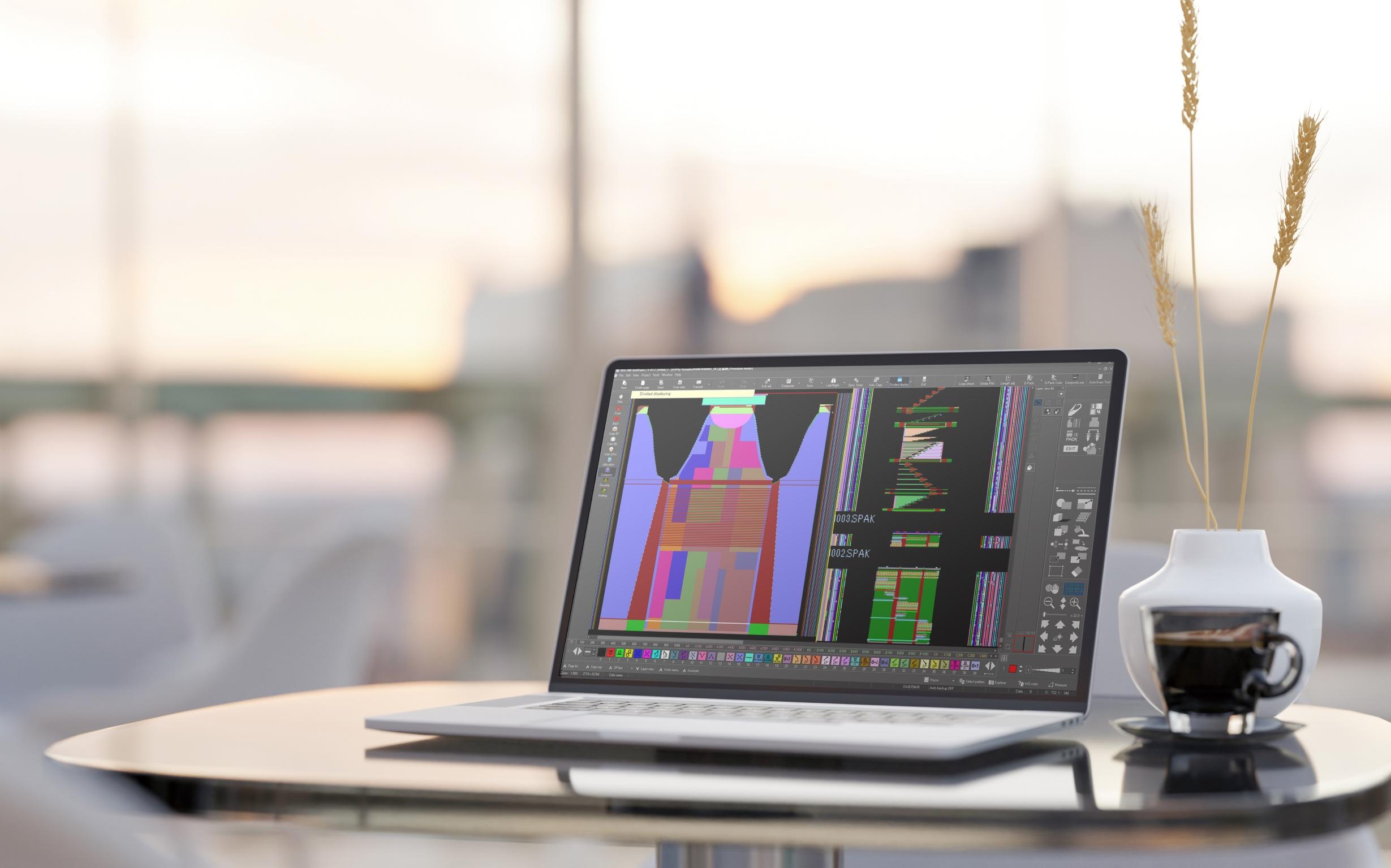
SDS® KnitPaint-Online
KnitPaint is proven software used by knitting companies across the globe to create knitting data for programming SHIMA SEIKI computerized flat knitting machines. Previously available only as part of SHIMA SEIKI's SDS®-ONE APEX series all-in-one design system, with SDS® KnitPaint-Online, KnitPaint software becomes available as standalone software that carries over the same familiar KnitPaint functions, but enhanced with basic planning and design functionality as well.

APEXFiz®
SHIMA SEIKI’s APEXFiz® subscription-based design software supports the creative side of fashion from planning and design to colorway evaluation, realistic fabric simulation and 3D virtual sampling. Virtual samples are a digitized version of sample making that are visually accurate enough to be used effectively as prototypes, replacing physical sampling and consequently reducing time, cost and material that otherwise go to waste. When a design is approved for production, knitting data which is automatically generated can be converted easily to machine data, allowing smooth communication for digitally bridging the gap between design studio and factory. Before going to production however, the same virtual sample can be used in retail, for example in e-commerce, to gauge consumer response to items before going to market, effectively realizing production based on demand forecasting. In such a way, inventory can be optimized to minimize deadstock waste. APEXFiz® therefore helps to realize sustainability while digitally transforming the fashion supply chain.

07.11.2025

VDMA members highly satisfied with ITMA ASIA + CITME 2025 in Singapore

With more than 840 exhibitors from 30 countries and thousands of visitors from more than 100 nations ITMA ASIA + CITME 2025 was a truly international show. Visitors came with clear project ideas, leading to many inspiring and fruitful discussions.

Numerous VDMA members reported closed orders and deals – a positive sign for the machinery sector. “Better than expected”: this was a frequent statement from exhibiting companies.
The testimonials from VDMA member companies reflect a successful trade fair:

"ITMA ASIA + CITME 2025 in Singapore has been a real INTERNATIONAL Textile Machinery Exhibition in Asia, attracting visitors from more than 100 countries. The numbers and quality hoped for have been exceeded. In this friendly and well organised city, smiles were also very much seen at the EXPO during the exhibition."
Dr. Janpeter Horn, Chairman, VDMA Textile Machinery Association

With more than 840 exhibitors from 30 countries and thousands of visitors from more than 100 nations ITMA ASIA + CITME 2025 was a truly international show. Visitors came with clear project ideas, leading to many inspiring and fruitful discussions.

Numerous VDMA members reported closed orders and deals – a positive sign for the machinery sector. “Better than expected”: this was a frequent statement from exhibiting companies.
The testimonials from VDMA member companies reflect a successful trade fair:

"ITMA ASIA + CITME 2025 in Singapore has been a real INTERNATIONAL Textile Machinery Exhibition in Asia, attracting visitors from more than 100 countries. The numbers and quality hoped for have been exceeded. In this friendly and well organised city, smiles were also very much seen at the EXPO during the exhibition."
Dr. Janpeter Horn, Chairman, VDMA Textile Machinery Association

“ITMA ASIA + CITME 2025 in Singapore was a great success also for Mahlo. The show brought together the right people, the right ideas, and the right energy. A truly international event that delivered valuable insights and confirmed the industry's commitment to innovation. We could discuss specific challenges and solutions with numerous industry professionals from across Asia.”
Thomas Höpfl, Sales Director, Mahlo 

“ITMA ASIA + CITME 2025 in Singapore was a great success for Trützschler. The event brought together an international mix of visitors and offered high-quality discussions with customers and business partners.”
Alexander Stampfer, CSO, TRÜTZSCHLER Group

“Singapore was the ideal stage for ITMA ASIA + CITME 2025, drawing a highly engaged global audience. The exhibition proved to be an outstanding platform for meaningful dialogue and networking. The strong visitor presence and the depth of discussions underscore the industry’s commitment to innovation and sustainability. With automation and future technologies taking centre stage, the event exceeded expectations by creating an environment where visionary ideas and practical solutions converged. Customers are once again ready to invest, signalling renewed confidence and growth opportunities. This positive momentum encourages us and strengthens our outlook for the future.”
Werner Volkaert, Managing Director, Sedo Treepoint

"ITMA ASIA + CITME 2025 in Singapore proved to be a truly global platform, bringing together a remarkably international audience. The high visitor numbers, the quality of discussions, and the strong focus on innovation and sustainability reflected the industry's evolving priorities. For us, the event reaffirmed the importance of personal dialogue in shaping the future of nonwovens and textile technology."
Tobias Schäfer, Vice President, ANDRITZ Nonwoven & Textile

“We were impressed by the high quality and diversity of visitors at ITMA ASIA + CITME 2025 in Singapore. The event proved to be an excellent platform for meaningful discussions and new connections across the entire Asian textile market. Singapore’s dynamic and well-organized setting provided the ideal environment to exchange ideas, explore innovations, and strengthen partnerships throughout the region. Focus topics were definitely increasing efficiency in the textile production at currently uncertain times.” 
Kathrin Pleva, Managing Director, PLEVA

“ITMA ASIA + CITME 2025 Singapore was well attended and attracted qualified visitors. It's strategic geographic location connected the Southeast Asian region and positioned the event as a central meeting point for the textile industry.”
Riccarda Dilo, Member of the Executive Board, DILO Group

“Choosing Singapore as the location for ITMA ASIA + CITME 2025 was absolutely the right decision. Our expectations were exceeded both in terms of the quality and the number of international visitors.”
Torsten von Koch, Sales Director, Georg Sahm 

“ITMA ASIA + CITME 2025 in Singapore was worth a visit. The location was excellent for visitors from the ASEAN countries and Singapore offers an excellent infrastructure. We were impressed by the numbers of visitors and the quality of meetings with customers, who came mainly from Pakistan, India and Bangladesh. The focus of visitors was on the finishing of outerwear, denim and automation. Many customers plan to realize their projects in the course of 2026.”
Hans-Gerhard Wroblowski, Sales Manager SEA, A. Monforts Textilmaschinen 

From 16 to 22 September 2027, ITMA will return to Germany (Hannover) for the first time in 20 years. The leading international trade fair for textile machinery and clothing technology is expected to attract over 100,000 decision-makers from almost all textile-producing countries. 

Source:

VDMA e. V. Textile Machinery

François Guimbretière, professor of information science, and Victor Guimbretière '29 developed a knitting machine that functions like a 3D printer – building up horizontal layers of stitches to create solid objects. Image: Luke Stewart/Provided
François Guimbretière, professor of information science, and Victor Guimbretière '29 developed a knitting machine that functions like a 3D printer – building up horizontal layers of stitches to create solid objects.
05.11.2025

Knitting machine makes solid 3D objects

A new prototype of a knitting machine creates solid, knitted shapes, adding stitches in any direction – forward, backward and diagonal – so users can construct a wide variety of shapes and add stiffness to different parts of the object.

Unlike traditional knitting, which yields a 2D sheet of stitches, this proof-of-concept machine – developed by researchers at Cornell and Carnegie Mellon University – functions more like a 3D printer, building up solid shapes with horizontal layers of stitches.

“We establish that not only can it be done, but because of the way we attach the stitch, it will give us access to a lot of flexibility about how we control the material,” said François Guimbretière, professor of information science in the Cornell Ann S. Bowers College of Computing and information science and the multicollege Department of Design Tech. “The expressiveness is very similar to a 3D printer.” 

Guimbretière and co-author, Victor Guimbretière ’29, who is in Cornell Engineering, presented the work, “Using an Array of Needles to Create Solid Knitted Shapes,” at the ACM Symposium on User Interface Software and Technology in Busan, Korea on Sept. 30.

A new prototype of a knitting machine creates solid, knitted shapes, adding stitches in any direction – forward, backward and diagonal – so users can construct a wide variety of shapes and add stiffness to different parts of the object.

Unlike traditional knitting, which yields a 2D sheet of stitches, this proof-of-concept machine – developed by researchers at Cornell and Carnegie Mellon University – functions more like a 3D printer, building up solid shapes with horizontal layers of stitches.

“We establish that not only can it be done, but because of the way we attach the stitch, it will give us access to a lot of flexibility about how we control the material,” said François Guimbretière, professor of information science in the Cornell Ann S. Bowers College of Computing and information science and the multicollege Department of Design Tech. “The expressiveness is very similar to a 3D printer.” 

Guimbretière and co-author, Victor Guimbretière ’29, who is in Cornell Engineering, presented the work, “Using an Array of Needles to Create Solid Knitted Shapes,” at the ACM Symposium on User Interface Software and Technology in Busan, Korea on Sept. 30.

Guimbretière first became interested in solid knitting while tinkering with a knitting machine in the lab of co-author Scott Hudson, professor of human-computer interaction in the School of Computer Science at Carnegie Mellon University, in 2016. A few years later, Guimbretière built the prototype from scratch in his basement during the COVID-19 pandemic, using primarily 3D-printed components.

The machine has a bed of knitting needles arranged in a 6x6 block, with each composed of a 3D-printed symmetrical double hook attached to a brass support tube. The front and back parts of the double hook move independently, which allows the machine to knit or purl, depending on which half picks up the first loop. To control the machine, the researchers developed a library of code for each type of stitch, which can generate a program for each product.

Because the knitting head that dispenses the yarn can move directly over the array of needles to any location, the design offers excellent flexibility to create complex knitted structures. Previous solid knitting machines lacked this flexibility, which greatly limits the shapes they can produce, researchers said.

So far, the team has successfully knitted objects shaped like a C and a pyramid, which demonstrates the machine’s ability to create complex shapes and overhangs.

Currently, the prototype is still slow, prone to dropping loops and sometimes catches the yarn on the wrong needles, but Guimbretière has plans to make the machine more robust. Additionally, it should be easy to scale up the design, he said, simply by adding a larger bed of needles. 

With further improvements, this type of approach may be useful for medical applications, such as knitting structures that support the growth of artificial ligaments or veins, Guimbretière said. Solid knitting allows the user to create different levels of thickness and stiffness in the final product, so it may be useful for accurately mimicking biological structures.

Amritansh Kwatra ’19, now a Ph.D. student in the field of information science at Cornell Tech, also contributed to the study.
Partial funding for this work came from the National Science Foundation.

Source:

Patricia Waldron Cornell Ann S. Bowers College of Computing and Information Science

Italian Textile Machinery at ITMA ASIA + CITME Graphic by ACIMIT
30.10.2025

Italian Textile Machinery at ITMA ASIA + CITME

Over 100 Italian companies are exhibiting at ITMA ASIA + CITME Singapore 2025, taking place from October 28 to 31. With an area of around 4,000 square meters, Italy ranks among the top exhibiting Countries, as in previous editions. 53 Italian exhibitors will show their innovations within the National Sector Groups, organized by ACIMIT (Association of Italian Textile Machinery Manufacturers) and Italian Trade Agency.

ITMA ASIA + CITME show has always been the main showcase for textile machinery manufacturers in Asia, which absorbs 50% of global exports for a value of 8.8 billion euro in 2024. The main world market for textile machinery are China and India, importing textile machines for a total value of 4.3 billion euro.

For Italian manufacturers as well, the Asian market is the top foreign destination. In 2024, Italian exports to Asia amounted to 664 million euro, while in the first six months of 2025 Italian sales to this geographical area grew at 1% rate on the same 2024 period, reaching a value of 317 million euro. China, India, Pakistan, and Bangladesh are the main Asian destinations for Made in Italy machinery.

Over 100 Italian companies are exhibiting at ITMA ASIA + CITME Singapore 2025, taking place from October 28 to 31. With an area of around 4,000 square meters, Italy ranks among the top exhibiting Countries, as in previous editions. 53 Italian exhibitors will show their innovations within the National Sector Groups, organized by ACIMIT (Association of Italian Textile Machinery Manufacturers) and Italian Trade Agency.

ITMA ASIA + CITME show has always been the main showcase for textile machinery manufacturers in Asia, which absorbs 50% of global exports for a value of 8.8 billion euro in 2024. The main world market for textile machinery are China and India, importing textile machines for a total value of 4.3 billion euro.

For Italian manufacturers as well, the Asian market is the top foreign destination. In 2024, Italian exports to Asia amounted to 664 million euro, while in the first six months of 2025 Italian sales to this geographical area grew at 1% rate on the same 2024 period, reaching a value of 317 million euro. China, India, Pakistan, and Bangladesh are the main Asian destinations for Made in Italy machinery.

ACIMIT President Marco Salvadè says: “ITMA ASIA+CITME Singapore is a further occasion for Italian textile machinery manufacturers to display its updated technological supply. The choice of Singapore allows Italian exhibitors to engage with many Southeast Asian markets, which are becoming increasingly important manufacturing hubs.”

"Despite geopolitical uncertainties, the significant presence of Italian exhibitors in Singapore confirms the vitality of the Italian textile machinery sector. " confirms Salvadè. " Italian manufacturers at ITMA ASIA+CITME Singapore will show a wide range of advanced solutions, covering the entire textile value chain. Visitors will see digitalization tools that can improve process efficiency and connectivity, automation systems for smarter production and innovations able to reduce environmental impact. In addition, there will be a strong focus on sustainable technologies, with machinery designed to optimize energy and water use, while ensuring high - quality results. Italian manufacturers are committed to combining tradition in textile knowledge with cutting - edge innovation."

On his side, Giorgio Calveri, Director of ITA Singapore, states: "With 8 6 % of its 2.1-billion-euro production exported, Italy’s textile machinery industry confirms its strong international orientation, with Asia as its main market. ITMA Asia + CITME 2025 in Singapore is a strategic opportunity to strengthen Italy’s presence in this key region. With 100 exhibitors coordinated by ACIMIT and supported by ITA, Italy stands as a trusted partner for advanced, sustainable, and competitive technologies."

Source:

ACIMIT 

27.10.2025

Uster presents novelties at ITMA Asia + CITME 2025


The Uster 360Q universe is growing with new products, solutions and services. Innovation developments can also be recorded in the fields of man-made fiber testing and fabric inspection. Uster innovations address the industry’s trending topics as mill management and process control, optimization of delivered fabric quality and yield.

The simplicity of fabric quality control
Uster presents at ITMA Asia + CITME 2025 the brand-new Uster Fabriq Vision 2. The next generation fabric inspection system stands for reliable performance – also in challenging environments – and shows enhanced detection capabilities. Both advantages result from the Smart Vision Camera 3 for high-performance in-camera image processing. Uster’s real-time process monitoring and quality inspection solution further convinces by simplified operation through Uster Intelligence-supported style creations as well as by image-based and supported visual setting adjustment for easier adaption. 


The Uster 360Q universe is growing with new products, solutions and services. Innovation developments can also be recorded in the fields of man-made fiber testing and fabric inspection. Uster innovations address the industry’s trending topics as mill management and process control, optimization of delivered fabric quality and yield.

The simplicity of fabric quality control
Uster presents at ITMA Asia + CITME 2025 the brand-new Uster Fabriq Vision 2. The next generation fabric inspection system stands for reliable performance – also in challenging environments – and shows enhanced detection capabilities. Both advantages result from the Smart Vision Camera 3 for high-performance in-camera image processing. Uster’s real-time process monitoring and quality inspection solution further convinces by simplified operation through Uster Intelligence-supported style creations as well as by image-based and supported visual setting adjustment for easier adaption. 

Fabric producers need to ensure a consistently high rate of defect detection by automated control during final inspection. Uster Fabriq Vision 2 offers advanced process safety through the Super Inspection Mode for increased security, even after production, and consistent Uster Intelligence-supported quality decisions. The system’s ability finally allows fabric yield to be optimized and prevents claims – quickly set up and easy handled when fine tuning.

Fiber process control for cotton, synthetics and blends
Uster AFIS 6 has been launched earlier this year but will be presented at ITMA Asia + CITME in Singapore first time to an audience in Asia. The next-generation AFIS stands out by uniquely testing man-made fiber properties in addition to cotton in the same unit. It provides critical data to optimize fiber process control in spinning, paving the way for superior yarn quality and reduced waste.

AFIS 6 can be seamlessly integrated in the mills quality management regime by connecting to Uster Quality Expert and the integration of the Uster Statistics. The enhanced user experience result from the new user interface and its various languages available is a key highlight. Another plus is simplified data analysis through the integral reporting functionality. 

Presented for the first time two years ago at ITMA in Milan, Uster 360Q has attracted considerable interest, and FiberQ has proven itself in practice as a raw material management solution with profit potential. Under 360Q Uster developed a further solution and tools.

Uster Fiber2Yarn for the great picture
Newly combining and correlating data of FiberQ – measured with Uster HVI – with data from Uster Quantum yarn clearers, spinners can learn about the influence of different raw material parameters on the end product quality. This highly sought-after information offers a great opportunity to optimize mixings and continuously achieve a higher level of quality consistency besides better control of the production process. The Uster Fiber2Yarn solution is available in two different views, like the correlations over time and the correlations over different mixings.

A wide range of valuable features and information can be found on the Uster 360Q Platform. Uster services are hosted on the cloud-based platform with a technology architecture that makes businesses more agile and cost-effective. Additionally, the cloud solutions enable businesses to leverage AI and machine learning capabilities. The integration of Uster Intelligence – combining artificial intelligence with Uster’s expertise – is opening up new possibilities for spinners. Additional benefits include further advancements in the Uster Academy, such as the introduction of the Uster Chatbot and Wiki, providing direct and easy access to Uster know-how. The Academy’s e-learning portfolio has been expanded to serve a broader range of users.

Furthermore, the platform serves as a central access point for notifications and alerts. The Uster 360Q Platform is also where users – free of charge and with no license needed – find Uster news and the latest application literature. Also, the content provided earlier via the Uster Insights App will be integrated into the platform. And of course, the new Uster Statistics web app is part with all well-known functionality in a new format. 

24.10.2025

ANDRITZ & Tandem Repeat: Solutions to produce novel sustainable fiber

International technology group ANDRITZ has entered into a collaboration with Tandem Repeat Technologies, a pioneering biotechnology company, to bring to the market industrial-scale solutions for producing ProcellTM, a new sustainable fiber for textiles and nonwovens.

The collaboration brings together Tandem Repeat’s expertise in advanced biotechnology and ANDRITZ’s extensive experience as a supplier of solutions and plants for the production of nonwovens and manmade cellulosic fibers. The two companies aim to support the textile industry’s transition toward more sustainable production and alternatives to conventional synthetic fibers.

Procell, developed and patented by Tandem Repeat, is a biomanufactured fiber made from proteins. Its wool-like softness, exceptional strength, durability, and versatility make it well-suited for a broad range of applications.

International technology group ANDRITZ has entered into a collaboration with Tandem Repeat Technologies, a pioneering biotechnology company, to bring to the market industrial-scale solutions for producing ProcellTM, a new sustainable fiber for textiles and nonwovens.

The collaboration brings together Tandem Repeat’s expertise in advanced biotechnology and ANDRITZ’s extensive experience as a supplier of solutions and plants for the production of nonwovens and manmade cellulosic fibers. The two companies aim to support the textile industry’s transition toward more sustainable production and alternatives to conventional synthetic fibers.

Procell, developed and patented by Tandem Repeat, is a biomanufactured fiber made from proteins. Its wool-like softness, exceptional strength, durability, and versatility make it well-suited for a broad range of applications.

The partners will focus on offering industrial-scale solutions for fiber manufacturers in the textiles and nonwovens sectors to produce Procell. These solutions will utilize ANDRITZ’s proven process equipment, adapted to the specific requirements of Procell, while Tandem Repeat will partner on the development of Procell technology.

Dr. Sergey Malkov, VP Manmade Cellulosic Fibers at ANDRITZ, said: “We are pleased to collaborate with Tandem Repeat on this exciting product. Procell fiber has the potential to be a true breakthrough in sustainable materials.” 

Dr. Melik Demirel, co-founder of Tandem Repeat, added: “By partnering with ANDRITZ, we can bring our revolutionary fiber to market on a commercial scale. This will support industries in achieving sustainable production and supply chain resilience.”

Source:

Andritz AG