From the Sector

Reset
129 results
14.11.2025

NCTO: Push for reinstatement of duty-free treatment for qualified textile and apparel goods

The National Council of Textile Organizations (NCTO), representing the full spectrum of U.S. textiles from fiber, yarn and fabrics to finished sewn products, applauded the administration’s announcement today of plans to reinstate duty-free treatment for qualified textile and apparel goods from Guatemala and El Salvador under the Dominican Republic-Central America-United States Free Trade Agreement (CAFTA-DR).

National Council of Textile Organizations President and CEO Kim Glas:
“NCTO and our industry leaders have long been pushing for the reinstatement of duty-free treatment for qualified textile and apparel goods for our CAFTA-DR partner countries. We welcome the administration’s announcements about restoring these benefits for Guatemala and El Salvador and continue to press for a resolution for the other trade partners including Honduras, the Dominican Republic and Costa Rica, while acknowledging that the administration is conducting an extensive review under Section 301 of Nicaragua and their human rights violations under a separate track.

The National Council of Textile Organizations (NCTO), representing the full spectrum of U.S. textiles from fiber, yarn and fabrics to finished sewn products, applauded the administration’s announcement today of plans to reinstate duty-free treatment for qualified textile and apparel goods from Guatemala and El Salvador under the Dominican Republic-Central America-United States Free Trade Agreement (CAFTA-DR).

National Council of Textile Organizations President and CEO Kim Glas:
“NCTO and our industry leaders have long been pushing for the reinstatement of duty-free treatment for qualified textile and apparel goods for our CAFTA-DR partner countries. We welcome the administration’s announcements about restoring these benefits for Guatemala and El Salvador and continue to press for a resolution for the other trade partners including Honduras, the Dominican Republic and Costa Rica, while acknowledging that the administration is conducting an extensive review under Section 301 of Nicaragua and their human rights violations under a separate track.

“We sincerely thank Rep. Richard Hudson (R-NC-09), Rep. David Rouzer (R-NC-07), and many members of the House Textile Caucus for their leadership and efforts in helping reinstate duty-free benefits for CAFTA-DR countries in support of the domestic textile chain.  Today was a first great step and we want to thank President Trump, U.S. Trade Representative Ambassador Jamieson Greer, and the administration for this important decision. 

“The CAFTA-DR region forms a vital co-production chain with the American textile supply chain, facilitating $11.3 billion in two-way trade in 2024 and supporting more than 470,000 U.S. workers in the domestic textile sector alone. However, since reciprocal tariffs were imposed on qualifying CAFTA-DR trade, U.S. textile and apparel imports from our free trade partner countries have declined 8 percent year to date in 2025 through July, while U.S. imports from top Asian suppliers have increased by double digits.

“The restoration of duty-free status for qualified goods from El Salvador and Guatemala is a critical key first step for our collective industries.  Restoring duty-free textile and apparel qualified goods from the CAFTA-DR region is important to bolster the U.S. textile supply chain can help bring some stability to this critical sector. The U.S. -Western Hemisphere supply chains stand as a bulwark to China and other Asian countries. We look forward to working with the Trump administration and lawmakers to find a resolution that will restore duty-free treatment for qualified trade for this vital region.”

Source:

National Council of Textile Organizations NCTO

Board elections at AVK – Industrial Association for Reinforced Plastics Graphik: AVK – Industrial Association for Reinforced Plastics
New board at AVK – Industrial Association for Reinforced Plastics
13.11.2025

Board elections at AVK – Industrial Association for Reinforced Plastics

The general meeting of AVK –Industrial Association for Reinforced Plastics has re-elected its executive board as part of its regular elections.

Gerhard Lettl (C. F. Maier) and Michael Polotzki (Menzolit) retired from the Executive Board. Both were honored for their many years of outstanding commitment to the work of the Executive Board, the management of various working groups and seminars and, in the case of Mr. Lettl, for his leadership of the AVK Innovation Award jury. As a special recognition, the AVK presented the new AVK Honorary Award for the first time, which honors the great personal commitment of both men.

Nicole Stöß (Polynt) and Ralph Breiltgens (Kunststoffverarbeitung Reich) were newly elected to the Executive Board.

At the constituent board meeting on the same day, the board positions were confirmed: 
Dr. Michael Effing (AMAC) remains Chairman of the Board, Dirk Punke (BÜFA) was con-firmed as Deputy Chairman. Prof. Jens Ridzewski (Applus+IMA) continues to hold the office of Treasurer.

The Executive Board will commence its new term of office on 1 January 2026 and remain in office for three years.

The general meeting of AVK –Industrial Association for Reinforced Plastics has re-elected its executive board as part of its regular elections.

Gerhard Lettl (C. F. Maier) and Michael Polotzki (Menzolit) retired from the Executive Board. Both were honored for their many years of outstanding commitment to the work of the Executive Board, the management of various working groups and seminars and, in the case of Mr. Lettl, for his leadership of the AVK Innovation Award jury. As a special recognition, the AVK presented the new AVK Honorary Award for the first time, which honors the great personal commitment of both men.

Nicole Stöß (Polynt) and Ralph Breiltgens (Kunststoffverarbeitung Reich) were newly elected to the Executive Board.

At the constituent board meeting on the same day, the board positions were confirmed: 
Dr. Michael Effing (AMAC) remains Chairman of the Board, Dirk Punke (BÜFA) was con-firmed as Deputy Chairman. Prof. Jens Ridzewski (Applus+IMA) continues to hold the office of Treasurer.

The Executive Board will commence its new term of office on 1 January 2026 and remain in office for three years.

“With the new management team, we are focusing on continuity and fresh impetus at the same time,” emphasises Dr Elmar Witten, Managing Director of AVK. “I would like to thank Mr. Lettl and Mr. Polotzki for their many years of service and look forward to continuing to work with the newly elected committee to actively shape the future of the composite ma-terials industry.”

Source:

AVK – Industrial Association for Reinforced Plastics

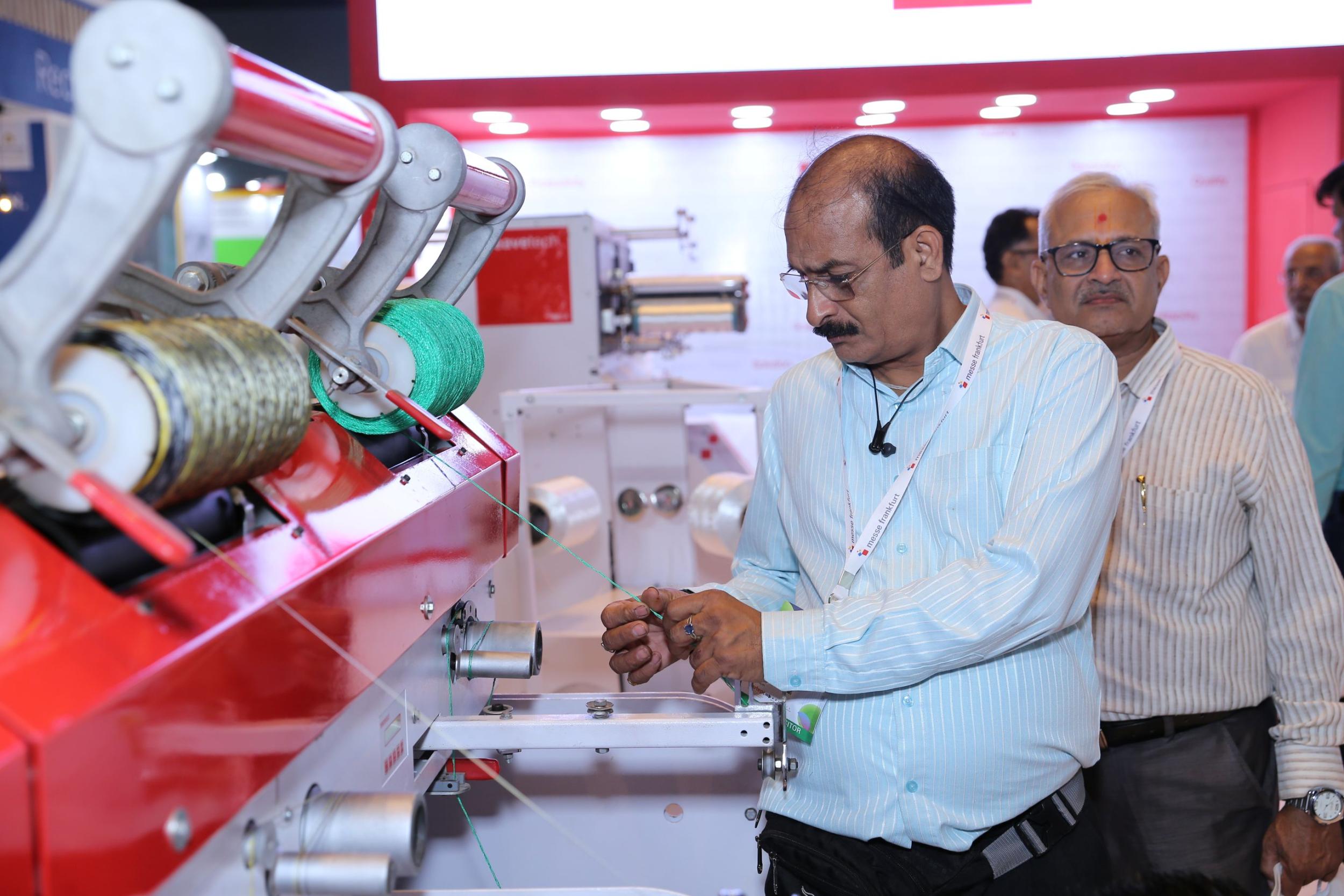
Techtextil India Photo Messe Frankfurt
13.11.2025

Techtextil India 2025 & Dornbirn Global Fiber Conference Asia

In line with India’s growing momentum to establish itself as a global textile manufacturing powerhouse, Techtextil India 2025, the country’s foremost B2B exhibition on technical textiles, nonwovens and composites, is set to return with an expansive and future-ready edition. Scheduled from November 19 to 21, 2025, at the Bombay Exhibition Centre, Goregaon, Mumbai, the 10th edition will feature over 215 exhibitors, including more than 100 first-time participants.

In line with India’s growing momentum to establish itself as a global textile manufacturing powerhouse, Techtextil India 2025, the country’s foremost B2B exhibition on technical textiles, nonwovens and composites, is set to return with an expansive and future-ready edition. Scheduled from November 19 to 21, 2025, at the Bombay Exhibition Centre, Goregaon, Mumbai, the 10th edition will feature over 215 exhibitors, including more than 100 first-time participants.

According to the Ministry of Textiles, India’s technical textiles exports stood at USD 2.92 billion in FY 2024–25, underscoring the sector/s growing global footprint. Packtech at 37.5% and Indutech at 28% emerged as the leading export categories, reflecting strong demand across industrial and packaging applications. With exports to the UK valued at USD 136 million, accounting for a 4.7% share, the data highlights India’s strengthening position in global value chains – setting the stage for platforms like Techtextil India that drive innovation, business and exchange of scientific knowledge for this high-growth segment. The expo will house 500+ products and 300+ brands with international participation from Belgium, Germany, Hong Kong, Italy, Japan, Sweden and the USA.

The integration of advanced manufacturing technologies, sustainability practices, focus on circularity and innovative fibers has become a necessity. Techtextil India 2025 plays a crucial role in driving this evolution by bringing together stakeholders across the value chain, fostering dialogue on policy and technology and accelerating industry-wide transformation. This year, the show takes a significant leap forward with its multi-functional approach, integrating new features under one roof — the Dornbirn Global Fiber Conference Asia, which will be held on 18th November 2025, the launch of Sporttech Pavilion, the feature of German Pavilion and a Techtextil India conference powered by Indian Technical Textile Association (ITTA). Together, these additions will enable participants to explore advanced applications of technical textiles across various sectors, including sports, automotive, defence, healthcare, construction, and sustainability.

India’s textile industry is undergoing a transformative shift driven by government reforms and industry-led innovation. Acknowledging the sector’s pivotal role in the national economy, the Ministry of Textiles has recently introduced significant amendments to the Production Linked Incentive (PLI) Scheme for Textiles, with a focus on revitalising the man-made fiber (MMF) and technical textiles segments. The revision aims to enhance ease of doing business, attract new investments and generate employment, while aligning with the government’s broader vision of ‘Make in India’ and ‘Atmanirbhar Bharat’.

These progressive measures underline the government’s commitment to fostering innovation, investment and employment generation within the sector — setting the stage for India to emerge as a global leader in high-performance textile manufacturing.

Commenting on the upcoming edition, Mr Raj Manek, Executive Director and Board Member, Messe Frankfurt Asia Holdings Ltd, stated: “The Indian textile industry is witnessing a remarkable transformation driven by government support, technological innovation and global demand for sustainable materials. Techtextil India 2025 will not only showcase the latest in technical textiles and nonwovens but also serve as a knowledge-driven hub connecting policy with practice. Our new initiatives – the Dornbirn Global Fiber Conference Asia, Sporttech Pavilion, German Pavilion and ITTA Technical Textiles Seminar – align perfectly with the nation’s textile growth mission, enabling participants to explore next-generation materials, solutions and business collaborations. We are proud to support India’s vision of becoming a global textile powerhouse.”

The Dornbirn Global Fiber Conference Asia, which is known for its focus on research-driven fiber innovation, will make its India debut, just a day before the expo on 18th November 2025, at Bombay Exhibition Centre, Mumbai, marking a perfect prelude for Techtextil India 2025. On 19th November 2025, the Techtextil Symposium will feature various knowledge sessions under themes like ‘Smart Solutions for Key Segments of Technical Textiles,’ organised by the Indian Technical Textile Association (ITTA). Focusing on innovations and practical applications in geotextiles, agrotextiles and industrial textiles, this will provide a platform to interact with leading experts. On Day 3, the conference organised by the Society of Plastics Engineers (SPE) India will explore ‘Creating Tomorrow’s Circular Supply Chains: Technology, Collaboration & Capital for Tech Textiles and Plastics.’

The show will present credible developments in the fabrics for sports and activewear (Sporttech) category, leading to a dedicated Sporttech Pavilion organised in partnership with Concept N Strategies. A dedicated conference titled – ‘India’s activewear revolution scaling without compromise: Building a 360-degree ecosystem for premium, high-quality active wear that competes globally’ will spotlight high-performance fabrics and materials revolutionising sportswear and outdoor applications. The show will also house a conference on recycling, ‘Creating tomorrow’s circular supply chains: Technology, collaboration and capital for textiles and plastics.'

Besides these key features, the expo has seen an expansion into Mobiltech, Buildtech and Oekotech segments. Through these categories, the exhibition aims to connect manufacturers, technology providers, investors and policymakers under one unified platform to share insights, explore business opportunities and discuss the future of advanced textile materials. The event’s focus on innovation, sustainability and collaboration complements the national agenda of achieving self-reliance and global competitiveness in textiles.

The show will have the presence of key domestic industry leaders, including Aditya Birla Yarns, Khosla Profil, Park Nonwoven, Pidilite, Reliance, Welspun, Sanathan Textiles, Sarex Chemicals, and Suntech Geo. Meanwhile, the international exhibitors include ACM, Inc., Autefa Solution Germany GmbH, Bettarini & Serafini SRL, Brückner Textile Technologies GmbH & Co. KG, Georg Sahm GmbH & Co. KG, Innovatec Microfiber Technology GmbH & Co. KG, Procotex, Pulcra Chemicals GmbH, R&M International Sales Corporation, Reifenhäuser Enka Tecnica GmbH, Ring Maschinenbau GmbH, STC Spinnzwirn GmbH, Textechno Herbert Stein, VEIT Hong Kong Limited and Zoltek.

As high-value, sustainable and globally competitive textile production is receiving renewed focus, the synergy between government initiatives and industry platforms such as Techtextil India 2025 will continue to strengthen India’s leadership in the global textile landscape. The show has become synonymous with India’s textile ambition — weaving together innovation, collaboration and opportunity to create a more resilient, future-ready industry.

The expo has garnered support from key industry bodies, including the Manmade & Technical Textiles Export Promotion Council (MATEXIL), Indian Technical Textile Association (ITTA), Department of Textiles (Government of Maharashtra), while the Dornbirn Global Fiber Conference has garnered support from the Government of Tamil Nadu as the Partner State.

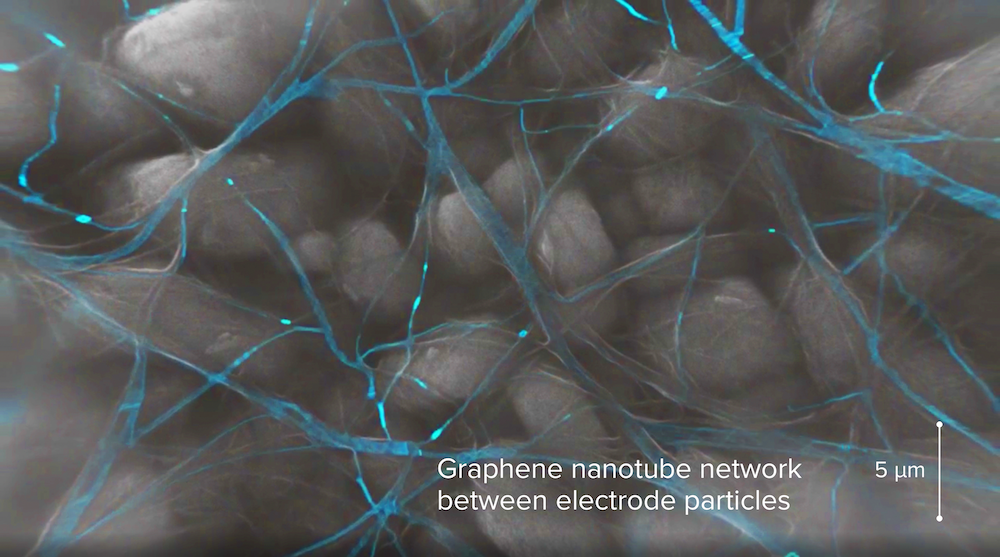
Graphene nanotube synthesis unit (c) OCSiAl
Graphene nanotube synthesis unit
12.11.2025

OCSiAl: World’s Largest Graphene Nanotube Manufacturing Hub in Luxembourg

  • A flagship graphene nanotube facility in Luxembourg, a $300 million deep-tech investment, is set to put Europe at the forefront of advanced materials innovation.
  • The Luxembourg facility will bring more than 300 new jobs and serve as a scalable energy-efficient manufacturing center.
  • The launch follows a recent investment round from Luxembourg investors and the signing of a long-term land lease with the State of Luxembourg.

OCSiAl, a Luxembourg-based deep-tech company and the global leader in graphene nanotube technologies, has announced the signing of a land lease, launching the development of its flagship graphene nanotube production center in Differdange, Luxembourg, that will become the world’s largest graphene nanotube production facility.

This official announcement is a culmination of a years-long effort by the company and the Luxembourg Government, including most recently an investment round raised from a “club” of Luxembourg-based investors and the signing with the State of Luxembourg of a long-term land lease for a 3.63-hectare site in Differdange.

  • A flagship graphene nanotube facility in Luxembourg, a $300 million deep-tech investment, is set to put Europe at the forefront of advanced materials innovation.
  • The Luxembourg facility will bring more than 300 new jobs and serve as a scalable energy-efficient manufacturing center.
  • The launch follows a recent investment round from Luxembourg investors and the signing of a long-term land lease with the State of Luxembourg.

OCSiAl, a Luxembourg-based deep-tech company and the global leader in graphene nanotube technologies, has announced the signing of a land lease, launching the development of its flagship graphene nanotube production center in Differdange, Luxembourg, that will become the world’s largest graphene nanotube production facility.

This official announcement is a culmination of a years-long effort by the company and the Luxembourg Government, including most recently an investment round raised from a “club” of Luxembourg-based investors and the signing with the State of Luxembourg of a long-term land lease for a 3.63-hectare site in Differdange.

“The launch of this future production center in Differdange perfectly illustrates our ambition to position Luxembourg as a key player in industrial innovation in Europe. This major investment in graphene nanotubes demonstrates investors’ confidence in our ecosystem and highlights the potential of our business parks to host high-tech industrial projects. We are proud to support OCSiAl in this strategic step, which will contribute to the creation of skilled jobs, the reputation of Luxembourg in deep-tech, and the transition to a more sustainable and competitive industry,” said Lex Delles, Minister of the Economy, SME, Energy & Tourism.

“OCSiAl’s investment highlights Luxembourg’s role as a platform for long-term innovation and smart industrial development,” added Gilles Roth, Minister of Finance. “This project reflects the value of combining private sector vision with public infrastructure support.”

Founded in Luxembourg in 2010, OCSiAl has become the world’s largest producer of graphene nanotubes, a next-generation material that offers exceptional performance to a multitude of products used in everyday life. OCSiAl’s nanotubes, currently produced only in Serbia, where the company is increasing production capacity fourfold, are already used in more than 10% of smartphones sold today and in over one million electric vehicles worldwide.

“Graphene nanotubes can improve over half of the materials we use every day, from safer batteries to longer-lasting tires and ultralight protective equipment,” said Alain Kinsch, a member of the OCSiAl Board of Directors. “We thank the Luxembourg Government for enabling this project through the land lease and for fostering an environment where innovation and industrial ambition can thrive.”

Claude Huniade Image Swedish School of Textiles
Claude Huniade
10.11.2025

Textile nerves – a new thread in the future of wearable electronics

What if your clothes could sense, respond, and even help you move? That’s the vision behind the doctoral project on “textile nerves” – conductive fibres designed for electronic and ionotronic textiles. Claude Huniade, who is behind an innovative project, has woven together chemistry, mechanics, and sustainability to rethink how textiles and electronics can merge. 

The project had two main aims: first, to replace metals with alternative conductive materials like electronically conductive carbons, doped conducting polymers, and ionically conductive mediums; second, to lay the cornerstone for scalable production and realistic characterisation of textile nerves – especially for use in textile muscles. All of this was approached from a textile manufacturing standpoint, ensuring compatibility with weaving looms and knitting machines.

What if your clothes could sense, respond, and even help you move? That’s the vision behind the doctoral project on “textile nerves” – conductive fibres designed for electronic and ionotronic textiles. Claude Huniade, who is behind an innovative project, has woven together chemistry, mechanics, and sustainability to rethink how textiles and electronics can merge. 

The project had two main aims: first, to replace metals with alternative conductive materials like electronically conductive carbons, doped conducting polymers, and ionically conductive mediums; second, to lay the cornerstone for scalable production and realistic characterisation of textile nerves – especially for use in textile muscles. All of this was approached from a textile manufacturing standpoint, ensuring compatibility with weaving looms and knitting machines.

Improved properties to textile fibres
Among the most striking findings was the use of ionic liquids – liquids that are comprised entirely of ions – as electrical conductors in textiles. When applied to commercial fibres, they improved flexibility and stretchability, resulting in fabrics that were not just soft, but “conformal”, meaning they adapt closely to the body’s shape and movement.

“Our modern society has been shaped by textiles and electronics. When we think of the greatest example of an electronic device, a computer, it had at a point in time helped to bring the first men to the Moon in Apollo 11. Now, ionotronics – where electric currents are controlled by ions – open new doors for interfacing with biological systems like the human nervous system”, explained Claude Huniade.

Though these materials may not match metals in conductivity, their softness makes them ideal for wearable devices. The result? Electronics that feel more like clothing – and less like hardware.

“The potential uses are vast: bioelectrodes, sensors, heaters, lights, even textile-based batteries. But the most transformative application may be in rehabilitation – textile muscles could enable more accessible exoskeletons and prosthetics, giving people greater autonomy and mobility”, he said.

Sustainability at the core
This research aligns with the UN’s Sustainable Development Goal 12: Responsible Consumption and Production. By avoiding metals and embracing green chemistry principles, the project offers a more sustainable path forward for two of the world’s most waste-intensive industries combined – textiles and electronics.

What will be your next step after the dissertation?
“I will take a well-deserved break! I have a new project already in the works; all I will say is that it involves textile muscle fibres innervated by ionofibres.”

Link to dissertation

Source:

Swedish School of Textiles, University of Borås

Textile touch that relieves long-term pain Photo Swedish School of Textiles
Textile touch that relieves long-term pain
10.11.2025

New research project: Textile touch that relieves long-term pain

Can textiles that touch the skin relieve long-term pain? This is the core question of the large interdisciplinary research project Touch away the pain, where the University of Borås is one of the central actors. The project, which will run for six years, is part of the Swedish Research Council's investment in interdisciplinary research environments. 

Nils-Krister Persson, Associate Professor and Senior Lecturer at the Swedish School of Textiles, University of Borås, who is responsible for the textile development in the project, said, “We want to find out what actually happens in the body when you activate the sense of touch. Is it possible to create artificial touch that people actually want to experience, to reduce long-term pain? Is it possible to replicate touch from another person?”

Textile technology meets neurophysiology
The project brings together researchers from the University of Borås, Linköping University, and Region Östergötland. Together, they investigate how artificial touch, created with the help of textile actuators, can affect the body's pain signals.

Can textiles that touch the skin relieve long-term pain? This is the core question of the large interdisciplinary research project Touch away the pain, where the University of Borås is one of the central actors. The project, which will run for six years, is part of the Swedish Research Council's investment in interdisciplinary research environments. 

Nils-Krister Persson, Associate Professor and Senior Lecturer at the Swedish School of Textiles, University of Borås, who is responsible for the textile development in the project, said, “We want to find out what actually happens in the body when you activate the sense of touch. Is it possible to create artificial touch that people actually want to experience, to reduce long-term pain? Is it possible to replicate touch from another person?”

Textile technology meets neurophysiology
The project brings together researchers from the University of Borås, Linköping University, and Region Östergötland. Together, they investigate how artificial touch, created with the help of textile actuators, can affect the body's pain signals.

“We have a long history of developing textiles that actuate, what we sometimes call textile muscles. They can thus exert force on their surroundings or change their shape. Now we are looking at how this technology can be applied in pain treatment,” said Nils-Krister Persson.

Håkan Olausson, Professor of Clinical Neurophysiology at Linköping University Hospital, who is participating in the project, commented, “We have discovered special receptors in the skin that convey pleasure when touched. They can lower stress levels in the nervous system, perhaps through mechanisms involving oxytocin. These are the ones we are trying to activate using textiles.

What happens in the body when touched?
His research colleague Sarah McIntyre, Associate Senior Lecturer and touch researcher at Linköping University Hospital, explains that touch and pain are not separate systems in the body; rather, they interact.

“The nervous system processes signals from both pain and touch at the same time, and they affect each other. We're trying to understand how it works, and how we can use that knowledge to design wearable aids that relieve long-term pain,” said Sarah McIntyre. “We will start by understanding the patient’s needs. What do they want help with? What feels good? This is a good starting point for the whole project.” 

The technology behind the textiles
Edwin Jager, Professor of Sensor and Actuator Systems at Linköping University, is working on the technical development of the project.

“We are developing two technologies in parallel, pneumatic actuators and textile actuators. Textiles are particularly promising because they can be integrated into clothes and used discreetly in everyday life,” said Edwin Jager.

“Imagine sitting in a meeting, and at the touch of a button or via an app you activate a textile that gives you pain relief, without anyone noticing. That's where we want to go,” he explained.

Clinical application in focus
Nazdar Ghafouri, Senior Consultant and pain researcher at Linköping University Hospital, is responsible for the clinical part of the project.

“We will start by testing on people without pain and then move on to patients. There is already a lot of research that shows that touch can relieve pain, but we want to find out what kind of touch, for how long, and where it works best,” she said.

She continued, “This is really interdisciplinary and we are constantly learning from each other. This is my first time at the Swedish School of Textiles, and I find it to be a fantastic environment characterised by creativity, humanism, and concern for sustainability. I believe that we in healthcare have a lot to learn from the creative approach in design and technology, especially when it comes to problem solving and daring to think outside the traditional framework.”  

Next steps, from lab to patients
The project is still in its start-up phase, but the researchers plan to start testing prototypes soon. First, tests are carried out in a lab environment, then in clinical studies.

“We've been working for about six months and are still in the start-up phase. But there are already about fifteen people involved, and more are coming. It is a large and exciting project,” concluded Nils-Krister Persson.

Source:

Swedish School of Textiles, University of Borås

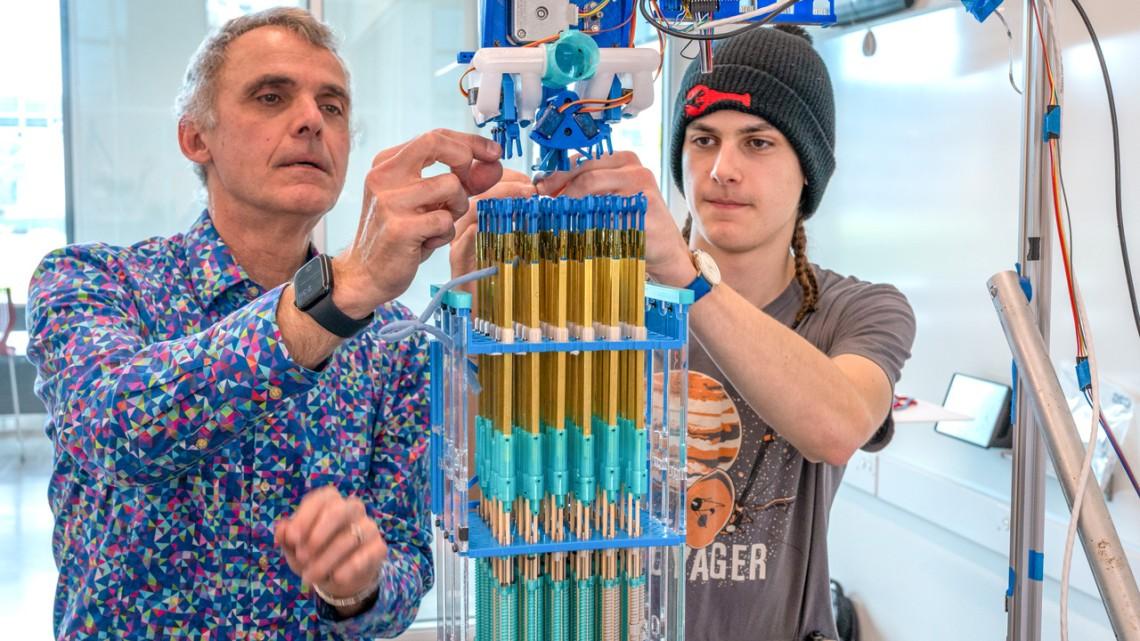
François Guimbretière, professor of information science, and Victor Guimbretière '29 developed a knitting machine that functions like a 3D printer – building up horizontal layers of stitches to create solid objects. Image: Luke Stewart/Provided
François Guimbretière, professor of information science, and Victor Guimbretière '29 developed a knitting machine that functions like a 3D printer – building up horizontal layers of stitches to create solid objects.
05.11.2025

Knitting machine makes solid 3D objects

A new prototype of a knitting machine creates solid, knitted shapes, adding stitches in any direction – forward, backward and diagonal – so users can construct a wide variety of shapes and add stiffness to different parts of the object.

Unlike traditional knitting, which yields a 2D sheet of stitches, this proof-of-concept machine – developed by researchers at Cornell and Carnegie Mellon University – functions more like a 3D printer, building up solid shapes with horizontal layers of stitches.

“We establish that not only can it be done, but because of the way we attach the stitch, it will give us access to a lot of flexibility about how we control the material,” said François Guimbretière, professor of information science in the Cornell Ann S. Bowers College of Computing and information science and the multicollege Department of Design Tech. “The expressiveness is very similar to a 3D printer.” 

Guimbretière and co-author, Victor Guimbretière ’29, who is in Cornell Engineering, presented the work, “Using an Array of Needles to Create Solid Knitted Shapes,” at the ACM Symposium on User Interface Software and Technology in Busan, Korea on Sept. 30.

A new prototype of a knitting machine creates solid, knitted shapes, adding stitches in any direction – forward, backward and diagonal – so users can construct a wide variety of shapes and add stiffness to different parts of the object.

Unlike traditional knitting, which yields a 2D sheet of stitches, this proof-of-concept machine – developed by researchers at Cornell and Carnegie Mellon University – functions more like a 3D printer, building up solid shapes with horizontal layers of stitches.

“We establish that not only can it be done, but because of the way we attach the stitch, it will give us access to a lot of flexibility about how we control the material,” said François Guimbretière, professor of information science in the Cornell Ann S. Bowers College of Computing and information science and the multicollege Department of Design Tech. “The expressiveness is very similar to a 3D printer.” 

Guimbretière and co-author, Victor Guimbretière ’29, who is in Cornell Engineering, presented the work, “Using an Array of Needles to Create Solid Knitted Shapes,” at the ACM Symposium on User Interface Software and Technology in Busan, Korea on Sept. 30.

Guimbretière first became interested in solid knitting while tinkering with a knitting machine in the lab of co-author Scott Hudson, professor of human-computer interaction in the School of Computer Science at Carnegie Mellon University, in 2016. A few years later, Guimbretière built the prototype from scratch in his basement during the COVID-19 pandemic, using primarily 3D-printed components.

The machine has a bed of knitting needles arranged in a 6x6 block, with each composed of a 3D-printed symmetrical double hook attached to a brass support tube. The front and back parts of the double hook move independently, which allows the machine to knit or purl, depending on which half picks up the first loop. To control the machine, the researchers developed a library of code for each type of stitch, which can generate a program for each product.

Because the knitting head that dispenses the yarn can move directly over the array of needles to any location, the design offers excellent flexibility to create complex knitted structures. Previous solid knitting machines lacked this flexibility, which greatly limits the shapes they can produce, researchers said.

So far, the team has successfully knitted objects shaped like a C and a pyramid, which demonstrates the machine’s ability to create complex shapes and overhangs.

Currently, the prototype is still slow, prone to dropping loops and sometimes catches the yarn on the wrong needles, but Guimbretière has plans to make the machine more robust. Additionally, it should be easy to scale up the design, he said, simply by adding a larger bed of needles. 

With further improvements, this type of approach may be useful for medical applications, such as knitting structures that support the growth of artificial ligaments or veins, Guimbretière said. Solid knitting allows the user to create different levels of thickness and stiffness in the final product, so it may be useful for accurately mimicking biological structures.

Amritansh Kwatra ’19, now a Ph.D. student in the field of information science at Cornell Tech, also contributed to the study.
Partial funding for this work came from the National Science Foundation.

Source:

Patricia Waldron Cornell Ann S. Bowers College of Computing and Information Science

getzspace® Photo Getzner Textil
getzspace®
05.11.2025

Getzner Textil Launches Three-Dimensional Weaving at Functional Fabric Fair

Getzner Textil AG, specialists in technical textiles made for a wide range of applications, announced the launch of their new getzspace® three-dimensional weaving technology. 

getzspace® will allow brands to create next generation technical clothing - performance and protective apparel - by reducing the need for seams in pockets and reinforcements. New garments made with the getzspace® technique aim to be more comfortable and more durable, all while reducing waste from the cut-and-sew process. 

Getzner Textil AG, specialists in technical textiles made for a wide range of applications, announced the launch of their new getzspace® three-dimensional weaving technology. 

getzspace® will allow brands to create next generation technical clothing - performance and protective apparel - by reducing the need for seams in pockets and reinforcements. New garments made with the getzspace® technique aim to be more comfortable and more durable, all while reducing waste from the cut-and-sew process. 

getzspace® works by enabling three-dimensional structures such as pockets and reinforcements to be integrated directly into the textile surface, without the need for seams and stitching. The result is high-performance textiles with low weight and high resilience, opening up new possibilities for the design and functionality of modern performance and protective workwear.
 
Getzner Textil will introduce the new getzspace® technology at the Functional Fabric Fair in Portland this fall. Getzner will also present a wide selection of other fabrics during Functional Fabric Fair, underscoring the diversity of their product line and high standard of functionality, comfort, and safety, all developed through decades of textile manufacturing resource-efficient production processes in Europe.

“With over 200 years of experience creating textiles for everything from African fashion and workwear to soundproofing and materials for hot air ballooning, Getzner is set to help revolutionize how technical woven textiles are produced,” said Lukas Berthold, Getzner Sales Manager for North America. “By reducing the need for seams and stitching on pockets and reinforcements, apparel using the getzspace® process will be even more durable and comfortable, all while allowing for new design possibilities.”

30.10.2025

Coats Completes Acquisition of OrthoLite, Strengthening Footwear Business

Coats Group plc, a world-leading Tier 2 supplier of critical components to the apparel and footwear industries, announced has completed its acquisition of OrthoLite, a global market leader in footwear materials and the number one brand in premium insoles.

The acquisition marks a major milestone in the company’s long-term growth plans and strengthens its existing footwear division through expansion into the attractive, high-growth premium insole segment. Both companies already have a similar customer base, a complementary global footprint and a commitment to industry-leading innovation and sustainability practices.

Coats first announced its intention to purchase OrthoLite, and its sustainable materials brand, Cirql, on July 16, 2025, for an initial enterprise value of $770 million. Following previous footwear acquisitions, this is the latest step in the Company’s ambition to shape the future of the global apparel and footwear supply chain through innovation, sustainability, and digital technologies that improve quality, efficiency and performance.

Coats Group plc, a world-leading Tier 2 supplier of critical components to the apparel and footwear industries, announced has completed its acquisition of OrthoLite, a global market leader in footwear materials and the number one brand in premium insoles.

The acquisition marks a major milestone in the company’s long-term growth plans and strengthens its existing footwear division through expansion into the attractive, high-growth premium insole segment. Both companies already have a similar customer base, a complementary global footprint and a commitment to industry-leading innovation and sustainability practices.

Coats first announced its intention to purchase OrthoLite, and its sustainable materials brand, Cirql, on July 16, 2025, for an initial enterprise value of $770 million. Following previous footwear acquisitions, this is the latest step in the Company’s ambition to shape the future of the global apparel and footwear supply chain through innovation, sustainability, and digital technologies that improve quality, efficiency and performance.

To better reflect its increased scale and expanded footwear capabilities, Coats will also move from a three-division organisational structure, previously Apparel, Footwear and Performance Materials, toward a simplified two division structure focused on Apparel and Footwear. Existing Performance Materials businesses will be folded into the two new divisions.

The divisions will be led by Pasquale Abruzzese, Footwear CEO and Group Chief Operating Officer, and Adrian Elliott, Apparel CEO and Group Chief Commercial Officer. Glenn Barrett will continue to lead the OrthoLite business. External reporting will transition to this structure for the financial year ending December 2026.

Source:

Coats 

Filc is the market leader in condensation control for non-insulated metal roofs. Source: ©Freudenberg Performance Materials
Filc is the market leader in condensation control for non-insulated metal roofs.
29.10.2025

Filc renamed Freudenberg Performance Materials

With effect from January 1, 2026, the Freudenberg Performance Materials brand will replace the Filc brand, and the name of the company will also change from the same date. The new brand presence concludes the successful integration of Filc in Freudenberg Performance Materials. 

Filc joined Freudenberg Performance Materials in 2020 and this shared identity will now also be reflected in the joint brand presence: the Freudenberg Performance Materials brand will replace the Filc brand. “The joint brand presence is the final step in the successful integration of Filc. It not only underscores our shared identity, but also brings a decisive advantage, in that Filc will be able to benefit even more from the strength of the Freudenberg brand. Our unchanged goal is to reinforce the sustainable success of our customers through innovative products,” Anže Manfreda, SVP at Filc, explained.

With effect from January 1, 2026, the Freudenberg Performance Materials brand will replace the Filc brand, and the name of the company will also change from the same date. The new brand presence concludes the successful integration of Filc in Freudenberg Performance Materials. 

Filc joined Freudenberg Performance Materials in 2020 and this shared identity will now also be reflected in the joint brand presence: the Freudenberg Performance Materials brand will replace the Filc brand. “The joint brand presence is the final step in the successful integration of Filc. It not only underscores our shared identity, but also brings a decisive advantage, in that Filc will be able to benefit even more from the strength of the Freudenberg brand. Our unchanged goal is to reinforce the sustainable success of our customers through innovative products,” Anže Manfreda, SVP at Filc, explained.

Change in the company’s name 
The name of the company will also change effective January 1, 2026: “Filc d.o.o.” will in the future operate under the name of “Freudenberg Performance Materials Filc d.o.o.” For customers and suppliers, the only changes relate to the company’s address and the name of the bank account holder. 

Source:

Freudenberg Performance Materials Holding GmbH

Teijin Carbon and A&P Technology Launch High-Performance BIMAX TPUD Braided Fabric for Scalable Composite Manufacturing Photo: Teijin Carbon and A&P Technology
Teijin Carbon and A&P Technology Launch High-Performance BIMAX TPUD Braided Fabric for Scalable Composite Manufacturing
08.10.2025

New Braided Fabric for Scalable Composite Manufacturing

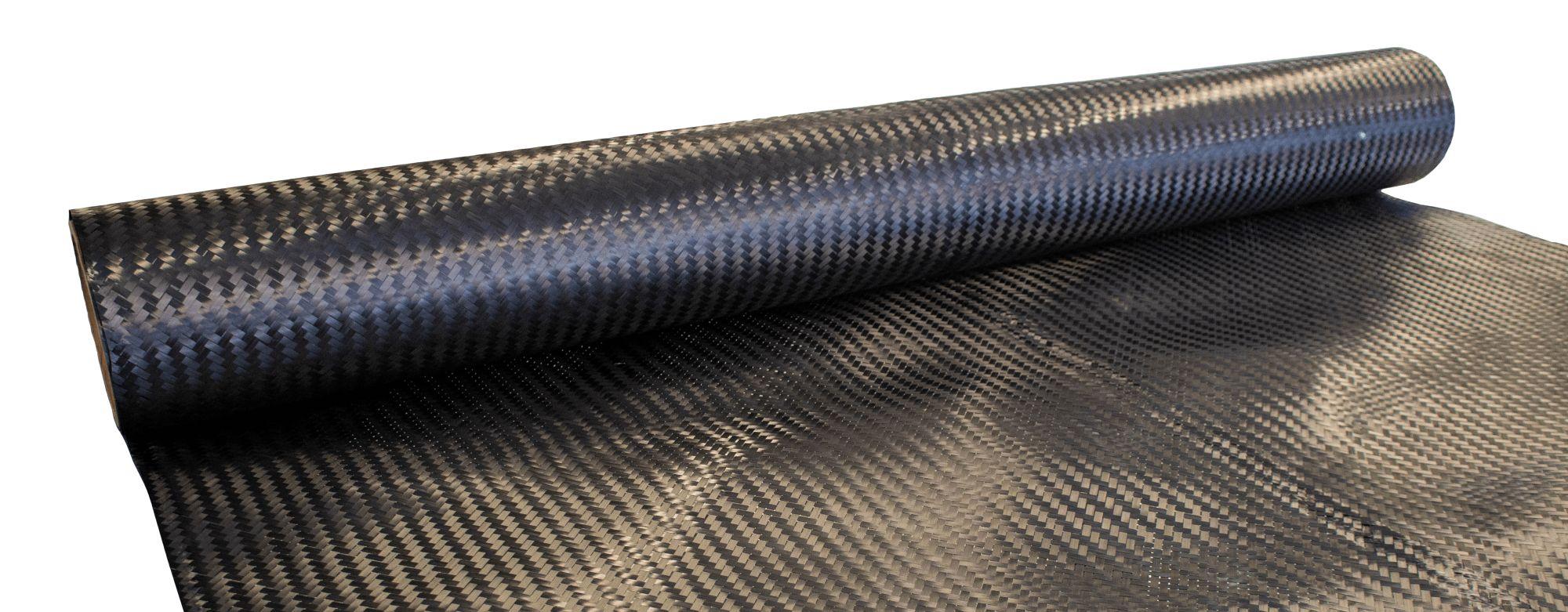
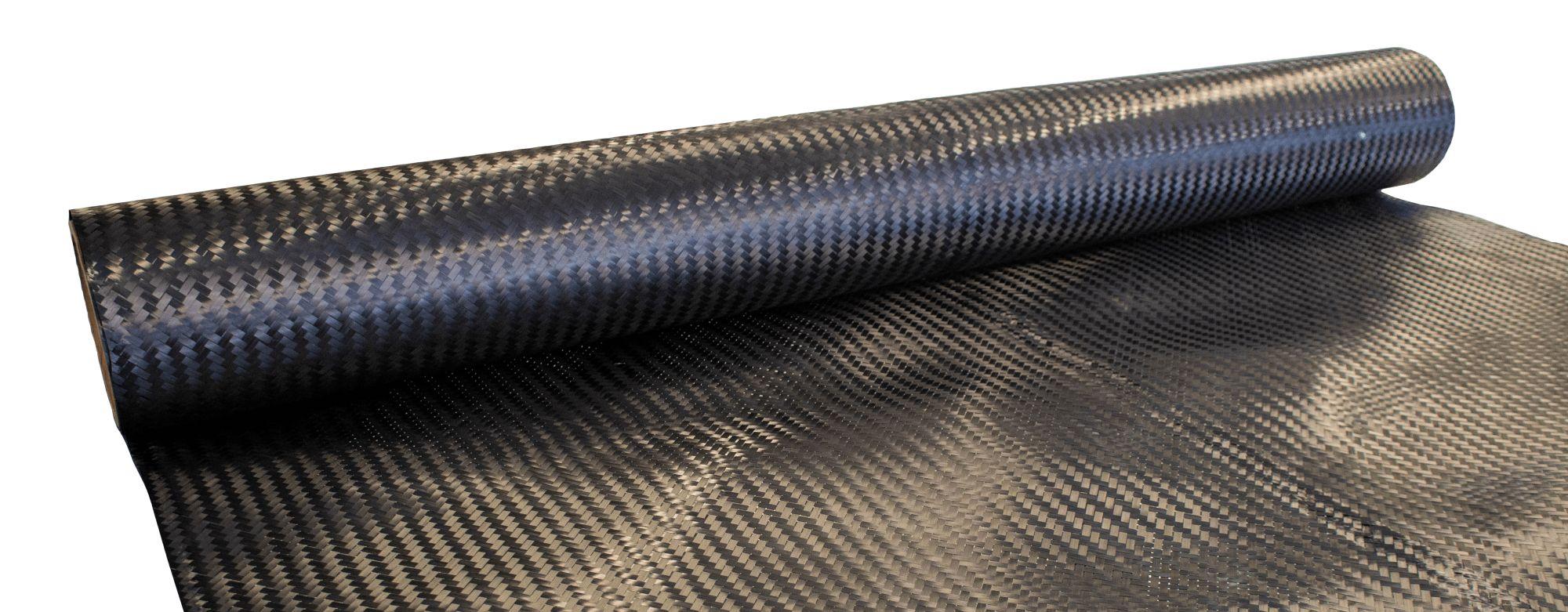
Teijin Carbon, in collaboration with A&P Technology, announced a joint innovation in advanced composite materials. IMS65 PAEK Bimax® biaxial fabric is a rate enabling solution using Teijin Carbon’s Tenax™ TPUD IMS65 PAEK product, a thermoplastic unidirectional (UD) tape. It is designed to meet growing demand for scalable, high-speed production of composites in aerospace, space, defense and other evolving markets.

Teijin’s Tenax™ TPUD IMS65 PAEK – a high-quality UD tape based on polyaryletherketone (PAEK) resin is slit into narrow widths and braided by A&P Technology into a 65” wide +/-45° fabric. The +/-45° braid architecture has minimal crimp- offering a high translation of tape properties while providing excellent drapability for complex geometries. With a fiber areal weight of just 184 gsm and 34 percent PAEK content, IMS65 PAEK Bimax® enables out of autoclave (OoA) processing and vacuum bag only (VBO) consolidation, significantly reducing manufacturing time while enhancing mechanical performance and impact resistance.

Features and benefits of IMS65 PAEK Bimax® fabric:

Teijin Carbon, in collaboration with A&P Technology, announced a joint innovation in advanced composite materials. IMS65 PAEK Bimax® biaxial fabric is a rate enabling solution using Teijin Carbon’s Tenax™ TPUD IMS65 PAEK product, a thermoplastic unidirectional (UD) tape. It is designed to meet growing demand for scalable, high-speed production of composites in aerospace, space, defense and other evolving markets.

Teijin’s Tenax™ TPUD IMS65 PAEK – a high-quality UD tape based on polyaryletherketone (PAEK) resin is slit into narrow widths and braided by A&P Technology into a 65” wide +/-45° fabric. The +/-45° braid architecture has minimal crimp- offering a high translation of tape properties while providing excellent drapability for complex geometries. With a fiber areal weight of just 184 gsm and 34 percent PAEK content, IMS65 PAEK Bimax® enables out of autoclave (OoA) processing and vacuum bag only (VBO) consolidation, significantly reducing manufacturing time while enhancing mechanical performance and impact resistance.

Features and benefits of IMS65 PAEK Bimax® fabric:

  • High fiber volume and low crimp for superior mechanical performance
  • Extreme drapability for deep-draw parts
  • Reduced lay-up time per layer – 65” wide fabric enables quick laydown of biaxial reinforcement
  • Native air evacuation pathways for optimal consolidation of thick components
  • Room temperature preform placement with spot tacking to simplify production workflows

This innovative braided fabric meets or exceeds the properties of existing National Center for Advanced Materials Performance (NCAMP)-qualified PAEK prepregs, offering a robust and scalable solution for next-generation composite structures. The combination of Teijin Carbon’s advanced thermoplastic UD tape technology and A&P Technology’s expertise in braided fabric manufacturing delivers a truly high-performance solution for modern composite applications.

FET-500 Series of gel spinning systems Photo FET Ltd
FET-500 Series of gel spinning systems
06.10.2025

UHMWPE fibres: New gel spinning systems for biomedical market

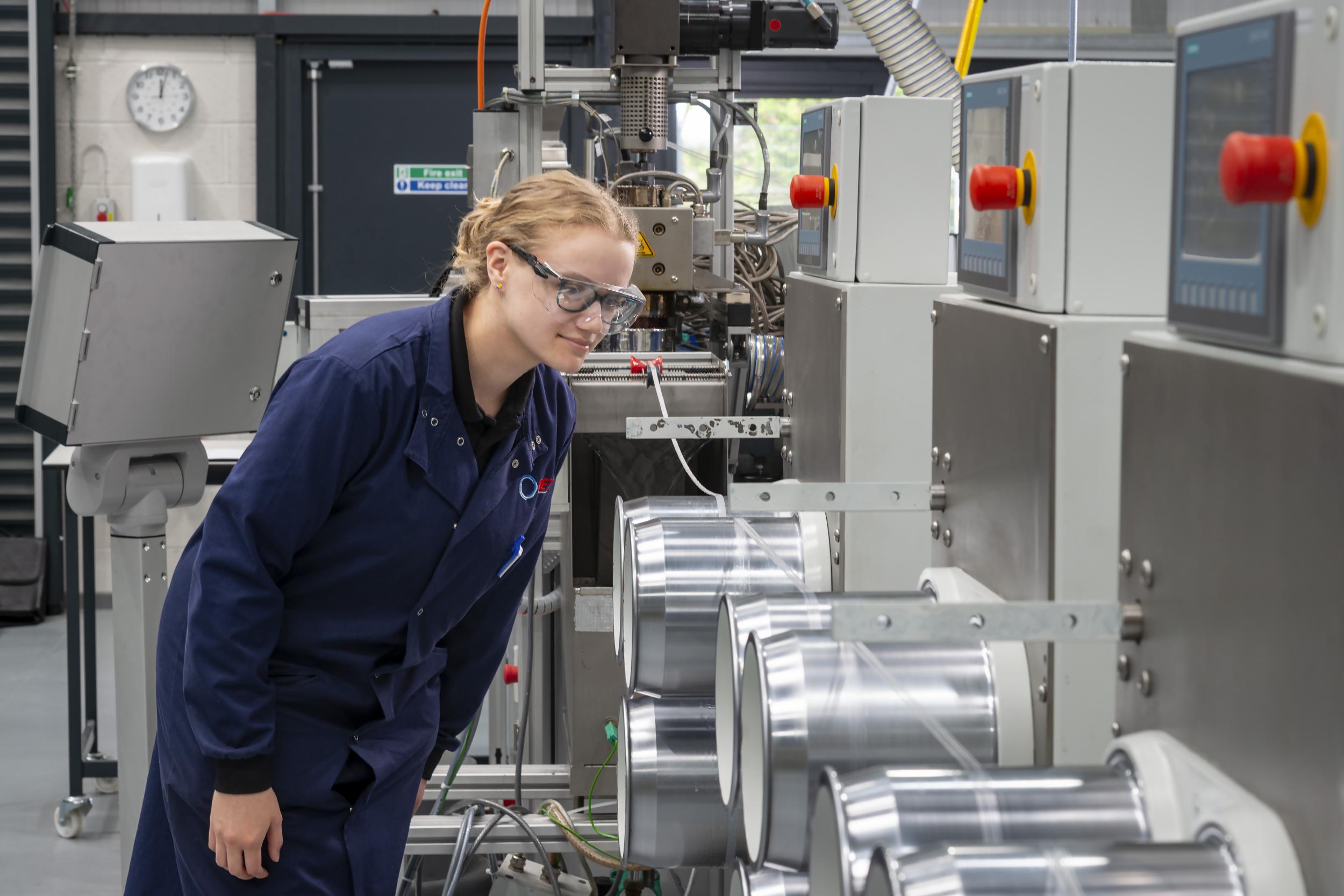
FET is launching the FET-500 Series of gel spinning systems in a move that could revolutionise the research and development of UHMWPE fibres.

Fibre Extrusion Technology Ltd (FET) of Leeds, UK, has built a reputation in medical fibre extrusion technology and innovations, designing and delivering high-performance equipment for a range of precursor medical products, including bespoke extrusion systems for the production of both resorbable and non-absorbable sutures. FET’s equipment supports small-scale, adaptable production and rapid new product development.       

In recent years, there has been a growing demand for R&D of UHMWPE fibres. These fibres are prized in many industries due to their extraordinary properties. However, current production processes are complex and focused on the large-scale output of existing fibre grades. This rigid supply chain has stifled innovation in this untapped product market.

FET is launching the FET-500 Series of gel spinning systems in a move that could revolutionise the research and development of UHMWPE fibres.

Fibre Extrusion Technology Ltd (FET) of Leeds, UK, has built a reputation in medical fibre extrusion technology and innovations, designing and delivering high-performance equipment for a range of precursor medical products, including bespoke extrusion systems for the production of both resorbable and non-absorbable sutures. FET’s equipment supports small-scale, adaptable production and rapid new product development.       

In recent years, there has been a growing demand for R&D of UHMWPE fibres. These fibres are prized in many industries due to their extraordinary properties. However, current production processes are complex and focused on the large-scale output of existing fibre grades. This rigid supply chain has stifled innovation in this untapped product market.

The FET-500 gel spinning systems will address this gap in the market. The FET-500 enables a flexible and consistent process, able to produce quality fibres with less than 100 grams of polymer, while avoiding the harsh processing chemicals that were historically associated with gel spinning. The key to unlocking this lab and pilot scale flexibility is the use of supercritical carbon dioxide as a green solvent in a patent-pending process.

Gel spinning starts with extrusion, but the additional washing and drawing technology to produce finished yarn is critical to the overall performance characteristics. An example of the wide range of features and benefits can be shown in the Washing process, with Patent Pending technology using Supercritical Carbon Dioxide:

Extract carrier oil without using toxic, environmentally harmful chemicals such as Hexane and DCM.

  • CO2 is green, cheap, abundant, and significantly safer to work with
  • CO2 efficiently dissolves carrier oils without affecting the polymer yarn

Reduced operational costs

  • 9-Vast reduction in solvent use (CO2 vs Hexane/DCM)
  • Comprehensive oil recovery and recycling
  • Zero solvent waste is generated, unlike the hexane route

Compact and efficient batch washing system

  • Recipe controlled plug and play technology
  • Scalable and adjustable to customer needs
  • Carrier oil is recovered and fed back to the extrusion process
  • 80% reduction in factory footprint vs hexane route

FET’s Fibre Development Centre is critical to the inception and success of the FET-500. Having this facility located in Leeds where the manufacturing takes place allows FET to offer a gateway to de-risk, develop and demonstrate the system’s capabilities. FET houses a full demonstration line of the FET-500 to allow customers, existing and new, to visit and experience the system operating from start to finish. They can also aid in developing new products and operating parameters through R&D trials, giving customers the confidence and knowledge to transfer a new product offering onto a production line.

Source:

FET Ltd

Oritain: Origin Verification to Leather for EUDR Readiness Photo Oritain Global
Oritain: Origin Verification to Leather for EUDR Readiness
01.10.2025

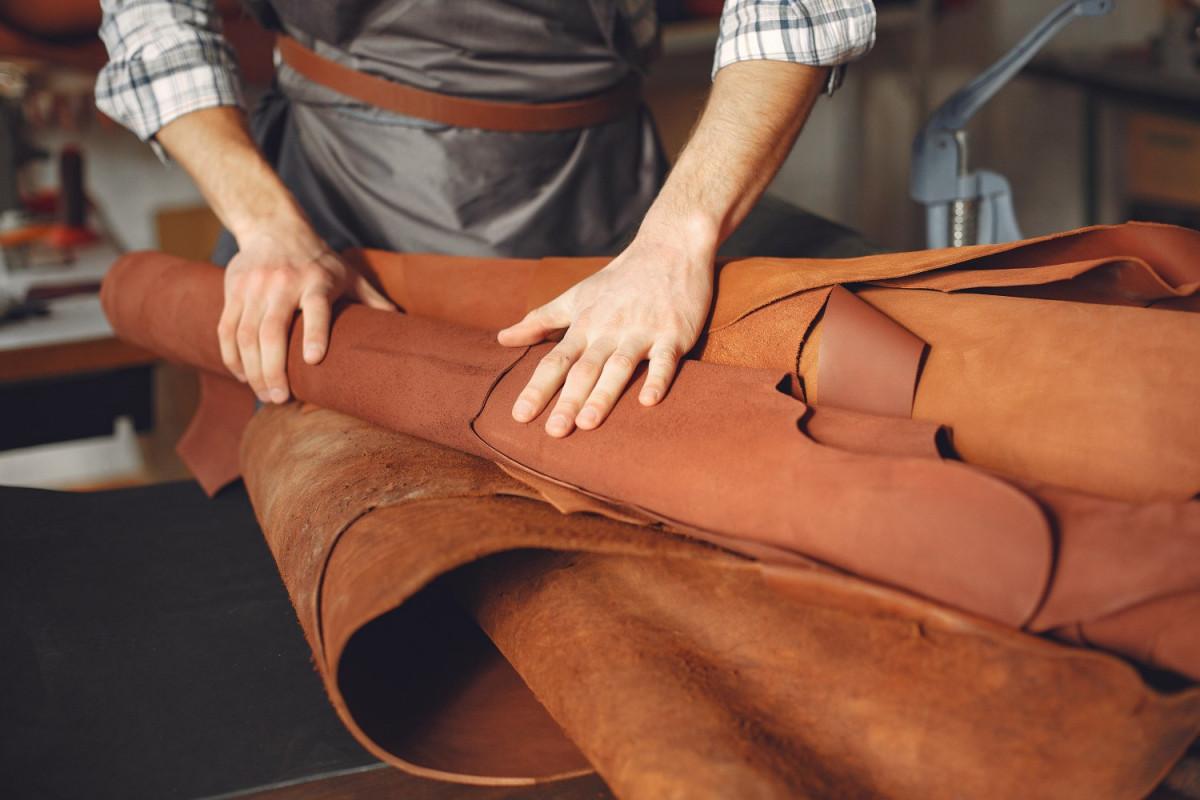
Oritain: Origin Verification to Leather for EUDR Readiness

Oritain announced the expansion of its services into leather. This development will enable the fashion, luxury fashion and automotive industries to meet the rising demand for traceability, sustainability, and regulatory compliance.

Oritain’s proprietary methodology already trusted across apparel, food and agriculture, can now verify the geographic origin of leather from key producing countries across Europe, Africa and South America.1 This capability is increasingly vital as regulations like the EU Deforestation Regulation (EUDR) are enforced and the Ecodesign for Sustainable Products Regulation (ESPR) mandates a Digital Product Passport. Such regulations require companies to disclose traceability information that proves their supply chains are transparent and ethically sourced.

Oritain announced the expansion of its services into leather. This development will enable the fashion, luxury fashion and automotive industries to meet the rising demand for traceability, sustainability, and regulatory compliance.

Oritain’s proprietary methodology already trusted across apparel, food and agriculture, can now verify the geographic origin of leather from key producing countries across Europe, Africa and South America.1 This capability is increasingly vital as regulations like the EU Deforestation Regulation (EUDR) are enforced and the Ecodesign for Sustainable Products Regulation (ESPR) mandates a Digital Product Passport. Such regulations require companies to disclose traceability information that proves their supply chains are transparent and ethically sourced.

The global leather goods market is projected to grow from $493 billion in 2025 to $904 billion in 2035, according to Future Market Insights (FMI, 2025). Meanwhile, the luxury leather goods segment alone is expected to generate over $66 billion in revenue in 2025, as reported by Statista (2025). These growth figures underscore the growing pressure on brands to demonstrate responsible sourcing.

“Leather sourcing is facing heightened scrutiny for its environmental and human rights impacts” said Alyn Franklin, CEO of Oritain. “Our origin verification programs give brands and tanneries the insights they need to make meaningful changes in their supply chain, meet regulatory obligations and build lasting trust with their customers.”

Traceability is no longer a nice-to-have; it’s a strategic imperative. Regulatory frameworks are tightening, and consumer expectations are shifting towards transparency, sustainability, and ethical practices. Brands that fail to meet these standards risk reputational damage, legal consequences, and loss of consumer trust.

Oritain’s extensive origin database and forensic expertise provide a unique solution for brands navigating increasingly complex supply chains. The service is designed to verify sourcing claims made by intermediaries and tanneries, enabling brands to identify deforestation and labour risks, supporting end-to-end supply chain mapping. Whether it’s bespoke handbags, premium footwear, or high-end automotive interiors, Oritain’s product origin verification is tailored to meet the unique needs of the fashion and automotive sectors, offering both precision and adaptability.

This launch follows Oritain’s recent expansion into the timber industry, another commodity highly relevant to concerns surrounding deforestation and subject to scrutiny by regulators. This broader business expansion into new sectors reflects Oritain’s commitment to innovation, and its role in helping clients set new standards for transparency and accountability.

“Our customers are looking for ways to get visibility into their supply chains. Extending our service to leather means we can stand alongside them and have a positive impact on the wider industry, delivering on our vision of being the source of truth in global supply chains” said Paul Bentham, Chief Product and Technology Officer at Oritain.
 
1 Argentina, Nigeria, Spain, Belgium, Italy, Turkey, Albania, France, Netherlands, UK, Germany.


Source:

Oritain Global

Photo: Messe Frankfurt / Jean-Luc Valentin
01.10.2025

Techtextil and Texprocess Innovation Awards: Submit ideas now

The countdown for submissions has begun. Until 15 December 2025, companies can enter their developments for the Techtextil Innovation Award and the Texprocess Innovation Award. Those selected by the distinguished juries benefit from international visibility as well as from the reputation and reach of the two leading trade fairs. From 21 to 24 April 2026, Techtextil and Texprocess bring together the global industries in Frankfurt. The presentation of the Innovation Awards and the showcasing of the winning ideas is among the most prominent highlights.

The industry is evolving at a rapid pace – from new advances in technical textiles and nonwovens to forward-looking manufacturing and processing technologies. Current developments such as the use of AI, sustainable approaches and new production methods are creating additional opportunities for innovation. Especially in times of recession, tariffs and restrained investment, these impulses take on particular significance. They open up new opportunities in numerous fields, ranging from mobility and medicine to apparel. The Techtextil and Texprocess Innovation Awards provide international visibility for the best ideas.

The countdown for submissions has begun. Until 15 December 2025, companies can enter their developments for the Techtextil Innovation Award and the Texprocess Innovation Award. Those selected by the distinguished juries benefit from international visibility as well as from the reputation and reach of the two leading trade fairs. From 21 to 24 April 2026, Techtextil and Texprocess bring together the global industries in Frankfurt. The presentation of the Innovation Awards and the showcasing of the winning ideas is among the most prominent highlights.

The industry is evolving at a rapid pace – from new advances in technical textiles and nonwovens to forward-looking manufacturing and processing technologies. Current developments such as the use of AI, sustainable approaches and new production methods are creating additional opportunities for innovation. Especially in times of recession, tariffs and restrained investment, these impulses take on particular significance. They open up new opportunities in numerous fields, ranging from mobility and medicine to apparel. The Techtextil and Texprocess Innovation Awards provide international visibility for the best ideas.

The innovations are driving progress in numerous industries. In 2024, the award winners presented recyclable fibre composites for aviation, self-cooling textiles for façades and measurement methods for body scans based on 4D scanning. Whether in mobility, construction, medicine or apparel – textile and technological innovations are creating new opportunities for progress.

Categories Techtextil Innovation Award 2026

  • New Concept
  • New Material
  • New Application
  • New Product
  • New Chemicals & Dyes
  • New Recycled Materials & Recycling Technologies
  • New Production Technology, Digitalisation & AI Solutions

Submit application: https://solutions.techtextil.com/

Categories Texprocess Innovation Award 2026

  • Economic quality (cost minimisation, time and process optimisation, automation)
  • Ecological quality (climate protection, energy efficiency, sustainability, recycling, circularity)
  • Digitalisation + AI
  • Innovation for quality improvement

Submit application: https://solutions.texprocess.com/

Information on participation
The submission deadline for all applications for the Techtextil and Texprocess Innovation Awards 2026 is 15 December 2025. All companies, institutes, universities, polytechnics and individuals are eligible to apply. Participation is free of charge. Submitted developments must have been on the market for less than two years or be shortly before the market launch. From mid-December 2025, two experienced international expert juries examine all submitted products in detail and evaluate them according to criteria such as degree of innovation, market potential, sustainability, choice of materials and technical quality. The winning companies are formally and prominently presented on the first day of the trade fair, 21 April 2026, in Frankfurt am Main.

Takaya Miyano Photo Teijin Carbon Europe GmbH
Takaya Miyano
01.10.2025

Leadership Change at Teijin Carbon Europe

Teijin Carbon Europe GmbH announces an important change in its executive leadership. Effective October 1, 2025, Dr. Bernd Wohlmann will step down from his role as CEO after seven successful years leading the company.

Dr. Wohlmann has played a key role in shaping the development of Teijin Carbon Europe. Under his leadership, the company has achieved significant milestones and navigated through challenging times with resilience and strategic foresight. Discussions regarding his future role within the Teijin Group are currently ongoing.

Moving forward, Takaya Miyano and Jörg Friedrich will continue to lead Teijin Carbon Europe as Managing Directors. 

Teijin Carbon, a subsidiary of the Teijin Group, specializes in the development and production of carbon fibers and carbon fiber-based materials. Under the brands Tenax™ and Tenax Next™, Teijin Carbon offers high-performance material solutions for industries such as aerospace, automotive, energy, electronics, civil engineering and sporting goods.

Teijin Carbon Europe GmbH announces an important change in its executive leadership. Effective October 1, 2025, Dr. Bernd Wohlmann will step down from his role as CEO after seven successful years leading the company.

Dr. Wohlmann has played a key role in shaping the development of Teijin Carbon Europe. Under his leadership, the company has achieved significant milestones and navigated through challenging times with resilience and strategic foresight. Discussions regarding his future role within the Teijin Group are currently ongoing.

Moving forward, Takaya Miyano and Jörg Friedrich will continue to lead Teijin Carbon Europe as Managing Directors. 

Teijin Carbon, a subsidiary of the Teijin Group, specializes in the development and production of carbon fibers and carbon fiber-based materials. Under the brands Tenax™ and Tenax Next™, Teijin Carbon offers high-performance material solutions for industries such as aerospace, automotive, energy, electronics, civil engineering and sporting goods.

Source:

Teijin Carbon Europe GmbH

Paul Schlack Prize 2025 goes to Leonie Beek © Andreas Schmitter
Paul Schlack Prize 2025 goes to Leonie Beek
01.10.2025

Paul Schlack Prize 2025: Oil filtration with a bionic textile

On various biological surfaces, oil is adsorbed from water surfaces and transported along the leaf. In her dissertation, ITA Postdoc Dr Leonie Beek transferred this effect to a technical textile using her Bionic Oil Absorber (BOA), which can remove up to 4 litres of diesel per hour from water at technological readiness level 4. For this development, Dr Beek was awarded the Paul Schlack Prize 2025 for her dissertation ‘Bionic textiles for oil-water separation modelled on superhydrophobic biological surfaces’ on 10 September 2025. The award ceremony took place during the opening event of the Dornbirn GFC Global Fiber Congress in Austria.

Oil-water separation without additional energy or toxic substances 
Dr Leonie Beek's dissertation focused on the sustainable separation of oil and water. On various biological surfaces, oil is adsorbed from water surfaces and transported along the leaf. This effect differs from technical solutions in that oil-water separation is achieved without external energy and without toxic substances.

On various biological surfaces, oil is adsorbed from water surfaces and transported along the leaf. In her dissertation, ITA Postdoc Dr Leonie Beek transferred this effect to a technical textile using her Bionic Oil Absorber (BOA), which can remove up to 4 litres of diesel per hour from water at technological readiness level 4. For this development, Dr Beek was awarded the Paul Schlack Prize 2025 for her dissertation ‘Bionic textiles for oil-water separation modelled on superhydrophobic biological surfaces’ on 10 September 2025. The award ceremony took place during the opening event of the Dornbirn GFC Global Fiber Congress in Austria.

Oil-water separation without additional energy or toxic substances 
Dr Leonie Beek's dissertation focused on the sustainable separation of oil and water. On various biological surfaces, oil is adsorbed from water surfaces and transported along the leaf. This effect differs from technical solutions in that oil-water separation is achieved without external energy and without toxic substances.

Possible use in harbour basins or in the event of flooding/pollution of inland waters 
Dr Beek integrated the bionic textile into a floating device (Bionic Oil Adsorber – BOA). The BOA demonstrator, which has a technology readiness level of 4, can remove up to 4 litres of diesel per hour. It is intended for use in port areas. Another promising application is in the event of flooding and pollution of inland waters and urban sewage treatment plants.

Ecologically and economically sustainable technology 
The technology is ecologically sustainable, as both the textile and the separated oil can be reused. It is also economically sustainable, as the textile is up to 13 times cheaper than sorption materials with a service life of 21 days.

Overall, Dr Leonie Beek succeeded in her dissertation in transferring the biological principle to a bionic textile and presenting a product for use in the completely new application of oil-water separation. This is the first time that superhydrophobic surfaces have been used outside of friction reduction.

Since 1971, the Paul Schlack Prize has been awarded at the Dornbirn GFC Global Fiber Congress (formerly Dornbirn Man-made Fibers Congress) in Dornbirn (Austria) to promote chemical fibre research at universities and research institutes. Previous ITA winners of the Paul Schlack Prize include Dr Stefan Peterek, Dr Andreas De Palmenaer, Prof. Dr Gunnar Seide, Dr Wilhelm Steinmann, Dr Stephan Walter, Dr Gisa Wortberg, Dr Benjamin Weise, and Dr Markus Beckers.

Source:

ITA – Institut für Textiltechnik of RWTH Aachen University

25.09.2025

Milliken acquires South Carolina Textile Facility

Global diversified manufacturer Milliken & Company has acquired the assets of Highland Industries, Inc. in Cheraw, South Carolina. The transaction strengthens Milliken’s domestic operations and position in technical textiles.

“This acquisition bolsters the capabilities of Milliken’s technical textiles business to benefit our customers,” said Halsey Cook, president and CEO of Milliken. “We remain committed to the U.S. textile industry and grounded in our belief that precision manufacturing of innovative, high-performance materials is crucial for industrial resilience.”

The Highland facility will become a hub for Milliken’s technical textile weaving and knitting capabilities in the region.

“In addition to reinforcing current operations, acquiring Highland adds new offerings to the technical textiles portfolio,” said Allen Jacoby, EVP and president of Milliken’s technical textiles business. “Highland provides important assets to help us better serve our customers and opens the door to new growth opportunities.” 

Global diversified manufacturer Milliken & Company has acquired the assets of Highland Industries, Inc. in Cheraw, South Carolina. The transaction strengthens Milliken’s domestic operations and position in technical textiles.

“This acquisition bolsters the capabilities of Milliken’s technical textiles business to benefit our customers,” said Halsey Cook, president and CEO of Milliken. “We remain committed to the U.S. textile industry and grounded in our belief that precision manufacturing of innovative, high-performance materials is crucial for industrial resilience.”

The Highland facility will become a hub for Milliken’s technical textile weaving and knitting capabilities in the region.

“In addition to reinforcing current operations, acquiring Highland adds new offerings to the technical textiles portfolio,” said Allen Jacoby, EVP and president of Milliken’s technical textiles business. “Highland provides important assets to help us better serve our customers and opens the door to new growth opportunities.” 

Source:

Milliken & Company

The NeuroString is just a quarter of a millimeter in diameter – about the width of a human hair – and can host hundreds to thousands of independent electronic channels that could be used to sense, stimulate, or monitor parts of the human body. Courtesy Bao Lab
The NeuroString is just a quarter of a millimeter in diameter – about the width of a human hair – and can host hundreds to thousands of independent electronic channels that could be used to sense, stimulate, or monitor parts of the human body.
24.09.2025

Soft bioelectronic fiber tracking hundreds of biological events simultaneously

Developed by Stanford researchers, NeuroString is a hair-thin multichannel biosensor and stimulator with promising potential applications in drug delivery, nerve stimulation, smart fabrics, and more.
 

Developed by Stanford researchers, NeuroString is a hair-thin multichannel biosensor and stimulator with promising potential applications in drug delivery, nerve stimulation, smart fabrics, and more.
 

  • NeuroString is a small, soft fiber that is made of skin-like material and can host hundreds to thousands of electronic channels.
  • The hope is that NeuroString could be implanted in the body to sense chemicals, deliver drugs, stimulate muscles or nerves, and monitor bodily activity.
  • Outside the body, this invention could enable new smart fabrics, wearable devices, and soft robotics. It could also enhance study of lab-grown tissues.
  • So far, researchers have used NeuroString to monitor the intestines of a pig and to observe individual neurons in the brain of a mouse.

Stanford pediatric surgeon James Dunn specializes in helping children with short gut syndrome, a congenital disease in which children are born with short intestinal tracts. “I’ve been working to grow new intestinal tissue by applying a mechanical force to the intestine – stretching it,” Dunn, who is a professor of surgery in the School of Medicine, explained. “But I didn’t have a way to demonstrate that this new tissue is functioning exactly like normal intestine.”

That is when Dunn reached out to Zhenan Bao, the K.K. Lee Professor of Chemical Engineering and director of the Stanford Wearable Electronics Initiative (eWEAR), who has drawn worldwide attention for developing skinlike electrical circuits, like her electronic skin that can sense the weight of a butterfly and the heat of a flame. The result of their collaboration is NeuroString, a multichannel, soft, thread-like implantable biosensor/stimulator.

NeuroString is just a quarter of a millimeter in diameter – about the width of a human hair – and can host hundreds to thousands of independent electronic “channels,” each of which can sense neurochemicals, stimulate muscle or nerve, sense gut movement patterns, or monitor the activity of a single neuron, among many other promising possibilities. 

Unmet needs
“There is great need, in both research and clinical settings, for these minimally invasive sensing and stimulation bioelectronics,” said co-author Xiang Qian, co-director of Stanford’s eWear Initiative and a medical doctor who specializes in neuromodulation to treat severe pain. Currently, clinical tools boil down to rigid and bulky needlelike probes or stiff wires with limited functionality.

“It is a high-density electronic fiber that’s also exceptionally biocompatible due to its softness,” Qian said. “It can stay inside the body for months at a time or longer, and it’s so soft and small that it can be implanted without discomfort or harm to the patient.”

Beyond the thin and soft circuitry, Bao’s team also developed a clever roll-up fabrication technique. They prepared a video of the method that shows a prototype with 20 electronic channels laid out on a thin, transparent skin-like material. The film is then rolled tightly into a spindle so thin it is described as one-dimensional. All 20 electrical connecting wires in the example are spiraled inside the string, like the layers in a Swiss roll, while the 20 sensors are exposed on the surface. Each independent sensor/stimulator is connected by a discrete wire running the length of the NeuroString to deliver valuable data.

Bao said the approach allows exquisite control of the positioning and distribution of the active components, and her team has demonstrated a fiber with a remarkable 1,280 individual channels. “Many more channels can be added if we make longer fibers,” says Muhammad Khatib, a postdoctoral fellow and first author on the paper.

New frontiers
On a practical front, to demonstrate the effectiveness of their new electronic fiber, Bao, Dunn, and team used the implanted NeuroString to monitor the intestines of a pig and to observe individual neurons in the brain of a mouse over four months.

Dunn explained that, in his field, measuring basic things like how the intestine contracts without interrupting normal activities may sound easy, but it has so far been out of reach, not to mention that the intestine also does a lot of things like absorbing nutrients and secreting biochemicals like serotonin that he might want to track.

“To be able to stimulate the muscle and measure all these other things in a specific region will be transformative for my research and, potentially, my medical practice – NeuroString is a platform for us to understand how the intestine works,” Dunn said.
 
The research team anticipates that such devices could have far-reaching impacts in fields ranging from neuroscience to gastroenterology. They envision that it could yield robotic pills that can be swallowed to diagnose medical conditions throughout the gastrointestinal tract or be wrapped around an optical fiber to create an ultra-thin endoscope.

Qian thinks NeuroString could introduce an era of minimally invasive, closed-loop neural stimulation techniques – devices that can both sense nerve dysfunction and intervene in an instant. “You only need to stimulate when you detect this abnormal electric signal to shut it down,” Qian said of his device, which he is currently testing in mice. “It will be ten times smaller than conventional alternatives and much safer with fewer complications. It would be groundbreaking.”

In a tubelike form, Bao says the NeuroString could deliver drugs to precise locations inside the body. Imagine a new form of implantable insulin pump that both senses blood sugar and delivers the life-sustaining hormone on demand, much like the pancreas.

In brain studies, NeuroString could deliver light for optogenetics and sense its effect on local neurons to optimize light intensity. And these potential applications are only the in-body opportunities for NeuroString. In other practical outlets, Bao said, NeuroString might lead to a new era of smart fabrics and textiles, wearable devices, and soft robotics.

Synthetic organs
One area of research that Bao finds particularly intriguing is organoids – lab-grown tissues that function like real tissue for use in research. Her team, together with Xiaoke Chen, associate professor of biology in the School of Humanities and Sciences, initially developed a NeuroString with only one neurochemical sensor seeded by Bio-X seed funding. The team’s initial development of this advanced NeuroString came under the aegis of the Brain Organogenesis Big Ideas in Neuroscience program at the Wu Tsai Neurosciences Institute.

The Brain Organogenesis program is pursuing new models of human brain circuits to understand how the brain develops and what is happening when things go wrong, as in numerous neurological and psychiatric diseases from depression to Parkinson’s disease. Bao said her NeuroString technology was inspired by the need for soft sensors that can be embedded inside the growing organoids that will allow researchers deeper insights into the function and biochemistry of these lab-grown mini-organlike structures to mimic human tissues.

“We hope to thread these thin electronics inside and throughout organoids, to promote and monitor their growth,” Bao said. “That’s our vision and it’s pretty exciting.”

Source:

Andrew Myers, Stanford University

from left to right: Felix Neugart (CEO, NRW.Global Business), V. Arun Roy, I.A.S. (Principal Secretary, Department of Industry, Government of Tamil Nadu), Hon. M.K. Stalin (Chief Minister of Tamil Nadu), Hon. Dr TRB Rajaa (Minister of Industry, Investment Promotion and Trade, Government of Tamil Nadu), Dr Akram Idrissi (ITA – RWTH Aachen), Varqha Bagwan (ITA – RWTH Aachen) and Reinhold von Ungern-Sternberg (BVMW) (from left to right) Source: Guidance Tamil Nadu
from left to right: Felix Neugart (CEO, NRW.Global Business), V. Arun Roy, I.A.S. (Principal Secretary, Department of Industry, Government of Tamil Nadu), Hon. M.K. Stalin (Chief Minister of Tamil Nadu), Hon. Dr TRB Rajaa (Minister of Industry, Investment Promotion and Trade, Government of Tamil Nadu), Dr Akram Idrissi (ITA – RWTH Aachen), Varqha Bagwan (ITA – RWTH Aachen) and Reinhold von Ungern-Sternberg (BVMW) (from left to right)
22.09.2025

Deutschland und Indien kooperieren: KI-gestützte Fertigung, Robotik und intelligente Textilien

The Tamil Nadu Industrial Development Corporation (TIDCO) and the Institut für Textiltechnik (ITA) of RWTH Aachen University are planning to cooperate in the future in the field of AI-supported manufacturing, robotics and smart textiles. At the same time, the aim is to promote talent exchange and a sustainable Indian-German partnership.

The memorandum of understanding (MoU) was signed during the Tamil Nadu Rising Investment Conclave in Düsseldorf. M. K. Stalin, Chief Minister of the Indian state of Tamil Nadu, and high-ranking representatives from government and industry were present at the signing.

The aim of the partnership is to create an open innovation ecosystem that combines dynamic industry with Germany's excellent research. This partnership is strongly supported by Guidance Tamil Nadu and Hon. Dr TRB Rajaa, Minister for Industry, Investment Promotion and Trade of the Government of Tamil Nadu.

Thiru V. Arun Roy, I.A.S., Principal Secretary, Department of Industry, Government of Tamil Nadu, exchanged the MoU on behalf of Sandeep Nanduri, I.A.S., Managing Director, TIDCO.

The Tamil Nadu Industrial Development Corporation (TIDCO) and the Institut für Textiltechnik (ITA) of RWTH Aachen University are planning to cooperate in the future in the field of AI-supported manufacturing, robotics and smart textiles. At the same time, the aim is to promote talent exchange and a sustainable Indian-German partnership.

The memorandum of understanding (MoU) was signed during the Tamil Nadu Rising Investment Conclave in Düsseldorf. M. K. Stalin, Chief Minister of the Indian state of Tamil Nadu, and high-ranking representatives from government and industry were present at the signing.

The aim of the partnership is to create an open innovation ecosystem that combines dynamic industry with Germany's excellent research. This partnership is strongly supported by Guidance Tamil Nadu and Hon. Dr TRB Rajaa, Minister for Industry, Investment Promotion and Trade of the Government of Tamil Nadu.

Thiru V. Arun Roy, I.A.S., Principal Secretary, Department of Industry, Government of Tamil Nadu, exchanged the MoU on behalf of Sandeep Nanduri, I.A.S., Managing Director, TIDCO.

Dr Akram Idrissi, Head of Strategy & Business Development at ITA, exchanged the MoU on behalf of ITA Director Prof. Dr Thomas Gries.

Source:

Institut für Textiltechnik der RWTH Aachen University

Cinte Techtextil China 2025 (c) Messe Frankfurt (HK) Ltd
22.09.2025

Cinte Techtextil China: 20,000 visits from 74 countries and regions

After three days of facilitating meaningful exchange for numerous applications of technical textiles and nonwovens, Cinte Techtextil China 2025 concluded on 5 September at the Shanghai New International Expo Centre. Feedback across the fairground was highly positive, especially from first-time exhibitors and buyers who valued the platform’s capability to create new opportunities both in China and overseas markets. The fair attracted nearly 20,000 visits from 74 countries and regions – a 17% increase from last year, and, as the most comprehensive edition ever in terms of product categories, visitors had much to explore. Major fringe events, such as the China International Nonwovens Conference (CINC), Econogy Tour, Sustainability Forum, and AI Panel, linked innovation and sustainability with industry demands, maximising reach and business opportunities for participants.

After three days of facilitating meaningful exchange for numerous applications of technical textiles and nonwovens, Cinte Techtextil China 2025 concluded on 5 September at the Shanghai New International Expo Centre. Feedback across the fairground was highly positive, especially from first-time exhibitors and buyers who valued the platform’s capability to create new opportunities both in China and overseas markets. The fair attracted nearly 20,000 visits from 74 countries and regions – a 17% increase from last year, and, as the most comprehensive edition ever in terms of product categories, visitors had much to explore. Major fringe events, such as the China International Nonwovens Conference (CINC), Econogy Tour, Sustainability Forum, and AI Panel, linked innovation and sustainability with industry demands, maximising reach and business opportunities for participants.

As Asia’s only dedicated show for the full spectrum of technical textiles and nonwovens, Cinte Techtextil China 2025 hosted over 300 global exhibitors, and welcomed a wide range of visitors, including sourcing decision-makers, textile & mechanical engineers, product developers, researchers, and more. The fair saw a significant rise in visitor pre-registrations, with international numbers increasing by over 40% compared to the previous edition. VIP buyers from across the globe attended the fair, as did 14 visitor delegations with over 250 participants. Some of the leading brands included domestic representatives from Kimberly-Clark (China), Li Auto, Li Ning, and L'Oréal (China); and international participants from Lego System (Denmark), Norafin Industries (Germany), Rockline Industries (USA), and Toyoshima & Co. Ltd (Japan).

Among the returning exhibitors, key international players included AUTEFA Solutions, Lindauer DORNIER and Rowa Group from Germany, Fil Man Made Group from Italy, Graf + Cie and Swisstulle from Switzerland, Picanol from Belgium, and more. This edition also welcomed several newcomers, partly due to the incorporation of textile chemicals and dyes into this year's product categories. Key exhibitors making their debuts included: Serel Industrie (Belgium) and Proton Products (UK) in the European Zone; Wetekam Group in the German Zone; Dupre Minerals (UK) and Michelman (USA) in the Textile Chemicals and Dyes Zone; Huamao (Xiamen), BW Advanced Materials, Shanghai Shenda, and Zhejiang Kingsafe Group from China, JCT Industries Group from Malaysia, Vietnam Geotextile from Vietnam, and more.

To support the diverse array of exhibitors and visitors onsite, Cinte Techtextil China identified specific development areas and offered relevant fringe events to facilitate meaningful interaction. The Econogy Tour and Sustainability Forum promoted the industry’s eco-transition, with the latter sparking cross-sector discussions among academia, brands, and other industry players. On the innovation front, the AI Panel and the Innovation Product Award and Presentation provided forward-looking insights from various perspectives, helping the industry reshape its future.

Other events like the CINC, themed ‘Breaking the Deadlock and Reconstruction’, offered in-depth discussions and report presentations for the nonwovens industry to navigate upcoming challenges and opportunities. To harness the promising Mobiltech trend, the fair organised a Technical Innovation Exchange Conference on Automotive Textiles followed by a tour visiting related exhibitors. Interested parties could also enjoy live-streamed tours organised for in-demand sectors such as Medtech, Mobiltech, and Protech.

The next edition of Cinte Techtextil China will be held from 1 – 3 September 2026.

The fair is organised by Messe Frankfurt (HK) Ltd; the Sub-Council of Textile Industry, CCPIT; and the China Nonwovens & Industrial Textiles Association (CNITA).

Source:

Messe Frankfurt (HK) Ltd