From the Sector

Reset
468 results
Source Fashion Photo Source Fashion
Source Fashion
06.11.2025

Source Fashion introduces Fashion Deconstructed in Jan 26

Source Fashion, the UK’s leading responsible sourcing show, returns to Olympia London from 13 -15 January 2026, introducing Fashion Deconstructed, an immersive, hands-on feature designed to give buyers and visitors an unprecedented look behind the scenes of fashion production. From upcycling and denim workshops to live factory production line and expert repair sessions, attendees will have the chance to explore the craft, quality, and construction that define great fashion. Whether it’s learning how to create a high-end garment in an hour or understanding the properties of premium fabrics, Fashion Deconstructed brings the making of fashion to life, offering practical insights and interactive experiences with some of the industry’s top experts.

Source Fashion, the UK’s leading responsible sourcing show, returns to Olympia London from 13 -15 January 2026, introducing Fashion Deconstructed, an immersive, hands-on feature designed to give buyers and visitors an unprecedented look behind the scenes of fashion production. From upcycling and denim workshops to live factory production line and expert repair sessions, attendees will have the chance to explore the craft, quality, and construction that define great fashion. Whether it’s learning how to create a high-end garment in an hour or understanding the properties of premium fabrics, Fashion Deconstructed brings the making of fashion to life, offering practical insights and interactive experiences with some of the industry’s top experts.

Attendees can take part in a variety of hands-on workshops led by some of the industry’s most respected names. Stuart Trevor, Fashion Designer and Founder of All Saints, will host upcycling sessions, while Ross Barry Founder of Reskinned will deconstruct denim to reveal its fibres and fabric properties. A mini production line, brought to life in partnership with Apparel TASKER, the innovative East London-based garment development and sustainable production unit, will showcase machinists creating garments in real time, demonstrating both volume production and the techniques needed to construct high-quality pieces efficiently. 

Additional workshops will teach participants how to produce multiple T-shirts in an hour and explore high-end construction with small teams. Leather repair sessions and practical demonstrations will be running throughout the show, offering plenty of opportunities for visitors to learn, experiment, and network with peers and industry experts. With a lively, interactive atmosphere, Fashion Deconstructed promises not just insight, but a chance to connect, share ideas, and have fun while exploring what makes fashion truly well-made.

Suzanne Ellingham, Director of Source Fashion says, “Fashion Deconstructed is about showing what good looks like in the most practical way. It’s also about showing how human fashion still is.  We want visitors to see and understand the skill, care, and craft that go into every garment, experiment with techniques, and connect with the people behind the industry. It’s hands-on, it’s interactive, and it’s fun."

Source:

Source Fashion

SCOTT Racing Team Photo C.L.A.S.S. Eco Hub
SCOTT Racing Team
06.11.2025

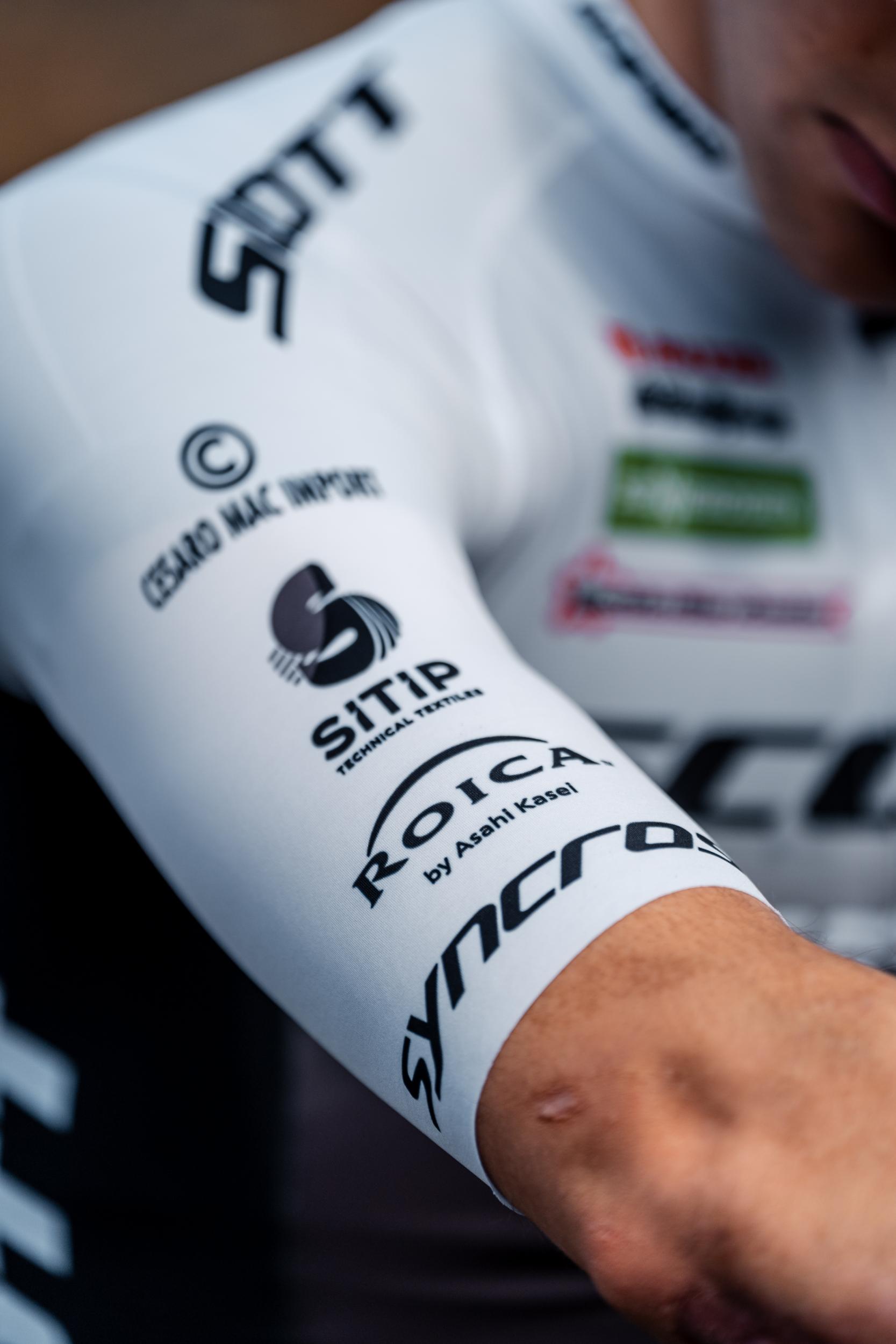
SCOTT Racing Team: Uniforms designed by ROICA™ by Asahi Kasei, Sitip and Rosti

In its fifth consecutive year of collaboration, the SCOTT Racing Team, ROICA™ by Asahi Kasei, Sitip, and Rosti have created an exclusive racing uniform designed for advanced performance. This partnership celebrates a season defined by shared values, cutting-edge innovation, and outstanding results — a synergy that highlights the power of collaborations built on commitment, passion, performance, and purpose.

Together, SCOTT and its technology partners delivered a product that enhances athletic performance while aiming high standards of environmental responsibility, supporting both environmental consciousness and gentleness for the skin. The kit reflects a vision of the future where technology and responsibility go hand in hand.

The 2025 season brought remarkable achievements for the SCOTT Racing Team, with an impressive record of 12 victories, 9 second places, and 11third places across 20 competitions, both national and international. These results were made possible thanks to the exceptional skill and dedication of the four riders — Stefano Goria, Andrea Siffredi, Davide Foccoli, and Andrin Beeli — and the reliable performance of the SCOTT Race Kit 2025, developed and perfected through the collaboration of three leading companies in the textile and apparel industry.

The 2025 SCOTT Racing Team uniform represents the summit of innovation in professional cycling apparel for its Uncompromising Performance.

Thanks to Sitip’s advanced fabrics using ROICA™ V550 degradable fiber, the Race Kit 2025 sets new standards in professional cycling:

  • Advanced UV protection (UPF50+)
  • Exceptional breathability
  • Ultra-lightweight “second skin” feel
  • Optimized aerodynamics
  • Superior abrasion resistance
  • Easy care
  • Enhanced comfort

All fabrics are designed for seamless construction and optimal body adhesion, reducing friction while enhancing the aerodynamic profile — essential for competitive cycling. Tested and refined with the SCOTT Racing Team, the kit is engineered to maximize race-day performance, from anatomical fit to optimal body temperature management.

Lastly, there is Rosti knitwear, known for its technical excellence in product and image, and with an all-Italian production in the province of Bergamo, which responded with great enthusiasm to the renewal of the partnership.

The 2025 SCOTT Race Kit is more than a uniform — it’s an extension of the athlete’s body, built to support riders from daily training sessions to the most demanding competitions, combining performance, innovation, and sustainability in every detail.

Source:

C.L.A.S.S. Eco Hub

Trends and Projections in Europe 2025 (c) European Environment Agency
Trends and Projections in Europe 2025
06.11.2025

European Environment Agency: Greenhouse gas emissions largely on track to 2030 targets

The European Union remains largely on track to achieve its 2030 targets to reduce net greenhouse gas emissions, according to the latest annual check-up on EU progress to its energy and climate targets published by the European Environment Agency today. Total net greenhouse gas emissions in the EU fell by a further 2.5% in 2024, according to estimated figures included in the ‘Trends and projections’ report.

The latest data show that collectively, EU Member States expect to achieve a net emissions reduction of 54% by 2030 compared with 1990 levels, which is just under the 55% reduction target, provided that EU Member States implement both current and planned policies and measures in full.

The EEA ‘Trends and projections’ report says that in 2024, EU net greenhouse gas emissions (as defined in the 2030 target under the EU’s Climate Law) fell by 37% compared to 1990 levels. Focusing on domestic EU net greenhouse gas emissions, hence excluding emissions from international aviation and maritime transport, the overall reduction exceeds 39%.

As in recent years, the largest reductions in 2024 occurred in the energy supply sector. Year-on-year reductions in other sectors like agriculture, buildings and waste were more limited, while emissions even increased slightly in industry and in both domestic and international transport.

The report notes several developments that will require focused attention in the coming years to maintain progress. These include a year-on-year decline in electric vehicle sales in 2024, stagnation in GHG emission reductions in certain sectors and Member States and the long-term negative trend in carbon sequestration of the EU’s forests and soils. Together, these trends all highlight the need to maintain a strong focus on, and investment in, climate action.

Energy transition well underway
While there is more work to do, Europe’s shift away from fossil energy sources is well underway, the report says. The overall reduction in emissions since 1990 has been mainly driven by the energy transition. The EU has succeeded in significantly reducing the use of the most emission-intensive fuels, such as coal and oil, while accelerating the development of renewable energy.

The EU has set a common target of reaching at least 42.5% renewable energy use by 2030 and of further reductions in energy consumption. The distance to these goals remains significant, the report says. To reach the 2030 renewables target, the annual additions of renewable energy capacity must more than double compared to the previous five-year averages. For final energy consumption, annual reductions must also more than double.

These ambitions are achievable but will require full and broad implementation of legislation as well as maximum efforts to scale up the enablers of the transition. Technologies such as heat pumps and electric vehicles play a crucial role to play here, as they can help cut emissions and reduce final energy use compared with fossil-based alternatives.

Progress to 2030 and beyond
The report notes several developments that will require focused attention in the coming years to maintain progress. These include a year-on-year decline in electric vehicle sales in 2024, stagnation in GHG emission reductions in certain sectors and Member States and the long-term negative trend in carbon sequestration of the EU’s forests and soils. Together, these trends all highlight the need to maintain a strong focus on, and investment in, climate action.

This report shows that the foundation for this progress is in place: recent years have seen a rapid acceleration in emission reductions and the emergence of numerous technological and policy solutions. However, it also underscores the scale of the remaining challenge — in particular, the need to strengthen more resilient carbon sinks, accelerate transport decarbonisation and ensure delivery at national level.

Every tonne of emissions avoided reduces future risks and costs. Every renewable installation, building renovation, or electric vehicle deployed represents a step to a cleaner, more energy independent and more resilient Europe.

About the report
The EEA’s Trends and projections in Europe report explores historical trends, recent progress and projected future progress on climate mitigation through reduced greenhouse gas emissions, renewable energy gains and improved energy efficiency. It builds on data reported by the EU-27 Member States, five EEA member countries and nine Contracting Parties of the Energy Community.

With this package, the EEA supports the European Commission’s assessment of progress toward meeting the EU’s climate and energy targets. In its upcoming Climate Action Progress Report, the Commission will use recently submitted National Energy and Climate Plans from Member States as an additional information source.

The EEA today also published its latest EEA briefing outlining progress and challenges in Europe’s climate adaptation policies and actions. Both are being released at the same time with the European Commission State of the Energy Union and Climate Action Progress Report 2025.

Source:

European Environment Agency 

06.11.2025

Lenzing AG: Volatile Q3, positive EBITDA outlook for 2025

In the first nine months of 2025, Lenzing AG recorded revenue growth and higher EBITDA, but a market-driven volatile third quarter. This performance reflects the effects of ongoing market volatility, tariffs and geopolitical uncertainties. Nevertheless, the medium to long-term outlook remains positive. 
 
The revenue generated by Lenzing AG rose by 0.7 percent to EUR 1.97 bn (prior-year period: EUR 1.96 bn) in the first nine months. EBITDA grew by 29.1 percent to EUR 340.4 mn (prior-year period: EUR 263.7 mn), including effects from the sale of surplus emission allowances and the valuation of biological assets. The EBITDA margin improved to 17.3 percent (prior-year period: 13.5 percent). Earnings before interest and tax (EBIT) amounted to EUR 20.6 mn (prior-year period: EUR 38.3 mn), which corresponds to an EBIT margin of 1 percent (prior-year period: 2 percent). This result includes asset impairments of EUR 82.1 mn in Indonesia. Earnings before tax (EBT) amounted to EUR minus 98.7 mn (prior-year period: EUR minus 33.4 mn).  
 
Strategic development 
Lenzing AG pursues a holistically adapted strategy with a clear focus on value-generating growth. Key pillars of this strategy include enhancing operational efficiency, optimizing production sites, and targeting high-margin premium products such as TENCEL™, VEOCEL™, and LENZING™ ECOVERO™. Additional growth potential is expected particularly in the fields of hygiene, packaging, filtration, as well as medical and industrial applications. 
 
To sustainably secure this growth and strengthen long-term competitiveness, the company has initiated a strategic review of its production site in Indonesia. The planned measures – including adjustments to administrative functions – are expected to generate additional annual savings of approximately EUR 45 mn by the end of 2027. For the current reporting year, the Management Board anticipates cost savings exceeding EUR 180 mn. Furthermore, the company is investing over EUR 100 mn in its sites in Lenzing and Heiligenkreuz and aims to achieve holistic energy optimization of more than 5 percent across all production locations. Strategic options for the site in Indonesia are being evaluated, including a potential sale. 
 
The Supervisory Board also made personnel decisions during the reporting period: The Managing Board mandate of Christian Skilich, Chief Pulp & Chief Technology Officer, was extended until May 2029. Mathias Breuer, currently Senior Vice President and responsible for the performance program, will become CFO from January 1, 2026, and succeed Nico Reiner, who is due to step down from his position at the end of 2025.  

Solid financial position in a difficult environment 
Thanks to its strong focus on cash management, Lenzing succeeded in leaving no doubt about its adequate liquidity position during the reporting period. As of September 30, 2025, the company held liquidity cushion of EUR 993 mn. The capital structure was strengthened by a EUR 500 mn hybrid bond and a EUR 545 mn syndicated financing facility. Net financial debt was reduced by 8.5% to EUR 1.4 bn as of the reporting date. With total assets of EUR 4.80 bn, this corresponds to an adjusted equity ratio of 30.7% as of September 30, 2025. 
 
Cash flow from operating activities amounted to EUR 284.6 mn (prior-year period: EUR 319.4 mn). Free cash flow was also positive at EUR 110.9 mn. (prior-year period: EUR 194.0 mn) Furthermore, unlevered free cash flow amounted to EUR 192.1 mn (prior-year period: EUR 228.6 mn). 
 
Capital expenditure amounted to EUR 93.2 mn (prior-year period: EUR 93.3 mn).  

Outlook 
The global environment remains volatile. The International Monetary Fund (IMF) expects growth of 3.2 percent in 2025, but warns of trade conflicts and financial instability. Consumer sentiment is subdued, and higher tariff costs could further weigh on demand in 2026. Based on the business performance to date and the current market outlook, the Managing Board expects year-on-year growth in EBITDA in 2025. The actual business performance may nevertheless diverge from current expectations depending on geopolitical and economic factors as well as the cyclical nature of the industry. Any assessment of economic development is therefore subject to forecasting risks.

Source:

Lenzing AG

New ‘Fit & Proof’ Label for Fit-Testing Photo OETI Slovakia
New ‘Fit & Proof’ Label for Fit-Testing
06.11.2025

OETI Slovakia: New ‘Fit & Proof’ Label for Fit-Testing

OETI Slovakia, a subsidiary of the Austrian independent testing and certification service provider OETI, is launching the new “Fit & Proof” label.

The label provides manufacturers of apparel, personal protective equipment (PPE), and uniforms with independent garment testing for fit, workmanship, and durability. The service is now available at the new OETI location in Žilina, Slovakia.

The goal is to ensure product quality, reduce return rates, and verify garment fit in accordance with customer specifications and the finished size chart.

Broad Field of Application: for Retail, E-Commerce, and Public Procurement
Private-label retailers and brands can communicate their quality standards transparently with the label. Online retailers benefit from reduced return rates due to improved fit. Public institutions gain assurance during the tendering and procurement process for fit and durable, tested garments.

Detect Defects Early, Minimise Complaints
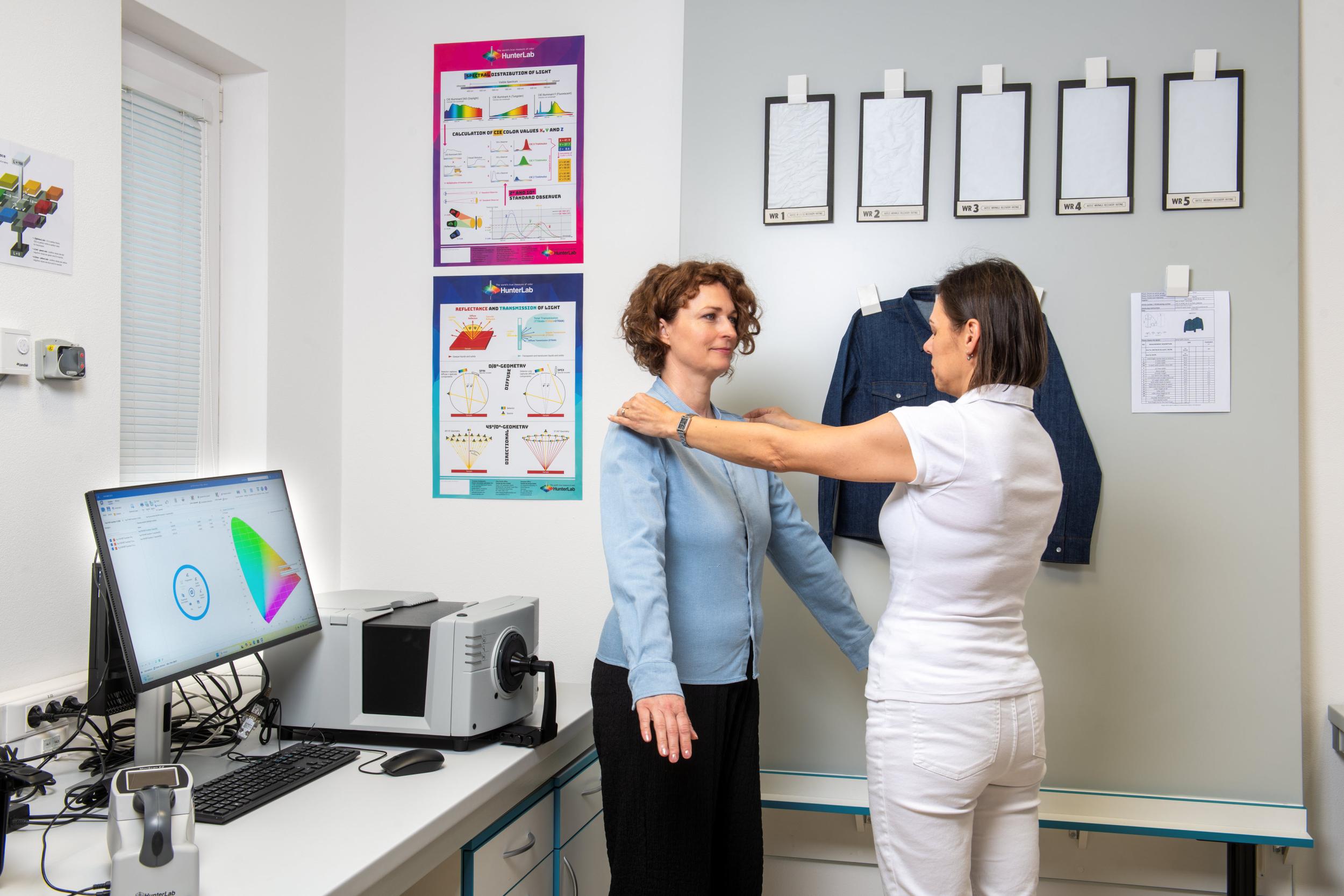
The ‘Fit & Proof’ label is based on comprehensive Fit testing on real test subjects by our experienced clothing engineers – a key advantage over standard material tests.

The service includes:

  • Fit testing: With real test wearers to assess size consistency and pattern accuracy
  • Workmanship assessment: Visual and functional checks of seams, closures, and construction details
  • Durability testing: Stress tests simulating washing, abrasion, and everyday wear to determine long-term product performance

These analyses help manufacturers and brands identify potential weaknesses early and optimise product quality. At the same time, independent validation and transparent customer communication with the OETI ‘Fit & Proof’ label enhance brand reputation and strengthen competitive positioning.

‘Many manufacturers only test materials, but not the finished garment,” says Dana Rástočná-Illová PhD, Managing Director of OETI Slovakia. Our goal is to help manufacturers and brands to detect product flaws early and reduce returns and complaints.’

International Demand for Verified Garment Quality
‘We are pleased now to offer the ‘Fit & Proof’ service internationally. Our global OETI offices – including our location in Bangladesh – have already expressed strong interest in actively promoting this service in their markets,’ adds Dr Miriam Scheffelmeier, Head of Global Marketing & Sales at OETI.

The new location in Žilina expands OETI’s lab infrastructure and enables close cooperation with local universities and international brands. 

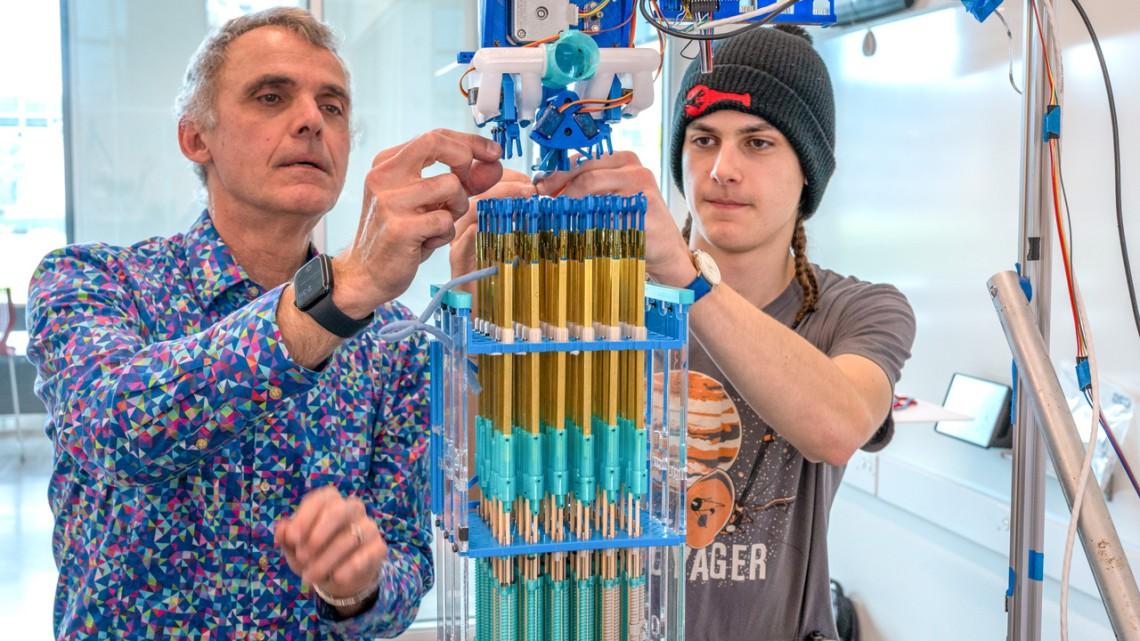
François Guimbretière, professor of information science, and Victor Guimbretière '29 developed a knitting machine that functions like a 3D printer – building up horizontal layers of stitches to create solid objects. Image: Luke Stewart/Provided
François Guimbretière, professor of information science, and Victor Guimbretière '29 developed a knitting machine that functions like a 3D printer – building up horizontal layers of stitches to create solid objects.
05.11.2025

Knitting machine makes solid 3D objects

A new prototype of a knitting machine creates solid, knitted shapes, adding stitches in any direction – forward, backward and diagonal – so users can construct a wide variety of shapes and add stiffness to different parts of the object.

Unlike traditional knitting, which yields a 2D sheet of stitches, this proof-of-concept machine – developed by researchers at Cornell and Carnegie Mellon University – functions more like a 3D printer, building up solid shapes with horizontal layers of stitches.

“We establish that not only can it be done, but because of the way we attach the stitch, it will give us access to a lot of flexibility about how we control the material,” said François Guimbretière, professor of information science in the Cornell Ann S. Bowers College of Computing and information science and the multicollege Department of Design Tech. “The expressiveness is very similar to a 3D printer.” 

Guimbretière and co-author, Victor Guimbretière ’29, who is in Cornell Engineering, presented the work, “Using an Array of Needles to Create Solid Knitted Shapes,” at the ACM Symposium on User Interface Software and Technology in Busan, Korea on Sept. 30.

Guimbretière first became interested in solid knitting while tinkering with a knitting machine in the lab of co-author Scott Hudson, professor of human-computer interaction in the School of Computer Science at Carnegie Mellon University, in 2016. A few years later, Guimbretière built the prototype from scratch in his basement during the COVID-19 pandemic, using primarily 3D-printed components.

The machine has a bed of knitting needles arranged in a 6x6 block, with each composed of a 3D-printed symmetrical double hook attached to a brass support tube. The front and back parts of the double hook move independently, which allows the machine to knit or purl, depending on which half picks up the first loop. To control the machine, the researchers developed a library of code for each type of stitch, which can generate a program for each product.

Because the knitting head that dispenses the yarn can move directly over the array of needles to any location, the design offers excellent flexibility to create complex knitted structures. Previous solid knitting machines lacked this flexibility, which greatly limits the shapes they can produce, researchers said.

So far, the team has successfully knitted objects shaped like a C and a pyramid, which demonstrates the machine’s ability to create complex shapes and overhangs.

Currently, the prototype is still slow, prone to dropping loops and sometimes catches the yarn on the wrong needles, but Guimbretière has plans to make the machine more robust. Additionally, it should be easy to scale up the design, he said, simply by adding a larger bed of needles. 

With further improvements, this type of approach may be useful for medical applications, such as knitting structures that support the growth of artificial ligaments or veins, Guimbretière said. Solid knitting allows the user to create different levels of thickness and stiffness in the final product, so it may be useful for accurately mimicking biological structures.

Amritansh Kwatra ’19, now a Ph.D. student in the field of information science at Cornell Tech, also contributed to the study.
Partial funding for this work came from the National Science Foundation.

Source:

Patricia Waldron Cornell Ann S. Bowers College of Computing and Information Science

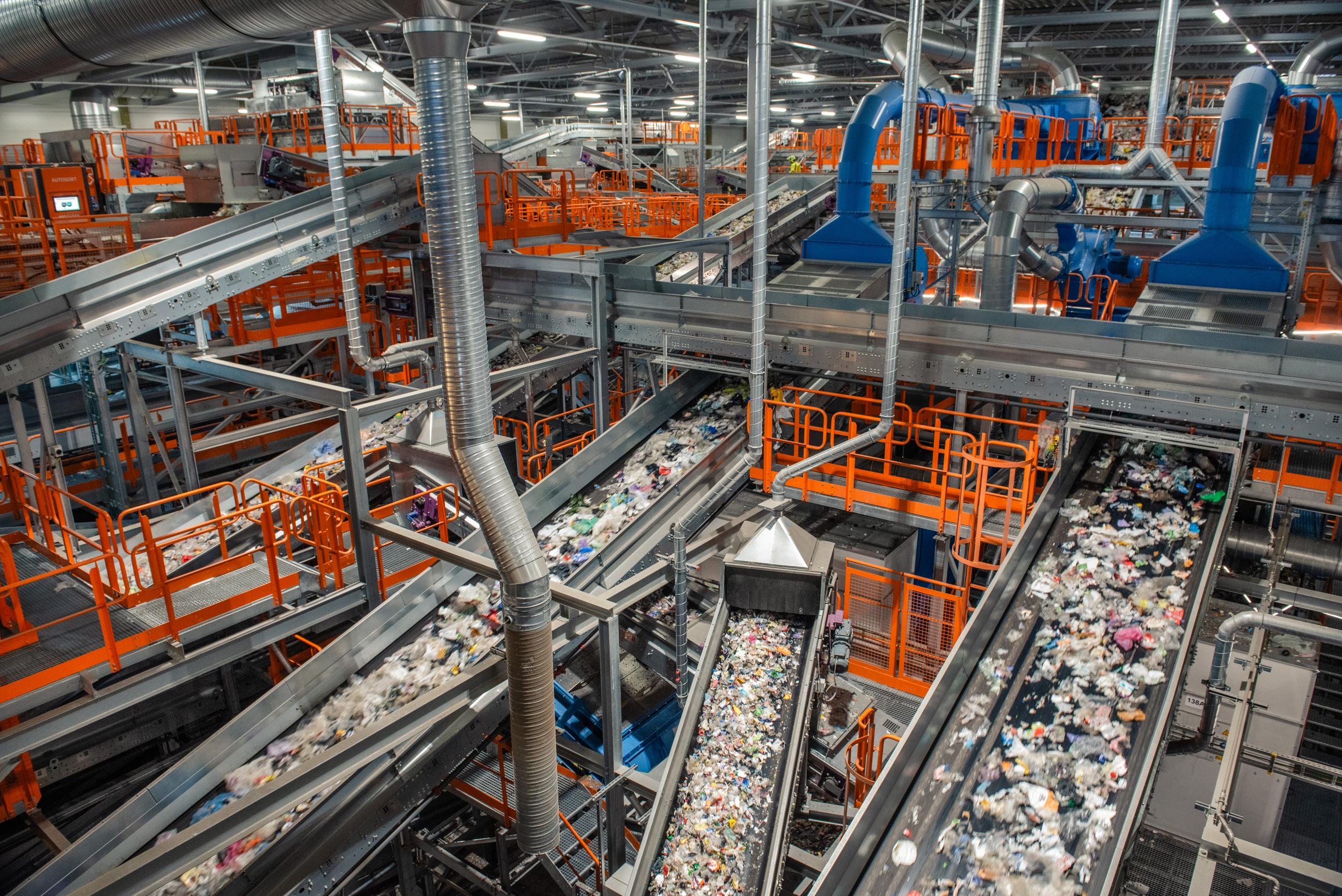
Områ is a joint venture between TOMRA Systems ASA (65%) and Plastretur AS (35%) Photo (c) Områ
Områ is a joint venture between TOMRA Systems ASA (65%) and Plastretur AS (35%)
05.11.2025

New recycling sorting facility to process 80% of Norway's plastic waste

A new chapter for circular plastics in Europe began November, 5 with the official opening of Områ, Norway’s new national facility for sorting all types of plastic packaging waste—including plastic that previously had no other option than to go to incineration.

Jointly owned by TOMRA (65%) and Plastretur (35%), the state-of-the-art facility has the capacity to process 90,000 tonnes of plastic per year, transforming plastic packaging waste into uniform polymer fractions ready for recycling.

Områ uses advanced sensor-based technology to sort mixed plastic waste into ten separate monofractions— including polyethylene (PE), polypropylene (PP), polyethylene terephthalate (PET), polystyrene (PS), and others — enabling improved recovery and increased recycling rates. This innovation closes the loop for plastics and represents one of the most advanced installations of its kind globally.

“Områ is more than a facility — it’s a missing link in Europe’s circular economy,” said Tove Andersen, President and CEO of TOMRA. “This facility has the capacity to receive and transform all of Norway’s household plastic packaging waste into recyclable fractions, essentially closing the loop for plastics. It is a cornerstone piece of infrastructure providing reliable offtake for mixed waste sorting facilities, and can help recover more resources from source separated material.”

The new facility, located at Holtskogen, just outside Oslo, will serve as a reliable offtake solution for municipalities and waste management companies considering the introduction of automated mixed waste sorting (MWS), a crucial step for increasing recycling rates without depending solely on household source separation.

By 2030 the EU requires minimum 55% of plastic packaging waste to be recycled (i.e., collected and recycled at scale) under the forthcoming PPWR. Today, approximately one-third of Norway’s plastic packaging waste is recycled; the rest is mostly incinerated. 

“Områ gives municipalities and the entire value chain a clear signal: there is now a scalable, high-quality route for plastic packaging,” said Karl Johan Ingvaldsen, CEO of Plastretur. “It provides the infrastructure needed to meet EU recycling targets and supports our shared ambition to build a truly circular plastics economy.”
 
About Områ
Områ is a joint venture between TOMRA Systems ASA (65%) and Plastretur AS (35%), established to develop and operate Norway’s first national fine-sorting facility for plastic packaging waste. The facility is located at Holtskogen, approx. 45 min outside Oslo, and has an annual processing capacity of 90,000 tonnes. Using TOMRA’s world-leading sensor-based sorting technology, Områ separates mixed plastic streams into up to ten distinct polymer fractions for high-value recycling.

Source:

Områ

getzspace® Photo Getzner Textil
getzspace®
05.11.2025

Getzner Textil Launches Three-Dimensional Weaving at Functional Fabric Fair

Getzner Textil AG, specialists in technical textiles made for a wide range of applications, announced the launch of their new getzspace® three-dimensional weaving technology. 

getzspace® will allow brands to create next generation technical clothing - performance and protective apparel - by reducing the need for seams in pockets and reinforcements. New garments made with the getzspace® technique aim to be more comfortable and more durable, all while reducing waste from the cut-and-sew process. 

getzspace® works by enabling three-dimensional structures such as pockets and reinforcements to be integrated directly into the textile surface, without the need for seams and stitching. The result is high-performance textiles with low weight and high resilience, opening up new possibilities for the design and functionality of modern performance and protective workwear.
 
Getzner Textil will introduce the new getzspace® technology at the Functional Fabric Fair in Portland this fall. Getzner will also present a wide selection of other fabrics during Functional Fabric Fair, underscoring the diversity of their product line and high standard of functionality, comfort, and safety, all developed through decades of textile manufacturing resource-efficient production processes in Europe.

“With over 200 years of experience creating textiles for everything from African fashion and workwear to soundproofing and materials for hot air ballooning, Getzner is set to help revolutionize how technical woven textiles are produced,” said Lukas Berthold, Getzner Sales Manager for North America. “By reducing the need for seams and stitching on pockets and reinforcements, apparel using the getzspace® process will be even more durable and comfortable, all while allowing for new design possibilities.”