From the Sector

Reset
09.11.2026

Indorama Ventures reports 63% rise in nine-month 2026 EBITDA

Indorama Ventures Public Company Limited (IVL), a global sustainable chemical producer, today reported improved earnings for the first nine months of 2026, driven by deliberate management actions to optimize its asset footprint, reduce fixed costs and strengthen working capital, alongside supportive market conditions. 
In the first nine months (9M26), Indorama Ventures’ EBITDA rose 63% year-on-year (YoY) to THB 43.5 billion. EBITDA per ton increased approximately 75% YoY and the EBITDA margin widened to 11% from 8%, on 5% lower sales volumes. Lower volumes partly reflect capacity rationalization under IVL 2.0 and production aligned with sales and inventory targets. Net profit before impairments and exceptional items was THB 9.8 billion, compared with a loss of THB 2.6 billion a year earlier, while reported net profit was THB 5.3 billion. In 3Q26, EBITDA was THB 13.7 billion, up 65% YoY and down 37% from the second quarter, when market conditions were exceptionally strong. 

Indorama Ventures Public Company Limited (IVL), a global sustainable chemical producer, today reported improved earnings for the first nine months of 2026, driven by deliberate management actions to optimize its asset footprint, reduce fixed costs and strengthen working capital, alongside supportive market conditions. 

In the first nine months (9M26), Indorama Ventures’ EBITDA rose 63% year-on-year (YoY) to THB 43.5 billion. EBITDA per ton increased approximately 75% YoY and the EBITDA margin widened to 11% from 8%, on 5% lower sales volumes. Lower volumes partly reflect capacity rationalization under IVL 2.0 and production aligned with sales and inventory targets. Net profit before impairments and exceptional items was THB 9.8 billion, compared with a loss of THB 2.6 billion a year earlier, while reported net profit was THB 5.3 billion. In 3Q26, EBITDA was THB 13.7 billion, up 65% YoY and down 37% from the second quarter, when market conditions were exceptionally strong. 

Through its Sales & Operations Execution (S&OE) discipline, IVL has steadily reduced its inventory exposure, so a future decline in crude prices should affect earnings far less than in past cycles. This also allows the company to gradually raise operating rates, which it deliberately curtailed in 2026, through 2027 and 2028. 

Despite crude prices rising by about one-third, inventory turns improved from 4.7x to 5.2x, and the company is targeting 6.0x. Operating cash flow after maintenance capex rose 47% to THB 34.5 billion, about 80% of EBITDA. Net debt fell by about THB 19 billion year-on-year, and net debt to EBITDA improved to 4.69x from 6.61x. 

Since 2023, Indorama Ventures has exited or restructured 10 uncompetitive sites, removing about 3.5 million tons of capacity. Most of these sites were in Europe and in the CPET and Fibers segments, where the structural reset in aromatics and industry overcapacity hit hardest. By moving production to its most competitive assets, the company kept its customers and market share while reducing total fixed costs by approximately THB 10 billion from 2023 levels, a structural saving that does not depend on market spreads. 

The consolidation of Indovida’s packaging business in India remains on track to complete in the first quarter of 2027 and is expected to nearly double Indovida’s EBITDA. Together with management actions and recovery in key businesses, this is expected to offset the normalization of 2026’s exceptional market conditions. 

Mr. Aloke Lohia, Group CEO of Indorama Ventures, said, “Favorable markets have supported our results this year, but they are not the whole story. Deliberate management actions are making us more competitive, improving the quality of our earnings and generating the cash to reduce debt. Our local-for-local model and access to feedstocks allowed us to serve customers reliably when they needed it most. 

“We enter 2027 from a stronger position, with a leaner cost base and lower debt. We reaffirm our 2028 ambitions to double EBITDA and reduce net debt to EBITDA to 3x or below, and I remain confident we will deliver the midway 2027 milestone we set out at our Capital Markets Day.”

Source:

Indorama Ventures Public Company Limited
09.11.2026

INDA: New Name for International Fiber Journal

The magazine will become Fibers&Nonwovens in January 2027, reflecting its established coverage of fiber innovation and the global nonwovens industry.

INDA, the Association of the Nonwoven Fabrics Industry, and its publishing arm INDA Media announced that International Fiber Journal (IFJ) will become Fibers&Nonwovens with Issue 1, 2027. The new name reflects the magazine’s longstanding focus on fiber innovation and its coverage of the materials, technologies and markets shaping the global nonwovens industry.

Under its new name, the magazine will continue to deliver the industry reporting, market insights and technical perspectives that IFJ readers rely on.

“Fibers, materials science, nonwovens and engineered materials have long been part of the same story for our readers,” said Rachael Davis, publisher and chief content officer, INDA Media. “An advance in fiber technology can change how a nonwoven is made, how it performs and where it can be used. Our job is to follow those connections and help readers understand what new developments mean for their work. The name Fibers&Nonwovens makes that editorial focus clear while carrying forward the technical reporting and industry perspectives readers have come to expect from International Fiber Journal.”

INDA acquired International Fiber Journal and International Filtration News in October 2018. At the time, IFJ covered man-made fibers, technical textiles and nonwovens, connecting producers of engineered materials and machinery with fiber and yarn users in more than 90 countries.

Current subscribers will continue to receive the new magazine without interruption. 

Source:

INDA Association of the Nonwoven Fabrics Industry

26.10.2026

INDA announces finalists for 2026 Hygienix Innovation Award™

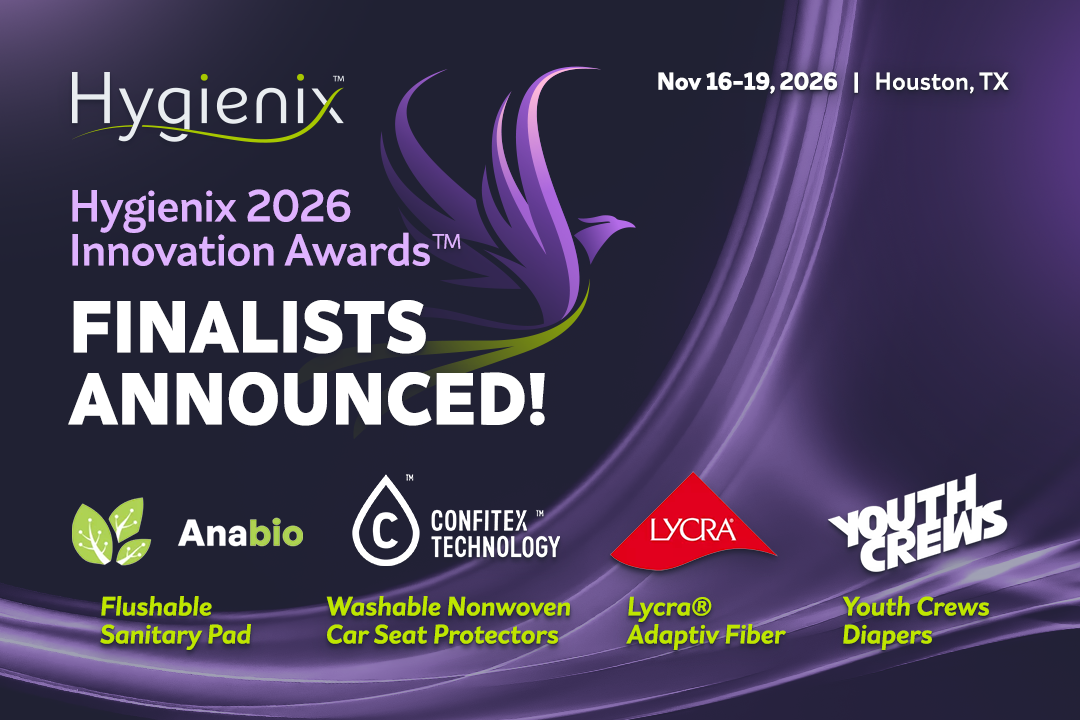
INDA, the Association of the Nonwoven Fabrics Industry, today announced the finalists for the 2026 Hygienix Innovation Award™: Anabio Technologies, Confitex Technology, The LYCRA Company and Youth Crews.

The finalists will present their innovations at Hygienix, an annual event for absorbent hygiene professionals, Nov. 16-19 at the Hyatt Regency Houston. The winner will be announced Thursday, Nov. 19, at 11:30 a.m.

Anabio Technologies: Flushable Sanitary Pad
Every sanitary pad used today can outlive us by an estimated 500 years. Anabio’s patented flushable pad changes that. Its multilayer architecture protects for 12 hours, then disperses when flushed. Independently tested to meet IWSFG flushability requirements, it is designed for flush toilets, septic systems and pit latrines and runs on standard converting lines, offering a practical route to scalable, sustainable, convenient and affordable menstrual care.

Confitex Technology: Washable Nonwoven Car Seat Protectors
Confitex Technology has cemented its reputation as the tech leader in reusable absorbent hygiene by extending the application of its transformative washable nonwoven AHPs into the automotive category. Its world-first washable nonwoven car seat protectors are independently verified to absorb and hold 24 fl oz (700 ml) inside a patented leak-resistant frame and keep performing after 30+ washes. Made from 100% nonwoven materials, they open up a new market segment for the nonwovens industry.

The LYCRA Company: Lycra® Adaptiv Fiber
LYCRA® ADAPTIV fiber reimagines stretch for absorbent hygiene products by leveraging technology originally developed for apparel to personal care. Designed to adapt dynamically to the wearer, this revolutionary spandex polymer with its unique chemistry delivers all-day comfort, inclusive sizing, easier on-and-off wear, and a second-skin fit, helping transform the wearing experience in personal care.

Youth Crews: Youth Crews Diapers
Youth Crews makes tab-style diapers for disabled kids ages 4 to 17 who outgrew baby diapers but don’t fit adult products. Sizes 9 through 12 are built for an older kid’s body: a pulp-free core, leg gathers cut for sitting, and a profile designed to fit under clothes. Founded by a dad who couldn’t find a diaper for his daughter. Free samples available at youthcrews.com.

2025 Award Winner
Confitex Technology Ltd. won the 2025 Innovation Award for its washable nonwoven sanitary pad, which the company says is the world’s first designed for sustainability and scalability without superabsorbent polymers.

“Hygienix Innovation Award finalists represent the future of absorbent hygiene,” said Matt O’Sickey, INDA’s director of education and technical affairs. “These companies are pushing boundaries with solutions that address consumer needs, sustainability goals and performance demands. Their work highlights the innovative spirit that drives our industry forward.”

Source:

INDA Association of the Nonwoven Fabrics Industry

(c) Indorama Ventures
26.10.2026

Indorama Ventures: First Advocacy Transparency Report

Indorama Ventures Public Company Limited, a global sustainable chemical company, has published the 2025 edition of its Advocacy Transparency Report, a first-of-its-kind standalone corporate reporting initiative, independently assured by Bureau Veritas. 

Building on its inaugural 2024 publication, the report reflects Indorama Ventures’ commitment to subjecting its public policy engagement on waste management, recycling performance, recycled content, and circular economy accountability to independent external scrutiny. It also contributes to a wider discussion about what credible corporate advocacy transparency should look like. 

Corporate engagement in public policy is receiving increasing attention from investors, policymakers, customers, and civil society, while sustainability indices and assessments are placing greater emphasis on transparency around policy influence. However, approaches to defining, measuring, and reporting corporate advocacy, and to independently assuring those disclosures, remain fragmented and continue to vary across jurisdictions and markets. 

Given this gap in standardization, Indorama Ventures prepared the report with reference to its Principles for Responsible Advocacy, GRI 415: Public Policy and relevant criteria under the S&P Global Corporate Sustainability Assessment. Bureau Veritas, a global leader in Testing, Inspection and Certification (TIC), conducted a limited assurance engagement in accordance with the International Standard on Assurance Engagements, ISAE 3000 (Revised), covering the information specified in its assurance statement. 

The report provides visibility into Indorama Ventures’ public policy engagement, including its direct engagement with policymakers and regulators and its participation in industry associations and multi-stakeholder platforms. It also outlines the company’s advocacy governance processes and explains how Indorama Ventures reviews its participation in industry associations. 

In 2025, the company engaged on issues including the UN negotiations toward a global treaty on plastic pollution, alongside policy engagement across Europe, the United States, Latin America, and Thailand. 

Mr. Colm Jordan, Global Head of Advocacy at Indorama Ventures, said: “The conversation around transparency in corporate advocacy is evolving quickly. Industry has an important role to play in contributing constructively to public policy, and that comes with a responsibility to be open about how and where companies engage. 

Publishing a standalone report and subjecting our disclosures to independent assurance supports accountability and gives customers, investors, policymakers, and other stakeholders greater confidence in the information covered by the assurance engagement. At the same time, we recognize that advocacy transparency remains an emerging area of corporate governance, without a single, globally accepted approach. Independent assurance is an important step, but there is still work to be done to establish more consistent and comparable expectations across industries and geographies. We hope this report can contribute constructively to that wider discussion.” 

Mr. Ken Smith, Vice President of Global Transition Services at Bureau Veritas, said: “We are pleased to continue as a trusted assurance partner to Indorama Ventures for its Advocacy Transparency Report. Applying independent assurance to corporate advocacy reporting brings an objective perspective to the information disclosed within a defined scope, supporting confidence in its transparency and credibility. We value the opportunity to contribute our assurance expertise to this forward-looking initiative and to support Indorama Ventures’ continued commitment to transparent and accountable disclosure.” 

Indorama Ventures and Bureau Veritas believe that greater consistency and comparability in advocacy reporting can help stakeholders better understand how companies engage in public policy and assess whether their advocacy activities align with their stated commitments. Through Indorama Ventures’ commitment to transparent disclosure and Bureau Veritas’s independent assurance, both organizations seek to contribute to informed dialogue on the development of more credible and consistent advocacy transparency practices globally.

Source:

Indorama Ventures

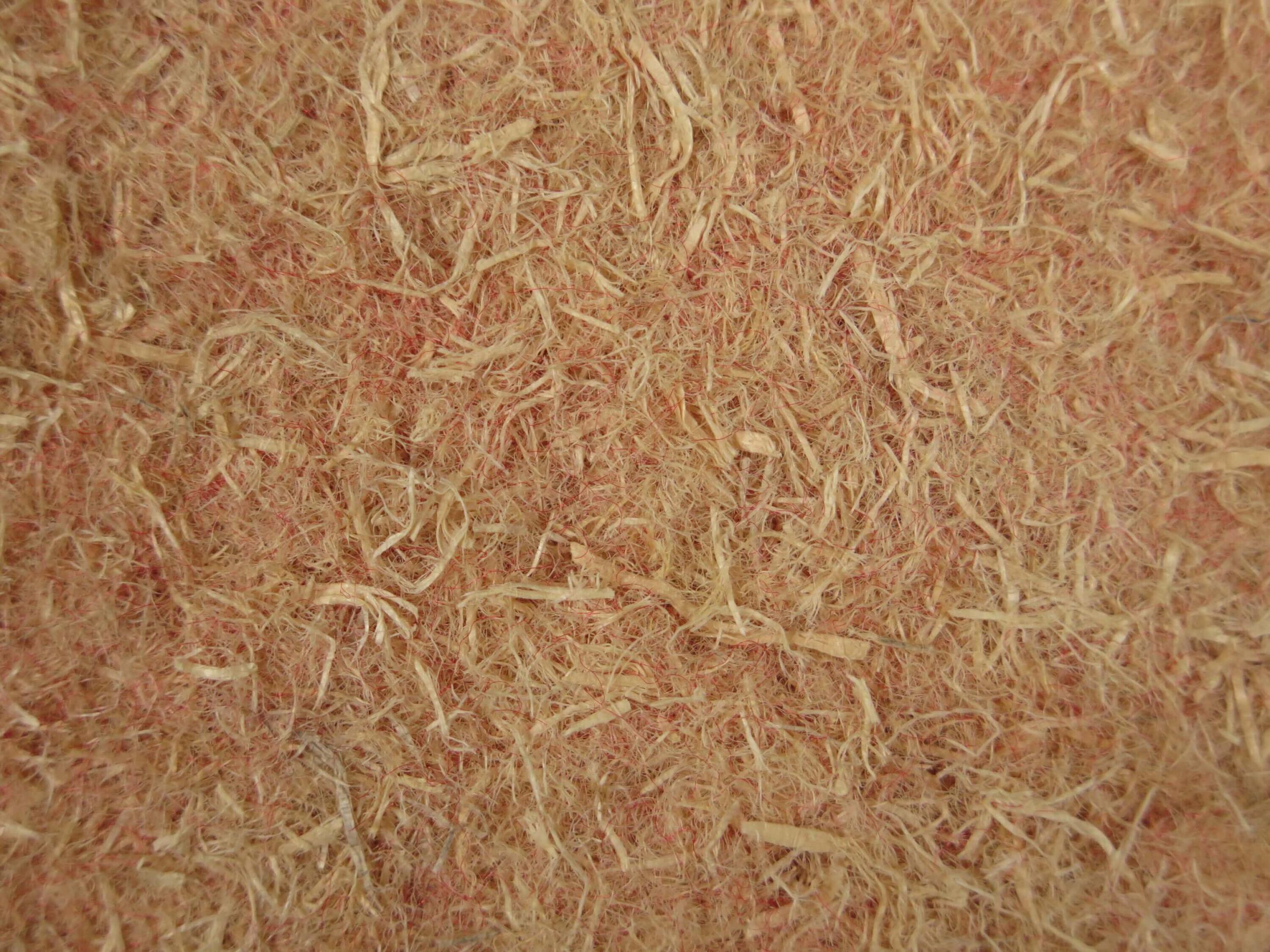
Wood-Fiber Insulation Board with CAP. Photo: DITF
Wood-Fiber Insulation Board with CAP.
23.10.2026

Bio-Based Binding Fibers for Wood Fiber Insulation Materials

As part of the CelluWoodFlex project, the German Institutes of Textile- and Fiber-Research in Denkendorf (DITF) are developing bio-based cellulose ester fibers as alternative binding fibers for flexible wood fiber insulation materials. In addition to the spinning process and the production of suitable staple fibers, the institute is also investigating how wood and cellulose fibers can be separated and recycled at the end of their useful life.

How can flexible wood fiber insulation materials be produced sustainably and recycled at the end of their useful life? The “CelluWoodFlex” research project is addressing this question. In this collaborative project, DITF are taking on key roles related to the production and processing of cellulose ester fibers. Initial work has already been successfully completed.

The project focuses on thermoplastic binding fibers based on cellulose esters. In the future, these are intended to replace fossil-based plastic fibers, which are currently often used to bind wood fibers in flexible insulation mats. This bio-based approach opens up new possibilities for reducing the use of fossil raw materials and improving the material recycling of these products after their use.

From the Spinning Process to the Finished Staple Fiber
DITF are working to establish the spinning process for thermoplastic cellulose ester fibers. In this process, the raw materials are processed into fine fibers intended for use as binding fibers. Another step in the process is cutting the fibers to specific lengths. This produces staple fibers, which are then blended with wood fibers at the project partner IHD (Institut für Holzfasern Dresden gGmbH). The goal is to achieve the most uniform distribution possible of the binding fibers so that they can reliably fulfill their function in the resulting insulation material.

The first project steps at DITF have already been completed. The research team at the Competence Center for Biopolymer Materials has developed and successfully implemented the spinning process for fibers made from the cellulose ester “cellulose acetate propionate” (CAP). The fibers were processed into staple fibers and dyed. The work carried out so far thus lays an important foundation for the further development and processing of these bio-based binding fibers.

Making Recycling a Priority from the Start
In addition to fiber production, the focus is also on the end of the product life cycle. The DITF research team is investigating ways to separate wood and cellulose fibers from one another after they have been used together. The goal is to enable the separated components to be recycled as raw materials. This means that, even during the development of the binding fibers, consideration is given to how the materials can later be recovered and reused.

As the project progresses, the findings will be incorporated into the processing of the fibers and the assessment of their recyclability. Together with the other project partners, the goal is to lay the foundation for flexible wood fiber insulation materials that use bio-based binding fibers and open up new prospects for improved circularity.

The IGF research project “CelluWoodFlex” is funded by the Federal Ministry for Economic Affairs and Energy pursuant to a resolution of the “German Bundestag”. Funding ID: 01IF25128N