
From the Sector

Reset
02.02.2026

Reciprocal trade agreement between the United States and Guatemala

The National Council of Textile Organizations (NCTO), which represents the full U.S. textile supply chain from fiber and yarn to fabrics and finished sewn products, welcomed the announcement of a reciprocal trade agreement between the United States and Guatemala.

National Council of Textile Organizations President and CEO Kim Glas:
“The reciprocal trade agreement with Guatemala marks an important step toward strengthening the U.S. textile supply chain. We commend the administration for taking decisive action to remove reciprocal tariffs and provide preferential treatment to qualifying textile and apparel products from Guatemala under the Dominican Republic-Central America-United States Free Trade Agreement (CAFTA-DR).

“NCTO and the broader U.S. textile industry are grateful to President Trump, U.S. Trade Representative Ambassador Jamieson Greer, and the administration for concluding this agreement with Guatemala, following on the heels of the recently announced agreement with El Salvador.

The National Council of Textile Organizations (NCTO), which represents the full U.S. textile supply chain from fiber and yarn to fabrics and finished sewn products, welcomed the announcement of a reciprocal trade agreement between the United States and Guatemala.

National Council of Textile Organizations President and CEO Kim Glas:
“The reciprocal trade agreement with Guatemala marks an important step toward strengthening the U.S. textile supply chain. We commend the administration for taking decisive action to remove reciprocal tariffs and provide preferential treatment to qualifying textile and apparel products from Guatemala under the Dominican Republic-Central America-United States Free Trade Agreement (CAFTA-DR).

“NCTO and the broader U.S. textile industry are grateful to President Trump, U.S. Trade Representative Ambassador Jamieson Greer, and the administration for concluding this agreement with Guatemala, following on the heels of the recently announced agreement with El Salvador.

“Guatemala is a key partner in the CAFTA-DR region, with $2 billion in two-way textile and apparel trade. Together, the region operates as an integrated co-production platform that is essential to the U.S. textile supply chain. In 2024, this production network generated $11.3 billion in two-way trade and supported more than 470,000 American jobs in the domestic textile industry alone.

“The U.S.–Western Hemisphere textile and apparel supply chain remains a critical strategic alternative to China and other Asian producers. We look forward to continued collaboration with the Trump administration to further solidify this vital regional partnership and appreciate this important announcement.”

Source:

National Council of Textile Organizations 

Image: Vitaly Kobzun, Pixabay
02.02.2026

Lenzing AG: Majority owner of TreeToTextile AB, accelerating industrialization of new fibers

The Lenzing Group is taking another strategic milestone by acquiring a controlling majority in the Swedish innovation company TreeToTextile AB. This step strengthens Lenzing’s position as a leading provider of sustainable, wood based specialty fibers and expands its innovation pipeline with a highly scalable, patent protected technology platform. The transaction is executed through the issuance of new shares. 

TreeToTextile represents the next major technological leap in cellulosic fiber production – following the development of viscose in the early 20th century and Lenzing’s own Lyocell technology in the 1990s. The process offers a significantly improved sustainability profile, attractive cost advantages, and broad applicability across textile and nonwoven markets. With the majority acquisition, Lenzing underscores its commitment to consistently advancing its premiumization strategy and further expanding its leadership position in the global specialty fiber market. 

The Lenzing Group is taking another strategic milestone by acquiring a controlling majority in the Swedish innovation company TreeToTextile AB. This step strengthens Lenzing’s position as a leading provider of sustainable, wood based specialty fibers and expands its innovation pipeline with a highly scalable, patent protected technology platform. The transaction is executed through the issuance of new shares. 

TreeToTextile represents the next major technological leap in cellulosic fiber production – following the development of viscose in the early 20th century and Lenzing’s own Lyocell technology in the 1990s. The process offers a significantly improved sustainability profile, attractive cost advantages, and broad applicability across textile and nonwoven markets. With the majority acquisition, Lenzing underscores its commitment to consistently advancing its premiumization strategy and further expanding its leadership position in the global specialty fiber market. 

“TreeToTextile is among the world’s most advanced next generation fiber technologies and represents the most promising development on the market. Since our initial investment in 2025, the collaboration between the innovative TreeToTextile team and Lenzing’s fiber experts has enabled significant technological progress. We are fully committed to the joint scale up and commercialization. H&M Group, Inter IKEA Group, and Stora Enso, will continue to support this path as minority shareholders, contributing valuable market and consumer perspectives,” says Georg Kasperkovitz, COO of Lenzing Group. LSCS Invest also reaffirms its confidence in the joint technology platform through its long standing commitment since the foundation of the company and continued role as a shareholder. 

“Innovation at industrial scale requires time, expertise, and strong partnerships. Lenzing Group’s increased ownership is a clear endorsement of our technology and our ambition to become a major player in the global fiber market,” says Dr. Roxana Barbieru, CEO of TreeToTextile. 

The transaction enables an accelerated scaling of the new technology. Lenzing plans a significant increase in production output at the existing demonstration plant in Nymölla, Sweden, as well as the preparation of the first industrial scale facility. In addition, the company expects operational synergies from an even closer collaboration.

ITA PhD student Florian Pohlmeyer demonstrates the open secure data room live to interested visitors © ITA
ITA PhD student Florian Pohlmeyer demonstrates the open secure data room live to interested visitors
27.01.2026

Exchange data between textile companies without a central platform

The Institut für Textiltechnik (ITA) of RWTH Aachen University has launched a new demonstrator for an open and secure data space in the textile industry at the Digital Innovation Centre Europe (DICE). For the first time, the demonstrator shows directly and clearly how companies can share their data securely with each other without the need for a central platform. Data exchange is based on shared, freely usable technical foundations.

The participating companies thus share important information about materials, processes or supply chains directly. This increases transparency and helps, for example, with sustainability assessments, traceability or compliance with legal requirements. At the same time, companies retain control over their data at all times.

What is new and special is that, for the first time, the data room can be experienced in practice – not just as a concept on paper. Using real data and real processes, the demonstrator shows how secure data exchange works in the textile industry.

The Institut für Textiltechnik (ITA) of RWTH Aachen University has launched a new demonstrator for an open and secure data space in the textile industry at the Digital Innovation Centre Europe (DICE). For the first time, the demonstrator shows directly and clearly how companies can share their data securely with each other without the need for a central platform. Data exchange is based on shared, freely usable technical foundations.

The participating companies thus share important information about materials, processes or supply chains directly. This increases transparency and helps, for example, with sustainability assessments, traceability or compliance with legal requirements. At the same time, companies retain control over their data at all times.

What is new and special is that, for the first time, the data room can be experienced in practice – not just as a concept on paper. Using real data and real processes, the demonstrator shows how secure data exchange works in the textile industry.

Companies can see directly how information flows between businesses without having to submit it to a central platform. This makes it clear that getting started with modern data rooms is easier, more secure and more cost-effective than many expect.

ITA developed and implemented the demonstrator from a technical perspective. It provides the textile production environments, supplies the technical expertise and ensures that the demonstrator works with real industrial applications.

The demonstrator is publicly accessible at DICE and can be used in workshops, guided tours or company visits. The technological components are already suitable for industrial use and serve as a starting point for companies to launch their own data room projects.

REDES4VALUE: Recycled nylon fishing nets for industrial applications Photo AIMPLAS, Plastics Technology Centre
26.01.2026

REDES4VALUE: Recycled nylon fishing nets for industrial applications

  • The companies UBE and ZIKNES, the University of Valencia, and the AIMPLAS Plastics Technology Centre are collaborating on this project, funded by IVACE+i Innovation with support from ERDF funds.
  • Applications include packaging, agricultural covers, automotive components and large-scale 3D demonstrators.
  • Collaboration with Sea2See ensures the supply of recovered nets from Ghana and strengthens the project’s circular value chain.

The abandonment of fishing nets in seas and oceans is one of the most persistent environmental problems. In response to this situation, the REDES4VALUE project works to recover and recycle disused fishing nets, transforming them into new sustainable, high value-added products such as recycled nylon, films for packaging and agricultural covers, automotive components, and large-format parts produced by additive manufacturing. These developments are achieved through innovative mechanical and chemical recycling processes, combined with reactive extrusion technologies.

  • The companies UBE and ZIKNES, the University of Valencia, and the AIMPLAS Plastics Technology Centre are collaborating on this project, funded by IVACE+i Innovation with support from ERDF funds.
  • Applications include packaging, agricultural covers, automotive components and large-scale 3D demonstrators.
  • Collaboration with Sea2See ensures the supply of recovered nets from Ghana and strengthens the project’s circular value chain.

The abandonment of fishing nets in seas and oceans is one of the most persistent environmental problems. In response to this situation, the REDES4VALUE project works to recover and recycle disused fishing nets, transforming them into new sustainable, high value-added products such as recycled nylon, films for packaging and agricultural covers, automotive components, and large-format parts produced by additive manufacturing. These developments are achieved through innovative mechanical and chemical recycling processes, combined with reactive extrusion technologies.

This initiative, funded by the Valencian Institute of Competitiveness and Innovation (IVACE+i) and ERDF funds, brings together a consortium formed by AIMPLAS (Plastics Technology Centre), UBE, ZIKNES and the University of Valencia. Their shared objective is to close the life cycle of polyamides and reduce marine pollution through innovative, industry-ready solutions.

Although many nets are made of polyethylene or polypropylene, the project focuses on polyamide nets, a material with great potential for chemical recycling. Its molecular structure allows the recovery of monomers such as caprolactam, enabling the production of new polyamides with properties virtually identical to those of virgin materials.

‘We are achieving optimised conditions for depolymerising fishing nets and recovering monomers with purities above 95% in some laboratory-scale streams, and over 80% at pilot scale”. This will allow us to repolymerise and obtain new polyamides with quality equivalent to virgin material,’ explains Nairim Torrealba, a researcher in Chemical Recycling at AIMPLAS.

Recycled polyamides are intended for sectors such as packaging, agriculture, automotive and 3D printing. Companies such as UBE are already analysing their commercialisation and ZIKNES is adapting its equipment to validate large-format parts. Initial applications include packaging films, agricultural covers, automotive components and large-scale 3D demonstrators.

‘These materials have immediate industrial applications and a clear sustainability advantage over conventional polyamides. These solutions not only reduce dependence on virgin raw materials, but also open up new opportunities for industry in terms of sustainability and the circular economy,’ said Torrealba.

Disruptive technology and international collaboration
REDES4VALUE is advancing in processes such as hydrothermal depolymerisation, ionic liquid-assisted solvolysis and reactive extrusion, as well as comprehensive life cycle and feasibility assessments. One of the main challenges of the project is the treatment of highly degraded nets with a high presence of impurities, but the results are very promising.

Collaboration with the Sea2See brand has ensured access to fishing nets recovered in Ghana since 2019 and has been key to structuring the project’s circular value chain from the waste source. ‘Without this supply of material, it would not be possible to move forward. The nets that arrive from Ghana are essential for validating the processes and obtaining real results,’ said Torrealba.

Consortium and next steps
The project involves AIMPLAS, which is responsible for chemical recycling tasks, UBE for scaling and repolymerisation, ZIKNES for 3D printing validation, and the MATS group at the University of Valencia (MATS-UV) for solvolysis and kinetics studies. ‘Our goal is to consolidate a chemical recycling line that can be applied to complex waste and demonstrate that it is a real and necessary solution,’ concluded Torrealba.

This initiative is funded by the Valencian Institute of Competitiveness and Innovation (IVACE+i), through the Strategic Cooperation Projects programme in its 2024 call for proposals, with co-financing from the European Regional Development Fund (ERDF).

Source:

AIMPLAS, Plastics Technology Centre

Andrew G. Backman Photo Kornit Digital Ltd
Andrew G. Backman
23.01.2026

Kornit Digital Appoints Chief Capital Markets Officer

Kornit Digital Ltd., a global market leader in sustainable, on-demand digital fashion and textile production technologies, today announced the appointment of Andrew G. Backman as Chief Capital Markets Officer, effective January 13, 2026. In this role, Mr. Backman will support Kornit’s capital markets activities, investor relations, and corporate and business development initiatives. 

Mr. Backman, who will be based at the Company's U.S. Headquarters in Englewood, New Jersey, has extensive capital markets and investor relations experience, participating in more than $30 billion in capital markets transactions, and maintaining long-standing relationships with institutional investors, sell-side analysts, and global investment banking partners. He previously served as Kornit’s Global Head of Investor Relations from 2021 to 2023. 

Kornit Digital Ltd., a global market leader in sustainable, on-demand digital fashion and textile production technologies, today announced the appointment of Andrew G. Backman as Chief Capital Markets Officer, effective January 13, 2026. In this role, Mr. Backman will support Kornit’s capital markets activities, investor relations, and corporate and business development initiatives. 

Mr. Backman, who will be based at the Company's U.S. Headquarters in Englewood, New Jersey, has extensive capital markets and investor relations experience, participating in more than $30 billion in capital markets transactions, and maintaining long-standing relationships with institutional investors, sell-side analysts, and global investment banking partners. He previously served as Kornit’s Global Head of Investor Relations from 2021 to 2023. 

Mr. Backman recently served as Global Head of Investor Relations at EMCOR Group, Inc. (NYSE: EME), with prior experiences including senior capital markets and investor relations roles across more than 14 industries. He holds a B.A. in Economics from Boston College and is a graduate of AT&T / Lucent Technologies’ Financial Leadership Program. 

Source:

Kornit Digital Ltd

22.01.2026

Archroma: High impact textile innovations at Colombiatex 2026

Archroma, a global leader in specialty chemicals towards sustainable solutions, participates in Colombiatex 2026, one of the most influential textile and apparel industry events in the Americas. The event will take place in Medellín, Colombia, from January 27 to 29. 

At Colombiatex 2026, Archroma will highlight its latest innovations designed to support more sustainable, high-performance textile production. Visitors will have the opportunity to discover the company’s award-winning AVITERA® SE dyes and SILIGEN® D2W, alongside a strong portfolio of advanced solutions including BLUE MAGIC, THIOTAN® R, ERIOFAST®, ERIOPON® E3 SAVE, and TERASIL® W-VM. In addition, visitors will also be able to explore solutions from our latest partnership with HeiQ. 

“These innovations reflect our commitment to helping the textile industry meet growing demands for performance, efficiency, and sustainability,” said Gerardo Estrada, Vice President, Americas, Archroma. “Colombiatex is a key platform for connecting with partners across the Americas, and we look forward to demonstrating how our solutions can enable more planet conscious textile production.” 

Archroma, a global leader in specialty chemicals towards sustainable solutions, participates in Colombiatex 2026, one of the most influential textile and apparel industry events in the Americas. The event will take place in Medellín, Colombia, from January 27 to 29. 

At Colombiatex 2026, Archroma will highlight its latest innovations designed to support more sustainable, high-performance textile production. Visitors will have the opportunity to discover the company’s award-winning AVITERA® SE dyes and SILIGEN® D2W, alongside a strong portfolio of advanced solutions including BLUE MAGIC, THIOTAN® R, ERIOFAST®, ERIOPON® E3 SAVE, and TERASIL® W-VM. In addition, visitors will also be able to explore solutions from our latest partnership with HeiQ. 

“These innovations reflect our commitment to helping the textile industry meet growing demands for performance, efficiency, and sustainability,” said Gerardo Estrada, Vice President, Americas, Archroma. “Colombiatex is a key platform for connecting with partners across the Americas, and we look forward to demonstrating how our solutions can enable more planet conscious textile production.” 

Burghausen, Germany Photo: Borealis
Burghausen, Germany
20.01.2026

Borealis Invests EUR 49 Million in Germany to Accelerate Design for Circularity

Borealis announces a EUR 49 million strategic investment to scale up production of Borstar® Nextension polypropylene (PP) at its manufacturing site in Burghausen, Germany. This will expand commercial production of next-generation single-site polypropylene (ssPP) grades that deliver enhanced purity, processability, and performance - supporting customers in key sectors including packaging, healthcare, mobility, and fibers, to meet evolving market and regulatory demands.  
 
Enabling the shift to circular design with monomaterials  
The investment will support the transition to high-performance monomaterial PP solutions. By integrating a tailored combination of performance properties into a single PP material, Borstar Nextension technology facilitates material substitution in complex multilayer structures – supporting design for circularity, reducing weight, and improving overall performance. 
 
Meeting recyclability requirements 

Borealis announces a EUR 49 million strategic investment to scale up production of Borstar® Nextension polypropylene (PP) at its manufacturing site in Burghausen, Germany. This will expand commercial production of next-generation single-site polypropylene (ssPP) grades that deliver enhanced purity, processability, and performance - supporting customers in key sectors including packaging, healthcare, mobility, and fibers, to meet evolving market and regulatory demands.  
 
Enabling the shift to circular design with monomaterials  
The investment will support the transition to high-performance monomaterial PP solutions. By integrating a tailored combination of performance properties into a single PP material, Borstar Nextension technology facilitates material substitution in complex multilayer structures – supporting design for circularity, reducing weight, and improving overall performance. 
 
Meeting recyclability requirements 
In packaging, this innovation enables brand owners and converters to comply with the EU Packaging and Packaging Waste Regulation (PPWR), including the target of achieving 100% recyclable packaging by 2030. A growing portfolio of Borstar Nextension PP grades is already demonstrating these benefits in flexible packaging applications, combining improved processability with superior sustainability and a step change in purity, clarity and sealing performance. 
 
Driving customer growth and sustainability 

“By scaling up Borstar Nextension PP production, we empower our customers to stay ahead in a rapidly changing regulatory and market landscape. It’s another example of our commitment to increase the availability of innovative, recyclable polymer materials suitable for a wide range of applications across multiple industries,” says Craig Arnold, Borealis EVP Polyolefins, Circular Economy Solutions and Base Chemicals. 

19.01.2026

European business associations celebrate the signature of EU-Mercosur FTA

January, 17 marks a historic milestone with the signing of the EU-Mercosur Trade Agreement, creating the biggest trading block in the world. European business – represented by more than 28 associations across a wide range of sectors – warmly welcomes this signature. It sends a strong and timely signal that the EU remains open and is committed to rules-based global trade. In a time of global uncertainty, this agreement is a key growth booster. 

By opening access to over 270 million consumers via the elimination of trade barriers and the removal of tariffs on over 90% of EU exports, the agreement provides the thrust European companies need to export, invest, and grow, as well as to diversify their supply chains, sourcing essential products and raw materials from Mercosur. By 2040, according to DG Trade’s calculations, the agreement is expected to add 77.6 billion euros to the EU GDP, resulting in a 39% increase in EU exports to Mercosur. 

January, 17 marks a historic milestone with the signing of the EU-Mercosur Trade Agreement, creating the biggest trading block in the world. European business – represented by more than 28 associations across a wide range of sectors – warmly welcomes this signature. It sends a strong and timely signal that the EU remains open and is committed to rules-based global trade. In a time of global uncertainty, this agreement is a key growth booster. 

By opening access to over 270 million consumers via the elimination of trade barriers and the removal of tariffs on over 90% of EU exports, the agreement provides the thrust European companies need to export, invest, and grow, as well as to diversify their supply chains, sourcing essential products and raw materials from Mercosur. By 2040, according to DG Trade’s calculations, the agreement is expected to add 77.6 billion euros to the EU GDP, resulting in a 39% increase in EU exports to Mercosur. 

With the agreement now signed, the ball is firmly in the court of the European Parliament in ensuring rapid ratification. We therefore call on Members of the European Parliament to give their consent and allow Europe’s engine of economic growth and prosperity to be switched on and move ahead decisively. After over 25 years of negotiations, we are finally in sight of the finish line. We cannot afford to wait any longer.

Source:

Euratex

Amsterdam Textile Show Photo Amsterdam Textile Show
19.01.2026

Amsterdam Textile Show 2026 with a new concept

The Netherlands will host one of Europe’s leading international fashion, textile, and ready-to-wear trade fairs. The 4th Amsterdam Textile Show (ATS) will bring together manufacturers, suppliers, designers, and buyers from more than 14 countries across Europe and other regions of the world, offering a unique platform for international business opportunities and innovation.

Organized by Exponew Fuarcilik, the fair will be held at the World Fashion Centre in Amsterdam. The event will present visitors with a wide product range covering ready-to-wear, fabrics, yarns, sportswear, leather, footwear, accessories, and home textiles. With its new concept and expanded exhibition area, ATS aims to strengthen commercial relations in Europe, Asia, and other global markets, and to create new business opportunities within the textile supply chain.

Over the course of three days, participants will have the opportunity to meet potential business partners, discover new trends, and establish direct contact with decision-makers shaping the future of fashion and textile production.

The Netherlands will host one of Europe’s leading international fashion, textile, and ready-to-wear trade fairs. The 4th Amsterdam Textile Show (ATS) will bring together manufacturers, suppliers, designers, and buyers from more than 14 countries across Europe and other regions of the world, offering a unique platform for international business opportunities and innovation.

Organized by Exponew Fuarcilik, the fair will be held at the World Fashion Centre in Amsterdam. The event will present visitors with a wide product range covering ready-to-wear, fabrics, yarns, sportswear, leather, footwear, accessories, and home textiles. With its new concept and expanded exhibition area, ATS aims to strengthen commercial relations in Europe, Asia, and other global markets, and to create new business opportunities within the textile supply chain.

Over the course of three days, participants will have the opportunity to meet potential business partners, discover new trends, and establish direct contact with decision-makers shaping the future of fashion and textile production.

“We are proud to bring the international fashion and textile community together under one roof in Amsterdam. This fair is not only a trade event; it is an important meeting platform for innovation, business partnerships, and sustainable growth. It hosts both well-established brands and emerging players from around the world.” — Burak Serer, Project Director of Amsterdam Textile Show

Source:

Amsterdam Textile Show 

Archroma and HeiQ will provide brands and textile manufacturers access to an expanded portfolio of high-performance, sustainable effects, underpinned by global reach, application expertise, and proven market innovation. Archroma/HeiQ
14.01.2026

Archroma & HeiQ: Antimicrobial and odor-control solutions for the textile industry

Archroma, a global leader in specialty chemicals towards sustainable solutions, and HeiQ, a Swiss deeptech materials innovator active in functional textiles and sustainable fibers, have entered into a co-marketing agreement that combines their complementary strengths to deliver advanced, planet-conscious anti-odor and antimicrobial technologies to brands, retailers, and textile mills worldwide.

Together, Archroma and HeiQ will provide brands and textile manufacturers access to an expanded portfolio of high-performance, sustainable effects, underpinned by global reach, application expertise, and proven market innovation.

“This partnership marks an exciting chapter for Archroma and HeiQ, and a huge step forward for the textile industry,” said Dhirendra Gautam, VP Commercial, Archroma. “By uniting our global reach and application know-how with HeiQ’s powerful innovation engine, we are bringing high-performance, sustainable technologies to more customers and accelerating the industry’s transition towards a more planet-conscious textile value chain.”

Archroma, a global leader in specialty chemicals towards sustainable solutions, and HeiQ, a Swiss deeptech materials innovator active in functional textiles and sustainable fibers, have entered into a co-marketing agreement that combines their complementary strengths to deliver advanced, planet-conscious anti-odor and antimicrobial technologies to brands, retailers, and textile mills worldwide.

Together, Archroma and HeiQ will provide brands and textile manufacturers access to an expanded portfolio of high-performance, sustainable effects, underpinned by global reach, application expertise, and proven market innovation.

“This partnership marks an exciting chapter for Archroma and HeiQ, and a huge step forward for the textile industry,” said Dhirendra Gautam, VP Commercial, Archroma. “By uniting our global reach and application know-how with HeiQ’s powerful innovation engine, we are bringing high-performance, sustainable technologies to more customers and accelerating the industry’s transition towards a more planet-conscious textile value chain.”

“HeiQ has always been driven by a mission to pioneer deeptech material innovation for people and planet,” said Carlo Centonze, CEO of HeiQ. “Together with Archroma’s extensive network and expertise, we are scaling our technologies globally, ensuring that brands and mills can access functional, sustainable solutions that enhance product performance while lowering environmental impact.”

The collaboration enables HeiQ’s advanced technologies to be delivered through Archroma’s well-established global customer network, making it easier for textile manufacturers to integrate functional, compliant, and sustainable performance effects into their products. The alliance is also about scaling innovation. Together, we will empower brands and manufacturers to meet consumer demands for hygiene, freshness, and sustainability.

Source:

Archroma

13.01.2026

Kornit Konnections 2026: Call for Speakers and Partners

Kornit Konnections is officially accepting speaker proposals and partner interest for what is set to be one of the most influential digital apparel industry gathering. 
 
Konnections 2026 is an immersive, invitation-driven community event bringing together brands, retailers, manufacturers, printers, technology leaders, analysts, and investors to shape the next chapter of the apparel economy. Building on the momentum of Evolve – the largest virtual apparel conference to date – Konnections 2026 will set new benchmarks for in-person engagement, insight, and industry alignment.
 
A Vibrant Community – Shaping What’s Next

Kornit Konnections is officially accepting speaker proposals and partner interest for what is set to be one of the most influential digital apparel industry gathering. 
 
Konnections 2026 is an immersive, invitation-driven community event bringing together brands, retailers, manufacturers, printers, technology leaders, analysts, and investors to shape the next chapter of the apparel economy. Building on the momentum of Evolve – the largest virtual apparel conference to date – Konnections 2026 will set new benchmarks for in-person engagement, insight, and industry alignment.
 
A Vibrant Community – Shaping What’s Next
According to industry reports, the apparel industry is at a critical inflection point. Legacy, forecast-led models are no longer able to keep pace with the volatility, culture shifts, regulatory pressures, and inventory risk. Konnections 2026 is where the industry comes together to align on what replaces them. Not a trade show. Not a vendor pitch – Konnections is a working community rapidly defining the future of apparel. Konnections 2026 serves as the immersion and launch platform for the new Apparel Economy – a forward-looking body of thought leadership, operational insight, and strategic frameworks designed to support long-term industry growth.

Call Speakers
Konnections is currently seeking respected industry voices and practitioners with deep expertise across the apparel ecosystem, including:

  • Apparel and Retail Leadership
  • Supply Chain and Manufacturing Strategy
  • Regulatory, Public Policy and Sustainability
  • Inventory, Demand Planning, and Margin Protection
  • AI, Robotics, Automation and Advanced Manufacturing
  • Print-on-Demand and Promotional Products
  • Business Strategy, Consulting, and Industry Research

Speakers should bring real-world insight, emerging perspectives, and a willingness to engage in meaningful dialogue with peers who are actively shaping the industry. 
 
Call for Partners
Konnections 2026 will feature an exceptional Solutions Showcase, developed in collaboration with more than 30 best-in-class partners delivering new products, innovations, and immersive experiences never seen in the apparel industry. While the Showcase is more than 50% full and participation is highly selective, Konnections is currently seeking submissions. Only partners capable of delivering state-of-the-art solutions, forward-thinking applications, and meaningful customer experiences will be chosen.

Source:

Kornit Digital Ltd.

EcoVadis Sustainability Rating: Gold Medal for the CHT Group Image CHT Group
12.01.2026

EcoVadis Sustainability Rating: Gold Medal for the CHT Group

The CHT Group has been awarded the Gold Medal in the latest EcoVadis sustainability rating, recognizing the newly aligned, more focused groupwide ESG performance.

The CHT Group is a globally active foundation-owned specialty chemicals manufacturer headquartered in Tübingen, Germany. They offer sustainable chemical solutions for numerous industries and have an international presence with around 2,500 employees and 26 production sites. In the financial year 2024, the CHT Group generated a group turnover of 614 million Euro.

The portfolio includes Textile Solutions (dyes and auxiliaries for the entire textile value chain), Industrial Solutions (specialty silicones, paper and pulp technologies, washing solutions, care ingredients), and Functional Chemicals (chemical additives for paints, coatings, construction, adhesives, leather, chemical producers, agrochemicals, mining, and release agents).

The CHT Group has been awarded the Gold Medal in the latest EcoVadis sustainability rating, recognizing the newly aligned, more focused groupwide ESG performance.

The CHT Group is a globally active foundation-owned specialty chemicals manufacturer headquartered in Tübingen, Germany. They offer sustainable chemical solutions for numerous industries and have an international presence with around 2,500 employees and 26 production sites. In the financial year 2024, the CHT Group generated a group turnover of 614 million Euro.

The portfolio includes Textile Solutions (dyes and auxiliaries for the entire textile value chain), Industrial Solutions (specialty silicones, paper and pulp technologies, washing solutions, care ingredients), and Functional Chemicals (chemical additives for paints, coatings, construction, adhesives, leather, chemical producers, agrochemicals, mining, and release agents).

EcoVadis is the Benchmark for sustainability ratings in the chemical industry and one of the world’s most trusted providers of business sustainability ratings, assessing more than 150,000 companies globally each year. Its methodology is aligned with leading international standards and evaluates performance across four key assessment themes:

  • Environment
  • Labor and Human Rights
  • Ethics
  • Sustainable Procurement 

Compared to previous ratings, CHT’s overall score has improved and now stands at 81 out of 100 points, thanks to strong progress across all four assessment themes. This achievement places the group among the top 5 % of all companies assessed in 2025 worldwide.

Source:

CHT Gruppe

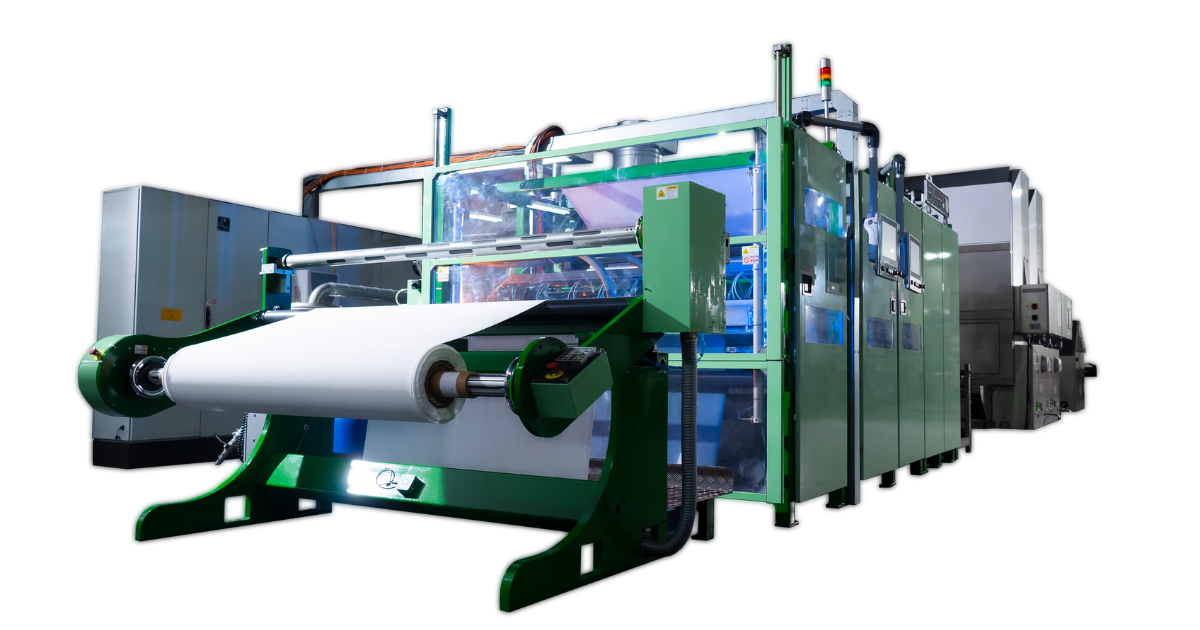
Cygnet Texkimp’s ART rapid tape-deposition system is employed in the production of components for supercar such as the McLaren W1. Photo BTMA by AWOL Media
Cygnet Texkimp’s ART rapid tape-deposition system is employed in the production of components for supercar such as the McLaren W1.
06.01.2026

BTMA: Innovation in technical textiles, digitalisation and testing

Members of the British Textile Machinery Association (BTMA) can look back on 2025 as a year marked by notable technological advances and continued progress in global trade, despite an uncertain and volatile market.

“Our members have been very active over the past 12 months and this has resulted in new technologies for the production of technical fibres and fabrics, the introduction of AI and machine learning into process control systems and significant advances in materials testing,” says BTMA CEO Jason Kent. “There’s real excitement about what can be achieved in 2026 as we look ahead to upcoming exhibitions such as JEC Composites in Paris in March and Techtextil in Frankfurt in April.”

Composites momentum
Cygnet Texkimp, for example, has been nominated for a 2026 JEC Innovation Award for its collaboration with McLaren Automotive on the ART rapid tape-deposition system. Capable of depositing dry fibre tapes at up to 2.5 metres per second with exceptional precision, ART reduces scrap, shortens cycle times and delivers structural improvements already being realised across McLaren’s composite-intensive vehicle platforms.

Members of the British Textile Machinery Association (BTMA) can look back on 2025 as a year marked by notable technological advances and continued progress in global trade, despite an uncertain and volatile market.

“Our members have been very active over the past 12 months and this has resulted in new technologies for the production of technical fibres and fabrics, the introduction of AI and machine learning into process control systems and significant advances in materials testing,” says BTMA CEO Jason Kent. “There’s real excitement about what can be achieved in 2026 as we look ahead to upcoming exhibitions such as JEC Composites in Paris in March and Techtextil in Frankfurt in April.”

Composites momentum
Cygnet Texkimp, for example, has been nominated for a 2026 JEC Innovation Award for its collaboration with McLaren Automotive on the ART rapid tape-deposition system. Capable of depositing dry fibre tapes at up to 2.5 metres per second with exceptional precision, ART reduces scrap, shortens cycle times and delivers structural improvements already being realised across McLaren’s composite-intensive vehicle platforms.

Cygnet is the world’s largest independent manufacturer of prepreg production machinery, alongside a broad portfolio of handling and converting systems for the composites industry. 

In addition, the company is licensed to design and build the DEECOM® composite recycling system developed by fellow BTMA member Longworth Sustainable Recycling Technologies. DEECOM® is a zero-emission, low-carbon pressolysis solution that uses pressure and steam to reclaim fibres and resin polymers from production waste and end-of-life composites.

Other BTMA members supporting the composites sector include Emerson & Renwick, which applies deep expertise in print, forming, vacuum and coating technologies to carbon fibre processing, while Airbond is a pioneer in pneumatic yarn splicing for high-value carbon and aramid fibres. Slack & Parr meanwhile supplies high-accuracy gear metering pumps across the manmade fibre market, where they process a wide range of polymers and fibres with uniformity and consistency.

Gel spinning
Further resource savings in high-end fibre processing have been realised by Fibre Extrusion Technology through the introduction of a new process for manufacturing ultra-high molecular weight polyethylene (UHMWPE). The company’s patented solvent extraction system exploits supercritical carbon dioxide. 

“Current UHMWPE systems are huge in scale and extremely complex,” says FET R&D Manager Jonny Hunter. “That makes the supply chain inflexible and limits new product development. These disadvantages have been addressed in our new FET-500 series lab and small-scale gel spinning system.”

Quality assurance
Alongside materials innovation, BTMA members are also reshaping quality assurance via digitalisation and data-driven manufacturing. Shelton Vision has significantly advanced automated fabric inspection with the latest generation of its WebSpector system. Using patent-pending image processing techniques, WebSpector now enables reliable real-time defect detection on complex patterned fabrics, including those subject to distortion, shear or stretch during processing.

Building on its leadership in plain fabric inspection, the Shelton system now adapts to intricate designs such as camouflage and delivers clean, stable images that allow full fault detection at high running speeds. While automotive interiors and one-piece woven airbags remain key applications, WebSpector systems are increasingly being supplied to producers of performance wear, fashion, denim, outdoor upholstery, mattress ticking, window dressings and even carbon fibre composites.

Continuous colour
A comparable shift from intermittent checks to continuous monitoring is taking place in colour management through the work of C-Tex. Traditionally reliant on periodic swatches, mills can now apply laboratory-level colour measurement directly in production. 

“What we are doing is taking a lab capability and putting it into production,” says Managing Director Rob Ricketts. Working with Shelton, C-Tex has combined inline defect detection with continuous colour variation analysis, enabling both parameters to be assessed simultaneously.

Importantly, this data is now shared across supply chains. When fabrics reach garment, automotive or furniture manufacturers, downstream users know exactly what they are receiving and whether it meets their requirements. 

“This visibility is a big breakthrough,” says Ricketts. “It’s well established in automotive, but now it’s coming to textiles too.”

Intuitive testing
Advanced testing remains another cornerstone of BTMA innovation. James Heal has long supplied advanced textile testing systems and its latest Performance Testing collection focuses on speed, simplicity and intuitive operation for parameters such as airflow and water resiliency. Water repellency testing has similarly been improved with the TruRain system which dramatically reduces wastewater and energy consumption.

During 2025, the company also introduced the new Martindale Motion.
The new nine-station instrument with individual lifting heads now offers the flexibility to run each station independently for carrying out different textile tests simultaneously. Once set up, the Martindale Motion can be left running with the sample holders automatically lifting at the required evaluation points, freeing up the operator’s time to do other work without the need to return until the abrasion or pilling test is fully completed, including overnight.

Colour accuracy is addressed by the VeriVide DigiEye system which provides non-contact colour measurement and digital imaging, enabling objective data capture and rapid sharing across organisations. Recent developments include 100% LED illumination, integrated dust filtration, software-controlled lighting geometry and automated image capture, improving both precision and efficiency.

Tactility challenge
The tactile sensation experienced when touching and manipulating fabric is meanwhile a critical aspect of textile evaluation, but to date has been very subjective. One of the biggest challenges faced by designers and manufacturers is in describing and sharing information about fabric aesthetics before manufacturing, or without the costly and time-consuming process of transporting physical samples.

These limitations are being overcome with the new Sentire fabric handle tester from Roaches International.

“No two people will describe how a fabric feels in the same way and the lack of a common language to describe fabric tactility poses communication challenges across the complex global fashion and textile supply chain,” says Roaches International MD Sean O’Neill. “The Sentire has been developed to allow our customers to objectively measure qualities such as softness, smoothness, drape and stiffness and market response during 2025 has been extremely positive.”

Convergence
Bringing these developments together, Jason Kent sees a clear strategic direction emerging. 

“Across the BTMA we’re seeing a convergence of advanced machinery, intelligent software and rigorous testing,” he says. “Our members are responding to today’s challenges around efficiency, sustainability and quality, while laying the foundations for a more transparent, data-driven and resilient textile manufacturing sector. Despite market uncertainty, there is genuine confidence about what lies ahead for British textile machinery and its global customers.”