
From the Sector

Reset
28.07.2026

Groz-Beckert at CINTE Techtextil 2026, Shanghai

From September 1 to 3, 2026, Groz-Beckert will present its latest innovations and solutions across the product areas of Nonwovens and Knitting at CINTE Techtextil China.

Nonwovens 
In the Nonwovens product area, Groz-Beckert will present its latest innovations. One of the highlights is the advanced Litespeed™ felting needle designed to significantly reduce insertion and removal times, thereby simplifying handling and increasing operational efficiency. Furthermore, the newly developed CB-Barb felting needle will be part of the showcase. 

For the Nonwovens Carding segment, Groz-Beckert will introduce its specialized Mounting Service. The portfolio is complemented by the innovative SiroLock™ plus wires from the Groz-Beckert InLine card clothing family. These products are designed to deliver high levels of precision, performance and reliability throughout the carding process. 

From September 1 to 3, 2026, Groz-Beckert will present its latest innovations and solutions across the product areas of Nonwovens and Knitting at CINTE Techtextil China.

Nonwovens 
In the Nonwovens product area, Groz-Beckert will present its latest innovations. One of the highlights is the advanced Litespeed™ felting needle designed to significantly reduce insertion and removal times, thereby simplifying handling and increasing operational efficiency. Furthermore, the newly developed CB-Barb felting needle will be part of the showcase. 

For the Nonwovens Carding segment, Groz-Beckert will introduce its specialized Mounting Service. The portfolio is complemented by the innovative SiroLock™ plus wires from the Groz-Beckert InLine card clothing family. These products are designed to deliver high levels of precision, performance and reliability throughout the carding process. 

Knitting 
In the Knitting product area, Groz-Beckert will present its expanded product portfolio for the warp knitting industry. The extended range of modules offers high levels of precision, stability and efficiency during the loop formation process. 

With its comprehensive product portfolio, Groz-Beckert provides customers with integrated and precisely coordinated solutions from a single source. This approach simplifies procurement and production processes, reduces coordination effort and ensures that all components are optimally matched for reliable machine performance.

Source:

Groz-Beckert

Networking Day 2026 © Institut für Textiltechnik (ITA) der RWTH Aachen University
28.07.2026

Networking Day 2026: Industry Stakeholders Unite Around Textile Recycling

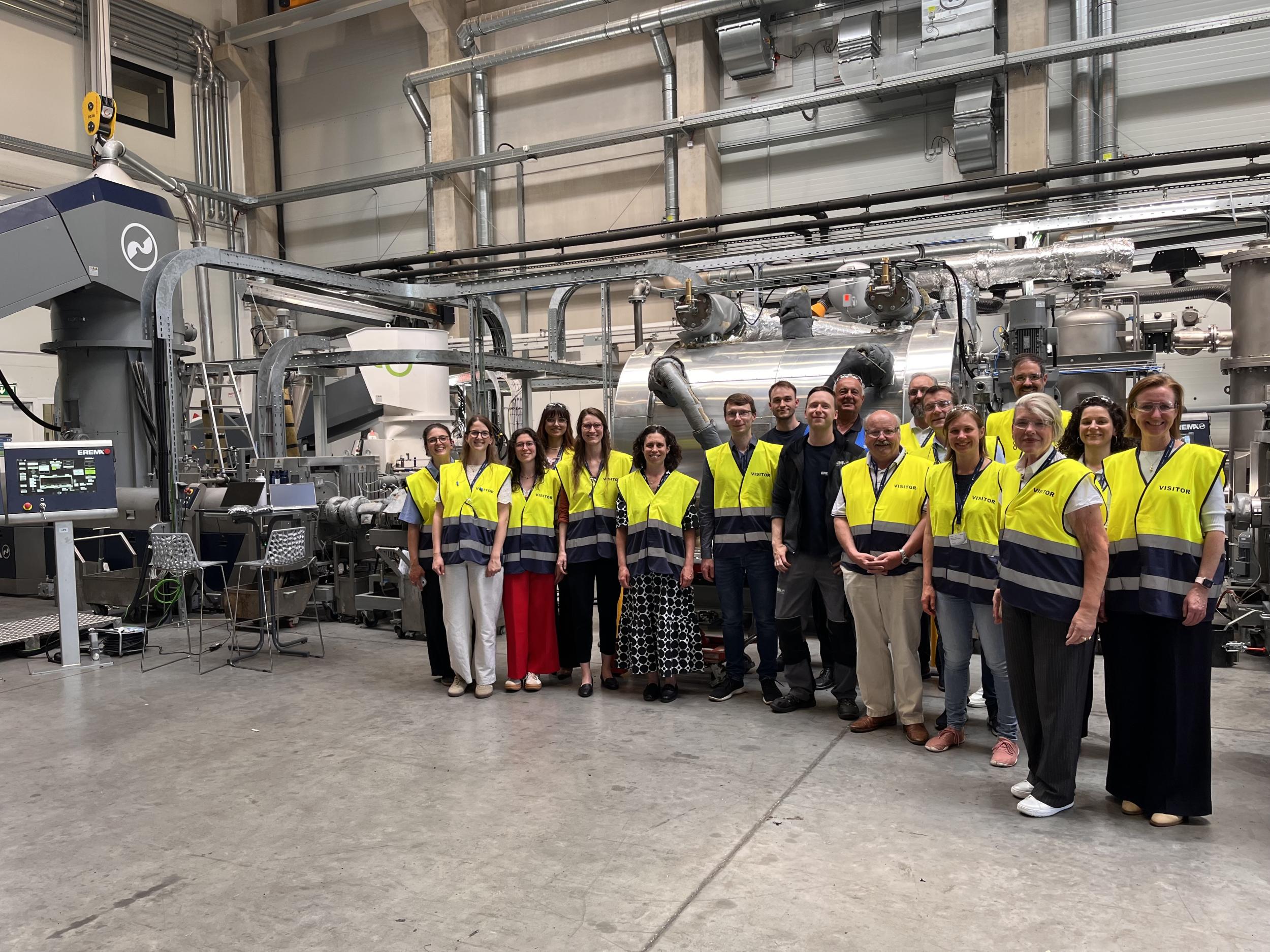
In 2026, the Industry Research Group (IRG) Polymer Recycling once again brought together some of the key stakeholders in textile recycling for its annual Networking Day. This year, the event took place at EREMA’s premises in Ansfelden, Austria. It brought together key players from across the textile recycling value chain for a day of structured exchange and in-depth discussions.

The conversations covered a broad range of topics relevant to the sector, including technological developments, current market dynamics, and the evolving political and regulatory landscape. Speakers from Zschimmer & Schwarz, Volkswagen Group Innovation, STRÄHLE+HESS, and the Technical University of Leoben provided substantive input across these areas. The interesting discussions were also possible thanks to our IRG partners: Bekaert, EREMA, Barmag, Stadler Anlagenbau, Technip Energies, Fibrant, BASF and Remondis.

The IRG extends its sincere thanks to EREMA for hosting the event and providing access to their technical centre, which added a valuable practical dimension to the day's programme.

In 2026, the Industry Research Group (IRG) Polymer Recycling once again brought together some of the key stakeholders in textile recycling for its annual Networking Day. This year, the event took place at EREMA’s premises in Ansfelden, Austria. It brought together key players from across the textile recycling value chain for a day of structured exchange and in-depth discussions.

The conversations covered a broad range of topics relevant to the sector, including technological developments, current market dynamics, and the evolving political and regulatory landscape. Speakers from Zschimmer & Schwarz, Volkswagen Group Innovation, STRÄHLE+HESS, and the Technical University of Leoben provided substantive input across these areas. The interesting discussions were also possible thanks to our IRG partners: Bekaert, EREMA, Barmag, Stadler Anlagenbau, Technip Energies, Fibrant, BASF and Remondis.

The IRG extends its sincere thanks to EREMA for hosting the event and providing access to their technical centre, which added a valuable practical dimension to the day's programme.

The next IRG Full-Term Meeting is scheduled for autumn 2026. The Networking Day will return in 2027.

The IRG Polymer Recycling is a continuously running cooperation project between companies interested in the research field of textile recycling and the ITA Group. The aim is to systematically address technological, economic and strategic issues regarding textile recycling and create a strong network to tackle the challenges. 

Source:

ITA – Institut für Textiltechnik of RWTH Aachen University

Dublin Photo by Sean Griffin, Pixabay
15.07.2026

Irish government publishes Delivery Plan for textiles EPR scheme

The Irish government has published its draft Delivery Plan for its national textiles Extended Producer Responsibility (EPR) scheme – subject to a stakeholder consultation.  

The draft plan outlines the actions required for the effective design and go-live of a national textiles Extended Producer Responsibility (EPR) scheme, including the establishment of an entirely new Producer Responsibility Organisation (PRO) in Ireland, required by April 2028.

Commenting, Aimee Campanella, Development Director – Textiles EPR at leading international circularity specialists Reconomy, said: “It is great to see the Irish Government making progress towards establishing a national textiles Extended Producer Responsibility (EPR) scheme.”

“The proposed April 2028 go-live date gives textile producers time to prepare, but businesses should be using this period to understand what the new scheme will mean for their operations and how they can put the right systems in place.

The Irish government has published its draft Delivery Plan for its national textiles Extended Producer Responsibility (EPR) scheme – subject to a stakeholder consultation.  

The draft plan outlines the actions required for the effective design and go-live of a national textiles Extended Producer Responsibility (EPR) scheme, including the establishment of an entirely new Producer Responsibility Organisation (PRO) in Ireland, required by April 2028.

Commenting, Aimee Campanella, Development Director – Textiles EPR at leading international circularity specialists Reconomy, said: “It is great to see the Irish Government making progress towards establishing a national textiles Extended Producer Responsibility (EPR) scheme.”

“The proposed April 2028 go-live date gives textile producers time to prepare, but businesses should be using this period to understand what the new scheme will mean for their operations and how they can put the right systems in place.

“Moving towards greater producer responsibility will require better visibility across supply chains, stronger data management and a clearer understanding of how textiles flow through the economy. For businesses, preparing early will not only support compliance but also unlock wider commercial benefits, helping them identify efficiencies, reduce costs and make more informed decisions around design, sourcing and end-of-life management.

“The establishment of a Producer Responsibility Organisation (PRO) will be central to delivering an effective scheme, but getting the framework right will be critical. It’s important that it strikes the right balance – creating the incentives needed to drive greater reuse, repair and recycling, while recognising the operational and cost implications for producers. 

“If designed effectively, Ireland’s textiles EPR scheme will provide the foundations for a more circular textiles economy, keeping materials in use for longer, reducing waste and creating new opportunities to recover valuable resources.”


Sustainability Report Photo: (c) Carrington Textiles
15.07.2026

Carrington Textiles publishes third Sustainability Report

At Carrington Textiles, we are pleased to announce the publication of the third Sustainability Report from the RTS Textiles Group, showcasing another year of progress towards more responsible manufacturing across our global operations.

The report reflects continued investment in technologies and initiatives that improve environmental performance while supporting long-term business resilience. From renewable energy and water stewardship to circular economy projects and product innovation, sustainability remains embedded in how we operate across the Group.

Among this year's highlights is the completion of a new wastewater treatment plant in Pakistan, significantly strengthening water treatment capacity at CTi ahead of becoming operational later this year. The site has also expanded its circular economy initiatives through the reuse of biomass and coal ash in brick manufacturing and projects that support local biodiversity.

At Carrington Textiles, we are pleased to announce the publication of the third Sustainability Report from the RTS Textiles Group, showcasing another year of progress towards more responsible manufacturing across our global operations.

The report reflects continued investment in technologies and initiatives that improve environmental performance while supporting long-term business resilience. From renewable energy and water stewardship to circular economy projects and product innovation, sustainability remains embedded in how we operate across the Group.

Among this year's highlights is the completion of a new wastewater treatment plant in Pakistan, significantly strengthening water treatment capacity at CTi ahead of becoming operational later this year. The site has also expanded its circular economy initiatives through the reuse of biomass and coal ash in brick manufacturing and projects that support local biodiversity.

At MGC in Portugal, investment in renewable energy and energy efficiency has continued, with solar generation capacity increasing to 8.3 MW and further projects underway to reduce natural gas consumption and carbon emissions. At Pincroft in the UK, continued progress has been made through Combined Heat and Power (CHP), the ongoing development of its Carbon Roadmap and wider decarbonisation initiatives.

The report also highlights how the RTS Textiles Group continues to expand the use of innovative fibres and technologies that combine comfort, protection and performance with a reduced environmental impact, supporting customers in achieving their own sustainability objectives.

John Vareldzis, CEO of RTS Textiles Group, said: "Building on the foundations established in previous years, this report highlights our progress and reaffirms our commitment to responsible manufacturing, innovation and transparency across our global operations."

13.07.2026

AkzoNobel’s Russian subsidiaries placed under temporary external administration

AkzoNobel has taken note of a presidential decree signed by the President of Russia placing the company’s Russian subsidiaries under temporary external administration as of July 13.
 
Under temporary external administration, operational oversight is transferred to a designated external entity, while underlying ownership remains unchanged. AkzoNobel is currently reviewing the decree and assessing its implications. Russia represents less than 2% of AkzoNobel’s revenue and is not material to the company’s overall financial performance.
 
The company remains committed to supporting its employees and safeguarding its interests as shareholder of AkzoNobel’s Russian subsidiaries.
 
Following the EU sanctions introduced in 2022, AkzoNobel discontinued a significant part of its activities in Russia. The remaining operations have since been fully localized and ringfenced, operating independently without financial support from Akzo Nobel N.V.


AkzoNobel has taken note of a presidential decree signed by the President of Russia placing the company’s Russian subsidiaries under temporary external administration as of July 13.
 
Under temporary external administration, operational oversight is transferred to a designated external entity, while underlying ownership remains unchanged. AkzoNobel is currently reviewing the decree and assessing its implications. Russia represents less than 2% of AkzoNobel’s revenue and is not material to the company’s overall financial performance.
 
The company remains committed to supporting its employees and safeguarding its interests as shareholder of AkzoNobel’s Russian subsidiaries.
 
Following the EU sanctions introduced in 2022, AkzoNobel discontinued a significant part of its activities in Russia. The remaining operations have since been fully localized and ringfenced, operating independently without financial support from Akzo Nobel N.V.


More information:
Akzo Nobel N.V. Russia
Source:

Akzo Nobel N.V.

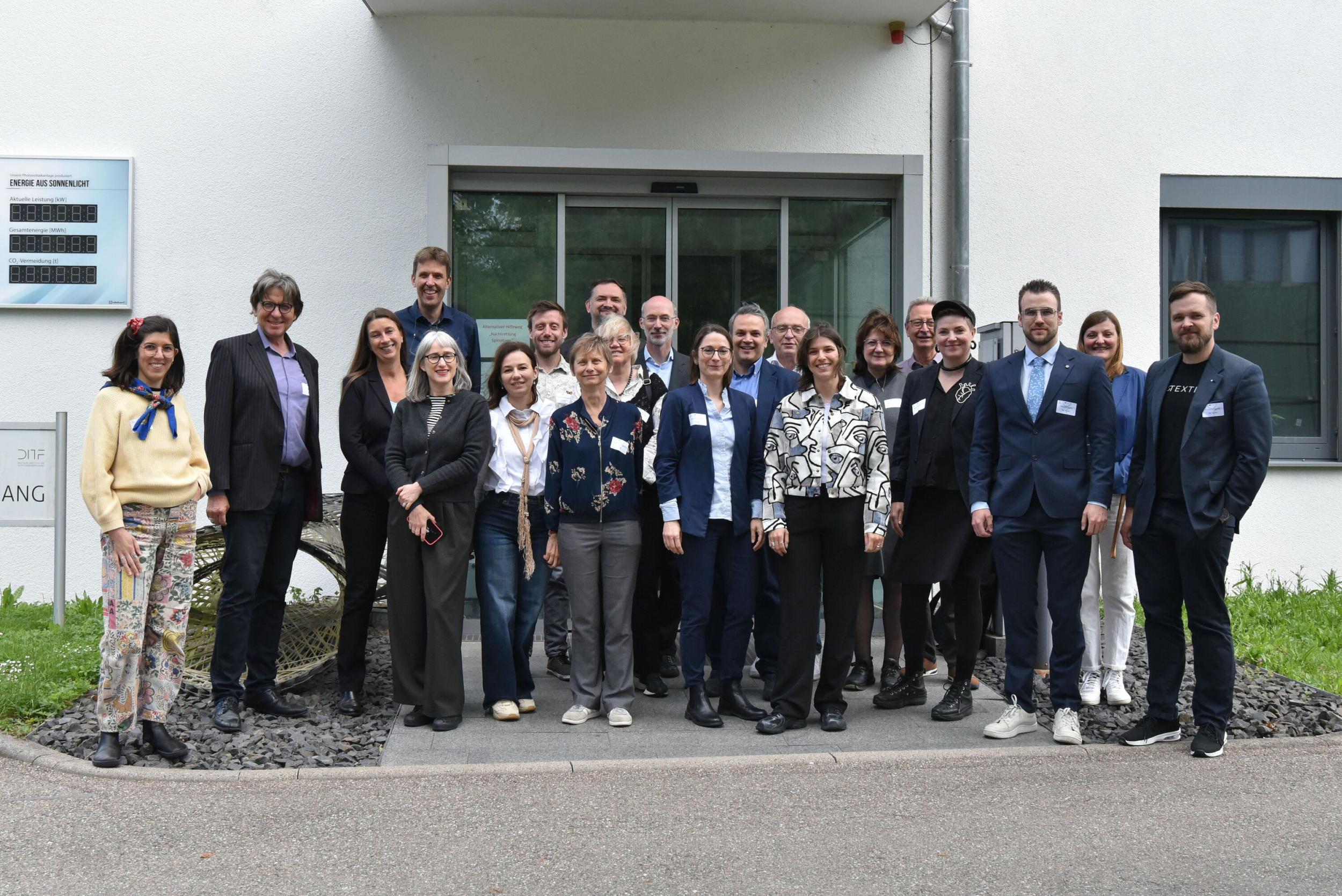
Kick-off meeting in Denkendorf. Photo: DITF
Kick-off meeting in Denkendorf.
12.07.2026

ALADIN: Circular and demand-driven textile production in Europe

Textile production can be organized sustainably by utilizing short supply chains and preventing overproduction. This can already be achieved today by intelligently connecting and efficiently utilizing existing infrastructure. At the same time, production becomes circular when innovative technologies and materials are used that enable high-quality recycling. The ALADIN research project, launched in May 2026 and co-funded with five million euros under the EU Horizon Europe program, is creating the conditions for this.

Under the coordination of the German Institutes of Textile and Fiber Research Denkendorf (DITF), ten European project partners are developing and integrating platforms, technologies, and viable business models for circular textile production over four years. ALADIN stands for Advanced LocAl and Digital Innovation Network for Circular Garments and aims to establish viable business models for circular textile production.

The concept is based on four pillars:

Textile production can be organized sustainably by utilizing short supply chains and preventing overproduction. This can already be achieved today by intelligently connecting and efficiently utilizing existing infrastructure. At the same time, production becomes circular when innovative technologies and materials are used that enable high-quality recycling. The ALADIN research project, launched in May 2026 and co-funded with five million euros under the EU Horizon Europe program, is creating the conditions for this.

Under the coordination of the German Institutes of Textile and Fiber Research Denkendorf (DITF), ten European project partners are developing and integrating platforms, technologies, and viable business models for circular textile production over four years. ALADIN stands for Advanced LocAl and Digital Innovation Network for Circular Garments and aims to establish viable business models for circular textile production.

The concept is based on four pillars:

  • A digital platform for services provided by small and medium-sized enterprises (SMEs)
  • Regional cooperation to promote local production
  • Technologies for recycling strategies
  • Local and renewable raw materials

The project partners come from six different countries (Germany, Romania, Belgium, France, Czechia, Italy) and bring a wide range of expertise to the table, for example in the areas of design, embroidery, printing, digitalization, recycling, AI, and microfactory production.

This diverse range of experiences enables a high-performance digital infrastructure for B2B and B2B2C relationships. The partners will develop innovative technologies such as a Digital Product Passport module, or an AI-supported ecodesign assistant and apparel textiles including ring-spun recycled cotton yarns, while ensuring a broad transfer of project results to make a lasting impact. This will result in a network that jointly utilizes the infrastructure - from design and production to customer service and recycling.

To validate the approach, three specific use cases are being implemented: a semi-automated T-shirt, a smart parka, and a circular, versatile blazer dress. These products use sustainable materials such as bio-based fibers and recycled textiles, which are processed in a way that makes them easier to recycle at the end of their life cycle. Production takes place locally in microfactories, and the products are custom-made according to customer specifications.

In addition, small and medium-sized enterprises (SMEs), startups and further stakeholders will be actively involved in two Open Calls. Innovations within the ecosystem are also promoted, for example in the areas of automation, production technologies, and digital services.

In the long term, the project aims to establish a Europe-wide network of microfactories, create new jobs, and significantly increase the use of sustainable materials. At the same time, the project intends to reduce waste and strengthen regional value creation.

To this end, ALADIN brings together industry, customers, policymakers, and academia - to promote sustainable, circular textile production. In this way, ALADIN will also serve as a model for similar networks, thereby multiplying the positive effects on the market and the environment.

This project has received funding from the European Union’s Horizon Europe research and innovation programme under grant agreement No 101294463. Views and opinions expressed are however those of the author(s) only and do not necessarily reflect those of the European Union or the European Health and Digital Executive Agency (HADEA). Neither the European Union nor the granting authority can be held responsible for them.

Source:

Deutsche Institute für Textil- und Faserforschung Denkendorf DITF

12.07.2026

NCTO Mourns the Passing of Sen. Lindsey Graham

The National Council of Textile Organizations (NCTO), spanning the entire spectrum of U.S. textiles from fiber to finished sewn products, issued a statement mourning the passing of Senator Lindsey Graham (R-SC) and expressing sincere condolences to his family, staff, and the people of South Carolina.

The National Council of Textile Organizations (NCTO), spanning the entire spectrum of U.S. textiles from fiber to finished sewn products, issued a statement mourning the passing of Senator Lindsey Graham (R-SC) and expressing sincere condolences to his family, staff, and the people of South Carolina.

“The U.S. textile industry is deeply saddened to learn of the passing of South Carolina Senator Lindsey Graham, a dear friend and tireless advocate for our industry and workforce. To say this is a profound loss is an understatement. He was a personal friend to so many in our industry – walked through our plants, engaged with our workers – and never forgot where he came from. He was dubbed by many in Congress as the ‘textile Senator’ and he wore that label so very proudly and he earned every bit of it.  Just last week, he pushed to try to advance two amendments to ensure that U.S. government uniforms are fully made in America. His advocacy on behalf of U.S. manufacturing and workers was a top priority, simply because it was a core belief of his. We want to extend our profound condolences to Senator Graham’s family and his incredible staff – who were his family – and to all those who knew and loved him. He will be greatly missed.”

Source:

National Council of Textile Organizations