

TMAS welcomes ReSpin as Swedish textile recycling accelerates
As the latest company to join TMAS – the Swedish Textile Machinery Association – ReSpin has this year established what is just the latest in a succession of Swedish innovations shaping the country into one of Europe’s most sophisticated ecosystems for circular textiles.
In May this year, Holma Spinning Mill, located in Forsa just outside Hudiksvall, was granted SEK 77.3 million in funding through the Swedish Environmental Protection Agency to establish Sweden’s first industrial spinning line for recycled textile fibres. Holma Spinning Mill is part of Holma Förvaltning, which is co-owned by ReSpin. Sister company Holma Helsingland brings more than a century of experience in spinning, twisting, dyeing and yarn production.
RespinJenny
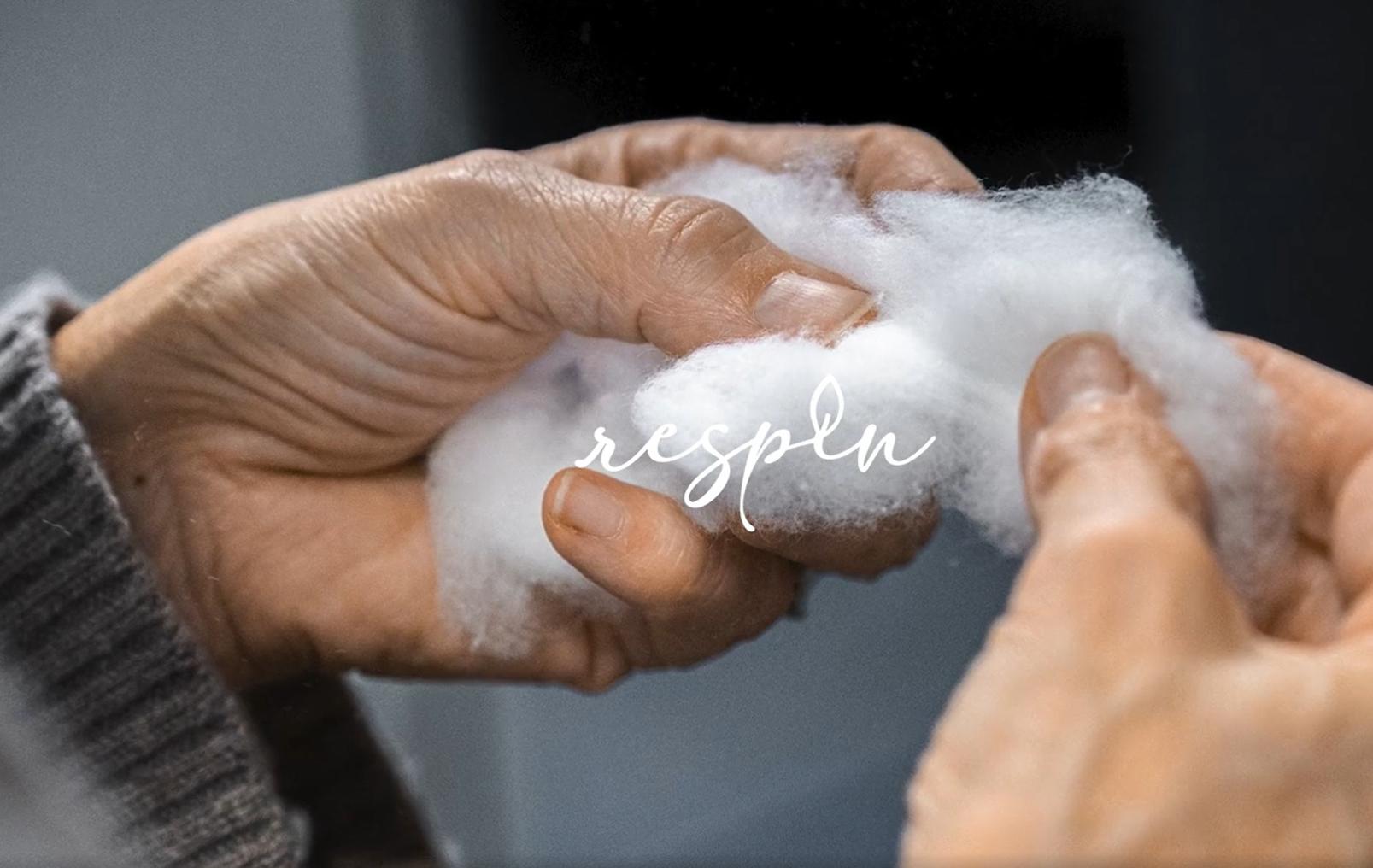
ReSpin, headquartered in Undersåker, in northern Sweden’s Jämtland, has developed and patented a new mechanical recycling technology called RespinJenny which transforms textile waste into new fibres suitable for yarn production.
ReSpin was founded in 2020 by Åsa Strandberg, who has more than 30 years of experience in the textile industry and for the past 15 years has been on a mission to make textiles circular. After 17 years at H&M, she chose to leave the company when growing concerns about the environmental impact of the fashion industry grew too big to be ignored. In 2010 she launched Saiboo, a company which has a focus on the B2B production of garments, selling them and then taking them back for reuse.
With full control over materials and design, the difficult sorting problem was solved for Saiboo from the start, and driven by the desire to push the industry further, Åsa began collaborating with Mid Sweden University in Östersund on how to design for recycling.
Soon, however, a more fundamental problem became clear – there were no viable recycling methods available on the market. Chemical initiatives were emerging and mechanical recycling existed, but only at very low level.
“While many believed chemistry was the solution, I saw untapped potential in mechanical methods and a remark from a machine researcher that anything which can be done by hand can be done mechanically became the spark that confirmed this direction,” she explains. “I then initiated several research projects together with industry and academia, including the Universities of Borås, Linköping and Luleå, to further explore this idea.”
“RespinJenny uses no water or chemicals, has low energy consumption and is based on preserving as much fibre quality as possible from waste textiles,” adds TMAS Secretary General Therese Premler-Andersson. “It is designed to enable local, small scale and resource efficient recycling closer to where textile waste is generated. The the Swedish Environmental Protection Agency’s funding is an important step in scaling fibre-to-fibre recycling industrially and demonstrating that circular textile materials can be produced on a larger scale with low climate impact.
“Mechanical recycling alone is not enough to achieve textile-to-textile recycling – without the ability to spin recycled fibres into yarn, it is impossible to weave or knit new fabrics, which is why Holma Spinning Mill represents a key part of building a complete circular textile value chain.”
Rather than focusing on a single breakthrough technology, Swedish companies, including TMAS members, have developed expertise across the entire value chain – from collection and automated sorting through to fibre-to-fibre recycling, testing, product development and policy research.
Underpinning this, has been strong collaboration between Swedish industry and academia.
“The University of Borås – and particularly its Swedish School of Textiles –has become one of Europe’s leading centres for circular textile research and Borås is also home to a number of other TMAS members, such as the ACG Group and Eton Systems, who are driving innovation through advanced automation and involved in many cooperative projects between industry and academia in Sweden,” Therese Premler-Andersson observes.
In conclusion, Åsa Strandberg stresses the great value in now being part of a network where knowledge, innovation and collaboration are central.
“TMAS brings together many of Sweden’s leading companies and experts, all playing an important role in shaping the future of textile production technology,” she says. “As ReSpin moves towards industrialisation, we see great value in joining TMAS, because the transition to circular textile systems requires cooperation across the entire value chain, and the association provides an important platform for that dialogue.”