From the Sector

Reset
131 results
Danna Drion (second from left) hosting the FESPA Lunch & Lead session at FESPA 2025, alongside the Board members of Girls Who Print Europe Photo Mimaki Europe
Danna Drion (second from left) hosting the FESPA Lunch & Lead session at FESPA 2025, alongside the Board members of Girls Who Print Europe
02.03.2026

Mimaki Europe: Empowering Women in the Print Industry

Across all industries, cultivating a diverse and inclusive workplace is increasingly recognised as valuable and essential to long-term success. However, despite the print industry’s significant advancements in technology and innovation, visible representation of women remains limited. As the sector grapples with low recruitment, it’s important to challenge outdated perceptions. Creating real change, however, requires collective effort - no single company can do it alone.

As we mark International Women’s Day on 8th March, it is an important moment not only to celebrate the achievements of women across industries, but also to reflect on the tangible actions we can take to build a more inclusive and representative future for print.

The Importance of Empowering Women in the Print Industry
So, how can we empower the women already working within the industry, and provide them with the visibility and support they need to succeed?

Across all industries, cultivating a diverse and inclusive workplace is increasingly recognised as valuable and essential to long-term success. However, despite the print industry’s significant advancements in technology and innovation, visible representation of women remains limited. As the sector grapples with low recruitment, it’s important to challenge outdated perceptions. Creating real change, however, requires collective effort - no single company can do it alone.

As we mark International Women’s Day on 8th March, it is an important moment not only to celebrate the achievements of women across industries, but also to reflect on the tangible actions we can take to build a more inclusive and representative future for print.

The Importance of Empowering Women in the Print Industry
So, how can we empower the women already working within the industry, and provide them with the visibility and support they need to succeed?

Studies have identified that the lack of female representation can leave female employees feeling isolated. According to the KPMG Women’s Leadership Study, over 80% of women felt encouraged to pursue leadership positions when they saw women already in those positions. Ensuring that both women and men are equally recognised is essential in transforming the face of what the print industry is. This can take many forms – from hosting seminars and talks to simply showcasing female talent on company social media platforms. In light of that, women-led organisations like Girls Who Print are also crucial in bridging these gaps. They offer mentorship, provide advice, and a sense of community that helps women navigate the unique challenges of the industry with confidence. Mentorship programmes are especially valuable, offering aspiring female professionals the chance to learn from seasoned print leaders and further their own career and skillset. 

Creating change also means looking beyond the companies themselves – to customers and collaborators. Supporting women-led initiatives and creatives is key.  Mimaki, for example, has collaborated with several inspiring female artists and designers, such as Tessa Koops, Claire Vos and Sigrid Calon. Furthermore, supporting non-profits like Tiny Miracles, which employs women from marginalised backgrounds in India by providing a steady income, helps create more opportunities for women globally.
 
Attracting Women to the Industry: Changing Perceptions
Another challenge arises in how to encourage a more diverse workplace in the first place. Print is often overlooked as a career path, unless you know of someone working within the industry, and this poses a problem in hiring diversely across the board. This is especially true for women, as print is frequently perceived as a traditional manufacturing sector, which has historically been male dominated. Such misconceptions can discourage women from seeing print as a viable or inspiring career option. 

In reality, the print industry is incredibly diverse and creative, spanning interior décor, signage, medical 3D printing prototypes and more. It’s not just about production, it’s about technology, innovation, and design. With the growing use of cutting-edge technologies like robotics and artificial intelligence, the industry now requires highly skilled employees who can operate and manage complex machinery.

To attract more women – and more diverse talent in general—it’s crucial to shift the narrative. Print is no longer just about machines and manufacturing – it’s a forward-looking, technology-driven industry where people with diverse skillsets can thrive. Rebranding the print industry as a dynamic and creative career path is essential to attracting a more diverse workforce for a more inclusive future.

At Mimaki, we believe in leading by example. Personally, I’ve been mentoring students for many years at the University of Amsterdam, with a particular focus on empowering young women as they take their first steps into the job market. This experience has given me the opportunity to highlight the diversity, creativity, and technological innovation that define today’s print industry – and to inspire more women to see themselves as part of its future. Over the years, we have also developed an internship programme that continues to grow and deliver excellent results, helping young talent gain hands-on experience and contribute new perspectives to our teams.
 
A Step in the Right Direction
While the print industry still faces challenges when it comes to female representation, the developments made in recent years are encouraging. More women are entering the field, taking on high-level positions and in general helping to shape the industry’s future. However, achieving true inclusivity and diversity will require continued effort from companies, organisations, and individuals. By supporting female talent, offering mentorship opportunities, and breaking down outdated perceptions about the industry, we can ensure that the print sector becomes a place where all employees, regardless of gender, feel valued and empowered.

Danna Drion, General Manager Marketing and Product Management at Mimaki Europe 

Source:

Mimaki Europe 

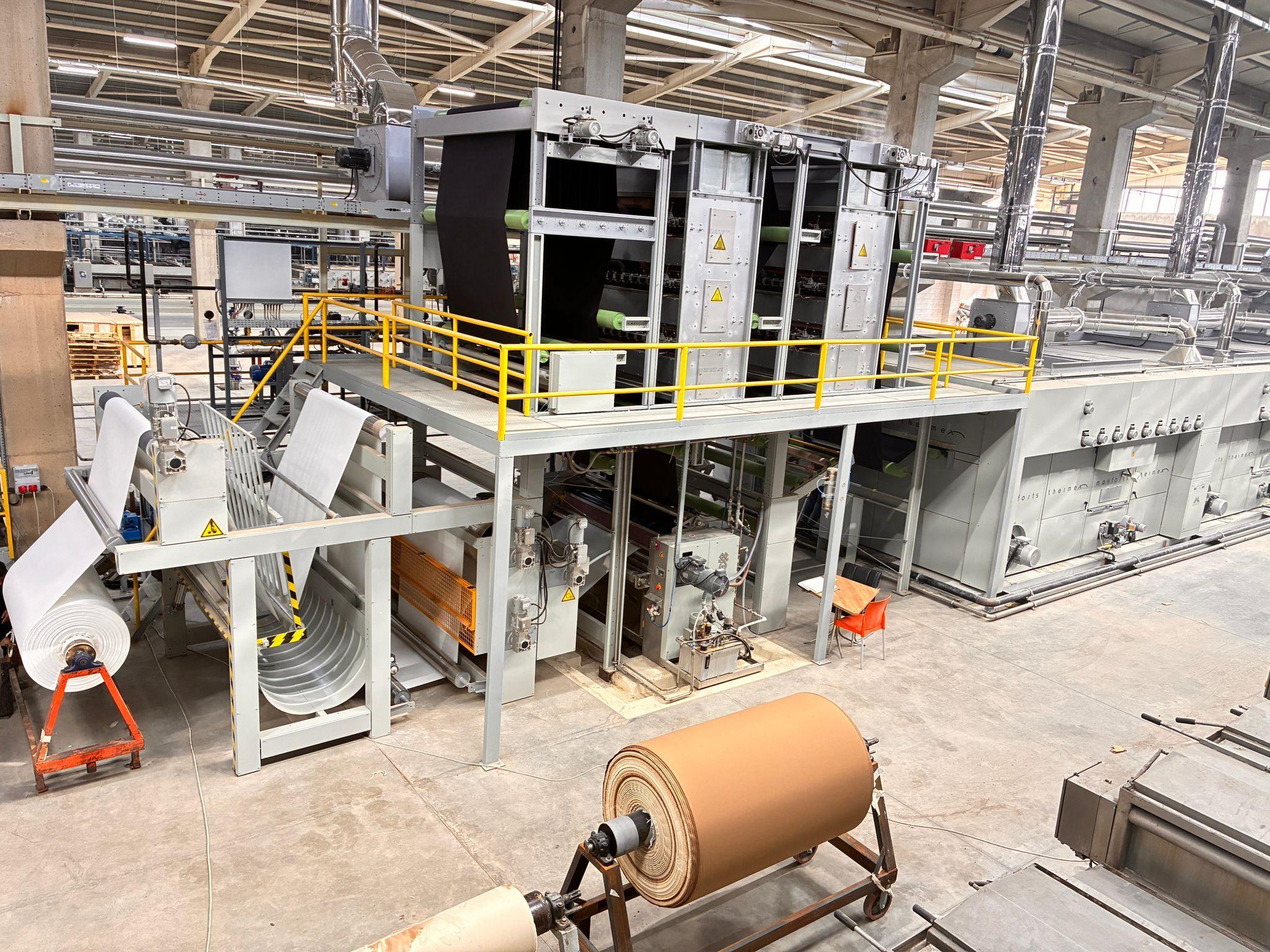
The MontexCoat coater serves a very diverse number of markets. Photo Monforts Textilmaschinen GmbH
The MontexCoat coater serves a very diverse number of markets.
24.02.2026

Monforts with coating solutions at Techtextil 2026

Over the past few years Monforts has significantly advanced its technologies for coating, with the successive introductions of the MontexCoat, coaTTex and VertiDry systems combining flexibility, precision and energy efficiency for the technical textiles market.

Monforts experts will be on hand at the forthcoming Techtextil 2026 in Frankfurt from April 21-24, to discuss the virtually endless possibilities these advanced coating and drying technologies open up for adding functionality and performance to textile substrates.

Applications
In outdoor and architectural textiles, for example, typical coated products include tents, awnings, sailcloth and blackout blinds, with coating providing the desired combinations of water resistance, dimensional stability, opacity or weather durability. 

Over the past few years Monforts has significantly advanced its technologies for coating, with the successive introductions of the MontexCoat, coaTTex and VertiDry systems combining flexibility, precision and energy efficiency for the technical textiles market.

Monforts experts will be on hand at the forthcoming Techtextil 2026 in Frankfurt from April 21-24, to discuss the virtually endless possibilities these advanced coating and drying technologies open up for adding functionality and performance to textile substrates.

Applications
In outdoor and architectural textiles, for example, typical coated products include tents, awnings, sailcloth and blackout blinds, with coating providing the desired combinations of water resistance, dimensional stability, opacity or weather durability. 

A second major field is in transport interiors, particularly automotive upholstery and interior fabrics, with coatings having a positive influence on parameters including abrasion resistance, tactile feel, stain behaviour and long-term durability. Automotive suppliers also demand absolute reproducibility across batches, which Monforts addresses through digitally-stored coating recipes that can be reloaded for identical results every time.

Beyond consumer-visible products, a large share of applications are in industrial applications, with Monforts coating ranges processing materials such as high-temperature filter media, flame-retardant barrier fabrics and heavy membranes for biogas storage systems. The technology is also used for carbon fibre prepregs and composite reinforcement fabrics, where coating precision is the key to mechanical performance. 

MontexCoat
The Monforts flagship MontexCoat coater serves a very diverse number of markets and enables full PVC coatings, pigment dyeing or minimal application surface and low penetration treatments as well as solvent coatings. Knife coating, roller coating or screen printing can also all be accommodated with this system.

In addition, the MontexCoat provides the ultimate in flexibility and the ability to switch quickly from one fabric run to the next, without compromising on the economical use of energy or raw materials.

coaTTex
The coaTTex coating unit is meanwhile exclusively dedicated to air knife and knife-over-roller coating for single-sided application with paste or foam to add properties such as waterproofing, liquid and gas protection and breathability.

Both coating units are suitable for incorporation into existing finishing ranges as well as installation with new Monforts lines, notably the industry-leading MONTEX stenter systems.

VertiDry
A further recently-introduced technology complementing these coating units is the VertiDry, a fully contactless and energy optimised convection dryer.

The VertiDry is intended for use in combination with a stenter, either before or after it, depending on the specific application, for the essential pre-drying of sensitive fabrics, as well as after the coating of airbags, denim fabrics and glass-fibre substrates. Other envisaged applications include the finishing of sportswear, outerwear, carpets, geotextiles and tarpaulins.

Industry standards
For over 40 years, Monforts machines have been manufactured at Montex Maschinenfabrik based in St. Stefan, Austria, and while there is standardisation across series-produced machines, the company is increasingly being called upon to construct bespoke machines with unique designs, according to the special needs of customers in the technical textiles sector.

“MONTEX stenters and THERMEX dyeing systems are the industry standards for the dyeing and finishing of technical textiles, providing a number of advantages in terms of production throughput and especially in energy efficiency and savings,” says Monforts Marketing Manager Nicole Croonenbroek. “These machines remain unmatched in terms of their robustness and long service life, as well as resource-efficient productivity. As a third strand of our business, our coating technologies are now being rapidly adopted by technical textile manufacturers, as the industry recognises their benefits. We look forward to discussing all possibilties for both established and new applications with interested parties in Frankfurt.”

Vandewiele data-ready weft feeders in action. Photo (c) Vandewiele
Vandewiele data-ready weft feeders in action.
23.02.2026

Swedish efficiency at Techtextil & Texprocess

Process control, intelligent automation and long-term industrial reliability remain the shared priorities that continue to define members of TMAS, the Swedish textile machinery association.

“Across different stages of textile and material production, TMAS members are united by a common belief that productivity begins with stability,” says TMAS General Secretary Therese Premler-Andersson. “Rather than focusing on isolated machine functions, the emphasis is on controlling the critical variables that directly influence quality, efficiency and uptime.”

Examples of this approach will be demonstrated at Messe Frankfurt’s forthcoming Techtextil and Texprocess exhibitions taking place concurrently in Frankfurt from April 21-24.

Process control, intelligent automation and long-term industrial reliability remain the shared priorities that continue to define members of TMAS, the Swedish textile machinery association.

“Across different stages of textile and material production, TMAS members are united by a common belief that productivity begins with stability,” says TMAS General Secretary Therese Premler-Andersson. “Rather than focusing on isolated machine functions, the emphasis is on controlling the critical variables that directly influence quality, efficiency and uptime.”

Examples of this approach will be demonstrated at Messe Frankfurt’s forthcoming Techtextil and Texprocess exhibitions taking place concurrently in Frankfurt from April 21-24.

Operational value
In weaving and related processes for example, Vandewiele Sweden AB has long-standing expertise in weft feeding and tension control. At Techtextil 2026 in Hall 12 stand C21, company experts will be on hand to explain how, through ensuring repeatable, predictable yarn delivery at ever higher loom speeds, it is enabling weaving mills to operate closer to their technical limits while maintaining fabric quality. 

The company’s continued development of data-ready weft feeders reflects a broader approach to digitalisation, embedding intelligence where it delivers clear operational value rather than adding complexity to already demanding production environments.

Quality assurance
Eltex of Sweden addresses the same challenge from a complementary angle. Its electronic yarn sensors and tension monitoring systems focus on early detection, identifying yarn breaks, end-outs or abnormal tension before they lead to waste, downtime or quality claims. From weaving and warping through to tufting, braiding, quilting and sewing, Eltex technology provides the assurance that modern automated processes depend on. As production speeds increase and manual supervision is reduced, the ability to monitor yarn behaviour in real time becomes a key enabler of stable, high-quality output.

At Techtextil 2026, Eltex will highlight its latest EyETM Multiact system for heat setting machines, guaranteeing yarn consistency throughout the entire process via individual yarn tension monitoring and control according to a predefined reference tension. 

Each channel operates independently and the system also includes a machine stop function in the event of yarn breakage or if yarn tension operates outside preset limits.

Also showcased, will be the ACT-R system for rapier weaving machines which is highly effective in achieving constant weft yarn tension for yarns based on recycled fibres at one end of the scale, and for expensive technical yarns such as Kevlar at the other.

Consistency
Further downstream, BW Converting, extends this focus on control and assurance into dyeing and finishing. 

Following the runaway success of the company’s Baldwin TexCoat G4 finishing system in the past few years, the Baldwin TexChroma digital spray dyeing system is currently being launched.

“Since its introduction, global textile finishers have embraced TexCoat and are now reaping the benefits,” says vice-president of global business development Rick Stanford. “They have been able to increase profitability, cut energy use and reduce their carbon footprint, in addition to exercising precision control with our patented precision spray technology. In the past two years we have been very active in Asia, and many of these customers have been asking for a similar technology for the dyeing process.” 

From production data to date, TexChroma can achieve savings in energy, dyes and chemicals of more than 30% compared to conventional continuous pad batch dyeing using steam, and up to 50% compared to exhaust reactive dyeing. 

It also benefits from an advanced technology enabling reactive dyestuffs and alkali fixation chemicals to be mixed just seconds before spray application, in order to completely eliminate any ‘tailing and listing’– uneven dye application or colour variations.

Eton aUPS
Meanwhile, at Texprocess, Eton Systems will outline how Industry 4.0 and AI are further boosting the capabilities of its aUPS (AI powered unit production system) technologies.

Eton Systems productivity and management system have a positive impact on the productivity of thousands of production lines for a range of industries. Designed to increase value-added time in production by eliminating manual transportation and minimising handling, the individually addressable product carriers are now fully managed and controlled by the company’s advanced software.

The UPS works perfectly for mass production but provides companies with an extra competitive edge through its ability to quickly respond to special custom- made orders - even without disrupting an ongoing larger production batch. The aUPS is developed for circular garment identification, but the ambition is also to cover quality control in future linear production.

The individually addressable product carriers of these fully automated and digitised handling solutions for finished garments, home textiles and furniture are fully managed and controlled by the latest ETONingenious™ software.

This web based real-time data collection and information system continuously accumulates, processes, and makes all production information instantly available to supervisors, quality control personnel, and management.

Precision slitting
Also at Texprocess Svegea will demonstrate its EC 200-C colarette cutter as well as an FA 350 fully automatic roll slitting machine.
 
Svegea’s colarette technology is used by knit garment manufacturers around the world for the production of tubular components such as cuff and neck tapes and other seam reinforcements.  

“In Europe, while the garment manufacturing sector is relatively limited in size, interest in these machines has increased in recent years, mainly driven by logistics, cost and lead-time considerations as production moves closer to the market,” says Svegea Managing Director Håkan Steene. “The ongoing shortage of skilled operators has also increased the demand for such automated solutions.”
 
Svegea’s fully automatic FA 350 roll slitting machine meanwhile addresses a wider range of needs for roll conversion within the technical textiles sector, combining high capacity with very low power consumption and providing extremely accurate cutting precision. Capable of cutting both knitted and woven fabrics – including those produced from a wide range of technical fibres – it can accommodate different shaft sizes and is fully electronically controlled with servo motors. The touchscreen interface has recently been redesigned and expanded with new functions, including automatic control of the knife surface speed during the cutting cycle, maintaining consistent cutting conditions as the roll diameter decreases for improved cutting quality and material handling.
 
Bespoke bias cutting systems are another speciality of the company, for specifically contoured technical textile-based components.

Essential foundation
A second theme linking all TMAS members in Frankfurt is a shared response to the economic realities facing textile manufacturers worldwide. 

“Rather than promoting automation as an abstract objective, Swedish machinery suppliers focus on tangible productivity gains that help manufacturers in high-cost regions remain competitive,” says Premler-Andersson. “Reduced waste, higher uptime and repeatable quality are the essential foundations for sustainable manufacturing. 

Source:

Textile Machinery Association of Sweden

12.02.2026

Rieter: Price increase for products and systems from March

Response to higher material costs worldwide: Global political and economic developments have been leading to rising raw material and energy costs for some time. The textile machinery industry is also affected by this trend. Rieter machines and components consist to a large extent of steel, copper, aluminum and electronics. These materials in particular have seen higher demand and higher prices in recent months.

Rieter has not yet passed on the additional costs to its customers. Since the price trend is proving to be long-term, the company will adjust its prices from March 2026.

Response to higher material costs worldwide: Global political and economic developments have been leading to rising raw material and energy costs for some time. The textile machinery industry is also affected by this trend. Rieter machines and components consist to a large extent of steel, copper, aluminum and electronics. These materials in particular have seen higher demand and higher prices in recent months.

Rieter has not yet passed on the additional costs to its customers. Since the price trend is proving to be long-term, the company will adjust its prices from March 2026.

More information:
Rieter AG Rieter price increases
Source:

Rieter AG

Graphic Christian Dorn, Pixabay
10.02.2026

Mayer & Cie. acquired by Chinese owner family

On Monday, February 09, Xu Hongjie signed the purchase agreement for Mayer & Cie. The Chinese entrepreneur is thereby acquiring the company’s entire circular knitting business, including its subsidiaries in Vsetín (Czech Republic) and Jintan (China).

Xu Hongjie comes from a southern Chinese entrepreneurial family that has been running the company Huixing for almost 30 years. Huixing employs around 1,000 people and develops, manufactures and sells circular knitting machines worldwide. With machines under the Mayer & Cie. brand, Huixing aims to enter the premium segment in the future. As development and manufacturing are at the core of the Mayer & Cie. brand, the Albstadt site will continue to be of strategic importance going forward.
 
“We are very pleased that a future perspective has emerged for the company and for everything we associate with it,” says Wolfgang Müller. He has worked at Mayer & Cie. for many years as Head of Sales and, over the past weeks, has worked intensively with his colleagues and Xu Hongjie on a plan for the restart of Mayer & Cie.

On Monday, February 09, Xu Hongjie signed the purchase agreement for Mayer & Cie. The Chinese entrepreneur is thereby acquiring the company’s entire circular knitting business, including its subsidiaries in Vsetín (Czech Republic) and Jintan (China).

Xu Hongjie comes from a southern Chinese entrepreneurial family that has been running the company Huixing for almost 30 years. Huixing employs around 1,000 people and develops, manufactures and sells circular knitting machines worldwide. With machines under the Mayer & Cie. brand, Huixing aims to enter the premium segment in the future. As development and manufacturing are at the core of the Mayer & Cie. brand, the Albstadt site will continue to be of strategic importance going forward.
 
“We are very pleased that a future perspective has emerged for the company and for everything we associate with it,” says Wolfgang Müller. He has worked at Mayer & Cie. for many years as Head of Sales and, over the past weeks, has worked intensively with his colleagues and Xu Hongjie on a plan for the restart of Mayer & Cie.

The new owner returns his thanks and sincere gratitude to all the employees who supported him throughout the two-month negotiation process. He highlights Wolfgang Müller and Rainer Müller in particular: “They bestowed upon me courage and wisdom, serving as the ever-shining Big Dipper in the long night.”

Restart in several phases
For the company through which he intends to implement the restart of Mayer & Cie., Xu Hongjie has initially chosen the name “Blitzstart” (Lightning Start). The young Chinese entrepreneur does not (yet) speak German, but the 32-year-old did not choose the name by chance: In the coming weeks, the new owner plans to set up a small team to boost sales again and prepare the relaunch.

All employees will need to be rehired, as today’s signing of the purchase agreement marks the dissolution of the former Mayer & Cie. GmbH & Co. KG. For Xu Hongjie, a father of two, this means there will be no Chinese New Year celebrations this year. The holiday is celebrated on 17 February and is comparable in significance to Christmas. “There is a lot to do and very little time,” he says. “We need to make sure the company survives.”

The new owner’s goal is to gradually restart production in spring. In recent days, only assembly work has continued in the facilities on the outskirts of Albstadt-Tailfingen—machines already on order are scheduled to be delivered in the coming days—while production itself has come to a halt. Employees will also need to be brought back on board for this area.

Clear objectives
With Mayer & Cie. and its premium machines for single jersey, double jersey, interlock and jacquard, the Chinese textile entrepreneur intends to continue addressing textile innovators around the world. They should find “intelligent, reliable knitting technologies at Mayer & Cie.—developed in Albstadt, powered by our employees and designed for long-term use,” explains Xu Hongjie.
A customer-centric approach is particularly important to him: “We listen, we implement and we improve—and we do it fast,” says Xu. To underline what he means, he refers to his experience at the family-owned company Huixing: “If our customers have complaints about the machine we delivered, we make it better—once, twice, three times. And we do it as quickly as possible.”

This approach is part of Huixing’s recipe for success: Over the past three decades, the Chinese circular knitting machine manufacturer has established itself worldwide, particularly in the field of mattress ticking fabrics.

Production to remain in Albstadt
Xu Hongjie’s clearly stated goal is for Mayer & Cie. to remain what it is today: a German premium brand, developed and manufactured in Germany. “People love and trust brands with tradition,” says Xu Hongjie. “We are proud of the 120-year history and the technology within this company.”

At the same time, he emphasizes how important agility is to him—especially in development and in turning customer needs into solutions. “Our customers should see us as a partner.” Internal friction, for example caused by complex structures and lengthy processes, is not an option for him. “Simplify, digitize and renew” is the guiding principle.

From competitor to sister company
Huixing, headquartered in Shishi in China’s Fujian province, has evolved from a single machinery manufacturer into a diversified industrial group with a strong global footprint. With advanced manufacturing at its core, the group operates seven large-scale production sites, covers more than 300,000 square meters of modern facilities and has expanded its activities beyond textile machinery into areas such as software development, AI applications and industrial internet services.

With the acquisition of Mayer & Cie., Xu Hongjie is bringing together two strong names in circular knitting — a 120-year-old German premium brand and a fast-growing Chinese industrial group. Xu Hongjie describes the move as a landmark step guided by his “1+1=11” philosophy: not a simple addition, but a “chemical reaction, that unlocks synergy far beyond the expected”.

“We are honored to join Mayer, a great platform, and become part of this big family,” he says, stressing that the company’s core R&D and manufacturing base will remain in Albstadt, Germany. Xu Hongjie also underlines the cultural fit between the two organizations: “The more I have gotten to know the people at Mayer & Cie., the more I have felt like being part of a family — a family that knows its values and stands up for them.” He concludes: “In Chinese, Huixing means ‘connecting stars’. That is exactly what we aim to achieve with this step.”

The new owner
Xu Hongjie, aged 32, comes from the Chinese owner family behind Huixing, a family-run circular knitting machine manufacturer founded in 1998 with around 1,000 employees. He studied Business Management in China and the United Kingdom. This cross-cultural background enables him to understand the efficiency of Chinese manufacturing while respecting the technical rigor of German industry.

He has been actively involved in the family business for more than ten years, most recently focusing on sales and international business development. In addition to his entrepreneurial role, Xu serves as Chairman of the Shishi Young Entrepreneurs Association, where he is committed to supporting and mentoring the next generation of business leaders. He is also a member of the Quanzhou Municipal People’s Congress, representing the city of Shishi.

Orthopac RVMC-20 Plus (c) Mahlo GmbH & Co. KG
Orthopac RVMC-20 Plus
03.02.2026

Orthopac RVMC-20 plus: Smarter Weft Straightening with AI

In times of rising cost pressure and growing quality demands, textile producers worldwide are searching for solutions that combine precision, efficiency, and sustainability. With its latest innovation, the Orthopac RVMC-20 plus, Mahlo once again demonstrates how to improve technology to meet today’s challenges.

For decades, Mahlo has set the benchmark in automatic weft straightening. The new Orthopac RVMC-20 plus continues this tradition, building on the trusted Orthopac RVMC-15 while introducing a decisive technological step forward: double scanning with AI-supported control systems.

The concept relies on two detection units – one at the fabric inlet and one at the outlet. At the inlet, so-called Feed Forward Control analyzes distortions before they even reach the straightening rollers, ensuring precise positioning from the first centimeter. At the outlet, Closed Loop Control continuously monitors the result and applies AI-based corrections in real time. This dual approach enables the system to cope even with highly variable distortions at high production speeds. The outcome is reliably straight fabric, less waste, and consistent premium quality.

In times of rising cost pressure and growing quality demands, textile producers worldwide are searching for solutions that combine precision, efficiency, and sustainability. With its latest innovation, the Orthopac RVMC-20 plus, Mahlo once again demonstrates how to improve technology to meet today’s challenges.

For decades, Mahlo has set the benchmark in automatic weft straightening. The new Orthopac RVMC-20 plus continues this tradition, building on the trusted Orthopac RVMC-15 while introducing a decisive technological step forward: double scanning with AI-supported control systems.

The concept relies on two detection units – one at the fabric inlet and one at the outlet. At the inlet, so-called Feed Forward Control analyzes distortions before they even reach the straightening rollers, ensuring precise positioning from the first centimeter. At the outlet, Closed Loop Control continuously monitors the result and applies AI-based corrections in real time. This dual approach enables the system to cope even with highly variable distortions at high production speeds. The outcome is reliably straight fabric, less waste, and consistent premium quality.

Innovation without Replacement
A key feature of the RVMC-20 plus lies not only in its precision but also in its retrofit capability. Instead of requiring manufacturers to purchase an entirely new machine, Mahlo has designed the scanning module so that existing Orthopac RVMC-15 systems can be upgraded with minimal effort. By simply adding a second scanning unit, the older equipment is effectively transformed into an RVMC-15 plus – giving customers access to the latest technology without the cost of a full replacement.

The benefits of this approach are clear: upgraded machines deliver higher precision and more consistent results, while reducing waste and saving valuable raw materials. At the same time, extending the service life of existing equipment lowers capital expenditure and supports a more sustainable use of resources. In an industry facing both economic and ecological pressures, this combination of efficiency and responsibility represents a strong competitive advantage.

A Global Opportunity
With thousands of Orthopac systems already in use worldwide, the RVMC-20 plus offers a compelling proposition to textile manufacturers across markets. Every installed RVMC-15 now presents an opportunity for modernization. For customers, this means a reliable path toward improved quality and cost efficiency. For Mahlo, it strengthens the company’s position as a long-standing partner to the textile industry.

Source:

Mahlo GmbH & Co. KG

02.02.2026

Rieter Completes Acquisition of Barmag

Rieter has successfully completed the acquisition of Barmag as of February 2, 2026. This strategically important acquisition makes Rieter the world’s leading system provider for natural and synthetic fibers. 

Barmag will be consolidated as of February 2, 2026, and integrated into the Rieter Group as the “Man-Made Fiber” Division. The management of Barmag will remain with the company. Georg Stausberg will continue to lead the division and report to Thomas Oetterli, CEO of Rieter. At the same time, he will join the Group Executive Committee.

The transaction is financed by the capital increase completed in October of last year as well as by long-term bank loans. In addition to substantial cash reserves in its operating units, Rieter also has a significantly increased revolving credit facility at its disposal.

Rieter has successfully completed the acquisition of Barmag as of February 2, 2026. This strategically important acquisition makes Rieter the world’s leading system provider for natural and synthetic fibers. 

Barmag will be consolidated as of February 2, 2026, and integrated into the Rieter Group as the “Man-Made Fiber” Division. The management of Barmag will remain with the company. Georg Stausberg will continue to lead the division and report to Thomas Oetterli, CEO of Rieter. At the same time, he will join the Group Executive Committee.

The transaction is financed by the capital increase completed in October of last year as well as by long-term bank loans. In addition to substantial cash reserves in its operating units, Rieter also has a significantly increased revolving credit facility at its disposal.

Thomas Oetterli, CEO of Rieter: “Barmag’s know-how is a perfect fit for Rieter and will accelerate profitable growth as well as strengthen our market leadership in the important region of Asia. The acquired filament know-how will help to expand our areas of expertise as a system provider and further advance automation and digitization solutions. This is the start of a successful future together and an important milestone in the implementation of our corporate strategy.”

Source:

Rieter Holding AG

27.01.2026

Three ANDRITZ spunlace lines for Alar Silk Road New Materials in China

Alar Silk Road New Materials and ANDRITZ have successfully commissioned three spunlace lines in crosslapped configuration at Alar’s facility in Aral City, Xinjiang, China.

The new lines strengthen Alar’s capacity to produce high-quality nonwovens and support the development of a more resource-efficient and sustainable ecosystem for the region’s hygiene and medical industries.

The neXline spunlace lines from ANDRITZ process viscose and/or cotton fibers to produce nonwoven fabrics that meet stringent quality requirements for hygiene and medical end uses. The lines deliver excellent web uniformity, strong tensile properties, and high production rates, enabling Alar to meet the growing market demand. The latest Profile™ crosslappers help reduce operating costs by ensuring even fiber distribution. 

ANDRITZ will continue to support Alar in further advancing its operations. The two companies plan to deepen their cooperation in innovation, digitalization, and energy efficiency to implement Alar’s goals and contribute to sustainable industrial development in the Xinjiang region.

Alar Silk Road New Materials and ANDRITZ have successfully commissioned three spunlace lines in crosslapped configuration at Alar’s facility in Aral City, Xinjiang, China.

The new lines strengthen Alar’s capacity to produce high-quality nonwovens and support the development of a more resource-efficient and sustainable ecosystem for the region’s hygiene and medical industries.

The neXline spunlace lines from ANDRITZ process viscose and/or cotton fibers to produce nonwoven fabrics that meet stringent quality requirements for hygiene and medical end uses. The lines deliver excellent web uniformity, strong tensile properties, and high production rates, enabling Alar to meet the growing market demand. The latest Profile™ crosslappers help reduce operating costs by ensuring even fiber distribution. 

ANDRITZ will continue to support Alar in further advancing its operations. The two companies plan to deepen their cooperation in innovation, digitalization, and energy efficiency to implement Alar’s goals and contribute to sustainable industrial development in the Xinjiang region.

Alar Silk Road New Materials Co., Ltd., based in Aral City, Xinjiang, is a leading producer of high quality nonwovens for hygiene, medical, and care applications. Using the region’s rich cotton resources, the company develops advanced materials supported by strong technological capabilities. Alar also drives innovation in renewable raw materials, converting resources such as reed into high value pulp, which supports circular economy goals. Through continuous collaboration and technological development, the company is building a modern, internationally competitive industrial base.

Alchemie’s Endeavour. Photo Alchemie Technology
Alchemie’s Endeavour
26.01.2026

Alchemie partners with Acatel: Precision jet dyeing at industrial scale

BTMA member Alchemie Technology, the pioneer of precision jet dyeing solutions based in Cambridge, UK, is partnering with Acatel, the Portuguese leader in sustainable textile manufacturing.

The two companies will work together to validate and optimise Alchemie’s Endeavour system for knitted cellulosic fabrics. 

Endeavour enables dye houses to eliminate energy and CO2 emissions by up to 85%, achieve chemistry savings of up to 30%, and reduce water usage by up to 95% compared to traditional methods. The proprietary liquid application solution combines a large droplet size and high droplet velocity to deliver unrivalled penetration and precision into a textile fabric. 

R&D programme
As part of the collaboration, Alchemie and Acatel will run a twelve-month R&D programme to prepare the technology for large-scale manufacturing and demonstrate how the fully electric, non-contact dyeing process can replace conventional dyeing routes.

BTMA member Alchemie Technology, the pioneer of precision jet dyeing solutions based in Cambridge, UK, is partnering with Acatel, the Portuguese leader in sustainable textile manufacturing.

The two companies will work together to validate and optimise Alchemie’s Endeavour system for knitted cellulosic fabrics. 

Endeavour enables dye houses to eliminate energy and CO2 emissions by up to 85%, achieve chemistry savings of up to 30%, and reduce water usage by up to 95% compared to traditional methods. The proprietary liquid application solution combines a large droplet size and high droplet velocity to deliver unrivalled penetration and precision into a textile fabric. 

R&D programme
As part of the collaboration, Alchemie and Acatel will run a twelve-month R&D programme to prepare the technology for large-scale manufacturing and demonstrate how the fully electric, non-contact dyeing process can replace conventional dyeing routes.

The partnership will operate from the Acatel Innovation Hub in northern Portugal, with the industrial expertise, manufacturing infrastructure and focus on innovation necessary to accelerate the adoption of this next-generation textile technology. 

Through the platform, Alchemie will advance the commercial readiness of its low-carbon digital dyeing system tailored for knitted cellulosic fabrics based on cotton, lyocell, linen, hemp and wool blends.
“Transforming one of the world’s most resource-intensive industrial processes requires resilience, vision and innovation,” says Dr Alan Hudd, founder and CEO of Alchemie Technology. “Being part of the Acatel Innovation Hub represents exactly the kind of partnership needed to scale sustainable textile solutions globally.”

Acatel has been a leader in sustainable textile processes since 1985, combining advanced technology with a strong environmental commitment. By leveraging Acatel’s innovation ecosystem, the partnership aims to accelerate the adoption of next-generation dyeing solutions and highlight the role of the Acatel Innovation Hub in bringing scalable, sustainable innovations to industry.

“Acatel’s commitment to innovation and environmental stewardship aligns perfectly with Alchemie’s mission,” says Tércio Pinto, member of the board at Acatel “With this collaboration we are empowering textile producers to redefine responsible manufacturing.”
 
Première Vision
To mark the partnership, Alchemie and Acatel will be exhibiting side-by-side at Première Vision in Paris from February 3-5, where visitors will be able to directly assess the touch and feel of fabrics processed with the technology. Attendees will have the opportunity to learn first-hand how Endeavour technology can deliver substantial sustainability and efficiency gains.

“This development is great news to kick off 2026,” said BTMA CEO Jason Kent. “Textile dyeing is a significant polluter and Alchemie’s digital technologies, developed here in the UK and now to be further commercialised within Europe, promise to archive a dramatic reduction in energy consumption while eliminating contaminated wastewater emissions, which will be a major boost for the industry.”

Kohinoor at Heimtextil 2026 Photo AWOL Media
Kohinoor at Heimtextil 2026
26.01.2026

Monforts Pakistani customers make strong showing at Heimtextil 2026

Monforts dyeing and finishing technology customers from Pakistan had a successful presence at the Heimtextil 2026 home and contract textiles exhibition which attracted over 48,000 visitors to Frankfurt in Germany this month (January 13-16).

They included key home furnishings suppliers such as Crestex, Faisal, Gohar, and Kausar Processing, all based in the Faisalabad region of the country, Karachi-based Al Karam, Adamjee, Liberty, Lucky and Rainbow, and Kohinoor, Nishat Chunian and Sapphire of Lahore.

Monforts dyeing and finishing technology customers from Pakistan had a successful presence at the Heimtextil 2026 home and contract textiles exhibition which attracted over 48,000 visitors to Frankfurt in Germany this month (January 13-16).

They included key home furnishings suppliers such as Crestex, Faisal, Gohar, and Kausar Processing, all based in the Faisalabad region of the country, Karachi-based Al Karam, Adamjee, Liberty, Lucky and Rainbow, and Kohinoor, Nishat Chunian and Sapphire of Lahore.

Strategic importance
For these vertically integrated manufacturers, Europe remains one of the most strategically important end markets for home textiles, not simply for volume, orders but because of what Europe represents in terms of standards, stability and long-term positioning. European buyers, whether retailers, brand owners or contract textile specialists, have historically set the benchmark for quality, safety and consistency in bedding, towelling and decorative home fabrics. Supplying this market therefore anchors Pakistani mills at the higher end of the global value chain and provides a reference point that strengthens their credibility in other markets.

Pakistan is also one of the world’s few countries with large-scale vertical integration across cotton raw materials, spinning, weaving, knitting, wet processing, finishing and making up, all concentrated within single groups or closely linked clusters. This allows mills to respond to European buying models that favour fewer, larger suppliers capable of controlling quality from fibre to finished product. 

In addition, European customers increasingly want traceability, process transparency and consistency across multiple seasons, not opportunistic buying. Vertically integrated Pakistani mills are able to offer this by aligning yarn selection, fabric construction, finishing and made-up production within one controlled industrial ecosystem.

European norms
“Pakistan offers relatively predictable shipping routes to Europe and crucially, a manufacturing culture already shaped by European norms,” says Monforts Area Sales Manager Manfred Havenith. “These companies rely on our established technologies including MONTEX stentering equipment, MONFORTEX sanforizing units and THERMEX dyeing ranges. We continue to assist them with trials and optimised processing parameters in developing advanced fabrics for a wide range of end-uses, both at their own plants and at our Advanced Technology Centre (ATC) in Germany.

“We have also worked with Al Ameen, our valued partner in Pakistan for over 40 years and this close cooperation, along with constant R&D and machine innovations – both in terms of productivity and energy savings – has allowed Monforts to build an 80% market share for stenters in Pakistan and to retain it for a number of decades. We remain dedicated to the ongoing success of our valued customers in Pakistan.”

Andrew G. Backman Photo Kornit Digital Ltd
Andrew G. Backman
23.01.2026

Kornit Digital Appoints Chief Capital Markets Officer

Kornit Digital Ltd., a global market leader in sustainable, on-demand digital fashion and textile production technologies, today announced the appointment of Andrew G. Backman as Chief Capital Markets Officer, effective January 13, 2026. In this role, Mr. Backman will support Kornit’s capital markets activities, investor relations, and corporate and business development initiatives. 

Mr. Backman, who will be based at the Company's U.S. Headquarters in Englewood, New Jersey, has extensive capital markets and investor relations experience, participating in more than $30 billion in capital markets transactions, and maintaining long-standing relationships with institutional investors, sell-side analysts, and global investment banking partners. He previously served as Kornit’s Global Head of Investor Relations from 2021 to 2023. 

Kornit Digital Ltd., a global market leader in sustainable, on-demand digital fashion and textile production technologies, today announced the appointment of Andrew G. Backman as Chief Capital Markets Officer, effective January 13, 2026. In this role, Mr. Backman will support Kornit’s capital markets activities, investor relations, and corporate and business development initiatives. 

Mr. Backman, who will be based at the Company's U.S. Headquarters in Englewood, New Jersey, has extensive capital markets and investor relations experience, participating in more than $30 billion in capital markets transactions, and maintaining long-standing relationships with institutional investors, sell-side analysts, and global investment banking partners. He previously served as Kornit’s Global Head of Investor Relations from 2021 to 2023. 

Mr. Backman recently served as Global Head of Investor Relations at EMCOR Group, Inc. (NYSE: EME), with prior experiences including senior capital markets and investor relations roles across more than 14 industries. He holds a B.A. in Economics from Boston College and is a graduate of AT&T / Lucent Technologies’ Financial Leadership Program. 

Source:

Kornit Digital Ltd

Barmag was honored with the Gold Partner Award as one of Yongrong’s key suppliers. via Oerlikon Barmag
Barmag was honored with the Gold Partner Award as one of Yongrong’s key suppliers.
22.01.2026

Yongrong Holding Group honored Barmag as Gold Partner

At this year's supplier conference held by polyamide yarn manufacturer Yongrong on January 17, Barmag was honored with the Gold Partner Award. The company presents the award to suppliers who make a significant contribution to the sustainable growth and success of the group.

The Yongrong Holding Group's supplier conference 2025 took place in Fuzhou, China, under the motto “Shaping the future together with a focus on value.” As a long-standing strategic supplier, Barmag was invited and represented by Hou Xiaoguang, Head of Barmag China, and Felix Chau, Head of Sales China.

Barmag and the Yongrong Group have maintained a partnership-based business relationship since 2004, which has developed from a strategic to a value-adding collaboration over more than two decades. In the field of polyamide yarn production, the Yongrong Group is now one of Barmag's most important customers worldwide.

At this year's supplier conference held by polyamide yarn manufacturer Yongrong on January 17, Barmag was honored with the Gold Partner Award. The company presents the award to suppliers who make a significant contribution to the sustainable growth and success of the group.

The Yongrong Holding Group's supplier conference 2025 took place in Fuzhou, China, under the motto “Shaping the future together with a focus on value.” As a long-standing strategic supplier, Barmag was invited and represented by Hou Xiaoguang, Head of Barmag China, and Felix Chau, Head of Sales China.

Barmag and the Yongrong Group have maintained a partnership-based business relationship since 2004, which has developed from a strategic to a value-adding collaboration over more than two decades. In the field of polyamide yarn production, the Yongrong Group is now one of Barmag's most important customers worldwide.

While the company initially used mainly standard equipment from Barmag, the focus is now on customized, innovative solutions that have been jointly developed and continuously optimized. High-quality, cutting-edge technology from Barmag, combined with the Yongrong Group's forward-looking strategy, has contributed significantly to the successful development of both partners.

In the future, both partners intend to further intensify their cooperation. The focus will be on developing environmentally friendly and intelligent production processes for the nylon industry, as well as a new model for a high-quality and sustainable industry.

Source:

Oerlikon Barmag

T-Frame
T-Frame
21.01.2026

Terrot to Redefine Stability and Flexibility in Large-Diameter Circular Knitting

Terrot Textilmaschinen GmbH has unveiled the new T-Frame, a universal machine frame platform for large-diameter circular knitting machines. Designed to meet growing demands for flexibility, stability, and operational safety, the T-Frame provides a next-generation foundation for both current and future industrial knitting machines, combining German engineering expertise with a modular, future-ready design approach.

Industry Relevance & Market Context
Circular knitting producers worldwide are facing growing pressure to increase output flexibility while maintaining consistent fabric quality under tighter cost and labor constraints. At the same time, demand for ergonomic operation, machine safety and sustainable production concepts are rising. The T-Frame directly addresses these challenges by combining mechanical robustness with smart structural design, enabling manufacturers to respond faster to market changes without compromising process reliability.

Terrot Textilmaschinen GmbH has unveiled the new T-Frame, a universal machine frame platform for large-diameter circular knitting machines. Designed to meet growing demands for flexibility, stability, and operational safety, the T-Frame provides a next-generation foundation for both current and future industrial knitting machines, combining German engineering expertise with a modular, future-ready design approach.

Industry Relevance & Market Context
Circular knitting producers worldwide are facing growing pressure to increase output flexibility while maintaining consistent fabric quality under tighter cost and labor constraints. At the same time, demand for ergonomic operation, machine safety and sustainable production concepts are rising. The T-Frame directly addresses these challenges by combining mechanical robustness with smart structural design, enabling manufacturers to respond faster to market changes without compromising process reliability.

Technological Core
With the T-Frame, Terrot introduces a newly engineered tubular machine frame made from premium steel, developed to handle higher mechanical loads while improving precision and machine accessibility. After nearly three decades of proven large-diameter machine concepts, the company has completely redesigned the frame architecture.

At the core of the innovation is an intelligently welded frame construction that combines structural rigidity with modular adaptability. A single, standardized frame platform supports multiple extraction and take-down variants, reducing mechanical complexity while enabling fast configuration changes. Integrated cable routing, centralized display positioning and optimized component layouts replace traditional add-on solutions and improve both ergonomics and safety.

Industrial Benefits & Business Impact

The T-Frame platform delivers measurable advantages in daily production environments:

  • Operational flexibility:
    One universal frame supports multiple machine configurati¬ons, enabling rapid adaptation to changing fabric requirements.
  • High productivity:
    Increased structural stability guarantees knitting precision at industrial speeds, particularly in large diameters ranging from 26 to 54 inches.
  • Improved efficiency:
    Standardized components and optimized accessibility redu¬ces setup times and simplifies maintenance routines.
  • Enhanced safety & reliability:
    Intelligent cable management and reduced external attachments minimize failure points and support long-term process stability.
  • Future readiness:
    The platform is designed to accommodate upcoming machine generations, protecting customer investment.

Terrot T-Frame platform is available for large-diameter tubular circular knitting machines in multiple frame sizes and configurations. The development stands for transformation in textile manufacturing, combining the company’s long-standing engineering expertise with a clear commitment to future-oriented, user-friendly production processes. 

Source:

Terrot Textilmaschinen GmbH

Easy Cut Studio 6.016 Photo: EasyCut Studio
20.01.2026

Easy Cut Studio 6.016 officially released

EasyCut, a cutting-edge company focused on sign making software solutions, announced the official release of Easy Cut Studio 6.016, an upgrade of its sign design and vinyl cutting software. This updated version brings support for several new vinyl cutters, including Vevor Smart1, Vevor TT450, E-Cut TT-450, YOW! CraftY and Roland CM series cutters, and also brings a series of improvements aimed at enhancing the user experience and make your cutting machines run better.

Easy Cut Studio 6.016 builds on its set of functions and tools, while offering new features, improvements, and efficiency, elevates excellence and performance for signage and professional graphic designers. With the newly added cutter support, more users can now use the software to design, print, and cut. These enhancements allow beginners to get started quickly, while enabling seasoned experts to easily create more complex, technically advanced layouts with greater ease – and less time. 

EasyCut, a cutting-edge company focused on sign making software solutions, announced the official release of Easy Cut Studio 6.016, an upgrade of its sign design and vinyl cutting software. This updated version brings support for several new vinyl cutters, including Vevor Smart1, Vevor TT450, E-Cut TT-450, YOW! CraftY and Roland CM series cutters, and also brings a series of improvements aimed at enhancing the user experience and make your cutting machines run better.

Easy Cut Studio 6.016 builds on its set of functions and tools, while offering new features, improvements, and efficiency, elevates excellence and performance for signage and professional graphic designers. With the newly added cutter support, more users can now use the software to design, print, and cut. These enhancements allow beginners to get started quickly, while enabling seasoned experts to easily create more complex, technically advanced layouts with greater ease – and less time. 

"We are very proud that our software is compatible with more models of cutting plotters, helping our customers achieve outstanding results. EasyCut has always been dedicated to simplifying complex workflows and making professional printing and cutting accessible to everyone", says Eric Johnson, Director of Global Marketing and Sales, EasyCut. "We are confident that printing and cutting with Easy Cut Studio Version 6.016 is more efficient than ever before, with the guarantee of delivering better results no matter the application.”

Vevor Smart1 is a precise, versatile desktop vinyl cutter designed for creative and DIY projects. It features auto-adjusting blade pressure and auto-tracking for consistent, clean cuts. It supports over 100 materials (vinyl, cardstock, heat transfer, etc.) and various tools for cutting, writing, and fold lines, it’s ideal for stickers, decals, apparel, home decor, labels, and signage. User-friendly and efficient, it suits beginners to pros, helping turn ideas into high-quality projects with less setup and fewer errors. Now Vevor Smart1 users can fully control the Vevor Smart1 cutting machine with Easy Cut Studio, effortlessly handling printing and cutting projects.

The E-Cut TT-450 and Vevor TT-450 are compact, entry-level auto contour vinyl cutting plotters ideal for DIY crafts and small businesses. Both models are produced in China, and their appearance and functions are basically identical. Both machines feature automatic contour cutting (via camera or edge detection) for precise print-and-cut applications, delivering ±0.1mm accuracy at speeds up to 400mm/s. When using this machine with Easy Cut Studio, anyone can easily create custom stickers, labels, and signs.

In addition, Easy Cut Studio 6.016 also added support for the Roland CM series machines, including the CM-12, CM-24, and the older CM-300, CM-400, and CM-500. EasyCut is constantly updating Easy Cut Studio 6 to support new vinyl cutters as they are released and ensuring that old vinyl cutters remain supported, even when the manufacturer stops supporting these cutters.

Source:

EasyCut Studio

Gunnar Meyer Photo A. Monforts Textilmaschinen GmbH & Co. KG
Gunnar Meyer
15.01.2026

New Managing Director at Monforts

Effective from January 1, 2026, Volker Gingter, has been appointed the new Managing Director of A. Monforts Textilmaschinen GmbH & Co. KG, headquartered in Mönchengladbach, Germany, and will steer the fortunes of the leading dyeing and finishing technology company going forward.

Gunnar Meyer stepped down as Managing Director on December 31, 2025, and will remain with the company in an advisory capacity until his well-earned retirement in July 2026.

Mr Gingter started his career as an electrician in 1997 at Sucker-Müller-Hacoba, also headquartered in Mönchengladbach, and first joined Monforts in 2000 as an inhouse commissioning engineer. Between 2010 and 2013 he worked at Esprit on a new European warehouse before rejoining Monforts as Engineering Service Manager. He became Head of the Service Department in 2020 and in 2025 also took charge of the Spare Parts Department.

He is now looking forward to meeting the worldwide Monforts network of customers and suppliers personally at the forthcoming Techtextil 2026 exhibition in Frankfurt.

Effective from January 1, 2026, Volker Gingter, has been appointed the new Managing Director of A. Monforts Textilmaschinen GmbH & Co. KG, headquartered in Mönchengladbach, Germany, and will steer the fortunes of the leading dyeing and finishing technology company going forward.

Gunnar Meyer stepped down as Managing Director on December 31, 2025, and will remain with the company in an advisory capacity until his well-earned retirement in July 2026.

Mr Gingter started his career as an electrician in 1997 at Sucker-Müller-Hacoba, also headquartered in Mönchengladbach, and first joined Monforts in 2000 as an inhouse commissioning engineer. Between 2010 and 2013 he worked at Esprit on a new European warehouse before rejoining Monforts as Engineering Service Manager. He became Head of the Service Department in 2020 and in 2025 also took charge of the Spare Parts Department.

He is now looking forward to meeting the worldwide Monforts network of customers and suppliers personally at the forthcoming Techtextil 2026 exhibition in Frankfurt.

“Today’s volatile worldwide market situation will be a challenge, but I am ready to navigate Monforts through this demanding time,” he said. “The Techtextil exhibition serves as an excellent platform for networking and meeting with key players and provides a great opportunity to meet many customers and potential new ones. Keeping good relationships with customers is essential and it is our aim to fulfil their expectations when investing in our products.”

A. Monforts Textilmaschinen GmbH & Co. KG was founded in 1884 and today is a leading supplier of textile dyeing and finishing machines as well as coating devices. The company is a market leader in stenters, continuous dyeing ranges, sanforising ranges and special executions for denim and for the finishing of technical textiles.

Source:

A. Monforts Textilmaschinen GmbH & Co. KG

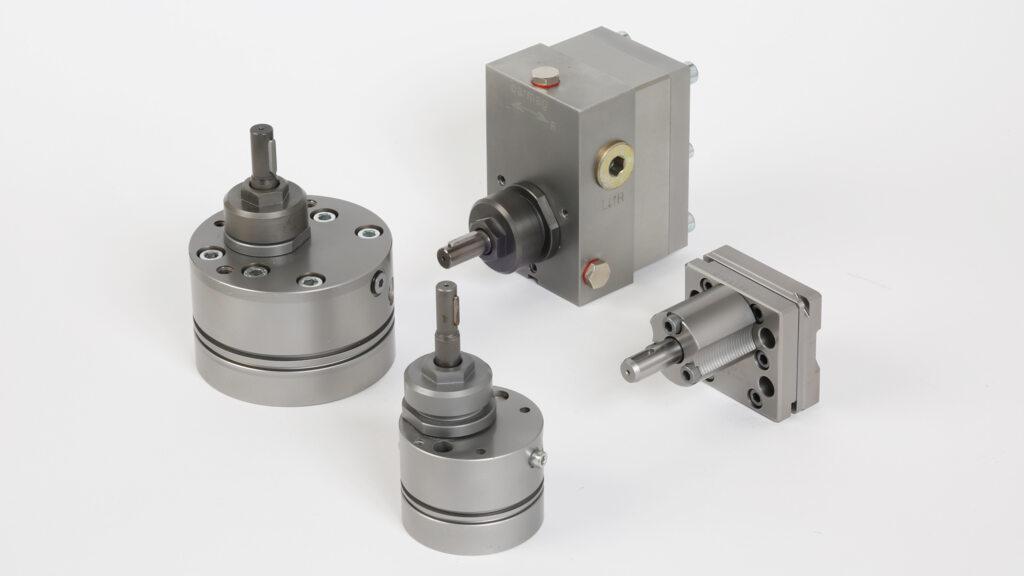
Paint metering pump from Barmag: Lightweight, durable, efficient – innovation for modern painting systems Photo Barmag
Paint metering pump from Barmag: Lightweight, durable, efficient – innovation for modern painting systems
15.01.2026

Barmag at PaintExpo – Focus on paint metering pumps

At this year's PaintExpo in Karlsruhe (April 14–17), Barmag will present an optimized design of its paint metering pump. It impresses with its low weight, increased productivity, and extended service life. Specially developed for compact robot arms, the pump enables high-precision and economical paint application – ideal for industries such as automotive, aerospace, and renewable energies.

Paint application is one of the most demanding production steps. In order to meet increasing requirements for service life and quality, highly efficient systems are needed that create resistant surfaces. Oerlikon Barmag has been manufacturing gear metering pumps since 1985, which enable reliable and economical paint application thanks to maximum metering accuracy.

The new pump sets standards in industrial coating technology. It impresses with maximum metering accuracy and minimal pulsation – for uniform and precise paint application. The flushing system is optimized for the shortest possible flushing times, while its low weight facilitates integration into compact robot arms.

At this year's PaintExpo in Karlsruhe (April 14–17), Barmag will present an optimized design of its paint metering pump. It impresses with its low weight, increased productivity, and extended service life. Specially developed for compact robot arms, the pump enables high-precision and economical paint application – ideal for industries such as automotive, aerospace, and renewable energies.

Paint application is one of the most demanding production steps. In order to meet increasing requirements for service life and quality, highly efficient systems are needed that create resistant surfaces. Oerlikon Barmag has been manufacturing gear metering pumps since 1985, which enable reliable and economical paint application thanks to maximum metering accuracy.

The new pump sets standards in industrial coating technology. It impresses with maximum metering accuracy and minimal pulsation – for uniform and precise paint application. The flushing system is optimized for the shortest possible flushing times, while its low weight facilitates integration into compact robot arms.

A particular highlight is that the pump combines all these advantages with high cost-effectiveness. "Our new paint metering pump combines precision and cost-efficiency in a single product. This enables us to create real added value for our customers in a wide range of industries," explains Thorsten Wagener, Sales Manager responsible for the Pumps division.

Source:

Oerlikon Barmag

Graphic Futureprint
15.01.2026

Industrial Inkjet Print Technology Showcase in Munich

As manufacturers look for new growth, margins and business models, industrial print emerges as a profit-enabling production platform
 
A new sold-out industrial inkjet print showcase taking place in Munich this month is sending a clear signal that industrial print technologies are entering a new phase of commercial adoption, as manufacturers increasingly integrate inkjet into production-scale environments.
 
FuturePrint Industrial Print, which takes place on 21–22 January 2026, has officially sold out all exhibitor space ahead of its inaugural edition. The response reflects growing global demand for production-ready industrial inkjet technologies across packaging, décor, electronics, product customisation and functional manufacturing.
 

As manufacturers look for new growth, margins and business models, industrial print emerges as a profit-enabling production platform
 
A new sold-out industrial inkjet print showcase taking place in Munich this month is sending a clear signal that industrial print technologies are entering a new phase of commercial adoption, as manufacturers increasingly integrate inkjet into production-scale environments.
 
FuturePrint Industrial Print, which takes place on 21–22 January 2026, has officially sold out all exhibitor space ahead of its inaugural edition. The response reflects growing global demand for production-ready industrial inkjet technologies across packaging, décor, electronics, product customisation and functional manufacturing.
 
Industry analysts forecast strong sustained growth for the sector. Market research from Fortune Business Insights indicates that the global industrial inkjet printer market is projected to reach nearly USD 12 billion by 2034, driven by accelerating adoption across manufacturing, packaging, product decoration and industrial production environments. Against this backdrop, the sell-out highlights a market that is moving beyond pilots and proofs of concept, toward scalable deployment, strategic investment and measurable commercial impact.
 
For manufacturers, converters and technology providers, this shift represents a major business and profit opportunity. Industrial print is no longer simply an alternative imaging process. It is increasingly a manufacturing platform that can reshape how products are designed, produced and monetised.
 
Crucially, industrial inkjet is now being adopted not only to improve efficiency, but to improve manufacturing economics. By removing tooling constraints, reducing set-up times, cutting waste and enabling late-stage differentiation, industrial inkjet technology is allowing companies to respond profitably to shorter runs, unlock premium pricing, protect margins and make complex, customised or functional products commercially viable at scale.
 
For manufacturing performance, the real opportunity lies in what industrial inkjet makes possible. From mass customisation and digital inventory to functional integration and direct-to-product manufacturing, industrial inkjet is opening routes to new revenue streams, higher-value applications and entirely new business models. For converters and print businesses, this includes a pathway into manufacturing services and higher-margin industrial markets. For manufacturers, it enables faster product innovation, more responsive supply chains and the ability to monetise speed, flexibility and product differentiation.
 
The exhibitor profile in Munich reflects this shift. More than 50 selected companies are presenting technologies spanning additive and functional inkjet, direct-to-product manufacturing, decorative surfaces, packaging, labels and direct-to-shape production. For visitors, this creates a rare opportunity to evaluate enabling technologies side-by-side, explore real manufacturing applications and identify where industrial print is already delivering commercial value.
 
Alongside the exhibition, a high-level conference programme brings together 40+ speakers from across the industrial print and advanced manufacturing ecosystem, addressing real-world deployment across electronics, 3D inkjet, décor, packaging and smart surfaces. A dedicated AI for Industrial Print Conference on 22 January examines how artificial intelligence is amplifying industrial print’s business impact, from automation and predictive quality control to throughput optimisation and data-driven production decision-making. For delegates, the emphasis is firmly on practical insight linked to commercial outcomes.
 
The strong response to this new Munich event also reflects a broader change in buyer behaviour. Decision-makers now arrive informed, commercially focused and actively evaluating where digital processes can deliver competitive advantage, revenue growth and margin improvement. As a result, demand is growing for focused, insight-led events that connect technology capability directly to manufacturing strategy and profit potential.
 
Hosted at Motorworld Munich inside the historic Kohlebunker venue, FuturePrint Industrial Print has been designed around this need - offering an industrial, human-scale setting intended to support in-depth technical exchange, peer-to-peer learning and strategic discussion between technology developers and end-user manufacturers.
 
With exhibitor space fully booked and delegate registrations accelerating from across the global manufacturing ecosystem, the sell-out is being widely viewed as a further indication that industrial inkjet is moving into a new phase of relevance - not as a future option, but as a present-day driver of profitable manufacturing models.
 
FuturePrint Industrial Print takes place 21–22 January 2026 at Motorworld Munich. Attendance is limited and advance registration is strongly recommended.

Source:

Futureprint

International Textile Machinery Exhibition Photo International Textile Machinery Exhibition
15.01.2026

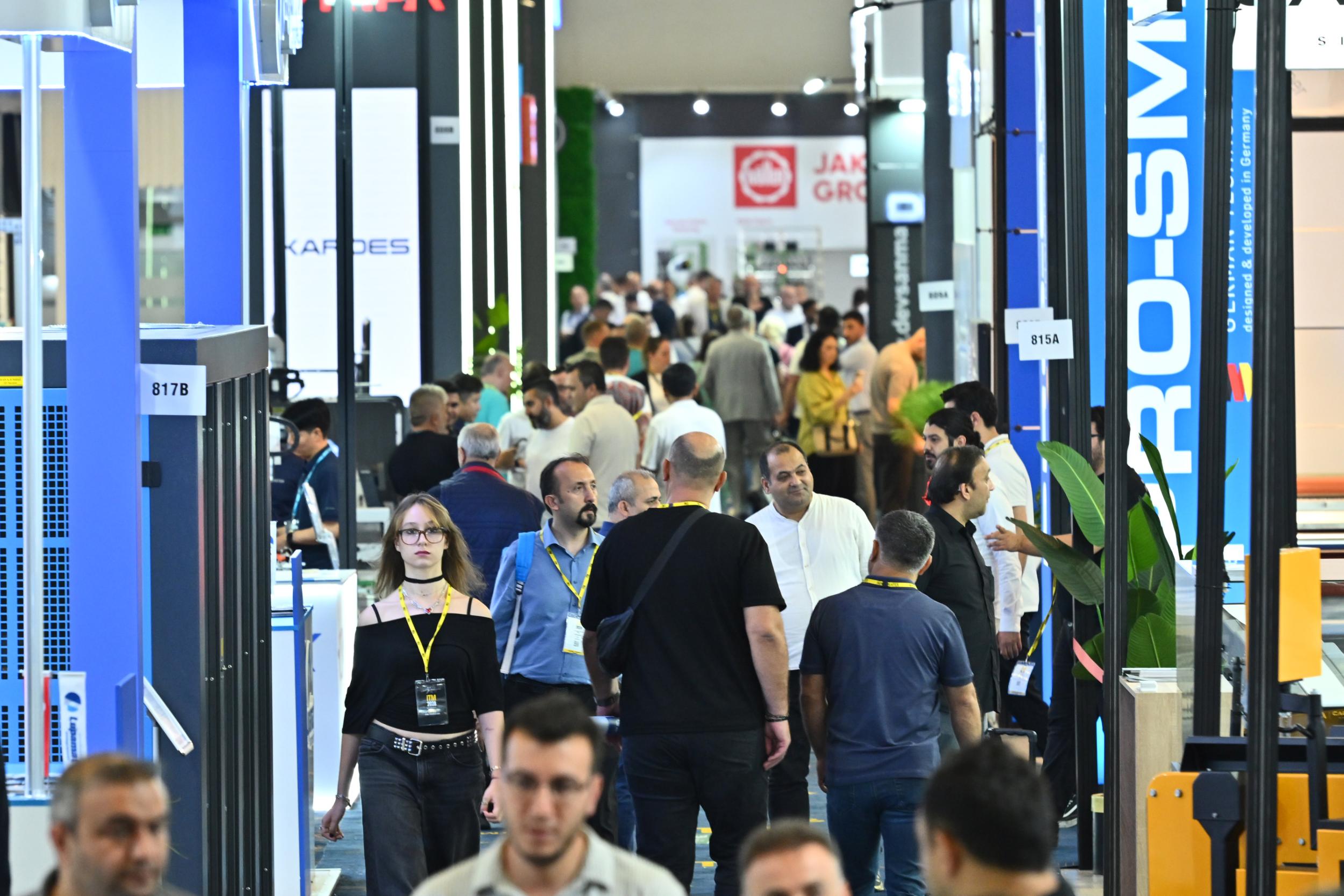
ITM 2026: Green Transformation and Digital Future in the Textile Industry

Shaping the transformation of the textile industry, the ITM 2026 International Textile Machinery Exhibition is set to lead the sector into the future with a strong focus on sustainable production and digital technologies. From environmentally friendly machinery to smart manufacturing systems, from energy-efficient solutions to artificial intelligence–supported applications, ITM 2026 will present a broad vision that defines the roadmap of textile technologies for the industry.

The ITM 2026 Exhibition, which will be organized in collaboration with Tüyap Tüm Fuarcılık Yapım A.Ş. and Teknik Fuarcılık A.Ş. and in partnership with Textile Machinery and Accessories Industrialists Association (TEMSAD), will welcome visitors at the Tüyap Fair and Congress Center from June 9–13, 2026. Bringing together leading manufacturers of textile technologies, ITM 2026 will focus this year on the industry’s two most critical agenda items: Green Technologies and Digital Integration.

Shaping the transformation of the textile industry, the ITM 2026 International Textile Machinery Exhibition is set to lead the sector into the future with a strong focus on sustainable production and digital technologies. From environmentally friendly machinery to smart manufacturing systems, from energy-efficient solutions to artificial intelligence–supported applications, ITM 2026 will present a broad vision that defines the roadmap of textile technologies for the industry.

The ITM 2026 Exhibition, which will be organized in collaboration with Tüyap Tüm Fuarcılık Yapım A.Ş. and Teknik Fuarcılık A.Ş. and in partnership with Textile Machinery and Accessories Industrialists Association (TEMSAD), will welcome visitors at the Tüyap Fair and Congress Center from June 9–13, 2026. Bringing together leading manufacturers of textile technologies, ITM 2026 will focus this year on the industry’s two most critical agenda items: Green Technologies and Digital Integration.

A Climate-Friendly Future in Textiles Takes Shape at ITM 2026
In line with global climate goals, the textile industry is undergoing a profound transformation. As a pioneer of this change, ITM 2026 will bring visitors a wide range of innovations—from dyeing technologies that minimize water consumption to weaving looms engineered for maximum energy efficiency. The “Green Machines” to be showcased throughout the exhibition will not only reduce carbon footprints but will also breathe new life into the circular economy with their superior performance in processing recycled raw materials.

Sustainable Production at the Center of ITM 2026
At a time when environmental responsibility is gaining increasing importance on a global scale, sustainable production in the textile industry is no longer a choice but a necessity. ITM 2026 will showcase the most tangible examples of this transformation. Durable, high-performance machines that contribute to the conservation of natural resources will form the backbone of the exhibition’s green technology vision. Energy-saving systems, solutions enabling closed-loop water usage and environmentally responsible chemical applications will strongly reflect ITM 2026’s sustainability approach. The exhibition will offer manufacturers the opportunity to explore technologies that create added value both environmentally and economically.

The Latest Technologies from Artificial Intelligence to Digital Twins 
ITM 2026 will highlight the transformative power of digitalization in textile manufacturing. Machines equipped with artificial intelligence, automation, data analytics, and digital twin technologies will stand out with solutions that deliver speed, quality, and flexibility in production. Through digital integration, real-time process monitoring, increased efficiency, and reduced error rates will become achievable. Playing a critical role in the transition to smart factories, these technologies will not only be showcased at ITM 2026 but will also provide an inspiring platform for knowledge and experience sharing among industry professionals.

A Strategic Platform for Global Investors
Bringing together the world’s leading textile machinery manufacturers, industry representatives, investors, and professionals in Istanbul, the ITM 2026 Exhibition will serve as a strategic business development platform for global investors. Company owners and industry professionals will have the opportunity to hear directly from experts about the latest technological solutions needed to future-proof their facilities and to experience next-generation R&D developments firsthand. Visitors will be able to closely explore innovations developed around sustainability and digital transformation in the textile industry, enabling them to make informed decisions that shape their investments.

TS330 1800 Photo Mimaki Europe
TS330 1800
13.01.2026

Vibrant and Seamless Dye Sublimation Printing: Mimaki Upgrades TS330 Series

Mimaki Europe, a leading manufacturer of industrial inkjet printers and cutting plotters, announces enhancements to its dye sublimation TS330 Series, including the introduction of the TS330-1800. The entire TS330 Series is now compatible with Mimaki’s Sb411 inks in Orange, Violet, Fluorescent Pink and Fluorescent Yellow, enhancing colour flexibility and control, and offering improved vibrancy and colour accuracy. Complementing these upgrades, the new TS330-1800 is equipped with a larger print width to cater for a broader array of textile applications within fashion, sportswear, textile signage, and home décor.

The extended colour range – now totalling at 11 different inks – provides improved vibrancy and colour saturation, ideal for high-impact branding on sportswear, fabric signage and promotional merchandise. Opening up extensive ink configurations, applications can be produced with improved colour accuracy, fulfilling production needs for sectors where high colour fidelity is required.

Mimaki Europe, a leading manufacturer of industrial inkjet printers and cutting plotters, announces enhancements to its dye sublimation TS330 Series, including the introduction of the TS330-1800. The entire TS330 Series is now compatible with Mimaki’s Sb411 inks in Orange, Violet, Fluorescent Pink and Fluorescent Yellow, enhancing colour flexibility and control, and offering improved vibrancy and colour accuracy. Complementing these upgrades, the new TS330-1800 is equipped with a larger print width to cater for a broader array of textile applications within fashion, sportswear, textile signage, and home décor.

The extended colour range – now totalling at 11 different inks – provides improved vibrancy and colour saturation, ideal for high-impact branding on sportswear, fabric signage and promotional merchandise. Opening up extensive ink configurations, applications can be produced with improved colour accuracy, fulfilling production needs for sectors where high colour fidelity is required.

With a maximum printing area of 1940mm, the new TS330-1800 enables users to increase their output and diversify with larger applications, such as curtains and tapestries, while bypassing time spent sewing and pattern matching. With this extended width, more panels can be placed side-by-side, reducing rows, adjustment and waste.

Arjen Evertse, Director Sales at Mimaki Europe, remarks, “Achieving eye-catching prints is becoming increasingly important when printing textiles, particularly when it comes to branded material like signage or sportswear. To cater to this market need, vibrant inks like fluorescents, give users the ability to produce more saturated, as well as more accurate, colours in their applications.

“The TS330 Series delivers reliable, high image quality, colour density and high print speeds, and so we wanted to offer print shops a larger machine to further amplify their business growth. Thanks to its larger print width, the new TS330-1800 can now accommodate larger home décor applications, a market where digitally printed textiles are in high demand, and higher output with improved layout efficiency for other applications, in addition to all the existing benefits of a TS330 printer.”

Utilising Mimaki’s OEKO-TEX® ECO-PASSPORT certified Sb411 inks, the prints achieved by the TS330 Series are both vivid and environmentally responsible. This certification allows print providers to fulfil sustainability requirements demanded by global textile brands and eco-conscious consumers. The TS330-1800 will be delivered with the standard TxLink5 Lite RIP software for improved workflow management.

The TS330-1800 will be available across EMEA in Spring 2026.

Source:

Mimaki Europe

13.01.2026

Kornit Konnections 2026: Call for Speakers and Partners

Kornit Konnections is officially accepting speaker proposals and partner interest for what is set to be one of the most influential digital apparel industry gathering. 
 
Konnections 2026 is an immersive, invitation-driven community event bringing together brands, retailers, manufacturers, printers, technology leaders, analysts, and investors to shape the next chapter of the apparel economy. Building on the momentum of Evolve – the largest virtual apparel conference to date – Konnections 2026 will set new benchmarks for in-person engagement, insight, and industry alignment.
 
A Vibrant Community – Shaping What’s Next

Kornit Konnections is officially accepting speaker proposals and partner interest for what is set to be one of the most influential digital apparel industry gathering. 
 
Konnections 2026 is an immersive, invitation-driven community event bringing together brands, retailers, manufacturers, printers, technology leaders, analysts, and investors to shape the next chapter of the apparel economy. Building on the momentum of Evolve – the largest virtual apparel conference to date – Konnections 2026 will set new benchmarks for in-person engagement, insight, and industry alignment.
 
A Vibrant Community – Shaping What’s Next
According to industry reports, the apparel industry is at a critical inflection point. Legacy, forecast-led models are no longer able to keep pace with the volatility, culture shifts, regulatory pressures, and inventory risk. Konnections 2026 is where the industry comes together to align on what replaces them. Not a trade show. Not a vendor pitch – Konnections is a working community rapidly defining the future of apparel. Konnections 2026 serves as the immersion and launch platform for the new Apparel Economy – a forward-looking body of thought leadership, operational insight, and strategic frameworks designed to support long-term industry growth.

Call Speakers
Konnections is currently seeking respected industry voices and practitioners with deep expertise across the apparel ecosystem, including:

  • Apparel and Retail Leadership
  • Supply Chain and Manufacturing Strategy
  • Regulatory, Public Policy and Sustainability
  • Inventory, Demand Planning, and Margin Protection
  • AI, Robotics, Automation and Advanced Manufacturing
  • Print-on-Demand and Promotional Products
  • Business Strategy, Consulting, and Industry Research

Speakers should bring real-world insight, emerging perspectives, and a willingness to engage in meaningful dialogue with peers who are actively shaping the industry. 
 
Call for Partners
Konnections 2026 will feature an exceptional Solutions Showcase, developed in collaboration with more than 30 best-in-class partners delivering new products, innovations, and immersive experiences never seen in the apparel industry. While the Showcase is more than 50% full and participation is highly selective, Konnections is currently seeking submissions. Only partners capable of delivering state-of-the-art solutions, forward-thinking applications, and meaningful customer experiences will be chosen.

Source:

Kornit Digital Ltd.