From the Sector

Reset
Graphic by EDANA
26.02.2026

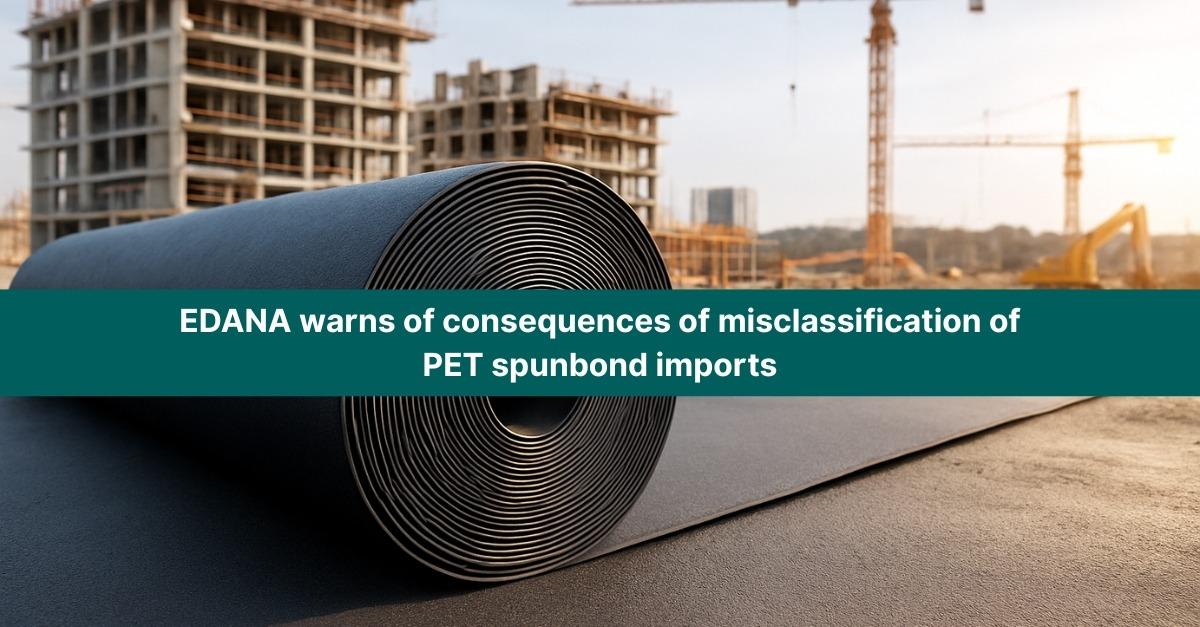
EDANA warns of consequences of misclassification of PET spunbond imports

EDANA would like to remind its members and industry stakeholders of the legal requirement to comply with the EU rules on customs classification when importing non-wovens from third countries outside the EU. In this regard, it was recently discovered that there appears to be a high level of customs misclassification occurring in the nonwoven’s industry. This could have dangerous and costly consequences for importers. 

Following repeated requests by its members, EDANA worked closely with the European Union and the World Customs Organisation to introduce in 2024 specific customs codes CN code 5603 14 20 and 5603 9420 in order to better monitor imports of certain PET spunbond and staple fibre products. Based on market intelligence, EDANA knows that third country imports of the respective products were in the range of 15,000 to 30,000 MT in 2024 and 2025. However, actual import volumes recorded under the specifically created CN codes were significantly lower. 

EDANA would like to remind its members and industry stakeholders of the legal requirement to comply with the EU rules on customs classification when importing non-wovens from third countries outside the EU. In this regard, it was recently discovered that there appears to be a high level of customs misclassification occurring in the nonwoven’s industry. This could have dangerous and costly consequences for importers. 

Following repeated requests by its members, EDANA worked closely with the European Union and the World Customs Organisation to introduce in 2024 specific customs codes CN code 5603 14 20 and 5603 9420 in order to better monitor imports of certain PET spunbond and staple fibre products. Based on market intelligence, EDANA knows that third country imports of the respective products were in the range of 15,000 to 30,000 MT in 2024 and 2025. However, actual import volumes recorded under the specifically created CN codes were significantly lower. 

“There is a clear mismatch between import volumes observed in the market and what is reported under the correct customs codes. Often, importers continue to use outdated customs codes as a matter of habit not paying due attention to changes of the Combined Nomenclature”, says Jacques Prigneaux from EDANA. “However, this is problematic, especially where certain products are subject to investigations by the EU authorities.” 

EDANA has therefore actively commenced an outreach initiative to raise awareness among its members. They have also contacted the European Commission and the national customs authorities of the EU member states to ask the authorities to enhance import checks. 

Incorrect customs classification not only makes EDANA’s work more difficult to monitor import flows and protect the interests of its members. It can also have severe negative legal consequences for importers. Customs authorities penalize misclassifications with additional duties, administrative fines and even criminal penalties. “To avoid such unpleasant surprises, we recommend that all members and their supply chain regularly review and update their customs classification databases and also instruct their customs agents accordingly” adds Mr Prigneaux. 

Awareness and compliance are in particular important where imports are under enhanced customs control (such as in the framework of import registration during an anti-dumping investigation) or subject to special trade or regulatory regimes (such as duty-free or reduced duty imports from countries with which the EU has special trade arrangements). 

A list of preferential trade regimes can be found on the website of the European Commission (here) and the Access2Markets webpage contains product-specific information for imports of goods into the EU (here). Also, presently, certain PET spunbond from China is subject to an EU anti-dumping investigation and imports were made subject to registration in December 2025 (see here for further information). The exact definition of the product subject to the investigation is: ‘non-woven needle-punched sheets of polyester filaments, whether or not reinforced by glass fibres, weighing more than 70 g/m², of a thickness exceeding 0.5 mm but not exceeding 1.8 mm, impregnated with one or more binders, containing less than 30% of glass fibres by weight, not coated or covered’. All imports of these products must be classified under TARIC code 5603 1390 70, CN code 5603 14 20 or TARIC code 5603 1480 70.

Source:

EDANA

26.02.2026

Minna Rouru (CPCO) leaves Suominen

Suominen Chief People and Communications Officer (CPCO) Minna Rouru has announced her decision to leave Suominen to take on a role in another company. She will leave Suominen at the latest on August 26, 2026. The CPCO succession process has been initiated and will be announced in due course.

“I would like to warmly thank Minna for her significant contribution to Suominen’s transformation. Her expertise, commitment, and positive mindset have been instrumental in advancing our cultural change and strengthening our organization. I wish Minna all success in her next professional projects,” says Charles Héaulmé, President and CEO of Suominen.

Suominen Chief People and Communications Officer (CPCO) Minna Rouru has announced her decision to leave Suominen to take on a role in another company. She will leave Suominen at the latest on August 26, 2026. The CPCO succession process has been initiated and will be announced in due course.

“I would like to warmly thank Minna for her significant contribution to Suominen’s transformation. Her expertise, commitment, and positive mindset have been instrumental in advancing our cultural change and strengthening our organization. I wish Minna all success in her next professional projects,” says Charles Héaulmé, President and CEO of Suominen.

Source:

Suominen Corporation

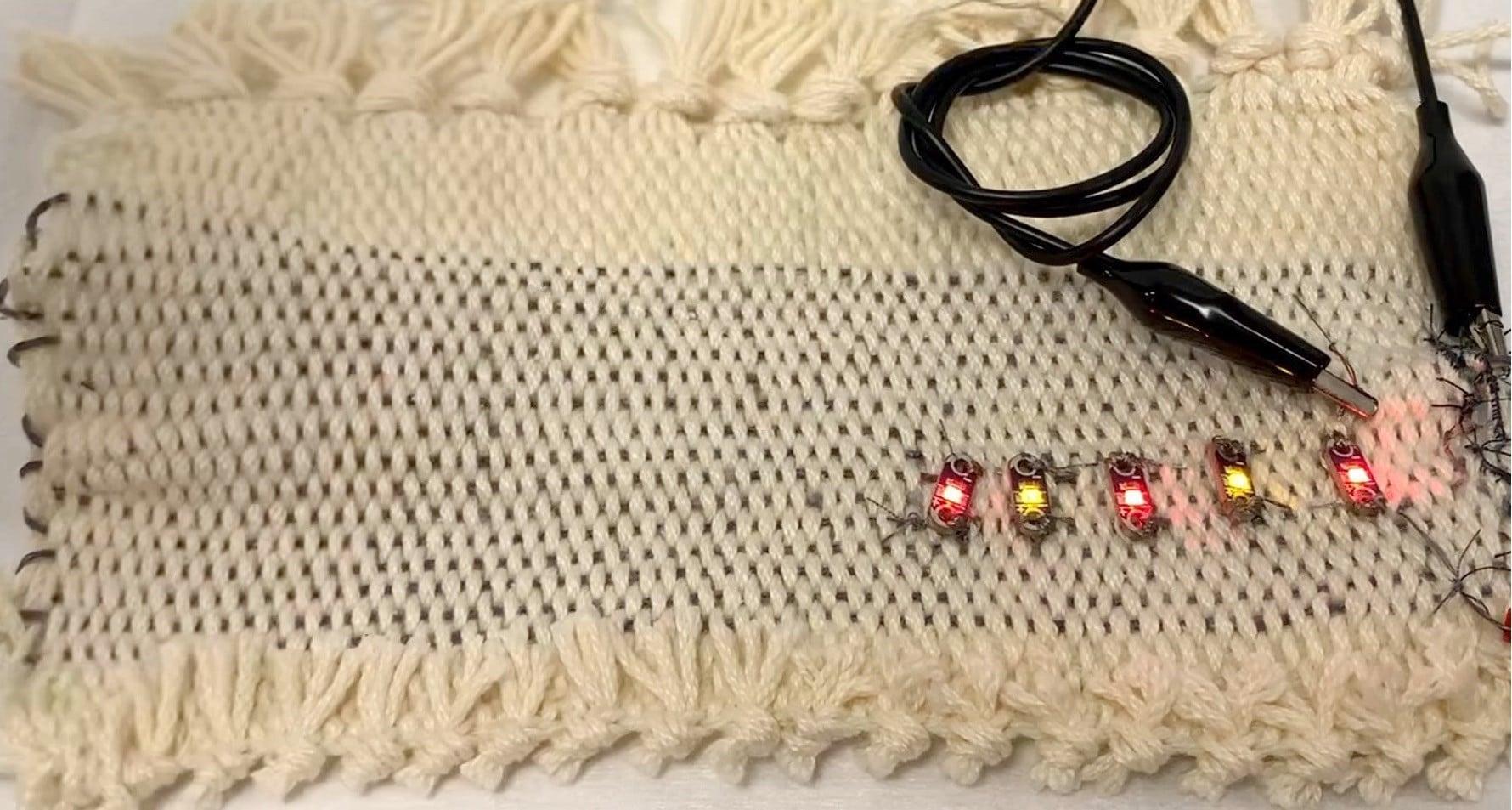
Supercapacitor yarns integrated into a fabric for powering LEDs. © Nanfei He
Supercapacitor yarns integrated into a fabric for powering LEDs.
23.02.2026

Preventing Malfunction in Yarns Designed to Store Energy

In a new study, North Carolina State University researchers found a way to prevent electrical malfunctions in yarns designed to store electrical energy. Ultimately, the findings could help advance the development of “smart textiles” that would capture energy from the wearer’s movements and power sensors and wearable electronics.

The researchers reported in npj Flexible Electronics that they were able to prevent short-circuiting in yarns that act as supercapacitors – which are electrical devices that store energy – by wrapping the yarns with an insulating thread. They also tested the strength and durability of the yarns to make sure they could still work after going through knitting and weaving processes.

In a new study, North Carolina State University researchers found a way to prevent electrical malfunctions in yarns designed to store electrical energy. Ultimately, the findings could help advance the development of “smart textiles” that would capture energy from the wearer’s movements and power sensors and wearable electronics.

The researchers reported in npj Flexible Electronics that they were able to prevent short-circuiting in yarns that act as supercapacitors – which are electrical devices that store energy – by wrapping the yarns with an insulating thread. They also tested the strength and durability of the yarns to make sure they could still work after going through knitting and weaving processes.

“A supercapacitor functions like a battery, but in this case, we’re working on a flexible battery shaped as a textile yarn that you could weave or knit into your T-shirt or sweater,” said Wei Gao, associate professor of textile engineering, chemistry and science and a University Faculty Scholar at NC State. “In this study, we have woven this yarn into a piece of fabric so that it can store electrical energy, and eventually we want to use it to power whatever electronic devices you need, whether it be a sensor, a light or even a cell phone.”

While research into these so-called “yarn-shaped supercapacitors” is promising, researchers say developers face a consistent problem with their design: the yarn-shaped supercapacitors are more likely to short circuit as their length increases. Short-circuiting is when the electric current flows through an unintended path. It is a safety concern because a short circuit can result in a burst of heat energy or even a fire.

“Everybody is trying to make smart electronics that can be incorporated into cloth or fabric,” Gao said. “What we found is if you try to make a supercapacitor yarn longer than 8 inches, it’s pretty easy for this device to short-circuit. It’s pretty dangerous, and it’s something nobody wants to encounter when wearing a smart suit.”

To solve that problem, the researchers tested what would happen when they wrapped the super-capacitor yarn electrodes with insulating threads. The idea was that the threads would act as a physical barrier, keeping the opposite electrodes from contacting each other and preventing short-circuiting. They tested their device’s performance by connecting the electrodes to a power source and recording the device’s current response. They also tested how well the yarns were able to hold a charge. They found that the yarns kept 90% of the initial energy after charging and discharging them 10,000 times.

The researchers also tested to see if they could withstand bending and stretching by weaving their yarn-shaped supercapacitors into a fabric.

“The yarns need to be flexible and strong enough so that when you bend, stretch and press them, they keep their original electrical performance after all of those mechanical deformations,” said the study’s lead author Nanfei He, postdoctoral research scholar in textile engineering, chemistry and science at NC State. “The yarns all kept their original performance, even after going through weaving and knitting.”

Researchers said they made the yarn-shaped supercapacitor using processes that are conventional in textile manufacturing.

“All of these processes can be scaled up very easily,” He said.

 In future work, the researchers want to incorporate their design into a garment, and to try to integrate it with other energy-generating devices.

“Materials innovation and process engineering are critical to the scalability and device performance,” said Feng Zhao, CEO of Storagenergy Technologies Inc., the industrial partner of the project. “We have developed a process to produce thousands of meters of high-performance yarns in a continuous manner.”

The study, “Separator Threads in Yarn-Shaped Super-capacitors,” was published online in npj Flexible Electronics. In addition to He, Gao and Zhao the other authors were Junhua Song and Jinyun Liao of Storagenergy Technologies Inc. The study was supported by Storagenergy Technologies Inc., and funded by the United States Army under contract numbers W911NF19C0074 and W911NF18C0086.

Source:

North Carolina State University

Today's modern vehicles contain an average of 30 to 35 kilograms of technical yarns, most of which are used for safety-related components such as airbags and seat belts.  Photo Barmag
Today's modern vehicles contain an average of 30 to 35 kilograms of technical yarns, most of which are used for safety-related components such as airbags and seat belts.
19.02.2026

High-performance yarns for tomorrow's mobility

At this year's Techtextil in Frankfurt (April 21–24), Barmag will be presenting comprehensive solutions for the production of industrial filament yarns at the VDMA joint stand. The focus will be on applications that ensure greater safety, durability, and efficiency in automotive engineering.

High-performance filament yarns for maximum vehicle safety
Today's modern vehicles contain an average of 30 to 35 kilograms of industrial yarns – most of which are used for safety-related components such as airbags and seat belts. Polyamide and, increasingly, polyester filament yarns are predominantly used for airbag applications. Barmag offers particularly energy-efficient and productive technologies for this purpose, enabling stable processes and consistently high yarn quality. “Our solutions meet all the demanding standards for airbag yarns worldwide – throughout the entire service life of a vehicle, regardless of climate or operating conditions,” emphasizes Dr. Jen Supra, Technology Manager for Industrial Yarns at Barmag.

At this year's Techtextil in Frankfurt (April 21–24), Barmag will be presenting comprehensive solutions for the production of industrial filament yarns at the VDMA joint stand. The focus will be on applications that ensure greater safety, durability, and efficiency in automotive engineering.

High-performance filament yarns for maximum vehicle safety
Today's modern vehicles contain an average of 30 to 35 kilograms of industrial yarns – most of which are used for safety-related components such as airbags and seat belts. Polyamide and, increasingly, polyester filament yarns are predominantly used for airbag applications. Barmag offers particularly energy-efficient and productive technologies for this purpose, enabling stable processes and consistently high yarn quality. “Our solutions meet all the demanding standards for airbag yarns worldwide – throughout the entire service life of a vehicle, regardless of climate or operating conditions,” emphasizes Dr. Jen Supra, Technology Manager for Industrial Yarns at Barmag.

Seat belts: Precision in the high-tenacity yarn process
Seat belts also rely on the performance of industrial filament yarns. A single belt consists of around 300 HT filament yarns, whose high-strength individual filaments can absorb enormous tensile forces of over 3 tons – and at the same time must stretch in a controlled manner in an emergency. Barmag's patented Single Filament Layer technology enables a gentle, high-precision process for the production of hightenacity (HT) yarns for maximum safety.

Industrial yarns for stable roads – geotextiles in the substructure
Industrial yarns also prove their performance outside the vehicle, for example in road construction. Geotextiles – such as geogrids under asphalt – require yarns with extremely high titers of up to 24,000 denier. Barmag systems efficiently produce three filament yarns with 6,000 denier each, which can be combined cost-effectively to achieve a higher titer.
Complementing this, the Barmag product brand Neumag supplies spunbond technologies for geotextiles made of polyester or polypropylene, which impress with their high production capacities and low energy consumption.

Neumag's PP inline technology exceeds the market standard for geotextile applications
In staple fiber production, Barmag is setting new standards for geotextile applications with the Neumag PP inline concept. The improved technology is suitable for strengths higher than 6 cN/dtex with high residual elongation. The fibers thus significantly exceed the parameters previously established in this area of application. The first production plant equipped with the new spinning concept recently went into operation at a well-known staple fiber producer in Asia.

Part of the concept is the EvoDuct air ducting system introduced last year, which ensures more efficient air flow distribution, reduces energy consumption, and improves fiber homogeneity. The optimized EvE-2 monomer and hot air suction system, another Neumag development, minimizes turbulence while
increasing spinning performance.

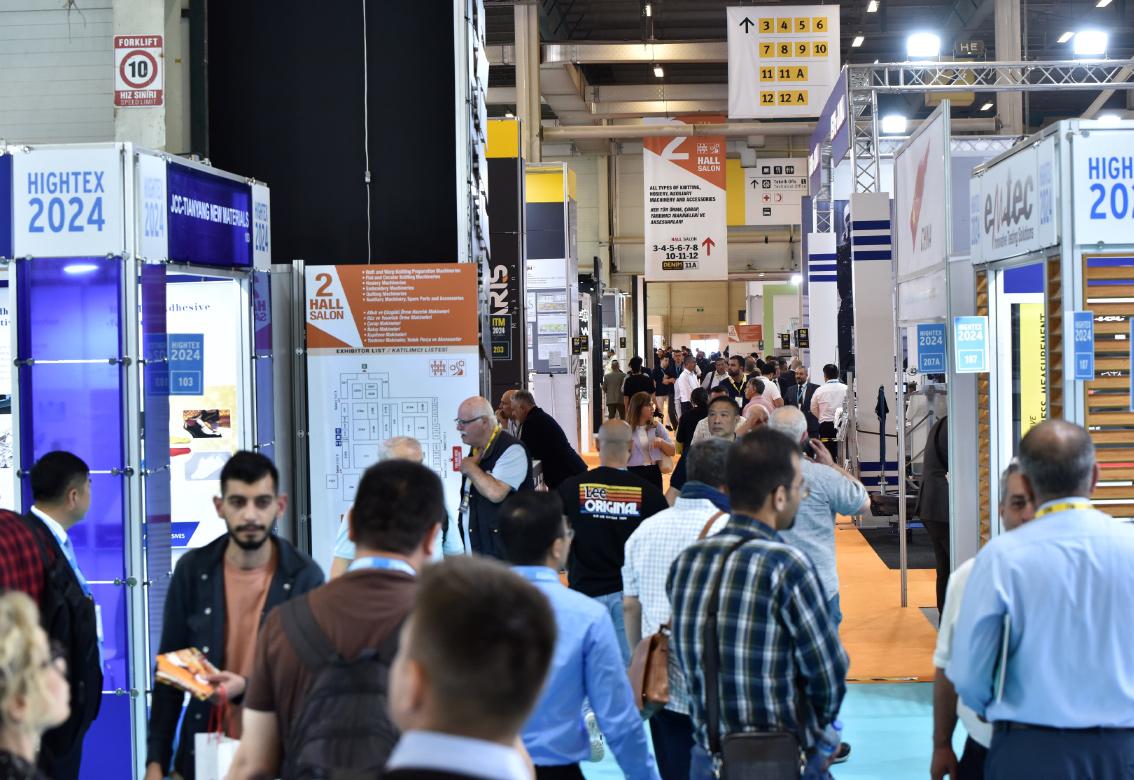
Hightex Photo (c) Hightex
19.02.2026

HIGHTEX 2026: Technical Textiles and Nonwovens

HIGHTEX 2026 International Technical Textiles and Nonwoven Exhibition is preparing to open its doors at Tüyap Fair and Congress Center between 9–13 June 2026. Bringing together leading manufacturers and technology providers in the field of technical textiles and nonwoven technologies in Istanbul, the exhibition will assume the character of an international hub where the strategic future of the industry is discussed.

While topics such as sustainable production models, digitalization, high-performance materials and smart manufacturing systems will form the main agenda of HIGHTEX 2026, a strong showcase will be presented for companies aiming to make a difference in the global competitive environment.

HIGHTEX 2026 International Technical Textiles and Nonwoven Exhibition is preparing to open its doors at Tüyap Fair and Congress Center between 9–13 June 2026. Bringing together leading manufacturers and technology providers in the field of technical textiles and nonwoven technologies in Istanbul, the exhibition will assume the character of an international hub where the strategic future of the industry is discussed.

While topics such as sustainable production models, digitalization, high-performance materials and smart manufacturing systems will form the main agenda of HIGHTEX 2026, a strong showcase will be presented for companies aiming to make a difference in the global competitive environment.

Organized in cooperation with Teknik Fuarcılık and Tüyap, and held concurrently with the ITM International Textile Machinery Exhibition, HIGHTEX holds the distinction of being Türkiye’s and the region’s first and only specialized exhibition in the field of technical textiles and nonwovens. Organized since 2005, the event has, over more than 20 years, personally witnessed the technological evolution experienced by the industry and has become one of the most important platforms where innovative solutions are introduced to the global market. Thanks to being held simultaneously with ITM, textile machinery, production technologies and the technical textiles ecosystem will come together under the same roof, offering visitors an integrated exhibition experience.

The Indispensable Element of Strategic Industries: Technical Textiles
Today, technical textiles have a wide range of applications extending from automotive to defense industry, from medical applications to infrastructure projects, and from agriculture to the energy sector. Distinguished from conventional textile products thanks to their superior properties such as high strength, lightness, durability, heat and chemical resistance, these materials directly affect the performance criteria of strategic industries. The solutions to be exhibited at HIGHTEX 2026 will reveal not only product-based innovations but also the transformation in production processes. A broad exhibitor profile, ranging from raw material producers to machinery manufacturers, from software developers to end-product manufacturers, will represent the entire value chain of the sector.

This comprehensive structure transforms the exhibition into not only a display area but also a strategic platform in terms of information sharing, business development and investment planning. While professional visitors will have the opportunity to examine new technologies on-site and establish direct contact with manufacturers, participating companies will gain the opportunity to enter new markets and strengthen their brand positioning.

A New Era in Nonwoven Technologies
Nonwoven production technologies have achieved a significant leap in recent years in terms of both capacity and quality. Based on the principle of bonding fibers through mechanical, thermal or chemical methods without weaving or knitting, this production model is rapidly expanding on a global scale due to the flexibility, speed and cost advantage it offers. Nonwoven solutions have become indispensable especially in hygiene products, medical consumables, filtration systems and automotive interior trim applications.

The next-generation nonwoven lines to be exhibited at HIGHTEX 2026 will contribute to sustainability targets with criteria such as lower energy consumption, optimized raw material usage and high production speed. Solutions for recyclable and biodegradable raw materials will also be among the prominent topics of the exhibition. These developments demonstrate that the nonwoven sector simultaneously carries growth potential along with environmental responsibility.

Artificial Intelligence and Industry 4.0 Integration Comes to the Fore
Digital transformation has become one of the fundamental elements of competitive advantage in technical textile and nonwoven production. The Industry 4.0 integrated systems to be exhibited at HIGHTEX 2026 will enable real-time monitoring of production processes, performance optimization through data analytics, and the minimization of error rates. Thanks to artificial intelligence-supported quality control systems, defects that may occur on production lines will be detected instantly, thereby reducing cost losses.

Automation solutions will increase production speed and standardization while minimizing human error; at the same time, smart infrastructures that provide savings in energy and resource usage will strengthen the understanding of sustainable production. These technologies will offer companies not only operational efficiency but also the opportunity for strong positioning in the global market.

Fabrics of the Future: Smart Textiles
Smart textiles developed at the intersection of textiles and advanced technology stand out as one of the most dynamic and fastest-growing fields of the sector. Nanotechnology applications, conductive fibers, sensor-integrated fabric structures and materials capable of responding to environmental conditions offer a wide range of applications from health monitoring to defense uses, from sports technologies to industrial safety. These innovations transform textiles from being a passive material into a structure capable of generating data and interacting. At HIGHTEX 2026, geotextiles, medical and hygienic textiles, high-performance composite structures for aviation and automotive, and technical solutions specific to the agriculture and food sectors will also be exhibited together. Thus, the exhibition will present a holistic panorama of innovative materials responding to the needs of different industries.

New Collaborations and Global Trade Opportunities
HIGHTEX 2026 will not only provide participating companies with the opportunity to exhibit their products but will also create a strong business development platform that will expand international trade networks. Bilateral business meetings and sectoral contacts to be held throughout the exhibition will prepare the ground for generating concrete commercial outcomes ranging from machinery sales to technology transfers, from joint production agreements to new investment decisions. For sector representatives coming from a wide geography extending from America to Asia, from Europe to Africa, Istanbul will become a global meeting point in the field of technical textiles and nonwovens. HIGHTEX 2026 will continue to position itself at the center of information sharing, strategic vision and technological transformation, maintaining its role as an international reference platform guiding the sector.

19.02.2026

INVISTA: Nancy Kowalski New President and CEO

Nancy Kowalski has been named new president and CEO of INVISTA, a Koch company, effective March 1, 2026. In this role, she’ll be responsible for continuing to adapt and improve business models across INVISTA, a global manufacturer of chemical intermediates, polymers and fibers used in parts for the automotive industry, medical equipment, airbags, food packaging and clothing.

Nancy has 22 years of expertise across INVISTA in a variety of its business lines and its global supply chain. She joined INVISTA as a director of corporate reporting in 2004 and went on to hold leadership roles in treasury, global finance and global supply chain.

She was most recently executive vice president for INVISTA’s global nylon business, with operations in China, Europe, and the United States, leading its overall profit and loss management and overseeing Nylon Sales and Marketing, the strategic management of feedstock procurement and purchasing processes for the company.

Nancy Kowalski has been named new president and CEO of INVISTA, a Koch company, effective March 1, 2026. In this role, she’ll be responsible for continuing to adapt and improve business models across INVISTA, a global manufacturer of chemical intermediates, polymers and fibers used in parts for the automotive industry, medical equipment, airbags, food packaging and clothing.

Nancy has 22 years of expertise across INVISTA in a variety of its business lines and its global supply chain. She joined INVISTA as a director of corporate reporting in 2004 and went on to hold leadership roles in treasury, global finance and global supply chain.

She was most recently executive vice president for INVISTA’s global nylon business, with operations in China, Europe, and the United States, leading its overall profit and loss management and overseeing Nylon Sales and Marketing, the strategic management of feedstock procurement and purchasing processes for the company.

After more than 30 years of service to Koch, Brook Vickery, president and CEO of INVISTA, has announced his retirement, effective March 1, 2026. Brook joined Koch in 1991 as an instrument engineer for Flint Hills Resources. He joined INVISTA as its global operations leader in 2023 and then became president and CEO in January 2025.

Brook has been fundamental in helping transform Koch’s operational models both at Flint Hills and INVISTA. His ability to build culture, apply Principle Based Management™, and deliver results and operational reliability will continue to create long-term value.

More information:
Invista CEO
Source:

Invista

Kraig Biocraft Laboratories Photo Kraig Biocraft Laboratories
17.02.2026

Kraig Activates First Wave of 2026 Production Program

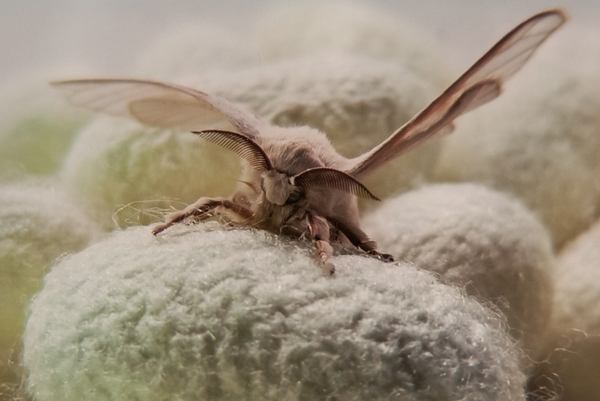
Kraig Biocraft Laboratories, Inc., a global leader in spider silk technology*, announced that its 2026 production plan has officially moved from strategy to execution.
 
The Company has now moved bio-material to incubation, getting a jumpstart on its March production plan and formally initiating its multi-ton spider silk scale-up initiative.
 
This milestone follows Kraig’s recently announced 2026 production schedule. This aggressive plan is set to achieve sustained monthly production of recombinant spider silk cocoons at unprecedented commercial volumes. With the release of the first wave of production materials now complete, Kraig Labs has activated its expanded manufacturing pipeline and commenced field-level implementation.
 
"This is the moment where planning becomes production," said Kim Thompson, Kraig Labs CEO and Founder. "Our 2026 roadmap was built around disciplined expansion, operational efficiency, and multi-ton output. Today, that roadmap is in motion. Bio-materials have recently been moved to incubation in preparation for the March production run."
 

Kraig Biocraft Laboratories, Inc., a global leader in spider silk technology*, announced that its 2026 production plan has officially moved from strategy to execution.
 
The Company has now moved bio-material to incubation, getting a jumpstart on its March production plan and formally initiating its multi-ton spider silk scale-up initiative.
 
This milestone follows Kraig’s recently announced 2026 production schedule. This aggressive plan is set to achieve sustained monthly production of recombinant spider silk cocoons at unprecedented commercial volumes. With the release of the first wave of production materials now complete, Kraig Labs has activated its expanded manufacturing pipeline and commenced field-level implementation.
 
"This is the moment where planning becomes production," said Kim Thompson, Kraig Labs CEO and Founder. "Our 2026 roadmap was built around disciplined expansion, operational efficiency, and multi-ton output. Today, that roadmap is in motion. Bio-materials have recently been moved to incubation in preparation for the March production run."
 
The March production run represents the first major deployment under the Company's 2026 plan. The initiative is designed to drive consistent output at levels never before seen, while reinforcing quality control, supply chain stability, and downstream processing capacity.
 
By initiating this production cycle, Kraig Labs is delivering on its commitment, creating the world's first reliable, repeatable, and scalable commercial spider silk manufacturing. The Company's vertically integrated model enables rapid deployment of materials, controlled expansion of silkworm rearing operations, and alignment with future customer demand.
 
"Our focus is clear," Thompson continued. "Execution. Volume. Commercialization. Every production cycle strengthens our position as the global leader in recombinant spider silk."
 
Kraig Labs expects this March run to set the pace for subsequent production cycles throughout 2026, forming the foundation for sustained monthly metric-ton-level spider silk production.

Source:

Kraig Biocraft Laboratories

Stretching Circularity is a collaborative project initiated by Fashion for Good dedicated to accelerating the adoption of lower-impact elastane alternatives that are compatible with circular textile systems. By validating bio-based and recycled elastane solutions through pilot-scale testing and demonstrator garments, the initiative aims to remove one of the most significant technical barriers to a circular textile economy. Source: Canva
Stretching Circularity is a collaborative project initiated by Fashion for Good dedicated to accelerating the adoption of lower-impact elastane alternatives that are compatible with circular textile systems. By validating bio-based and recycled elastane solutions through pilot-scale testing and demonstrator garments, the initiative aims to remove one of the most significant technical barriers to a circular textile economy.
12.02.2026

The Future Of Stretch: New Project To Validate Bio-based And Recycled Elastane

Stretching Circularity is a collaborative project initiated by Fashion for Good dedicated to accelerating the adoption of lower-impact elastane alternatives that are compatible with circular textile systems. By validating bio-based and recycled elastane solutions through pilot-scale testing and demonstrator garments, the initiative aims to remove one of the most significant technical barriers to a circular textile economy.

Present in approximately 80% of all clothing, elastane is a material added in varying concentrations (typically from 1–5% by weight in cotton or wool garments to up to 20% in polyester or polyamide garments) to provide stretch and comfort. This fossil-based material creates two critical sustainability challenges:

Stretching Circularity is a collaborative project initiated by Fashion for Good dedicated to accelerating the adoption of lower-impact elastane alternatives that are compatible with circular textile systems. By validating bio-based and recycled elastane solutions through pilot-scale testing and demonstrator garments, the initiative aims to remove one of the most significant technical barriers to a circular textile economy.

Present in approximately 80% of all clothing, elastane is a material added in varying concentrations (typically from 1–5% by weight in cotton or wool garments to up to 20% in polyester or polyamide garments) to provide stretch and comfort. This fossil-based material creates two critical sustainability challenges:

  • First, it contributes to carbon emissions and non-renewable resource consumption across the industry. 
  • Second (and more critically for circularity), even minimal concentrations of elastane act as a “contaminant” in textile recycling feedstocks, compromising fibre-to-fibre recycling of high-volume fibres like polyester and cotton. This effectively blocks circularity for the vast majority of clothing, leaving the industry with limited options beyond downcycling or landfill.

Stretching Circularity is a project initiated by Fashion for Good which tackles this challenge through two key workstreams. One workstream focuses on testing next-generation elastane materials made from alternative inputs, including bio-based materials and other feedstocks. This phase includes the creation of “demonstrator” garments, specifically a technical t-shirt (with 10% elastane) and a non-technical t-shirt (with 2% elastane). The other focuses on testing regenerated elastane made through emerging recycling innovations. Both workstreams follow a pilot-scale validation approach to generate comparable data on performance, impact, economical feasibility and scalability.

Driving this work is a powerful coalition of industry stakeholders representing the entire value chain. The consortium includes Fashion for Good partners Levi Strauss & Co (Beyond Yoga), On, Paradise Textiles, Positive Materials, and Reformation, with Ralph Lauren Corporation as an Advisor. Supported by ecosystem experts like Materiom and the Ellen MacArthur Foundation, the group will support knowledge sharing across the consortium to identify gaps and generate comparative data to de-risk the adoption of these circular solutions for the wider industry. Stretching Circularity operates under a structured due diligence and validation framework to assess if alternative materials are not just conceptually sound but also meet the performance standards of conventional elastane. 

“Lower-impact elastane solutions exist, but they lack the pilot-scale validation brands need to scale them confidently,” Katrin Ley, Fashion for Good Managing Director. “This initiative seeks to provide that missing data, turning a well-known recycling “contaminant” into a functional component of a circular supply chain.”

“Elastane is one of the most overlooked blockers to true circularity in fashion: it’s everywhere and yet there is a significant challenge to recovering it at scale. Stretching Circularity is about tackling that problem at the root and proving that lower-impact stretch materials and new recycling pathways can meet real performance and design standards.” Carrie Freiman Parry, Senior Director of Sustainability at Reformation

Source:

Fashion for Good

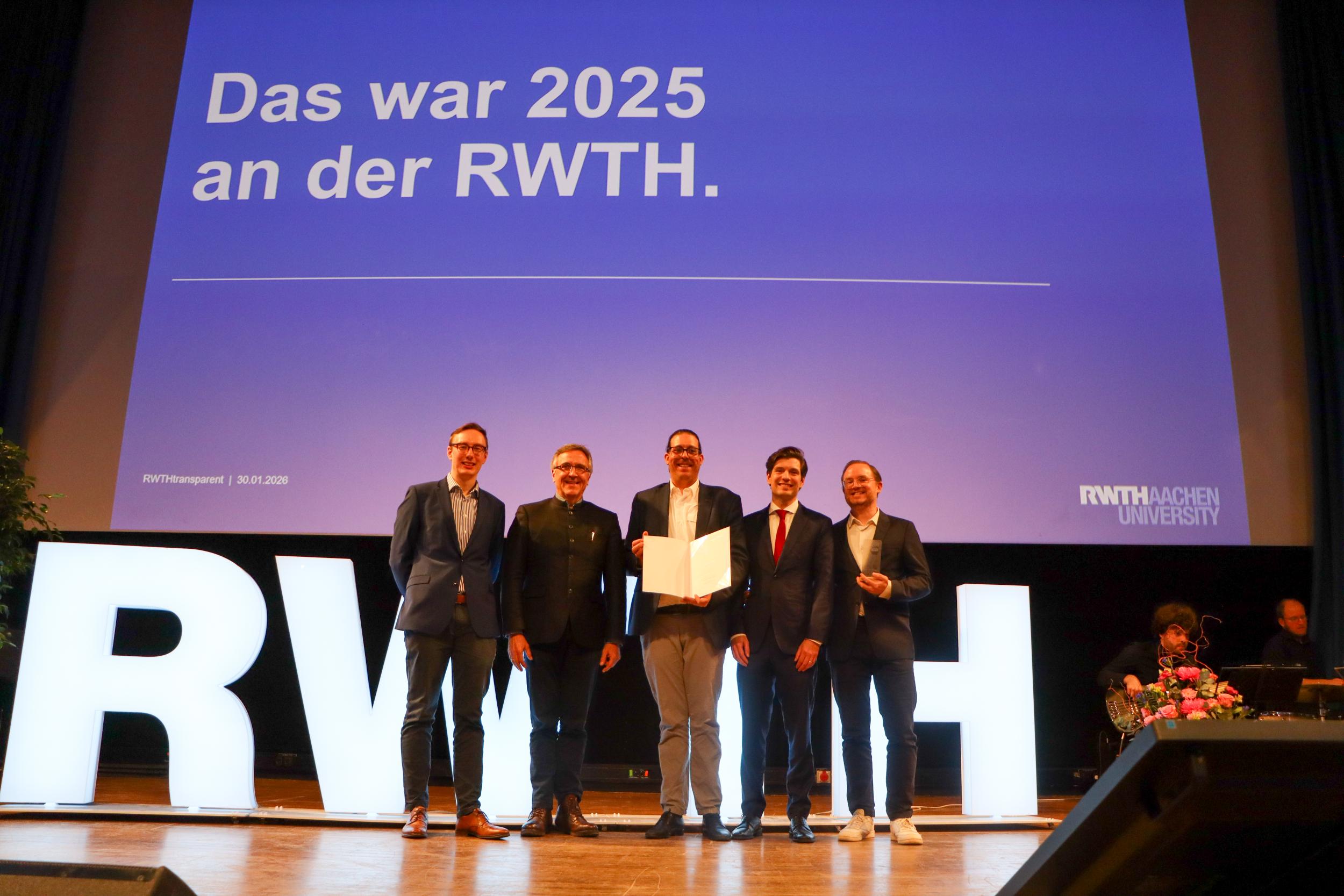
The winners with the award (from left to right: Maximilian Mohr, ITA Director Professor Dr Thomas Gries, Dr Sascha Schriever, Dr Christian Schwotzer, Dr Jens Hofer) Copyright: RWTH Innovation GmbH
The winners with the award (from left to right: Maximilian Mohr, ITA Director Professor Dr Thomas Gries, Dr Sascha Schriever, Dr Christian Schwotzer, Dr Jens Hofer)
12.02.2026

Solid Air Dynamics wins second place at RWTH Innovation Award

On 30 January, RWTH spin-off Solid Air Dynamics was awarded second place in the RWTH Innovation Awards for its research in the field of aerogel fibres. Manufactured from renewable raw materials, aerogel fibres offer outstanding thermal insulation, are extremely lightweight and completely biodegradable, and can consist of over 90 per cent air.

The founders, Dr Sascha Schriever, Dr Jens Hofer and Maximilian Mohr from Institut für Textiltechnik (ITA) and Dr Christian Schwotzer from Department for Industrial Furnace and Heat Engineering (IOB) of RWTH Aachen University, want to revolutionise the market in the future with high-performance materials for sports and outdoor clothing or the mobility and construction sectors.

The award ceremony took place during the annual RWTHtransparent event in Aachen. The top three places were honoured with the RWTH Innovation Award. The RWTH Innovation Award recognises contributions that demonstrate particular innovation and charisma in the Aachen region.

On 30 January, RWTH spin-off Solid Air Dynamics was awarded second place in the RWTH Innovation Awards for its research in the field of aerogel fibres. Manufactured from renewable raw materials, aerogel fibres offer outstanding thermal insulation, are extremely lightweight and completely biodegradable, and can consist of over 90 per cent air.

The founders, Dr Sascha Schriever, Dr Jens Hofer and Maximilian Mohr from Institut für Textiltechnik (ITA) and Dr Christian Schwotzer from Department for Industrial Furnace and Heat Engineering (IOB) of RWTH Aachen University, want to revolutionise the market in the future with high-performance materials for sports and outdoor clothing or the mobility and construction sectors.

The award ceremony took place during the annual RWTHtransparent event in Aachen. The top three places were honoured with the RWTH Innovation Award. The RWTH Innovation Award recognises contributions that demonstrate particular innovation and charisma in the Aachen region.

11.02.2026

OCSiAl Strengthens Board with Former Goldman Sachs Partner

Luxembourg-based OCSiAl, the global leader in industrial synthesis of graphene nanotubes, announces the appointment of Antigone Loudiadis as a director.
 
An investment entity owned by Ms. Loudiadis made a substantial investment in OCSiAl at the end of 2025. This investment followed an investment earlier that year by a Luxembourg “club” of investors.
 
Ms. Loudiadis founded and led Rothesay Life, one of the UK’s leading pension insurers. Prior to the establishment of Rothesay Life, Ms. Loudiadis was a partner at Goldman Sachs International and cohead of its European Investment Banking Division. Over the course of her 30-year career as a senior financial executive, she led complex structured and M&A transactions and managed senior relationships with governments and multinational institutions.
 
“I am very excited to be joining OCSiAl,” said Ms. Loudiadis. “It’s cutting-edge deep tech that takes established industries—like tires and coatings—to a new level. But it also goes hand in hand with the next step in the development of EVs, data centers, AI, robotics and aerospace.”
 

Luxembourg-based OCSiAl, the global leader in industrial synthesis of graphene nanotubes, announces the appointment of Antigone Loudiadis as a director.
 
An investment entity owned by Ms. Loudiadis made a substantial investment in OCSiAl at the end of 2025. This investment followed an investment earlier that year by a Luxembourg “club” of investors.
 
Ms. Loudiadis founded and led Rothesay Life, one of the UK’s leading pension insurers. Prior to the establishment of Rothesay Life, Ms. Loudiadis was a partner at Goldman Sachs International and cohead of its European Investment Banking Division. Over the course of her 30-year career as a senior financial executive, she led complex structured and M&A transactions and managed senior relationships with governments and multinational institutions.
 
“I am very excited to be joining OCSiAl,” said Ms. Loudiadis. “It’s cutting-edge deep tech that takes established industries—like tires and coatings—to a new level. But it also goes hand in hand with the next step in the development of EVs, data centers, AI, robotics and aerospace.”
 
“I am delighted to have Addy on the board. She brings a rare combination of deep capital markets expertise and firsthand experience in building and governing large, capital-intensive businesses,” said Peter Cuneo, Chairman of the OCSiAl Board. “As OCSiAl accelerates its industrial scale-up and prepares for significantly larger long-term investments, her perspective will be invaluable in shaping our capital strategy, strengthening governance, and engaging with a broader base of global investors.”
 
As advanced materials increasingly take on strategic importance alongside energy and capital, OCSiAl’s current phase of industrial scale-up places the company at the center of this shift.

Source:

OCSiAl Global

Marco Bruno Photo: (c) Avgol
Marco Bruno
11.02.2026

Avgol: New Global R&D Head for the Nonwovens Business

Marco Bruno is the new Global R&D Head for the nonwovens business at Avgol, an Indorama Ventures company. With more than 20 years of experience in the textile and nonwovens industry, including extensive expertise in high technology textile substrates, the manager brings deep knowledge in nonwoven and textile-related applications. He is one of the inventors on more than 10 international patent filings covering advanced breathable functional materials and innovative material engineering developments in the nonwoven field.

At Indorama Ventures’ Avgol nonwovens business, Marco’s key goal is to further strengthen the company’s collaboration with up- and downstream partners across the value chain, ensuring that innovation translates into tangible, high value benefits for customers.

Being an active member of the company’s cross-business R&D community globally, he will also work closely with colleagues developing next-generation fibers for nonwovens and those focusing on the further enhancements of surfactants for technical and personal care applications.

Marco Bruno is the new Global R&D Head for the nonwovens business at Avgol, an Indorama Ventures company. With more than 20 years of experience in the textile and nonwovens industry, including extensive expertise in high technology textile substrates, the manager brings deep knowledge in nonwoven and textile-related applications. He is one of the inventors on more than 10 international patent filings covering advanced breathable functional materials and innovative material engineering developments in the nonwoven field.

At Indorama Ventures’ Avgol nonwovens business, Marco’s key goal is to further strengthen the company’s collaboration with up- and downstream partners across the value chain, ensuring that innovation translates into tangible, high value benefits for customers.

Being an active member of the company’s cross-business R&D community globally, he will also work closely with colleagues developing next-generation fibers for nonwovens and those focusing on the further enhancements of surfactants for technical and personal care applications.

As part of Indorama Ventures’ market-led innovation approach, Marco contributed to solutions that meet industry trends and help customers to respond to the needs of many end consumers in the baby diaper, adult incontinence and feminine care industry. 

The company’s latest efforts to develop a comprehensive portfolio of soft nonwovens addressing different customer needs will be presented at INDEX, taking place in May in Geneva, Switzerland.

Source:

Indorama Ventures Limited

07.02.2026

Polyester-Based Front Trunk Solution for BEVs

As car manufacturers look to further reduce their carbon footprint, Autoneum has developed an innovative front trunk solution for battery electric vehicles (BEVs), made entirely from polyester-based textile. The Ultra-Silent Frunk offers significant weight reduction, improved acoustic and thermal insulation, and uses up to 70 percent recycled material, supporting sustainable and efficient vehicle design. Autoneum, global technology leader in acoustic and thermal management for vehicles, has already received orders for the new frunk from three major OEMs in Asia and Europe to be built in three BEV models. Series production for two BEVs has been underway in China and Germany since last year. 

As car manufacturers look to further reduce their carbon footprint, Autoneum has developed an innovative front trunk solution for battery electric vehicles (BEVs), made entirely from polyester-based textile. The Ultra-Silent Frunk offers significant weight reduction, improved acoustic and thermal insulation, and uses up to 70 percent recycled material, supporting sustainable and efficient vehicle design. Autoneum, global technology leader in acoustic and thermal management for vehicles, has already received orders for the new frunk from three major OEMs in Asia and Europe to be built in three BEV models. Series production for two BEVs has been underway in China and Germany since last year. 

The global market for BEVs is growing dynamically. With rising demand, the technical development of BEVs is also advancing rapidly. In the front of a BEV, for example, the absence of a combustion engine creates additional storage space under the hood. For this front trunk space, also known as the frunk, Autoneum has developed a fiber-based 100 percent polyester product. This component is designed for high sustainability and combines lightweight, high mechanical robustness, and ex-cellent acoustic and thermal properties in a functionally integrated design. 

Strong Customer Interest and Successful Series Production Underway 
"With the innovative frunk made from our environmentally friendly Ultra-Silent polyester textile tech-nology, we are supporting automotive manufacturers in their goal of minimizing the CO₂ footprint of their products by integrating sustainable and lightweight components," explains Cyro Rovath, Global Product Manager Exterior at Autoneum. „To date, we have already received four awards for our Ultra-Silent Frunk from three major OEMs in Europe and Asia to be built in three BEV models. Successful series production for two BEV models in China and Germany has been underway since 2025, and production for two other vehicles built in China will start within the next few months." 

In comparison to conventional frunk systems made of multiple solid plastic parts requiring complex assembly, Autoneum's Ultra-Silent Frunk is engineered as a single, lightweight, monomaterial com-ponent that can be adapted to the technical and aesthetic requirements of automotive manufactur-ers. The elimination of individual components streamlines both manufacturing and assembly pro-cesses while delivering weight reductions exceeding 50 percent relative to conventional solutions – translating to savings of up to 5 kilograms depending on geometry, number of components and part size. 

Waste-Free Production and Full Recyclability 
Moreover, the Ultra-Silent Frunk uses up to 70 percent recycled material, cutting greenhouse gas emissions by as much as 50 percent compared to injection molded frunks. Its waste-free produc-tion and full recyclability at the end-of-life support the industry’s shift toward a circular economy. The textile frunk also significantly enhances both acoustic and thermal performance. Its highly sound-absorbing Ultra-Silent material helps reduce noise both inside and outside the vehicle. Addi-tionally, outstanding thermal insulation protects temperature-sensitive items stored in the frunk. Tests conducted under controlled conditions show that ice placed in the Ultra-Silent Frunk stayed frozen for up to 28 hours at an ambient temperature of 30°C, significantly outperforming conven-tional plastic alternatives. Based on simulations, the Ultra-Silent Frunk offers the potential to im-prove pedestrian protection and passive safety compared to injection molded plastic solutions due to its higher plasticity. 

Autoneum’s innovative frunk design combines functional, lightweight construction with acoustic and thermal efficiency while also using sustainable materials. Through these efforts, Autoneum is help-ing create environmentally friendly, future-oriented solutions for the automotive industry. 

06.02.2026

INDEX™26: Pioneering highlights at Geneva

INDEX™26, the World’s Leading Nonwovens Exhibition, will take place from 19 to 22 May 2026 at PALEXPO in Geneva. With 600 exhibitors expected, INDEX™26 represents the entire value chain of the industry, from raw materials, machinery, producers of nonwovens, components to converters.

This year’s event highlights a clear trend toward high-performance lightweight materials emerging from an increasingly integrated global supply chain. From breakthroughs in engineering to innovations in raw materials, the focus remains firmly on enhancing efficiency and sustainability without compromising quality.

One of the most eagerly awaited unveilings is the introduction of RF6 technology from Reifenhäuser Reicofil. This latest generation of spunmelt production is poised to set new global standards by delivering higher throughput for the finest fibres while enabling user-friendly, low-maintenance operation.

INDEX™26, the World’s Leading Nonwovens Exhibition, will take place from 19 to 22 May 2026 at PALEXPO in Geneva. With 600 exhibitors expected, INDEX™26 represents the entire value chain of the industry, from raw materials, machinery, producers of nonwovens, components to converters.

This year’s event highlights a clear trend toward high-performance lightweight materials emerging from an increasingly integrated global supply chain. From breakthroughs in engineering to innovations in raw materials, the focus remains firmly on enhancing efficiency and sustainability without compromising quality.

One of the most eagerly awaited unveilings is the introduction of RF6 technology from Reifenhäuser Reicofil. This latest generation of spunmelt production is poised to set new global standards by delivering higher throughput for the finest fibres while enabling user-friendly, low-maintenance operation.

Magnera, created from the merger of Berry and Glatfelter, will present breathable backsheet solutions with a basis weight reduced to just 8 g/m². These are combined with an ultra-soft, thin nonwoven fabric of 10 g/m² to create the lightest breathable solution to date for printed baby and adult backsheets. Magnera will also showcase its Supersoft ATB (Air-Through Bonded) fabric for backsheet applications, which reduces material consumption, lowers freight costs, and shortens delivery times without compromising comfort or quality. Supersoft combines exceptional softness with reliable technical performance, offering enhanced results through optimized thickness reduction.

In the field of raw materials, the Austrian company Borealis is introducing a new polypropylene (PP) grade for spunbond nonwovens based on its Nextension technology. This enables manufacturers to replace complex multi-layer structures with recyclable mono-material designs. Borealis HG485FB improves nonwoven production through its wide processing window and excellent spinning performance, allowing processors to push the boundaries in optimizing web properties, coverage, and strength. 

A.Celli presents its standalone VoluMAX³ line, a high-speed system for 3D embossing and perforation. A.Celli's E-Wind non-stop unwinding, inline cutting, and winding machine has been combined with the leading embossing roller from German exhibitor Saueressig. The result is a flexible, maintenance-friendly system that guarantees maximum precision, quality, and speed in the production of sophisticated surface effects at speeds of up to 600 metres per minute.

Meanwhile, Wisdom Greentech is pushing the boundaries of softness with the world’s first nonwoven material made from 0.4-denier fibres. Featuring a skin-contact layer of 100% cotton, this product is manufactured without chemical binders or ultrasonic bonding. Thanks to a patented process and Trützschler’s dual carding technology, materials finer than silk are created. Trützschler, a specialist in nonwoven technologies, has supplied Wisdom Greentech with four ATB systems to date and will also be exhibiting in Geneva this May.

Seminar programme
Structured around three critical pillars, the seminar programme provides attendees with the insights necessary to navigate an increasingly complex industrial environment. 

Strategic Market Intelligence: At the heart of the programme is an exploration of the trends shaping the global market. Drawing on EDANA’s exclusive industry intelligence, these sessions provide a data-driven overview of the dynamics redefining sectors from hygiene and wipes to filtration and construction. In an era where consumer expectations are rapidly evolving, these insights highlight how the imperative of sustainability has moved from a trend to a core business driver across the entire value chain.

Sustainability and Regulatory Resilience: As the industry faces mounting pressure to enhance resource efficiency, the programme dedicates significant focus to the dual challenges of carbon footprint reduction and end-of-life solutions. Experts will examine how to address environmental concerns while balancing the nuances of regional policies and consumer behaviors. Complementing this is an in-depth analysis of the regulatory landscape, providing manufacturers with a roadmap for aligning their operations with upcoming environmental standards and product safety requirements. This ensures that participants remain both compliant and competitive in a rapidly shifting legislative climate.

Innovation in Specialized Sectors: Beyond the broader market, sessions exploring key trends in the global Filtration sector will spotlight breakthrough applications in high-growth fields. The Geosynthetics session will challenge traditional Western construction methods, comparing them with the rapid infrastructure growth seen in regions like China to showcase how geosynthetics can revitalize modern civil engineering. Simultaneously, the Mobility seminar will position nonwovens as essential enablers for the next generation of transportation. From the lightweighting needs of electromobility to the acoustic and filtration requirements of autonomous vehicles, these sessions illustrate how versatile nonwoven materials are meeting the demands for sustainable, high-tech transportation.

More information:
INDEX nonwovens seminar programme
Source:

Edana

A piece of the fiber chip Photo Fudan University
A piece of the fiber chip
05.02.2026

Fiber chip: Complex electronic circuits inside thin, flexible fibers

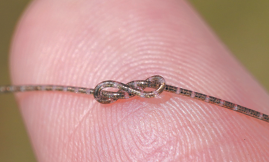
A research team at Fudan University in Shanghai has successfully built complex electronic circuits inside thin, flexible fibers. This breakthrough, referred to as a fiber chip, allows fabrics to process information like a computer while remaining soft enough to be stretched, twisted, and woven into everyday clothing.

The development could transform industries like brain-computer interfaces — which allow the brain to communicate directly with external devices — as well as high-tech textiles and virtual reality.

Typically, computer chips are flat and rigid, built on stiff materials like silicon. And because fibers are curved and have very little surface area, it has been difficult to fit enough electronic parts onto them to make them useful. To solve this, the Fudan University team moved away from just using the surface of the fiber. Instead, they designed a multilayered spiral architecture, essentially building several layers of circuitry inside the fiber to use all the available internal space.

A research team at Fudan University in Shanghai has successfully built complex electronic circuits inside thin, flexible fibers. This breakthrough, referred to as a fiber chip, allows fabrics to process information like a computer while remaining soft enough to be stretched, twisted, and woven into everyday clothing.

The development could transform industries like brain-computer interfaces — which allow the brain to communicate directly with external devices — as well as high-tech textiles and virtual reality.

Typically, computer chips are flat and rigid, built on stiff materials like silicon. And because fibers are curved and have very little surface area, it has been difficult to fit enough electronic parts onto them to make them useful. To solve this, the Fudan University team moved away from just using the surface of the fiber. Instead, they designed a multilayered spiral architecture, essentially building several layers of circuitry inside the fiber to use all the available internal space.

The team's experiments show that a fiber chip only 1 millimeter long can hold 10,000 transistors — the tiny switches that process data in electronics. This gives it the same processing power as a chip used in a heart pacemaker. If the fiber is extended to 1 meter, it could hold millions of transistors, reaching the power levels of a standard desktop computer processor.

The research, which challenges the traditional way computer chips are made, was published in the journal Nature.

For decades, scientists have added basic functions to fibers, such as the ability to store energy or sense touch. However, these smart fabrics usually had to be plugged into bulky, rigid computer chips in order to function. This made the clothing stiff and uncomfortable. The new fiber chip eliminates that need, allowing the fabric to think and act autonomously.

Our fabrication method is highly compatible with the current tools used in the chip industry, said Chen Peining, a researcher at Fudan University's Institute of Fiber Materials and Devices. We have already achieved a way to mass-produce these fiber chips.

The technology has significant implications for healthcare. In the BCI field, current systems use stiff electrodes that must be wired to external computers. The fiber chip could allow for a closed-loop system — where sensing, data processing, and medical stimulation all happen within a single, soft fiber.

Professor Peng Huisheng, a co-author of the study, noted that these fibers are as thin as 50 micrometers — thinner than a human hair — and as flexible as brain tissue. This makes them safer and more effective in the treatment of neurological diseases.

In the world of virtual reality, the technology could lead to smarter tactile gloves. Current VR gloves often use clunky hardware that makes them feel unnatural.

Smart tactile gloves made with fiber chips are indistinguishable from ordinary fabric, Chen said. They can sense and simulate the feel of different objects, which could be used by surgeons to 'feel' the hardness of tissue during a remote robotic surgery.

Source:

Fudan University 

05.02.2026

Ontex: Better support for skin health in incontinence care

Ontex Group NV, a leading international developer and producer of personal care solutions, introduces a new adult incontinence range developed to offer superior protection while being gentle on the skin. The first products –Sensitive Pants, Sensitive Slip and Sensitive Form – will become gradually available for healthcare institutions across Europe.

Recent European research conducted by Ontex among more than 2,500 people living with incontinence shows that dermatitis and skin irritation remain widespread and have a meaningful impact on daily life. Almost 1 in 2 people living with incontinence have experienced dermatitis or skin irritation in the intimate area; with many describing significant discomfort and effects on confidence and wellbeing. Despite this high prevalence, “Around 80% of caregivers are not trained to recognize dermatitis. Education and better product design are key to preventing complications.” says Dr. Maria Panourgia, Geriatrician at the Milton Keynes University Hospital (UK).

Ontex Group NV, a leading international developer and producer of personal care solutions, introduces a new adult incontinence range developed to offer superior protection while being gentle on the skin. The first products –Sensitive Pants, Sensitive Slip and Sensitive Form – will become gradually available for healthcare institutions across Europe.

Recent European research conducted by Ontex among more than 2,500 people living with incontinence shows that dermatitis and skin irritation remain widespread and have a meaningful impact on daily life. Almost 1 in 2 people living with incontinence have experienced dermatitis or skin irritation in the intimate area; with many describing significant discomfort and effects on confidence and wellbeing. Despite this high prevalence, “Around 80% of caregivers are not trained to recognize dermatitis. Education and better product design are key to preventing complications.” says Dr. Maria Panourgia, Geriatrician at the Milton Keynes University Hospital (UK).

These findings underline the urgent need for affordable, qualitative incontinence products that actively support skin health. The new Sensitive range has been developed precisely to answer this need—combining trusted protection with dermatological care to help prevent irritation and keep skin as healthy as possible.

To address the educational need, the Sensitive range is complemented with expert training advise on how to recognize, prevent and treat dermatitis related to incontinence. This is offered both through Ontex’s network of nurse advisors and through the online training platform Ontex Academy.

Sensitive range: powerful protection that respects the skin
The new Sensitive range combines proven incontinence protection with dermatological care. 

Sensitive Pants offer:

  • Topsheet enriched with botanical ingredients – helps to prevent skin irritation
  • Innovative Y-core technology – for instant dryness
  • Faster absorption – up to 2.5x faster than previous iD or Serenity pants
  • Hypoallergenic design – gentle on fragile skin
  • Odour control technology – for lasting freshness and confidence

Tatiana Bumachar Carvalho Pastori, Sr Marketing Manager Adult Care concludes: “the Sensitive range was developed to help people with incontinence to live their everyday life more comfortable. At the same time, it offers professional caregivers a product they can rely on, making it easier for them to deliver the best possible care, supported by our training opportunities.”

Source:

Ontex Group NV

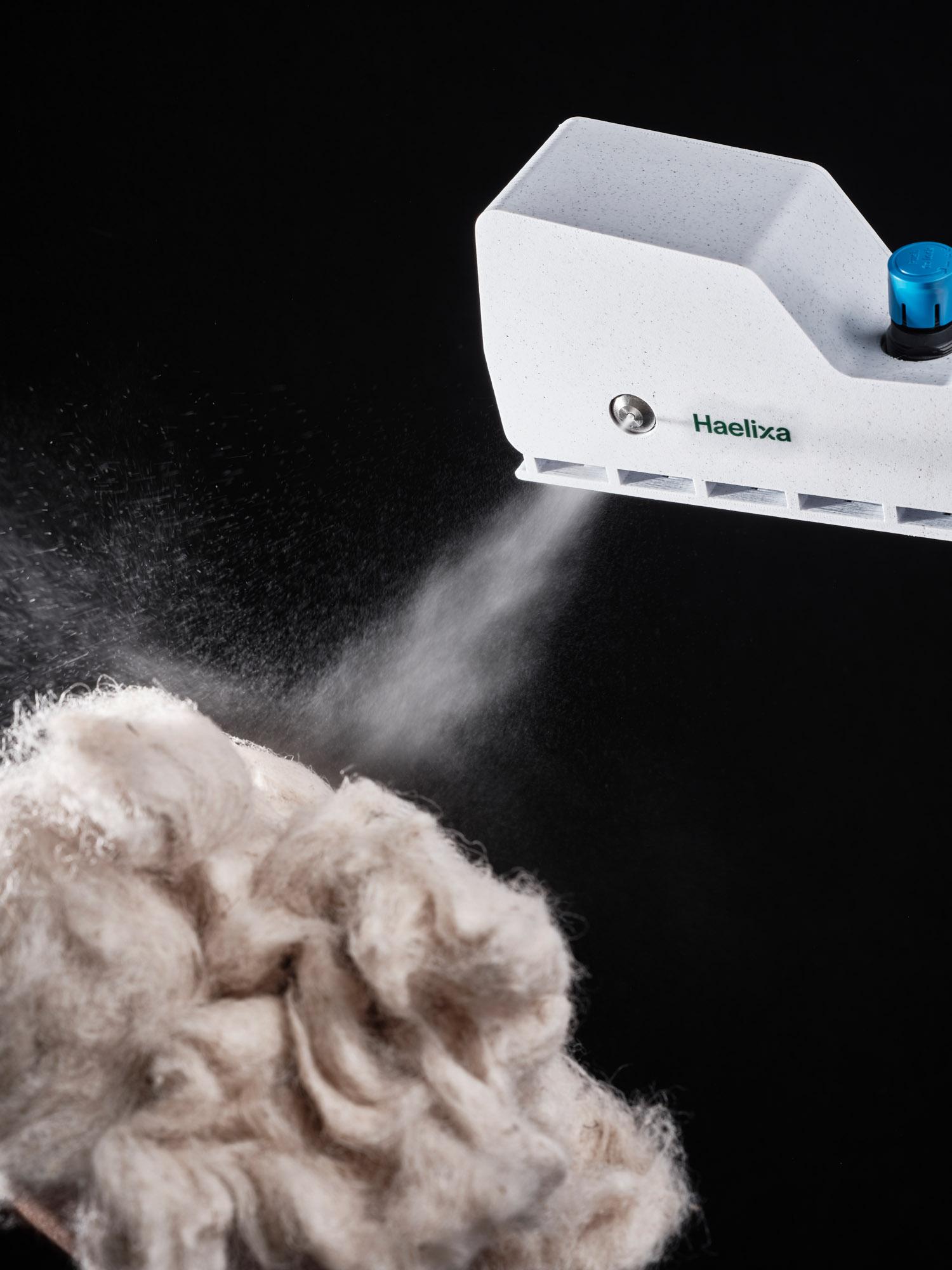
Haelixa sprayer Photo Haelixa
Haelixa sprayer
03.02.2026

Haelixa Raises EUR 2 Million to Scale DNA-Based Traceability Globally

Haelixa, the Swiss-based deeptech provider of DNA-based product traceability, has raised EUR 2 million in a pre-series A investment round to support international scale and long-term strategic growth. 
 
The round was led by existing backers Verve Ventures and Zurich Kantonalbank, with participation from an impact-focused investor 212 NexT Fund. This complements the catalytic funding awarded through the Temasek Trust Amplifier programme. 
 
The investment will support Haelixa’s international expansion, targeted team growth, and deeper collaboration with textile brands and supply-chain partners. 
 
Physical Proof in an Era of Rising Risk 
Haelixa’s patented DNA-based technology physically marks raw materials at any stage of production and enables later verification of origin and authenticity. The plant-based, invisible DNA markers are embedded directly into raw materials and remain detectable throughout complex, multi-tier supply chains. 
 

Haelixa, the Swiss-based deeptech provider of DNA-based product traceability, has raised EUR 2 million in a pre-series A investment round to support international scale and long-term strategic growth. 
 
The round was led by existing backers Verve Ventures and Zurich Kantonalbank, with participation from an impact-focused investor 212 NexT Fund. This complements the catalytic funding awarded through the Temasek Trust Amplifier programme. 
 
The investment will support Haelixa’s international expansion, targeted team growth, and deeper collaboration with textile brands and supply-chain partners. 
 
Physical Proof in an Era of Rising Risk 
Haelixa’s patented DNA-based technology physically marks raw materials at any stage of production and enables later verification of origin and authenticity. The plant-based, invisible DNA markers are embedded directly into raw materials and remain detectable throughout complex, multi-tier supply chains. 
 
As regulatory scrutiny increases, fashion brands face growing risks of fraud, undeclared blending, and substitution of premium materials, as well as mounting exposure to counterfeiting. These failures threaten compliance, brand equity, and consumer trust. By enabling verification directly on the product itself, Haelixa provides brands with a practical safeguard to protect material integrity and brand value. 
 
Haelixa’s technology is already used across fashion and textiles, as well as precious metals and gemstones, and is compliant with GOTS, Standard 100® by OEKO-TEX, and OEKO-TEX® Eco Passport. 
 
From Innovator to Investor-Backed Scale 
Haelixa originated as a spin-off from ETH Zurich and has since achieved scaled commercial adoption, generating seven-figure revenues and securing multi-year agreements with leading textile and fashion brands. 

Source:

Haelixa 

Eastman introduces Naia™ Lyte at Première Vision Paris Photo Eastman
03.02.2026

Eastman introduces Naia™ Lyte at Première Vision Paris

Eastman unveils Naia™ Lyte, a new cellulose acetate filament yarn that represents an important milestone in performance for lightweight and premium fabrics, at Première Vision Paris. Presented for the first time to the international fashion and textile community, Naia™ Lyte expands the capabilities of acetate yarn by introducing enhanced tenacity, unlocking new creative and technical possibilities for designers, mills and brands.

“Naia™ Lyte marks a significant development in acetate filament yarn innovation,” says Ruth Farrell, general manager of Eastman’s textiles business. “By increasing the tenacity of our yarn, we are expanding the performance boundaries of acetate and enabling new lightweight fabric applications, while staying true to the comfort, aesthetics and reliability that define Naia™. Naia™ Lyte is already being produced commercially, and we are excited by initial reactions to this new, innovative addition to our Naia™ portfolio.

Eastman unveils Naia™ Lyte, a new cellulose acetate filament yarn that represents an important milestone in performance for lightweight and premium fabrics, at Première Vision Paris. Presented for the first time to the international fashion and textile community, Naia™ Lyte expands the capabilities of acetate yarn by introducing enhanced tenacity, unlocking new creative and technical possibilities for designers, mills and brands.

“Naia™ Lyte marks a significant development in acetate filament yarn innovation,” says Ruth Farrell, general manager of Eastman’s textiles business. “By increasing the tenacity of our yarn, we are expanding the performance boundaries of acetate and enabling new lightweight fabric applications, while staying true to the comfort, aesthetics and reliability that define Naia™. Naia™ Lyte is already being produced commercially, and we are excited by initial reactions to this new, innovative addition to our Naia™ portfolio.

New level of performance. 
Naia™ Lyte introduces a new level of performance to acetate filament yarns through enhanced tenacity, while preserving the refined aesthetics traditionally associated with Naia™. This balance supports a wide range of applications, including fashion-forward lightweight fabrics as well as segments with more technical performance needs. Its refined, silky hand feel, natural luster and fluid drape are combined with comfort and easy-care benefits such as dry feel, cool-to-touch comfort, shape retention after repeated washes, and functional features including odor management and anti-static properties.

From strategic partnership to product innovation
Naia™ Lyte has been developed and produced via Eastman’s strategic partnership with Huafon Chemical, established to accelerate innovation and localized development of cellulose acetate filament yarns. Announced in 2025, the collaboration combines Eastman’s long-standing expertise in cellulosic materials with Huafon’s manufacturing and development capabilities, creating a strong platform for advancing acetate yarn performance.

Image: Vitaly Kobzun, Pixabay
02.02.2026

Lenzing AG: Majority owner of TreeToTextile AB, accelerating industrialization of new fibers

The Lenzing Group is taking another strategic milestone by acquiring a controlling majority in the Swedish innovation company TreeToTextile AB. This step strengthens Lenzing’s position as a leading provider of sustainable, wood based specialty fibers and expands its innovation pipeline with a highly scalable, patent protected technology platform. The transaction is executed through the issuance of new shares. 

TreeToTextile represents the next major technological leap in cellulosic fiber production – following the development of viscose in the early 20th century and Lenzing’s own Lyocell technology in the 1990s. The process offers a significantly improved sustainability profile, attractive cost advantages, and broad applicability across textile and nonwoven markets. With the majority acquisition, Lenzing underscores its commitment to consistently advancing its premiumization strategy and further expanding its leadership position in the global specialty fiber market. 

The Lenzing Group is taking another strategic milestone by acquiring a controlling majority in the Swedish innovation company TreeToTextile AB. This step strengthens Lenzing’s position as a leading provider of sustainable, wood based specialty fibers and expands its innovation pipeline with a highly scalable, patent protected technology platform. The transaction is executed through the issuance of new shares. 

TreeToTextile represents the next major technological leap in cellulosic fiber production – following the development of viscose in the early 20th century and Lenzing’s own Lyocell technology in the 1990s. The process offers a significantly improved sustainability profile, attractive cost advantages, and broad applicability across textile and nonwoven markets. With the majority acquisition, Lenzing underscores its commitment to consistently advancing its premiumization strategy and further expanding its leadership position in the global specialty fiber market. 

“TreeToTextile is among the world’s most advanced next generation fiber technologies and represents the most promising development on the market. Since our initial investment in 2025, the collaboration between the innovative TreeToTextile team and Lenzing’s fiber experts has enabled significant technological progress. We are fully committed to the joint scale up and commercialization. H&M Group, Inter IKEA Group, and Stora Enso, will continue to support this path as minority shareholders, contributing valuable market and consumer perspectives,” says Georg Kasperkovitz, COO of Lenzing Group. LSCS Invest also reaffirms its confidence in the joint technology platform through its long standing commitment since the foundation of the company and continued role as a shareholder. 

“Innovation at industrial scale requires time, expertise, and strong partnerships. Lenzing Group’s increased ownership is a clear endorsement of our technology and our ambition to become a major player in the global fiber market,” says Dr. Roxana Barbieru, CEO of TreeToTextile. 

The transaction enables an accelerated scaling of the new technology. Lenzing plans a significant increase in production output at the existing demonstration plant in Nymölla, Sweden, as well as the preparation of the first industrial scale facility. In addition, the company expects operational synergies from an even closer collaboration.

02.02.2026

Rieter Completes Acquisition of Barmag

Rieter has successfully completed the acquisition of Barmag as of February 2, 2026. This strategically important acquisition makes Rieter the world’s leading system provider for natural and synthetic fibers. 

Barmag will be consolidated as of February 2, 2026, and integrated into the Rieter Group as the “Man-Made Fiber” Division. The management of Barmag will remain with the company. Georg Stausberg will continue to lead the division and report to Thomas Oetterli, CEO of Rieter. At the same time, he will join the Group Executive Committee.

The transaction is financed by the capital increase completed in October of last year as well as by long-term bank loans. In addition to substantial cash reserves in its operating units, Rieter also has a significantly increased revolving credit facility at its disposal.

Rieter has successfully completed the acquisition of Barmag as of February 2, 2026. This strategically important acquisition makes Rieter the world’s leading system provider for natural and synthetic fibers. 

Barmag will be consolidated as of February 2, 2026, and integrated into the Rieter Group as the “Man-Made Fiber” Division. The management of Barmag will remain with the company. Georg Stausberg will continue to lead the division and report to Thomas Oetterli, CEO of Rieter. At the same time, he will join the Group Executive Committee.

The transaction is financed by the capital increase completed in October of last year as well as by long-term bank loans. In addition to substantial cash reserves in its operating units, Rieter also has a significantly increased revolving credit facility at its disposal.

Thomas Oetterli, CEO of Rieter: “Barmag’s know-how is a perfect fit for Rieter and will accelerate profitable growth as well as strengthen our market leadership in the important region of Asia. The acquired filament know-how will help to expand our areas of expertise as a system provider and further advance automation and digitization solutions. This is the start of a successful future together and an important milestone in the implementation of our corporate strategy.”

Source:

Rieter Holding AG

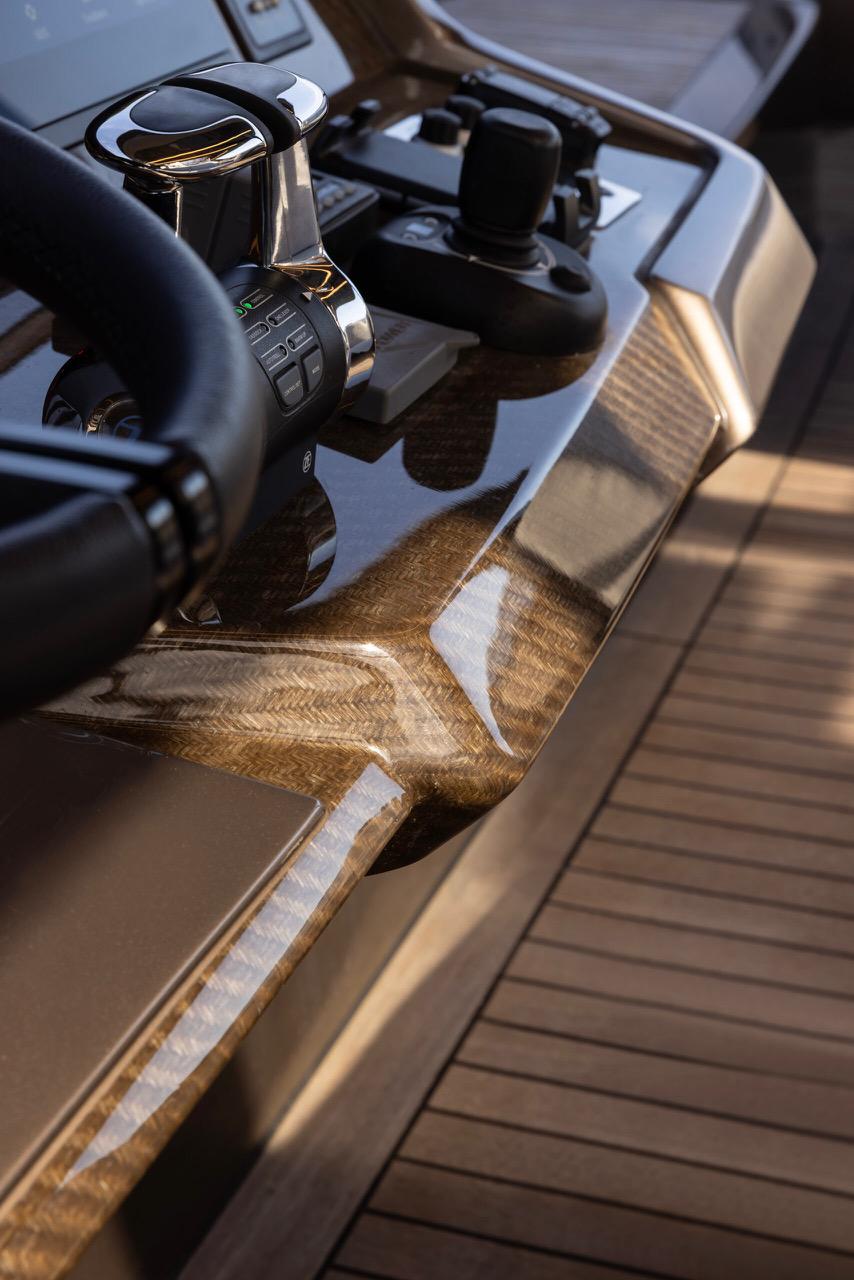
Alliance for European Flax-Linen & Hemp at JEC World 2026 Photo Alliance for European Flax-Linen & Hemp at JEC World 2026
02.02.2026

Alliance for European Flax-Linen & Hemp at JEC World 2026

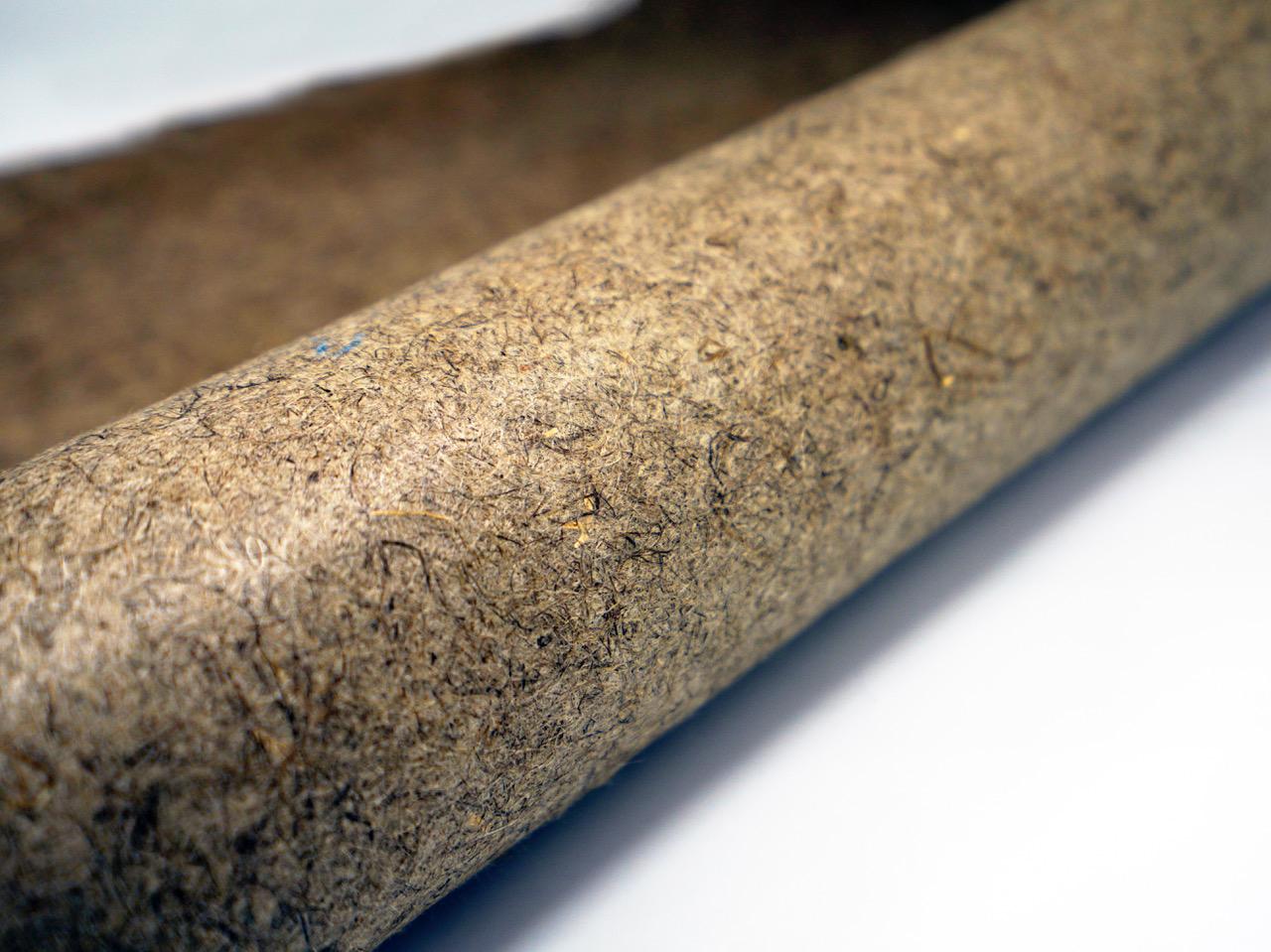
The Alliance for European Flax-Linen & Hemp participats at JEC World 2026, featuring a significantly expanded presence and an enhanced offering for the global composites industry.

Building on previous successes, the Alliance members will be at the core of a newly renamed and enlarged Bio-Materials Village in Hall 5. The village has grown by more than 30%, expanding from 250 m² to 333 m², and will feature 14 Alliance members and partners representing the full natural fibre composite value chain from fibre cultivation and processing through to semi-finished materials, resins, and industrial applications.

This year’s village welcomes several new members, including Norafin, which brings advanced technical nonwoven expertise using flax and hemp fibres, and innovative start-up Biofibix developing next-generation bio-based composite solutions. Another new participant is GreenPoxy by Sicomin, a leading supplier of bio-based epoxy resins that complement natural fibre reinforcement systems and enable lower-impact composite structures.

The Alliance for European Flax-Linen & Hemp participats at JEC World 2026, featuring a significantly expanded presence and an enhanced offering for the global composites industry.

Building on previous successes, the Alliance members will be at the core of a newly renamed and enlarged Bio-Materials Village in Hall 5. The village has grown by more than 30%, expanding from 250 m² to 333 m², and will feature 14 Alliance members and partners representing the full natural fibre composite value chain from fibre cultivation and processing through to semi-finished materials, resins, and industrial applications.

This year’s village welcomes several new members, including Norafin, which brings advanced technical nonwoven expertise using flax and hemp fibres, and innovative start-up Biofibix developing next-generation bio-based composite solutions. Another new participant is GreenPoxy by Sicomin, a leading supplier of bio-based epoxy resins that complement natural fibre reinforcement systems and enable lower-impact composite structures.

Innovations Showcase
The Bio-Materials Village will highlight several award-winning and shortlisted developments, including exhibits from JEC Innovation Award winners and finalists.

Bcomp has received the Automotive & Road Transportation Parts Award for its series-production exterior flax composite components developed for BMW, demonstrating the scalability and performance of flax reinforcements in demanding automotive applications. 

Safilin will also present its collaboration with Stratiforme on the Ecotrain project, showcasing the successful integration of natural fibre composites into rail interiors, delivering weight reduction, improved environmental performance, and industrial feasibility.

Biofibix, shortlisted among the 20 finalists of the 2026 JEC Startup Booster, will present its proprietary reinforcement technology designed to overcome one of the key challenges of natural fibre composites : structural consistency. Biofibix develops flax-based reinforcement systems that combine controlled fibre orientation with thermoplastic and thermoset compatibility, enabling improved mechanical performance and process reliability. 

Visitors will also discover the Ssuchy-Next project, an initiative focused on wind energy applications. The project explores the use of hemp-based composite solutions for a 12.6 m wind turbine blade, combining optimized fibre architecture, bio-sourced materials, and industrial manufacturing processes. Ssuchy-Next demonstrates how natural fibres can contribute to reduced carbon footprint, improved vibration damping, and end-of-life advantages, while meeting the mechanical and durability requirements of the wind energy sector.

Additional cutting-edge innovations on display will be showcased by other Alliance members and partners that include BComp, Circular Structures, DEMGY, Depestele, Ecotechnilin, Emanuel Lang Flax Composites, Flaxco, Libeco, Linificio e Canapificio Nazionale, Norafin, Safilin, Terre de Lin Technique, and many more. 


Industry Conference 
As part of the JEC Composite Exchange programme, Alliance experts will organize a round-table discussion on Wednesday 11 March at 2:00 pm Agora 5, titled:

“From Data to Applications: How Environmental and Technical Flax-Linen & Hemp Data Help Build Industrial Solutions.” The discussion will highlight how environmental metrics and technical performance data are essential tools for designers, engineers, and manufacturers in accelerating the adoption of natural fibre composites, while exploring the latest technical advances in flax-linen and hemp composites, their environmental performance, and the strategic pathways supporting the industrial deployment of bio-based composites in Europe.