Messe Frankfurt puts Artificial Intelligence Centre Stage at its International Textile and Apparel Trade Fairs
Under the banner “Texpertise Focus AI”, Messe Frankfurt will place a strong emphasis on Artificial Intelligence (AI) across its international textile and apparel trade fairs from 2026 onwards, setting a future-shaping signal for the industry. The initiative highlights the responsible use of AI along the entire textile value chain, from fibre production to the point of sale. The programme will launch at Heimtextil in Frankfurt in January 2026.
The textile and apparel industry is undergoing significant transformation: artificial intelligence is reshaping workflows, enabling new business models and offering solutions for sustainability, efficient value chains and the sector’s skills shortage. Commercial market analyses estimate the global market for AI in the textile industry to reach around USD 21 billion by 2033, roughly ten times the 2023 figure. According to Eurostat, 13.5 percent of European industrial companies were already using AI in 2024, including many businesses in the textile sector. Under the communication umbrella “Texpertise Focus AI”, Messe Frankfurt will showcase exhibitor applications and content formats relating to artificial intelligence at its international textile and apparel events from 2026 onwards.
Artificial Intelligence as a Key Focus
From 2026, Texpertise Focus AI will further enhance the visibility and accessibility of AI-related topics at Messe Frankfurt’s textile trade fairs. This includes curated content formats such as panel discussions, guided tours and live demonstrations featuring international industry experts. In addition, many exhibiting companies will present AI-related solutions.
The initiative will commence at Heimtextil from 13 to 16 January 2026 in Frankfurt am Main. AI will feature across numerous programme items, searchable online under “Texpertise Focus AI”. On Wednesday, 14 January at 3 p.m., internationally renowned thought leader in AI for design, Tim Fu, will join the Architonic Live Talk. Under the title “Woven intelligence: designing spaces in the era of AI”, Fu will discuss how artificial intelligence can support meaningful collaboration between architecture and interior design to create spaces that connect craft with computational technology. Messe Frankfurt will roll out the initiative across its textile trade fairs worldwide. Local characteristics and market-specific challenges will be integrated into the concept to ensure relevance.
Artificial Potential for the Value Chain, Sustainability and Workforce Development
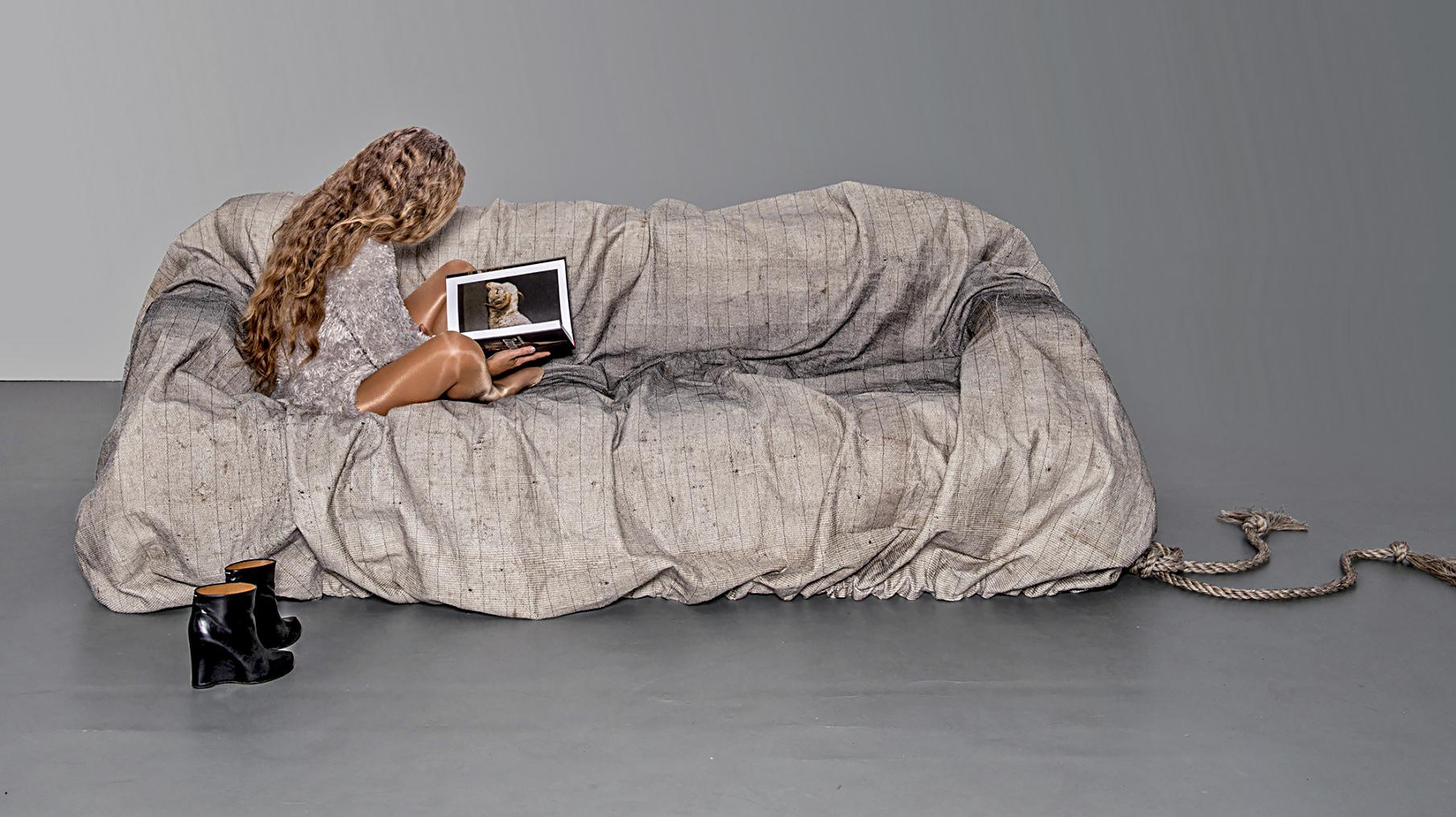
AI is transforming the textile value chain from fibre production to the point of sale and offers potential for greater efficiency, higher quality and improved resilience. In raw-material sourcing, AI systems support cultivation, harvesting and recycling through intelligent analytics and sorting technologies. In design and development, AI tools accelerate creative processes and simulate material properties, a concept reflected, for example, in the immersive installation “among all” by Patricia Urquiola at Heimtextil 2026. Production and logistics processes can also be optimised, waste reduced and supply chains made more transparent.
Artificial intelligence is also driving the twin transformation – the convergence of digitalisation and sustainability. Around 116 million tonnes of textile fibres are produced annually worldwide, yet only one percent of post-consumer textile waste is recycled[3]. With AI, companies can conserve resources and reduce waste. AI-based design and forecasting models help prevent overproduction, while life-cycle analyses enable environmentally conscious sourcing. Image-recognition systems sort used textiles, laying the foundation for a true circular economy. The entire spectrum of textile processing technologies will be showcased at Texprocess from 21 to 24 April 2026 in Frankfurt am Main.
In the workplace, AI is creating new job profiles and reshaping existing ones, in areas such as data analytics, digital design and process control. It also has the potential to ease labour shortages: according to the German Institute of Textile Technology (ITA) at RWTH Aachen University, up to 70 percent of standardised production tasks could be automated. AI can also support recruitment by enabling targeted identification and selection of qualified professionals.
Texpertise Messe Frankfurt Exhibition GmbH Messe Frankfurt artificial intelligence
Messe Frankfurt Exhibition GmbH