From the Sector

Reset
A piece of the fiber chip Photo Fudan University
A piece of the fiber chip
05.02.2026

Fiber chip: Complex electronic circuits inside thin, flexible fibers

A research team at Fudan University in Shanghai has successfully built complex electronic circuits inside thin, flexible fibers. This breakthrough, referred to as a fiber chip, allows fabrics to process information like a computer while remaining soft enough to be stretched, twisted, and woven into everyday clothing.

The development could transform industries like brain-computer interfaces — which allow the brain to communicate directly with external devices — as well as high-tech textiles and virtual reality.

Typically, computer chips are flat and rigid, built on stiff materials like silicon. And because fibers are curved and have very little surface area, it has been difficult to fit enough electronic parts onto them to make them useful. To solve this, the Fudan University team moved away from just using the surface of the fiber. Instead, they designed a multilayered spiral architecture, essentially building several layers of circuitry inside the fiber to use all the available internal space.

A research team at Fudan University in Shanghai has successfully built complex electronic circuits inside thin, flexible fibers. This breakthrough, referred to as a fiber chip, allows fabrics to process information like a computer while remaining soft enough to be stretched, twisted, and woven into everyday clothing.

The development could transform industries like brain-computer interfaces — which allow the brain to communicate directly with external devices — as well as high-tech textiles and virtual reality.

Typically, computer chips are flat and rigid, built on stiff materials like silicon. And because fibers are curved and have very little surface area, it has been difficult to fit enough electronic parts onto them to make them useful. To solve this, the Fudan University team moved away from just using the surface of the fiber. Instead, they designed a multilayered spiral architecture, essentially building several layers of circuitry inside the fiber to use all the available internal space.

The team's experiments show that a fiber chip only 1 millimeter long can hold 10,000 transistors — the tiny switches that process data in electronics. This gives it the same processing power as a chip used in a heart pacemaker. If the fiber is extended to 1 meter, it could hold millions of transistors, reaching the power levels of a standard desktop computer processor.

The research, which challenges the traditional way computer chips are made, was published in the journal Nature.

For decades, scientists have added basic functions to fibers, such as the ability to store energy or sense touch. However, these smart fabrics usually had to be plugged into bulky, rigid computer chips in order to function. This made the clothing stiff and uncomfortable. The new fiber chip eliminates that need, allowing the fabric to think and act autonomously.

Our fabrication method is highly compatible with the current tools used in the chip industry, said Chen Peining, a researcher at Fudan University's Institute of Fiber Materials and Devices. We have already achieved a way to mass-produce these fiber chips.

The technology has significant implications for healthcare. In the BCI field, current systems use stiff electrodes that must be wired to external computers. The fiber chip could allow for a closed-loop system — where sensing, data processing, and medical stimulation all happen within a single, soft fiber.

Professor Peng Huisheng, a co-author of the study, noted that these fibers are as thin as 50 micrometers — thinner than a human hair — and as flexible as brain tissue. This makes them safer and more effective in the treatment of neurological diseases.

In the world of virtual reality, the technology could lead to smarter tactile gloves. Current VR gloves often use clunky hardware that makes them feel unnatural.

Smart tactile gloves made with fiber chips are indistinguishable from ordinary fabric, Chen said. They can sense and simulate the feel of different objects, which could be used by surgeons to 'feel' the hardness of tissue during a remote robotic surgery.

Source:

Fudan University 

05.02.2026

Ontex: Better support for skin health in incontinence care

Ontex Group NV, a leading international developer and producer of personal care solutions, introduces a new adult incontinence range developed to offer superior protection while being gentle on the skin. The first products –Sensitive Pants, Sensitive Slip and Sensitive Form – will become gradually available for healthcare institutions across Europe.

Recent European research conducted by Ontex among more than 2,500 people living with incontinence shows that dermatitis and skin irritation remain widespread and have a meaningful impact on daily life. Almost 1 in 2 people living with incontinence have experienced dermatitis or skin irritation in the intimate area; with many describing significant discomfort and effects on confidence and wellbeing. Despite this high prevalence, “Around 80% of caregivers are not trained to recognize dermatitis. Education and better product design are key to preventing complications.” says Dr. Maria Panourgia, Geriatrician at the Milton Keynes University Hospital (UK).

Ontex Group NV, a leading international developer and producer of personal care solutions, introduces a new adult incontinence range developed to offer superior protection while being gentle on the skin. The first products –Sensitive Pants, Sensitive Slip and Sensitive Form – will become gradually available for healthcare institutions across Europe.

Recent European research conducted by Ontex among more than 2,500 people living with incontinence shows that dermatitis and skin irritation remain widespread and have a meaningful impact on daily life. Almost 1 in 2 people living with incontinence have experienced dermatitis or skin irritation in the intimate area; with many describing significant discomfort and effects on confidence and wellbeing. Despite this high prevalence, “Around 80% of caregivers are not trained to recognize dermatitis. Education and better product design are key to preventing complications.” says Dr. Maria Panourgia, Geriatrician at the Milton Keynes University Hospital (UK).

These findings underline the urgent need for affordable, qualitative incontinence products that actively support skin health. The new Sensitive range has been developed precisely to answer this need—combining trusted protection with dermatological care to help prevent irritation and keep skin as healthy as possible.

To address the educational need, the Sensitive range is complemented with expert training advise on how to recognize, prevent and treat dermatitis related to incontinence. This is offered both through Ontex’s network of nurse advisors and through the online training platform Ontex Academy.

Sensitive range: powerful protection that respects the skin
The new Sensitive range combines proven incontinence protection with dermatological care. 

Sensitive Pants offer:

  • Topsheet enriched with botanical ingredients – helps to prevent skin irritation
  • Innovative Y-core technology – for instant dryness
  • Faster absorption – up to 2.5x faster than previous iD or Serenity pants
  • Hypoallergenic design – gentle on fragile skin
  • Odour control technology – for lasting freshness and confidence

Tatiana Bumachar Carvalho Pastori, Sr Marketing Manager Adult Care concludes: “the Sensitive range was developed to help people with incontinence to live their everyday life more comfortable. At the same time, it offers professional caregivers a product they can rely on, making it easier for them to deliver the best possible care, supported by our training opportunities.”

Source:

Ontex Group NV

Avery Dennison: New official name and number partner of Mainz 05 Photo Avery Dennison
05.02.2026

Avery Dennison: New official name and number partner of Mainz 05

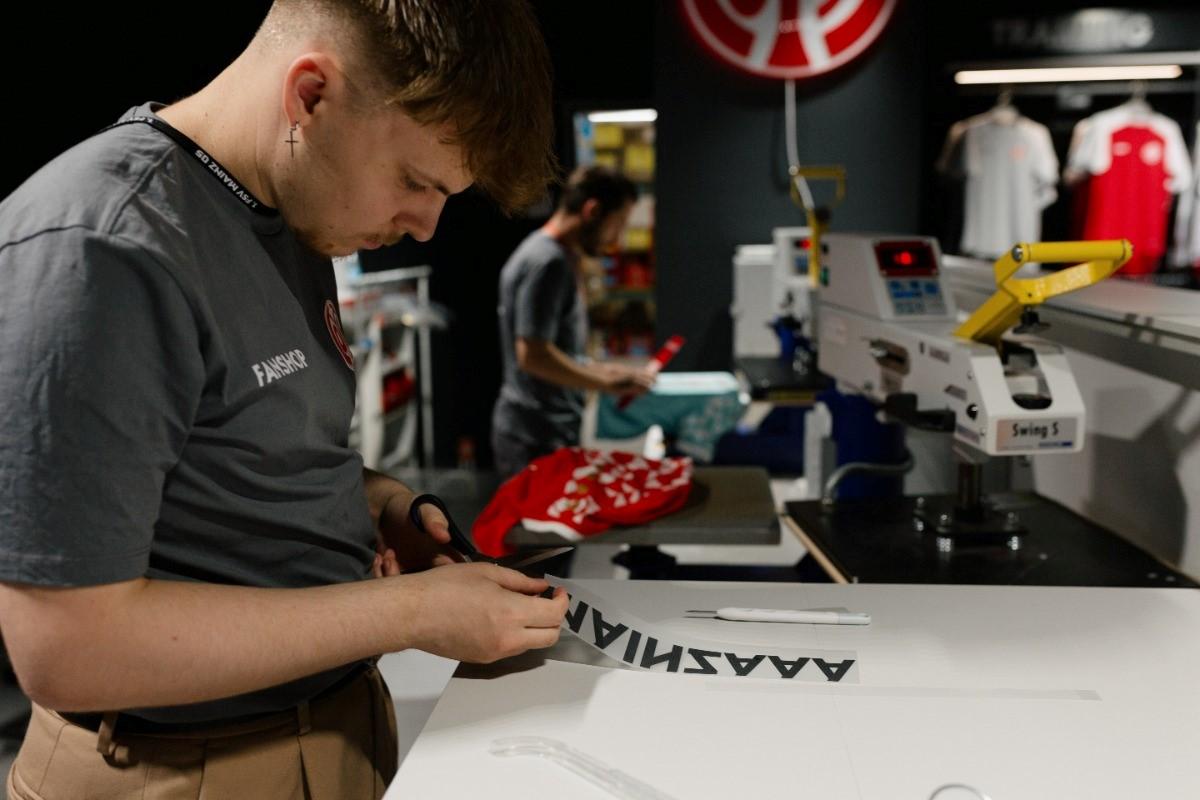
Avery Dennison, a global leader in materials science and digital identification solutions, announced its exclusive partnership with 1. FSV Mainz 05 (also known as Mainz 05) to enhance fan engagement through heat transfer embellishments, creating customizable and personalized team jerseys.

The partnership marks Avery Dennison’s expansion into German soccer, providing fans the unique opportunity to showcase their creativity and support through bespoke embellished merchandise.

Avery Dennison’s Embelex™ solution portfolio, renowned for its innovative options for personalization in the global sports apparel market, will play a pivotal role in the partnership. Two interactive fanzone touchscreens featuring bonders equipped with an Accurate Alignment Projector System (AAPS) have been installed at the MEWA Arena, home of Mainz 05. Fans can personalize their jerseys in minutes with the name, number or customized message of their choosing, turning matchday shopping into an event as memorable as the game itself.

Avery Dennison, a global leader in materials science and digital identification solutions, announced its exclusive partnership with 1. FSV Mainz 05 (also known as Mainz 05) to enhance fan engagement through heat transfer embellishments, creating customizable and personalized team jerseys.

The partnership marks Avery Dennison’s expansion into German soccer, providing fans the unique opportunity to showcase their creativity and support through bespoke embellished merchandise.

Avery Dennison’s Embelex™ solution portfolio, renowned for its innovative options for personalization in the global sports apparel market, will play a pivotal role in the partnership. Two interactive fanzone touchscreens featuring bonders equipped with an Accurate Alignment Projector System (AAPS) have been installed at the MEWA Arena, home of Mainz 05. Fans can personalize their jerseys in minutes with the name, number or customized message of their choosing, turning matchday shopping into an event as memorable as the game itself.

Sergio Shmilovitch, VP/GM Embelex, Avery Dennison, says: “Fans are demanding more creative and expressive ways to show their loyalty, elevating customization to the top of the league. This partnership is exciting on a number of fronts. By harnessing our global expertise in delivering high-quality branding and customization solutions, Mainz 05 is able to pursue new revenue opportunities while enabling fans to express their dedication and passion in their own unique way.”


Thomas Bohner, head of merchandise, 1. FSV Mainz 05, adds: “Partnering with Avery Dennison as our official name and number partner represents a significant step forward for Mainz 05. We're bringing the same world-class quality used by elite sports organizations globally to our supporters, while pioneering in-venue customization technology in German soccer. This is about giving our fans what they’ve been asking for: instant, professional-quality customization that turns every jersey into something truly their own. It's innovation that strengthens supporter loyalty while creating new opportunities for the club.”

In addition to its work with Mainz 05, Avery Dennison has established an impressive portfolio collaborating with leading soccer leagues across the globe, such as the English Premier League, LALIGA, Liga Portugal and MLS, as well as Spanish and European powerhouse Real Madrid. Partnerships include US sports teams, such as the NFL 2025 championship-winning Philadelphia Eagles, San Francisco 49ers and Dallas Cowboys. Collaborations also extend to the NBA's Cleveland Cavaliers, as well the NHL and MLB.

Source:

Avery Dennison

FITA, ABIT, EURATEX: Monitoring Mercosur-European Union Partnership Agreement Photo EURATEX
05.02.2026

FITA, ABIT, EURATEX: Monitoring Mercosur-European Union Partnership Agreement

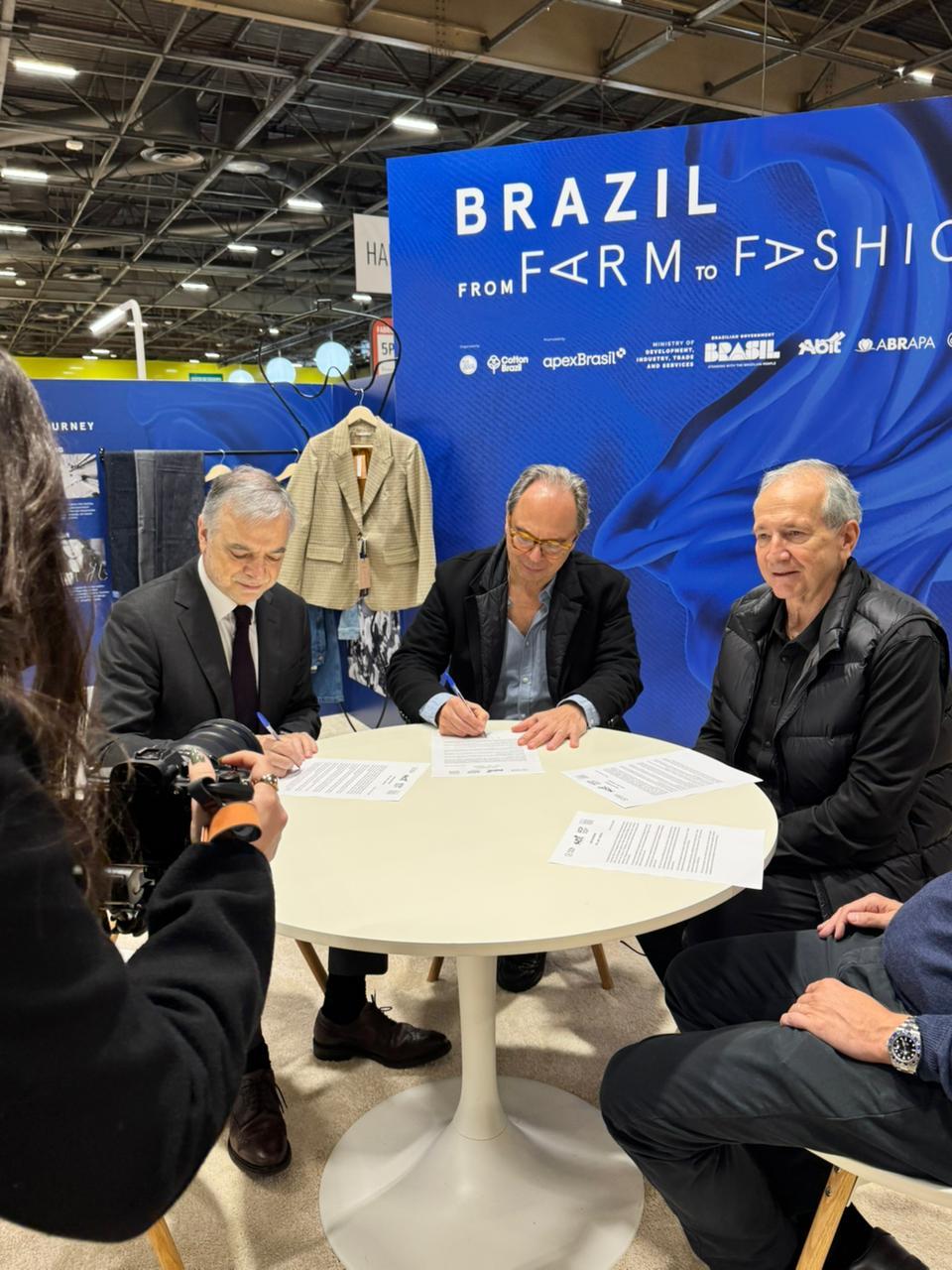
The Argentine Textile Industry Federation (FITA), the Brazilian Textile and Apparel Industry Association (ABIT), and the European Apparel and Textile Confederation (EURATEX) continue to monitor the process of internalizing the Mercosur-European Union Partnership Agreement. This agreement is essential for the competitiveness of our industries, on both sides of the Atlantic. 

The entities remain confident that, despite the submission of the agreement to the Court of Justice of the European Union, the vision of the agreement's strategic role for both sides of the Atlantic will prevail.

For the textile industry, the agreement confirms the commitment to economic integration and predictable rules, as well as signalling support for multilateralism in a challenging global scenario. 

FITA, ABIT, and EURATEX reaffirm their commitment to actively contribute to this implementation process of the agreement, as well as to undertake other inter-regional and international projection actions that consolidate both blocs as relevant actors in the global economy.

The Argentine Textile Industry Federation (FITA), the Brazilian Textile and Apparel Industry Association (ABIT), and the European Apparel and Textile Confederation (EURATEX) continue to monitor the process of internalizing the Mercosur-European Union Partnership Agreement. This agreement is essential for the competitiveness of our industries, on both sides of the Atlantic. 

The entities remain confident that, despite the submission of the agreement to the Court of Justice of the European Union, the vision of the agreement's strategic role for both sides of the Atlantic will prevail.

For the textile industry, the agreement confirms the commitment to economic integration and predictable rules, as well as signalling support for multilateralism in a challenging global scenario. 

FITA, ABIT, and EURATEX reaffirm their commitment to actively contribute to this implementation process of the agreement, as well as to undertake other inter-regional and international projection actions that consolidate both blocs as relevant actors in the global economy.

The EU textiles and apparel industry includes ca. 200,000 companies and 1.2 million dedicated workers, generating a turnover of nearly €170 billion. 

The Mercosur countries also have a significant textile and clothing industry. In Brazil, this industry has 25,700 companies with 1.3 million employees and a turnover of USD 40.9 billion. In Argentina, the textile and clothing industry comprises 4,000 companies and employs 540,000 workers along the value chain.

The Mercosur-European Union Partnership Agreement offers the textile and apparel industry opportunities related to market access, technological cooperation, investment, strengthening of environmental standards for countries in both economic blocs.