
From the Sector

Reset
Federal procurement of American-made mission critical clothing, textiles and gear Deniece Platt, Pixabay (AI generated)
18.02.2026

Federal procurement of American-made mission critical clothing, textiles and gear

The National Council of Textile Organizations (NCTO), representing the full spectrum of U.S. textiles from fiber, yarn and fabrics to finished sewn products, applauded the launch of the House Berry Amendment Caucus. 

Statement from National Council of Textile Organizations (NCTO) President and CEO Kim Glas

“On behalf of the U.S textile industry, NCTO sincerely thanks Rep. Pat Harrigan (R-NC) and Rep. Don Davis (D-NC) for their leadership in co-chairing the new bipartisan House Berry Amendment Caucus, aimed at strengthening national security and the U.S. defense industrial supply chain through the federal procurement of American-made mission critical clothing, textiles and gear. 

“NCTO strongly supports this new caucus to promote and expand the Berry Amendment, a law requiring the Department of War (DOW) to buy textile and clothing products made with virtually 100% U.S. content and labor to support our U.S. warm industrial base. 

The National Council of Textile Organizations (NCTO), representing the full spectrum of U.S. textiles from fiber, yarn and fabrics to finished sewn products, applauded the launch of the House Berry Amendment Caucus. 

Statement from National Council of Textile Organizations (NCTO) President and CEO Kim Glas

“On behalf of the U.S textile industry, NCTO sincerely thanks Rep. Pat Harrigan (R-NC) and Rep. Don Davis (D-NC) for their leadership in co-chairing the new bipartisan House Berry Amendment Caucus, aimed at strengthening national security and the U.S. defense industrial supply chain through the federal procurement of American-made mission critical clothing, textiles and gear. 

“NCTO strongly supports this new caucus to promote and expand the Berry Amendment, a law requiring the Department of War (DOW) to buy textile and clothing products made with virtually 100% U.S. content and labor to support our U.S. warm industrial base. 

“The U.S. textile industry provides $1.8 billion of high-tech and functional components for vital uniforms and equipment for our armed forces each year. The Department of War estimates that over 8,000 different textile items are purchased for use by the U.S. military—and over 30,000 line items when individual sizes are considered.

“It is vital to America’s national security that the U.S. military maintain the ability to source high-quality, innovative textile materials, apparel, and personal equipment from a vibrant U.S. textile industrial base and key to this goal is defending and strengthening the Berry Amendment.

“We look forward to working with the new caucus’ leadership and our industry partners to focus congressional efforts on preserving the Berry Amendment and expanding opportunities for U.S. textile manufacturers, safeguarding domestic supply chains, and ensuring our troops continue to receive innovative, high-quality American-made products.”

Jeanologia urges industry to accelerate PP Spray phase-out Graphic Jeanologia
17.02.2026

Jeanologia urges industry to accelerate PP Spray phase-out

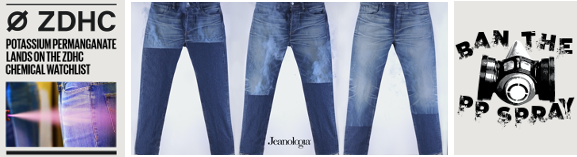
Since 2015, Jeanologia has set the standard with laser, Light Bright and G2 Ozone technologies, achieving authentic vintage effects in denim without chemical spraying.

Potassium permanganate has officially entered the Chemical Watchlist of the ZDHC Foundation, signaling increased scrutiny and potential phase-out of one of the most hazardous chemicals still used in denim finishing. The inclusion confirms an industry shift that Jeanologia anticipated more than a decade ago.

For years, Jeanologia has called for the elimination of PP spray, warning about its impact on worker health, operational safety and the environment. Now, the industry is formally acknowledging what has been evident on factory floors worldwide.

PP spray is commonly used to create localized vintage effects in denim, but it exposes operators to chemical micro-particles and presents serious occupational risks. Despite growing awareness and available alternatives, this practice continues to be used in parts of the industry. According to Jeanologia, millions of workers globally are still affected by this process.

Since 2015, Jeanologia has set the standard with laser, Light Bright and G2 Ozone technologies, achieving authentic vintage effects in denim without chemical spraying.

Potassium permanganate has officially entered the Chemical Watchlist of the ZDHC Foundation, signaling increased scrutiny and potential phase-out of one of the most hazardous chemicals still used in denim finishing. The inclusion confirms an industry shift that Jeanologia anticipated more than a decade ago.

For years, Jeanologia has called for the elimination of PP spray, warning about its impact on worker health, operational safety and the environment. Now, the industry is formally acknowledging what has been evident on factory floors worldwide.

PP spray is commonly used to create localized vintage effects in denim, but it exposes operators to chemical micro-particles and presents serious occupational risks. Despite growing awareness and available alternatives, this practice continues to be used in parts of the industry. According to Jeanologia, millions of workers globally are still affected by this process.

Jeanologia eliminated the need for PP spray in 2015, becoming the first technology provider to offer a scalable industrial alternative through laser-based finishing. Today, the company replaces PP spray through its laser technology with Light Bright tool and combined with G2 Ozone technology, delivering authentic vintage effects without chemical spraying. The solution offers full digital control, safer working conditions and reliable industrial performance.

This approach is reinforced by Jeanologia’s Environmental Impact Measuring (EIM) platform. In its Innovations and Challenges in Denim Finishing 2024 Report, EIM identifies potassium permanganate as one of the remaining high-risk processes in garment finishing and highlights the urgent need for safer technologies, reinforcing laser-based solutions as a low-impact alternative.

Over the past decade, Jeanologia has progressively replaced the most hazardous denim finishing processes with eco-efficient technologies, becoming the first company to eliminate sandblasting and to advance alternatives to stone washing, manual scraping and PP spray. Today, its laser and G2 Ozone technologies are implemented worldwide, enabling denim brands to achieve the same aesthetic results while improving worker safety, reducing chemical use and lowering water consumption, with measurable impact across global production.

As transparency requirements, ESG reporting frameworks and chemical management standards continue to evolve, early adoption of safer technologies is increasingly becoming a competitive advantage. Jeanologia calls on brands, laundries and manufacturers to accelerate the transition toward chemical-free finishing. The technology exists.

Kraig Biocraft Laboratories Photo Kraig Biocraft Laboratories
17.02.2026

Kraig Activates First Wave of 2026 Production Program

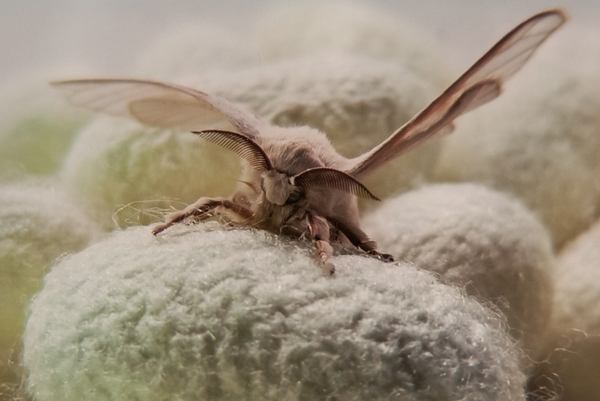
Kraig Biocraft Laboratories, Inc., a global leader in spider silk technology*, announced that its 2026 production plan has officially moved from strategy to execution.
 
The Company has now moved bio-material to incubation, getting a jumpstart on its March production plan and formally initiating its multi-ton spider silk scale-up initiative.
 
This milestone follows Kraig’s recently announced 2026 production schedule. This aggressive plan is set to achieve sustained monthly production of recombinant spider silk cocoons at unprecedented commercial volumes. With the release of the first wave of production materials now complete, Kraig Labs has activated its expanded manufacturing pipeline and commenced field-level implementation.
 
"This is the moment where planning becomes production," said Kim Thompson, Kraig Labs CEO and Founder. "Our 2026 roadmap was built around disciplined expansion, operational efficiency, and multi-ton output. Today, that roadmap is in motion. Bio-materials have recently been moved to incubation in preparation for the March production run."
 

Kraig Biocraft Laboratories, Inc., a global leader in spider silk technology*, announced that its 2026 production plan has officially moved from strategy to execution.
 
The Company has now moved bio-material to incubation, getting a jumpstart on its March production plan and formally initiating its multi-ton spider silk scale-up initiative.
 
This milestone follows Kraig’s recently announced 2026 production schedule. This aggressive plan is set to achieve sustained monthly production of recombinant spider silk cocoons at unprecedented commercial volumes. With the release of the first wave of production materials now complete, Kraig Labs has activated its expanded manufacturing pipeline and commenced field-level implementation.
 
"This is the moment where planning becomes production," said Kim Thompson, Kraig Labs CEO and Founder. "Our 2026 roadmap was built around disciplined expansion, operational efficiency, and multi-ton output. Today, that roadmap is in motion. Bio-materials have recently been moved to incubation in preparation for the March production run."
 
The March production run represents the first major deployment under the Company's 2026 plan. The initiative is designed to drive consistent output at levels never before seen, while reinforcing quality control, supply chain stability, and downstream processing capacity.
 
By initiating this production cycle, Kraig Labs is delivering on its commitment, creating the world's first reliable, repeatable, and scalable commercial spider silk manufacturing. The Company's vertically integrated model enables rapid deployment of materials, controlled expansion of silkworm rearing operations, and alignment with future customer demand.
 
"Our focus is clear," Thompson continued. "Execution. Volume. Commercialization. Every production cycle strengthens our position as the global leader in recombinant spider silk."
 
Kraig Labs expects this March run to set the pace for subsequent production cycles throughout 2026, forming the foundation for sustained monthly metric-ton-level spider silk production.

Source:

Kraig Biocraft Laboratories