From the Sector

Reset
Hightex Photo (c) Hightex
19.02.2026

HIGHTEX 2026: Technical Textiles and Nonwovens

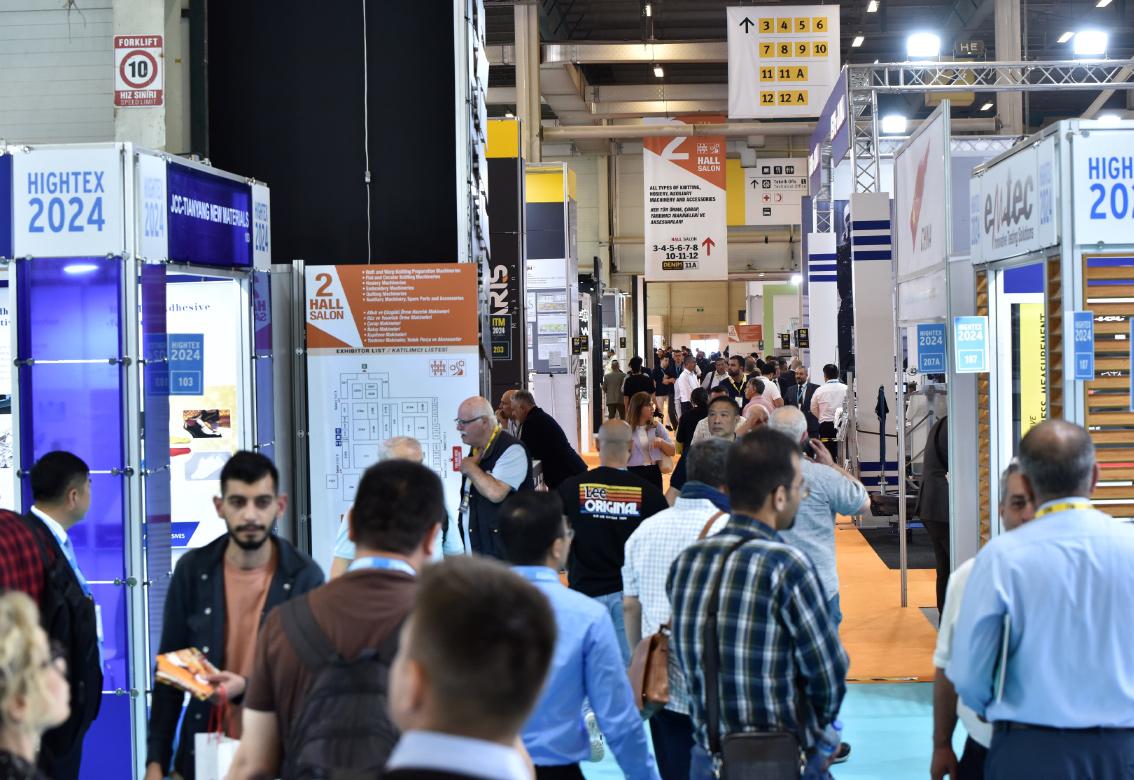
HIGHTEX 2026 International Technical Textiles and Nonwoven Exhibition is preparing to open its doors at Tüyap Fair and Congress Center between 9–13 June 2026. Bringing together leading manufacturers and technology providers in the field of technical textiles and nonwoven technologies in Istanbul, the exhibition will assume the character of an international hub where the strategic future of the industry is discussed.

While topics such as sustainable production models, digitalization, high-performance materials and smart manufacturing systems will form the main agenda of HIGHTEX 2026, a strong showcase will be presented for companies aiming to make a difference in the global competitive environment.

HIGHTEX 2026 International Technical Textiles and Nonwoven Exhibition is preparing to open its doors at Tüyap Fair and Congress Center between 9–13 June 2026. Bringing together leading manufacturers and technology providers in the field of technical textiles and nonwoven technologies in Istanbul, the exhibition will assume the character of an international hub where the strategic future of the industry is discussed.

While topics such as sustainable production models, digitalization, high-performance materials and smart manufacturing systems will form the main agenda of HIGHTEX 2026, a strong showcase will be presented for companies aiming to make a difference in the global competitive environment.

Organized in cooperation with Teknik Fuarcılık and Tüyap, and held concurrently with the ITM International Textile Machinery Exhibition, HIGHTEX holds the distinction of being Türkiye’s and the region’s first and only specialized exhibition in the field of technical textiles and nonwovens. Organized since 2005, the event has, over more than 20 years, personally witnessed the technological evolution experienced by the industry and has become one of the most important platforms where innovative solutions are introduced to the global market. Thanks to being held simultaneously with ITM, textile machinery, production technologies and the technical textiles ecosystem will come together under the same roof, offering visitors an integrated exhibition experience.

The Indispensable Element of Strategic Industries: Technical Textiles
Today, technical textiles have a wide range of applications extending from automotive to defense industry, from medical applications to infrastructure projects, and from agriculture to the energy sector. Distinguished from conventional textile products thanks to their superior properties such as high strength, lightness, durability, heat and chemical resistance, these materials directly affect the performance criteria of strategic industries. The solutions to be exhibited at HIGHTEX 2026 will reveal not only product-based innovations but also the transformation in production processes. A broad exhibitor profile, ranging from raw material producers to machinery manufacturers, from software developers to end-product manufacturers, will represent the entire value chain of the sector.

This comprehensive structure transforms the exhibition into not only a display area but also a strategic platform in terms of information sharing, business development and investment planning. While professional visitors will have the opportunity to examine new technologies on-site and establish direct contact with manufacturers, participating companies will gain the opportunity to enter new markets and strengthen their brand positioning.

A New Era in Nonwoven Technologies
Nonwoven production technologies have achieved a significant leap in recent years in terms of both capacity and quality. Based on the principle of bonding fibers through mechanical, thermal or chemical methods without weaving or knitting, this production model is rapidly expanding on a global scale due to the flexibility, speed and cost advantage it offers. Nonwoven solutions have become indispensable especially in hygiene products, medical consumables, filtration systems and automotive interior trim applications.

The next-generation nonwoven lines to be exhibited at HIGHTEX 2026 will contribute to sustainability targets with criteria such as lower energy consumption, optimized raw material usage and high production speed. Solutions for recyclable and biodegradable raw materials will also be among the prominent topics of the exhibition. These developments demonstrate that the nonwoven sector simultaneously carries growth potential along with environmental responsibility.

Artificial Intelligence and Industry 4.0 Integration Comes to the Fore
Digital transformation has become one of the fundamental elements of competitive advantage in technical textile and nonwoven production. The Industry 4.0 integrated systems to be exhibited at HIGHTEX 2026 will enable real-time monitoring of production processes, performance optimization through data analytics, and the minimization of error rates. Thanks to artificial intelligence-supported quality control systems, defects that may occur on production lines will be detected instantly, thereby reducing cost losses.

Automation solutions will increase production speed and standardization while minimizing human error; at the same time, smart infrastructures that provide savings in energy and resource usage will strengthen the understanding of sustainable production. These technologies will offer companies not only operational efficiency but also the opportunity for strong positioning in the global market.

Fabrics of the Future: Smart Textiles
Smart textiles developed at the intersection of textiles and advanced technology stand out as one of the most dynamic and fastest-growing fields of the sector. Nanotechnology applications, conductive fibers, sensor-integrated fabric structures and materials capable of responding to environmental conditions offer a wide range of applications from health monitoring to defense uses, from sports technologies to industrial safety. These innovations transform textiles from being a passive material into a structure capable of generating data and interacting. At HIGHTEX 2026, geotextiles, medical and hygienic textiles, high-performance composite structures for aviation and automotive, and technical solutions specific to the agriculture and food sectors will also be exhibited together. Thus, the exhibition will present a holistic panorama of innovative materials responding to the needs of different industries.

New Collaborations and Global Trade Opportunities
HIGHTEX 2026 will not only provide participating companies with the opportunity to exhibit their products but will also create a strong business development platform that will expand international trade networks. Bilateral business meetings and sectoral contacts to be held throughout the exhibition will prepare the ground for generating concrete commercial outcomes ranging from machinery sales to technology transfers, from joint production agreements to new investment decisions. For sector representatives coming from a wide geography extending from America to Asia, from Europe to Africa, Istanbul will become a global meeting point in the field of technical textiles and nonwovens. HIGHTEX 2026 will continue to position itself at the center of information sharing, strategic vision and technological transformation, maintaining its role as an international reference platform guiding the sector.

19.02.2026

INVISTA: Nancy Kowalski New President and CEO

Nancy Kowalski has been named new president and CEO of INVISTA, a Koch company, effective March 1, 2026. In this role, she’ll be responsible for continuing to adapt and improve business models across INVISTA, a global manufacturer of chemical intermediates, polymers and fibers used in parts for the automotive industry, medical equipment, airbags, food packaging and clothing.

Nancy has 22 years of expertise across INVISTA in a variety of its business lines and its global supply chain. She joined INVISTA as a director of corporate reporting in 2004 and went on to hold leadership roles in treasury, global finance and global supply chain.

She was most recently executive vice president for INVISTA’s global nylon business, with operations in China, Europe, and the United States, leading its overall profit and loss management and overseeing Nylon Sales and Marketing, the strategic management of feedstock procurement and purchasing processes for the company.

Nancy Kowalski has been named new president and CEO of INVISTA, a Koch company, effective March 1, 2026. In this role, she’ll be responsible for continuing to adapt and improve business models across INVISTA, a global manufacturer of chemical intermediates, polymers and fibers used in parts for the automotive industry, medical equipment, airbags, food packaging and clothing.

Nancy has 22 years of expertise across INVISTA in a variety of its business lines and its global supply chain. She joined INVISTA as a director of corporate reporting in 2004 and went on to hold leadership roles in treasury, global finance and global supply chain.

She was most recently executive vice president for INVISTA’s global nylon business, with operations in China, Europe, and the United States, leading its overall profit and loss management and overseeing Nylon Sales and Marketing, the strategic management of feedstock procurement and purchasing processes for the company.

After more than 30 years of service to Koch, Brook Vickery, president and CEO of INVISTA, has announced his retirement, effective March 1, 2026. Brook joined Koch in 1991 as an instrument engineer for Flint Hills Resources. He joined INVISTA as its global operations leader in 2023 and then became president and CEO in January 2025.

Brook has been fundamental in helping transform Koch’s operational models both at Flint Hills and INVISTA. His ability to build culture, apply Principle Based Management™, and deliver results and operational reliability will continue to create long-term value.

More information:
Invista CEO
Source:

Invista

Photo Istanbul Fashion Connection
18.02.2026

IFCO: Global Meeting Point of Fashion for the 9th Time

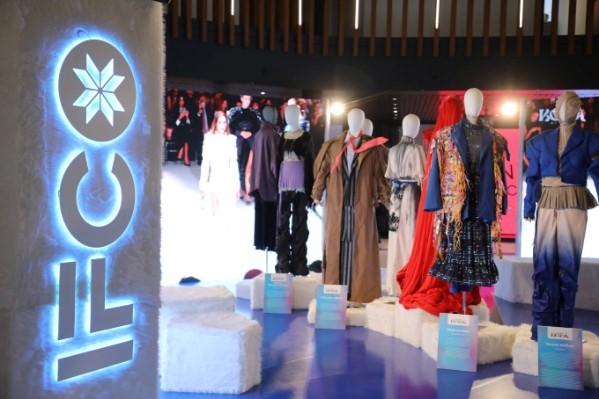
IFCO – Istanbul Fashion Connection, convened the global fashion industry in Istanbul again at its ninth edition.

Bringing Türkiye’s design vision together with its strong manufacturing power onto the global fashion stage, IFCO hosted over 450 exhibitors across 6 halls and welcomed 29,746 professional visitors from 134 countries in Istanbul.

With international buying delegations, strong brand participation, and a highly qualified visitor profile, IFCO once again proved its position as one of the most strategic B2B meeting points in the global fashion calendar.

From womenswear, menswear and kidswear to eveningwear and designer collections extending across denim, activewear, lingerie, hosiery, leather, footwear and accessories  IFCO presented a fully integrated and business-focused sourcing platform for global buyers

Enhanced by fashion shows, curated trend areas, seminars and expert talks, the exhibition delivered forward-looking insights on trend forecasting, digital transformation, sustainability and emerging market opportunities, creating a dynamic content experience alongside strong commercial engagement.

IFCO – Istanbul Fashion Connection, convened the global fashion industry in Istanbul again at its ninth edition.

Bringing Türkiye’s design vision together with its strong manufacturing power onto the global fashion stage, IFCO hosted over 450 exhibitors across 6 halls and welcomed 29,746 professional visitors from 134 countries in Istanbul.

With international buying delegations, strong brand participation, and a highly qualified visitor profile, IFCO once again proved its position as one of the most strategic B2B meeting points in the global fashion calendar.

From womenswear, menswear and kidswear to eveningwear and designer collections extending across denim, activewear, lingerie, hosiery, leather, footwear and accessories  IFCO presented a fully integrated and business-focused sourcing platform for global buyers

Enhanced by fashion shows, curated trend areas, seminars and expert talks, the exhibition delivered forward-looking insights on trend forecasting, digital transformation, sustainability and emerging market opportunities, creating a dynamic content experience alongside strong commercial engagement.

Source:

Istanbul Fashion Connection 

Federal procurement of American-made mission critical clothing, textiles and gear Deniece Platt, Pixabay (AI generated)
18.02.2026

Federal procurement of American-made mission critical clothing, textiles and gear

The National Council of Textile Organizations (NCTO), representing the full spectrum of U.S. textiles from fiber, yarn and fabrics to finished sewn products, applauded the launch of the House Berry Amendment Caucus. 

Statement from National Council of Textile Organizations (NCTO) President and CEO Kim Glas

“On behalf of the U.S textile industry, NCTO sincerely thanks Rep. Pat Harrigan (R-NC) and Rep. Don Davis (D-NC) for their leadership in co-chairing the new bipartisan House Berry Amendment Caucus, aimed at strengthening national security and the U.S. defense industrial supply chain through the federal procurement of American-made mission critical clothing, textiles and gear. 

“NCTO strongly supports this new caucus to promote and expand the Berry Amendment, a law requiring the Department of War (DOW) to buy textile and clothing products made with virtually 100% U.S. content and labor to support our U.S. warm industrial base. 

The National Council of Textile Organizations (NCTO), representing the full spectrum of U.S. textiles from fiber, yarn and fabrics to finished sewn products, applauded the launch of the House Berry Amendment Caucus. 

Statement from National Council of Textile Organizations (NCTO) President and CEO Kim Glas

“On behalf of the U.S textile industry, NCTO sincerely thanks Rep. Pat Harrigan (R-NC) and Rep. Don Davis (D-NC) for their leadership in co-chairing the new bipartisan House Berry Amendment Caucus, aimed at strengthening national security and the U.S. defense industrial supply chain through the federal procurement of American-made mission critical clothing, textiles and gear. 

“NCTO strongly supports this new caucus to promote and expand the Berry Amendment, a law requiring the Department of War (DOW) to buy textile and clothing products made with virtually 100% U.S. content and labor to support our U.S. warm industrial base. 

“The U.S. textile industry provides $1.8 billion of high-tech and functional components for vital uniforms and equipment for our armed forces each year. The Department of War estimates that over 8,000 different textile items are purchased for use by the U.S. military—and over 30,000 line items when individual sizes are considered.

“It is vital to America’s national security that the U.S. military maintain the ability to source high-quality, innovative textile materials, apparel, and personal equipment from a vibrant U.S. textile industrial base and key to this goal is defending and strengthening the Berry Amendment.

“We look forward to working with the new caucus’ leadership and our industry partners to focus congressional efforts on preserving the Berry Amendment and expanding opportunities for U.S. textile manufacturers, safeguarding domestic supply chains, and ensuring our troops continue to receive innovative, high-quality American-made products.”

Jeanologia urges industry to accelerate PP Spray phase-out Graphic Jeanologia
17.02.2026

Jeanologia urges industry to accelerate PP Spray phase-out

Since 2015, Jeanologia has set the standard with laser, Light Bright and G2 Ozone technologies, achieving authentic vintage effects in denim without chemical spraying.

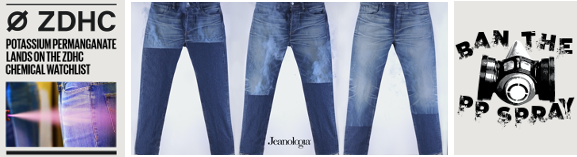
Potassium permanganate has officially entered the Chemical Watchlist of the ZDHC Foundation, signaling increased scrutiny and potential phase-out of one of the most hazardous chemicals still used in denim finishing. The inclusion confirms an industry shift that Jeanologia anticipated more than a decade ago.

For years, Jeanologia has called for the elimination of PP spray, warning about its impact on worker health, operational safety and the environment. Now, the industry is formally acknowledging what has been evident on factory floors worldwide.

PP spray is commonly used to create localized vintage effects in denim, but it exposes operators to chemical micro-particles and presents serious occupational risks. Despite growing awareness and available alternatives, this practice continues to be used in parts of the industry. According to Jeanologia, millions of workers globally are still affected by this process.

Since 2015, Jeanologia has set the standard with laser, Light Bright and G2 Ozone technologies, achieving authentic vintage effects in denim without chemical spraying.

Potassium permanganate has officially entered the Chemical Watchlist of the ZDHC Foundation, signaling increased scrutiny and potential phase-out of one of the most hazardous chemicals still used in denim finishing. The inclusion confirms an industry shift that Jeanologia anticipated more than a decade ago.

For years, Jeanologia has called for the elimination of PP spray, warning about its impact on worker health, operational safety and the environment. Now, the industry is formally acknowledging what has been evident on factory floors worldwide.

PP spray is commonly used to create localized vintage effects in denim, but it exposes operators to chemical micro-particles and presents serious occupational risks. Despite growing awareness and available alternatives, this practice continues to be used in parts of the industry. According to Jeanologia, millions of workers globally are still affected by this process.

Jeanologia eliminated the need for PP spray in 2015, becoming the first technology provider to offer a scalable industrial alternative through laser-based finishing. Today, the company replaces PP spray through its laser technology with Light Bright tool and combined with G2 Ozone technology, delivering authentic vintage effects without chemical spraying. The solution offers full digital control, safer working conditions and reliable industrial performance.

This approach is reinforced by Jeanologia’s Environmental Impact Measuring (EIM) platform. In its Innovations and Challenges in Denim Finishing 2024 Report, EIM identifies potassium permanganate as one of the remaining high-risk processes in garment finishing and highlights the urgent need for safer technologies, reinforcing laser-based solutions as a low-impact alternative.

Over the past decade, Jeanologia has progressively replaced the most hazardous denim finishing processes with eco-efficient technologies, becoming the first company to eliminate sandblasting and to advance alternatives to stone washing, manual scraping and PP spray. Today, its laser and G2 Ozone technologies are implemented worldwide, enabling denim brands to achieve the same aesthetic results while improving worker safety, reducing chemical use and lowering water consumption, with measurable impact across global production.

As transparency requirements, ESG reporting frameworks and chemical management standards continue to evolve, early adoption of safer technologies is increasingly becoming a competitive advantage. Jeanologia calls on brands, laundries and manufacturers to accelerate the transition toward chemical-free finishing. The technology exists.

Kraig Biocraft Laboratories Photo Kraig Biocraft Laboratories
17.02.2026

Kraig Activates First Wave of 2026 Production Program

Kraig Biocraft Laboratories, Inc., a global leader in spider silk technology*, announced that its 2026 production plan has officially moved from strategy to execution.
 
The Company has now moved bio-material to incubation, getting a jumpstart on its March production plan and formally initiating its multi-ton spider silk scale-up initiative.
 
This milestone follows Kraig’s recently announced 2026 production schedule. This aggressive plan is set to achieve sustained monthly production of recombinant spider silk cocoons at unprecedented commercial volumes. With the release of the first wave of production materials now complete, Kraig Labs has activated its expanded manufacturing pipeline and commenced field-level implementation.
 
"This is the moment where planning becomes production," said Kim Thompson, Kraig Labs CEO and Founder. "Our 2026 roadmap was built around disciplined expansion, operational efficiency, and multi-ton output. Today, that roadmap is in motion. Bio-materials have recently been moved to incubation in preparation for the March production run."
 

Kraig Biocraft Laboratories, Inc., a global leader in spider silk technology*, announced that its 2026 production plan has officially moved from strategy to execution.
 
The Company has now moved bio-material to incubation, getting a jumpstart on its March production plan and formally initiating its multi-ton spider silk scale-up initiative.
 
This milestone follows Kraig’s recently announced 2026 production schedule. This aggressive plan is set to achieve sustained monthly production of recombinant spider silk cocoons at unprecedented commercial volumes. With the release of the first wave of production materials now complete, Kraig Labs has activated its expanded manufacturing pipeline and commenced field-level implementation.
 
"This is the moment where planning becomes production," said Kim Thompson, Kraig Labs CEO and Founder. "Our 2026 roadmap was built around disciplined expansion, operational efficiency, and multi-ton output. Today, that roadmap is in motion. Bio-materials have recently been moved to incubation in preparation for the March production run."
 
The March production run represents the first major deployment under the Company's 2026 plan. The initiative is designed to drive consistent output at levels never before seen, while reinforcing quality control, supply chain stability, and downstream processing capacity.
 
By initiating this production cycle, Kraig Labs is delivering on its commitment, creating the world's first reliable, repeatable, and scalable commercial spider silk manufacturing. The Company's vertically integrated model enables rapid deployment of materials, controlled expansion of silkworm rearing operations, and alignment with future customer demand.
 
"Our focus is clear," Thompson continued. "Execution. Volume. Commercialization. Every production cycle strengthens our position as the global leader in recombinant spider silk."
 
Kraig Labs expects this March run to set the pace for subsequent production cycles throughout 2026, forming the foundation for sustained monthly metric-ton-level spider silk production.

Source:

Kraig Biocraft Laboratories

12.02.2026

Rieter: Price increase for products and systems from March

Response to higher material costs worldwide: Global political and economic developments have been leading to rising raw material and energy costs for some time. The textile machinery industry is also affected by this trend. Rieter machines and components consist to a large extent of steel, copper, aluminum and electronics. These materials in particular have seen higher demand and higher prices in recent months.

Rieter has not yet passed on the additional costs to its customers. Since the price trend is proving to be long-term, the company will adjust its prices from March 2026.

Response to higher material costs worldwide: Global political and economic developments have been leading to rising raw material and energy costs for some time. The textile machinery industry is also affected by this trend. Rieter machines and components consist to a large extent of steel, copper, aluminum and electronics. These materials in particular have seen higher demand and higher prices in recent months.

Rieter has not yet passed on the additional costs to its customers. Since the price trend is proving to be long-term, the company will adjust its prices from March 2026.

More information:
Rieter AG Rieter price increases
Source:

Rieter AG

Stretching Circularity is a collaborative project initiated by Fashion for Good dedicated to accelerating the adoption of lower-impact elastane alternatives that are compatible with circular textile systems. By validating bio-based and recycled elastane solutions through pilot-scale testing and demonstrator garments, the initiative aims to remove one of the most significant technical barriers to a circular textile economy. Source: Canva
Stretching Circularity is a collaborative project initiated by Fashion for Good dedicated to accelerating the adoption of lower-impact elastane alternatives that are compatible with circular textile systems. By validating bio-based and recycled elastane solutions through pilot-scale testing and demonstrator garments, the initiative aims to remove one of the most significant technical barriers to a circular textile economy.
12.02.2026

The Future Of Stretch: New Project To Validate Bio-based And Recycled Elastane

Stretching Circularity is a collaborative project initiated by Fashion for Good dedicated to accelerating the adoption of lower-impact elastane alternatives that are compatible with circular textile systems. By validating bio-based and recycled elastane solutions through pilot-scale testing and demonstrator garments, the initiative aims to remove one of the most significant technical barriers to a circular textile economy.

Present in approximately 80% of all clothing, elastane is a material added in varying concentrations (typically from 1–5% by weight in cotton or wool garments to up to 20% in polyester or polyamide garments) to provide stretch and comfort. This fossil-based material creates two critical sustainability challenges:

Stretching Circularity is a collaborative project initiated by Fashion for Good dedicated to accelerating the adoption of lower-impact elastane alternatives that are compatible with circular textile systems. By validating bio-based and recycled elastane solutions through pilot-scale testing and demonstrator garments, the initiative aims to remove one of the most significant technical barriers to a circular textile economy.

Present in approximately 80% of all clothing, elastane is a material added in varying concentrations (typically from 1–5% by weight in cotton or wool garments to up to 20% in polyester or polyamide garments) to provide stretch and comfort. This fossil-based material creates two critical sustainability challenges:

  • First, it contributes to carbon emissions and non-renewable resource consumption across the industry. 
  • Second (and more critically for circularity), even minimal concentrations of elastane act as a “contaminant” in textile recycling feedstocks, compromising fibre-to-fibre recycling of high-volume fibres like polyester and cotton. This effectively blocks circularity for the vast majority of clothing, leaving the industry with limited options beyond downcycling or landfill.

Stretching Circularity is a project initiated by Fashion for Good which tackles this challenge through two key workstreams. One workstream focuses on testing next-generation elastane materials made from alternative inputs, including bio-based materials and other feedstocks. This phase includes the creation of “demonstrator” garments, specifically a technical t-shirt (with 10% elastane) and a non-technical t-shirt (with 2% elastane). The other focuses on testing regenerated elastane made through emerging recycling innovations. Both workstreams follow a pilot-scale validation approach to generate comparable data on performance, impact, economical feasibility and scalability.

Driving this work is a powerful coalition of industry stakeholders representing the entire value chain. The consortium includes Fashion for Good partners Levi Strauss & Co (Beyond Yoga), On, Paradise Textiles, Positive Materials, and Reformation, with Ralph Lauren Corporation as an Advisor. Supported by ecosystem experts like Materiom and the Ellen MacArthur Foundation, the group will support knowledge sharing across the consortium to identify gaps and generate comparative data to de-risk the adoption of these circular solutions for the wider industry. Stretching Circularity operates under a structured due diligence and validation framework to assess if alternative materials are not just conceptually sound but also meet the performance standards of conventional elastane. 

“Lower-impact elastane solutions exist, but they lack the pilot-scale validation brands need to scale them confidently,” Katrin Ley, Fashion for Good Managing Director. “This initiative seeks to provide that missing data, turning a well-known recycling “contaminant” into a functional component of a circular supply chain.”

“Elastane is one of the most overlooked blockers to true circularity in fashion: it’s everywhere and yet there is a significant challenge to recovering it at scale. Stretching Circularity is about tackling that problem at the root and proving that lower-impact stretch materials and new recycling pathways can meet real performance and design standards.” Carrie Freiman Parry, Senior Director of Sustainability at Reformation

Source:

Fashion for Good

12.02.2026

Pay Equity in Türkiye’s Fashion Manufacturing Sector?

Global Fashion Agenda (GFA) has published a new insights paper, Unpacking Pay Equity in Fashion: Türkiye, examining the drivers of gender pay disparities in one of Europe’s most important fashion sourcing hubs. Launched during a closed-door industry roundtable at the OECD Forum on Due Diligence in the Garment and Footwear Sector in Paris, the insights paper explores how structural factors, including occupational segregation, care responsibilities, and limited data visibility, continue to shape pay outcomes for women in Türkiye’s textile and apparel sector, while highlighting opportunities for coordinated action across policy makers, brands, other buyers, and suppliers.

Global Fashion Agenda (GFA) has published a new insights paper, Unpacking Pay Equity in Fashion: Türkiye, examining the drivers of gender pay disparities in one of Europe’s most important fashion sourcing hubs. Launched during a closed-door industry roundtable at the OECD Forum on Due Diligence in the Garment and Footwear Sector in Paris, the insights paper explores how structural factors, including occupational segregation, care responsibilities, and limited data visibility, continue to shape pay outcomes for women in Türkiye’s textile and apparel sector, while highlighting opportunities for coordinated action across policy makers, brands, other buyers, and suppliers.

The insights paper draws on a facility-level survey of 43 Turkish textile and apparel manufacturers, interviews with trade unions and worker associations, and input from social sustainability experts including the Social & Labor Convergence Program (SLCP), the Fair Labor Association (FLA), and the Anker Research Institute (ARI). The findings offer a nuanced picture of pay equity in a sector that employs nearly one million formally registered workers and contributes approximately 7.8% of Türkiye’s national GDP.

Key Findings:
Unpacking Pay Equity in Fashion: Türkiye highlights several key insights into pay equity within the Turkish fashion manufacturing industry:

  • Türkiye’s gender pay gap is estimated at between 15.6% and 17.4%. The EU average is around 12%. The insights paper cautions, however, that headline pay gap figures alone can mask deeper structural inequalities within the sector.
  • Gender pay disparities are driven largely by structural factors rather than unequal pay for the same work, including occupational segregation, differences in career progression opportunities, cultural norms, access to training, and the distribution of care responsibilities.
  • Women remain concentrated in lower-paid production, sewing and quality control roles, while men are more prevalent in higher-paid technical and supervisory positions – a key driver of persistent pay inequalities.
  • The insights paper finds that limited measurement and disclosure of gender-disaggregated wage data continues to hinder companies’ ability to identify where inequality sits – and therefore to address it effectively.
  • Ongoing economic pressures, including inflation and rising production costs, have placed sustained strain on the sector. Despite this, many manufacturers are making concerted efforts to maintain formal employment, comply with labour laws and protect jobs, demonstrating resilience in challenging conditions.

Closing gender pay gaps is not only a social imperative but a business one. Improving pay equity can strengthen workforce morale, retention and long-term resilience, while supporting alignment with evolving EU regulatory and buyer expectations. As EU pay transparency and due diligence requirements increasingly affect global supply chains, brands sourcing from Türkiye require greater visibility into wage practices across their supply chains.

Federica Marchionni, CEO of Global Fashion Agenda, says: “Pay equity is fundamental to build a fair and resilient fashion industry. This research shows that gender pay gaps in Türkiye’s fashion manufacturing sector are real, but they are also addressable. As progress depends on coordinated actions – from policymakers strengthening enabling frameworks, to brands adopting responsible purchasing practices, and suppliers embedding transparent, gender-responsive wage systems that reflect the realities of women’s working lives – GFA will continue to accelerate impact by mobilising the industry toward a more resilient future.”

The insights paper outlines practical recommendations for policymakers, brands, other buyers and suppliers. These include expanding access to childcare and parental support, strengthening formal employment and oversight of subcontracting, improving gender-disaggregated pay reporting, adopting responsible purchasing practices, and investing in women’s skills development and leadership pathways. Collectively, these actions can strengthen Türkiye’s manufacturing base, enhance women’s economic participation, and advance the fashion industry towards a net-positive future in which pay equity is a lived reality.

Source:

Global Fashion Agenda

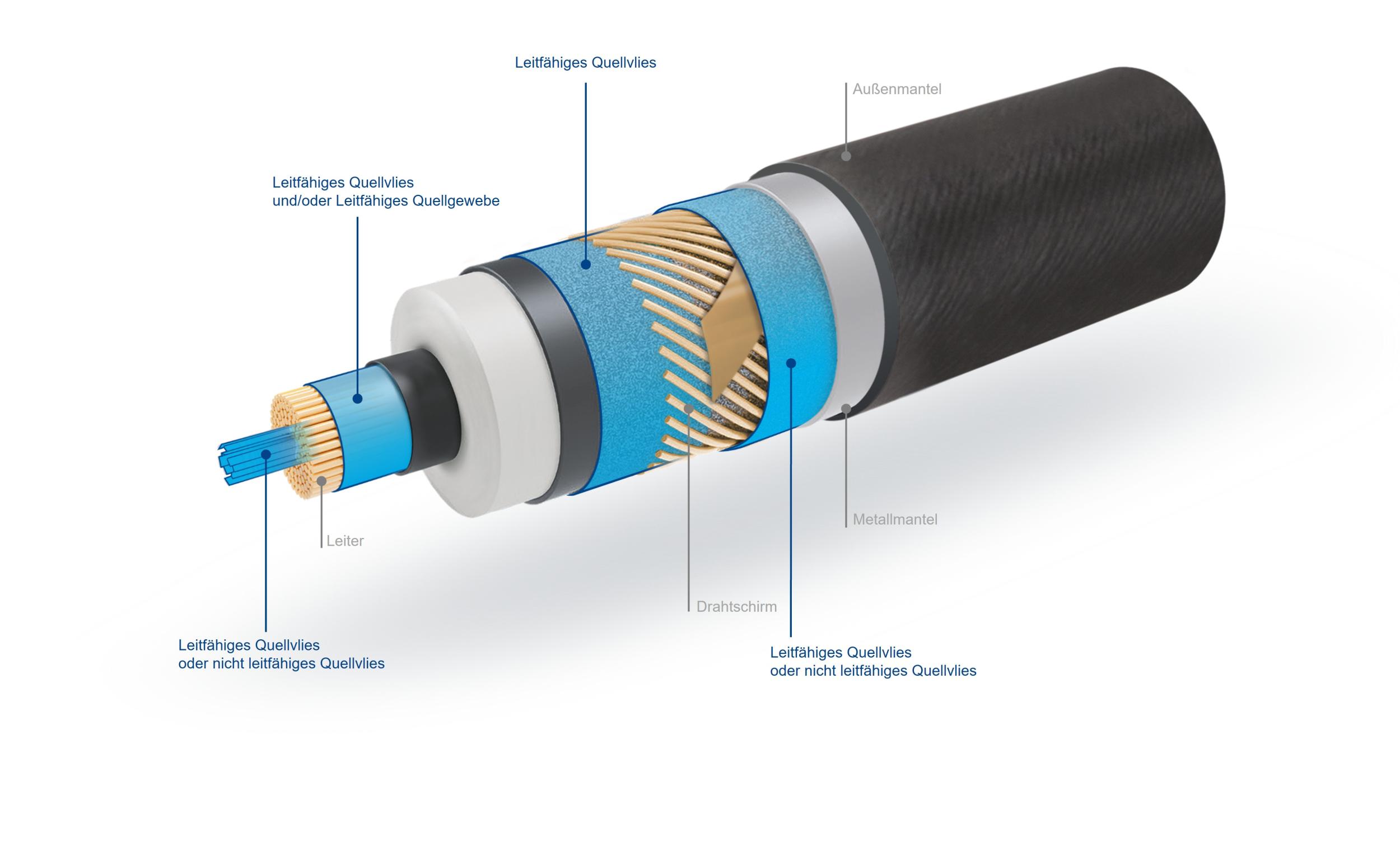
Example of applications for Freudenberg’s cable tapes in high voltage power cables. © Freudenberg Performance Materials
Example of applications for Freudenberg’s cable tapes in high voltage power cables.
12.02.2026

Freudenberg to return to Wire Düsseldorf in 2026

Freudenberg Performance Materials (Freudenberg) is returning to the Wire trade fair in Düsseldorf, Germany, after a gap of several years. The experts from one of the world's leading suppliers of technical textiles are looking forward to presenting their comprehensive range of high-performance tapes for power, data, and specialty cables to visitors at the trade fair and discussing solutions from April 13-17.

Freudenberg Performance Materials (Freudenberg) is returning to the Wire trade fair in Düsseldorf, Germany, after a gap of several years. The experts from one of the world's leading suppliers of technical textiles are looking forward to presenting their comprehensive range of high-performance tapes for power, data, and specialty cables to visitors at the trade fair and discussing solutions from April 13-17.

Freudenberg will showcase its high-performance cable tapes for all kinds of applications, including power, data, fiber optic, telecom, and special cables. Its cable tape product range for medium (MV) and high (HVDC and HVAC) voltage cables includes semi-conductive and non-conductive water-blocking tapes, binding tapes, bedding tapes, separation tapes, and special developments. These tapes are critical for protecting and maintaining the structural integrity of cables, in particular thanks to their outstanding swelling performance and conductivity. For submarine cables, Freudenberg offers tapes with exceptional water-blocking capabilities that are specifically designed to react instantly upon contact with water, swell into the fine spaces inside the submarine cable, and seal against moisture.

“Freudenberg is a globally preferred partner of cable manufacturers as regards the development, manufacture and supply of high-performance tapes for the most demanding power and data transmission applications. By returning to Wire in Düsseldorf, we are strengthening our ties within the industry and demonstrating our commitment to supporting cable manufacturers in meeting today's and tomorrow's energy and digital challenges” says Jochen Bialek, Head of Global Sales Cable & Electro.

Source:

Freudenberg Performance Materials

12.02.2026

NCTO: “Block the Secure Revenue Clearance Channel Act”

National Council of Textile Organizations (NCTO) President and CEO Kim Glas sent a letter House leaders urging them to oppose and block the Secure Revenue Clearance Channel Act, a bill that would essentially reopen a dangerous trade loophole and ultimately harm U.S. textile manufacturers.

“Last year through bipartisan action, Congress voted overwhelmingly to end de minimis after identifying the substantial harms it perpetrated,” Glas states in the letter to Speaker of the House Mike Johnson (D-LA) and Minority Leader Hakeem Jeffries (D-NY). “The House China Select Committee determined in 2023 that Chinese e-commerce platforms were flooding the U.S. with billions of dollars’ worth of goods but had paid $0 in import duties, while American companies comparatively spent millions. Additionally, these platforms were found lacking in due diligence mechanisms to verify that products were not tainted by forced labor in China.”

National Council of Textile Organizations (NCTO) President and CEO Kim Glas sent a letter House leaders urging them to oppose and block the Secure Revenue Clearance Channel Act, a bill that would essentially reopen a dangerous trade loophole and ultimately harm U.S. textile manufacturers.

“Last year through bipartisan action, Congress voted overwhelmingly to end de minimis after identifying the substantial harms it perpetrated,” Glas states in the letter to Speaker of the House Mike Johnson (D-LA) and Minority Leader Hakeem Jeffries (D-NY). “The House China Select Committee determined in 2023 that Chinese e-commerce platforms were flooding the U.S. with billions of dollars’ worth of goods but had paid $0 in import duties, while American companies comparatively spent millions. Additionally, these platforms were found lacking in due diligence mechanisms to verify that products were not tainted by forced labor in China.”

Last year, Congress passed bipartisan legislation codifying the end of de minimis, effective July 2027. The Trump administration also took action to close de minimis to all commercial shipments globally through executive order, which took effect at the end of August 2025.

“As a result, the volume of small package deliveries has dramatically decreased, duty collections are up, and American consumers and workers are better off,” the letter states.

“Despite clear action from Congress and the administration on the negative impact of express shipment programs for ‘small value’ packages at U.S. ports, some still want to provide duty relief to foreign importers while requiring less information on packages valued at up to $600 — making enforcement impossible and rewarding offshore producers,” the letter continues. “De minimis was labeled ‘China’s backdoor to the U.S.,’ facilitated by an environment where goods were cleared on manifest, packages were not properly inspected or levied duties, and the risk posed was extremely high. The Secure Revenue Clearance Channel Act would recreate many of these same problems, with China being the biggest winner.”

Source:

NCTO

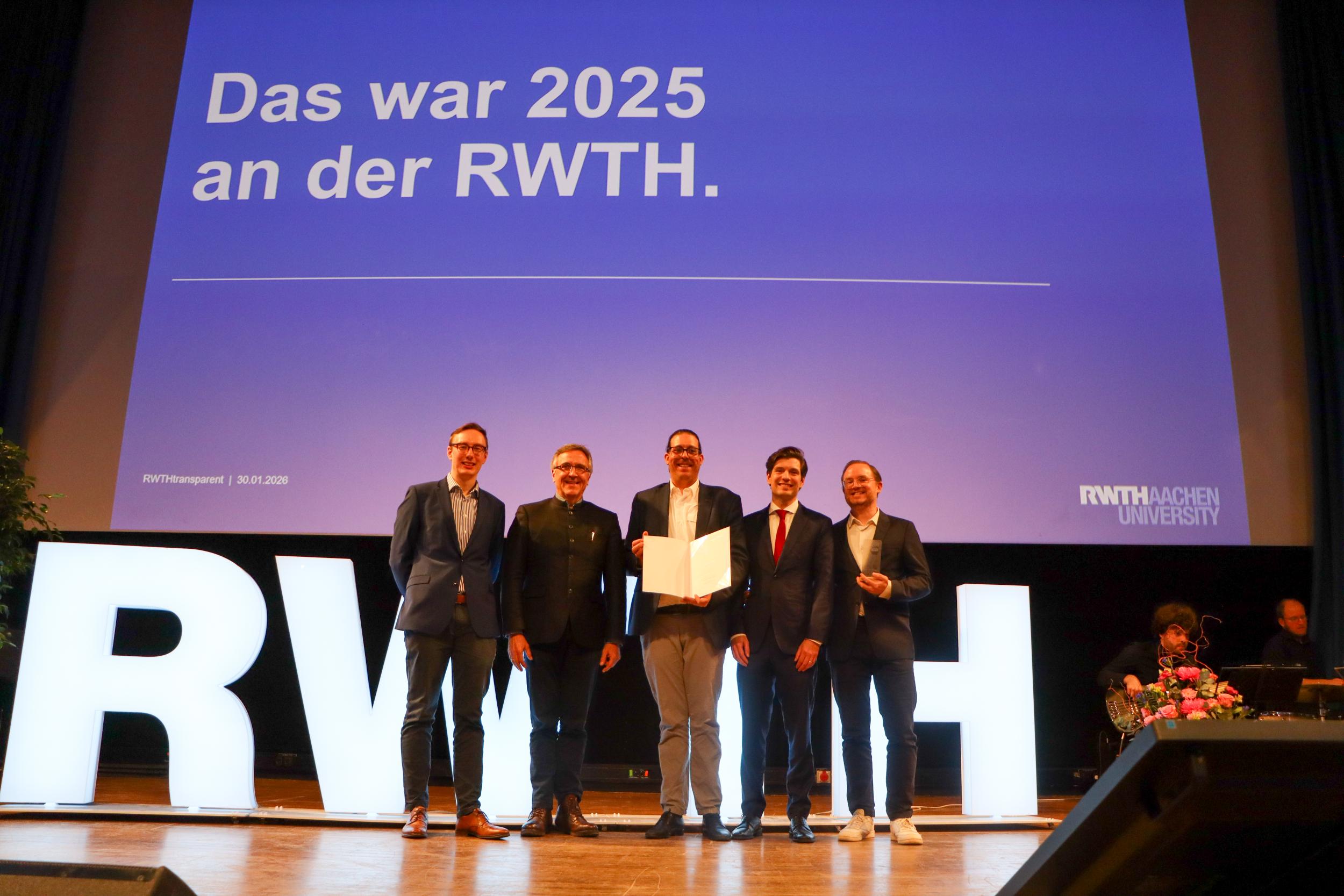
The winners with the award (from left to right: Maximilian Mohr, ITA Director Professor Dr Thomas Gries, Dr Sascha Schriever, Dr Christian Schwotzer, Dr Jens Hofer) Copyright: RWTH Innovation GmbH
The winners with the award (from left to right: Maximilian Mohr, ITA Director Professor Dr Thomas Gries, Dr Sascha Schriever, Dr Christian Schwotzer, Dr Jens Hofer)
12.02.2026

Solid Air Dynamics wins second place at RWTH Innovation Award

On 30 January, RWTH spin-off Solid Air Dynamics was awarded second place in the RWTH Innovation Awards for its research in the field of aerogel fibres. Manufactured from renewable raw materials, aerogel fibres offer outstanding thermal insulation, are extremely lightweight and completely biodegradable, and can consist of over 90 per cent air.

The founders, Dr Sascha Schriever, Dr Jens Hofer and Maximilian Mohr from Institut für Textiltechnik (ITA) and Dr Christian Schwotzer from Department for Industrial Furnace and Heat Engineering (IOB) of RWTH Aachen University, want to revolutionise the market in the future with high-performance materials for sports and outdoor clothing or the mobility and construction sectors.

The award ceremony took place during the annual RWTHtransparent event in Aachen. The top three places were honoured with the RWTH Innovation Award. The RWTH Innovation Award recognises contributions that demonstrate particular innovation and charisma in the Aachen region.

On 30 January, RWTH spin-off Solid Air Dynamics was awarded second place in the RWTH Innovation Awards for its research in the field of aerogel fibres. Manufactured from renewable raw materials, aerogel fibres offer outstanding thermal insulation, are extremely lightweight and completely biodegradable, and can consist of over 90 per cent air.

The founders, Dr Sascha Schriever, Dr Jens Hofer and Maximilian Mohr from Institut für Textiltechnik (ITA) and Dr Christian Schwotzer from Department for Industrial Furnace and Heat Engineering (IOB) of RWTH Aachen University, want to revolutionise the market in the future with high-performance materials for sports and outdoor clothing or the mobility and construction sectors.

The award ceremony took place during the annual RWTHtransparent event in Aachen. The top three places were honoured with the RWTH Innovation Award. The RWTH Innovation Award recognises contributions that demonstrate particular innovation and charisma in the Aachen region.

11.02.2026

U.S. Textile Industry Applauds Legislation Aimed at Ending Harmful Customs Rule

The National Council of Textile Organizations (NCTO), which represents the full U.S. textile supply chain from fiber and yarn to fabrics and finished sewn products, lauds a bill introduced today aimed at ending the U.S. Customs & Border Protection’s (CBP) “first sale” rule.

National Council of Textile Organizations President and CEO Kim Glas
“NCTO and the U.S. textile industry strongly support the Last Sale Valuation Act, a bill that would eliminate a harmful CBP rule that significantly lowers duties paid by importers on textile and apparel goods and disadvantages U.S. textile manufacturers in favor of countries that often employ predatory trade practices and fail to provide reciprocal market access.

“We sincerely thank Sens. Bill Cassidy (R-LA) and Sheldon Whitehouse (D-RI) for their leadership on this bill. Closing this loophole will help level the playing field, bolster the U.S. textile industry, and spur more onshoring and investment here and in our Western Hemisphere.”

The National Council of Textile Organizations (NCTO), which represents the full U.S. textile supply chain from fiber and yarn to fabrics and finished sewn products, lauds a bill introduced today aimed at ending the U.S. Customs & Border Protection’s (CBP) “first sale” rule.

National Council of Textile Organizations President and CEO Kim Glas
“NCTO and the U.S. textile industry strongly support the Last Sale Valuation Act, a bill that would eliminate a harmful CBP rule that significantly lowers duties paid by importers on textile and apparel goods and disadvantages U.S. textile manufacturers in favor of countries that often employ predatory trade practices and fail to provide reciprocal market access.

“We sincerely thank Sens. Bill Cassidy (R-LA) and Sheldon Whitehouse (D-RI) for their leadership on this bill. Closing this loophole will help level the playing field, bolster the U.S. textile industry, and spur more onshoring and investment here and in our Western Hemisphere.”

Source:

National Council of Textile Organizations

European Industry Summit 2026 Photo via Euratex
11.02.2026

"Deliver emergency measures as Europe’s competitiveness crisis deepens"

EURATEX, representing the European textile and fashion industry, joins the Antwerp Declaration Community’s call on EU Heads of State and Government to adopt emergency measures that restore industrial competitiveness and deliver tangible results for Europe’s manufacturing base in 2026.

The call was made at the European Industry Summit, which brought together over 500 business leaders, 30 factory workers, and European Commission President Ursula von der Leyen, under the auspices of Belgian Prime Minister Bart De Wever. Senior EU leaders including German Chancellor Friedrich Merz, French President Emmanuel Macron, Dutch Prime Minister Dick Schoof, Austrian Chancellor Christian Stocker, as well as Executive Vice-Presidents Teresa Ribera and Stéphane Séjourné, and Commissioner Wopke Hoekstra, also joined the discussions — underscoring the growing political urgency of Europe’s industrial competitiveness crisis.

The European Industry Summit urged a coordinated package focused on:

EURATEX, representing the European textile and fashion industry, joins the Antwerp Declaration Community’s call on EU Heads of State and Government to adopt emergency measures that restore industrial competitiveness and deliver tangible results for Europe’s manufacturing base in 2026.

The call was made at the European Industry Summit, which brought together over 500 business leaders, 30 factory workers, and European Commission President Ursula von der Leyen, under the auspices of Belgian Prime Minister Bart De Wever. Senior EU leaders including German Chancellor Friedrich Merz, French President Emmanuel Macron, Dutch Prime Minister Dick Schoof, Austrian Chancellor Christian Stocker, as well as Executive Vice-Presidents Teresa Ribera and Stéphane Séjourné, and Commissioner Wopke Hoekstra, also joined the discussions — underscoring the growing political urgency of Europe’s industrial competitiveness crisis.

The European Industry Summit urged a coordinated package focused on:

  • Reducing energy and carbon costs to restore competitiveness; 
  • Ensuring fair competition through strong trade instruments and enforcement; 
  • Boosting demand for EU-made products, including via public procurement and transparency tools that empower buyers. 

With 200,000 companies and 1.3 million workers, Europe’s textile and fashion ecosystem produces not only apparel, but also technical textiles for medical, automotive and defence applications. Yet the sector is facing mounting pressure from high energy costs and millions of non-compliant, low-quality products entering the EU market via online platforms, undermining responsible manufacturers and accelerating closures across Member States. 

During his speech, EURATEX President Mario Jorge Machado underlined that Europe must move from announcements to delivery — with measures that directly strengthen demand for sustainable, high-quality products made in Europe, while ensuring imported products comply with EU rules. 

“Europe must regain confidence and pride in what it produces, and stimulate demand for high-quality and sustainable textiles made in Europe. This requires three concrete actions: public procurement that goes beyond price and reflects origin, sustainability and security for strategic textiles; increased transparency, feasible for SMEs; and effective market surveillance to stop non-compliant imports from dominating the market” affirmed the President.

11.02.2026

OCSiAl Strengthens Board with Former Goldman Sachs Partner

Luxembourg-based OCSiAl, the global leader in industrial synthesis of graphene nanotubes, announces the appointment of Antigone Loudiadis as a director.
 
An investment entity owned by Ms. Loudiadis made a substantial investment in OCSiAl at the end of 2025. This investment followed an investment earlier that year by a Luxembourg “club” of investors.
 
Ms. Loudiadis founded and led Rothesay Life, one of the UK’s leading pension insurers. Prior to the establishment of Rothesay Life, Ms. Loudiadis was a partner at Goldman Sachs International and cohead of its European Investment Banking Division. Over the course of her 30-year career as a senior financial executive, she led complex structured and M&A transactions and managed senior relationships with governments and multinational institutions.
 
“I am very excited to be joining OCSiAl,” said Ms. Loudiadis. “It’s cutting-edge deep tech that takes established industries—like tires and coatings—to a new level. But it also goes hand in hand with the next step in the development of EVs, data centers, AI, robotics and aerospace.”
 

Luxembourg-based OCSiAl, the global leader in industrial synthesis of graphene nanotubes, announces the appointment of Antigone Loudiadis as a director.
 
An investment entity owned by Ms. Loudiadis made a substantial investment in OCSiAl at the end of 2025. This investment followed an investment earlier that year by a Luxembourg “club” of investors.
 
Ms. Loudiadis founded and led Rothesay Life, one of the UK’s leading pension insurers. Prior to the establishment of Rothesay Life, Ms. Loudiadis was a partner at Goldman Sachs International and cohead of its European Investment Banking Division. Over the course of her 30-year career as a senior financial executive, she led complex structured and M&A transactions and managed senior relationships with governments and multinational institutions.
 
“I am very excited to be joining OCSiAl,” said Ms. Loudiadis. “It’s cutting-edge deep tech that takes established industries—like tires and coatings—to a new level. But it also goes hand in hand with the next step in the development of EVs, data centers, AI, robotics and aerospace.”
 
“I am delighted to have Addy on the board. She brings a rare combination of deep capital markets expertise and firsthand experience in building and governing large, capital-intensive businesses,” said Peter Cuneo, Chairman of the OCSiAl Board. “As OCSiAl accelerates its industrial scale-up and prepares for significantly larger long-term investments, her perspective will be invaluable in shaping our capital strategy, strengthening governance, and engaging with a broader base of global investors.”
 
As advanced materials increasingly take on strategic importance alongside energy and capital, OCSiAl’s current phase of industrial scale-up places the company at the center of this shift.

Source:

OCSiAl Global

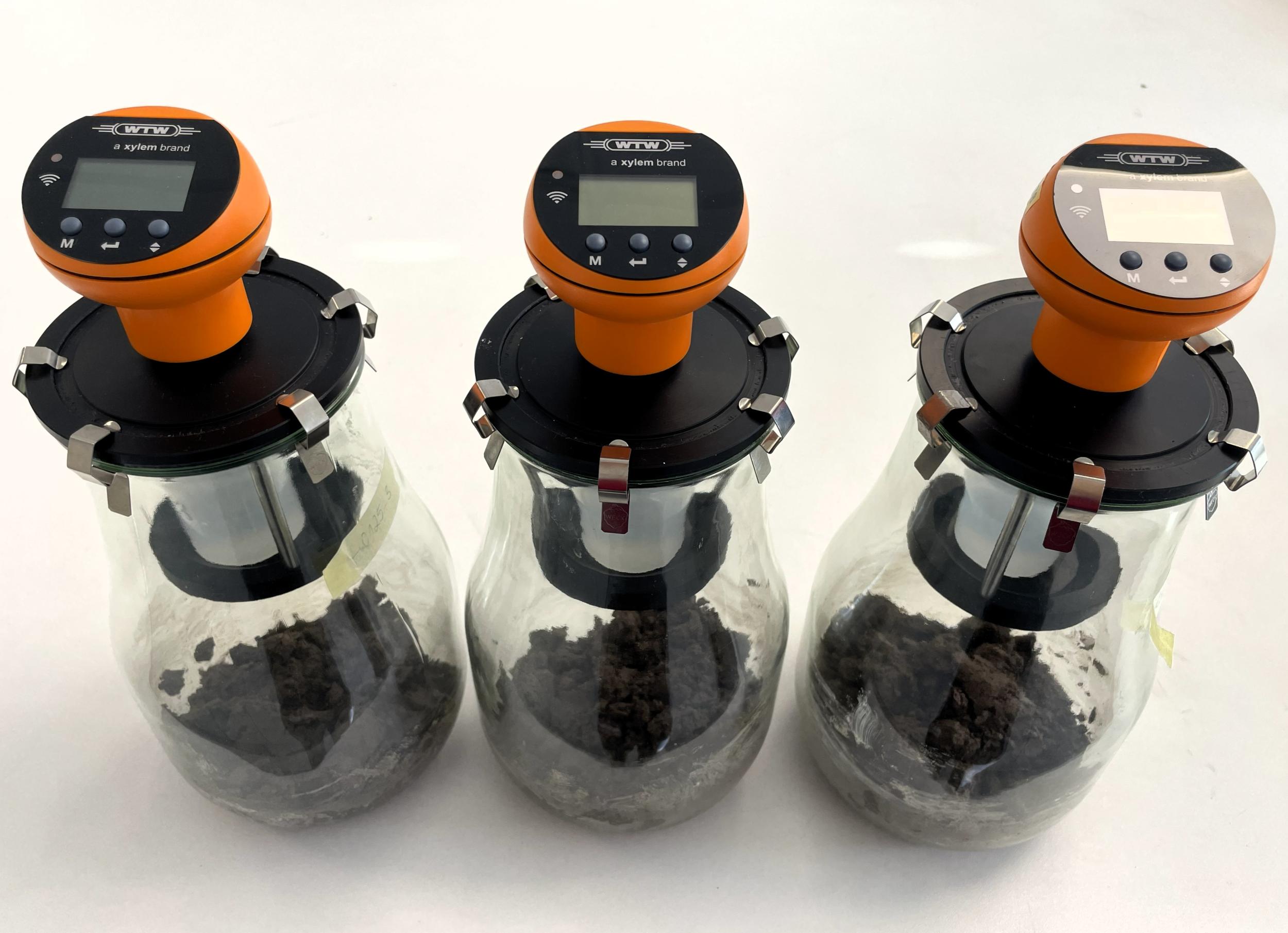
The respirometer system measures how much oxygen soil microorganisms consume during material degradation, allowing the rate and extent of biological breakdown to be determined. Foto (c) Hohenstein
The respirometer system measures how much oxygen soil microorganisms consume during material degradation, allowing the rate and extent of biological breakdown to be determined.
11.02.2026

New DIN SPEC assesses environmental impact of textile fragments in soil

Textile products made from synthetic fibres, finished fabrics or dyed materials release fibre fragments into the environment at every stage of their life cycle. With the new DIN SPEC 19296, Hohenstein has developed a standardised testing method to analyse how these fragments behave in soil under natural conditions. Until now, little was known about their environmental behaviour or potential ecological effects once released.

Holistic testing approach
DIN SPEC 19296 focuses on textile products and the fragments released through use, abrasion or disposal. Tests are conducted in standardised soil under defined climatic conditions over a period of up to 180 days.

Textile products made from synthetic fibres, finished fabrics or dyed materials release fibre fragments into the environment at every stage of their life cycle. With the new DIN SPEC 19296, Hohenstein has developed a standardised testing method to analyse how these fragments behave in soil under natural conditions. Until now, little was known about their environmental behaviour or potential ecological effects once released.

Holistic testing approach
DIN SPEC 19296 focuses on textile products and the fragments released through use, abrasion or disposal. Tests are conducted in standardised soil under defined climatic conditions over a period of up to 180 days.

The method combines several parameters: a respirometer system measures the oxygen consumption of microorganisms during degradation, enabling the biodegradability of textile fragments to be quantified. Plant growth tests using cress seeds assess potential effects on vegetation after degradation. In addition, earthworms are used as sensitive bioindicators to evaluate possible toxic effects. Survival rates and changes in body mass indicate whether degraded fragments or residues have a negative impact on soil organisms.
This integrated approach not only determines whether materials are biodegradable, but also whether their fragments could harm plants or soil organisms. 

Practical relevance and added value
“Textile fibres and fragments are released into the environment not only during washing, but also during everyday wear,” says Juliane Alberts, Project Manager at Hohenstein. “DIN SPEC 19296 allows us, for the first time, to assess under realistic conditions how different textile fragments behave in soil. It makes an invisible issue visible and supports the development of more sustainable textile products.”
The new DIN SPEC enables companies to compare textile products in terms of their potential environmental impact resulting from fibre release. It also provides a scientific basis for evaluating environmental claims such as “compostable”.

Jointly developed – publicly available
DIN SPEC 19296 was developed by Hohenstein in cooperation with industry partners and is publicly available. The results can help to better assess the actual environmental impacts of textile fiber loss, derive appropriate mitigation measures, and develop materials with lower environmentally harmful fiber shedding for the textile industry.

Source:

Hohenstein 

11.02.2026

One in five hazardous mixtures not reported to poison centres

ECHA Forum’s pilot enforcement project found that 19 % of the checked hazardous mixtures were not notified to poison centres.

Inspectors in 18 EU/EEA countries checked nearly 1 597 mixtures to verify whether industry complies with the obligation to notify hazardous mixtures to national poison centres. This is regulated under the EU’s Classification, Labelling and Packaging (CLP) Regulation. These notifications are crucial for poison centres to provide an adequate medical response in case of exposure to hazardous mixtures. Of all checked mixtures, 19 % were not notified to the authorities. 

Chris Van den hole, the Working Group Chair of this pilot project said: 
“Missing notifications of the necessary information to the poison centres undermine the effectiveness of emergency response. Therefore, inspectors take these findings very seriously and initiated numerous enforcement actions to bring companies to compliance.
“To improve the situation, we have listed recommendations for market actors, authorities and consumers in our report.”

ECHA Forum’s pilot enforcement project found that 19 % of the checked hazardous mixtures were not notified to poison centres.

Inspectors in 18 EU/EEA countries checked nearly 1 597 mixtures to verify whether industry complies with the obligation to notify hazardous mixtures to national poison centres. This is regulated under the EU’s Classification, Labelling and Packaging (CLP) Regulation. These notifications are crucial for poison centres to provide an adequate medical response in case of exposure to hazardous mixtures. Of all checked mixtures, 19 % were not notified to the authorities. 

Chris Van den hole, the Working Group Chair of this pilot project said: 
“Missing notifications of the necessary information to the poison centres undermine the effectiveness of emergency response. Therefore, inspectors take these findings very seriously and initiated numerous enforcement actions to bring companies to compliance.
“To improve the situation, we have listed recommendations for market actors, authorities and consumers in our report.”

The pilot project also aimed to raise the duty holders’ awareness of their legal obligations, for example, to place the Unique Formula Identifier (UFI) on the label of their products. The 16-digit, alphanumerical UFI code is a vital tool used by the poison centres to rapidly identify a mixture following an accidental poisoning. In 15 % of inspected mixtures, the required UFI was missing from the product label. 

Enforcement actions
Where non-compliance was detected, written advice was the most common enforcement measure applied by inspectors, followed by verbal advice, administrative orders, fines, and even criminal complaints. A number of cases were still under follow-up phase at time of reporting.

Background
According to the CLP Regulation, companies placing hazardous mixtures on the market are obliged to provide information about the composition of those mixtures to the appointed bodies. These bodies make this information available to poison centres so that they can give advice to the citizens or medical personnel in the event of an emergency. The duty to notify applies to mixtures that are classified for human health or physical hazards. For example, mixtures that are corrosive to skin, can cause eye damage or those that are explosive.

The names of companies that placed the controlled mixtures on the market and the products’ brand names were not reported for this project. The main purpose of the project was to harmonise and strengthen the national enforcement at the EU level.

Source:

European Chemicals Agency

Marco Bruno Photo: (c) Avgol
Marco Bruno
11.02.2026

Avgol: New Global R&D Head for the Nonwovens Business

Marco Bruno is the new Global R&D Head for the nonwovens business at Avgol, an Indorama Ventures company. With more than 20 years of experience in the textile and nonwovens industry, including extensive expertise in high technology textile substrates, the manager brings deep knowledge in nonwoven and textile-related applications. He is one of the inventors on more than 10 international patent filings covering advanced breathable functional materials and innovative material engineering developments in the nonwoven field.

At Indorama Ventures’ Avgol nonwovens business, Marco’s key goal is to further strengthen the company’s collaboration with up- and downstream partners across the value chain, ensuring that innovation translates into tangible, high value benefits for customers.

Being an active member of the company’s cross-business R&D community globally, he will also work closely with colleagues developing next-generation fibers for nonwovens and those focusing on the further enhancements of surfactants for technical and personal care applications.

Marco Bruno is the new Global R&D Head for the nonwovens business at Avgol, an Indorama Ventures company. With more than 20 years of experience in the textile and nonwovens industry, including extensive expertise in high technology textile substrates, the manager brings deep knowledge in nonwoven and textile-related applications. He is one of the inventors on more than 10 international patent filings covering advanced breathable functional materials and innovative material engineering developments in the nonwoven field.

At Indorama Ventures’ Avgol nonwovens business, Marco’s key goal is to further strengthen the company’s collaboration with up- and downstream partners across the value chain, ensuring that innovation translates into tangible, high value benefits for customers.

Being an active member of the company’s cross-business R&D community globally, he will also work closely with colleagues developing next-generation fibers for nonwovens and those focusing on the further enhancements of surfactants for technical and personal care applications.

As part of Indorama Ventures’ market-led innovation approach, Marco contributed to solutions that meet industry trends and help customers to respond to the needs of many end consumers in the baby diaper, adult incontinence and feminine care industry. 

The company’s latest efforts to develop a comprehensive portfolio of soft nonwovens addressing different customer needs will be presented at INDEX, taking place in May in Geneva, Switzerland.

Source:

Indorama Ventures Limited

Graphic Christian Dorn, Pixabay
10.02.2026

Mayer & Cie. acquired by Chinese owner family

On Monday, February 09, Xu Hongjie signed the purchase agreement for Mayer & Cie. The Chinese entrepreneur is thereby acquiring the company’s entire circular knitting business, including its subsidiaries in Vsetín (Czech Republic) and Jintan (China).

Xu Hongjie comes from a southern Chinese entrepreneurial family that has been running the company Huixing for almost 30 years. Huixing employs around 1,000 people and develops, manufactures and sells circular knitting machines worldwide. With machines under the Mayer & Cie. brand, Huixing aims to enter the premium segment in the future. As development and manufacturing are at the core of the Mayer & Cie. brand, the Albstadt site will continue to be of strategic importance going forward.
 
“We are very pleased that a future perspective has emerged for the company and for everything we associate with it,” says Wolfgang Müller. He has worked at Mayer & Cie. for many years as Head of Sales and, over the past weeks, has worked intensively with his colleagues and Xu Hongjie on a plan for the restart of Mayer & Cie.

On Monday, February 09, Xu Hongjie signed the purchase agreement for Mayer & Cie. The Chinese entrepreneur is thereby acquiring the company’s entire circular knitting business, including its subsidiaries in Vsetín (Czech Republic) and Jintan (China).

Xu Hongjie comes from a southern Chinese entrepreneurial family that has been running the company Huixing for almost 30 years. Huixing employs around 1,000 people and develops, manufactures and sells circular knitting machines worldwide. With machines under the Mayer & Cie. brand, Huixing aims to enter the premium segment in the future. As development and manufacturing are at the core of the Mayer & Cie. brand, the Albstadt site will continue to be of strategic importance going forward.
 
“We are very pleased that a future perspective has emerged for the company and for everything we associate with it,” says Wolfgang Müller. He has worked at Mayer & Cie. for many years as Head of Sales and, over the past weeks, has worked intensively with his colleagues and Xu Hongjie on a plan for the restart of Mayer & Cie.

The new owner returns his thanks and sincere gratitude to all the employees who supported him throughout the two-month negotiation process. He highlights Wolfgang Müller and Rainer Müller in particular: “They bestowed upon me courage and wisdom, serving as the ever-shining Big Dipper in the long night.”

Restart in several phases
For the company through which he intends to implement the restart of Mayer & Cie., Xu Hongjie has initially chosen the name “Blitzstart” (Lightning Start). The young Chinese entrepreneur does not (yet) speak German, but the 32-year-old did not choose the name by chance: In the coming weeks, the new owner plans to set up a small team to boost sales again and prepare the relaunch.

All employees will need to be rehired, as today’s signing of the purchase agreement marks the dissolution of the former Mayer & Cie. GmbH & Co. KG. For Xu Hongjie, a father of two, this means there will be no Chinese New Year celebrations this year. The holiday is celebrated on 17 February and is comparable in significance to Christmas. “There is a lot to do and very little time,” he says. “We need to make sure the company survives.”

The new owner’s goal is to gradually restart production in spring. In recent days, only assembly work has continued in the facilities on the outskirts of Albstadt-Tailfingen—machines already on order are scheduled to be delivered in the coming days—while production itself has come to a halt. Employees will also need to be brought back on board for this area.

Clear objectives
With Mayer & Cie. and its premium machines for single jersey, double jersey, interlock and jacquard, the Chinese textile entrepreneur intends to continue addressing textile innovators around the world. They should find “intelligent, reliable knitting technologies at Mayer & Cie.—developed in Albstadt, powered by our employees and designed for long-term use,” explains Xu Hongjie.
A customer-centric approach is particularly important to him: “We listen, we implement and we improve—and we do it fast,” says Xu. To underline what he means, he refers to his experience at the family-owned company Huixing: “If our customers have complaints about the machine we delivered, we make it better—once, twice, three times. And we do it as quickly as possible.”

This approach is part of Huixing’s recipe for success: Over the past three decades, the Chinese circular knitting machine manufacturer has established itself worldwide, particularly in the field of mattress ticking fabrics.

Production to remain in Albstadt
Xu Hongjie’s clearly stated goal is for Mayer & Cie. to remain what it is today: a German premium brand, developed and manufactured in Germany. “People love and trust brands with tradition,” says Xu Hongjie. “We are proud of the 120-year history and the technology within this company.”

At the same time, he emphasizes how important agility is to him—especially in development and in turning customer needs into solutions. “Our customers should see us as a partner.” Internal friction, for example caused by complex structures and lengthy processes, is not an option for him. “Simplify, digitize and renew” is the guiding principle.

From competitor to sister company
Huixing, headquartered in Shishi in China’s Fujian province, has evolved from a single machinery manufacturer into a diversified industrial group with a strong global footprint. With advanced manufacturing at its core, the group operates seven large-scale production sites, covers more than 300,000 square meters of modern facilities and has expanded its activities beyond textile machinery into areas such as software development, AI applications and industrial internet services.

With the acquisition of Mayer & Cie., Xu Hongjie is bringing together two strong names in circular knitting — a 120-year-old German premium brand and a fast-growing Chinese industrial group. Xu Hongjie describes the move as a landmark step guided by his “1+1=11” philosophy: not a simple addition, but a “chemical reaction, that unlocks synergy far beyond the expected”.

“We are honored to join Mayer, a great platform, and become part of this big family,” he says, stressing that the company’s core R&D and manufacturing base will remain in Albstadt, Germany. Xu Hongjie also underlines the cultural fit between the two organizations: “The more I have gotten to know the people at Mayer & Cie., the more I have felt like being part of a family — a family that knows its values and stands up for them.” He concludes: “In Chinese, Huixing means ‘connecting stars’. That is exactly what we aim to achieve with this step.”

The new owner
Xu Hongjie, aged 32, comes from the Chinese owner family behind Huixing, a family-run circular knitting machine manufacturer founded in 1998 with around 1,000 employees. He studied Business Management in China and the United Kingdom. This cross-cultural background enables him to understand the efficiency of Chinese manufacturing while respecting the technical rigor of German industry.

He has been actively involved in the family business for more than ten years, most recently focusing on sales and international business development. In addition to his entrepreneurial role, Xu serves as Chairman of the Shishi Young Entrepreneurs Association, where he is committed to supporting and mentoring the next generation of business leaders. He is also a member of the Quanzhou Municipal People’s Congress, representing the city of Shishi.

07.02.2026

Polyester-Based Front Trunk Solution for BEVs

As car manufacturers look to further reduce their carbon footprint, Autoneum has developed an innovative front trunk solution for battery electric vehicles (BEVs), made entirely from polyester-based textile. The Ultra-Silent Frunk offers significant weight reduction, improved acoustic and thermal insulation, and uses up to 70 percent recycled material, supporting sustainable and efficient vehicle design. Autoneum, global technology leader in acoustic and thermal management for vehicles, has already received orders for the new frunk from three major OEMs in Asia and Europe to be built in three BEV models. Series production for two BEVs has been underway in China and Germany since last year. 

As car manufacturers look to further reduce their carbon footprint, Autoneum has developed an innovative front trunk solution for battery electric vehicles (BEVs), made entirely from polyester-based textile. The Ultra-Silent Frunk offers significant weight reduction, improved acoustic and thermal insulation, and uses up to 70 percent recycled material, supporting sustainable and efficient vehicle design. Autoneum, global technology leader in acoustic and thermal management for vehicles, has already received orders for the new frunk from three major OEMs in Asia and Europe to be built in three BEV models. Series production for two BEVs has been underway in China and Germany since last year. 

The global market for BEVs is growing dynamically. With rising demand, the technical development of BEVs is also advancing rapidly. In the front of a BEV, for example, the absence of a combustion engine creates additional storage space under the hood. For this front trunk space, also known as the frunk, Autoneum has developed a fiber-based 100 percent polyester product. This component is designed for high sustainability and combines lightweight, high mechanical robustness, and ex-cellent acoustic and thermal properties in a functionally integrated design. 

Strong Customer Interest and Successful Series Production Underway 
"With the innovative frunk made from our environmentally friendly Ultra-Silent polyester textile tech-nology, we are supporting automotive manufacturers in their goal of minimizing the CO₂ footprint of their products by integrating sustainable and lightweight components," explains Cyro Rovath, Global Product Manager Exterior at Autoneum. „To date, we have already received four awards for our Ultra-Silent Frunk from three major OEMs in Europe and Asia to be built in three BEV models. Successful series production for two BEV models in China and Germany has been underway since 2025, and production for two other vehicles built in China will start within the next few months." 

In comparison to conventional frunk systems made of multiple solid plastic parts requiring complex assembly, Autoneum's Ultra-Silent Frunk is engineered as a single, lightweight, monomaterial com-ponent that can be adapted to the technical and aesthetic requirements of automotive manufactur-ers. The elimination of individual components streamlines both manufacturing and assembly pro-cesses while delivering weight reductions exceeding 50 percent relative to conventional solutions – translating to savings of up to 5 kilograms depending on geometry, number of components and part size. 

Waste-Free Production and Full Recyclability 
Moreover, the Ultra-Silent Frunk uses up to 70 percent recycled material, cutting greenhouse gas emissions by as much as 50 percent compared to injection molded frunks. Its waste-free produc-tion and full recyclability at the end-of-life support the industry’s shift toward a circular economy. The textile frunk also significantly enhances both acoustic and thermal performance. Its highly sound-absorbing Ultra-Silent material helps reduce noise both inside and outside the vehicle. Addi-tionally, outstanding thermal insulation protects temperature-sensitive items stored in the frunk. Tests conducted under controlled conditions show that ice placed in the Ultra-Silent Frunk stayed frozen for up to 28 hours at an ambient temperature of 30°C, significantly outperforming conven-tional plastic alternatives. Based on simulations, the Ultra-Silent Frunk offers the potential to im-prove pedestrian protection and passive safety compared to injection molded plastic solutions due to its higher plasticity. 

Autoneum’s innovative frunk design combines functional, lightweight construction with acoustic and thermal efficiency while also using sustainable materials. Through these efforts, Autoneum is help-ing create environmentally friendly, future-oriented solutions for the automotive industry.