From the Sector

Reset
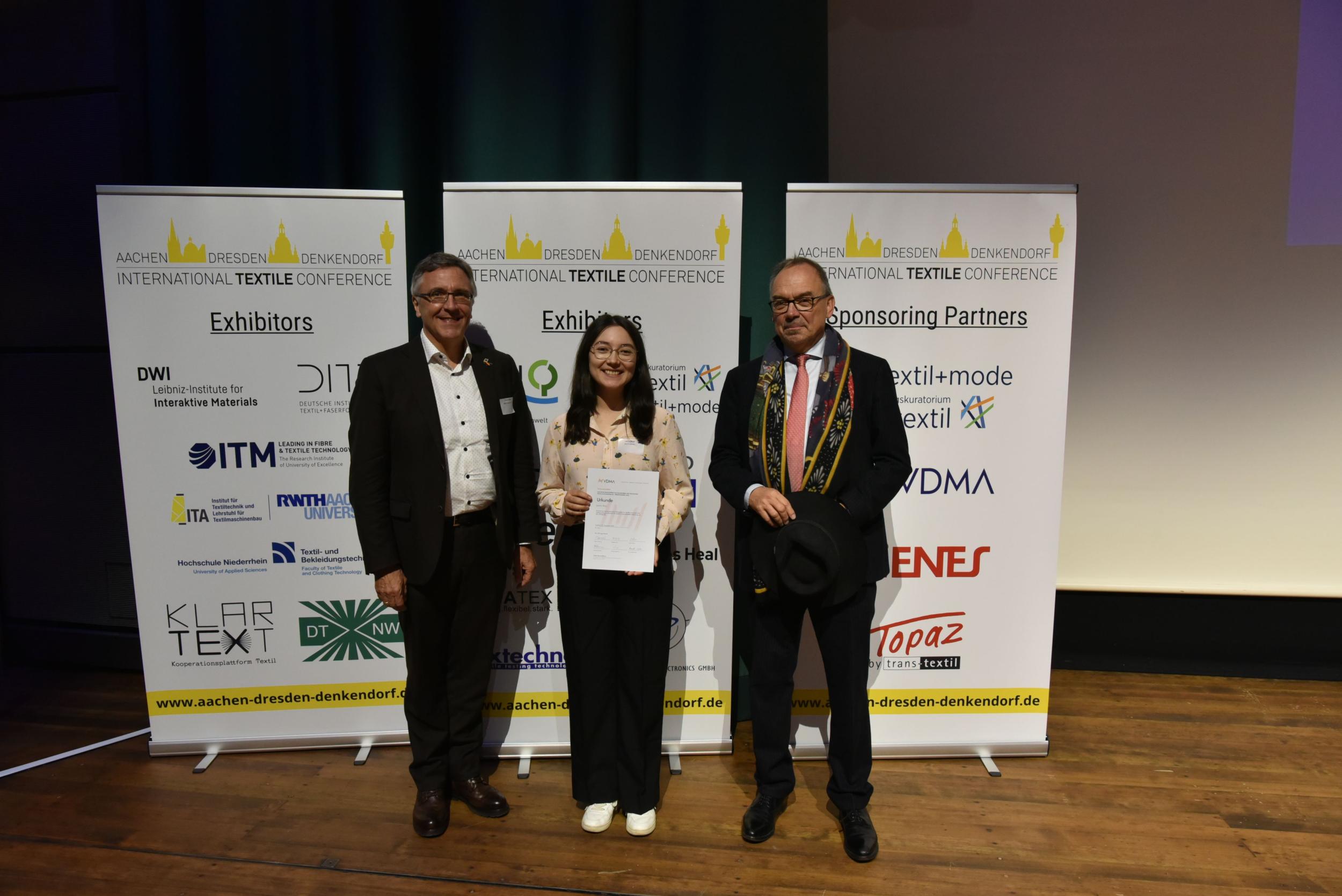
ITA Institute Director Professor Dr Thomas Gries, Janne Warnecke, and Peter D. Dornier (from left to right) (c) DITF
ITA Institute Director Professor Dr Thomas Gries, Janne Warnecke, and Peter D. Dornier (from left to right)
05.12.2025

Walter Reiners Foundation: Promotion and Sustainability Prizes awarded

ITA Master's student Janne Warnecke investigated tension differences over the fabric width in the weaving process and thereby contributed to quality assurance; ITA Bachelor's student Jasmin Roos found a basis for the development of recyclable yarns and textiles. For these developments, they were awarded the Walter Reiners Foundation's Promotion and Sustainability Prizes on 27 November. Peter D. Dornier, Chairman of the Walter Reiners Foundation, presented the awards at the Aachen-Dresden-Denkendorf International Textile Conference (ADD-ITC) in Aachen, Germany.

Thermoplastic elastomers as a recyclable alternative to elastane
The increasing importance of a circular economy for conserving resources and minimising negative environmental impacts requires innovative recycling concepts for textiles. The increasing use of elastane poses a particular challenge in textile recycling. Even small amounts of elastane cause difficulties in established recycling technologies such as thermomechanical recycling, for example by clogging filter media or decomposing into potentially toxic degradation products.

ITA Master's student Janne Warnecke investigated tension differences over the fabric width in the weaving process and thereby contributed to quality assurance; ITA Bachelor's student Jasmin Roos found a basis for the development of recyclable yarns and textiles. For these developments, they were awarded the Walter Reiners Foundation's Promotion and Sustainability Prizes on 27 November. Peter D. Dornier, Chairman of the Walter Reiners Foundation, presented the awards at the Aachen-Dresden-Denkendorf International Textile Conference (ADD-ITC) in Aachen, Germany.

Thermoplastic elastomers as a recyclable alternative to elastane
The increasing importance of a circular economy for conserving resources and minimising negative environmental impacts requires innovative recycling concepts for textiles. The increasing use of elastane poses a particular challenge in textile recycling. Even small amounts of elastane cause difficulties in established recycling technologies such as thermomechanical recycling, for example by clogging filter media or decomposing into potentially toxic degradation products.

Jasmin Roos won the Sustainability Award for her bachelor's thesis on the topic: ‘Potential of thermoplastic elastomers for thermomechanical textile recycling as an alternative to elastane: Experimental evaluation of PET/TPC blends’ with prize money of €3,000.

In her thesis, Jasmin Roos, supervised by ITA scientist Ricarda Wissel, took an in-depth look at the development of sustainable solutions for recycling elastic textiles. The innovative approach aims to replace conventional, non-recyclable elastane with melt-spun yarns made from thermoplastic copolyester elastomers (TPC). This can not only improve recyclability, but also contribute to reducing environmental impact, as harmful solvents can be dispensed with in yarn production.

The main objective of her work was to evaluate the suitability of blends of TPC and polyethylene terephthalate (PET) for joint thermomechanical recycling. Blend and melt spinning tests were carried out on a laboratory and pilot scale at the ITA facilities. Jasmin Roos succeeded in producing blends of different proportions of PET and TPC, based on typical elastane proportions in textiles, and successfully processing them into yarns on a melt spinning line – a crucial aspect for closed-loop recycling. The results of her bachelor's thesis thus form a promising basis for the development of recyclable elastic yarns and textiles.

Image: Edana
05.12.2025

European Commission imposes registration on imports of PET spunbond from China

On 15 September 2025, the European Commission opened an Anti-dumping (AD) investigation into imports of PET spunbond from China following a complaint by the EU industry (AD738). 

On 2 December 2025, the Commission made imports of PET spunbond from China subject to registration. This is an important milestone in the proceedings. 

It means that as of 3 December 2025 all users must register their imports with the customs authorities who are carefully monitoring the import flows from now on. 

Having made those imports subject to registration allows the Commission to impose definitive AD duties with retroactive effect. 

The EU industry welcomes this step and thanks the European Commission for its efforts to re-establish a level playing field on the EU market.

On 15 September 2025, the European Commission opened an Anti-dumping (AD) investigation into imports of PET spunbond from China following a complaint by the EU industry (AD738). 

On 2 December 2025, the Commission made imports of PET spunbond from China subject to registration. This is an important milestone in the proceedings. 

It means that as of 3 December 2025 all users must register their imports with the customs authorities who are carefully monitoring the import flows from now on. 

Having made those imports subject to registration allows the Commission to impose definitive AD duties with retroactive effect. 

The EU industry welcomes this step and thanks the European Commission for its efforts to re-establish a level playing field on the EU market.

Source:

Edana

Archroma & Fibre52®: Distribution partnership Graphic Archroma
05.12.2025

Archroma & Fibre52®: Distribution partnership

Archroma becomes the exclusive global distributor of Fibre52®’s patented chemistry—advancing a new standard in sustainable processing. Combined with Archroma’s AVITERA® SE dyes, the partnership delivers the industry’s most resource-efficient bleach-and-dye systems.
 
Archroma, a leading global specialty chemicals company committed to sustainable innovation, and Innovo Fiber LLC, owner of the patented Fibre52® system, announced an exclusive global distribution partnership to expand the reach of Fibre52®’s proven low-temperature, bleaching technology with innovative dyeing application to textile mills and brands worldwide.

When combined with Archroma’s AVITERA® SE reactive dye range, the collaboration brings forward a comprehensive system that reduces resource use across pretreatment and dyeing, setting a new benchmark for sustainable cotton and cotton/polyester production. Together, the technologies enable mills to reduce water use and CO₂ emissions by up to 50%, helping brands accelerate their progress toward carbon-reduction and sustainability targets.

Archroma becomes the exclusive global distributor of Fibre52®’s patented chemistry—advancing a new standard in sustainable processing. Combined with Archroma’s AVITERA® SE dyes, the partnership delivers the industry’s most resource-efficient bleach-and-dye systems.
 
Archroma, a leading global specialty chemicals company committed to sustainable innovation, and Innovo Fiber LLC, owner of the patented Fibre52® system, announced an exclusive global distribution partnership to expand the reach of Fibre52®’s proven low-temperature, bleaching technology with innovative dyeing application to textile mills and brands worldwide.

When combined with Archroma’s AVITERA® SE reactive dye range, the collaboration brings forward a comprehensive system that reduces resource use across pretreatment and dyeing, setting a new benchmark for sustainable cotton and cotton/polyester production. Together, the technologies enable mills to reduce water use and CO₂ emissions by up to 50%, helping brands accelerate their progress toward carbon-reduction and sustainability targets.

Under the agreement, Archroma will integrate Fibre52® into its global sales and technical network, expanding access to the ZDHC MRSL v3.1 and OEKO-TEX®-approved system for mills adopting high-performance, sustainable processing.

Revolutionizing Cotton and Cellulose Processing
Fibre52®’s breakthrough technology replaces harsh, high-temperature caustic bleaching with a gentle, low-temperature system that preserves the cotton fiber’s natural wax layer. The result is stronger, softer, more durable fabrics that reduce process weight loss by 2–4%, lower energy and water use, and deliver cost-neutral conversion—while minimizing the need for added softeners through the cotton’s naturally enhanced hand feel.

Already adopted by partner mills across multiple regions, the process delivers consistent results across all shades—including whites—and performs exceptionally on cotton/polyester blends, reducing time and water requirements. Combined with Archroma’s AVITERA® SE dyes, it enhances dye uptake, color depth, and overall resource efficiency—a next-generation solution for sustainable textile processing.

Engineered for versatility across modern bleaching and dyeing platforms, Fibre52® offers mills a single, low-impact system adaptable to a wide range of fabric constructions and process methods. Designed for cotton and effective with cotton/polyester, manmade cellulosics, and cotton-rich blends, the system also supports greater use of recycled cotton, advancing circular textile production.

By combining Archroma’s global reach and technical expertise with Fibre52®’s patented innovation, the partnership will accelerate the industry’s shift to a comprehensive bleach-and-dye system, unlocking new efficiencies and environmental benefits at scale. Together, Archroma and Fibre52® are setting a new benchmark for sustainable, high-performance cotton and blended fabric processing.

Executive Perspectives
“Our goal has always been to make sustainable cotton processing the global standard,” said Laura Thornquist, President of Innovo Fiber LLC, owner of Fibre52®. “Through our partnership with Archroma, we can now deliver that vision at scale—combining Fibre52®’s neutral-pH, caustic-free technology with Archroma’s AVITERA® SE dyes to create a complete, low-impact bleach-and-dye system. This is how the industry moves forward: practical innovation that improves performance, protects fibers, and dramatically reduces environmental impact.”

“This partnership is a strategic milestone that brings together Innovo Fiber’s groundbreaking technology and Archroma’s sustainability innovation. Together we are empowering the textile industry to achieve new levels of efficiency and environmental sustainability. This is a game-changer for the industry and we are excited to lead the charge,” said Dhirendra Gautam, VP Commercial, Archroma. “With Fibre52®, we now deliver a unique, industry-first solution, for cotton and its blends, as part of Archroma’s SUPER SYSTEMS+ portfolio.”

® Trademarks of Archroma registered in many countries.
Fibre52® is a registered trademark of Fibre52 (Innovo Fiber LLC).

Polybutylene succinate (PBS) film tape Photo Sächsisches Textilforschungsinstitut e.V. (STFI)
Polybutylene succinate (PBS) film tape
05.12.2025

Region of renewable raw materials: Central German Alliance for Bioplastics

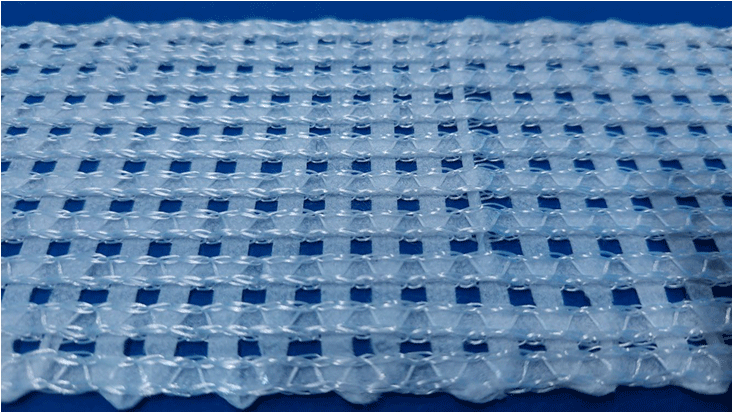
The development of sustainable plastic solutions is rapidly gaining importance in light of global environmental pollution, dwindling fossil resources and ambitious climate protection targets. As part of the regional alliance RUBIO, which brings together 18 partners from central Germany and the Berlin-Brandenburg area, the bio-based and biodegradable plastic polybutylene succinate (PBS) was comprehensively investigated, starting with the raw material, through the manufacturing process, to industrial application. The aim was to evaluate the potential of PBS as an environmentally friendly alternative to polyethylene and to create the technological basis for new sustainable value chains. As a partner in the alliance, STFI was able to demonstrate that the bioplastic PBS is suitable for textile processing using the example of a net for straw bales. 

The development of sustainable plastic solutions is rapidly gaining importance in light of global environmental pollution, dwindling fossil resources and ambitious climate protection targets. As part of the regional alliance RUBIO, which brings together 18 partners from central Germany and the Berlin-Brandenburg area, the bio-based and biodegradable plastic polybutylene succinate (PBS) was comprehensively investigated, starting with the raw material, through the manufacturing process, to industrial application. The aim was to evaluate the potential of PBS as an environmentally friendly alternative to polyethylene and to create the technological basis for new sustainable value chains. As a partner in the alliance, STFI was able to demonstrate that the bioplastic PBS is suitable for textile processing using the example of a net for straw bales. 

The starting point: bioplastics sought as a substitute for PE
Increasing reports of macro and microplastics everywhere on earth, the finite nature of fossil re-sources, EU climate protection targets, and the call for CO2 reduction compel all stakeholders, especially the plastics industry, to act promptly. Bio-based and simultaneously biodegradable plastics ap-pear to be valuable raw materials for many applications, ranging from the packaging industry to the textile sector and agriculture. The aim of this project was comprehensive investigation of polybutylene succinate (PBS) from raw material to its industrial applicability. In order to qualify the biopolymer as a substitute for polyethylene (PE), its material properties were tested and evaluated with regard to their suitability for a wide range of applications.

The textile processing of the bioplastic PBS
During project work, STFI main task was to explore opportunities and limits of technological processing of PBS materials (resins, film, nonwoven fabric, ribbons) into textile end products. Investigations were carried out on processing behavior of resins to nonwoven fabrics, followed by cutting processes into narrow ribbons, as well as studies on cutting and stretching PBS films and resins into ribbons. Subsequently, these ribbons were used to produce surfaces on knitting and weaving ma-chines. As a result, nonwoven fabrics, ribbons, and textile structures are available, which will be further optimized in subsequent projects. It has been possible to develop a knitted straw bale net that meets the requirements regarding mechanical properties of DLG (German Agricultural Society) for novel bio-based plastics.

Success and outlook
The results include spunbonded fabrics, ribbons and textile structures. A knitted straw bale net has been successfully developed that meets the requirements of the DLG (German Agricultural Society) for innovative bio-based plastics in terms of mechanical properties. 

The focus for the future is on optimising textile production processes for the bioplastic PBS. The RUBIO2Value project was launched in December and will focus on applications such as injection-moulded reusable packaging, textiles and geotextiles, but also disposable packaging in upcoming studies by the consortium. At STFI, established textile processes are being converted to sustainable and renewable raw materials in order to use recycled or biodegradable materials for sustainable production.

Source:

Sächsisches Textilforschungsinstitut e.V. (STFI) 

Trevira CS® at Heimtextil 2026 with "WE CARE" campaign (c) IVL
03.12.2025

Trevira CS® at Heimtextil 2026 with "WE CARE" campaign

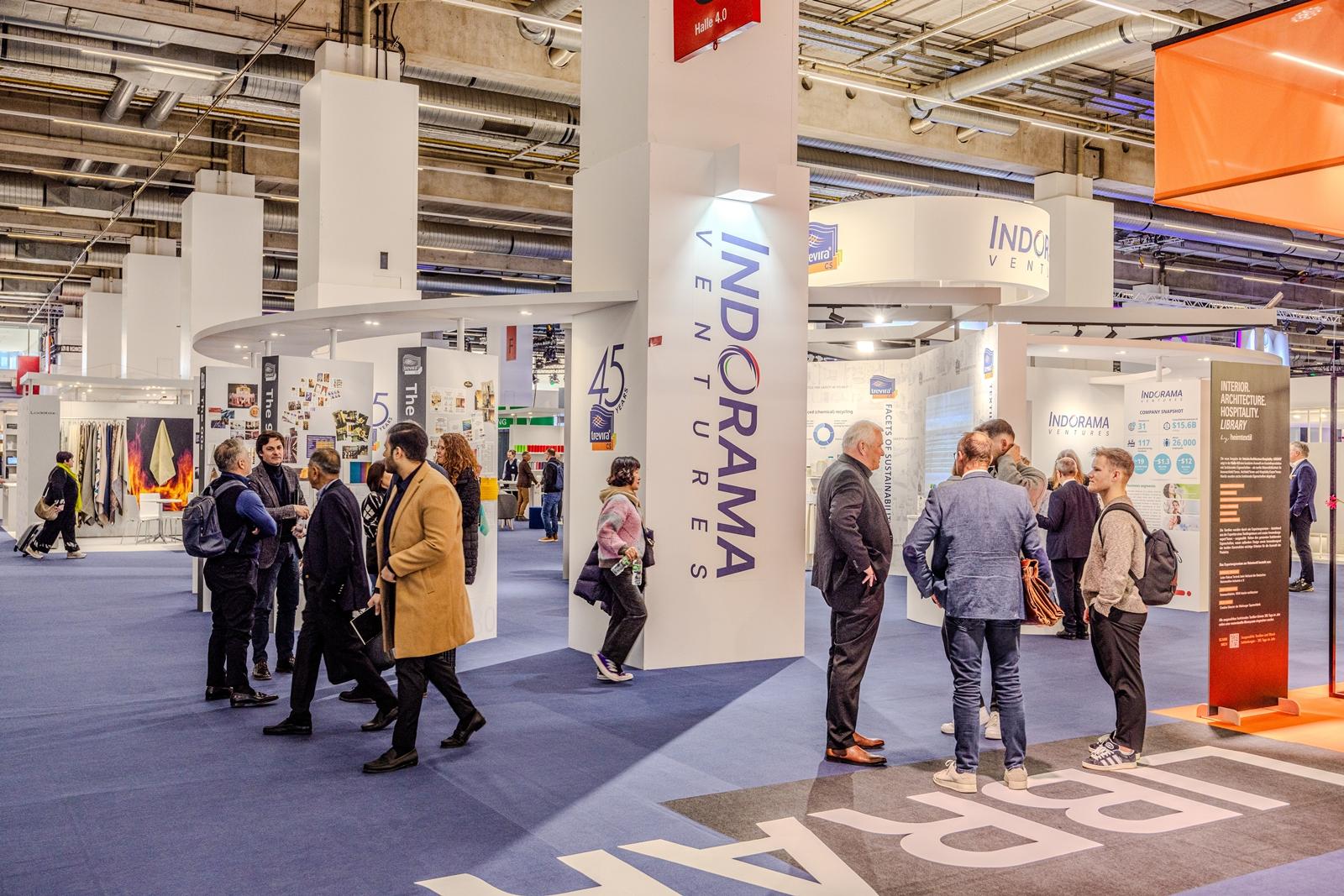
Indorama Ventures, a global sustainable chemical company, announced its Trevira CS® brand’s presentation at Heimtextil 2026 in Frankfurt, Germany, from January 13 to 16, 2026. The theme of the show: “WE CARE.” 

“WE CARE”: A Focus on Community, Sustainability, and Craftsmanship 
Trevira CS®, alongside its partners, is transforming the traditional trade show display into an active, meaningful experience at the Trevira CS Joint Booth. The theme "WE CARE" embodies a commitment to the textile industry, fire safety, mindful resource usage, and social responsibility. 

“We care about the textile industry, fire safety indoors, the communities we operate in, the mindful usage of our resources, and about you and your loved ones. At Heimtextil 2026, we are completely shifting the focus from a passive display to an active, memorable, and meaningful experience,” says Svenja Fromm, Fibers Global Communication and Brand Manager. 

Experiencing the fabric: Sensory engagement and social impact 
The core of the "WE CARE" booth is an interactive activity designed to enhance sensory engagement and support a worthy cause: 

Indorama Ventures, a global sustainable chemical company, announced its Trevira CS® brand’s presentation at Heimtextil 2026 in Frankfurt, Germany, from January 13 to 16, 2026. The theme of the show: “WE CARE.” 

“WE CARE”: A Focus on Community, Sustainability, and Craftsmanship 
Trevira CS®, alongside its partners, is transforming the traditional trade show display into an active, meaningful experience at the Trevira CS Joint Booth. The theme "WE CARE" embodies a commitment to the textile industry, fire safety, mindful resource usage, and social responsibility. 

“We care about the textile industry, fire safety indoors, the communities we operate in, the mindful usage of our resources, and about you and your loved ones. At Heimtextil 2026, we are completely shifting the focus from a passive display to an active, memorable, and meaningful experience,” says Svenja Fromm, Fibers Global Communication and Brand Manager. 

Experiencing the fabric: Sensory engagement and social impact 
The core of the "WE CARE" booth is an interactive activity designed to enhance sensory engagement and support a worthy cause: 

  1. Sensory enhancement: Visitors, including interior designers, decorators, and media, will be encouraged to physically touch, feel, and work with the Trevira CS fabrics, enabling a deeper understanding of essential qualities like drape, weight, and texture. Trevira CS fabric donations from various partners have been turned into pillowcases. Partner in this craftsmanship activity is hum Kissen, Sulingen, Germany. Since over 20 years, hum stands for sustainable design, high quality, and fair cooperation for cushions. That's why they only use valuable, certified materials for their hum design and outdoor cushions, which are manufactured in Germany. Their value promise: feel good in any environment! Also, pillowcases from various displays and showcases have been submitted by Trevira CS partners – all awaiting the following next step. 
  2. Memorable interaction & giving back: The WE CARE highlight activity invites Heimtextil visitors to stuff these pillowcases using permanently flame-retardant fibers provided by Indorama Ventures. This hands-on process allows participants to truly appreciate the fabric's "hand" and craftsmanship. 
  3. One act of kindness: All cushions created during the show will be handed over to the Lions Club Wiesbaden. They will ensure that the finished cushions are distributed to those in need within the local community, supporting two initiatives: “Herzenswärme” (Warmth of the Heart) initiative and the „IFB“ (Inklusion.Förderung.Betreuung/Inclusion.Support.Care.) initiative, which focuses on the inclusion of children with disabilities. 

Trevira CS Joint Booth Experience: Innovations in Flame-Retardancy & Design 
The Trevira CS Joint Booth will feature a diverse collection of inherently flame-retardant products for the home textiles and contract market. The exhibiting partners will showcase products across all textile applications, from spun to fancy flame retardant yarns eligible for the brand Trevira CS to from lightweight curtains to upholstery fabrics, woven and knitted fabrics as well as interior solar shading solutions.

Dedicated gallery information walls will provide unique insights into the Trevira CS brand, its sub-brands, rigorous trademark testing, various application areas, and its path forward using advanced recycled materials. 

Exhibiting Partners at the Trevira CS Joint Booth (Hall 3.1, G95) 

  • Baroni Filati S.r.l. 
  • FILTRADING S.R.L. 
  • ILCAT S.P.A. 
  • TORCITURA LEI TSU S.R.L. 
  • LODETEX S.P.A. 
  • MOTTURA Spa 
  • PIF sarl 
  • Pugi RG S.r.l. 
  • Tintoria filati Sala S.r.l. 
  • Selvafil S.A. 
  • Hum Kissen 
  • The Lion Club Wiesbaden 

Deja™: Advancing Sustainability with Recycled Materials 
Demonstrating a commitment to a sustainable path forward, Indorama Ventures will also introduce the deja™ brand family. Deja marks fibers, yarns and technical fabrics made from what is already here, thereby significantly reducing CO2 emissions and environmental impact while delivering virgin-like performance. 

This sustainable product family of staple fibers, filament yarns, and technical fabrics is suitable for a broad variety of applications, including home textiles, apparel, and automotive interiors. 

Indorama Ventures and Trevira CS® invite all visitors to experience the "WE CARE" concept, to stuff a cushion, and engage with the Trevira CS partners, and its brands Trevira CS® and deja™ at Heimtextil 2026.

Source:

IVL, Trevira CS

02.12.2025

Kelheim Fibres: Transaction Process Failed – Preparation for Production Phase-Out

Kelheim Fibres GmbH announces that the transaction process pursued as part of the ongoing self-administered insolvency proceedings with the Munich-based LEO III Fund, exclusively advised by the DUBAG Group, could not be successfully completed despite intensive efforts. The purchase agreement, which had already been notarised, could not be executed due to the non-fulfilment of essential closing conditions – in particular, the absence of binding volume commitments from several major customers for the year 2026. As a result, the investor was compelled to withdraw from the agreement, as a viable business model could not be secured.

Despite broad support from the majority of customers and the restructuring measures already successfully implemented, the currently binding order volume is not sufficient to economically justify a regular continuation of operations beyond 31 December 2025. Against this backdrop, Kelheim Fibres must now prepare for an orderly phase-out of production.

Kelheim Fibres GmbH announces that the transaction process pursued as part of the ongoing self-administered insolvency proceedings with the Munich-based LEO III Fund, exclusively advised by the DUBAG Group, could not be successfully completed despite intensive efforts. The purchase agreement, which had already been notarised, could not be executed due to the non-fulfilment of essential closing conditions – in particular, the absence of binding volume commitments from several major customers for the year 2026. As a result, the investor was compelled to withdraw from the agreement, as a viable business model could not be secured.

Despite broad support from the majority of customers and the restructuring measures already successfully implemented, the currently binding order volume is not sufficient to economically justify a regular continuation of operations beyond 31 December 2025. Against this backdrop, Kelheim Fibres must now prepare for an orderly phase-out of production.

In parallel, the company is examining whether a limited continuation of production in 2026 – both in terms of duration and volume – may be possible based on additional binding customer orders. Customers are therefore being asked for swift final commitments. Once these responses have been evaluated, a decision will be made on whether, and to what extent, operations can be maintained beyond the turn of the year.

The workforce and the Works Council were informed of the current developments and potential scenarios on Monday, 24 November 2025.

The company's statement:
"We extend our sincere gratitude to our employees for their exceptional dedication and many years of loyalty. Their commitment during challenging times has shaped our company and significantly helped safeguard our values, quality, and continuity. We deeply regret the necessary step of ceasing operations and greatly appreciate the professional cooperation, engagement, and loyalty of each individual. Our thanks go to all colleagues for their contributions, their support throughout this transition, and their commitment to our community. Together, we carry the responsibility to find fair solutions for everyone affected and will provide support wherever possible in transitioning to new opportunities."

02.12.2025

CARBIOS & Wankai New Materials: Strategic partnership for the first PET biorecycling plant in China

In line with the commitment signed on November 6, 2025, CARBIOS and Wankai New Materials, a listed subsidiary of Zhink Group, the 3rd largest PET producer in China and 4th worldwide, announce the signing of the definitive agreement establishing a strategic partnership for the large-scale deployment of CARBIOS’s PET biorecycling technology in Asia, with the first step being the construction of a PET biorecycling plant in China.
 
The two companies have signed on 2 December 2025 the shareholders’ agreement for their joint venture, dedicated to the construction and operation of a first PET biorecycling plant in China, with a processing capacity of 50,000 tons of PET waste.
 
Wankai will be the majority shareholder of this company with a 70% stake, while CARBIOS will hold the remaining 30%. The financing of the plant’s construction, estimated at €115 million, will be covered 30% by equity and 70% by debt, with all debt guaranteed by Wankai.
 

In line with the commitment signed on November 6, 2025, CARBIOS and Wankai New Materials, a listed subsidiary of Zhink Group, the 3rd largest PET producer in China and 4th worldwide, announce the signing of the definitive agreement establishing a strategic partnership for the large-scale deployment of CARBIOS’s PET biorecycling technology in Asia, with the first step being the construction of a PET biorecycling plant in China.
 
The two companies have signed on 2 December 2025 the shareholders’ agreement for their joint venture, dedicated to the construction and operation of a first PET biorecycling plant in China, with a processing capacity of 50,000 tons of PET waste.
 
Wankai will be the majority shareholder of this company with a 70% stake, while CARBIOS will hold the remaining 30%. The financing of the plant’s construction, estimated at €115 million, will be covered 30% by equity and 70% by debt, with all debt guaranteed by Wankai.
 
The plant will be located in Haining (Zhejiang province) on site provided by Wankai, which is already equipped with infrastructure (equipment, waste treatment, etc.), thus reducing the investment cost. Construction is expected to begin during the first quarter of 2026, with commissioning targeted by the first quarter of 2027.
 
CARBIOS and Wankai have also approved on 2 December 2025 the license agreement, which will be granted by CARBIOS to the joint venture upon its incorporation.
 
CARBIOS and Wankai have committed to a long-term partnership with the ambition to build and operate several PET biorecycling plants in Asia. CARBIOS agrees to exclusively license its PET depolymerization technology in Asia to Wankai for a period of three years, subject to signing licenses with the latter for at least 100 kt per year of additional capacity. This term will be extended in five-year increments if additional licenses for at least 200 kt per year of extra capacity are signed.
 
To strengthen the strategic partnership between the two companies, Wankai has committed to subscribe, before 2 June 2026, to a dedicated capital increase of €5 million in the share capital of CARBIOS S.A., paid on the basis of an issue price per share of €8.0947, corresponding to the volume-weighted average of the last five trading days preceding the 1st of December 2025, reduced by a 10% discount. 

Hygienix™ 2025: Absorbent Hygiene Innovation, Sustainability, and Collaboration Graphic INDA
01.12.2025

Hygienix™ 2025: Absorbent Hygiene Innovation, Sustainability, and Collaboration

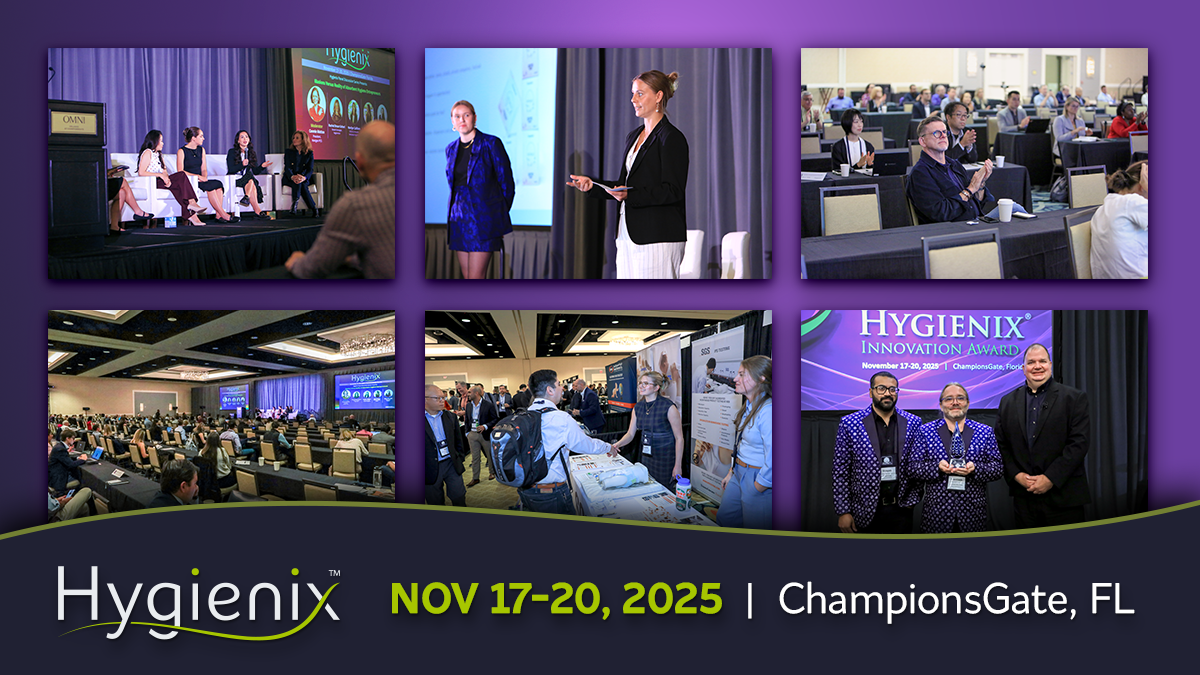
Hygienix™ 2025 brought together hundreds of industry leaders to explore advancements in the absorbent hygiene and personal care markets during the 11th annual Hygienix™ event, held November 17-20 in Orlando, Florida. INDA, the Association of the Nonwoven Fabrics Industry, announced Confitex Technology as the winner of the 2025 Hygienix™ Innovation Award™ for its groundbreaking Washable Nonwoven Sanitary Pads, recognizing exceptional innovation in absorbent hygiene materials, products, or technologies.

2025 Hygienix Innovation Award winner:
Confitex Technology – Washable Nonwoven Sanitary Pads
Making single-use reusable: As regulators, retailers and consumers move toward a greener future, a new category of washable AHPs is creating opportunities for the nonwoven industry. Confitex Technology has created and patented world’s first washable nonwoven sanitary pads designed for sustainability and scalability without the need for SAPs. Confitex Technology is leading Innovator and Private Label supplier. Their purpose is to transform the lives of millions and reduce the Earth’s landfill by creating the ultimate reusable AHPs.

Hygienix™ 2025 brought together hundreds of industry leaders to explore advancements in the absorbent hygiene and personal care markets during the 11th annual Hygienix™ event, held November 17-20 in Orlando, Florida. INDA, the Association of the Nonwoven Fabrics Industry, announced Confitex Technology as the winner of the 2025 Hygienix™ Innovation Award™ for its groundbreaking Washable Nonwoven Sanitary Pads, recognizing exceptional innovation in absorbent hygiene materials, products, or technologies.

2025 Hygienix Innovation Award winner:
Confitex Technology – Washable Nonwoven Sanitary Pads
Making single-use reusable: As regulators, retailers and consumers move toward a greener future, a new category of washable AHPs is creating opportunities for the nonwoven industry. Confitex Technology has created and patented world’s first washable nonwoven sanitary pads designed for sustainability and scalability without the need for SAPs. Confitex Technology is leading Innovator and Private Label supplier. Their purpose is to transform the lives of millions and reduce the Earth’s landfill by creating the ultimate reusable AHPs.

Finalists Dukane – Curved Leg Elastic (CLE) and ZymoChem – BAYSE™ were also recognized for their significant contributions to advancing performance, sustainability, and consumer well-being in absorbent hygiene.

“The innovations presented this year demonstrate remarkable creativity and a clear focus on improving lives while advancing environmental stewardship,” said Tony Fragnito, INDA President & CEO. “The level of collaboration and innovation seen at Hygienix continues to raise the bar for our industry.”

Networking and Collaboration Across the Hygiene Value Chain
The 2025 Hygienix™ Conference fostered meaningful connections through multiple networking formats, including:

  • Women in Nonwovens (WiN) Luncheon – Encouraging mentorship, leadership, and collaboration among women in the industry.
  • Lightning Talks – High-energy, five-minute presentations from exhibiting companies.
  • Evening Receptions & Exhibits – Showcasing breakthrough technologies and supplier capabilities across absorbent hygiene.
  • Lunch Around with Olivia Ahn, MD, Co-Founder, Planera – Sharing her start-up journey and sustainability vision.
  • Welcome Reception – An informal kickoff Monday evening connecting industry peers and innovators.

Program Content: Insights Driving the Future of Absorbent Hygiene
The conference featured a comprehensive technical program and three Pre-Conference Workshops on absorption systems, menstrual care innovation, and baby and infant care market dynamics.

Throughout the week, attendees explored presentations and panel discussions on:

  • Circularity and sustainable materials, including bio-based fibers, PFAS-free chemistries, and flushable packaging.
  • Regulatory, testing, and consumer trends shaping product design and market growth.
  • New applications such as pet care, eczema-friendly testing, and private label innovation.

Speakers represented a global cross-section of the value chain, including Absorbent Hygiene Insights, BAHP, Cycleology, Euromonitor International, Kuraray Europe, Lenzing AG, ProVerde Environmental, SmartSolve, Soane Materials, Trützschler Nonwovens, Woolchemy NZ, and many others.

Industry Momentum and Strong Attendance
This year’s event was well-received by all attendees, drawing global participation from brand owners, converters, material and equipment suppliers, and entrepreneurs committed to advancing performance and sustainability in absorbent hygiene.


26.11.2025

Ontex driving growth in the baby pants segment

Ontex Group NV, a leading international developer and producer of personal care solutions, launches Dreamshield® 360 Night Pants, a new night-time concept designed to give babies dry nights and parents greater peace of mind. The new night pants offer extra absorbency for up to 12 hours of protection – especially important for long nights, heavy wetters, extended naps and travel.

Ontex’s Dreamshield®360 baby pants are already trusted for nighttime use, and the new night pants build on that foundation by offering parents an even more reassuring solution for prolonged overnight protection.

Research confirms that nighttime performance remains a critical priority for families: 75% of parents identify their baby’s sleep quality as their top stressor, with nighttime leaks the leading cause of disruption. Parents increasingly look for products that guarantee dryness for longer periods, not just overnight but also during situations that require absorbency designed for high-demand occasions.

Ontex Group NV, a leading international developer and producer of personal care solutions, launches Dreamshield® 360 Night Pants, a new night-time concept designed to give babies dry nights and parents greater peace of mind. The new night pants offer extra absorbency for up to 12 hours of protection – especially important for long nights, heavy wetters, extended naps and travel.

Ontex’s Dreamshield®360 baby pants are already trusted for nighttime use, and the new night pants build on that foundation by offering parents an even more reassuring solution for prolonged overnight protection.

Research confirms that nighttime performance remains a critical priority for families: 75% of parents identify their baby’s sleep quality as their top stressor, with nighttime leaks the leading cause of disruption. Parents increasingly look for products that guarantee dryness for longer periods, not just overnight but also during situations that require absorbency designed for high-demand occasions.

Recent consumer insights confirm the relevance of stronger night-time protection: parents choose baby pants more often for nighttime across all ages and tend to switch to baby pants sooner at night than during the day.

Superior nighttime protection, comfort and sustainability
Dreamshield® 360 Night Pants deliver enhanced overnight performance together with the trusted features of the Dreamshield® 360 Pants range:

  • Extra absorbency for long nights – up to 12 hours of leak-free sleep and extended-use protection.
  • Triple leak protection – including Ontex’s unique pee & poo back barrier.
  • Soft, secure 360° fit – gentle materials and an elastic waistband for comfortable sleeping.
  • Night-time packaging – clear extra absorbency claims and strong night icons for quick and confident shopper navigation.
  • Sustainability at the core – supporting Ontex’s targets of CO₂ emissions and plastic reduction across its product portfolio.
More information:
Ontex Group NV baby pants
Source:

Ontex Group NV

Photo Asahi Kasei/Brugnoli
25.11.2025

ROICA™ at ISPO: Responsible Stretch Solutions for Sportswear

Asahi Kasei’s premium stretch fiber brand, ROICA™, continues to take a responsible approach to innovation, advanced functionality, and trusted quality for the evolving sports apparel industry. 

At ISPO Munich 2025, ROICA™ will once again be featured as an important element of the Asahi Kasei booth, presenting the latest developments in responsible stretch fiber technology. This year, ROICA™ introduces a carefully selected range of samples from seven European textile partners — Brugnoli, Cifra, Iluna Group, Inplet Pletiva, Penn Solutions, Sitip, and Tessitura Colombo Antonio — each demonstrating the possibilities of ROICA™ in sports and activewear. 

In addition, ROICA™ will highlight two special initiatives: 

  • The adoption of ROICA™ V550 in the official EXPO 2025 Osaka, Kansai uniforms by CRAFTEVO® -V&A Japan, showing a new approach to compostable, circular event apparel. 
  • The collaboration of NILIT and ROICA™ aims to develop an innovative fabric concept with reduced en-vironmental impact, combining SENSIL® By-Nature Nylon 6.6 and ROICA™ made using a mass balance approach with renewable feedstock. 

Asahi Kasei’s premium stretch fiber brand, ROICA™, continues to take a responsible approach to innovation, advanced functionality, and trusted quality for the evolving sports apparel industry. 

At ISPO Munich 2025, ROICA™ will once again be featured as an important element of the Asahi Kasei booth, presenting the latest developments in responsible stretch fiber technology. This year, ROICA™ introduces a carefully selected range of samples from seven European textile partners — Brugnoli, Cifra, Iluna Group, Inplet Pletiva, Penn Solutions, Sitip, and Tessitura Colombo Antonio — each demonstrating the possibilities of ROICA™ in sports and activewear. 

In addition, ROICA™ will highlight two special initiatives: 

  • The adoption of ROICA™ V550 in the official EXPO 2025 Osaka, Kansai uniforms by CRAFTEVO® -V&A Japan, showing a new approach to compostable, circular event apparel. 
  • The collaboration of NILIT and ROICA™ aims to develop an innovative fabric concept with reduced en-vironmental impact, combining SENSIL® By-Nature Nylon 6.6 and ROICA™ made using a mass balance approach with renewable feedstock. 
More information:
Asahi Kasei ROICA™ ISPO Sportwear
Source:

Asahi Kasei

Kraig Biocraft Laboratories (c) Kraig Biocraft Laboratories
25.11.2025

Kraig: Hiring Initiative to Support Expanded Spider Silk Production in Southeast Asia

Kraig Biocraft Laboratories, a leader in spider silk technology*, launched a key hiring initiative at its production operations in Southeast Asia. This expansion of the company's production workforce is driven by rapidly increasing throughput, an expanded operational footprint, and preparations for the opening of its newest production center, now in active development.
 
The company is ramping up staffing to support what it expects to be a significant increase in production volumes over the coming quarters. These new team members will play a critical role in supporting the deployment of the Company's advanced spider silk technologies and modernized sericulture systems across its growing network of facilities.
 
All incoming production staff will receive specialized training under Dr. Nirmal Kumar, one of the world's foremost sericulture experts. Training under Dr. Kumar will prepare new hires to support operational growth at Kraig Labs' newest production center, currently in development, increasing capacity, resilience, and commercial production of its high-performance spider silk.
 

Kraig Biocraft Laboratories, a leader in spider silk technology*, launched a key hiring initiative at its production operations in Southeast Asia. This expansion of the company's production workforce is driven by rapidly increasing throughput, an expanded operational footprint, and preparations for the opening of its newest production center, now in active development.
 
The company is ramping up staffing to support what it expects to be a significant increase in production volumes over the coming quarters. These new team members will play a critical role in supporting the deployment of the Company's advanced spider silk technologies and modernized sericulture systems across its growing network of facilities.
 
All incoming production staff will receive specialized training under Dr. Nirmal Kumar, one of the world's foremost sericulture experts. Training under Dr. Kumar will prepare new hires to support operational growth at Kraig Labs' newest production center, currently in development, increasing capacity, resilience, and commercial production of its high-performance spider silk.
 
"This hiring initiative reflects the incredible momentum we are building and the strength of our forward-looking production strategy," said Kim Thompson, Founder and CEO of Kraig Labs. "As we scale up our next-generation spider silk technology and expand our production footprint, we are focused on assembling a team capable of supporting the high growth trajectory we anticipate. Bringing new staff into the fold and having them train directly with Dr. Kumar ensures that we are building the strongest possible foundation for the future of our operations."
 
The Company's expanded workforce will contribute to Kraig Labs' increasing production capacity and its readiness to meet both near-term production targets and longer-term commercial opportunities. As construction and development of the new production center takes shape, these newly trained team members will be positioned to support the facility's launch and help drive the Company's next major phase of growth.
 
Kraig Labs expects to continue adding staff and resources as it advances its mission of delivering the world's first cost-effective, eco-friendly, industrial-scale recombinant spider silk.

Rieter mit neuer Konzernstruktur Grafik Rieter AG
Rieter mit neuer Konzernstruktur
24.11.2025

Rieter with New Group Structure: Annual savings CHF 30 million

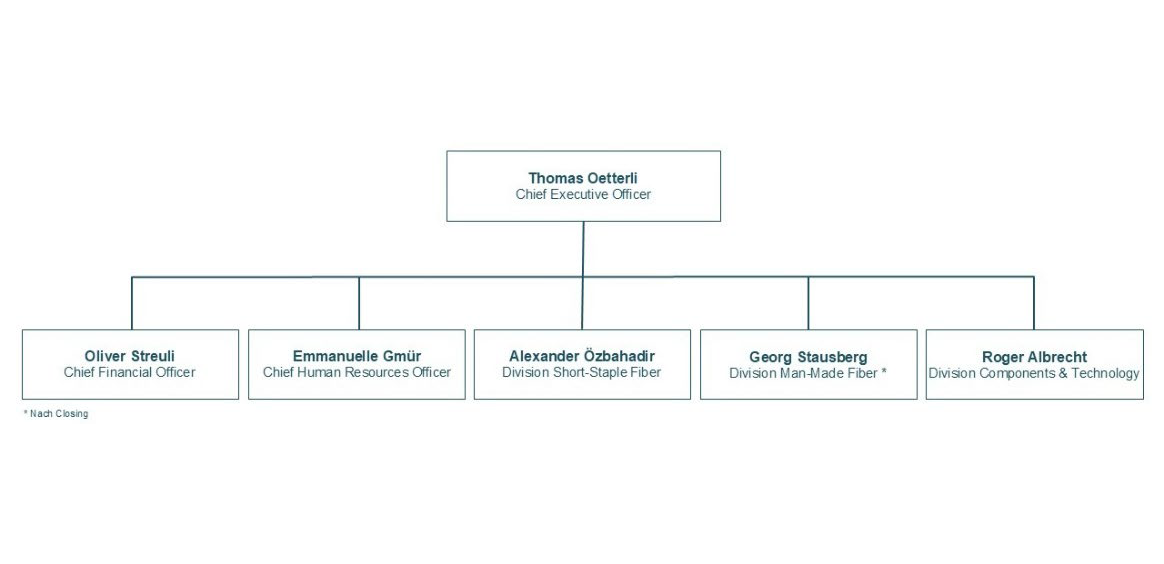
The planned acquisition of the “Barmag” Division of OC Oerlikon will create the leading system provider worldwide for natural and man-made fibers. Rieter is confident it will receive all regulatory approvals to complete the acquisition in the fourth quarter of 2025. The Rieter Group is therefore adjusting its Group structure as of January 1, 2026, to take this acquisition into account and to be able to provide an even more agile response to market challenges. 

The Machines & Systems and After Sales Divisions will be merged. Alexander Özbahadir will take over the new “Short-Staple Fiber” Division, which will be responsible for the short-staple fiber business, effective January 1, 2026. This will create synergies in sales and service activities and increase customer centricity through a geographical focus. 

The planned acquisition of the “Barmag” Division of OC Oerlikon will create the leading system provider worldwide for natural and man-made fibers. Rieter is confident it will receive all regulatory approvals to complete the acquisition in the fourth quarter of 2025. The Rieter Group is therefore adjusting its Group structure as of January 1, 2026, to take this acquisition into account and to be able to provide an even more agile response to market challenges. 

The Machines & Systems and After Sales Divisions will be merged. Alexander Özbahadir will take over the new “Short-Staple Fiber” Division, which will be responsible for the short-staple fiber business, effective January 1, 2026. This will create synergies in sales and service activities and increase customer centricity through a geographical focus. 

Roger Albrecht will now be responsible for the “Components and Technology” Division. His mandate will be to develop pioneering technology solutions, drive innovation and achieve growth in the key components business. With this organizational change, Rieter will further expand its technology leadership and intensify its development activities between Rieter and the component companies Accotex, Bräcker, Graf, Novibra, Suessen, SSM and Temco. 

Serge Entleitner has decided to step down from the Group Executive Committee, effective December 31, 2025, and will support the company on various projects until his retirement in 2027. 

Upon successful closing of the Barmag acquisition, the “Man-Made Fiber” Division will be integrated into the Rieter Group. Georg Stausberg will continue to lead the division and report to Thomas Oetterli, CEO of Rieter. He will also take a seat on the Group Executive Committee. 

As of January 1, 2026, the Rieter Group Executive Board will comprise the following members: 

  • Thomas Oetterli, Chief Executive Officer 
  • Oliver Streuli, Chief Financial Officer 
  • Emmanuelle Gmür, Chief Human Resources Officer 
  • Alexander Özbahadir, Head of the “Short-Staple Fiber” Division 
  • Georg Stausberg (after closing), Head of the “Man-Made Fiber” Division 
  • Roger Albrecht, Head of the “Components and Technology” Division 

Rieter is responding to the persistently weak market situation with further cost-cutting measures by adjusting production capacities, simplifying supply chains, and streamlining overhead functions. The estimated one-off costs of around CHF 30 to 35 million will result in annual savings of just under CHF 30 million.

Source:

Rieter AG

24.11.2025

CARBIOS: Two new multi-year commercial agreements for recycled PET

CARBIOS announced the signing of two new multi-year commercial agreements with major players in beverage industry, for the supply of recycled PET (r-PET).

The signing of these two new commercial agreements marks CARBIOS’s entry into a new strategic sector: beverages. Thgey are part of the pre-commercialization process for CARBIOS’s future industrial site, bringing the current level of pre-sales to approximately 50% of the site’s maximum production capacity.

Negotiations are ongoing with other partners to reach a pre-commercialization level of 70% of the Longlaville site’s maximum capacity, a threshold constituting one of the conditions for obtaining additional non-dilutive funding necessary to resume construction of the Longlaville plant.

A regional grant of €12.5 million has also been signed, bringing the total amount of public funding already secured to €42.5 million.

CARBIOS announced the signing of two new multi-year commercial agreements with major players in beverage industry, for the supply of recycled PET (r-PET).

The signing of these two new commercial agreements marks CARBIOS’s entry into a new strategic sector: beverages. Thgey are part of the pre-commercialization process for CARBIOS’s future industrial site, bringing the current level of pre-sales to approximately 50% of the site’s maximum production capacity.

Negotiations are ongoing with other partners to reach a pre-commercialization level of 70% of the Longlaville site’s maximum capacity, a threshold constituting one of the conditions for obtaining additional non-dilutive funding necessary to resume construction of the Longlaville plant.

A regional grant of €12.5 million has also been signed, bringing the total amount of public funding already secured to €42.5 million.

More information:
Carbios r-PET beverage
Source:

Carbios

Reinforced with dimensionally stable HMLS yarn, tires remain dimensionally stable even under load and temperature. (c) Oerlikon Barmag
Reinforced with dimensionally stable HMLS yarn, tires remain dimensionally stable even under load and temperature.
20.11.2025

Demand for high-performance yarns on the rise

Barmag, a subsidiary of the Swiss Oerlikon Group, will commission three HMLS yarn systems with a total of 30 stations at renowned technical yarn manufacturers in China over the next three months.

China expands HMLS capacities
Among them are two HMLS producers who had previously purchased from competitors. "They were convinced by our process technology, which guarantees the economic production of HMLS yarns of the very best quality," says Sales Director Oliver Lemke, who, together with his colleagues on site, provides support to customers in the field of technical yarns. The sophisticated material obtains its special properties during the spinning process. High speeds in the production process guarantee a stable arrangement of the molecules within the polymer that forms the actual thread. The internal structure of the molecular chain, in turn, is decisive for the dimensional stability of the final yarn.

Barmag, a subsidiary of the Swiss Oerlikon Group, will commission three HMLS yarn systems with a total of 30 stations at renowned technical yarn manufacturers in China over the next three months.

China expands HMLS capacities
Among them are two HMLS producers who had previously purchased from competitors. "They were convinced by our process technology, which guarantees the economic production of HMLS yarns of the very best quality," says Sales Director Oliver Lemke, who, together with his colleagues on site, provides support to customers in the field of technical yarns. The sophisticated material obtains its special properties during the spinning process. High speeds in the production process guarantee a stable arrangement of the molecules within the polymer that forms the actual thread. The internal structure of the molecular chain, in turn, is decisive for the dimensional stability of the final yarn.

Growing demand for HMLS yarns
The industry expects demand for HMLS yarns to increase in the coming years. This is mainly due to the trend toward lighter tires. Whereas high-modulus polyester yarn (HMLS) was previously used mainly in high-speed tires, its properties now also allow the tire carcass of small vans to be converted from steel cord to polyester. HMLS yarn is extremely tear-resistant, yet highly elastic and temperature- and dimensionally stable.

Another factor is the steadily increasing number of vehicle registrations worldwide. In China in particular, the production of local car brands has increased rapidly in recent years, which explains the expansion of capacity in the country.

New Focus Textiles, Haelixa Graphic by New Focus Textiles, Haelixa
20.11.2025

Evidence-based verification in recycled cotton sourcing

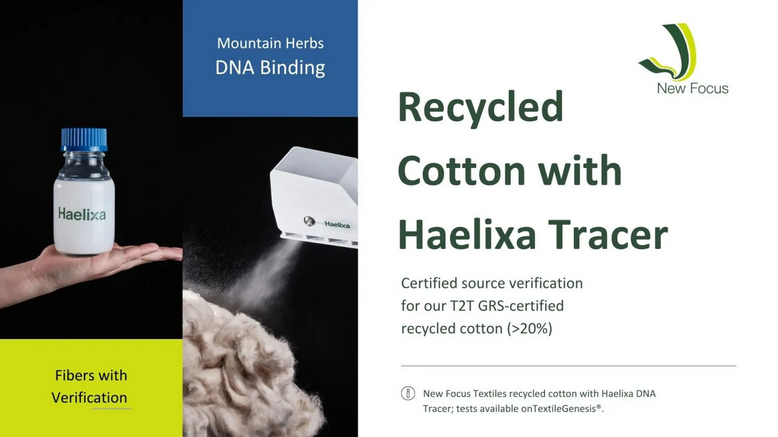
Hong Kong–based New Focus Textiles is adopting Haelixa’s Swiss DNA traceability technology to strengthen trust and transparency in recycled cotton production. 

Haelixa, the Swiss-based global leader in DNA-based traceability, has enabled New Focus Textiles to provide forensic proof of recycled cotton content across its textile-to-textile manufacturing operations. This marks a significant move towards evidence-based verification in recycled material sourcing, addressing one of the main credibility gaps in the circular materials market.  

DNA-based forensic traceability for recycled cotton  
Haelixa’s DNA marker is applied directly to post-industrial and post-consumer waste, before shredding, staying intact through New Focus Textiles’ mechanical recycling process. The non-toxic DNA marker, which is derived from Swiss mountain herbs, is a permanent tag, and cannot be removed or copied, remaining embedded throughout spinning, weaving, dyeing, and finishing.  

Hong Kong–based New Focus Textiles is adopting Haelixa’s Swiss DNA traceability technology to strengthen trust and transparency in recycled cotton production. 

Haelixa, the Swiss-based global leader in DNA-based traceability, has enabled New Focus Textiles to provide forensic proof of recycled cotton content across its textile-to-textile manufacturing operations. This marks a significant move towards evidence-based verification in recycled material sourcing, addressing one of the main credibility gaps in the circular materials market.  

DNA-based forensic traceability for recycled cotton  
Haelixa’s DNA marker is applied directly to post-industrial and post-consumer waste, before shredding, staying intact through New Focus Textiles’ mechanical recycling process. The non-toxic DNA marker, which is derived from Swiss mountain herbs, is a permanent tag, and cannot be removed or copied, remaining embedded throughout spinning, weaving, dyeing, and finishing.  

At any point, the material can be tested in an accredited laboratory using a simple PCR analysis to confirm origin and verify the presence of recycled content. This method provides physical proof of the recycled fibre identity, going beyond certification schemes that rely on documentation and chain-of-custody declarations.  

Strengthening supply chain assurance  
New Focus Textiles produces GRS-certified recycled cotton fabrics from post-industrial and post-consumer feedstock under its T2T™ (Textile-to-Textile) programme. The integration of Haelixa’s DNA-based traceability ensures each recycled batch is scientifically identifiable and can be aligned with digital records on platforms such as TextileGenesis, enhancing material transparency at supplier, auditor, and brand level.  

Preparing for regulatory compliance  
The system supports upcoming EU Digital Product Passport requirements and wider regulatory scrutiny over green claims. It reduces reputational and compliance risk for brands that prioritise recycled materials. 

Source:

New Focus Textiles

Trevira CS® at CSI Show Hamburg Graphic Trevira CS/Indorama Ventures
Trevira CS® at CSI Show Hamburg
20.11.2025

IMO-Tested Flame-Retardant Textiles: Trevira CS® at CSI Show Hamburg

Trevira CS, a leading brand of inherently flame-retardant textiles, is set to showcase its high-performance fabric solutions for the cruise ship industry at the CSI (Cruise Ship Interiors) Show in Hamburg on December 3rd and 4th. The booth's motto, "All aboard with Trevira CS," highlights the brand's commitment to safety and luxury in marine interiors. The exhibit will feature an array of some 27 IMO-tested Trevira CS fabrics specifically designed for cruise ship applications. 
 
Safety and Luxury Meet Rigorous Marine Standards 
As cruises worldwide continue to grow in popularity, the demand for luxurious and inviting textile designs which comply with uncompromising safety performance is increasing. Inherently flame retardant and easy to care for, Trevira CS fabrics comply with the strict FTP Code 2010 Resolution MSC.307(88), Annex 1, part 5, 7, 8, and 9 for various applications, such as wallcoverings, drapes and decorative fabrics, sunscreens, upholstery fabrics and bedding textiles.
 

Trevira CS, a leading brand of inherently flame-retardant textiles, is set to showcase its high-performance fabric solutions for the cruise ship industry at the CSI (Cruise Ship Interiors) Show in Hamburg on December 3rd and 4th. The booth's motto, "All aboard with Trevira CS," highlights the brand's commitment to safety and luxury in marine interiors. The exhibit will feature an array of some 27 IMO-tested Trevira CS fabrics specifically designed for cruise ship applications. 
 
Safety and Luxury Meet Rigorous Marine Standards 
As cruises worldwide continue to grow in popularity, the demand for luxurious and inviting textile designs which comply with uncompromising safety performance is increasing. Inherently flame retardant and easy to care for, Trevira CS fabrics comply with the strict FTP Code 2010 Resolution MSC.307(88), Annex 1, part 5, 7, 8, and 9 for various applications, such as wallcoverings, drapes and decorative fabrics, sunscreens, upholstery fabrics and bedding textiles.
 
The cruise shipping industry requires high-quality fabrics for both indoor and demanding outdoor environments. For exterior use, Trevira CS textiles offer superior performance in terms of resistance to light and weather. This is, for example, achieved through flame-retardant and UV stabilised polyester, available as staple fiber and filament yarn. Such modified filament yarns are available in nearly 30 different spun dyed colours. 
 
Recognizing the cruise industry's increasing focus on sustainability, Trevira CS also offers recycled options under the trademark Trevira CS eco. These fabrics contain at least 50% recycled materials (pre-consumer or post-consumer). All fibers and yarns used for the Trevira CS eco trademark are GRS (Global Recycled Standard) certified. 

“Our trademark testing makes sure that the Trevira CS articles are made of our original Trevira® flame retardant polyester and that the textiles thereof meet the fire safety requirements of the brand and are fit to pass those of the cruise industry too. Needless to say, that also the requirements of other industries like hospitality, healthcare, rail and aviation are respected and can be met by Trevira CS® as well,” says Petra Krücken, Indorama Ventures Fibers Global Trademark Service Manager. 

Dornbirn Global Fibre Conference Asia debuts in Mumbai Photo Messe Frankfurt Trade Fairs India
19.11.2025

Dornbirn Global Fibre Conference Asia debuts in Mumbai

In a remarkable union of innovation and global expertise, the world’s largest fibre innovation congress, the Dornbirn Global Fibre Conference (GFC) Asia, was successfully held in Mumbai on November 18, 2025, hosted under the banner of the Techtextil India Symposium 2025. 

Under the theme ‘Shaping the Future: Sustainable Growth in Fibre Solutions and Innovations’, the event was a dynamic confluence of ideas, research breakthroughs and collaborative exchanges aimed at propelling the textile industry into a new era of responsible growth. The conference was supported by the Government of Tamil Nadu as a Partner State. 

The day-long conference included the latest research on sustainable fibres, innovations in eco-friendly manufacturing, breakthroughs in recycling & circular economy practices and the evolution of smart technical textiles. Discussions also addressed global fibre market shifts, policy frameworks shaping the industry and strategies for integrating sustainability into business models. These topics reflect the most pressing imperatives and emerging opportunities for manufacturers, designers, technologists and policymakers alike. 

In a remarkable union of innovation and global expertise, the world’s largest fibre innovation congress, the Dornbirn Global Fibre Conference (GFC) Asia, was successfully held in Mumbai on November 18, 2025, hosted under the banner of the Techtextil India Symposium 2025. 

Under the theme ‘Shaping the Future: Sustainable Growth in Fibre Solutions and Innovations’, the event was a dynamic confluence of ideas, research breakthroughs and collaborative exchanges aimed at propelling the textile industry into a new era of responsible growth. The conference was supported by the Government of Tamil Nadu as a Partner State. 

The day-long conference included the latest research on sustainable fibres, innovations in eco-friendly manufacturing, breakthroughs in recycling & circular economy practices and the evolution of smart technical textiles. Discussions also addressed global fibre market shifts, policy frameworks shaping the industry and strategies for integrating sustainability into business models. These topics reflect the most pressing imperatives and emerging opportunities for manufacturers, designers, technologists and policymakers alike. 

The Dornbirn Global Fibre Conference is a collaboration between organisers, Messe Frankfurt Trade Fairs India Pvt Ltd and Austrian Fibers Institute. It cements India’s position as a powerhouse in textile innovation, sustainability and fibre technology. Set against the backdrop of India’s ambition to elevate its textile and apparel exports to USD 100 billion by 2030, the Dornbirn Global Fibre Conference Asia proved to be a seminal platform for industry visionaries to share pioneering discoveries and collaborate on building a greener, smarter, and more resilient textiles future. 

The conference highlighted key initiatives and industry potential:

  • India is leading in converting post-consumer waste than many other developed countries 
  • India recycles its bottles into yarn and plastic
  • India’s EPR for plastic waste could be beneficial for speeding up the recycling of plastic waste into fibres 
  • Using technology for collection and sorting will make feedstock available for the circular supply chain to work efficiently
  • India shows positive signs and a huge the potential to become a recycled polyester hub

The India edition of the Dornbirn GFC Asia uniquely blended global expertise with India's vibrant textiles sector—a market rapidly advancing in technological innovation, sustainability efforts and export ambitions. The industry’s leading brands who were part of the conference included: Dodhia Group, Lenzing, Oerlikon Polymer Processing Solutions, Birla Cellulose, Erema Group GmbH, High Performance Textile Ltd, Pan Healthcare Pvt Ltd, TextileGenesis, Bekaert, FibreCoat GmbH and more. 

Source:

Messe Frankfurt Trade Fairs India

Photo Kraig Biocraft Laboratories
18.11.2025

Kraig Biocraft Laboratories to deliver spider silk yarns for elite-tier athletic application

Kraig Biocraft Laboratories, Inc., a leader in spider silk technology*, announced that it is fulfilling an order for spider silk from a globally recognized performance sports apparel brand as part of a confidential pilot development program.
 
This project will incorporate the company’s  next-generation recombinant spider silk into a cutting-edge application targeted at the highest tier of performance apparel. While specific project details remain protected, Kraig Labs can confirm that the program is designed for one of the most demanding and innovation-focused segments of the athletic market.
 
This customer's market leadership, engineering sophistication, and reputation for excellence in performance apparel made them the ideal choice for this initial pilot engagement. Their market leadership and commitment to innovation is the reason Kraig Labs selected to fulfill this request from among the numerous recent inbound inquiries it received.
 

Kraig Biocraft Laboratories, Inc., a leader in spider silk technology*, announced that it is fulfilling an order for spider silk from a globally recognized performance sports apparel brand as part of a confidential pilot development program.
 
This project will incorporate the company’s  next-generation recombinant spider silk into a cutting-edge application targeted at the highest tier of performance apparel. While specific project details remain protected, Kraig Labs can confirm that the program is designed for one of the most demanding and innovation-focused segments of the athletic market.
 
This customer's market leadership, engineering sophistication, and reputation for excellence in performance apparel made them the ideal choice for this initial pilot engagement. Their market leadership and commitment to innovation is the reason Kraig Labs selected to fulfill this request from among the numerous recent inbound inquiries it received.
 
The Company is now processing a portion of its recombinant spider silk inventory into yarns tailored to the precise specifications provided by the customer's development team. Delivery of these specialized materials is expected before the end of the first quarter.
 
As a focused pilot program, this order calls for a small, purpose-built quantity of spider silk designed explicitly for this highly specialized application. Even at this limited scale, the project provides a powerful platform for demonstrating the performance capabilities and commercial potential of the Company's specialized spider silk technology within a premier performance environment.
 
"This collaboration underscores the growing recognition of our material's potential in high-value, high-performance applications," said Kim Thompson, Kraig Labs’ Founder and CEO. "We are excited to support this project and a customer whose commitment to innovation aligns with our own. We look forward to showcasing what our spider silk can deliver at the elite level of apparel design and performance."

Source:

Kraig Biocraft Laboratories

18.11.2025

Four substances recommended for REACH authorisation

The European Chemicals Agency (ECHA), to protect health and the environment, recommends that the European Commission adds four substances, including melamine, to the REACH Authorisation List. Once added to the list, companies must apply for authorisation if they wish to continue using the substances.

The recommendation includes the following substances:

  • Barium diboron tetraoxide;
  • S-(tricyclo[5.2.1.0 2,6]deca-3-en-8(or 9)-yl) O-(isopropyl or isobutyl or 2-ethylhexyl) O-(isopropyl or isobutyl or 2-ethylhexyl) phosphorodithioate;
  • Diphenyl(2,4,6-trimethylbenzoyl)phosphine oxide; and
  • Melamine.

ECHA has selected these substances from the Candidate List of substances of very high concern (SVHC) for this recommendation because, following the agreed approach, they are of the highest priority. 

The inclusion of melamine in the draft recommendation was comprehensively commented on by sectors using the substance during the 2024 consultation period but the decision to include it was made after careful consideration of all the issues.

The European Chemicals Agency (ECHA), to protect health and the environment, recommends that the European Commission adds four substances, including melamine, to the REACH Authorisation List. Once added to the list, companies must apply for authorisation if they wish to continue using the substances.

The recommendation includes the following substances:

  • Barium diboron tetraoxide;
  • S-(tricyclo[5.2.1.0 2,6]deca-3-en-8(or 9)-yl) O-(isopropyl or isobutyl or 2-ethylhexyl) O-(isopropyl or isobutyl or 2-ethylhexyl) phosphorodithioate;
  • Diphenyl(2,4,6-trimethylbenzoyl)phosphine oxide; and
  • Melamine.

ECHA has selected these substances from the Candidate List of substances of very high concern (SVHC) for this recommendation because, following the agreed approach, they are of the highest priority. 

The inclusion of melamine in the draft recommendation was comprehensively commented on by sectors using the substance during the 2024 consultation period but the decision to include it was made after careful consideration of all the issues.

Ofelia Bercaru, Director for Prioritisation and Integration, said: 
“When assessing the consequences of including a substance in the Authorisation List, it is important to consider the scope of the legal requirement. In most of its applications, melamine appears to be used as an intermediate, which does not require authorisation under REACH.
“However, applications for authorisation for the remaining uses may potentially create a significant workload for companies and authorities. ECHA is aware of the challenges and considered that balancing the risks posed by melamine with its continued use, requires a policy decision by the Commission and EU Member States.”

Background
ECHA has the legal obligation to regularly recommend substances from the Candidate List for the Commission to include in the Authorisation List. Before sending its recommendation to the Commission , ECHA considers comments received during a three-month consultation and the opinion of the Member State Committee.

The Commission will decide which substances are included in the Authorisation List and what conditions apply to each substance. If a substance is included in the Authorisation List, it can only be placed on the EEA market or used after a given date, if an authorisation is granted for a specific use.

The authorisation process aims to enhance the substitution of substances of very high concern when technically and economically viable alternatives are available. Until this is achieved, the goal is to ensure proper control of risks for human health and the environment.

Source:

European Chemicals Agency 

17.11.2025

Circulose partners with Marks & Spencer to accelerate Circular Fashion

Circulose has announced a partnership with Marks & Spencer (M&S), making the British retailer the first UK brand to join Circulose as a Scaling Partner. Circulose is a Swedish sustain-tech company that has developed a patented process, which enables the recycling of cellulosic textile waste, transforming it into a new material called CIRCULOSE®. Fast Company named Circulose (formerly Renewcell) one of the World’s Most Innovative Companies in 2021 and was a winner of the 2023 World Changing Ideas Awards.

By joining forces, M&S is reinforcing its commitment to sustainability and supporting Circulose’s mission to make circular materials mainstream. The brand will integrate a significant volume of CIRCULOSE® into its collections, helping drive broader adoption of next-generation circular materials across the industry.

Circulose has announced a partnership with Marks & Spencer (M&S), making the British retailer the first UK brand to join Circulose as a Scaling Partner. Circulose is a Swedish sustain-tech company that has developed a patented process, which enables the recycling of cellulosic textile waste, transforming it into a new material called CIRCULOSE®. Fast Company named Circulose (formerly Renewcell) one of the World’s Most Innovative Companies in 2021 and was a winner of the 2023 World Changing Ideas Awards.

By joining forces, M&S is reinforcing its commitment to sustainability and supporting Circulose’s mission to make circular materials mainstream. The brand will integrate a significant volume of CIRCULOSE® into its collections, helping drive broader adoption of next-generation circular materials across the industry.

CIRCULOSE®, made entirely from textile waste, helps fashion brands reduce their dependence on virgin fibers derived from trees, while delivering the same high quality and performance. By transforming discarded textiles into a new material, Circulose helps minimize waste, lower emissions, and ease pressure on land and forests, advancing the shift toward a global circular fashion system.

This partnership also validates Circulose’s renewed commercial strategy, centered on close, hands-on collaboration with global brands. Through its new licensing model and dedicated implementation support, Circulose supports brands to scale circular materials efficiently across the entire textile value chain, beyond capsule collections.