


Elastic yarns to become more recyclable and environmentally friendly in future
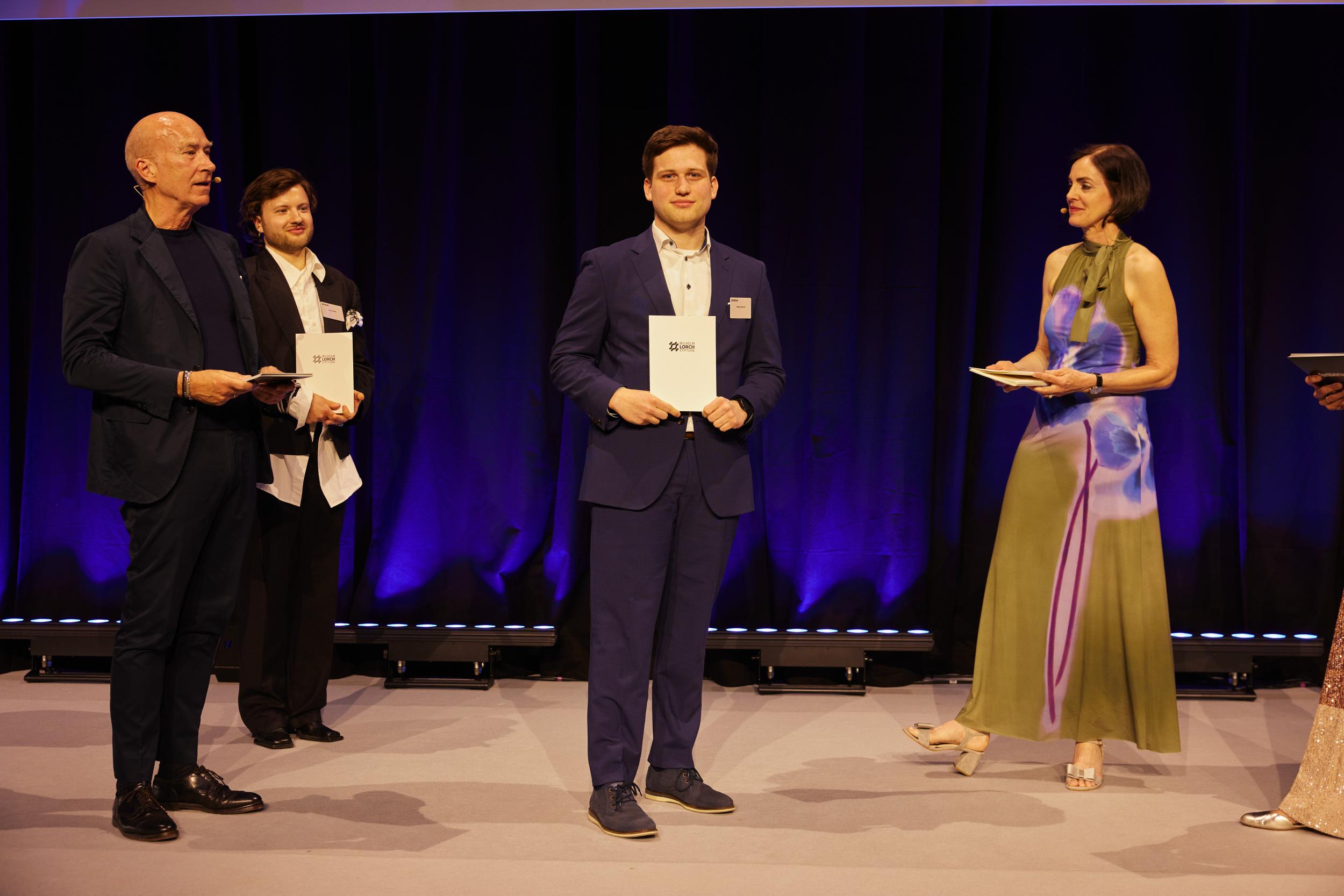
On 29 April 2026, ITA student Tobias Dickmeiß was awarded a sponsorship prize by the Wilhelm Lorch-Stiftung for his innovative approach, to replacing conventional elastane with elastic yarns made from thermoplastic copolyester elastomers (TPC). Thanks to their thermoplastic nature and compatibility with typical polyesters used in the textile industry, elastic TPC yarns offer improved recyclability. Furthermore, the use of the melt-spinning process in yarn production eliminates the need for solvents that are harmful to the environment and human health.
Elastic textiles have become an integral part of our everyday lives, as they ensure comfort, a good fit and freedom of movement. At the same time, the increasing use of traditional elastic yarns, known as elastanes, significantly complicates textile recycling. Even small amounts of elastane can impair thermomechanical recycling processes and prevent a closed recycling loop.
As part of his bachelor’s thesis, Tobias Dickmeiß carried out extensive empirical process studies on a pilot-scale melt-spinning line. By systematically analysing the influence of various process parameters on yarn properties, he succeeded in specifically improving the properties of the resulting TPC yarns. The findings of his bachelor’s thesis thus provide a promising basis for the further development of recyclable elastic yarns and textiles.
Tobias Dickmeiß was granted a sponsorship prize of EUR 5,000 for specific further training in recognition of his outstanding bachelor’s thesis, ‘Development of a melt spinning process for elastic yarns made from thermoplastic copolyester elastomers at pilot scale’.
During his bachelor’s thesis, hr was supervised by ITA PhD student Ricarda Wissel.