From the Sector

Reset
Artificial turf for golf (c) Photo STC Extrusion GmbH
14.10.2026

New Specialist in Artificial Turf and Technical Monofilaments

With the foundation of STC Extrusion GmbH, headquartered in Chemnitz, Germany, a technical competence and know-how hub for the production of artificial turf and technical monofilaments has been established within the Starlinger Group.

The newly founded machine manufacturing company is part of Austria-based Starlinger Group and has taken over selected assets from the insolvent STC Spinnzwirn GmbH. STC Extrusion GmbH is a legally independent entity and does not act as the legal successor to STC Spinnzwirn GmbH. The company plans to focus on the core areas monofilament production for artificial turf and technical monofilaments made from a wide variety of polymers.

 “With the founding of STC Extrusion GmbH, we are opening a new chapter in STC’s history—with the experience, passion, and dedication to our customers that have always distinguished STC,” said Managing Director Nico Dürrschmidt. “We are convinced that with this solution, we have laid a solid foundation that will enable us to continue delivering value for our customers and partners worldwide in the future.”

With the foundation of STC Extrusion GmbH, headquartered in Chemnitz, Germany, a technical competence and know-how hub for the production of artificial turf and technical monofilaments has been established within the Starlinger Group.

The newly founded machine manufacturing company is part of Austria-based Starlinger Group and has taken over selected assets from the insolvent STC Spinnzwirn GmbH. STC Extrusion GmbH is a legally independent entity and does not act as the legal successor to STC Spinnzwirn GmbH. The company plans to focus on the core areas monofilament production for artificial turf and technical monofilaments made from a wide variety of polymers.

 “With the founding of STC Extrusion GmbH, we are opening a new chapter in STC’s history—with the experience, passion, and dedication to our customers that have always distinguished STC,” said Managing Director Nico Dürrschmidt. “We are convinced that with this solution, we have laid a solid foundation that will enable us to continue delivering value for our customers and partners worldwide in the future.”

In addition to production technology for artificial turf applications and technical monofilaments, STC Extrusion GmbH offers a Customer Experience Center for customer tests, raw material evaluation, research, and product and technology development. Furthermore, the company will take over and continue to provide service and spare parts for installed STC Spinnzwirn extrusion systems. This ensures that existing customers receive the technical support they need.
To leverage the established know-how in the field of winders, synergies with Georg Sahm GmbH & Co. KG—a winding technology specialist that is also part of the Starlinger Group—will be deepened to advance innovative winding technology and offer automation solutions and handling systems for bobbins. The expertise of Starlinger’s recycling division will also be incorporated into the development and implementation of environmentally friendly solutions with higher recycled content.

“With this strategical reorganization we aim to make STC Extrusion GmbH the knowledge and competence hub for artificial turf and technical monofilaments within the Starlinger network and establish it as a technology leader and brand for these specialized areas,” explains Angelika Huemer, CEO and Managing Partner of Starlinger & Co Ges.m.b.H., which holds the shares in the newly founded company. “We intend to make even better use of the synergies that arise among the companies in the Starlinger Group and to further develop and expand their individual areas of expertise.”

Source:

STC Extrusion GmbH

14.10.2026

Brazil: The Italian Textile and Textile-Machinery Sector Takes Centre Stage at Two Workshops

From 19 to 24 October 2026, Brazil will host a mission showcasing Italian excellence in the textile and textile machinery sectors, with two workshops scheduled for 20 October in the state of Santa Catarina and 22 October in São Paulo. The initiative will bring together Italian companies specialising in textile machinery, yarns, fabrics and clothing accessories, with the aim of strengthening commercial and industrial ties between the two countries and opening up new opportunities for collaboration.

Organised by the Italian Trade Agency in collaboration with ACIMIT and Confindustria Moda, the mission will comprise two stages in key areas of Brazil’s textile industry. The programme includes seminars featuring presentations by Italian companies, B2B meetings with local industry representatives and visits to local production facilities. The first stage will take place in the state of Santa Catarina, in the areas of Blumenau, Joinville and Brusque, while the second will take place in the state of São Paulo, with activities also planned in Americana and at Denim City São Paulo, a major centre of innovation and a key hub for the textile and denim industries.

From 19 to 24 October 2026, Brazil will host a mission showcasing Italian excellence in the textile and textile machinery sectors, with two workshops scheduled for 20 October in the state of Santa Catarina and 22 October in São Paulo. The initiative will bring together Italian companies specialising in textile machinery, yarns, fabrics and clothing accessories, with the aim of strengthening commercial and industrial ties between the two countries and opening up new opportunities for collaboration.

Organised by the Italian Trade Agency in collaboration with ACIMIT and Confindustria Moda, the mission will comprise two stages in key areas of Brazil’s textile industry. The programme includes seminars featuring presentations by Italian companies, B2B meetings with local industry representatives and visits to local production facilities. The first stage will take place in the state of Santa Catarina, in the areas of Blumenau, Joinville and Brusque, while the second will take place in the state of São Paulo, with activities also planned in Americana and at Denim City São Paulo, a major centre of innovation and a key hub for the textile and denim industries.

The initiative aims to showcase the expertise and innovative capabilities of the entire Italian supply chain, which is internationally recognised for the high quality of its products and technologies. In particular, the Italian textile machinery industry stands out for its ability to develop advanced, customised solutions that meet the needs of a sector increasingly focused on production efficiency, sustainability and technological innovation.

Brazil is one of the most strategic markets in Latin America for Italian textile machinery manufacturers. In 2025, Italian exports of textile machinery to Brazil reached €48 million, while in the first half of 2026 they amounted to €20 million, placing Brazil tenth among the leading destination markets for Italian textile machinery. The most sought-after technologies are those related to finishing, which accounts for 57% of Italian textile machinery exports to Brazil, followed by accessories and other machinery, each representing 11%, and knitting machinery, at 10%.

“Brazil is a market of great interest to our industry, with which we have well-established commercial relations and significant prospects for collaboration,” said Marco Salvadè, President of ACIMIT. “This mission represents a concrete opportunity to strengthen dialogue between Italian companies and Brazilian operators, fostering new synergies across the entire textile supply chain. Our companies’ ability to offer innovative, flexible and sustainable technologies can make a significant contribution to modernising the local textile industry and enhancing its competitiveness. The decision to organise two workshops in different manufacturing regions of the country also demonstrates our commitment to fostering direct dialogue with Brazil’s various industrial clusters, thereby making the most of the opportunities offered by this important market.” The initiative, organised by the Italian Trade Agency and ACIMIT with the valuable support of Confindustria Moda, will bring together 22 Italian companies in total, 18 of which operate in the textile machinery sector and are listed below: Biancalani, BTSR, Color Service, Corino Macchine, DURST, Reggiani Macchine, Erhardt + Leimer, Ferraro, I.M.A., Itema, Lawer, M.C.S. Officina Meccanica, Mesdan, Monti – Mac, MSJK (MS Printing & JK Group), Pinter Caipo Italia, Salvade’, Savio Macchine Tessili.

More information:
ACIMIT Brazil Italian Trade Agency
Source:

ACIMIT 

Photo Pallas Textiles
12.10.2026

Pallas brings high-performance, lower-impact textiles into healthcare interiors

Pallas Textiles will present its Giverny collection and broader healthcare portfolio at the Healthcare Design Conference + Expo in New Orleans. The collection translates nature-inspired colour and pattern into upholstery, panel and privacy-curtain applications intended for patient, waiting and care environments.

The company highlights performance and material choices alongside design. The Toile pattern is specified for very high abrasion exposure, while Nymphea incorporates SEAQUAL YARN and post-consumer recycled polyester and is designed for bleach cleanability. Pallas also points to material platforms including biodegradable vinyl and bio-attributed or biobased options across its portfolio.

The relevance for contract interiors lies in the combined specification challenge: healthcare fabrics have to support visual and tactile comfort while meeting demanding durability, cleaning and disclosure requirements. Pallas will show the collection from 17 to 20 October.

Pallas Textiles will present its Giverny collection and broader healthcare portfolio at the Healthcare Design Conference + Expo in New Orleans. The collection translates nature-inspired colour and pattern into upholstery, panel and privacy-curtain applications intended for patient, waiting and care environments.

The company highlights performance and material choices alongside design. The Toile pattern is specified for very high abrasion exposure, while Nymphea incorporates SEAQUAL YARN and post-consumer recycled polyester and is designed for bleach cleanability. Pallas also points to material platforms including biodegradable vinyl and bio-attributed or biobased options across its portfolio.

The relevance for contract interiors lies in the combined specification challenge: healthcare fabrics have to support visual and tactile comfort while meeting demanding durability, cleaning and disclosure requirements. Pallas will show the collection from 17 to 20 October.

12.10.2026

Nike, Patagonia and other brands join new Microfiber Action Alliance

The Nature Conservancy has launched the Microfiber Action Alliance, bringing together Nike, Patagonia, Under Armour, lululemon, Cotopaxi, REI Co-op and other companies to accelerate practical measures against microfiber pollution.

The initiative is designed to complement existing scientific work by The Microfibre Consortium. Participating companies will apply and refine interventions within their own supply chains, generate evidence on what works and share implementation lessons with the wider industry. TNC emphasises prevention because both synthetic and treated natural fibers can contribute to microfiber pollution and released particles are difficult to remove from the environment.

Potential interventions include changes in material selection and textile construction, manufacturing-process improvements and filtration. The Alliance therefore shifts attention from measuring fiber fragmentation alone to integrating low-shedding design and manufacturing decisions into operational practice.

The Nature Conservancy has launched the Microfiber Action Alliance, bringing together Nike, Patagonia, Under Armour, lululemon, Cotopaxi, REI Co-op and other companies to accelerate practical measures against microfiber pollution.

The initiative is designed to complement existing scientific work by The Microfibre Consortium. Participating companies will apply and refine interventions within their own supply chains, generate evidence on what works and share implementation lessons with the wider industry. TNC emphasises prevention because both synthetic and treated natural fibers can contribute to microfiber pollution and released particles are difficult to remove from the environment.

Potential interventions include changes in material selection and textile construction, manufacturing-process improvements and filtration. The Alliance therefore shifts attention from measuring fiber fragmentation alone to integrating low-shedding design and manufacturing decisions into operational practice.

© Recover Textile Systems, S.L.
09.10.2026

Recover™One blends recycled cotton and polyester without downstream overdyeing

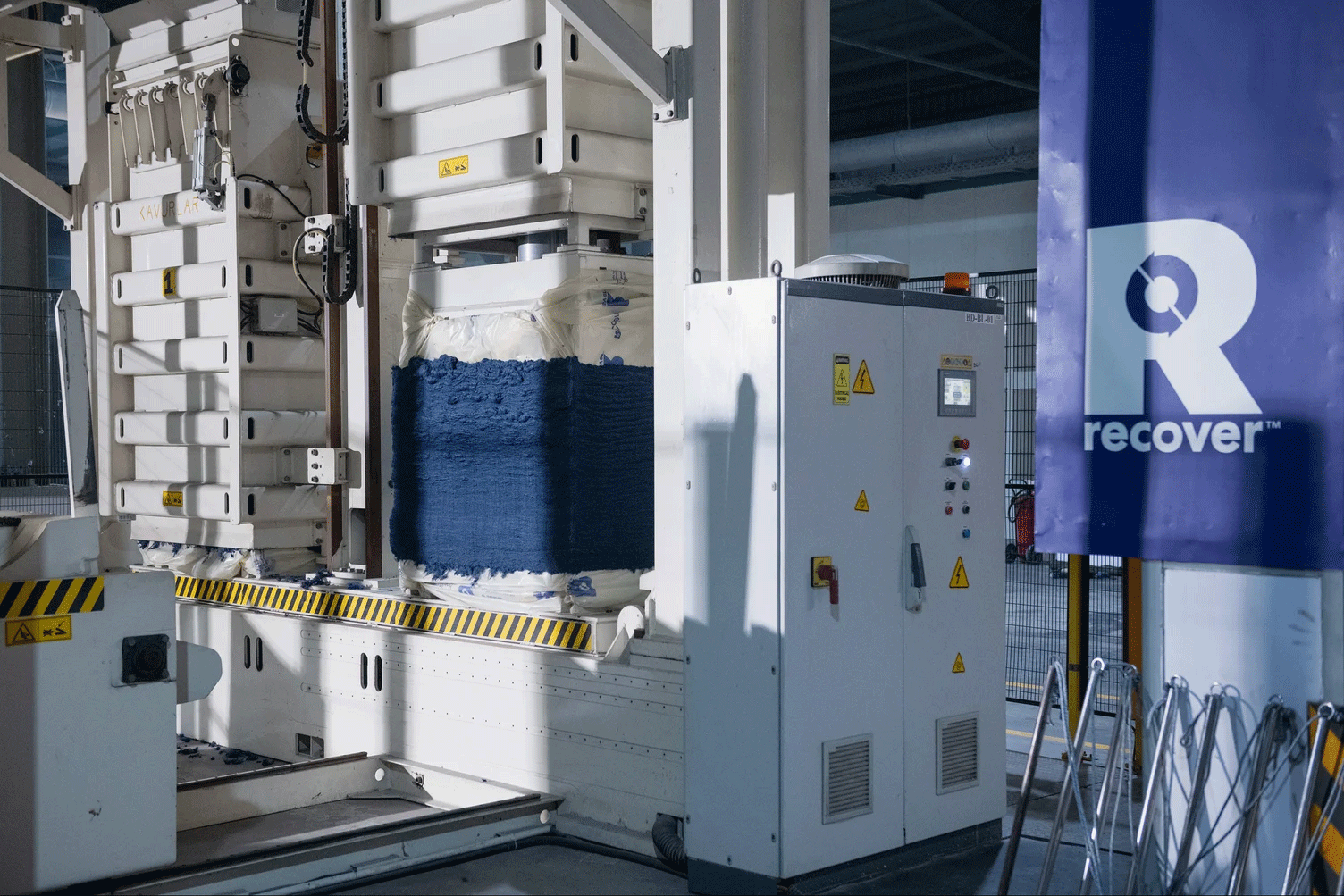
Recover has launched Recover™One, a range of ready-to-spin blends made entirely from recycled cotton and recycled polyester. Cotton-to-polyester ratios can be adjusted for different applications, and the material can be supplied as fiber blends or as fabric through Recover’s supply-chain partners.

The technical point is color management. Recover combines the original colors of textile-waste feedstocks with color-matched, dope-dyed recycled polyester through an intimate blending process.
The company says this creates consistent solid, heather and mélange options without a downstream overdyeing stage, reducing processing time and avoiding an additional wet-finishing step.

Applications cited include single jersey, French terry and fleece. Recover also refers to previously verified life-cycle assessments for its recycled cotton, but the new development is the system-level combination of recycled inputs, predefined color and spinning-ready consistency rather than recycled cotton alone.

Recover has launched Recover™One, a range of ready-to-spin blends made entirely from recycled cotton and recycled polyester. Cotton-to-polyester ratios can be adjusted for different applications, and the material can be supplied as fiber blends or as fabric through Recover’s supply-chain partners.

The technical point is color management. Recover combines the original colors of textile-waste feedstocks with color-matched, dope-dyed recycled polyester through an intimate blending process.
The company says this creates consistent solid, heather and mélange options without a downstream overdyeing stage, reducing processing time and avoiding an additional wet-finishing step.

Applications cited include single jersey, French terry and fleece. Recover also refers to previously verified life-cycle assessments for its recycled cotton, but the new development is the system-level combination of recycled inputs, predefined color and spinning-ready consistency rather than recycled cotton alone.

Source:

 Recover Textile Systems, S.L.

09.10.2026

Circ and Huafon plan 200-tonne-per-day first phase for textile recycling in China

Circ and Huafon are partnering on a multi-phase textile-to-textile recycling site within Huafon’s industrial footprint in China. 
The plant will use Circ’s process for polycotton waste and recover both major material streams: recycled PTA and MEG for polyester production and recycled cellulosic pulp for new textiles.

Phase one is designed to process approximately 200 metric tonnes of textile waste per day, with additional capacity planned. Huafon will invest in the project and contribute engineering, procurement, logistics and commercial capabilities, while Circ brings its recycling technology and a network of brands, manufacturing partners and downstream customers.

Textination has previously covered Circ partnerships in China, including recycled polyester filament production with Shenghong. This project represents a distinct new development.
It concerns construction of recycling capacity itself rather than downstream yarn conversion. Circ is simultaneously developing its first industrial-scale facility in France.

Circ and Huafon are partnering on a multi-phase textile-to-textile recycling site within Huafon’s industrial footprint in China. 
The plant will use Circ’s process for polycotton waste and recover both major material streams: recycled PTA and MEG for polyester production and recycled cellulosic pulp for new textiles.

Phase one is designed to process approximately 200 metric tonnes of textile waste per day, with additional capacity planned. Huafon will invest in the project and contribute engineering, procurement, logistics and commercial capabilities, while Circ brings its recycling technology and a network of brands, manufacturing partners and downstream customers.

Textination has previously covered Circ partnerships in China, including recycled polyester filament production with Shenghong. This project represents a distinct new development.
It concerns construction of recycling capacity itself rather than downstream yarn conversion. Circ is simultaneously developing its first industrial-scale facility in France.

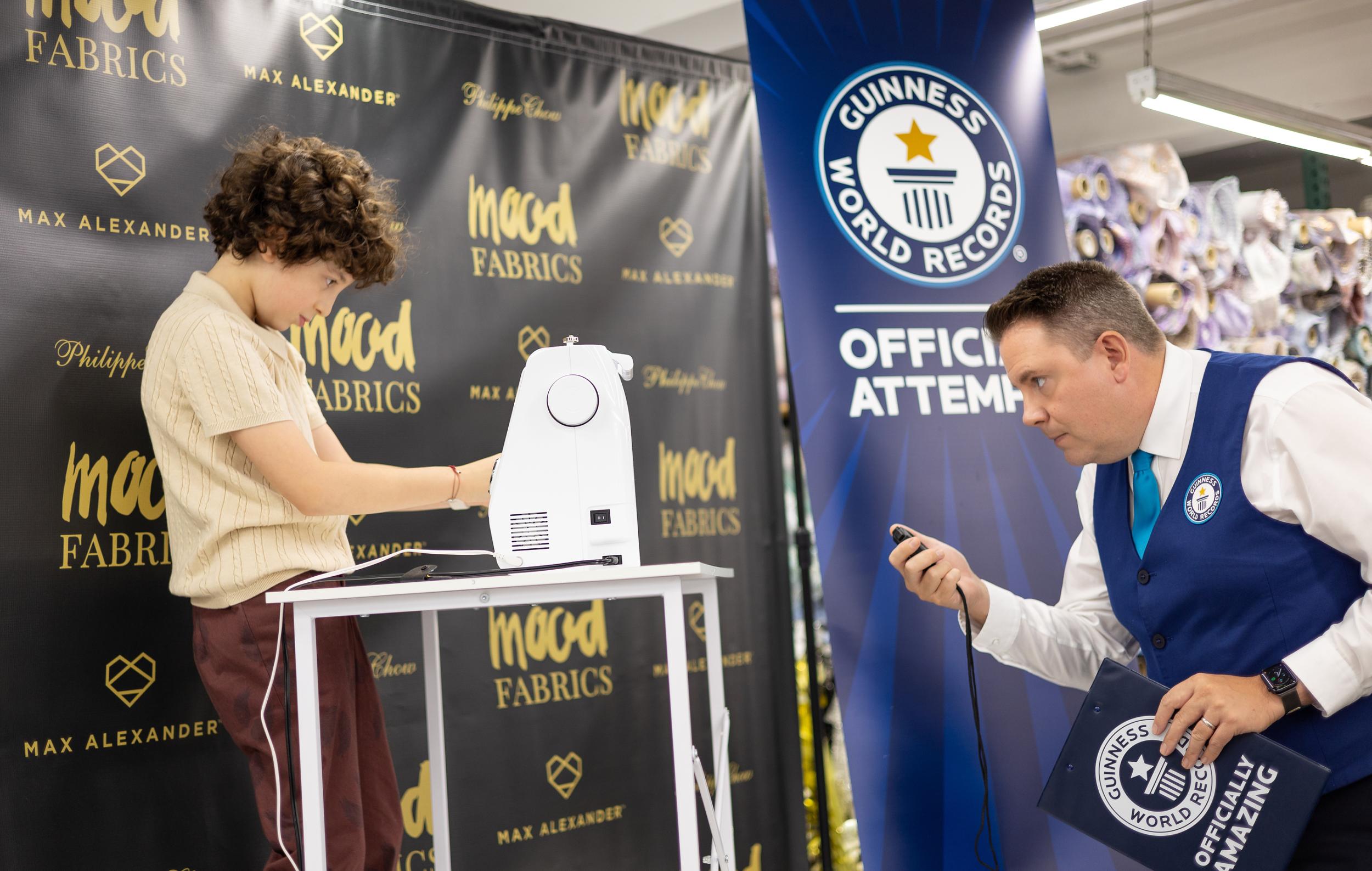
Under the close watch of a Guinness World Records adjudicator, 10-year-old designer Max Alexander competes during his launch event at Mood Fabrics NYC on September 14, 2026. Photo via Mood Fabrics
Under the close watch of a Guinness World Records adjudicator, 10-year-old designer Max Alexander competes during his launch event at Mood Fabrics NYC on September 14, 2026.
18.09.2026

Mood Fabrics launches 15-piece fabric line with Max Alexander

Mood Fabrics has launched a 15-fabric collection with ten-year-old designer Max Alexander. The Mood × Max Alexander line debuted in New York on 14 September and is being sold online and through Mood's U.S. retail locations.

The company lists BCI cotton, EcoVero viscose, European flax linen and recycled-polyester faux fur among the materials. The range combines prints and textured fashion fabrics with several fibre choices already associated with established sourcing or recycling programmes.

Alexander selected and annotated the fabrics. The collaboration therefore starts at material choice, leaving the collection open to further garment design and making rather than presenting a fixed apparel capsule.

Mood Fabrics has launched a 15-fabric collection with ten-year-old designer Max Alexander. The Mood × Max Alexander line debuted in New York on 14 September and is being sold online and through Mood's U.S. retail locations.

The company lists BCI cotton, EcoVero viscose, European flax linen and recycled-polyester faux fur among the materials. The range combines prints and textured fashion fabrics with several fibre choices already associated with established sourcing or recycling programmes.

Alexander selected and annotated the fabrics. The collaboration therefore starts at material choice, leaving the collection open to further garment design and making rather than presenting a fixed apparel capsule.

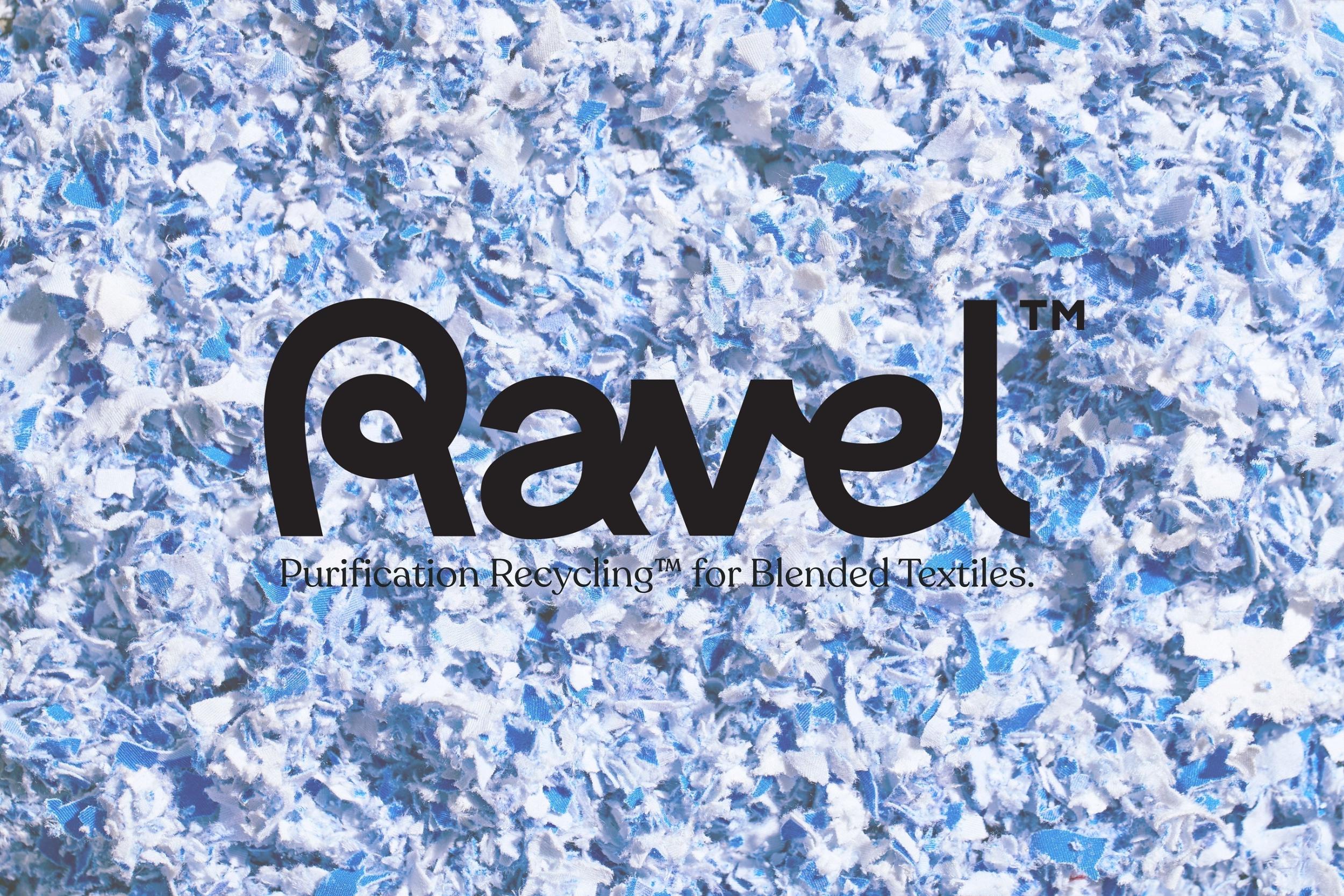
Ravel - shredded polyester/elastane material ready for processing (c) Ravel
18.09.2026

Ravel raises $8.2m to scale blended-textile recycling

Ravel has closed an oversubscribed $8.2 million seed round led by One Small Planet, with participation from AP Ventures, Overlay Capital, Lichen Ventures and existing investors. The funding is intended to move the Seattle-based recycling company from pilot operation towards commercial readiness.

Its Purification Recycling process is aimed at one of apparel recycling's persistent problems: stretch blends. Elastane is widely used in activewear, denim, underwear and other garments, yet even relatively small percentages can interfere with established recycling routes.

Rather than treating the whole textile as a single feedstock, Ravel is developing a separation and purification route for polyester/elastane blends. The company says recovered material can be converted into recycled plastic pellets for renewed use as a raw material.

The next phase will test more than chemistry. Commercial viability depends on throughput, feedstock variability, separation efficiency, energy and chemical inputs, and the quality of the recovered fractions. Ravel plans to validate the process at production scale with textile partners.

Ravel has closed an oversubscribed $8.2 million seed round led by One Small Planet, with participation from AP Ventures, Overlay Capital, Lichen Ventures and existing investors. The funding is intended to move the Seattle-based recycling company from pilot operation towards commercial readiness.

Its Purification Recycling process is aimed at one of apparel recycling's persistent problems: stretch blends. Elastane is widely used in activewear, denim, underwear and other garments, yet even relatively small percentages can interfere with established recycling routes.

Rather than treating the whole textile as a single feedstock, Ravel is developing a separation and purification route for polyester/elastane blends. The company says recovered material can be converted into recycled plastic pellets for renewed use as a raw material.

The next phase will test more than chemistry. Commercial viability depends on throughput, feedstock variability, separation efficiency, energy and chemical inputs, and the quality of the recovered fractions. Ravel plans to validate the process at production scale with textile partners.

The financing adds capacity at a point where recyclers are increasingly trying to tackle blends that mechanical systems cannot readily return to fibre.

Photo FedEx
16.09.2026

Old uniforms become 6,250 blankets

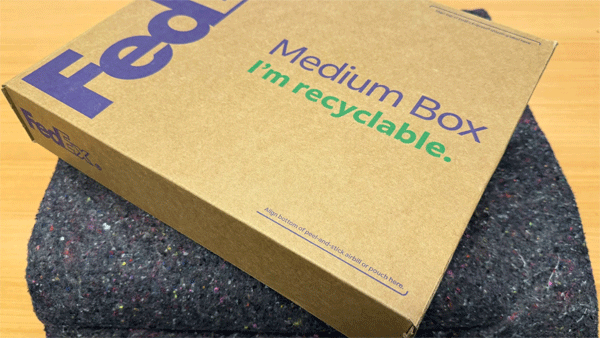
FedEx has allocated 4,230 kilograms of retired uniforms to the 11th edition of its Brazilian uniform-recycling programme. The material has been converted into about 5,000 blankets for people and 1,250 smaller blankets for animals cared for by NGOs.

Since 2015, the programme has redirected 93,000 uniform items, equivalent to around 30 tonnes of textile material, into more than 37,000 blankets.

The long operating history is the notable part of the project. Corporate-wear take-back only becomes a credible circular model when collection, sorting and processing remain organised over multiple replacement cycles. Here, a controlled internal textile stream is converted into a defined second product rather than sent into an unspecified disposal route.

FedEx has allocated 4,230 kilograms of retired uniforms to the 11th edition of its Brazilian uniform-recycling programme. The material has been converted into about 5,000 blankets for people and 1,250 smaller blankets for animals cared for by NGOs.

Since 2015, the programme has redirected 93,000 uniform items, equivalent to around 30 tonnes of textile material, into more than 37,000 blankets.

The long operating history is the notable part of the project. Corporate-wear take-back only becomes a credible circular model when collection, sorting and processing remain organised over multiple replacement cycles. Here, a controlled internal textile stream is converted into a defined second product rather than sent into an unspecified disposal route.

Source:

Federal Express Corporation

16.09.2026

EURATEX warns of a missing sense of urgency on Europe’s industrial competitiveness

EURATEX, the European Apparel and Textile Confederation, welcomes today’s State of the Union Address by European Commission President, Ursula von der Leyen, and in particular her recognition of Europe’s need to rebalance unfair trade, cut red tape, and strengthen its industrial and strategic autonomy. 

EURATEX now calls on the Commission and Member States to translate these commitments into concrete action for the textile and apparel value chain.

At the same time, we regret that industrial competitiveness received comparatively limited attention in an otherwise wide-ranging address. EURATEX urges the Commission to match today’s political commitments with an equal sense of urgency on industrial competitiveness, and to place manufacturing sectors, such as textiles, more firmly at the centre of its agenda in the months ahead.

EURATEX, the European Apparel and Textile Confederation, welcomes today’s State of the Union Address by European Commission President, Ursula von der Leyen, and in particular her recognition of Europe’s need to rebalance unfair trade, cut red tape, and strengthen its industrial and strategic autonomy. 

EURATEX now calls on the Commission and Member States to translate these commitments into concrete action for the textile and apparel value chain.

At the same time, we regret that industrial competitiveness received comparatively limited attention in an otherwise wide-ranging address. EURATEX urges the Commission to match today’s political commitments with an equal sense of urgency on industrial competitiveness, and to place manufacturing sectors, such as textiles, more firmly at the centre of its agenda in the months ahead.

"Europe cannot build a strong defence, lead the green and digital transitions, or protect its social model on a weakening industrial base. Competitiveness is not just one chapter of the European project – it is the foundation all the others are built on; when we get that right, everything else becomes possible.”, states Dirk Vantyghem, Director General EURATEX.

On trade, EURATEX shares the President’s assessment that the EU’s growing trade deficit with China – now standing at €1 billion a day – has reached a tipping point. The textile and apparel sector has been on the front line of this “second China shock” for years, and we advocate the Commission to move swiftly from dialogue to concrete trade-defence measures, including stronger customs enforcement and imports monitoring for textile products.

EURATEX also welcomes the pledge to cut administrative burden and forge a “pact against gold-plating” with Member States. Textile companies, the vast majority SMEs, are disproportionately affected by overlapping and often diverging national implementation of EU rules, and genuine simplification would meaningfully improve their competitiveness.

Looking ahead to the next Multiannual Financial Framework (MFF), EURATEX stresses the need of dedicated support for the textile industry, reflecting its role as a strategic manufacturing sector for Europe's green, digital, and defence transitions, and ensuring the sector is not left without targeted instruments as EU funding priorities are reshaped.

EURATEX commends the President’s announcement of a new “European Instrument for Strategic Enablers” to strengthen European defence capabilities. Technical and defence-related textiles – from protective equipment and ballistic materials to smart textiles for soldier systems – are an integral part of Europe’s defence industrial base, and we stand ready to ensure the sector is fully recognised in this effort.

On international partnerships, we note with interest the President’s proposal to deepen the EU-Canada relationship through an “Alliance for the Future”. EURATEX has recently signed Memoranda of Understanding with its Canadian counterparts, the Canadian Textiles Industry Association (CTIA) and the Canadian Apparel Federation (CAF), and is well-placed to build on this cooperation as EU-Canada industrial ties are strengthened.

Finally, EURATEX supports the announcement of a new Mediterranean Youth Skills and Jobs initiative. We are already active in this domain through our role in the Pact for Skills, and have ongoing engagement across the Mediterranean region. Therefore, we are ready to contribute with our expertise to ensure the initiative delivers meaningful opportunities for young people in the textile and apparel value chain.

Source:

European Apparel and Textile Confederation EURATEX