From the Sector

Reset
Exemplary picture of a filter cake with deposited microplastic fibers. Photo: DITF
Exemplary picture of a filter cake with deposited microplastic fibers.
30.03.2026

Textile Cascade Filter for Removing Microplastics from Wastewater

Microplastics are now found almost everywhere, even in remote regions of Antarctica. They enter the human body through the food chain. Studies indicate that microplastics may have negative effects on the human health.

One important source of microplastic pollution is the washing of textiles made from synthetic fibers. During washing, significant amounts of microplastics are released into wastewater and then enter aquatic ecosystems. To address this problem, the German Institutes of Textile and Fiber Research Denkendorf (DITF) have developed a textile-based cascade filter system.

The amount of microfibers released per wash cycle and per kilogram of textiles is estimated to range from 12 and 1,400 milligrams. Wastewater treatment plants are already able to remove a large portion of microplastic particles from wastewater, with removal rates of up to 99 percent. However, because of the high volume of wastewater discharged every day, these plants can still contribute significantly to microplastic pollution in the environment.

Microplastics are now found almost everywhere, even in remote regions of Antarctica. They enter the human body through the food chain. Studies indicate that microplastics may have negative effects on the human health.

One important source of microplastic pollution is the washing of textiles made from synthetic fibers. During washing, significant amounts of microplastics are released into wastewater and then enter aquatic ecosystems. To address this problem, the German Institutes of Textile and Fiber Research Denkendorf (DITF) have developed a textile-based cascade filter system.

The amount of microfibers released per wash cycle and per kilogram of textiles is estimated to range from 12 and 1,400 milligrams. Wastewater treatment plants are already able to remove a large portion of microplastic particles from wastewater, with removal rates of up to 99 percent. However, because of the high volume of wastewater discharged every day, these plants can still contribute significantly to microplastic pollution in the environment.

To date, various mechanical and chemical technologies have been used in wastewater treatment. Filter cascades, on the other hand, have mainly been applied for the analysis and characterization of microplastic particles. In their study, the DITF researchers demonstrated that specialized textile-based filter cascades are also capable of effectively removing microplastics from rinse water in industrial laundries. This is possible even at low water pressure. In addition, the system has a simplified design and requires little maintenance.

The cascade microfilter developed by the Denkendorf research team consists of three filtration stages. Each stage uses a three-dimensional textile sandwich composite made of polypropylene fabric and a 3D spacer knit. The stages have progressively smaller pore sizes, allowing the removal of microplastic particles down to 1.5 μm.

A compressed-air backwashing system is integrated to clean the filter and restore its performance. Because the filter cake moves from the fabric to the spacer layer, backwashing is needed less often, and the operating time can be increased by up to 155 percent.

Field trials at an industrial laundry and a municipal wastewater treatment plant confirmed a separation efficiency of 89.7 percent and 98.5 percent for the microfilter cascade. It can thus make a significant contribution to reducing microplastic pollution.

The high microplastic separation efficiency and the long service life of the filter medium make the system a promising solution for wastewater treatment. It is cost-effective, space-saving, and can be adapted to different applications and scales.

The textile composite medium developed at the DITF can be tailored to meet a variety of filtration requirements beyond its application in microplastic filtration.

Source:

Deutsche Institute für Textil- und Faserforschung Denkendorf
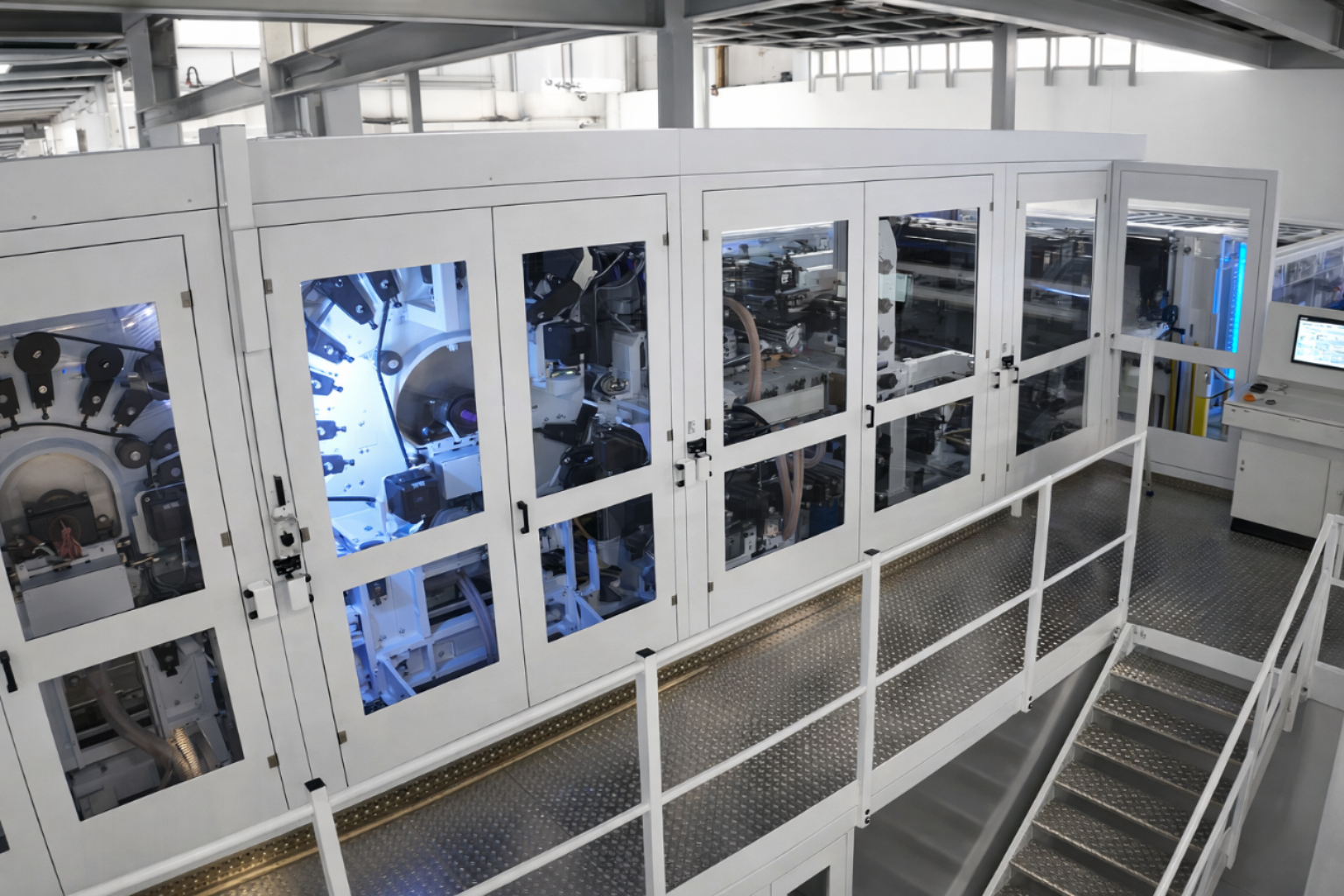
NC X card in operation on a T SUPREMA needle punch line at a customer site – proven performance in real production conditions Foto Trützschler Gruppe
27.03.2026

Nonwovens and fiber processing solutions: Trützschler at Techtextil 2026

From April 21 to 24, 2026, the Trützschler Group will present its future‑ready solutions at Techtextil in Frankfurt, Germany. Trützschler Nonwovens will showcase its latest developments for efficient nonwovens production, including comprehensive service and consulting solutions. Highlights include the fully upgraded X‑Series nonwoven cards suitable for spunlace, needle‑punching and air‑through bonding (ATB) processes, as well as the T‑ONE digital working environment enhanced with new features. Trützschler Card Clothing will complement the presentation with a new card wire designed with a specially engineered surface for high‑performance nonwoven applications. Visitors can also take a closer look at Trützschler’s complete solution for the recycling of textile waste, TRUECYCLED. 

From April 21 to 24, 2026, the Trützschler Group will present its future‑ready solutions at Techtextil in Frankfurt, Germany. Trützschler Nonwovens will showcase its latest developments for efficient nonwovens production, including comprehensive service and consulting solutions. Highlights include the fully upgraded X‑Series nonwoven cards suitable for spunlace, needle‑punching and air‑through bonding (ATB) processes, as well as the T‑ONE digital working environment enhanced with new features. Trützschler Card Clothing will complement the presentation with a new card wire designed with a specially engineered surface for high‑performance nonwoven applications. Visitors can also take a closer look at Trützschler’s complete solution for the recycling of textile waste, TRUECYCLED. 

Trützschler Nonwovens
The T-SUPREMA needle punching line has proven its performance in the market, with lines successfully operating at two customer sites since early this year. It demonstrates the exceptional versatility of needle-punched nonwovens, covering basis weights from below 50 gsm to above 2,000 gsm. New streamlined configurations featuring the compact NC-Xe card further reduce the footprint while ensuring high process stability and consistent product quality.

Beyond complete line solutions, Trützschler Nonwovens will showcase upgrades to its single machine portfolio, including the X-Series nonwovens cards (the high-speed card NCT-X, the versatile NC-X and the compact NC-Xe), the MPD high-performance dryer and the new compact AquaJet-X. These developments are designed to combine compact machine concepts with high operational reliability and outstanding performance.

At Techtextil 2026, Trützschler Nonwovens will also highlight its advanced ATB technology for hygiene applications. The process enables the reliable processing of ultra fine fibers down to 0.4 dtex, producing exceptionally soft nonwovens that meet the highest requirements for softness and performance in baby diaper applications.

T‑ONE, Trützschler Nonwovens’ digital working environment, serves as a powerful digital backbone for any nonwoven line. New enhancements include an energy management function for real‑time monitoring of electricity and gas consumption and CO₂ footprint calculation per time unit, roll or order, as well as camera‑based anomaly detection that identifies fiber migration and accumulations at an early stage. This helps to prevent unplanned downtime while improving process stability and production transparency.

With tailored modernization and development solutions, Trützschler Nonwovens supports manufacturers in optimizing existing installations and translating new product ideas into stable, industrial scale production. Application-specific consulting enables higher efficiency, increased output and longer service life – without compromising quality.

Trützschler Card Clothing (TCC): Next‑generation card clothing for demanding nonwovens applications
Visitors can experience top nonwovens performance with our high-efficiency card clothing. Our TCC experts will present our latest innovation: a new wire with special surface designed for Hygiene, Spunlace and ATB applications. It ensures cleaner operation, less contamination and reduced downtime - delivering maximum productivity for your line. More details will be revealed at the exhibition – don’t miss this opportunity to see it first hand. 

Trützschler Spinning: TRUECYCLED – the complete solution for textile recycling    
Visitors can also learn more about TRUECYCLED, Trützschler’s complete solution for the recycling of textile waste. It covers the complete process: from cutting and tearing textile waste to carding and drawing secondary fibers. Based on Trützschler’s technological recommendations and a Trützschler machinery line-up, it ensures the best possible quality of the end product. 

Source:

Trützschler Gruppe

SNUGGLE joins Sedex in commitment to social and environmental sustainability Photo Snuggle Ltd
27.03.2026

SNUGGLE joins Sedex in commitment to social and environmental sustainability

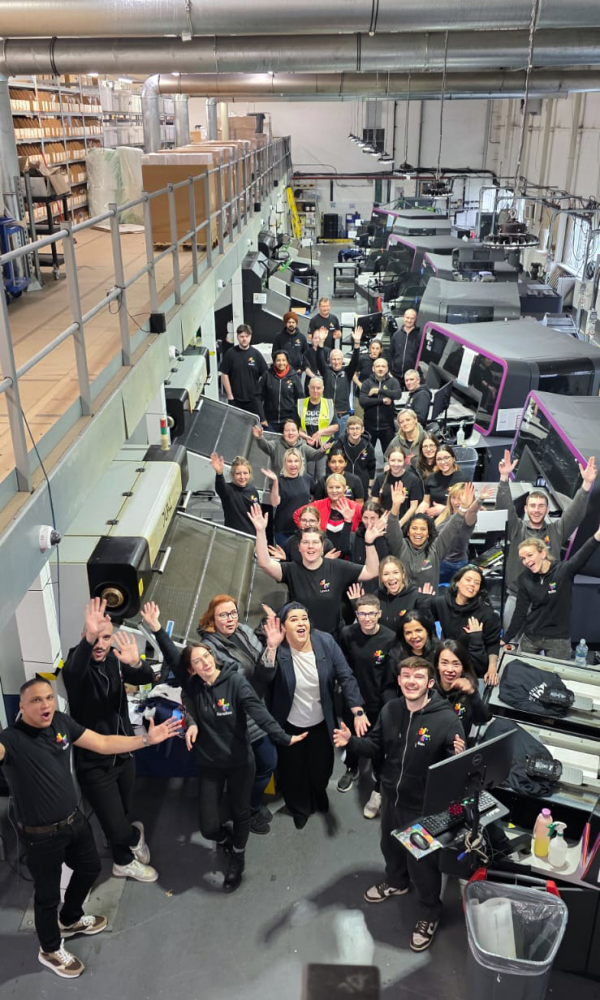
SNUGGLE LTD became a Sedex member in February 2024 and recently undertook their first independent SMETA audit, joining a world-leading organisation in their latest commitment to supply chain sustainability. Sedex is a global technology company that specialises in data, insights and professional services to empower supply chain sustainability.
 
SNUGGLE LTD is dedicated to being a responsible business, managing their operations and supply chain in a way that safeguards workers, communities and the environment. Serving the apparel, textile and fashion industry, the company helps brands move at the speed of trend while reducing waste, risk and unnecessary inventory. Its digital garment decoration and agile production model enables rapid customization, short runs and scalable fulfillment with premium quality at every stage.
 
Sedex’s technology and services help companies such as SNUGGLE LTD to source more sustainably. The platform and solutions provided empower businesses with the practical tools, data analysis and insights needed to drive more socially and environmentally responsible practices in their both own operations and with suppliers.
 

SNUGGLE LTD became a Sedex member in February 2024 and recently undertook their first independent SMETA audit, joining a world-leading organisation in their latest commitment to supply chain sustainability. Sedex is a global technology company that specialises in data, insights and professional services to empower supply chain sustainability.
 
SNUGGLE LTD is dedicated to being a responsible business, managing their operations and supply chain in a way that safeguards workers, communities and the environment. Serving the apparel, textile and fashion industry, the company helps brands move at the speed of trend while reducing waste, risk and unnecessary inventory. Its digital garment decoration and agile production model enables rapid customization, short runs and scalable fulfillment with premium quality at every stage.
 
Sedex’s technology and services help companies such as SNUGGLE LTD to source more sustainably. The platform and solutions provided empower businesses with the practical tools, data analysis and insights needed to drive more socially and environmentally responsible practices in their both own operations and with suppliers.
 
SNUGGLE LTD will use Sedex technology and data tools to map the supply chain in more detail, keep live risk assessment audits and better understand of continuous working conditions which drive positive impacts for employees and our customers.

More information:
Snuggle Ltd Sedex data tools
Source:

Snuggle Ltd

A model walks the runway at the 42nd Cornell Fashion Collective Spring Runway Show. Devin Flores/Cornell University
27.03.2026

Memory becomes muse in annual runway show

Nostalgia was king at the 42nd annual Cornell Fashion Collective (CFC) Spring Runway Show, complete with a crown.

Collections at the March 21 show in Barton Hall paid homage to well-loved storybooks and designers’ childhood memories and cultural backgrounds. A total of 42 students showed their work, including nine seniors who designed full collections.

“Nostalgia is my favorite feeling,” said Madison Feely ’26, a fashion design management major in the College of Human Ecology (CHE), who referenced childhood classics including “Where the Wild Things Are” (with an illustrated sweater and crocheted crown), “Little Women,” “The Very Hungry Caterpillar” in her collection, “Homebody.” “My designs celebrate a well-lived and well-loved childhood, honoring the authors and illustrators who allow me to relive it each time I open their books.”

For the past two years, Feely has been the student assistant for the Shima Seiki knitting machine, gaining experience with knit programming and knitwear design. She paired the machine knit pieces with labor-intensive crochet and hand-pieced quilting techniques. She also made matching earrings out of Shrinky Dink paper.

Nostalgia was king at the 42nd annual Cornell Fashion Collective (CFC) Spring Runway Show, complete with a crown.

Collections at the March 21 show in Barton Hall paid homage to well-loved storybooks and designers’ childhood memories and cultural backgrounds. A total of 42 students showed their work, including nine seniors who designed full collections.

“Nostalgia is my favorite feeling,” said Madison Feely ’26, a fashion design management major in the College of Human Ecology (CHE), who referenced childhood classics including “Where the Wild Things Are” (with an illustrated sweater and crocheted crown), “Little Women,” “The Very Hungry Caterpillar” in her collection, “Homebody.” “My designs celebrate a well-lived and well-loved childhood, honoring the authors and illustrators who allow me to relive it each time I open their books.”

For the past two years, Feely has been the student assistant for the Shima Seiki knitting machine, gaining experience with knit programming and knitwear design. She paired the machine knit pieces with labor-intensive crochet and hand-pieced quilting techniques. She also made matching earrings out of Shrinky Dink paper.

Meanwhile Ana Mocklar ’26, an information science major in the Cornell Ann S. Bowers College of Computing and Information Science, took a page from Moe Willems’ series of pigeon books for “Don’t Let the Pigeon Design a Collection,” with eight whimsical looks each representing a city mishap, based on a trip to New York City. “The Puddle Pigeon” featured beads that portrayed rain falling off an umbrella skirt; “The Cat Attack Pigeon” had large slashes shown by red pleats on the jacket and pants; and “The Takeout Bag Pigeon,” had red lettering with the words “Thank you!” and “Have a Nice Day!” across the shoulders.

CHE fashion design major Lucy Jones ’26 reflected her experience growing up in Los Angeles in her collection, “Crosseyed and Painless.” T-shirts emblazoned with the words “Cable TV” and “Around Six PM” were juxtaposed with plaid shorts and minidresses.

Other collections took root in memories from across the globe. In “<Neighborhood>”, CHE fashion design major Andy (Seungjoo) Kim ’26 imagined what traditional Korean neighborhoods would look like if they had persisted today. “Mare,” by Julia Schanen ’26, a mathematics major in the College of Arts and Sciences, evoked her Romanian heritage, using natural fabrics like silk, leather and wool. The wool came from small farms in Ithaca and Michigan, and she sourced the silks from various locations, including a class trip to India and Sri Lanka in January. She purchased all the leather wholesale, because it was deemed too damaged to sell at retail, and used many upcycled and salvaged antique remnants. 

“I’m always so inspired by the past and incorporated antique trims and accessories into my collection,” she said. Every look required handwork, and the materials were delicate and required handling with a lot of care.

Kylie Gillen ’26, a fashion design major in CHE, blended her experience and cultural heritage to create her collection, which sought to preserve traditional Japanese practices through contemporary forms, materials and perspectives. Patterns resembling traditional woodblock prints graced long flowing trains. 

“Permanence is not about resisting change but about allowing tradition to evolve and stay meaningful in modern life,” she said. 

Source:

By Robin Roger College of Human Ecology

INDA Announces Legislative Champion and Industry Advocate Awards (c) INDA
27.03.2026

INDA Announces Legislative Champion and Industry Advocate Awards

INDA, the Association of the Nonwoven Fabrics Industry, announced the winners of its inaugural Legislative Champion and Industry Advocate of the Year Awards, recognizing policymakers and industry members for their support of the nonwovens industry’s advocacy agenda.

Legislative champion award winners were Senator Jeff Merkley (D-OR) and Congresswoman Lisa McClain (R-MI), recognized for their support of the WIPPES Act, which would enact national Do Not Flush labeling standards for non-flushable wipes. Senator Merkley accepted his award in person at INDA’s third annual Washington D.C. Fly-In and Advocacy Summit, held in conjunction with ISSA, the Worldwide Cleaning Association’s Clean Advocacy Summit.

Senator Merkley was able to share the news with the group that the WIPPES Act, S. 1092, had been passed by the United States Senate the day prior with unanimous consent.

Industry Advocate of the Year awards were given to Martyn Davis, President of Sellars Nonwovens, and Sam Nebel, co-founder of Goodwipes, in recognition for their support of the nonwoven industry and INDA’s wipes advocacy.

INDA, the Association of the Nonwoven Fabrics Industry, announced the winners of its inaugural Legislative Champion and Industry Advocate of the Year Awards, recognizing policymakers and industry members for their support of the nonwovens industry’s advocacy agenda.

Legislative champion award winners were Senator Jeff Merkley (D-OR) and Congresswoman Lisa McClain (R-MI), recognized for their support of the WIPPES Act, which would enact national Do Not Flush labeling standards for non-flushable wipes. Senator Merkley accepted his award in person at INDA’s third annual Washington D.C. Fly-In and Advocacy Summit, held in conjunction with ISSA, the Worldwide Cleaning Association’s Clean Advocacy Summit.

Senator Merkley was able to share the news with the group that the WIPPES Act, S. 1092, had been passed by the United States Senate the day prior with unanimous consent.

Industry Advocate of the Year awards were given to Martyn Davis, President of Sellars Nonwovens, and Sam Nebel, co-founder of Goodwipes, in recognition for their support of the nonwoven industry and INDA’s wipes advocacy.

“INDA would like to extend a heartfelt thanks and congratulations to all awardees,” noted INDA government affairs director Wes Fisher, “It was a great moment for Senator Merkley to join us in person to share the news of the Senate passage of the WIPPES Act, he and Representative McClain have been instrumental in moving this key legislation. Additionally, we would like to thank and recognize Sam and Martyn for their steadfast support of the nonwovens industry’s advocacy agenda.”

Source:

INDA 

25.03.2026

Italian Textile Machinery Innovation Takes Center Stage at Techtextil 2026

The Italian textile machinery industry is gearing up for a key event on the international trade fair calendar: Techtextil 2026, taking place from April 21–24 in Frankfurt, Germany. A prestigious representation of Italian companies will participate in the German exhibition—a global benchmark for technical and innovative textiles—to present cutting-edge technologies dedicated to an ever-expanding market.

Italy confirms its position among the world leaders in the textile machinery sector, thanks to a solid and highly specialized production system. The industry stands out for its strong international vocation, with a predominant share of production destined for foreign markets (86% of its sales) and a consolidated presence in over 130 countries. This places the country among the top global exporters of textile technology, renowned for its quality, innovation, and reliability.

The Italian textile machinery industry is gearing up for a key event on the international trade fair calendar: Techtextil 2026, taking place from April 21–24 in Frankfurt, Germany. A prestigious representation of Italian companies will participate in the German exhibition—a global benchmark for technical and innovative textiles—to present cutting-edge technologies dedicated to an ever-expanding market.

Italy confirms its position among the world leaders in the textile machinery sector, thanks to a solid and highly specialized production system. The industry stands out for its strong international vocation, with a predominant share of production destined for foreign markets (86% of its sales) and a consolidated presence in over 130 countries. This places the country among the top global exporters of textile technology, renowned for its quality, innovation, and reliability.

In the first eleven months of 2025, sales in Germany have already reached 81 million euros. Among the most requested technologies, accessories stand out (36%), followed by finishing machinery (33%)—the latter being essential for the production processes of the most innovative textile sectors.

The strength of Italian textile machinery lies in its dynamic structure, composed of small-to-medium-sized companies that are heavily oriented toward Research & Development. This flexibility allows Italian manufacturers to collaborate closely with end-users, transforming customer needs into highly personalized and versatile technological solutions.

“The growing demand for innovative textiles across various industrial fields is further consolidating our manufacturers’ position,” emphasizes Marco Salvadè, President of ACIMIT. “At Techtextil 2026, the Italian offering will once again demonstrate how the combination of high technology and customization capabilities is the key to meeting the challenges of the technical textiles sector.”

Italian expertise, rooted in historic districts such as Bergamo, Biella, Brescia, Como, Milan, Prato, and Vicenza, continues to guarantee standards of quality and reliability that make Made in Italy a point of reference for the entire global industry.

The ACIMIT associate companies present in the Italy Pavilion include: Aeris S.r.l., Aigle S.r.l., Beschi S.r.l., Bettarini & Serafini S.r.l., Bonino S.r.l., Castello S.r.l., Ferraro S.p.A., Gemata S.p.A., Gualchieri e Gualchieri S.r.l., Guarneri Technology S.r.l., Idealtech S.r.l., IMA S.p.A., Lonati S.p.A., Mariplast S.p.A., MCS Officina Meccanica S.p.A., Monti-Mac S.r.l., M.T.V. S.r.l., Noseda S.r.l., OMMI S.r.l., Ramatex Italia S.r.l., Ramina S.r.l., Salvadè S.r.l., Simet S.r.l., S.R.S. Spindle Research & Service S.r.l., Stalam S.p.A., Tecnomeccanica Biellese S.r.l., Tecnorama S.r.l., Texera S.r.l., Ugolini S.r.l., Unitech Industries S.r.l., Zanfrini S.r.l..

The strength of the Italian presence is further confirmed by ACIMIT associate members exhibiting at individual stands or through local retailers, including:  A.Piovan S.r.l., Autefa Solutions Italy, Bianco S.p.A., Cormatex S.r.l., Dell’orco & Villani S.r.l., Emme S.r.l., Fadis S.p.A., Itema S.p.A., Lawer S.p.A., LGL Electronics S.p.A., Mesdan S.p.A., Monti Antonio S.p.A., O.M.R. S.r.l., Ratti Luino S.r.l., Siltex S.r.l., Texilmesa S.r.l., Texnology S.r.l., Toscana Spazzole Industriali S.r.l., Willy Italiana S.r.l., Zappa Macchine S.r.l..

More information:
ACIMIT Techtextil Italy
Source:

ACIMIT 

INDA Applauds the U.S. Senate for Passage of the WIPPES Act (S. 1092) Graphic by INDA
25.03.2026

INDA Applauds the U.S. Senate for Passage of the WIPPES Act (S. 1092)

INDA, the Association of the Nonwoven Fabrics Industry, applauds the U.S. Senate for passing the Wastewater Infrastructure Pollution Prevention and Environmental Safety (WIPPES) Act (S. 1092). The WIPPES Act, which creates national standards for “Do Not Flush” labeling for non-flushable wipes, cleared the Senate floor on March 22, 2026. The House version of the bill, H.R. 2269, previously passed the U.S. House on a voice vote in June 2025. The Senate version will now move back to the House for consideration.

This bipartisan legislation is intended to address the growing problem of sewer system clogs caused by improper disposal of consumer wipes that are not intended to be disposed of in toilets. This federal solution is the result of a years-long industry collaboration with wastewater operators, which has resulted in the passage of similar legislation in seven states. The WIPPES Act will create a national standard based on existing state laws to ensure non-flushable wipes will carry prominent “Do Not Flush” labeling on packaging.

INDA, the Association of the Nonwoven Fabrics Industry, applauds the U.S. Senate for passing the Wastewater Infrastructure Pollution Prevention and Environmental Safety (WIPPES) Act (S. 1092). The WIPPES Act, which creates national standards for “Do Not Flush” labeling for non-flushable wipes, cleared the Senate floor on March 22, 2026. The House version of the bill, H.R. 2269, previously passed the U.S. House on a voice vote in June 2025. The Senate version will now move back to the House for consideration.

This bipartisan legislation is intended to address the growing problem of sewer system clogs caused by improper disposal of consumer wipes that are not intended to be disposed of in toilets. This federal solution is the result of a years-long industry collaboration with wastewater operators, which has resulted in the passage of similar legislation in seven states. The WIPPES Act will create a national standard based on existing state laws to ensure non-flushable wipes will carry prominent “Do Not Flush” labeling on packaging.

“INDA has championed this legislation for the past several years, and we are encouraged to see it pass out of the Senate. With the House having passed its version of the bill last year, we now have more momentum behind this legislation than ever. We extend our thanks to the bill sponsors, our industry and wastewater partners, and INDA members as we take another step forward to make “Do Not Flush” labeling nationwide,” said Wes Fisher, Director of Government Affairs.

The WIPPES Act lead sponsors in the Senate are Senator Jeff Merkley (D-OR) and Senator Susan Collins (R-ME), and the companion bill was introduced in the House by Representative Lisa McClain (R-MI) and Representative Kevin Mullin (D-CA).


More information:
INDA WIPPES Act Do Not Flush
Source:

INDA 

James Coogan Photo Hexcel Corporation
James Coogan
24.03.2026

Hexcel: New Chief Financial Officer

Hexcel Corporation announced that James (Jamie) Coogan has been appointed Executive Vice President and Chief Financial Officer effective May 1, 2026. He will report to Tom Gentile, Hexcel Chairman, CEO and President. Coogan succeeds Mike Lenz who has been serving as interim Chief Financial Officer.  Lenz will remain for a period of time when Coogan joins the company as a Senior Advisor to assist with the transition.

“Jamie brings the experience and the financial leadership that will help Hexcel build on our momentum as we enter a period of growth with rising commercial aircraft production rates and an expanding defense and space market,” said Tom Gentile, Chairman, CEO and President, Hexcel Corporation. “His experience in aerospace and defense companies and broader industrial manufacturing organizations will enable him to make a meaningful impact quickly on Hexcel’s strategic priorities.”

Hexcel Corporation announced that James (Jamie) Coogan has been appointed Executive Vice President and Chief Financial Officer effective May 1, 2026. He will report to Tom Gentile, Hexcel Chairman, CEO and President. Coogan succeeds Mike Lenz who has been serving as interim Chief Financial Officer.  Lenz will remain for a period of time when Coogan joins the company as a Senior Advisor to assist with the transition.

“Jamie brings the experience and the financial leadership that will help Hexcel build on our momentum as we enter a period of growth with rising commercial aircraft production rates and an expanding defense and space market,” said Tom Gentile, Chairman, CEO and President, Hexcel Corporation. “His experience in aerospace and defense companies and broader industrial manufacturing organizations will enable him to make a meaningful impact quickly on Hexcel’s strategic priorities.”

Coogan most recently served as Executive Vice President and Chief Financial Officer at Axcelis Technologies, a supplier in the semiconductor industry, having joined the company in September 2023. Previously he served as Senior Vice President, Chief Financial Officer at Kaman Corporation (formerly traded on the NYSE under the symbol KAMN). During his 15 years at Kaman, he held various management positions including Vice President, Investor Relations and Corporate Development, Assistant Vice President, External Reporting and SEC Compliance, and Director, External Reporting and SEC Compliance.

Coogan has more than 20 years of finance, accounting and investor relations experience across multiple industries, including aerospace and defense. After starting his career at PwC, he held several financial management roles at Ann Taylor Stores Corporation and Mohegan Tribal Gaming Authority before joining Kaman. 

Coogan holds an MBA from the Yale School of Management, an M.S. in Accounting and a B.S. in Business Administration, Accounting from the University of Connecticut.

Source:

Hexcel Corporation

Kraig Biocraft Laboratories Photo: Kraig Biocraft Laboratories
24.03.2026

Kraig Biocraft Laboratories Increases R&D Capacity

Kraig Biocraft Laboratories, Inc., a leader in spider silk technology, announced a significant expansion of its research and development capacity designed to keep pace with rapid progress of its advanced materials initiative, Project Atlas.

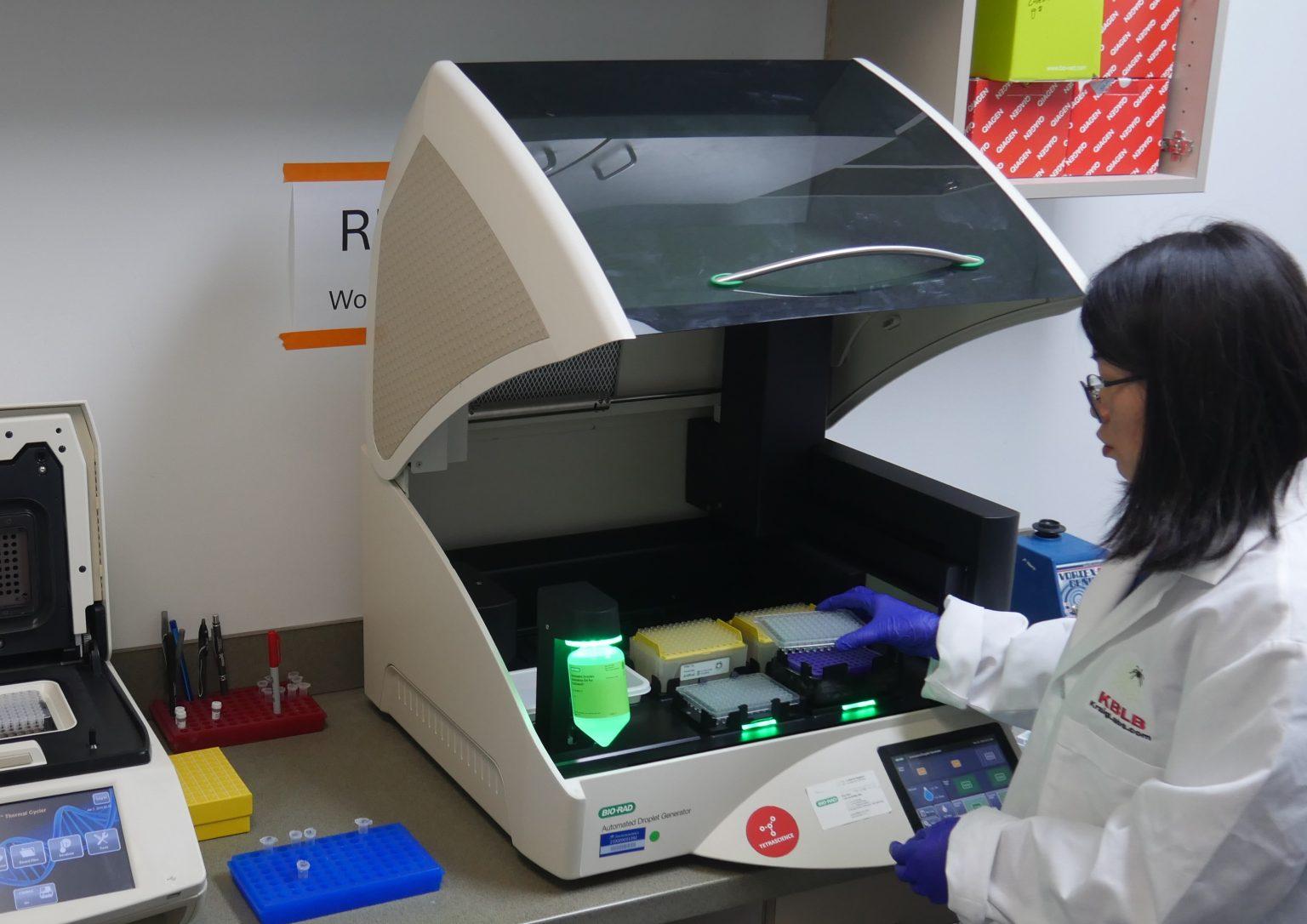
The Company has expanded its laboratory capabilities, onboarding new scientific personnel and the deployment of new advanced equipment. These improvements have roughly tripled screening throughput, allowing the R&D team to keep up with the rapid development of new transgenics.

Kraig Labs implemented these upgrades in direct response to the rapid technical progress made under Project Atlas. Atlas is the Company’s next-generation recombinant spider silk program focused on creating advanced biomaterials with potential industrial and defense applications.

Kraig Biocraft Laboratories, Inc., a leader in spider silk technology, announced a significant expansion of its research and development capacity designed to keep pace with rapid progress of its advanced materials initiative, Project Atlas.

The Company has expanded its laboratory capabilities, onboarding new scientific personnel and the deployment of new advanced equipment. These improvements have roughly tripled screening throughput, allowing the R&D team to keep up with the rapid development of new transgenics.

Kraig Labs implemented these upgrades in direct response to the rapid technical progress made under Project Atlas. Atlas is the Company’s next-generation recombinant spider silk program focused on creating advanced biomaterials with potential industrial and defense applications.

The recently commissioned equipment streamlines the screening of newly created transgenic lines and the analysis of their resulting spider silk expression levels. Project Atlas is now generating significant numbers of transgenics and potential candidates for new production materials. This expanded screening capacity was needed to keep pace with the rate of new transgenic creation, which is now at the highest levels in the Company’s history. By automating portions of the testing workflow, Kraig Labs can now rapidly process and evaluate significantly more samples, quickly identifying new, exciting transgenics.

In addition to the increased screening capacity, Kraig Labs also strengthened its analytical testing capabilities. These tools provide deeper insight into the expression levels and functional impact of each engineered transgenic line. This enhanced visibility allows the research team to identify the most promising genetic designs and prioritize them for advancement into the Company’s production pipeline.

“With the pace of discovery we are seeing in Project Atlas, it became clear that we needed to expand our screening and analysis capacity to keep up with the speed of innovation,” said Kim Thompson, Founder and CEO of Kraig Labs. “This investment in staff and technology further strengthens our position as a leader in advanced biomaterials. We believe we have a wide lead on our competitors, and it is the goal of this investment to expand that lead further.”

Dr. Zhang, the Company’s Chief Scientist, emphasized the impact these upgrades will have on the research pipeline.

“Project Atlas involves the creation and evaluation of numerous complex genetic constructs designed to work together to produce highly specialized silk proteins,” said Dr. Zhang. “The expansion of our testing infrastructure dramatically increases our testing capacity to match the increased pace of transgenic creation. We can now analyze many more transgenic lines in parallel and better quantify how each genetic insert is performing. This level of screening power is essential for isolating the highest-performing lines and rapidly advancing them into production.”

By significantly increasing screening capacity and analytical insight, Kraig Labs expects to shorten development timelines and improve its ability to identify breakthrough material candidates.

Source:

Kraig Biocraft Laboratories

CHIC Shanghai Photo via JANDALI MODE.MEDIEN.MESSEN
24.03.2026

CHIC Shanghai 2026: 160,000+ visitors and clear signals of market transformation

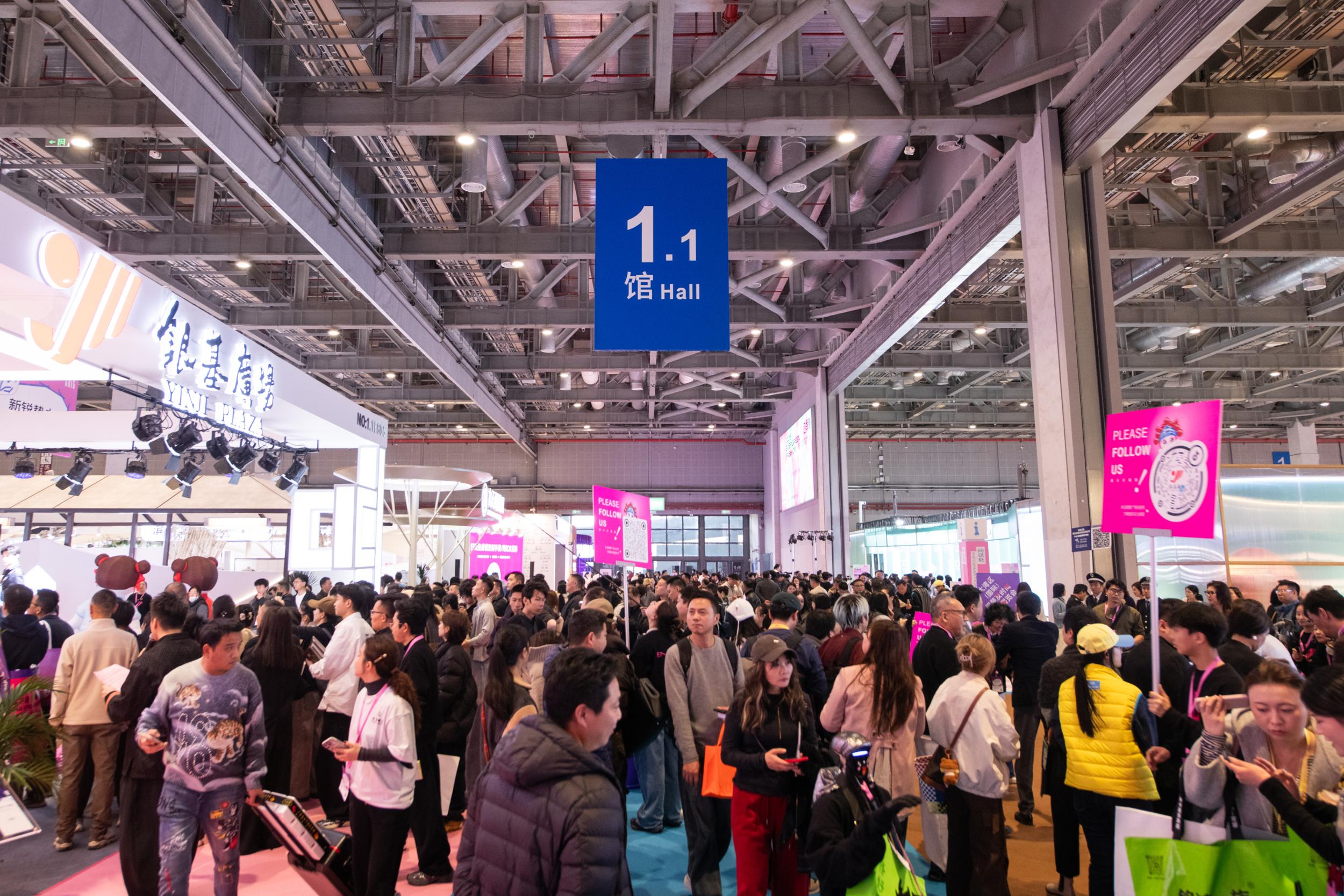
CHIC Spring 2026 (March 11–13, Shanghai) has successfully concluded, reaffirming its position as Asia’s leading fashion and lifestyle trade fair. Across 117,200 sqm, 1,291 exhibitors with 1,335 brands from eight countries and regions met more than 160,000 trade visitors at the National Exhibition & Convention Center in Shanghai  – highlighting the event’s role as a key international business platform.

Under the guiding theme “In Search of Spring,” CHIC reflected an industry in transition, shaped by structural change, new growth markets and evolving consumer demands. With 12 clearly structured segments covering the entire textile value chain, over 130 invited buyer groups from leading platforms such as JD.com, Douyin and Little Red Book, and more than 100 industry events, the fair offered targeted sourcing, high-level networking and strategic dialogue.

CHIC Spring 2026 (March 11–13, Shanghai) has successfully concluded, reaffirming its position as Asia’s leading fashion and lifestyle trade fair. Across 117,200 sqm, 1,291 exhibitors with 1,335 brands from eight countries and regions met more than 160,000 trade visitors at the National Exhibition & Convention Center in Shanghai  – highlighting the event’s role as a key international business platform.

Under the guiding theme “In Search of Spring,” CHIC reflected an industry in transition, shaped by structural change, new growth markets and evolving consumer demands. With 12 clearly structured segments covering the entire textile value chain, over 130 invited buyer groups from leading platforms such as JD.com, Douyin and Little Red Book, and more than 100 industry events, the fair offered targeted sourcing, high-level networking and strategic dialogue.

Key trends included the growing importance of sportswear, outdoor and lifestyle segments, the rise of culturally influenced design concepts and a continued shift towards quality, efficiency and brand identity. International participation is gradually returning, with 45 brands from eight countries and regions on site, among them Italy with 12 brands. 

More information:
CHIC Shanghai Shanghai
Source:

JANDALI MODE.MEDIEN.MESSEN

24.03.2026

Reconomy joins ReHubs to accelerate textile recycling in Europe

Reconomy, the international circular economy specialist, announces that it has joined ReHubs, a leading alliance dedicated to accelerating the transition to a circular textile economy across Europe.

ReHubs brings together over 30 leading organisations from across the textile value chain – collectors, sorters, recyclers, brands, Producer Responsibility Organisations (PROs) and policy experts – to accelerate circularity. Through joint projects and the ReHubs Think Tank, it promotes investment, knowledge sharing and coordinated action across the sector. 

Reconomy, the international circular economy specialist, announces that it has joined ReHubs, a leading alliance dedicated to accelerating the transition to a circular textile economy across Europe.

ReHubs brings together over 30 leading organisations from across the textile value chain – collectors, sorters, recyclers, brands, Producer Responsibility Organisations (PROs) and policy experts – to accelerate circularity. Through joint projects and the ReHubs Think Tank, it promotes investment, knowledge sharing and coordinated action across the sector. 

As a global leader in operating Textile EPR schemes, Reconomy works with some of the world’s most recognisable brands and producers to manage their obligations. EPR is gaining traction across Europe, assigning producers financial responsibility for the end-of-life management of their products, including collection, reuse, recycling, and disposal. Reconomy offers a comprehensive, end-to-end solution for textile brands and producers to meet EPR compliance and access greater circularity options. Central to this is its extensive network of textile sorters and recycling partners capable of supporting both closed and open loop recycling solutions. Joining ReHubs will enable Reconomy to expand this already extensive network and share best practice and knowledge with other stakeholders. 

This announcement comes as Europe is facing a textile waste crisis with less than half of used garments collected for reuse or recycling, and only 1% of used clothes are recycled into new clothes.

Source:

Temple Bar Advisory for Reconomy 

Dr. David Meyer Photo via Charles Barker Corporate Communications GmbH
Dr. David Meyer
24.03.2026

ERWO Holding AG and Hoftex Group AG: New CFO

ERWO Holding AG (“ERWO Holding”), holding company of the Südwolle Group, a leading manufacturer of worsted yarns, as well as main shareholder of Hoftex Group AG (“Hoftex Group”), a group of medium-sized companies in the textile industry, have announced the appointment of a new member to their Management Board: With effect from 1 April 2026, Dr David Meyer will become CFO on the Management Board of both companies. This position has recently been vacant, with the finance division being managed on an interim basis by CEO Manuela Spörl.

ERWO Holding AG (“ERWO Holding”), holding company of the Südwolle Group, a leading manufacturer of worsted yarns, as well as main shareholder of Hoftex Group AG (“Hoftex Group”), a group of medium-sized companies in the textile industry, have announced the appointment of a new member to their Management Board: With effect from 1 April 2026, Dr David Meyer will become CFO on the Management Board of both companies. This position has recently been vacant, with the finance division being managed on an interim basis by CEO Manuela Spörl.

Dr David Meyer brings many years of industry experience to his role as CFO, having worked in both capital markets and a family-run SME environment. As a proven finance expert, David has a comprehensive knowledge across the entire spectrum of the finance department, ranging from accounting and controlling through the structuring of financing and M&A to IT transformation projects and investor relations. He comes from Hamberger Industriewerke (Stephanskirchen near Rosenheim), where, in addition to his role as CFO, he most recently also served as Head of Human Resources. Prior to that, he worked for over 12 years as CFO at Steico SE (Feldkirchen near Munich), a producer of timber building materials and wood fibre insulation listed on the OTC market. Dr Meyer holds a PhD in Industrial Engineering (University of Kaiserslautern).

Source:

Charles Barker Corporate Communications GmbH

New plant and inauguration Photo ACG Kinna
24.03.2026

Major expansion for ACG Kinna follows record year

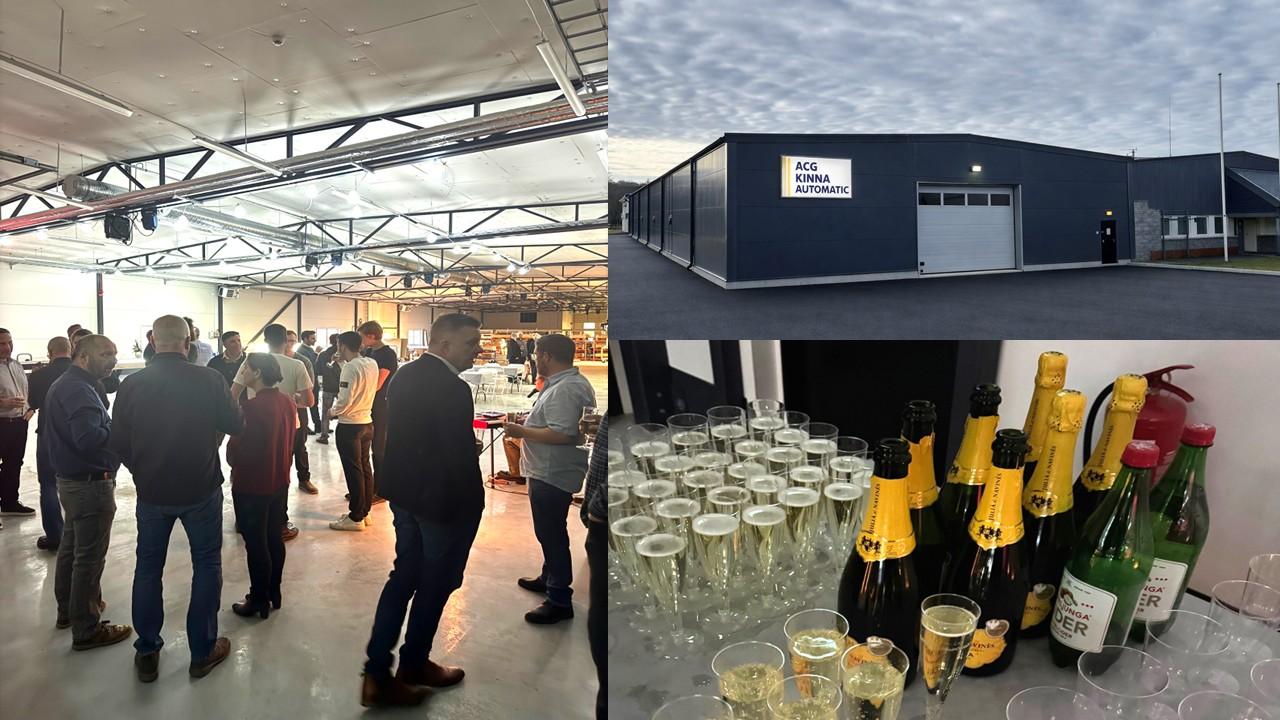
In response to growing demand for its full textile and finished product line automation services, ACG Kinna – a member of TMAS, the Swedish textile machinery association – has inaugurated a 1,000-square-metre expansion at its headquarters in Skene, Sweden.

“Following a number of acquisitions in recent years, we needed to either relocate or expand, and opted to remain here in Skene,” explains Sales and Marketing Manager Tomas Aspenskog. “The expansion is directly connected to our existing headquarters and is enabling us to relocate some staff to this centralised location, as well as providing plenty of additional specialised assembly space. It will improve logistics for us and simplify and speed up operations for the company, our suppliers and our customers.”

Automation benefits
ACG Kinna had a record year in 2025 as manufacturers of pillows and duvets for the home furnishings sector are increasingly recognising the benefits of full automation. 

In response to growing demand for its full textile and finished product line automation services, ACG Kinna – a member of TMAS, the Swedish textile machinery association – has inaugurated a 1,000-square-metre expansion at its headquarters in Skene, Sweden.

“Following a number of acquisitions in recent years, we needed to either relocate or expand, and opted to remain here in Skene,” explains Sales and Marketing Manager Tomas Aspenskog. “The expansion is directly connected to our existing headquarters and is enabling us to relocate some staff to this centralised location, as well as providing plenty of additional specialised assembly space. It will improve logistics for us and simplify and speed up operations for the company, our suppliers and our customers.”

Automation benefits
ACG Kinna had a record year in 2025 as manufacturers of pillows and duvets for the home furnishings sector are increasingly recognising the benefits of full automation. 

Under its trademarked slogan ‘Complete Process – One Supplier’, the company has pioneered the development of complete robotic pillow lines from the handling and opening of filling material to sewing, digital quality control and packaging.

In parallel, ACG Kinna is also now making further inroads into the finished filter bag market and will be demonstrating its latest advances in this field at the forthcoming Filtech 2026 exhibition in Cologne, Germany from June 30th to July 2nd.

Acquisitions growth
Part of the highly diversified and still family owned ACG Group since 2013, ACG Kinna significantly expanded its services five years ago, with the acquisition of Finland-based Nowo Machinery, the long-established specialist in technologies for fibre and raw material processing and manufacturer of the highly successful Nowo pillow filling system and ball fibre machines. 

More recently, the acquisitions of two other Swedish companies, EyeTech, a developer of machine vision solutions for manufacturing, warehouse and factory automation, and Styrteknik Europe, a manufacturer of industrial sewing machines for home furnishings, has further expanded ACG Kinna’s scope of offered services.

Source:

ACG Kinna