From the Sector

Reset
510 results
07.10.2025

Textile touch rethought: CHT Group relies on digitization

The CHT Group is taking another step towards innovation and digitization in the textile industry: With the investment in the TSA Tactile Sensation Analyzer from emtec, the CHT Group is enhancing its capabilities for the objective assessment of textile surfaces. The testing device is used to evaluate the softness for an objective quality assessment of the effect of finishing agents, for example. 

Until now, this assessment of the hand feel has mostly been a manual test that requires a great deal of experience and knowledge. Since this assessment is subjective and also influenced by cultural factors around the world, an independent assessment similar to the existing color assessment and evaluation (colorimetry) in the global textile industry is an important step towards digitization in communication between individual business partners. 

In the run-up to this, many measurements were compared manually and using a TSA measuring device and evaluated for correlation. The comparisons carried out showed a good correlation of the measured values on different textiles (knitted fabrics, terry cloth, and woven fabrics).

The CHT Group is taking another step towards innovation and digitization in the textile industry: With the investment in the TSA Tactile Sensation Analyzer from emtec, the CHT Group is enhancing its capabilities for the objective assessment of textile surfaces. The testing device is used to evaluate the softness for an objective quality assessment of the effect of finishing agents, for example. 

Until now, this assessment of the hand feel has mostly been a manual test that requires a great deal of experience and knowledge. Since this assessment is subjective and also influenced by cultural factors around the world, an independent assessment similar to the existing color assessment and evaluation (colorimetry) in the global textile industry is an important step towards digitization in communication between individual business partners. 

In the run-up to this, many measurements were compared manually and using a TSA measuring device and evaluated for correlation. The comparisons carried out showed a good correlation of the measured values on different textiles (knitted fabrics, terry cloth, and woven fabrics).

More information:
CHT Gruppe haptic textile surfaces
Source:

CHT Gruppe

Radio frequency drying Photo Strayfield
Radio frequency drying
07.10.2025

Demonstrating total control with UK technologies

As a leader in colour measurement and management solutions, Verivide will showcase its latest DigiEye imaging system at the forthcoming ITMA Asia + CITME exhibition in Singapore from October 28-31.

This benefits from 100% LED illumination, improving the accuracy of colour assessments while supporting environmentally responsible practices in colour management.

Designed for efficiency and reliability, the DigiEye includes integrated dust filtration and a fully enclosed camera for added security. 

Unlike its predecessor, the new DigiEye no longer requires annual fluorescent lamp changes, thanks to its 100% LED light source. The system also includes software-integrated lighting controls and lighting geometry checking, enhancing its precision and ease of use. Additionally, it now has the ability to auto-capture images upon door closure, making it ideal for imaging multiple samples quickly and efficiently.

The new DigiEye offers significant upgrades, including a 67% larger imaging area and a 112% larger measurement area. Its drawer load rating has increased by 55%, and the LED light source lasts ten time longer than before. 

As a leader in colour measurement and management solutions, Verivide will showcase its latest DigiEye imaging system at the forthcoming ITMA Asia + CITME exhibition in Singapore from October 28-31.

This benefits from 100% LED illumination, improving the accuracy of colour assessments while supporting environmentally responsible practices in colour management.

Designed for efficiency and reliability, the DigiEye includes integrated dust filtration and a fully enclosed camera for added security. 

Unlike its predecessor, the new DigiEye no longer requires annual fluorescent lamp changes, thanks to its 100% LED light source. The system also includes software-integrated lighting controls and lighting geometry checking, enhancing its precision and ease of use. Additionally, it now has the ability to auto-capture images upon door closure, making it ideal for imaging multiple samples quickly and efficiently.

The new DigiEye offers significant upgrades, including a 67% larger imaging area and a 112% larger measurement area. Its drawer load rating has increased by 55%, and the LED light source lasts ten time longer than before. 

As part of the VeriVide ecosystem, the DigiEye integrates seamlessly with UltraView, VisionView and the VeriVide Portal, offering a comprehensive solution for all colour management needs. 

Abrasion and pilling testing 
Martindale testing needs little introduction to textile manufacturers, being well established as the industry standard for abrasion and pilling testing since its initial development and introduction by James Heal back in the 1940s.

For 2025, however, James Heal’s development team have taken a fresh look at this classic instrument and the result is the new Martindale Motion.
This redesigned nine-station Martindale instrument with individual lifting heads now offers the flexibility to run each station independently for carrying out different textile tests simultaneously.

Multiple textiles can be tested at the same time through to conclusion without intervention. Once set up, the Martindale Motion can be left running with the sample holders automatically lifting at the required evaluation points, freeing up the operator’s time to do other work without the need to return until the abrasion or pilling test is fully completed, including overnight.

Each sample is kept in-tact at the end point for evaluation and checking, reducing queries on grading and the potential need for re-testing. Further refinements include a new hinged access to change the self-aligning drive pins, allowing quick and safe switching between tests.

Designed and manufactured in the UK, the James Heal Martindale range has seen numerous updates, models and innovations over the years, such as touchscreen and user-friendly software, best-in-class safety features combined with the signature near silent running of this staple lab instrument. Added to this have been the introduction of the DurAbrasion multi-function testing machine, later followed by the market-leading evolution, the AquAbrasion wet abrasion tester launched in 2019.

The Martindale Motion, however, is now taking productivity and efficiency to a higher level than ever before.

Radio frequency drying
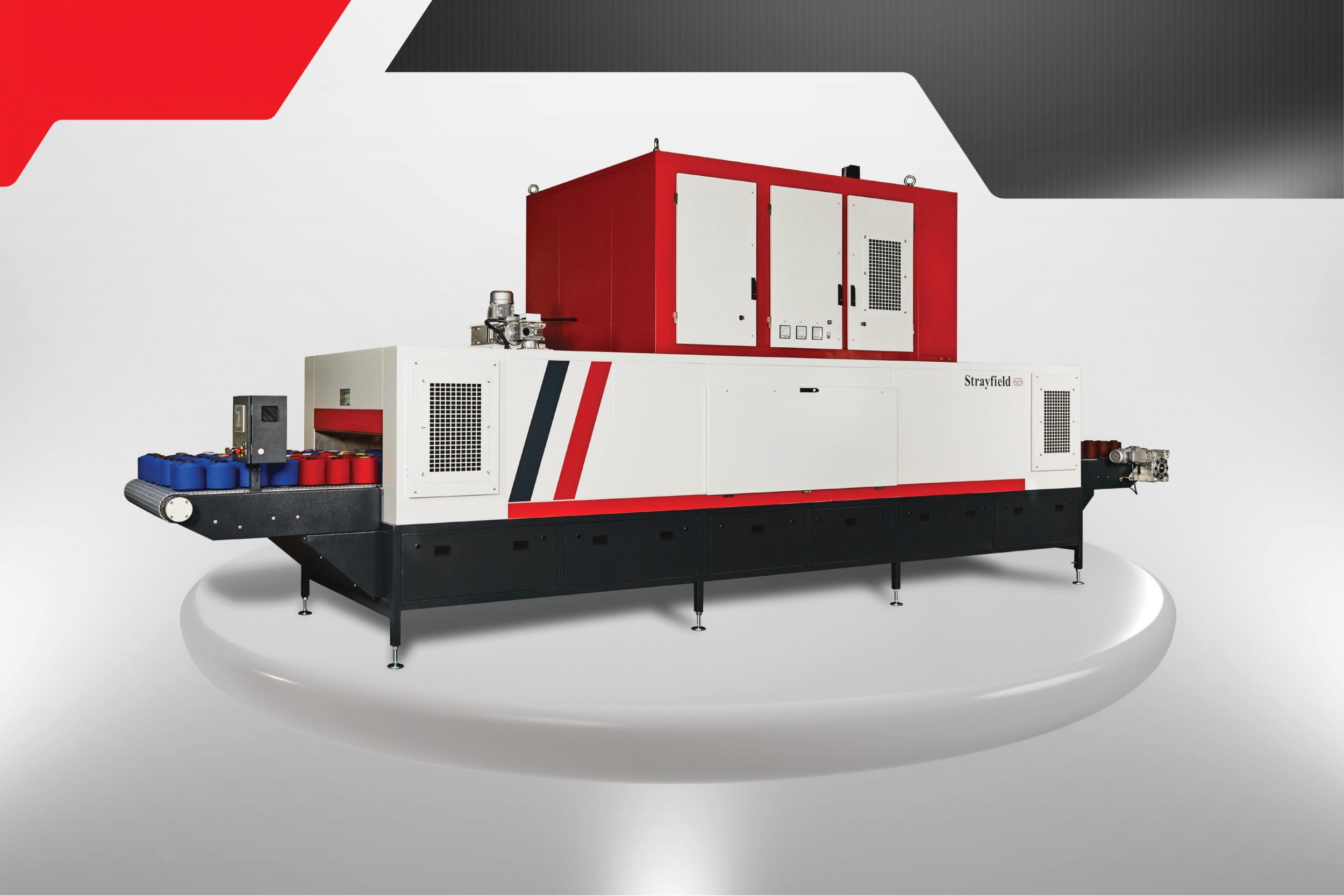
Total control of textile drying is meanwhile enabled with the advanced radio freqency (RF) technology of Strayfield, which has over 4,000 installations worldwide and provides solutions tailored to diverse textile applications such as cotton, wool, polyester, nylon, silk, acrylic and speciality blends.

Strayfield technology enables consistent quality, superior output and sustainability benefits through gentle and uniform drying, ensuring even results and moisture removal across entire batches and preserving fibre integrity, colour vibrancy and softness without yellowing or shrinkage.
Adaptive electrodes regulate power delivery according to product height and moisture, maximising efficiency and eliminating energy waste and unlike conventional rod systems, Strayfield’s full-area plates deliver consistent energy density for gentle drying without hotspots.

Source:

AWOL for BTMA

(c) Koji Hirano
07.10.2025

Kyocera Supported Production of Collections at Paris Fashion Week Spring/Summer 2026

Kyocera Document Solutions Inc. supported the production of dresses using artworks painted by artists contracted to HERALBONY for ANREALAGE’s Collection at Paris Fashion Week SS 2026, held on September 30, 2025. The collection comprised 30 outfits, 26 of which used fabrics printed with our sustainable inkjet textile printer "FOREARTH". For this collection, 21 vibrant designs by 18 artists contracted to HERALBONY were printed onto wide range of fabrics and, through ANREALAGE’s craftmanship, transformed into distinctive garments that conveyed movement and vitality. FOREARTH printing was used for bags and shoes, giving their designs an inner glow that attracted significant attention.

Kyocera Document Solutions Inc. supported the production of dresses using artworks painted by artists contracted to HERALBONY for ANREALAGE’s Collection at Paris Fashion Week SS 2026, held on September 30, 2025. The collection comprised 30 outfits, 26 of which used fabrics printed with our sustainable inkjet textile printer "FOREARTH". For this collection, 21 vibrant designs by 18 artists contracted to HERALBONY were printed onto wide range of fabrics and, through ANREALAGE’s craftmanship, transformed into distinctive garments that conveyed movement and vitality. FOREARTH printing was used for bags and shoes, giving their designs an inner glow that attracted significant attention.

Works by artists contracted to HERALBONY are characterized by both intricate, delicate expressions and bold, powerful strokes. In the printing process for this garment production, our FOREARTH faithfully reproduced those artistic expressions. Moreover, features unique to each artwork—such as variations in brush pressure and brushstroke—along with subtle differences in hue and tonal gradation were recreated through precise ink-volume adjustments made possible by digital technology, allowing FOREARTH to play a significant role in this production.

„Seeing printed fabrics from Kyocera’s sustainable inkjet textile printer, FOREARTH, moved me“, said HERALBONY’s designers Takaya Matsuda and Fumito. „The printer reproduces the nuance in the artists’ brushwork—the subtle breaks, dynamism, and life—directly onto fabric. It felt as if the works were truly imprinted on society. We believe this is meaningful for the artists, their families, and the welfare communities supporting them.“

FOREARTH reduces water usage by 99.98%*1. This is significant for the resource- and water-intensive textile and apparel industry. We will continue to work with Kyocera to introduce and scale a model that protects artistic integrity while helping to solve environmental challenges. 

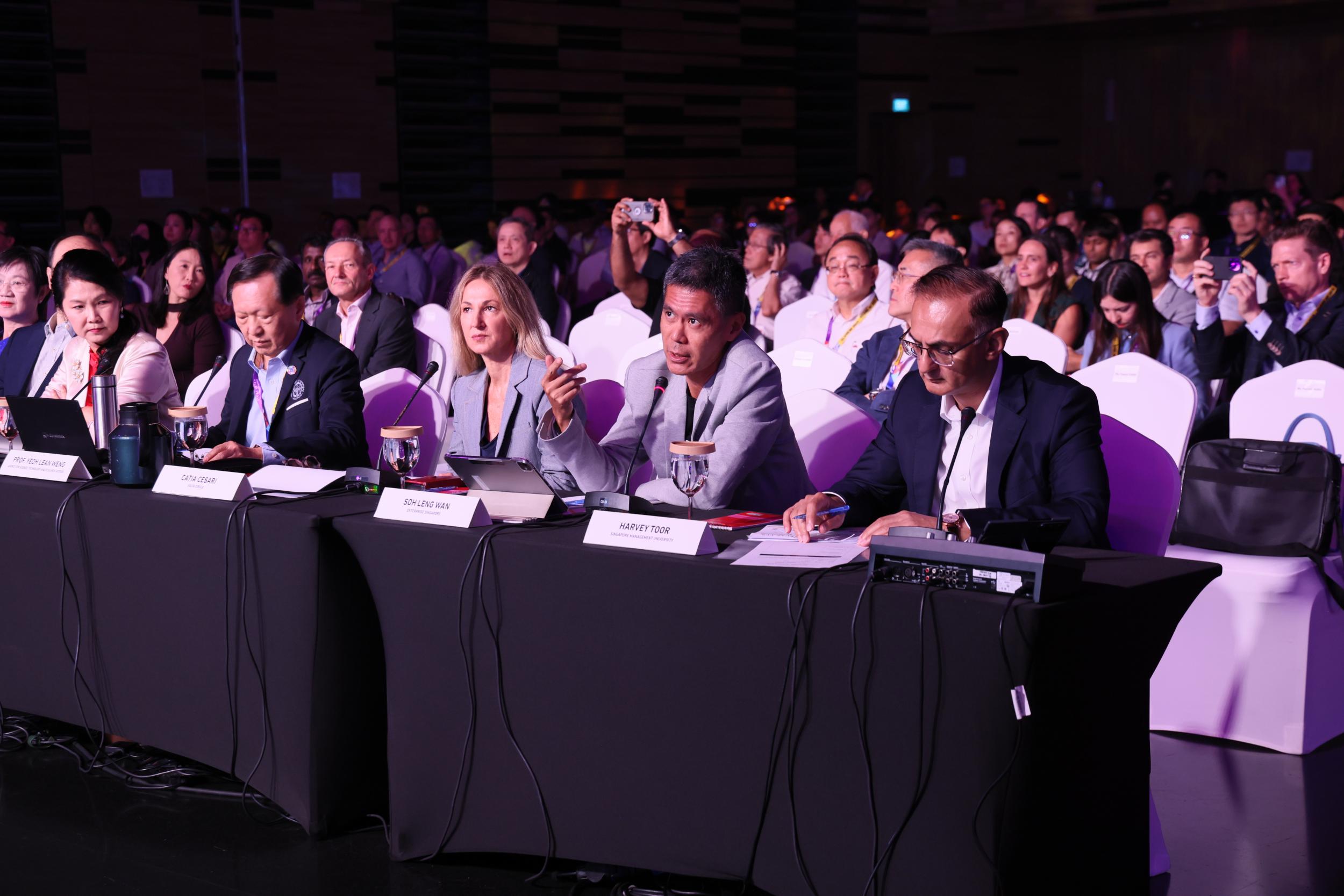
Catia Cesari, Managing Partner of Volta Circle (3rd from right), at Grand Finals Judging Photo via Indorama Ventures Public Company Limited
Catia Cesari, Managing Partner of Volta Circle (3rd from right), at Grand Finals Judging
07.10.2025

Indorama Ventures Champions University Innovation and Sustainability

Indorama Ventures Public Company Limited, a global sustainable chemicals company, reinforced its commitment to advancing innovation and entrepreneurship by sponsoring the 12th Lee Kuan Yew Global Business Plan Competition (LKYGBPC), hosted by Singapore Management University (SMU). 

The LKYGBPC, Asia’s largest university startup challenge focused on urban solutions and sustainability, drew more than 1,500 applications from six continents, with 57 finalists competing at the Grand Finals Week in Singapore. Ms. Catia Cesari, Managing Partner of Volta Circle, represented Indorama Ventures on the judging panel. Volta Circle, an investment platform within the Lohia single-family office, supports early-stage ventures driving innovation in green chemicals, advanced recycling, and waste management value chain. While operating independently, its mission complements Indorama Ventures’ broader sustainability strategy. 

Indorama Ventures Public Company Limited, a global sustainable chemicals company, reinforced its commitment to advancing innovation and entrepreneurship by sponsoring the 12th Lee Kuan Yew Global Business Plan Competition (LKYGBPC), hosted by Singapore Management University (SMU). 

The LKYGBPC, Asia’s largest university startup challenge focused on urban solutions and sustainability, drew more than 1,500 applications from six continents, with 57 finalists competing at the Grand Finals Week in Singapore. Ms. Catia Cesari, Managing Partner of Volta Circle, represented Indorama Ventures on the judging panel. Volta Circle, an investment platform within the Lohia single-family office, supports early-stage ventures driving innovation in green chemicals, advanced recycling, and waste management value chain. While operating independently, its mission complements Indorama Ventures’ broader sustainability strategy. 

Indorama Ventures also presented the “Future of Sustainable Materials Award”, recognizing university ventures with outstanding achievements in advanced fibers and polymers, bio-based feedstocks, advanced recycling, and circular economy solutions. The award supports early-stage startups at Technology Readiness Level (TRL) 3 or higher, with prizes of S$50,000 in the Beta track and S$75,000 in the Infinity track. Winners were evaluated on scientific merit, scalability, industrial validation potential, and impact on urban infrastructure and manufacturing. 

This year, Indorama Ventures recommended six finalists with innovations spanning AI-enabled materials discovery, low-emissions chemical scale-up, and bio-fabricated alternatives for hard-to-abate sectors. The winners of Indorama Ventures’ Future of Sustainable Materials Award were “Synmetabio”- a Shanghai-based biomaterial startup developing high performance biobased leather solutions (awarded S$75,000), and “Micromelt” – a UK-based deep tech startup who is advancing green closed-loop solutions for mixed plastics with microwave technology (awarded S$50,000). 

Mr. Yash Lohia, Executive President of Petchem and Chairman of the ESG Council, said, “At Indorama Ventures, sustainability drives our innovation strategy. We collaborate with startups to develop recycling technologies and bio-based materials that can scale from lab to industry, supporting the transition to a more circular economy. We recognize that startups hold the key to breakthrough solutions that provide a competitive edge. Through initiatives like the LKYGBPC, we connect entrepreneurial talent with our global platform to accelerate solutions that create long-term value for society and our business.” 

At the Grand Finals Week Dr. Anthony Watanabe, Chief Sustainability Officer at Indorama Ventures, joined CSO Conversations to explore how businesses can build climate resilience, harness digital governance, and mobilize capital for impact. He shared valuable insights on Indorama Ventures’ investments in advanced PET recycling, innovation process, bio-based feedstocks, and ESG achievements with prominent sustainability leaders during the roundtable discussions. 

SMU’s partnership with Indorama Ventures reflects a shared belief that scaling university-led innovation is essential to accelerate sustainability and circularity across borders. Through mentorship, funding, and ecosystem-building, Indorama Ventures continues to shape a future where materials are more innovative, more circular, and more sustainable.

06.10.2025

Italian Textile Machinery Industry at ITMA ASIA + CITME Singapore 2025

100 Italian companies will exhibit at ITMA ASIA + CITME Singapore 2025, taking place from October 28 to 31. With an area of around 4,000 square meters, Italy ranks among the top exhibiting Countries, as in previous editions. 53 Italian exhibitors will show their innovations within the National Sector Groups, organized by ACIMIT (Association of Italian Textile Machinery Manufacturers) and Italian Trade Agency.

ITMA ASIA + CITME show has always been the main showcase for textile machinery manufacturers in Asia, which absorbs 50% of global exports for a value of 8.8 billion euro in 2024. The main world market for textile machinery are China and India, importing textile machines for a total value of 4.3 billion euro.

For Italian manufacturers as well, the Asian market is the top foreign destination. In 2024, Italian exports to Asia amounted to 664 million euro, while in the first six months of 2025 Italian sales to this geographical area grew at 1% rate on the same 2024 period, reaching a value of 317 million euro. China, India, Pakistan, and Bangladesh are the main Asian destinations for Made in Italy machinery.

100 Italian companies will exhibit at ITMA ASIA + CITME Singapore 2025, taking place from October 28 to 31. With an area of around 4,000 square meters, Italy ranks among the top exhibiting Countries, as in previous editions. 53 Italian exhibitors will show their innovations within the National Sector Groups, organized by ACIMIT (Association of Italian Textile Machinery Manufacturers) and Italian Trade Agency.

ITMA ASIA + CITME show has always been the main showcase for textile machinery manufacturers in Asia, which absorbs 50% of global exports for a value of 8.8 billion euro in 2024. The main world market for textile machinery are China and India, importing textile machines for a total value of 4.3 billion euro.

For Italian manufacturers as well, the Asian market is the top foreign destination. In 2024, Italian exports to Asia amounted to 664 million euro, while in the first six months of 2025 Italian sales to this geographical area grew at 1% rate on the same 2024 period, reaching a value of 317 million euro. China, India, Pakistan, and Bangladesh are the main Asian destinations for Made in Italy machinery.

ACIMIT President Marco Salvadè says: “ITMA ASIA+CITME Singapore is a further occasion for Italian textile machinery manufacturers to display its updated technological supply. The choice of Singapore allows Italian exhibitors to engage with many Southeast Asian markets, which are becoming increasingly important manufacturing hubs.”

“Despite geopolitical uncertainties, the significant presence of Italian exhibitors in Singapore confirms the vitality of the Italian textile machinery sector.” confirms Salvadè. “Italian manufacturers at ITMA ASIA+CITME Singapore will show a wide range of advanced solutions, covering the entire textile value chain. Visitors will see digitalization tools that can improve process efficiency and connectivity, automation systems for smarter production and innovations able to reduce environmental impact. In addition, there will be a strong focus on sustainable technologies, with machinery designed to optimize energy and water use, while ensuring high-quality results. Italian manufacturers are committed to combining tradition in textile knowledge with cutting-edge innovation.”

On his side, Giorgio Calveri, Director of ITA Singapore, states: “With 86% of its 2.1 billion euro production exported, Italy’s textile machinery industry confirms its strong international orientation, with Asia as its main market. ITMA Asia + CITME 2025 in Singapore is a strategic opportunity to strengthen Italy’s presence in this key region. With 100 exhibitors coordinated by ACIMIT and supported by ITA, Italy stands as a trusted partner for advanced, sustainable, and competitive technologies.”

More information:
ITMA Asia + CITME Italy ACIMIT
Source:

ACIMIT

FET-500 Series of gel spinning systems Photo FET Ltd
FET-500 Series of gel spinning systems
06.10.2025

UHMWPE fibres: New gel spinning systems for biomedical market

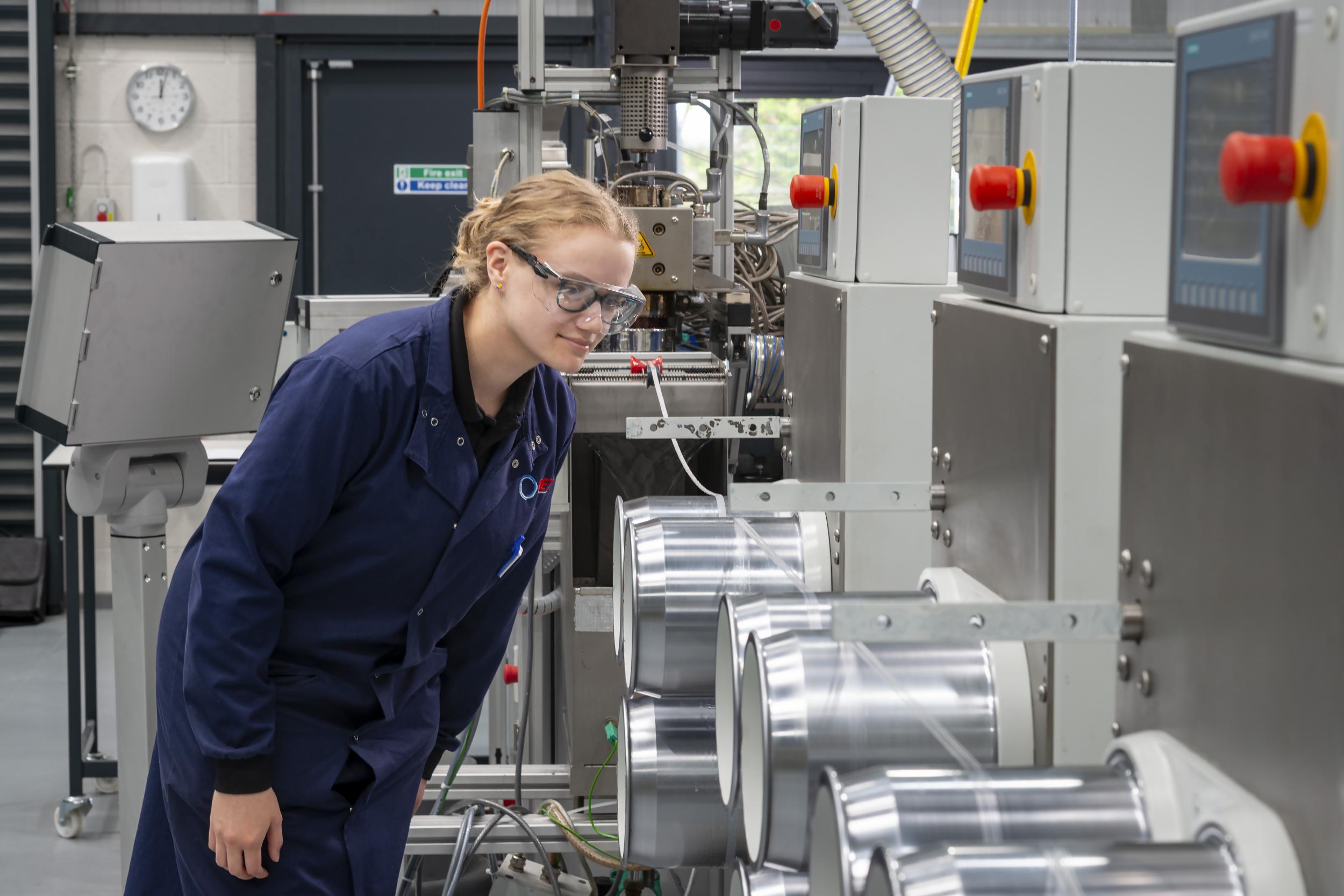
FET is launching the FET-500 Series of gel spinning systems in a move that could revolutionise the research and development of UHMWPE fibres.

Fibre Extrusion Technology Ltd (FET) of Leeds, UK, has built a reputation in medical fibre extrusion technology and innovations, designing and delivering high-performance equipment for a range of precursor medical products, including bespoke extrusion systems for the production of both resorbable and non-absorbable sutures. FET’s equipment supports small-scale, adaptable production and rapid new product development.       

In recent years, there has been a growing demand for R&D of UHMWPE fibres. These fibres are prized in many industries due to their extraordinary properties. However, current production processes are complex and focused on the large-scale output of existing fibre grades. This rigid supply chain has stifled innovation in this untapped product market.

FET is launching the FET-500 Series of gel spinning systems in a move that could revolutionise the research and development of UHMWPE fibres.

Fibre Extrusion Technology Ltd (FET) of Leeds, UK, has built a reputation in medical fibre extrusion technology and innovations, designing and delivering high-performance equipment for a range of precursor medical products, including bespoke extrusion systems for the production of both resorbable and non-absorbable sutures. FET’s equipment supports small-scale, adaptable production and rapid new product development.       

In recent years, there has been a growing demand for R&D of UHMWPE fibres. These fibres are prized in many industries due to their extraordinary properties. However, current production processes are complex and focused on the large-scale output of existing fibre grades. This rigid supply chain has stifled innovation in this untapped product market.

The FET-500 gel spinning systems will address this gap in the market. The FET-500 enables a flexible and consistent process, able to produce quality fibres with less than 100 grams of polymer, while avoiding the harsh processing chemicals that were historically associated with gel spinning. The key to unlocking this lab and pilot scale flexibility is the use of supercritical carbon dioxide as a green solvent in a patent-pending process.

Gel spinning starts with extrusion, but the additional washing and drawing technology to produce finished yarn is critical to the overall performance characteristics. An example of the wide range of features and benefits can be shown in the Washing process, with Patent Pending technology using Supercritical Carbon Dioxide:

Extract carrier oil without using toxic, environmentally harmful chemicals such as Hexane and DCM.

  • CO2 is green, cheap, abundant, and significantly safer to work with
  • CO2 efficiently dissolves carrier oils without affecting the polymer yarn

Reduced operational costs

  • 9-Vast reduction in solvent use (CO2 vs Hexane/DCM)
  • Comprehensive oil recovery and recycling
  • Zero solvent waste is generated, unlike the hexane route

Compact and efficient batch washing system

  • Recipe controlled plug and play technology
  • Scalable and adjustable to customer needs
  • Carrier oil is recovered and fed back to the extrusion process
  • 80% reduction in factory footprint vs hexane route

FET’s Fibre Development Centre is critical to the inception and success of the FET-500. Having this facility located in Leeds where the manufacturing takes place allows FET to offer a gateway to de-risk, develop and demonstrate the system’s capabilities. FET houses a full demonstration line of the FET-500 to allow customers, existing and new, to visit and experience the system operating from start to finish. They can also aid in developing new products and operating parameters through R&D trials, giving customers the confidence and knowledge to transfer a new product offering onto a production line.

Source:

FET Ltd

Global Nonwovens Alliance Unveils Inaugural Board Photo EDANA
Global Nonwovens Alliance Unveils Inaugural Board
02.10.2025

Global Nonwovens Alliance Unveils Inaugural Board

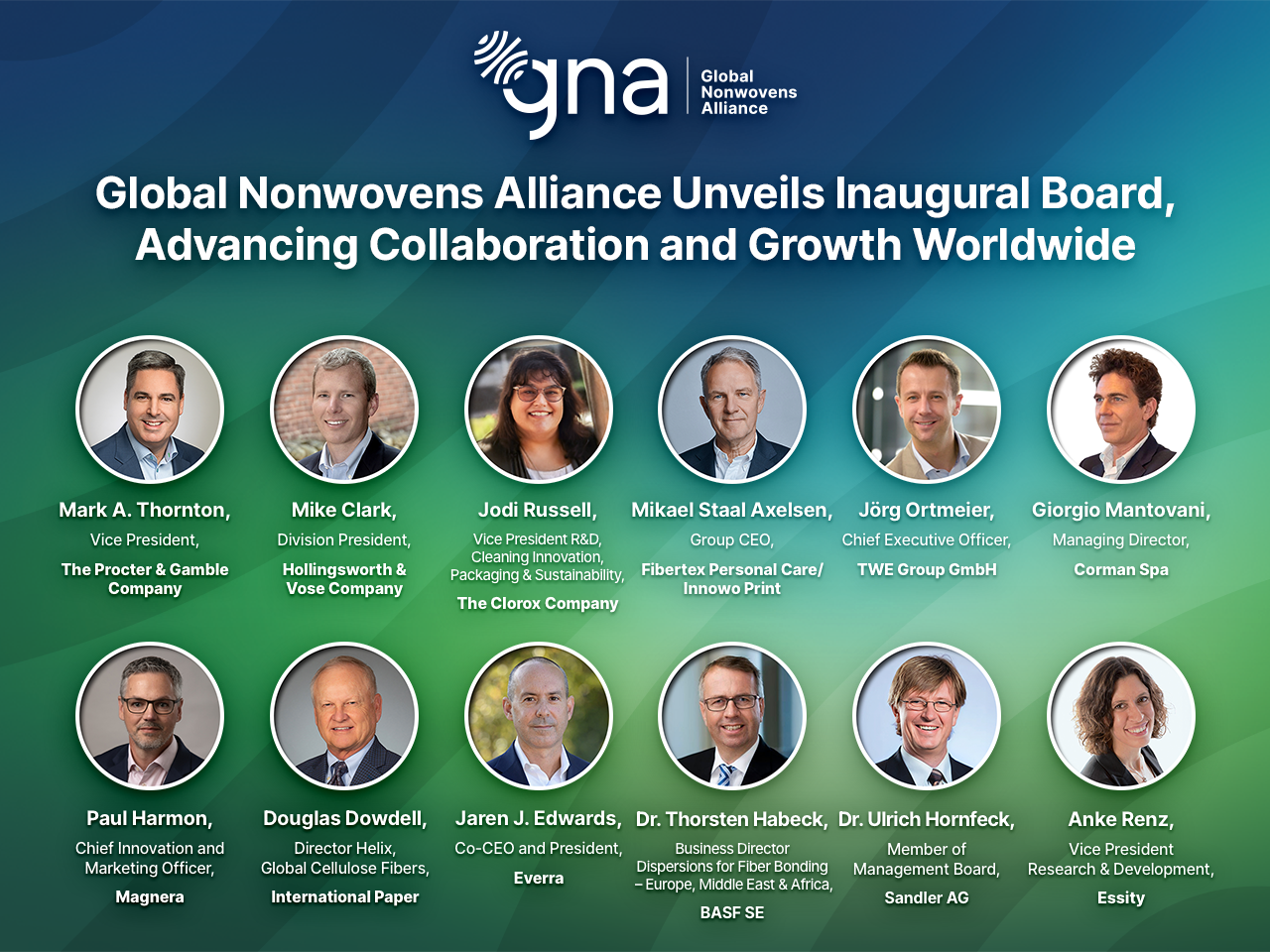
The Global Nonwovens Alliance (GNA), a tax-exempt federation jointly founded by INDA, the Association of the Nonwoven Fabrics Industry, and EDANA, the Voice of Nonwovens, announces the appointment of its founding Board of Directors. This group of leaders represents some of the most influential executives across the nonwovens value chain and reflects GNA’s mission to foster global collaboration, innovation, and growth in the industry.  

This newly appointed Board unites leaders from North America and Europe to advance GNA’s core objectives: strengthening advocacy with a global voice, expanding education and networking opportunities, driving efficiencies, and promoting innovation and sustainability across the nonwovens sector. 

INDA representatives to the GNA Board include: 

The Global Nonwovens Alliance (GNA), a tax-exempt federation jointly founded by INDA, the Association of the Nonwoven Fabrics Industry, and EDANA, the Voice of Nonwovens, announces the appointment of its founding Board of Directors. This group of leaders represents some of the most influential executives across the nonwovens value chain and reflects GNA’s mission to foster global collaboration, innovation, and growth in the industry.  

This newly appointed Board unites leaders from North America and Europe to advance GNA’s core objectives: strengthening advocacy with a global voice, expanding education and networking opportunities, driving efficiencies, and promoting innovation and sustainability across the nonwovens sector. 

INDA representatives to the GNA Board include: 

  • Mark A. Thornton, Vice President, The Procter & Gamble Company  
  • Mike Clark, Division President, Hollingsworth & Vose Company 
  • Jodi Russell, Vice President R&D, Cleaning Innovation, Packaging & Sustainability, The Clorox Company 
  • Paul Harmon, Chief Innovation and Marketing Officer, Magnera 
  • Douglas Dowdell, Director Helix, Global Cellulose Fibers, International Paper 
  • Jaren J. Edwards, Co-CEO and President, Everra 

EDANA representatives to the GNA Board include:  

  • Mikael Staal Axelsen, Group CEO, Fibertex Personal Care/Innowo Print 
  • Jörg Ortmeier, Chief Executive Officer, TWE Group GmbH 
  • Giorgio Mantovani, Managing Director, Corman Spa 
  • Dr. Thorsten Habeck, Business Director Dispersions for Fiber Bonding – Europe, Middle East & Africa, BASF SE 
  • Dr. Ulrich Hornfeck, Member of Management Board, Sandler AG 
  • Anke Renz, Vice President Research & Development, Essity 

Mark A. Thornton will act as Chair and Mikael Staal Axelsen as Vice-Chair of this newly established Board. Both bring extensive industry experience, strong strategic vision, and proven commitment to advancing the sector. Their leadership will be instrumental in steering the organization through its next phase of growth and collaboration.  

The Board has also appointed Murat Dogru as Chief Executive Officer (CEO) of the organization. He will lead the GNA’s strategy, operations, and engagement with global stakeholders. As CEO, he will be responsible for ensuring that the organization delivers on its mission to represent and advance the industry at large. The position will officially start 1st January 2026.  

Source:

EDANA

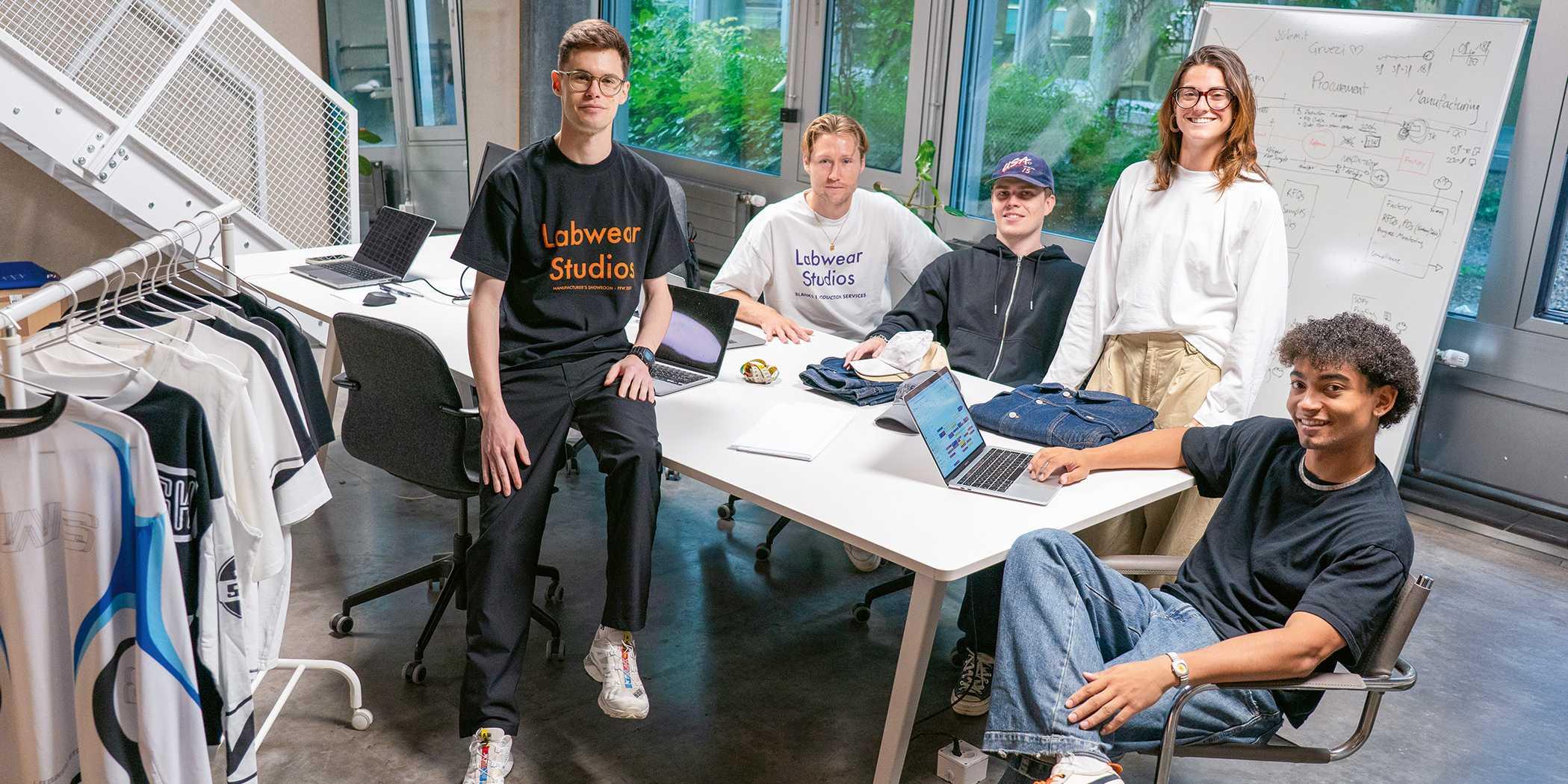
The three co-founders of Labwear Studios, Nicolas Schierle (left), Samuel Thoma (centre) and Michael Mangold (right), with employees Roger Pfyl and Natalia Mañanes Sacasas. Image: Nicole Davidson / ETH Zürich
The three co-founders of Labwear Studios, Nicolas Schierle (left), Samuel Thoma (centre) and Michael Mangold (right), with employees Roger Pfyl and Natalia Mañanes Sacasas.
02.10.2025

Trimming waste in fast fashion

By digitalising their supply chains, start-up Labwear Studios is able to manufacture fashion labels and garments in small quantities, thereby helping to combat overproduction in the fashion industry.

With as many as one in three garments left unsold on the peg, the fashion industry has a major sustainability issue. One reason is that clothing manufacturers often stipulate large minimum order quantities. While this enables them to reduce their unit costs, the result is overproduction and tons of waste.

By digitalising their supply chains, start-up Labwear Studios is able to manufacture fashion labels and garments in small quantities, thereby helping to combat overproduction in the fashion industry.

With as many as one in three garments left unsold on the peg, the fashion industry has a major sustainability issue. One reason is that clothing manufacturers often stipulate large minimum order quantities. While this enables them to reduce their unit costs, the result is overproduction and tons of waste.

Start-up Labwear Studios has found a better way to trim costs. “We’ve digitalised the old, inefficient supply chain,” explains ETH electrical engineer Michael Mangold, who founded the start-up together with Nicolas Schierle and Samuel Thoma. The three entrepreneurs have set up an online manufacturing platform where fashion labels can configure and commission production of their latest creations and then track each stage of the order process. The platform connects all the parties involved, streamlining supply chain logistics from initial design to finished garment. Thanks to digitalisation, Labwear Studios can produce clothing in quantities as small as 50 units and with a lead time of just six weeks.

The idea for the start-up was hatched at the Student Project House, a creative thinkspace and makerspace for ETH students. “The coaching and the community there showed me that being successful is much easier than you might think,” says company founder Mangold. 

Source:

Stéphanie Hegelbach; ETH Zürich

The new BW Converting Baldwin TexChroma digital spray dyeing system. Photo AWOL Media
The new BW Converting Baldwin TexChroma digital spray dyeing system.
02.10.2025

Swedish innovation at ITMA Asia + CITME

In response to unprecedented market demand, BW Converting, a member of TMAS, the Swedish textile machinery association, will provide details about its new Baldwin TexChroma digital spray dyeing system at ITMA Asia + CITME in Singapore from October 28-31.

“We are excited to launch TexChroma because spray dyeing is the future and many of our customers are already seeing the benefits,” says Yiannis Vasilonikolos, BW Converting Sales Leader for Textiles, who has many years’ experience in textile dyeing technology. “We have conducted successful trials of TexChroma with pigment, reactive, acid and disperse dyes on both cotton and synthetic fibres.”

From production data to date, TexChroma can achieve savings in energy, dyes and chemicals of more than 30% compared to conventional continuous pad batch dyeing using steam, and up to 50% compared to exhaust reactive dyeing. 

It also benefits from an advanced technology enabling reactive dyestuffs and alkali fixation chemicals to be mixed just seconds before spray application, in order to completely eliminate any ‘tailing and listing’– uneven dye application or colour variations.

In response to unprecedented market demand, BW Converting, a member of TMAS, the Swedish textile machinery association, will provide details about its new Baldwin TexChroma digital spray dyeing system at ITMA Asia + CITME in Singapore from October 28-31.

“We are excited to launch TexChroma because spray dyeing is the future and many of our customers are already seeing the benefits,” says Yiannis Vasilonikolos, BW Converting Sales Leader for Textiles, who has many years’ experience in textile dyeing technology. “We have conducted successful trials of TexChroma with pigment, reactive, acid and disperse dyes on both cotton and synthetic fibres.”

From production data to date, TexChroma can achieve savings in energy, dyes and chemicals of more than 30% compared to conventional continuous pad batch dyeing using steam, and up to 50% compared to exhaust reactive dyeing. 

It also benefits from an advanced technology enabling reactive dyestuffs and alkali fixation chemicals to be mixed just seconds before spray application, in order to completely eliminate any ‘tailing and listing’– uneven dye application or colour variations.

The TexCoat® G4 Legacy
The introduction of TexChroma follows the runaway success of BW Converting’s Texcoat G4 finishing system in the past few years.

“TexCoat G4 spray technology was developed in Sweden from our off-set printing business, and we initially focused on installing units in Europe and the USA,” explains Vice President of Global Business Development for Textiles Rick Stanford. 
“In the past two years, however, we have been very active in Asia, with 35 units sold – and many of these customers have been asking for a similar technology for the dyeing process.” 

The first TexChroma will be installed at the plant of a very well-known Italian continuous dyer which is part of a larger textile manufacturing group, in order for it to be fully industrially tested before going into series production.

“Our first customer is close by our facility in Sweden, has the practical dyehouse skills we can learn from, and is a satisfied TexCoat G4 customer,” Stanford says. “We believe a major benefit of TexChroma will be in eliminating much rework which is common in dyehouses, but we’ve been very cautious about providing details on TexChroma too early. The dyeing process is unforgiving, and we must get it right the first time. The market has been ready for quite some time. And now, so are we.”

TMAS members in Singapore
In further new developments from TMAS members at the Singapore show, Kinna Automatic will provide details of its complete robotic lines for the production of pillows and duvets for the home furnishings sector and introduce the new Hector industrial sewing machine designed for the heavy duty circular and point stitching of filled textile components.

Eltex has made an important breakthrough on its EyETM tension monitoring system for the heat setting, tufting, warping and winding sectors, with the addition of electromagnetic brakes in combination with the latest advanced sensors. These enable tension variation to not only be detected, but automatically adjusted in real time during operation, rather than manually changed as previously.

The company’s ACT-R unit can further significantly reduce the selvedge yarn waste from the weft insertion systems of rapier weaving machines, while at the same time maintaining equal and steady tension across all pre-winders.

Advanced weaving control is also the bedrock of business for Vandewiele Sweden AB, which supplies weft yarn feeding and tension control units for weaving looms to the majority of the leading weaving machine manufacturers, as well as for retrofitting in working mills around the world The company will present its latest X4 yarn feeders with integrated accessory displays and has recently further strengthened its product portfolio with IRO Gaugepart modules. These are applied to tufting looms to determine the appearance of a carpet in terms of feel and structure.

Finally, the colarette machines of Svegea set the standard throughout Asia for the high speed production of tubular apparel components such as cuffs, collars and neck tapes and in Singapore the company will demonstrate its EC 50 and EC 200 with E-Drive II models, in addition to linked cutting systems.

Source:

AWOL Media for TMAS

New DTY Jet insert APe042 Ühoto (c) Stemutz
New DTY Jet insert APe042
02.10.2025

Heberlein at ITMA Asia + CITME 2025: Jets developed for filament perfection

Heberlein, a leading supplier of air interlacing and air texturing jets, aims to impress visitors at ITMA Asia + CITME 2025. Novel solutions will be presented, which will allow filament yarn producers to achieve special quality specifications and process optimization. These latest developments combine the most sophisticated technology with user convenience and savings potential. 

Data in the ‘Fibre Year 2024’ report confirms that synthetic fibres continue to outpace natural fibres, growing by 8.4% against 2.7% – and this upward trend is expected to continue. Man-made fibre hubs such as China (+8.8%) and India (+7.7%), and also Vietnam (+8.9%) show significant growth. Looking at the development of different synthetic materials, polyamide stands out, with a notable increase of 4.1%, underscoring its promising future. In the forefront of these developments are Swiss-made key components from Heberlein, delivering cutting-edge technology that powers quality and efficiency in polyamide yarn production.

Heberlein, a leading supplier of air interlacing and air texturing jets, aims to impress visitors at ITMA Asia + CITME 2025. Novel solutions will be presented, which will allow filament yarn producers to achieve special quality specifications and process optimization. These latest developments combine the most sophisticated technology with user convenience and savings potential. 

Data in the ‘Fibre Year 2024’ report confirms that synthetic fibres continue to outpace natural fibres, growing by 8.4% against 2.7% – and this upward trend is expected to continue. Man-made fibre hubs such as China (+8.8%) and India (+7.7%), and also Vietnam (+8.9%) show significant growth. Looking at the development of different synthetic materials, polyamide stands out, with a notable increase of 4.1%, underscoring its promising future. In the forefront of these developments are Swiss-made key components from Heberlein, delivering cutting-edge technology that powers quality and efficiency in polyamide yarn production.

DTY jets for demanding spinners and yarns 
Launched at ITMA 2023, the Heberlein APe series was expanded with new types of jets. The two additional jets are particularly suitable for polyamide with fine titers.

This DTY jet series sets new standards in yarn processing. Developed for the efficient processing of fine polyamide yarns with a particularly high number of knots (FP/m), the successful APe series is renowned for its unique performance of more than 200 knots per metre. Despite its outstanding performance, it is the smallest jet in its class – fitting anywhere and best suited wherever air savings and optimized production efficiency are required.

The APe series is also attracting interest from market players striving for sustainable production through various measures. Its capability for equal knot performance with reduced energy consumption delivers sustainability without compromise.

Air splicing: maximum control and minimum effort
Yarn splicers produce a tear-resistant, homogeneous splice of material without knots. All they need is compressed air. Heberlein's AirSplicers produce first-class splices for a wide range of applications for technical fibers where extreme strength characteristics are needed.

The new AirSplicer-Basix was designed for technical yarns – including aramid, glass, and carbon. The splicer offers maximum control and user-friendly operation. 

The sophisticated blow chamber design makes it easy to insert, splice and remove the yarn without any additional manual steps or the need for the user to activate further mechanisms.

The design of the AirSplicer-Basix is reduced to the essentials. Still, it performs convincingly and offers flexibility as one or more connection points can be created, depending on the material used and the desired splice strength.

Source:

Heberlein Technology AG