
From the Sector

Reset
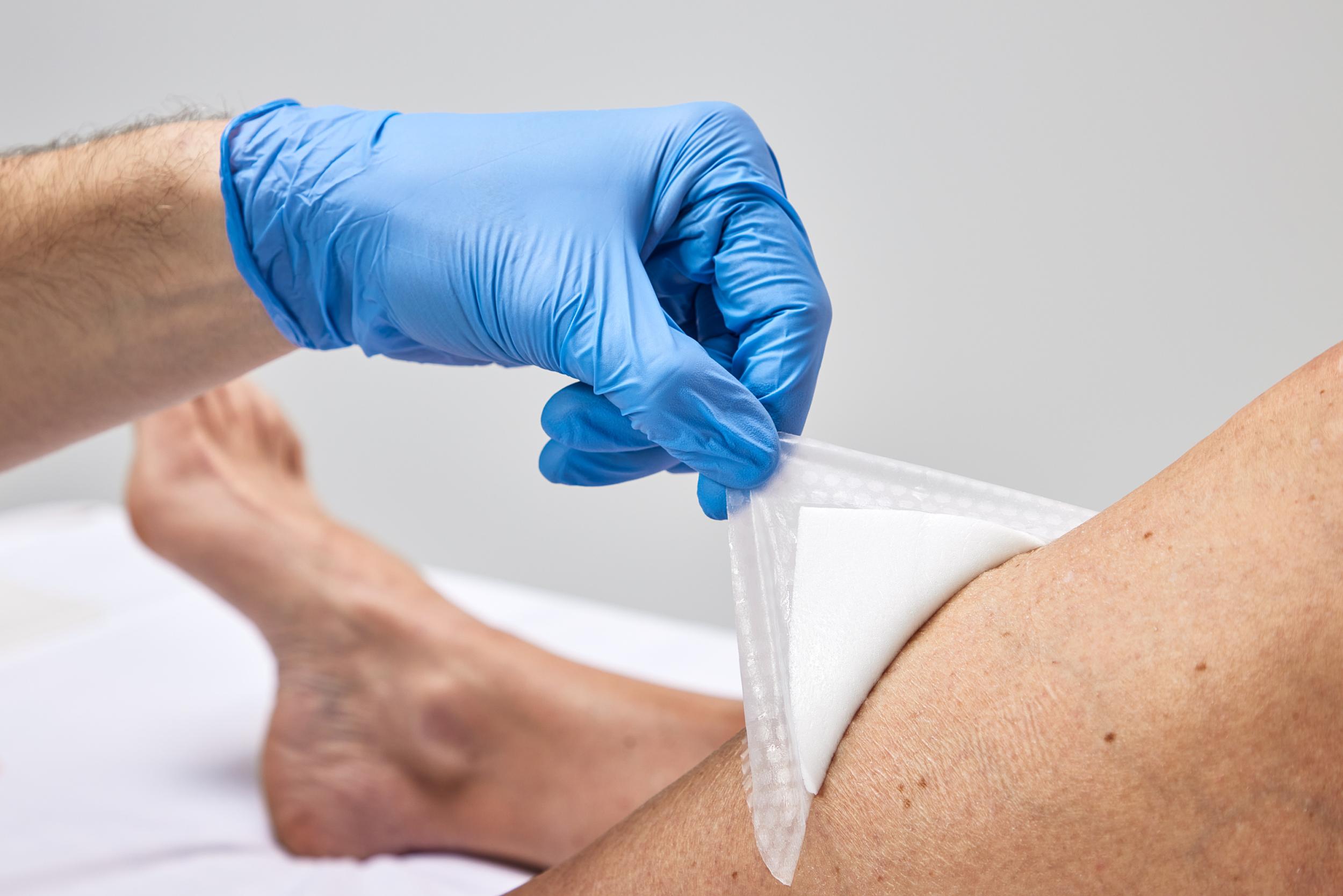
Tacnera: Freudenberg’s innovative technology for silicone-coated secondary foam dressings. © Freudenberg Performance Materials
Tacnera: Freudenberg’s innovative technology for silicone-coated secondary foam dressings.
14.09.2026

Wound care becomes more textile-integrated

Freudenberg Performance Materials and Foshan United Medical Technologies (UMT) will make their first joint appearance at the WUWHS congress in Kuala Lumpur since Freudenberg acquired the Chinese wound-care specialist at the end of July. The combined platform stretches from fibre and nonwoven technologies to finished advanced wound-care solutions.

UMT’s primary dressings include alginate, carboxymethylcellulose (CMC) and chitosan technologies. Alginate variants include silver-containing options for antimicrobial protection, while CMC is used for moisture management and gel formation. Chitosan brings haemostatic and bacteriostatic properties. UMT is also presenting a non-invasive wound-closure system.

Freudenberg Performance Materials and Foshan United Medical Technologies (UMT) will make their first joint appearance at the WUWHS congress in Kuala Lumpur since Freudenberg acquired the Chinese wound-care specialist at the end of July. The combined platform stretches from fibre and nonwoven technologies to finished advanced wound-care solutions.

UMT’s primary dressings include alginate, carboxymethylcellulose (CMC) and chitosan technologies. Alginate variants include silver-containing options for antimicrobial protection, while CMC is used for moisture management and gel formation. Chitosan brings haemostatic and bacteriostatic properties. UMT is also presenting a non-invasive wound-closure system.

Freudenberg complements these primary-care products with Tacnera®, its patented silicone-coated foam-dressing technology. A dual-silicone construction combines secure edge adhesion with a gentler wound-contact layer, while a wave-pattern coating is designed to improve flexibility and exudate management. The wider industrial story is vertical integration: UMT’s capabilities run from fibre production and functionalisation through nonwovens, packaging, sterilisation and regulatory approval.

Source:

Freudenberg Performance Materials Holding GmbH

KeyVisual s.Oliver
11.09.2026

s.Oliver brings the 90s back

Editorial relevance: Medium – a current brand-positioning and retail story supported by a product capsule.
s.Oliver has launched a new hero campaign, “Casual Since Forever,” featuring Heidi Klum meeting a younger version of herself from the 1990s. The concept uses the time shift to reinforce the brand’s positioning around enduring casual style.

The campaign is accompanied by a limited-edition vintage capsule that reinterprets 1990s references through casual basics and vintage-inspired designs. The pieces are being sold online and in selected s.Oliver stores, turning the campaign narrative into an immediate product and retail activation.

Established fashion brands increasingly use archive aesthetics and cultural nostalgia not only for communication but as a direct product-development and traffic-driving mechanism.

Editorial relevance: Medium – a current brand-positioning and retail story supported by a product capsule.
s.Oliver has launched a new hero campaign, “Casual Since Forever,” featuring Heidi Klum meeting a younger version of herself from the 1990s. The concept uses the time shift to reinforce the brand’s positioning around enduring casual style.

The campaign is accompanied by a limited-edition vintage capsule that reinterprets 1990s references through casual basics and vintage-inspired designs. The pieces are being sold online and in selected s.Oliver stores, turning the campaign narrative into an immediate product and retail activation.

Established fashion brands increasingly use archive aesthetics and cultural nostalgia not only for communication but as a direct product-development and traffic-driving mechanism.

ELIE SAAB joins H&M Photo H&M
11.09.2026

ELIE SAAB joins H&M

H&M has named ELIE SAAB as its next designer collaborator. The collection will bring the Beirut-founded couture house’s codes into a mass-market collaboration covering womenswear, menswear, accessories and footwear.

The range is set to include embellished gowns, shimmering separates and tailored pieces, with details such as lace, gradient sequins and monograms. The project extends H&M’s long-running collaboration model, in which luxury and designer brands are translated into limited retail collections with broad consumer reach.

The collection launches in selected stores and online on 22 October 2026. For the fashion and retail market, the partnership is a further example of how high-fashion brand equity, scarcity and cross-price-segment collaboration are used to create traffic and global media visibility.


H&M has named ELIE SAAB as its next designer collaborator. The collection will bring the Beirut-founded couture house’s codes into a mass-market collaboration covering womenswear, menswear, accessories and footwear.

The range is set to include embellished gowns, shimmering separates and tailored pieces, with details such as lace, gradient sequins and monograms. The project extends H&M’s long-running collaboration model, in which luxury and designer brands are translated into limited retail collections with broad consumer reach.

The collection launches in selected stores and online on 22 October 2026. For the fashion and retail market, the partnership is a further example of how high-fashion brand equity, scarcity and cross-price-segment collaboration are used to create traffic and global media visibility.


Photo Richard Harnisch, IÖW
11.09.2026

Lusatia builds a regional fibre economy

A new German research project is exploring how Lusatia can build a regional natural-fibre economy as the former lignite region undergoes structural transformation. Over three years, IÖW and Zittau/Görlitz University of Applied Sciences will examine value chains based on flax, industrial hemp, fibre nettle, miscanthus and residues such as straw and municipal leaves.

The focus is explicitly on industrial applications rather than conventional apparel textiles. Potential outlets include natural-fibre-reinforced plastics, specialty papers, lightweight panels, composites, automotive components and new packaging materials. A regionally resolved material-flow model will map feedstock availability, processing routes, land-use conflicts and possible bottlenecks.

The project treats raw-material availability and industrialisation as one system. Workshops with farmers, processors, manufacturers, municipalities and economic-development actors are intended to produce practical transformation pathways for a circular bioeconomy.


A new German research project is exploring how Lusatia can build a regional natural-fibre economy as the former lignite region undergoes structural transformation. Over three years, IÖW and Zittau/Görlitz University of Applied Sciences will examine value chains based on flax, industrial hemp, fibre nettle, miscanthus and residues such as straw and municipal leaves.

The focus is explicitly on industrial applications rather than conventional apparel textiles. Potential outlets include natural-fibre-reinforced plastics, specialty papers, lightweight panels, composites, automotive components and new packaging materials. A regionally resolved material-flow model will map feedstock availability, processing routes, land-use conflicts and possible bottlenecks.

The project treats raw-material availability and industrialisation as one system. Workshops with farmers, processors, manufacturers, municipalities and economic-development actors are intended to produce practical transformation pathways for a circular bioeconomy.


Source:

Institut für ökologische Wirtschaftsforschung (IÖW) / Hochschule Zittau/Görlitz

Photo EMPA
11.09.2026

Airborne microfibres enter soil and water

Researchers from Empa, Eawag and Agroscope have produced the first systematic estimate of how much microplastic is deposited from the atmosphere across Switzerland. For areas below 2,000 metres, the study estimates annual deposition of about 219 tonnes, including roughly 78 tonnes on agricultural land and around ten tonnes directly into water bodies.

The official release identifies loose fibres from functional clothing among the sources that can enter the environment, alongside PET bottles and other plastic products. Sampling was conducted for a full year at five locations, with particles between 20 and 215 micrometres analysed using imaging infrared microspectroscopy. PET, polyethylene and polypropylene were the most frequently detected polymers.

For textiles, the findings matter because they add atmospheric transport to the better-known discussion around fibre release through washing. The work provides a new evidence base for assessing material emissions and mitigation priorities, while the researchers stress that long-term environmental and health effects remain under investigation.


Researchers from Empa, Eawag and Agroscope have produced the first systematic estimate of how much microplastic is deposited from the atmosphere across Switzerland. For areas below 2,000 metres, the study estimates annual deposition of about 219 tonnes, including roughly 78 tonnes on agricultural land and around ten tonnes directly into water bodies.

The official release identifies loose fibres from functional clothing among the sources that can enter the environment, alongside PET bottles and other plastic products. Sampling was conducted for a full year at five locations, with particles between 20 and 215 micrometres analysed using imaging infrared microspectroscopy. PET, polyethylene and polypropylene were the most frequently detected polymers.

For textiles, the findings matter because they add atmospheric transport to the better-known discussion around fibre release through washing. The work provides a new evidence base for assessing material emissions and mitigation priorities, while the researchers stress that long-term environmental and health effects remain under investigation.


Source:

Empa / Eawag / Agroscope; publiziert über die Schweizer Bundesbehörden

11.09.2026

Recycled polyester heads to New York

Indorama Ventures is supplying fabrics woven with deja™ recycled polyester yarn to Thai label KH Editions. Two looks and accessories from the ten-look Spring/Summer 2027 collection will be shown in New York on 15 September during New York Fashion Week.

The collaboration builds on Indorama Ventures’ RECO programme, launched in 2011 and expanded into RECO Collective in 2023. The initiative combines recycled materials and industry support with emerging designers, aiming to demonstrate that circular inputs can meet the quality and aesthetic requirements of internationally presented fashion.

For the wider value chain, the project is a useful example of material innovation being connected to design, brand building and market access rather than remaining a stand-alone recycling story. Commercial scaling will ultimately depend on consistent quality, available volumes and the ability of recycled yarns to work within established fabric and garment production.

Indorama Ventures is supplying fabrics woven with deja™ recycled polyester yarn to Thai label KH Editions. Two looks and accessories from the ten-look Spring/Summer 2027 collection will be shown in New York on 15 September during New York Fashion Week.

The collaboration builds on Indorama Ventures’ RECO programme, launched in 2011 and expanded into RECO Collective in 2023. The initiative combines recycled materials and industry support with emerging designers, aiming to demonstrate that circular inputs can meet the quality and aesthetic requirements of internationally presented fashion.

For the wider value chain, the project is a useful example of material innovation being connected to design, brand building and market access rather than remaining a stand-alone recycling story. Commercial scaling will ultimately depend on consistent quality, available volumes and the ability of recycled yarns to work within established fabric and garment production.

Source:

Indorama Ventures Public Company Limited


Photo: BASF
11.09.2026

BASF targets circular footwear

BASF will use SIMAC 2026 in Milan to present polyurethane and thermoplastic-polyurethane concepts spanning the footwear life cycle. The portfolio includes Elastopan SpringPURe for thermoformed midsoles together with Elastollan and Infinergy solutions.

Working with Gusbi, BASF has developed an automated heat-press process for lightweight midsoles designed to combine low density, design freedom and durable comfort with almost waste-free processing. With DESMA, the company is also showing a closed-loop concept that combines PU and TPU and links mechanical and chemical recycling. Three concept shoes illustrate separation and recycling routes.

The company is also introducing Infinergy Revolution, an energy-efficient heat-press processing route for expanded TPU. The approach is intended to enable lighter components, new surface designs and improved recyclability. 

BASF will use SIMAC 2026 in Milan to present polyurethane and thermoplastic-polyurethane concepts spanning the footwear life cycle. The portfolio includes Elastopan SpringPURe for thermoformed midsoles together with Elastollan and Infinergy solutions.

Working with Gusbi, BASF has developed an automated heat-press process for lightweight midsoles designed to combine low density, design freedom and durable comfort with almost waste-free processing. With DESMA, the company is also showing a closed-loop concept that combines PU and TPU and links mechanical and chemical recycling. Three concept shoes illustrate separation and recycling routes.

The company is also introducing Infinergy Revolution, an energy-efficient heat-press processing route for expanded TPU. The approach is intended to enable lighter components, new surface designs and improved recyclability. 

KeyVisual bluesign technologies ag
11.09.2026

bluepass prepares for EmpCo

bluesign has set out how its bluepass certification scheme is intended to meet the EU Empowering Consumers for the Green Transition Directive, which becomes enforceable on 27 September 2026. The rules tighten the conditions for environmental and social claims and for certification schemes behind consumer-facing sustainability labels.

According to bluesign, bluepass separates standard setting, assessment and product certification. Consumer-facing products are certified by an independent conformity-assessment body accredited to ISO/IEC 17065. The system also includes publicly available requirements, annual surveillance with product testing, equal access conditions and structured stakeholder consultation.

For existing System Partners, bluesign says current certifications remain valid. Existing bluesign PRODUCT and APPROVED labels do not need to be withdrawn immediately; the move to bluepass can take place with the next label-production cycle. The key compliance point remains that legal responsibility for a claim rests with the company placing the product on the EU market.

bluesign has set out how its bluepass certification scheme is intended to meet the EU Empowering Consumers for the Green Transition Directive, which becomes enforceable on 27 September 2026. The rules tighten the conditions for environmental and social claims and for certification schemes behind consumer-facing sustainability labels.

According to bluesign, bluepass separates standard setting, assessment and product certification. Consumer-facing products are certified by an independent conformity-assessment body accredited to ISO/IEC 17065. The system also includes publicly available requirements, annual surveillance with product testing, equal access conditions and structured stakeholder consultation.

For existing System Partners, bluesign says current certifications remain valid. Existing bluesign PRODUCT and APPROVED labels do not need to be withdrawn immediately; the move to bluepass can take place with the next label-production cycle. The key compliance point remains that legal responsibility for a claim rests with the company placing the product on the EU market.

Source:

bluesign technologies ag

11.09.2026

Wool turns sunlight into clean water

Cornell University researchers have demonstrated that polydopamine-dyed wool can serve as a low-cost, renewable material for solar-driven water purification. The approach uses interfacial solar vapor generation, concentrating solar heat at the water surface while a textile structure transports water and converts it into vapor.

The strongest configuration used ultrablack wool positioned vertically and illuminated from both sides. It produced 2.43 kilograms of water per square metre of fabric per hour, while polydopamine-only wool achieved 2.21 kilograms. Both rates were nearly twice those reported for conventional horizontal two-dimensional evaporation systems. The material also operated continuously for ten hours without salt accumulation.

Performance depends on fibre choice, dye chemistry, surface structure and textile geometry acting together. Salt levels in the collected water were below the World Health Organization drinking-water threshold. Future work will test rainwater and wastewater and improve water-collection designs.


Cornell University researchers have demonstrated that polydopamine-dyed wool can serve as a low-cost, renewable material for solar-driven water purification. The approach uses interfacial solar vapor generation, concentrating solar heat at the water surface while a textile structure transports water and converts it into vapor.

The strongest configuration used ultrablack wool positioned vertically and illuminated from both sides. It produced 2.43 kilograms of water per square metre of fabric per hour, while polydopamine-only wool achieved 2.21 kilograms. Both rates were nearly twice those reported for conventional horizontal two-dimensional evaporation systems. The material also operated continuously for ten hours without salt accumulation.

Performance depends on fibre choice, dye chemistry, surface structure and textile geometry acting together. Salt levels in the collected water were below the World Health Organization drinking-water threshold. Future work will test rainwater and wastewater and improve water-collection designs.


Source:

Cornell University / Cornell Chronicle