From the Sector

Reset
Haelixa sprayer Photo Haelixa
Haelixa sprayer
03.02.2026

Haelixa Raises EUR 2 Million to Scale DNA-Based Traceability Globally

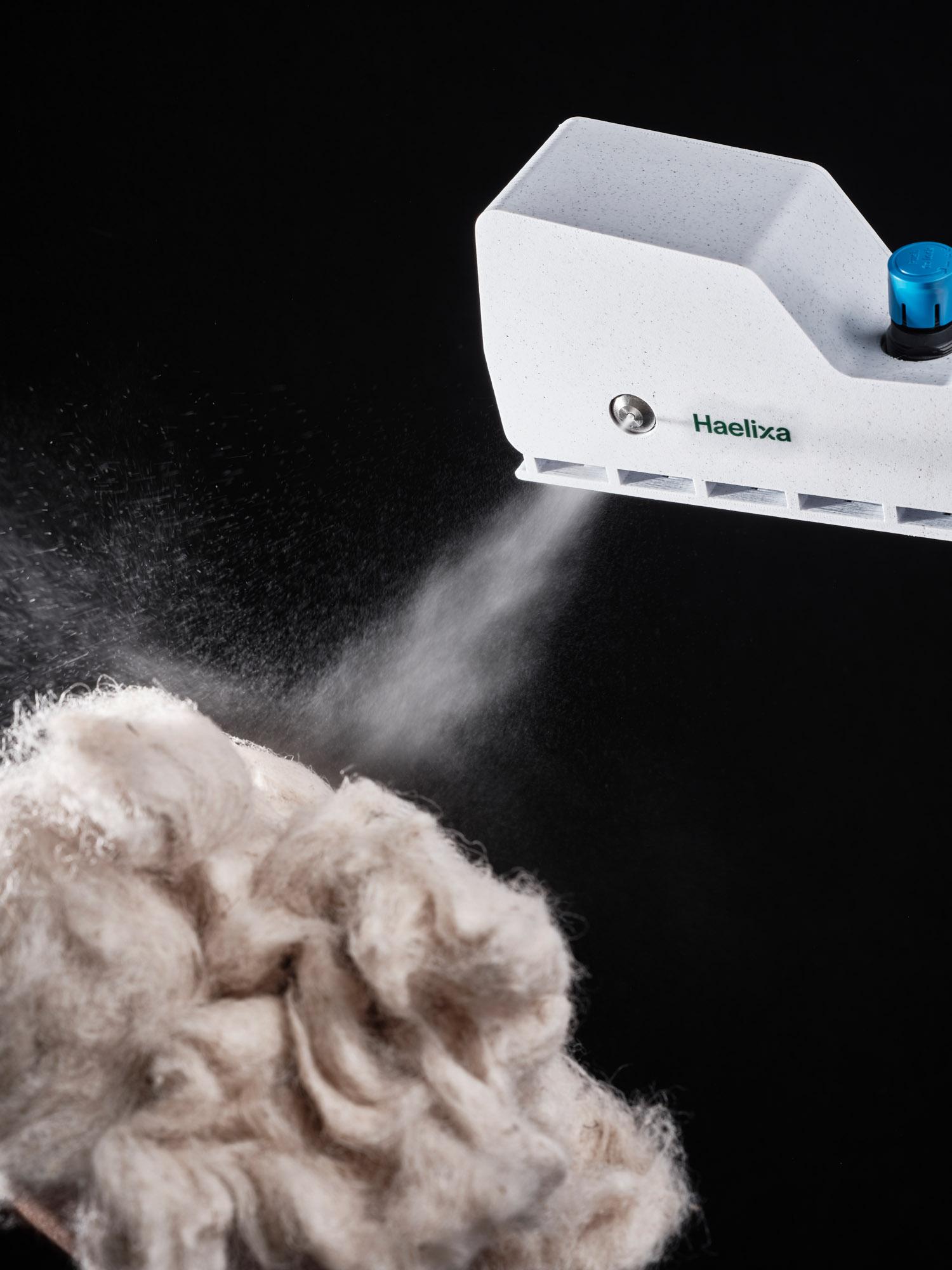
Haelixa, the Swiss-based deeptech provider of DNA-based product traceability, has raised EUR 2 million in a pre-series A investment round to support international scale and long-term strategic growth. 
 
The round was led by existing backers Verve Ventures and Zurich Kantonalbank, with participation from an impact-focused investor 212 NexT Fund. This complements the catalytic funding awarded through the Temasek Trust Amplifier programme. 
 
The investment will support Haelixa’s international expansion, targeted team growth, and deeper collaboration with textile brands and supply-chain partners. 
 
Physical Proof in an Era of Rising Risk 
Haelixa’s patented DNA-based technology physically marks raw materials at any stage of production and enables later verification of origin and authenticity. The plant-based, invisible DNA markers are embedded directly into raw materials and remain detectable throughout complex, multi-tier supply chains. 
 

Haelixa, the Swiss-based deeptech provider of DNA-based product traceability, has raised EUR 2 million in a pre-series A investment round to support international scale and long-term strategic growth. 
 
The round was led by existing backers Verve Ventures and Zurich Kantonalbank, with participation from an impact-focused investor 212 NexT Fund. This complements the catalytic funding awarded through the Temasek Trust Amplifier programme. 
 
The investment will support Haelixa’s international expansion, targeted team growth, and deeper collaboration with textile brands and supply-chain partners. 
 
Physical Proof in an Era of Rising Risk 
Haelixa’s patented DNA-based technology physically marks raw materials at any stage of production and enables later verification of origin and authenticity. The plant-based, invisible DNA markers are embedded directly into raw materials and remain detectable throughout complex, multi-tier supply chains. 
 
As regulatory scrutiny increases, fashion brands face growing risks of fraud, undeclared blending, and substitution of premium materials, as well as mounting exposure to counterfeiting. These failures threaten compliance, brand equity, and consumer trust. By enabling verification directly on the product itself, Haelixa provides brands with a practical safeguard to protect material integrity and brand value. 
 
Haelixa’s technology is already used across fashion and textiles, as well as precious metals and gemstones, and is compliant with GOTS, Standard 100® by OEKO-TEX, and OEKO-TEX® Eco Passport. 
 
From Innovator to Investor-Backed Scale 
Haelixa originated as a spin-off from ETH Zurich and has since achieved scaled commercial adoption, generating seven-figure revenues and securing multi-year agreements with leading textile and fashion brands. 

Source:

Haelixa 

Orthopac RVMC-20 Plus (c) Mahlo GmbH & Co. KG
Orthopac RVMC-20 Plus
03.02.2026

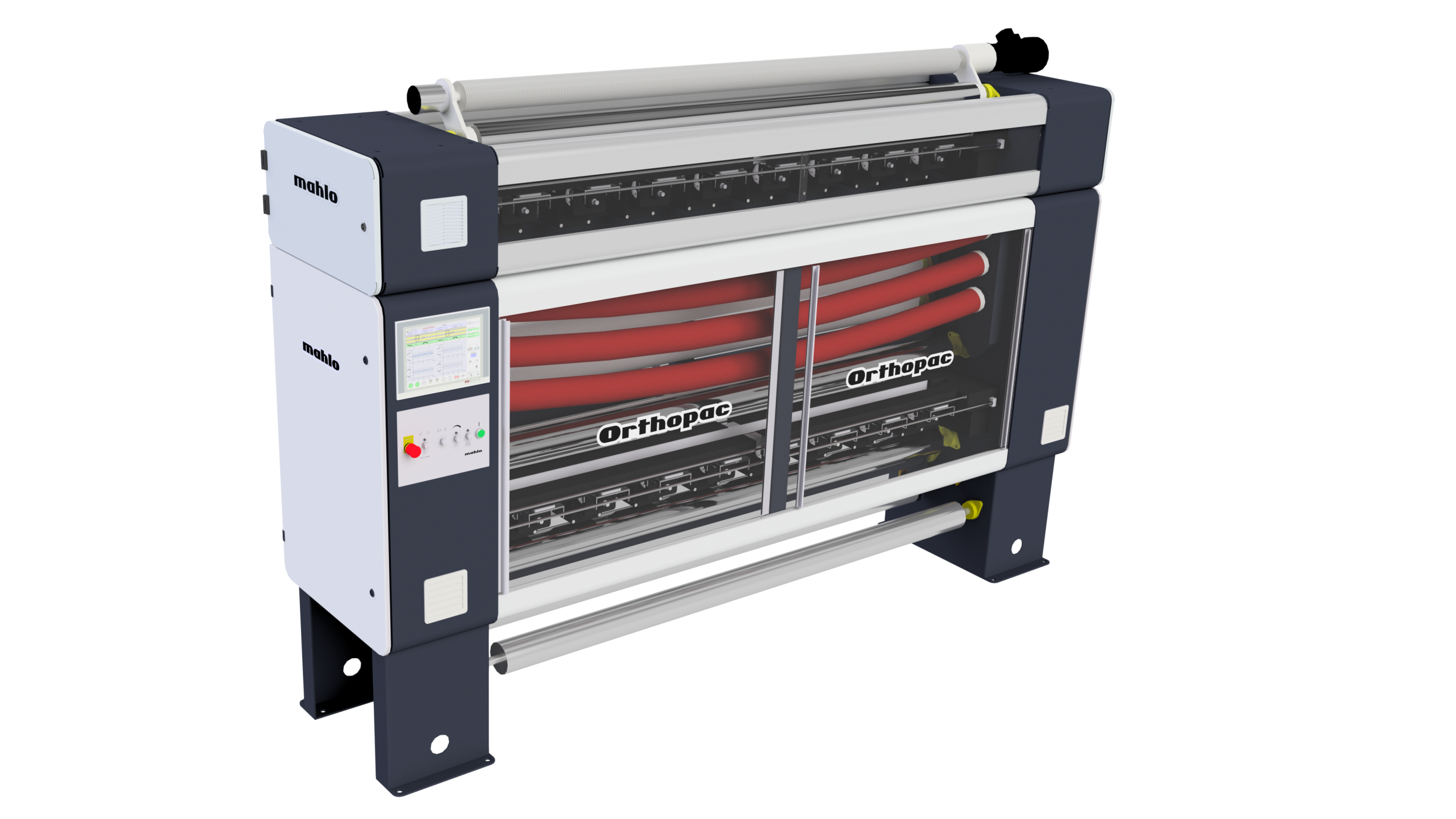
Orthopac RVMC-20 plus: Smarter Weft Straightening with AI

In times of rising cost pressure and growing quality demands, textile producers worldwide are searching for solutions that combine precision, efficiency, and sustainability. With its latest innovation, the Orthopac RVMC-20 plus, Mahlo once again demonstrates how to improve technology to meet today’s challenges.

For decades, Mahlo has set the benchmark in automatic weft straightening. The new Orthopac RVMC-20 plus continues this tradition, building on the trusted Orthopac RVMC-15 while introducing a decisive technological step forward: double scanning with AI-supported control systems.

The concept relies on two detection units – one at the fabric inlet and one at the outlet. At the inlet, so-called Feed Forward Control analyzes distortions before they even reach the straightening rollers, ensuring precise positioning from the first centimeter. At the outlet, Closed Loop Control continuously monitors the result and applies AI-based corrections in real time. This dual approach enables the system to cope even with highly variable distortions at high production speeds. The outcome is reliably straight fabric, less waste, and consistent premium quality.

In times of rising cost pressure and growing quality demands, textile producers worldwide are searching for solutions that combine precision, efficiency, and sustainability. With its latest innovation, the Orthopac RVMC-20 plus, Mahlo once again demonstrates how to improve technology to meet today’s challenges.

For decades, Mahlo has set the benchmark in automatic weft straightening. The new Orthopac RVMC-20 plus continues this tradition, building on the trusted Orthopac RVMC-15 while introducing a decisive technological step forward: double scanning with AI-supported control systems.

The concept relies on two detection units – one at the fabric inlet and one at the outlet. At the inlet, so-called Feed Forward Control analyzes distortions before they even reach the straightening rollers, ensuring precise positioning from the first centimeter. At the outlet, Closed Loop Control continuously monitors the result and applies AI-based corrections in real time. This dual approach enables the system to cope even with highly variable distortions at high production speeds. The outcome is reliably straight fabric, less waste, and consistent premium quality.

Innovation without Replacement
A key feature of the RVMC-20 plus lies not only in its precision but also in its retrofit capability. Instead of requiring manufacturers to purchase an entirely new machine, Mahlo has designed the scanning module so that existing Orthopac RVMC-15 systems can be upgraded with minimal effort. By simply adding a second scanning unit, the older equipment is effectively transformed into an RVMC-15 plus – giving customers access to the latest technology without the cost of a full replacement.

The benefits of this approach are clear: upgraded machines deliver higher precision and more consistent results, while reducing waste and saving valuable raw materials. At the same time, extending the service life of existing equipment lowers capital expenditure and supports a more sustainable use of resources. In an industry facing both economic and ecological pressures, this combination of efficiency and responsibility represents a strong competitive advantage.

A Global Opportunity
With thousands of Orthopac systems already in use worldwide, the RVMC-20 plus offers a compelling proposition to textile manufacturers across markets. Every installed RVMC-15 now presents an opportunity for modernization. For customers, this means a reliable path toward improved quality and cost efficiency. For Mahlo, it strengthens the company’s position as a long-standing partner to the textile industry.

Source:

Mahlo GmbH & Co. KG

Eastman introduces Naia™ Lyte at Première Vision Paris Photo Eastman
03.02.2026

Eastman introduces Naia™ Lyte at Première Vision Paris

Eastman unveils Naia™ Lyte, a new cellulose acetate filament yarn that represents an important milestone in performance for lightweight and premium fabrics, at Première Vision Paris. Presented for the first time to the international fashion and textile community, Naia™ Lyte expands the capabilities of acetate yarn by introducing enhanced tenacity, unlocking new creative and technical possibilities for designers, mills and brands.

“Naia™ Lyte marks a significant development in acetate filament yarn innovation,” says Ruth Farrell, general manager of Eastman’s textiles business. “By increasing the tenacity of our yarn, we are expanding the performance boundaries of acetate and enabling new lightweight fabric applications, while staying true to the comfort, aesthetics and reliability that define Naia™. Naia™ Lyte is already being produced commercially, and we are excited by initial reactions to this new, innovative addition to our Naia™ portfolio.

Eastman unveils Naia™ Lyte, a new cellulose acetate filament yarn that represents an important milestone in performance for lightweight and premium fabrics, at Première Vision Paris. Presented for the first time to the international fashion and textile community, Naia™ Lyte expands the capabilities of acetate yarn by introducing enhanced tenacity, unlocking new creative and technical possibilities for designers, mills and brands.

“Naia™ Lyte marks a significant development in acetate filament yarn innovation,” says Ruth Farrell, general manager of Eastman’s textiles business. “By increasing the tenacity of our yarn, we are expanding the performance boundaries of acetate and enabling new lightweight fabric applications, while staying true to the comfort, aesthetics and reliability that define Naia™. Naia™ Lyte is already being produced commercially, and we are excited by initial reactions to this new, innovative addition to our Naia™ portfolio.

New level of performance. 
Naia™ Lyte introduces a new level of performance to acetate filament yarns through enhanced tenacity, while preserving the refined aesthetics traditionally associated with Naia™. This balance supports a wide range of applications, including fashion-forward lightweight fabrics as well as segments with more technical performance needs. Its refined, silky hand feel, natural luster and fluid drape are combined with comfort and easy-care benefits such as dry feel, cool-to-touch comfort, shape retention after repeated washes, and functional features including odor management and anti-static properties.

From strategic partnership to product innovation
Naia™ Lyte has been developed and produced via Eastman’s strategic partnership with Huafon Chemical, established to accelerate innovation and localized development of cellulose acetate filament yarns. Announced in 2025, the collaboration combines Eastman’s long-standing expertise in cellulosic materials with Huafon’s manufacturing and development capabilities, creating a strong platform for advancing acetate yarn performance.

Funding approved: Textile Factory 7.0 to be built in Mönchengladbach © Institut für Textiltechnik (ITA) der RWTH Aachen University
03.02.2026

Funding approved: Textile Factory 7.0 to be built in Mönchengladbach

Textile Factory 7.0 – the vision of a networked, emission-free industrial park of the future for the city of Mönchengladbach is becoming reality. The Federal Ministry of Research, Technology and Space (BMFTR) has approved funding for the project.

The aim of the project is to establish a technology and development centre in Mönchengladbach and thus develop an industrial park of the future. Instead of considering individual technologies in isolation, Textile Factory 7.0 combines energy efficiency, AI/robotics and biotechnology in a single functional textile real-world laboratory under the close cooperation of industry and research.

The project will make a decisive contribution to sustainably increasing the attractiveness and productivity of regional textile production: the T7 Factory will create new jobs and strengthen innovative textile research at the location.

Textile Factory 7.0 – the vision of a networked, emission-free industrial park of the future for the city of Mönchengladbach is becoming reality. The Federal Ministry of Research, Technology and Space (BMFTR) has approved funding for the project.

The aim of the project is to establish a technology and development centre in Mönchengladbach and thus develop an industrial park of the future. Instead of considering individual technologies in isolation, Textile Factory 7.0 combines energy efficiency, AI/robotics and biotechnology in a single functional textile real-world laboratory under the close cooperation of industry and research.

The project will make a decisive contribution to sustainably increasing the attractiveness and productivity of regional textile production: the T7 Factory will create new jobs and strengthen innovative textile research at the location.

The kick-off will take place as a networking event on 19 March 2026. Industry players will then work on common issues relating to the future topics of the T7 Factory: on-demand manufacturing, microfactory engineering, digital textiles and biosphere. The ITA's technical experts will be available as contact persons for the topics of microfactory engineering and digital textiles. If you are interested in cooperation or insights into the progress of the project, you can register here.

The project partners are the ITA – Institute of Textile Technology at RWTH Aachen University, the Research Institute for Textiles and Clothing at the Niederrhein University of Applied Sciences, the Association of the North-West German Textile and Clothing Industry, the Association of the Rhenish Textile and Clothing Industry, the Textile Academy NRW and Wirtschaftsförderung Mönchengladbach GmbH.

Source:

ITA – Institut für TextilInstitut für Textiltechnik (ITA) der RWTH Aachen Universitytechnik of RWTH Aachen University

02.02.2026

Reciprocal trade agreement between the United States and Guatemala

The National Council of Textile Organizations (NCTO), which represents the full U.S. textile supply chain from fiber and yarn to fabrics and finished sewn products, welcomed the announcement of a reciprocal trade agreement between the United States and Guatemala.

National Council of Textile Organizations President and CEO Kim Glas:
“The reciprocal trade agreement with Guatemala marks an important step toward strengthening the U.S. textile supply chain. We commend the administration for taking decisive action to remove reciprocal tariffs and provide preferential treatment to qualifying textile and apparel products from Guatemala under the Dominican Republic-Central America-United States Free Trade Agreement (CAFTA-DR).

“NCTO and the broader U.S. textile industry are grateful to President Trump, U.S. Trade Representative Ambassador Jamieson Greer, and the administration for concluding this agreement with Guatemala, following on the heels of the recently announced agreement with El Salvador.

The National Council of Textile Organizations (NCTO), which represents the full U.S. textile supply chain from fiber and yarn to fabrics and finished sewn products, welcomed the announcement of a reciprocal trade agreement between the United States and Guatemala.

National Council of Textile Organizations President and CEO Kim Glas:
“The reciprocal trade agreement with Guatemala marks an important step toward strengthening the U.S. textile supply chain. We commend the administration for taking decisive action to remove reciprocal tariffs and provide preferential treatment to qualifying textile and apparel products from Guatemala under the Dominican Republic-Central America-United States Free Trade Agreement (CAFTA-DR).

“NCTO and the broader U.S. textile industry are grateful to President Trump, U.S. Trade Representative Ambassador Jamieson Greer, and the administration for concluding this agreement with Guatemala, following on the heels of the recently announced agreement with El Salvador.

“Guatemala is a key partner in the CAFTA-DR region, with $2 billion in two-way textile and apparel trade. Together, the region operates as an integrated co-production platform that is essential to the U.S. textile supply chain. In 2024, this production network generated $11.3 billion in two-way trade and supported more than 470,000 American jobs in the domestic textile industry alone.

“The U.S.–Western Hemisphere textile and apparel supply chain remains a critical strategic alternative to China and other Asian producers. We look forward to continued collaboration with the Trump administration to further solidify this vital regional partnership and appreciate this important announcement.”

Source:

National Council of Textile Organizations 

Image: Vitaly Kobzun, Pixabay
02.02.2026

Lenzing AG: Majority owner of TreeToTextile AB, accelerating industrialization of new fibers

The Lenzing Group is taking another strategic milestone by acquiring a controlling majority in the Swedish innovation company TreeToTextile AB. This step strengthens Lenzing’s position as a leading provider of sustainable, wood based specialty fibers and expands its innovation pipeline with a highly scalable, patent protected technology platform. The transaction is executed through the issuance of new shares. 

TreeToTextile represents the next major technological leap in cellulosic fiber production – following the development of viscose in the early 20th century and Lenzing’s own Lyocell technology in the 1990s. The process offers a significantly improved sustainability profile, attractive cost advantages, and broad applicability across textile and nonwoven markets. With the majority acquisition, Lenzing underscores its commitment to consistently advancing its premiumization strategy and further expanding its leadership position in the global specialty fiber market. 

The Lenzing Group is taking another strategic milestone by acquiring a controlling majority in the Swedish innovation company TreeToTextile AB. This step strengthens Lenzing’s position as a leading provider of sustainable, wood based specialty fibers and expands its innovation pipeline with a highly scalable, patent protected technology platform. The transaction is executed through the issuance of new shares. 

TreeToTextile represents the next major technological leap in cellulosic fiber production – following the development of viscose in the early 20th century and Lenzing’s own Lyocell technology in the 1990s. The process offers a significantly improved sustainability profile, attractive cost advantages, and broad applicability across textile and nonwoven markets. With the majority acquisition, Lenzing underscores its commitment to consistently advancing its premiumization strategy and further expanding its leadership position in the global specialty fiber market. 

“TreeToTextile is among the world’s most advanced next generation fiber technologies and represents the most promising development on the market. Since our initial investment in 2025, the collaboration between the innovative TreeToTextile team and Lenzing’s fiber experts has enabled significant technological progress. We are fully committed to the joint scale up and commercialization. H&M Group, Inter IKEA Group, and Stora Enso, will continue to support this path as minority shareholders, contributing valuable market and consumer perspectives,” says Georg Kasperkovitz, COO of Lenzing Group. LSCS Invest also reaffirms its confidence in the joint technology platform through its long standing commitment since the foundation of the company and continued role as a shareholder. 

“Innovation at industrial scale requires time, expertise, and strong partnerships. Lenzing Group’s increased ownership is a clear endorsement of our technology and our ambition to become a major player in the global fiber market,” says Dr. Roxana Barbieru, CEO of TreeToTextile. 

The transaction enables an accelerated scaling of the new technology. Lenzing plans a significant increase in production output at the existing demonstration plant in Nymölla, Sweden, as well as the preparation of the first industrial scale facility. In addition, the company expects operational synergies from an even closer collaboration.

02.02.2026

Rieter Completes Acquisition of Barmag

Rieter has successfully completed the acquisition of Barmag as of February 2, 2026. This strategically important acquisition makes Rieter the world’s leading system provider for natural and synthetic fibers. 

Barmag will be consolidated as of February 2, 2026, and integrated into the Rieter Group as the “Man-Made Fiber” Division. The management of Barmag will remain with the company. Georg Stausberg will continue to lead the division and report to Thomas Oetterli, CEO of Rieter. At the same time, he will join the Group Executive Committee.

The transaction is financed by the capital increase completed in October of last year as well as by long-term bank loans. In addition to substantial cash reserves in its operating units, Rieter also has a significantly increased revolving credit facility at its disposal.

Rieter has successfully completed the acquisition of Barmag as of February 2, 2026. This strategically important acquisition makes Rieter the world’s leading system provider for natural and synthetic fibers. 

Barmag will be consolidated as of February 2, 2026, and integrated into the Rieter Group as the “Man-Made Fiber” Division. The management of Barmag will remain with the company. Georg Stausberg will continue to lead the division and report to Thomas Oetterli, CEO of Rieter. At the same time, he will join the Group Executive Committee.

The transaction is financed by the capital increase completed in October of last year as well as by long-term bank loans. In addition to substantial cash reserves in its operating units, Rieter also has a significantly increased revolving credit facility at its disposal.

Thomas Oetterli, CEO of Rieter: “Barmag’s know-how is a perfect fit for Rieter and will accelerate profitable growth as well as strengthen our market leadership in the important region of Asia. The acquired filament know-how will help to expand our areas of expertise as a system provider and further advance automation and digitization solutions. This is the start of a successful future together and an important milestone in the implementation of our corporate strategy.”

Source:

Rieter Holding AG

Alliance for European Flax-Linen & Hemp at JEC World 2026 Photo Alliance for European Flax-Linen & Hemp at JEC World 2026
02.02.2026

Alliance for European Flax-Linen & Hemp at JEC World 2026

The Alliance for European Flax-Linen & Hemp participats at JEC World 2026, featuring a significantly expanded presence and an enhanced offering for the global composites industry.

Building on previous successes, the Alliance members will be at the core of a newly renamed and enlarged Bio-Materials Village in Hall 5. The village has grown by more than 30%, expanding from 250 m² to 333 m², and will feature 14 Alliance members and partners representing the full natural fibre composite value chain from fibre cultivation and processing through to semi-finished materials, resins, and industrial applications.

This year’s village welcomes several new members, including Norafin, which brings advanced technical nonwoven expertise using flax and hemp fibres, and innovative start-up Biofibix developing next-generation bio-based composite solutions. Another new participant is GreenPoxy by Sicomin, a leading supplier of bio-based epoxy resins that complement natural fibre reinforcement systems and enable lower-impact composite structures.

The Alliance for European Flax-Linen & Hemp participats at JEC World 2026, featuring a significantly expanded presence and an enhanced offering for the global composites industry.

Building on previous successes, the Alliance members will be at the core of a newly renamed and enlarged Bio-Materials Village in Hall 5. The village has grown by more than 30%, expanding from 250 m² to 333 m², and will feature 14 Alliance members and partners representing the full natural fibre composite value chain from fibre cultivation and processing through to semi-finished materials, resins, and industrial applications.

This year’s village welcomes several new members, including Norafin, which brings advanced technical nonwoven expertise using flax and hemp fibres, and innovative start-up Biofibix developing next-generation bio-based composite solutions. Another new participant is GreenPoxy by Sicomin, a leading supplier of bio-based epoxy resins that complement natural fibre reinforcement systems and enable lower-impact composite structures.

Innovations Showcase
The Bio-Materials Village will highlight several award-winning and shortlisted developments, including exhibits from JEC Innovation Award winners and finalists.

Bcomp has received the Automotive & Road Transportation Parts Award for its series-production exterior flax composite components developed for BMW, demonstrating the scalability and performance of flax reinforcements in demanding automotive applications. 

Safilin will also present its collaboration with Stratiforme on the Ecotrain project, showcasing the successful integration of natural fibre composites into rail interiors, delivering weight reduction, improved environmental performance, and industrial feasibility.

Biofibix, shortlisted among the 20 finalists of the 2026 JEC Startup Booster, will present its proprietary reinforcement technology designed to overcome one of the key challenges of natural fibre composites : structural consistency. Biofibix develops flax-based reinforcement systems that combine controlled fibre orientation with thermoplastic and thermoset compatibility, enabling improved mechanical performance and process reliability. 

Visitors will also discover the Ssuchy-Next project, an initiative focused on wind energy applications. The project explores the use of hemp-based composite solutions for a 12.6 m wind turbine blade, combining optimized fibre architecture, bio-sourced materials, and industrial manufacturing processes. Ssuchy-Next demonstrates how natural fibres can contribute to reduced carbon footprint, improved vibration damping, and end-of-life advantages, while meeting the mechanical and durability requirements of the wind energy sector.

Additional cutting-edge innovations on display will be showcased by other Alliance members and partners that include BComp, Circular Structures, DEMGY, Depestele, Ecotechnilin, Emanuel Lang Flax Composites, Flaxco, Libeco, Linificio e Canapificio Nazionale, Norafin, Safilin, Terre de Lin Technique, and many more. 


Industry Conference 
As part of the JEC Composite Exchange programme, Alliance experts will organize a round-table discussion on Wednesday 11 March at 2:00 pm Agora 5, titled:

“From Data to Applications: How Environmental and Technical Flax-Linen & Hemp Data Help Build Industrial Solutions.” The discussion will highlight how environmental metrics and technical performance data are essential tools for designers, engineers, and manufacturers in accelerating the adoption of natural fibre composites, while exploring the latest technical advances in flax-linen and hemp composites, their environmental performance, and the strategic pathways supporting the industrial deployment of bio-based composites in Europe.