
From the Sector

Reset
9 results
Digital printing on acrylic opens up new creative possibilities for high-end interior decoration, reproducing the intricate veining and visual depth of natural marble. (c) Mimaki
Digital printing on acrylic opens up new creative possibilities for high-end interior decoration, reproducing the intricate veining and visual depth of natural marble.
26.11.2026

Recycled acrylic and digital printing for high-end design applications

The combination of recycled cast acrylic and digital printing is opening up new possibilities in interior decoration, retail design and high-end visual communication. Bompan, Mimaki’s exclusive importer for Italy, and Madreperla S.p.A., an Italian manufacturer of cast acrylic sheets, are exploring applications ranging from decorative panels and luxury displays to personalised products and industrial design.

In these markets, material selection and print quality are closely interrelated. Alongside precise colour reproduction and surface aesthetics, ink adhesion and resistance to external influences are important criteria. Applications in cosmetics, perfumery, hospitality and marine interiors, for example, may be exposed to frequent handling, cleaning agents, humidity or alcohol.

Recycled PMMA as a design material
Madreperla specialises in the production of cast polymethyl methacrylate (PMMA) sheets for visual communication, retail displays, lighting and interior design.

Under its Green Cast® brand, the company offers cast acrylic sheets made from 100% recycled raw material. According to Madreperla, these retain the optical, aesthetic and technical properties of cast PMMA manufactured from virgin raw material.

Through chemical recycling, pre- and post-consumer PMMA can be converted back into raw material for the manufacture of new acrylic sheets. Variations in colour, surface finish and transparency, combined with different processing techniques, allow the material to be adapted to a wide range of design and functional requirements.

Combining material expertise with digital printing
The collaboration brings together Madreperla’s expertise in cast acrylic and colour customisation, Bompan’s application development and technical support, and Mimaki’s digital printing technology.

The focus is on the interaction between substrate properties, ink performance, printing parameters and finishing processes. Particularly in high-end applications, these factors determine not only the visual appearance but also the functionality and durability of the finished product.

Potential applications include decorative wall panels, retail displays, signage, branded objects and customised design components. Digital printing also enables the reproduction of complex surface patterns, such as the characteristic veining and visual depth of natural marble.

Among the technologies available for these applications is Mimaki’s UJ330H-160 hybrid UV LED printer, designed to accommodate both rigid and flexible substrates.

Speech by Shigang Li, GM of Barmag Beijing and Richard Wang, GM of Barmag Suzhou Photo Barmag
Speech by Shigang Li, GM of Barmag Beijing and Richard Wang, GM of Barmag Suzhou
26.11.2026

Barmag opens Application Center China to strengthen local R&D

Barmag officially inaugurated its Application Center China (BACC) on 19 November 2026, during ITMA ASIA + CITME 2026, where the company presented its technology portfolio covering the value chain from polymer melt to filaments, fibres and nonwovens.

The new centre provides a development and testing environment linking fundamental research, experimental validation and industrial applications. Its activities include early-stage concept validation, customer trials, process optimisation and the development of new product variants.

Customers can conduct product trials and validate processes under conditions closely aligned with their industrial requirements. The aim is to shorten development cycles, minimise disruption to existing production lines and facilitate the transition from proof of concept to industrial-scale production.

Linking research in Germany with industrial applications in China
BACC is designed to connect Barmag's fundamental research activities in Germany with the application requirements of the Chinese market. Its proximity to customers and suppliers allows production challenges, new materials and emerging process concepts to be incorporated into development and validation projects at an early stage.

The resulting knowledge feeds back into Barmag's global R&D network, positioning China not only as a market for established technologies but also as a source of application-driven innovation.

The centre's infrastructure has been designed to accommodate different materials, technologies and process configurations, allowing development activities to adapt to changing industrial requirements.

Integrating spinning and texturing
A particular technological feature of BACC is the integration of spinning and texturing, including draw textured yarn (DTY) development, within a single platform.

Beyond the shared use of laboratories, personnel and infrastructure, this approach enables R&D teams to investigate the interdependencies between polymer properties, spinning parameters and subsequent texturing conditions more systematically.

For manufacturers, the integrated development environment provides opportunities to evaluate material and process combinations across several production stages and undertake joint, application-specific validation projects.

The centre's future activities will focus on the processing of new polymers, the development of yarns with specific product properties, the investigation of production-related challenges and the validation of new process concepts. By bringing experimental development closer to industrial production, BACC aims to accelerate the introduction of new materials, products and manufacturing processes.

26.11.2026

Zünd Technology Days 2026: Digital cutting and automated production

More than 200 international attendees visited Zünd Technology Days 2026 at the company's Swiss headquarters on 18 and 19 November. The event focused on the automation of industrial manufacturing processes, material efficiency and the scalability of digital production solutions. Applications ranged from leather and textile processing to gasket and footwear manufacturing, acoustic solutions and aerospace composites.

How can hides be automatically inspected for defects within seconds and subsequently cut to maximise material utilisation? How can manufacturers of acoustic solutions increase production capacity without compromising speed or quality? What opportunities do digitalisation and automation offer in the processing of composites, textiles and foams?

Zünd users and technology partners presented challenges and solutions from various industrial sectors. Martin Steffensen, CEO of Steffca S/A, outlined the requirements of gasket manufacturing, while Dion Bettjeman of Mindhive Global focused on the digital characterisation and defect detection of hides. Other presentations addressed offline production in the footwear industry and the scaling of industrial manufacturing processes.

Andy Vawter of US-based MPS Acoustics reported on how the company increased its production capacity while maintaining speed and quality. Alun Reece, CEO of Loop Technology, presented the 'Composites at Speed and Scale' (COMPASS) project. Miguel Rodriguez, board member of Portuguese textile company Pedrosa & Rodrigues, highlighted the potential of advanced pattern recognition and alignment technologies in garment manufacturing.

From material scanning to automated cutting
In the newly redesigned demonstration rooms, live production processes illustrated how data capture, software, material handling, cutting and automation interact. Among the applications presented was the Dectura workflow, which combines automated defect detection on hides with subsequent digital cutting.

Further live demonstrations covered the production of acoustic elements, carpet cutting, robot-assisted manufacturing processes and foam processing. Various machine configurations were also presented for cutting gasket materials and medical equipment.

The combination of technical presentations, live demonstrations and discussions with technology specialists enabled attendees to assess the solutions presented against their own production requirements.

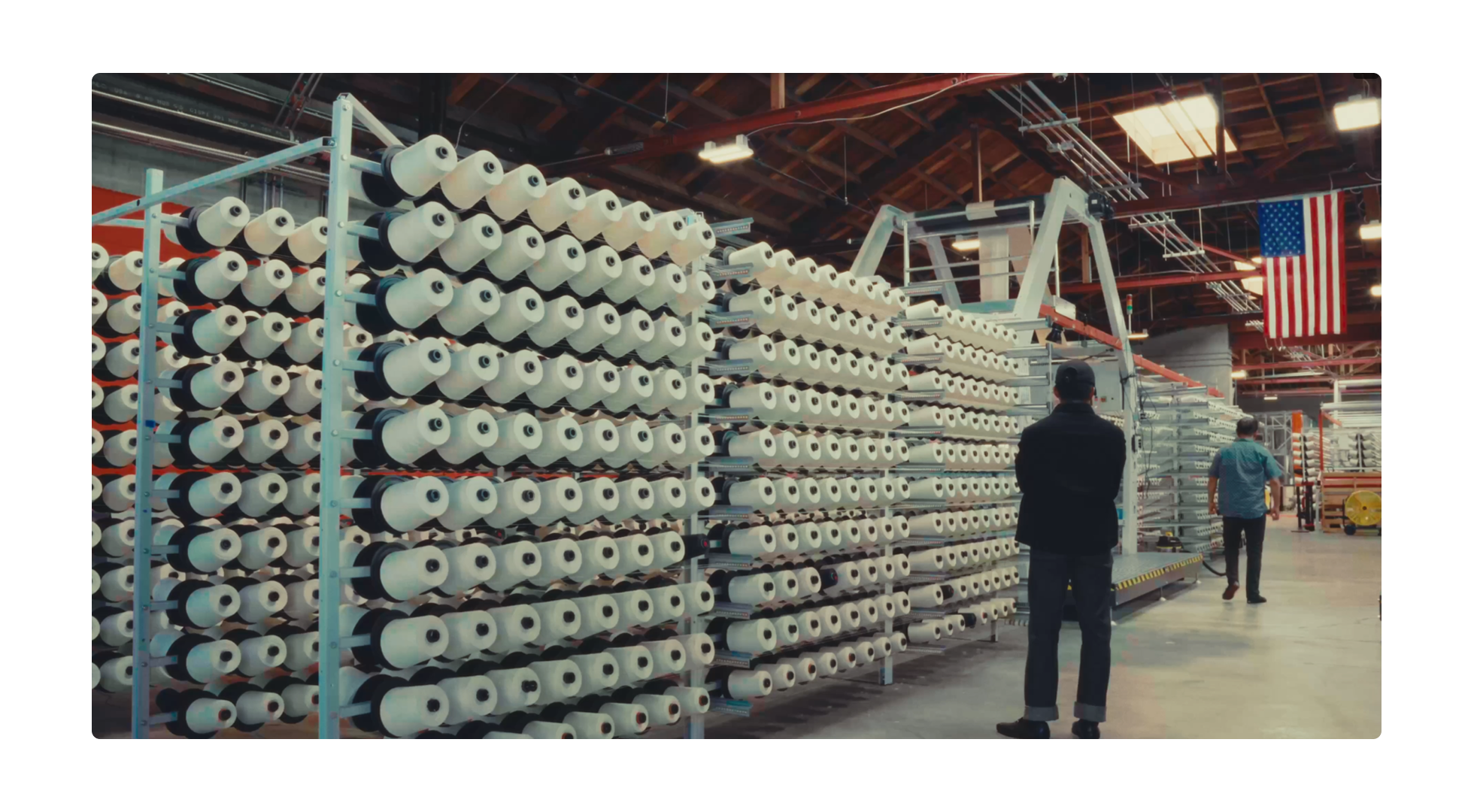
OneWeave machines at unspun’s headquarters in Emeryville, California Photo: (c) unspun
OneWeave machines at unspun’s headquarters in Emeryville, California
18.11.2026

unspun and Arvind take 3D weaving into industrial apparel production

unspun and Arvind Limited are bringing OneWeave 3D weaving into Arvind’s apparel manufacturing operations in Ahmedabad, India. Two machines are expected to be operating by December 2026. The agreement provides a route to more than 30 additional machines in India and/or North America during 2027 and 2028, with expansion linked to demand from apparel brands.

Arvind is purchasing the equipment and will contract directly with brands for garment production. unspun will handle installation, commissioning, training, software and continuing technical support. For the US technology company, the deployment takes its weaving platform beyond its own microfactory and into a large textile manufacturer’s production environment.

OneWeave produces three-dimensional garment forms directly from yarn. This removes the conventional step of first weaving flat fabric and reduces the subsequent cutting and sewing required. According to unspun, a trouser leg can be woven in around ten minutes.

The partners intend to use the technology for shorter production cycles and more flexible replenishment. Rather than committing an entire season’s requirements well in advance, brands could place smaller orders and respond to sales during the season. The companies also see opportunities to reduce fabric offcuts and the financial exposure associated with excess stock.

The rollout will begin with limited capacity on the first two machines. unspun says several global apparel brands are preparing programmes, with initial production slots to be allocated on a first-come, first-served basis.

23.10.2026

Italian Textile Machinery Orders in Q3 2026

Order intake for Italian textile machinery manufacturers increased by 7% in the third quarter of 2026, compared with the same period of 2025. Growth was driven by demand from international markets, where orders rose by 8%, while the domestic market remained weak, posting a 4% decline.

Compared with the previous quarter, overall order intake decreased by 4%, reflecting the uncertainty that continues to affect investment decisions across the global textile sector. The textile machinery orders index for the July-September period reached 44.6 points (base year 2021 = 100).

Italian manufacturers reported an average order backlog equivalent to 3.5 months of production, while capacity utilisation stood at 72.4%.

Sector-by-sector data show that order trends were generally stable or declining during the quarter, both in the domestic and export markets. Expectations for the final quarter of 2026 remain cautious, with most companies anticipating either stable or lower levels of order intake.

Marco Salvadè, President of ACIMIT, commented:
“Despite the widespread caution among manufacturers, fuelled by international uncertainty and rising energy costs, foreign markets continue to provide positive signals. This is particularly encouraging, as exports account for around 80% of the order intake of Italian textile machinery manufacturers.”

“The domestic market, however, remains subdued. The industry is looking for stronger investment momentum from Italian companies, supported by the incentives available under the Transition 5.0 scheme, which offers improved planning opportunities for industrial investments.”

More information:
order intake Italy quarter
Source:

ACIMIT

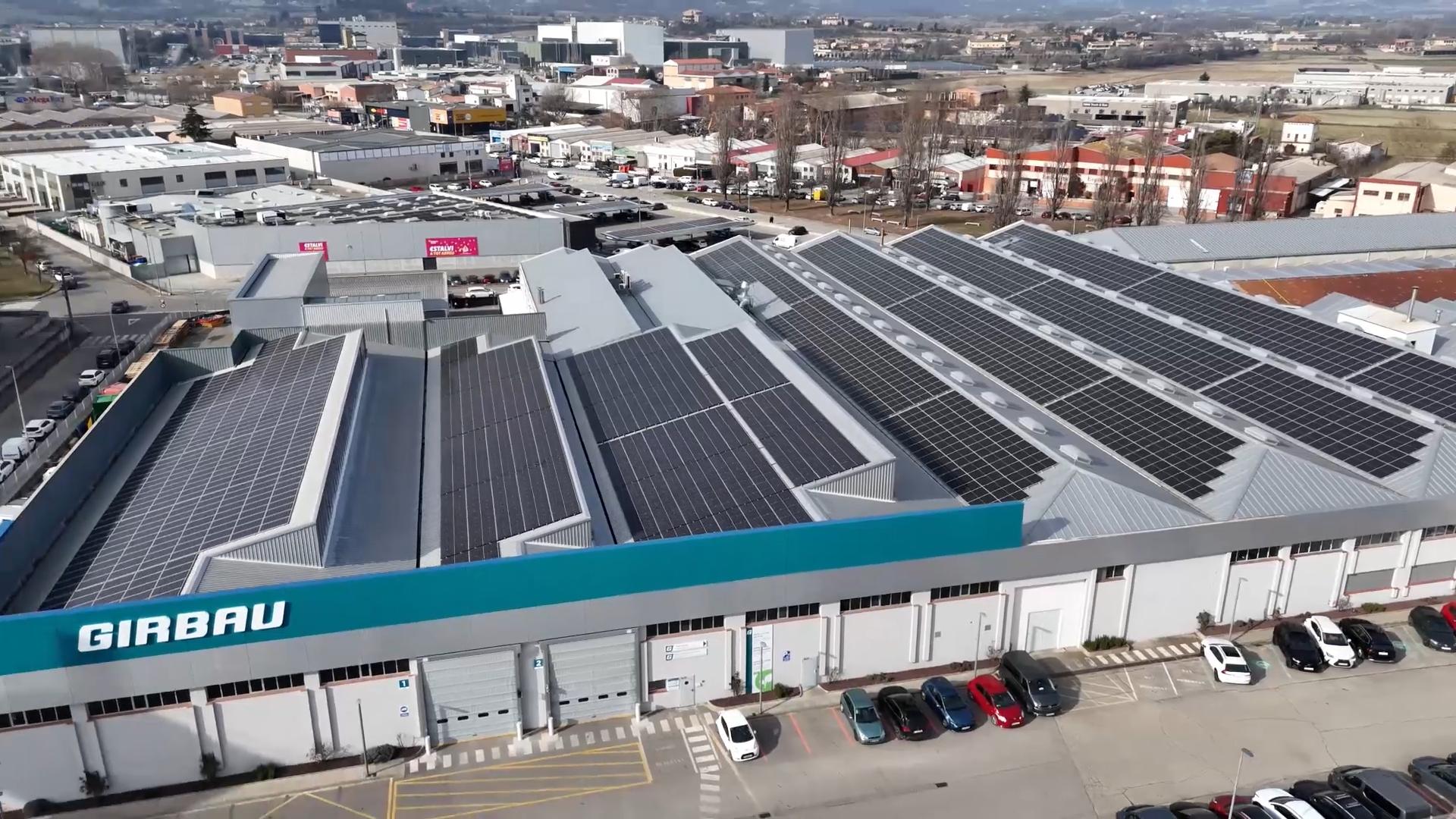
Photo (c) Girbau
21.10.2026

Girbau acquires German company Fintec

Girbau has signed an agreement to acquire 100% of FINTEC Textilpflegesysteme GmbH, a German company specialising in the development and manufacture of textile finishing, folding, sorting and internal transport systems. The acquisition will take effect on 1 January 2027.

The transaction is part of Girbau’s growth strategy and will expand its range of complete solutions for industrial laundries. Fintec’s technology, systems and expertise will increase the share of proprietary products in industrial projects and improve integration between the different stages of the laundry process. Girbau also aims to further strengthen its service to end customers with an offering that combines proximity and excellence.

“Fintec represents a major leap forward in our value proposition, vertically integrating the design, manufacture and marketing of garment solutions” says Martí Giralt, CEO of Girbau.

Girbau and Fintec have worked together for more than 20 years, and the German company’s solutions were already part of Girbau’s industrial portfolio. The transaction takes this relationship a step further and strengthens the technological and service capabilities that both companies offer the market.

Fintec will continue to operate as usual with the same team of professionals, while gaining greater capacity for growth as part of Girbau.

“This transaction enables us to ensure the continuity of the expertise and solutions developed by Fintec, while opening a new chapter with greater industrial capacity and international reach” says Claudia Pollauf, Managing Director of Fintec.

With this acquisition, Girbau reinforces its growth plan and its ability to support laundries comprehensively in their projects, with more proprietary technology and a more complete end-to-end offering.

Source:

Girbau 

Artificial turf for golf (c) Photo STC Extrusion GmbH
14.10.2026

New Specialist in Artificial Turf and Technical Monofilaments

With the foundation of STC Extrusion GmbH, headquartered in Chemnitz, Germany, a technical competence and know-how hub for the production of artificial turf and technical monofilaments has been established within the Starlinger Group.

The newly founded machine manufacturing company is part of Austria-based Starlinger Group and has taken over selected assets from the insolvent STC Spinnzwirn GmbH. STC Extrusion GmbH is a legally independent entity and does not act as the legal successor to STC Spinnzwirn GmbH. The company plans to focus on the core areas monofilament production for artificial turf and technical monofilaments made from a wide variety of polymers.

 “With the founding of STC Extrusion GmbH, we are opening a new chapter in STC’s history—with the experience, passion, and dedication to our customers that have always distinguished STC,” said Managing Director Nico Dürrschmidt. “We are convinced that with this solution, we have laid a solid foundation that will enable us to continue delivering value for our customers and partners worldwide in the future.”

In addition to production technology for artificial turf applications and technical monofilaments, STC Extrusion GmbH offers a Customer Experience Center for customer tests, raw material evaluation, research, and product and technology development. Furthermore, the company will take over and continue to provide service and spare parts for installed STC Spinnzwirn extrusion systems. This ensures that existing customers receive the technical support they need.
To leverage the established know-how in the field of winders, synergies with Georg Sahm GmbH & Co. KG—a winding technology specialist that is also part of the Starlinger Group—will be deepened to advance innovative winding technology and offer automation solutions and handling systems for bobbins. The expertise of Starlinger’s recycling division will also be incorporated into the development and implementation of environmentally friendly solutions with higher recycled content.

“With this strategical reorganization we aim to make STC Extrusion GmbH the knowledge and competence hub for artificial turf and technical monofilaments within the Starlinger network and establish it as a technology leader and brand for these specialized areas,” explains Angelika Huemer, CEO and Managing Partner of Starlinger & Co Ges.m.b.H., which holds the shares in the newly founded company. “We intend to make even better use of the synergies that arise among the companies in the Starlinger Group and to further develop and expand their individual areas of expertise.”

Source:

STC Extrusion GmbH

14.10.2026

Brazil: The Italian Textile and Textile-Machinery Sector Takes Centre Stage at Two Workshops

From 19 to 24 October 2026, Brazil will host a mission showcasing Italian excellence in the textile and textile machinery sectors, with two workshops scheduled for 20 October in the state of Santa Catarina and 22 October in São Paulo. The initiative will bring together Italian companies specialising in textile machinery, yarns, fabrics and clothing accessories, with the aim of strengthening commercial and industrial ties between the two countries and opening up new opportunities for collaboration.

Organised by the Italian Trade Agency in collaboration with ACIMIT and Confindustria Moda, the mission will comprise two stages in key areas of Brazil’s textile industry. The programme includes seminars featuring presentations by Italian companies, B2B meetings with local industry representatives and visits to local production facilities. The first stage will take place in the state of Santa Catarina, in the areas of Blumenau, Joinville and Brusque, while the second will take place in the state of São Paulo, with activities also planned in Americana and at Denim City São Paulo, a major centre of innovation and a key hub for the textile and denim industries.

The initiative aims to showcase the expertise and innovative capabilities of the entire Italian supply chain, which is internationally recognised for the high quality of its products and technologies. In particular, the Italian textile machinery industry stands out for its ability to develop advanced, customised solutions that meet the needs of a sector increasingly focused on production efficiency, sustainability and technological innovation.

Brazil is one of the most strategic markets in Latin America for Italian textile machinery manufacturers. In 2025, Italian exports of textile machinery to Brazil reached €48 million, while in the first half of 2026 they amounted to €20 million, placing Brazil tenth among the leading destination markets for Italian textile machinery. The most sought-after technologies are those related to finishing, which accounts for 57% of Italian textile machinery exports to Brazil, followed by accessories and other machinery, each representing 11%, and knitting machinery, at 10%.

“Brazil is a market of great interest to our industry, with which we have well-established commercial relations and significant prospects for collaboration,” said Marco Salvadè, President of ACIMIT. “This mission represents a concrete opportunity to strengthen dialogue between Italian companies and Brazilian operators, fostering new synergies across the entire textile supply chain. Our companies’ ability to offer innovative, flexible and sustainable technologies can make a significant contribution to modernising the local textile industry and enhancing its competitiveness. The decision to organise two workshops in different manufacturing regions of the country also demonstrates our commitment to fostering direct dialogue with Brazil’s various industrial clusters, thereby making the most of the opportunities offered by this important market.” The initiative, organised by the Italian Trade Agency and ACIMIT with the valuable support of Confindustria Moda, will bring together 22 Italian companies in total, 18 of which operate in the textile machinery sector and are listed below: Biancalani, BTSR, Color Service, Corino Macchine, DURST, Reggiani Macchine, Erhardt + Leimer, Ferraro, I.M.A., Itema, Lawer, M.C.S. Officina Meccanica, Mesdan, Monti – Mac, MSJK (MS Printing & JK Group), Pinter Caipo Italia, Salvade’, Savio Macchine Tessili.

More information:
ACIMIT Brazil Italian Trade Agency
Source:

ACIMIT 

A matrix for recycled-fiber quality Graphic: (c) Uster Technologies AG
10.09.2026

A matrix for recycled-fiber quality

Uster Technologies has introduced a structured matrix for assessing mechanically recycled fibers. The approach is intended to help spinners deal with the wider variability of recycled feedstocks and relate measured fiber properties more directly to processing decisions and intended end uses.

Mechanically recycled cotton typically shows greater variation than virgin material because fiber length is reduced and input streams differ in origin and processing history. A consistent assessment framework can therefore support bale management, blending decisions and the adjustment of spinning parameters. Uster positions the Recycled Fiber Matrix as a practical bridge between increasing recycled-content targets and reliable quality control.

This matters for circularity at industrial scale. More recycling capacity alone does not guarantee usable yarn feedstock; recycled fibers also need to enter established production systems with predictable performance. Testing and data interpretation are becoming part of the infrastructure required to move textile-to-textile recycling from availability to repeatable production.