
From the Sector

Reset
Dr. David Meyer Photo via Charles Barker Corporate Communications GmbH
Dr. David Meyer
24.03.2026

ERWO Holding AG and Hoftex Group AG: New CFO

ERWO Holding AG (“ERWO Holding”), holding company of the Südwolle Group, a leading manufacturer of worsted yarns, as well as main shareholder of Hoftex Group AG (“Hoftex Group”), a group of medium-sized companies in the textile industry, have announced the appointment of a new member to their Management Board: With effect from 1 April 2026, Dr David Meyer will become CFO on the Management Board of both companies. This position has recently been vacant, with the finance division being managed on an interim basis by CEO Manuela Spörl.

ERWO Holding AG (“ERWO Holding”), holding company of the Südwolle Group, a leading manufacturer of worsted yarns, as well as main shareholder of Hoftex Group AG (“Hoftex Group”), a group of medium-sized companies in the textile industry, have announced the appointment of a new member to their Management Board: With effect from 1 April 2026, Dr David Meyer will become CFO on the Management Board of both companies. This position has recently been vacant, with the finance division being managed on an interim basis by CEO Manuela Spörl.

Dr David Meyer brings many years of industry experience to his role as CFO, having worked in both capital markets and a family-run SME environment. As a proven finance expert, David has a comprehensive knowledge across the entire spectrum of the finance department, ranging from accounting and controlling through the structuring of financing and M&A to IT transformation projects and investor relations. He comes from Hamberger Industriewerke (Stephanskirchen near Rosenheim), where, in addition to his role as CFO, he most recently also served as Head of Human Resources. Prior to that, he worked for over 12 years as CFO at Steico SE (Feldkirchen near Munich), a producer of timber building materials and wood fibre insulation listed on the OTC market. Dr Meyer holds a PhD in Industrial Engineering (University of Kaiserslautern).

Source:

Charles Barker Corporate Communications GmbH

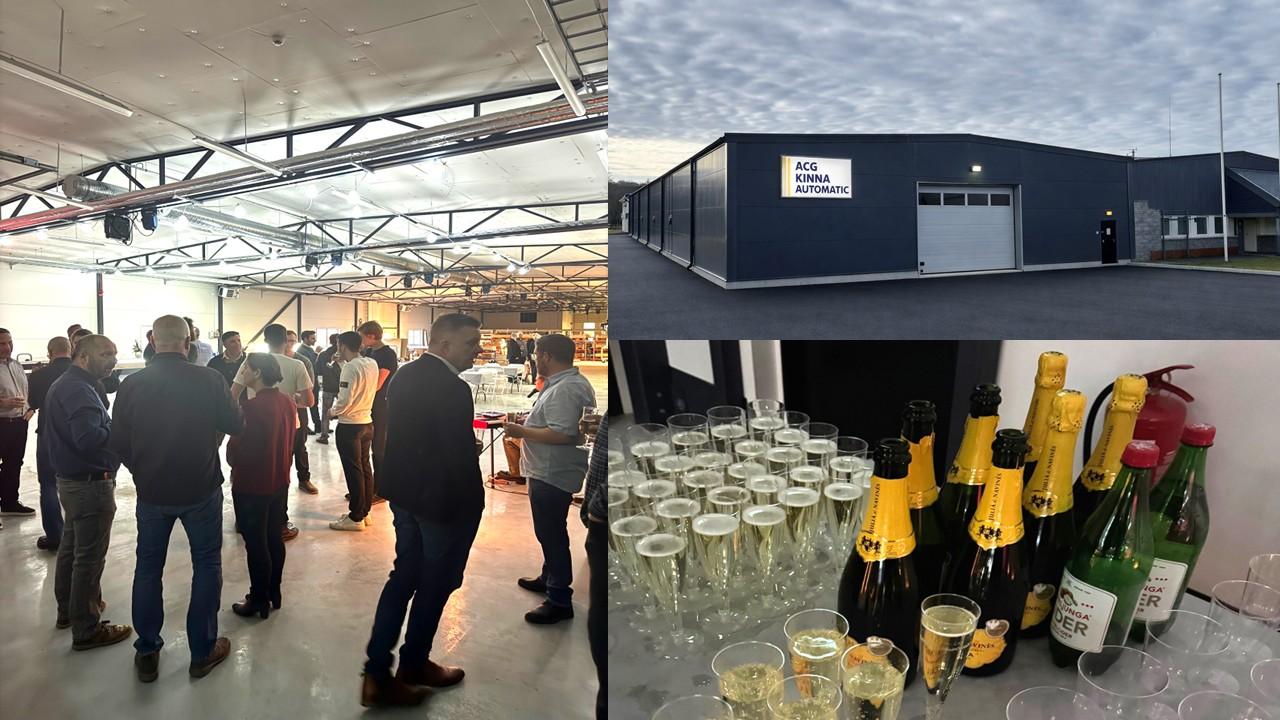
New plant and inauguration Photo ACG Kinna
24.03.2026

Major expansion for ACG Kinna follows record year

In response to growing demand for its full textile and finished product line automation services, ACG Kinna – a member of TMAS, the Swedish textile machinery association – has inaugurated a 1,000-square-metre expansion at its headquarters in Skene, Sweden.

“Following a number of acquisitions in recent years, we needed to either relocate or expand, and opted to remain here in Skene,” explains Sales and Marketing Manager Tomas Aspenskog. “The expansion is directly connected to our existing headquarters and is enabling us to relocate some staff to this centralised location, as well as providing plenty of additional specialised assembly space. It will improve logistics for us and simplify and speed up operations for the company, our suppliers and our customers.”

Automation benefits
ACG Kinna had a record year in 2025 as manufacturers of pillows and duvets for the home furnishings sector are increasingly recognising the benefits of full automation. 

In response to growing demand for its full textile and finished product line automation services, ACG Kinna – a member of TMAS, the Swedish textile machinery association – has inaugurated a 1,000-square-metre expansion at its headquarters in Skene, Sweden.

“Following a number of acquisitions in recent years, we needed to either relocate or expand, and opted to remain here in Skene,” explains Sales and Marketing Manager Tomas Aspenskog. “The expansion is directly connected to our existing headquarters and is enabling us to relocate some staff to this centralised location, as well as providing plenty of additional specialised assembly space. It will improve logistics for us and simplify and speed up operations for the company, our suppliers and our customers.”

Automation benefits
ACG Kinna had a record year in 2025 as manufacturers of pillows and duvets for the home furnishings sector are increasingly recognising the benefits of full automation. 

Under its trademarked slogan ‘Complete Process – One Supplier’, the company has pioneered the development of complete robotic pillow lines from the handling and opening of filling material to sewing, digital quality control and packaging.

In parallel, ACG Kinna is also now making further inroads into the finished filter bag market and will be demonstrating its latest advances in this field at the forthcoming Filtech 2026 exhibition in Cologne, Germany from June 30th to July 2nd.

Acquisitions growth
Part of the highly diversified and still family owned ACG Group since 2013, ACG Kinna significantly expanded its services five years ago, with the acquisition of Finland-based Nowo Machinery, the long-established specialist in technologies for fibre and raw material processing and manufacturer of the highly successful Nowo pillow filling system and ball fibre machines. 

More recently, the acquisitions of two other Swedish companies, EyeTech, a developer of machine vision solutions for manufacturing, warehouse and factory automation, and Styrteknik Europe, a manufacturer of industrial sewing machines for home furnishings, has further expanded ACG Kinna’s scope of offered services.

Source:

ACG Kinna

Kick-off Textilfabrik 7.0 © Copyright: Zukunftsagentur/Tomas Rodriguez
Kick-off Textilfabrik 7.0
23.03.2026

Real-world lab for sustainable textile production: Textilfabrik 7.0 launched

With the official kick-off event of the Textilfabrik 7.0 (T7), a major transformation project for the German textile and apparel industry has been launched in the Monforts Quarter in Mönchengladbach. At the “Textile Roundtable,” an event format organized by the Zukunftsagentur Rheinisches Revier, representatives from industry, research, politics, and the regional economy came together to jointly lay the foundation for CO₂-neutral, circular, and economically viable textile production in Germany.

The textile and fashion industry worldwide faces major challenges: around ten percent of global CO₂ emissions are attributed to it. At the same time, companies in Germany are under considerable competitive pressure. Textilfabrik 7.0 addresses precisely this intersection by bringing together research institutions, industry, and regional stakeholders to accelerate the transfer of innovative technologies and production processes into industrial application.

With the official kick-off event of the Textilfabrik 7.0 (T7), a major transformation project for the German textile and apparel industry has been launched in the Monforts Quarter in Mönchengladbach. At the “Textile Roundtable,” an event format organized by the Zukunftsagentur Rheinisches Revier, representatives from industry, research, politics, and the regional economy came together to jointly lay the foundation for CO₂-neutral, circular, and economically viable textile production in Germany.

The textile and fashion industry worldwide faces major challenges: around ten percent of global CO₂ emissions are attributed to it. At the same time, companies in Germany are under considerable competitive pressure. Textilfabrik 7.0 addresses precisely this intersection by bringing together research institutions, industry, and regional stakeholders to accelerate the transfer of innovative technologies and production processes into industrial application.

Silke Krebs, State Secretary at the Ministry of Economic Affairs, Industry, Climate Protection and Energy of the State of North Rhine-Westphalia emphasizes that the T7 project actively drives the transformation of the Rhenish mining region into a modern industrial hub. It combines innovative, sustainable textile production with research, development, and the use of AI and robotics. At the same time, it strengthens the region’s competitiveness and creates new jobs across all qualification levels. T7 demonstrates that structural change offers concrete opportunities for a future-proof industry.

For Felix Heinrichs, Mayor of the City of Mönchengladbach, it is evident that when thinking of textiles, you cannot overlook Mönchengladbach. Textile production is deeply embedded in the industrial DNA of Mönchengladbach. But it also has the potential to play a key role in the future of the city as a business location. Textilfabrik 7.0 brings industry and academia together for innovation and research. In doing so, it lays the foundation for sustainable and economically viable textile production - and thus for future-proof jobs in Mönchengladbach. Today’s launch of the T7 project marks a major milestone in the city’s structural transformation.

The kick-off event was aimed in particular at companies along the entire textile value chain. In several keynote presentations, participants gained insights into current developments and potential applications of future production models. Brother Internationale Industriemaschinen GmbH and Hch. Kettelhack GmbH & Co. KG demonstrated how on-demand production can be integrated into microfactory concepts, enabling flexible, demand-driven manufacturing processes.

In addition, 3E Smart Solutions presented how intelligent production for smart textiles could look in the future. The industry cluster Cluster Industrial Biotechnology (CLIB) showcased approaches for using biotechnological processes, such as microorganisms, in textile production to improve resource efficiency and close material loops.

At the heart of Textilfabrik 7.0 are four core modules: On-Demand Manufacturing, MicroFactory Engineering, Digital Textiles, and Biosphere. These topics also formed the basis for four workshops in which participants discussed with module leaders what requirements industry has for future production solutions. The goal was to identify concrete needs and incorporate them directly into further project planning.

Through its real-world lab approach, T7 aims to test and optimize new technologies along the entire textile value chain. These include robotics, digital process chains, and biotechnological methods that can help establish a functioning circular economy in practice.

Professor Dr. Susanne Meyer, President of Niederrhein University of Applied Sciences states that the Textilfabrik 7.0 exemplifies what applied research must achieve today: bringing together science, industry, and society to develop concrete solutions to the major challenges of our time. Niederrhein University of Applied Sciences contributes their textile expertise specifically to this future-oriented project, from digital production processes and sustainable materials to circular value creation models. In doing so, there is a contribution not only to the transformation of the textile industry but also to the innovative capacity and future viability of the entire region.

At the same time, the project makes an important contribution to structural change in the Rhenish mining region. Under the guiding principle “From Coal to AI,” new perspectives for industrial value creation and skilled employment are emerging in the region. Textilfabrik 7.0 is one of 19 anchor projects in the Rhenish mining region and is considered by the state to be central to the successful, rapid, and visible implementation of structural transformation.

Textilfabrik 7.0 is a joint project of the Research Institute for Textile and Clothing (FTB) at Niederrhein University of Applied Sciences (HSNR), the Institute for Textile Technology (ITA) at RWTH Aachen University, the Association of the North-West German Textile and Clothing Industry, the Association of the Rhenish Textile and Clothing Industry, the Textile Academy NRW, and WFMG – Mönchengladbach Economic Development Corporation.

In einer zweiten Entwicklungsphase soll über die Textilfabrik 7.0 hinausgehend ein Industriepark der Zukunft entstehen. Hier entwickelt und produziert die Textil- und Bekleidungsindustrie unter Zero-Emission-Bedingungen und mit CO₂-neutralen Prozessen. Der Industriepark soll Raum bieten für innovative Produktionsstätten, Unternehmensniederlassungen der Textilbranche sowie nachhaltige Textil-Start-ups. So entsteht ein moderner Industriestandort, der Forschung, Entwicklung und industrielle Produktion miteinander verbindet.

In a second development phase, a future industrial park is planned to be created beyond Textilfabrik 7.0. Here, the textile and apparel industry will develop and produce under zero-emission conditions and with CO₂-neutral processes. The industrial park will provide space for innovative production facilities, company branches in the textile sector, and sustainable textile start-ups. This will create a modern industrial hub that combines research, development, and industrial production.

The project Textilfabrik 7.0 is funded by the Federal Ministry for Economic Affairs and Energy (BMWE) under the “STARK” funding guideline to strengthen transformation dynamics and promote new beginnings in coal regions and coal-fired power plant locations, by the State of North Rhine-Westphalia through the Ministry of Economic Affairs, Industry, Climate Protection and Energy (MWIKE) in accordance with the framework guideline for implementing the Investment Act for Coal Regions (InvKG) NRW, and by the Federal Ministry for Research, Technology and Space (BMFTR).

Source:

ITA – Institut für Textiltechnik of RWTH Aachen University

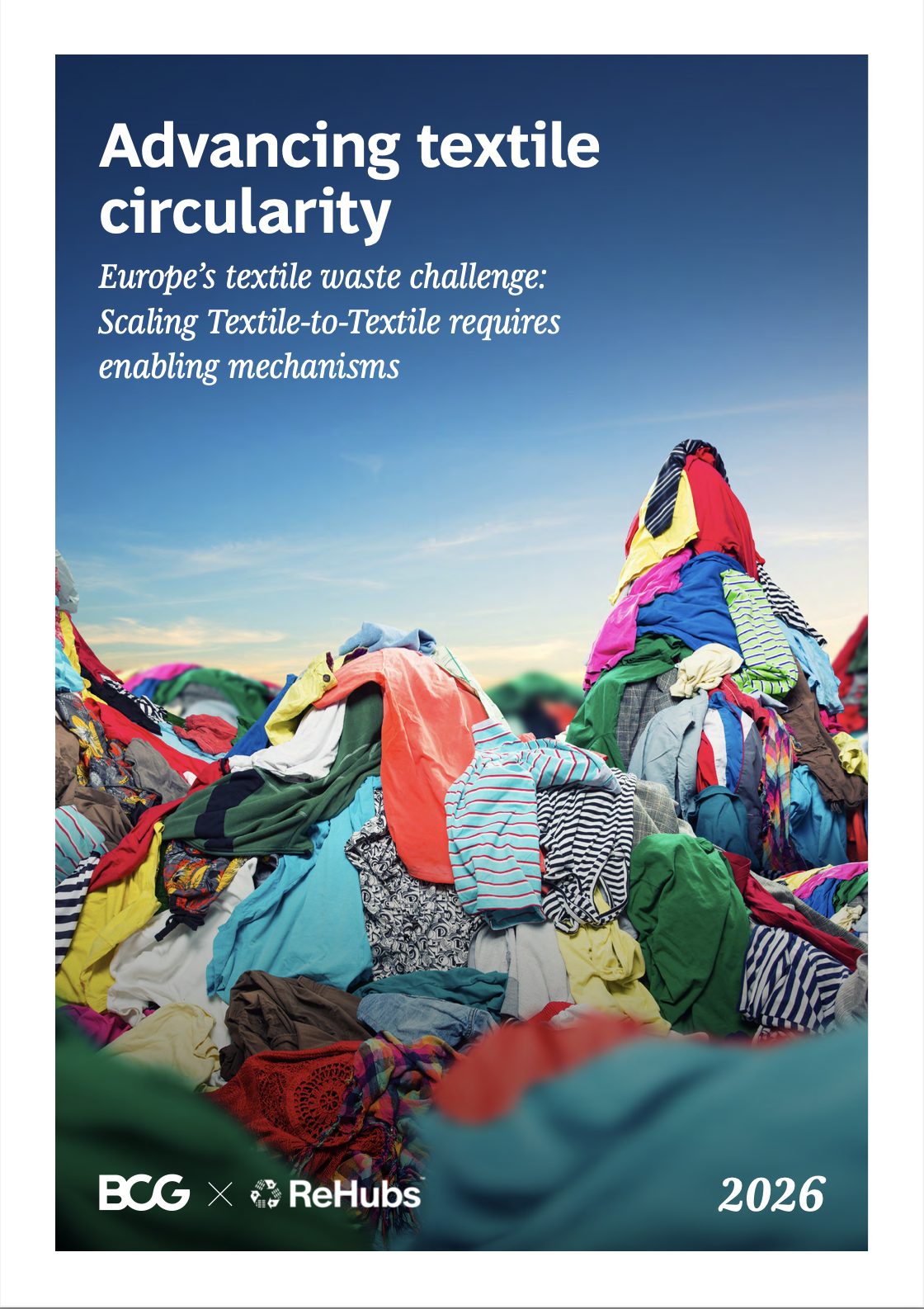
ReHubs x BCG Report Cover Cover ReHubs x BCG Report
ReHubs x BCG Report Cover
23.03.2026

New BCG and ReHubs Report: Scale Textile-to-Textile Recyclinge

A new report from Boston Consulting Group (BCG) and ReHubs, titled “Advancing Textile Circularity – Europe’s textile waste challenge: Scaling Textile-to-Textile requires enabling mechanisms”, highlights the urgent need for systemic action to tackle Europe’s growing textile waste and scale a circular textile economy. 

The report establishes the first harmonized fact base on textile waste in Europe. It finds that Europe generates around 15.2 million tonnes of textile waste every year, including 13.3 million tonnes of post-consumer waste. However, only a small share of this waste is collected and sorted for recycling, leaving most textile waste outside recycling systems. 

As a result, textile-to-textile recycling currently represents less than 1% of post-consumer textile waste in Europe. At the same time, waste volumes continue to rise rapidly. Without decisive action, Europe’s textile waste could reach the equivalent of around 80 football stadiums filled with discarded textiles every year by 2035.

A new report from Boston Consulting Group (BCG) and ReHubs, titled “Advancing Textile Circularity – Europe’s textile waste challenge: Scaling Textile-to-Textile requires enabling mechanisms”, highlights the urgent need for systemic action to tackle Europe’s growing textile waste and scale a circular textile economy. 

The report establishes the first harmonized fact base on textile waste in Europe. It finds that Europe generates around 15.2 million tonnes of textile waste every year, including 13.3 million tonnes of post-consumer waste. However, only a small share of this waste is collected and sorted for recycling, leaving most textile waste outside recycling systems. 

As a result, textile-to-textile recycling currently represents less than 1% of post-consumer textile waste in Europe. At the same time, waste volumes continue to rise rapidly. Without decisive action, Europe’s textile waste could reach the equivalent of around 80 football stadiums filled with discarded textiles every year by 2035.

The report shows that scaling textile-to-textile recycling is technically possible but requires reaching a critical tipping point of c. 2.7 million tonnes of recycling annually by 2035 to unlock economies of scale and make the ecosystem viable.

Reaching this milestone will require €8-11 billion in capital investment and €5-6.5 billion in recurring annual operating costs, as well as coordinated supply- and demand-side measures across the value chain.

The analysis also underlines that textile-to-textile recycled fibers represent a new product category with structurally higher processing costs. Under current market conditions, they cannot compete directly with incumbent recycled materials or virgin fibers without targeted enabling mechanisms and coordinated policy support.

Scaling textile circularity will therefore require coordinated collaboration across the entire value chain, from improved collection and sorting infrastructure to demand signals from brands and clear policy frameworks that support investment and innovation.

Robert van de Kerkhof, CEO at ReHubs commented:
“Europe has the opportunity to build a truly circular textile ecosystem, but it will require systemic change across the entire value chain. Textile-to-textile recycling is technically possible today, but scaling it requires coordinated action from industry, policymakers, and investors. Through collaboration across the value chain, ReHubs is helping to drive the transformation needed to build a circular textile economy in Europe.”

Nicolas Manuelli, Managing Director & Partner at BCG commented:
“This report shows that scaling textile-to-textile recycling in Europe is achievable, but it requires the right economic conditions. Textile-to-textile recycled fibers are a new product category with higher processing costs, meaning they will not scale without enabling mechanisms. Supply-side and demand-side measures, combined with appropriate financing tools and supportive trade and industrial policies, will be essential to unlock investment and accelerate the transition to a circular textile system.”

specialty chemical solutions Getty Images for CHT Group
23.03.2026

CHT Group at Techtextil 2026: Intelligent specialty chemical solutions for technical textiles

At this year's Techtextil in Frankfurt on the Main, the CHT Group will be presenting its comprehensive portfolio of tailor-made specialty chemicals and process solutions for technical textiles. As a reliable partner to the global textile industry, CHT offers innovative products and in-depth technical expertise across all areas of the textile value chain – from pretreatment, dyeing, and printing to finishing, coating, and fiber auxiliaries.

The focus of the trade fair presentation will be on solutions that meet the highest standards of functionality, sustainability, and quality. CHT's specialty chemicals are used in a wide range of industrial applications – from high-performance coating systems and pure, recyclable product solutions to innovative composite materials.

Expertise along the entire value chain
With decades of experience in the development and application of specialty chemicals, CHT supports its customers from the initial idea to successful industrial implementation. The goal is to work together to design the products of tomorrow and enable sustainable textile innovations.

At this year's Techtextil in Frankfurt on the Main, the CHT Group will be presenting its comprehensive portfolio of tailor-made specialty chemicals and process solutions for technical textiles. As a reliable partner to the global textile industry, CHT offers innovative products and in-depth technical expertise across all areas of the textile value chain – from pretreatment, dyeing, and printing to finishing, coating, and fiber auxiliaries.

The focus of the trade fair presentation will be on solutions that meet the highest standards of functionality, sustainability, and quality. CHT's specialty chemicals are used in a wide range of industrial applications – from high-performance coating systems and pure, recyclable product solutions to innovative composite materials.

Expertise along the entire value chain
With decades of experience in the development and application of specialty chemicals, CHT supports its customers from the initial idea to successful industrial implementation. The goal is to work together to design the products of tomorrow and enable sustainable textile innovations.

The CHT Group's solutions are used in numerous application segments:

Mobiltech

  • Flame-retardant finishes and coatings for interior textiles, carpets, seat covers, and technical composites
  • Special adhesives for flocking

Medtech

  • Coatings and finishes for mattress protection and surgical textiles
  • Special fiber auxiliaries for hygiene and medical products

Protech

  • Flame-retardant, chemical-resistant, and weatherproof finishes and coatings
  • Solutions for industrial and protective clothing for public authorities

Hometech / Interior

  • Coatings and finishes for advertising and event textiles, banner fabrics, trade fair coverings
  • Solutions for furniture covers, carpets, and cleaning textiles

Indutech

  • High-performance coatings and finishes for filter media, conveyor belts, and technical fabrics

Buildtech

  • Coatings for architectural membranes, facades, and functional light protection systems
  • Applications for textile-reinforced concrete, insulation materials, and sewer rehabilitation

Sporttech & Outdoor 

  • Finishing and coating systems for awnings, tents, and protective Covers

Innovative product ranges for modern textile applications
The portfolio includes both water-based and silicone-based printing and coating systems, in particular from the well-known ALPATEC range, which opens up new functional possibilities for technical textiles – and all this reliably from a single source.

There is a particular focus on sustainable solutions:
Circular economy as a strategic guiding principle

The CHT Group consistently integrates the principles of the circular economy into its research and development. A single-type end product – such as carpets, filters, or technical nets – is much easier to recycle and return to the recycling cycle. With our TUBICOAT PET range, CHT offers a coating line specially developed for single-type polyester materials.

PFC-free hydrophobic agents
The ECOPERL product range offers high-performance, PFC-free DWR solutions, some with a high share of bio-based components, suitable for a wide range of technical applications.
Numerous products naturally comply with leading international standards such as ZDHC, bluesign®, GOTS, Oeko-Tex® Standard 100, Cradle to Cradle® Material Health Certificate, GRS – a clear commitment to quality, transparency, and sustainability.

(c) Messe Frankfurt Asia Holdings Ltd
23.03.2026

Gartex Texprocess India Mumbai

As India’s textile and apparel industry continues to expand its global footprint while adapting to evolving manufacturing technologies and sustainability priorities, Gartex Texprocess India Mumbai incorporating the Denim Show will bring together the apparel and garment manufacturing value chain from 9 – 11 April 2026, at the Bombay Exhibition Centre, Mumbai. 

The exhibition will serve as a platform for the machinery manufacturers, technology providers, fabric suppliers, textile printers and accessories suppliers to connect, explore innovations and strengthen business collaborations across the textile and garment manufacturing ecosystem.

As India’s textile and apparel industry continues to expand its global footprint while adapting to evolving manufacturing technologies and sustainability priorities, Gartex Texprocess India Mumbai incorporating the Denim Show will bring together the apparel and garment manufacturing value chain from 9 – 11 April 2026, at the Bombay Exhibition Centre, Mumbai. 

The exhibition will serve as a platform for the machinery manufacturers, technology providers, fabric suppliers, textile printers and accessories suppliers to connect, explore innovations and strengthen business collaborations across the textile and garment manufacturing ecosystem.

*India’s textile and apparel sector – valued at nearly USD 179 billion, remains a key pillar of the economy, contributing around 2% to the GDP nearly 11% to manufacturing GVA and over 8% to exports while supporting the livelihoods of 45 million people across the value chain. Besides being the largest cultivator of cotton and producer of jute and silk, backed by rich legacy of India’s timeless textile designs, the country has set a precedent in also in manufacturing of manmade textile ecosystem. These reflect the scale, diversity and potential of India’s textile ecosystem.

Amidst this evolving industry backdrop Gartex Texprocess India Mumbai will bring together more than 125 companies participating at the show presenting solutions across apparel and garment manufacturing technologies, denim manufacturers, fabrics, trims, accessories and textile printing solutions. The event will feature participation from companies representing key textile technology markets including Italy, Germany, China, Japan, Taiwan and Hong Kong. Visitors will have access to over 500 products and 300 brands along with some new participants at the show. The fair will see new products launches, expected during the show. 

Exhibitor showcase will cover a wide range of technologies and solutions including garment and apparel machinery, textile processing machinery, textile printing machinery, digital printing technologies, yarn and knitting machinery, printing and dyeing equipment, automation and software, testing equipment, packaging and labelling solutions as well as fabrics, trims and accessories.

Mr Raj Manek, Executive Director & Board Member, Messe Frankfurt Asia Holdings Ltd expressed: “India’s textile industry is witnessing strong momentum driven by technological advancement, global sourcing opportunities and increasing emphasis on sustainability. Platforms such as Gartex Texprocess India play an important role in bringing together industry stakeholders to explore innovations, share knowledge and build partnerships that support the sector’s next phase of growth.” 

Likewise, Mr Gaurav Juneja, Director, MEX Exhibitions Pvt Ltd, shared: “The garment and textile manufacturing sector continues to evolve with growing demand for advanced machinery, efficient processing technologies and integrated supply chains. Through Gartex Texprocess India and it’s co-located shows, we aim to provide a focused platform for technology providers manufacturers and suppliers to engage with industry professionals and explore new business opportunities.” 

Reflecting evolving manufacturing needs, this edition will also see expanded product categories such as knitting machinery and fusing technologies supporting efficiency and precision in garment production. The co-located shows will further highlight specialised industry segments. The Denim Show supported by the Denim Manufacturers Association will present innovations from denim mills, fabric producers, finishing and washing technology providers, dyes and chemicals suppliers and denim garment manufacturing machinery companies. 

As sustainability and circularity become increasingly important across the global textile supply chains, exhibitors are also expected to highlight technologies aimed at improving resource efficiency, reducing water, energy consumption, enabling recycling and supporting environmentally responsible production processes.

The trade fair will see participation from Indian brands like: Balaji Sewing Machine, Bekah, Benz Embroidery, Brother, DCC, Dollar, Epson, Fynd, HSW, Jack, Jaysynth, Lordi Mehala Machines, Mexum, National Fabricator, Om Satya, Optitex, Siruba, Stampit Robotai, V Design and many more prestigious brands. The Denim show in association with the Denim Manufacturers Association will showcase brands like: Ginni International, LNJ Denim, Oswal Denim, Siyaram’s, Syama Denims and many more.

In addition to the exhibition, the event will also feature knowledge-sharing sessions and industry discussions, bringing together experts and stakeholders to exchange insights across Gartex Talks and Denim Talks. The topics** will be around: From Data to Design: Turning Consumer Insights into Winning Products, Culture to Commerce, How Global Cultural Shifts Are Shaping the Next Fashion Trends, AI in Apparel Manufacturing: From Prediction to Production, Athleisure Evolution: When Performance Fabrics Go Mainstream, The Future of Garment Machinery: Speed, Precision & Sustainability, Towards Zero-Waste Textile Production: Innovations in Machinery & Technology, Digital Textile Printing: The Next Frontier of Customization and more.

The expo is jointly organised by Messe Frankfurt Trade Fairs India Pvt Ltd and MEX Exhibitions Pvt Ltd.

Source:

Messe Frankfurt Asia Holdings Ltd 

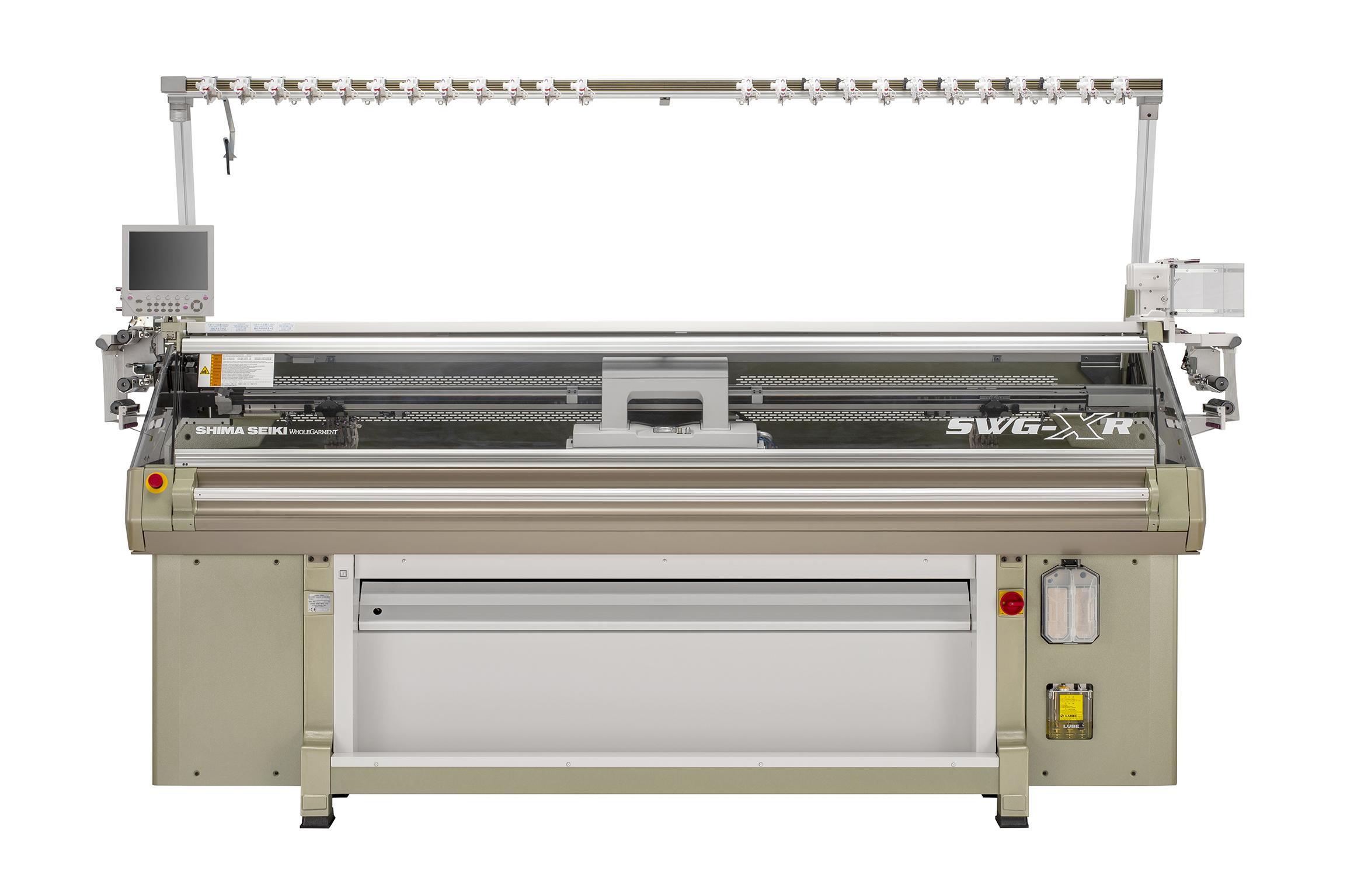
WHOLEGARMENT® knitting machine (c) Shima Seiki
WHOLEGARMENT® knitting machine
23.03.2026

SHIMA SEIKI at Techtextil 2026

Textile technology solutions provider SHIMA SEIKI MFG., LTD. of Wakayama, Japan, along with its Italian subsidiary SHIMA SEIKI ITALIA S.p.A., will be participating in the Techtextil 2026 exhibition in Frankfurt, Germany next month. On display will be WHOLEGARMENT® and other advanced threedimensional knitting applications across a wide range of industries besides fashion apparel that are not typically associated with knitting, such as technical textiles using industrial materials and advanced threedimensional knitting. 
 

Textile technology solutions provider SHIMA SEIKI MFG., LTD. of Wakayama, Japan, along with its Italian subsidiary SHIMA SEIKI ITALIA S.p.A., will be participating in the Techtextil 2026 exhibition in Frankfurt, Germany next month. On display will be WHOLEGARMENT® and other advanced threedimensional knitting applications across a wide range of industries besides fashion apparel that are not typically associated with knitting, such as technical textiles using industrial materials and advanced threedimensional knitting. 
 
The SWG®-XR WHOLEGARMENT® knitting machine features 4 needle beds and SHIMA SEIKI's original SlideNeedle™, capable of producing high-quality fine gauge WHOLEGARMENT® products in all needles with higher productivity and wider range of patterning. There is great potential for WHOLEGARMENT® knitting in the field of technical textiles, where most items are produced by woven or circular- and warp-knitted textiles using specialized industrial materials that are in many instances very costly. Textile production usually involves knitting or weaving a square sheet from which 2D shaped patterns are cut and sewn together to make the final product, during which precious material is wasted. In sharp contrast, the WHOLEGARMENT® knitting process can produce a complete item in 3D without the need for sewing or linking, and no material wasted. Through WHOLEGARMENT® knitting technology, SHIMA SEIKI therefore offers a sustainable, economical and smarter alternative to current manufacturing processes for technical textiles. In addition, WHOLEGARMENT® knitting can create partial compression and special shaping, and since it produces one product at a time, on-demand production for customized items such as for patient care in the medical field is possible. Furthermore, WHOLEGARMENT® has no seams, providing excellent fit, comfort and stretch characteristics that support a wide range of medical applications. 
 
SHIMA SEIKI's SES®-R next-generation shaping machine features an all-new spring-type moveable sinker system which expands its product range even further with unprecedented three-dimensional shaping capability. Combined with loop pressers and auto yarn carriers, it enhances performance in both inverse plating and inlay knitting for efficient knitting of diverse patterns that support various industries besides apparel, such as sports, automotive, and industrial materials. SES®-R will be shown at Techtextil in 14 gauge with a 52-inch (132 cm) knitting width to support production of larger items. Also on display will be examples of technical textiles using industrial materials produced with SWG®-XR, SES®-R and other SHIMA SEIKI technology. 
 
In addition to machine technology, presentations will be made on SDS® KnitPaint-Online knit software, the proven software used by knitting companies across the globe to create knitting data for programming SHIMA SEIKI computerized flat knitting machines. Also demonstrated will be APEXFiz® subscription design software that supports the creative side from planning and design to realistic textile simulation and 3D virtual sampling of products. Virtual samples are a digitized version of sample making that are accurate enough to be used effectively as prototypes, replacing physical sampling and consequently reducing time, cost and material that otherwise go to waste. When a design is approved for production, knitting data which is automatically generated can be easily transferred to SDS® KnitPaint-Online for converting into machine data, digitally bridging the gap between design and production. APEXFiz® and SDS® KnitPaint-Online therefore help to realize sustainability while digitally transforming the supply chain.

Source:

Shima Seiki 

The Neumag EvoSteam process delivers not only significant energy savings but also even better fiber quality. Photo Neumag
The Neumag EvoSteam process delivers not only significant energy savings but also even better fiber quality.
19.03.2026

ITM 2026: Barmag and Rieter to exhibit together

For the first time, Barmag is presenting itself alongside its new parent company, Rieter: At this year’s ITM in Istanbul, both companies will be represented from June 9 to 13 at the Tüyap Fair Convention and Congress Center.

As a technology leader in the field of chemical fiber equipment, Barmag will showcase its entire portfolio of systems for filament yarn, staple fiber, and nonwoven production, as well as solutions for the networked factory. 

For the first time, Barmag is presenting itself alongside its new parent company, Rieter: At this year’s ITM in Istanbul, both companies will be represented from June 9 to 13 at the Tüyap Fair Convention and Congress Center.

As a technology leader in the field of chemical fiber equipment, Barmag will showcase its entire portfolio of systems for filament yarn, staple fiber, and nonwoven production, as well as solutions for the networked factory. 

The future of filament spinning
The new POY 2.0 concept already impressed industry experts at ITMA Asia + CITME 2025. Presented to only a select group in Singapore, the heart of the concept—the semi-automated winding machine—will be shown to the general public for the first time. WINGS POY 2.0 features an automatic string-up function – a long-awaited feature in the market that keeps string-up times consistently short and sustainably reduces waste. At the same time, staffing requirements at the winding level are reduced, which represents a significant advantage for many spinning mills given the increasing shortage of skilled personnel. Numerous other features make the entire concept a sustainable solution with significant optimizations in terms of energy efficiency, material consumption, waste production, and yarn quality.

Efficient texturing with eFK EvoSmart
Barmag’s manual texturing machine, the eFK EvoSmart, focuses on energy-efficient yarn production while delivering the highest yarn quality. The technological features of the eFK EvoSmart sustainably reduce both energy consumption and operating costs—without compromising on quality and process reliability. By combining energy-optimized process control with innovative components such as EvoHeater and Smart Godets, the eFK EvoSmart achieves a significant reduction in specific energy consumption—with potential savings of 25% per kilogram of yarn. Additional features reduce maintenance requirements by up to 50%.

Neumag’s EvoSteam process reaches perfection 
The state-of-the-art Neumag EvoSteam process, which impresses not only with significant energy savings but also with even better fiber quality, is complemented by two new developments: EvoDuct and EvE-2. EvoDuct optimizes airflow distribution in the air jet, resulting in lower pressure drop, reduced energy consumption, and a more uniform airflow. Together, these factors have a positive effect on fiber quality and fiber uniformity. EvE-2 improves monomer and hot air extraction. The extraction nozzles minimize air turbulence and improve the uniformity of cooling in the air jet. The monomer extraction system, accessible from the outside, facilitates maintenance work and significantly increases spinning performance.

Another component of this perfected concept is the wiping robot, which is already in use in a similar manner at the Barmag filament spinning mill. This means that the benefits—consistent, excellent wiping quality, extended cleaning intervals, reduced labor costs, savings on consumables, and the synchronization of cleaning cycles with can changes and splice management—are now available in the staple fiber process.

Setting new standards in BCF yarn production
With its BICO BCF technology, the Neumag brand is introducing a completely new type of yarn to the market that takes carpet performance to a new level: greater bulk, improved recovery properties, and all this with approximately 20% less pile yarn consumption—without compromising the brand’s renowned high quality. The result: lighter carpets with the very high quality characteristics of Neumag yarns.

Also new to the portfolio: Neumag’s FiberGuard BCF – an intelligent system combining sensors and software that measures yarn tension between the twisting and winding stages in real time. The software automatically reacts to deviations and adjusts the process independently. This means: less waste, higher efficiency, and greater sustainability. FiberGuard is compatible with all current BCF machines and can be easily retrofitted into existing BCF S8 machines.

Toward the networked factory with atmos.io 
atmos.io is the operating system for intelligent yarn production. Every machine – whether a pilot plant or large-scale production with hundreds of positions – comes with the digital core. This makes atmos.io the basis for the smart factory. In the integrated app store, yarn manufacturers can put together exactly what they really need. atmos.io provides data-based decision-making criteria – objectively, efficiently and with a focus on quality. It digitizes the entire material flow: every bobbin carries its own data, from the melt to the warehouse. This allows yarn manufacturers to intervene in production at any time – quickly, precisely and profitably. The advantages: less waste, higher yarn quality, less effort for shop floor employees. The system integrates seamlessly into existing production and IT infrastructures. atmos.io relies on an intelligent data infrastructure that meets the highest standards of cyber security while providing consistent, trustworthy data for secure and efficient process control.

More information:
Rieter Barmag ITMA
Source:

Rieter AG

(c) Outlast Technologies GmbH
19.03.2026

Outlast: Cooling Technology for Cotton and Viscose

Outlast Technologies has expanded its fresh2SKIN® cooling technology to cellulose-based fibers such as cotton and viscose, enabling brands to combine natural materials with a re-freshing cooling effect and long-lasting thermal comfort.

The latest development allows fresh2SKIN® to be applied while maintaining an exceptionally natural and soft handfeel. The finish is virtually imperceptible on the textile, preserving the smooth, flexible character that consumers expect from cotton and viscose fabrics.

What consumers experience instead is the benefit: an immediate, pleasantly cool sensation when the fabric touches the skin. Unlike many textile technologies that remain invisible to the con-sumer, fresh2SKIN® provides a cooling experience that can be felt immediately, for example when trying on a T-shirt equipped with the technology.

Outlast Technologies has expanded its fresh2SKIN® cooling technology to cellulose-based fibers such as cotton and viscose, enabling brands to combine natural materials with a re-freshing cooling effect and long-lasting thermal comfort.

The latest development allows fresh2SKIN® to be applied while maintaining an exceptionally natural and soft handfeel. The finish is virtually imperceptible on the textile, preserving the smooth, flexible character that consumers expect from cotton and viscose fabrics.

What consumers experience instead is the benefit: an immediate, pleasantly cool sensation when the fabric touches the skin. Unlike many textile technologies that remain invisible to the con-sumer, fresh2SKIN® provides a cooling experience that can be felt immediately, for example when trying on a T-shirt equipped with the technology.

fresh2SKIN® combines instant freshness with lasting comfort. While the textile delivers an im-mediate cooling sensation upon skin contact, integrated microcapsules containing natural wax help absorb excess body heat and release it again when temperatures drop. This supports a more balanced microclimate and can help reduce sweating during the day or night.

“Achieving this exceptionally natural handfeel on cellulose-based fibers such as cotton or viscose was a key objective for our development team,” says Volker Schuster, Head of Research & De-velopment at Outlast Technologies. “Our goal was to integrate the fresh2SKIN® functionality without compromising the authentic character of these materials. The result are textiles that feel completely natural while delivering an immediately noticeable cooling effect.”

The development opens new opportunities for next-to-skin applications, including T-shirts, un-derwear, activewear, sleepwear, and bedding textiles.

Source:

Outlast Technologies GmbH

The framework allows for programmable deformation patterns, shown here with the MIT logo. Credits: Image courtesy of the researchers
The framework allows for programmable deformation patterns, shown here with the MIT logo.
18.03.2026

3D-printed metamaterials that stretch and fail by design

Metamaterials — materials whose properties are primarily dictated by their internal microstructure, and not their chemical makeup — have been redefining the engineering materials space for the last decade. To date, however, most metamaterials have been lightweight options designed for stiffness and strength.

New research from the MIT Department of Mechanical Engineering introduces a computational design framework to support the creation of a new class of soft, compliant, and deformable metamaterials. These metamaterials, termed 3D woven metamaterials, consist of building blocks that are composed of intertwined fibers that self-contact and entangle to endow the material with unique properties.

“Soft materials are required for emerging engineering challenges in areas such as soft robotics, biomedical devices, or even for wearable devices and functional textiles,” explains Carlos Portela, the Robert N. Noyce Career Development Professor and associate professor of mechanical engineering.

Metamaterials — materials whose properties are primarily dictated by their internal microstructure, and not their chemical makeup — have been redefining the engineering materials space for the last decade. To date, however, most metamaterials have been lightweight options designed for stiffness and strength.

New research from the MIT Department of Mechanical Engineering introduces a computational design framework to support the creation of a new class of soft, compliant, and deformable metamaterials. These metamaterials, termed 3D woven metamaterials, consist of building blocks that are composed of intertwined fibers that self-contact and entangle to endow the material with unique properties.

“Soft materials are required for emerging engineering challenges in areas such as soft robotics, biomedical devices, or even for wearable devices and functional textiles,” explains Carlos Portela, the Robert N. Noyce Career Development Professor and associate professor of mechanical engineering.

In an open-access paper published Jan. 26 in the journal Nature Communications, researchers from Portela’s lab provide a universal design framework that generates complex 3D woven metamaterials with a wide range of properties. The work also provides open-source code that allows users to create designs to fit specifications and generate a file for printing or simulating the material using a 3D printer.

“Normal knitting or weaving have been constrained by the hardware for hundreds of years — there’s only a few patterns that you can make clothes out of, for example — but that changes if hardware is no longer a limitation,” Portela says. “With this framework, you can come up with interesting patterns that completely change the way the textile is going to behave.”

Possible applications include wearable sensors that move with human skin, fabrics for aerospace or defense needs, flexible electronic devices, and a variety of other printable textiles.

The team developed general design rules — in the form of an algorithm — that first provide a graph representation of the metamaterial. The attributes of this graph eventually dictate how each fiber is placed and connected within the metamaterial. The fundamental building blocks are woven unit cells that can be functionally graded via control of various design parameters, such as the radius and pitch of the fibers that make up the woven struts.

“Because this framework allows these metamaterials to be tailored to be softer in one place and stiffer in another, or to change shape as they stretch, they can exhibit an exceptional range of behaviors that would be hard to design using conventional soft materials,” says Molly Carton, lead author of the study. Carton, a former postdoc in Portela’s lab, is now an assistant research professor in mechanical engineering at the University of Maryland.

Further, the simulation framework also allows users to predict the deformation response of these materials, capturing complex phenomena such as self-contact within fibers and entanglement, and design to predict and resist deformation or tearing patterns.

“The most exciting part was being able to tailor failure in these materials and design arbitrary combinations,” says Portela. “Based on the simulations, we were able to fabricate these spatially varying geometries and experiment on them at the microscale.”

This work is the first to provide a tool for users to design, print, and simulate an emerging class of metamaterials that are extensible and tough. It also demonstrates that through tuning of geometric parameters, users can control and predict how these materials will deform and fail, and presents several new design building blocks that substantially expand the property space of woven metamaterials.

“Until now, these complex 3D lattices have been designed manually, painstakingly, which limits the number of designs that anyone has tested,” says Carton. “We’ve been able to describe how these woven lattices work and use that to create a design tool for arbitrary woven lattices. With that design freedom, we’re able to design the way that a lattice changes shape as it stretches, how the fibers entangle and knot with each other, as well as how it tears when stretched to the limit.”

Carton says she believes the framework will be useful across many disciplines. “In releasing this framework as a software tool, our hope is that other researchers will explore what’s possible using woven lattices and find new ways to use this design flexibility,” she says. “I’m looking forward to seeing what doors our work can open.”

The paper, “Design framework for programmable three-dimensional woven metamaterials,” is available now in the journal Nature Communications. Its other MIT-affiliated authors are James Utama Surjadi, Bastien F. G. Aymon, and Ling Xu.

This work was performed, in part, through the use of MIT.nano’s fabrication and characterization facilities.

Source:

MIT, Anne Wilson | Department of Mechanical Engineering

In experiments, MIT engineers demonstrate a fiber, made from a common polymer material, changes its ability to handle heat as it is stretched. Credit: Courtesy of the researchers
In experiments, MIT engineers demonstrate a fiber, made from a common polymer material, changes its ability to handle heat as it is stretched.
18.03.2026

A quick stretch switches this polymer’s capacity to transport heat

Most materials have an inherent capacity to handle heat. Plastic, for instance, is typically a poor thermal conductor, whereas materials like marble move heat more efficiently. If you were to place one hand on a marble countertop and the other on a plastic cutting board, the marble would conduct more heat away from your hand, creating a colder sensation compared to the plastic.

Typically, a material’s thermal conductivity cannot be changed without re-manufacturing it. But MIT engineers have now found that a relatively common material can switch its thermal conductivity. Simply stretching the material quickly dials up its heat conductance, from a baseline similar to that of plastic to a higher capacity closer to that of marble. When the material springs back to its unstretched form, it returns to its plastic-like properties.

Most materials have an inherent capacity to handle heat. Plastic, for instance, is typically a poor thermal conductor, whereas materials like marble move heat more efficiently. If you were to place one hand on a marble countertop and the other on a plastic cutting board, the marble would conduct more heat away from your hand, creating a colder sensation compared to the plastic.

Typically, a material’s thermal conductivity cannot be changed without re-manufacturing it. But MIT engineers have now found that a relatively common material can switch its thermal conductivity. Simply stretching the material quickly dials up its heat conductance, from a baseline similar to that of plastic to a higher capacity closer to that of marble. When the material springs back to its unstretched form, it returns to its plastic-like properties.

The thermally reversible material is an olefin block copolymer — a soft and flexible polymer that is used in a wide range of commercial products. The team found that when the material is quickly stretched, its ability to conduct heat more than doubles. This transition occurs within just 0.22 seconds, which is the fastest thermal switching that has been observed in any material.

This material could be used to engineer systems that adapt to changing temperatures in real time. For instance, switchable fibers could be woven into apparel that normally retains heat. When stretched, the fabric would instantly conduct heat away from a person’s body to cool them down. Similar fibers can be built into laptops and infrastructure to keep devices and buildings from overheating. The researchers are working on further optimizing the polymer and on engineering new materials with similar properties.

“We need cheap and abundant materials that can quickly adapt to environmental temperature changes,” says Svetlana Boriskina, principal research scientist in MIT’s Department of Mechanical Engineering. “Now that we’ve seen this thermal switching, this changes the direction where we can look for and build new adaptive materials.”

Boriskina and her colleagues have published their results in a study appearing today in the journal Advanced Materials. The study’s co-authors include Duo Xu, Buxuan Li, You Lyu, and Vivian Santamaria-Garcia of MIT, and Yuan Zhu of Southern University of Science and Technology in Shenzhen, China.

Elastic chains
The key to the new phenomenon is that when the material is stretched, its microscopic structures align in ways that suddenly allow heat to travel through easily, increasing the material’s thermal conductivity. In its unstretched state, the same microstructures are tangled and bunched, effectively blocking heat’s path.

As it happens, Boriskina and her colleagues didn’t set out to find a heat-switching material. They were initially looking for more sustainable alternatives to spandex, which is a synthetic fabric made from petroleum-based plastics that is traditionally difficult to recycle. As a potential replacement, the team was investigating fibers made from a different polymer known as polyethylene.

“Once we started working with the material, we realized it had other properties that were more interesting than the fact that it was elastic,” Boriskina says. “What makes polyethylene unique is it has this backbone of carbon atoms arranged along a simple chain. And carbon is a very good conductor of heat.”

The microstructure of most polymer materials, including polyethylene, contains many carbon chains. However, these chains exist in a messy, spaghetti-like tangle known as an amorphous phase. Despite the fact that carbon is a good heat conductor, the disordered arrangement of chains typically impedes heat flow. Polyethylene and most other polymers, therefore, generally have low thermal conductivity.

In previous work, MIT Professor Gang Chen and his collaborators found ways to untangle the mess of carbon chains and push polyethylene to shift from a disordered amorphous state to a more aligned, crystalline phase. This transition effectively straightened the carbon chains, providing clear highways for heat to flow through and increasing the material’s thermal conductivity. In those experiments however, the switch was permanent; once the material’s phase changed, it could not be reversed.

As Boriskina’s team explored polyethylene, they also considered other closely related materials, including olefin block copolymer (OBC). OBC is predominantly an amorphous material, made from highly tangled chains of carbon and hydrogen atoms. Scientists had therefore assumed that OBC would exhibit low thermal conductivity. If its conductance could be increased, it would likely be permanent, similar to polyethylene.

But when the team carried out experiments to test the elasticity of OBC, they found something quite different.

“As we stretched and released the material, we realized that its thermal conductivity was really high when it was stretched and lower when it was relaxed, over thousands of cycles,” says study co-author and MIT graduate student Duo Xu. “This switch was reversible, while the material stayed mostly amorphous. That was unexpected.”

A stretchy mess
The team then took a closer look at OBC, and how it might be changing as it was stretched. The researchers used a combination of X-ray and Raman spectroscopy to observe the material’s microscopic structure as they stretched and relaxed it repeatedly. They observed that, in its unstretched state, the material consists mainly of amorphous tangles of carbon chains, with just a few islands of ordered, crystalline domains scattered here and there. When stretched, the crystalline domains seemed to align and the amorphous tangles straightened out, similar to what Gang Chen observed in polyethylene.

However, rather than transitioning entirely into a crystalline phase, the straightened tangles stayed in their amorphous state. In this way, the team found that the tangles were able to switch back and forth, from straightened to bunched and back again, as the material was stretched and relaxed repeatedly.

“Our material is always in a mostly amorphous state; it never crystallizes under strain,” Xu notes. “So it leaves you this opportunity to go back and forth in thermal conductivity a thousand times. It’s very reversible.”

The team also found that this thermal switching happens extremely fast: The material’s thermal conductivity more than doubled within just 0.22 seconds of being stretched.

“The resulting difference in heat dissipation through this material is comparable to a tactile difference between touching a plastic cutting board versus a marble countertop,” Boriskina says.

She and her colleagues are now taking the results of their experiments and working them into models to see how they can tweak a material’s amorphous structure, to trigger an even bigger change when stretched.

“Our fibers can quickly react to dissipate heat, for electronics, fabrics, and building infrastructure.” Boriskina says. “If we could make further improvements to switch their thermal conductivity from that of plastic to that closer to diamond, it would have a huge industrial and societal impact.”

This research was supported, in part, by the U.S. Department of Energy, the Office of Naval Research Global via Tec de Monterrey, MIT Evergreen Graduate Innovation Fellowship, MathWorks MechE Graduate Fellowship, and the MIT-SUSTech Centers for Mechanical Engineering Research and Education, and carried out, in part, with the use of MIT.nano and ISN facilities.

Image: SHIMA SEIKI MFG., LTD.
18.03.2026

SHIMA SEIKI: Partnership with CLO Virtual Fashion

Leading computerized flat knitting innovator SHIMA SEIKI MFG., LTD. of Wakayama, Japan is partnering with digital garment solutions provider CLO Virtual Fashion of Seoul, South Korea for the integration of technology in garment design and simulation. 
 
Through this partnership, by integrating SHIMA SEIKI’s APEXFiz® 3D design software with CLO’s advanced 3D garment simulation technology, a new workflow that combines the strengths of both companies is enabled—from knitwear planning and design to high-quality product simulation, animation and various other content usage, as well as seamless linkage to the manufacturing process. 
 
Until now, importing material data created in APEXFiz® into CLO consisted of manually loading numerous material layers along with settings and adjustments. In the upcoming versions scheduled for release, APEXFiz® will feature a dedicated export function for CLO, while CLO will enable one-click import functionality with the APEXFiz® Integration Plugin. This enhancement will provide users employing both products with a significantly smoother and more efficient environment. 
 

Leading computerized flat knitting innovator SHIMA SEIKI MFG., LTD. of Wakayama, Japan is partnering with digital garment solutions provider CLO Virtual Fashion of Seoul, South Korea for the integration of technology in garment design and simulation. 
 
Through this partnership, by integrating SHIMA SEIKI’s APEXFiz® 3D design software with CLO’s advanced 3D garment simulation technology, a new workflow that combines the strengths of both companies is enabled—from knitwear planning and design to high-quality product simulation, animation and various other content usage, as well as seamless linkage to the manufacturing process. 
 
Until now, importing material data created in APEXFiz® into CLO consisted of manually loading numerous material layers along with settings and adjustments. In the upcoming versions scheduled for release, APEXFiz® will feature a dedicated export function for CLO, while CLO will enable one-click import functionality with the APEXFiz® Integration Plugin. This enhancement will provide users employing both products with a significantly smoother and more efficient environment. 
 
By expanding creative capability while eliminating traditional barriers between design and production, the collaboration allows users to move from digital concept to knitted output with unprecedented efficiency. Users can now generate accurate, high-quality knit imagery that can take advantage of CLO’s strength in animated production, metaverse applications and even game usage, and furthermore design with the confidence that these digital creations can then be translated into real-world production. 
 
Software integration is set for April, supported by the V-09C update from SHIMA SEIKI in March and the CLO 2026.0 release for enterprise users in April.