
From the Sector

Reset
12.07.2026

NCTO Mourns the Passing of Sen. Lindsey Graham

The National Council of Textile Organizations (NCTO), spanning the entire spectrum of U.S. textiles from fiber to finished sewn products, issued a statement mourning the passing of Senator Lindsey Graham (R-SC) and expressing sincere condolences to his family, staff, and the people of South Carolina.
The National Council of Textile Organizations (NCTO), spanning the entire spectrum of U.S. textiles from fiber to finished sewn products, issued a statement mourning the passing of Senator Lindsey Graham (R-SC) and expressing sincere condolences to his family, staff, and the people of South Carolina.

“The U.S. textile industry is deeply saddened to learn of the passing of South Carolina Senator Lindsey Graham, a dear friend and tireless advocate for our industry and workforce. To say this is a profound loss is an understatement. He was a personal friend to so many in our industry – walked through our plants, engaged with our workers – and never forgot where he came from. He was dubbed by many in Congress as the ‘textile Senator’ and he wore that label so very proudly and he earned every bit of it.  Just last week, he pushed to try to advance two amendments to ensure that U.S. government uniforms are fully made in America. His advocacy on behalf of U.S. manufacturing and workers was a top priority, simply because it was a core belief of his. We want to extend our profound condolences to Senator Graham’s family and his incredible staff – who were his family – and to all those who knew and loved him. He will be greatly missed.”

Source:

National Council of Textile Organizations

SOARIN Photo SOARIN
08.07.2026

CHINA WAVE at Pitti Uomo 110

With its fifth participation at Pitti Uomo, CHINA WAVE once again underscored the dynamic rise of Chinese designer brands on the international stage. The showcased collections demonstrated how Chinese labels are increasingly defining themselves through distinctive design languages, technological innovation and cultural authenticity, attracting growing attention from the global fashion industry. 

As the flagship brand of the collective presentation, SEPTWOLVES impressed visitors with a collection combining functionality, sustainability and Chinese cultural heritage. Alongside its further enhanced Business Travel Jacket featuring advanced technical innovations, the Wulin World Heritage Collection and the sustainable polo line crafted from natural fibres attracted particular interest. International buyers praised SEPTWOLVES for translating traditional Chinese craftsmanship and intangible cultural heritage into a contemporary design language with global appeal. The collections led to intensive discussions with buyers and distributors from Europe, South America, the Middle East and Central Asia, reaffirming the brand's growing international potential. 

With its fifth participation at Pitti Uomo, CHINA WAVE once again underscored the dynamic rise of Chinese designer brands on the international stage. The showcased collections demonstrated how Chinese labels are increasingly defining themselves through distinctive design languages, technological innovation and cultural authenticity, attracting growing attention from the global fashion industry. 

As the flagship brand of the collective presentation, SEPTWOLVES impressed visitors with a collection combining functionality, sustainability and Chinese cultural heritage. Alongside its further enhanced Business Travel Jacket featuring advanced technical innovations, the Wulin World Heritage Collection and the sustainable polo line crafted from natural fibres attracted particular interest. International buyers praised SEPTWOLVES for translating traditional Chinese craftsmanship and intangible cultural heritage into a contemporary design language with global appeal. The collections led to intensive discussions with buyers and distributors from Europe, South America, the Middle East and Central Asia, reaffirming the brand's growing international potential. 

For SWOF CARE, the hat wear brand, direct engagement with the international market was the central focus. The new SUPER SWOF "SS Super Classic" collection and the handcrafted BLACK LABEL line successfully combined traditional Chinese millinery with a contemporary design aesthetic. Particularly valuable for the brand was the immediate feedback received from international buyers and industry professionals, providing important inspiration for future collection development. At the same time, numerous concrete business opportunities emerged, with buyers expressing interest in sourcing solutions, product customization, long-term distribution partnerships and agency collaborations. Establishing new partnerships to further accelerate the brand's international expansion also ranks among the lasting achievements of its participation. 

With its distinctive interpretation of contemporary Oriental aesthetics, ZIFEI WANG became one of the creative highlights of CHINA WAVE. Combining artistic expression with premium ready-to-wear fashion, the collection impressed international buyers as well as renowned showrooms and premium boutiques. Particular praise was given to its successful balance between avant-garde creativity and commercial relevance. The successful presentation in Florence further strengthened the brand's international positioning while paving the way for future presentations across Europe like the forthcoming Milan Fashion Week in September.  

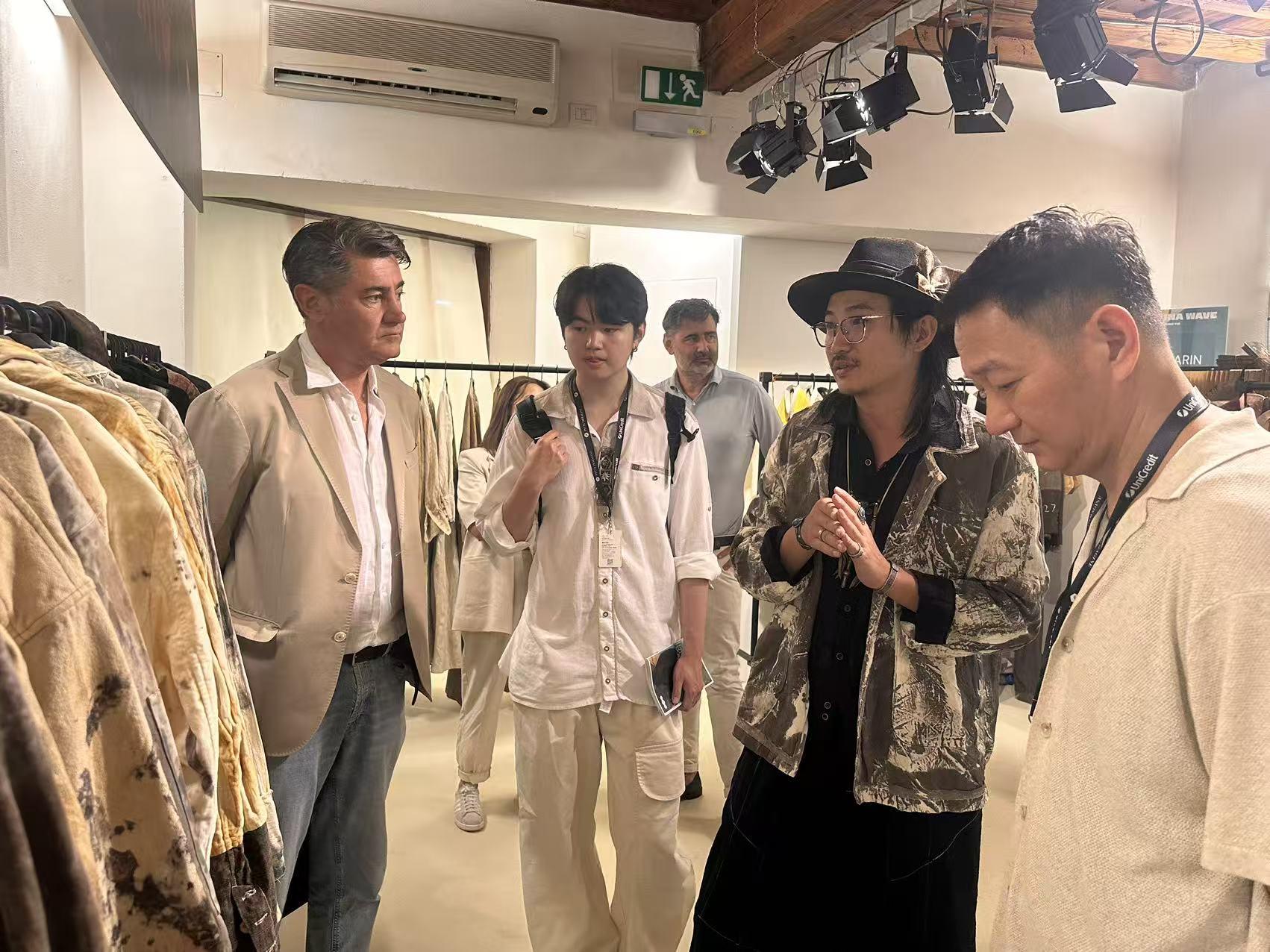
SOARIN presented its unique design philosophy under the guiding concept "I Become." Through plant-based dyeing techniques, innovative material research and the fusion of traditional craftsmanship with contemporary design, the brand developed a distinctive creative signature. International buyers and industry professionals particularly appreciated its creative originality and innovative use of materials. Discussions during the fair generated promising prospects for future collaborations and international showcases. 

SOARIN WORLD, the pioneering Chinese label under the SOARIN brand, presented a collection rooted in an Eastern interpretation of beauty while embracing a forward-looking design philosophy. Drawing inspiration from ethnic cultures, nature and humanity, the brand reinterprets traditional Chinese aesthetics through a contemporary lens, creating garments that bridge heritage and modernity. International buyers and industry professionals praised the collection's distinctive cultural identity and sophisticated craftsmanship, recognising its strong potential for premium retail and concept stores. The presentation in Florence further strengthened SOARIN WORLD's international visibility and opened promising opportunities for future collaborations and market expansion. 

For KIMUSSO, Pitti Uomo represented far more than a platform for presenting a collection. The avant-garde womenswear label used the direct exchange with international buyers to further refine its positioning in the global market. Immediate feedback confirmed the brand's particular strength within the progressive concept store and curated premium boutique segment. The exhibition therefore marked an important milestone in reflecting on the brand's identity from an international perspective and further sharpening its future strategic direction. 

Under this year's theme, "The Pitti Pool," Pitti Uomo 110 once again proved to be a meeting point for the ideas, perspectives and partnerships shaping the future of the global fashion industry. Through its fifth participation, CHINA WAVE demonstrated how naturally Chinese designer brands have become part of this international creative ecosystem. From technological innovation and sustainable material concepts to a confident expression of cultural identity, the participating labels presented their own distinctive visions for the future of fashion, attracting significant interest from international buyers and key industry decision-makers. 

CHINA WAVE has long evolved into far more than a collective exhibition. The platform connects Chinese designer brands with international business partners, creates new market opportunities and fosters creative dialogue between East and West. The successful presentation in Florence clearly demonstrated that Chinese brands are increasingly recognised as drivers of innovation, design excellence and cross-cultural exchange. Following this milestone edition, attention is already turning to the next chapter: from January 12 to 15, 2027, CHINA WAVE will return to Pitti Uomo 111 in Florence, bringing a new wave of Chinese creativity to the international stage. 

More information:
Pitti Uomo CHINA WAVE
Source:

JANDALI MODE.MEDIEN.MESSEN

08.07.2026

USColorworks: Digital Platform with Kornit Atlas MATRIX and Atlas MAX PLUS Solutions

Kornit Digital Ltd., a pioneer in sustainable, on-demand digital fashion and textile production, announced that USColorworks, a North Carolina-based apparel decoration and fulfillment company specializing in custom and on-demand printing for retail and promotional markets, has expanded its Kornit digital production platform with the addition of Atlas MATRIX and Atlas MAX PLUS systems to deliver high-quality, on-demand apparel across cotton, blended fabrics and polyester. 

Kornit Digital Ltd., a pioneer in sustainable, on-demand digital fashion and textile production, announced that USColorworks, a North Carolina-based apparel decoration and fulfillment company specializing in custom and on-demand printing for retail and promotional markets, has expanded its Kornit digital production platform with the addition of Atlas MATRIX and Atlas MAX PLUS systems to deliver high-quality, on-demand apparel across cotton, blended fabrics and polyester. 

Among the first companies to adopt Kornit's new Atlas MATRIX direct-to-garment (DTG) solution, USColorworks is leveraging its ability to deliver the highest quality output across all fabric types, including polyester, projecting a 30% increase in apparel and textile production for all on-demand orders. By reducing operational complexity and opening new revenue streams, Atlas MATRIX enables true on-demand manufacturing without compromising quality, durability, or efficiency. The scalable platform also allows USColorworks to bypass large inventory stocking in favor of fast, direct-to-customer shipping, producing high-definition, high-quality prints on demand across a boundless range of fabrics and colors. 

USColorworks is replacing its legacy production systems with Atlas MATRIX, unifying custom order production—whether for 1 piece or 1,000—to accelerate turnaround times, reduce labor costs, eliminate pre-treatment, and deliver a superior hand feel.  At the same time, USColorworks is reducing its reliance on the more labor-intensive direct-to-film (DTF) workflow, previously its method for short-run polyester print-on demand jobs, by transitioning those volumes to Kornit infrastructure. 

“Digital production has dramatically increased our competitiveness and revenue," said Rodney McDonald, President of USColorworks. "I don't believe you can win a national program now without having the ability to handle both bulk items and on-demand orders. Digital is the only way to do it all right—managing both large and small orders in the same process. As speed, accuracy, and consistency are critical, the Atlas MATRIX system is the right solution at the right time, and it has led to an immediate and significant increase in volume from retail customers. We see this new platform leading the way for print-on-demand across our entire business." 

“When we officially unveiled the Atlas MATRIX system at Kornit Konnections this past April, our intent was clear – enable brands and producers to embrace digital production for what has now become the on-demand era. Kornit is delivering on that promise with the new Atlas MATRIX system, which is already producing tangible results at some of our leading customers,” said Chris Carson, Vice President of Sales at Kornit North America. “We’re proud USColorworks has chosen to expand their digital production capabilities with Atlas MATRIX, thus removing production limitations and firmly embracing digital as the new standard for apparel production.” 

FILTREX™ India 2026 in New Delhi: Registration now open Graphic Edana
08.07.2026

FILTREX™ India 2026 in New Delhi: Registration now open

EDANA, the voice of nonwovens, in partnership with the Business Coordination House (BCH), will welcome filtration professionals from across the world to FILTREX™ India 2026, taking place on 7–8 October 2026 at the Eros Hotel, New Delhi. 

Recognised as one of the leading meeting points for the filtration industry in the region, FILTREX™ India brings together decision-makers, technical experts, researchers and innovators from across the entire filtration value chain. The two-day conference and tabletop exhibition will provide a platform to explore technological advances, market developments and the evolving regulatory landscape shaping the future of filtration. 

Building on the success of previous editions, the 2026 conference will feature a comprehensive programme covering some of the industry's most pressing topics, including filtration standards and regulations in India, automotive filtration, industrial filtration, clean water and clean air. The event will also provide extensive networking opportunities, enabling participants to exchange knowledge, strengthen partnerships and discover new business opportunities. 

EDANA, the voice of nonwovens, in partnership with the Business Coordination House (BCH), will welcome filtration professionals from across the world to FILTREX™ India 2026, taking place on 7–8 October 2026 at the Eros Hotel, New Delhi. 

Recognised as one of the leading meeting points for the filtration industry in the region, FILTREX™ India brings together decision-makers, technical experts, researchers and innovators from across the entire filtration value chain. The two-day conference and tabletop exhibition will provide a platform to explore technological advances, market developments and the evolving regulatory landscape shaping the future of filtration. 

Building on the success of previous editions, the 2026 conference will feature a comprehensive programme covering some of the industry's most pressing topics, including filtration standards and regulations in India, automotive filtration, industrial filtration, clean water and clean air. The event will also provide extensive networking opportunities, enabling participants to exchange knowledge, strengthen partnerships and discover new business opportunities. 

The programme includes keynote presentations and technical sessions delivered by internationally recognised experts from leading organisations, including MANN+HUMMEL, Ahlstrom, Camfil, Hollingsworth & Vose, UY Trienviro and Schlegel und Partner. Topics will range from next-generation filtration materials and air quality solutions to wastewater recycling technologies and the implications of evolving European chemical compliance requirements for international markets. 

"Launched in Europe in 2004, FILTREX™ has grown into a recognised international platform for knowledge exchange within the filtration industry," said Murat Dogru, General Manager at EDANA. "The Indian market continues to play an increasingly important role in the global filtration landscape, making FILTREX™ India an ideal forum for bringing together international expertise and local innovation to address shared challenges."

As global demand for effective filtration solutions continues to grow—driven by challenges related to air quality, water treatment, industrial processes and sustainable technologies—FILTREX™ India 2026 will offer participants valuable insights into the innovations and collaborations shaping the industry's future.

Solar-powered plastic recycling at real-world scale © University of Cambridge
Solar-powered plastic recycling at real-world scale
03.07.2026

Solar-powered plastic recycling at real-world scale

Researchers demonstrate how to use the power of the sun to turn plastic waste, such as drinks bottles, into clean hydrogen fuel at a scale large enough to be genuinely useful in the real world using a scalable approach.

The researchers, from the University of Cambridge, have previously demonstrated that a solar-powered reactor can convert plastic waste into clean hydrogen fuel and valuable industrial chemicals, but only at laboratory scale. 

Now, they have shown a clear path for converting this technology to a commercial scale, in outdoor, real-world conditions. 

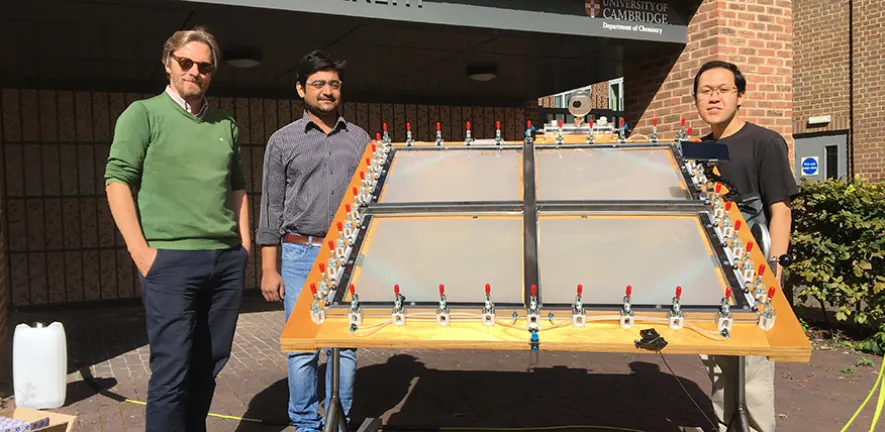
While previous demonstrations have used a small reactor (catalyst) about 25cm square, the new device is significantly larger – about one metre square – which they tested under natural sunlight outside Cambridge’s Chemistry Department. This is the first time that this technology has been successfully used in outdoor conditions using scalable techniques. 

Instead of generating electricity like a conventional solar panel, the Cambridge devices drives a chemical reaction that converts waste into useful products while converting water to release clean hydrogen.

Researchers demonstrate how to use the power of the sun to turn plastic waste, such as drinks bottles, into clean hydrogen fuel at a scale large enough to be genuinely useful in the real world using a scalable approach.

The researchers, from the University of Cambridge, have previously demonstrated that a solar-powered reactor can convert plastic waste into clean hydrogen fuel and valuable industrial chemicals, but only at laboratory scale. 

Now, they have shown a clear path for converting this technology to a commercial scale, in outdoor, real-world conditions. 

While previous demonstrations have used a small reactor (catalyst) about 25cm square, the new device is significantly larger – about one metre square – which they tested under natural sunlight outside Cambridge’s Chemistry Department. This is the first time that this technology has been successfully used in outdoor conditions using scalable techniques. 

Instead of generating electricity like a conventional solar panel, the Cambridge devices drives a chemical reaction that converts waste into useful products while converting water to release clean hydrogen.

Earlier versions of the solar-powered panels required high temperatures, harsh chemicals, or complicated manufacturing processes. Typically, this involved small particles suspended in solution and deposited onto a substrate. 

“When we started trying to scale this technology up, we quickly found out that what seems simple on a small scale is not simple at all when you’re trying to make it at scale,” said co-first author Ariffin Bin Mohamad Annuar, from Cambridge’s Yusuf Hamied Department of Chemistry. “We can’t really have giant vats of solution to make these panels – it’s just not practical at scale.”

“If we’re really going to change the way we deal with the twin problems of plastic pollution and clean energy generation, we’ve got to develop a very scalable way to make these photocatalyst materials and reactors — and show that they really work outdoors,” said Professor Erwin Reisner, who led the research. 

The new panels can be assembled at room temperature without specialist equipment: first the light-absorbing material is sprayed onto a glass panel, and then the panel is coated with specially designed molecules containing cobalt and zirconium.

Co-author Professor Dominic Wright’s team, also from the Department of Chemistry, did the work to make the molecular precursor material. These precursors were then used by Reisner’s team for loading into a sprayer– like a household paint sprayer – so that the coating could be sprayed directly onto a glass panel. 

“What surprised me was, after all the optimisation, just how simple it is,” said Mohamad Annuar. “We just have this huge panel, we spray our catalyst on it, put it into our solution, put it under the sun, and it produces hydrogen and other valuable chemicals just from plastic waste. It’s just simple and scalable.”

The researchers showed the reactor works on materials ranging from cellulose to PET plastic bottles: the kind used for fizzy drinks. They also carried out a cost analysis to show what it would realistically take to scale the technology up commercially, which they say is a first for this type of research.

The spray-coating method developed by the Cambridge researchers dramatically reduces the cost to produce the reactors, which is vital to producing them at scale. However, the researchers say they still need to improve the durability and efficiency of the reactors before they are ready for commercial production. 

A patent for the technology has been filed with Cambridge Enterprise, the University’s innovation arm. The research was supported in part by the UK Department of Science, Innovation and Technology, the Royal Academy of Engineering, and Petronas. Erwin Reisner is a Fellow of St John’s College, Cambridge. Ariffin Bin Mohamad Annuar is a Member of Clare College, Cambridge.

Source:

University of Cambridge

Photo Catalyst Club
03.07.2026

Florence: Where Conversations Become Catalysts for Change

The first chapter of Catalyst Club debuted in Florence, bringing together creative directors, entrepreneurs, manufacturers, journalists and innovators from across the fashion and textile industry for an evening of dialogue, exchange and connection.

Hosted at the Soko Innovation Hub and developed in partnership with Pioneer Denim, the gathering took place around a single long table, bringing guests together in an informal and convivial setting designed to encourage open conversation and the sharing of ideas.

During his opening speech at the dinner, Matteo Urbini, MD of Soko Chimica, expressed his enthusiasm for the initiative: "It’s a real pleasure to host an evening where we can finally move past virtual networking and connect in person. Getting together live is still the best way to build authentic relationships and make real things happen."

The first chapter of Catalyst Club debuted in Florence, bringing together creative directors, entrepreneurs, manufacturers, journalists and innovators from across the fashion and textile industry for an evening of dialogue, exchange and connection.

Hosted at the Soko Innovation Hub and developed in partnership with Pioneer Denim, the gathering took place around a single long table, bringing guests together in an informal and convivial setting designed to encourage open conversation and the sharing of ideas.

During his opening speech at the dinner, Matteo Urbini, MD of Soko Chimica, expressed his enthusiasm for the initiative: "It’s a real pleasure to host an evening where we can finally move past virtual networking and connect in person. Getting together live is still the best way to build authentic relationships and make real things happen."

Set within a relaxed and convivial environment, free from presentations, panels and formal agendas, the evening encouraged guests to engage openly, allowing ideas, perspectives and future visions to flow naturally. Conversations touched on sustainability, creativity, manufacturing and innovation, generating valuable connections and opportunities for collaboration while introducing the purpose of Catalyst Club: a community designed to bring together the people shaping the future of fashion, denim and innovation through dialogue, exchange and shared inspiration.

The first chapter was realized with the support of Pioneer Denim, whose commitment to innovation and industry collaboration reflects the values at the heart of the initiative.

The Florence gathering represents the beginning of a journey that will continue through future chapters, expanding a network of professionals united by the belief that meaningful change starts with connection.

About Catalyst Club Catalyst Club is a curated community that brings together the people shaping the future of fashion, denim and innovation. Through intimate gatherings and meaningful conversations, it creates opportunities for ideas, perspectives and collaborations to emerge and evolve.

About Soko Soko is an innovation-driven chemical company serving the global fashion and textile industry. Through research, partnerships and its Soko Innovation Hub, the company promotes collaboration, sustainability and knowledge-sharing across the supply chain. Soko is the creator and organizer of Catalyst Club.

About Pioneer Denim Pioneer Denim is a leading denim manufacturer recognized for its commitment to innovation, quality and responsible production, supporting global brands through advanced technologies and sustainable practices.

Iluna Group Photo Iluna Group
02.07.2026

ROICA: A New Phase at Milano Unica

ROICA™ by Asahi Kasei returns to Milano Unica, entering a new phase in its evolution as a global premium stretch fiber brand.
Following the launch of its renewed global brand identity under the message “STRETCH YOUR FUTURE,” ROICA™ brings a strengthened focus on advanced stretch expertise and collaborative development, offering solutions designed to reduce environmental impact.

At the upcoming Milano Unica, ten selected European partners — Brugnoli, Eusebio, Iluna Group, Innova Fabrics, Inter Jersey Milano, Maglificio Ripa, Reda, Sitip, Tessitura Colombo Antonio and Tiba Tricot, — will present their latest collections integrating ROICA™ across a diverse range of textile applications.
Rather than standing alone, ROICA™ expresses its value through each partner’s creation — offering refined comfort, reliable stretch performance, and thoughtful material solutions that respond to the evolving needs of the apparel industry.

ROICA™ by Asahi Kasei returns to Milano Unica, entering a new phase in its evolution as a global premium stretch fiber brand.
Following the launch of its renewed global brand identity under the message “STRETCH YOUR FUTURE,” ROICA™ brings a strengthened focus on advanced stretch expertise and collaborative development, offering solutions designed to reduce environmental impact.

At the upcoming Milano Unica, ten selected European partners — Brugnoli, Eusebio, Iluna Group, Innova Fabrics, Inter Jersey Milano, Maglificio Ripa, Reda, Sitip, Tessitura Colombo Antonio and Tiba Tricot, — will present their latest collections integrating ROICA™ across a diverse range of textile applications.
Rather than standing alone, ROICA™ expresses its value through each partner’s creation — offering refined comfort, reliable stretch performance, and thoughtful material solutions that respond to the evolving needs of the apparel industry.

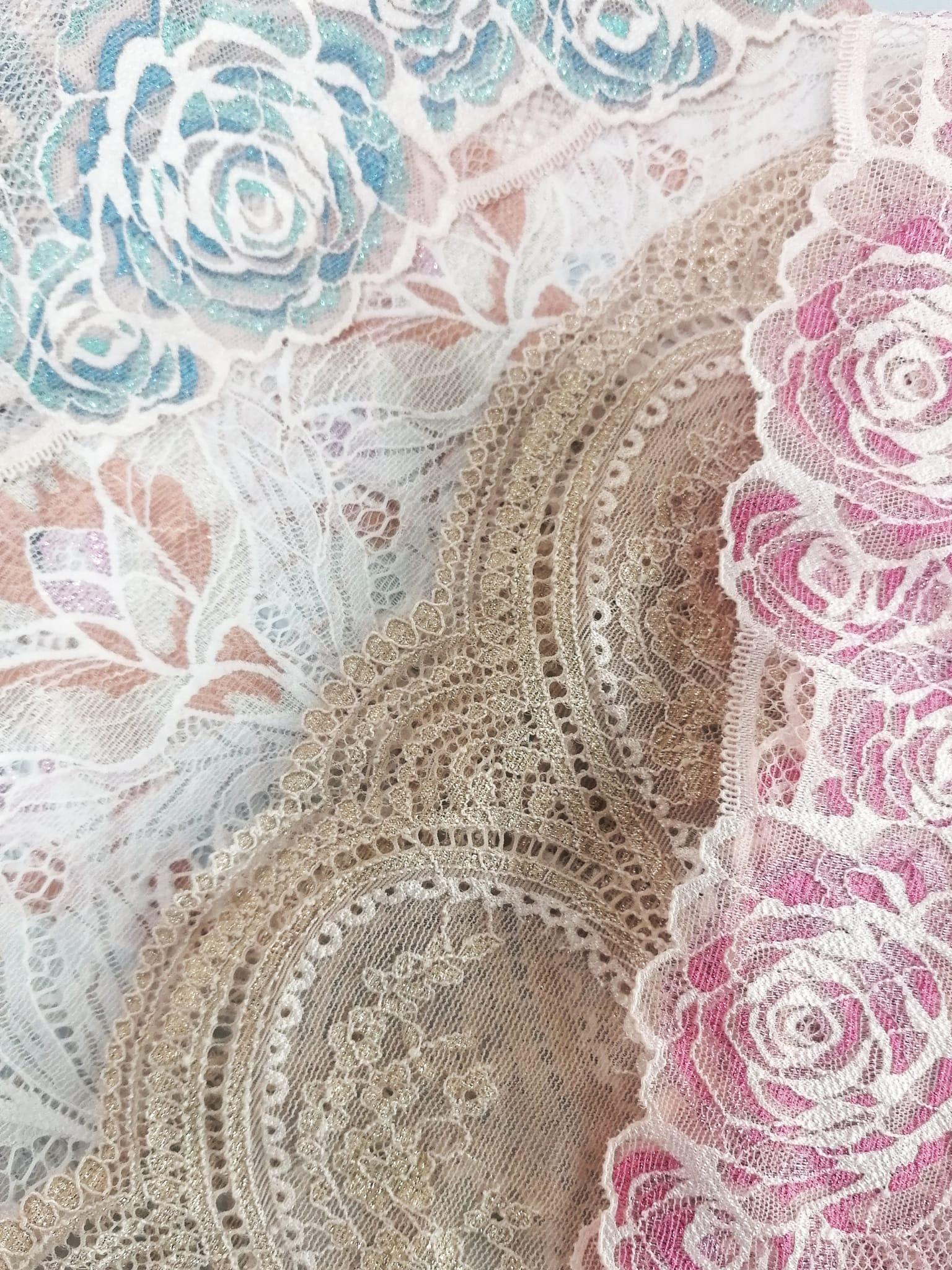
Iluna Group brings its distinctive vision of stretch lace to Milano Unica, where creativity, craftsmanship, and responsible material choices come to-gether to shape contemporary textile expressions. Building on its expertise in Jacquardtronic lace, the company presents a refined selection of ul-tralight developments designed to combine visual delicacy with technical performance. This season’s highlights include ultralight Jacquardtronic laces enriched with luminous LUREX™ color effects from ILUNA’s Green Label line. These creations offer a sophisticated interplay of lightness, tex-ture, and subtle brilliance, expanding the expressive potential of lace across lingerie, fashion, and ready-to-wear applications. The collection also incorporates Evo™, a bio-based polyamide yarn by Fulgar, further enhancing the material approach with innovative fiber solutions. Combined with degradable ROICA™ V550, these textiles deliver refined stretch, softness, and versatility, supporting designs that balance aesthetics with thoughtful material choices for contemporary apparel.

Source:

Asahi Kasei 

Grphic by Edana
02.07.2026

Associations on Single-Use Plastic Directive

The undersigned associations, representing several European industrial sectors, call on EU institutions to maintain the current legal text of the Single-Use Plastic Directive (SUPD), adopted in 2019. While the signatories recognise the importance of ensuring that the SUPD delivers measurable and meaningful environmental outcomes, reopening the Directive now will create legal uncertainty, add disproportionate burden for economic operators that are already navigating partial and often divergent national transpositions, and increase the risk of regulatory overlaps or contradictions with existing and upcoming legislation. Moreover, there is currently insufficient evidence on the effectiveness of the current SUPD to justify a revision, as described below: 

The undersigned associations, representing several European industrial sectors, call on EU institutions to maintain the current legal text of the Single-Use Plastic Directive (SUPD), adopted in 2019. While the signatories recognise the importance of ensuring that the SUPD delivers measurable and meaningful environmental outcomes, reopening the Directive now will create legal uncertainty, add disproportionate burden for economic operators that are already navigating partial and often divergent national transpositions, and increase the risk of regulatory overlaps or contradictions with existing and upcoming legislation. Moreover, there is currently insufficient evidence on the effectiveness of the current SUPD to justify a revision, as described below: 

  • Insufficient evidence to inform a revision of the SUPD. 
    An impact assessment of the SUPD cannot be carried out at a moment when several of its provisions are not yet in place. While a first report on the state of implementation of the SUPD was published in April 2026, it remains partial, and reporting is not harmonised, preventing meaningful comparison of data across countries. Taking the example of consumption reduction targets, Member States and other EEA countries only reported data on SUP products placed on the market in 2022 and, even for this report, did so using different indicators. Crucially, since the target on consumption reduction is set for 2026, no data are yet available on whether that target has been achieved. In summary, the partial application of the SUPD and the limited data available suggest that a revision of the SUPD would be premature at this time. 
  • Preventing further fragmentation and gold-plating. 
    The transposition of the SUPD has produced significant regulatory fragmentation, uneven enforcement, and widespread instances of gold plating, creating persistent uncertainty for companies active across multiple Member States. The result is a patchwork of national rules that undermines the integrity of the Single Market, inflates compliance costs, and fails to deliver proportionate environmental benefits. These structural shortcomings must be fully recognised in the evaluation of the SUPD and effectively addressed prior to considering a reopening of the Directive. 
  • Ensuring legal certainty for economic operators. 
    A revision of the SUPD would create legal uncertainty for companies and Member States that are still implementing several of its provisions. While the SUPD entered into force in mid-2021, the date of application for most of its provisions is at a later stage. Furthermore, the EU Commission has only recently adopted some of the implementing decisions and guidelines on the current SUPD. Any change to the SUPD at a moment when companies are still adapting to new obligations, and Member States are still in the process of implementing some key provisions, would create legal uncertainty for economic operators who do not know whether targets or the scope of the SUPD may change. Legal uncertainty carries significant economic costs for economic operators, notably in terms of investment delays likely to persist throughout the entire SUPD revision process (2–3 years). 
  • Avoiding overlaps with other legislation. 
    Revising the SUPD while the Ecodesign and Packaging Regulations are still being implemented, and as negotiations on the Circular Economy Act (CEA) begin, increases the risk of regulatory overlaps and contradictions. These frameworks cover intersecting areas and a revision of the SUPD in parallel with the CEA would almost inevitably lead to duplicative or conflicting provisions. Even if the EU Commission ensured full coherence in its proposal, the co-legislators could still introduce provisions that diverge from or contradict the SUPD framework, further undermining legal certainty and the functioning of the Single Market. 

At a time when EU leaders have made regulatory simplifications and a fully integrated Single Market central to Europe’s competitiveness agenda, we urge EU policymakers to focus legislative efforts where they are most needed and avoid reopening a framework that has yet to deliver concrete results.

Source:

Edana