
From the Sector

Reset
13.03.2026

WACKER to raise prices for Polymers’ product range

The recent military conflict in the Middle East has led to significant distortions in commodity markets worldwide. Consequently, prices for oil, natural gas, raw materials and logistics have significantly risen. WACKER’s global polymers business is especially affected by this development. 

To compensate higher raw material and freight costs, WACKER will significantly raise its prices for polymer dispersions, resins and dispersible polymer powders, effective from April 1, 2026. The extent of the necessary price adjustment depends on where the respective product is sourced and on existing contractual agreements. Primarily products sourced at WACKER’s production sites in Europe and Asia are affected by the increase.
The recent military conflict in the Middle East has led to significant distortions in commodity markets worldwide. Consequently, prices for oil, natural gas, raw materials and logistics have significantly risen. WACKER’s global polymers business is especially affected by this development. 

To compensate higher raw material and freight costs, WACKER will significantly raise its prices for polymer dispersions, resins and dispersible polymer powders, effective from April 1, 2026. The extent of the necessary price adjustment depends on where the respective product is sourced and on existing contractual agreements. Primarily products sourced at WACKER’s production sites in Europe and Asia are affected by the increase.

More information:
Wacker polymers pricing
Source:

Wacker Chemie AG

13.03.2026

EDANA unveils nominees for INDEX™26 Awards

EDANA unveiled the nominees for the INDEX™26 Awards, the nonwoven industry’s highest accolade for technical and sustainable excellence. Out of a record-breaking field of entries, the finalists represent the cutting edge of material science—from bio-based hygiene fibers and PFAS-free protective textiles to revolutionary water-filtration machinery. Each nominee has been selected by a jury of industry experts for their ability to solve critical global challenges, including the transition to a circular economy and the pursuit of enhanced consumer performance. 

EDANA unveiled the nominees for the INDEX™26 Awards, the nonwoven industry’s highest accolade for technical and sustainable excellence. Out of a record-breaking field of entries, the finalists represent the cutting edge of material science—from bio-based hygiene fibers and PFAS-free protective textiles to revolutionary water-filtration machinery. Each nominee has been selected by a jury of industry experts for their ability to solve critical global challenges, including the transition to a circular economy and the pursuit of enhanced consumer performance. 

1. Nonwoven Roll Goods

Lenzing – LENZING™ Dualwipe 
LENZING™ Dualwipe is a high-performance cleaning wipe crafted from regenerated cellulose using LENZING™ Nonwovens Technology. Its innovative dual-surface design integrates abrasion and absorbency in a single material, enabling efficient cleaning without relying on fossil-based synthetic materials, binders, or chemical additives. One side features a mechanically active surface for scrubbing away dirt, grease, and residues, while the other offers a soft, highly absorbent surface for liquid uptake and surface finishing. Designed for industrial, professional, and household applications, LENZING™ Dualwipe is compatible with existing converting and processing infrastructure, facilitating rapid adoption. 
 
The jury praised LENZING™ Dualwipe for addressing the pressing industry challenge of combining performance with sustainability. By leveraging a novel web architecture of cellulose filaments, it eliminates plastics and microplastics while delivering high-efficiency cleaning. The innovation demonstrates how fiber-level design can create tangible environmental impact without compromising functionality, offering a scalable, market-ready solution that aligns with both regulatory and consumer demands. 
 
Magnera Corporation - Next-Gen Fluid Barrier Technology 
Magnera’s proprietary fluid barrier technology represents a major advancement in protective medical textiles. Designed for demanding surgical and clinical environments, it delivers durable liquid repellency against water, oil, and other fluids without intentionally added PFAS, chemicals traditionally used for this function. Evidence of PFAS persistence in the environment and possible associated health risks has prompted global regulatory action and growing demand for alternatives. Through advanced material engineering, the technology maintains the high-performance healthcare professionals require while aligning with evolving global regulatory expectations. By eliminating legacy chemistries and ensuring consistent barrier performance, it provides a safer and more environmentally responsible alternative to conventional PFAS-based materials.  
  
The jury recognized Magnera for addressing a long-standing challenge in medical textiles: achieving reliable fluid resistance without harmful chemicals. Combining regulatory readiness, operational reliability, and sustainability, the innovation offers healthcare providers and manufacturers a credible, scalable solution for the future.  While healthcare remains a primary application, the underlying platform has potential relevance in other markets that require durable, PFASalternative liquid barrier solutions. 
 
Woolchemy  - neweFlex™ ADL 
Woolchemy has developed neweFlex™ ADL, a plastic-free acquisition distribution layer containing neweFibre™ — Woolchemy's hygiene-grade wool fibre that meets strict regulatory standards for non-sterile hygiene products while preserving wool's natural functionality. Engineered as a plastic-free alternative to petroleum-based ADLs, neweFlex™ ADL is a blend between wool and plant-based fibres to deliver natural benefits including breathability, thermal regulation, and odour control — while being naturally compatible with skin. Wool is a keratin-based fibre — the same structural protein found naturally in human skin, making it an inherently gentle, renewable choice for disposable hygiene products such as diapers and sanitary pads. 
 
The jury recognised neweFlex™ ADL for overcoming long-standing technical and regulatory barriers that previously prevented wool from being used in disposable hygiene products. By enabling wool fibres to run on standard carded spunlace nonwoven equipment, Woolchemy has created a plug-and-play solution for manufacturers seeking alternatives to fossil-based nonwovens. Demonstrated performance in hygiene layers, including fast liquid acquisition and low rewet, confirms that this renewable material can match synthetic materials while advancing the industry’s transition toward more sustainable, plastic-free hygiene products.

2. Finished products made from, or incorporating nonwovens - Single-use application

Corman - Organyc brand "Personalized Protection" Light Incontinence Pads  
Corman’s new light incontinence pads deliver personalized protection through three key innovations. The Smart-Cotton™ cover with a citric acid buffer maintains an ideal skin pH of 5.5, reducing irritation. The patented Cotton-Balanced Absorbent Core channels liquid to superabsorbent polymers that lock in moisture and expand toward the body for superior leak protection. Natural odor control uses an organic ingredient to bind ammonia and slow odor formation, eliminating odor instead of masking it. Clinically proven, the pads address the three main concerns of light incontinence: leaks, odor, and skin irritation. 
 
The jury recognized the product for its consumer-focused innovation, combining skin-friendly materials, adaptive absorption, and effective odor control in one solution. The patented absorbent core was highlighted as a market-first technical advancement. Supported by clinical evidence, the product enhances comfort, confidence, and dignity for users. Its impact is amplified by the brand’s sustainability initiatives, including reducing ocean plastics and improving livelihoods through the Plastics for Change partnership, demonstrating both social and environmental responsibility. 
 
Teknomelt Teknik Mensucat – Fibrasiv® 
Fibrasiv® Abrasive Spunlace is an application-driven nonwoven innovation developed to meet the growing demand for effective yet safe cleaning materials across multiple end-use sectors. The material functions by combining a soft, absorbent spunlace base with an integrated abrasive structure that enables controlled mechanical cleaning. This allows the removal of stubborn dirt, residues, and contaminants while minimizing the risk of surface damage. 
 
The jury appreciated Fibrasiv® for redefining the functional boundaries of spunlace nonwovens. By embedding controlled abrasive performance directly into a soft, flexible fabric, the innovation transforms a traditionally gentle wiping material into a multifunctional cleaning solution. This approach improves cleaning efficiency, reduces reliance on harsh chemical cleaners, and simplifies cleaning processes by replacing multiple tools with a single material. Its combination of performance, usability, and sustainability makes Fibrasiv® a valuable advancement for both professional and consumer cleaning applications. 

3. Finished products made from, or incorporating nonwovens - Durable application

Confitex Technology - Reusable Nonwoven Bed Pads 
This new Confitex technology has enabled the world’s first machine-washable and tumble-dryable nonwoven bed pads, opening a significant new application for nonwoven materials. Using a proprietary fibre-stabilisation bonding technique, the innovation allows absorbent nonwoven structures to withstand more than 30 machine wash and tumble-dry cycles while maintaining performance. The fully nonwoven construction combines a fast-wicking top sheet with a highly absorbent core capable of holding over two litres of liquid. In addition, a bonded frame structure prevents leakage across the entire surface, including the edges, addressing a common weakness of stitched textile bed pads. 
 
The jury particularly valued how this innovation unlocks a new market segment for the nonwoven industry. By making absorbent nonwovens fully laundry-compatible, the technology enables nonwoven suppliers to enter the rapidly growing reusable bed pad market, historically dominated by textile products. At the same time, the product delivers improved absorbency, leak protection, and ease of care for users, while supporting sustainability goals through reusability and the use of predominantly natural-based fibres. 
 
DuPont Personal Protection - DuPont™ Tychem® 6000 SFR 
DuPont™ Tychem® 6000 SFR garments represent a breakthrough in personal protective equipment, delivering unprecedented dual protection against chemical exposure and flash fire hazards. Designed to be worn over primary flame-resistant (FR) clothing, these garments use a lightweight, multi-layer fabric laminate to provide at least 30 minutes of barrier protection against more than 250 chemicals, including toxic industrial chemicals, and flammable organic solvents. By combining advanced chemical resistance with secondary flame protection, Tychem® 6000 SFR enables workers in oil & gas, chemical manufacturing, and emergency response to operate safely in high-risk environments without compromising comfort or mobility. 
  
The award jury highlighted the innovation for its ability to address a long-standing safety challenge: protecting workers simultaneously from chemical and thermal hazards. Tychem® 6000 SFR protective coverall delivers the broadest chemical coverage in the lightest-weight secondary flame-resistant garment, while its engineered design self-extinguishes in flash fire scenarios. The jury praised the garment’s combination of multi-hazard protection, durability, and comfort, recognizing its significant contribution to improving occupational health and safety standards. 
 
Pelsan Tekstil - Metabreathe™ 
Metabreathe™ is an advanced nonwoven-based thermal insulation composite designed to address a key challenge in cold chain logistics: combining high solar reflectance with breathability and recyclability. Unlike conventional covers that rely on glued aluminum foils or PET films, Metabreathe™ utilizes a proprietary process where reflective particles are precision-printed onto a high-performance breathable film, which is then integrated with a specially engineered nonwoven structural foundation. This unique composite approach preserves the fabric’s interstitial spaces and the film's microporosity, allowing air and moisture vapor to pass through while reflecting over 90% of solar radiation. Scientifically proven to keep cargo 1215°C cooler during extreme ramp exposure, Metabreathe™ is currently trusted by global logistics leaders. 
 
The award jury highlighted Metabreathe™ for its practical and environmental impact This innovation represents a notable step forward for cold chain materials, reducing raw material consumption by 70% and demonstrating how nonwoven material science can reconcile performance, efficiency, and circular economy principles.

4. Raw materials or components of special relevance to the nonwovens and related converted products industry  

Bostik  - Kizen™ Miles 9.0 
Bostik’s latest innovation, Kizen™ Miles 9.0, is the first adhesive designed for disposable hygiene article construction, that offers the unique feature of debonding on demand: when exposed to a specific chemical key, combined with controlled temperature and mechanical stress, the adhesive allows clean, rapid separation of plastic components in minutes. This process keeps the adhesive material on the substrate, preventing contamination for cleaner, more efficient hygiene article recycling. But during the lifetime of the hygiene article, this new material, based on up to 75% renewable materials, delivers exceptional bonding across a wide range of substrates—including PP, PE, and PLA—while maintaining stable performance over time and under wet conditions. 
 
The jury praised Kizen™ Miles 9.0 for its combination of sustainability and functionality. By reducing carbon footprint by up to 90% per kilogram of adhesive (compared to fully fossil based adhesives, according to internal Bostik calculation) and enabling separation of complex hygiene article components, it addresses a critical bottleneck in diaper recycling. Its ability to maintain performance during use yet allow controlled disassembly after use was recognized as a breakthrough in circular economy solutions for absorbent hygiene products. 
 
Fiberpartner – PolyPlant® 
PolyPlant® is a PLA-based fiber engineered to overcome the traditional mechanical, thermal, and processing limitations of conventional polylactic acid. Its proprietary formulation enhances crystallization behavior, molecular stability, and fiber morphology while maintaining full biogenic carbon content. Without relying on synthetic additives, PolyPlant® delivers high-performance PLA fibers that are compatible with existing industrial equipment, enabling manufacturers to adopt renewable materials without sacrificing efficiency or product quality. 
 
The award jury praised PolyPlant® for its scientific ingenuity and practical impact.  By addressing PLA’s limitations, PolyPlant® provides a credible alternative to fossilbased fibers. Its intrinsic performance improvements, achieved without additives, ensure consistent product quality and reliable processing in real-world production lines. The jury highlighted its potential to accelerate the transition toward sustainable materials while maintaining industrial efficiency, marking PolyPlant® as a transformative innovation for the fiber and nonwoven sectors. 
 
The Lycra Company - LYCRA® ADAPTIV fiber 
Building upon its proven performance in apparel, LYCRA® ADAPTIV fiber now elevates hygiene garments with hybrid elasticity that adjusts to the body at rest and in motion. This results in products that stay in place, have a second skin fit and are easier to put on and take off. LYCRA® ADAPTIV fiber represents a material-led innovation that has the potential to enable consistent, inclusive user experience across expanded size ranges— addressing an industry-wide challenge. 
 
The jury praised LYCRA® ADAPTIV fiber for addressing a key industry challenge: delivering a consistent wearing experience across expanded size ranges without adding SKUs. By dynamically adjusting to diverse body shapes, the fiber ensures comfort, support, and fit for users at all points of the size spectrum. This innovation helps manufacturers pursue scalable solutions that feel personalized across body types—while preserving SKU discipline and operational efficiency.

5. Innovation in machinery of special relevance to the nonwovens industry 

Kansan – KM Hydroentanglement Filtration System 
This innovation is a mechanical filtration system developed as an alternative to conventional chemical filtration units used in wetlaid and spunlace production lines.  
 
Instead of complex filtration systems, flotation units, and chemical additives, the system utilizes dedicated mechanical filtration equipment to enable the recovery and reuse of water and fibers directly within the production process.  
 
By eliminating the need for chemicals, the system provides a more sustainable, efficient, and process-integrated solution for water and fiber management in nonwoven production. 
 
The jury recognized that through its multi-stage mechanical filtration concept, the system delivers substantial environmental and operational benefits: approximately 200 kWh of energy savings per hour, 20 cubic meters of water savings per hour, and up to 2 tons of fiber recovery per day. Its ability to significantly reduce chemical consumption, lower operational costs, and improve sustainability without compromising production efficiency impressed the jury as a truly forward-thinking solution. 
 
Teknoweb Converting - OCEAN – Converting technology for high-performance, lowimpact underpads 
OCEAN is IMA Teknoweb’s advanced converting system for absorbent underpads, combining new manufacturing technology with a revised product design to improve performance while using fewer materials. The system features a drumless core formation process that builds the absorbent core directly on a carrier web, ensuring even distribution of fluff and SAP and enabling ultra-thin, lightweight underpads. It also supports multilayer structures, including optimized 5-layer designs and a patent-pending 4-layer configuration with integrated leakage barriers. This approach allows production of thinner, lighter, and more efficient underpads without affecting quality or output. 
 
The award jury highlighted OCEAN for addressing industry challenges around material efficiency, product reliability, and sustainability. Its linear core formation and multilayer designs can reduce raw material use by up to 30% and lower energy consumption. By combining stable output with reduced environmental impact, OCEAN provides manufacturers with an approach that balances innovation, performance, and resource efficiency, responding to the market demand for highquality, discreet absorbent products. 
 
ZUIKO - Converting machine for recloseable baby diapers 
ZUIKO has developed a converting line to produce adjustable pull on pant diapers that address the challenge of achieving a secure fit around a baby’s waist and legs while maintaining softness and stretchability. The design of such a diaper combines the adjustability of open diapers with the stretch characteristics of pant diapers. Unlike conventional pant diapers, which are processed symmetrically, ZUIKO’s recloseable diapers are asymmetric, requiring a precise, glue-less attachment process during folding. Central to the production is ZUIKO’s patented “Stretch Repitch Drum™,” which regulates elastic tension and product spacing, allowing panel folding in line with the machine’s flow. This system enables the production of over 700 diapers per minute without the need for multiple folding units. 
  
The jury recognized the technical ingenuity of ZUIKO’s approach, particularly how the machine merges two product attributes efficiently. They highlighted the asymmetric folding and tension-control mechanisms as practical solutions to a long-standing industry challenge. The innovation offers a new product format for consumers and provides manufacturers a method to produce it at scale without added complexity. 
 
The winners in each category will be announced during a special ceremony at the INDEX™26 exhibition, the world’s leading nonwovens event, which will take place on the first day of INDEX™26, Tuesday, 19 May at 10:30 CET, on the EDANA stand. These awards serve not only to honor the ingenious engineering of the finalists but also to provide a roadmap for the future of the entire nonwovens supply chain. 

Source:

EDANA 

12.03.2026

Call for Papers at ADD-ITC 2026

Dresden, November 26 - November 27, 2026
Keynote and technical presentations as well as transfer sessions with high industrial relevance on

Dresden, November 26 - November 27, 2026
Keynote and technical presentations as well as transfer sessions with high industrial relevance on

  • German–Polish–Czech Partnerships
    Cooperation and joint research activities between Germany, Poland and the Czech Republic focusing on this year’s conference topics
  • Sustainable Polymer Material Systems and Functionalization
    Sustainable, bio-based and recycled polymer materials and systems
    Functionalization of fibers, textiles and composite structures
    Surface modification, smart materials as well as durability and circularity concepts
  • Novel Machine Systems for Fiber-Reinforced Structures and Composites
    Innovative machinery and plant engineering for high-performance textile and composite structures
    Automated manufacturing, preforming and processing technologies
    Digitally integrated production systems
  • Protective and Functional Textiles
    Technical textiles for defense as well as infrastructure and property protection
    Multifunctional protective systems and interactive fiber-based solutions
    Testing, standardization and certification
  • Trends in Textile Production
    Recycling and circular production concepts
    Artificial intelligence, digitalization and automation
    Industry 4.0 and resource-efficient production strategies
  • Technology Transfer – From Idea to Industrial Practice
    Transfer of research results into marketable products and processes
    Best-practice examples from collaborative projects, particularly IGF/ZIM, as well as innovations from start-ups and SMEs

Deadline Call for Papers: April 30, 2026

Contact for 2026:
Cornelia Sennewald
Institute of Textile Machinery and High Performance Material Technology at TU Dresden
add-itc-2026@tu-dresden.de; Tel.: +49 (0)351 463 39315

Source:

ITA, Institut für Textiltechnik der RWTH Aachen University

UNIFI®: A Linen-Inspired, Easy-Care Performance Yarn Image: UNIFI
UNIFI®: A Linen-Inspired, Easy-Care Performance Yarn
06.03.2026

UNIFI introduces Luxel™: A linen-inspired, easy-care performance yarn

UNIFI, Inc. launches Luxel™, a yarn technology that combines the luxurious look and feel of linen with high-performance, easy-care, and textile-to-textile recycled materials. 

Luxel captures the natural look and feel of linen while offering advanced performance features such as moisture-wicking, wrinkle resistance, and odor control. This innovative technology is built directly into the yarn, providing exceptional versatility across a wide range of fabric constructions ranging from apparel and footwear to home furnishings, work wear, and accessories, empowering material developers to innovate across multiple categories with ease. 

Luxel is available globally and made with REPREVE recycled polyester yarn, including 30% REPREVE Takeback™, reinforcing UNIFI®’s commitment to sustainability and circularity in the textile industry. By incorporating recycled content, including textile waste, Luxel helps brands reduce environmental impact while delivering high-performance, stylish fabrics. 

Key Benefits of Luxel: 

UNIFI, Inc. launches Luxel™, a yarn technology that combines the luxurious look and feel of linen with high-performance, easy-care, and textile-to-textile recycled materials. 

Luxel captures the natural look and feel of linen while offering advanced performance features such as moisture-wicking, wrinkle resistance, and odor control. This innovative technology is built directly into the yarn, providing exceptional versatility across a wide range of fabric constructions ranging from apparel and footwear to home furnishings, work wear, and accessories, empowering material developers to innovate across multiple categories with ease. 

Luxel is available globally and made with REPREVE recycled polyester yarn, including 30% REPREVE Takeback™, reinforcing UNIFI®’s commitment to sustainability and circularity in the textile industry. By incorporating recycled content, including textile waste, Luxel helps brands reduce environmental impact while delivering high-performance, stylish fabrics. 

Key Benefits of Luxel: 

  • Luxurious feel and breathability: Delivers a natural, linen-inspired texture with a smooth finish. 
  • Enhanced function and performance: Provides moisture management and built-in odor control for effortless maintenance. 
  • Wrinkle resistance: Maintains a polished, fresh appearance with minimal effort. 
  • Sustainable and traceable: Made with REPREVE recycled polyester including 30% REPREVE Takeback circular polyester embedded with our proprietary FiberPrint® tracer technology and verified by U-TRUST® to certify recycled content. 
BB Engineering Texturizing Line Photo BB Engineering GmbH
BB Engineering Texturizing Line
05.03.2026

Development of bio-based polyethylene fibers for textile applications

In the German research project bioPEtex, BB Engineering (BBE) is working with other partners to develop textiles made from 100% bio-based polyethylene (PE). The aim is to make use of this polymer, which has hardly been used in the chemical fiber industry to date. BBE is contributing its spinning and texturizing expertise and developing the texturing process on an industrial scale. The first promising results are already available – opening up new opportunities for sustainable and economically attractive applications in the textile industry.

For years, the global chemical fiber market has been dominated by PET, a technically mature, versatile, and cost-effective polymer for textile applications. However, despite its advantages in terms of processability, strength, and economic availability, PET has come under criticism: its dependence on fossil raw materials, high CO2 emissions along the value chain, and challenges in recycling PET products are drawing the attention of researchers and industry to alternative materials that are both economical and sustainable.

In the German research project bioPEtex, BB Engineering (BBE) is working with other partners to develop textiles made from 100% bio-based polyethylene (PE). The aim is to make use of this polymer, which has hardly been used in the chemical fiber industry to date. BBE is contributing its spinning and texturizing expertise and developing the texturing process on an industrial scale. The first promising results are already available – opening up new opportunities for sustainable and economically attractive applications in the textile industry.

For years, the global chemical fiber market has been dominated by PET, a technically mature, versatile, and cost-effective polymer for textile applications. However, despite its advantages in terms of processability, strength, and economic availability, PET has come under criticism: its dependence on fossil raw materials, high CO2 emissions along the value chain, and challenges in recycling PET products are drawing the attention of researchers and industry to alternative materials that are both economical and sustainable.

Biopolymers are an important keyword in this context. However, PET cannot be produced on an industrial scale in a 100% bio-based manner. Clothing made from 100% other biopolymers only exists in studies, as it is too expensive for the mass market. In this context, the German research project bioPEtex is investigating a polymer that, due to its properties, has previously been considered unsuitable for chemical fiber production: polyethylene (PE). This is because bio-based PE is inexpensive to procure and environmentally friendly. However, it has not yet been developed for use in the textile industry.

BB Engineering (BBE) is one of the industrial partners working with RWTH Aachen University to implement the project funded by the German Federal Ministry of Research, Technology, and Space. The aim of the project is to develop textiles made from 100% bio-based polyethylene that are both environmentally friendly and economically viable. BBE is a supplier of spinning, texturizing, and recycling equipment as well as extrusion and filtration technology, and supplies customers all over the world. BBE therefore has extensive expertise in the manufacture of synthetic fibers and their return to the recycling cycle. The company is contributing this long-standing expertise to the bioPEtex project. On the one hand, BBE is providing consulting support for the development of the spinning process. On the other hand, BBE is responsible for the crucial process step of texturizing, which has a significant influence on the subsequent textile performance of the developed fibers. 

“With our participation in the bioPEtex project, we don’t just want to contribute to the development of sustainable solutions, we also want to focus on the economic benefits for our customers,” explains Dr. Klaus Schäfer, Managing Director of BBE. “Bio-PE textiles offer companies the opportunity to reduce their production costs while tapping into new market segments.”

PE and its role in the chemical fiber industry
PE is one of the most commonly produced polymers worldwide. Particularly durable, hydrophobic, lightweight, and chemically stable, it is used not only in its main area of application, the packaging industry, but also in various other areas such as building materials and consumer goods. However, PE has so far played hardly any role in textile fiber production. From a technical point of view, this is mainly due to processing challenges. PE crystallizes at low temperatures and therefore offers a narrow temperature window for spinning and texturing. In addition, the low polarity of PE makes it difficult to dye.

Today, PE is used exclusively as a functional component in composites, geosynthetics, or special high-performance fibers (e.g., UHMWPE)—but hardly ever in traditional clothing or home textile segments. Yet the material structure also offers properties that are highly attractive for certain textile applications:

  • very low density resulting in extremely lightweight fibers,
  • excellent chemical resistance,
  • very good dimensional stability and abrasion resistance,
  • potentially good recyclability due to clear polymer structure,
  • water-repellent and quick-drying with a cool feel.

The issue of difficult dyeability could be resolved by spinning dyeing. 

As a result, PE could become relevant for applications where lightweight construction, hydrophobicity, robust performance, and recyclability are required—for example, in sports textiles, outdoor products, technical textiles, or hygienic disposable products. 

Bio-based PE – Economic and ecological potential for the textile industry
Unlike PET, bio-based PE is chemically identical to its fossil-based counterpart: both materials are completely identical in terms of structure and properties. The only difference lies in the origin of the monomers used. Bio-based PE is usually produced from fermented sugar (e.g. from sugar cane) or starch (e.g. from corn). 

Compared to fossil-based PE, it has a significantly better carbon footprint and opens up the possibility of a completely bio-based textile recycling cycle without any loss of quality. Since the low melting point reduces the energy required for processing and (bio)PE is widely available globally, energy and material costs are potentially lower. The textile industry can benefit here from the established raw material flows of the packaging and plastics industries. In addition, the introduction of PE fibers enables the development of new, highly specialized product segments and opens up additional differentiation opportunities for manufacturers through sustainable material alternatives. 

BB Engineering develops PE texturizing process
However, before PE can be used on an industrial scale as a material for the chemical fiber industry, it must first be systematically researched and tested. The bio-PEtex project is currently working on this. Within the consortium, BBE is responsible for developing and adapting the texturizing processes. This step is crucial, as it is the texturing that defines the subsequent haptic, functional, and mechanical properties of a fiber. The challenge lies in modifying PE under the novel process conditions in such a way that it becomes compatible with established textile applications. 

Overall, the project comprises several innovative steps:

  1. Material development: Development and production of spinnable bio-PE compounds by TECNARO containing bio-based color pigments.
  2. Prozess optimization: Melt spinning and false twist texturing processes, which are being scaled up for industrial use at the Institute for Textile Technology at RWTH Aachen University and at BBE.
  3. Textile production: The partner FALKE is conducting initial knitting trials to validate the yarn in the form of demonstrator T-shirts.

The results so far show promising progress: the bio-PE yarns have suitable mechanical properties and are comfortable to wear with a cooling effect, which is desirable in sportswear, for example. At the same time, a design-for-recycling approach is being pursued in order to efficiently recycle the textiles at the end of their life cycle. A particular milestone in the project is the successful production of a first white t-shirt — a first step toward testing marketability. Further development steps and optimizations are of course still necessary here. 

“We are very positive about the results so far. They show that PE has real potential in textile value creation and can offer significant economic and ecological advantages for the industry in specific applications. We are delighted to be involved in this pioneering project. It is our aim to provide our customers with sustainable and profitable innovations,” says Dr. Klaus Schäfer. 

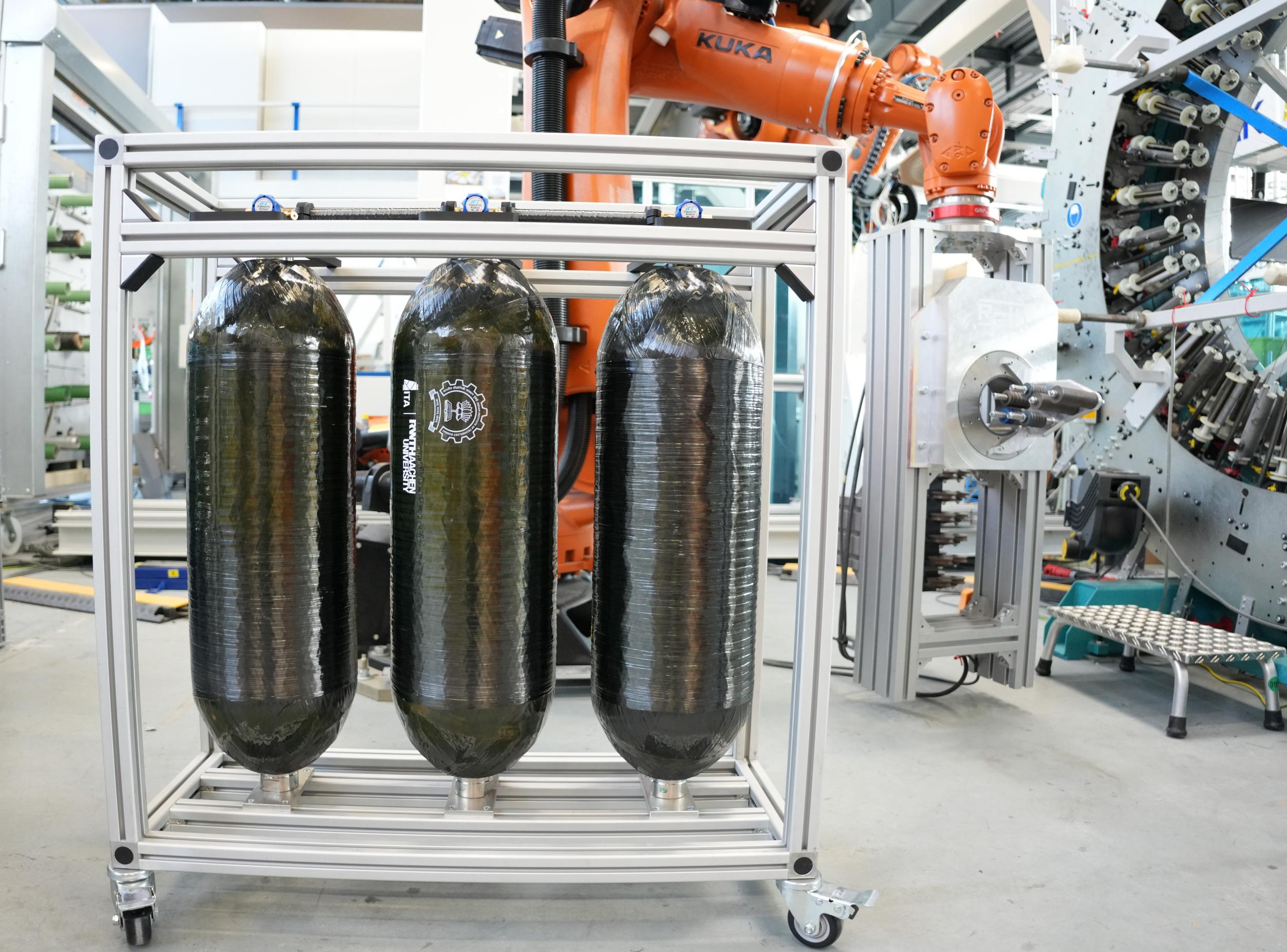
Hydrogen pressure tanks manufactured using a multifilament winding  process © Institut für Textiltechnik (ITA) der RWTH Aachen University
Hydrogen pressure tanks manufactured using a multifilament winding process
02.03.2026

More affordable, environmentally friendly hydrogen pressure tanks at ITA-JEC booth

As a highlight of the JEC, the Institut für Textiltechnik (ITA) of RWTH Aachen University will be presenting hydrogen pressure tanks manufactured using multifilament winding processes at the NRW joint booth in Hall 5, Stand G65.

TowPreg-based winding allows fibres to be laid down in a very targeted manner and reduces quality fluctuations. According to initial estimates, this saves at least around 10 per cent of carbon fibres compared to wet winding. This is an important consideration, as carbon fibres are among the most expensive components of a pressure vessel. In addition, cleaning costs in production are reduced, less waste is produced and manufacturing takes place with virtually no solvent vapours.

The hydrogen tanks can be used in buses, lorries, ships and portable gas transport systems – anywhere where lightweight, safe high-pressure storage is crucial.

As a highlight of the JEC, the Institut für Textiltechnik (ITA) of RWTH Aachen University will be presenting hydrogen pressure tanks manufactured using multifilament winding processes at the NRW joint booth in Hall 5, Stand G65.

TowPreg-based winding allows fibres to be laid down in a very targeted manner and reduces quality fluctuations. According to initial estimates, this saves at least around 10 per cent of carbon fibres compared to wet winding. This is an important consideration, as carbon fibres are among the most expensive components of a pressure vessel. In addition, cleaning costs in production are reduced, less waste is produced and manufacturing takes place with virtually no solvent vapours.

The hydrogen tanks can be used in buses, lorries, ships and portable gas transport systems – anywhere where lightweight, safe high-pressure storage is crucial.

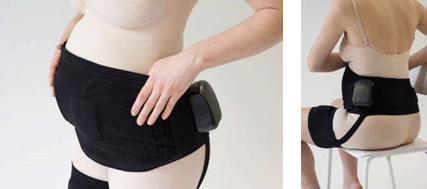
Knitted sports belt for postnatal strengthening of the deep abdominal and pelvic floor muscles Copyright: STFI/Weißensee KHB
Knitted sports belt for postnatal strengthening of the deep abdominal and pelvic floor muscles
26.02.2026

Techtextil 2026: STFI presents concepts for the textile circular economy

Sächsisches Textilforschungsinstitut e.V. (STFI) has been supporting companies in developing marketable innovations for over 30 years. With a clear focus on sustainability, the environment, health and protection, the STFI offers future-oriented research, textile testing for tailor-made solutions and certification of personal protective equipment. At Techtextil 2026, the institute will present ideas for the textile circular economy and showcase solutions for healthy and safe living.  

Sächsisches Textilforschungsinstitut e.V. (STFI) has been supporting companies in developing marketable innovations for over 30 years. With a clear focus on sustainability, the environment, health and protection, the STFI offers future-oriented research, textile testing for tailor-made solutions and certification of personal protective equipment. At Techtextil 2026, the institute will present ideas for the textile circular economy and showcase solutions for healthy and safe living.  

Highlights at Techtextil 2026: 
Sound booth – an oasis of calm amid the hustle and bustle of the trade fair 

Chemical recycling of mixed textile fractions produces textile residues that are currently not used as raw materials but are thermally recycled or disposed of. To enable further recycling, STFI is working with Refresh Global to investigate efficient treatment and processing methods for reusing these textile residues. These can be used in sound-absorbing design products, such as acoustic walls or furniture. Nonwoven forming processes are particularly suitable for processing these textile residues. At STFI, the recyclates are mechanically processed on pilot plants on a laboratory or semi-industrial scale before being laid into a non-woven fabric and consolidated. Through appropriate finishing, a visually matching top layer can also be integrated directly onto the nonwoven fabric. The finished nonwoven fabrics are processed into sound-absorbing design products by the project's industrial partner. 
 
Sports belt based on modulated medium frequencies for mobile applications for postnatal muscle building of the deep abdominal and pelvic floor muscles 
A team of companies and research institutions has developed a novel smart textile for stimulating and strengthening the deep abdominal and pelvic floor muscles using modulated medium frequencies (EMA), specifically for mobile use during and after childbirth. To this end, a textile belt was designed using knitting technology that covers the abdomen, thighs and buttocks and integrates electrodes at the relevant muscle zones. The electrodes are washable and fixed in the belt system, and the belt adapts to the user's decreasing body circumference thanks to its textile construction. The miniaturised, battery-powered control unit is attached to the belt and can be operated via a removable remote control. The system is easy to put on, comfortable, intuitive to use and does not restrict freedom of movement. This makes it particularly suitable for home use and everyday postnatal recovery.  
 
Protective trousers protect against stab and cut injuries and attacks by wild boar. 
In forestry and hunting in particular, workers are exposed to high risks of impact injuries resulting from attacks by wild boar. Conventional protective clothing often only offers protection against stab or cut injuries. The STFI has therefore developed a textile concept that adds impact protection to the existing level of protection, thus increasing the overall protection of users in practical working environments. In  tests, the impact of a blow was reduced by up to 20 per cent. We present an example of trousers in which the special impact protection fabric has been incorporated. Depending on requirements, the impact protection elements can also be designed to be recyclable. Specially woven hinges also increase the comfort of the work trousers.  

MC4 – Optimising recycling cycles for carbon and glass fibre composites 
High-performance fibre materials made of carbon and glass have a significant ecological footprint, and not just because of their energy-intensive production. High waste volumes in the manufacturing process and the reuse of raw materials at the end of the product life cycle offer enormous recycling potential for the future. MC4 (Multi-level Circular Process Chain for Carbon and Glass Fibre Composites) is a European project to promote circular approaches for carbon and glass fibre composites. These materials are indispensable in many technical applications due to their light weight and high mechanical properties. The project consortium is working until March 2025 to make the European value chains for carbon and glass fibres more ecologically and economically efficient and will present the development work carried out at the STFI stand as well as at its own stand and show what is technically feasible using selected demonstrators. 

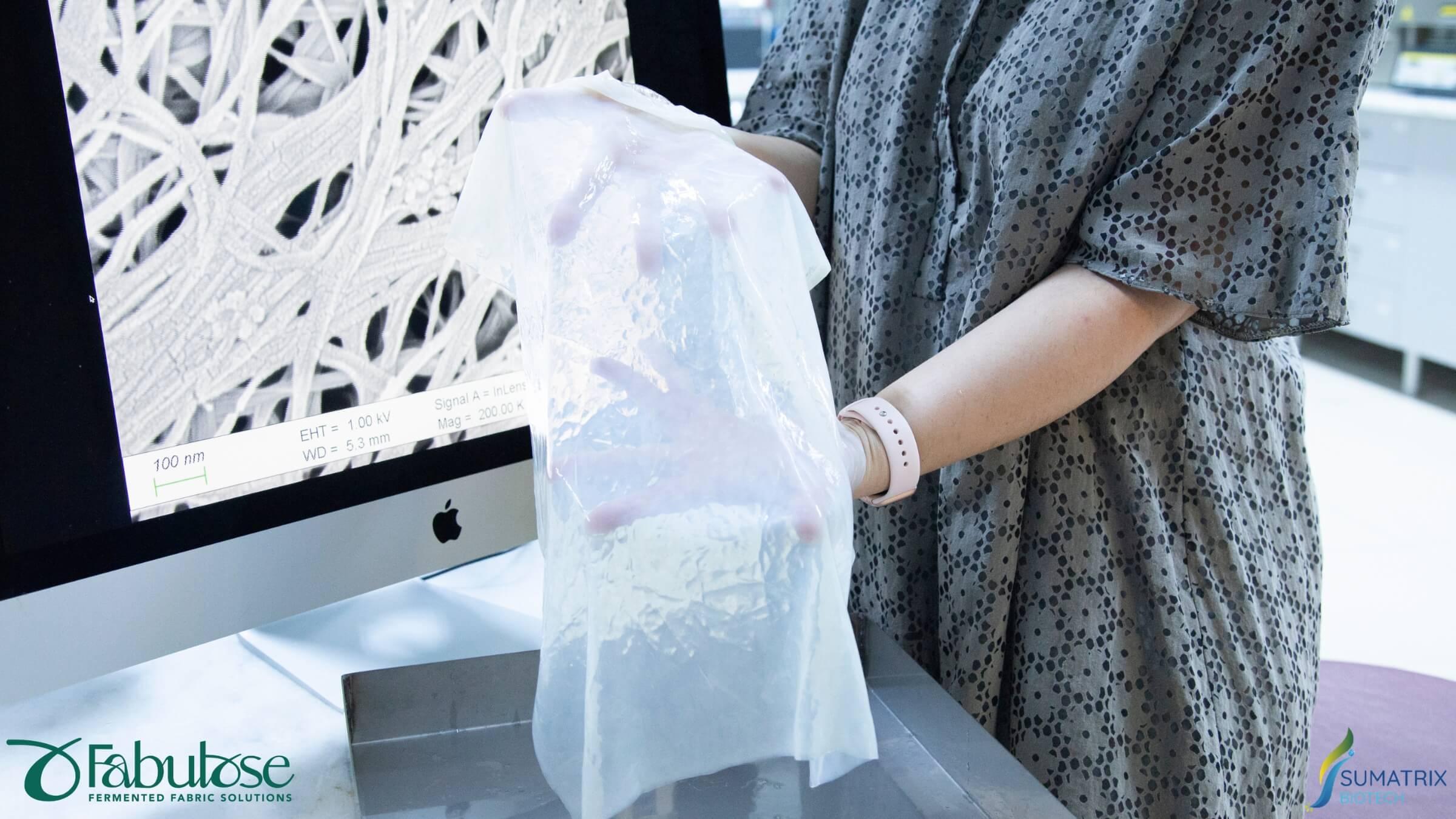
Bacterial cellulose film produced by Sumatrix. Photo: Source: Sumatrix Biotech (CC BY-NC 4.0)
Bacterial cellulose film produced by Sumatrix.
24.02.2026

Fabricating vegan and circular leather alternatives from bio-tech derived cellulose

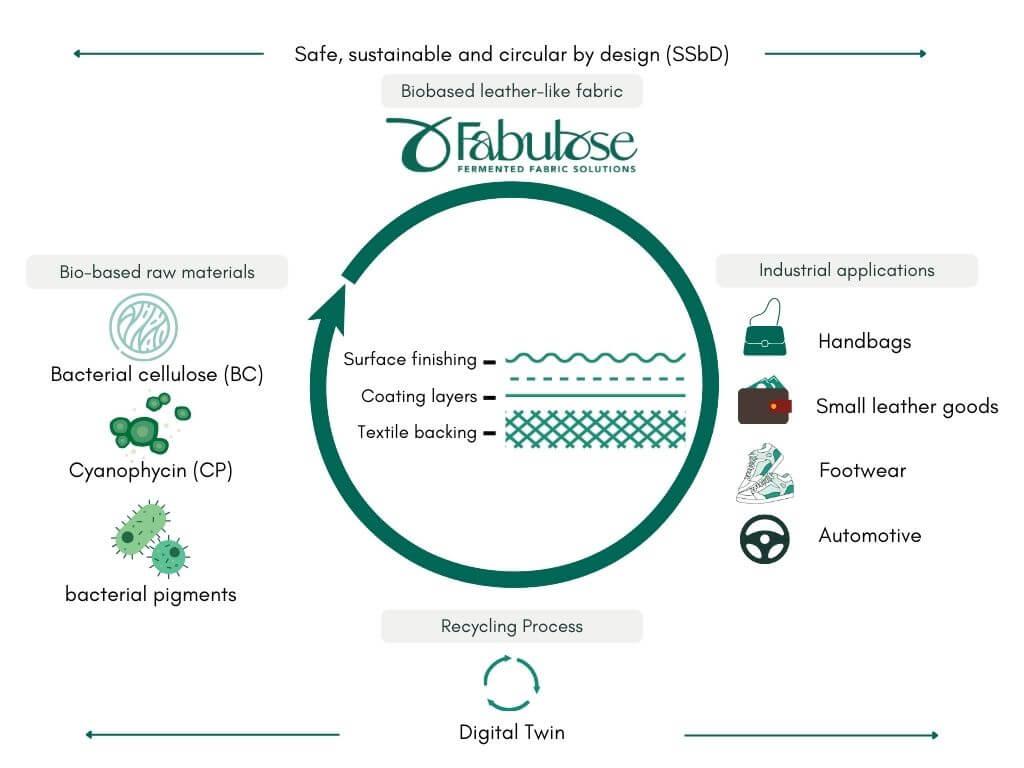
Fabulose is an EU funded project coordinated by the German Institutes of Textile and Fiber Research (DITF). Its consortium consists of leading research institutes, biotech innovators, and industry stakeholders who aim to create high-performance, biobased and recyclable leather-like fabrics, using efficient biotech production routes for bacterial cellulose, cyanophycin and bacterial pigments

Current leather alternatives are either made from petrol-based plastics and non-recyclable, or they are (partly) biobased, but difficult to scale up and recycle. The project, supported by the Circular Bio-based Europe Joint Undertaking (CBE JU), is investigating how animal-based materials can be replaced by environmentally friendly alternatives in industries such as automotive, fashion, and upholstered furniture.

Fabulose is an EU funded project coordinated by the German Institutes of Textile and Fiber Research (DITF). Its consortium consists of leading research institutes, biotech innovators, and industry stakeholders who aim to create high-performance, biobased and recyclable leather-like fabrics, using efficient biotech production routes for bacterial cellulose, cyanophycin and bacterial pigments

Current leather alternatives are either made from petrol-based plastics and non-recyclable, or they are (partly) biobased, but difficult to scale up and recycle. The project, supported by the Circular Bio-based Europe Joint Undertaking (CBE JU), is investigating how animal-based materials can be replaced by environmentally friendly alternatives in industries such as automotive, fashion, and upholstered furniture.

Fabulose uses advanced fermentation techniques, utilizes waste streams as feedstocks, and optimizes processes with the assistace of AI. This enables the environmentally-friendly and efficient production of bacterial cellulose, cyanophycin and pigments. These bio-based materials are combined in a coating formulation that replicates the durability and aesthetics of traditional leather. DITF’s HighPerCell® technology allows for re-spinning of bacterial cellulose to filaments to create recycled textile backings that offer high tensile strength without toxic agents. Instead of processing individual batches, the technology also allows to implement a roll-to-roll production process, thereby simplifying future scale-up to cost-effective mass production.

In addition, market requirements have been collected to select optimal material characteristics, while eco-design and Safe-by-design principles help to assess potential risks and ensure alignment with the safety and sustainability objectives. A digital twin framework will include key process parameters for optimisation and monitoring of material performances.

Summary of the key project innovations:

  • Using fermentation products to enable fast and cost-effective production of raw materials
  • Grow micro-organisms on waste feedstocks and CO2 to reduce production costs and environmental impact
  • Re-spinning bacterial cellulose to filaments to create recyclable, consistent and high-quality fabrics
  • Enabling production of cyanophycin to create durable coatings and finishing
  • Implementing roll-to-roll production process to simplify future scale-up

Project partners
The Fabulose project has a duration of 3,5 years and a budget of ca. 3,5 M euro.

The consortium includes 10 partners from 6 European countries, spanning the entire value chain, from research to real-world applications:

German Institutes of Textile and Fiber Research Denkendorf (DITF) (Germany), Next Technology Tecnotessile Societa Nazionale (Italy), University of Maribor (Slovenia), Sumatrix Biotech (Turkey), VTL GmbH (Austria), Novis GmbH (Germany), Melina Bucher (Germany), Benecke-Kaliko GmbH (Germany), Konrad Hornschuch GmbH (Germany), University of Aveiro (Portugal), and Steinbeis 2i GmbH (Germany).

Vandewiele data-ready weft feeders in action. Photo (c) Vandewiele
Vandewiele data-ready weft feeders in action.
23.02.2026

Swedish efficiency at Techtextil & Texprocess

Process control, intelligent automation and long-term industrial reliability remain the shared priorities that continue to define members of TMAS, the Swedish textile machinery association.

“Across different stages of textile and material production, TMAS members are united by a common belief that productivity begins with stability,” says TMAS General Secretary Therese Premler-Andersson. “Rather than focusing on isolated machine functions, the emphasis is on controlling the critical variables that directly influence quality, efficiency and uptime.”

Examples of this approach will be demonstrated at Messe Frankfurt’s forthcoming Techtextil and Texprocess exhibitions taking place concurrently in Frankfurt from April 21-24.

Process control, intelligent automation and long-term industrial reliability remain the shared priorities that continue to define members of TMAS, the Swedish textile machinery association.

“Across different stages of textile and material production, TMAS members are united by a common belief that productivity begins with stability,” says TMAS General Secretary Therese Premler-Andersson. “Rather than focusing on isolated machine functions, the emphasis is on controlling the critical variables that directly influence quality, efficiency and uptime.”

Examples of this approach will be demonstrated at Messe Frankfurt’s forthcoming Techtextil and Texprocess exhibitions taking place concurrently in Frankfurt from April 21-24.

Operational value
In weaving and related processes for example, Vandewiele Sweden AB has long-standing expertise in weft feeding and tension control. At Techtextil 2026 in Hall 12 stand C21, company experts will be on hand to explain how, through ensuring repeatable, predictable yarn delivery at ever higher loom speeds, it is enabling weaving mills to operate closer to their technical limits while maintaining fabric quality. 

The company’s continued development of data-ready weft feeders reflects a broader approach to digitalisation, embedding intelligence where it delivers clear operational value rather than adding complexity to already demanding production environments.

Quality assurance
Eltex of Sweden addresses the same challenge from a complementary angle. Its electronic yarn sensors and tension monitoring systems focus on early detection, identifying yarn breaks, end-outs or abnormal tension before they lead to waste, downtime or quality claims. From weaving and warping through to tufting, braiding, quilting and sewing, Eltex technology provides the assurance that modern automated processes depend on. As production speeds increase and manual supervision is reduced, the ability to monitor yarn behaviour in real time becomes a key enabler of stable, high-quality output.

At Techtextil 2026, Eltex will highlight its latest EyETM Multiact system for heat setting machines, guaranteeing yarn consistency throughout the entire process via individual yarn tension monitoring and control according to a predefined reference tension. 

Each channel operates independently and the system also includes a machine stop function in the event of yarn breakage or if yarn tension operates outside preset limits.

Also showcased, will be the ACT-R system for rapier weaving machines which is highly effective in achieving constant weft yarn tension for yarns based on recycled fibres at one end of the scale, and for expensive technical yarns such as Kevlar at the other.

Consistency
Further downstream, BW Converting, extends this focus on control and assurance into dyeing and finishing. 

Following the runaway success of the company’s Baldwin TexCoat G4 finishing system in the past few years, the Baldwin TexChroma digital spray dyeing system is currently being launched.

“Since its introduction, global textile finishers have embraced TexCoat and are now reaping the benefits,” says vice-president of global business development Rick Stanford. “They have been able to increase profitability, cut energy use and reduce their carbon footprint, in addition to exercising precision control with our patented precision spray technology. In the past two years we have been very active in Asia, and many of these customers have been asking for a similar technology for the dyeing process.” 

From production data to date, TexChroma can achieve savings in energy, dyes and chemicals of more than 30% compared to conventional continuous pad batch dyeing using steam, and up to 50% compared to exhaust reactive dyeing. 

It also benefits from an advanced technology enabling reactive dyestuffs and alkali fixation chemicals to be mixed just seconds before spray application, in order to completely eliminate any ‘tailing and listing’– uneven dye application or colour variations.

Eton aUPS
Meanwhile, at Texprocess, Eton Systems will outline how Industry 4.0 and AI are further boosting the capabilities of its aUPS (AI powered unit production system) technologies.

Eton Systems productivity and management system have a positive impact on the productivity of thousands of production lines for a range of industries. Designed to increase value-added time in production by eliminating manual transportation and minimising handling, the individually addressable product carriers are now fully managed and controlled by the company’s advanced software.

The UPS works perfectly for mass production but provides companies with an extra competitive edge through its ability to quickly respond to special custom- made orders - even without disrupting an ongoing larger production batch. The aUPS is developed for circular garment identification, but the ambition is also to cover quality control in future linear production.

The individually addressable product carriers of these fully automated and digitised handling solutions for finished garments, home textiles and furniture are fully managed and controlled by the latest ETONingenious™ software.

This web based real-time data collection and information system continuously accumulates, processes, and makes all production information instantly available to supervisors, quality control personnel, and management.

Precision slitting
Also at Texprocess Svegea will demonstrate its EC 200-C colarette cutter as well as an FA 350 fully automatic roll slitting machine.
 
Svegea’s colarette technology is used by knit garment manufacturers around the world for the production of tubular components such as cuff and neck tapes and other seam reinforcements.  

“In Europe, while the garment manufacturing sector is relatively limited in size, interest in these machines has increased in recent years, mainly driven by logistics, cost and lead-time considerations as production moves closer to the market,” says Svegea Managing Director Håkan Steene. “The ongoing shortage of skilled operators has also increased the demand for such automated solutions.”
 
Svegea’s fully automatic FA 350 roll slitting machine meanwhile addresses a wider range of needs for roll conversion within the technical textiles sector, combining high capacity with very low power consumption and providing extremely accurate cutting precision. Capable of cutting both knitted and woven fabrics – including those produced from a wide range of technical fibres – it can accommodate different shaft sizes and is fully electronically controlled with servo motors. The touchscreen interface has recently been redesigned and expanded with new functions, including automatic control of the knife surface speed during the cutting cycle, maintaining consistent cutting conditions as the roll diameter decreases for improved cutting quality and material handling.
 
Bespoke bias cutting systems are another speciality of the company, for specifically contoured technical textile-based components.

Essential foundation
A second theme linking all TMAS members in Frankfurt is a shared response to the economic realities facing textile manufacturers worldwide. 

“Rather than promoting automation as an abstract objective, Swedish machinery suppliers focus on tangible productivity gains that help manufacturers in high-cost regions remain competitive,” says Premler-Andersson. “Reduced waste, higher uptime and repeatable quality are the essential foundations for sustainable manufacturing. 

Source:

Textile Machinery Association of Sweden

Today's modern vehicles contain an average of 30 to 35 kilograms of technical yarns, most of which are used for safety-related components such as airbags and seat belts.  Photo Barmag
Today's modern vehicles contain an average of 30 to 35 kilograms of technical yarns, most of which are used for safety-related components such as airbags and seat belts.
19.02.2026

High-performance yarns for tomorrow's mobility

At this year's Techtextil in Frankfurt (April 21–24), Barmag will be presenting comprehensive solutions for the production of industrial filament yarns at the VDMA joint stand. The focus will be on applications that ensure greater safety, durability, and efficiency in automotive engineering.

High-performance filament yarns for maximum vehicle safety
Today's modern vehicles contain an average of 30 to 35 kilograms of industrial yarns – most of which are used for safety-related components such as airbags and seat belts. Polyamide and, increasingly, polyester filament yarns are predominantly used for airbag applications. Barmag offers particularly energy-efficient and productive technologies for this purpose, enabling stable processes and consistently high yarn quality. “Our solutions meet all the demanding standards for airbag yarns worldwide – throughout the entire service life of a vehicle, regardless of climate or operating conditions,” emphasizes Dr. Jen Supra, Technology Manager for Industrial Yarns at Barmag.

At this year's Techtextil in Frankfurt (April 21–24), Barmag will be presenting comprehensive solutions for the production of industrial filament yarns at the VDMA joint stand. The focus will be on applications that ensure greater safety, durability, and efficiency in automotive engineering.

High-performance filament yarns for maximum vehicle safety
Today's modern vehicles contain an average of 30 to 35 kilograms of industrial yarns – most of which are used for safety-related components such as airbags and seat belts. Polyamide and, increasingly, polyester filament yarns are predominantly used for airbag applications. Barmag offers particularly energy-efficient and productive technologies for this purpose, enabling stable processes and consistently high yarn quality. “Our solutions meet all the demanding standards for airbag yarns worldwide – throughout the entire service life of a vehicle, regardless of climate or operating conditions,” emphasizes Dr. Jen Supra, Technology Manager for Industrial Yarns at Barmag.

Seat belts: Precision in the high-tenacity yarn process
Seat belts also rely on the performance of industrial filament yarns. A single belt consists of around 300 HT filament yarns, whose high-strength individual filaments can absorb enormous tensile forces of over 3 tons – and at the same time must stretch in a controlled manner in an emergency. Barmag's patented Single Filament Layer technology enables a gentle, high-precision process for the production of hightenacity (HT) yarns for maximum safety.

Industrial yarns for stable roads – geotextiles in the substructure
Industrial yarns also prove their performance outside the vehicle, for example in road construction. Geotextiles – such as geogrids under asphalt – require yarns with extremely high titers of up to 24,000 denier. Barmag systems efficiently produce three filament yarns with 6,000 denier each, which can be combined cost-effectively to achieve a higher titer.
Complementing this, the Barmag product brand Neumag supplies spunbond technologies for geotextiles made of polyester or polypropylene, which impress with their high production capacities and low energy consumption.

Neumag's PP inline technology exceeds the market standard for geotextile applications
In staple fiber production, Barmag is setting new standards for geotextile applications with the Neumag PP inline concept. The improved technology is suitable for strengths higher than 6 cN/dtex with high residual elongation. The fibers thus significantly exceed the parameters previously established in this area of application. The first production plant equipped with the new spinning concept recently went into operation at a well-known staple fiber producer in Asia.

Part of the concept is the EvoDuct air ducting system introduced last year, which ensures more efficient air flow distribution, reduces energy consumption, and improves fiber homogeneity. The optimized EvE-2 monomer and hot air suction system, another Neumag development, minimizes turbulence while
increasing spinning performance.

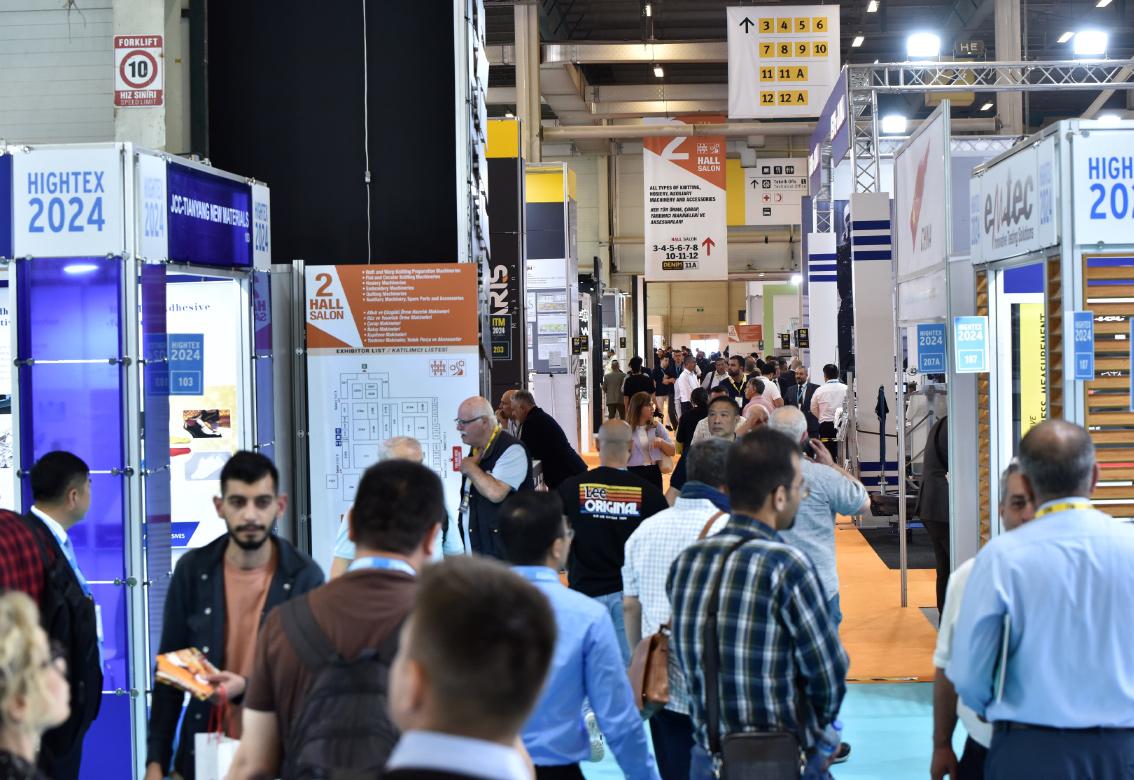
Hightex Photo (c) Hightex
19.02.2026

HIGHTEX 2026: Technical Textiles and Nonwovens

HIGHTEX 2026 International Technical Textiles and Nonwoven Exhibition is preparing to open its doors at Tüyap Fair and Congress Center between 9–13 June 2026. Bringing together leading manufacturers and technology providers in the field of technical textiles and nonwoven technologies in Istanbul, the exhibition will assume the character of an international hub where the strategic future of the industry is discussed.

While topics such as sustainable production models, digitalization, high-performance materials and smart manufacturing systems will form the main agenda of HIGHTEX 2026, a strong showcase will be presented for companies aiming to make a difference in the global competitive environment.

HIGHTEX 2026 International Technical Textiles and Nonwoven Exhibition is preparing to open its doors at Tüyap Fair and Congress Center between 9–13 June 2026. Bringing together leading manufacturers and technology providers in the field of technical textiles and nonwoven technologies in Istanbul, the exhibition will assume the character of an international hub where the strategic future of the industry is discussed.

While topics such as sustainable production models, digitalization, high-performance materials and smart manufacturing systems will form the main agenda of HIGHTEX 2026, a strong showcase will be presented for companies aiming to make a difference in the global competitive environment.

Organized in cooperation with Teknik Fuarcılık and Tüyap, and held concurrently with the ITM International Textile Machinery Exhibition, HIGHTEX holds the distinction of being Türkiye’s and the region’s first and only specialized exhibition in the field of technical textiles and nonwovens. Organized since 2005, the event has, over more than 20 years, personally witnessed the technological evolution experienced by the industry and has become one of the most important platforms where innovative solutions are introduced to the global market. Thanks to being held simultaneously with ITM, textile machinery, production technologies and the technical textiles ecosystem will come together under the same roof, offering visitors an integrated exhibition experience.

The Indispensable Element of Strategic Industries: Technical Textiles
Today, technical textiles have a wide range of applications extending from automotive to defense industry, from medical applications to infrastructure projects, and from agriculture to the energy sector. Distinguished from conventional textile products thanks to their superior properties such as high strength, lightness, durability, heat and chemical resistance, these materials directly affect the performance criteria of strategic industries. The solutions to be exhibited at HIGHTEX 2026 will reveal not only product-based innovations but also the transformation in production processes. A broad exhibitor profile, ranging from raw material producers to machinery manufacturers, from software developers to end-product manufacturers, will represent the entire value chain of the sector.

This comprehensive structure transforms the exhibition into not only a display area but also a strategic platform in terms of information sharing, business development and investment planning. While professional visitors will have the opportunity to examine new technologies on-site and establish direct contact with manufacturers, participating companies will gain the opportunity to enter new markets and strengthen their brand positioning.

A New Era in Nonwoven Technologies
Nonwoven production technologies have achieved a significant leap in recent years in terms of both capacity and quality. Based on the principle of bonding fibers through mechanical, thermal or chemical methods without weaving or knitting, this production model is rapidly expanding on a global scale due to the flexibility, speed and cost advantage it offers. Nonwoven solutions have become indispensable especially in hygiene products, medical consumables, filtration systems and automotive interior trim applications.

The next-generation nonwoven lines to be exhibited at HIGHTEX 2026 will contribute to sustainability targets with criteria such as lower energy consumption, optimized raw material usage and high production speed. Solutions for recyclable and biodegradable raw materials will also be among the prominent topics of the exhibition. These developments demonstrate that the nonwoven sector simultaneously carries growth potential along with environmental responsibility.

Artificial Intelligence and Industry 4.0 Integration Comes to the Fore
Digital transformation has become one of the fundamental elements of competitive advantage in technical textile and nonwoven production. The Industry 4.0 integrated systems to be exhibited at HIGHTEX 2026 will enable real-time monitoring of production processes, performance optimization through data analytics, and the minimization of error rates. Thanks to artificial intelligence-supported quality control systems, defects that may occur on production lines will be detected instantly, thereby reducing cost losses.

Automation solutions will increase production speed and standardization while minimizing human error; at the same time, smart infrastructures that provide savings in energy and resource usage will strengthen the understanding of sustainable production. These technologies will offer companies not only operational efficiency but also the opportunity for strong positioning in the global market.

Fabrics of the Future: Smart Textiles
Smart textiles developed at the intersection of textiles and advanced technology stand out as one of the most dynamic and fastest-growing fields of the sector. Nanotechnology applications, conductive fibers, sensor-integrated fabric structures and materials capable of responding to environmental conditions offer a wide range of applications from health monitoring to defense uses, from sports technologies to industrial safety. These innovations transform textiles from being a passive material into a structure capable of generating data and interacting. At HIGHTEX 2026, geotextiles, medical and hygienic textiles, high-performance composite structures for aviation and automotive, and technical solutions specific to the agriculture and food sectors will also be exhibited together. Thus, the exhibition will present a holistic panorama of innovative materials responding to the needs of different industries.

New Collaborations and Global Trade Opportunities
HIGHTEX 2026 will not only provide participating companies with the opportunity to exhibit their products but will also create a strong business development platform that will expand international trade networks. Bilateral business meetings and sectoral contacts to be held throughout the exhibition will prepare the ground for generating concrete commercial outcomes ranging from machinery sales to technology transfers, from joint production agreements to new investment decisions. For sector representatives coming from a wide geography extending from America to Asia, from Europe to Africa, Istanbul will become a global meeting point in the field of technical textiles and nonwovens. HIGHTEX 2026 will continue to position itself at the center of information sharing, strategic vision and technological transformation, maintaining its role as an international reference platform guiding the sector.

Federal procurement of American-made mission critical clothing, textiles and gear Deniece Platt, Pixabay (AI generated)
18.02.2026

Federal procurement of American-made mission critical clothing, textiles and gear

The National Council of Textile Organizations (NCTO), representing the full spectrum of U.S. textiles from fiber, yarn and fabrics to finished sewn products, applauded the launch of the House Berry Amendment Caucus. 

Statement from National Council of Textile Organizations (NCTO) President and CEO Kim Glas

“On behalf of the U.S textile industry, NCTO sincerely thanks Rep. Pat Harrigan (R-NC) and Rep. Don Davis (D-NC) for their leadership in co-chairing the new bipartisan House Berry Amendment Caucus, aimed at strengthening national security and the U.S. defense industrial supply chain through the federal procurement of American-made mission critical clothing, textiles and gear. 

“NCTO strongly supports this new caucus to promote and expand the Berry Amendment, a law requiring the Department of War (DOW) to buy textile and clothing products made with virtually 100% U.S. content and labor to support our U.S. warm industrial base. 

The National Council of Textile Organizations (NCTO), representing the full spectrum of U.S. textiles from fiber, yarn and fabrics to finished sewn products, applauded the launch of the House Berry Amendment Caucus. 

Statement from National Council of Textile Organizations (NCTO) President and CEO Kim Glas

“On behalf of the U.S textile industry, NCTO sincerely thanks Rep. Pat Harrigan (R-NC) and Rep. Don Davis (D-NC) for their leadership in co-chairing the new bipartisan House Berry Amendment Caucus, aimed at strengthening national security and the U.S. defense industrial supply chain through the federal procurement of American-made mission critical clothing, textiles and gear. 

“NCTO strongly supports this new caucus to promote and expand the Berry Amendment, a law requiring the Department of War (DOW) to buy textile and clothing products made with virtually 100% U.S. content and labor to support our U.S. warm industrial base. 

“The U.S. textile industry provides $1.8 billion of high-tech and functional components for vital uniforms and equipment for our armed forces each year. The Department of War estimates that over 8,000 different textile items are purchased for use by the U.S. military—and over 30,000 line items when individual sizes are considered.

“It is vital to America’s national security that the U.S. military maintain the ability to source high-quality, innovative textile materials, apparel, and personal equipment from a vibrant U.S. textile industrial base and key to this goal is defending and strengthening the Berry Amendment.

“We look forward to working with the new caucus’ leadership and our industry partners to focus congressional efforts on preserving the Berry Amendment and expanding opportunities for U.S. textile manufacturers, safeguarding domestic supply chains, and ensuring our troops continue to receive innovative, high-quality American-made products.”